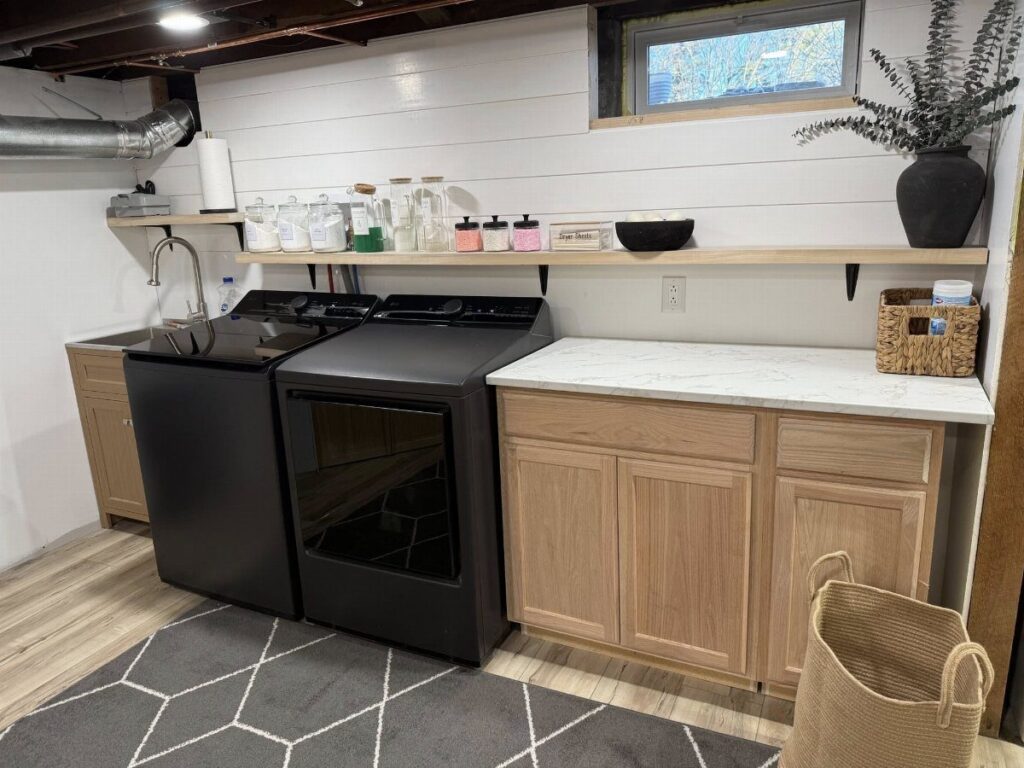
Whether you own the basement or rent it decides most of this list: a landlord’s say over plumbing and wallpaper separates the peel-and-stick panels, rug and pegboard from a utility sink or a stacked washer and dryer in built-in cabinets.
The ideas run from baskets you already own to new appliances and waterproofing, and the damp basement air sets the limit on all of them. Flooring, wallpaper and countertops each need a moisture check before you buy.
1. Baskets, Bins, and Shelves
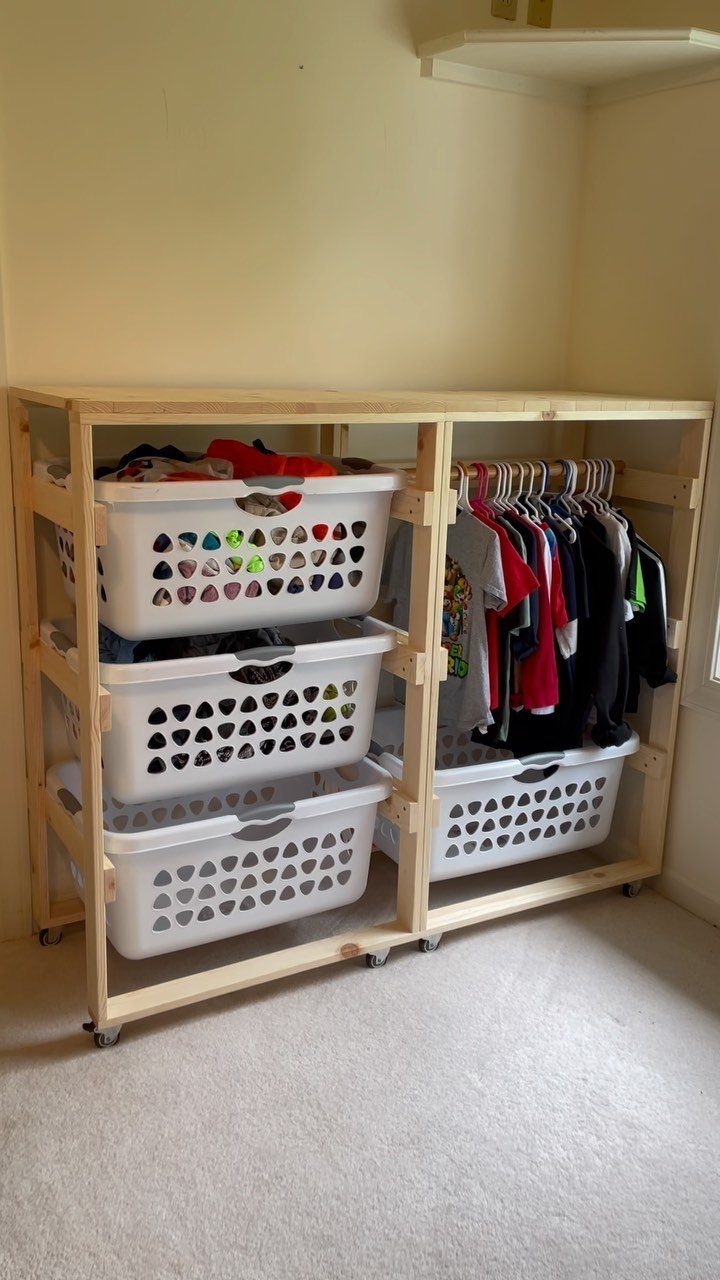
A wheeled wooden rack with white baskets on the shelves and a rail for hanging clothes gives a basement laundry corner a place to sort and hold clothes without any building.
Rolling it out to the machines and back keeps the walkway clear.
I like white baskets because they hide nothing and match everything, so label them by person or by load type. Keep the rail for items that come out of the dryer and need to stay smooth.
2. Compact Appliances
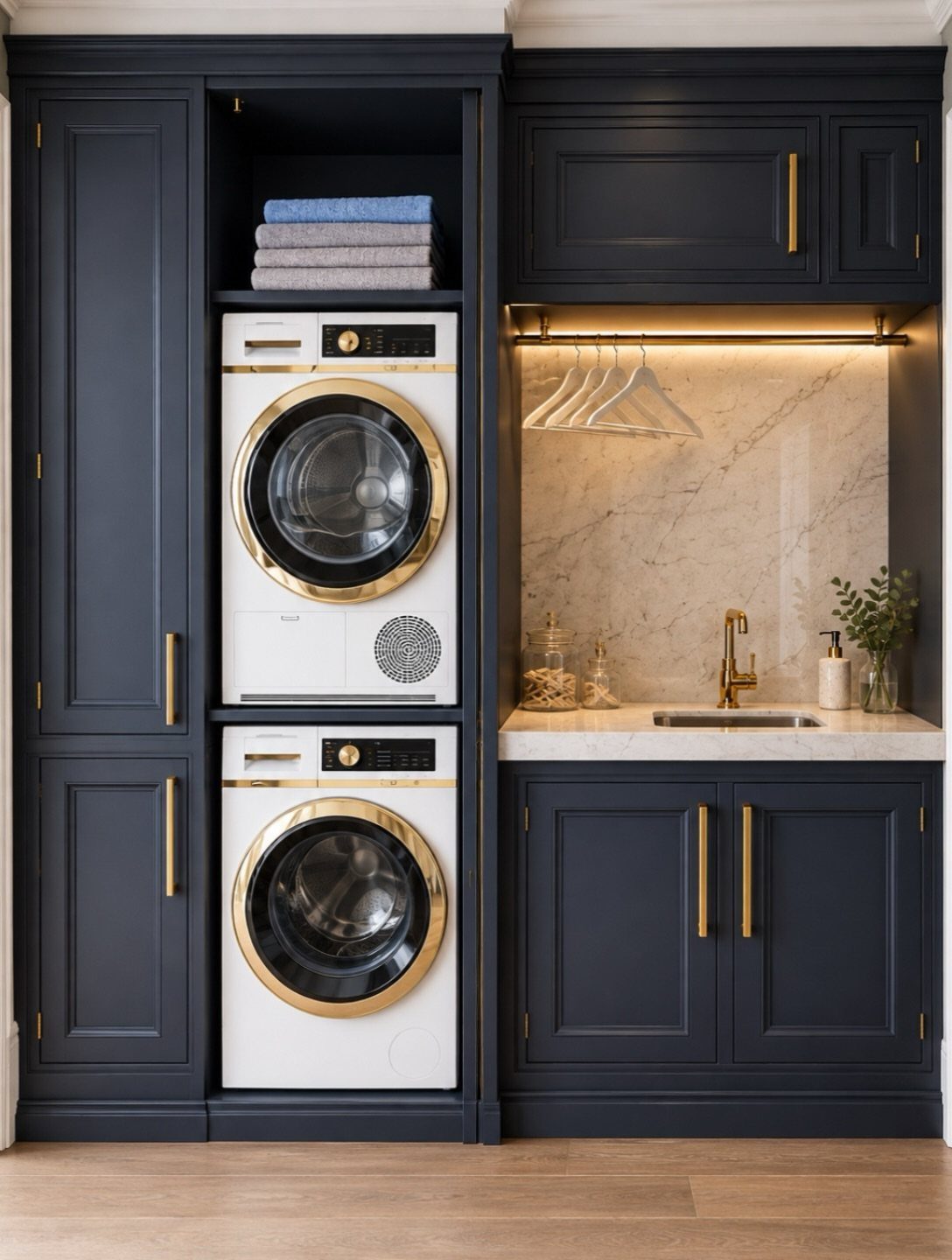
Smaller machines let a basement laundry corner keep its cabinetry.
Stacking a compact washer and dryer inside a built-in cabinet frees the floor for a sink and a counter, which is how the navy cabinets and marble backsplash get room here.
Measure the opening before you shop, including depth for hoses and vents. Smaller drums mean more loads for a big household, so I’d choose compact machines mainly for a single person or a couple without kids.
3. Bright Overhead Lighting and Task Lighting
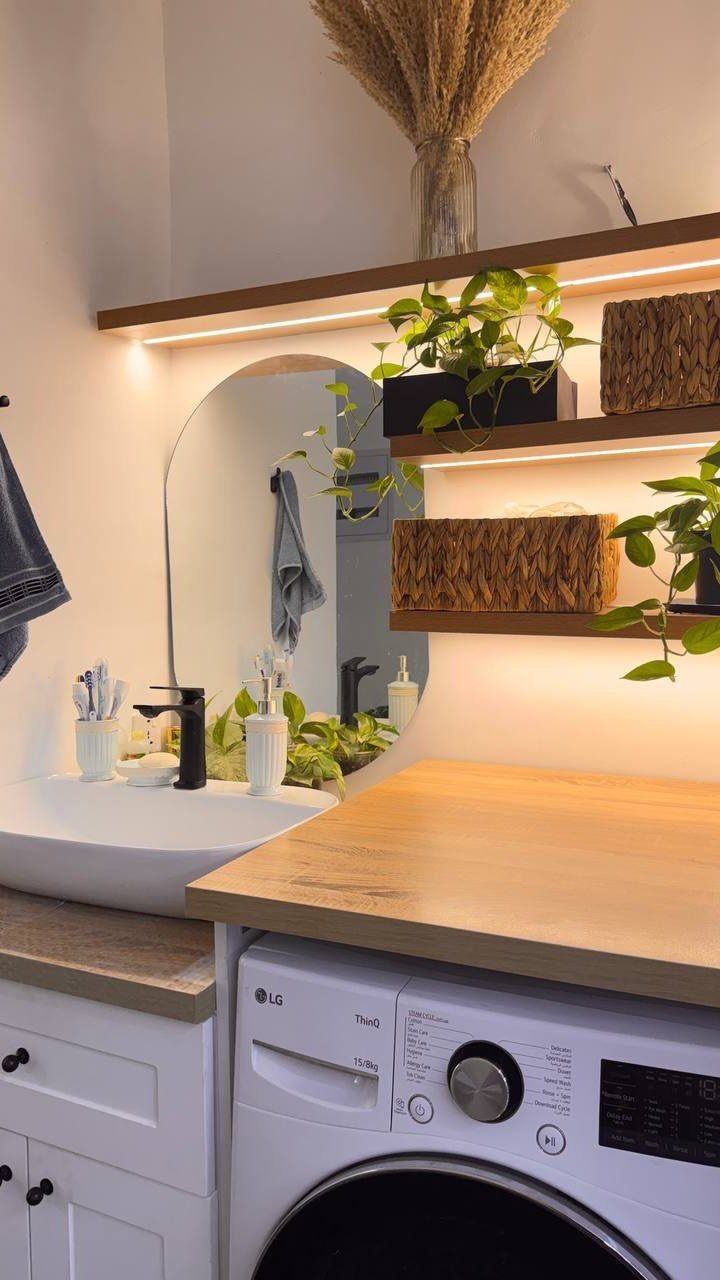
Lighting under floating shelves puts the glow right where you sort and fold. An LED strip tucked beneath a wooden shelf lights the counter below without glare, and a mirror bounces some of it back into the room.
Basements usually lack windows, so I’d pair task strips with a bright ceiling fixture rather than relying on one or the other. Plug-in strips are the easy weekend route for renters, since they need no wiring.
4. Countertop Over the Washer and Dryer
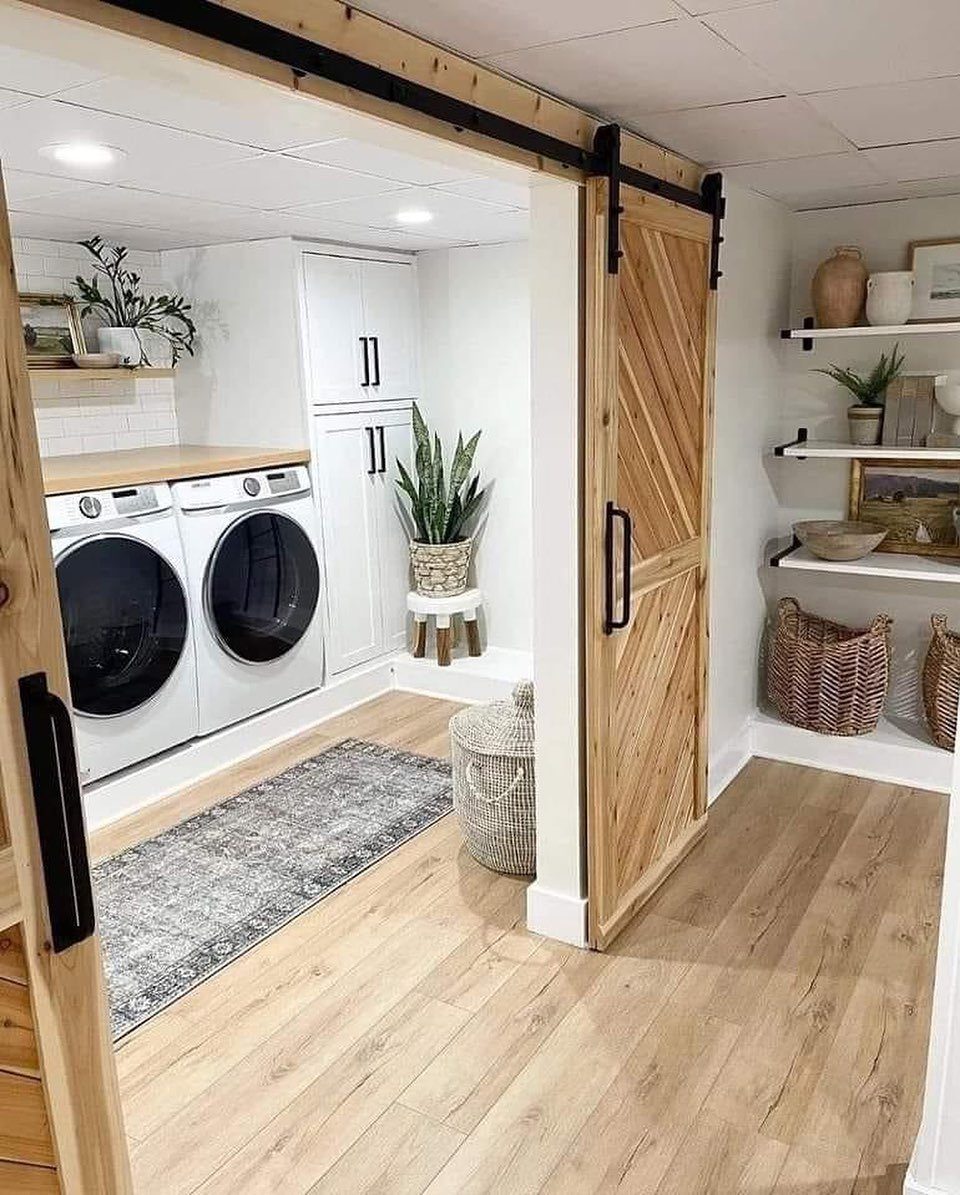
A wooden countertop bridging the washer and dryer adds a folding surface in the same footprint. White cabinets beside it add storage, and the wood warms up a basement that might otherwise feel cold.
Leave the front of the machines open so you can reach the controls and slide them out for service. A butcher-block style top is a budget-friendly choice I’d pick, but seal it well, since laundry rooms get splashes.
Doing lots of DIYing helped Donna and Steve keep to a budget of $5,000 for this laundry area, which they practically created out of thin air.
5. Vinyl, Tile
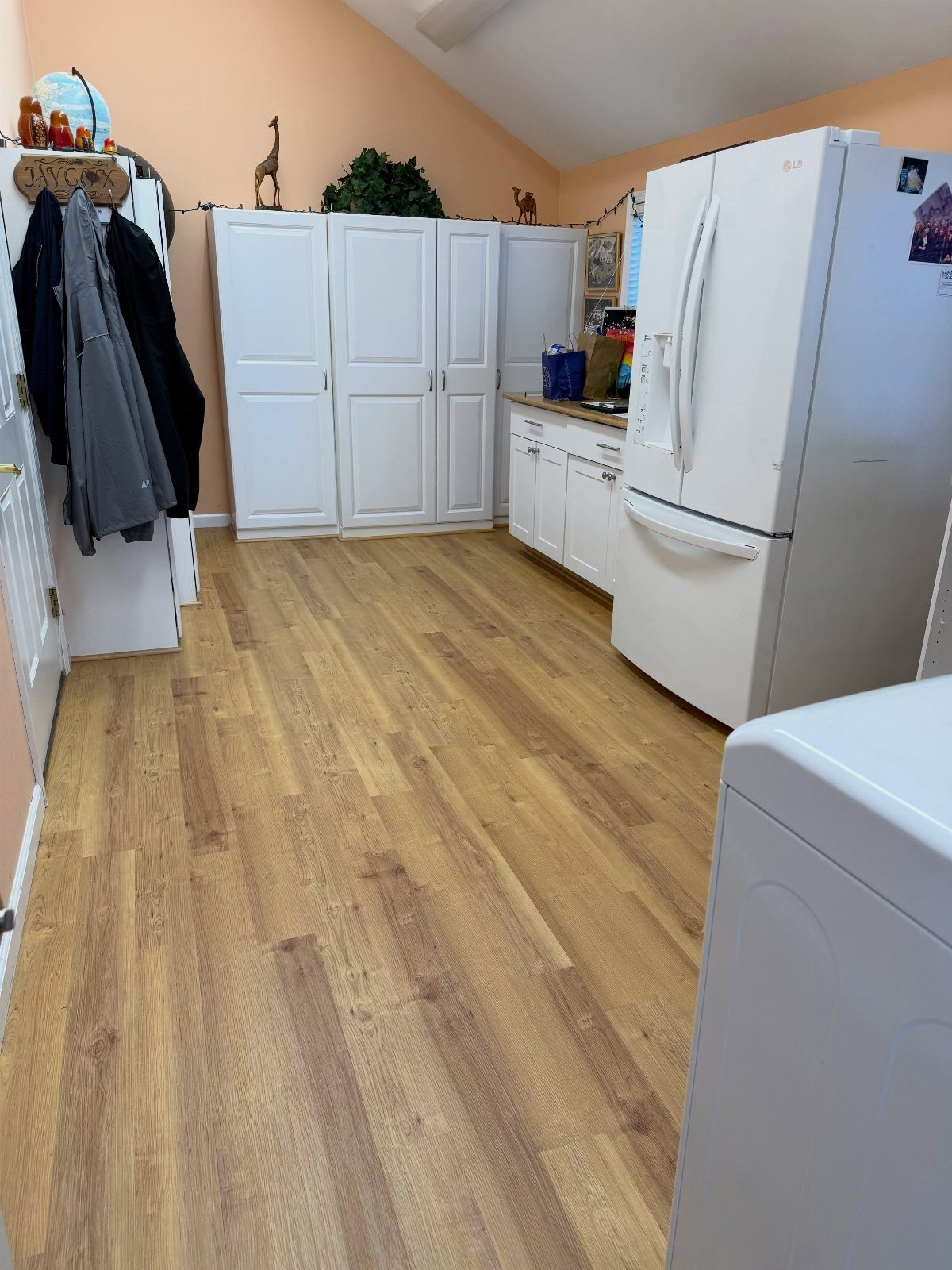
Wood-look vinyl is the flooring I’d choose for a basement laundry room, because it gives the look of planks in a space where real wood is a poor bet.
Tile is the other option, and it suits a room that may see leaks or spills.
Vinyl feels softer underfoot and is easier to install yourself over a clean, flat floor. Tile costs more in labor and time, but it handles water well.
6. Add a Utility Sink
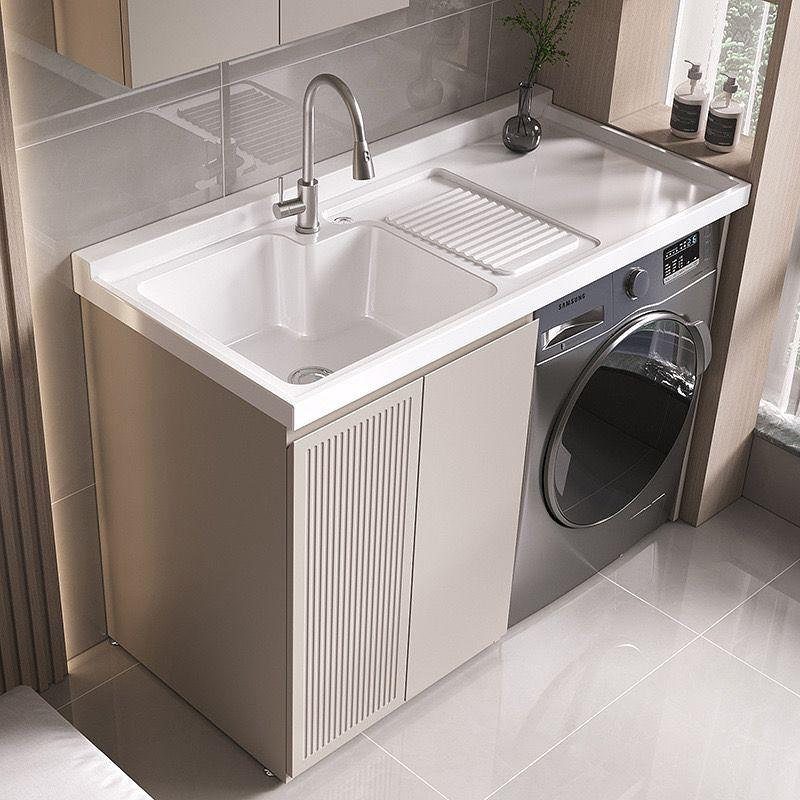
A utility sink handles what a washer can’t: soaking stains, rinsing muddy gear, hand-washing delicates. Mounting a deep white basin with a chrome faucet next to the washer and dryer keeps those jobs in one spot.
Add a drying rack nearby so wet items can drip right there. Plumbing is the real cost, so the closer the sink sits to existing water and drain lines, the cheaper the job will be.
7. Use Fun Wallpaper
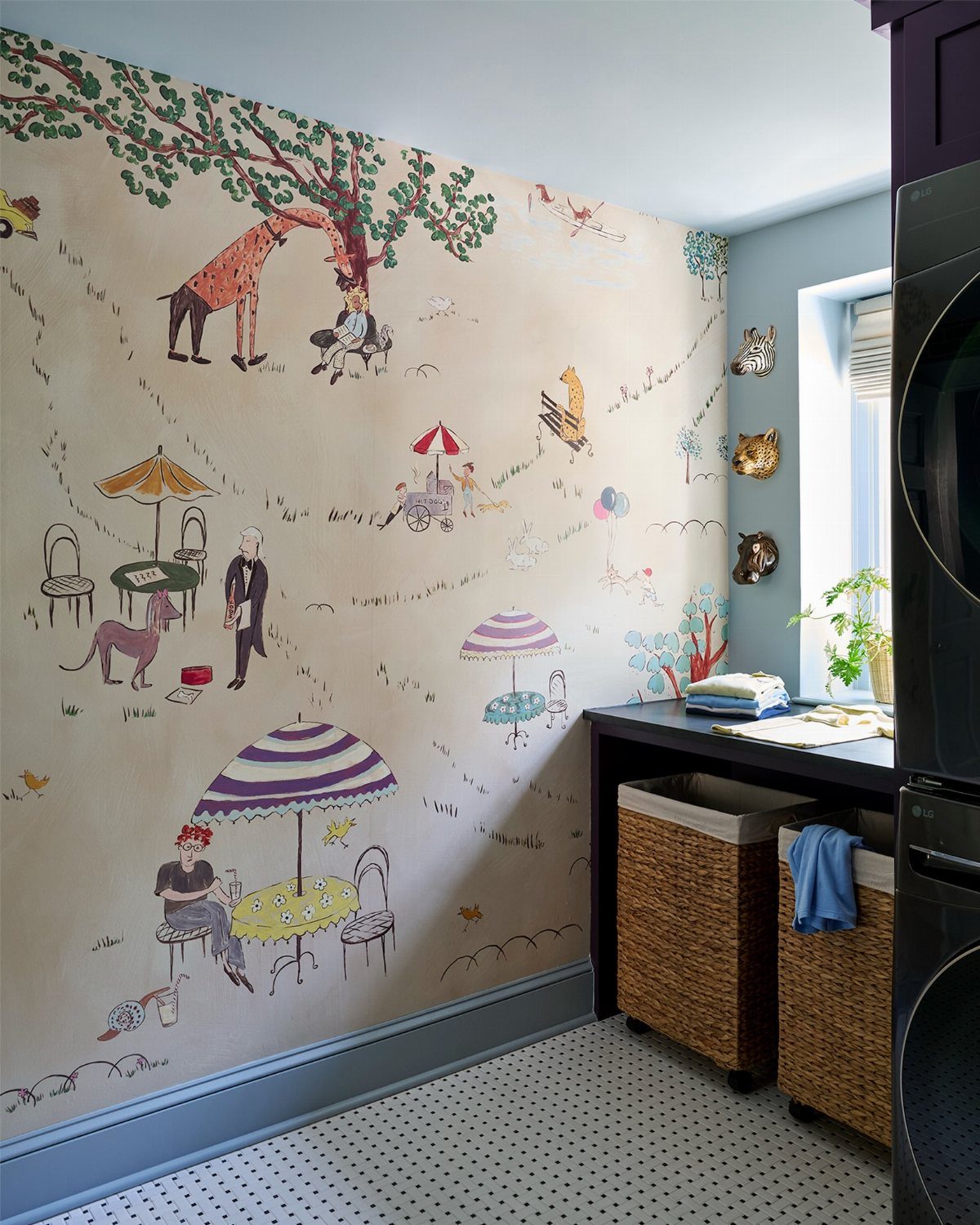
A mural-style wallpaper turns one wall of a basement laundry room into the thing people remember. Illustrated people and animals under umbrellas feel playful against a dark countertop and wicker hampers, which keep the rest of the room calm.
Put the pattern on one wall, ideally behind the machines, and leave the others plain. Peel-and-stick panels are the weekend route for renters, though I’d test a sample first, since basements can be damp.
8. Add a Rug
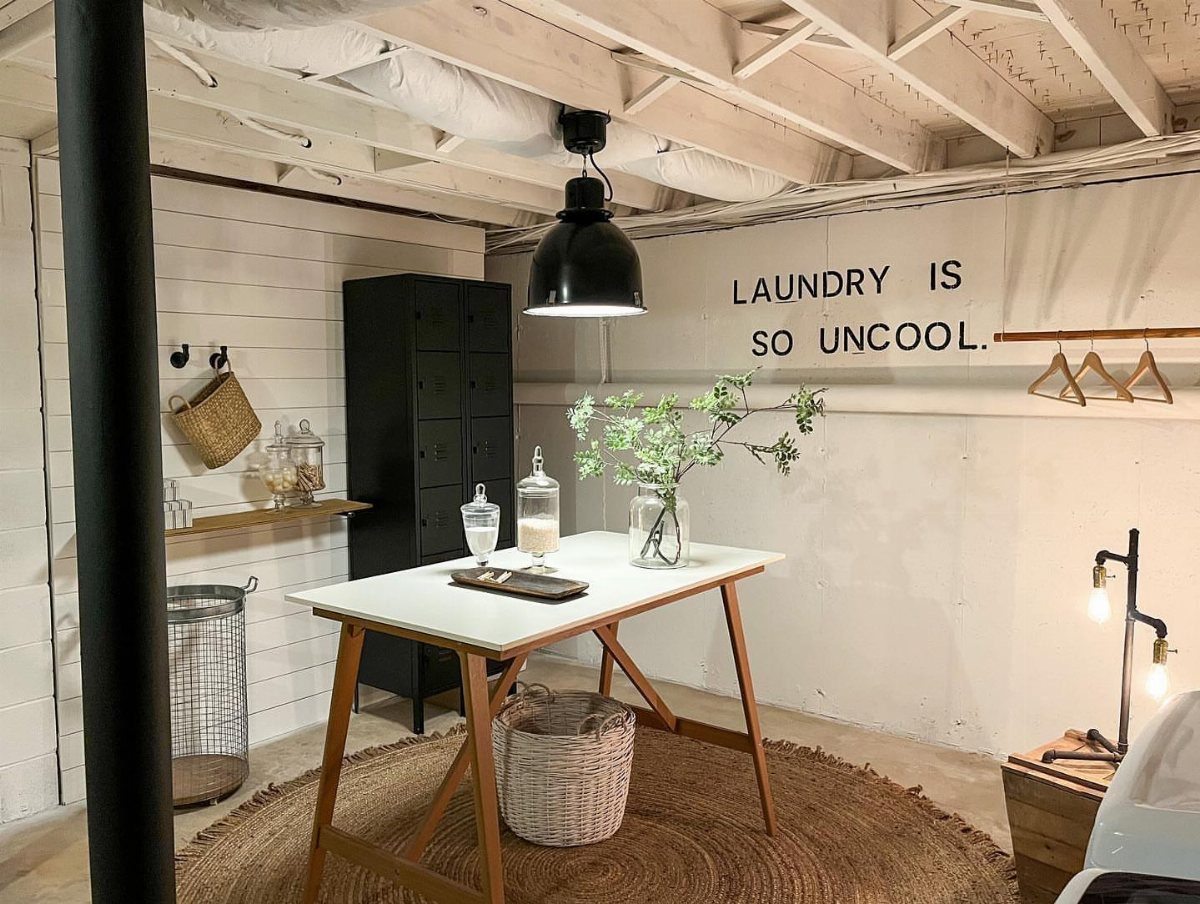
A round jute rug gives a white basement laundry room some warmth underfoot, and the natural fiber softens all that white and a hard floor. It also sets off a black locker and a white table without competing with them.
Place it where you stand to sort and fold. Jute is rough on bare feet and soaks up spills, so I’d keep it away from the washer’s hose side and shake it out often.
9. Freestanding Clothes Drying Rack
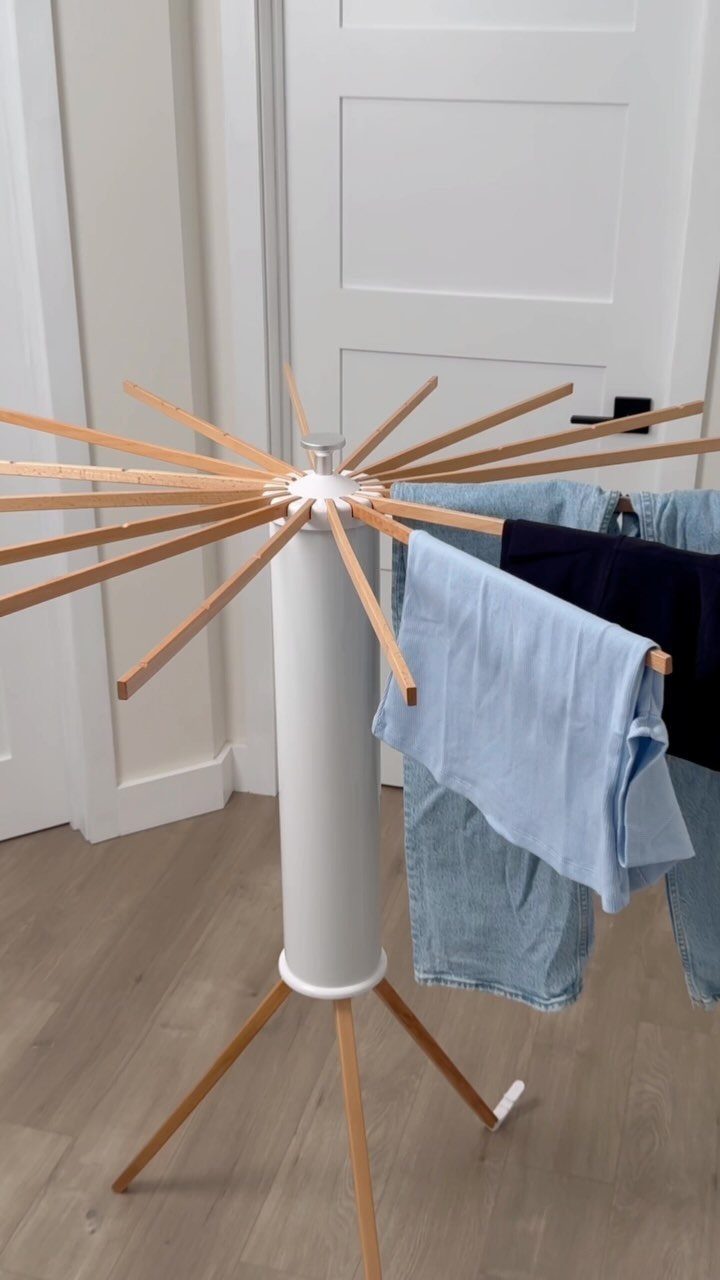
A tripod drying rack with wooden spokes holds a shirt and a pair of jeans on its arms, then folds away when the load is dry. It stands on its own, so it needs no hardware and no wall space.
Hang heavier items like jeans toward the center so the rack doesn’t tip.
In a basement, I’d set it near a vent or dehumidifier if you have one, and fold it flat against a wall afterward to keep the floor clear.
10. Pegboard Wall Storage
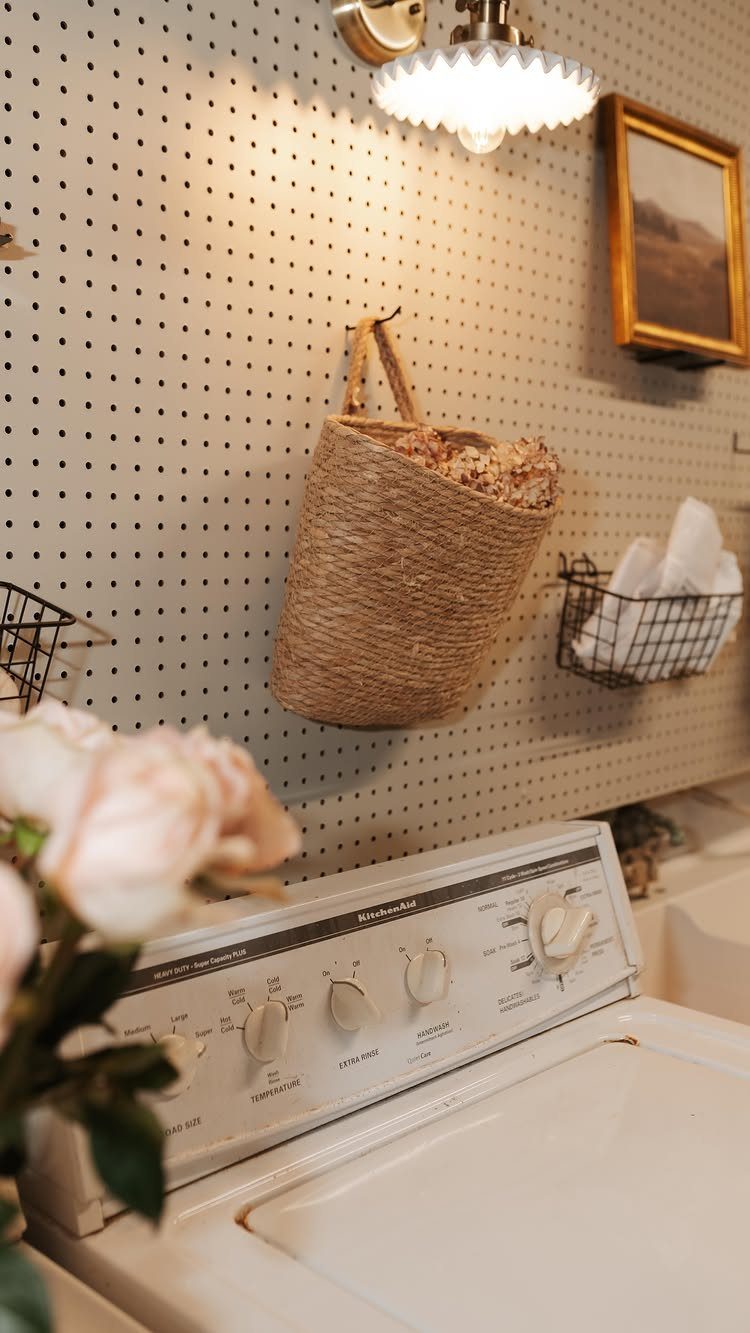
Mounting a white pegboard above the washing machine turns dead wall into storage you can rearrange. Wire and woven baskets hang from hooks, and a wall lamp adds light right at the machine.
I like that you can move a hook in seconds when your needs change.
Fill the baskets with small items like dryer sheets and stain sticks, and keep heavy bottles on a shelf instead, since pegboard hooks work best with light loads.
11. String Lights on Exposed Beams
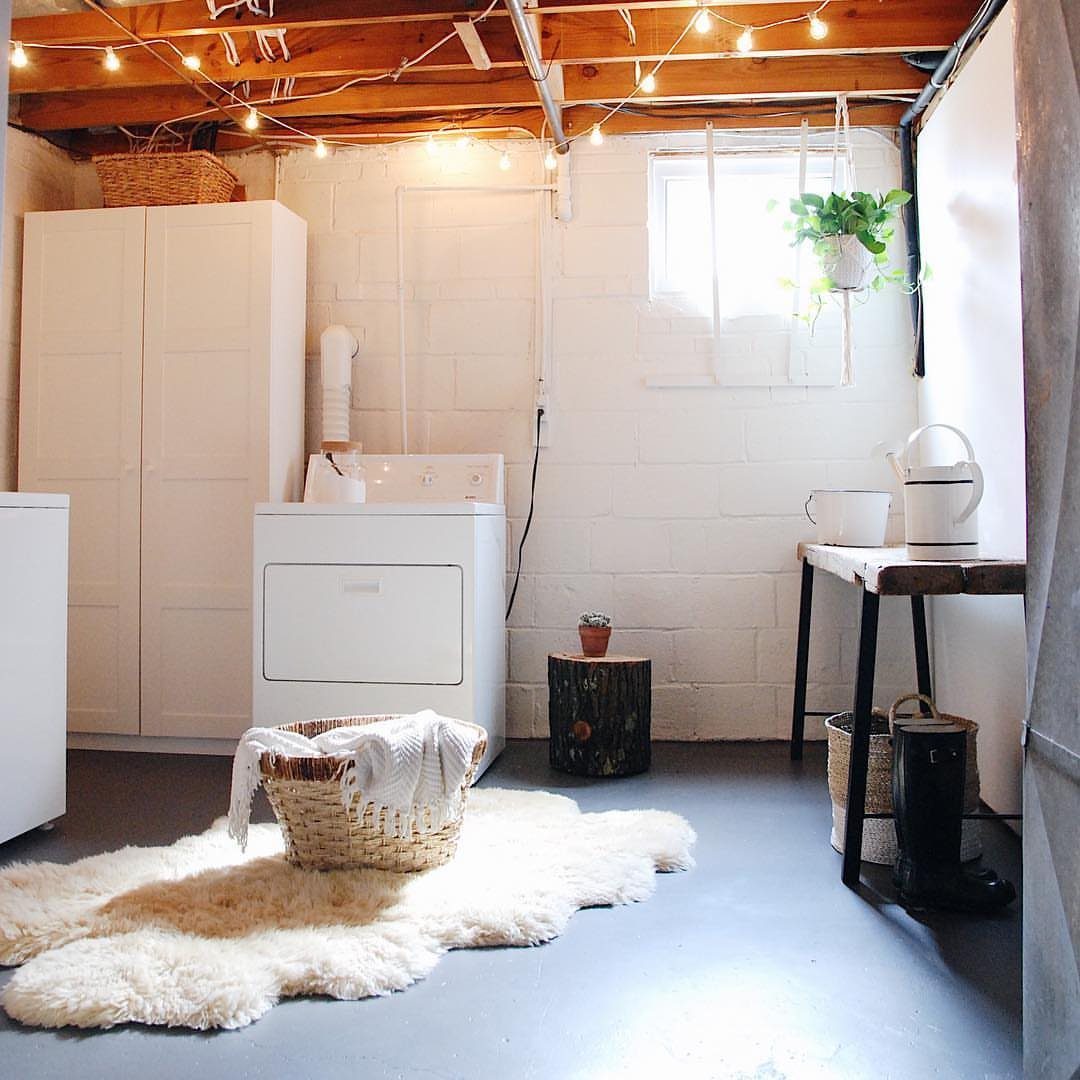
Exposed wooden beams are a ready-made place to hang string lights, and the glow bounces softly off painted white brick. Draping them in loose swags across the beams adds light to a basement that usually has none to spare.
Use plug-in strands with clips or small hooks so nothing needs wiring. They set a mood but won’t replace a bright overhead fixture for sorting, so I’d keep both.
12. Stacked Washer and Dryer Setup
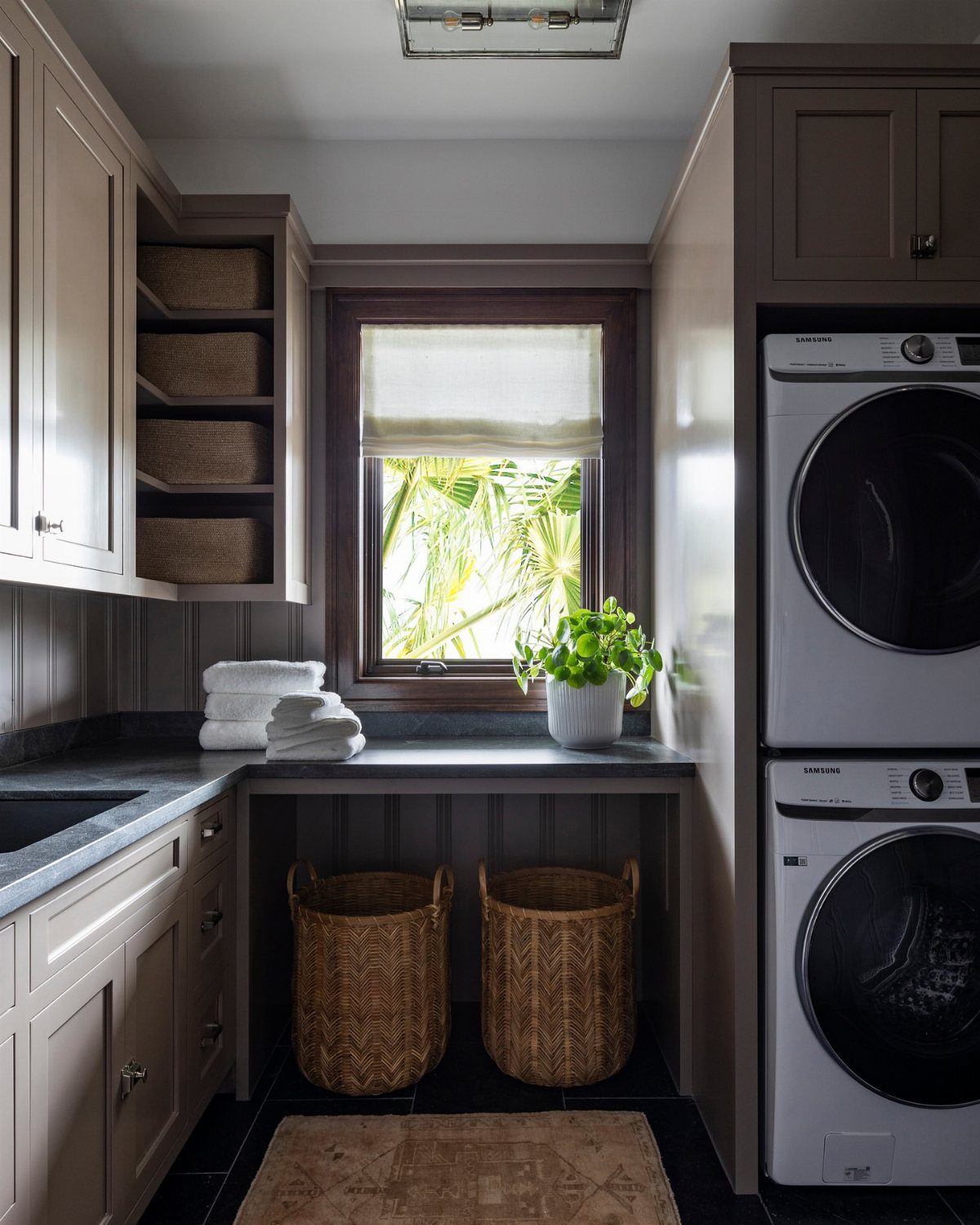
Stacking a front-loading washer and dryer takes up one machine’s width of floor, which leaves room for grey built-in cabinets and a dark counter for folding towels.
Before buying, measure the height, since the stack plus the dryer’s door swing and vent need clearance.
A stacking kit is usually required to join the 2 units safely. I’d choose this setup for a basement with limited floor but decent ceiling height, and keep the controls within easy reach.
Budget-Friendly Upgrades
Paint is the cheapest change with the biggest effect, and a basement takes it well.
Soft white brightens, warm beige feels cozy, light gray reads modern, and sage green adds a natural note. If you rent, ask the landlord before you open a can.
Without permission to paint, shift your effort to what you can carry out later: storage furniture, baskets, and accessories.
Before buying anything new, look around the house. Crates and baskets you already own work for storage, and a lamp that sits unused upstairs can fix a dim corner.
Second-hand furniture and refurbished appliances are worth a look too, since they stretch a small budget a long way. Plan one DIY day, start with the paint, and let the rest follow.
Moisture Control
Basements hold moisture, so treat dampness as the first problem, not an afterthought. Good airflow is the best defense: an exhaust fan, a dryer vent in good shape, or a dehumidifier all keep humid air from sitting.
For floors, choose vinyl, tile, or sealed concrete. All three clean easily and handle the water that laundry brings, and a basement is more prone to flooding than the rest of the house.
Larger fixes, like waterproofing walls and floors and sealing cracks, usually call for a professional. Where you do any work yourself, pick mold-resistant materials so the room stays protected for years.
Layout Considerations
Side-by-side machines make moving a load from washer to dryer simple, and a utility sink close by saves steps. Put a countertop nearby for sorting and folding, because that surface does more daily work than any other.
Before you commit, size the room, since that decides which machines fit. A small room may call for a mini washer and dryer, and it should still leave space for a sink.
Check where electrical and plumbing connections sit, then plan the flow around them.
Keep pathways clear near stairs, doorways, and mechanical systems. Store detergent and the other items you reach for most within easy reach, so each load takes fewer steps.
Frequently Asked Questions
What are some ideas for a very small laundry room?
Compact machines stacked inside a built-in cabinet are the strongest move, since they free the floor for a sink and a counter.
Add a pegboard above the washer for rearrangeable storage, and a freestanding tripod drying rack that folds flat when the load is dry.
Measure the opening first, including depth for hoses and vents. Smaller drums mean more loads, so they suit a single person or a couple best.
What is the best flooring for a basement laundry room?
Wood-look vinyl, tile, or sealed concrete all work, because they clean easily and handle the water laundry brings. Vinyl feels softer underfoot and is easier to install yourself over a clean, flat floor.
Tile costs more in labor and time but handles leaks and spills well. Basements flood more often than the rest of the house, so avoid real wood.
How do I design a good layout for a basement laundry room?
Start by measuring the room, since its size decides which machines fit, and check where the electrical and plumbing connections sit before planning the flow around them.
Side-by-side machines make moving a load simple, with a utility sink close by and a countertop nearby for sorting and folding.
Keep pathways clear near stairs, doorways, and mechanical systems. Store the items you use most within easy reach to cut steps per load.
What are some cool things I can add to my basement laundry room?
Peel-and-stick mural wallpaper on one wall gives the room a focal point, and it suits renters. A round jute rug adds warmth underfoot where you stand to sort and fold.
String lights on exposed beams or LED strips under a shelf brighten a space that usually lacks windows. Test wallpaper samples first, since basements can be damp.





