The range is wide: a $300 budget-friendly room refresh at one end, a can of paint and a colorful rug at the other, and at the top, built-in lockers, a farmhouse sink and a stacked washer/dryer that need cabinetry built around them.
Renters can stick to a freestanding drying rack, a tension rod and a rug, since none of them needs a drill or a change to the walls or plumbing; a farmhouse sink, built-in lockers or an integrated drying rack all have to be planned into the cabinet run before anything is bought.
Set your spending limit first, then choose within it.
1. Wicker Baskets
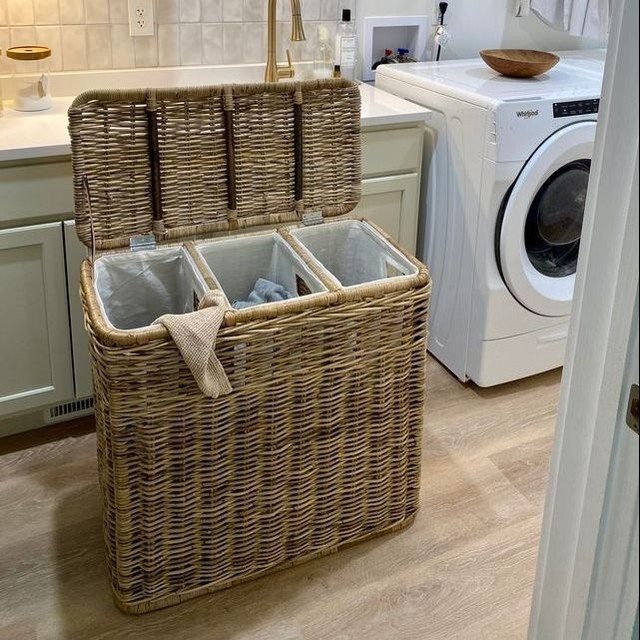
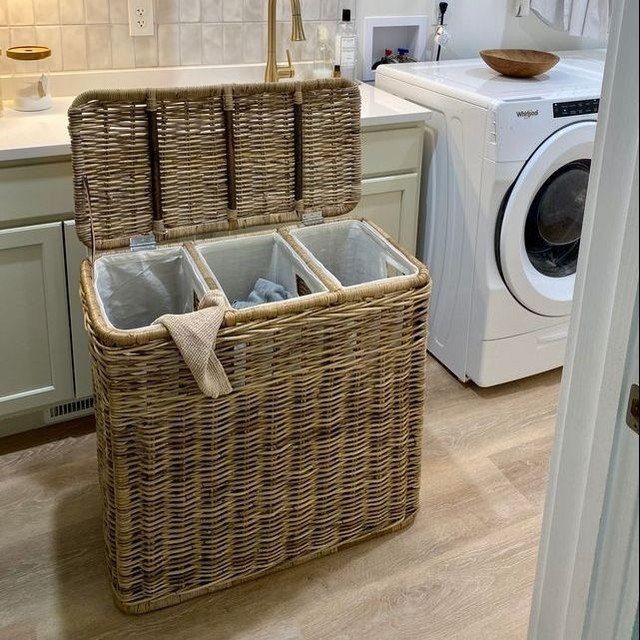
A three-compartment hamper with a lid solves sorting before the first sock hits the floor: lights, darks and delicates each get a section.
White liners are my pick, since they lift out and carry straight to the machine, and they can be washed when they get grubby.
Wicker also brings warm texture to a room full of white appliances and cabinets. Put the hamper within arm’s reach of the washer so the sorting really happens.
2. Farmhouse Sink
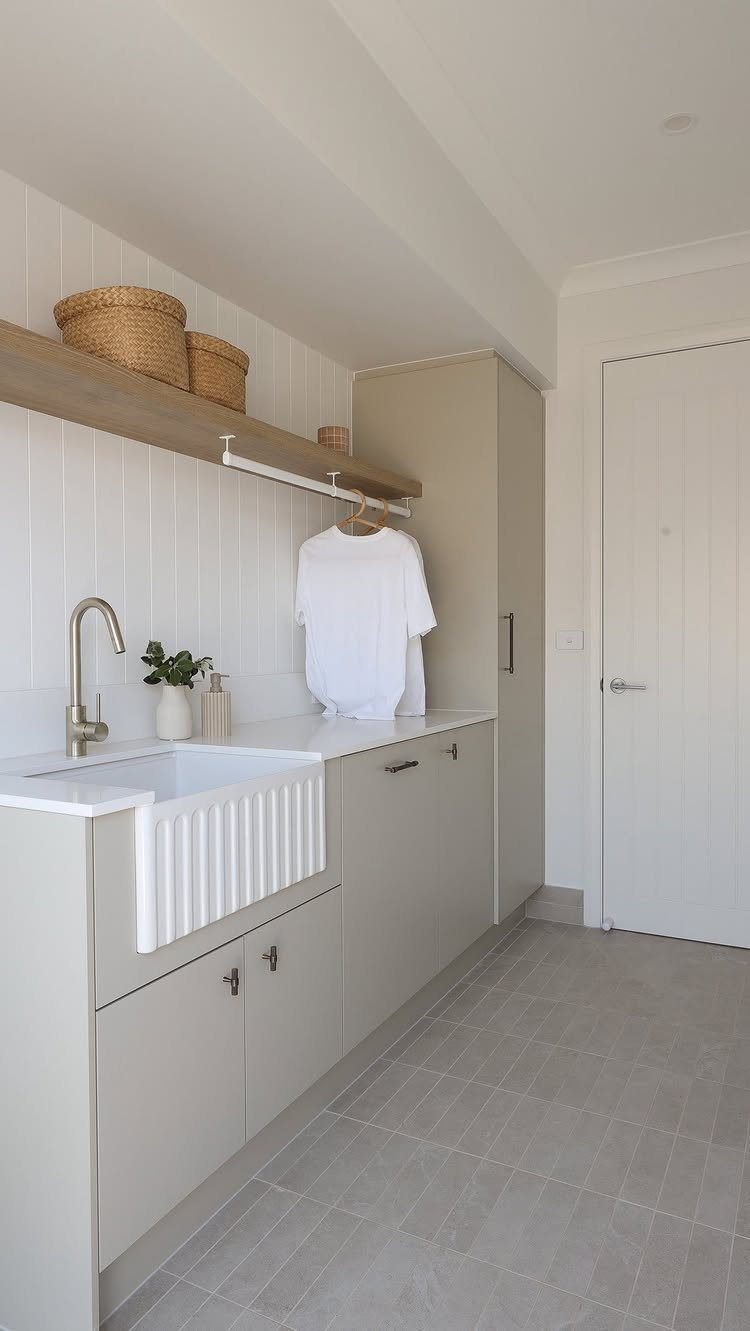
Deep, wide and easy to scrub, a farmhouse sink gives a laundry room a real workstation for soaking, hand-washing and rinsing.
White is the version I would choose, especially against light grey cabinets, because it keeps the room bright and looks clean with little effort.
It does take planning. A farmhouse sink is deeper and wider than a standard drop-in, so the cabinet beneath it has to be built or modified to fit, and the exact dimensions need checking against the sink’s spec sheet first.
That is a bigger job than a standard drop-in, so budget extra time for it.
3. Pegboard Storage
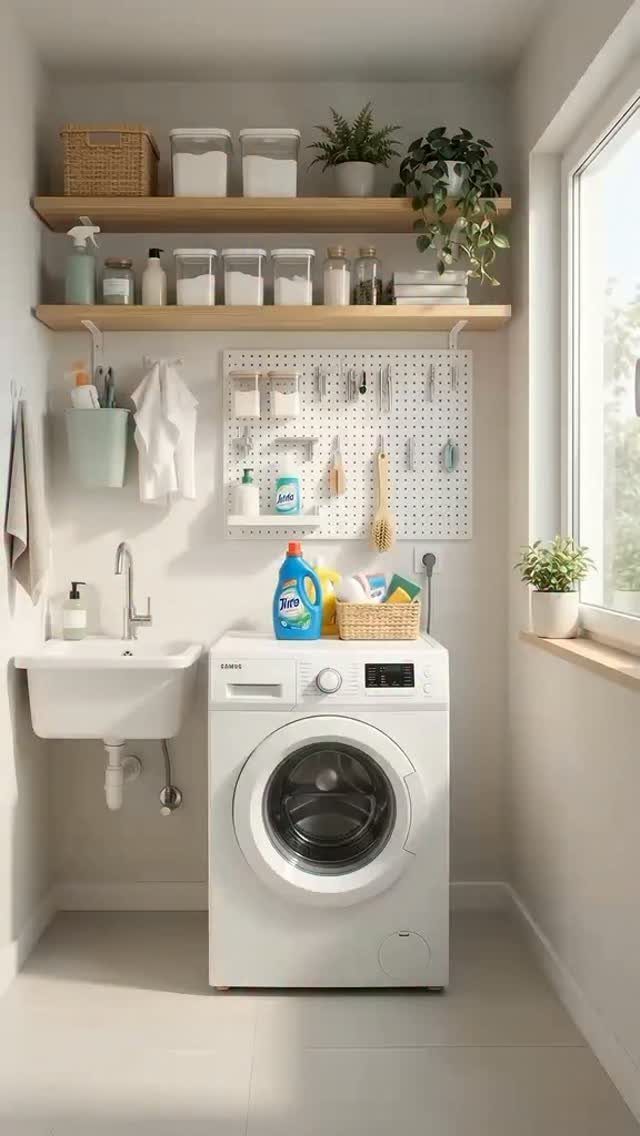
The wall over the washer is usually wasted space, and a pegboard puts it to work.
Hooks, small shelves and bins can be moved around whenever your supplies change, which is why I like it for renters and anyone still figuring out what they need.
White paint keeps it looking tidy.
Start with the tools you reach for most, such as brushes, scissors and spray bottles, and leave gaps for what you add later. A pegboard crowded to the edges turns into visual clutter fast.
4. Sliding Barn Doors
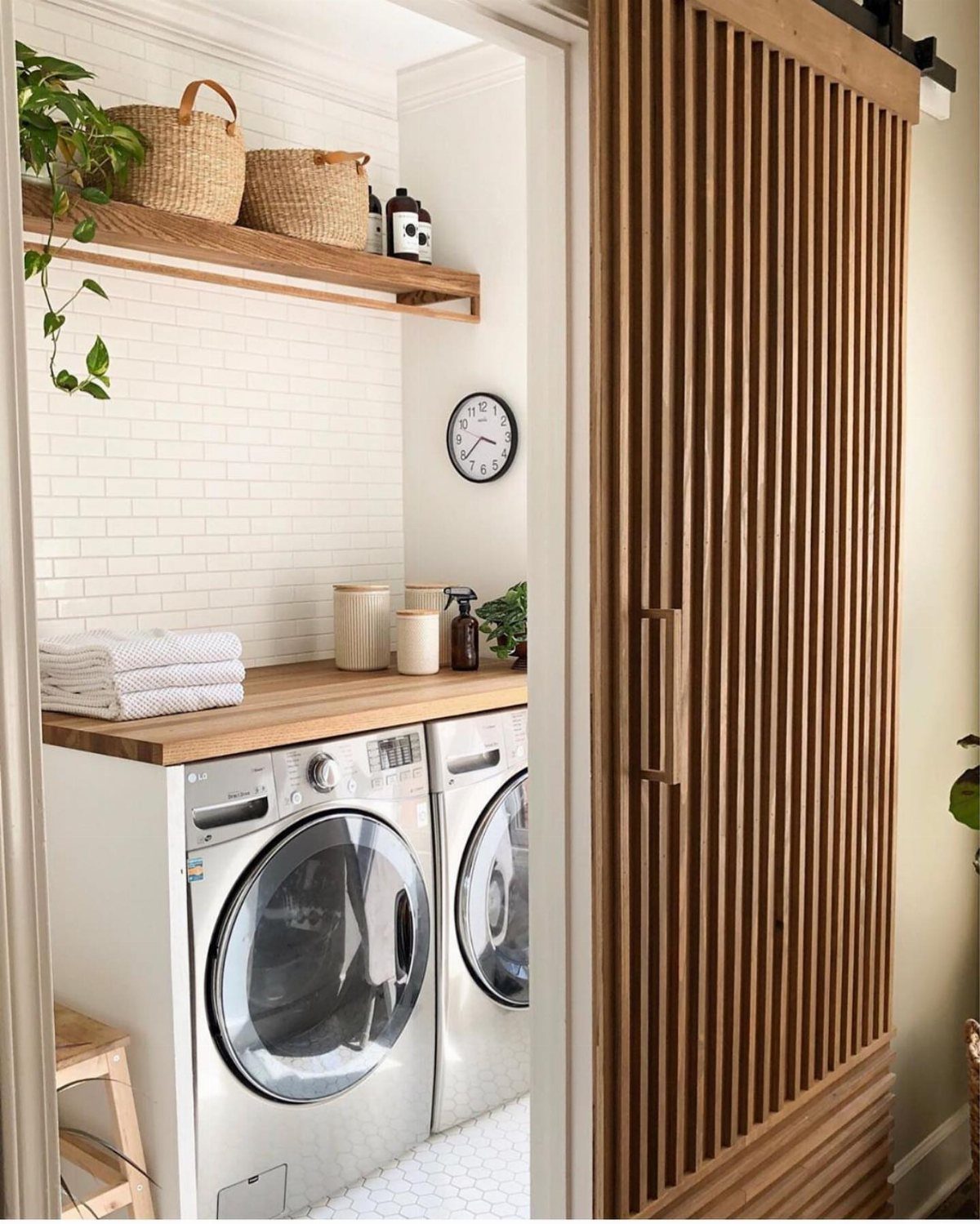
Swing doors need clearance, and a sliding barn door does not. That makes it a smart choice for a laundry room opening onto a hallway or kitchen where a door arc would eat floor space.
A slatted wood door, like this one, adds warmth against white tile and lets you close off the machines when company comes.
A sliding door never seals tightly, so noise and light will leak around it, and that is the cost of saving the swing space. The track also needs solid wall space beside the opening to slide into.
5. Patterned Tiles
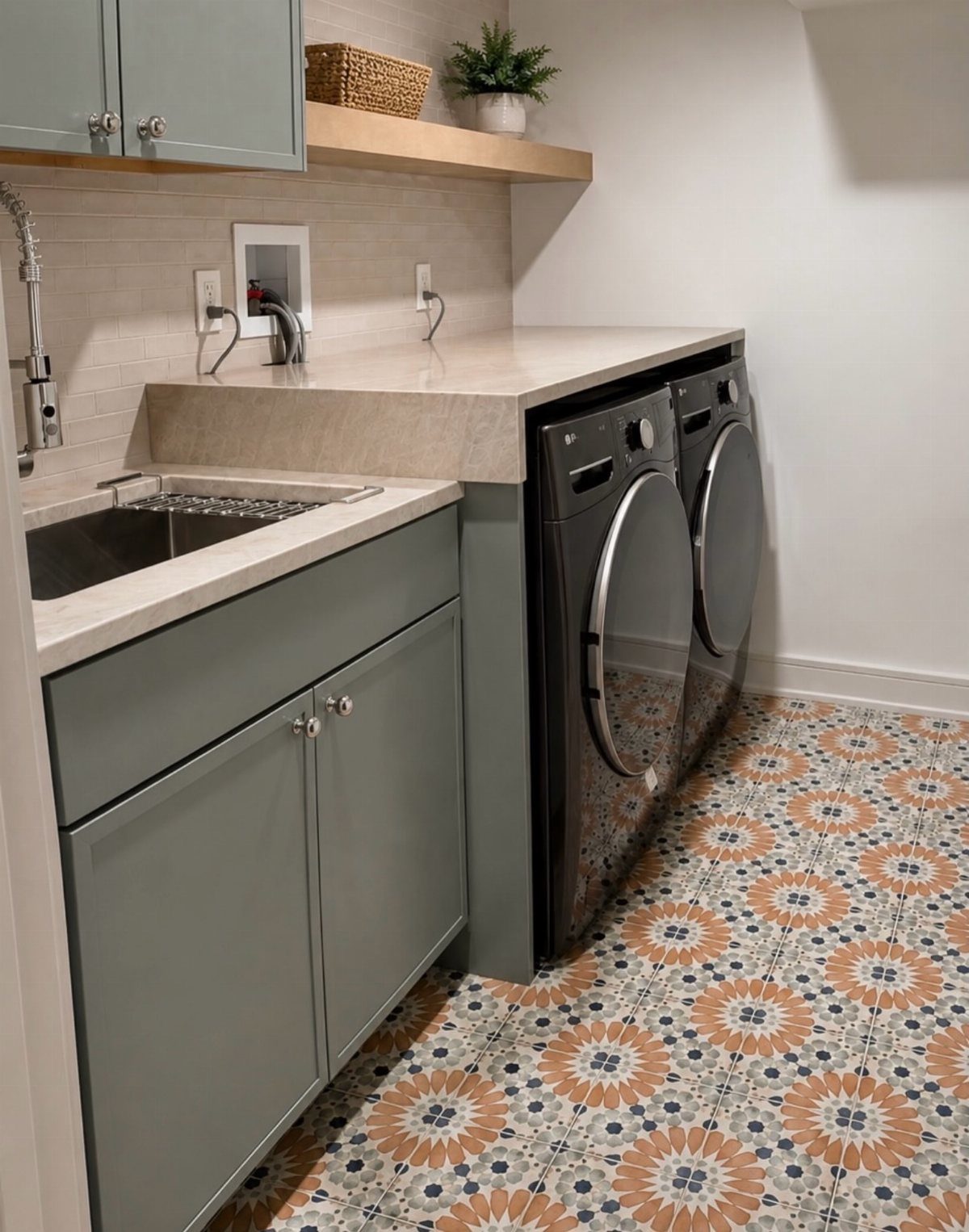
Pattern on the floor can carry an entire laundry room.
Bold orange and blue tile gives plain grey cabinets a personality they would never have alone, and because the room is small, you only need a modest amount of tile to make the statement.
If the cost worries you, run the pattern on the floor and keep everything else quiet.
The same tile also works as a backsplash behind a sink. I would pick one place for pattern, not both, so the room stays calm.
6. Laundry Room with Mudroom Elements
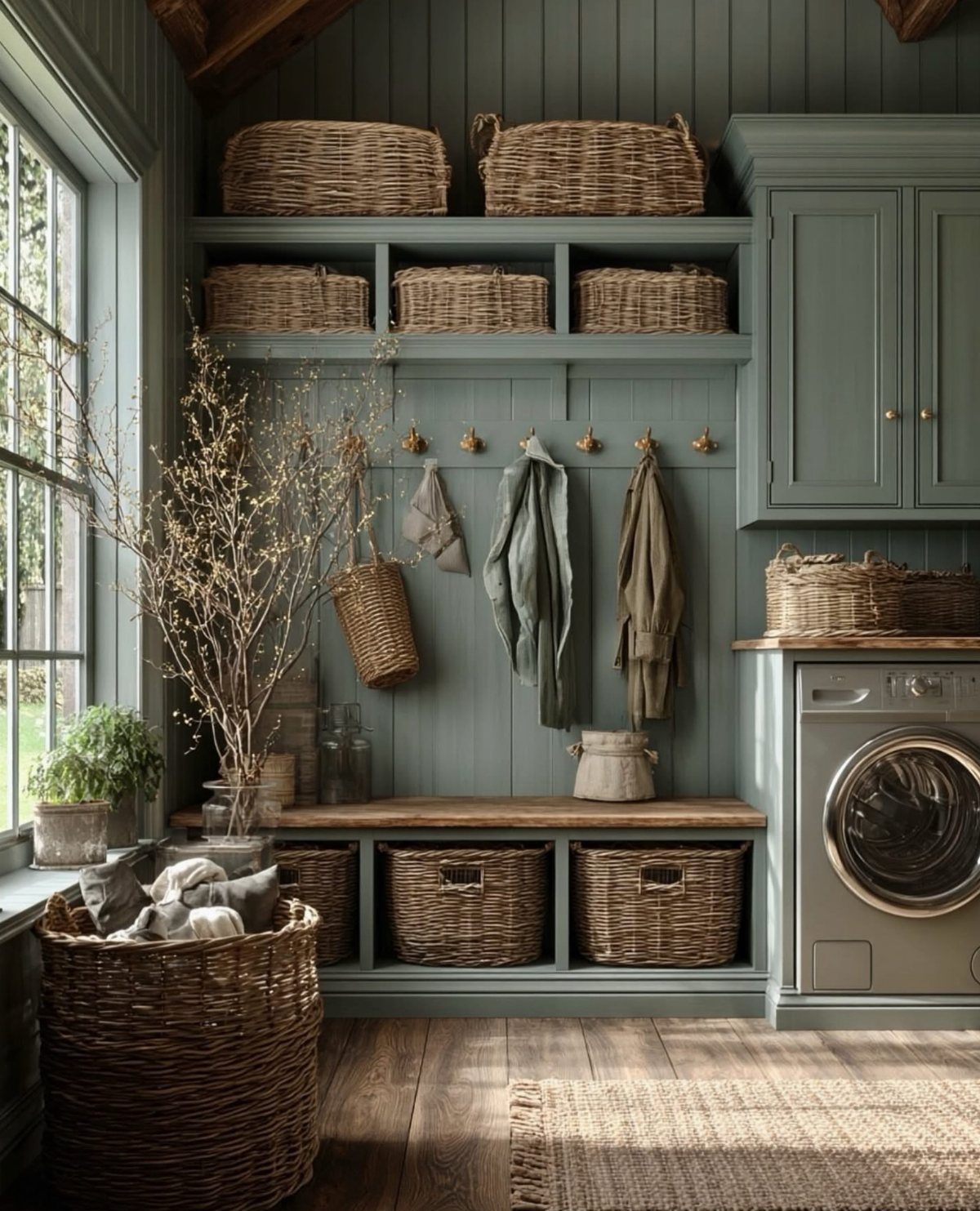
Laundry and mudroom duties overlap more than you would think: both deal with dirty, damp and dropped-at-the-door stuff.
Combining them means a bench for pulling off shoes, hooks for coats and bags, and the washer close enough to start a load right away.
Wicker baskets under or beside the bench corral gloves, hats and towels. I would hang hooks at a height everyone in the household can reach, and add the bench first, since it changes how the room gets used.
7. Integrated Drying Racks
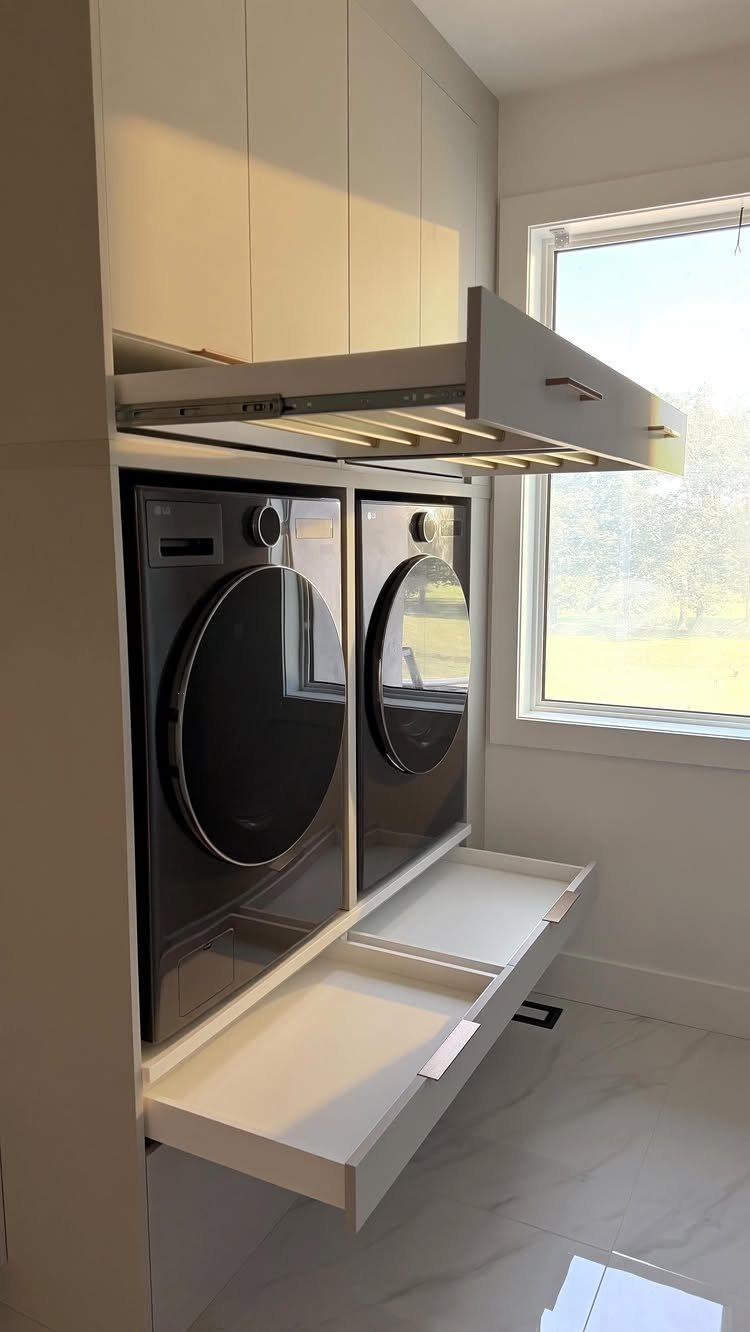
A pull-out drying rack slides out of the cabinet over the washer and dryer, holds wet clothes while they drip dry, then tucks away when the load is done.
White cabinetry hides it completely, so the room never looks like a drying room.
I like it best above front-loaders, where the rack sits within easy reach and the door is clear of the cabinet.
Build it into the cabinet run from the start, because the rack needs its own dedicated opening and cannot be added later without reworking the cabinet.
8. Colorful Rugs
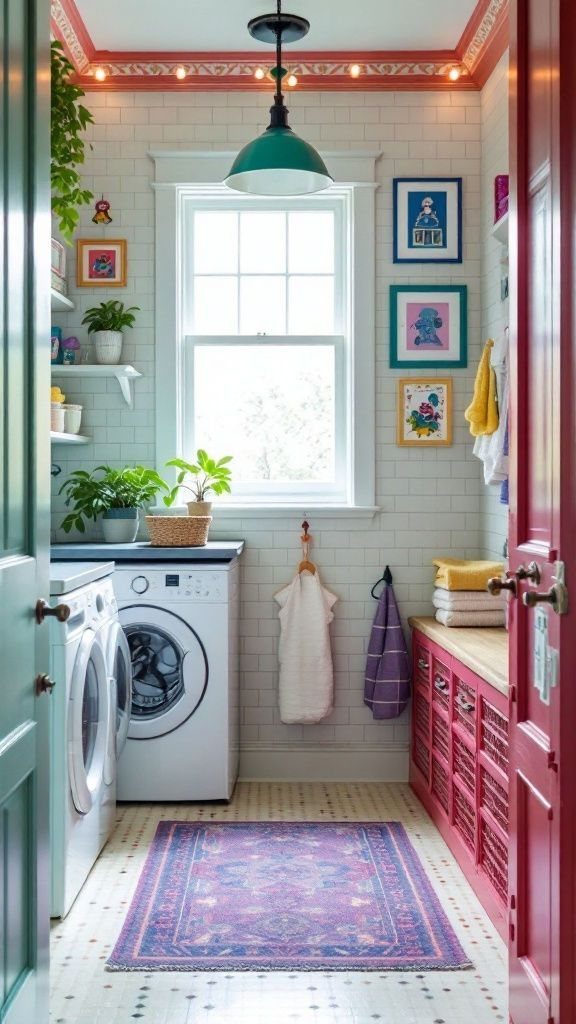
Hard floors are cold and loud underfoot, and a rug fixes both. A purple patterned rug over tile gives the spot in front of the machines a soft place to stand during long folding sessions.
Pattern is a smart pick here, since it hides lint and dust better than a solid color.
Choose a rug you can shake out or wash, because laundry rooms collect spills. I would pull its color from something already in the room, like the cabinets, so it looks planned.
9. Built-in Lockers
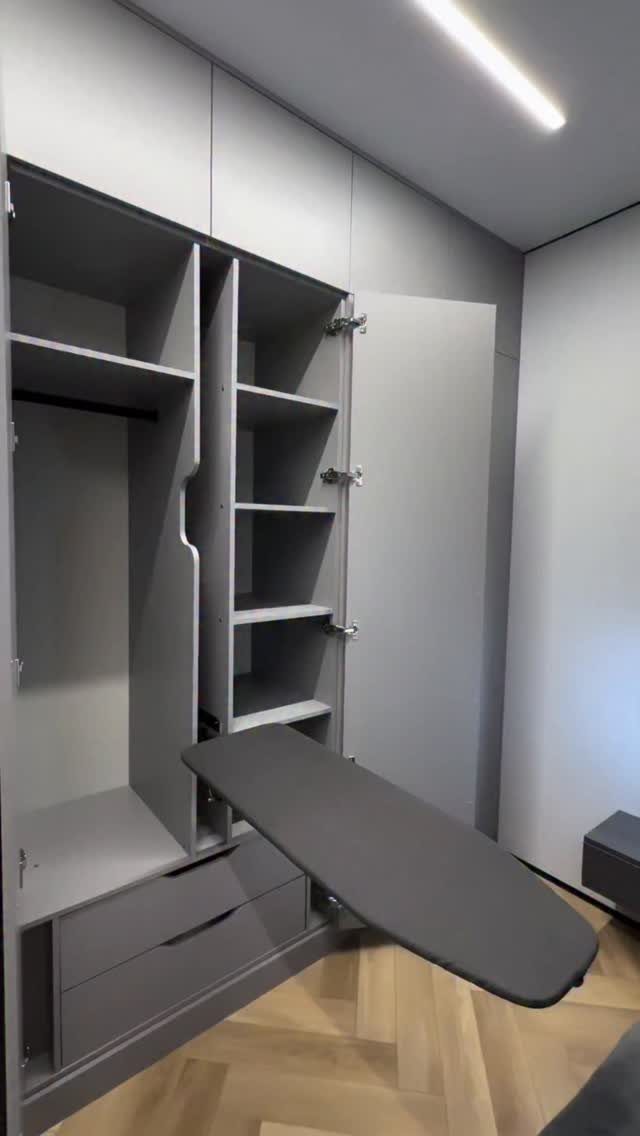
Lockers turn one wall into a full storage system: shelves for folded stacks, a rod for hanging clothes, drawers for small items, and an ironing board that pulls out when needed.
Grey is a calm color that keeps all that function from looking busy.
I would plan the layout around what you actually handle each week.
Put the items you reach for most at eye level and the rarely used ones up top. Built-ins cost more than freestanding shelves, so measure carefully before you commit.
10. Pendant Lights
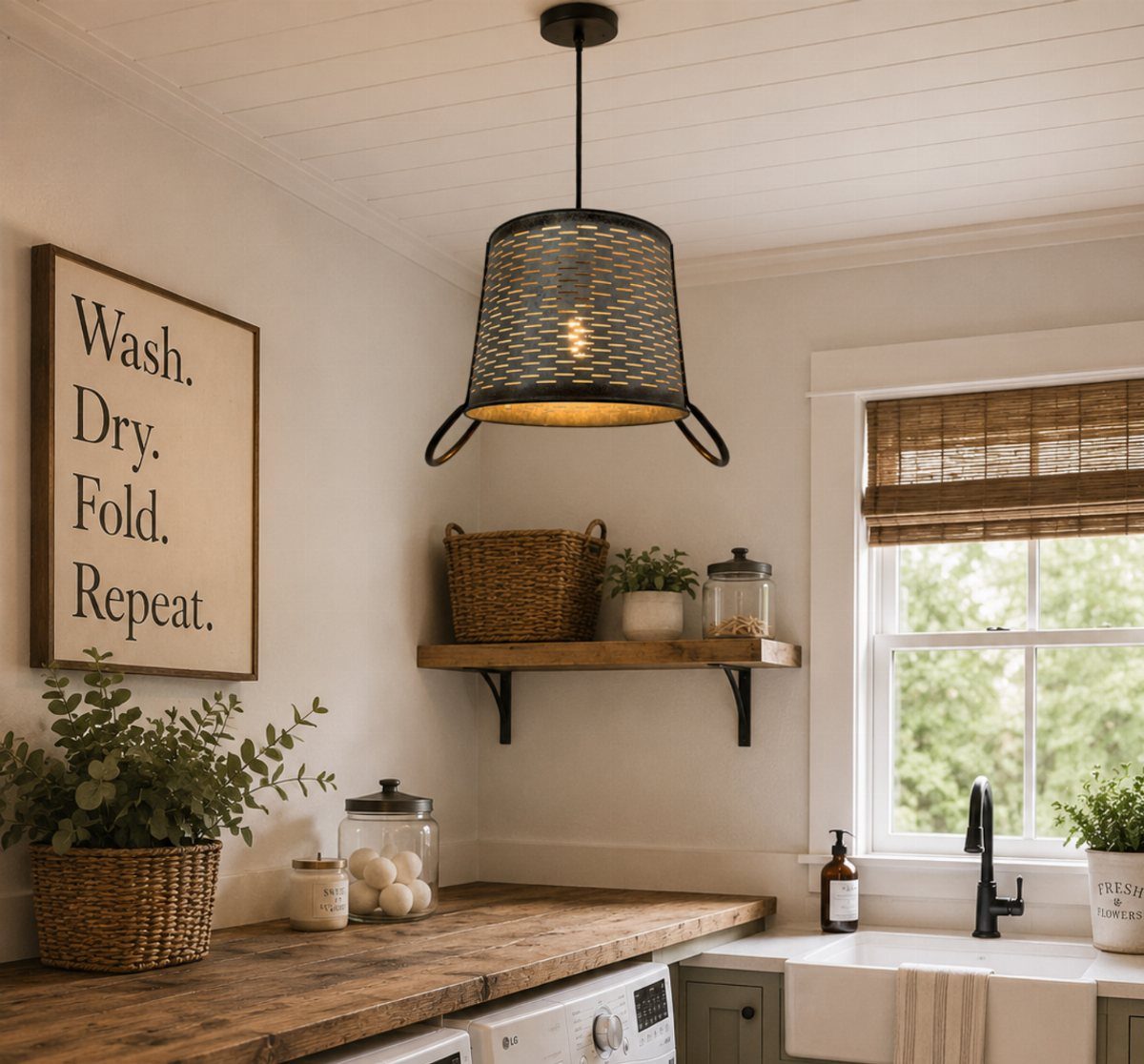
A single pendant light overhead gives a laundry room the one fixture it usually lacks: something with character. Black woven mesh looks right against wood, and it throws soft, patterned light instead of a flat glare.
Hang it over the counter or sink where you work, not the middle of the room.
Check that the shade sits high enough to clear your head and any cabinet doors. I would pair it with a bright bulb, since folding and stain checks need good light.
11. Laundry Room Color Schemes
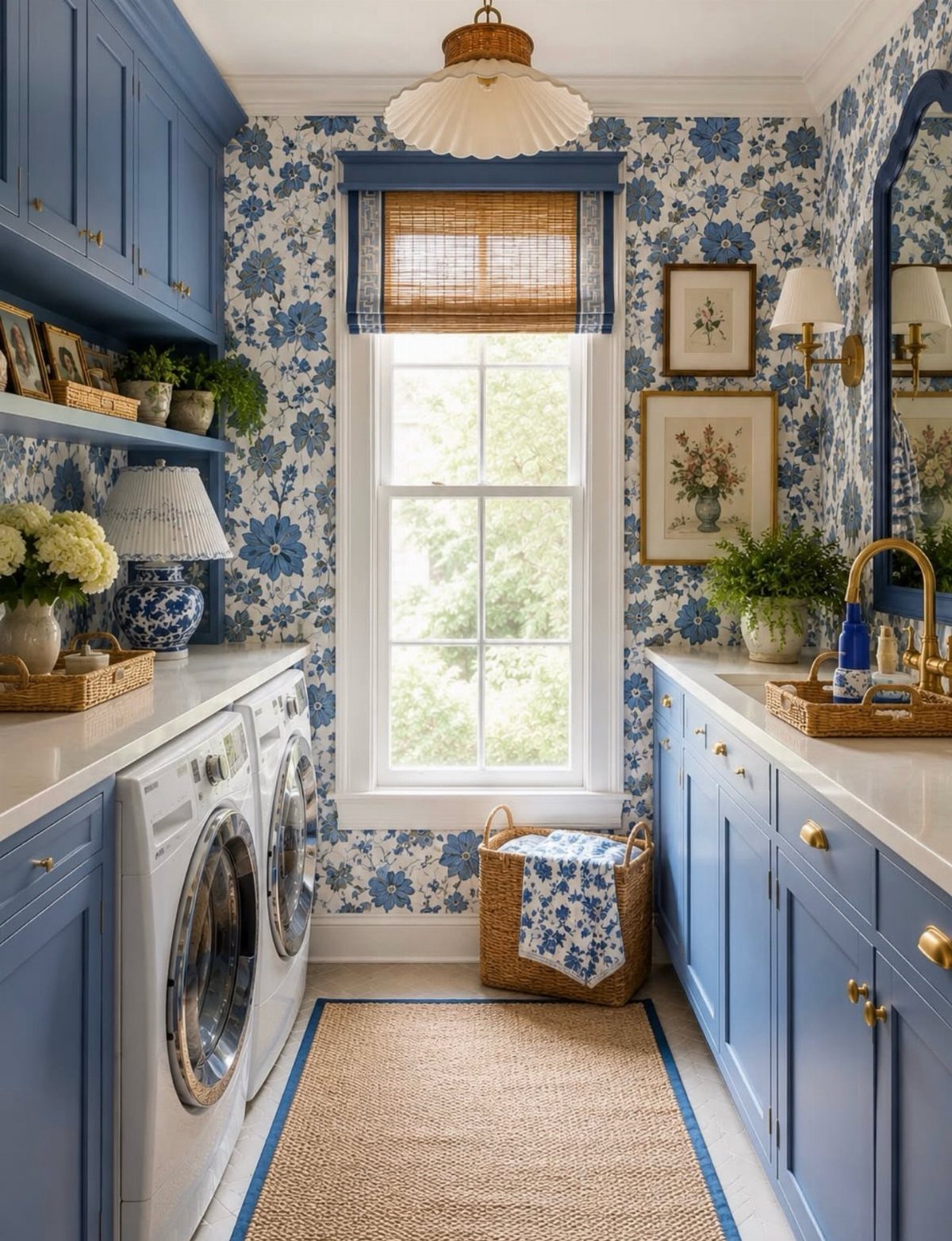
Color sets the mood before anything else in a laundry room does. Blue cabinets with floral wallpaper feel calm and a little old-fashioned, and white countertops keep the blue from getting heavy.
I would choose one dominant color and let the other materials stay neutral, like the tan jute rug and bamboo shade here.
Paint costs the least of any way to test a scheme, so try it on the cabinets before you spend on wallpaper. Small rooms handle strong color well because there is so little wall to cover.
12. Foldable Boards
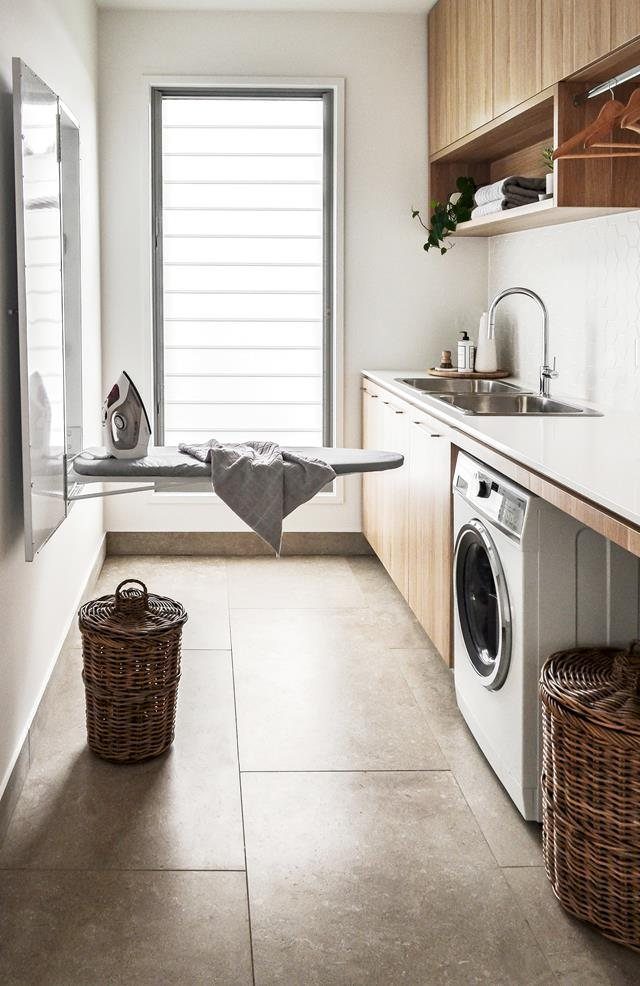
A wall-mounted ironing board folds flat against the wall when you are done, so the room keeps its floor space. That matters in a laundry room with a sink, washer and cabinets already sharing tight quarters.
Mount it near an outlet, and leave enough open floor in front for the board to extend fully.
A freestanding board needs a closet or corner of its own, which a wall-mounted one never does. I would choose this over any board you have to lean in a corner.
13. Laundry Room Decor
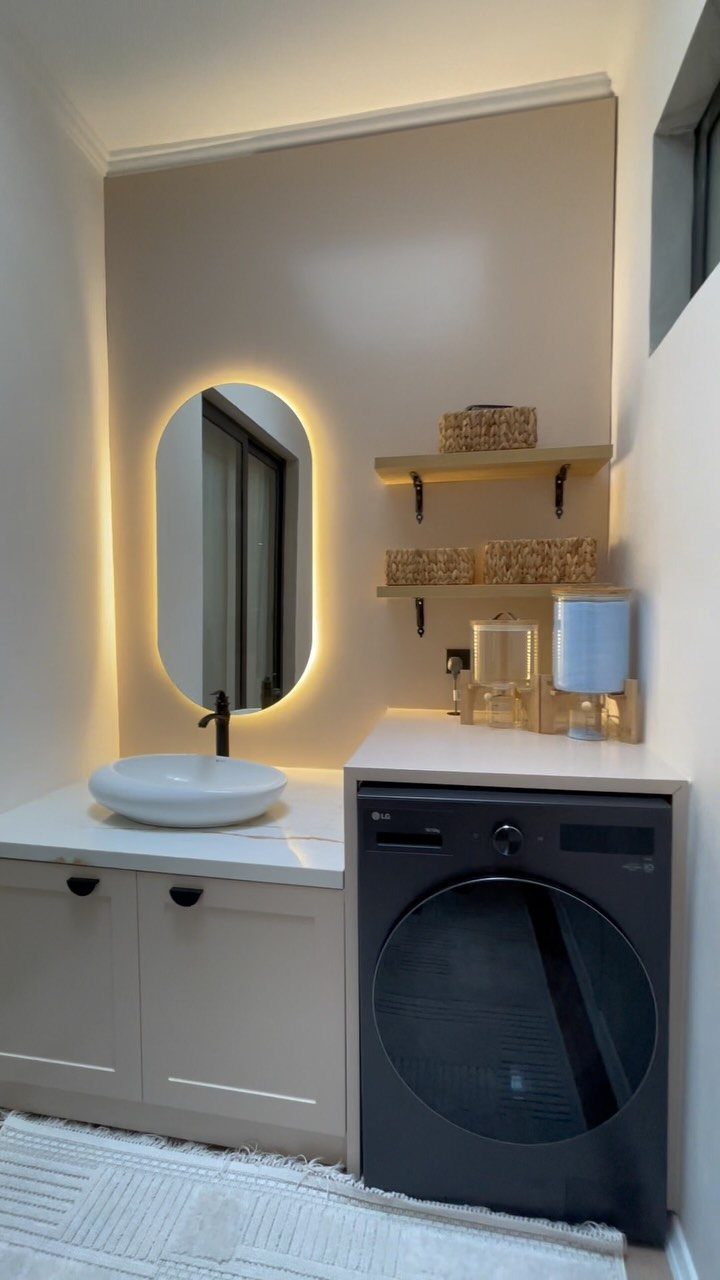
Small touches make a laundry room feel like yours, and the shelves are the easiest place to start.
Open wood shelves with woven baskets add warmth above a dark machine, and a backlit oval mirror gives off a soft glow that a plain overhead light can’t match.
I would keep the decor to a few pieces in one material family, wood and weave here, so the room reads as styled instead of stuffed. Baskets earn their spot because they hide the clutter.
14. Laundry Room Layout
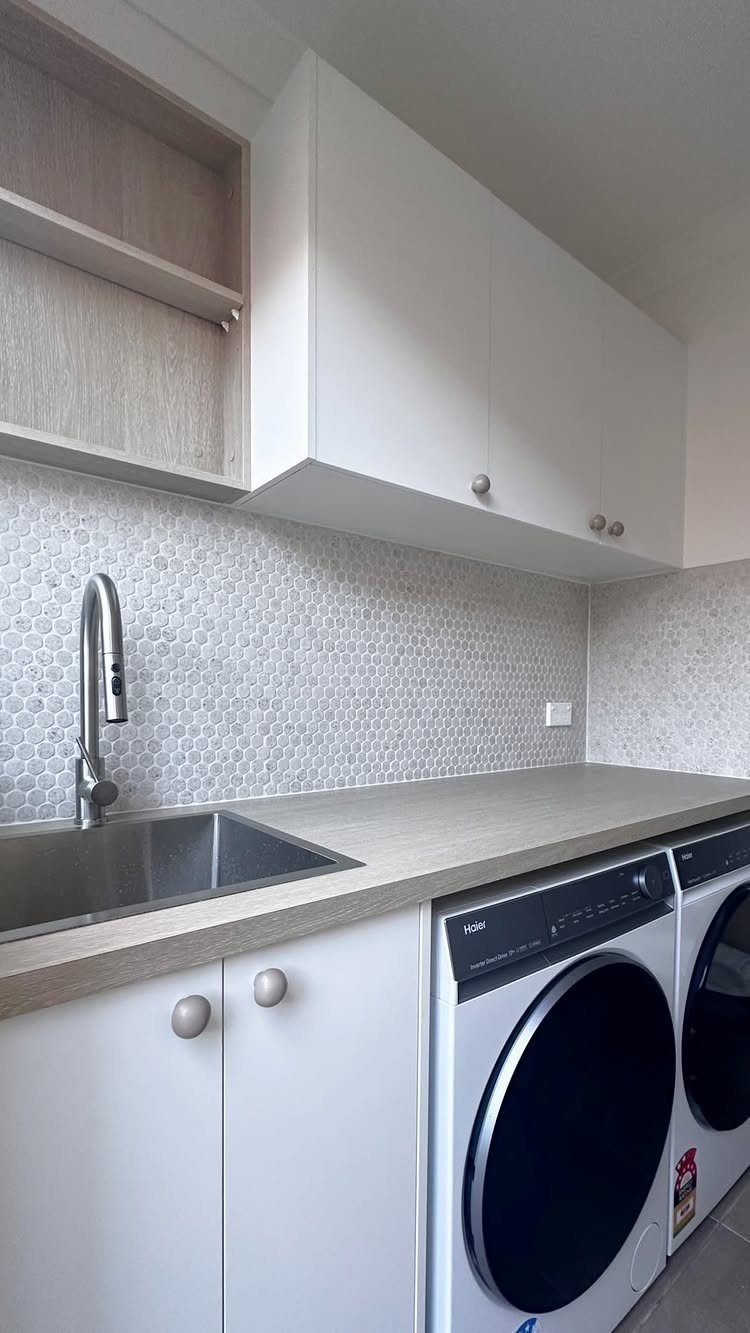
Keeping the washer, the sink and the counter within a couple of feet of each other means every step of a load stays close at hand.
Running the counter along the machines means there’s a spot to fold right where clothes come out.
Plan the order before you buy anything: wash, dry, fold, put away.
White cabinets above and a light counter below keep a tight room from feeling boxed in. Measure the machines and the door swing first, since layout mistakes are the costly ones to fix.
15. Laundry Room Trends
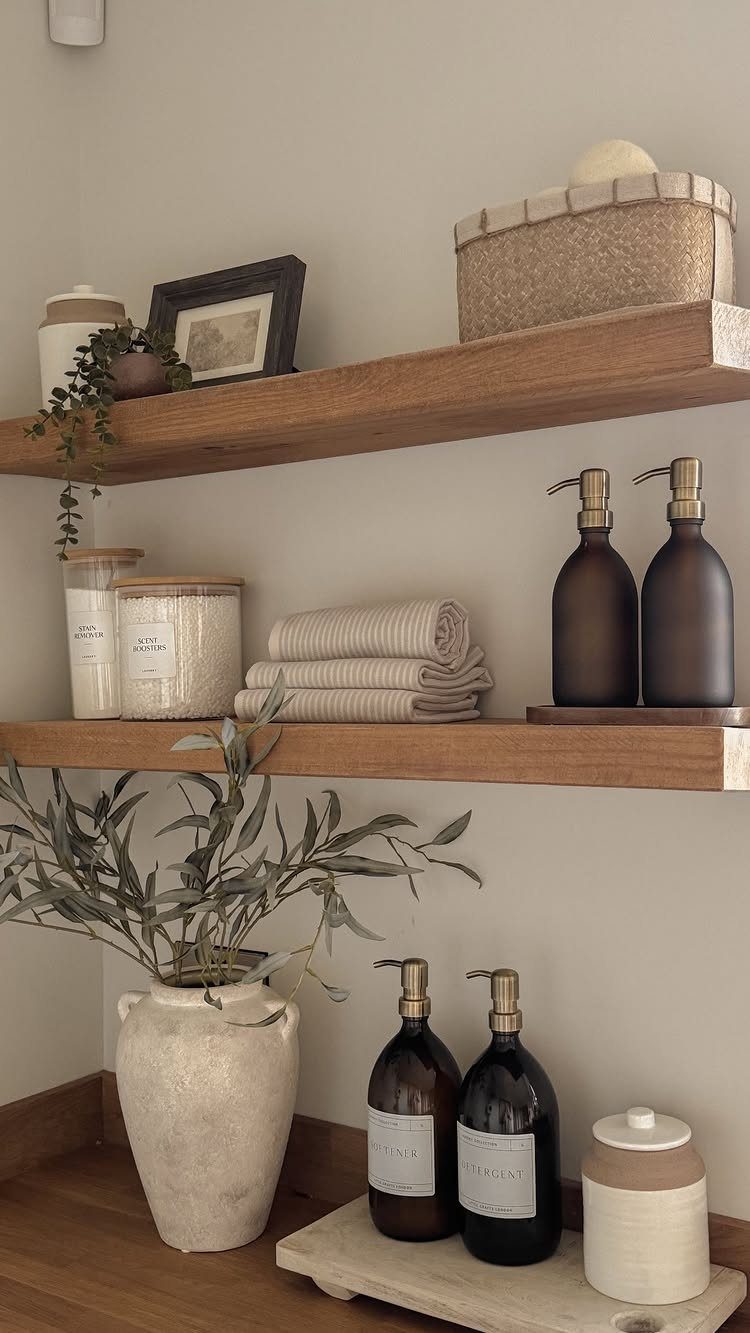
Floating wooden shelves are the trend I would actually copy, because they look current and cost little. Soap dispensers, folded towels and a woven basket sit easily on one shelf, and a vase of greenery softens the practical stuff.
Labeled jars, like the stain remover and scent boosters here, keep detergent add-ons easy to find and tidy to look at. Stick to neutral containers so the shelf stays calm, and decant only what you use often.
16. White Cabinetry and Countertops
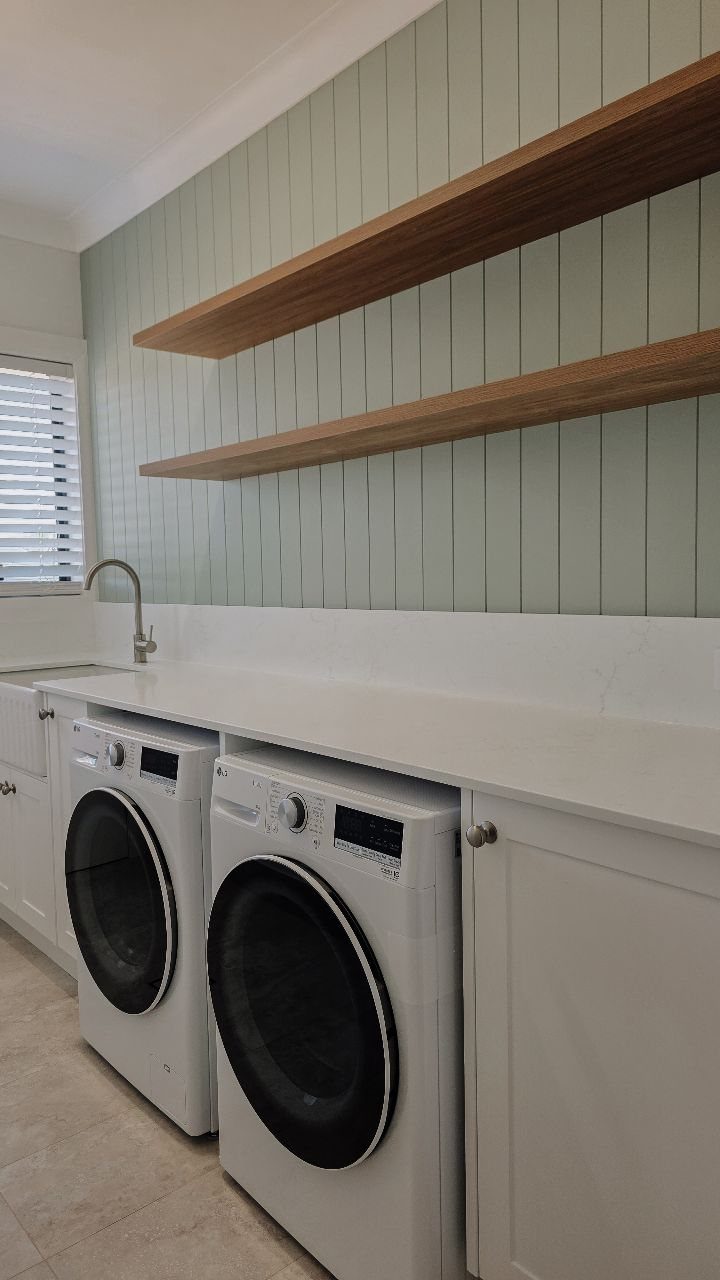
White cabinets with a white countertop are the safe choice, and I think they earn it: the room looks clean and bright with almost no effort, and nothing will date it quickly.
Light green paneled walls, as here, keep all that white from feeling clinical.
Wood floating shelves add a second material, which matters, because an all-white room can go flat. Wipe-clean surfaces help, though white does show stains, so wipe up spills quickly.
17. Open Shelving
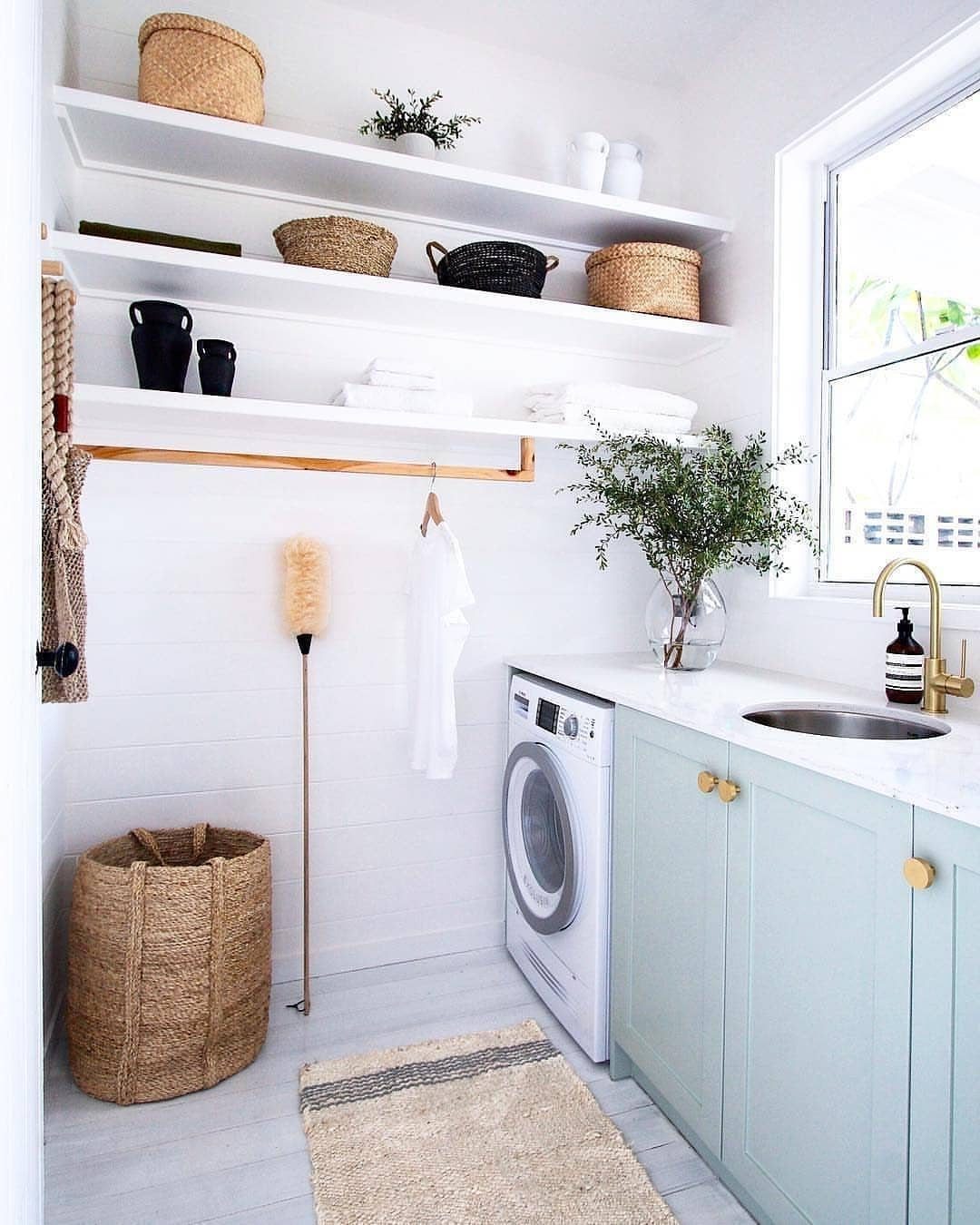
Open shelves put everyday supplies at arm’s reach and turn them into display. White shelves over light blue cabinets keep the look airy, and baskets on top hide the odds and ends you would rather not see.
I would use shelves for what you grab weekly and keep the rest in closed storage below.
Everything on view has to stay tidy, and dust collects faster than on a closed shelf, so be honest about how much you will wipe down.
18. Colorful Cabinetry
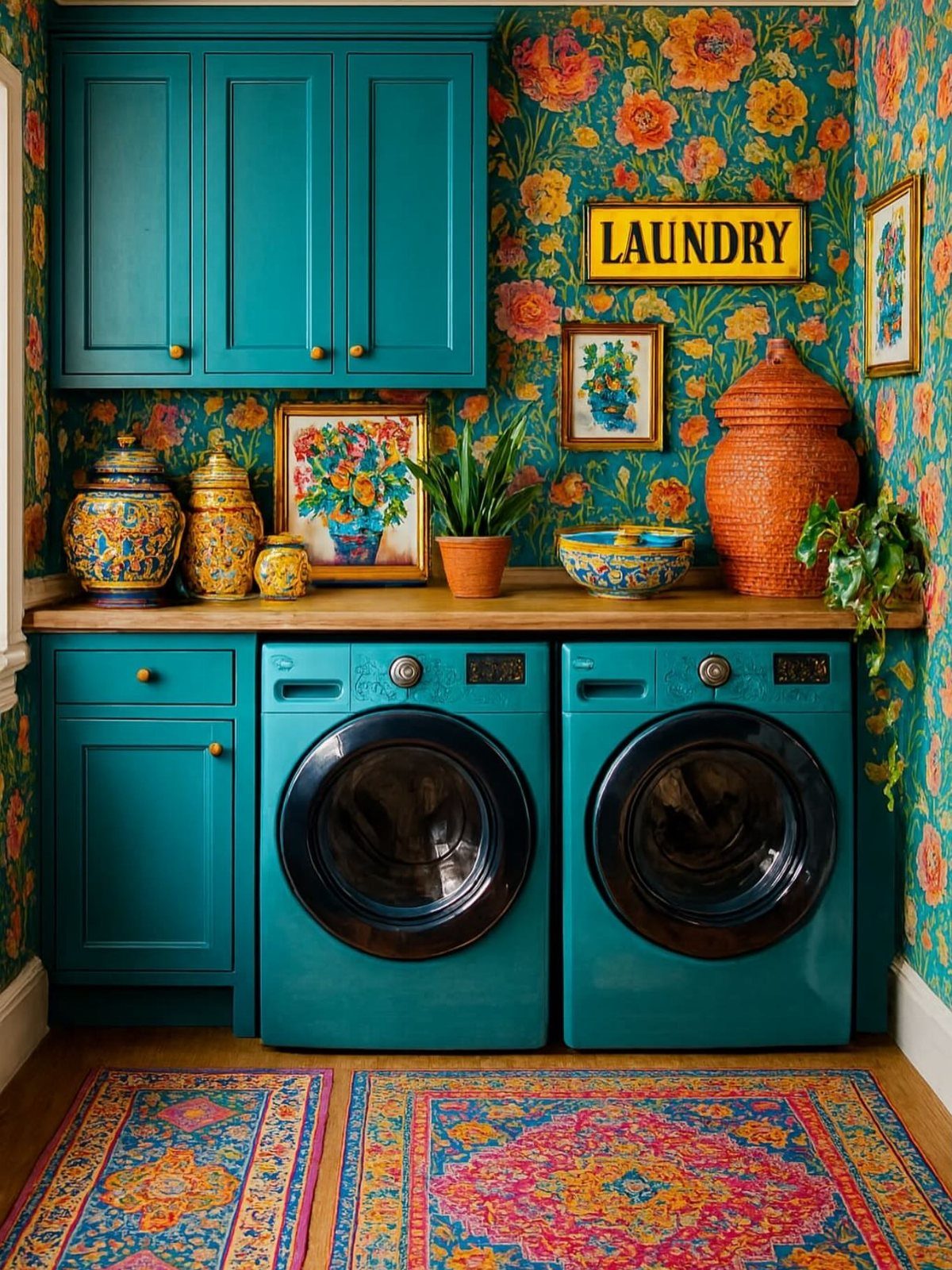
Painting the cabinets is the cheap move, and a laundry room is small enough that a bold shade stays fun instead of overwhelming.
Floral wallpaper and a patterned rug add layers here, but I would pick 2 busy elements at most and let the rest stay simple. Paint the cabinets first and see how you like the color before spending anything on machines.
19. DIY Countertops
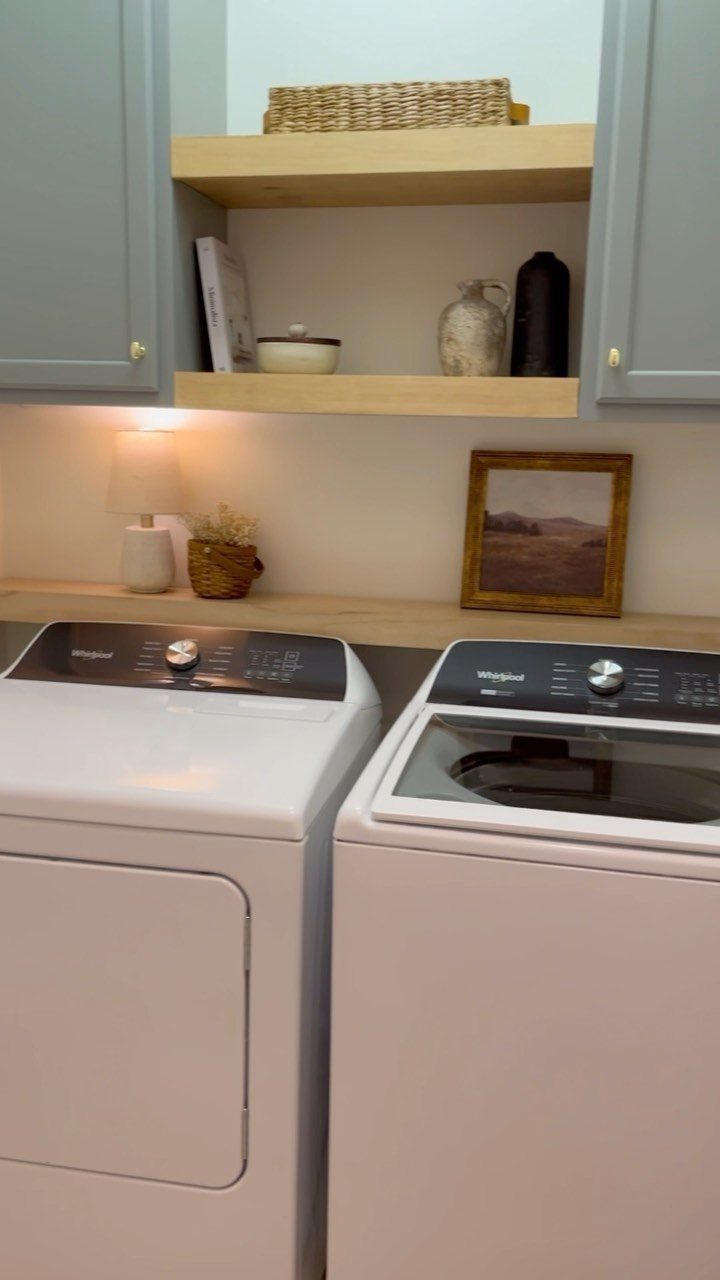
A countertop across the top of the washer and dryer gives you a folding surface where there was none. Light wood suits this room well, warming up the grey and blue cabinets above it.
Making your own costs far less than buying a finished slab.
Measure the full width of both machines, and leave a little room at the back for hoses and vents. Seal the wood well, since laundry rooms see spills and damp.
I would choose light wood over a dark stain, because it keeps the space bright.
20. Laundry Room Wallpaper
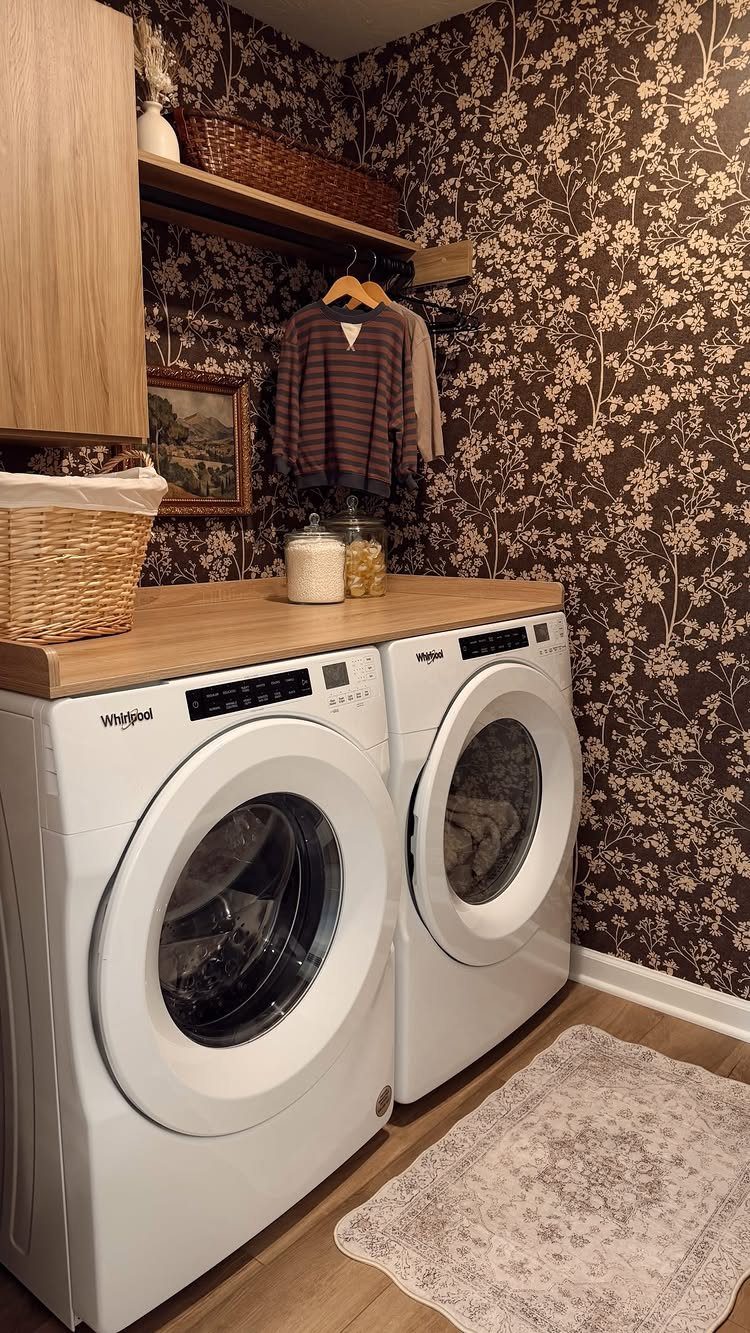
Dark brown floral wallpaper makes a plain pair of white machines look deliberate. The pattern does the decorating, so you need little else on the walls.
White appliances and a wood countertop stand out against a deep background, and that contrast is what I like most here. Keep the rest simple: one basket on a shelf and a drying rack are plenty.
Dark paper makes a small room feel snug rather than larger, so be sure that is the look you want. Peel-and-stick paper is easier to try in a rental.
21. Stacked Washer/dryer
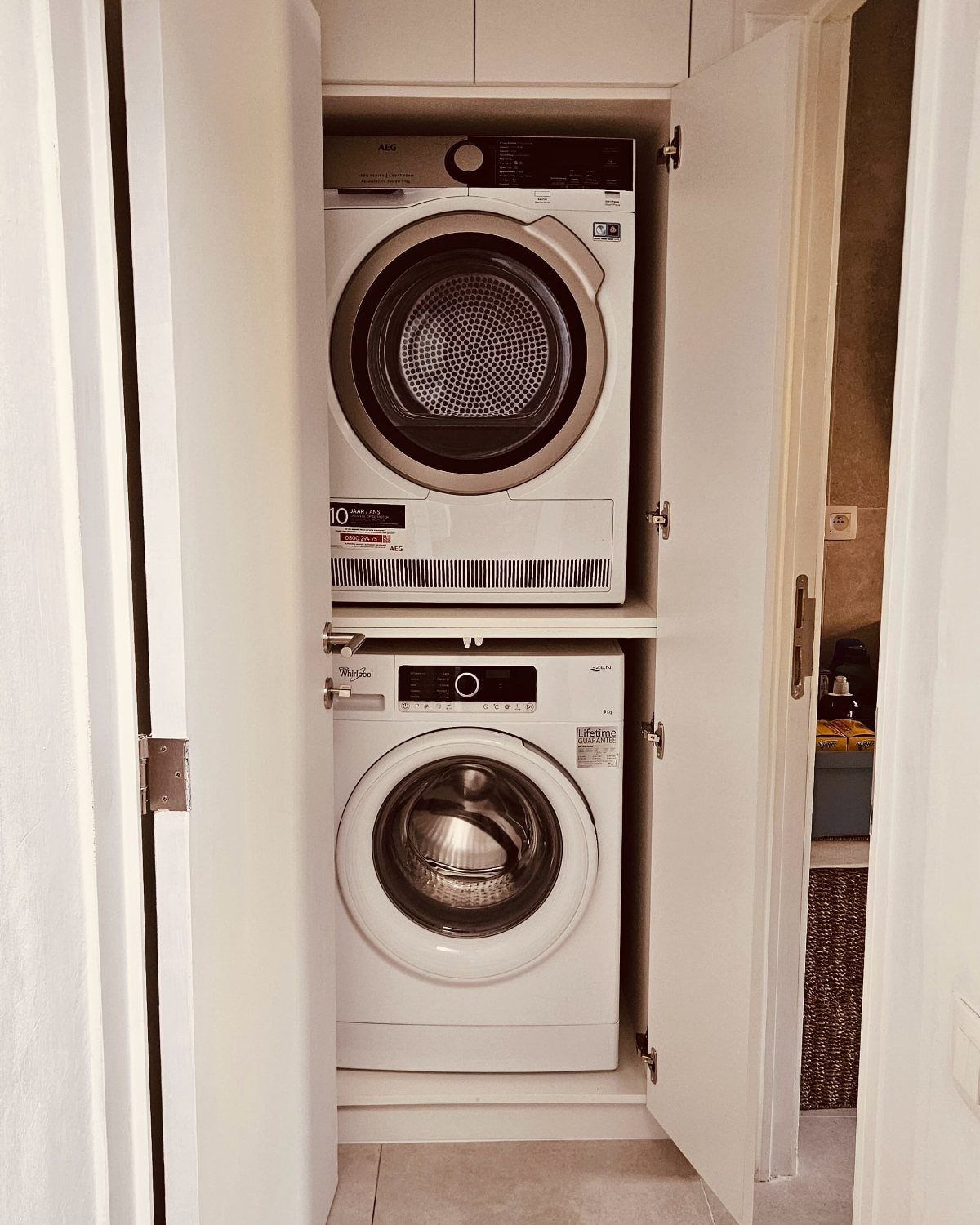
Stacking the dryer on top of the washer uses height instead of floor, which is why it suits a small laundry area so well. Inside a white built-in closet, the pair disappears behind doors when you are not using them.
Measure the closet’s height, width and depth before you buy, and allow extra room behind for hoses and venting. Confirm that your 2 machines are made to stack, since not every pair is.
The cost is reach: the dryer controls and door sit high, so I would think about who will use them.
Budget-friendly Ideas
One makeover came in under $300 with every accessory counted, and that is a realistic target for a small laundry room if you set the limit before you shop.
Write the number down, then split it: paint and storage first, small extras last.
Hidden organization is where the money does the most work.
Spend on what you touch every week, like a folding surface or sturdy hooks. Save on what only decorates, since a cheap accessory can be swapped later and a bad shelf cannot.
DIY projects stay cheap when the materials are simple. Pick two or three projects, finish them in a weekend, and stop there.
Small Space Solutions
Stacked machines free the most floor, and what you build around them decides whether the room works.
A small laundry room gets by on 3 things: a couple of oak shelves mounted high, a countertop that folds down when you need it, and a plain rod or rail where wet clothes can drip dry.
Label the baskets. In a small room, a basket you have to open to identify is a basket that gets ignored.
Keep the color scheme tight. Sage green cabinets with oak and woven storage read as one calm family, which makes a small space feel intentional instead of crowded.
Warm lighting helps too. A soft bulb makes a compact room feel cozy rather than cramped.
Baskets on the shelves next to the machines work well for small items, but keep the floor clear so you can reach the controls.
Color and Decor Trends
The look I see taking over in 2026 is quiet and useful: front-loaders slid under a white countertop, open shelves, white cabinets, and a tiled backsplash in a neutral or soft blue. That combination is easy to copy in stages.
Start with the part you can change cheaply, which is color. Blue or a neutral on the walls or cabinets fits the current direction and can be repainted if you tire of it.
Add the tiled backsplash next, since it protects the wall and gives the room a finished edge.
Personal touches work best when they stay small. One or two items you chose yourself will do more than a shelf full of decor.
Frequently Asked Questions
What is the ideal layout for a laundry room?
Line up the washer and dryer side by side, then park the sink and a counter within arm’s reach, so a full load never takes more than a step or two.
Before you spend a dollar, sketch the sequence of wash, dry, fold and put away, and measure both machines plus the door swing, because a wrong layout is the costliest thing to undo.
What are some unique ideas for a laundry room?
A laundry room that doubles as a mudroom is one of the most useful twists, with a bench for shoes, hooks for coats and the washer close by.
A pull-out drying rack built into the cabinet over the machines is another, because it holds dripping clothes and then disappears. Wall-mounted ironing boards and built-in lockers with shelves, a rod and drawers also keep floor space free.





