What decides which pedestal is yours is what you need to store and whether you own the place.
Renters should look at a Metal Frame Pedestal Stand, which needs no building, while owners with a saw and a weekend can make a DIY Washer and Dryer Pedestal, a plain wooden platform that costs the least of any way to lift both machines.
Drawers cost more in money or time, whether that means the Samsung Pedestal with Pull-Out Drawer or a Built-In Pedestal with Drawers on full-extension slides, and an Open Shelf Wooden Pedestal holding one basket sits between the two.
1. Samsung Pedestal with Pull-Out Drawer
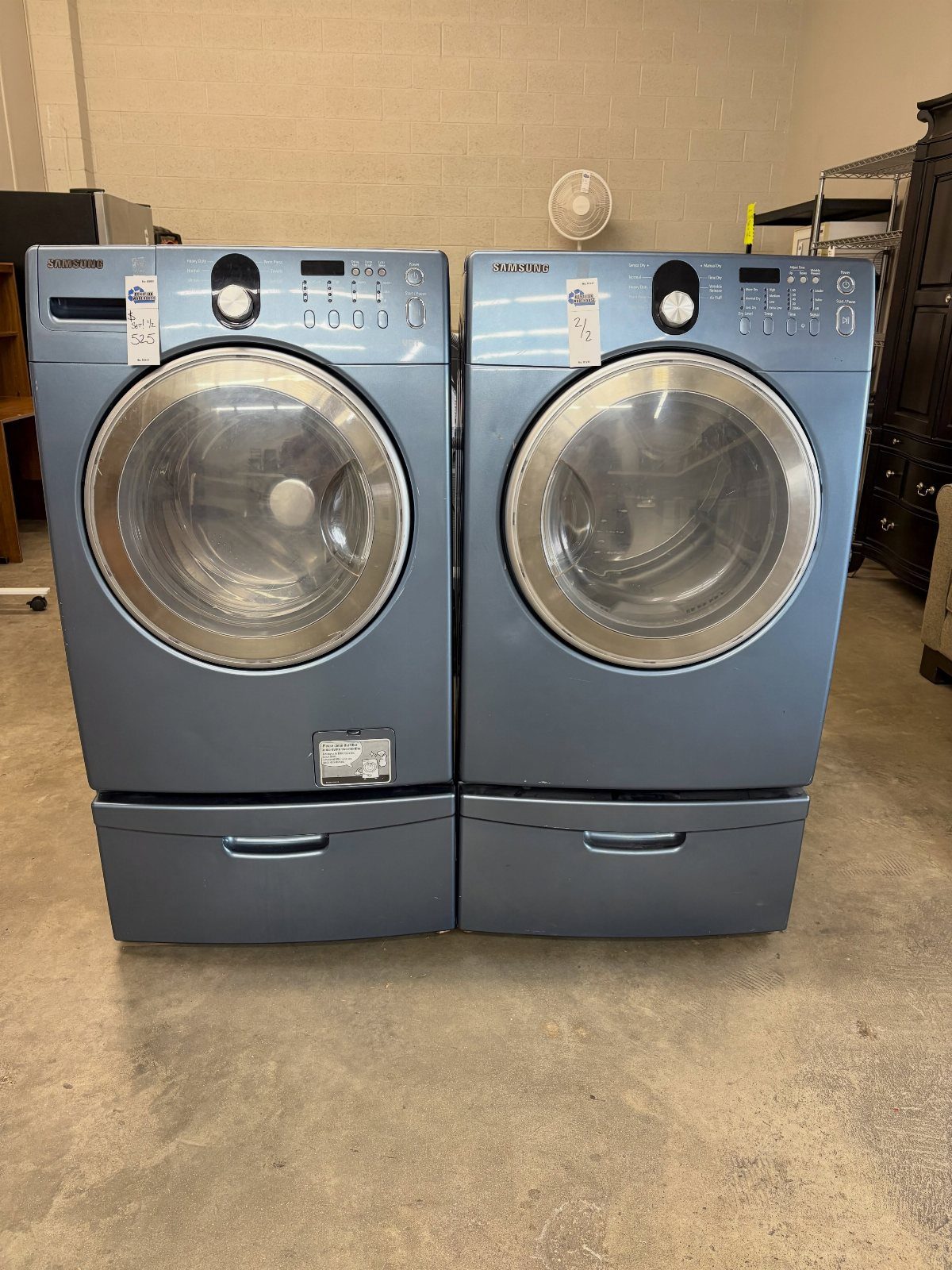
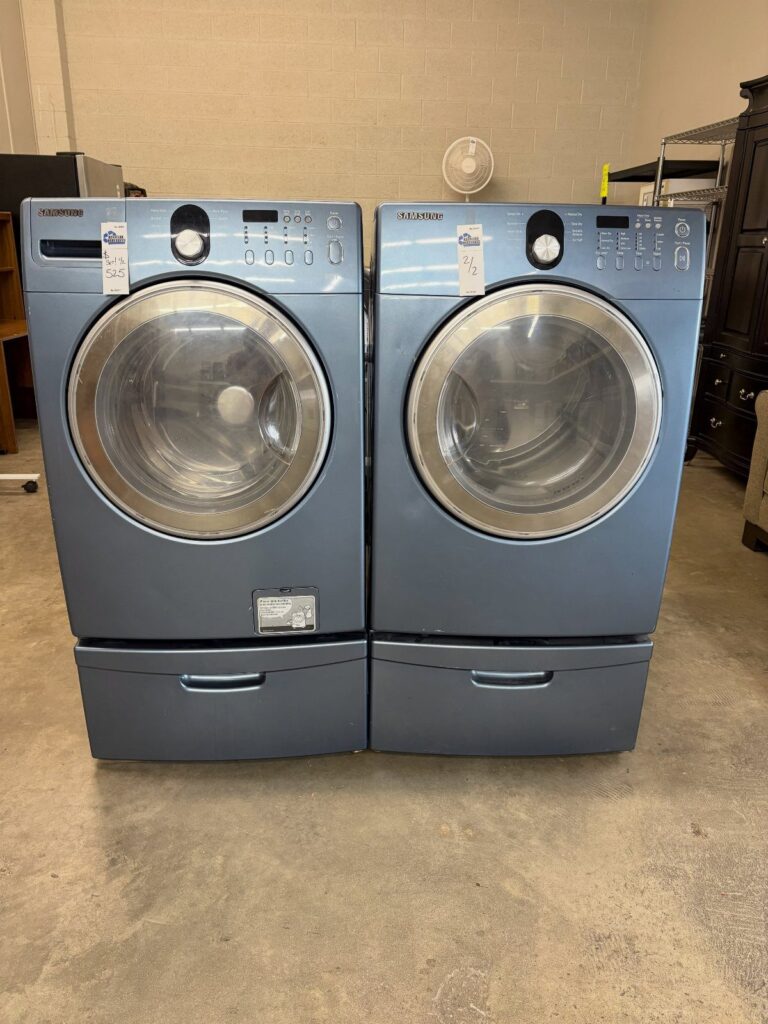
Matching drawers under a washer and dryer turn the dead space at floor level into storage you can actually reach. Buying the pedestals alongside the machines keeps the finish and width aligned, which is hard to fake later.
Confirm the pedestal is sold for your exact washer and dryer model, since fit varies even within one brand.
Drawers hold detergent, dryer sheets and stain sprays well, but a drawer full of liquid jugs gets heavy, so keep the bulky stuff on a shelf.
If budget is tight, price the pedestals separately; they add real cost on top of the machines.
Royxen also sells a taller version of their universal pedestal which will raise your washer and dryer up to 20 inches.
2. DIY Washer and Dryer Pedestal
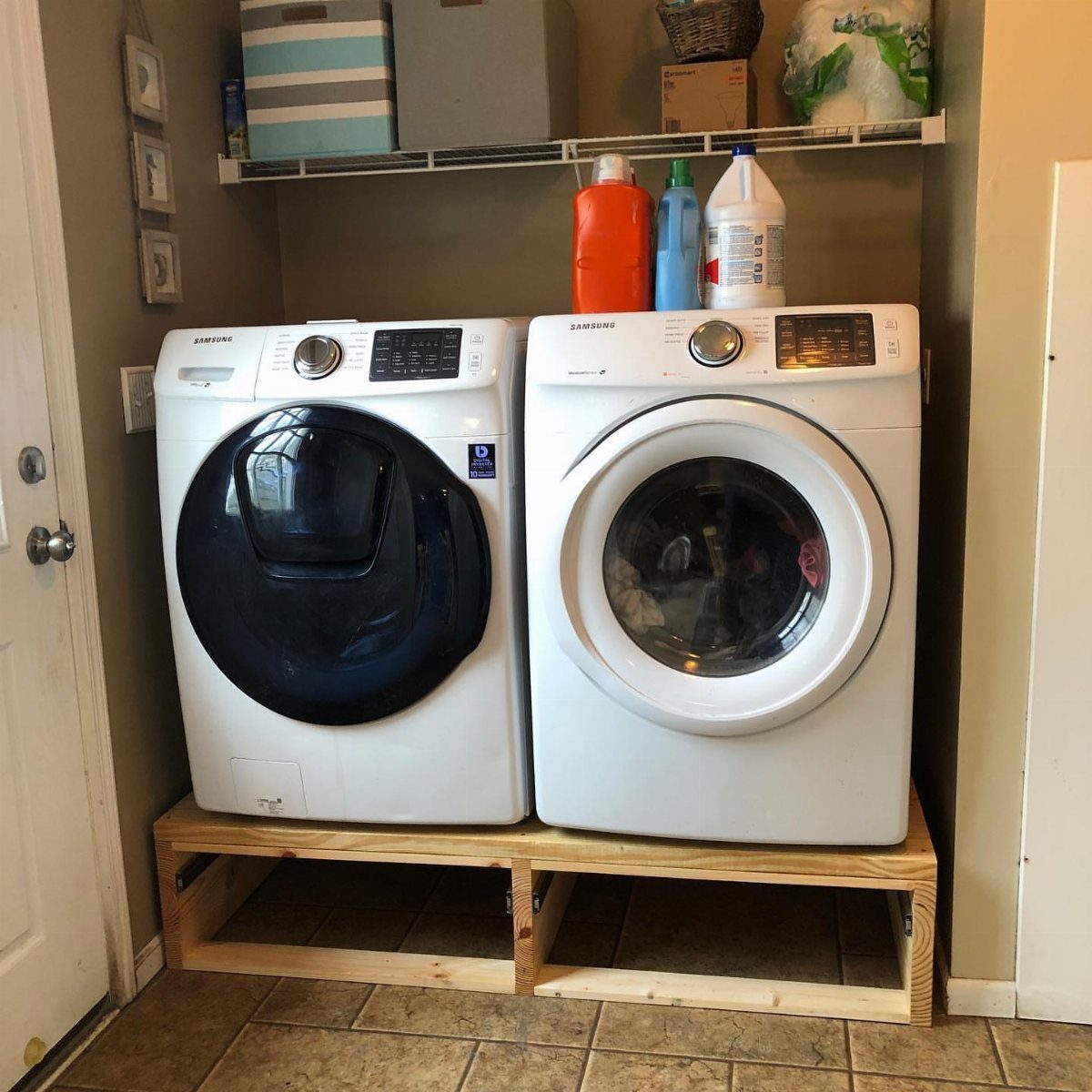
A plain wooden platform costs less than any other way to lift a washer and dryer, and it suits anyone comfortable with a saw and a drill.
Building it yourself lets you size the top to your machines and leave the front open or boxed in.
Measure the footprint of both machines first, then add a little margin on each side. Use sturdy framing lumber, since the platform carries 2 heavy appliances plus vibration during spin cycles.
Skip drawers on a first build; a simple box frame is enough.
3. Built-In Pedestal with Drawers
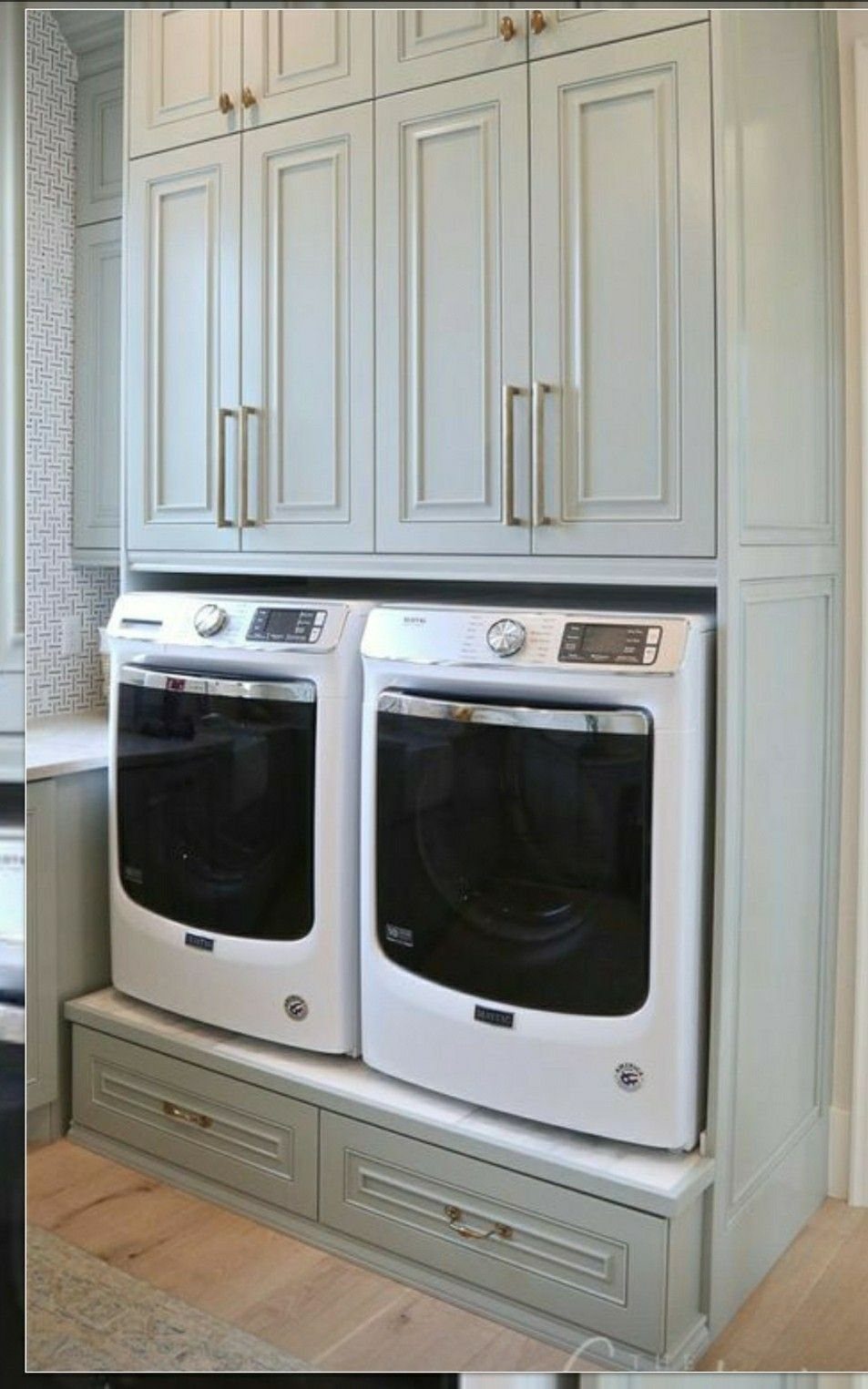
Drawers built into a pedestal and painted to match the upper cabinets make a laundry room look planned rather than assembled. Matching the grey of the cabinetry is what sells it.
This is a woodworking job, and it costs more in time than a basic platform.
Build a sturdy box first, then fit the drawers, and size the whole base to the machines. Full-extension slides let you reach the back of each drawer.
I would choose 2 deep drawers over several small ones: towels, sheets and bulk detergent all fit. If you rent, a freestanding version is the safer route.
4. Open Shelf Wooden Pedestal
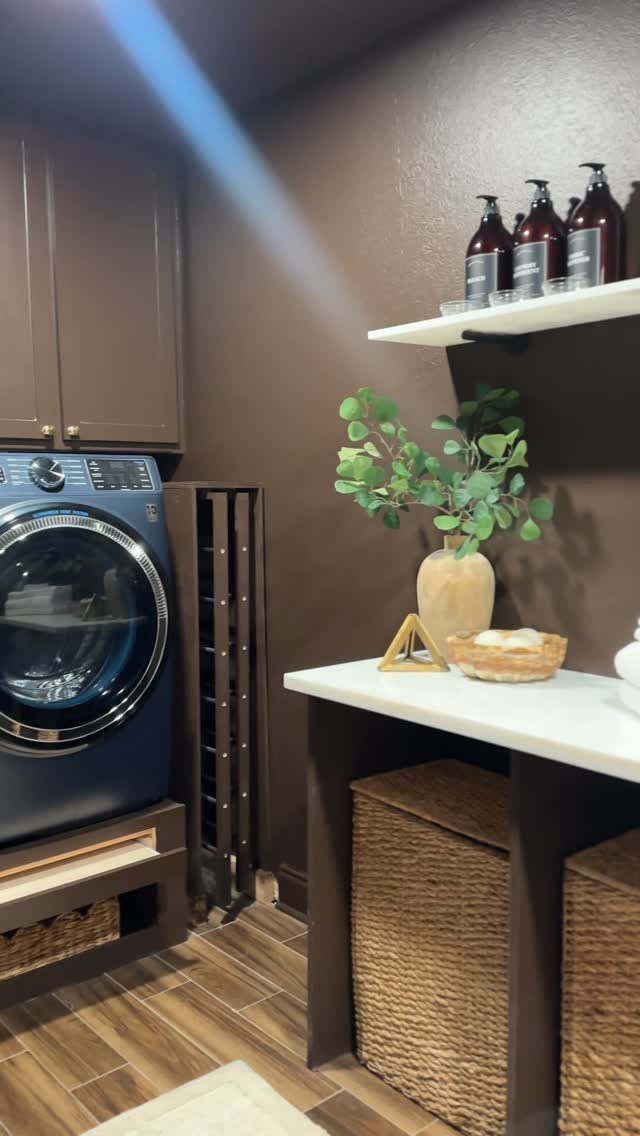
Open shelving under a washer keeps a basket within arm’s reach and costs less than drawers, because there are no slides or fronts to build or buy.
A wicker basket under a raised washer is a simple spot for dirty clothes or small supplies.
Pick baskets that fit the opening with a little room to slide them out. Wood suits a room with warm walls, and a coat of paint or sealer helps it handle the damp of a laundry space.
The tradeoff: open storage shows clutter, so use matching baskets.
5. Metal Frame Pedestal Stand
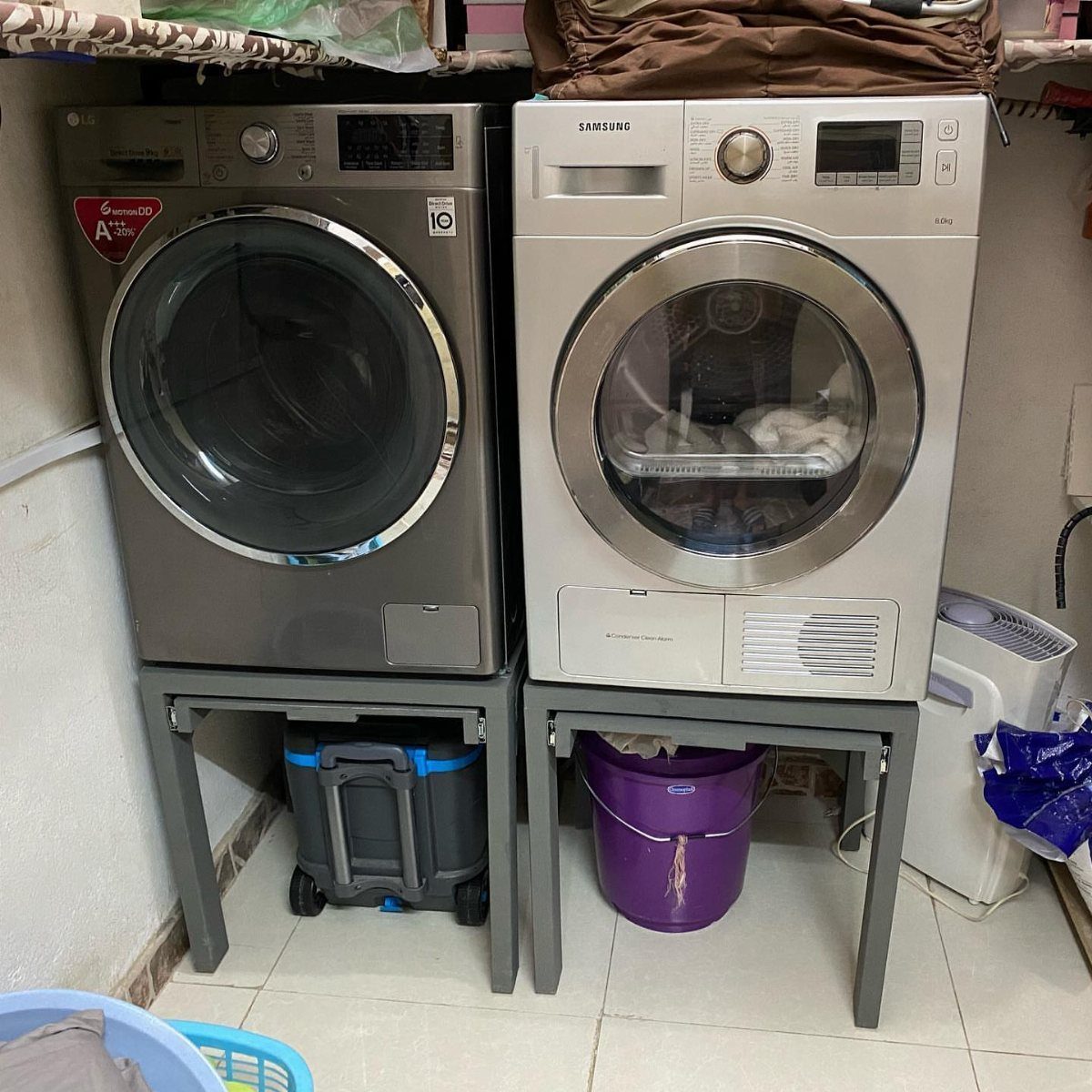
A metal frame pedestal lifts the machines and leaves the space below open, which makes it easy to slide in bins or a bucket and just as easy to sweep under.
An open frame keeps a small laundry area looking light, since you can see the floor and wall straight through it.
Choose a frame sized for your washer and dryer, and confirm it is rated for their weight. Bins stored below should be stackable and the same size, otherwise the space gets messy fast, as any mix of buckets will show.
Metal is also a fair pick for a rental, since no building is involved.
6. Solid Platform Pedestal
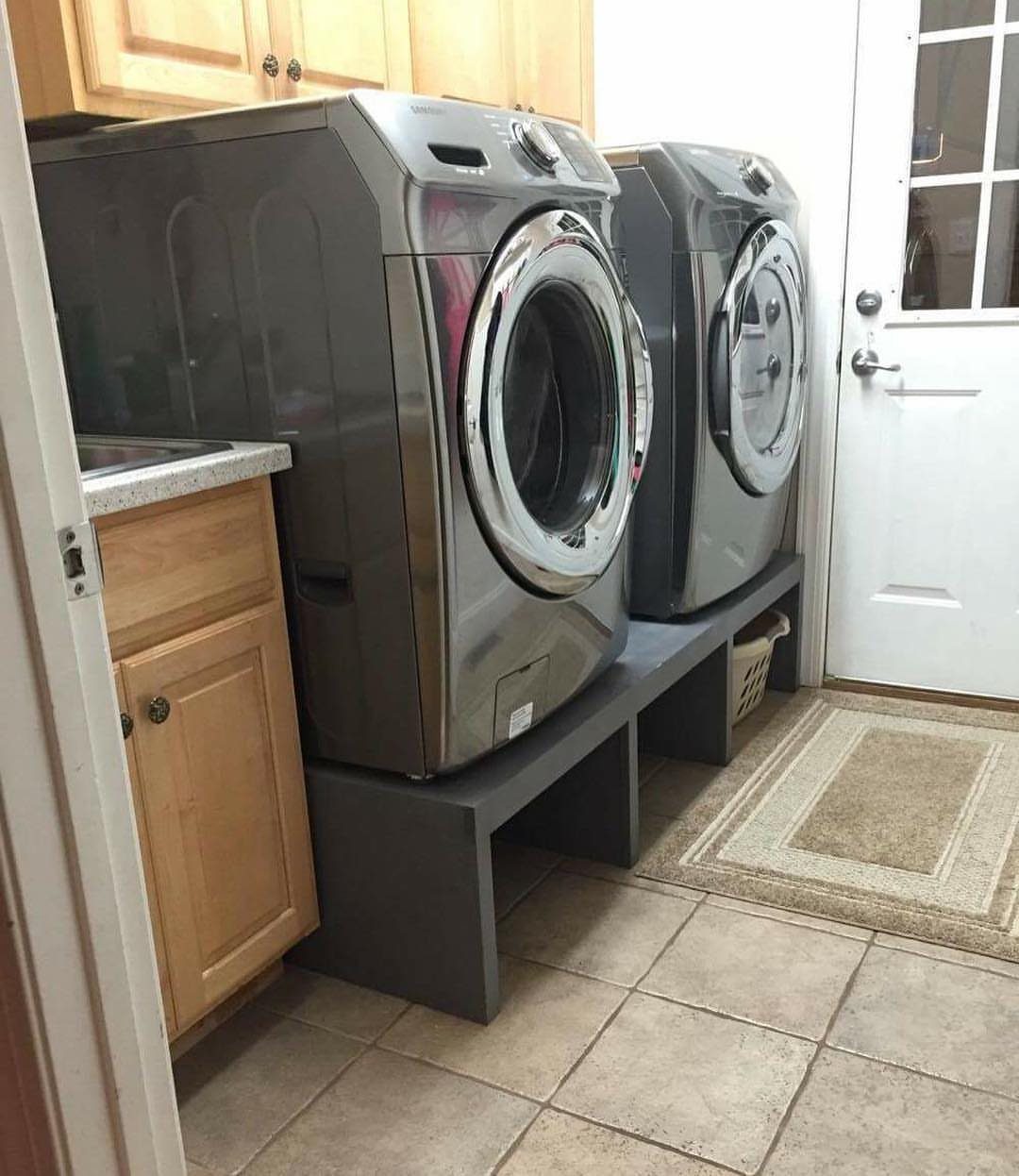
One wide, solid platform under both machines makes a single level surface, so the washer and dryer line up at the same height. It reads cleaner than 2 separate stands, and a dark grey finish hides scuffs.
Build it as one slab frame, sized to the combined width of the machines. Paint or finish it to match your cabinets or floor tile, since the front panel is the most visible part.
Nothing stores inside a solid platform, so plan shelves or cabinets above instead.
Benefits of Using Pedestals
Height is the benefit people feel first. Lifting a front-loader off the floor means less bending and less crouching to reach the back of the drum, which adds up over years of loads.
A pedestal with a drawer also clears the tops of the machines. Detergent, stain spray and dryer sheets live in the pedestal drawer below, so the tops stay clear for folding.
Floor space is the third gain. Whatever sits under the machines is storage you no longer need a cabinet or a shelf for, and that matters most in a closet-sized laundry area.
Whether a pedestal is worth the money depends on how many supplies you have to store. If a single basket and a bottle of detergent are all you own, a simple lift may be enough.
Considerations When Buying
Start with stability, because a washer in spin cycle shakes hard. Press down on the top and push sideways before you load it; the base should not flex or creep.
Next, match the pedestal to the machines.
Look at the weight rating too. A full drum of wet laundry is much heavier than the empty machine, so the stated capacity should clearly exceed both combined.
Then decide what you want to store. Drawers keep supplies hidden, while an open base holds a basket and costs less.
Last, measure the room. Raising a front-loader adds height, so make sure the lid or door still clears any shelf above.
DIY Options
Building your own is the cheapest route, and plenty of free plans exist for it. A solid wood platform or a painted bench with open shelves underneath can hold baskets and bins, and both are easy to build or buy.
Pick a plan that matches your skill. A basic box frame is a fine first project, while a bench with shelves needs more cuts and more careful measuring.
Make sure any plan you pick was drawn for the weight of a full washer, since a light bench won’t carry one. If the plan does not say, make the frame sturdier than it asks for.
Finish matters in a damp room. Prime and paint every surface, including the underside, so moisture does not swell the wood.
Frequently Asked Questions
How do you build a pedestal base for a washer and dryer?
Measure the footprint of both machines, add a little margin on each side, and build a box frame from sturdy framing lumber.
2 heavy appliances plus the shake of a spin cycle sit on that platform, so strength matters more than looks. Free plans are easy to find online.
What is the standard height of a washing machine with a pedestal?
A pedestal typically adds 14 to 20 inches to the machine’s height.
The taller end can be hard on shorter people reaching the dials. Check that the lid or door still clears any shelf above before you commit.





