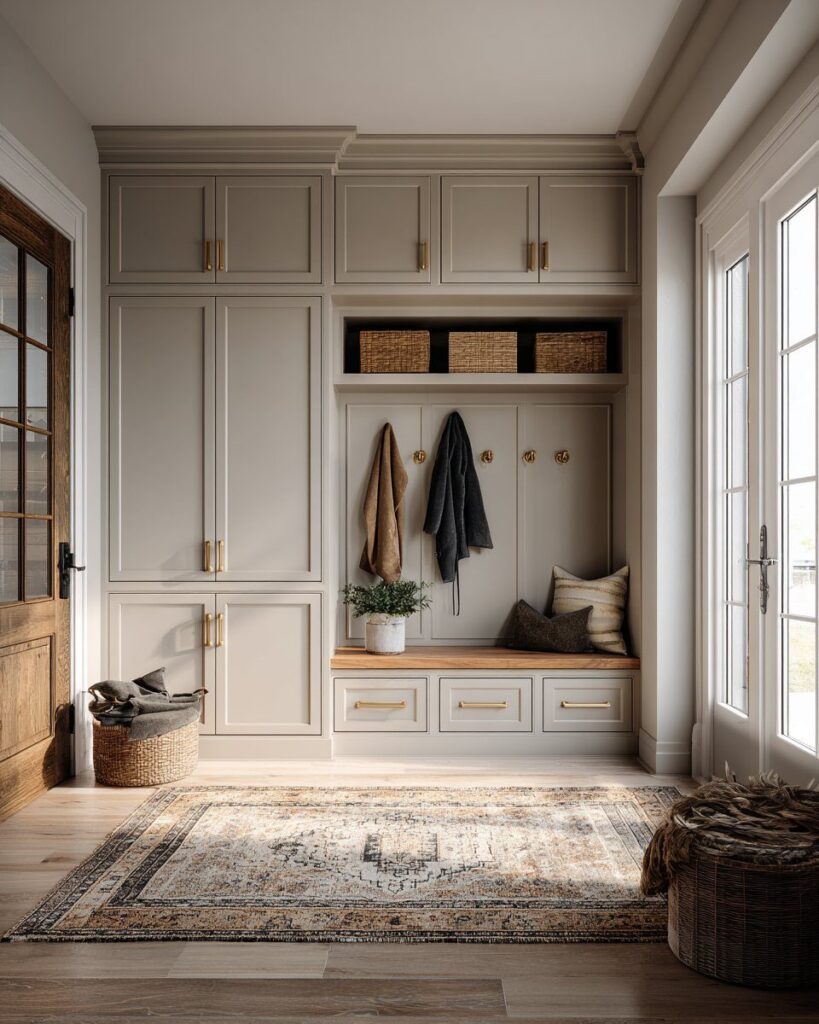
Each of the 5 benches answers the same question in a different way: open space under the seat for wet boots, hooks and shelves overhead, tall cabinets that hide the clutter, or baskets in cubbies.
1. Mudroom Bench with Hooks and Shelves
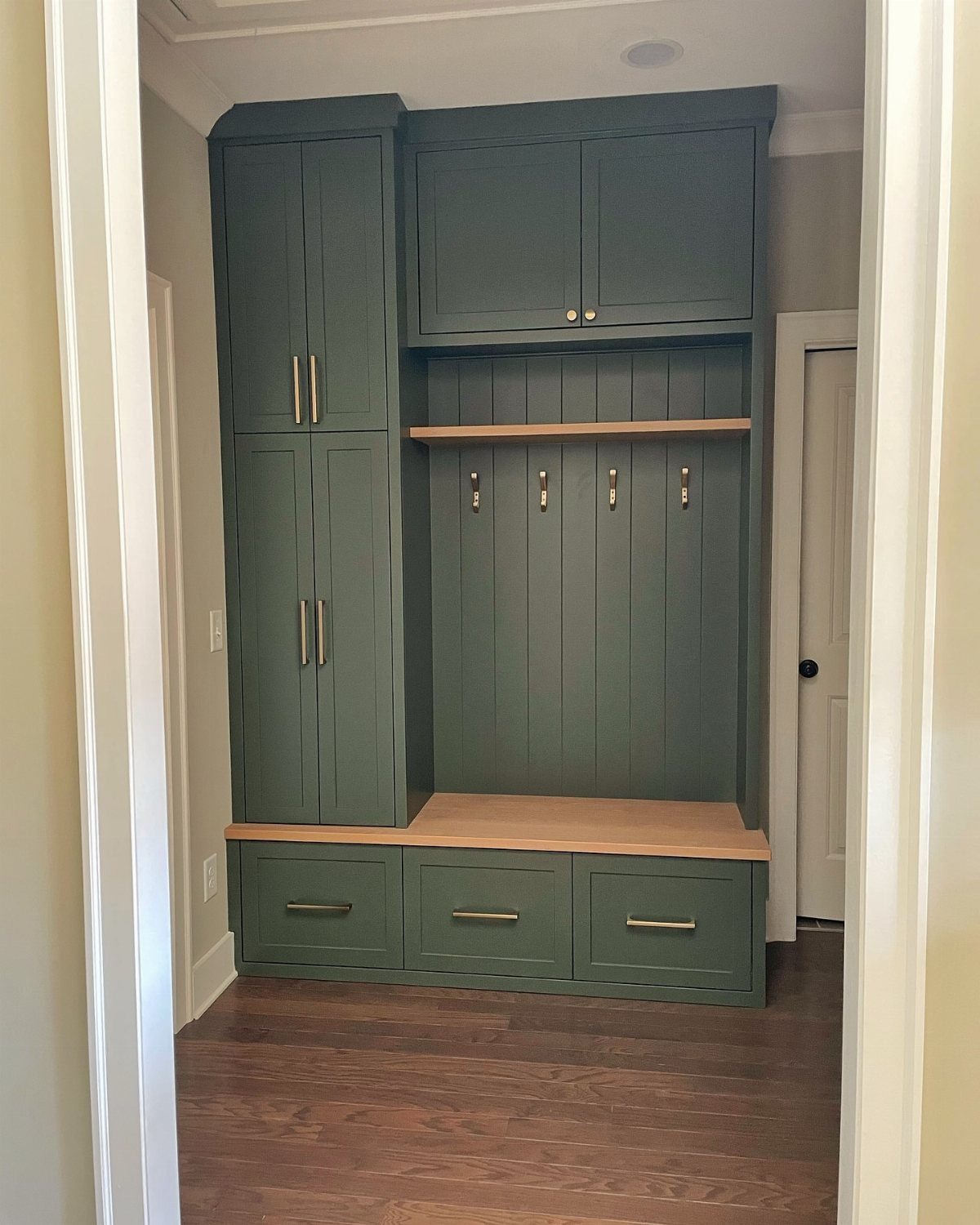
Green paint on a built-in does a lot of quiet work, and pairing it with a plain wooden bench keeps the unit from feeling heavy.
I like this layout because every zone has a job: hooks for daily coats, a shelf above for hats and bags, and drawers below for gloves and small things that otherwise end up on the floor.
Fasten the shelf first, then hold a full coat on its hanger beneath it to see where the hooks need to sit so the hem clears the bench.
Closed cabinets up top hide clutter, which suits a busy household better than open shelving.
2. Open Bottom Mudroom Bench
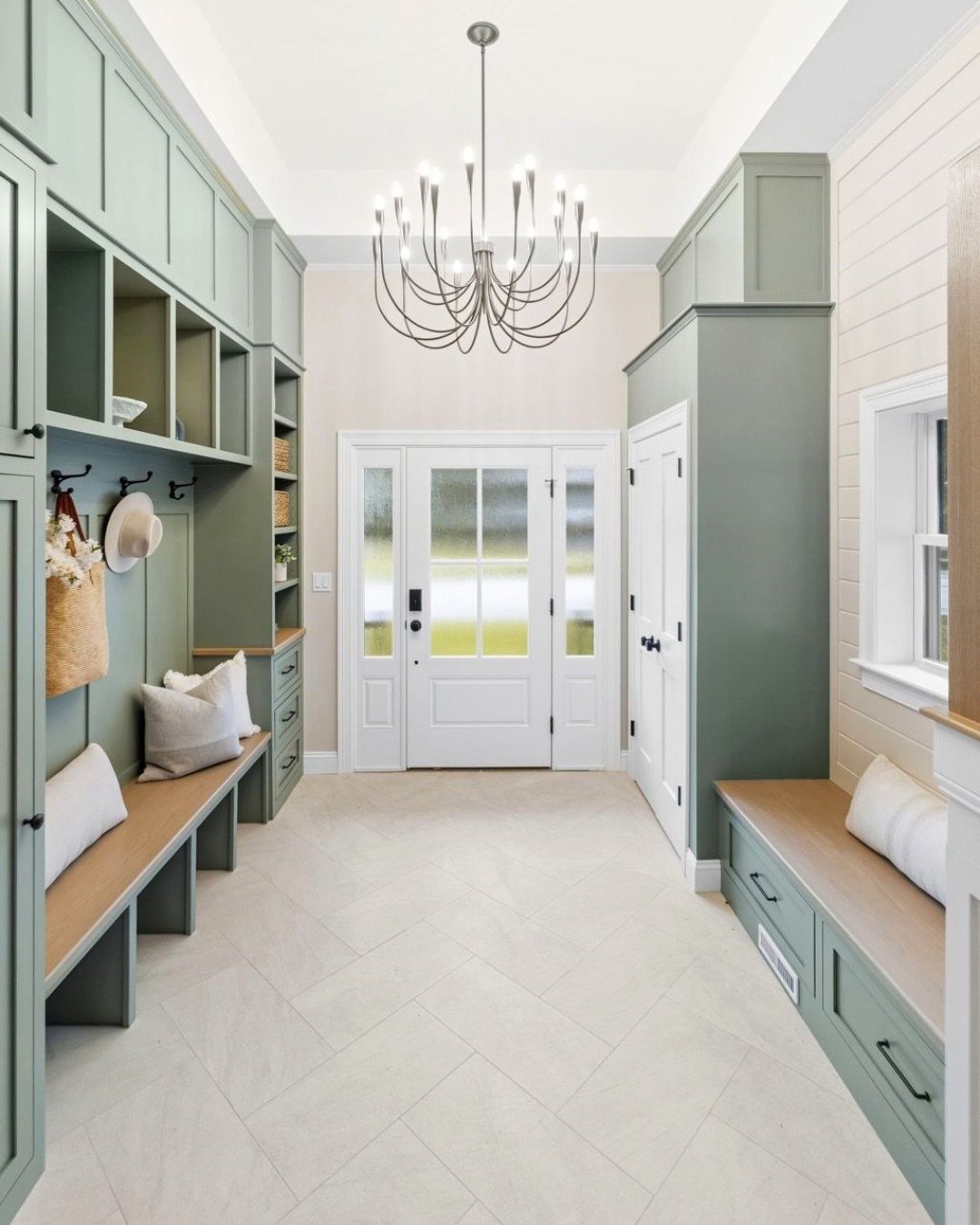
Leaving the space under the bench open makes the floor easy to sweep and mop, which matters in a room where wet boots land every day.
Shoes slide in and out with no doors to open, and nothing gets trapped underneath.
I’d add a flat tray or low baskets under the seat if the open gap looks messy, since they corral shoes while staying easy to pull out.
Cushions or pillows on top make the bench comfortable to sit on while you lace up.
3. Built-In Mudroom Cabinets
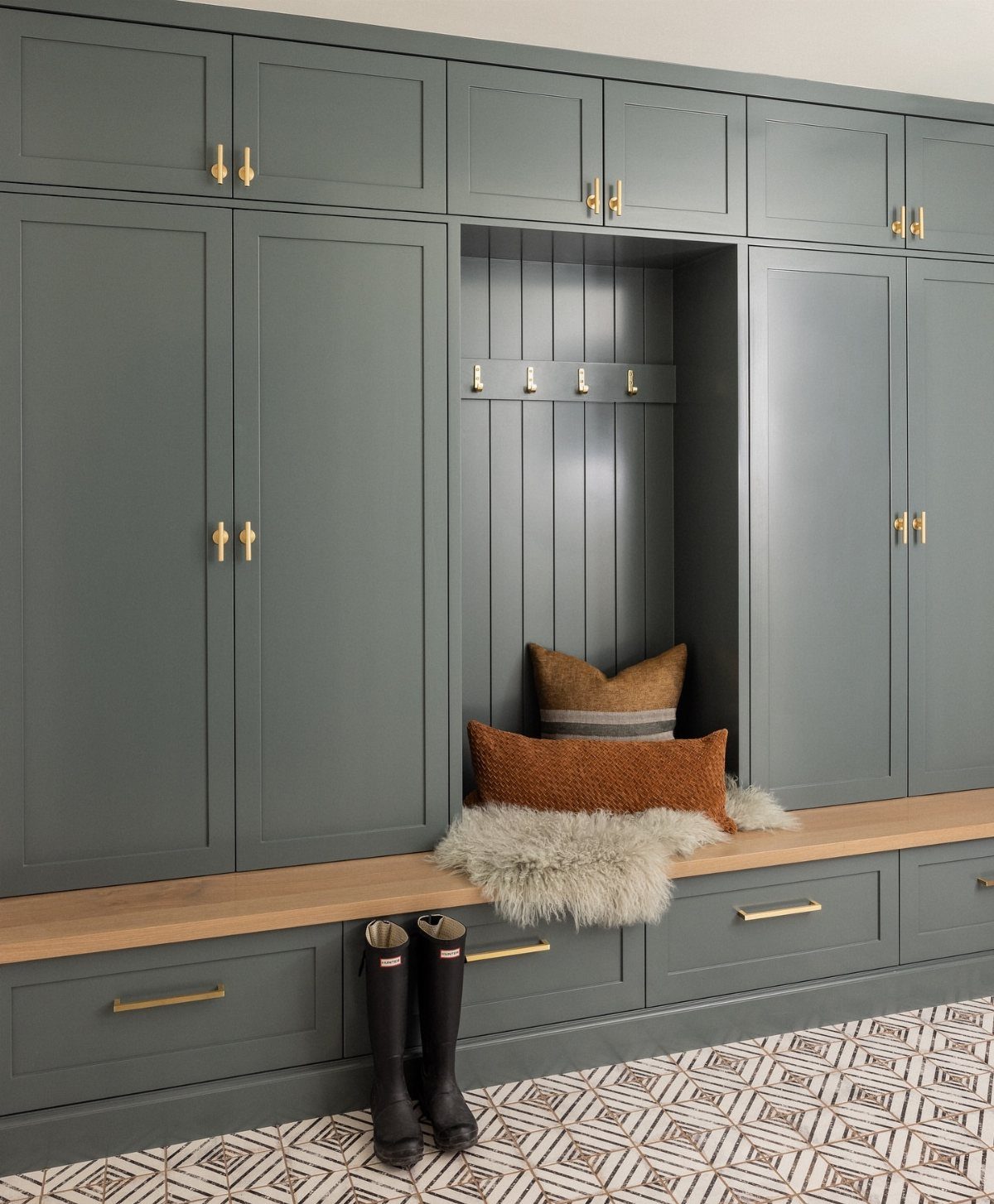
Tall cabinets on both sides of a central bench give a mudroom the look of custom millwork, and they hold far more than hooks alone.
Closed doors hide seasonal gear, so the room stays calm even when the cabinets are full.
For a budget build, stock cabinets with a trim frame and a painted finish can pass for custom work.
Gold-toned hardware is a small upgrade that adds a lot. The lower drawers are the right spot for the items you grab daily, like gloves and leashes.
4. Mudroom Unit with Basket Cubbies
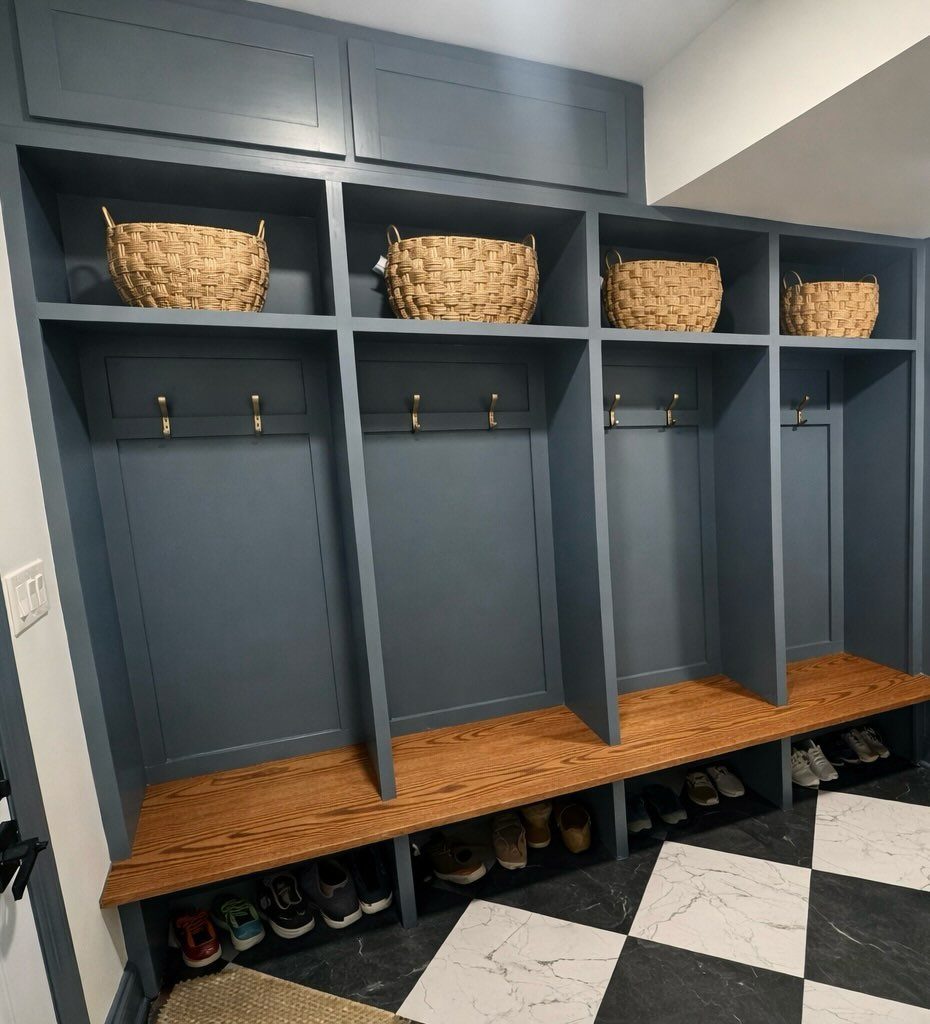
Wicker baskets in the upper cubbies are my favorite way to give each person a zone. Everything loose, like hats, scarves and mittens, goes into the basket instead of piling on the bench.
Space the sections evenly and give each one its own hooks, so coats don’t tangle.
Keep the bottom shelf open for shoes; it’s the quickest spot to drop a pair. Choose baskets sized to the cubby opening, and add labels if the kids need a reminder whose is whose.
5. Top and Bottom Storage Cubbies
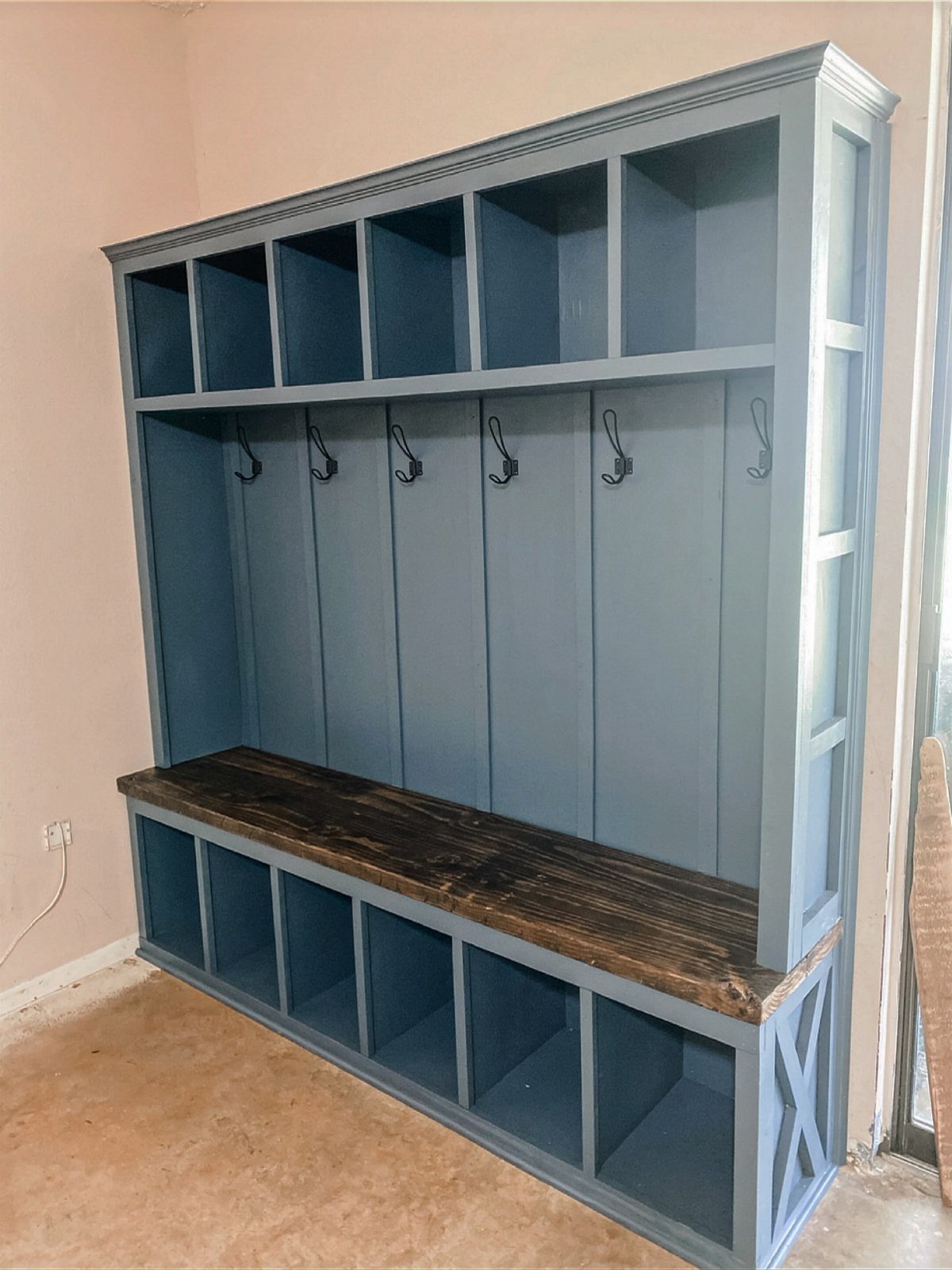
Open cubbies above the hooks and below the seat give you 2 storage tiers without a single door to open or break.
Upper cubbies suit hats, bags and anything you grab on the way out; the lower ones take shoes and boots.
A dark wood seat hides scuffs and wet marks better than a light one.
Black hooks keep the look clean against blue paint. Open storage looks tidy only if you edit it, so add bins in the cubbies for loose items.
Materials and Tools Needed
A full built-in like this takes four 4×8 sheets of ¾″ plywood and one 4×8 sheet of ¼″ plywood for backs.
A 25″ x 74″ butcher block top covers the bench, and 1×2, 1×3 and 1×4 boards make the face frames. Add two 8′ pieces of 3 ⅝″ crown molding, three pairs of concealed hinges, two pairs of 16″ ball bearing drawer slides and shims.
Fasteners worth buying up front: 1 ¼″ pocket hole screws, 1 ¼″ wood screws, 1 ¼″ brad nails, 3″ screws for installing, and wood glue.
A miter saw, drill/driver, circular saw with a cutting guide and a pocket hole jig do most of the work.
A shelf pin jig, concealed hinge jig, stud finder and brad nailer save time. Wear a respirator and earplugs.
Design Considerations
Build the unit in sections instead of one big piece.
Two tall cabinets, a bench seat and a middle cubby cabinet can each be assembled in the shop and carried in, which beats wrestling a finished 6-foot box through a doorway.
Decide how each tall cabinet will be used before cutting.
Hooks inside with a shelf above handle coats, while a closet rod or all shelves works just as well. Either swap is easy if you plan for it early.
Measure your own wall, then size each section to fit.
Finishing Touches
Paint every piece before assembly: cabinets, doors, drawers, the cubby unit and the bench supports. It keeps paint off the floor, walls and ceiling.
Crown molding gets the same treatment.
Measure and cut each piece, check how it fits, mark it so you know where it goes, apply your finish coat, and install after the paint has cured. Afterward you only fill nail holes and touch up.
Floors and walls are rarely square, so expect to use shims under the tall cabinets.
If the bench supports float, shim them snug. Hide leftover gaps with quarter round, shoe or cove molding, then putty and caulk the seams.
Frequently Asked Questions
What materials are best for building a mudroom bench?
Plywood is the best pick for durability and low cost. For a full built-in, I’d use ¾″ plywood for the cabinet boxes and ¼″ plywood for the backs.
How long does it take to build mudroom cabinets?
Budget roughly a week from first cut to final coat; this build rarely fits into a single weekend.
Painting eats up a large share of that time. Building the unit in sections makes the work easier to manage.
Should a mudroom bench have an open bottom or closed storage?
An open bottom is the better choice for wet, muddy boots. Open bottoms are simple to sweep and mop, shoes go straight in without a door to pull open, and dust has nowhere to hide.
If the open gap looks cluttered to you, a flat boot tray or a couple of low baskets under the seat will keep the shoes in line.
How do you keep mudroom cubbies from looking messy?
Put bins or baskets in the cubbies for loose items like hats, scarves and mittens. Open shelves look neat only when you pare down what goes on them.
Assign every family member a single cubby with its own hooks so coats stop tangling, and add small labels if the kids lose track of which spot is theirs.





