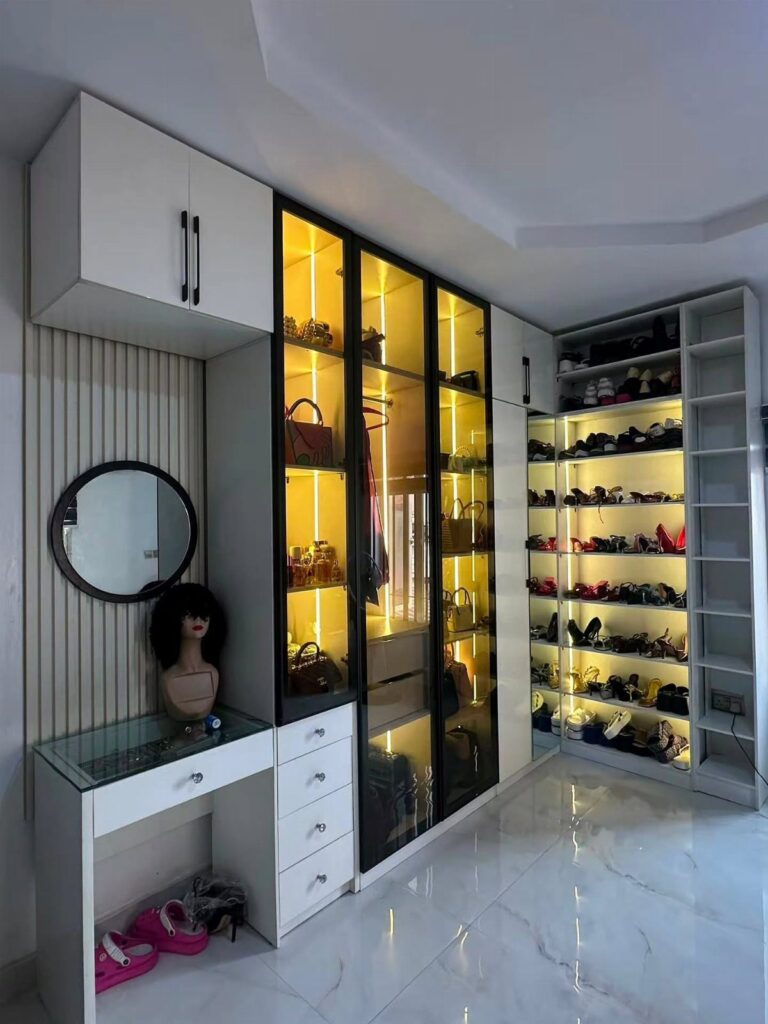
How much you can alter decides which of these ideas fits: some work for renters, others need permission or ownership.
A shoe rack, hanging rod or modular system costs a weekend and leaves the walls alone, while a pocket door or custom build needs landlord approval and stays when you leave.
1. Shoe Racks
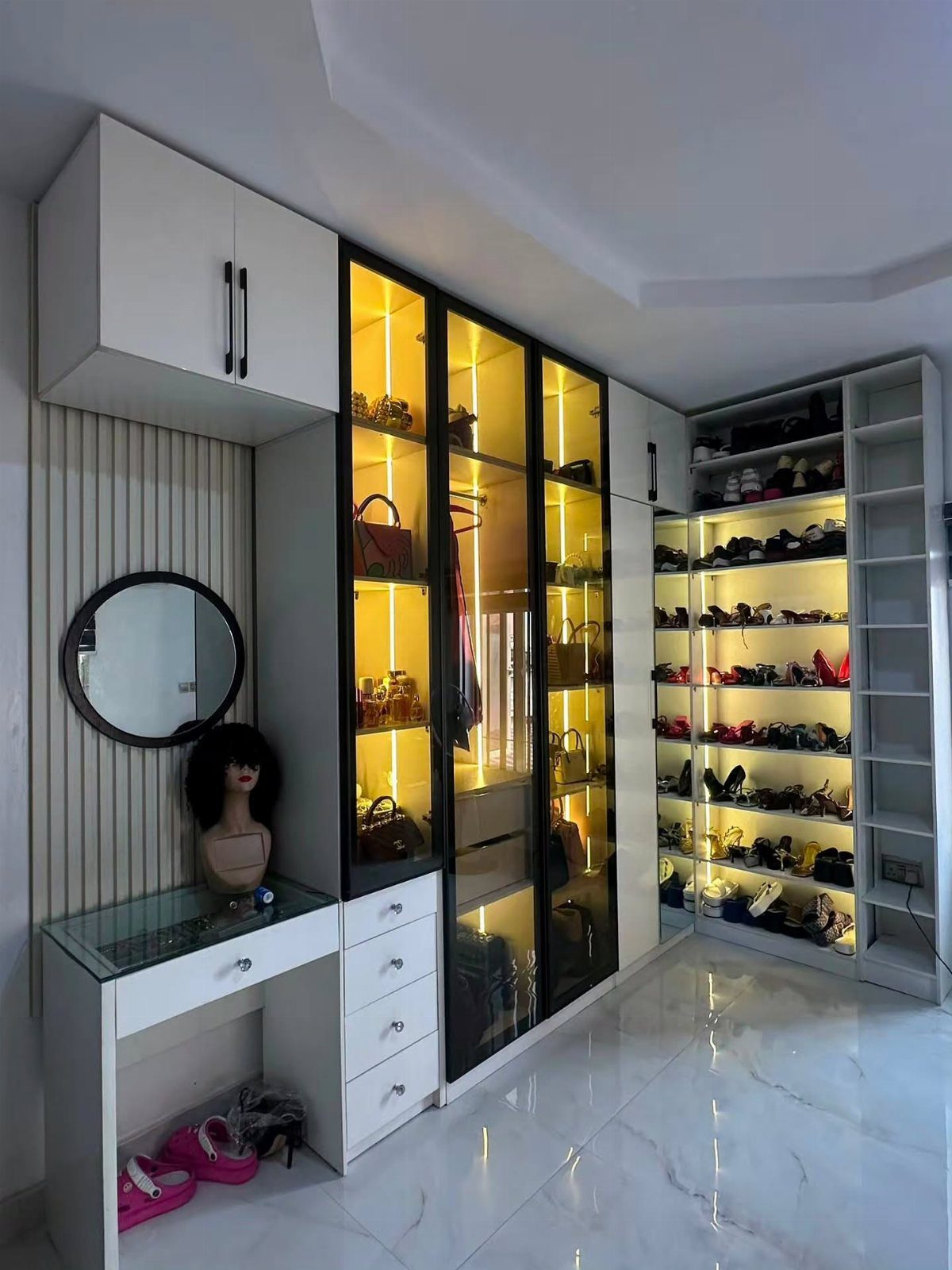
Shoe racks work best when the shelves are built for the shoes you actually wear. Angled shelves show the toe and heel at a glance, while flat ones hold boots and sneakers with less fuss.
In an apartment closet, a freestanding rack is the renter-friendly route, since nothing gets screwed into the wall. Stack tiers up the side wall and keep the floor free for a hamper.
I’d give the best shelf to the pairs you wear weekly and push the occasional heels higher.
2. Second Hanging Rods
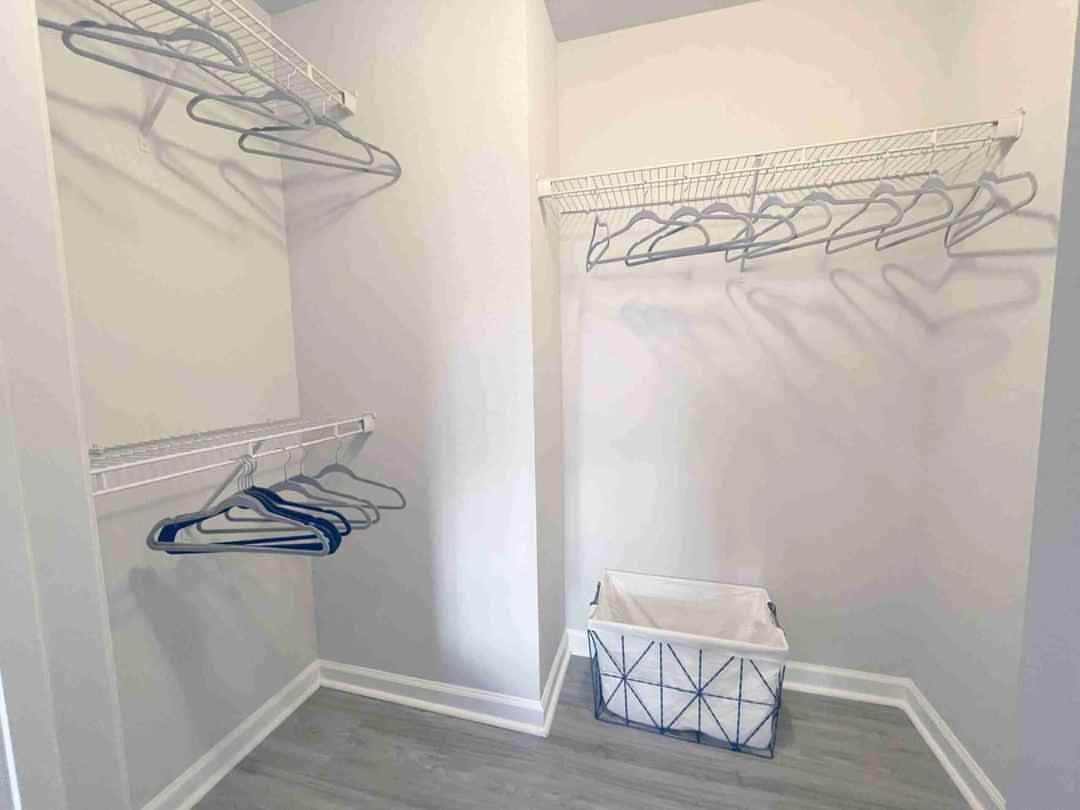
A second rod doubles your hanging space by using the wall height most closets waste. Shirts, skirts and folded-over pants hang well on the lower rod, so one tall wall can carry two full rows.
Wire rod-and-shelf kits are cheap and fit a weekend project. Mount the top rod high enough that you can still reach it, then leave a clear gap beneath for the lower row.
Long dresses and coats won’t fit on the lower rod, so keep one stretch of single-height rod for them.
3. Sliding or Pocket Doors
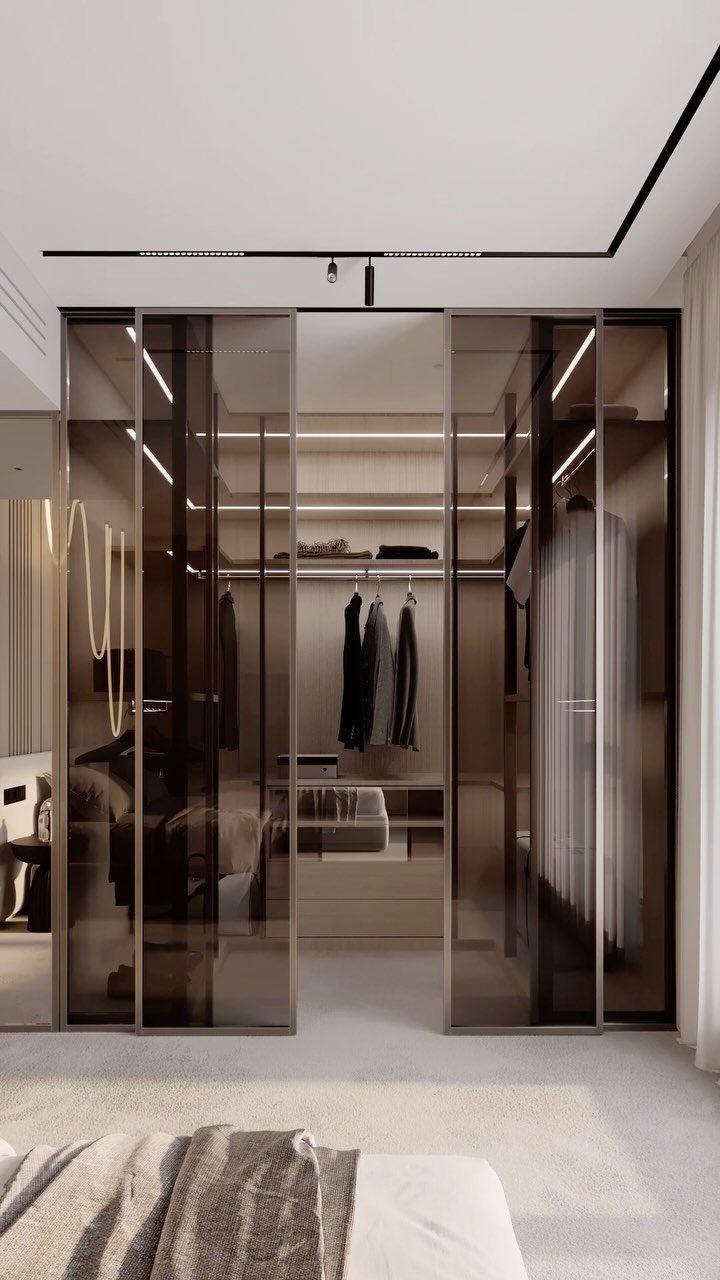
Swapping a swing door for a sliding or pocket door gives back the arc of floor a door would otherwise sweep. In a small apartment, that clearance can decide whether the closet fits a shoe rack or a hamper.
Sliding doors are the easier install, since they hang on a track outside the opening. Pocket doors disappear into the wall, which is neater but means opening it up.
Check your lease first. Either one is a landlord conversation, not a casual swap.
4. Mirrors in the Walk in Closet
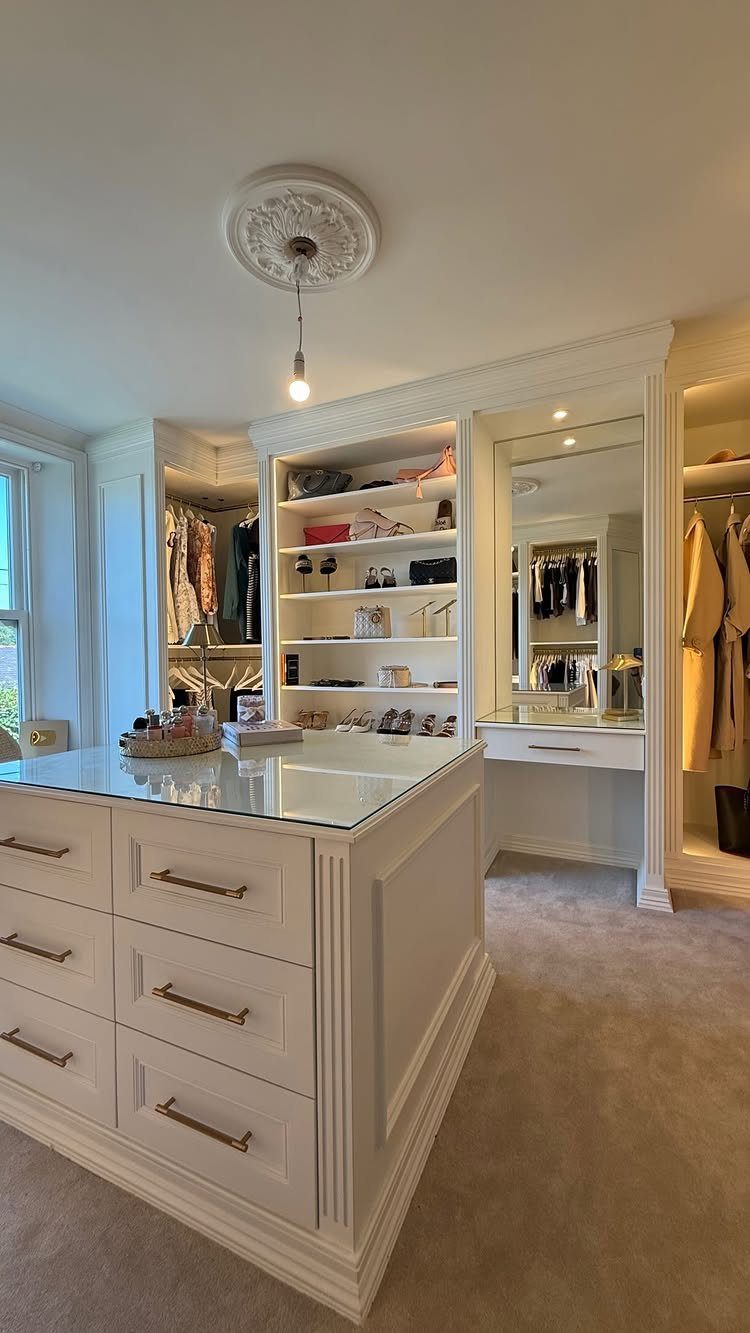
A mirror on the back wall of a walk-in closet makes a narrow space read as deeper and bounces light from the ceiling fixture around the room. It also lets you check an outfit before you leave the closet.
Go full length if you can. A leaning mirror is the renter-safe option because it needs no drilling, though an over-the-door style works too.
Keep it opposite the clothes, not behind a crowded rod, so it reflects something worth looking at.
5. Bins for Seasonal Clothing
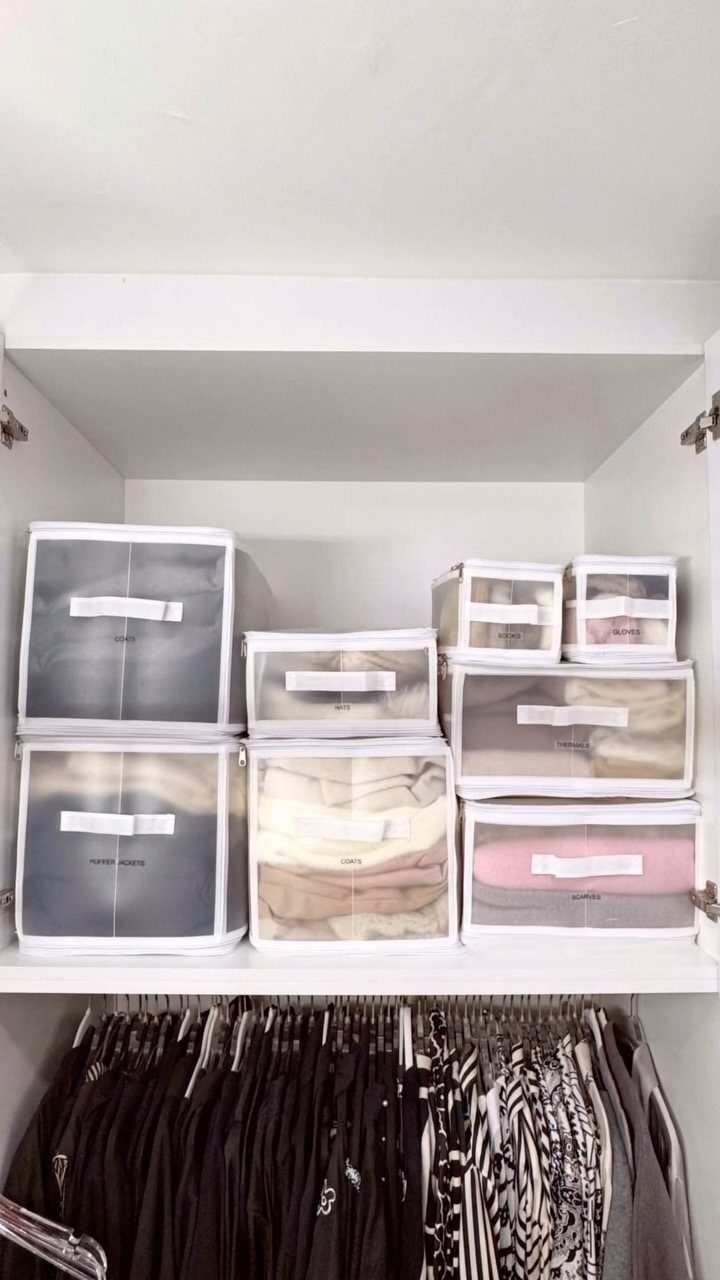
Clear bins with big, plain labels turn off-season clothing into a shelf you can read at a glance. Coats, hats, gloves and scarves each get their own bin, so nothing gets dumped into a mystery box.
Choose bins that are the same size so they stack square, and put the label on the front, where you can see it from the floor. Fold flat, then fill each bin to the top without forcing the lid.
Store the current season on the most accessible shelves and the rest above it.
6. Custom Closet Solutions
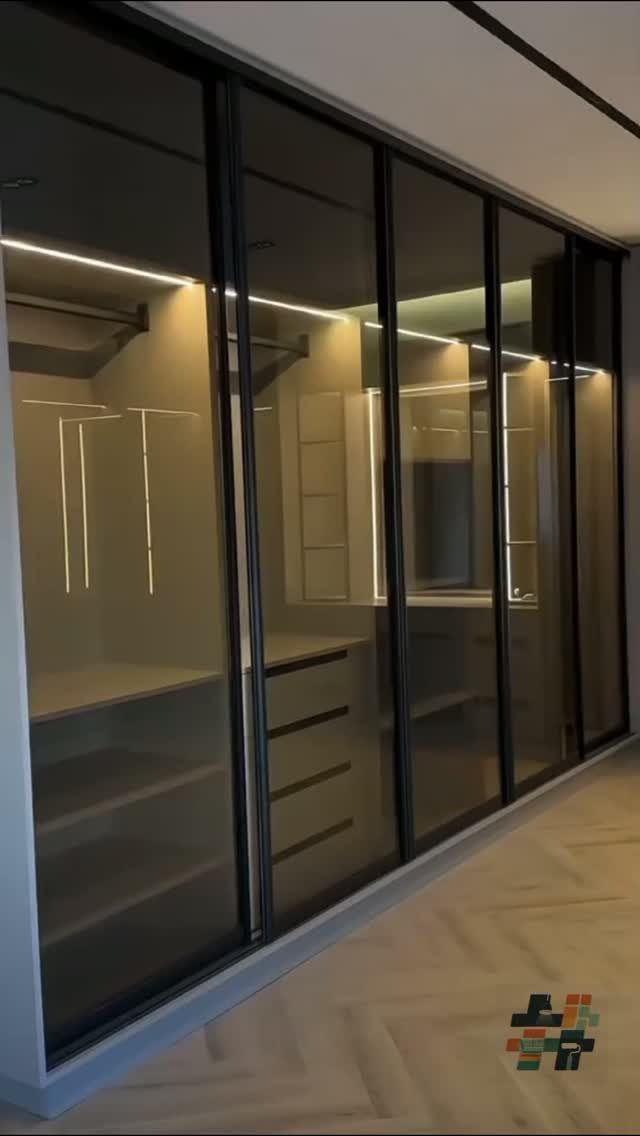
Custom closet solutions are built around your clothes, your wall lengths and the odd corner a stock kit wastes. That is the main reason to pay more for them: every rod, shelf and drawer lands where you need it.
I’d spend the money on the parts you use daily, like hanging space sized to your longest garment and shelving at your reach. Add lighting inside the unit if the closet has no window.
For a renter, custom work is a harder sell, because it stays behind when you move.
7. Jewelry Organizer Drawers
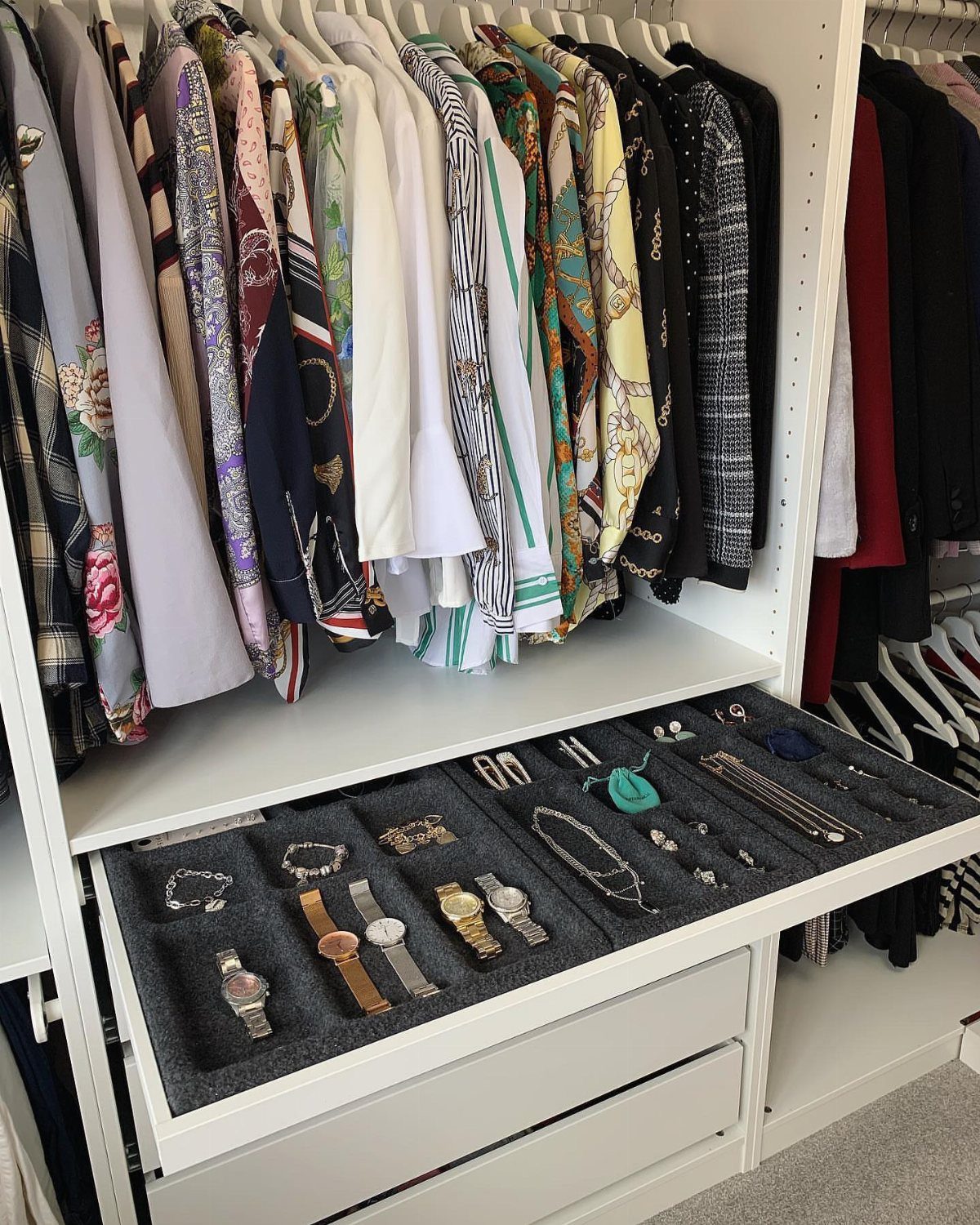
Shallow drawers with velvet-lined dividers keep watches, rings and necklaces from tangling in a dish on the dresser. Fabric grips small pieces, so nothing slides around when you open the drawer.
Under a hanging rod is a good home for one, since that space is often empty. Pick inserts with separate slots for watches and a few wider trays for chains, then sort by how often you wear each piece.
Freestanding inserts drop into an existing drawer, which suits a rental.
8. Modular Closet Systems
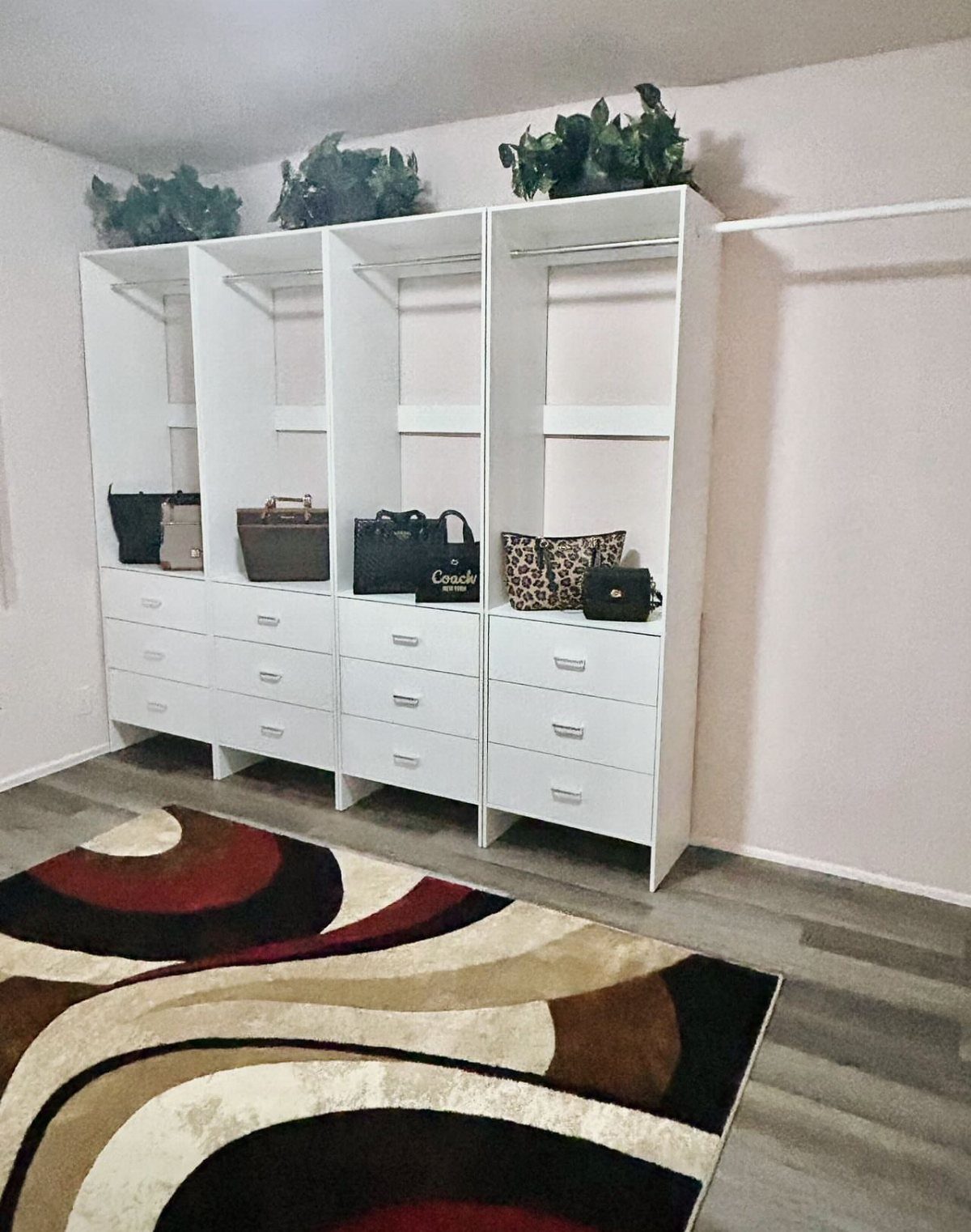
A freestanding modular unit stacks hanging rods, shelves and drawers into one piece, so a bare closet gets built-in storage without a single hole in the wall.
Handbags keep their shape best when each one gets its own cubby, and the shelves between shoulder and forehead height are the ones to give them.
Put the drawers low for folded items. Rods go above, where they hold shirts and dresses.
Since the unit stands on its own, it moves with you, which is why I’d pick this over built-ins for an apartment. Measure the wall before you buy.
9. Built-In Open Cubby Shelving
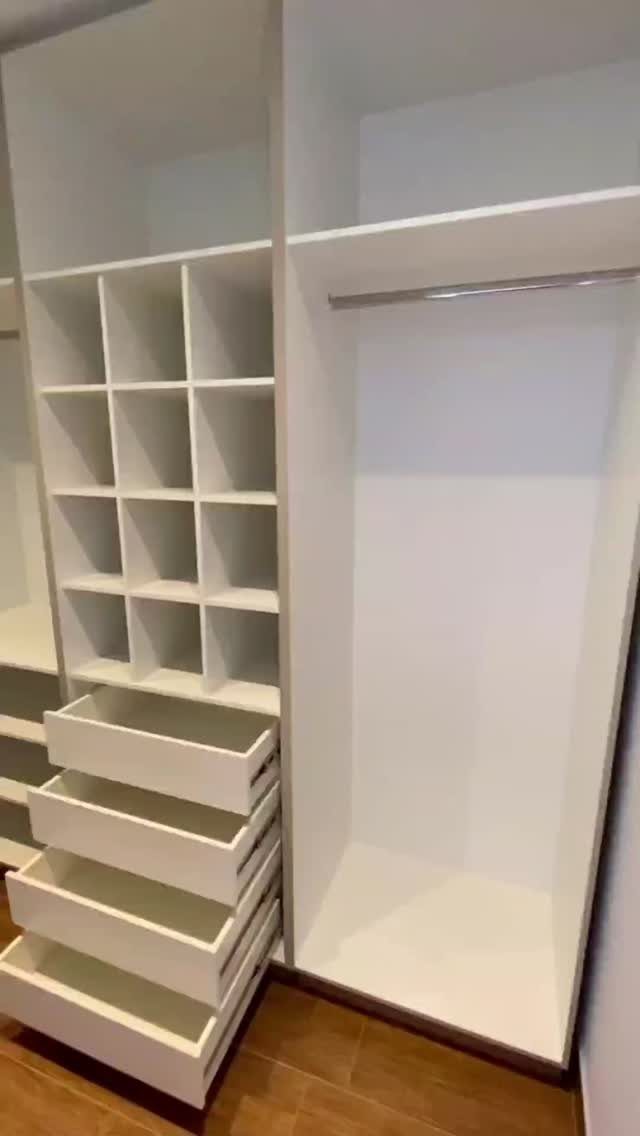
A grid of square open cubbies holds folded sweaters, jeans and baskets where you can see everything, with no doors to open. Beside it, a hanging rod handles longer pieces, and bottom drawers hide the clutter like socks and underwear.
I like cubbies best for items you grab daily. Fold everything to the same size so each square looks tidy, and use small baskets for loose pieces.
Open shelving shows mess quickly, so it asks you to keep up with it.
10. Closet Center Seating Ottoman
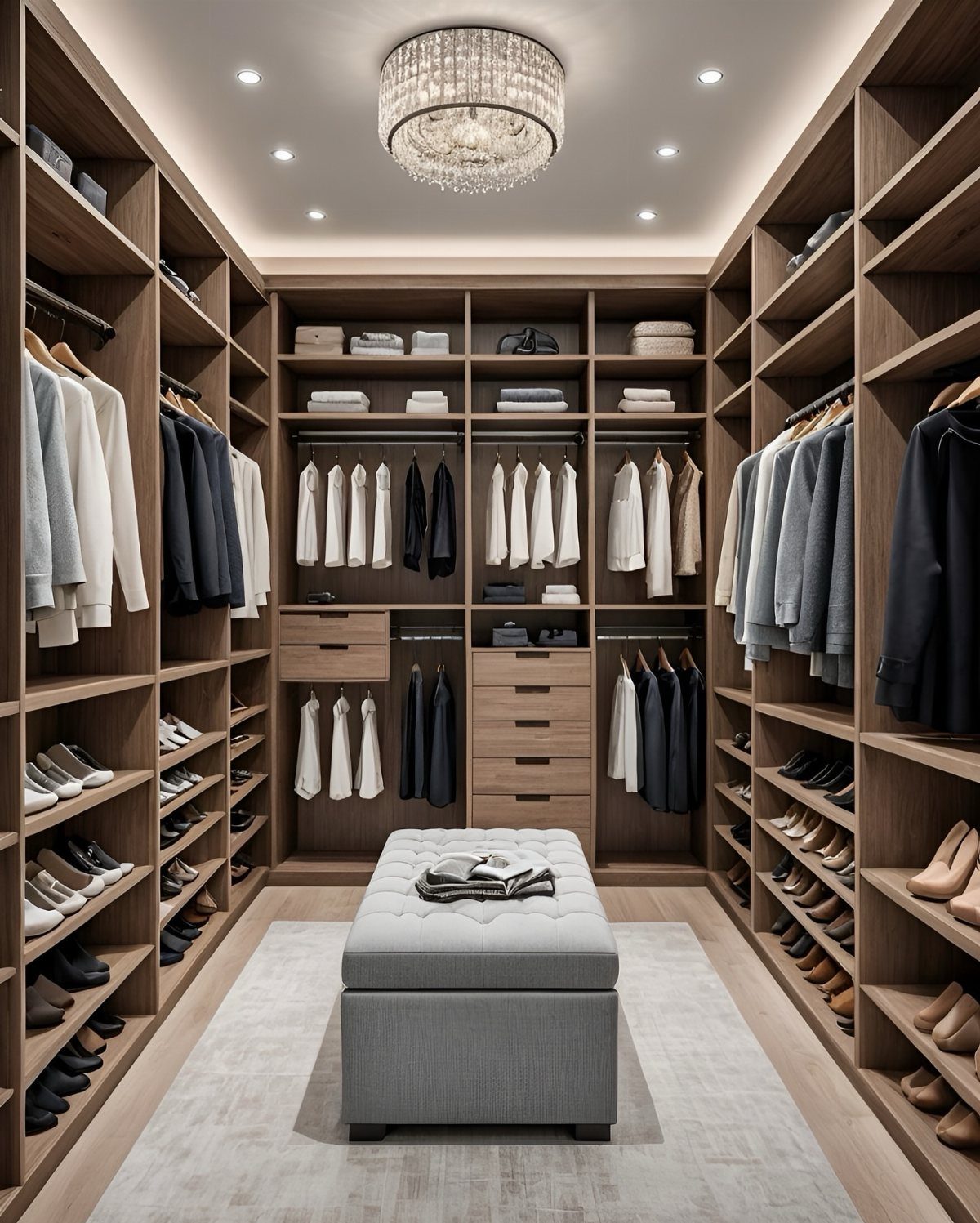
A center ottoman gives a walk-in closet somewhere to perch while you pull on boots or fold a stack of laundry.
Upholstered in a soft grey, it also adds texture against dark shelving, and a chandelier overhead makes the room feel finished.
Most apartment closets are too tight for this. Leave enough floor around it that you can still open drawers and walk past the rod.
Choose one with hidden storage inside if you can, so the seat earns its footprint.
Importance of Purging
Clear out the closet first, then spend money on any rod, bin or rack. Storage sized for clothes you never wear is wasted money and wasted wall.
Pull everything out and ask 2 plain questions about each piece: do I wear it, and do I like it? Donate it or resell it.
Next, measure the closet and group whatever survived into piles: work clothes, casual wear, shoes, accessories and off-season items.
Those piles tell you how much hanging space, shelf space and floor space you actually need, so the layout fits your habits instead of a guess.
Be honest here. A closet that has been pared down needs less gear, and that usually means a smaller bill.
Lighting Enhancements
Small closets feel cramped mostly because they’re dark. Good light makes the same square footage read as bigger and lets you see colors accurately when you pick an outfit.
3 options suit a closet well:
- Peel-and-stick LED strips with a motion sensor, mounted under the shelves, light up the moment the door swings open.
- Puck lights above the racks, which spread light down over hanging clothes.
- Lighting built into drawers, which shows what’s inside.
For a rental, I’d pick battery-powered or plug-in versions of these so nothing needs wiring. Use the same bulb color throughout, or the closet will look patchy.
If you like to show off purses or jewelry, a single hanging fixture over them adds character.
Under-cabinet lights or a small lamp are the practical choice when a big fixture isn’t realistic, and they work well for dark early mornings.
Ergo, it’s important to make the most of whatever size closet you have by maximizing every inch of space.
Renter-Friendly Solutions
Modular systems suit renters because you can rearrange them as your needs change.
Because the shelves adjust, the drawers swap in and out, and the rods lift free, the whole system can be rebuilt in the next closet and nothing stays behind.
Pick a brand that sells many different parts and finishes, so you can keep adding to it later.
A system with only a few parts boxes you in, while a bigger catalog lets you add a drawer unit or lower a shelf later.
Buy fewer pieces than you think you need, then add as you learn what you reach for. That keeps the first purchase inside a small budget and leaves room to adapt if your next place has a different closet.
Frequently Asked Questions
Is a 10×10 closet enough?
For many people, yes. A 10×10 closet can hold a full wardrobe, though it depends on how much you own.
Start by cutting what you do not wear, then sort the rest by category (work clothes, casual, shoes, accessories, seasonal) to figure out how much rail, shelf and floor room the space has to hold.
What are some renter-friendly closet organization ideas?
Freestanding modular systems are my top pick, since nothing gets drilled into the wall and the whole unit moves with you.
Shelves slide up or down, drawers drop in, and rods lift out without tools, so the whole system can move to the next apartment.
A freestanding shoe rack, a leaning full-length mirror, and battery-powered or plug-in lighting follow the same no-holes rule.
Does a walk-in closet require a door?
No. A walk-in closet can stay open or use a sliding door.
A sliding or pocket door also saves the floor arc a hinged door needs, which can be the difference between room for a shoe rack or hamper and none at all.
In an apartment, check your lease first, because changing a door is a landlord conversation.





