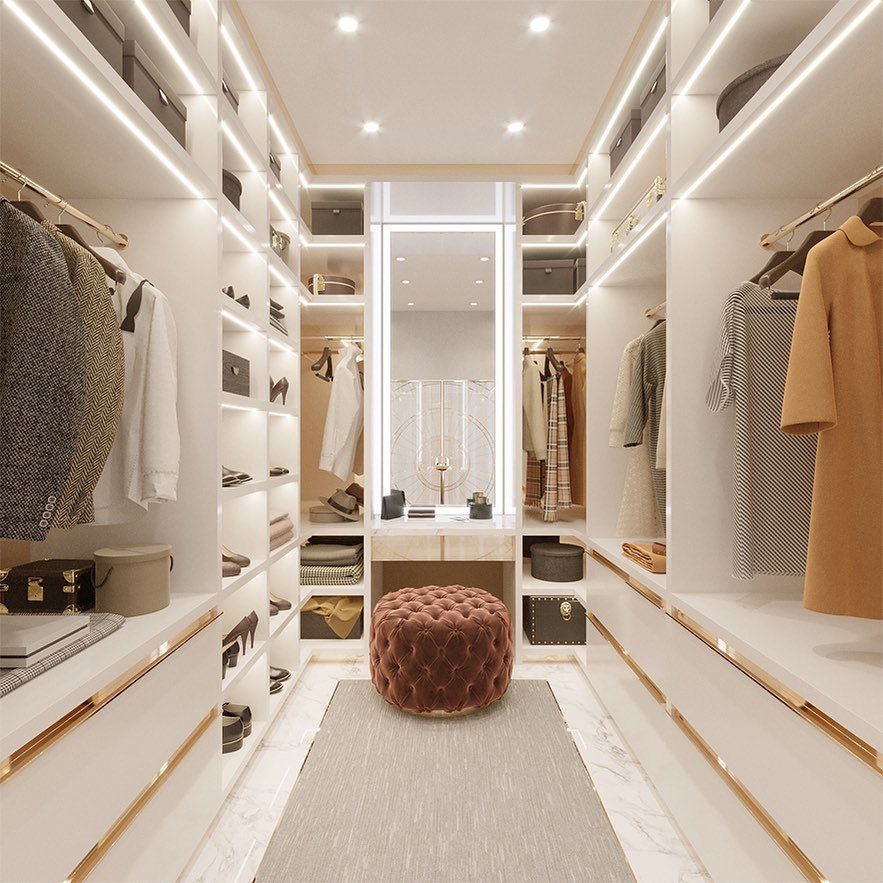
The ideas here run from cheap fixes like layered lighting, a rug and a pegboard for accessories, up to built-in cabinets with wood veneer finishes and glass doors, which cost the most.
How much of the closet you can permanently change decides which ones suit you: renters and weekend DIYers should start with the removable layers like a rug, a full-length mirror and a tufted ottoman, while owners with a few free walls can justify the built-in cabinets.
Lighting and a rug suit either group, and the rest of the list sorts itself by how much work you want to take on.
1. Layered Lighting
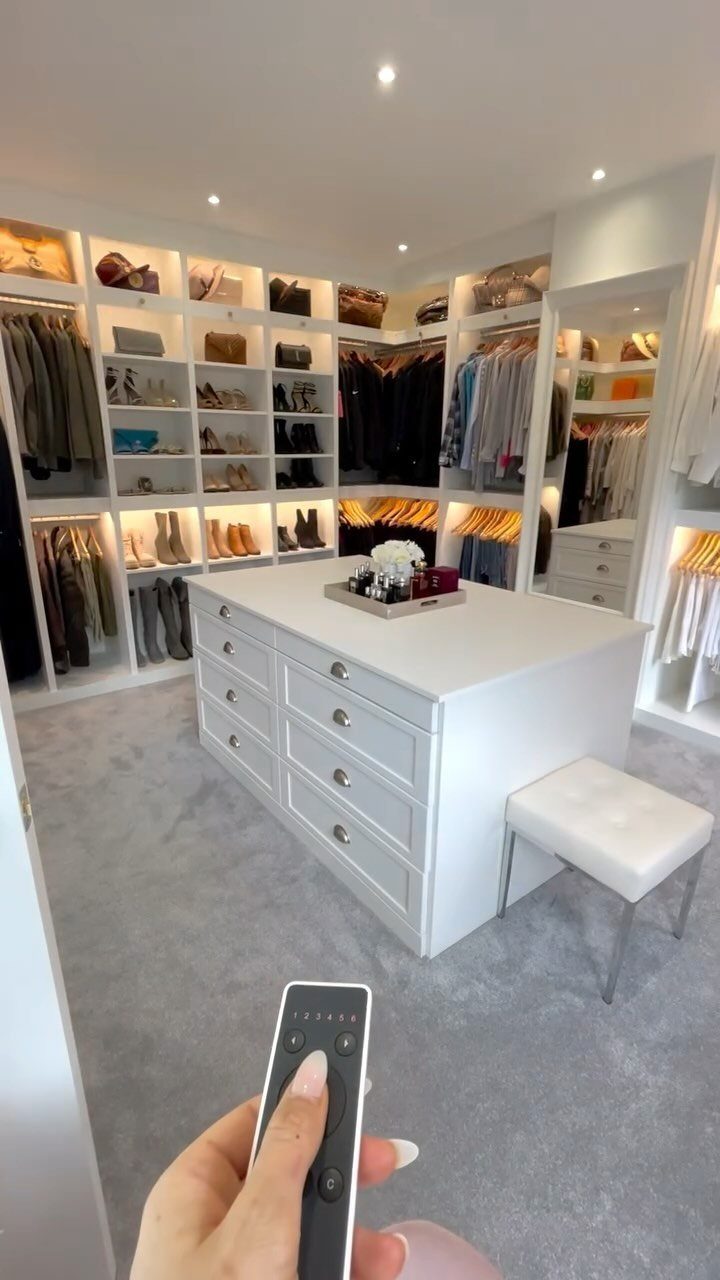
Closet lighting works best in layers: a ceiling fixture for general light, LED strips tucked under or along the shelves for the clothes themselves, and a remote or dimmer to set the mood.
A single overhead light casts shadows on the lower rows and makes dark navy and black hard to tell apart.
Strips along shelf edges are the easiest layer to add on a weekend budget.
Put the controls where your hand lands when you walk in, and choose one color temperature for every light so the fabrics read the same from shelf to shelf.
2. Incorporate a Vanity Area
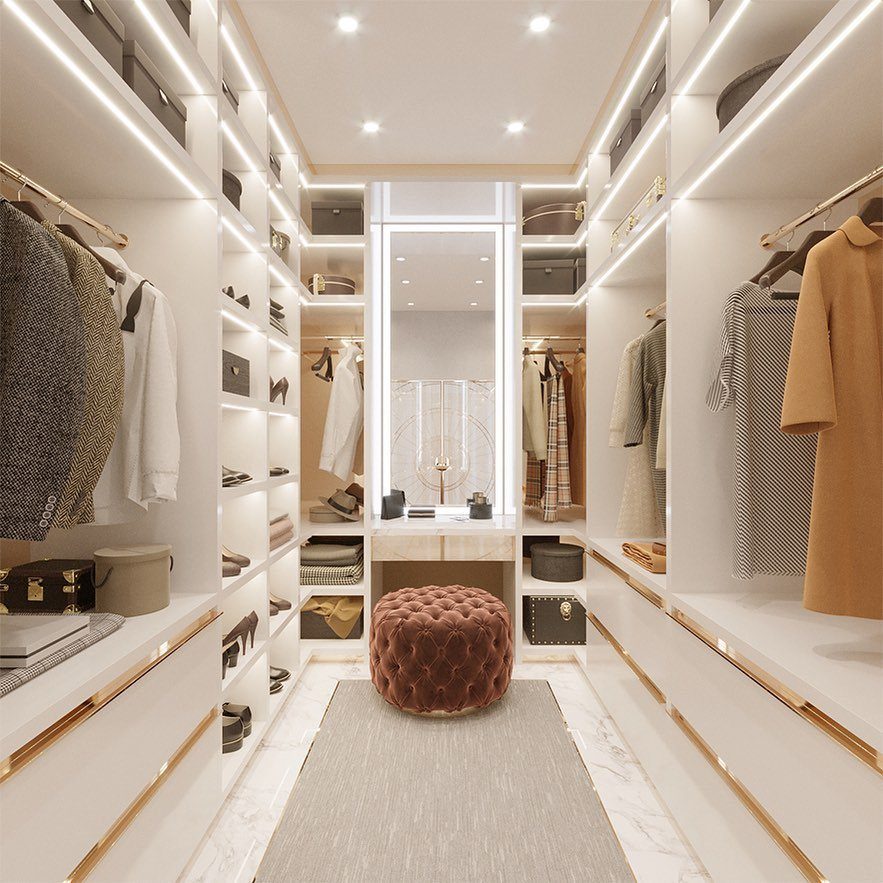
A vanity turns a corner of the closet into a place to get ready, so makeup, hair tools and jewelry stop living on the bathroom counter.
I like it best with a mirror centered over the seat and a cushioned ottoman or stool tucked underneath, as it keeps the walkway clear.
Gold or brass hardware and fixtures add warmth against white shelving.
Put an outlet within reach of the mirror in your plan first, since a hair dryer or flat iron has to plug in somewhere. If floor space is tight, a narrow shelf-height desk does the same job.
3. Full-length Mirror
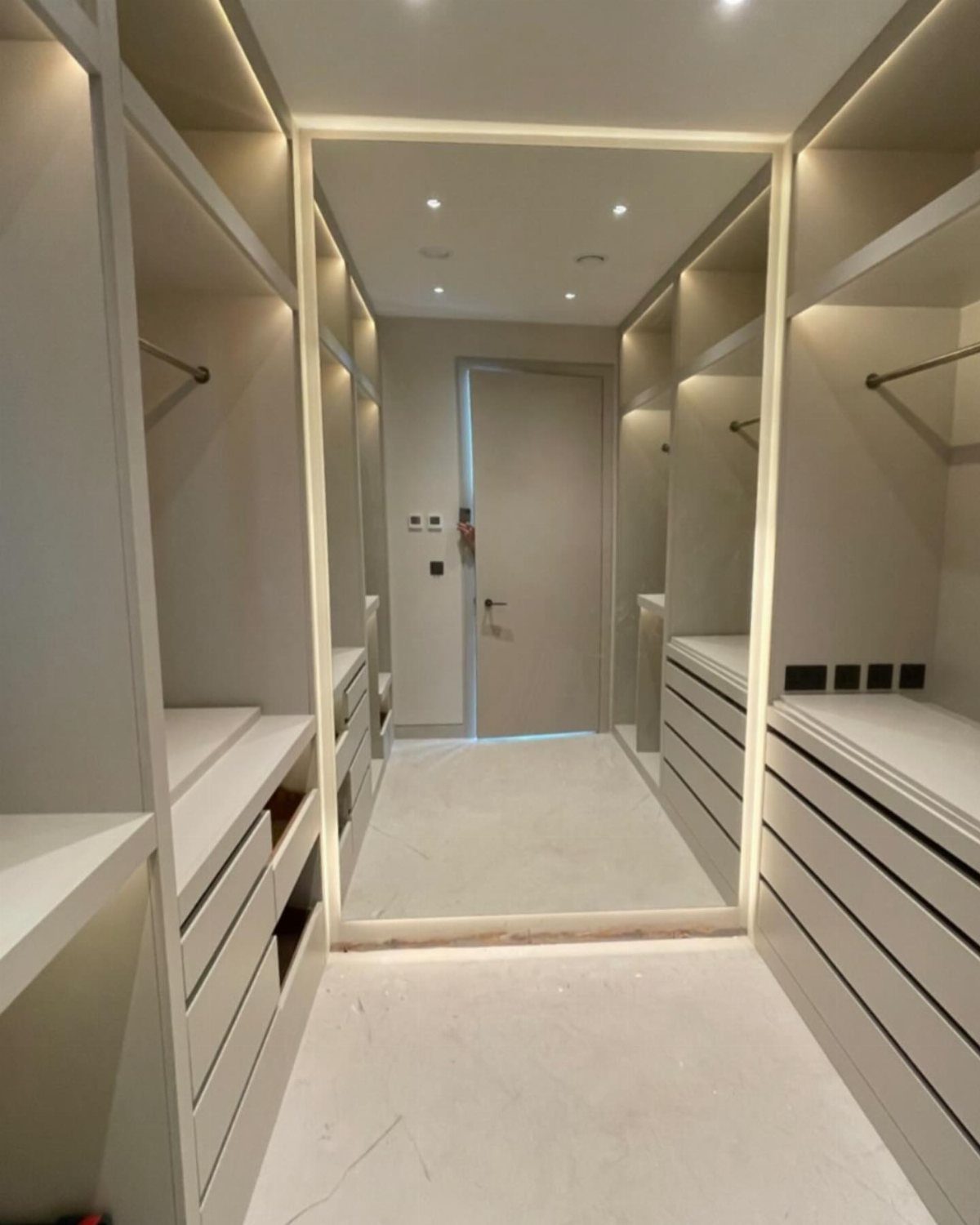
Floor-to-ceiling mirrors make a small closet look deeper and save you a trip to the bedroom to check an outfit.
Edge lighting turns the mirror into a fitting station, with light falling evenly on your face and clothes instead of from one harsh overhead source.
Hang it on a wall or door where you can step back several feet. A mirror that faces the entry also bounces light around the room, which helps in a closet with no window.
4. Glass Doors on Cabinets
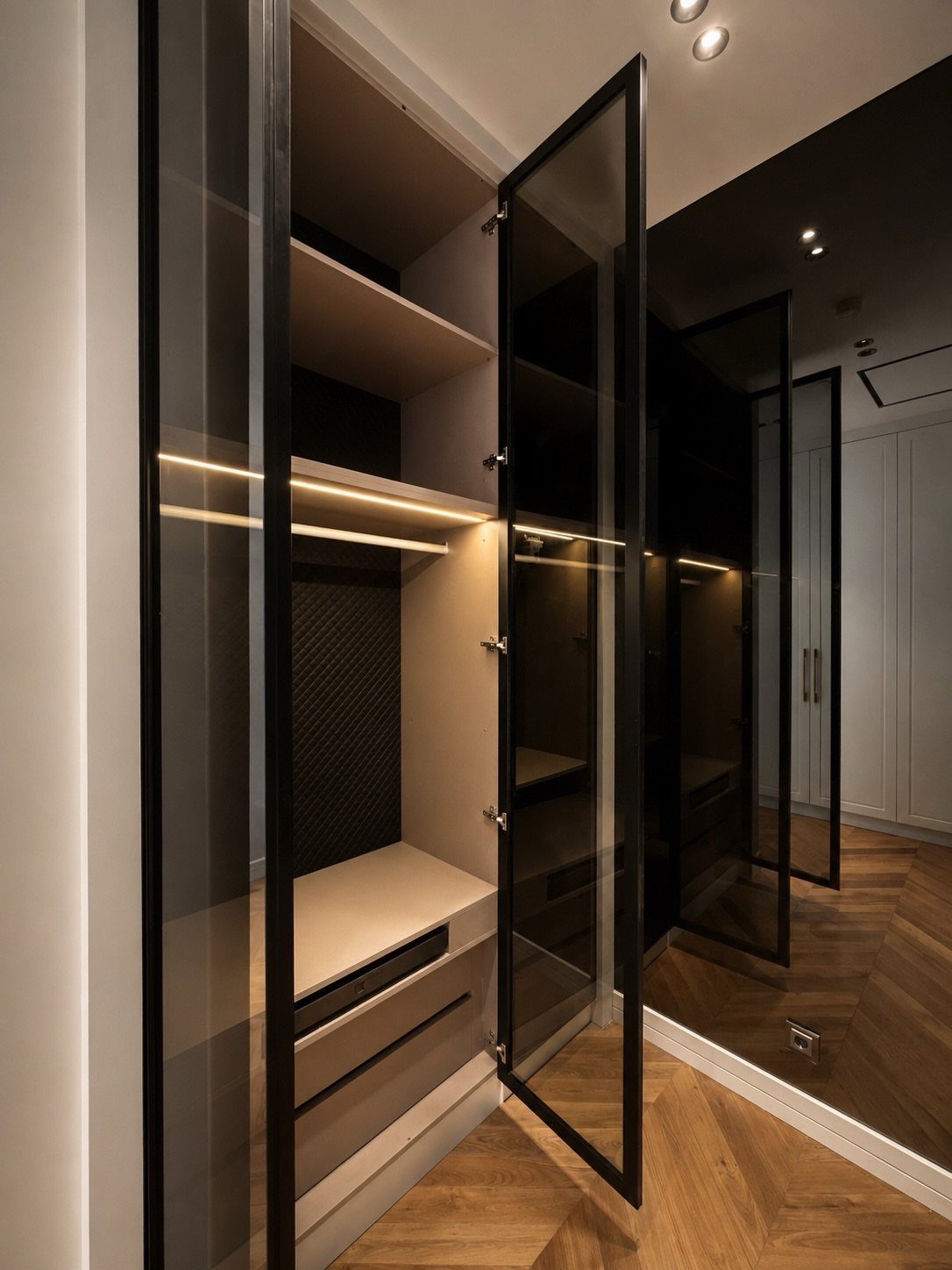
Glass doors keep dust off folded knits, bags and shoes while the contents stay visible. Black frames give the cabinets a crisp, gallery-like outline, and they pair well with warm beige shelving and wood floors.
I would use glass on only some of the cabinets, the ones holding your best pieces.
Everything behind glass will be on display, so tidy shelves are part of the deal. Interior LED strips make the effect work.
5. Add a Rug
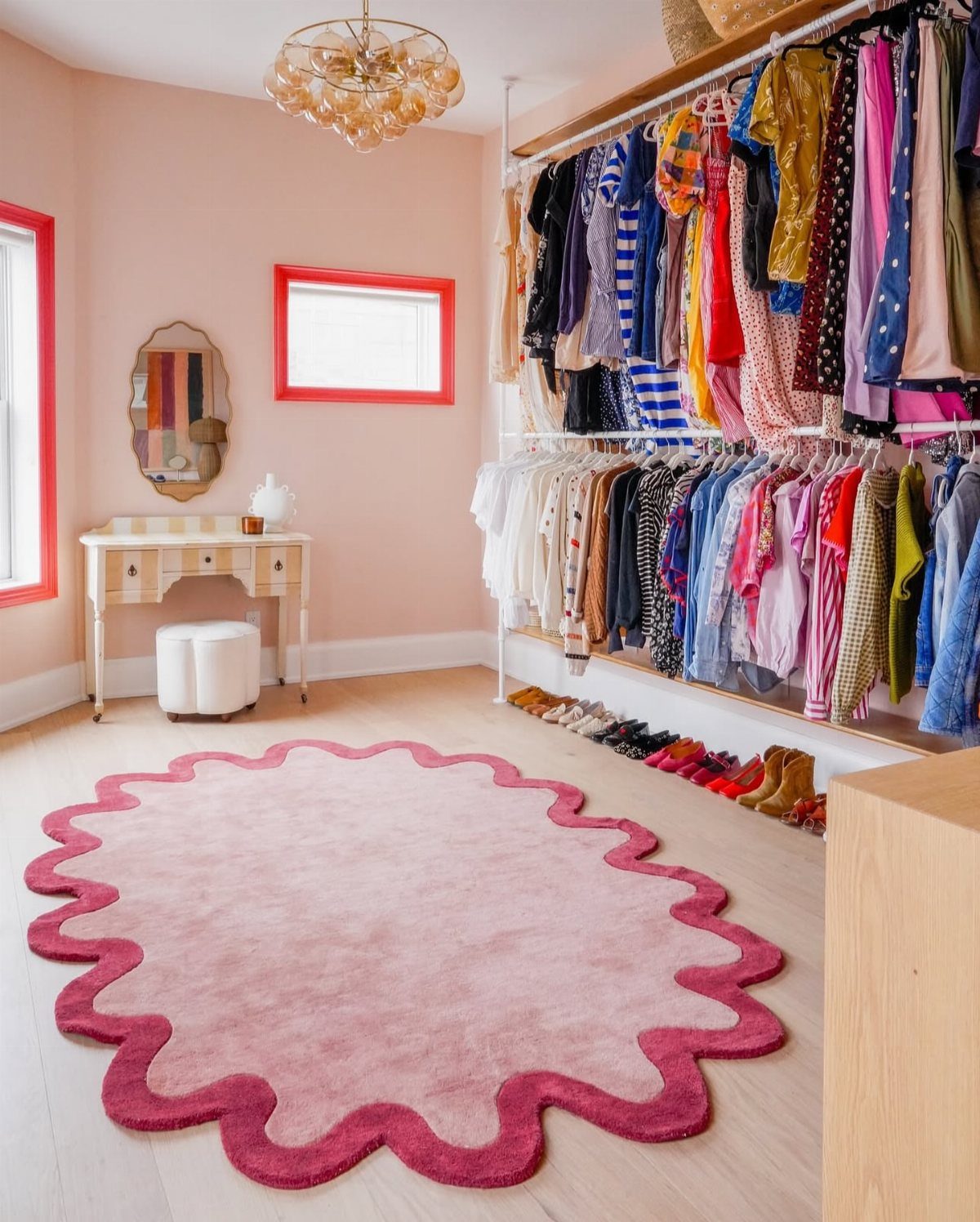
Lay down a rug, and a closet starts reading as a small room instead of a place where stuff gets stored, for less money than almost any other change.
Hard floors echo and feel cold underfoot, and a rug fixes both in one purchase.
A scalloped edge in pink adds a playful note, though any low-pile style works best, because tall pile snags drawers and traps lint.
Choose a size that leaves a few inches of floor showing around the edges, and add a rug pad so it stays flat and doesn’t slide when you step on it.
6. Open Shelves
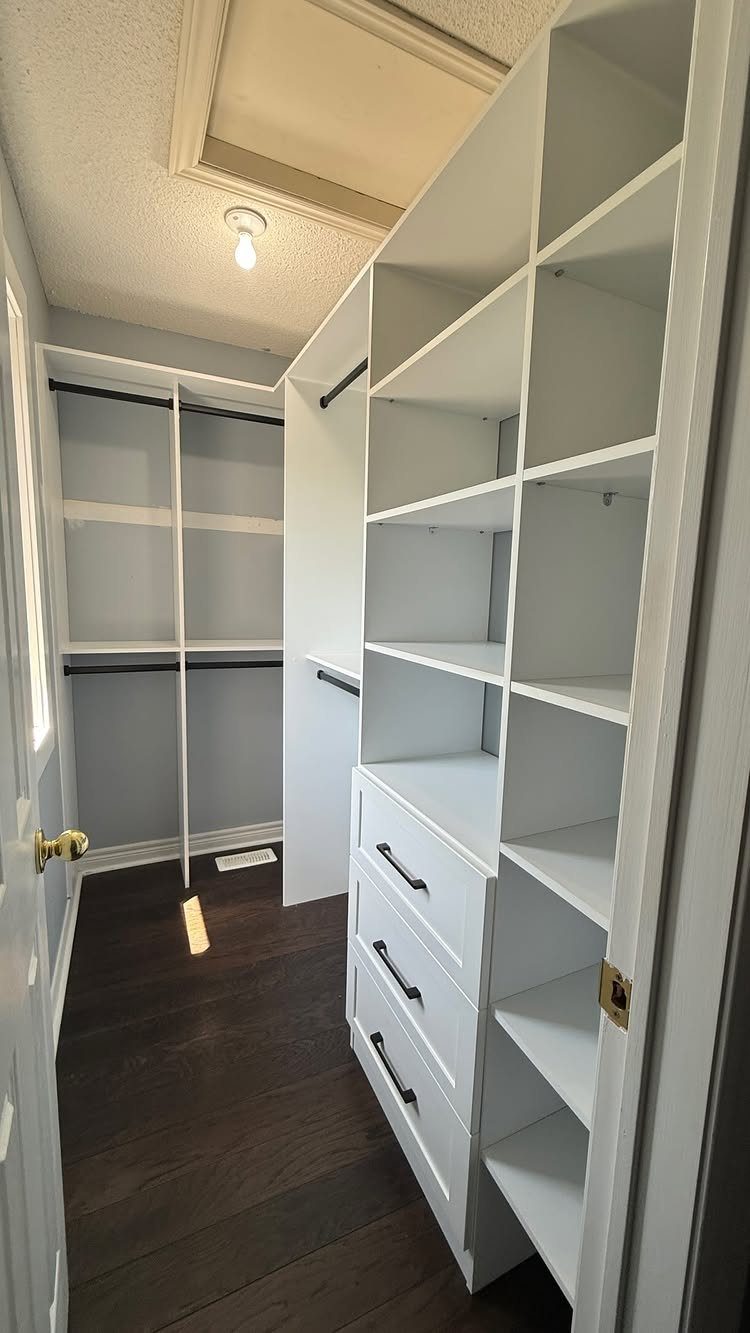
Open shelving with hanging rods is the simplest closet system to install and the least expensive. With no doors to buy or hang, a white built-in setup costs less and lets you grab clothes at a glance.
Pair open shelves with a few drawers for socks and underwear, since those look messy out in the open. Dust settles on open shelves faster, so I keep folded sweaters and daily items there and put out-of-season pieces in boxes.
7. Shoe Wall
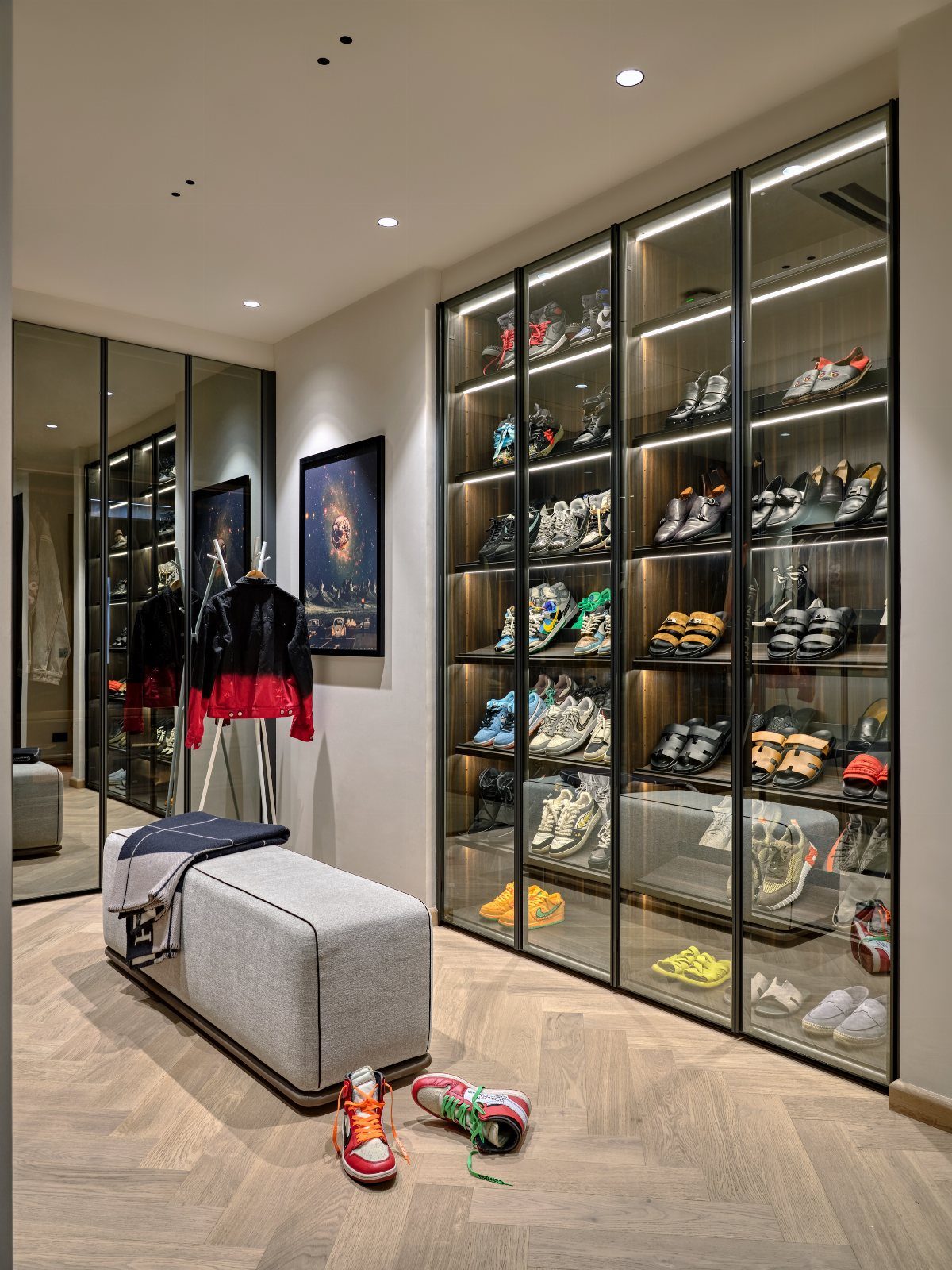
A shoe wall gives sneakers their own wall instead of a pile by the door. Glass fronts, as in this closet, keep dust off every pair while the whole collection stays visible.
Group pairs by type or color so the wall reads as a pattern, and leave a little air between pairs so none get crushed.
Putting the shoes behind glass means you can only wear what you can reach, so I would keep daily pairs on open rows nearby.
8. Use a Pegboard for Accessories
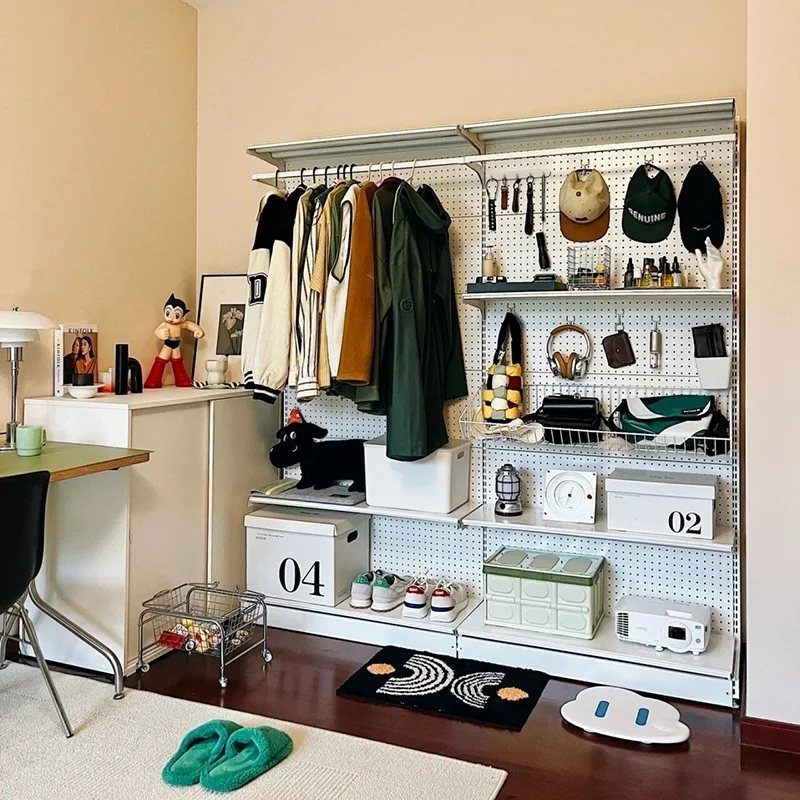
A pegboard turns a blank stretch of wall into storage for the small things that vanish in drawers: hats, headphones, jewelry. Hooks can be moved in seconds, so the layout changes as your collection does.
Hang the heaviest items, like hats, on the lower hooks, and keep necklaces on short hooks so they don’t tangle.
A pegboard is cheap and easy to mount, which makes it a good weekend project. Hang it beside the clothes rod, where you already stand when you dress.
9. Shelves Reaching the Ceiling
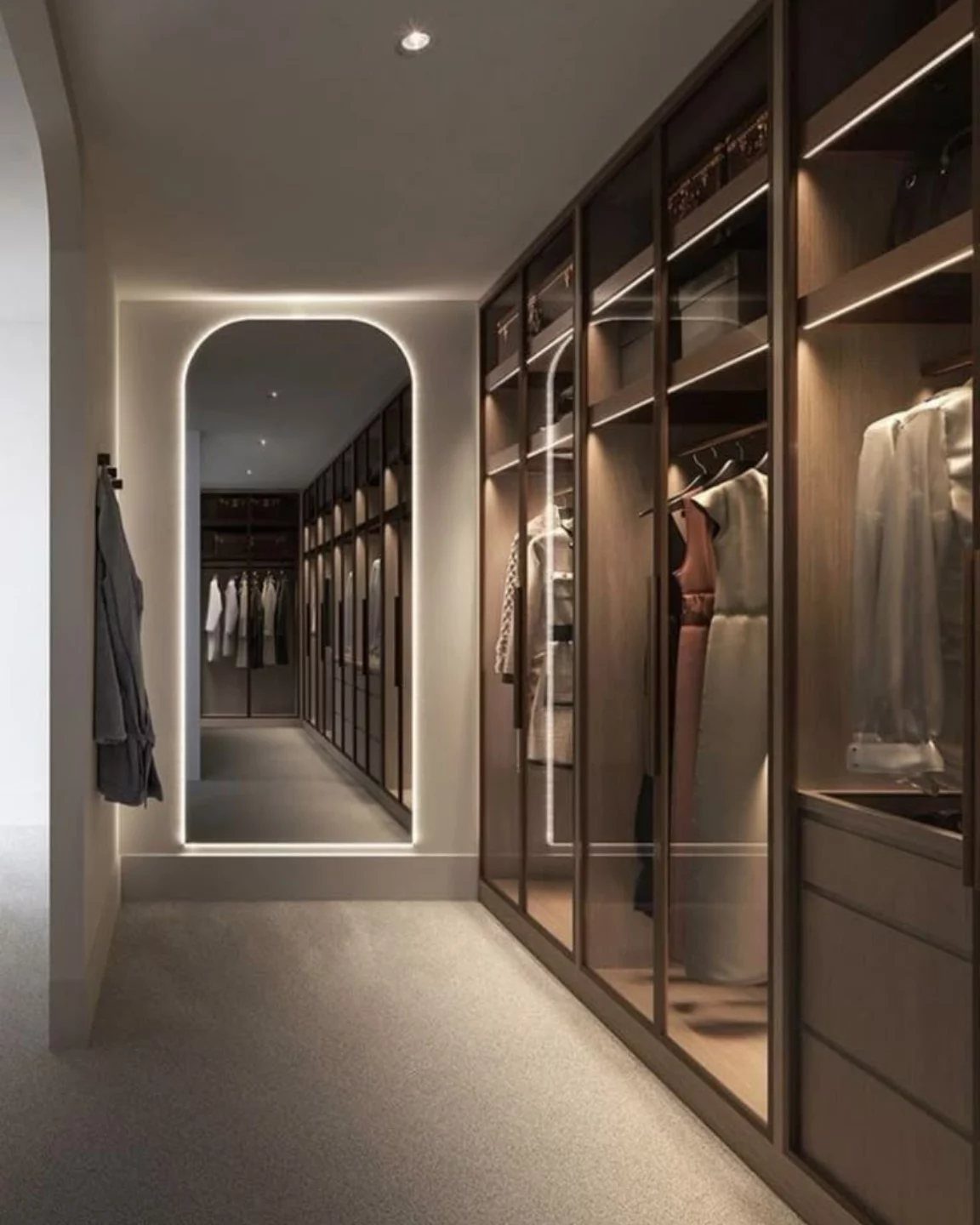
Taking cabinets all the way to the ceiling adds storage in the top few feet most closets waste.
Put out-of-season items and rarely worn pieces on the top shelves, and keep daily clothes between your shoulders and hips, where you can grab them without reaching.
You will need a step stool, so store one in the closet. Integrated lighting matters more with height, since tall shelving casts shadow onto the shelves below and a single ceiling fixture rarely reaches every level evenly.
10. Central Island
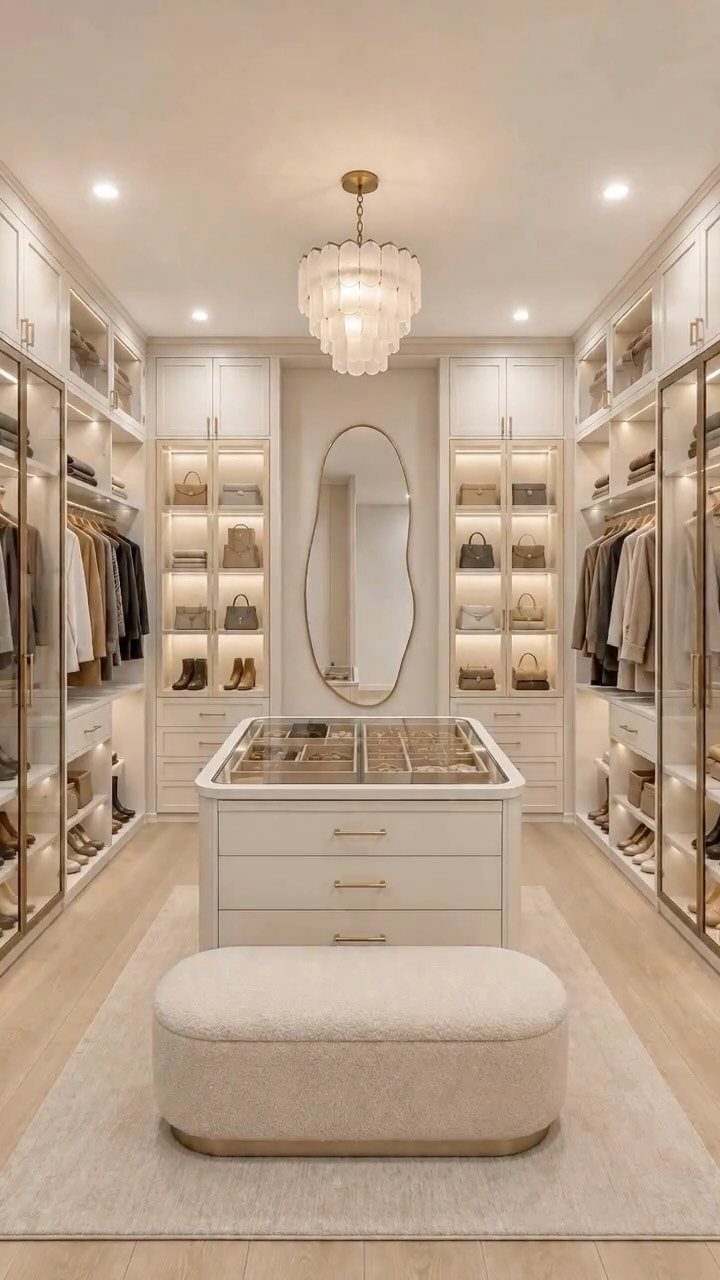
An island is the one piece that makes a walk-in feel like a room, giving you a surface to fold clothes and lay out outfits. A glass top lets you see watches or jewelry in the drawers below.
Leave enough clearance around it that you can open drawers and walk past comfortably; if the closet is narrow, skip the island and choose a slim bench instead.
I would add a rug and a stool beside it so the island works as a place to sit and dress.
11. Use Neutral Colors
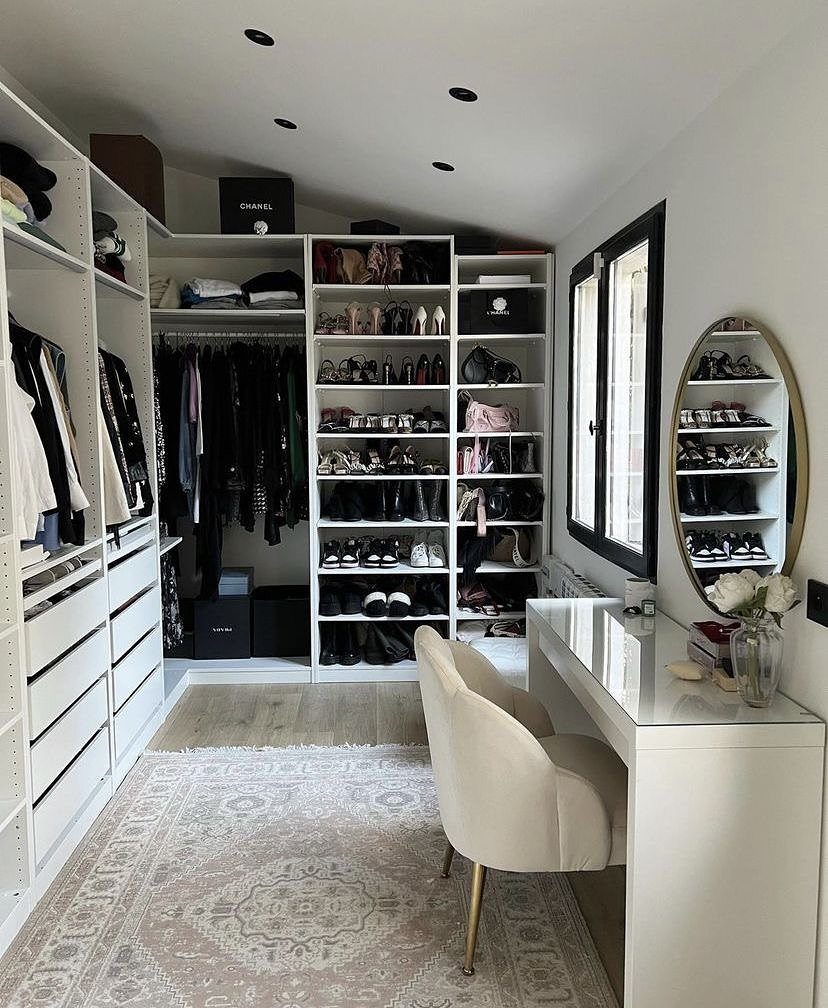
White and cream walls, shelves and rugs bounce light around, so a small closet looks larger and calmer. With walls and cabinets kept quiet, the colors in your own wardrobe become the only accent in the room.
Keep the finishes close in tone, then add one soft layer, like a beige chair or a light rug, so the room doesn’t feel clinical.
White shows scuffs and dust, so I would pick a wipeable finish. A light rug will need more regular cleaning than a dark one.
12. Built-in Cabinets
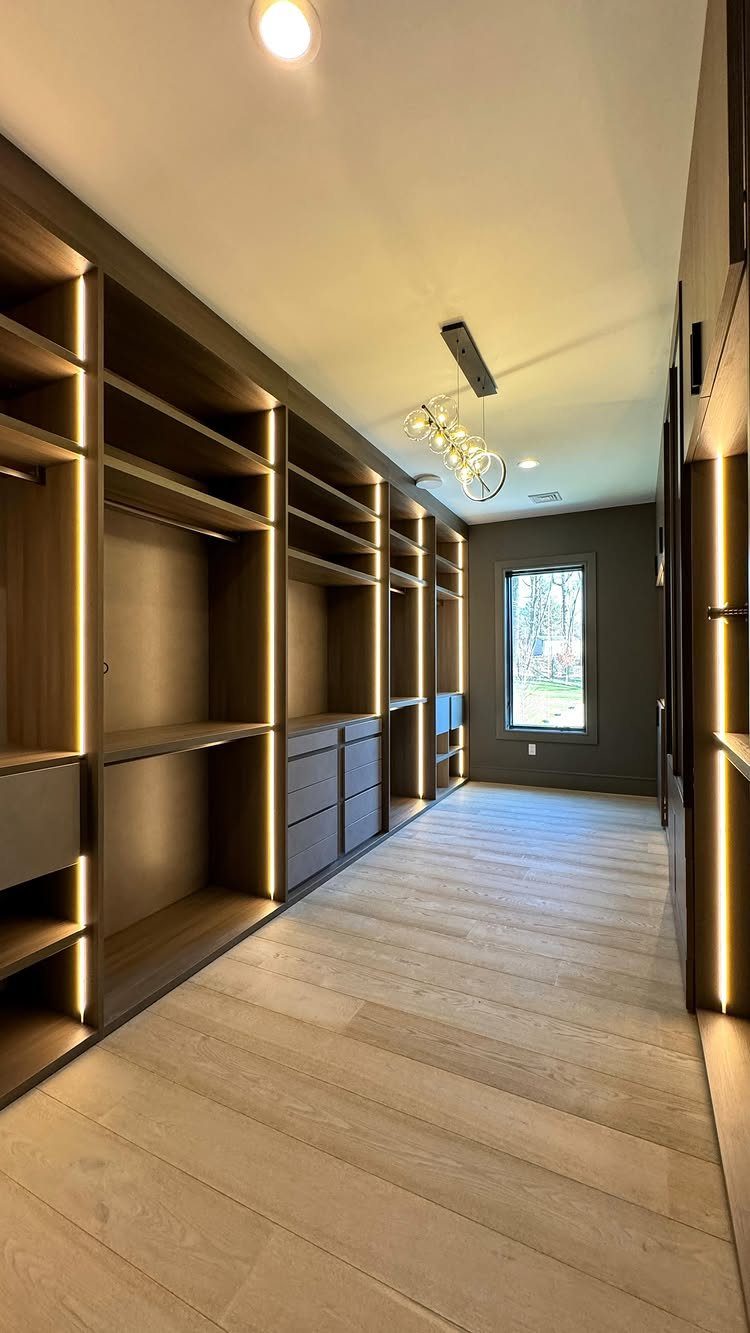
Built-in cabinets run wall to wall with no gaps, so every inch holds something and the closet looks custom. Pairing dark wood with light floors stops the room from reading as a heavy box.
Custom work costs the most, so on a budget I would build the look from modular units fitted tightly together and trim the gaps.
LED strips set into the cabinets light the clothes without extra fixtures. Measure the walls twice before you order anything.
13. Boutique-style Display
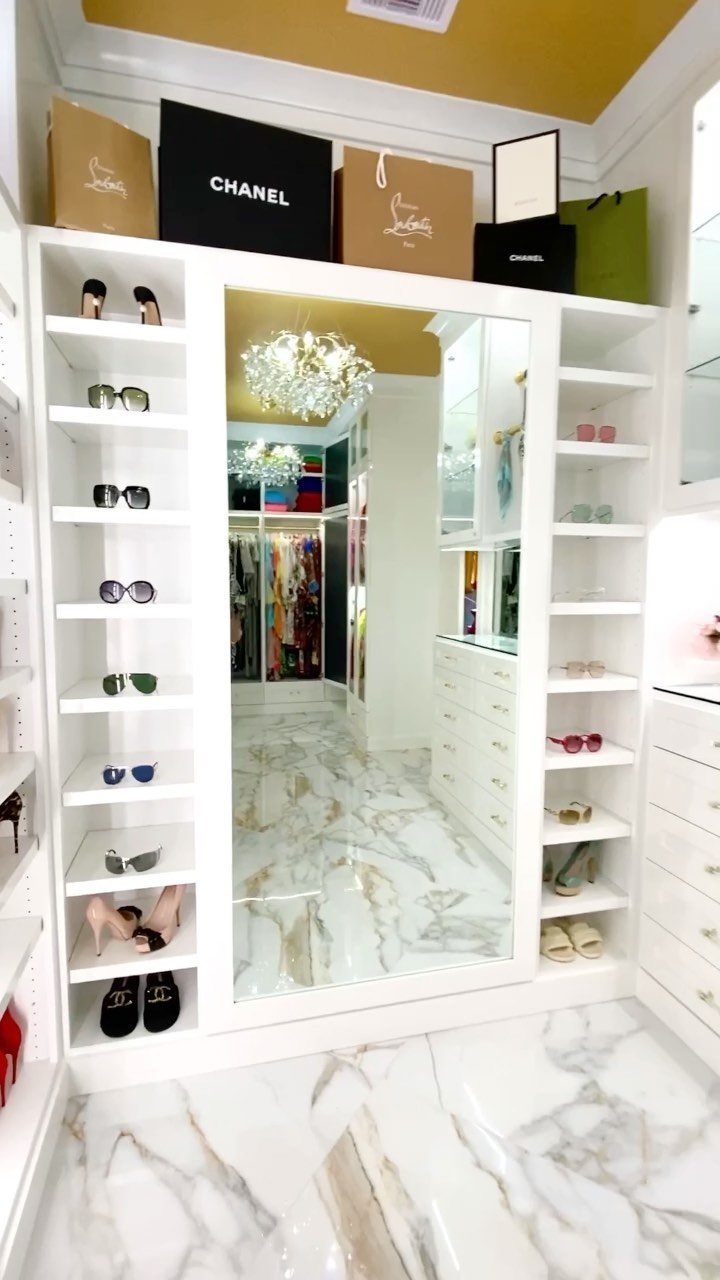
Boutique-style display treats your best pieces like merchandise: sunglasses, a few shoes and a favorite bag set out on open shelves with space around each one. Leaving gaps is what makes it read as a shop instead of a pile.
Edit hard. A shelf with a few pairs of sunglasses spaced out looks styled, but pack it full and the same display turns to clutter.
I would rotate what is out every season and keep the rest in drawers below, so the display stays fresh without buying anything new.
14. Create Distinct Sections
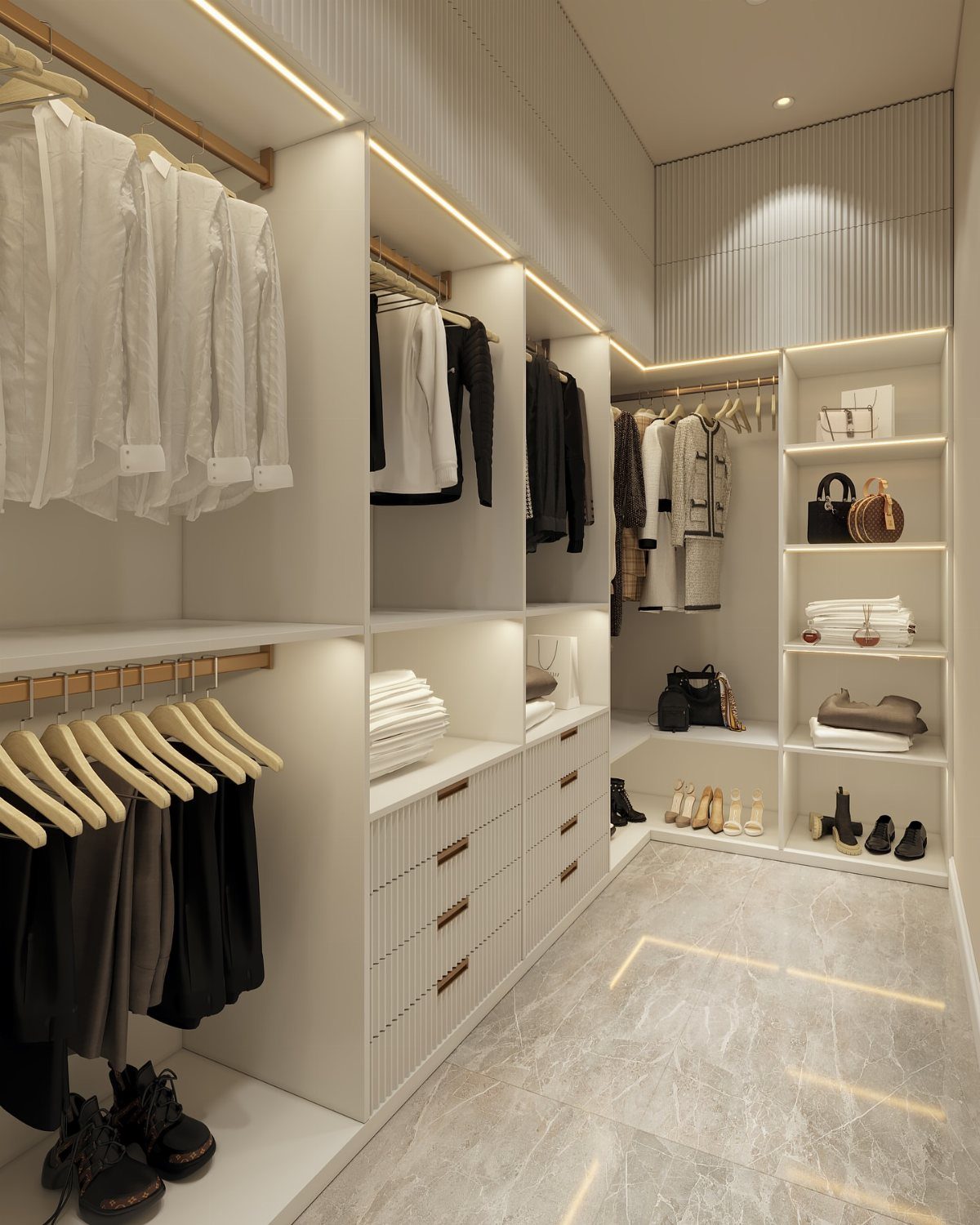
Sorting a closet into sections by category means shirts hang together, trousers share a run, and bags and shoes each get their own zone. You stop searching because every item has one obvious home.
Start by emptying everything and grouping it on the floor before you place a single rod or shelf. Let the largest group claim the most space.
Within a section, sort by color, light to dark, so a gap is easy to spot. I would put the most-worn category where your eyes land first when you open the closet, so daily picks never mean reaching or bending.
15. Wood Veneer Finishes
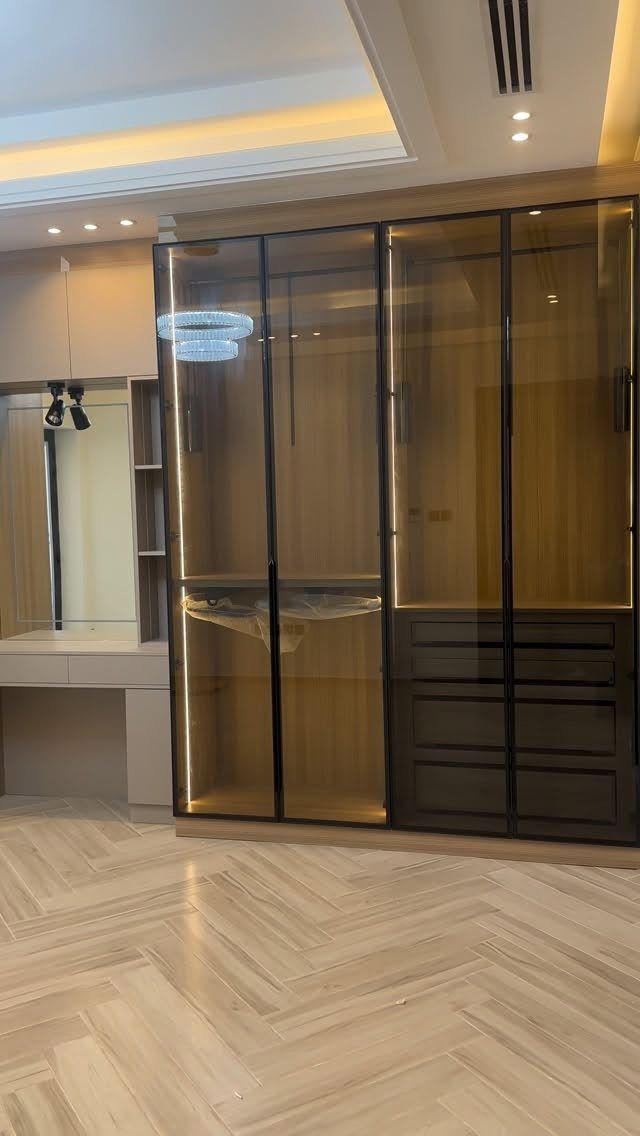
Wood veneer gives cabinets the warmth of real wood grain for less than solid lumber, and it keeps a modern closet from feeling cold.
Against a herringbone floor, a veneer with a calm, straight grain works better than a busy one, since the floor already supplies pattern.
Match veneer tones across doors, drawers and trim so the run looks like one piece.
Where a veneer meets glass doors, interior lighting lets the grain glow. I would pick a finish you can wipe clean.
16. Tufted Ottoman Seating
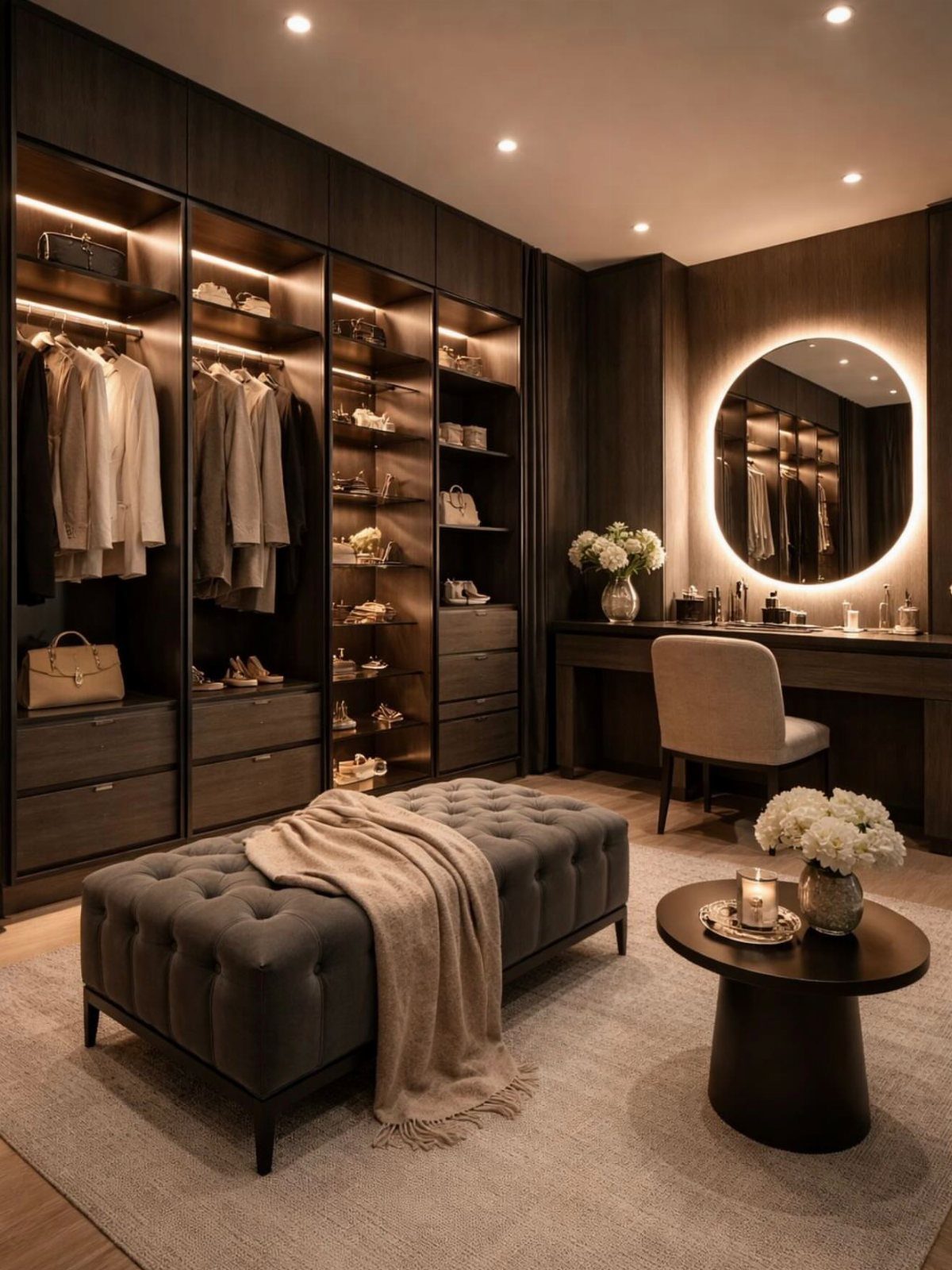
A tufted ottoman in the middle of the closet gives you a soft place to sit while you pull on boots or choose earrings.
Grey sits quietly beside dark wood cabinetry, and a throw blanket adds texture without another piece of furniture.
Choose one with a firm, supportive seat, since a plush cushion that sinks is hard to stand up from.
Keep it at least an arm’s length from the cabinets so doors and drawers open freely. A small side table beside it holds a cup or a flower vase.
Decluttering Tips
Wear data makes a good first filter: most people reach for about 20% of their wardrobe 80% of the time. Pull everything out, set aside what you actually grabbed in the last season, and look hard at the rest.
Clothes you kept because of the price tag are the hardest to let go. Ask whether you would buy the piece today; if not, it is taking up space that daily clothes could use.
Marie Kondo’s "spark joy" test works well for sentimental pieces and accessories. Hold each item and keep only what makes you glad to see it.
Once the closet is edited, a short routine keeps it that way. Refold, rehang and re-sort every so often, and the job stays small instead of turning into a full weekend purge.
Choosing Materials
Before you pick a finish, check what the cabinet is made of underneath. Plywood and MDF are the common boards, and wood veneer, matte lacquer panels, glass and aluminum frames are the common surfaces over or around them.
Match the material to how hard the closet gets used. A daily-use closet needs a surface that shrugs off scuffs, while a rarely opened guest closet can lean on looks.
If you buy boards, look for E0 or E1 on the label. Those grades refer to low emissions, which matters in a small, closed room where air does not move much.
Budget settles the rest. Pick the finish you can afford across the whole closet rather than splurging on one wall.
Budget-friendly Updates
Start with the cheapest changes that read the biggest. Matching storage bins and slim hangers make a closet look planned, and the slim hangers free up rod space too.
Peel-and-stick wallpaper suits renters, since it covers one back wall without paint or permanent work. Shelf dividers and drawer organizers come next, because they keep stacks from collapsing.
Before you buy anything new, look around the house.
Add LED lighting last, once the clutter is sorted, so it shows off what you kept.
A framed photo, a hook for accessories or a small sachet makes the space yours for very little money.
Whether you’ve recently streamlined your wardrobe or are a professional designer seeking fresh inspiration, AD’s archive offers a curated collection of walk-in closet ideas that blend form with function.
Frequently Asked Questions
What should every walk-in closet include?
Hanging space, shelving, drawers, shoe storage and good lighting cover the basics, and a mirror that shows you head to toe plus a spot for accessories finish the job.
Sorting the closet into zones by category, so shirts, trousers, bags and shoes each have one home, keeps it easy to use.
How can I maximize space in a small walk-in closet?
Use the vertical space first: run cabinets or shelves to the ceiling and store out-of-season pieces up top, with a step stool kept inside.





