Ideas in this list run from free, like sorting your hanging clothes by color in an afternoon, to small purchases such as clear drawer dividers, velvet hangers or a hanging wire organizer that adds shelves without a single screw.
What picks yours is what’s actually crowding the closet: tangled small items need drawer dividers or clear bins, a rod that wastes height needs a second one, and overflowing off-season layers belong in vacuum-sealed compression bags.
Renters can skip the drill entirely, since the over-the-door pocket organizer hangs in place and the extra shelves can be freestanding.
1. Use Drawer Dividers
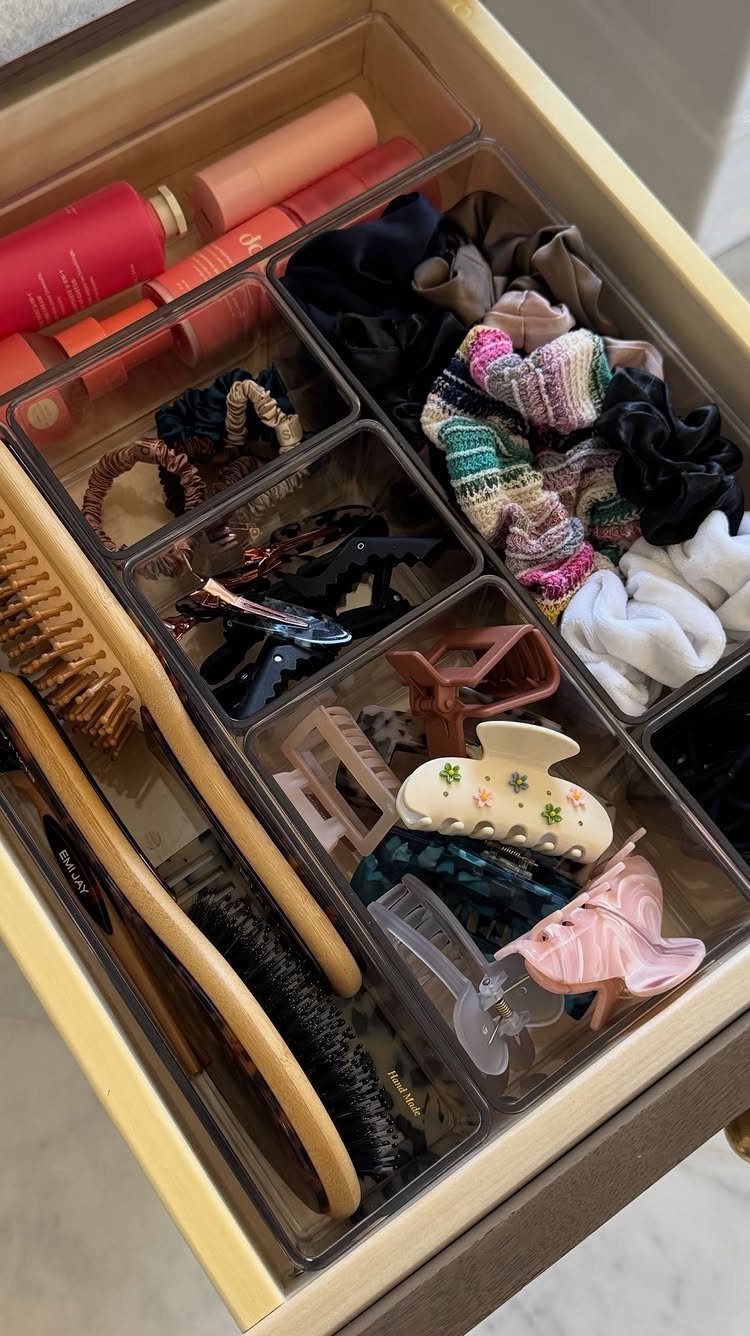
Hairbrushes, clips, scrunchies and tubes turn into one tangled pile the moment a drawer has no walls. Clear dividers fix that, and clear is the version I’d pick because you can see every compartment without pulling anything out.
Give the long items, like brushes, their own wide lane, and let the small ones share short sections. Sort first, then buy dividers to fit what you own, not the other way around.
2. Extra Shelves
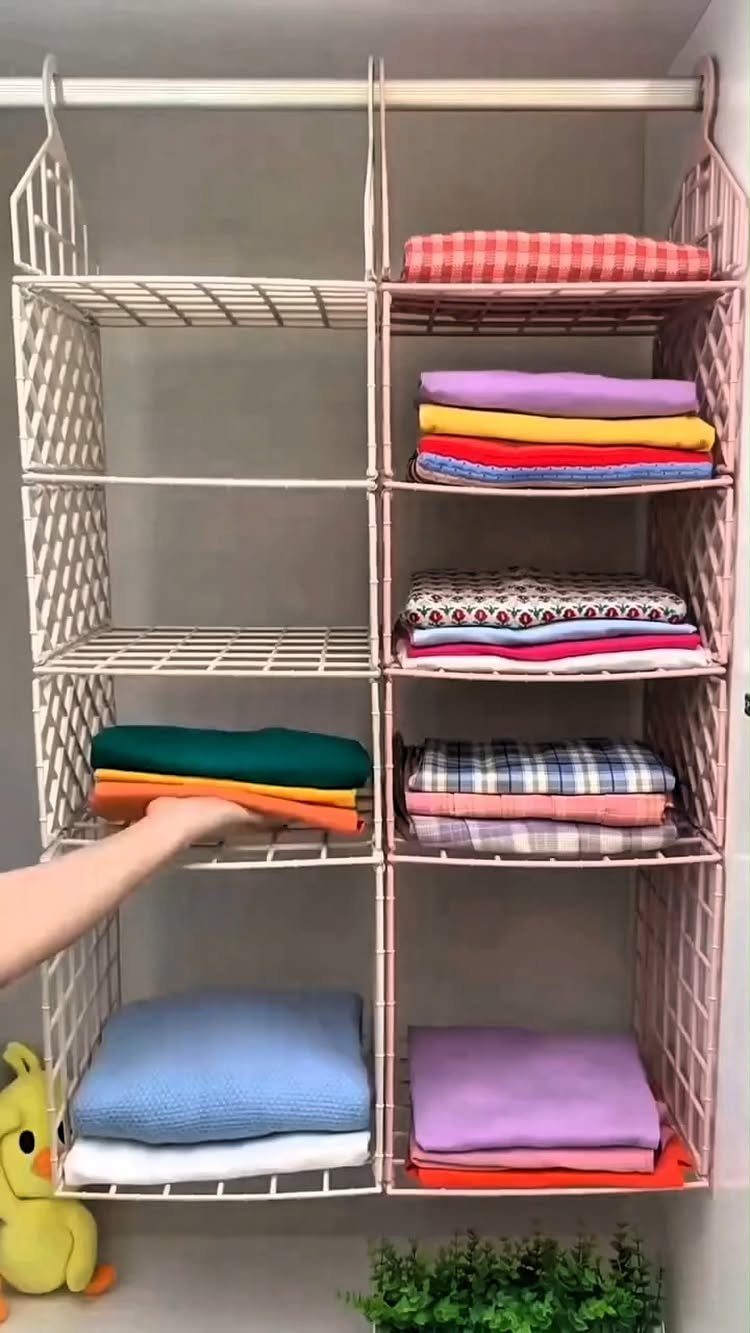
A hanging wire organizer adds shelves without a single screw, which makes it a good pick for renters. Folded sweaters, tees and blankets sit at arm’s reach instead of in a heap on the floor.
Fold items to roughly the same size so each shelf stacks flat. Wire grid shelves let air through, though thin knits can sag between the bars, so lay a sheet of cardboard under the softest piles.
3. Use Clear Bins
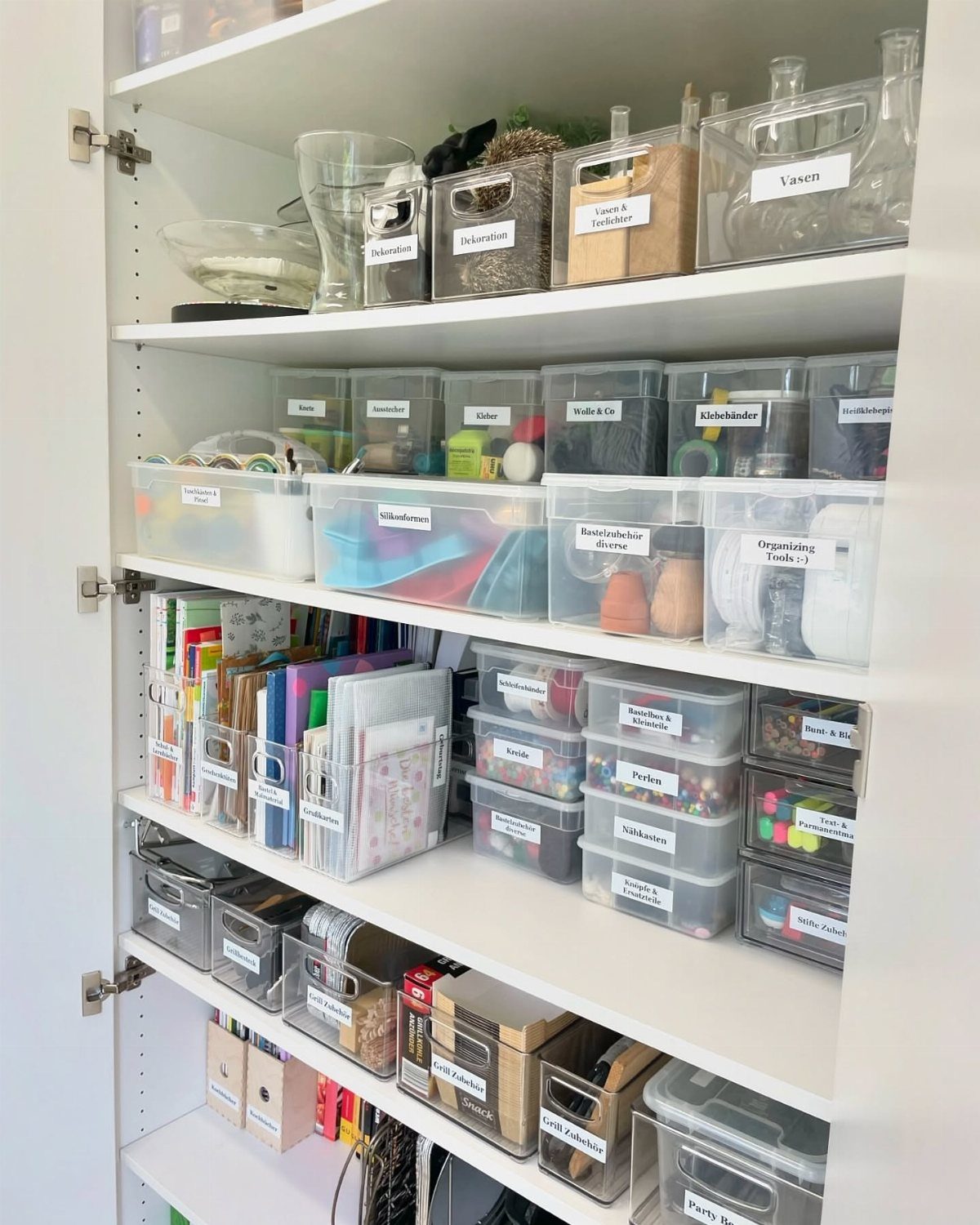
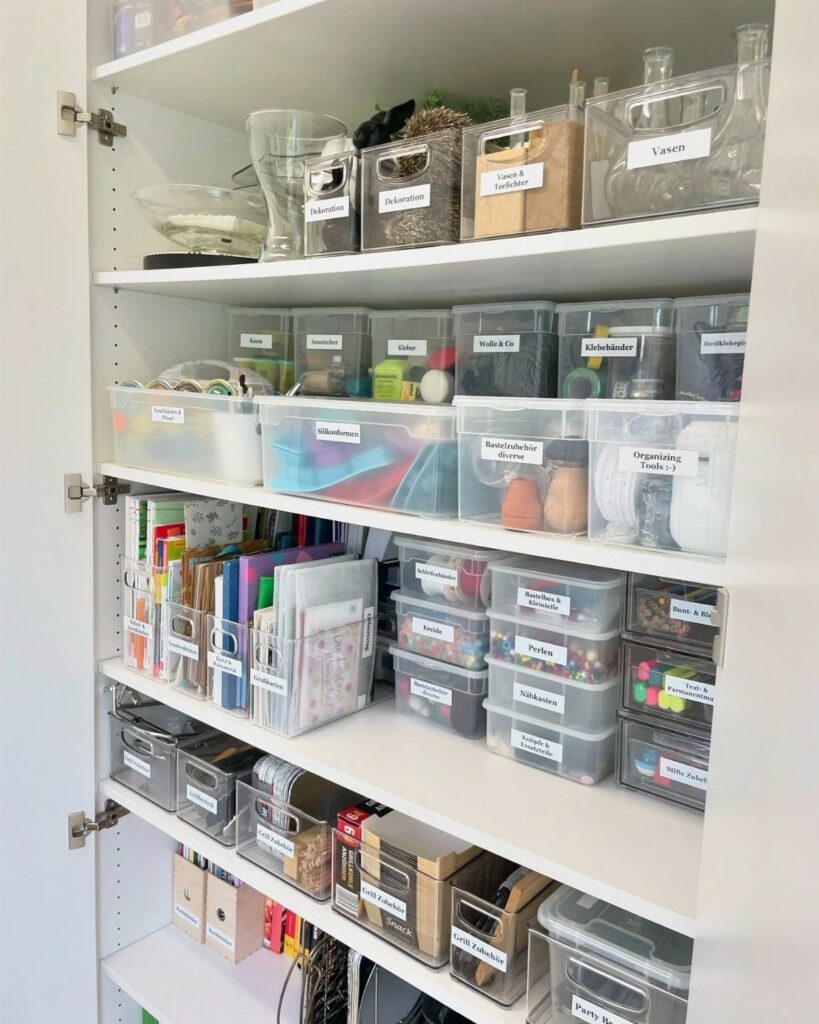
Labels do half the work here. Clear bins let you see the contents, and a word on the front, like "Vasen" or "Dekoration," settles any doubt about where something goes back.
Sort by category before you buy, then pick bins in a few sizes so small and bulky items each get a snug home. Seeing inside beats guessing, and it keeps you from buying a second glue gun.
4. Use Baskets for Storage
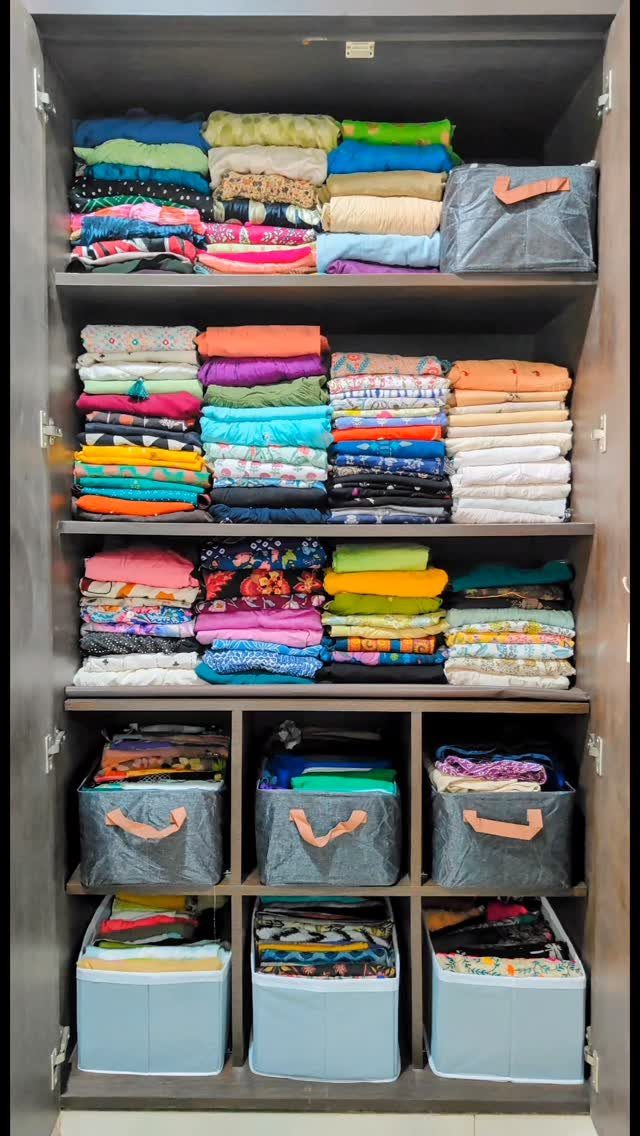
Fabric bins on the lower shelves are where I’d put everything that refuses to fold neatly: socks, scarves, belts, gloves.
Matching colors, such as three grey and three light blue, keep the whole thing calm even when the contents are a mess.
Put baskets low and keep folded stacks above, so the eye lands on order first. Unlike clear bins, these hide contents, so add a label.
5. Group Clothing by Color
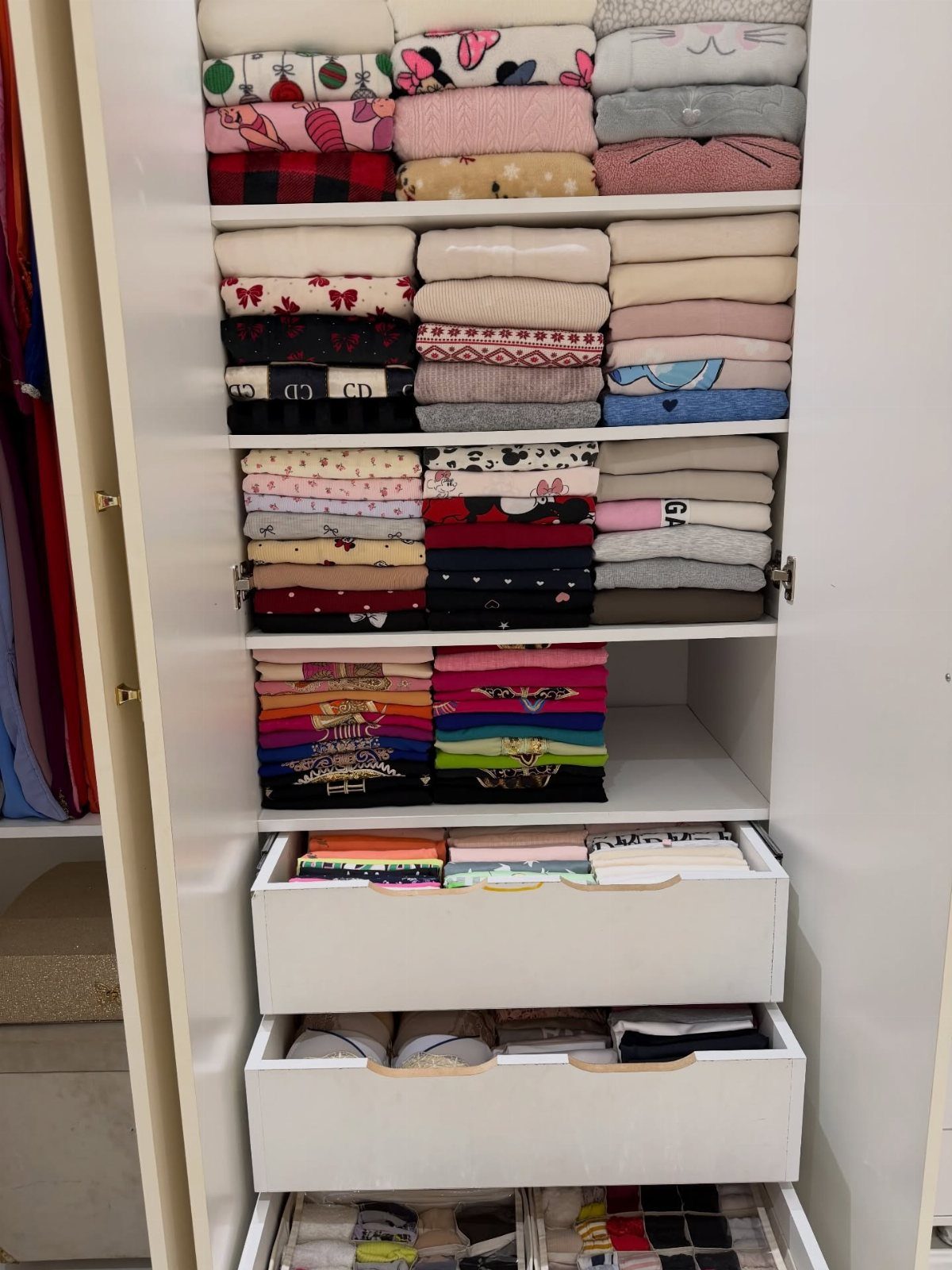
Sorting by type first and color second is what makes a closet quick to read. Shirts go with shirts, then shift from light to dark within each pile, and your hand finds the right piece in seconds.
It costs nothing and takes an afternoon. The only upkeep is putting things back in their own color zone.
6. Second Hanging Rod
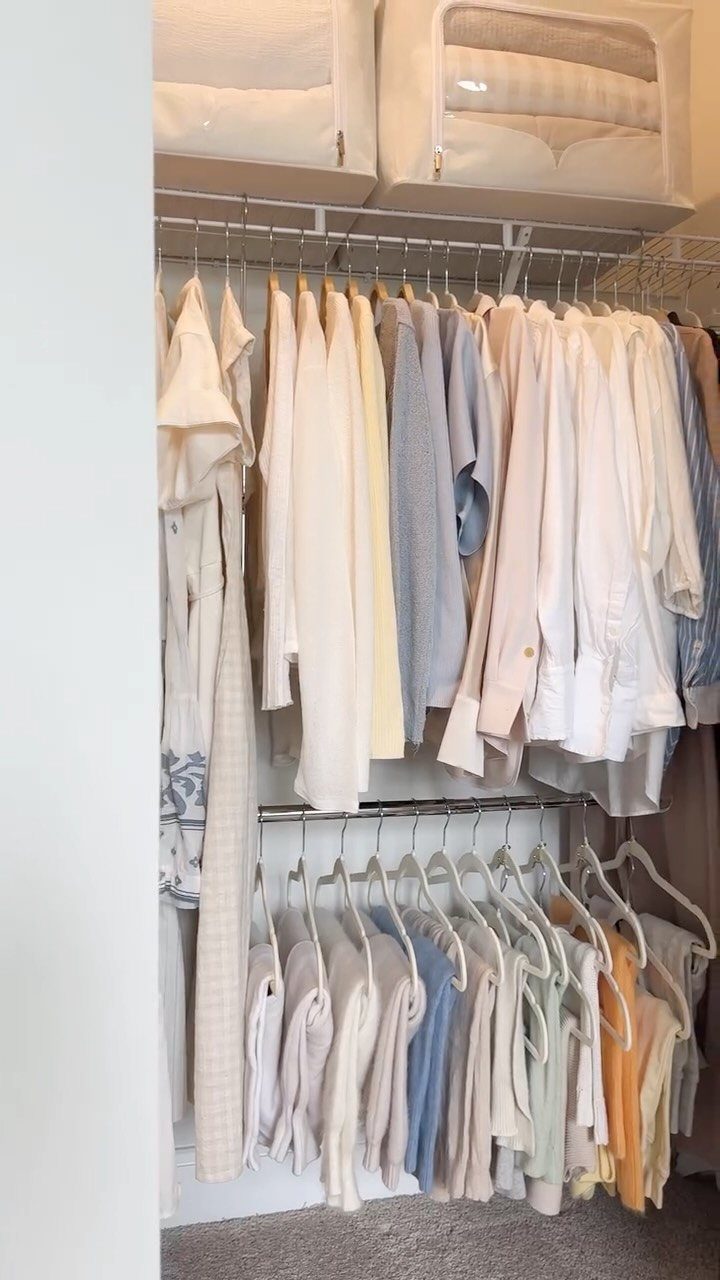
Shirts, blouses and sweaters rarely need the full drop of a single rod, and that wasted height is what a second rod reclaims. Stacking 2 rods doubles the hanging space for shorter items.
Keep long dresses and coats elsewhere, since they will drag across whatever hangs beneath them.
7. Over-the-door Pocket Organizer
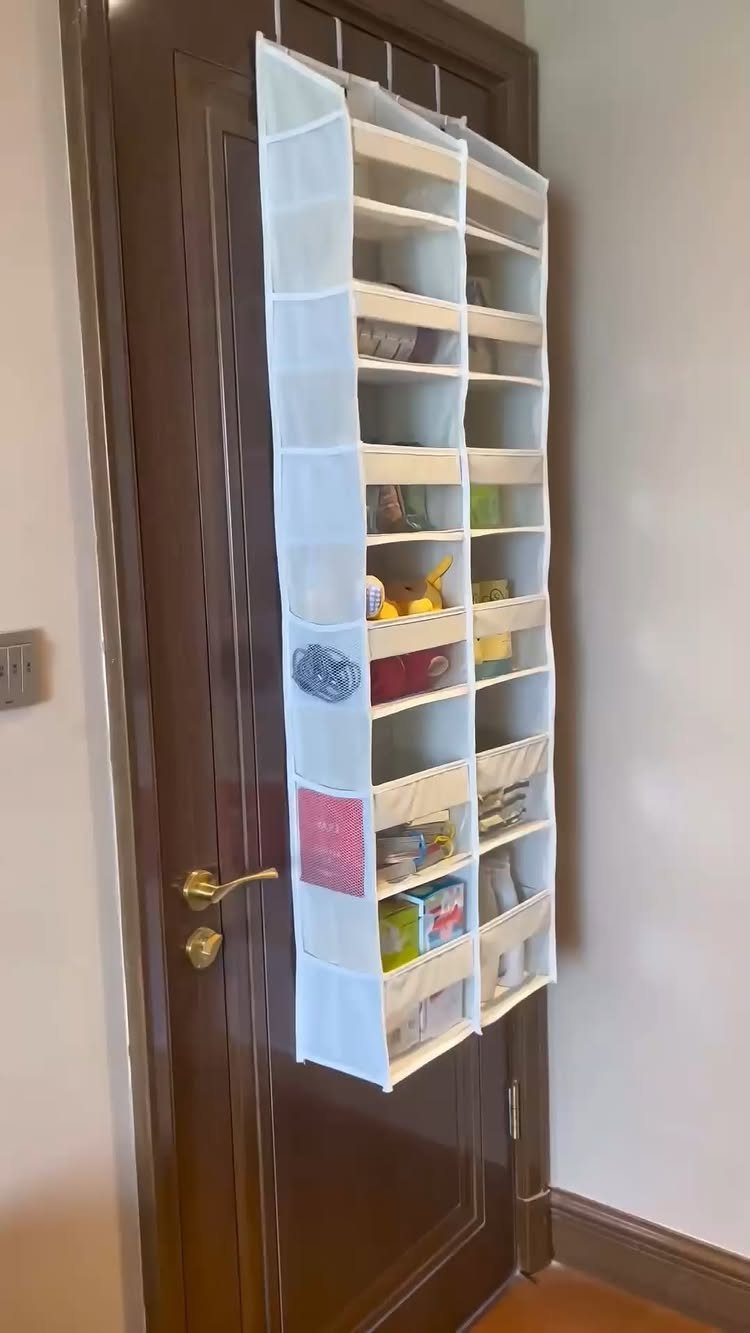
Shoes, scarves, hair tools and other small things disappear into a closet corner, and a pocket organizer hung over the door pulls them back into view. Nothing gets drilled, so it suits renters.
Fill the lower pockets with what you grab daily and the top ones with what you use rarely. Fabric pockets hold soft items well, but heavy objects will drag the whole thing down, so keep those on a shelf.
8. Vacuum-sealed Compression Bags
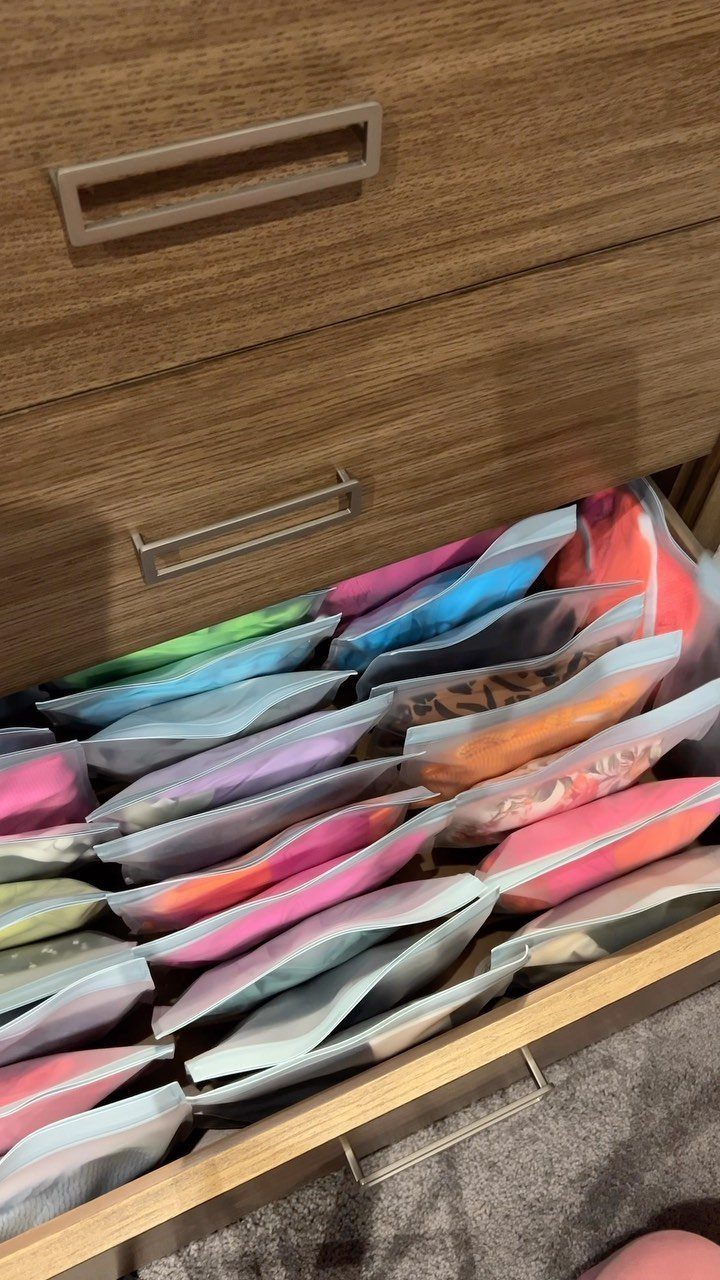
Bulky sweaters, hoodies and off-season layers shrink into flat packs once the air is out, and a drawer that held a few items suddenly holds many more. Clear bags also let you see what’s inside without opening anything.
Save this for things you wear seasonally. Pressing clothes flat over weeks can leave creases, so I’d skip it for everyday tees and anything you want to pull out wrinkle-free.
9. Slim Velvet Hangers
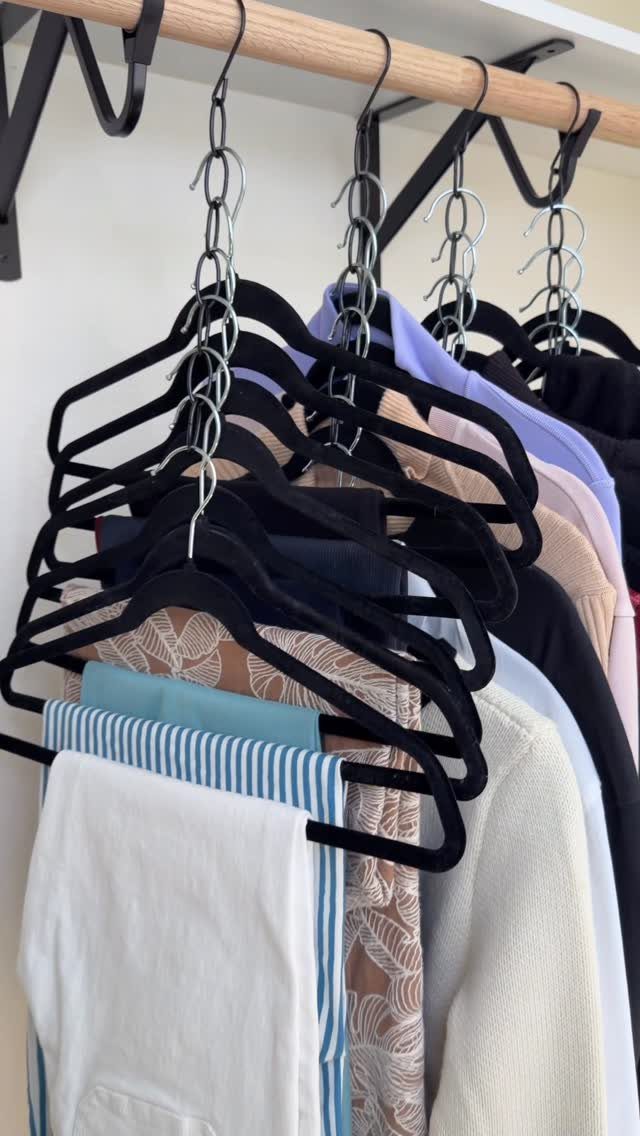
Swapping bulky plastic and wire hangers for black velvet ones frees up rod space, because the thin profile lets more garments hang side by side. The matching color also makes a rod of mixed shirts look like one tidy line.
The velvet surface grips, so tops stay put instead of sliding off at the shoulder. Replace hangers gradually, starting with the rod you use most, since a full set costs more than you’d want to spend in one go.
10. Fabric Compartment Organizer
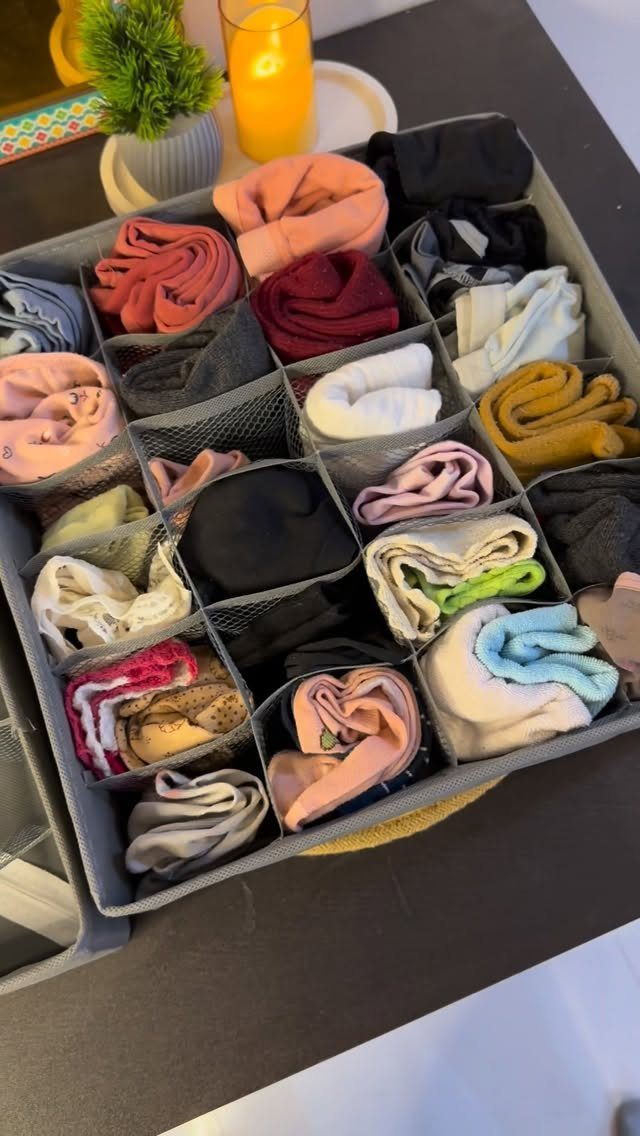
Folded tees, leggings and underwear stay upright in their own slots when a grey fabric organizer sits on a shelf or in a drawer, so you never dig through a stack to reach the bottom piece.
Fold each garment into a small rectangle that stands on its edge, one item per compartment, and fill the slots snugly so nothing tips over.
Soft fabric walls bend, which means the bin fits odd shelf gaps that rigid ones can’t.
Design Around Your Lifestyle
A closet works best when it matches how you actually get dressed.
Dressy, seasonal and once-a-year pieces can go on the high shelf or at the back of the rod. A top shelf works, and so does another storage spot in your home if the closet is tight.
Let your habits set the hardware.
If most of your wardrobe hangs, give the rod its full length before you add anything else. If you prefer to fold, buy sturdy shelf dividers or open baskets instead.
A system that fits your routine is the one you’ll keep up, which matters more than any layout that looks good on day one.
However, shirts and pants only need enough space so they can be folded—typically around 16 inches, so 18-inch-wide shelves in the middle of the small closet will suffice.
Set Boundaries with Your Closet
Make the closet the one place your clothes live, with no spare piles on the dresser, chair or door.
Once you’ve decluttered and organized, don’t answer a full closet by adding a dresser or wardrobe. When the rod jams and drawers won’t shut, it’s time to cull again.
Pair that with a one-in, one-out habit. For every new piece that comes home, send a similar one out the door, whether you donate it or consign it.
A basket or tote on the closet floor gives discards a place to land the moment you decide on them.
Once it fills up, take it to the drop-off spot that same day so your car doesn’t become a rolling donation pile.
Common Mistakes to Avoid
Overbuying organizers is the mistake I’d warn about first.
Vertical space is the second. In a tall closet, the space above the rod usually sits empty.
The third mistake is letting the closet creep past capacity. If it’s full, edit instead of squeezing more in.
The last is storing unrelated items. Give clothes and accessories the closet, and move everything else, like tools, papers and gift wrap, somewhere else.
Frequently Asked Questions
How to organize a bedroom closet?
Start by sorting clothes by type, then by color within each type, going light to dark, so your hand finds a piece in seconds.
Keep what you wear every week at eye level and within easy reach, and push formal pieces and off-season clothes to the top shelf or the far end of the rod.
Soft baskets on the lower shelves take socks, scarves, belts and gloves that won’t fold neatly.
In what order should I hang my clothes in my closet?
Group by type first, then by color, running light to dark inside each group. Shirts hang with shirts, and so on down the rod.
Place what you wear daily front and center, and push formal, seasonal and occasional pieces to the back or up high, since a closet that matches how you get dressed is the one you’ll keep up.
How to store sweaters in a small closet?
Fold them to roughly the same size and stack them on an extra shelf, such as a hanging wire organizer that needs no screws.
Wire shelving leaves lines in soft knits, so lay a cut sheet of cardboard under the most delicate stacks to keep them flat.
Off-season sweaters shrink into flat packs in vacuum-sealed bags, though weeks of pressing can leave creases, so use that for seasonal pieces only.
How do I maximize space in my small closet?
Edit first, then use height. Pull out what you no longer wear, and keep the closet from creeping past capacity by sending one item out for every new one that comes in.
After that, add a second rod and extra shelves in the empty space above the rod. When hangers jam on the rod and a drawer won’t close, the fix is another round of editing, not another piece of furniture.





