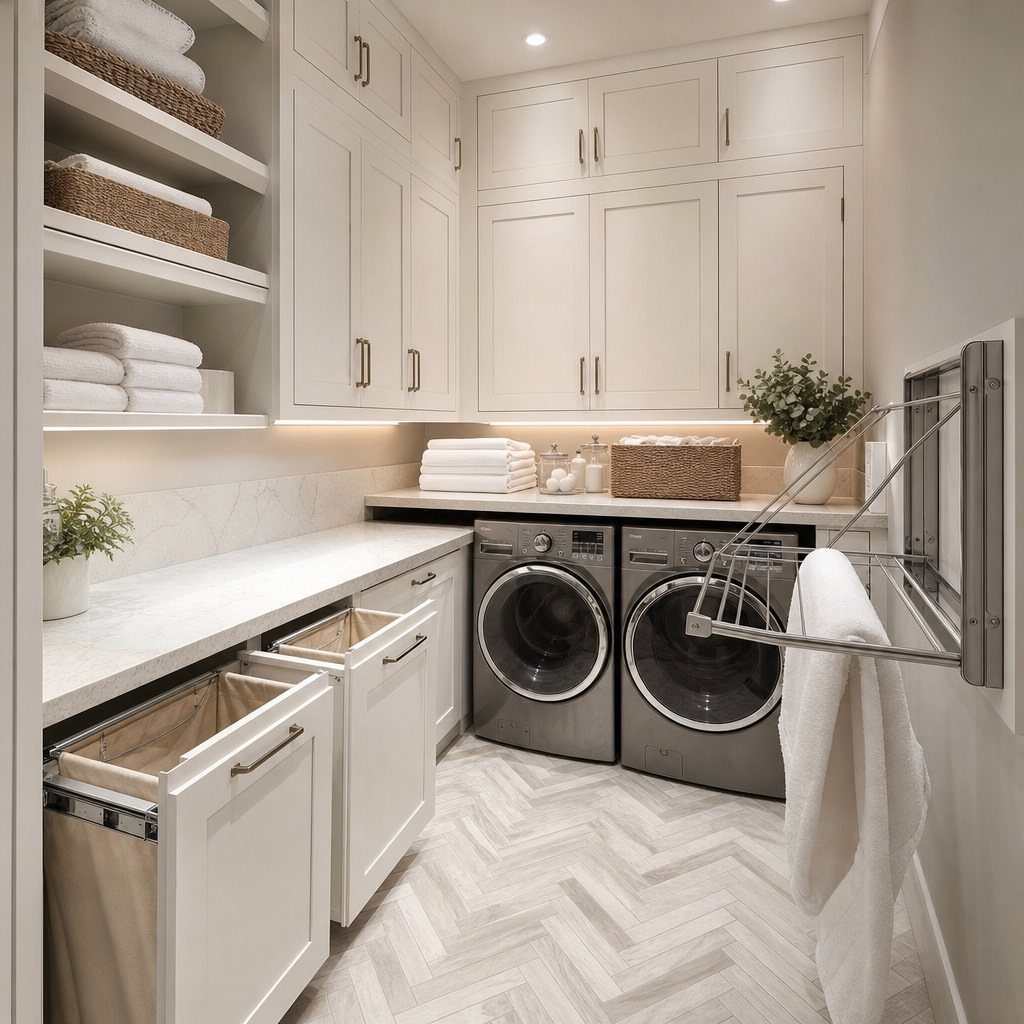
Room size and what else the room has to do decide which of these ideas you need: a cramped closet with a stacked pair wants a hanging rack or a hanging ironing board, while a larger room can take a full folding station with a slim hamper tucked next to the washer.
The list runs from a free declutter pass and small glass jars to cabinet storage and a rolling cart, and each idea scales to a real budget.
Whatever you pick, anything that holds weight, like the hanging rack, needs ceiling joists or studs, never drywall alone.
1. Folding Station
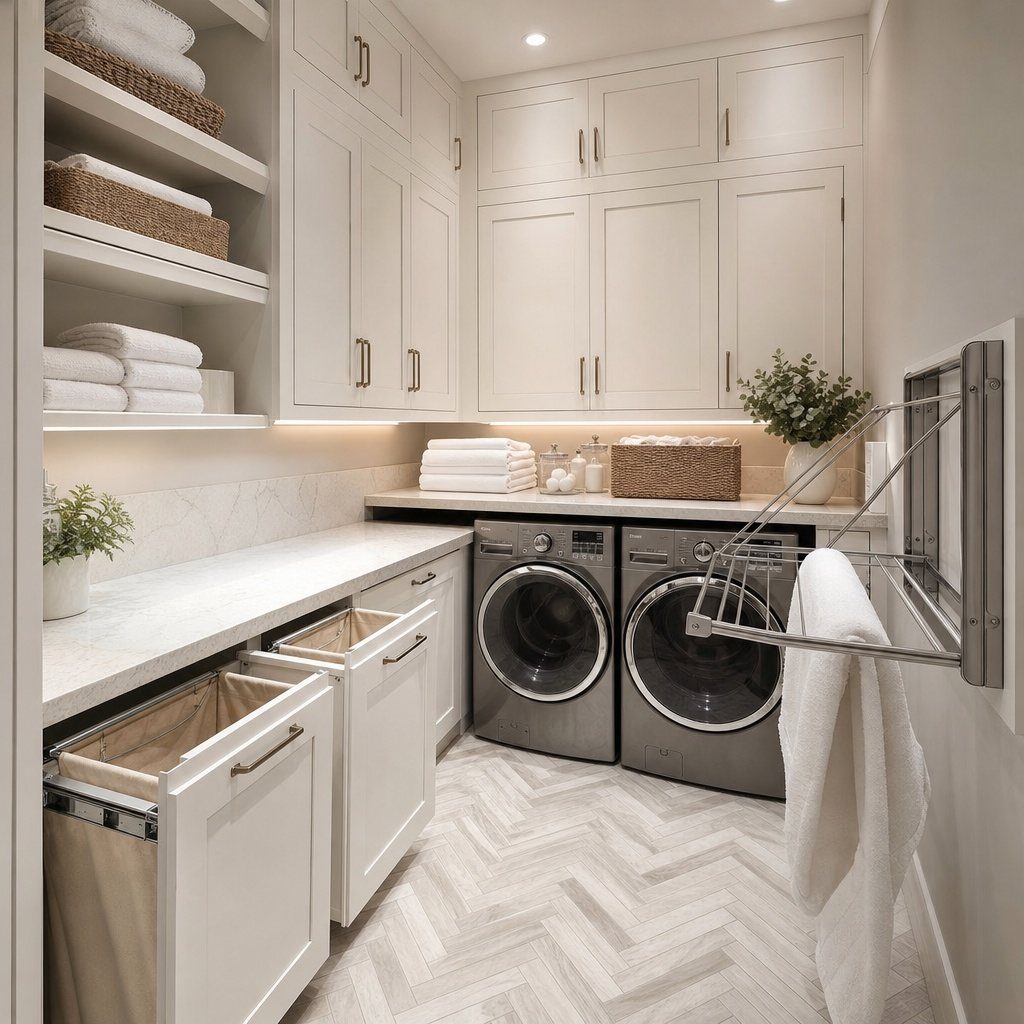
A folding station only works if the counter stays clear, so I keep it as the one surface where nothing lives. Pull-out hampers underneath let you sort as you unload the dryer and carry nothing far.
A counter over the machines or beside them is the spot to claim. Leave enough open width for a full bath towel to lay flat, and fold right there instead of on the bed.
2. Hanging Rack
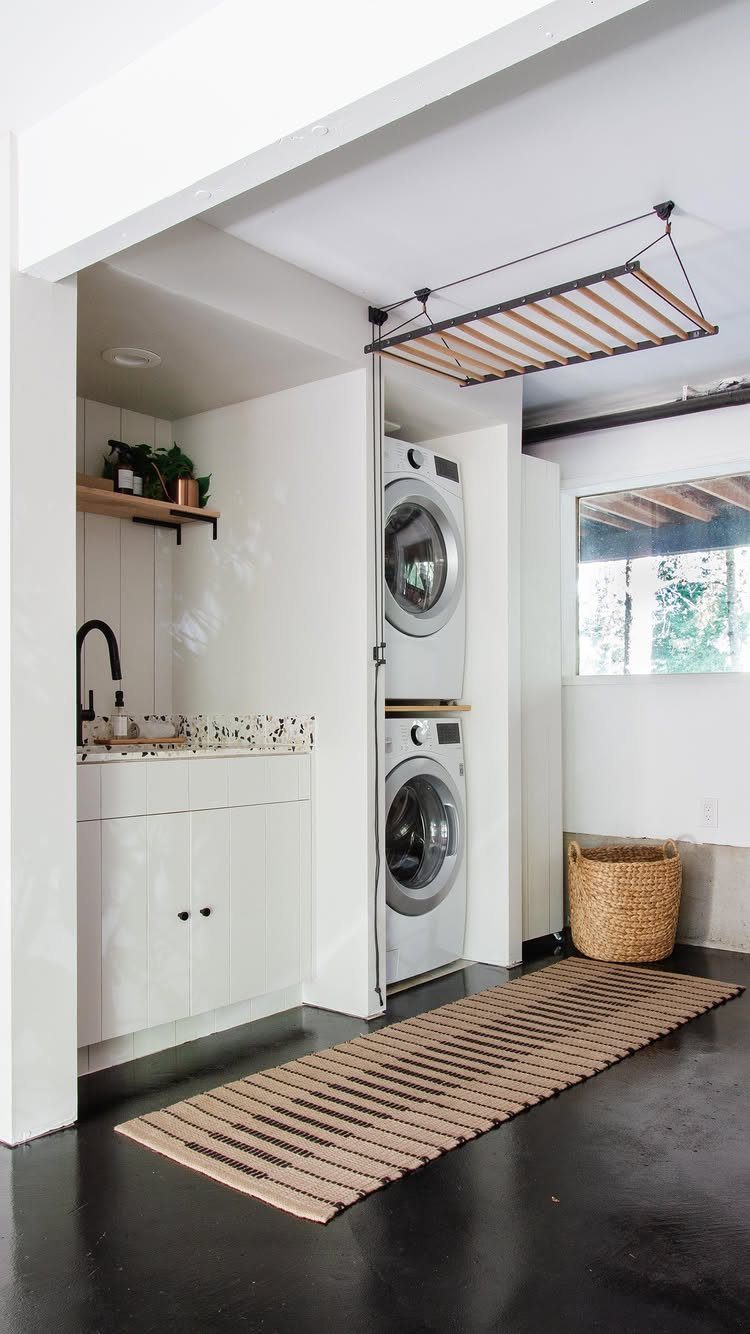
Air-dry items such as sweaters and delicates get their own home once a rack hangs from the ceiling, and the floor stays open for walking and loading.
A wood rack also looks like part of the room rather than a chore.
It is a good fit for a small laundry room with a stacked pair, where a freestanding rack would block the way. Mount it into ceiling joists, not drywall alone, since wet clothes add weight.
3. Floating Shelves
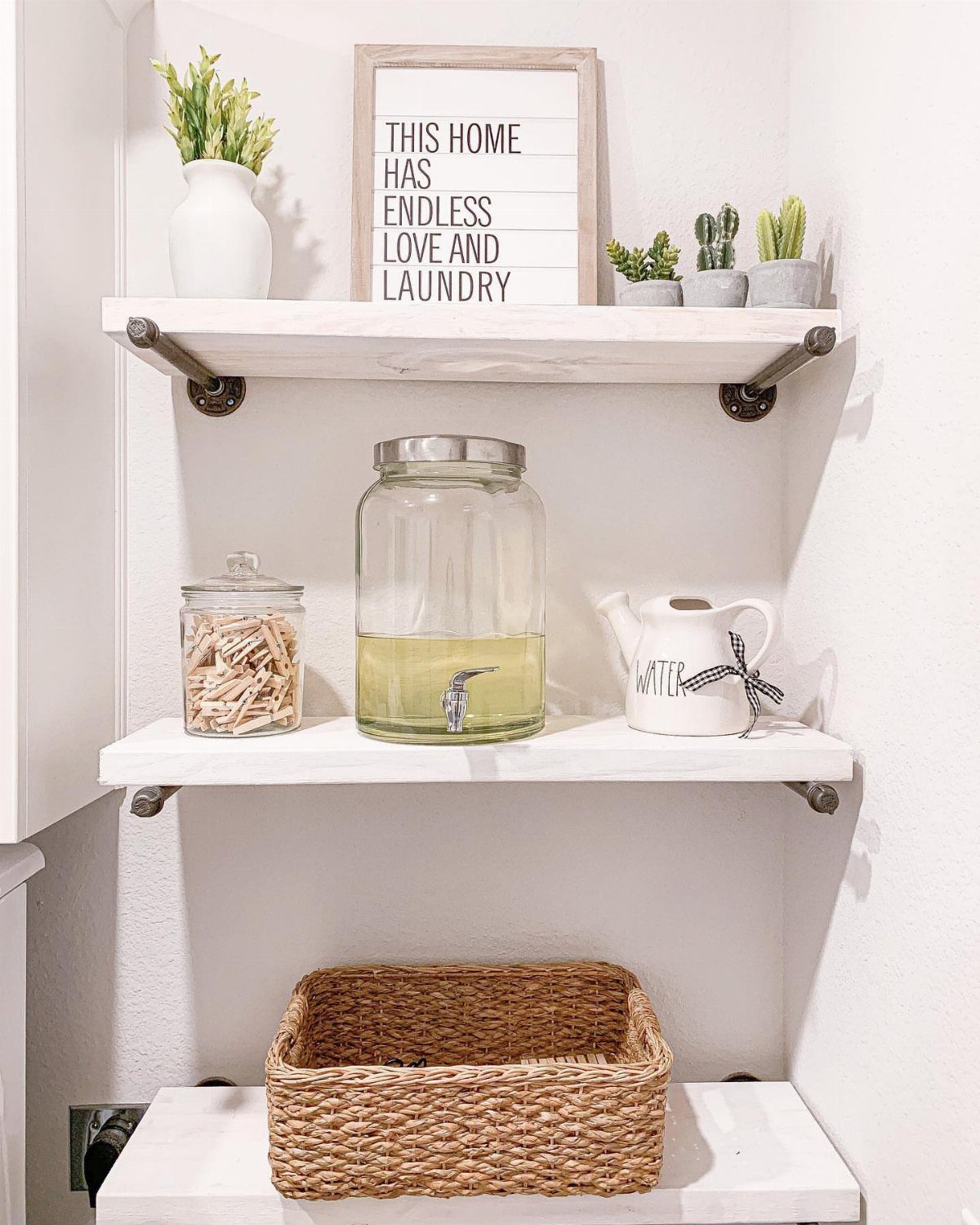
Wall space above the machines is usually wasted, and 3 floating shelves put it to work. Metal brackets hold up better than hidden hardware if you plan to stack heavy bottles.
I like keeping the top shelf for light, decorative pieces and the lower ones for supplies you reach for weekly. Screw brackets into studs, and use anchors rated for the load if a stud doesn’t line up.
4. Labeled Bins and Shelves
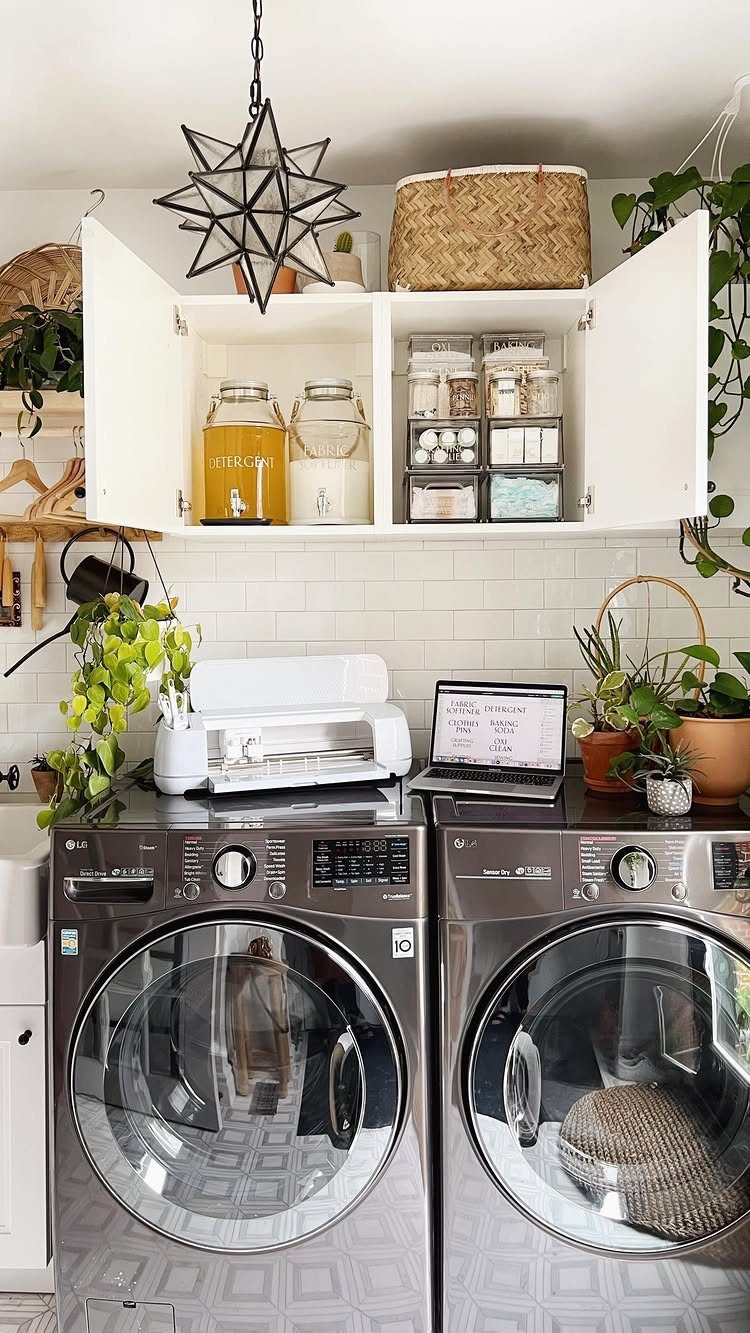
Labels end the daily guessing game of which jar holds what. Matching jars for detergent and fabric softener, plus small bins for baking soda and vinegar, make a shelf that anyone in the house can restock correctly.
Print or hand-letter the labels, and put them on the front where you can read them from the floor. Buying one jar style keeps the cost low and the shelf tidy.
5. Woven Baskets
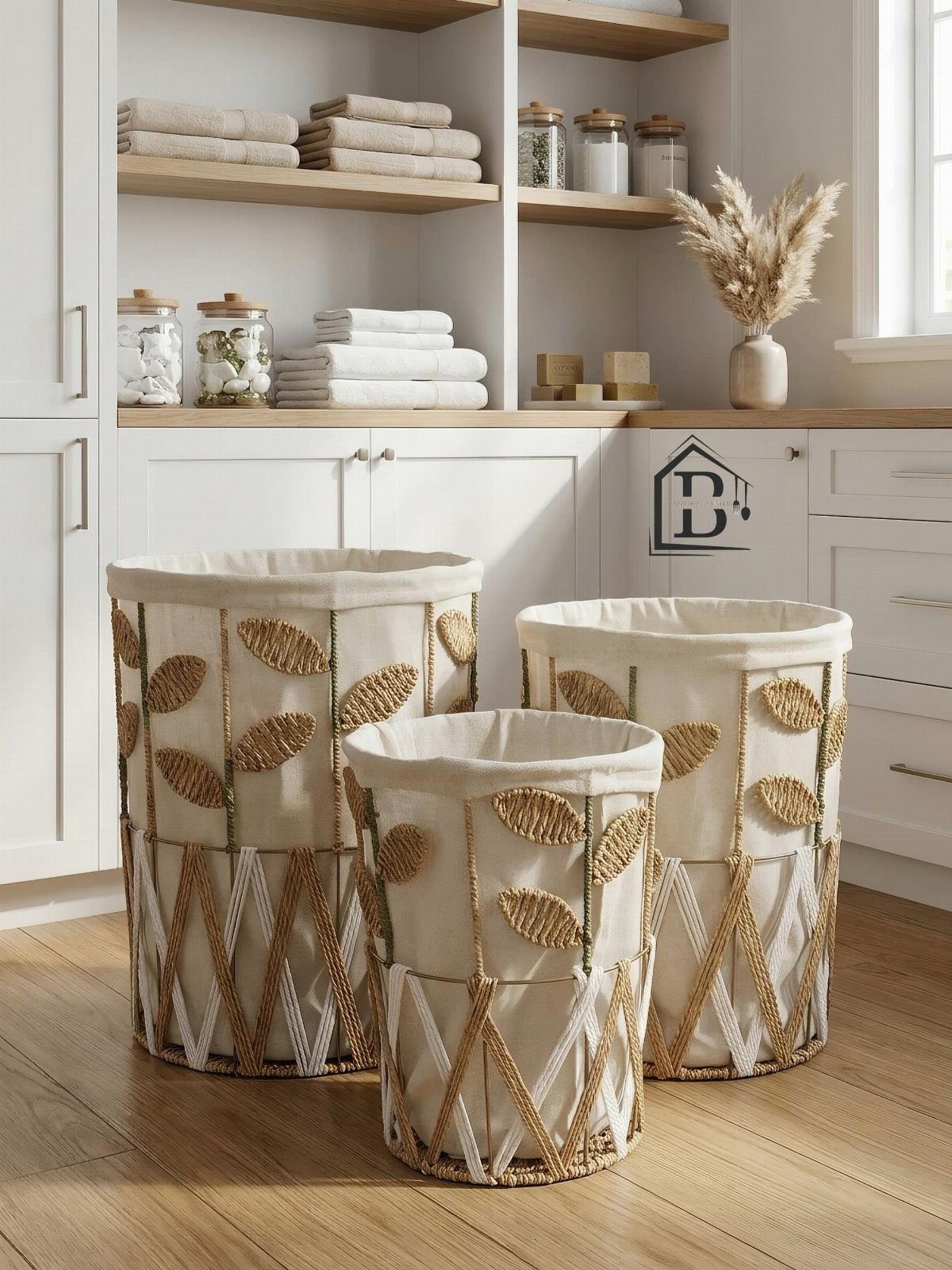
Woven baskets are the easiest way to hide clutter on an open shelf, and a fabric liner keeps snags off delicate clothes.
Pick three sizes: a large one for dirty laundry, a medium one for towels, and a small one for odds and ends.
Choose a tight weave so small items don’t poke through. Baskets cost far less than built-in cabinets, which suits a rental, and you can move them when you do.
Moving your basket into the laundry room is a subtle way to refocus where your family puts dirty clothes and collects clean ones. Not only does a washing basket add storage to your laundry room, it also reduces clutter around the rest of the house.
6. Wall Hooks
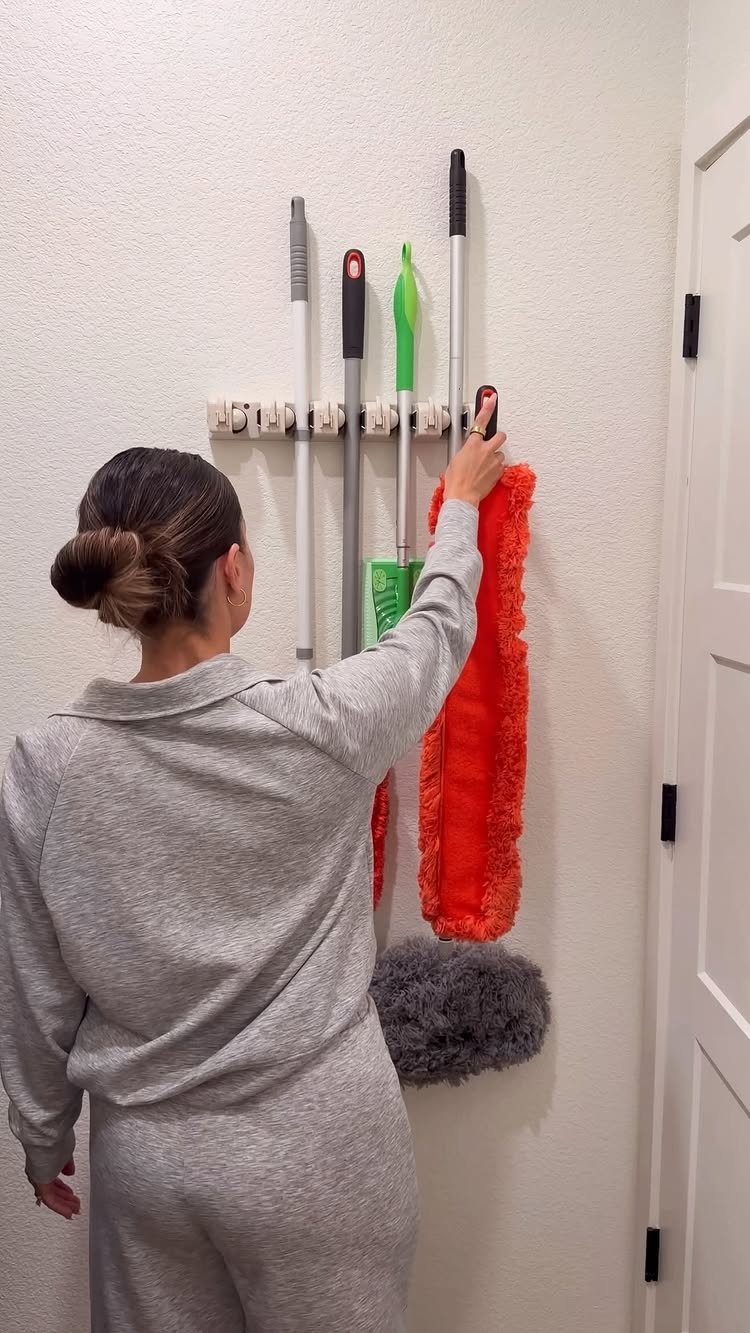
Wall hooks and a wall-mounted holder pull brooms, mops and dusters off the floor, where they always seem to fall over. Hanging a duster by its loop takes 2 seconds, so it actually gets put back.
Mount the rack at a height you can reach without stretching, and keep the heaviest tool on the lowest slot. It is a cheap project that fits a weekend, and a rental-friendly one if you use small screws.
7. Glass Jars
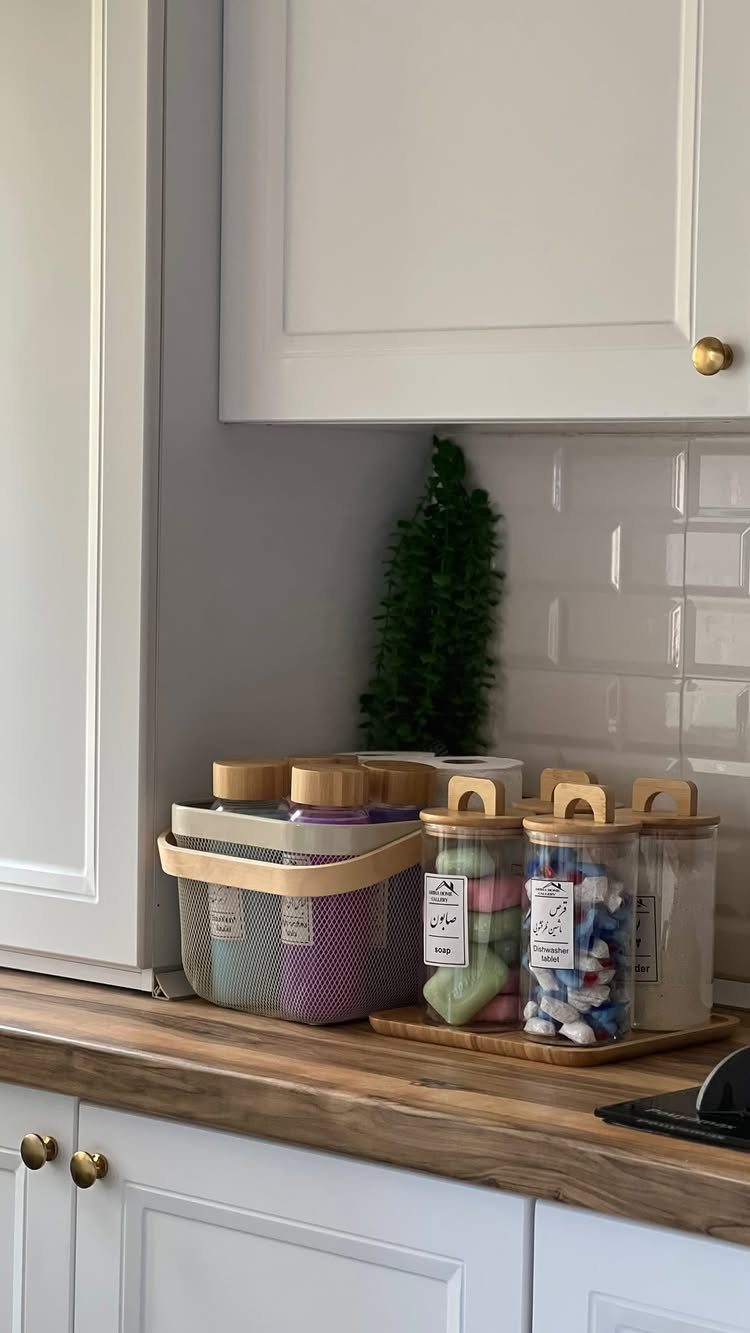
Small items like laundry pods and soap look better in glass jars than in their original tubs, and a wood lid gives the counter a warmer finish.
You can see what’s left at a glance, so you restock before the last pod is gone.
Pick jars with wide mouths so a hand fits in easily. Matching jars on one counter, with a basket nearby for the extras, keep the setup neat for very little money.
8. Hanging Ironing Board
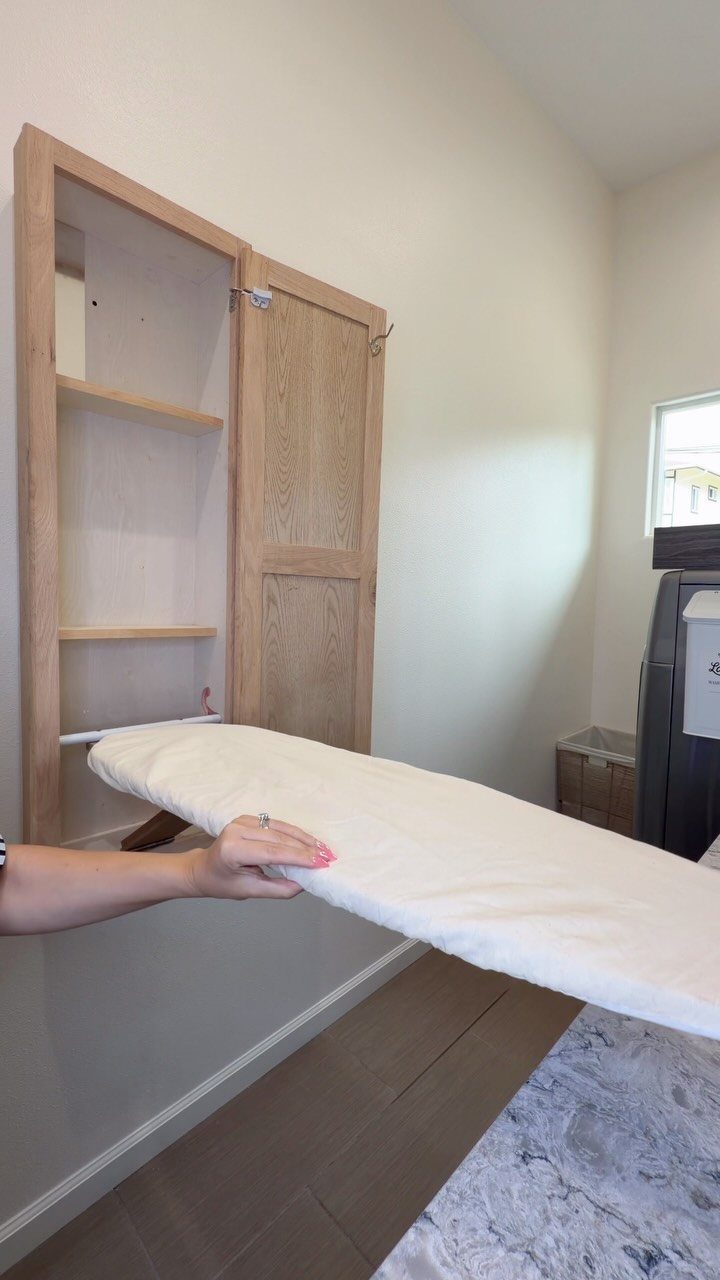
An ironing board folded into a wall cabinet takes up no floor space, which matters in a laundry room where every foot is already claimed.
Pull it down, press the shirt, then let the iron cool on its heel before the board gets folded away.
For a small room, I’d choose this over a freestanding board every time. Mount the cabinet to studs, since a board with an iron on it carries real weight.
9. Maximize Cabinet Storage
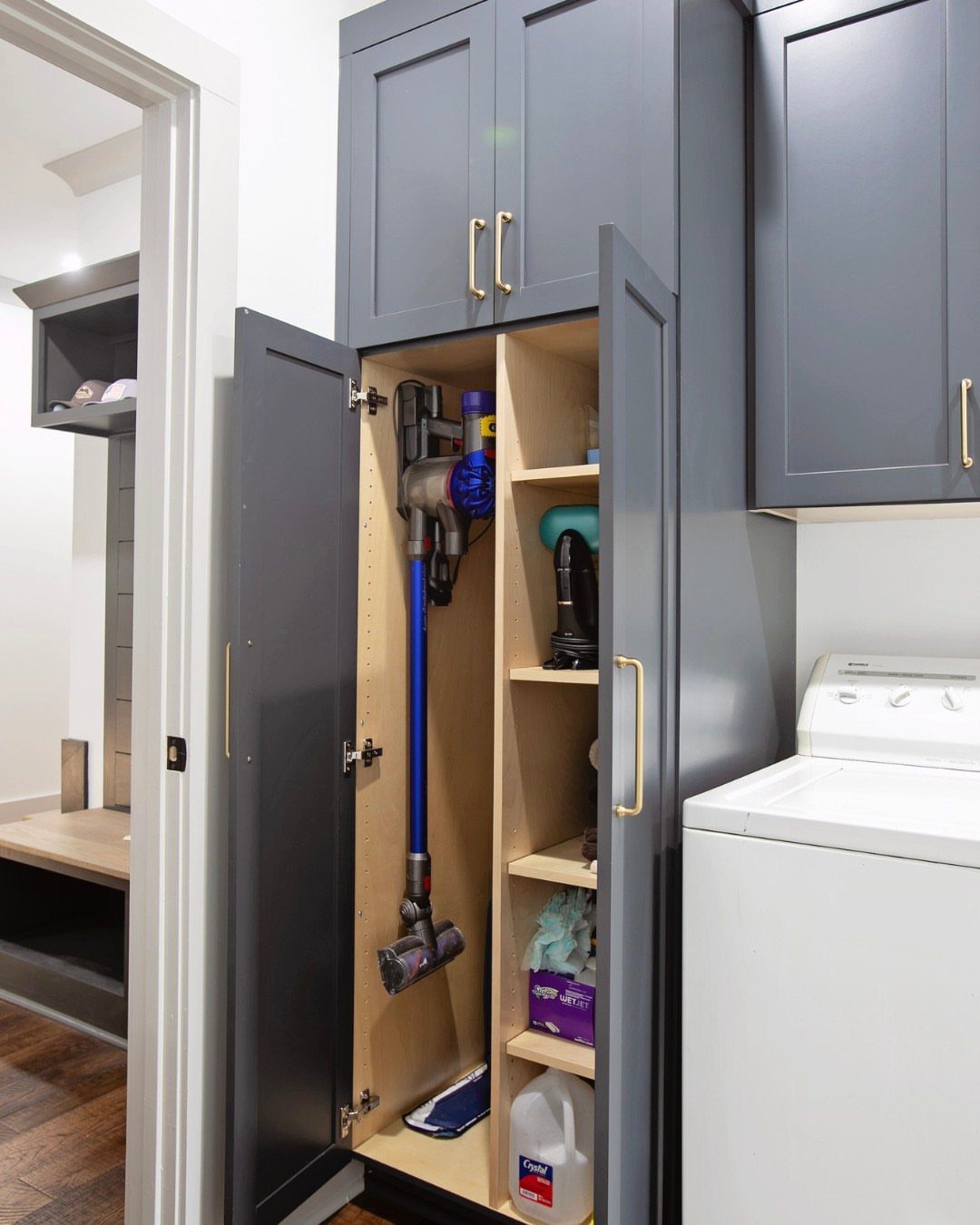
Closed cabinets beside the machines can hold more than detergent. A cordless vacuum, spray bottles and cleaning supplies all fit behind one door, so the room stays calm even when the tools are in constant use.
Add adjustable shelves if the cabinet has none, and keep the tall items in the widest section. Anything you reach for weekly belongs between shoulder and waist height.
10. Rolling Stacked Laundry Cart
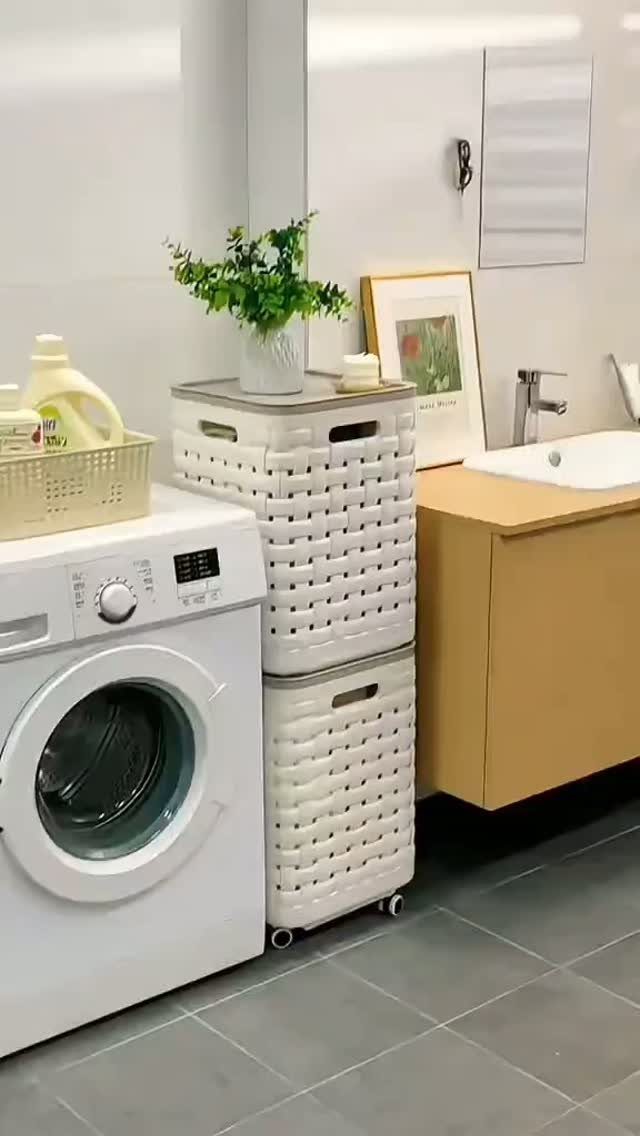
Two stacked laundry baskets on a wheeled base turn sorting into a rolling system: lights in one, darks in the other. Roll the cart to the machine, load, and push it back out of the way.
Buy a base with locking wheels if your floor slopes at all.
11. Slim Hamper Next to Washer

A tall, slim hamper fits the narrow gap beside a front-loading washer, where a wide basket never would. The lid hides the pile, and a wooden rim makes it look like furniture rather than a laundry bin.
Measure the gap first, and leave a little room so the washer door opens freely. Fabric is quieter than plastic, which I like when the machine runs at night.
Assess Your Space and Needs
Before buying anything, stand in the room with a notepad and write down what annoys you: the bottle that always tips, the basket you have to move to reach the dryer door.
Maybe laundry piles up on the couch, or you have no counter to fold on, or detergent lives on the floor. That list decides what you build, and it keeps you from buying a product that solves someone else’s problem.
Room size changes the plan. A large laundry room gives you almost unlimited options, while a small, cramped one has to squeeze value from every inch and may call for unusual solutions.
Check whether the room does a second job.
If it doubles as a mudroom or general storage, give storage cabinets one wall and the washer and dryer the opposite wall. A built-in bench with coat hooks can hold shoes and outerwear so they stay out of the laundry.
Declutter and Categorize
Empty every cabinet and shelf and set it all in the middle of the room. Then sort into 2 piles: laundry essentials such as soap, fabric softener, laundry bags, dryer sheets and paper towels, and everything else.
The second pile leaves the room entirely. A laundry room only needs laundry supplies and maybe a few cleaning basics.
Pour two half-empty bottles of the same detergent or bleach into one container, and recycle the empties instead of letting them pile up on the shelf.
Old cleaning rags get the same treatment: keep only the amount you will really use.
Check each item you keep and ask whether you use it or just hold onto it in case you might need it someday.
Wipe down the empty shelves and floor before anything goes back, so you start from a clean slate.
Create Zones for Different Tasks
Think of the room as a short assembly line, with one spot for each job. Sorting comes first: bins or hampers for whites, colors and delicates keep a stray red sock out of the whites.
Folding needs a flat surface so clean clothes get put away right after the dryer stops. Hanging is its own zone, with a rod or hooks for air-drying delicates and for pulling shirts straight from the dryer before wrinkles set.
Ironing is the fourth zone, and a pull-out board suits it because it folds away when you finish.
Place the zones in the order you actually work, so you never carry wet or folded laundry back across the room.
Frequently Asked Questions
How do you organize a laundry room?
Pull everything off the shelves and out of the cabinets first, then put back only the detergent, stain remover and a few cleaners that earn the space.
Next, give each job its own zone in the order you work: sorting bins, a flat folding surface, a rod or hooks for hanging, and a pull-out ironing board.
What are some budget-friendly laundry room storage hacks?
Reuse jars for detergent pods and other small supplies, and buy one matching jar style to keep the cost low.
Discount home stores like Dollar Tree, HomeGoods and Marshalls, plus secondhand shops like Goodwill and online marketplaces, often have bins, corner shelves and over-the-door hangers for less.





