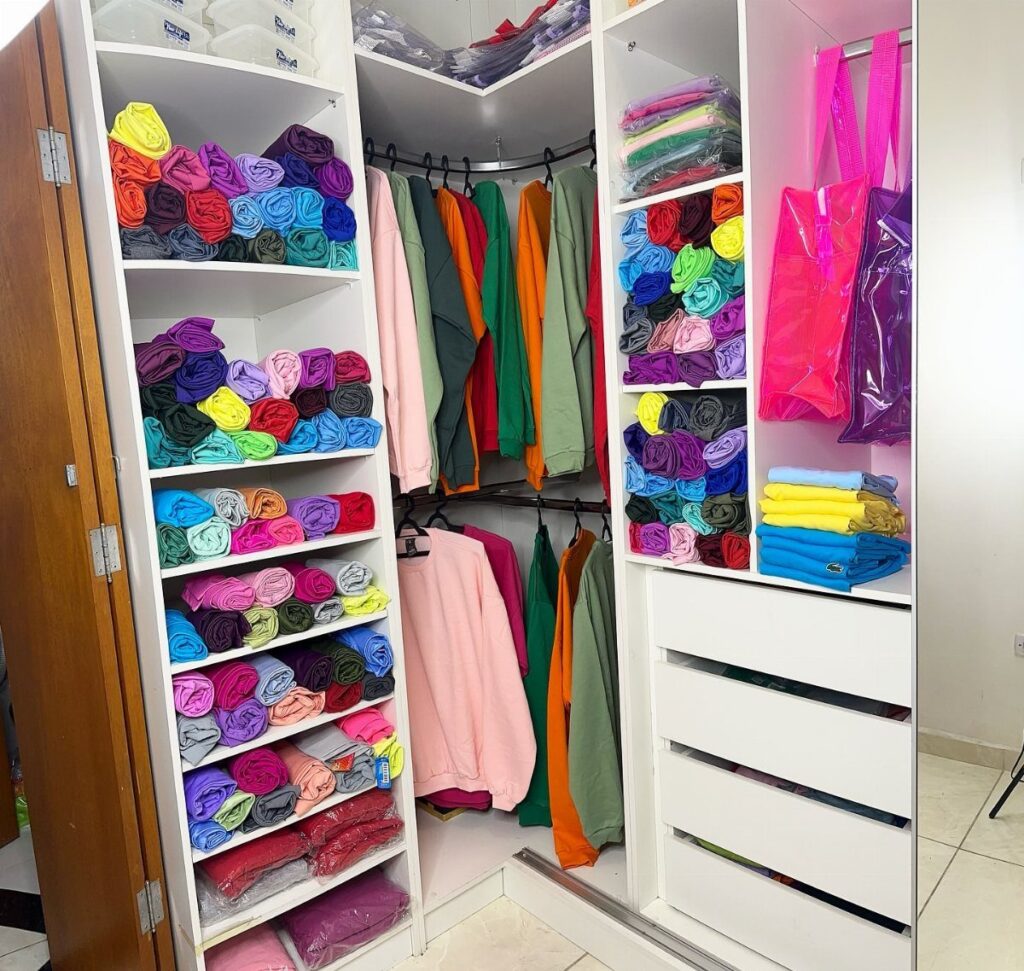
Which of these 11 ideas fits depends on whether you rent or own: hangers, bins, dividers and a decluttering pass cost little and move with you, while built-in shoe shelving, double rods, the pull-out pants rack and an integrated vanity cost real money and suit a closet you plan to keep.
The list runs from a set of matching hangers, the cheapest upgrade a walk-in gets, up to a built-in vanity with a lighted mirror. Most of the ideas in between are a weekend of sorting, measuring and a few bins.
1. Matching Hangers
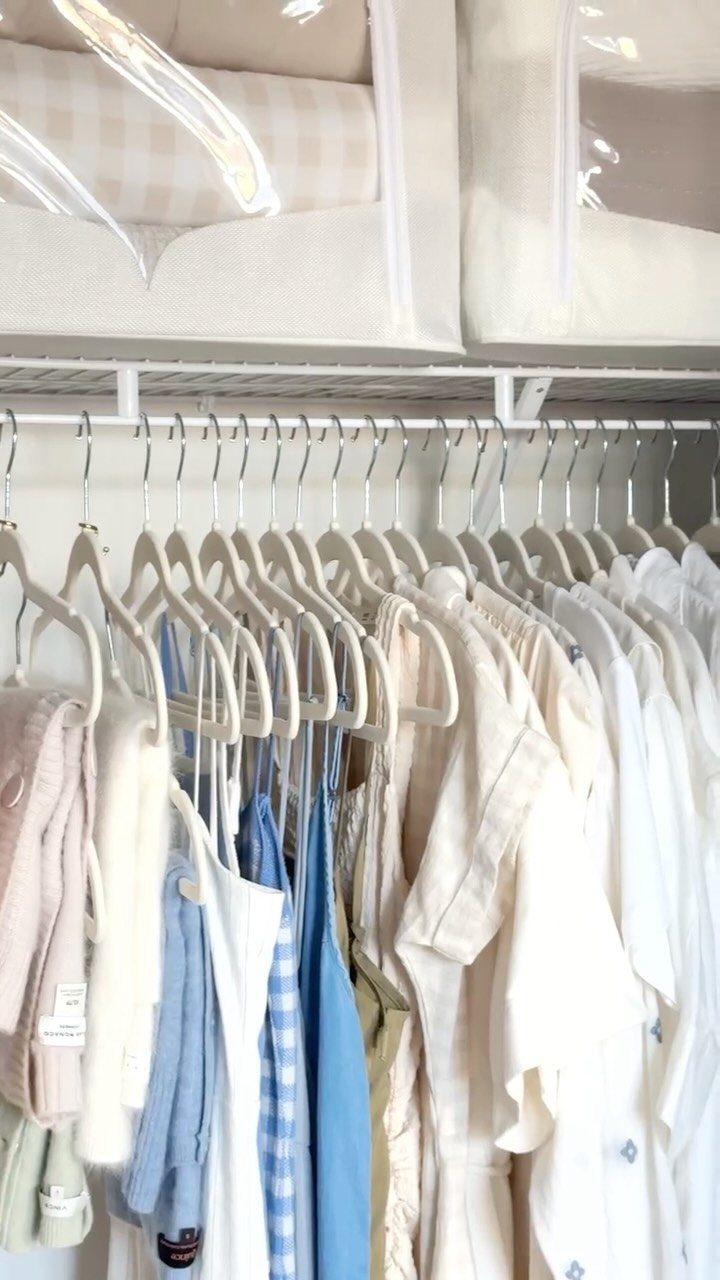
Swapping a mixed pile of wire, plastic and dry-cleaner hangers for one matching set is the cheapest upgrade a walk-in closet gets.
Same color, same shape, and every garment hangs at the same height, so the rod reads as a clean line instead of a jagged one.
Buy the set in one go, since a style you reorder later may not match.
2. Clothes Organized by Color
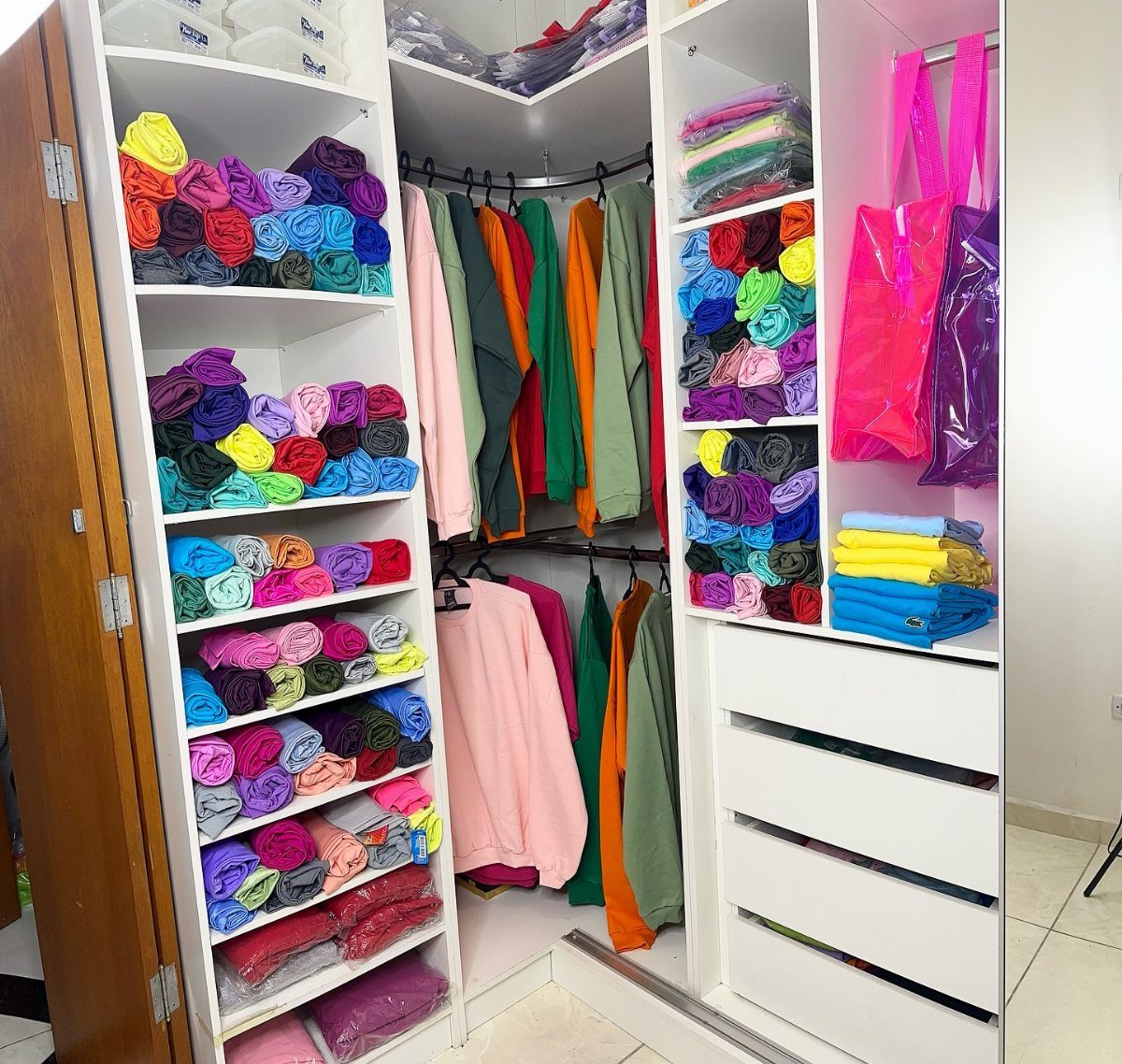
Sorting by color turns a stuffed rod into something you can scan in a second.
Start with light shades at one end and move through to the darkest, keeping each garment type together, so sweatshirts sit in one run and t-shirts in another.
I like this method for casual clothes, where the color is usually what you’re hunting for. The trade-off: it takes an hour or so to sort, and new purchases have to be slotted in by shade.
3. Display Your Favorites
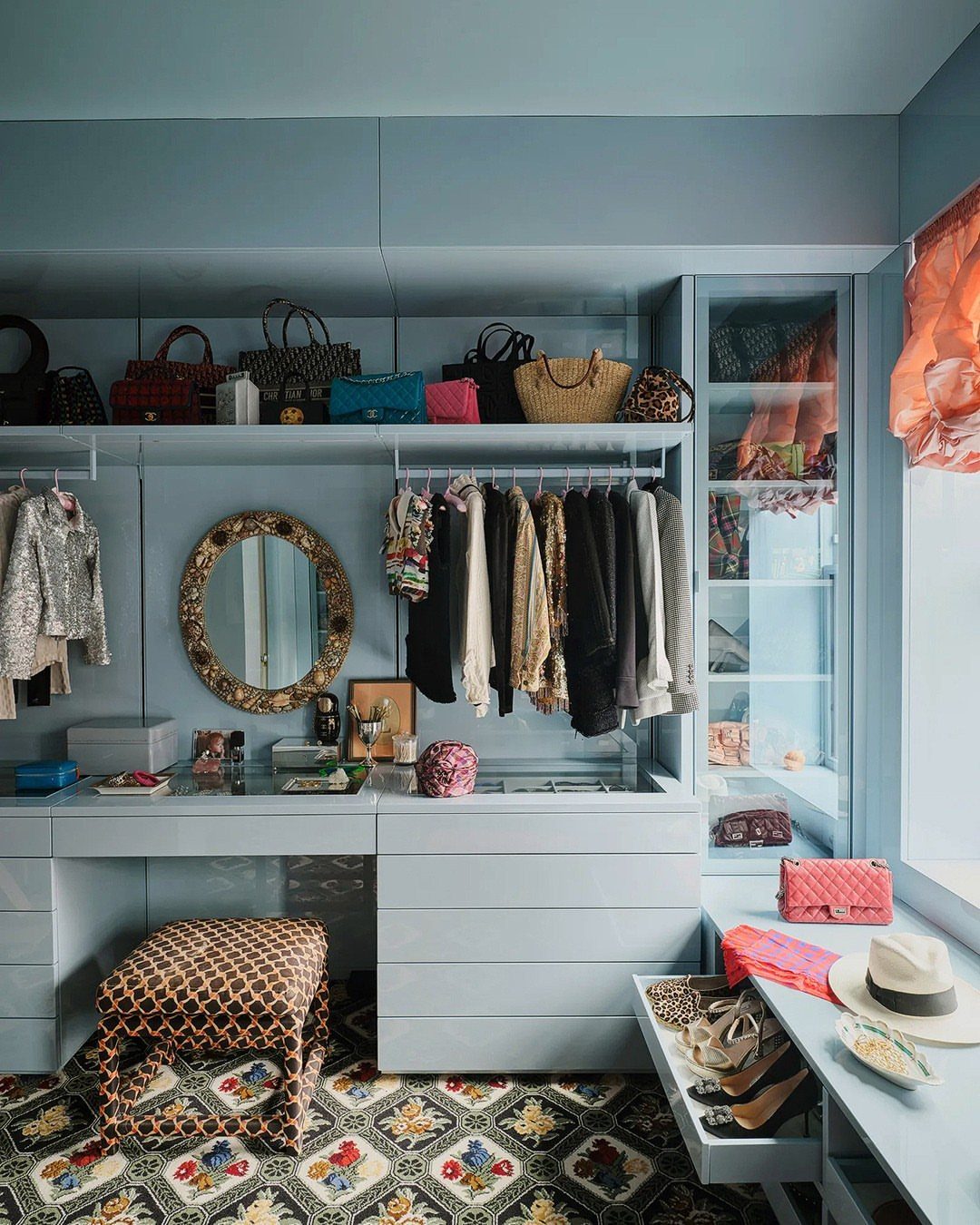
Line them up with a little space between each, so the shapes read clearly and nothing gets crushed.
Keep your everyday bag lower, within reach, and save the top for the favorites. A mirror and a patterned rug nearby turn the corner into a display space instead of pure storage.
4. Plan Closet Layout
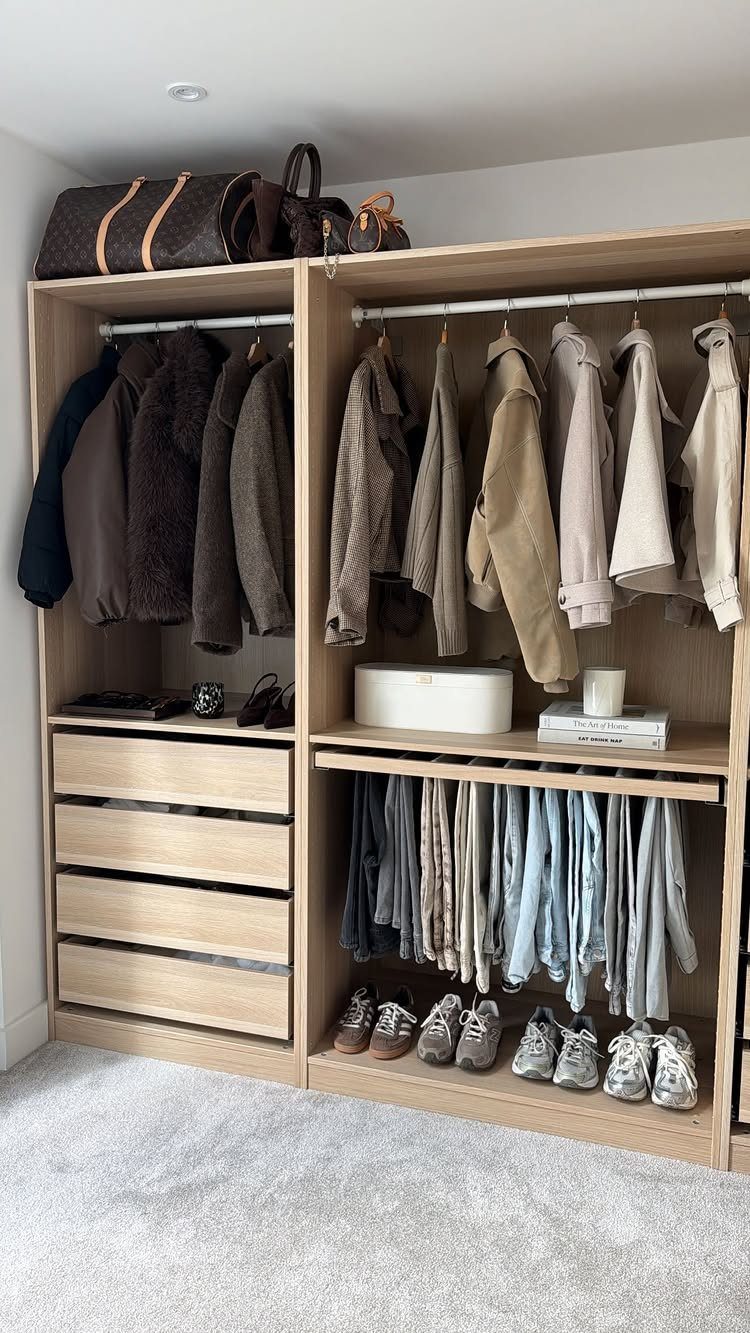
Before buying a single rod or drawer, measure the walls and decide what you own the most of.
Hanging, drawers and shoe storage each need their own zone, and a light wood system keeps all three in a single run without visual breaks.
My advice is to give the most-worn items the middle height, between knee and shoulder, and push occasional pieces to the top or bottom. Sketch it on paper first; moving a rod later costs more than erasing a line.
5. Sweaters Folded on Shelves
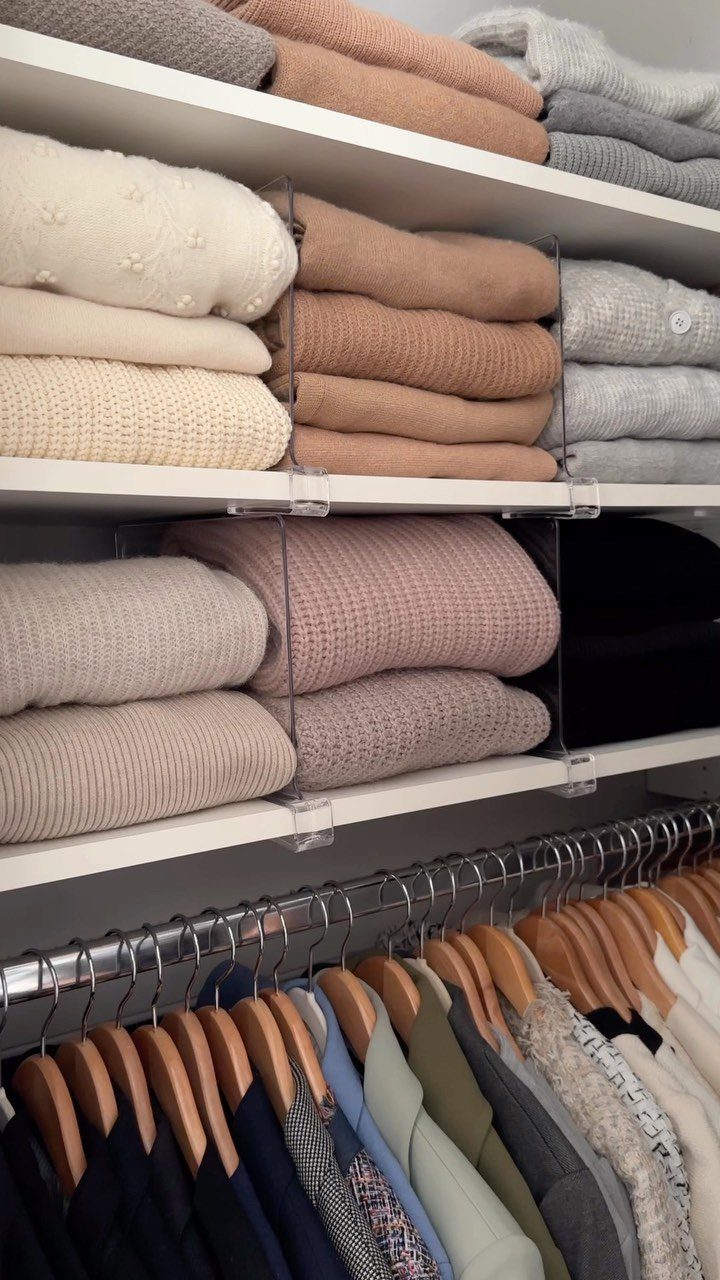
Knits stretch at the shoulders when they hang, so shelves are where sweaters belong. Fold each one into a similar-sized rectangle and stack them in short piles.
Clear acrylic dividers, like the ones in this white system, stop a stack from sliding into the next.
I keep piles to a handful of sweaters, because pulling from the bottom of a tall stack wrecks the rest. Dividers add cost, but they keep the shelf tidy after the first week.
6. Drawer Dividers
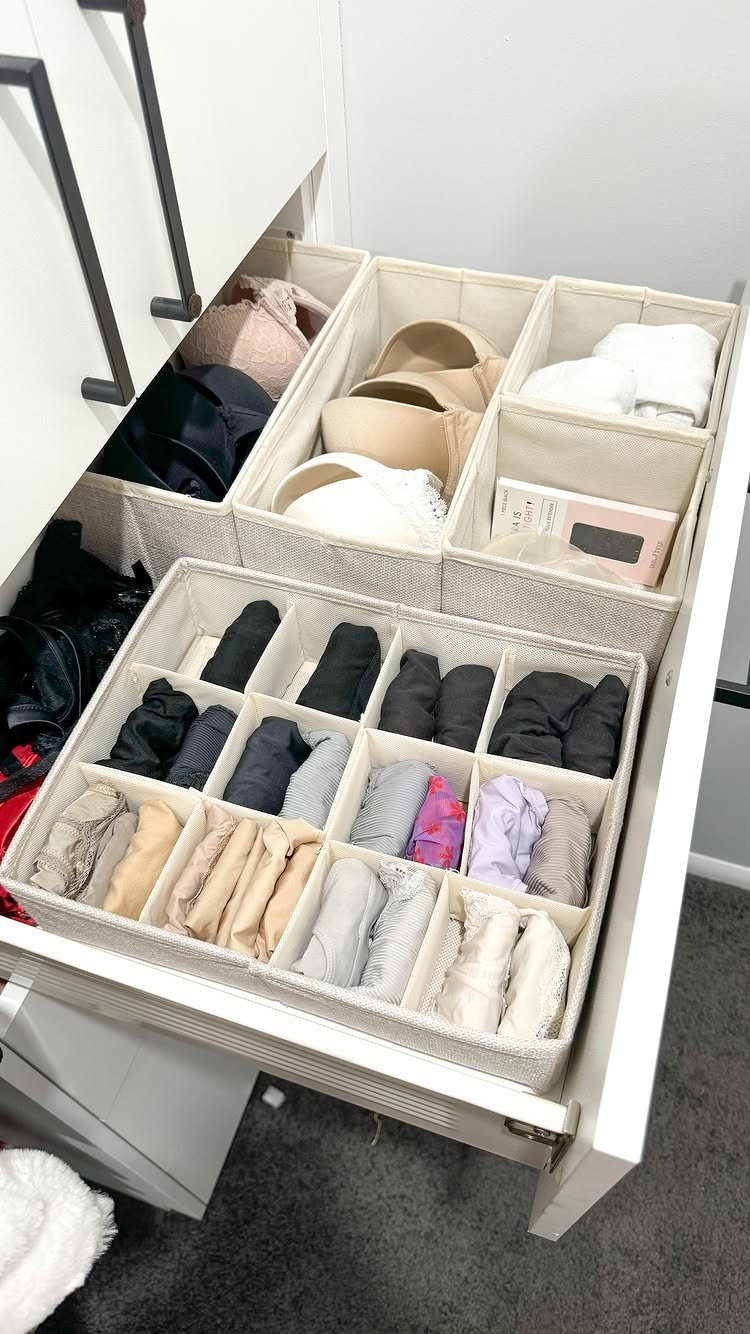
Fabric dividers split a drawer into small cells, so socks and underwear each get a spot instead of mixing into one tangle. Roll socks and stand them upright; you can see every pair when you open the drawer.
Declutter first.
The creator of this drawer pulled out 4 bags of clothes before organizing, and that is the right order: dividers only work if the cells aren’t overstuffed. Label a box or 2 for odds and ends.
7. Integrated Vanity Area

A vanity built into the closet puts the mirror, the jewelry and the clothes in one spot, so getting dressed stops being a trip between rooms.
A seat matters more than it sounds. A low white ottoman tucks under the counter and gives you somewhere to sit for shoes or makeup.
A lighted mirror is the piece I’d spend on first, since a closet vanity is only as good as its light. A shallow jewelry drawer keeps small pieces from piling up on the counter.
Custom cabinetry costs real money. A rental can borrow the look with a freestanding table, a mirror and a stool.
8. Built-In Shoe Shelving
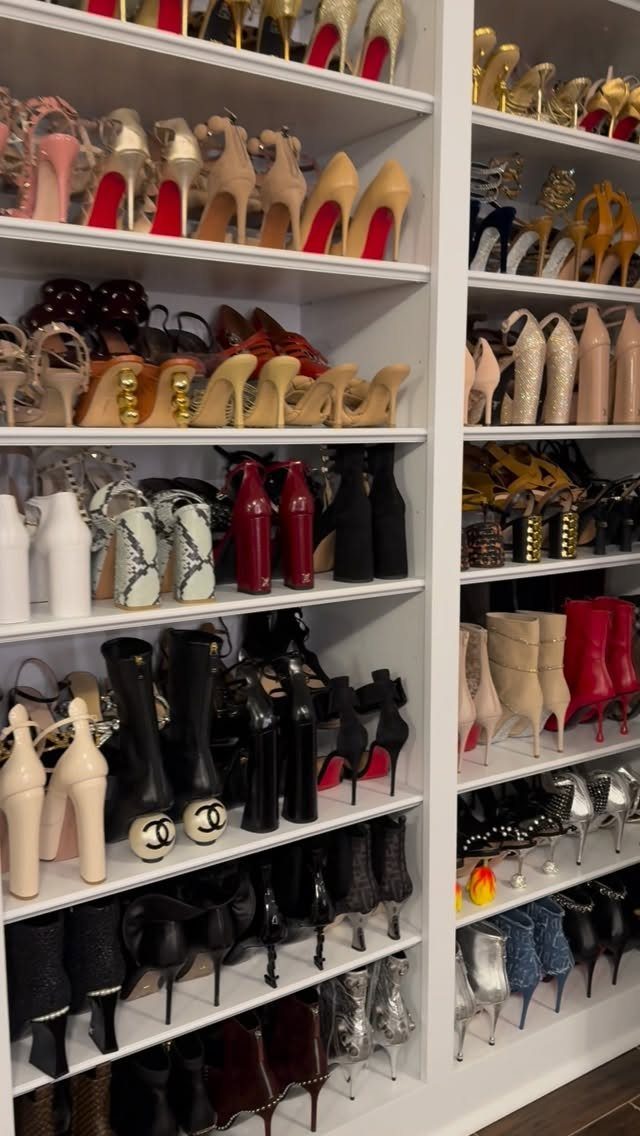
Open shelves sized for shoes beat a floor pile every time, because each pair has its own slot and you can see all of them at once. White shelving keeps heels, boots and sandals the loudest things in the unit.
Group by type: heels together, boots in their own bay, everyday sneakers at the easiest height. Boots need a taller opening than sandals, so set the shelf spacing before you fill anything.
Open shelves show dust and every pair you wear daily. I accept that, since being able to see the shoes is why I like the setup.
9. Double Hanging Rods
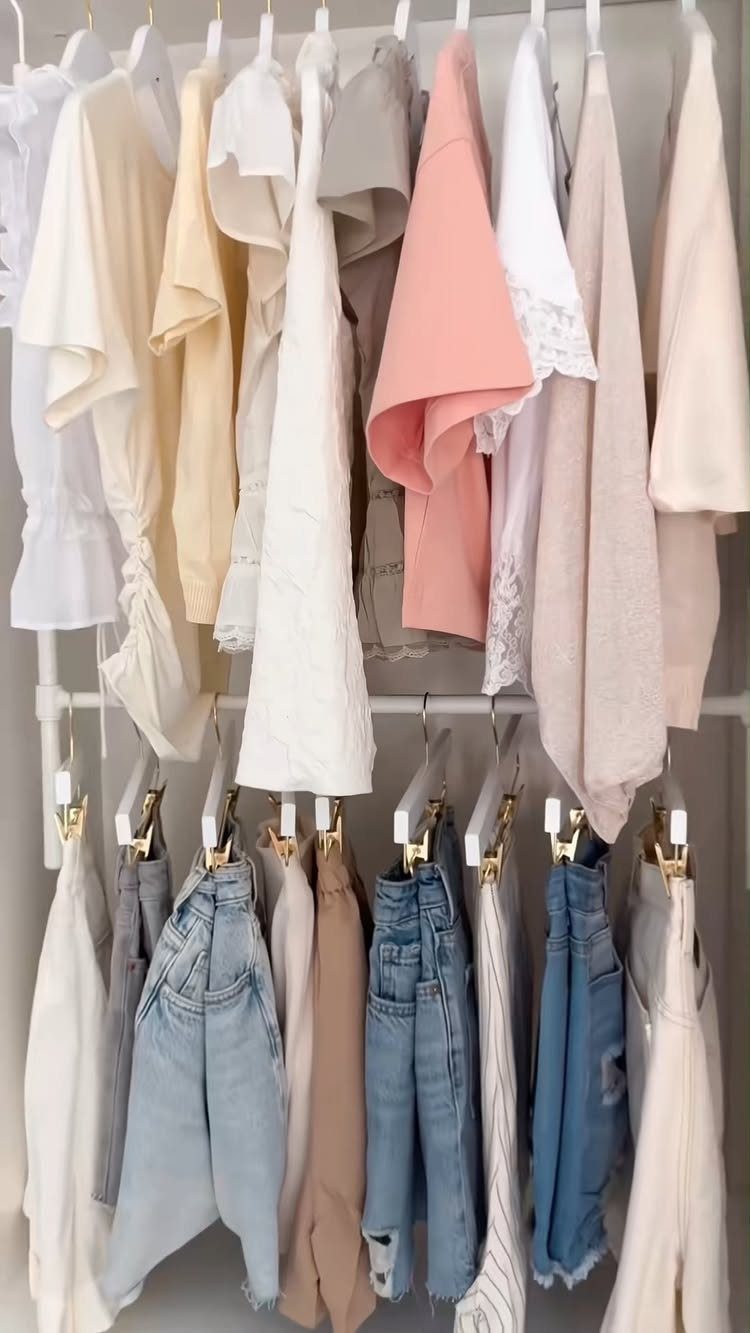
Two rods, one above the other, give a closet nearly twice the hanging space on the same wall. Shirts go on the top rod and jeans or trousers below, so tops and bottoms each get their own tier.
This works because most shirts and folded-over pants are short, and a single rod leaves empty air under them. Hang the upper rod within easy reach, or you’ll be on a stool every morning.
Long dresses and coats don’t fit this setup. Leave one full-height section for them.
10. Pull-Out Pants Rack
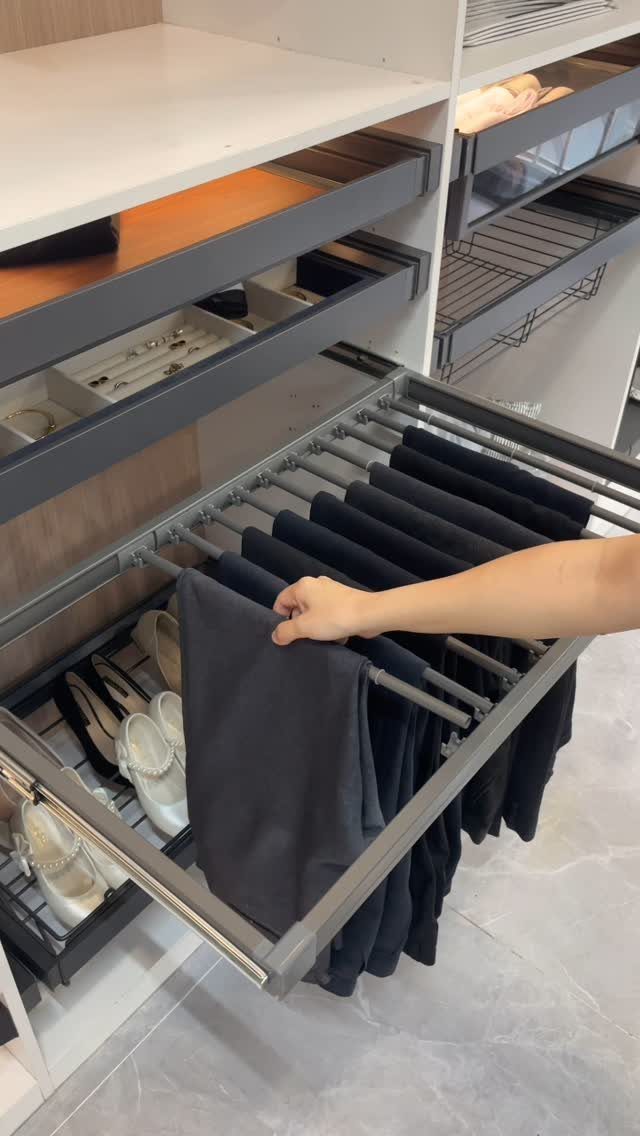
A sliding rack lets you pull the trousers out to you instead of reaching into a dark corner. Each pair hangs straight, and you can browse the whole set at a glance.
I’d put it beside the drawers, at waist height, so the rack and the daily pairs sit within easy reach. Hang trousers by the hem or waist the same way every time, so the rack stays neat.
It’s a fitted piece, so it costs more than a plain rod. Measure the cabinet width first and check the depth the slide needs.
11. Fabric Shelf Bins
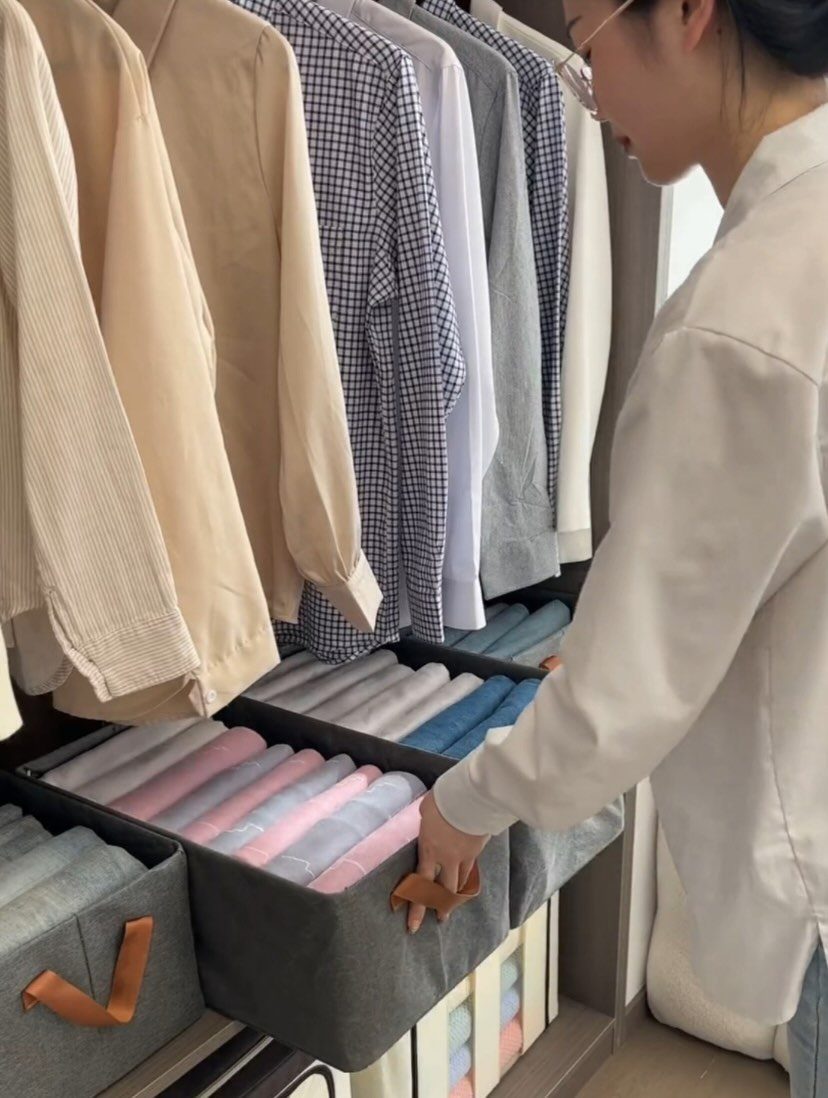
A fabric bin on a shelf holds folded clothes that would otherwise slump into a pile. You pull out the whole bin, find what you need, and slide it back, so the shelf stays tidy.
Pick bins in one neutral color, like the grey here, so the shelf looks calm even when what’s inside is bright.
Use one bin per category: tees, workout wear, pajamas. Label the front if you share the closet.
Measure the shelf depth and height before buying. A bin that fits loosely wastes space, and one that jams won’t get used.
Decluttering Tips
A closet stays organized only if you keep clearing it out. Pick one day a month for a quick check-in, and pull anything you haven’t worn or no longer need before it builds into a pile again.
A bag by the door makes this easy, because a piece you’ve already decided on can’t drift back onto the rod.
Twice a year, when the weather turns, pack away the off-season pieces and bring out the ones you’ll actually wear. That keeps the space you use every day free for what you’re actually wearing.
When something new comes in, put it back in its own group right away, with like items together. Tossing it anywhere is how the mess starts again.
Buying less helps as much as clearing out. Fewer, better pieces are easier to keep in order.
Lighting and Decor
Check the light first.
Dressing goes easier with a full-length mirror, though even a small one earns its spot. A flat mirror hung on the back of the door costs little and takes no floor space.
A can of paint costs less than any other upgrade I know, and it changes the mood of a closet fast.
One accent wall in paint or patterned wallpaper does the job, and a stenciled pattern running around the walls is a cheaper alternative.
Cedar planks add warmth and a pleasant scent, and they keep moths away from your clothes. Fabric or woven baskets add texture and look softer than plastic bins.
With a bare stretch of wall, a fold-down ironing board built into the closet saves you from hauling one in from another room.
Put in a sturdy stool or storage bench so there’s a spot to sit while pulling on socks or hose.
Frequently Asked Questions
How should a walk-in closet be organized?
Start by decluttering, then give hanging, drawers and shoes each their own zone.
Daily clothes belong in the zone between knee and shoulder height, where you can grab them without bending or reaching; the rarely worn pieces can go up high or down low.
Matching hangers, one neutral bin per category and sorting by color keep it easy to scan.
Draw the plan on paper before you drill anything, because an eraser is a lot cheaper than patching holes from a rod you hung in the wrong spot.
What is the 3-3-3 rule for decluttering?
The rule says to remove 3 items from your closet every 3 months. It keeps clutter from building up, which matches the habit of a quick monthly check-in.
What is the best walk-in closet organizer?
It depends on what you own most, but matching hangers are the cheapest upgrade and fabric bins are a close second.
Bins hold folded clothes that would slump into a pile, so pick one neutral color and one bin per category.
Before buying bins, get the depth and height of each shelf on paper; a bin that’s too loose leaves dead space, and one that’s too snug becomes a hassle you’ll stop using.





