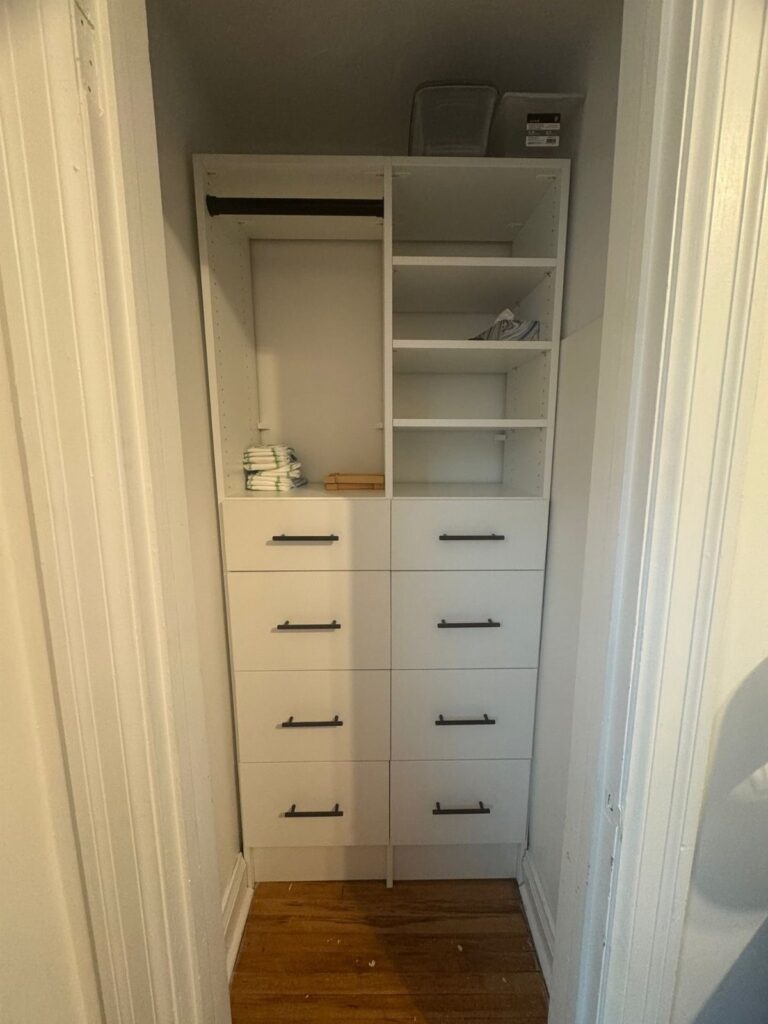
Which of these ideas fits depends on whether you own or rent, and how much you want to spend on structure versus accessories.
Renters get the most from closet door organizers, fabric wardrobes and curtains in place of doors, while owners can add vertical shelves or a stepped-height closet under a sloped ceiling.
The list runs from a masking-tape-and-marker labeling system to built-ins, and nearly every idea works best when the closet stays 80% full, so the first real job is paring down what you own.
1. DIY Closet Systems
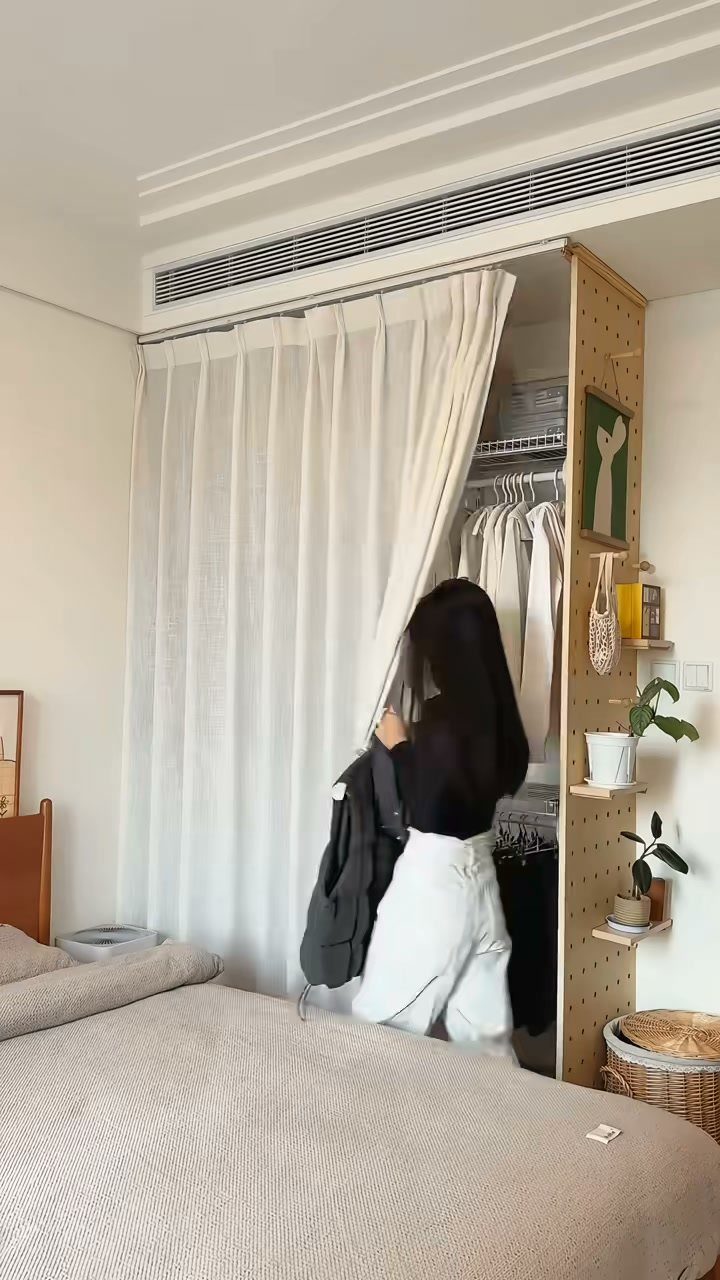
A pegboard wall behind the hanging rod turns a plain closet into something you can rearrange in minutes. Pegs, small shelves and hooks move wherever your stuff changes, which suits a renter who can’t commit to a fixed build.
I’d paint or stain the board before mounting it, since it’s much easier flat on the floor.
2. Wall Hooks
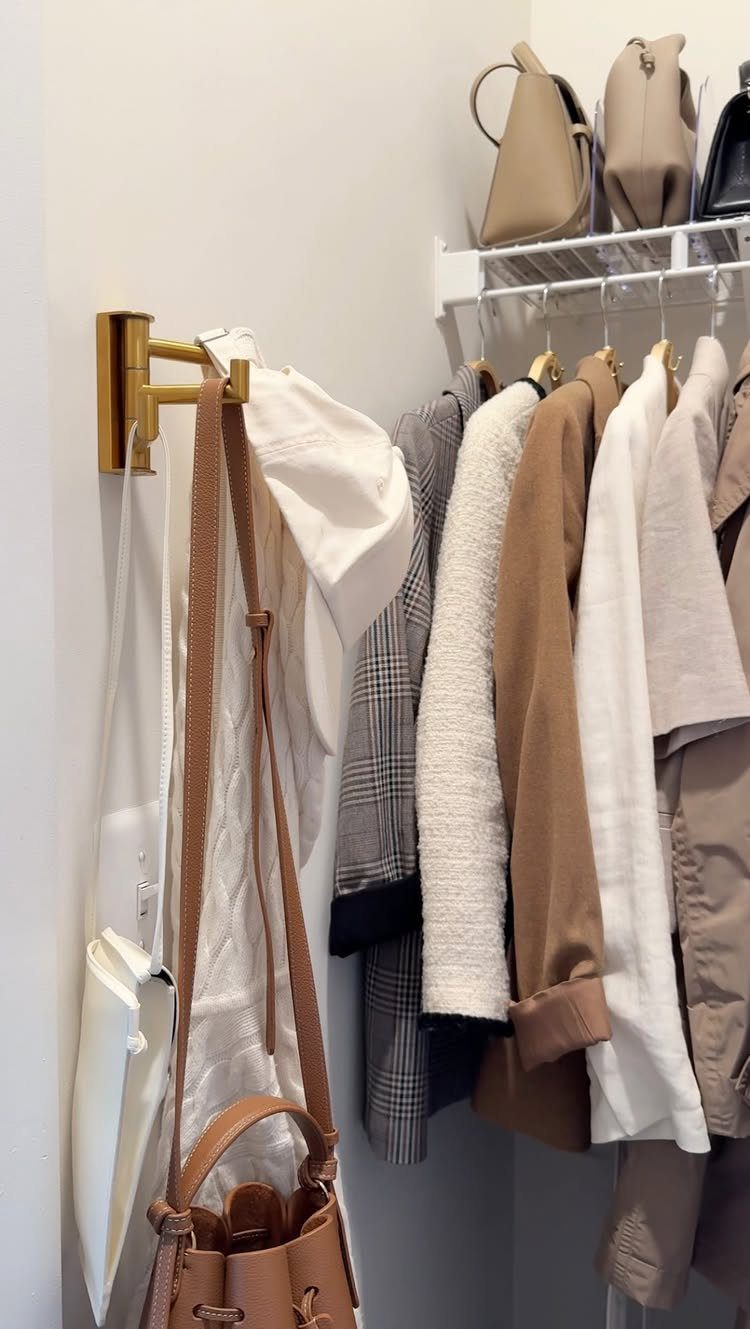
Hooks earn their place on the wall space above a rack, where bags and hats usually pile up with nowhere to go. A single gold hook holding 2 bags frees shelf room and keeps your favorites easy to grab.
Mount hooks into studs or use proper wall anchors, because a loaded bag pulls harder than you’d expect. I’d keep the finish matching across every hook so the row looks planned, not collected.
3. Vertical Shelves
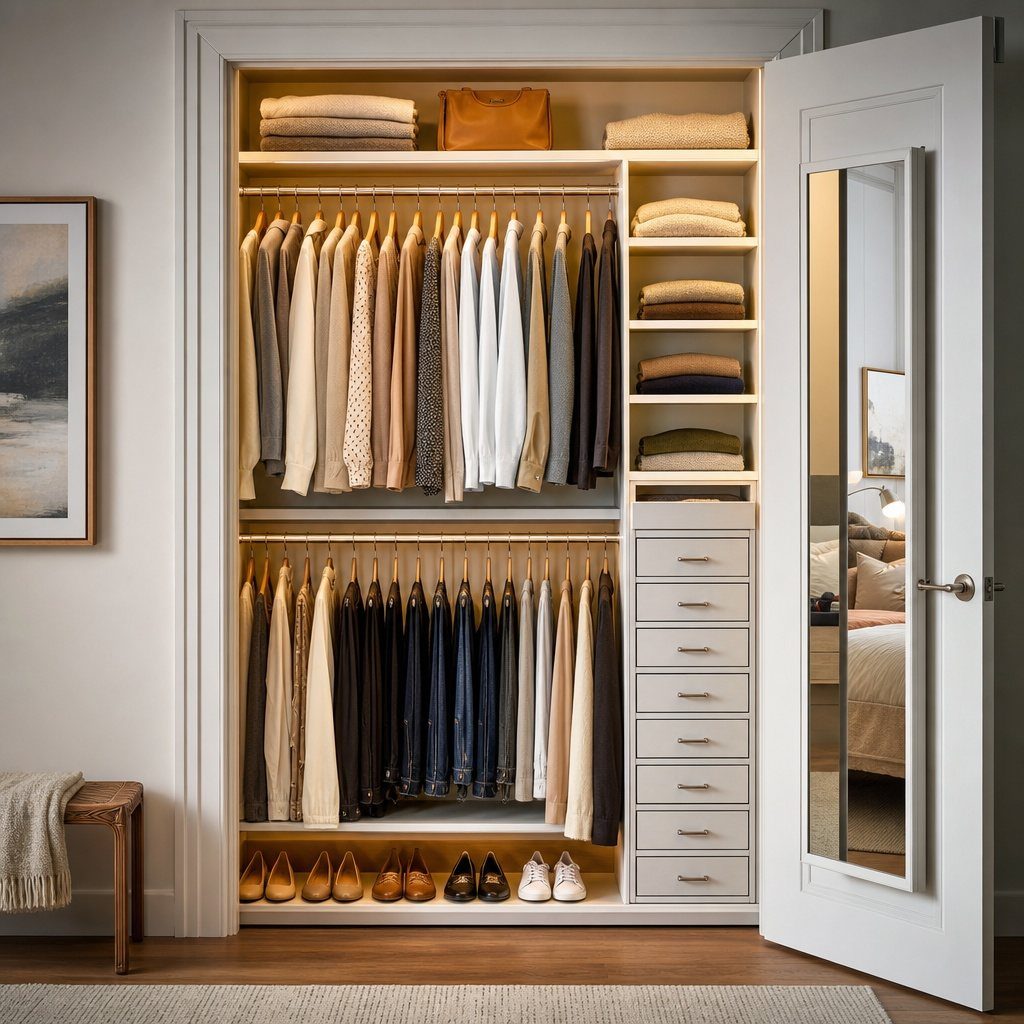
Going up is the cheapest square footage a small closet has. Double hanging rods split the height for shirts and pants, while a tall stack of shelves and a few drawers handle everything that folds.
Put the items you reach for daily between shoulder and knee height. Rarely used pieces, like luggage or off-season bedding, belong on the top shelf where a step stool is no hassle.
4. Closet Door Organizers
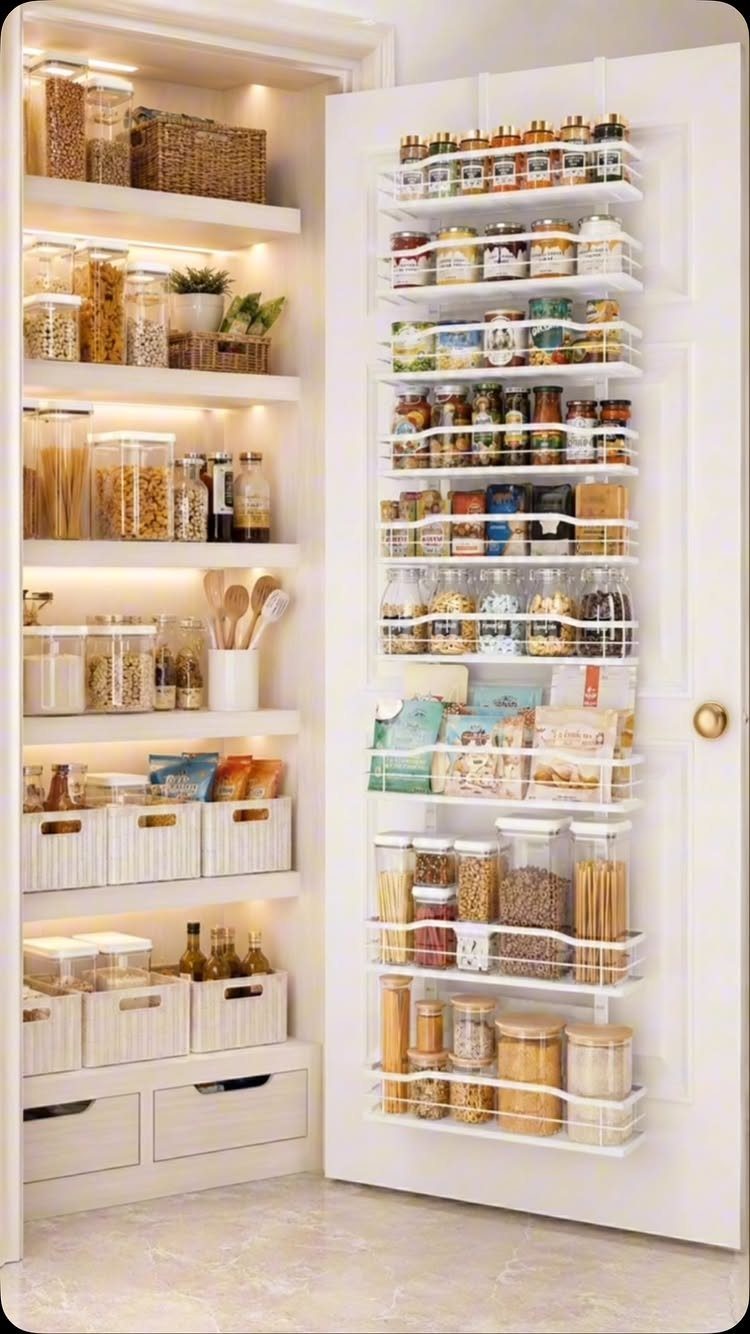
Flip the closet door open and you’ll find a wall of unused storage. A wire rack that hangs over the door edge holds small, light items in tiered rows, so jars, bottles and little containers stay visible instead of buried.
Check that the door still closes before you load it; shelves that stick out too far will block it. I prefer over-the-door racks because they need no drilling, which keeps rentals happy.
5. Clear Bins
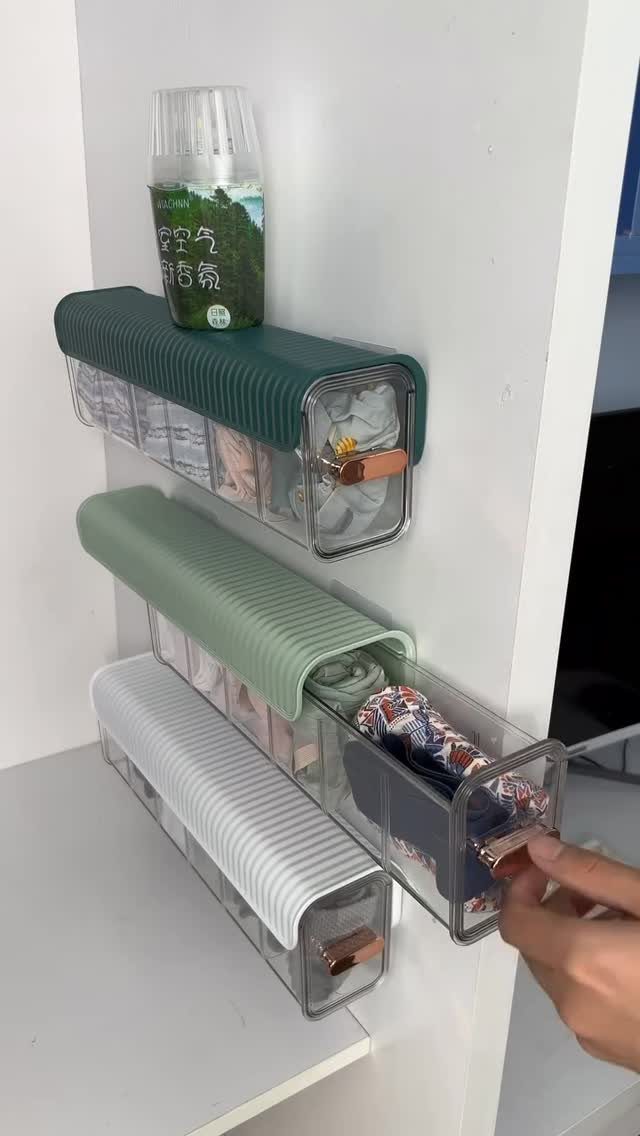
Clear bins let you see what’s inside without opening a thing, which saves the digging that wrecks a tidy shelf.
Mounted on a wall with fabric or colored lids, they hold soft items like scarves and folded clothes where you can see and grab them without bending or reaching.
Wall mounting also keeps the floor clear in a tight closet. Group one type of item per bin so you never have to guess which one holds what.
6. Under Bed Storage
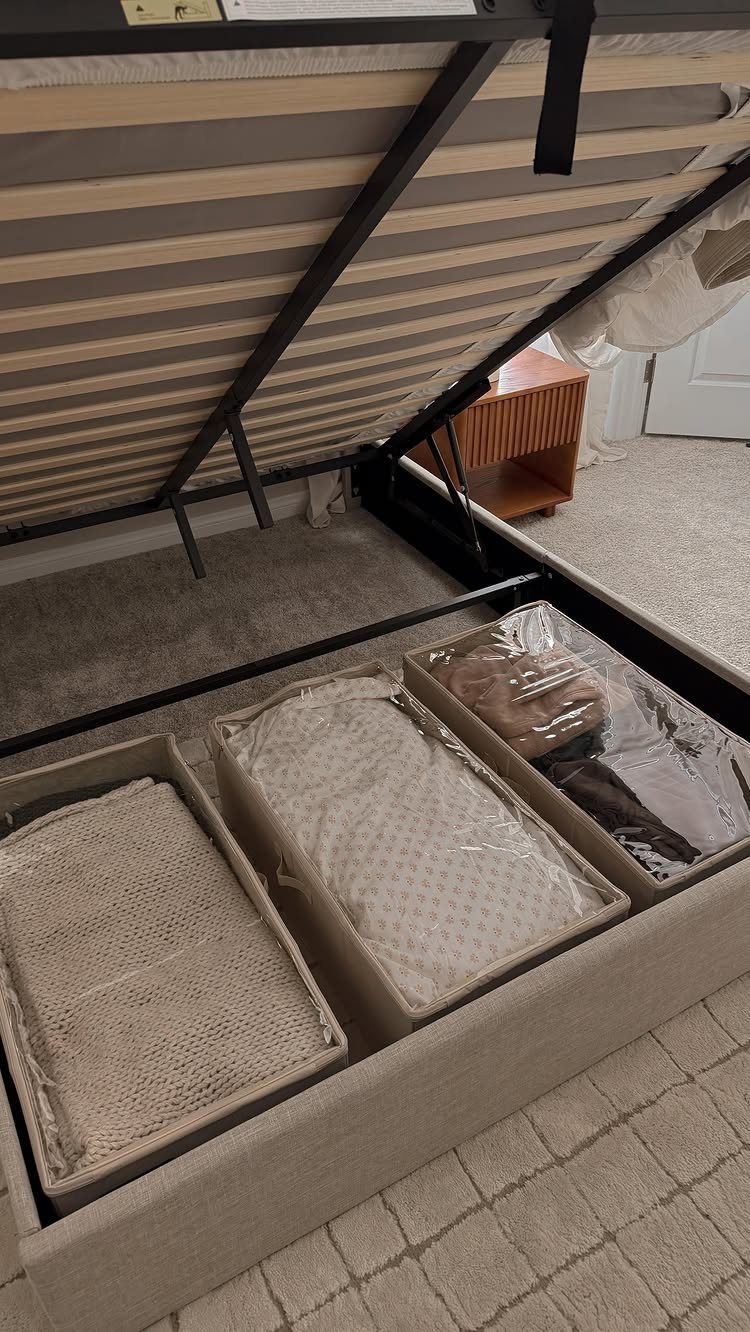
A lift-up bed frame hides a whole storage compartment, and bins inside it keep linens and clothing sorted. Gas-lift frames open with one hand, so you won’t be dragging boxes across the carpet.
If you’re not buying a new bed, low flat bins on the floor beneath your current frame give a similar result. Use this space for things you need a few times a year, not daily wear.
7. Freestanding Wardrobe
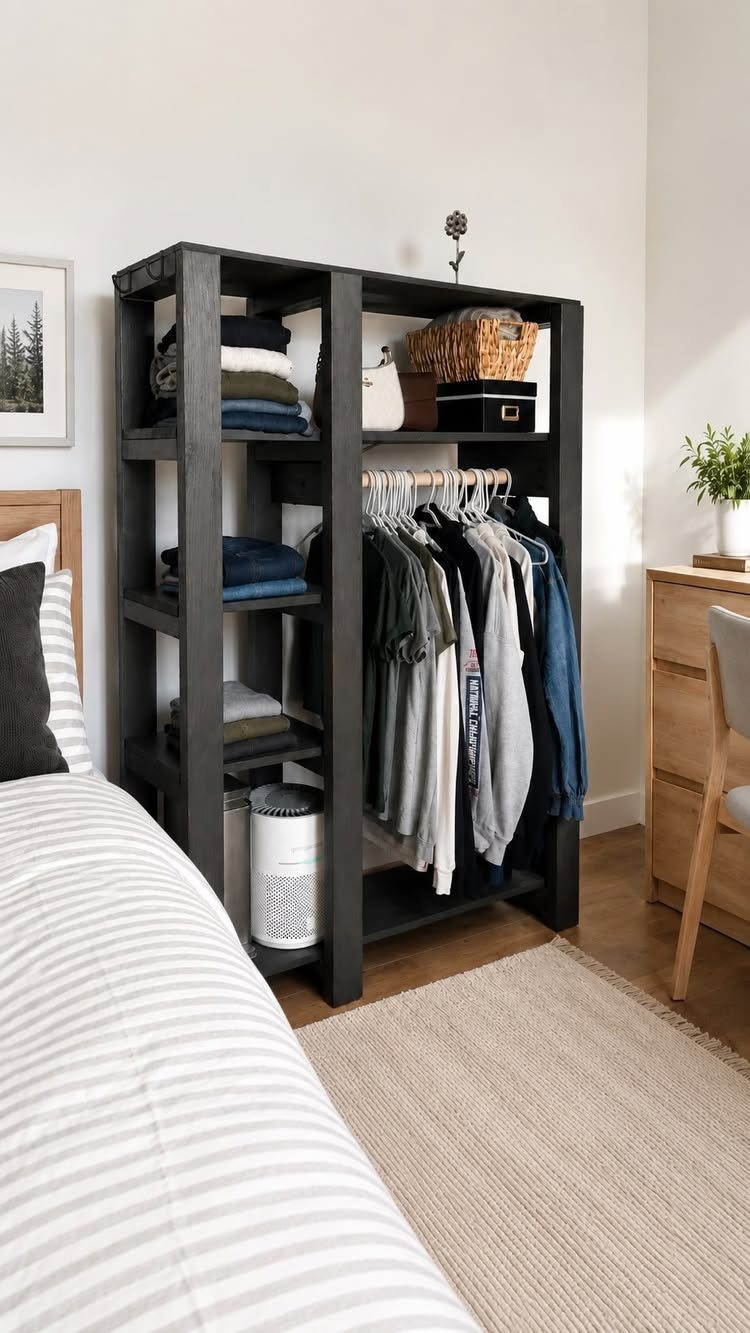
A freestanding wardrobe adds hanging and shelf space without touching the walls, which is the main reason I like it for a closet that has run out of room.
A dark grey finish hides scuffs better than white and sits easily beside wood furniture.
Open shelves plus a rod give you both folded and hanging storage in one piece. A basket on a shelf corrals small items that would otherwise slide around.
I’d choose a wardrobe with some open shelving so the bedroom doesn’t feel boxed in.
8. Color Coded Clothes
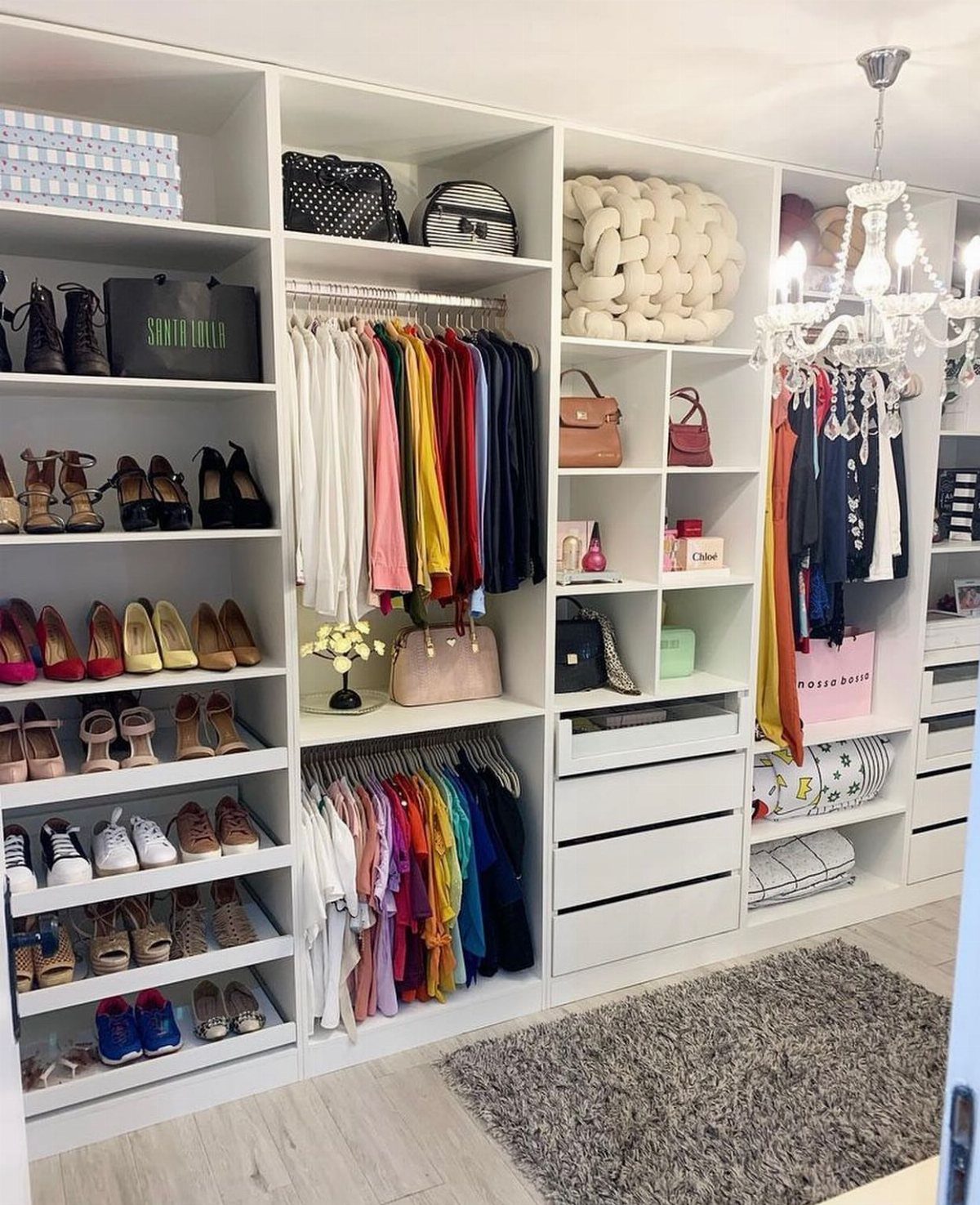
Sorting hanging clothes by color makes a closet read as one calm block instead of a jumble. It also speeds up getting dressed, since you look for "the blue shirt" and find the blue section right away.
Start by pulling everything out and grouping it into piles. Then hang each group in a fixed order, light to dark or in rainbow order, and stick with it.
Shoes and bags on the shelves can follow the same order. It costs nothing but an afternoon, which suits a small closet on a budget.
9. Curtains Instead of Closet Doors
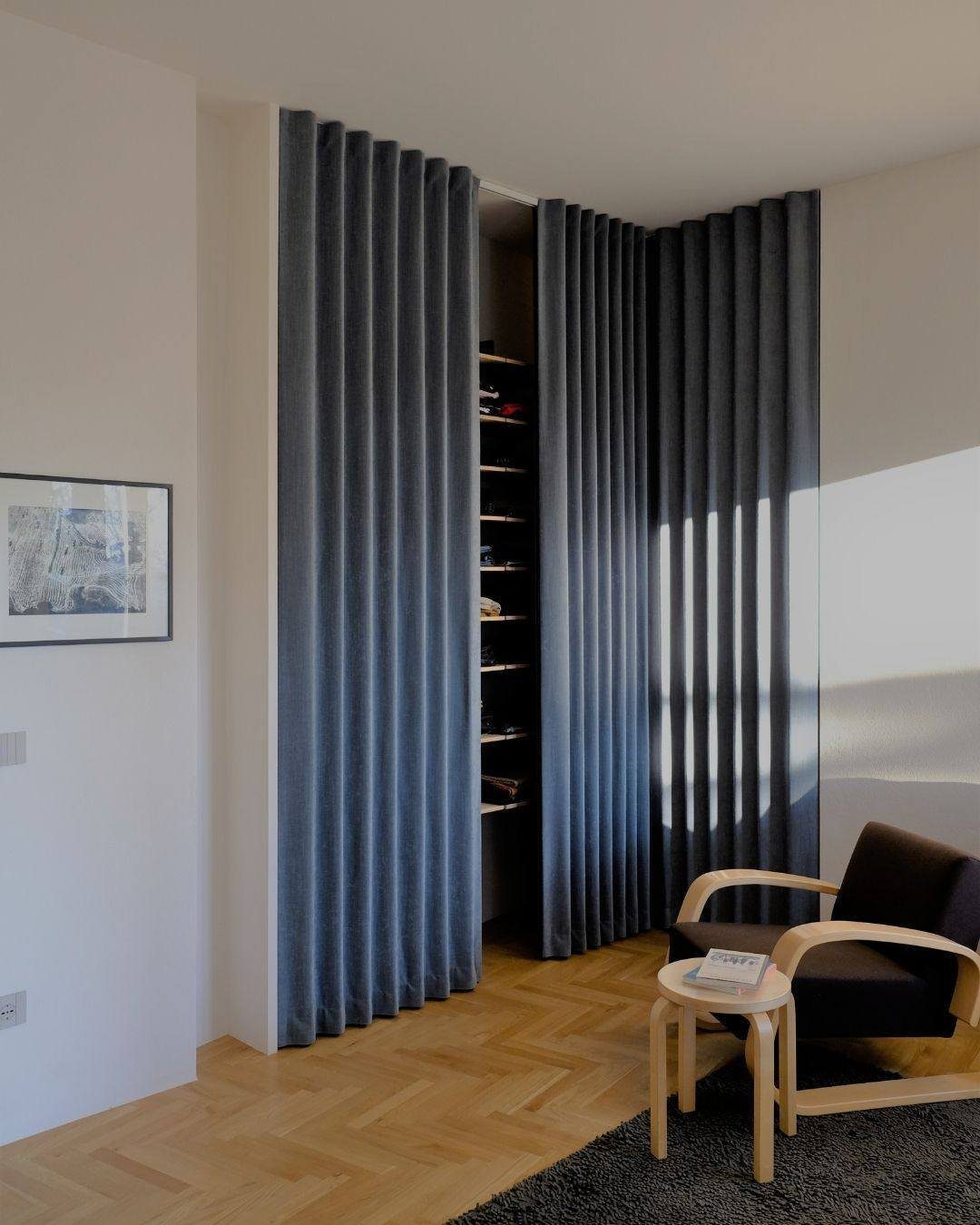
Swapping a closet door for a curtain frees the swing space a door needs, a real gain in a tight bedroom. Pleated fabric in a muted blue-grey also softens the room and hides the shelves behind it.
Hang the rod wide of the opening so the curtain clears the frame when it’s pulled back. A tension rod or a basic ceiling-mounted track keeps this a weekend job, and it suits renters since nothing permanent changes.
I’d pick a heavier, lined fabric so the shelves behind stay out of view.
10. Chains for Hangers
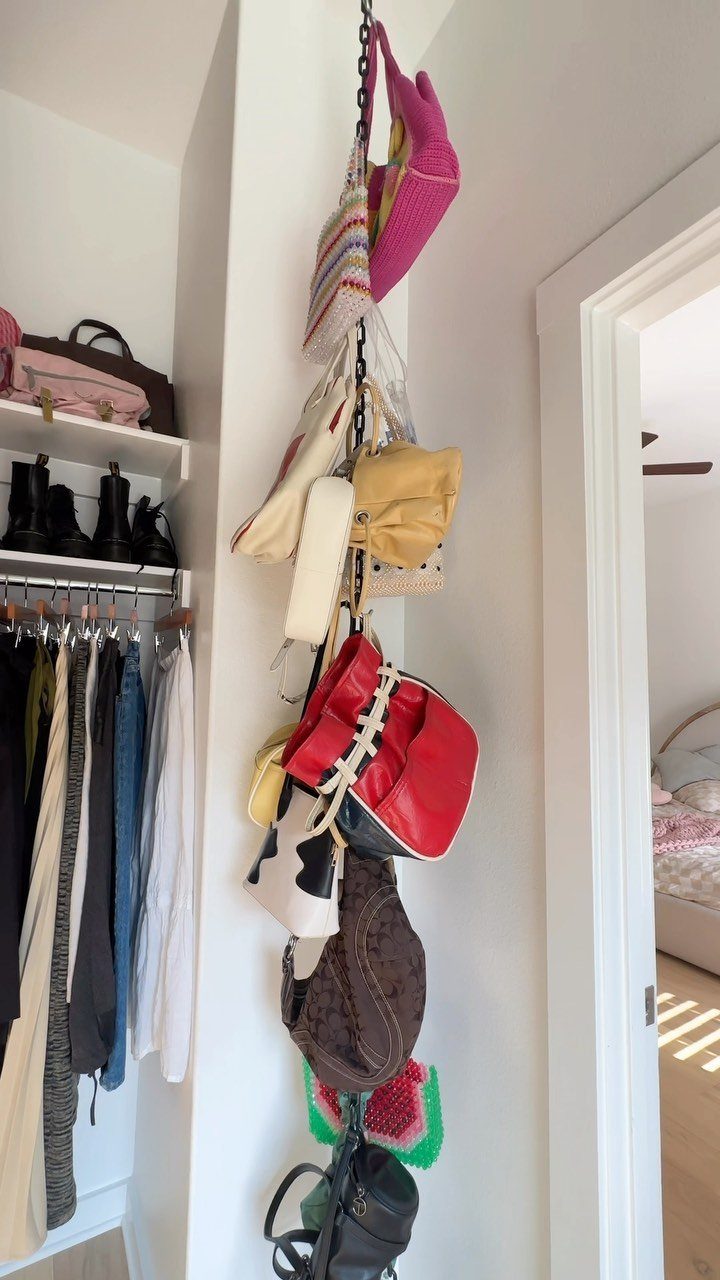
A metal chain fixed to the wall turns a bare strip into a hanging line for handbags. Each bag hangs from its own link, so nothing is stacked or crushed on a shelf, and the straps stay easy to reach.
Screw the chain into studs or proper anchors at the top and bottom, because a row of loaded bags is heavy. Use S-hooks to hang the bags, and slide them along as your collection changes.
Black chain against a white wall looks deliberate and costs very little.
11. Labeled Shelves and Bins
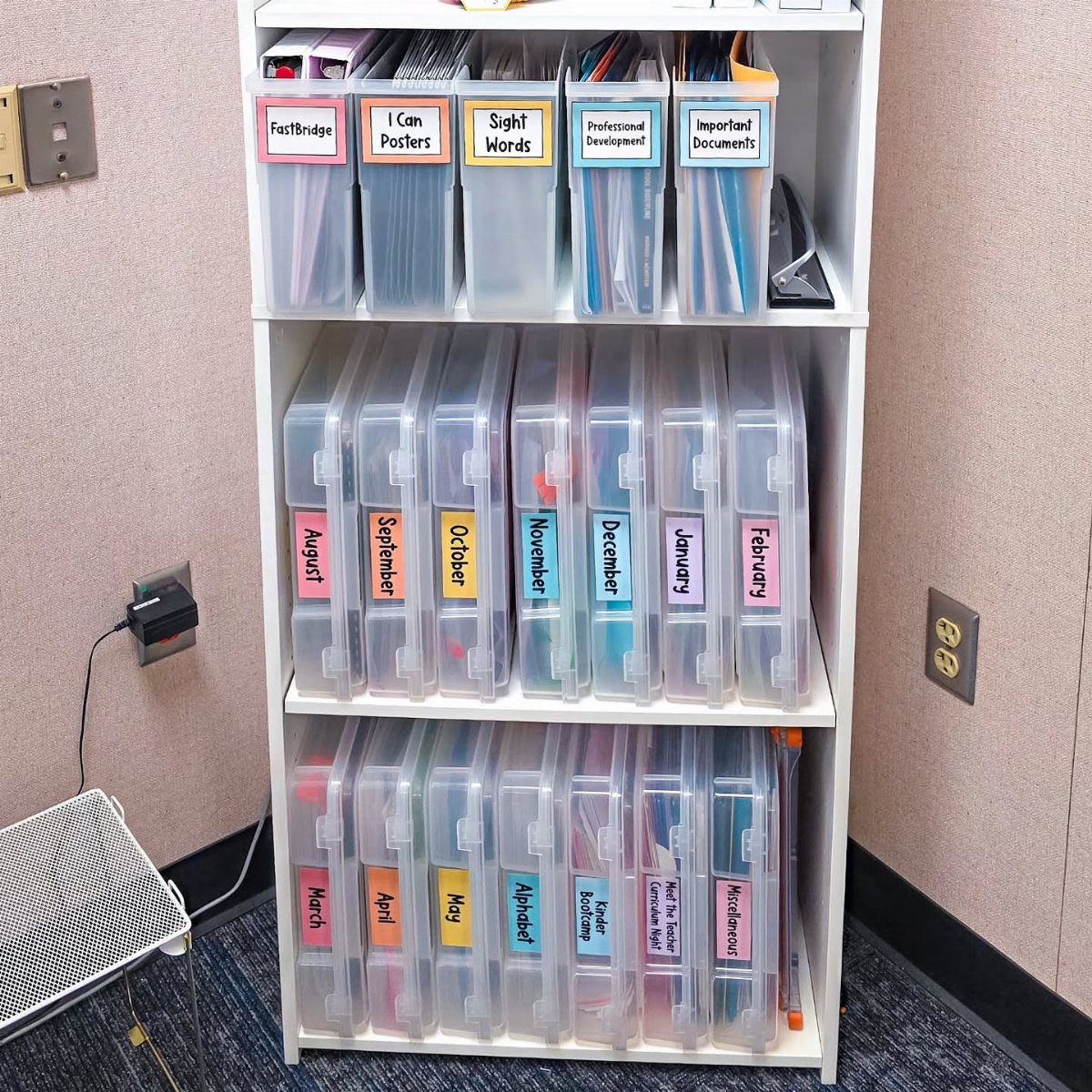
Labels turn a shelf of bins into a system anyone can follow. Clear bins make the contents visible, while a label on the front tells you where things go back, which is what keeps a shelf tidy for months.
Use one category per bin and write labels in a consistent style. For clothes, labels by season or by item type, such as "Scarves," work well.
I’d skip fancy label makers at first. Masking tape and a marker do the job, and you can relabel when your needs shift.
12. Stackable Sliding Storage Baskets
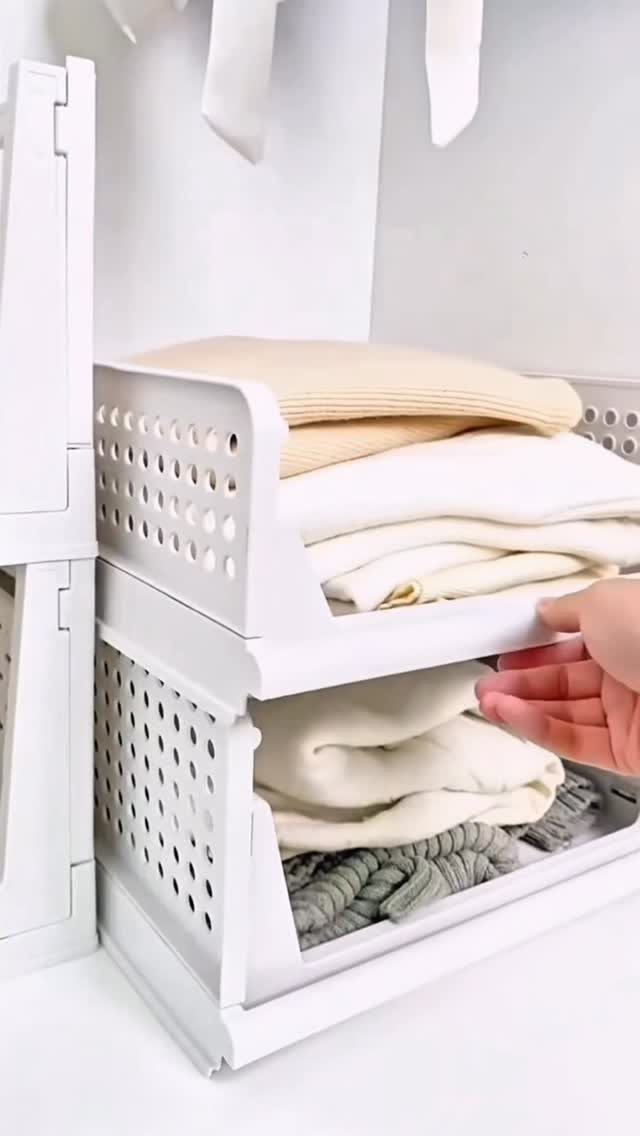
Perforated bins that stack and pull out like drawers give a shelf closet something close to a dresser. The holes let air move through folded clothes, and you can slide out the top bin without unstacking anything.
Fold clothes so they stand upright or lie flat in neat piles, and keep each bin to one type of item. Measure your shelf depth and height before buying so the stack fits.
For a small closet on a budget, I’d choose these over a built-in dresser: they’re cheap, and you can reshuffle them anytime.
13. Drawer Dividers for Accessories
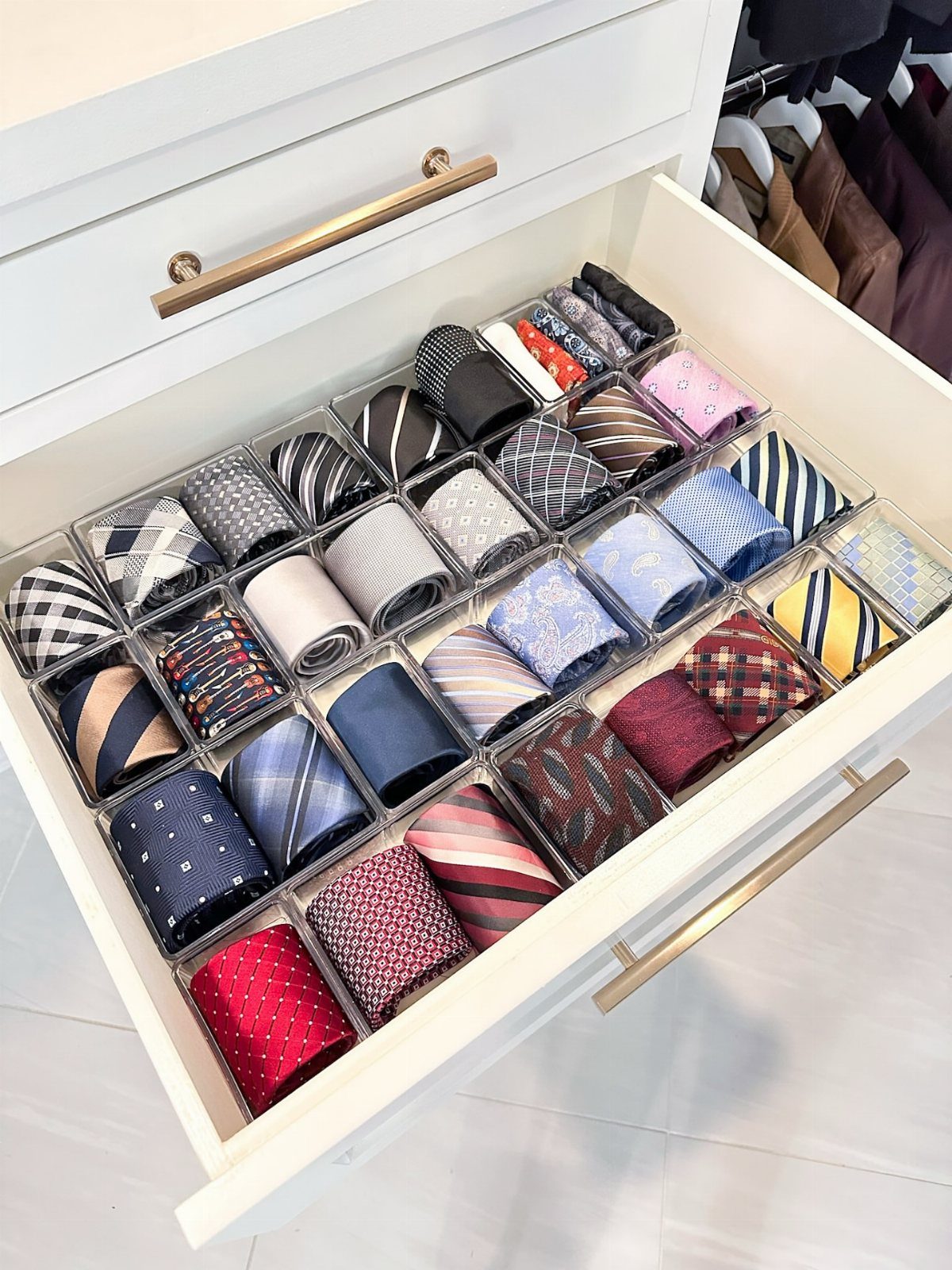
A grid of clear dividers turns a dresser drawer into a set of small bins, so rolled ties sit side by side and every one is visible the moment you open it.
Measure the drawer’s width and depth before buying, then choose dividers that fill it with no gaps, since loose edges let rolls slide into each other. Roll each tie snugly and give it its own slot.
The same grid works for belts, socks or small accessories.
14. Rotating Mirror Storage Tower

A tall unit that spins on its base puts a mirror you can check your whole outfit in, plus shelves and side hooks, into one footprint, which suits a bedroom with no wall space left for a mirror.
Turn it one way to dress, the other to reach what’s stored.
I’d hang the things you grab daily on the side hooks, such as bags or scarves, and keep the shelves for small items. A wooden finish also looks like furniture rather than storage.
Leave enough clear floor around it so it can turn all the way.
15. Tiered Space Saving Hangers
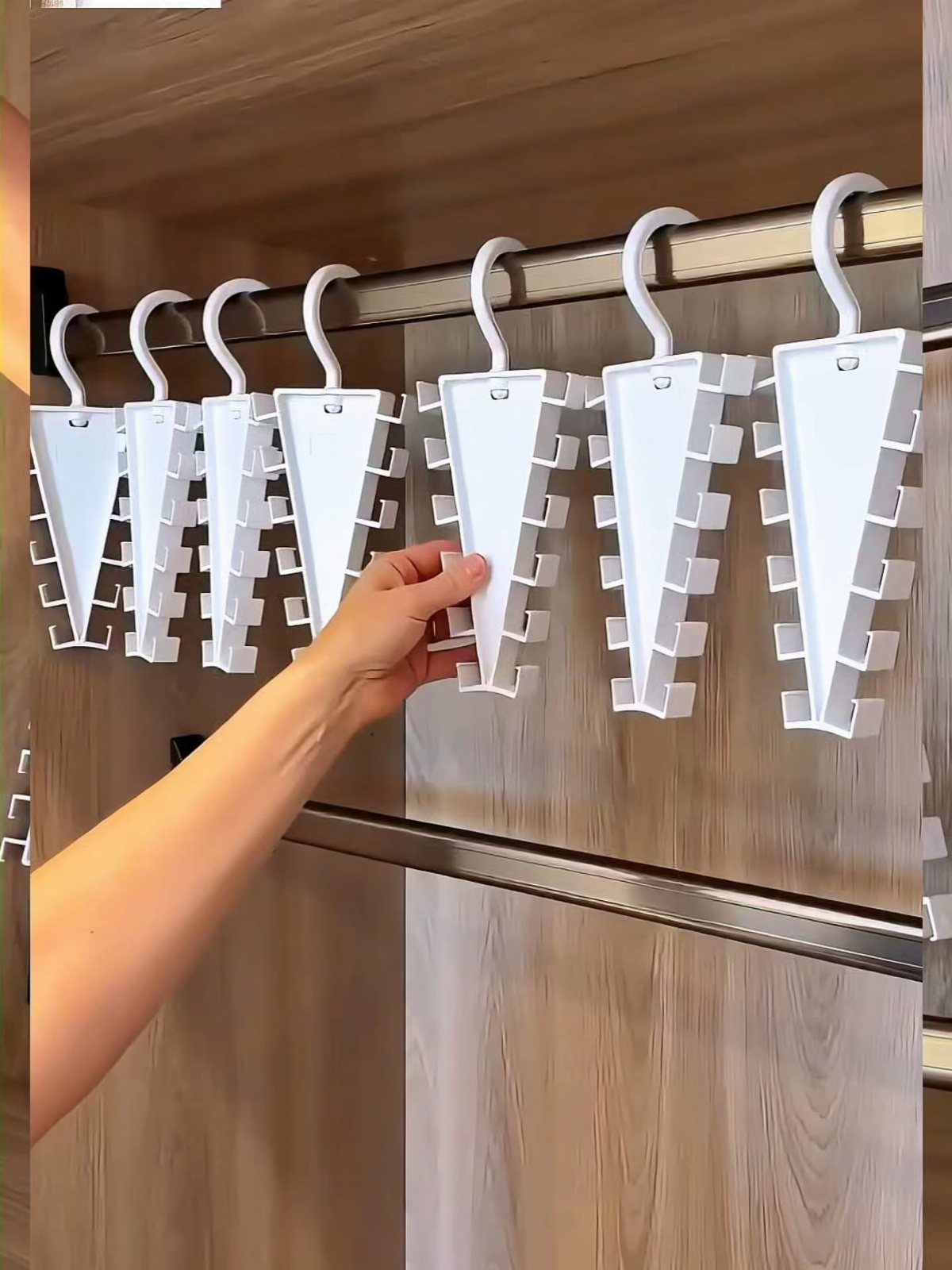
Tiered hangers stack several garment slots down one hook, so a single spot on the rod holds what used to take four or five. White ones look tidy in a wooden closet and don’t pull attention from the clothes.
Use them for pants, skirts or scarves, and keep heavy coats on regular hangers. Load the lowest tier first so the stack doesn’t swing, then work up.
For a small closet on a budget, this is one of the cheapest ways to add hanging capacity.
16. Cleaning Supply Closet Organization
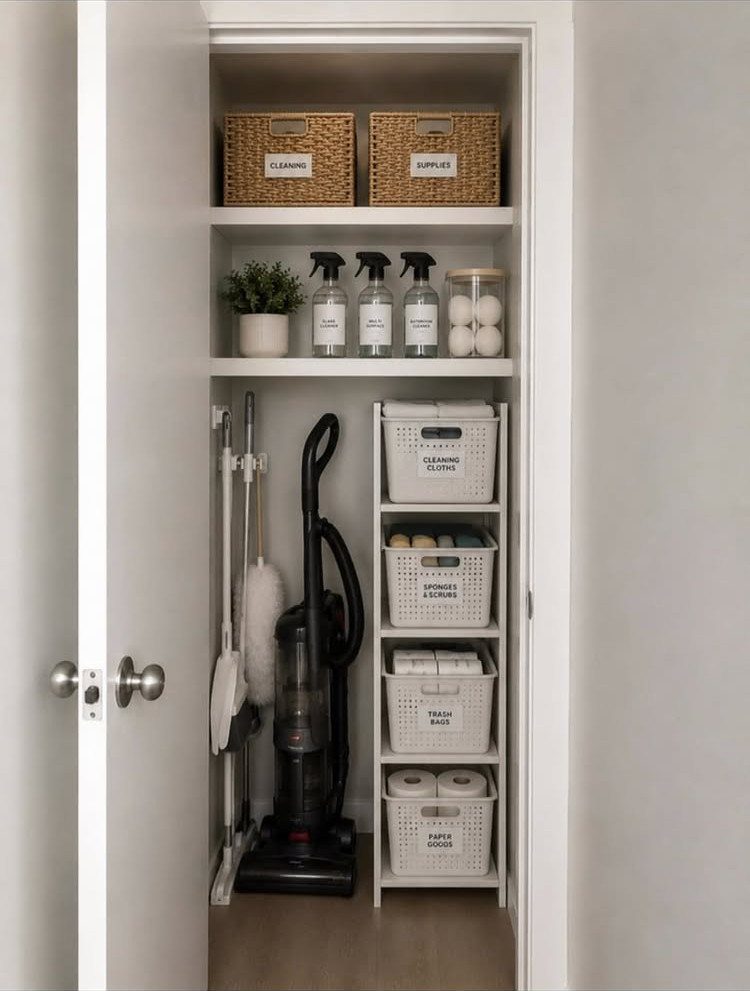
A narrow utility closet works best when every shelf has one job. Wicker baskets hold loose items, spray bottles stand in a row where you can read them, and a labeled drawer unit keeps small supplies from scattering.
Put the vacuum and brooms on the floor, since they’re tall and awkward on shelves. Keep daily-use bottles at hand height and anything you rarely touch higher up.
A basket with a label costs little, and I like how it hides clutter while staying easy to grab.
17. Fabric Portable Wardrobes
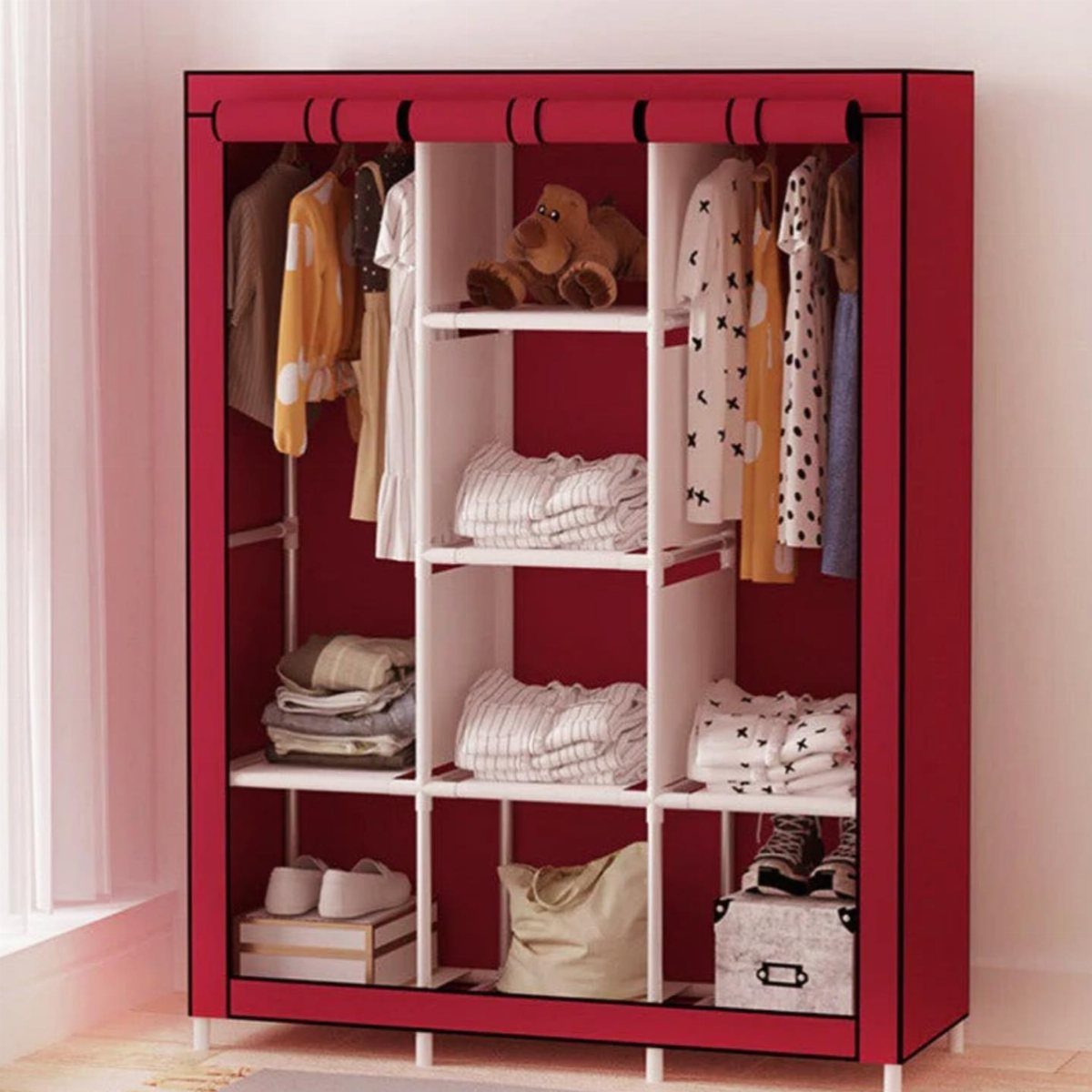
A fabric wardrobe is a rod-and-shelf frame wrapped in cloth, and it moves wherever you need it. That makes it a sensible pick for a renter or for a room with no closet at all.
The white shelves give you folded storage while the rods hold hanging clothes, and shoes fit along the bottom. Assemble it on the floor, then stand it against a wall so it feels steady.
Choose a color you like, since a bold red becomes part of the room’s decor. I’d keep the heaviest items low.
18. Rolling Multi-tier Utility Cart
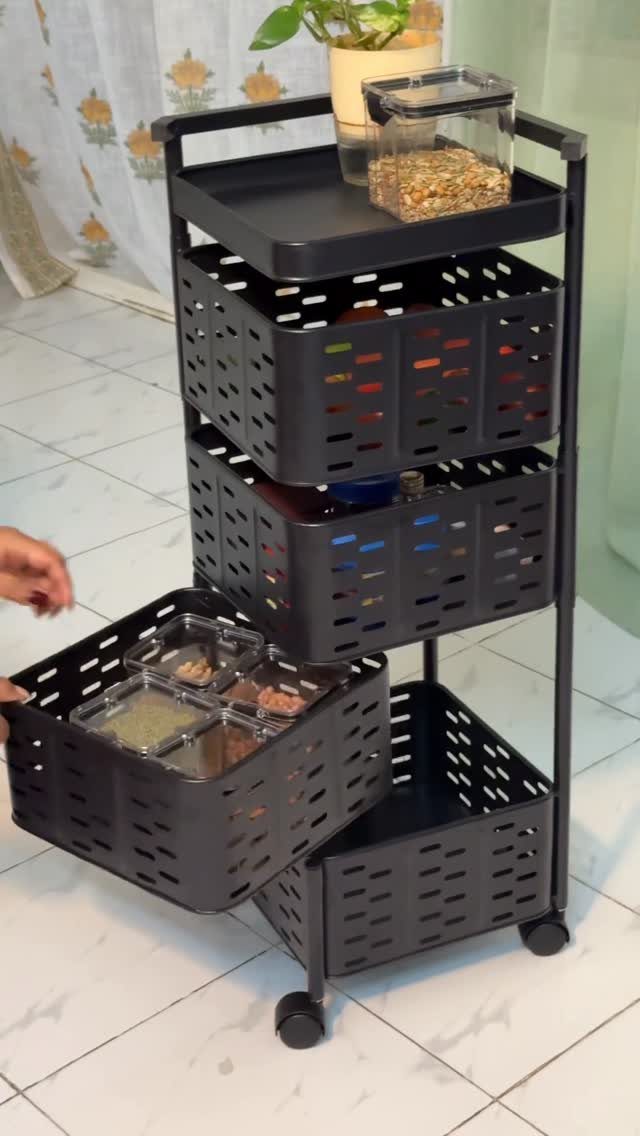
A three-tier cart on wheels gives you a closet’s worth of shelving that you can roll out, fill and park again. Removable bins slide out one at a time, so you can carry a whole category to where you’re working.
Perforated bins suit dry goods and supplies, and clear containers let you see what’s inside without pulling anything out. I’d pick a narrow cart so it slips into a gap beside a closet or appliance.
Wheels roll easily on tile, though on carpet they may need more push.
19. Attic Sloped Ceiling Closet
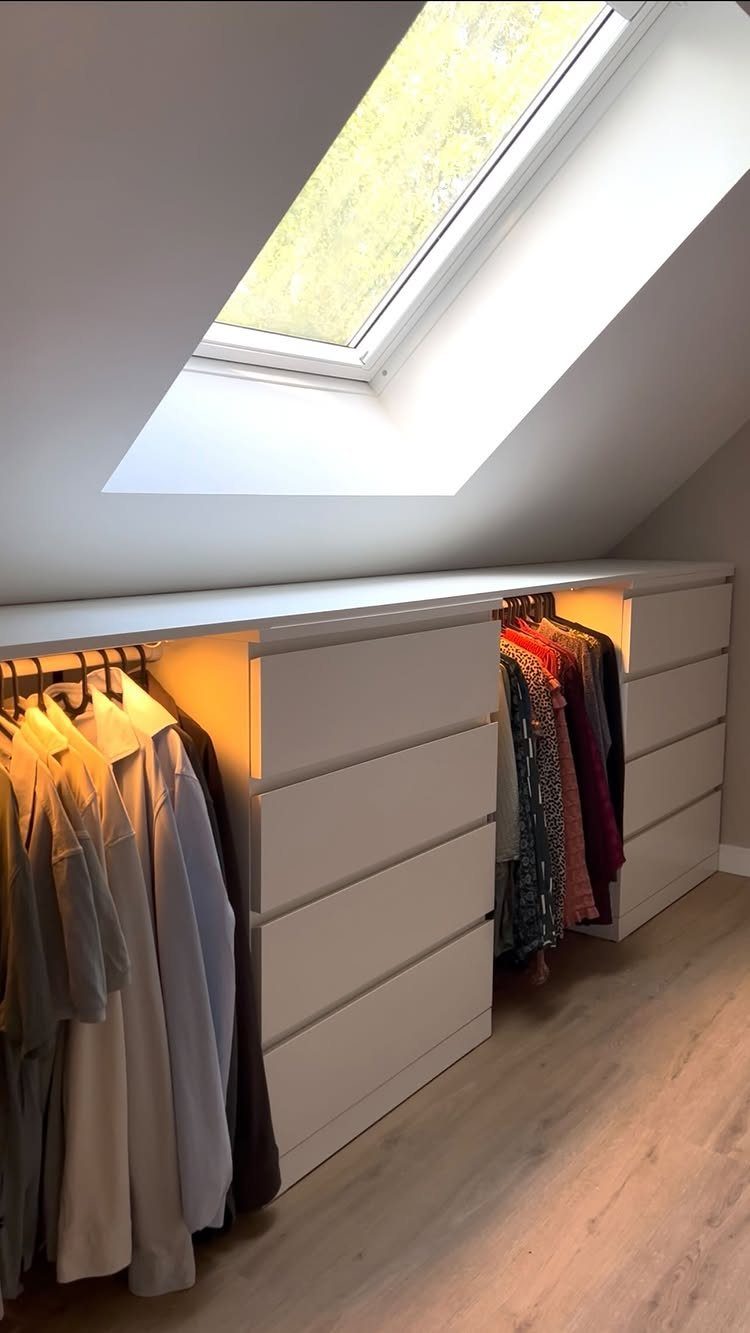
Under a slanted ceiling, the low edge of the room is dead space for a standard closet, so a built-in that steps its height down with the roof wins.
Tall hanging rods go where the ceiling is highest, and drawers fill the shallow side, where you’d bump your head anyway.
Measure the ceiling height at several points along the wall before you plan anything, then match each section to what fits: long hanging at the tall end, short hanging or drawers toward the low end.
White keeps a tucked-away corner bright, and I’d keep it plain so the skylight does the work.
20. Fabric Bin Linen Closet
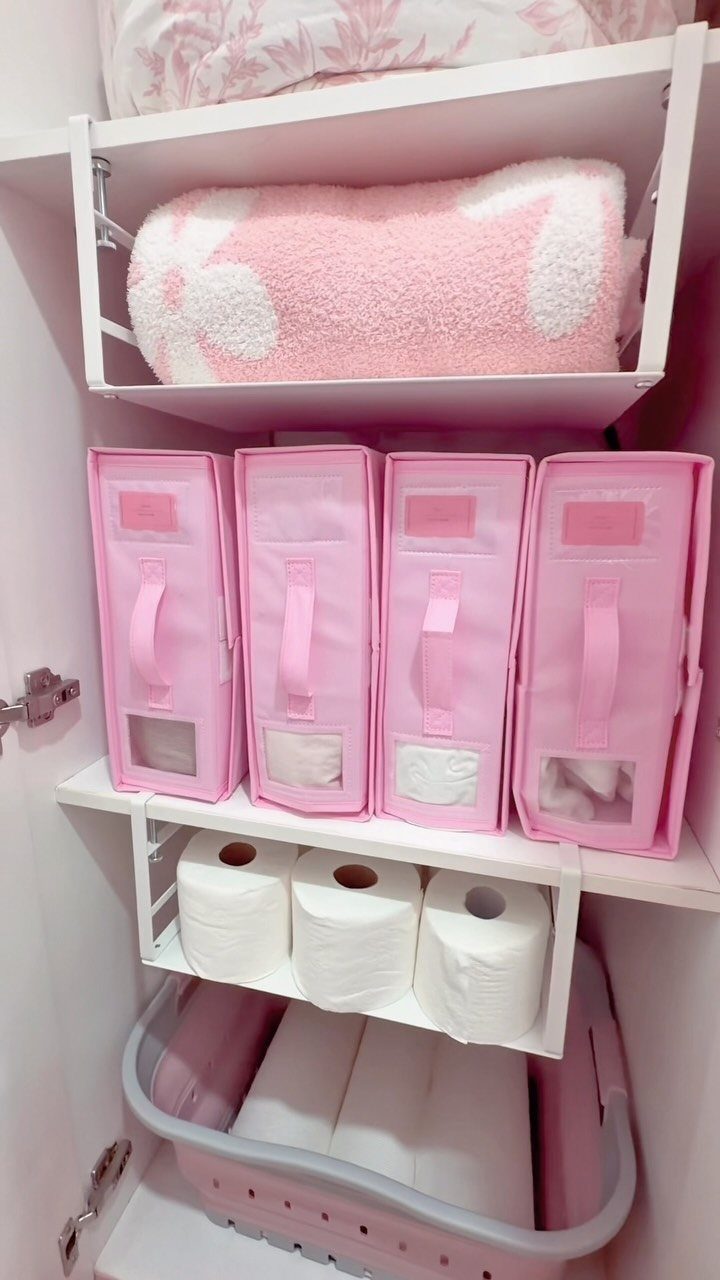
Matching fabric bins give a small linen closet one color story, so towels, blankets and spare supplies read as a single tidy block instead of a pile. Soft bins also forgive a shelf that isn’t perfectly sized.
Give each bin one job: towels in a basket on the floor, a fluffy blanket on a top shelf, small bathroom extras in the cubes.
Give toilet paper its own shelf at eye level, since a stack you can see at a glance tells you when to buy more before the last roll is gone.
I’d buy all the bins in one go so the color and fabric match.
Maximizing Space
Edit before you add anything.
A small closet works better when it’s sized to what you own, and the target I’d use is keeping it 80% full. Paring down is the quickest way to get shelf space back, and it costs nothing.
Let your wardrobe decide the layout. Dresses and long skirts are what eat hanging height, so guard that section first and let everything else work around it.
A folded shirt or pair of pants takes up only about 16 inches of width, which means a shelf unit just 18 inches wide fits the middle of the closet with room to spare.
Put adjustable rods on either side of that center stack. That gives you long hanging on one side and short on the other, and you can move the rods if your clothes change.
A reach-in can also work as one simple clothing rack. Keep the floor clear for duffels and weekend bags; they hold overflow like a cubby would, and you can slide them out of the way.
With a small closet especially, it’s important to not squander precious vertical space.
Regular Decluttering Advice
Every closet needs a full reset now and then. Empty the shelves and drawers completely, then sort by size, type and how often you use each thing.
Seeing the whole pile shows how much space you really have, and it’s usually less cluttered than it felt once you see what’s duplicated.
Hold the 80% full line by making it a one-in, one-out habit. When a new piece comes in, a similar one goes out.
A basket or canvas tote on the floor or a hook catches donations as you spot them, so the pile never builds up. Drop things in the moment you decide, so the decision doesn’t wait for a weekend.
Don’t stop at the bedroom. Run the same reset on every small closet in the home, since the hall and utility closets tend to become catch-all heaps.
Importance of Visibility
A tidy closet you can’t see into still fails. Poor light makes even small calls, like navy versus black, a guessing game, so I put lighting on the same level as shelving.
Layer your lighting so no dark zones remain. A ceiling fixture lights the whole closet evenly, and adding a dimmer makes the space feel finished and lets you set the brightness you want.
Matching hangers, all facing the same direction, make the rod look streamlined and easier to scan.
Hang pieces that wrinkle easily, like dresses, blouses, skirts and slacks. Fold sturdier ones like denim, sweaters, T-shirts and athleisure.
For anything folded or rolled, keep it visible. Choose a system that stops stacks from shifting and burying what’s underneath.
Frequently Asked Questions
What are some good storage ideas for a small closet?
Start with a second rod halfway down for shirts over pants, then fill the upper wall with shelves and slide in a drawer unit for anything that folds. Clear bins and wall hooks pick up the small stuff and bags.
What can I use instead of a closet?
A wardrobe cabinet drops in without hardware and gives you both a rod and shelves in one piece.
The canvas wardrobes on a metal frame are light, cheap, and movable, which makes them right for temporary situations or bedrooms that never got a built-in. Both move with you, so nothing permanent changes.





