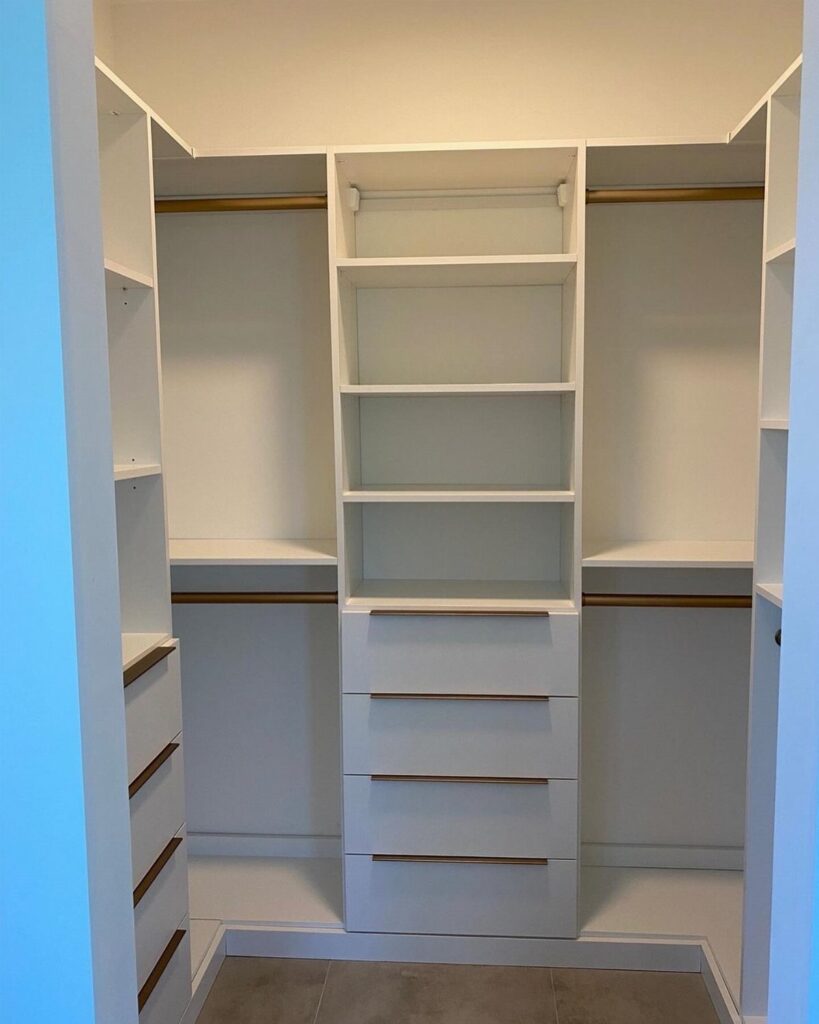
Whether you rent or own decides which of these ideas is yours: stick-on LED strips, hanging organizers, wall hooks and a curtain hung from a rod and a few brackets all come off when you move, while custom systems and built-in shelving cost more and stay put with the house.
Weekend jobs sit between those extremes, and a double hanging rod is the clearest example: a drill and a level roughly double your hanging room.
1. Custom Closet Systems
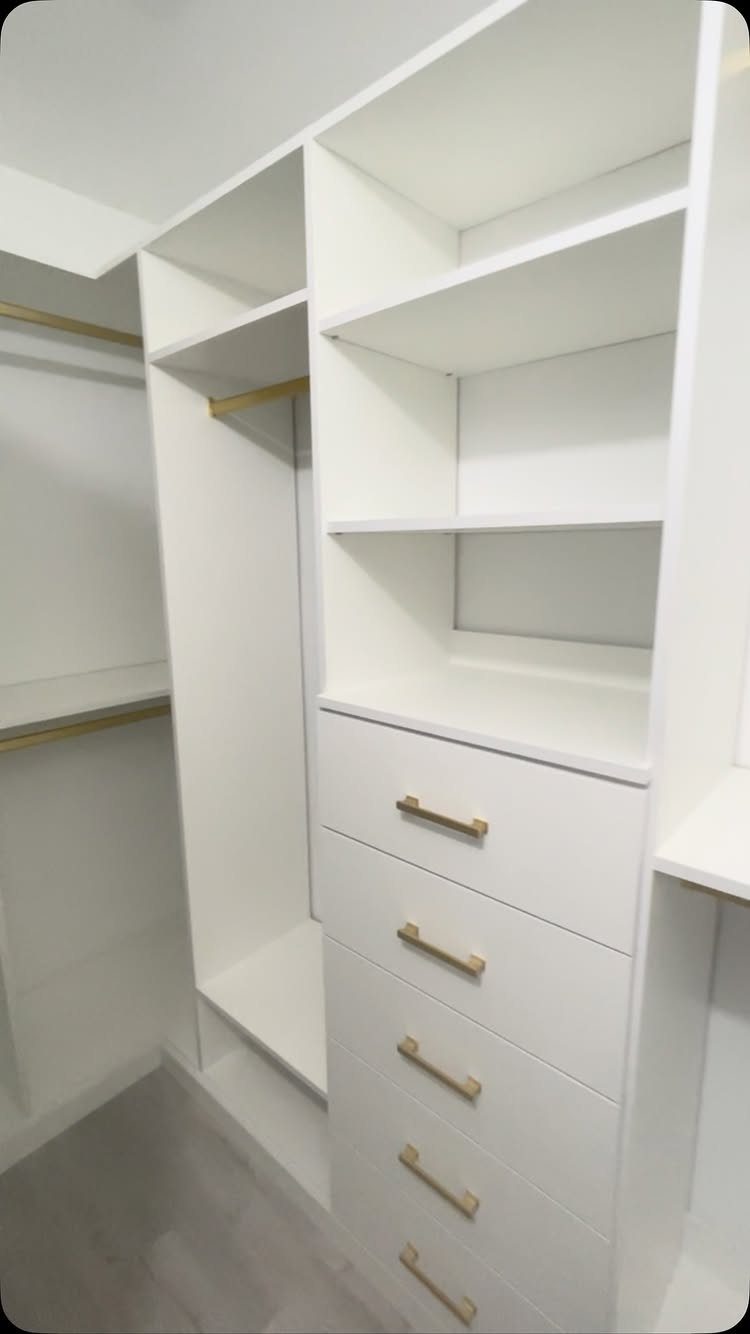
A custom system earns its price in a small walk-in because every shelf, rod and drawer gets cut to the room’s exact width, so no inch goes to dead gaps.
Mixing the three, as this white layout does, is the move I’d copy: hanging for shirts and dresses, open shelves for folded stacks, drawers for small items that would otherwise sprawl.
Measure the walls twice before ordering. Since you’re paying for precision, a half-inch error costs more than it would with off-the-shelf parts.
Pick one finish and one hardware color so the closet reads as a single piece, not a collection.
2. Shelves, Hooks, and Hanging Organizers
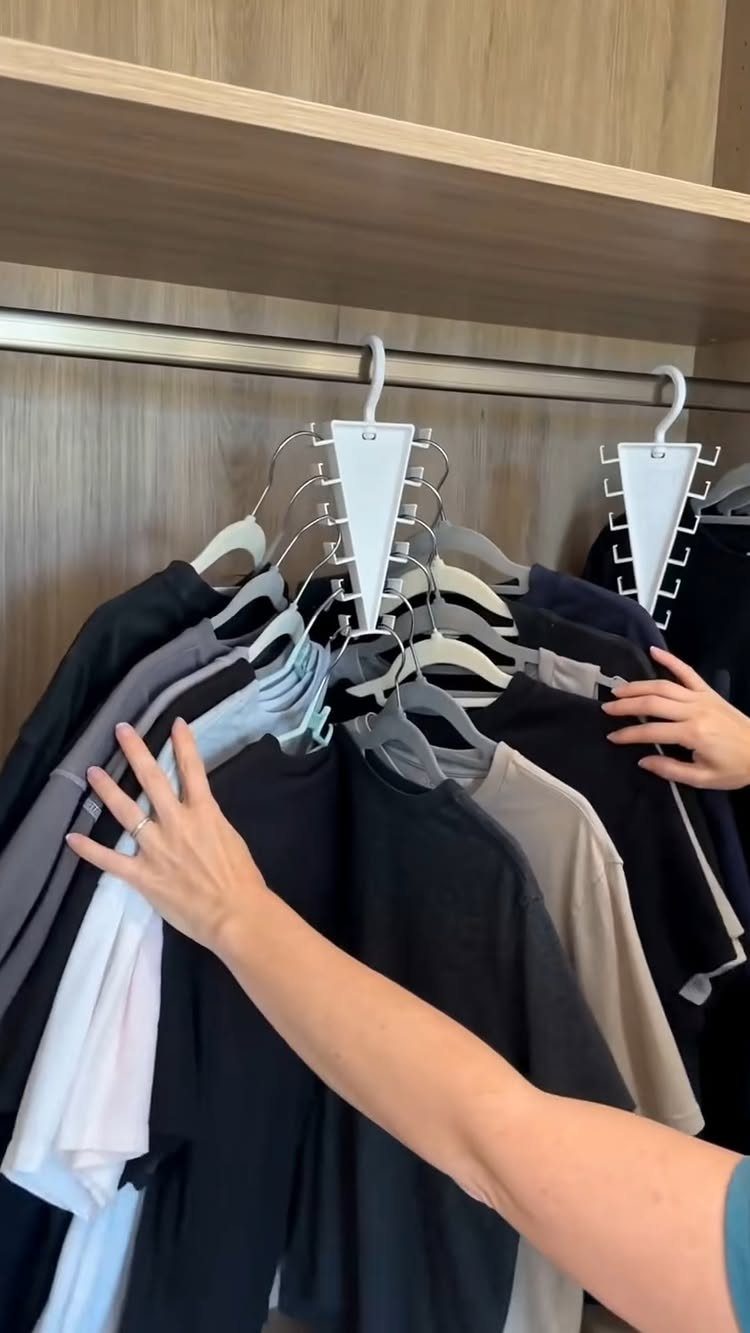
Hanging organizers turn a single rod into several tiers, and the multi-layer white style fits t-shirts and other lightweight pieces well.
They cost little, need no tools, and slide off again when you move, which makes them a natural fit for renters.
Pair them with a few shelves and hooks on the wall space around the rod, and you get 3 kinds of storage without any built-in work. I’d keep heavy knits folded on shelves; hanging tiers sag under weight.
3. Double Hanging Rods
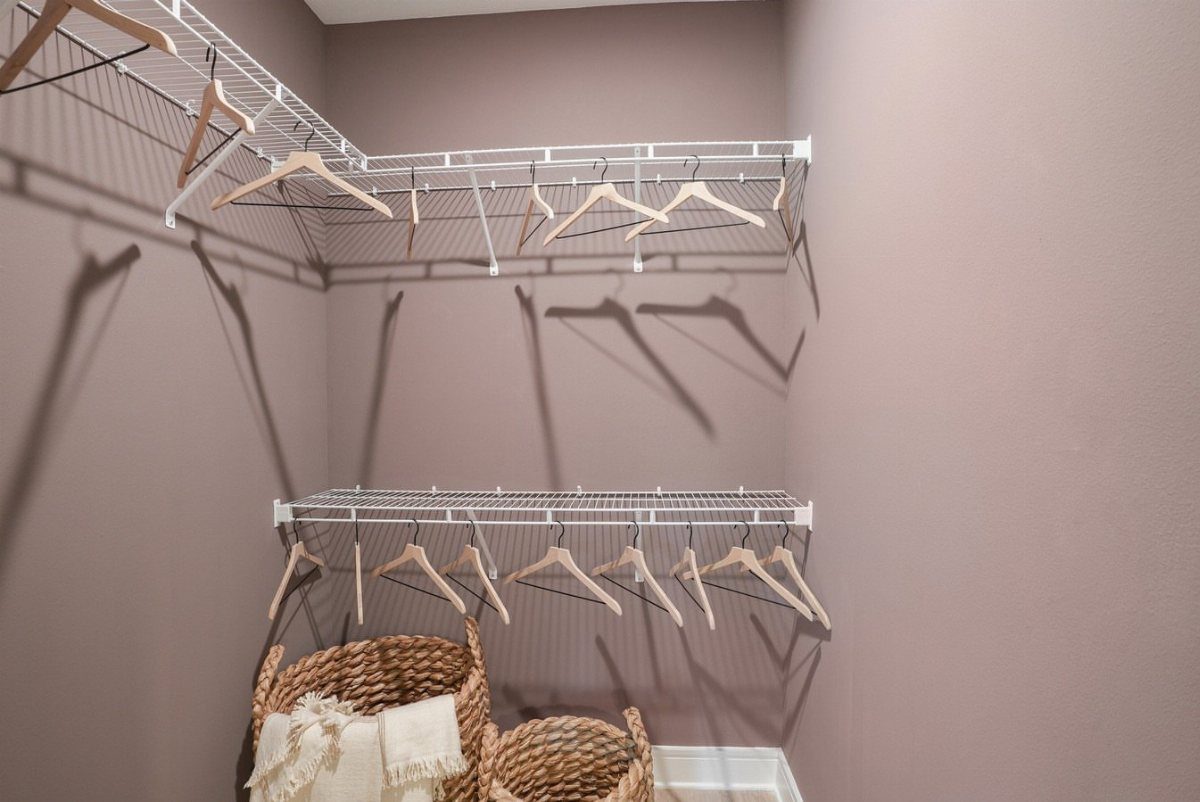
Stacking two rods on one wall roughly doubles your hanging room, and it suits shirts, folded-over pants and skirts, which don’t need a full-length drop.
White wire kits are the budget route, and they’re simple to install over a weekend with a drill and a level.
Hang the upper rod high enough that you can still reach it comfortably, then leave space beneath for the lower one. Matching wooden hangers keep the stacked rows looking tidy.
Longer coats and dresses need a section with one full-height rod.
4. LED Strips Under Shelves
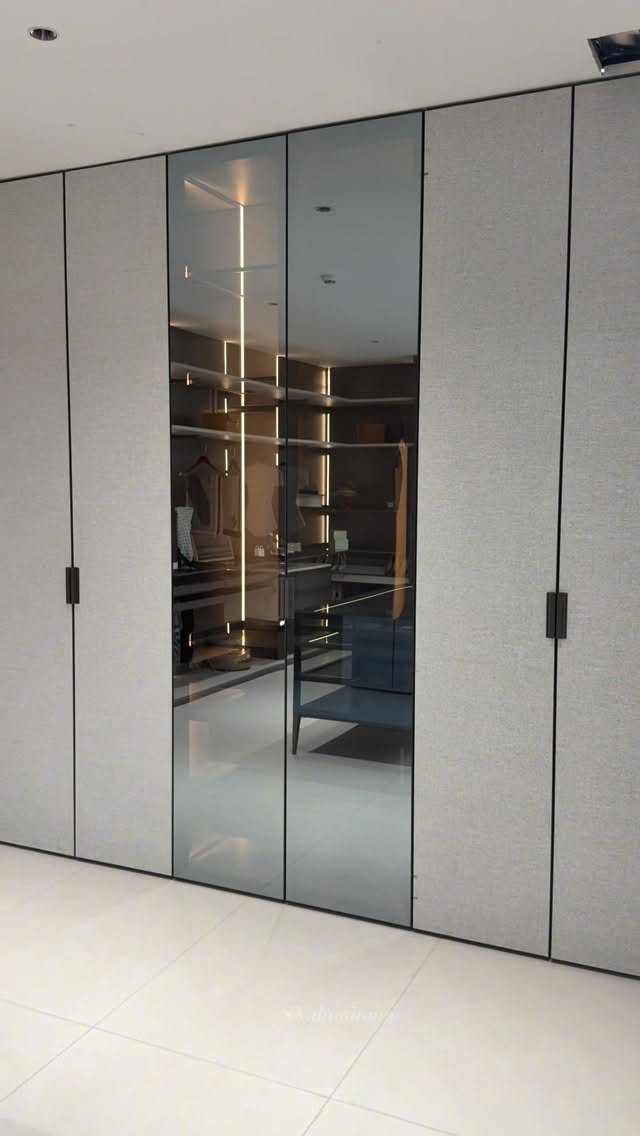
Light is what most small closets lack, and LED strips fix it cheaply by running along the underside of a shelf or down the edge of an upright.
Light placed there falls straight onto the folded stacks and shoes below, so you stop hunting through shadows.
Stick-on strips with a plug or battery pack are the easy renter version; hardwiring is a bigger job. I prefer a warm white tone, which makes fabric colors read truer than a cold blue-white does.
5. Open Shelving
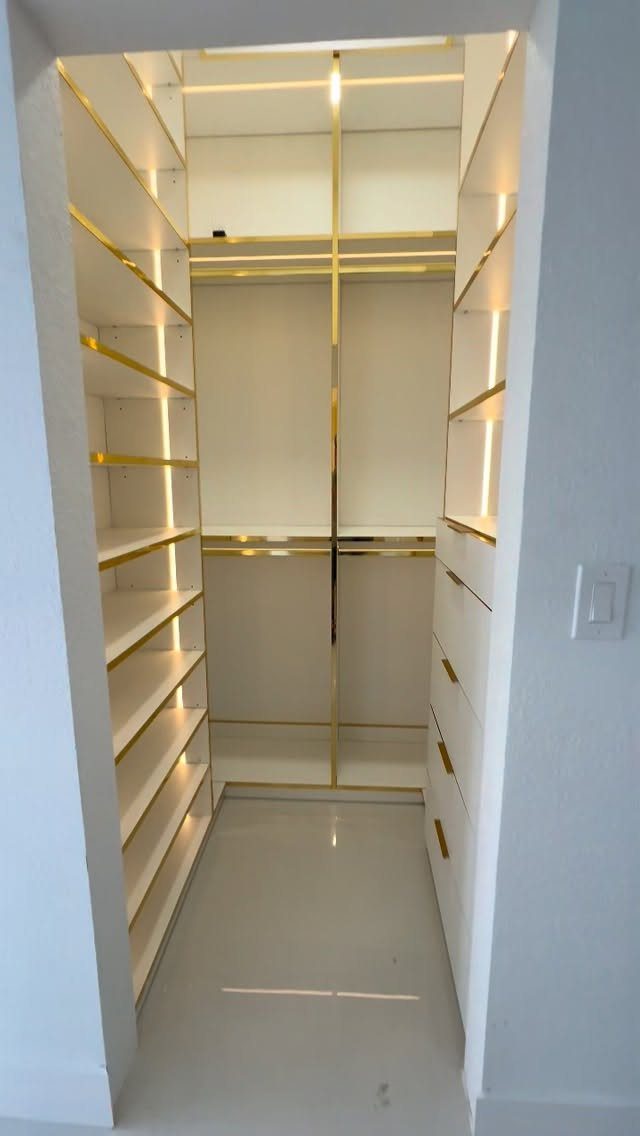
Open shelving wins in a small walk-in because no door hides anything, so you see every sweater at a glance and grab it without moving a stack. Leaving doors off also saves the swing space a small room can’t spare.
The cost is dust and visual clutter.
Fold neatly, group by color, and keep the shelves to what you actually wear. Adding a light, as in this white-and-gold closet, makes the shelves feel intentional instead of bare.
6. Natural Light Incorporation
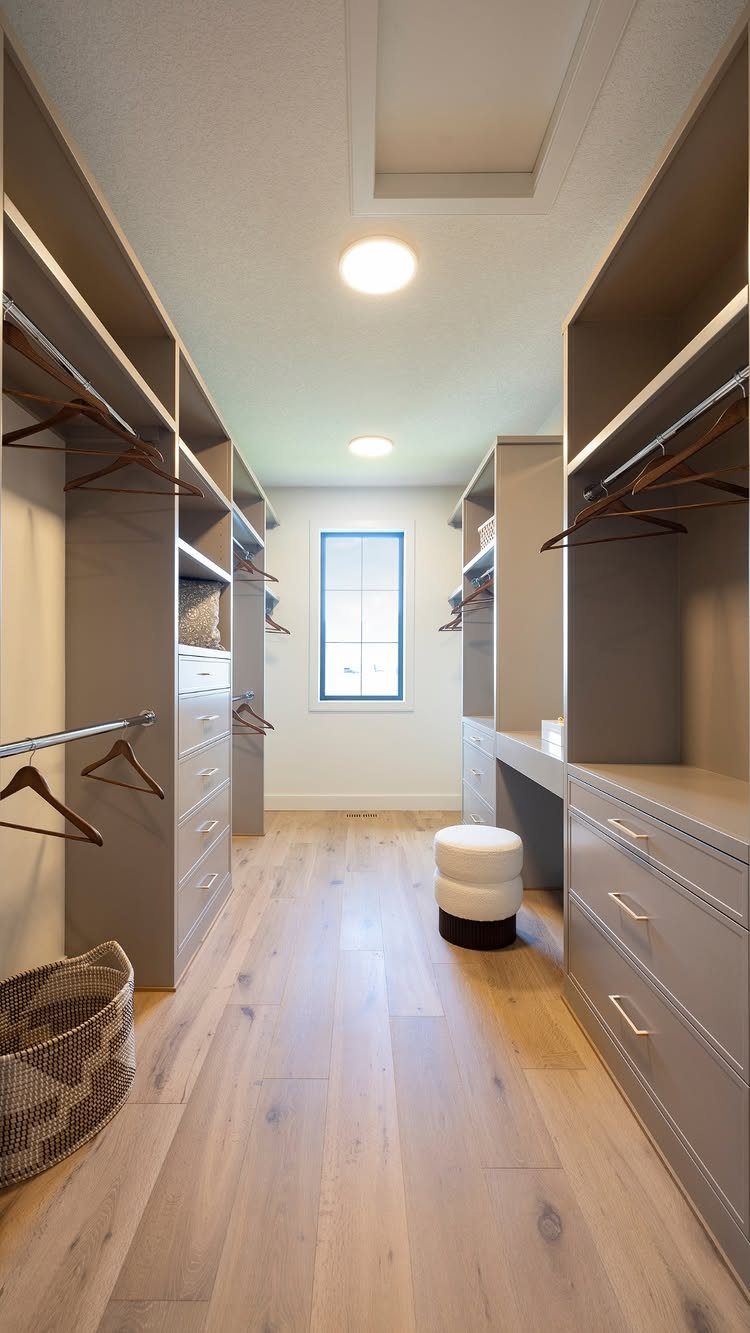
A window at the end of a narrow closet pulls the eye down the whole length and makes the space read wider than it is. Daylight also shows true colors, so matching a navy to a black gets easier.
Keep the sightline clear: put tall storage along the sides and leave the window wall free, as this grey layout does. Sheer or light window film adds privacy without blocking the glow.
Sun can fade fabric, so I’d store delicate pieces away from direct light.
7. Baskets for Accessories
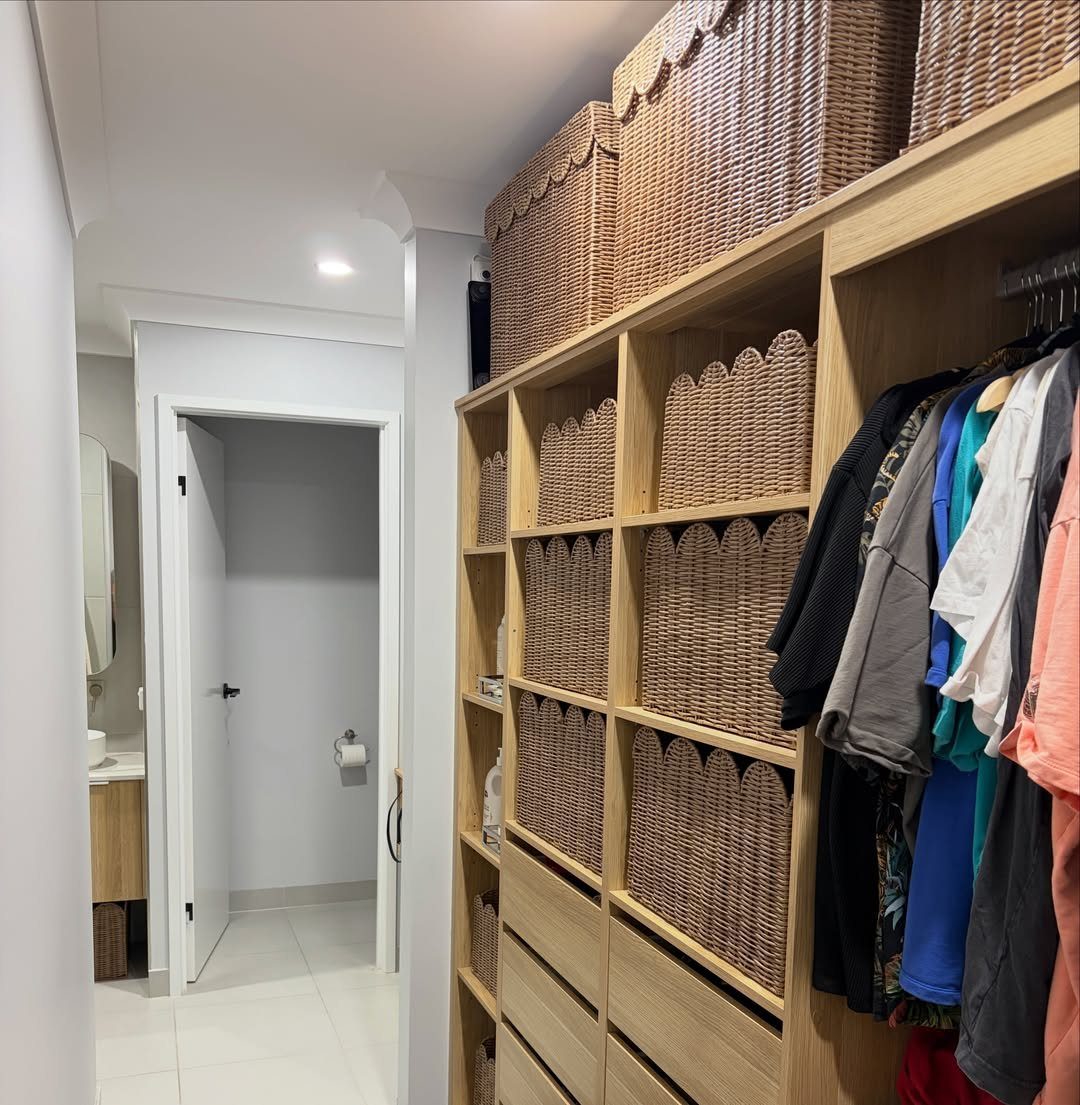
Woven baskets turn loose accessories into labeled-by-eye bins: belts, scarves, hats and socks go in, and the shelf looks calm instead of crowded.
Light wicker like this suits a pale wood closet because the textures sit in the same warm range.
Size the basket to the cubby so it slides out like a drawer. One basket per category keeps you from digging.
Lined baskets protect delicate scarves from snagging on rough weave.
8. Wall Hooks
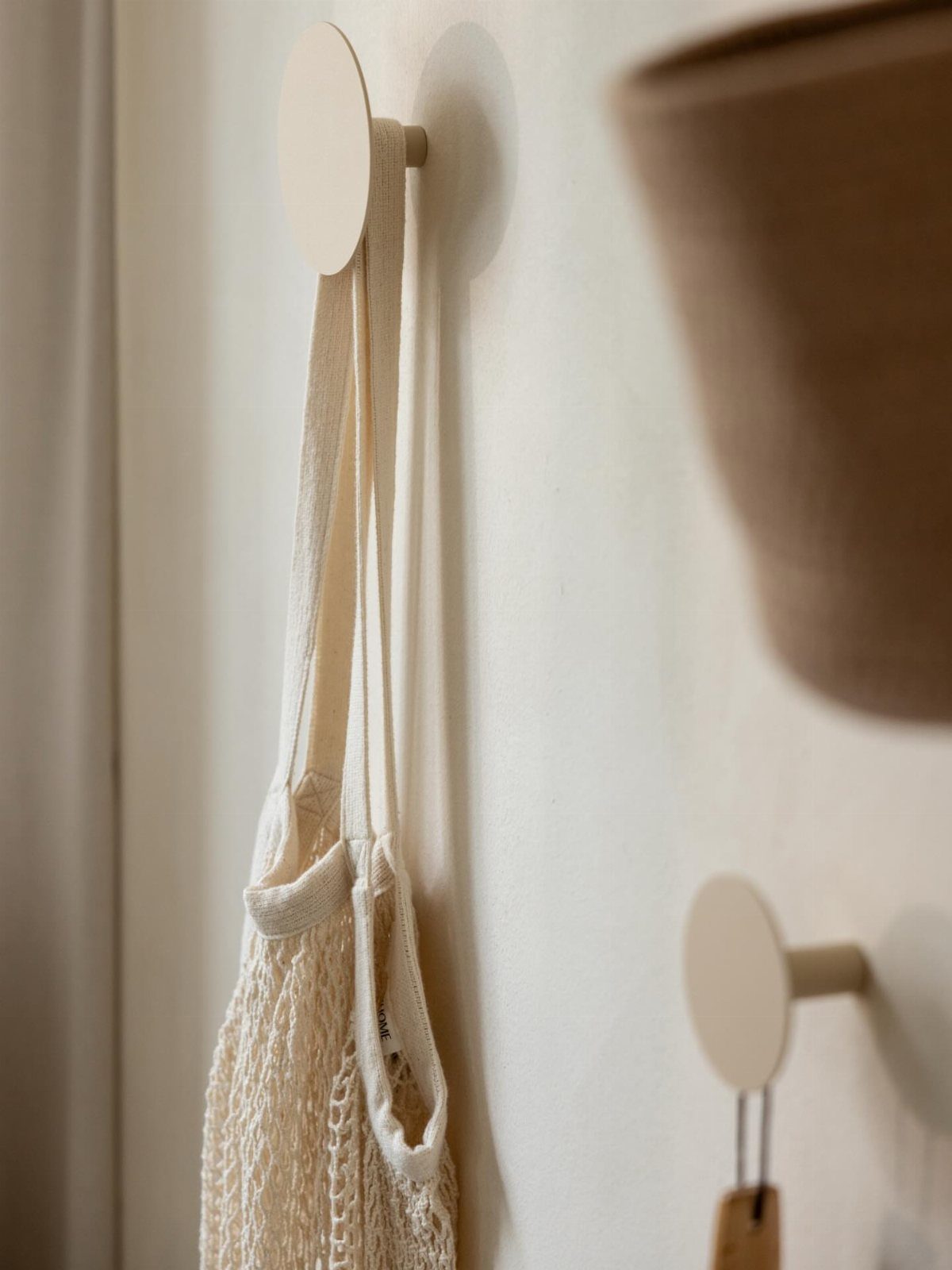
Two or three round hooks on a bare stretch of wall hold bags, scarves and belts at grab height, and they use space that shelves and rods leave empty.
Beige hooks on a pale wall nearly disappear, which keeps a small closet calm.
Stick-on versions suit renters, while screwed-in hooks hold more. I’d hang only what you use weekly, since a crowded hook row quickly becomes a pile.
Space them wide enough that bags don’t overlap.
9. Drawer Dividers
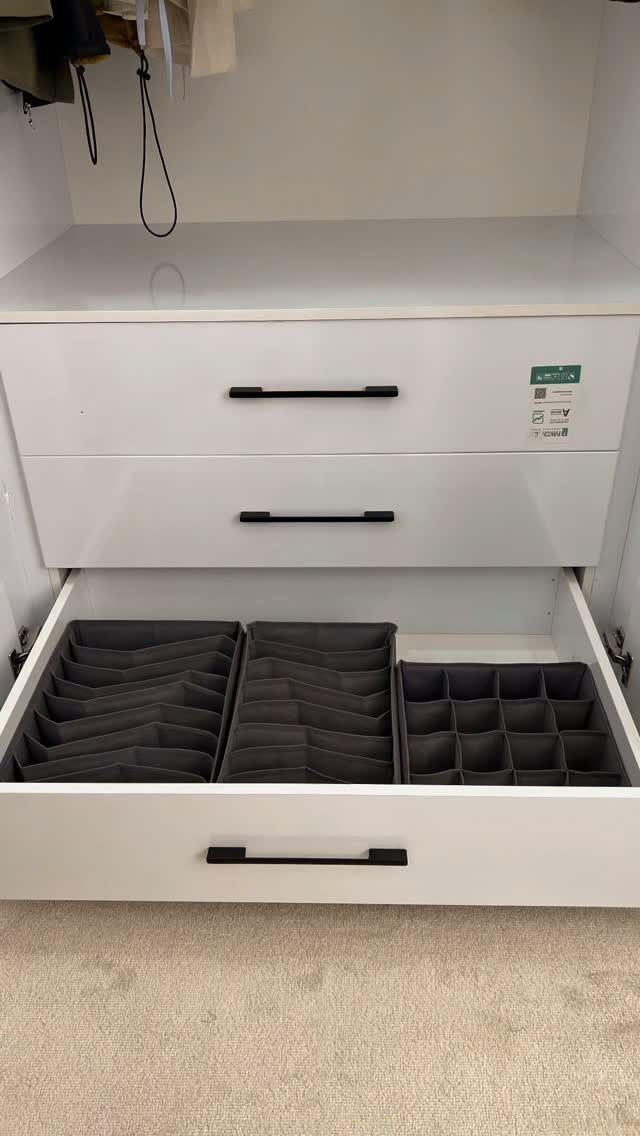
Fabric dividers split a shallow drawer into small zones, so socks, underwear and belts stay put instead of sliding into one tangle. Grey fabric in mixed sizes, as here, lets you fit odd shapes and rearrange when your stock changes.
Measure the drawer’s inside width and depth first, then buy dividers that add up to it, with no gaps.
Fold items small enough to stand upright so you can see everything at a glance.
10. Built-in Shelving
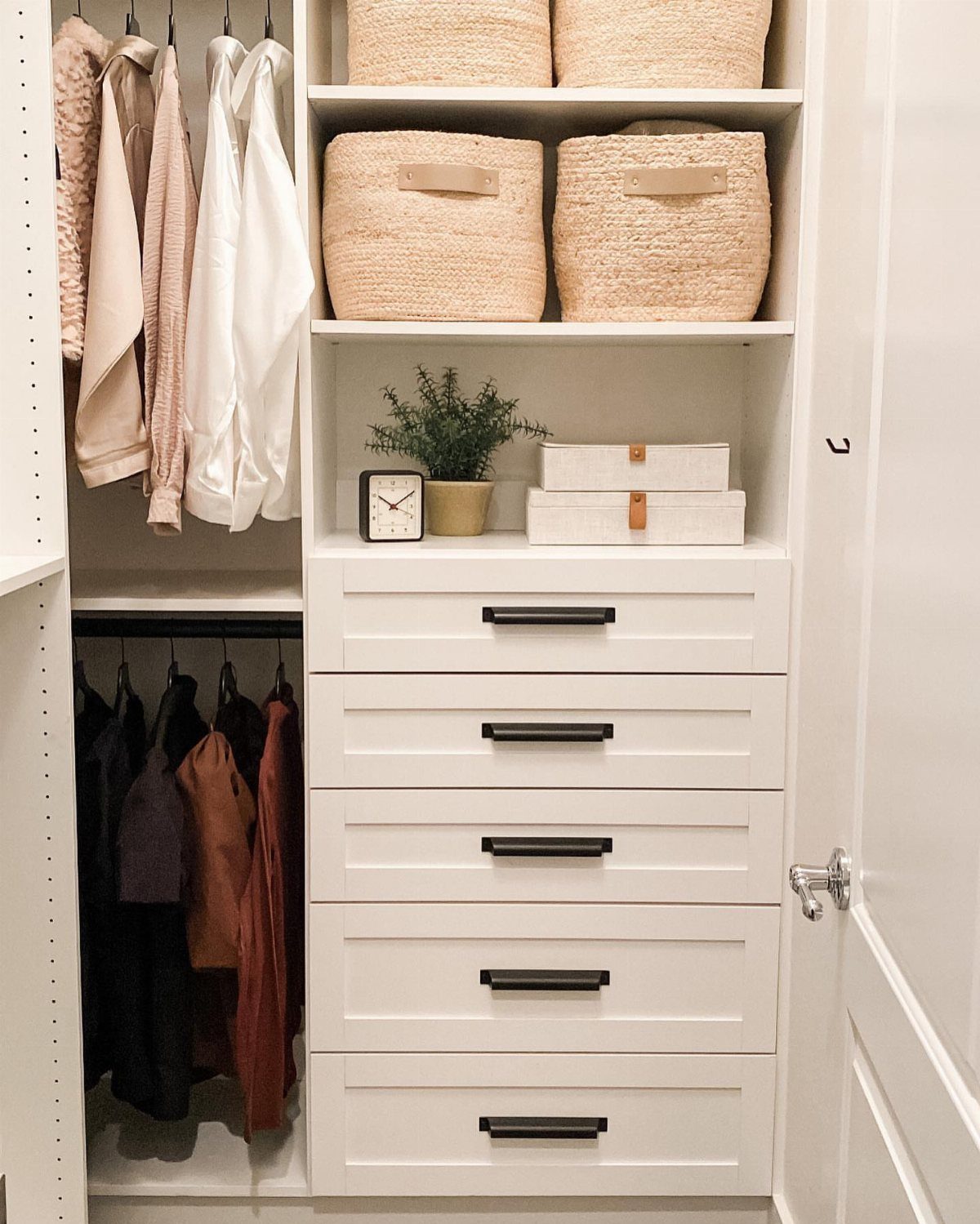
Built-in shelving fills the wall from corner to corner, so a small closet gets hanging rods, open shelves and drawers in one white run with no wasted gaps.
Mixing woven baskets on the shelves with closed drawers below lets you hide clutter and still keep a few things on display.
It costs more than freestanding units and is harder to take with you, so owners get the most from it. Renters should lean toward modular parts.
Keep the finish uniform so it reads as part of the room.
11. Dedicated Shoe Shelves
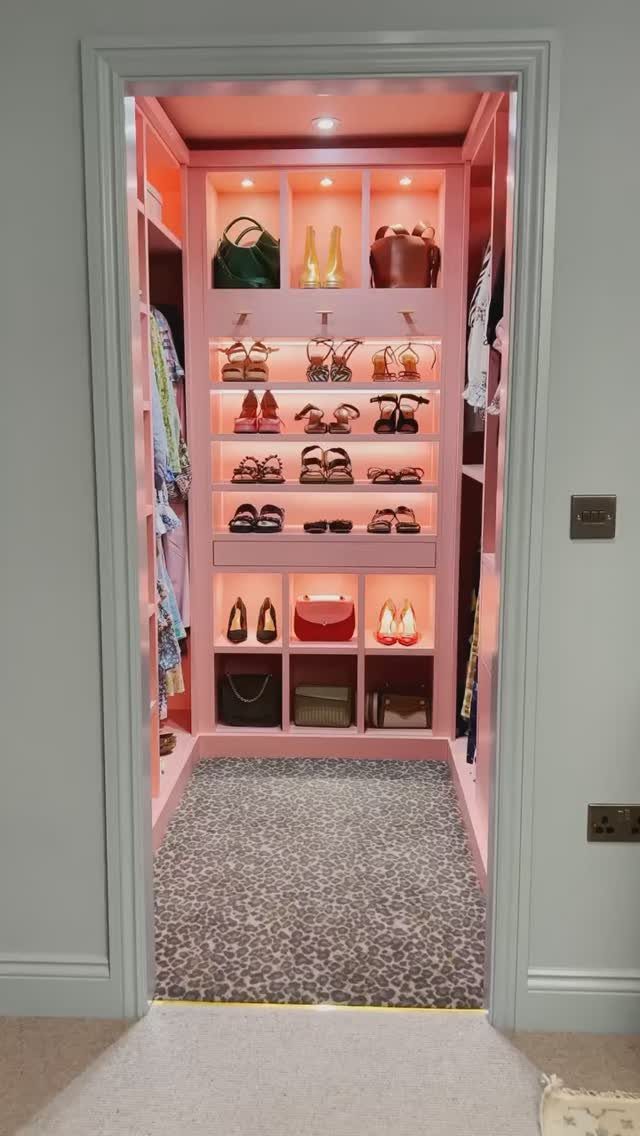
Giving shoes their own shelves keeps them off the floor and out of your clothing zone, and handbags can share the same built-in run.
In a small walk-in, shelf rows stacked close together hold more pairs than a floor rack does.
I’d set shelf heights to your tallest pair first, then add a lower row for flats. Built-in lighting, as in this pink closet, makes it easier to pick a pair quickly.
Store the pairs you wear most on the shelf that sits naturally in your sight line.
12. Small Vanity for Makeup
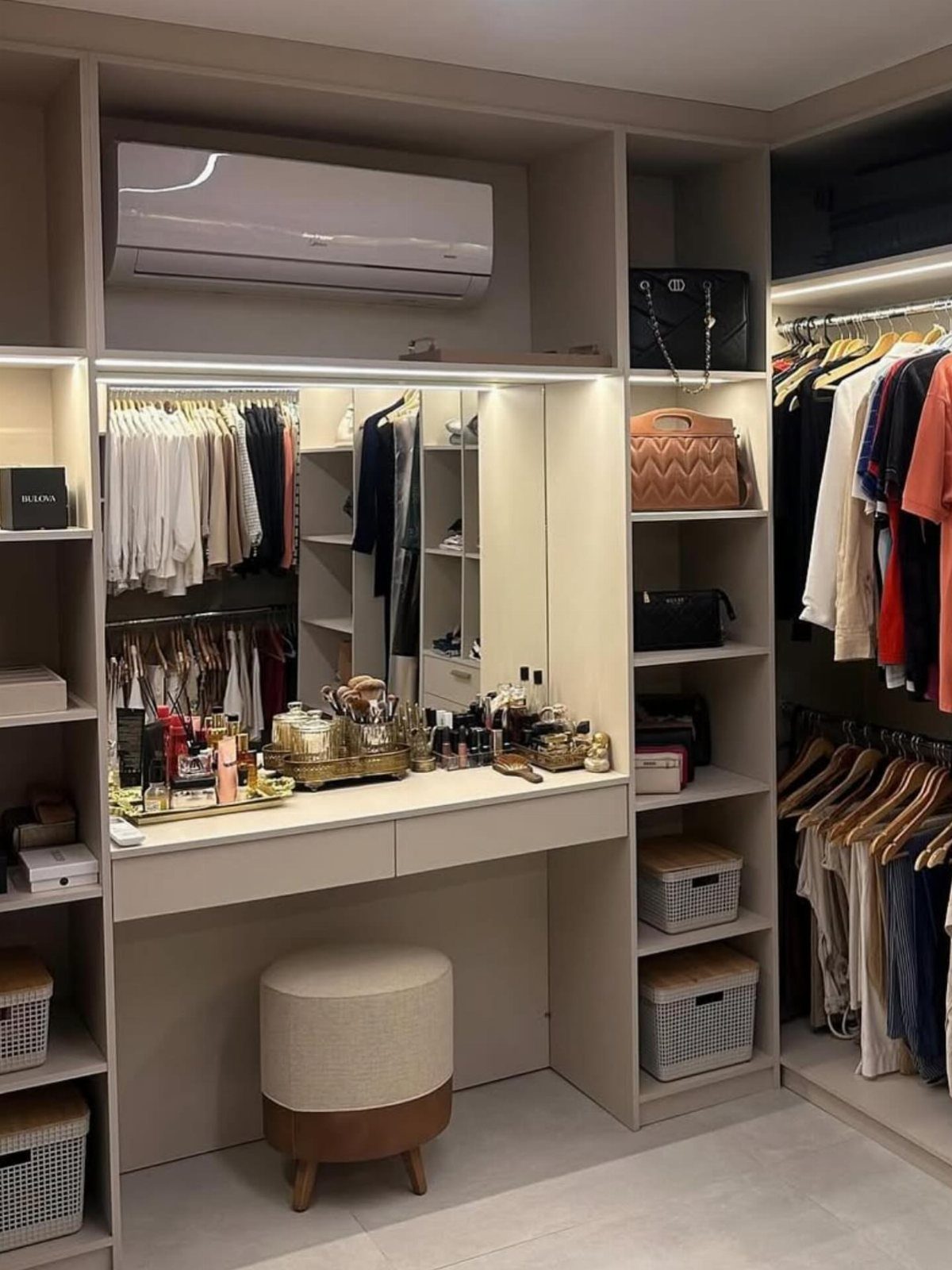
A small vanity folded into the closet puts makeup, mirror and clothes within a few steps, so getting ready happens in one spot.
A narrow counter, a mirror and a tucked-under ottoman is all it takes, and the ottoman slides away when you need floor room.
Place it near the closet’s brightest light so you can judge color accurately. Keep only daily products on the counter and store the rest in a drawer, or the surface fills fast.
13. Hamper Within the Closet
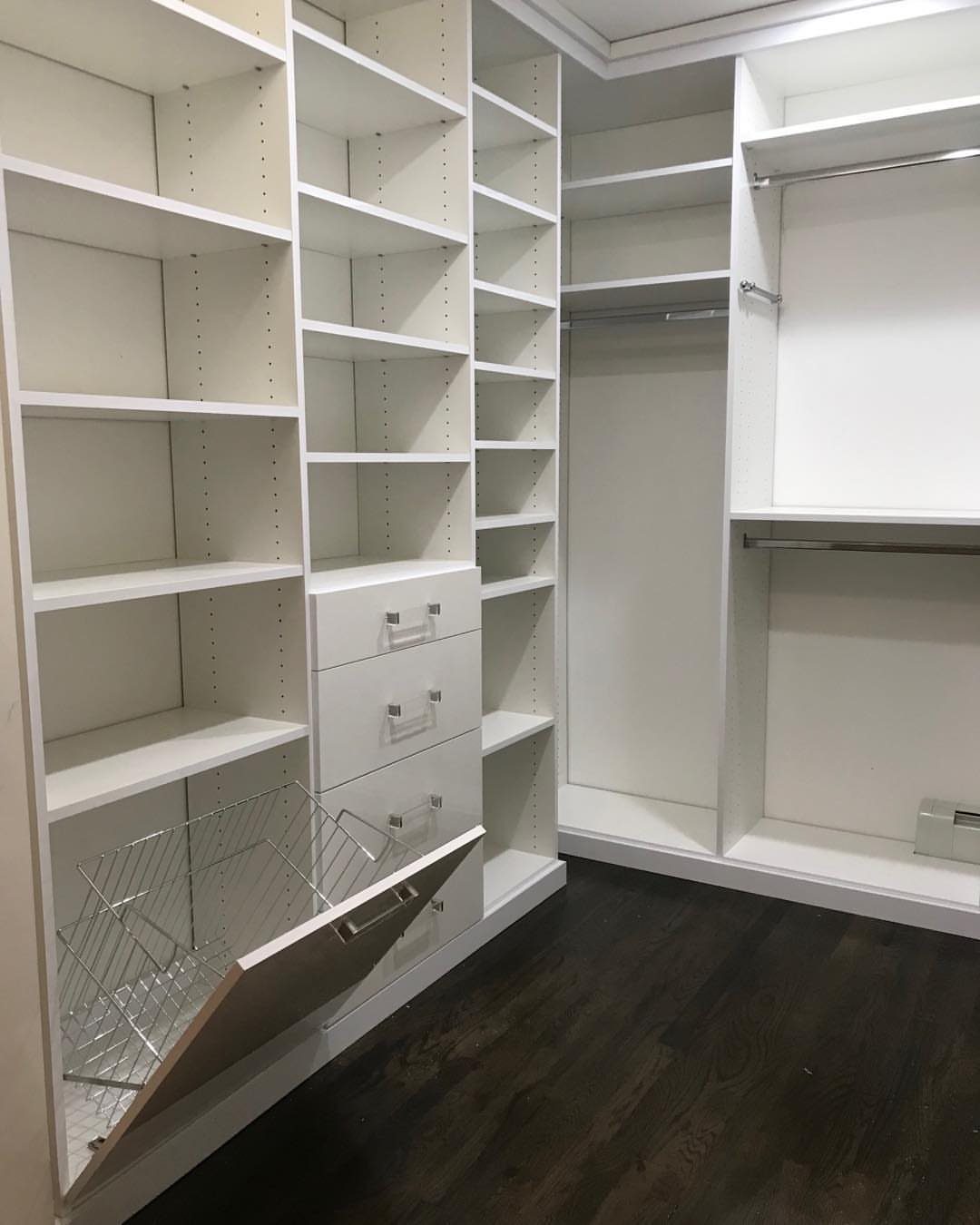
A pull-out wire hamper gives dirty laundry a home inside the closet, so clothes go from body to bin without a trip across the bedroom.
Wire lets air move through, and the drawer-style slide keeps the bin out of sight when it’s closed.
Fit it into the lowest slot of a built-in run, where the weight sits near the floor. I’d choose a hamper that sorts into 2 sections if you separate darks from lights.
14. Central Chest of Drawers
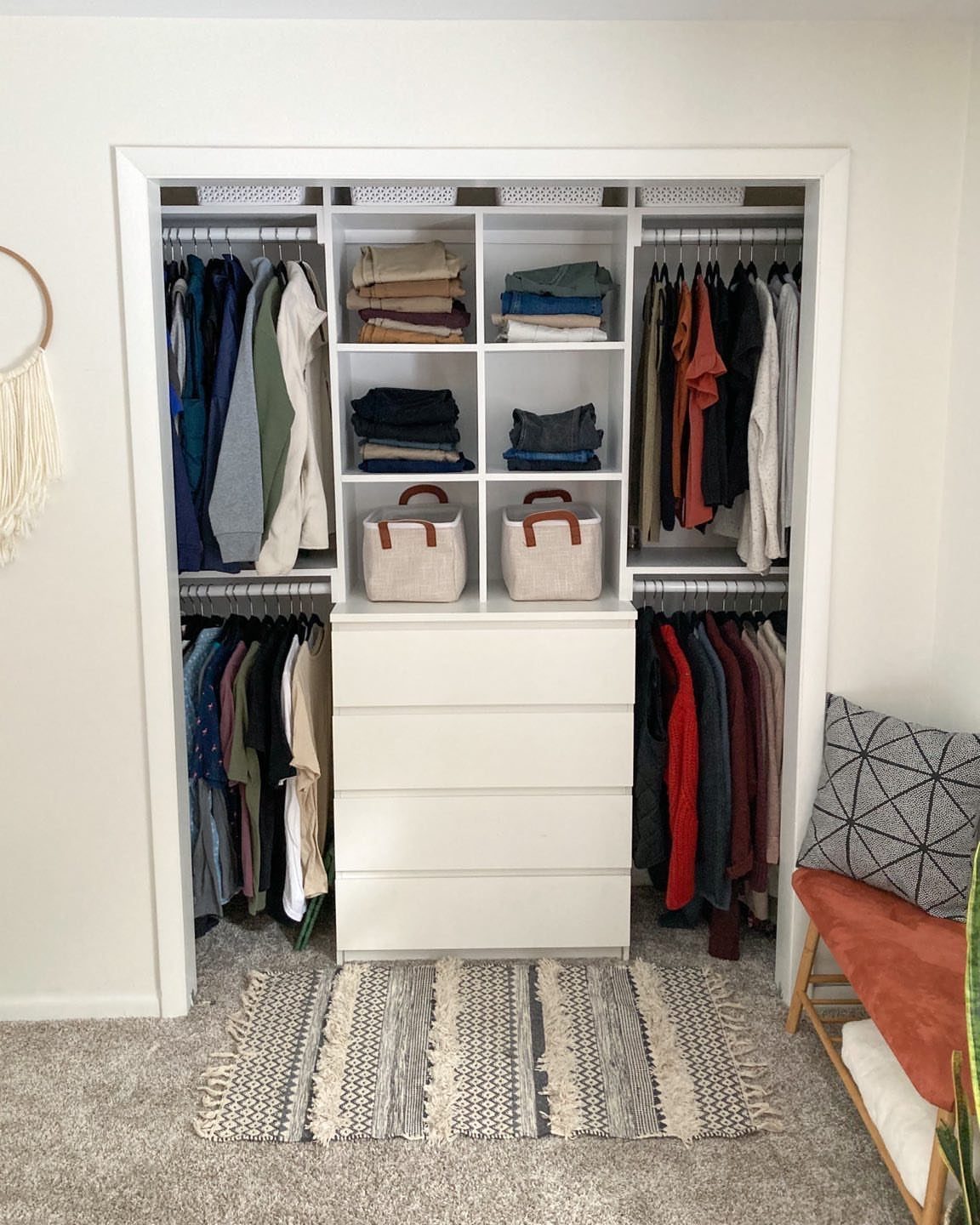
A chest of drawers placed in the middle of a small walk-in anchors the layout: hanging rods on the walls, shelves above, and folded clothes in drawers at waist height.
The top also becomes a landing spot for a folded stack or a tray.
Leave enough floor around it that you can open a drawer fully and still walk past. Measure that clearance before buying, because a unit that’s too wide turns the closet into a squeeze.
15. Curtain Divider Instead of Door
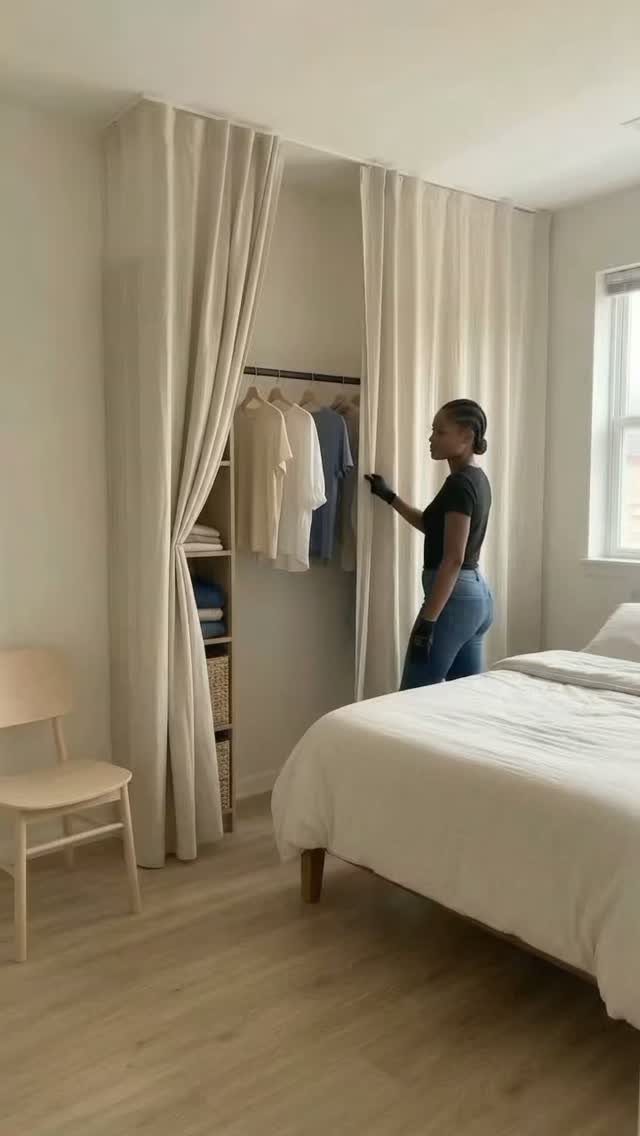
Full-length curtains replace a door and take up no swing space, which matters when the bedroom wall beside the closet is already claimed by a bed or chair.
They also cost far less than a door and need only a rod and a few brackets, so a weekend is plenty.
Mount the rod high and wide of the opening so the fabric hangs straight and clears the frame. Choose a lined, heavier fabric in a color close to the walls; it hides the clutter inside and keeps the room calm.
16. Glass Cabinet Doors
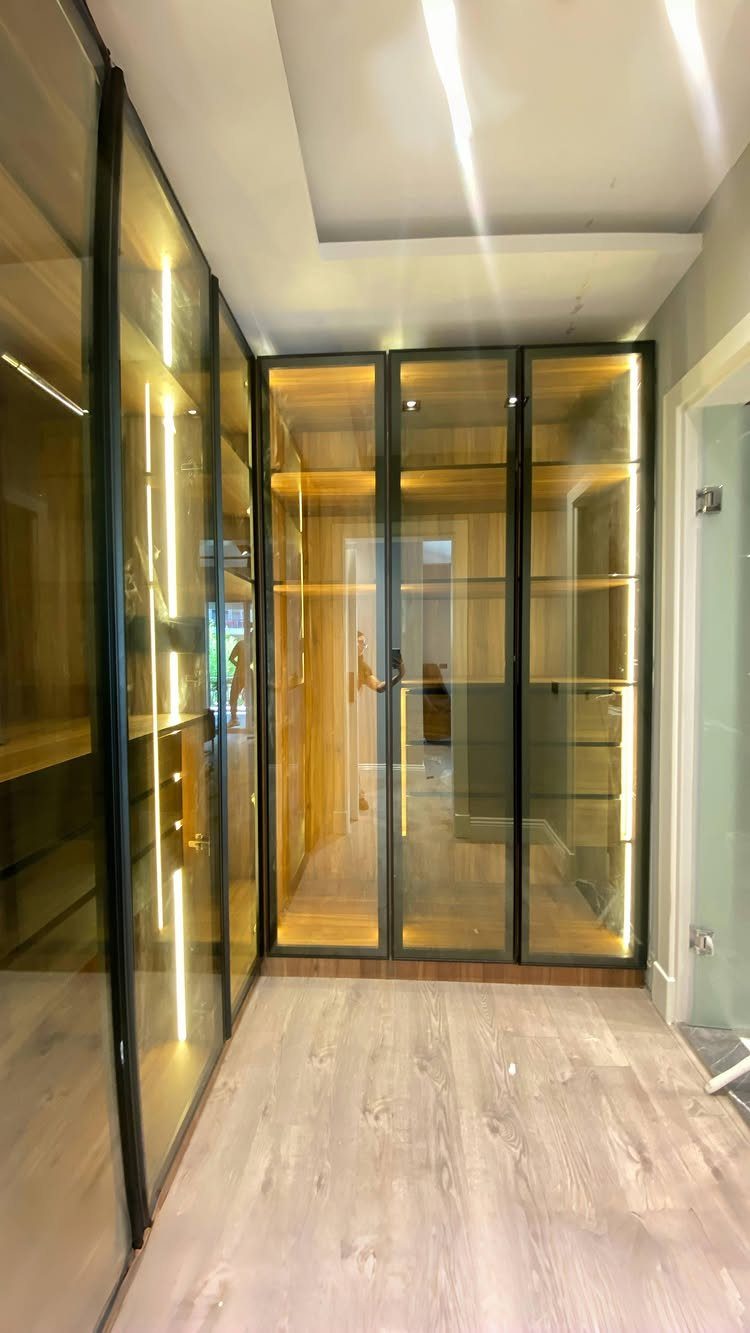
Black-framed glass doors let you see what’s inside while keeping dust off folded knits and shoes. In a narrow closet they also read as a design feature, and the thin frames look crisp against light wood.
The cost is that the contents are always on view, so I’d keep glass for the tidy sections and fill them with folded stacks sorted by color. Built-in LED lighting inside makes the glass work like a display case.
Wipe fingerprints off the panes now and then.
17. Multi-tier Space-saving Hangers
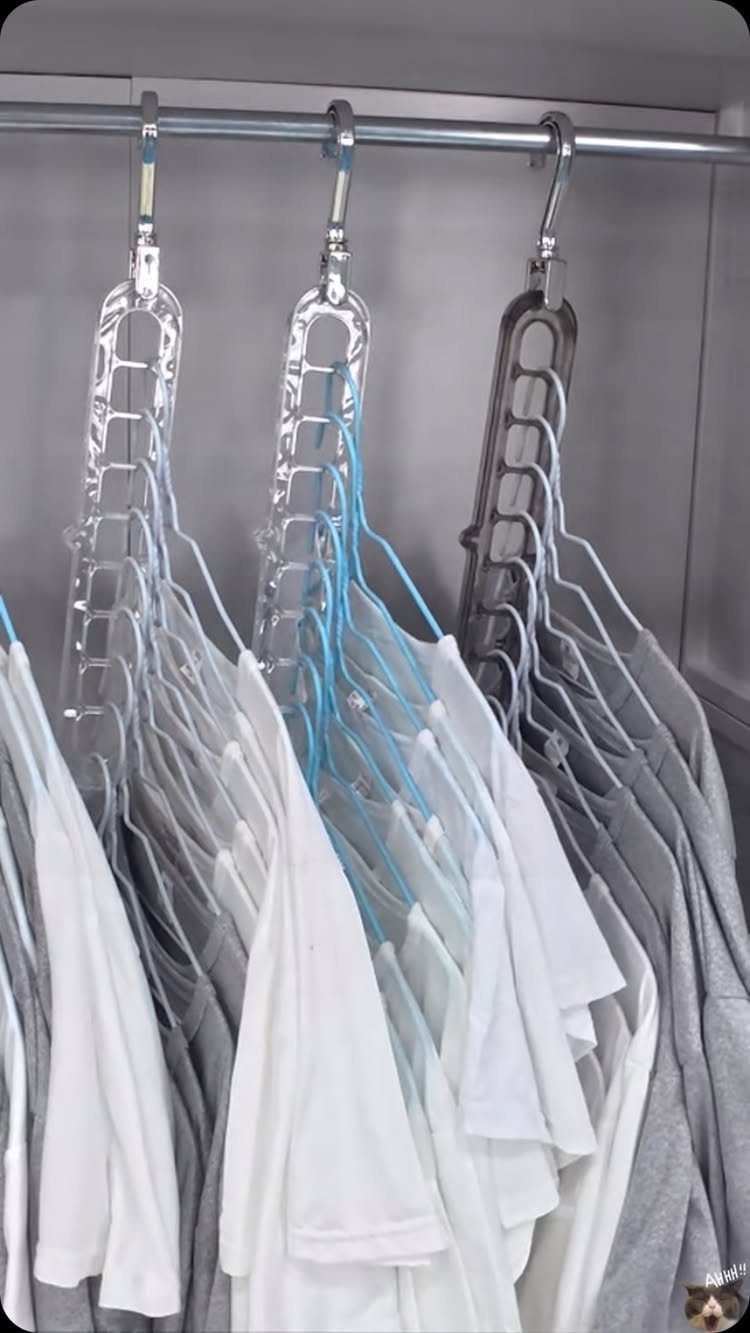
Tiered hangers stack several shirts one beneath another on a single hook, so one slot on the rod does the work of three or four.
For t-shirts, multi-tier hangers add hanging room for a few dollars and need no wall, drill, or bracket.
Use them for light pieces only; heavy sweaters pull the tiers out of shape. Keep the colors in each hanger consistent, as white and grey are here, and finding a shirt takes seconds.
18. Rattan Panel Wardrobe Doors
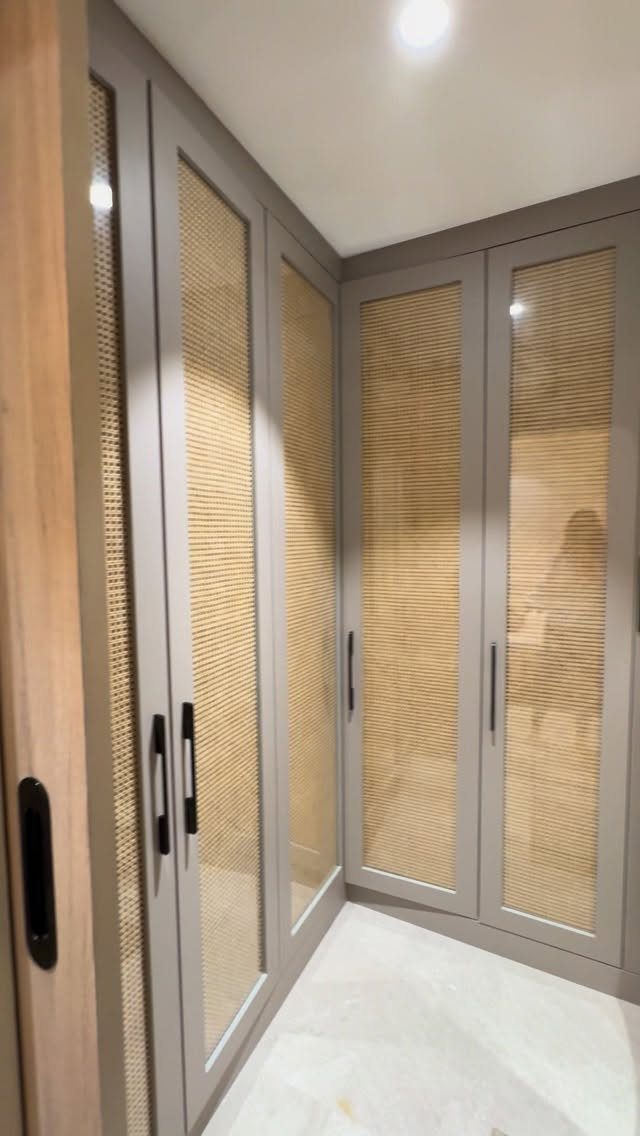
Rattan inserts in grey-framed doors give a small closet some texture, and the woven panels let a little air through while hiding what’s behind them. Black handles sharpen the look against the soft weave.
I like this for a closet you see from the bedroom, where plain flat doors can feel heavy.
Common Mistakes to Avoid
Overcrowding is the mistake I see most. A closet packed to the last inch has no room to pull a hanger, bend down or open a drawer, so it ends up used less.
Edit what goes in first, then size the storage to match, leaving a little empty rod and shelf space so the closet has room to breathe.
Most small closets waste the strip of wall above the top shelf, and that’s where seasonal bins and rarely worn items fit.
A high shelf there suits out-of-season items you reach for twice a year, and it adds storage without touching the floor.
Check your room’s constraints before you plan anything.
A window, an off-center doorway, a duct or an attic access door in a corner can rule out a U-shaped built-in, a full back wall of shoe shelves, or drawers that reach the corner.
Mark those spots on your sketch first and design around them.
2 smaller errors are worth avoiding:
- Mixing clashing hardware or cabinet styles, which makes a tight space look chaotic.
Frequently Asked Questions
What to do with a small walk-in closet?
Start with the wall space: stack two hanging rods on one wall, add shelves above and drawers or baskets below, and edit what you own ahead of any shopping.
What is the cheapest way to build a walk-in closet?
Budget parts and a weekend of DIY keep costs lowest. Stick-on LED strips and hooks add light and storage cheaply, and they suit renters because they come off when you move.





