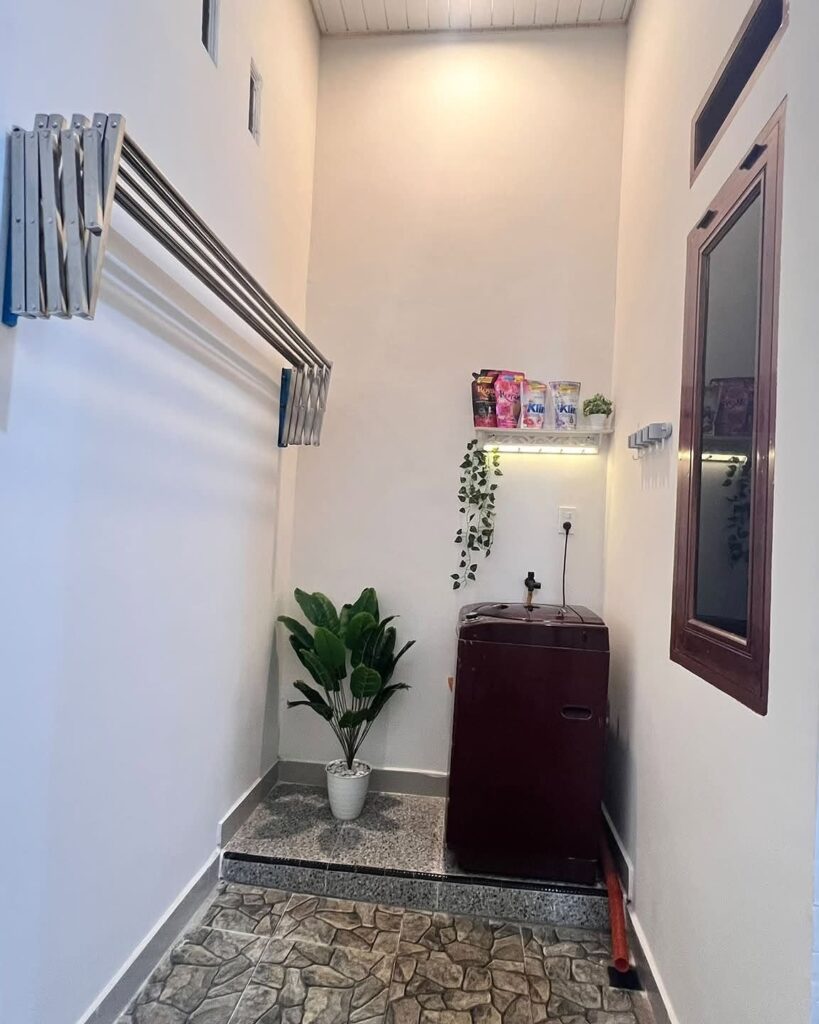
Which of these ideas fits depends on whether you can add cabinets, where a door can swing, and how much room remains after the machines go in.
If the room is tight, stack the dryer and add vertical storage, whether that’s a shelf above the washer or a counter over front-loaders.
1. Upper Cabinets and Shelving
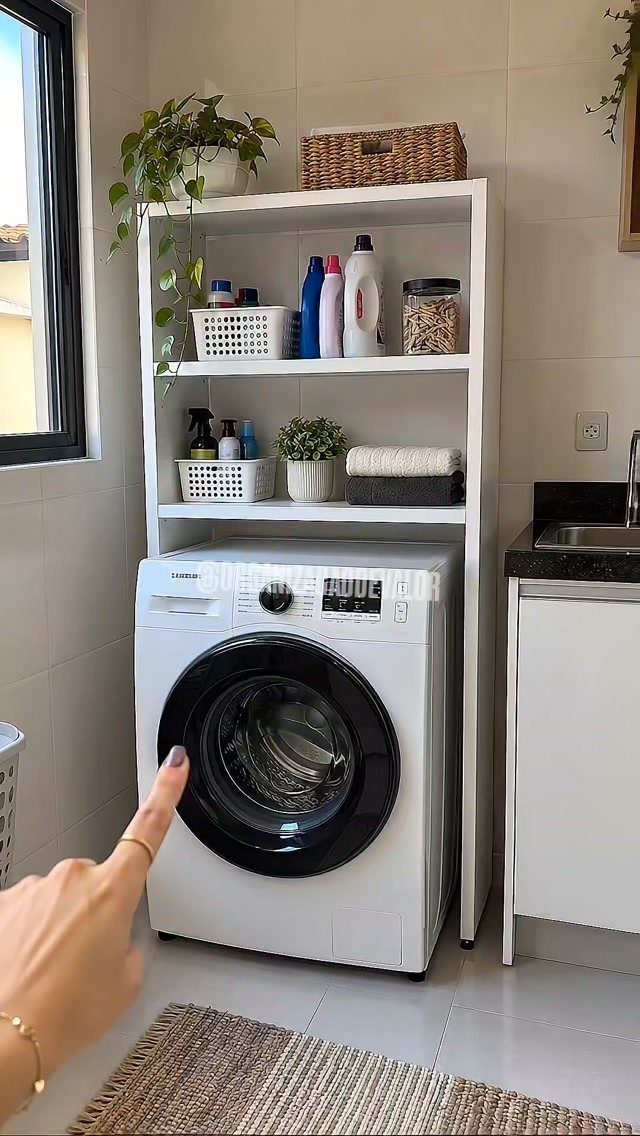
A shelf mounted right above the washer uses wall space that would otherwise stay empty. Detergent, dryer sheets and stain remover sit within reach, and a small plant softens all that plastic packaging.
White shelving over a white machine keeps the corner quiet and bright, which suits a small room. I’d keep the everyday bottles at eye level and leave the top shelf for the plant or a backup box of detergent.
2. Floor-to-ceiling Cabinets
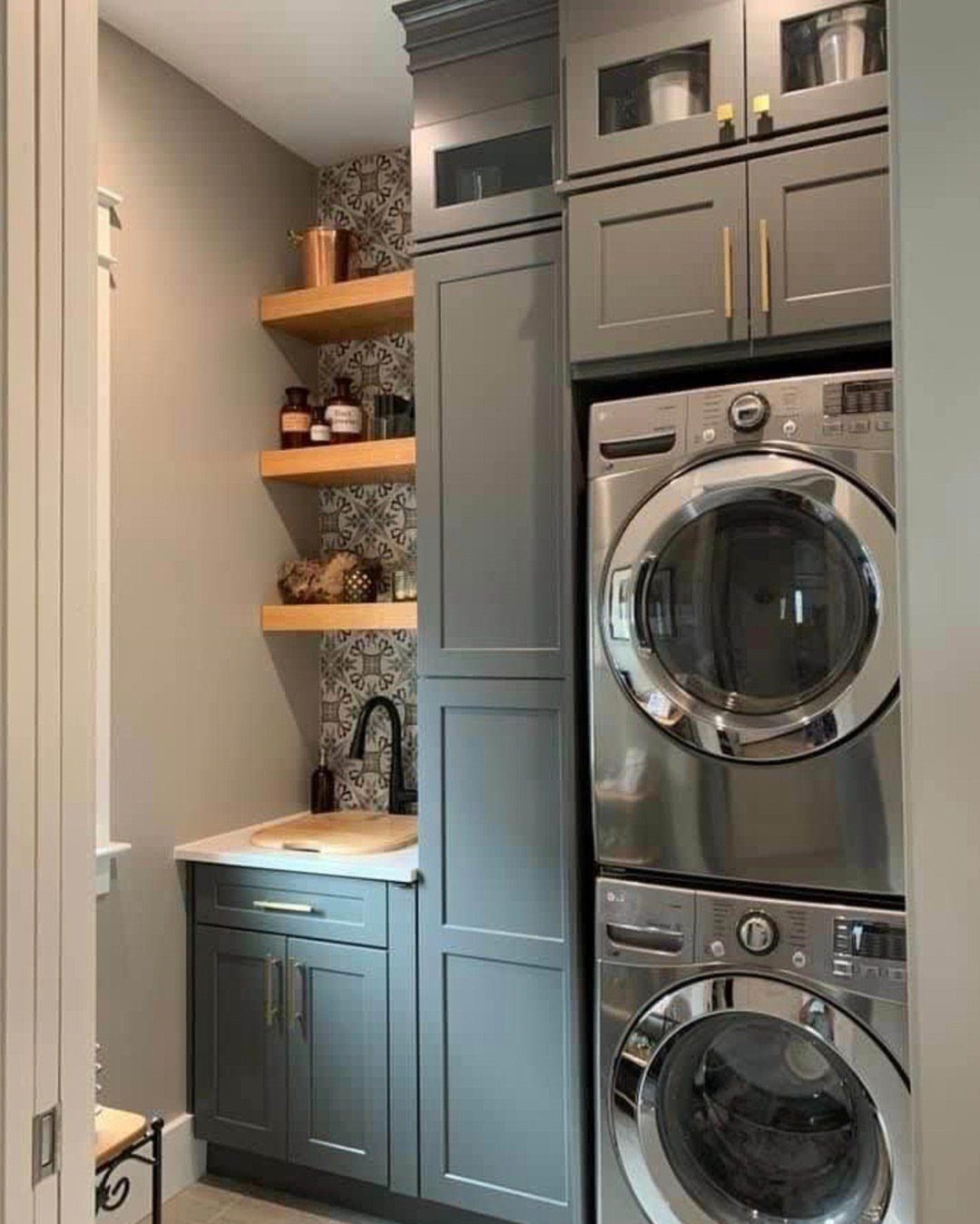
Cabinets that run from floor to ceiling swallow the stacked washer and dryer and leave only a narrow doorway of machine showing.
In a small room, that tall run gives you a lot of closed storage without taking any more floor.
I like grey here with a few open wooden shelves mixed in, so the wall doesn’t read as a solid slab. Keep the closed doors for cleaners and the open shelves for things you reach for weekly.
3. Add a Countertop
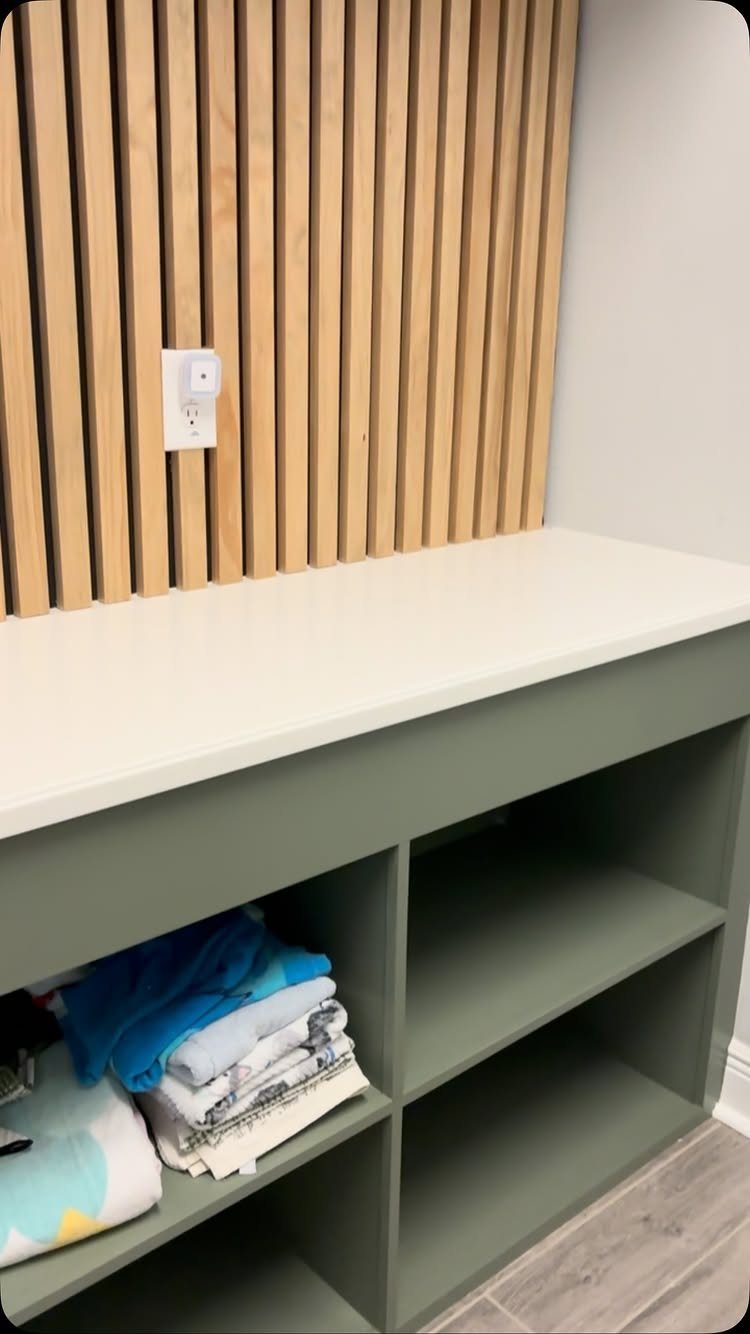
A countertop gives you a flat spot to sort and fold, so clean towels never end up on the dryer lid or the floor.
Before you cut anything, measure the height from the floor to where the counter will sit, and check that the space leaves room for the shelving above it. An outlet on the wall behind it is handy for an iron.
4. Stackable Washer and Dryer
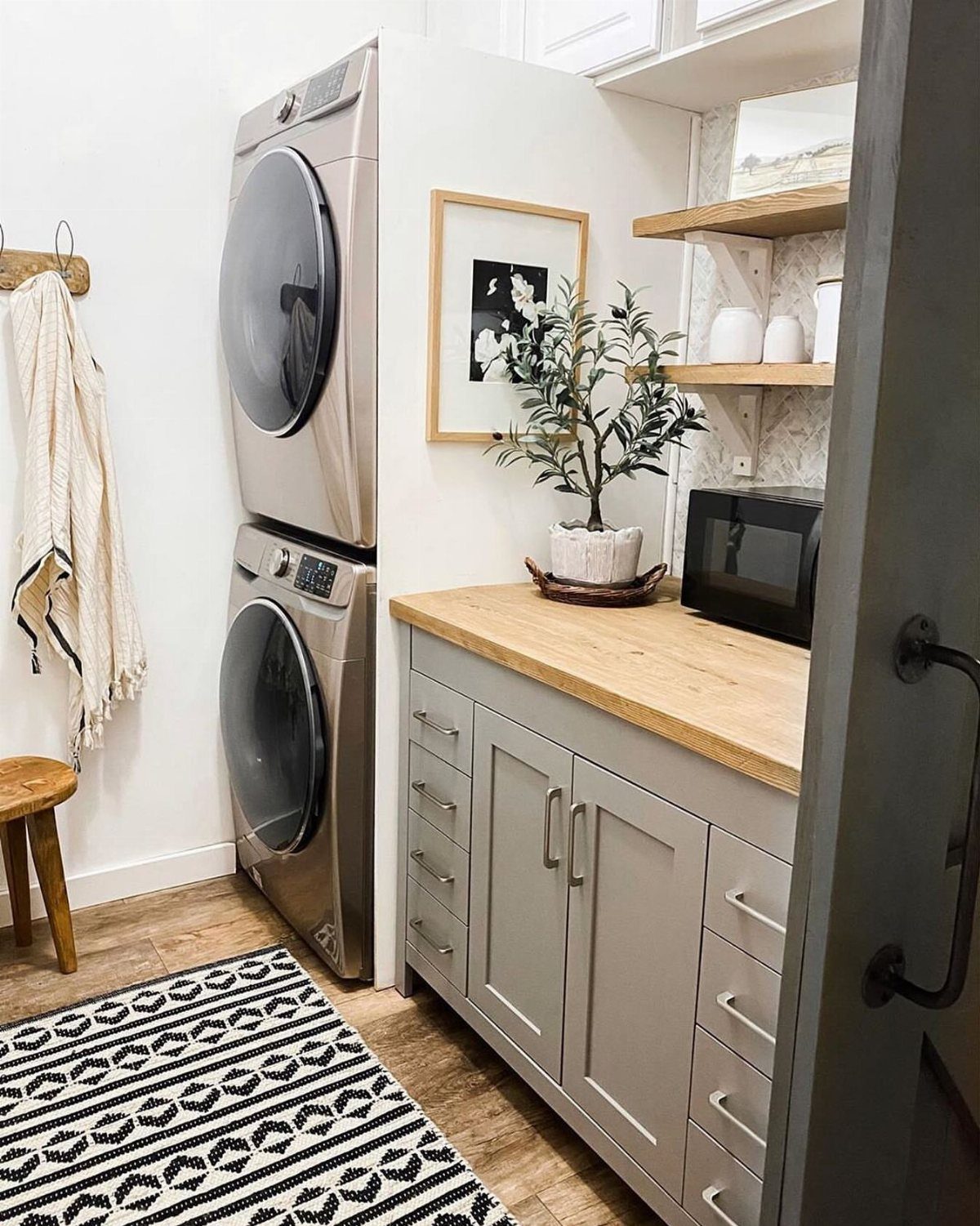
Stacking the dryer on top of the washer frees up floor, and floor is the scarcest thing in a small laundry area. The freed width is where a cabinet and a counter can go.
Stacking is my first move in any tight room.
Measure the full height with the dryer on top and leave room to open the upper door. Compare that against the ceiling and any shelf you plan above.
5. Use a Sliding Door
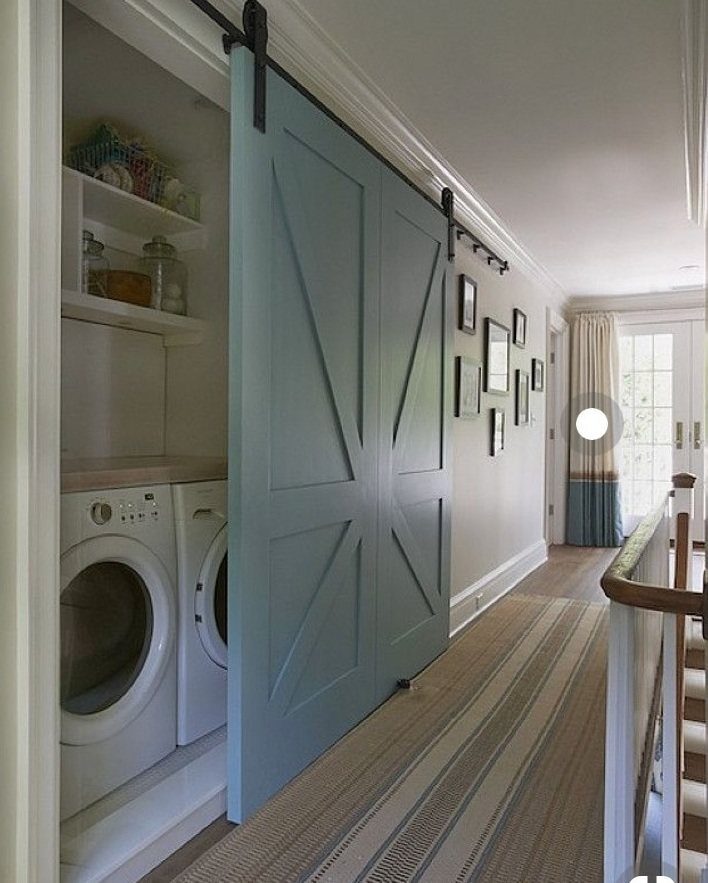
A sliding door never swings into the hallway, so a laundry nook off a narrow passage keeps its walkway clear. A barn-style door in light blue also doubles as a color accent when the machines are tucked away.
Hardware is the part I’d budget for: the track needs solid wall backing, and the door should be wide enough to clear the machines fully. Leave it partly open for airflow while a load runs.
6. Use Pedestals for Storage
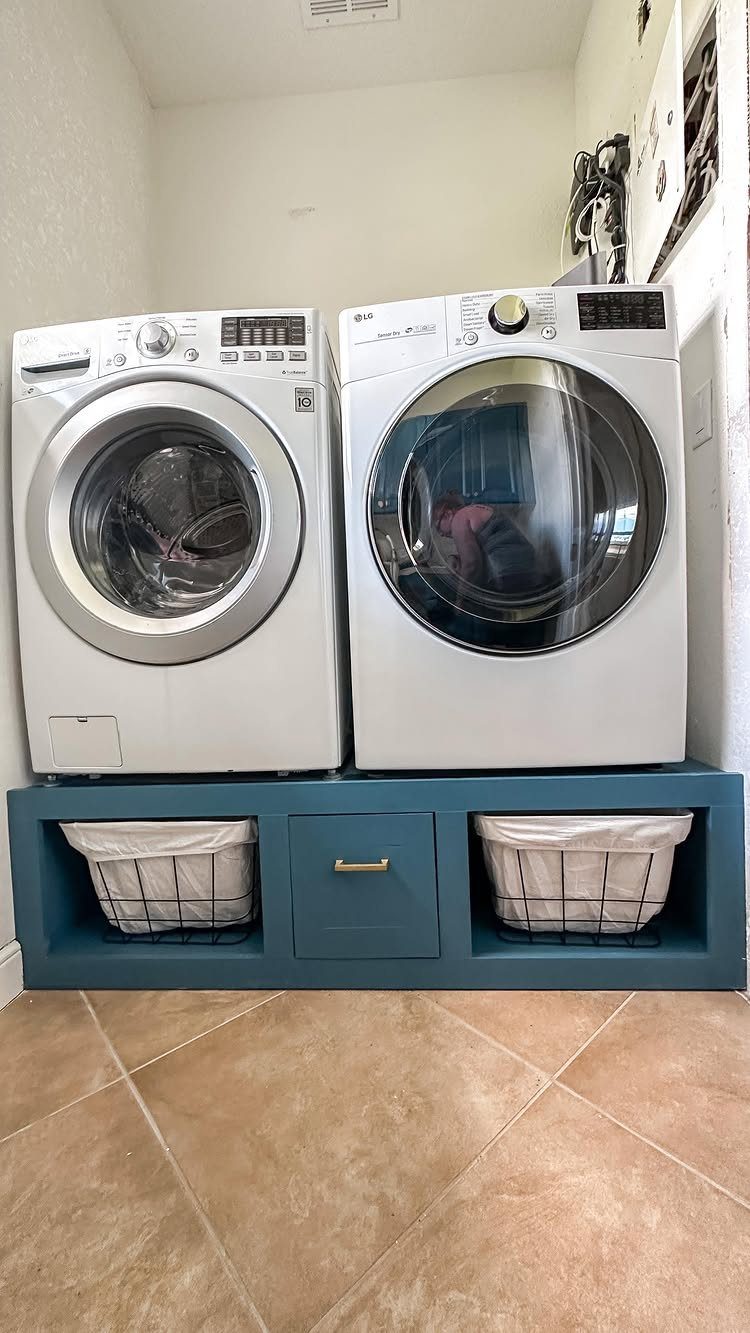
A pedestal lifts the washer and dryer off the floor and gives you a drawer plus a spot for 2 baskets beneath them. In a small room, that’s storage without adding a single cabinet.
If you build one, the maker’s tip is worth following: cut it about 1/2 inch narrower than your measured width so it slides into the space.
Paint it a bold color like the teal here, since it’s the only thing in the room that’s easy to see.
7. Bold Color Scheme
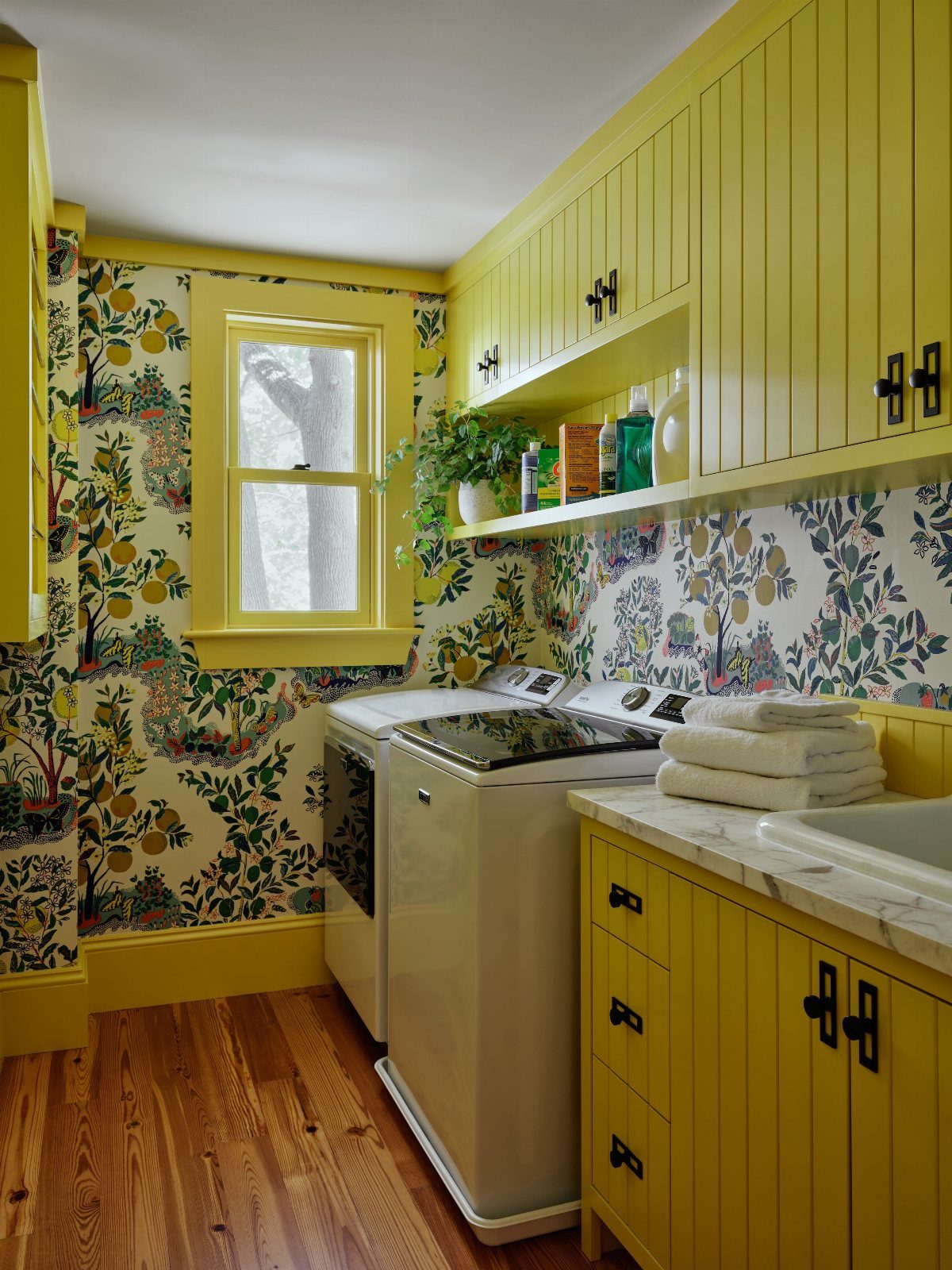
Yellow cabinets against a yellow and green botanical wallpaper turn a utility corner into the loudest, happiest spot in the house. White machines and a white sink give the color room to breathe, so the pattern never feels crowded.
Pick one strong color for the cabinets and let the wallpaper repeat it. Peel-and-stick paper suits renters and a single weekend, and a small room needs only a few rolls.
8. Use a Magnetic Lint Bin
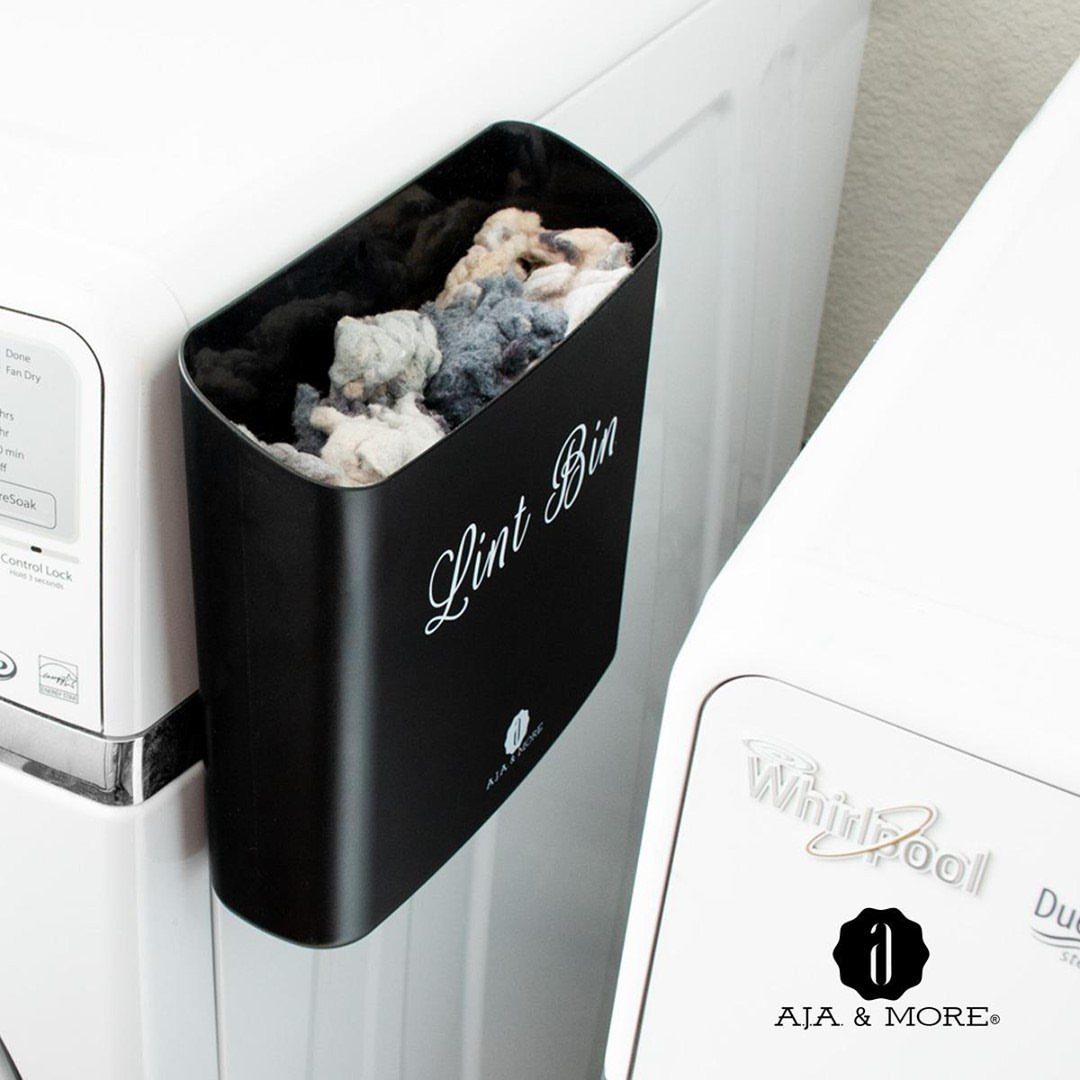
A magnetic bin on the side of the washer gives dryer lint a home the second you pull it off the screen. No more walking a fluffy handful to the trash can.
Choose a black one, as here, since it reads as a tidy accent against a white machine.
Stick it on a flat steel side panel and check that the magnet holds before you load it. Empty it weekly.
9. Install a Unique Light Fixture
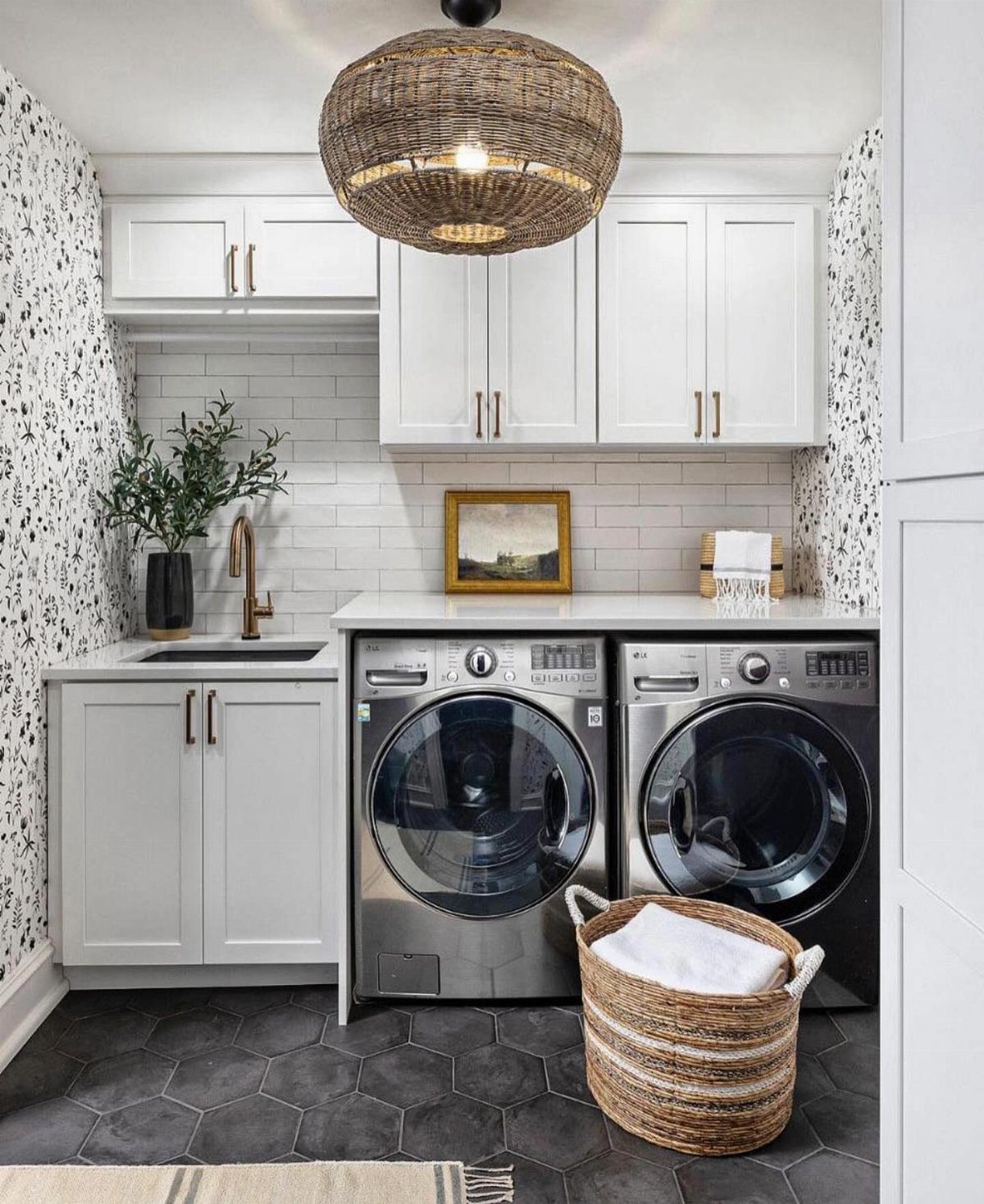
A woven wicker pendant is the cheapest way I know to give a plain laundry room some personality. Over white cabinets and grey hexagonal tile, the texture adds warmth that a flat ceiling fixture never will.
Go big with the shade, since a small room can carry one oversized piece.
Hang it where it clears your head and any open cabinet door. Swapping a fixture takes an afternoon.
10. Add a Ceiling-mounted Drying Rack
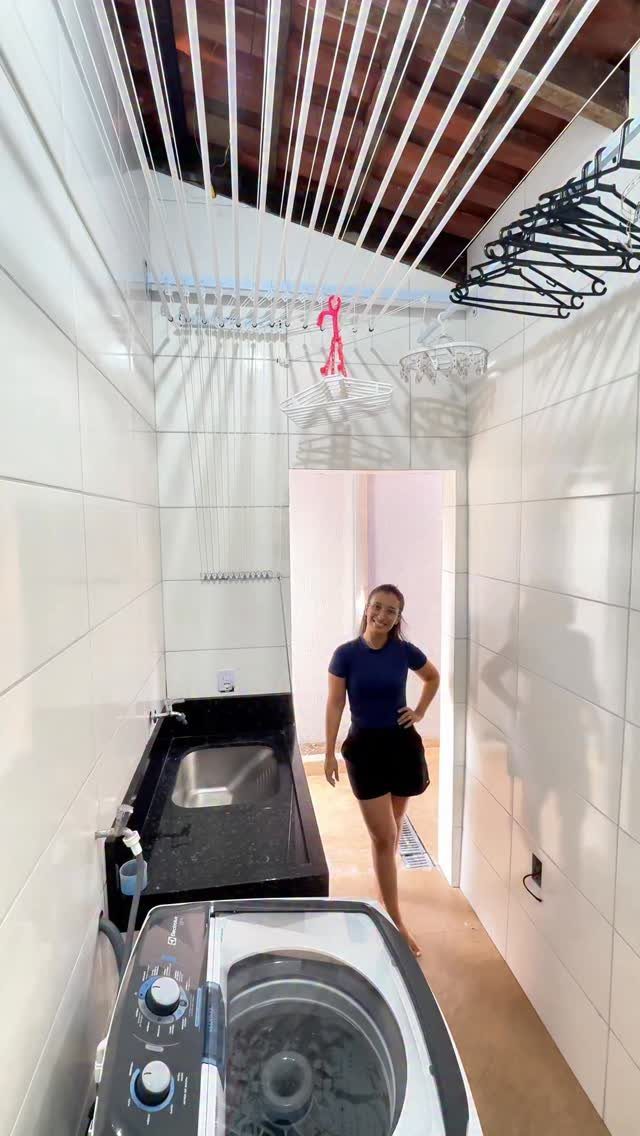
A ceiling-mounted rack puts drying space overhead, where a narrow laundry room has nothing else going on. Hangers hold shirts and blouses right above the washer and sink, so drips land somewhere sensible.
White hardware vanishes against a white ceiling.
Anchor it into joists, not drywall alone, because wet laundry is heavy. Choose a rack you can raise out of the way when it’s empty.
11. Add Curtains
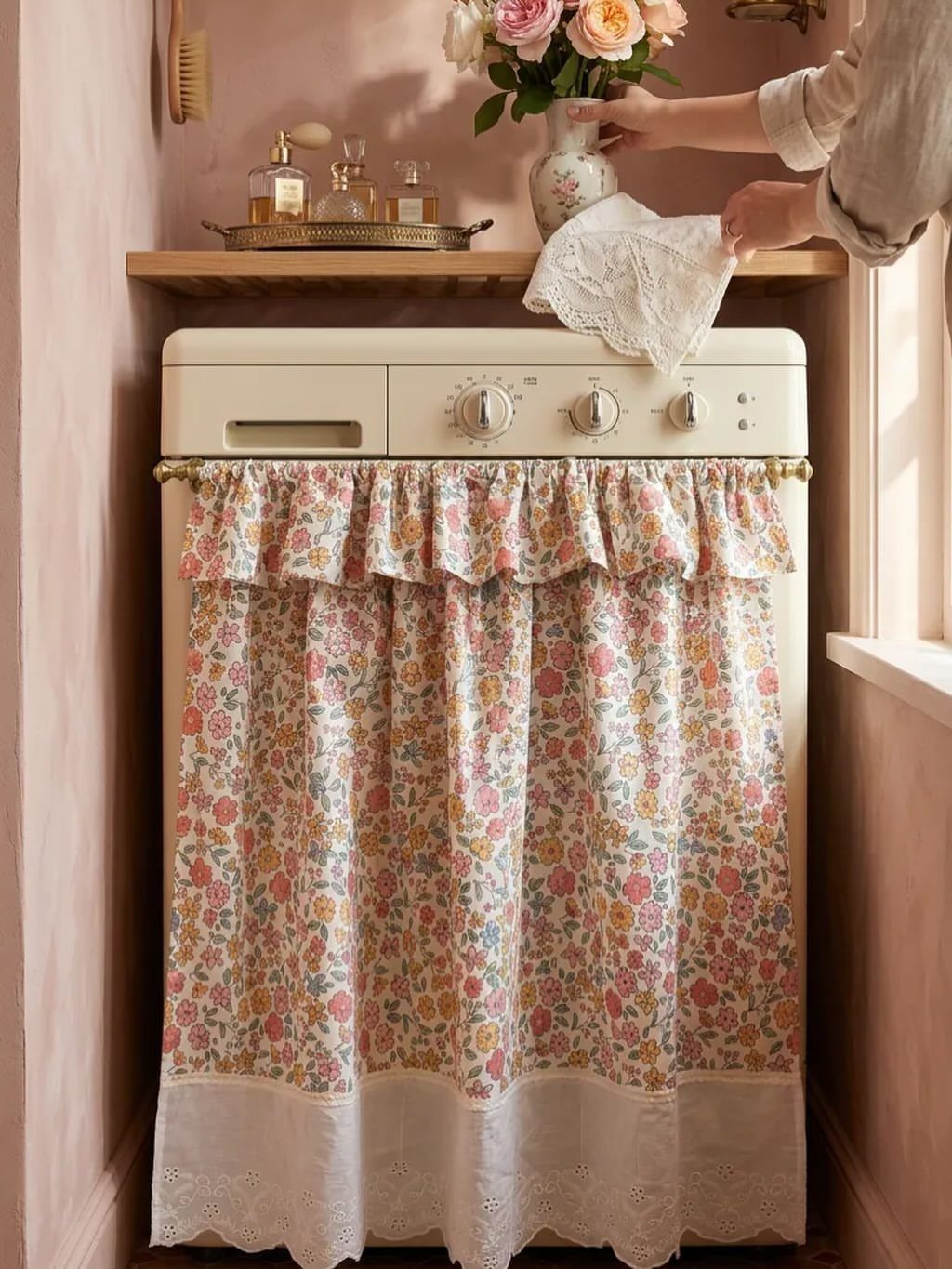
A curtain hides the machine and the clutter around it with a few yards of fabric and a rod. The floral print and lace border here add a softer, cottage feel than any cabinet door could.
Hang the rod just above the machine’s top edge and leave the curtain loose enough to slide fully aside on laundry day. Washable fabric is the sensible choice in this room.
12. Incorporate a Small Sink
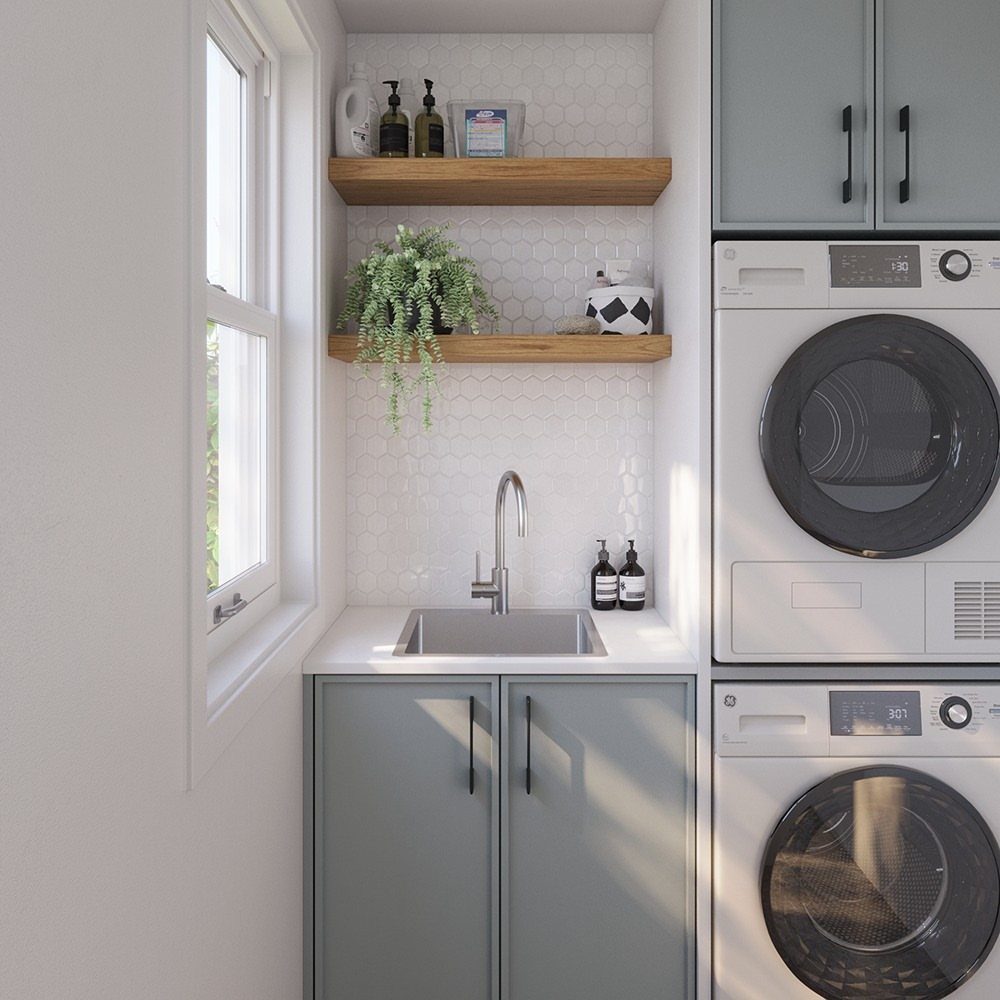
A small stainless sink next to the washer and dryer gives you a spot to rinse stains and hand-wash delicates without carrying them to the kitchen. Chrome fixtures wipe clean fast and look right against grey cabinets.
I’d go compact and keep the faucet tall enough to fit a bucket under it. Floating shelves above, with plants and supplies, keep the soap within arm’s reach of the basin.
13. Add Decorative Elements
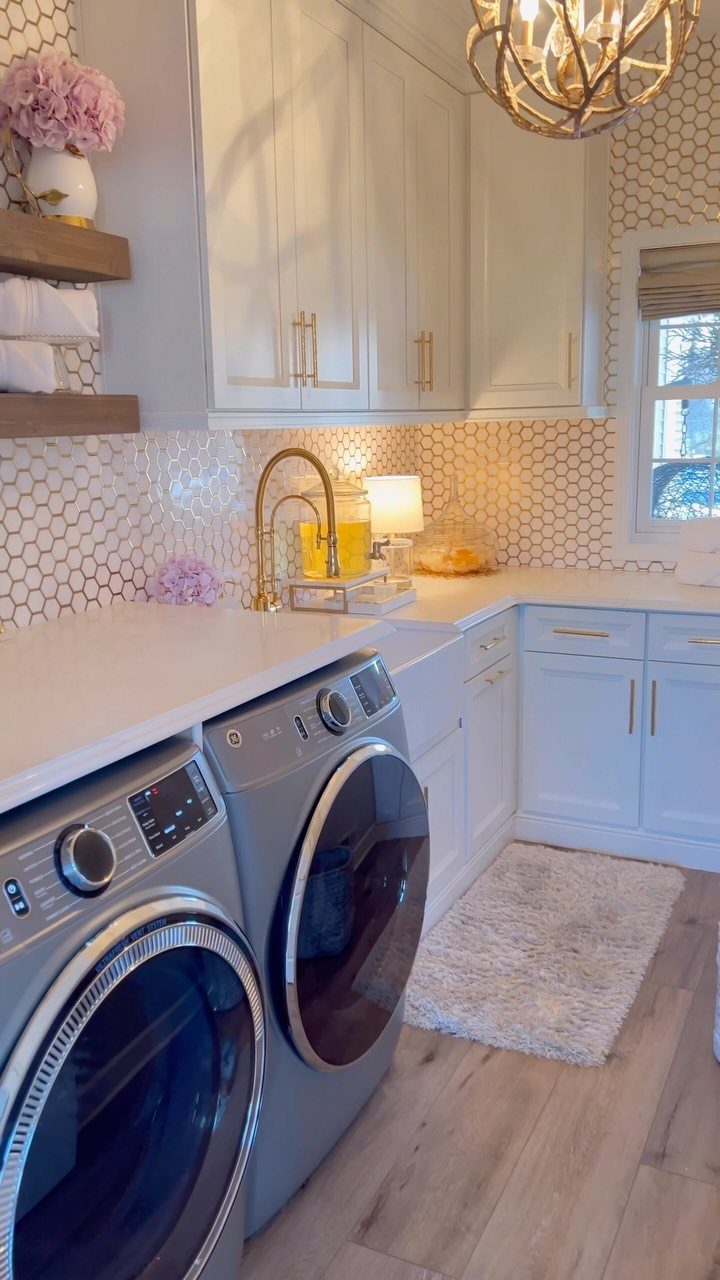
Gold hardware, a gold faucet and a small lamp make a plain white laundry counter feel chosen instead of left over.
Repeat one metal finish in two or three places and the room looks planned. Swapping cabinet pulls is a quick afternoon job, and a lamp gives the corner a warm glow when the overhead light feels harsh.
14. Built-in Hampers
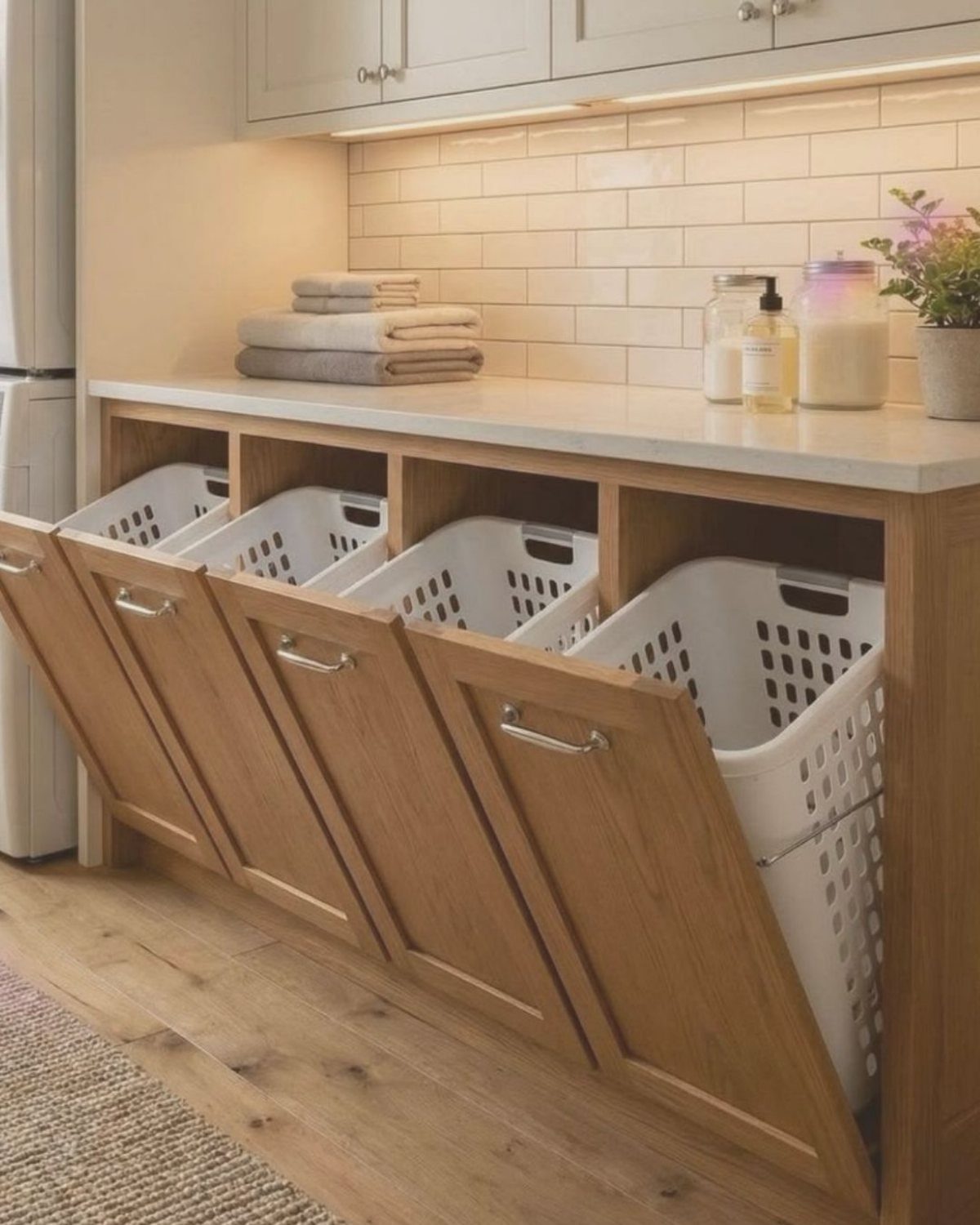
Tilt-out cabinet fronts with a removable basket behind each one turn sorting into a habit, since the dirty clothes go straight into whites, darks or delicates the moment you take them off.
Lights, darks, towels and delicates each get their own bin, so nobody has to dig through a pile on wash day.
Under a counter is the right spot, because the top stays free for towels and jars. I’d label each door and give every basket its own category before filling any of them.
15. Incorporate a Laundry Island
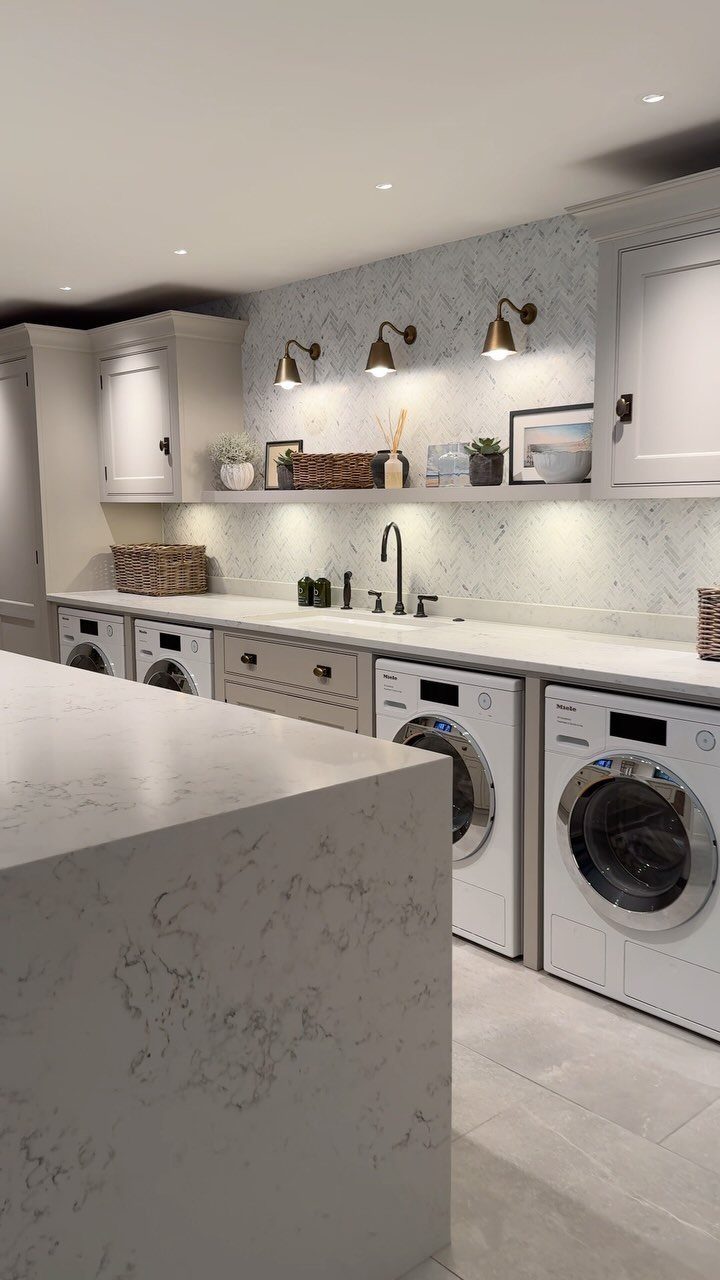
An island gives a laundry room a flat surface that reaches all the way around, so you can fold from either side.
This only works if the room is wide enough to walk around it with a machine door open.
Measure that clearance first. In a tight room, skip it and choose a wall counter instead.
16. Incorporate a Mini Destination
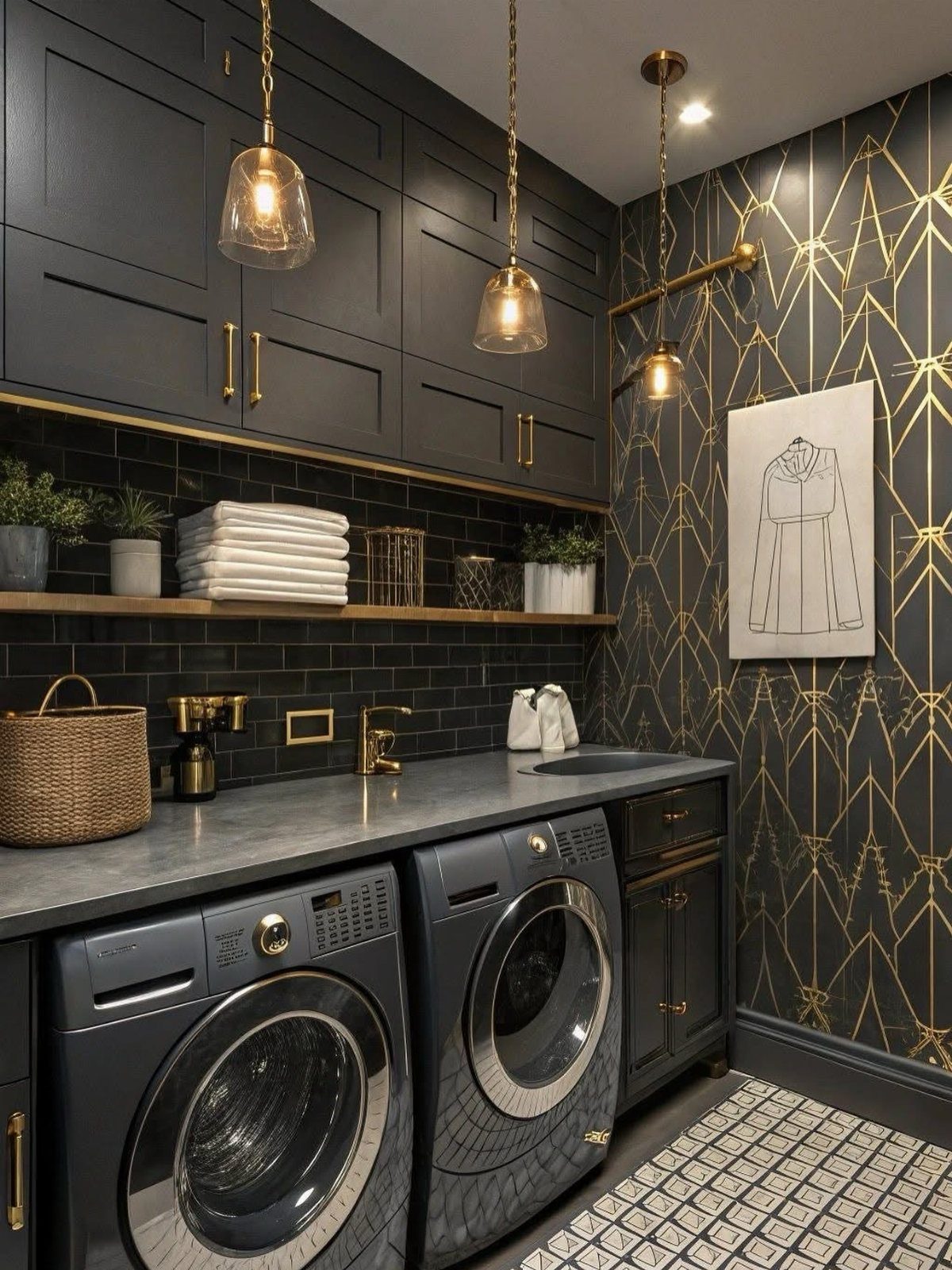
A dark, moody palette with a bold wallpaper can make a small laundry room feel like somewhere you chose to be; keep the pattern to one wall so the space doesn’t close in.
Gold lighting adds warmth against all that grey.
Put the pattern on one wall only, so the cabinets stay calm.
Peel-and-stick paper keeps this renter-friendly and cheap. Dark finishes show lint and dust, so wipe the counter weekly.
17. Hide Machines Behind Folding Doors
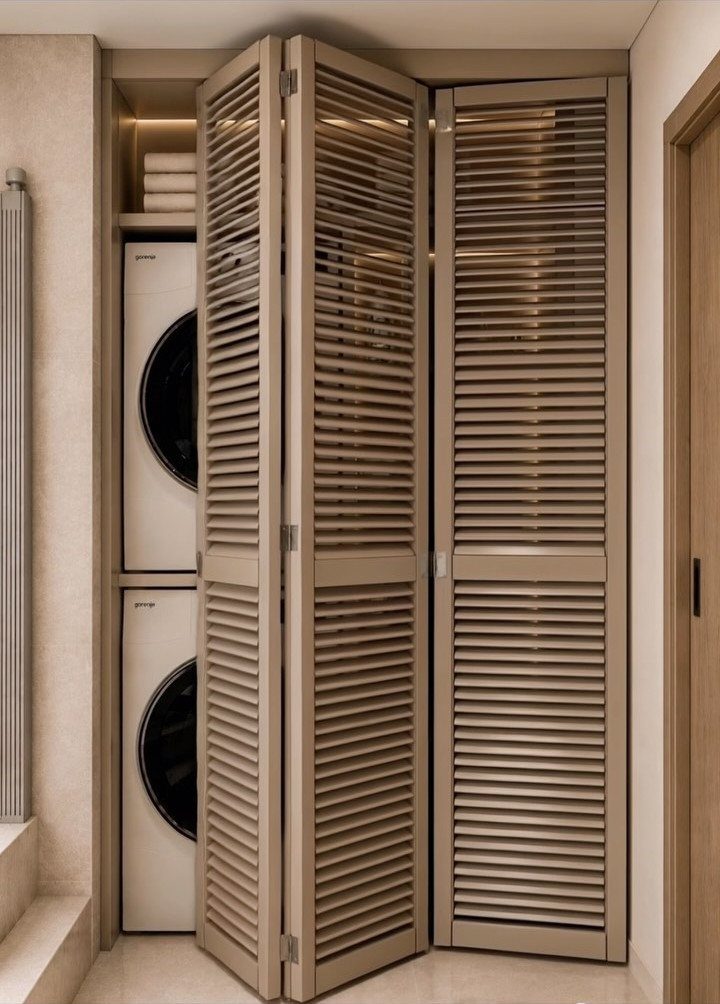
Slatted folding doors close a stacked washer and dryer into a nook that looks like an ordinary closet. Beige blends into a neutral room, so the machines vanish when the doors shut.
Pick bifold doors that open wide enough to clear the machine fronts.
I’d leave them open while a load runs, since a dryer in a shut closet needs airflow. Slats help a little with that.
18. Collapsible Laundry Basket
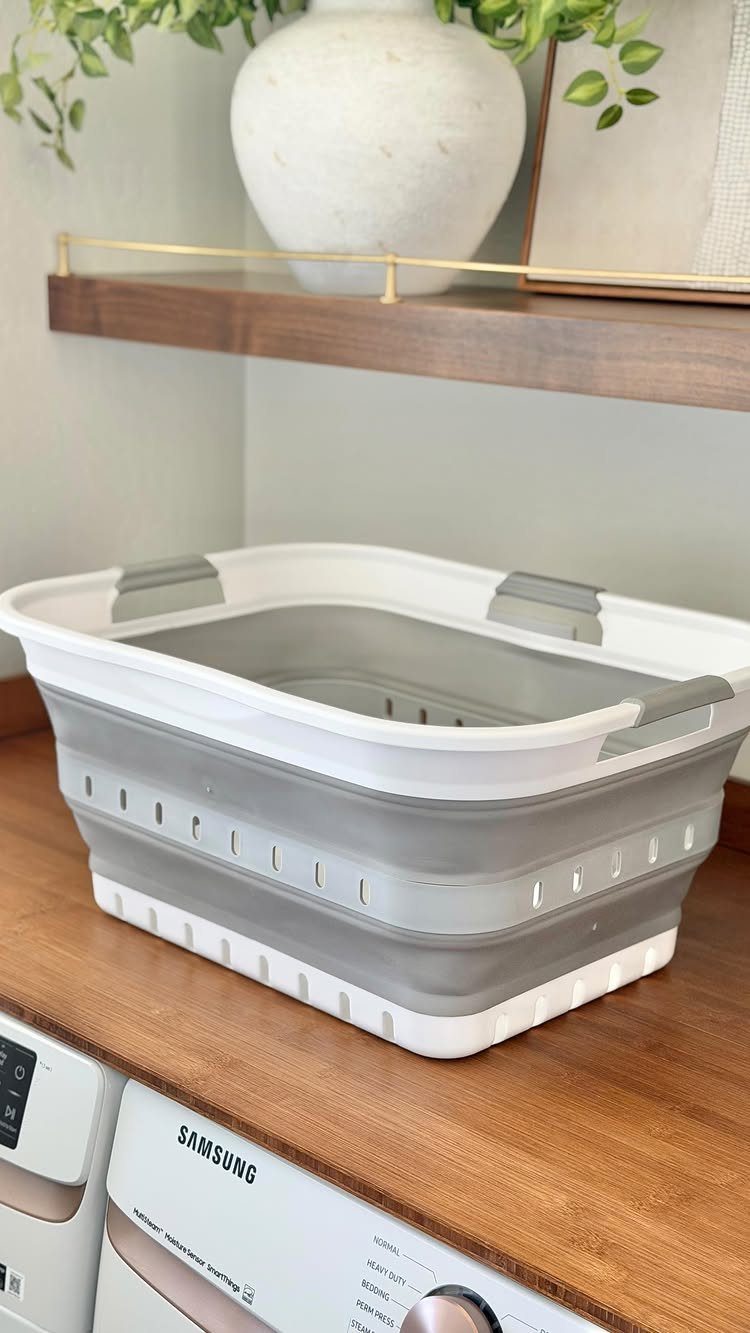
A collapsible basket sits on the counter above the washer while you load, then folds flat and slides away. That matters in a room where a rigid hamper eats floor you don’t have.
Grey and white hides stains and matches most walls.
Choose one with sturdy handles, since wet clothes are heavy. Keep it on the counter during sorting and tuck it beside the machine afterward.
19. Washing Machine Under Bathroom Counter
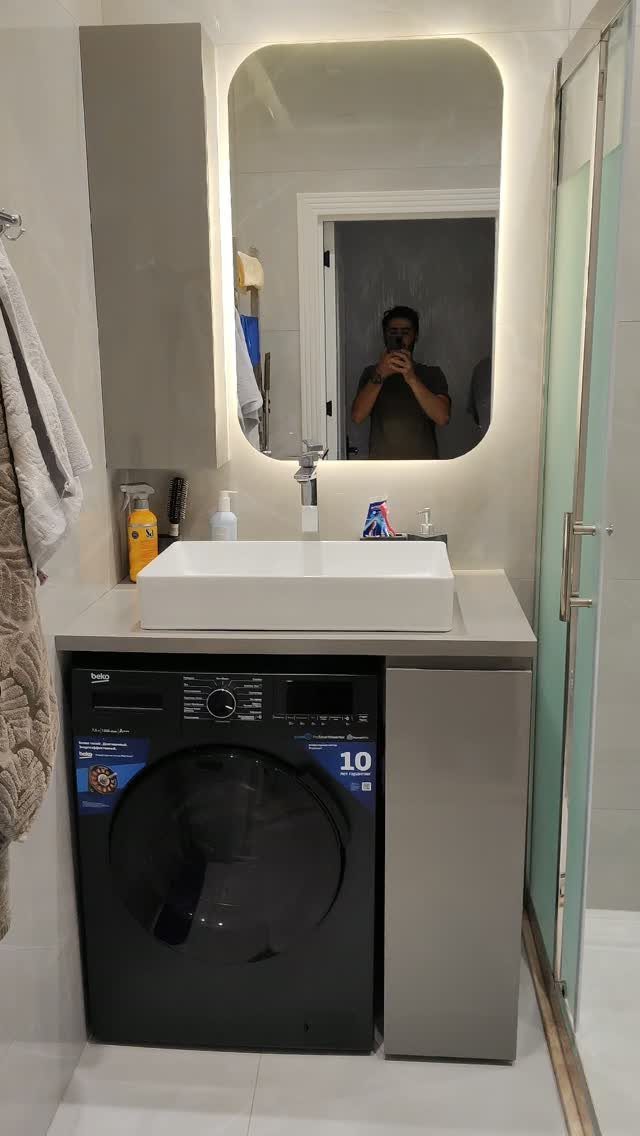
A front-loading washer set under a bathroom countertop puts laundry where the towels and dirty clothes already are.
A compact front-loader tucked below a vanity keeps the counter clear and adds a laundry spot without costing a closet, and a black finish against a white vanity reads as a deliberate choice rather than an appliance squeezed in.
Measure the opening first, and check that the machine fits under the counter with the door swinging free.
Front-loaders suit this spot because the top is flat and the door opens to the side, not up. I’d pick a dark machine only if the vanity is light, so it reads as a deliberate contrast.
Keep the cabinet doors off this one, since a washer needs to be reached.
Designing for Small Spaces
Size matters less than layout. A small laundry area that has smart storage and a clear system can work better than a big room with wasted space and a poor plan.
Start by listing what has to live there every week: detergent, a hamper, an iron, folded towels. Assign each item a spot first, then add storage for what remains.
Favor pieces that do 2 jobs.
A counter that hides a hamper, or a rack that folds away when empty, earns its footprint. Skip anything that needs extra clearance you don’t have.
Design is in the details, especially when creating a laundry that lives larger than its humble name.
Choosing Colors and Materials
Function comes first in a laundry room, and style comes second. Pick surfaces that wipe clean and handle water, then add personality where it’s easy to change.
The floor is easy to overlook.
A decorative or painted tile floor can bring European charm to a plain, serviceable room. Tile also shrugs off spills and drips.
For the rest, treat the room as a small destination rather than a chore zone.
Interesting tile, wallpaper, and cabinet color all help. Choose washable finishes for anything near the machines.
Custom touches like a built-in step stool or a concealed drying rack add a quiet, upscale feel while still working hard.
Lighting Considerations
Good light makes a small laundry area easier to use, especially for spotting stains. Plan it in layers: sconces, a pendant, and a lamp where needed.
3 wall-mounted sconces above a window keep a moody gray-and-black room bright enough for chores. A sculptural chandelier can also brighten a dark room with harsh fluorescent tubes.
Bulb choice matters as much as the fixture.
Look at the tone of the light, not just the shape of the bulb. Daylight bulbs give a clean, bright look for sorting and stain checks.
Test one bulb first and see how it changes the room before buying a full set.





