Ideas here run from a free afternoon of color-coding your clothes to a built-in closet island, and what decides your pick is whether you can cut into the walls or only work with what you already own.
Renters get the most from hangers, clear boxes, drawer dividers and a plug-in lighted mirror on a slim white desk.
Owners of an older, closet-poor house can justify the bigger builds, like a built-in closet island, a vanity station, or a sliding barn door. The weekly habit that keeps any of it working is just 10 minutes on a timer.
1. Drawer Dividers
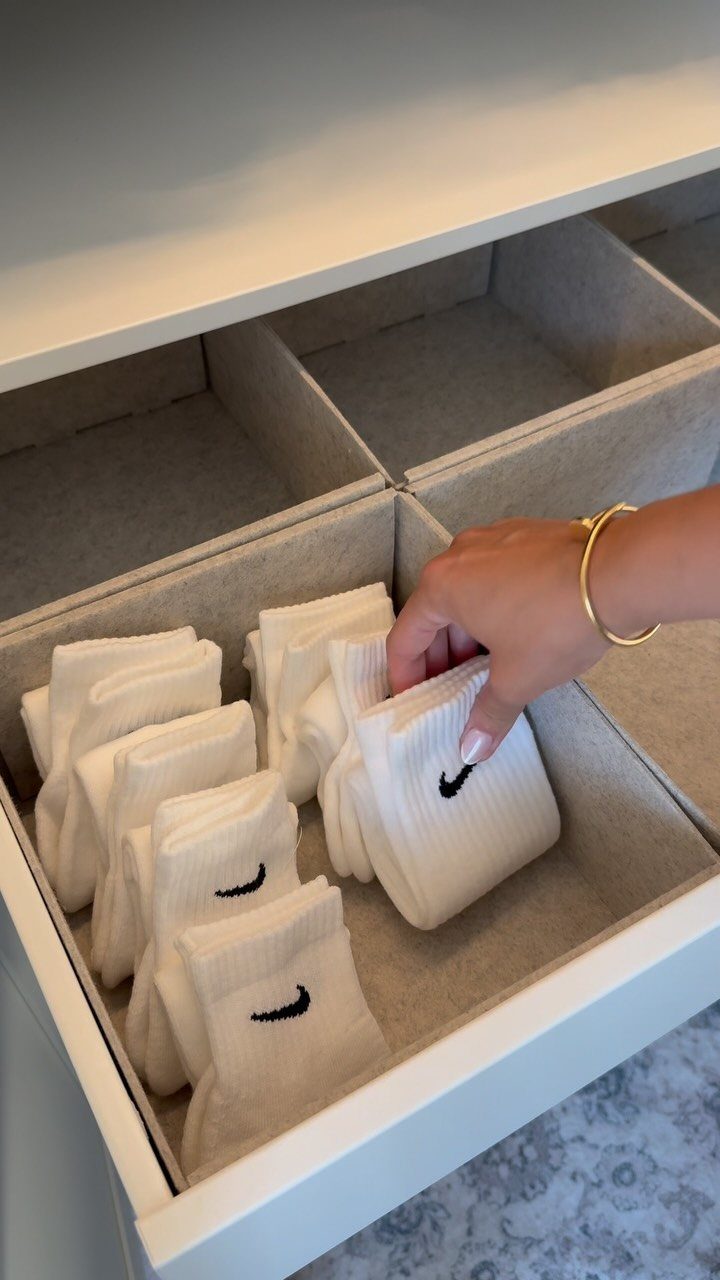
Socks are the easiest thing to lose control of in a drawer, and fabric dividers fix that for very little money.
Give each pair its own folded slot and you can see everything at a glance, so you stop digging for a match.
Fabric dividers also bend a little, which suits a drawer that gets opened a dozen times a week. I’d pick a soft neutral like grey so the dividers fade into the background and the socks stay the focus.
Sort by type: ankle, crew, athletic.
2. Shelves and Rods
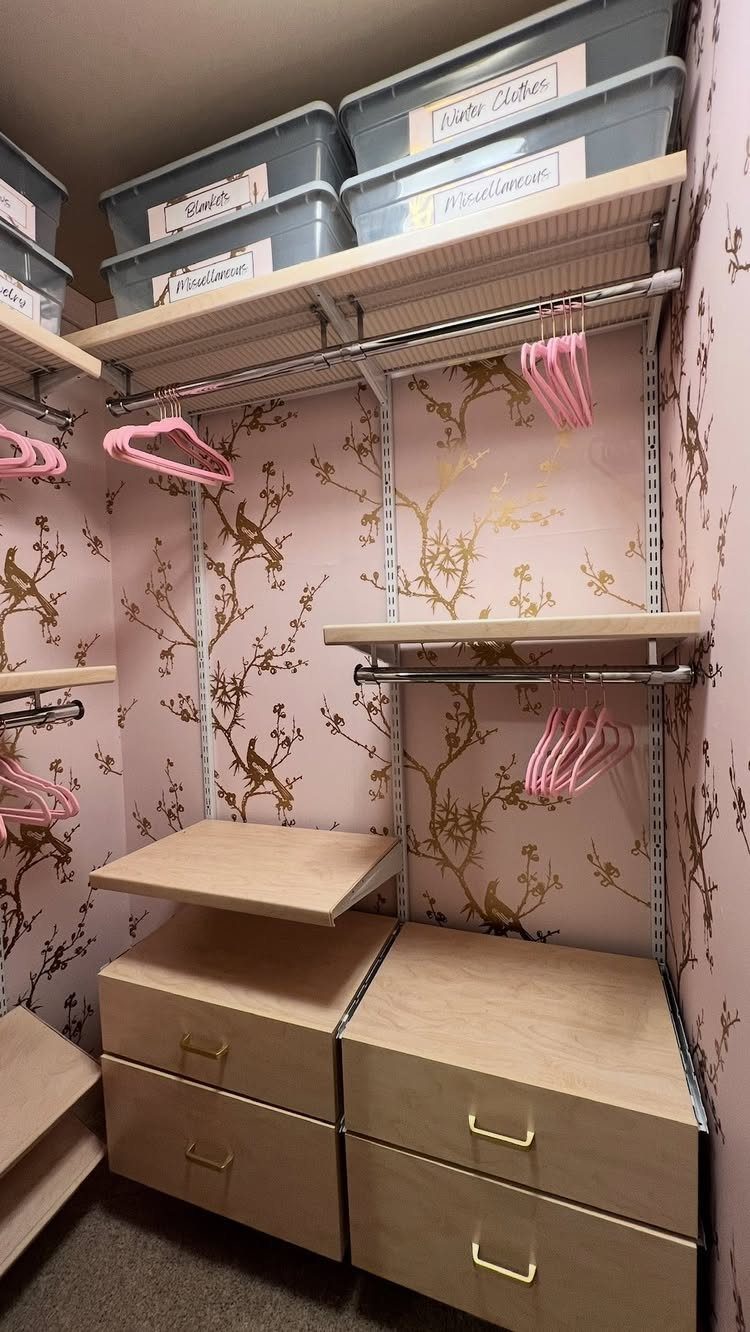
Most walk-in closets waste the wall space above eye level. Stacking a shelf above a hanging rod puts that dead space to work, and it runs a fraction of what a full custom system costs.
Up top, I’d keep clear bins for blankets and off-season clothes, with a label on each so nobody has to pull them down to check. Clothes you wear every week stay on the rods at reach height.
Matching hangers on the rods keep the whole run looking tidy.
3. Install a Sliding Barn Door
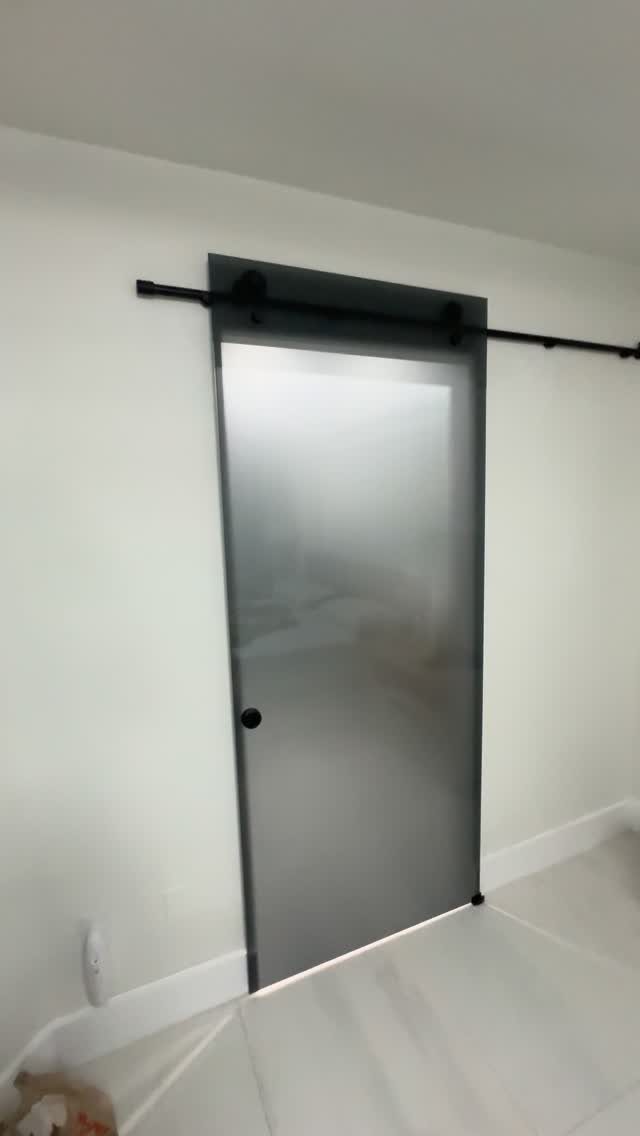
A sliding barn door swaps a swinging door for one that glides along the wall, so nothing needs clearance in front of the closet. Frosted glass is my pick for a closet: it lets light pass without showing what’s inside.
Plan on enough bare wall beside the opening for the door to slide fully clear, because that’s the real limit of this idea.
4. Over-the-Door Racks
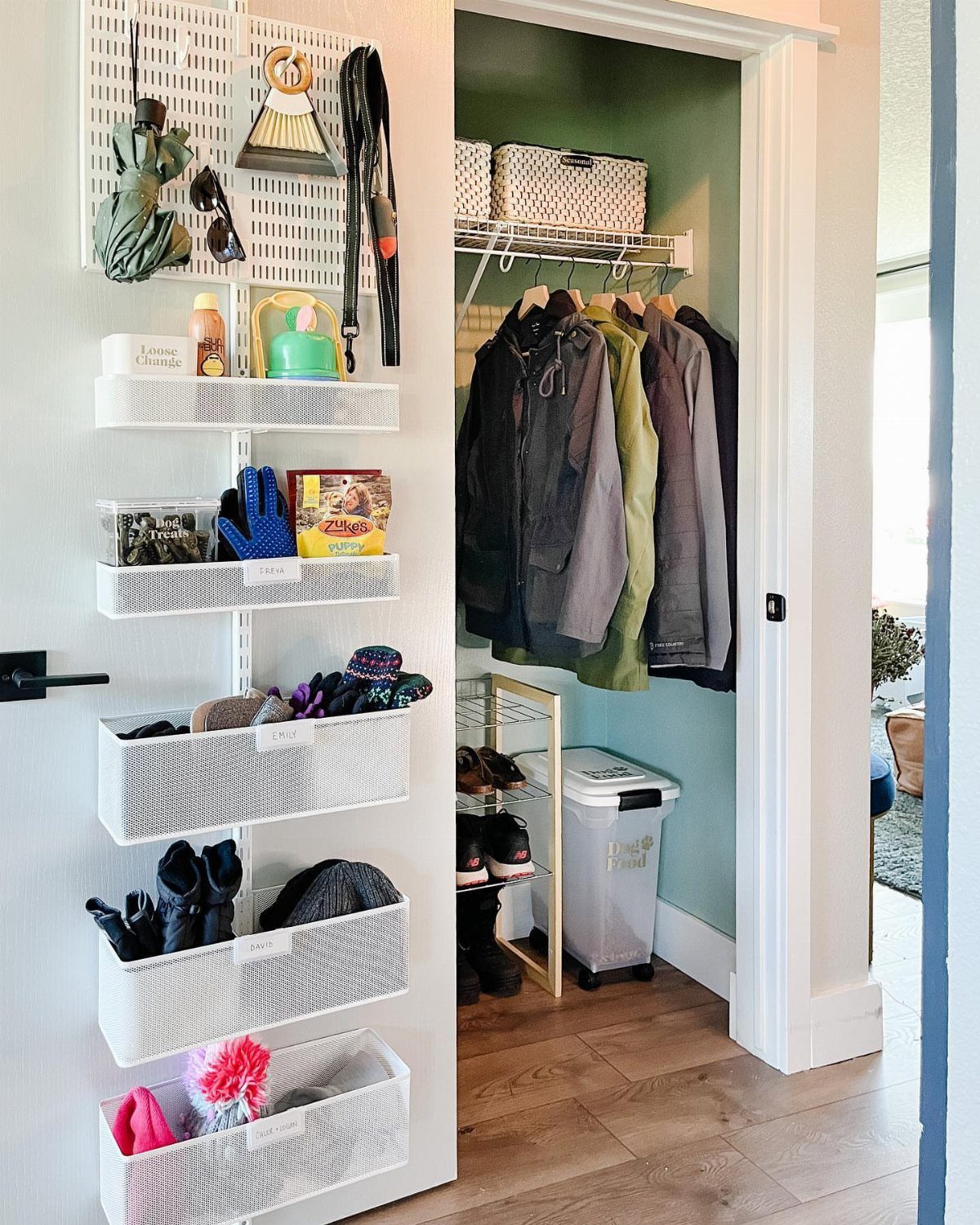
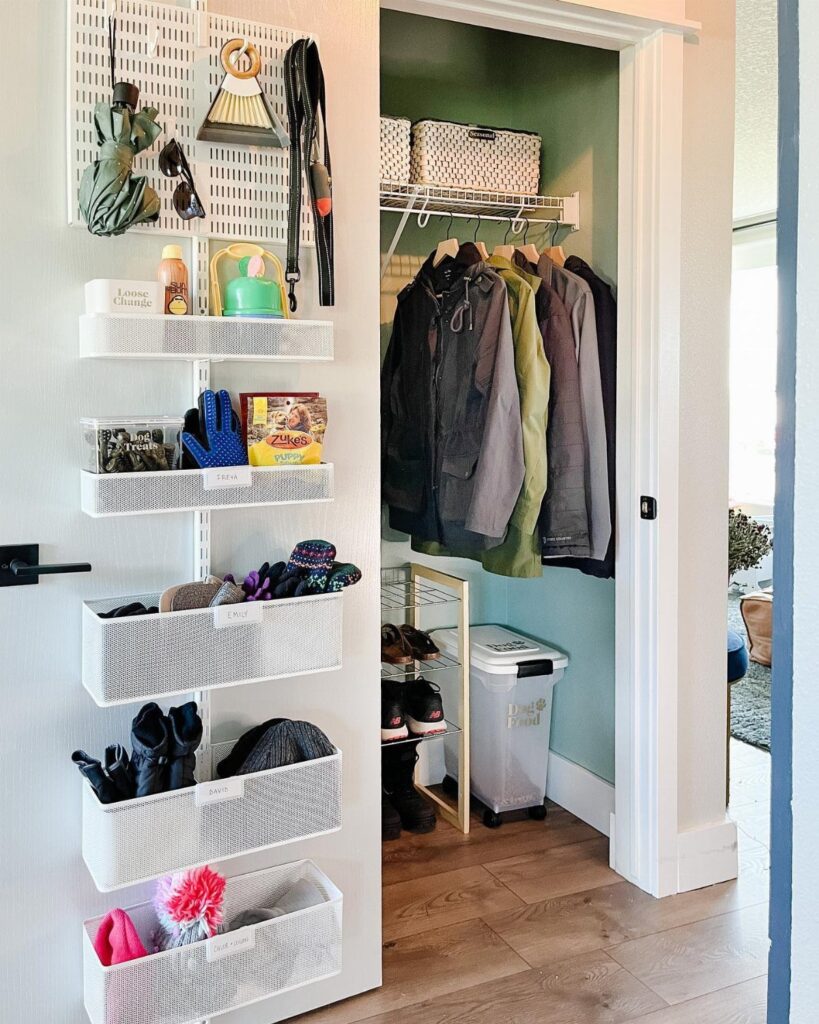
Every closet door has a blank back side, and hooks or a rack there add room without taking any floor space. An over-the-door organizer with bins and hooks holds small things that otherwise clutter shelves: loose change, snacks, gloves, scarves.
Hooks take care of bags and lighter jackets, and a few labeled bins keep the small stuff from becoming a junk pile. Pick a white organizer if the closet is tight, since pale colors look lighter in a small space.
Check that the door still closes before you load it up.
5. Color Code Clothing
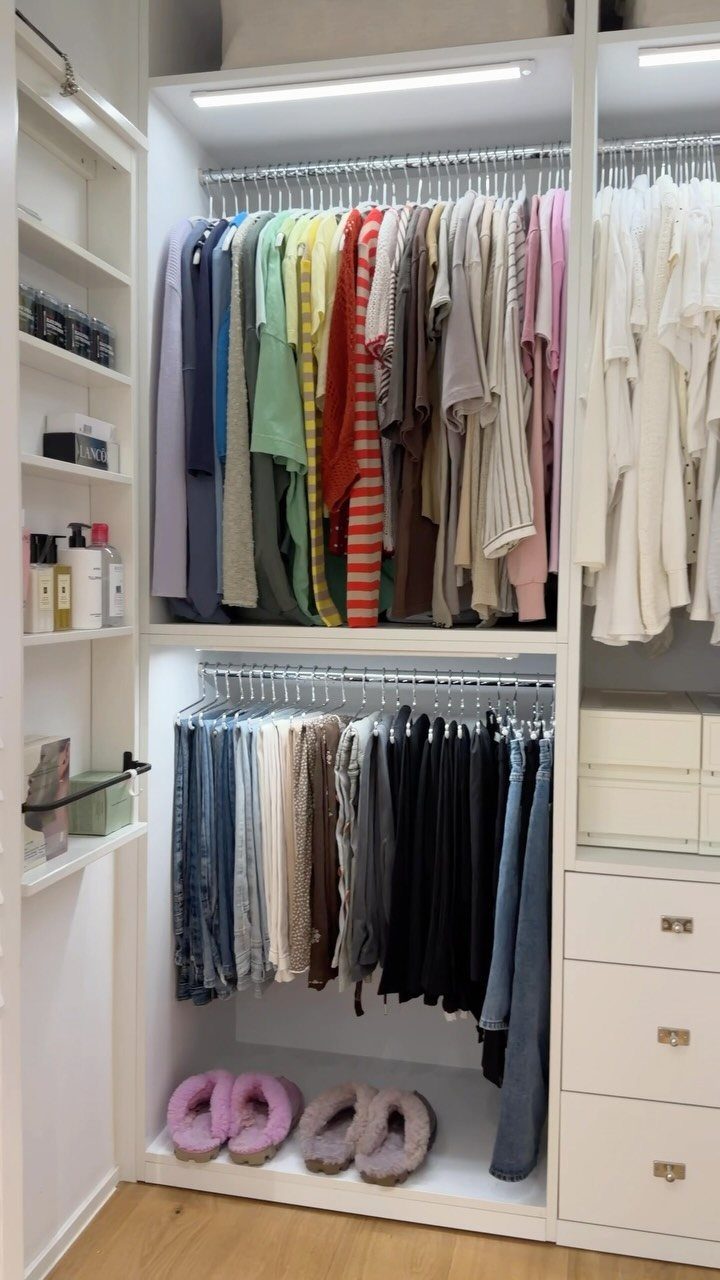
Sorting hanging clothes by color turns the rod into a quick visual index. You scan for the shade you want and go straight to it, which speeds up getting dressed.
Work in rainbow order, then put whites and neutrals at one end and darks at the other.
I’d sort by garment type first (tops, then dresses, then pants) and by color within each group. 2 rods help: shorter items on top, longer below.
It costs nothing but an afternoon of rehanging.
6. Clear Storage Boxes
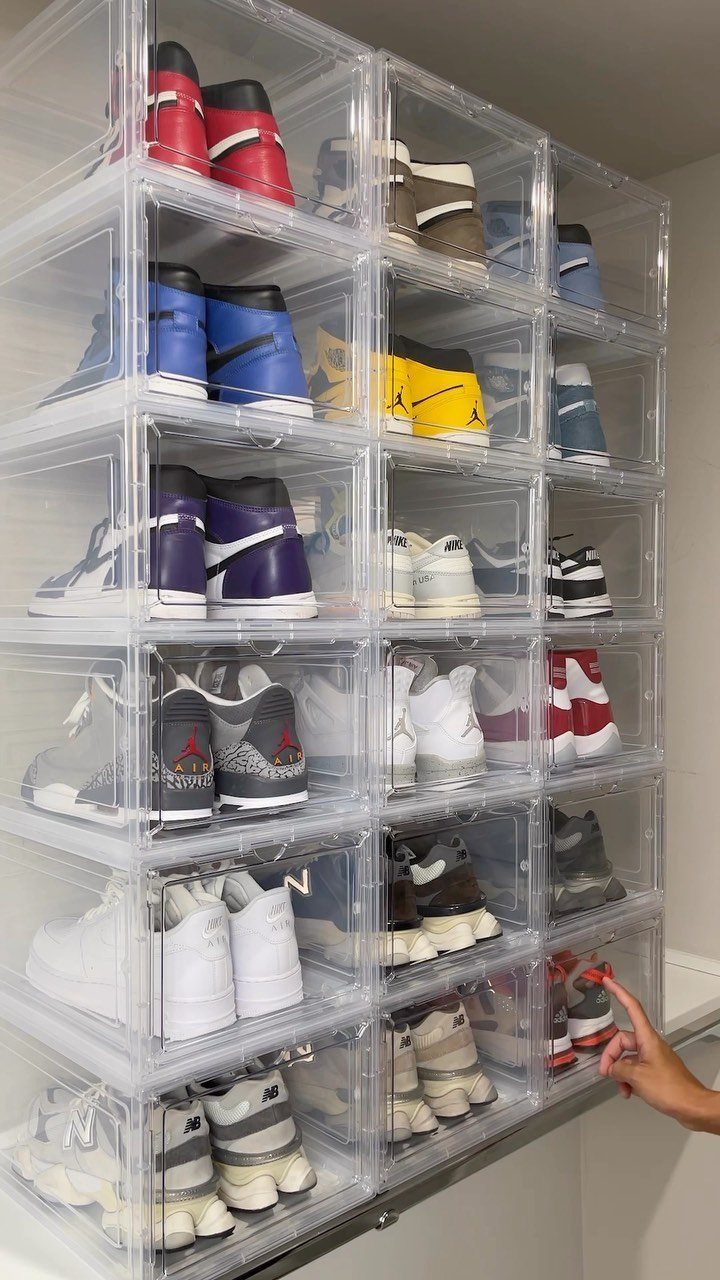
Clear boxes solve the problem of shoes hiding in closed cartons. You can see every pair without opening a thing, and the boxes stack neatly, so a whole wall of sneakers takes up little floor.
Buy one size and stick with it so the stacks stay straight.
I’d put everyday pairs at hand height and dressier or seasonal ones near the top or bottom. Stacking too high makes the bottom boxes hard to reach, so keep each stack within arm’s range.
7. Matching Hangers

A single hanger color unifies the rod and makes the closet feel more deliberate. When every hanger matches, the eye reads one clean line instead of a jumble of wire, plastic and wood.
Buy the whole set at once so the shade and shape stay consistent.
I’d choose a color that works with the closet palette, and pale pink on white reads soft without calling attention to itself. Multi-tier hangers are worth adding for tops and scarves, since they stack several pieces in one slot.
Designer Christine Vroom doesn’t play when it comes to closet organization ideas. Not only does she suggest organizing by color, but also sleeve length—and she uses matching hangers to do it all.
8. Woven Storage Baskets
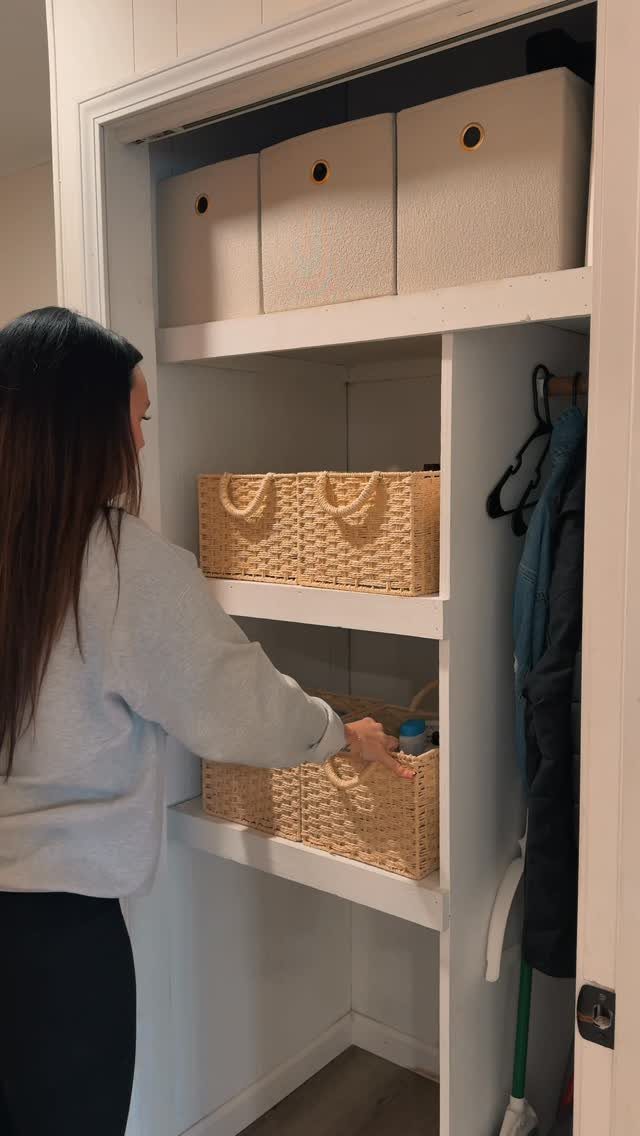
Open shelves look tidy only when the small stuff is hidden, and woven baskets do that job while adding some texture to a white closet. Wicker holds its shape, and fabric bins soften the look beside it.
I’d mix the two: wicker for things you grab often, fabric bins on the top shelf for what you rarely need.
Keep one item type per basket, such as scarves, belts or hats, and add a small label so you never have to guess.
Stick to one or two tones so the shelf stays calm.
9. Pull-Out Tray Shelving
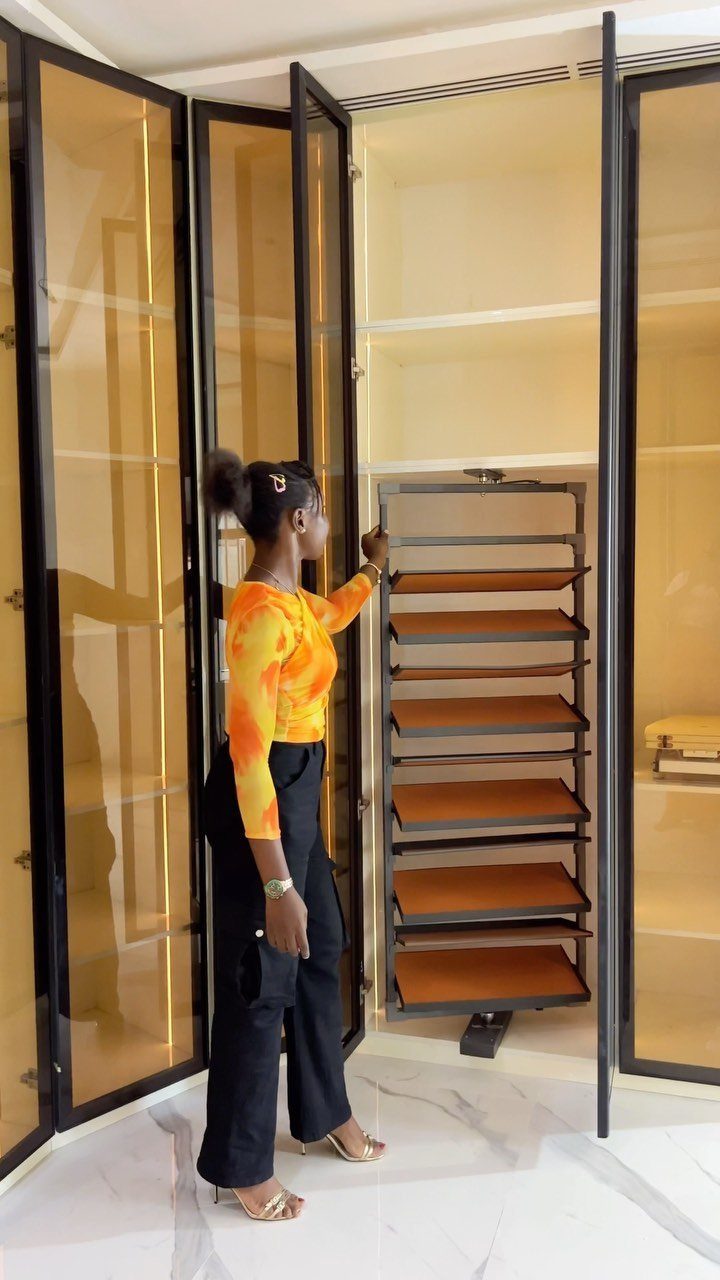
A pull-out tray unit brings the back of a cabinet to you, so nothing sits out of sight behind something else. Tiered trays suit accessories like jewelry, watches and sunglasses, because each piece lies flat and visible.
This is a built-in cabinet feature, so it costs more than a shelf and rod setup. If you’re working with what you already own, shallow drawer organizers can do a similar job inside an existing drawer.
I’d keep the most worn pieces on the top tier, where you can reach them without bending.
10. File-Folded Drawer Storage
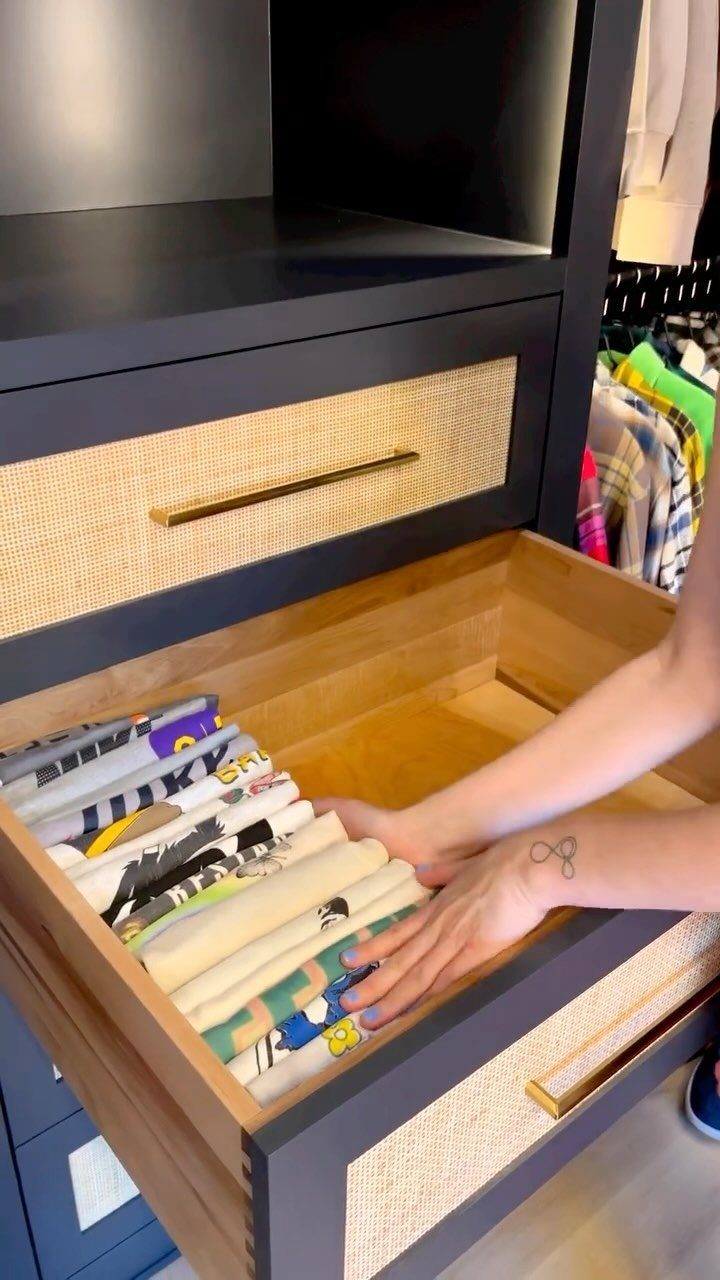
Folding t-shirts into small rectangles and standing them upright in a drawer, like files in a cabinet, lets you see every shirt at once. Nothing gets buried under a stack, so you pull one out without wrecking the rest.
Fold each shirt into a rectangle that stands on its own, then line them up front to back.
I’d group by color or sleeve length so the rows read clearly. Pack the drawer snugly, because loose rows tip over.
11. Built-In Closet Island
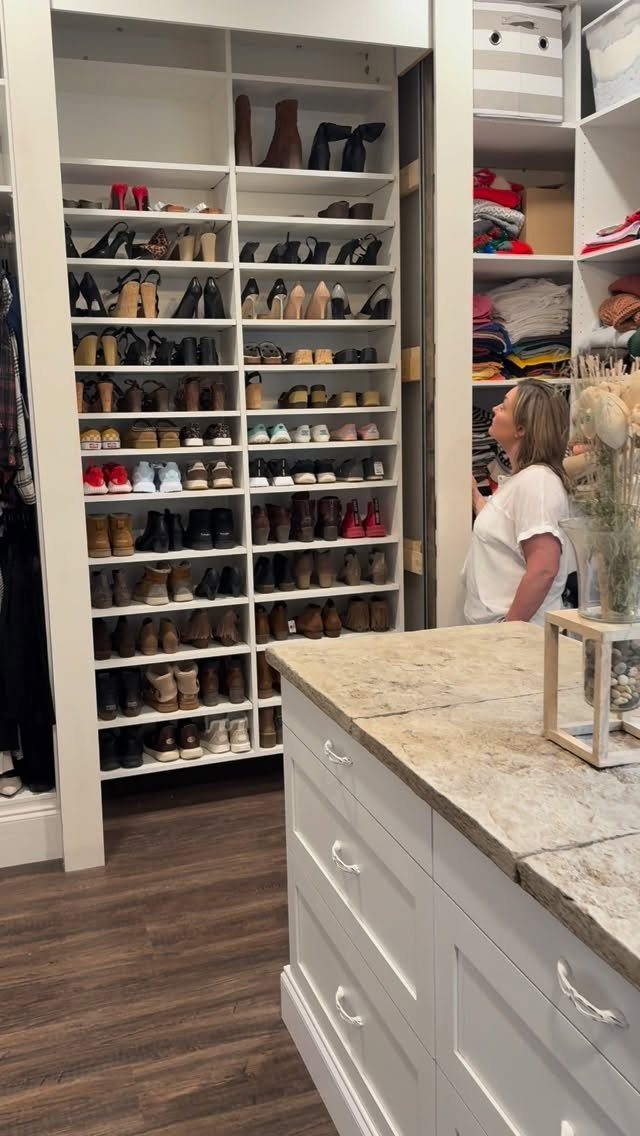
An island turns the middle of a walk-in closet into a work surface. A marble top offers a flat, hard surface for folding laundry or laying out an outfit, and the base holds drawers or shelves for folded clothes.
It only works if the aisles stay wide enough to walk and open drawers comfortably, so measure the floor before you commit. In a narrow closet, I’d wall-mount a fold-down shelf instead.
A built-in island is a big project and a big cost. A freestanding table or a chest of drawers with a stone-look top is the cheaper route.
12. Dedicated Shoe Shelves
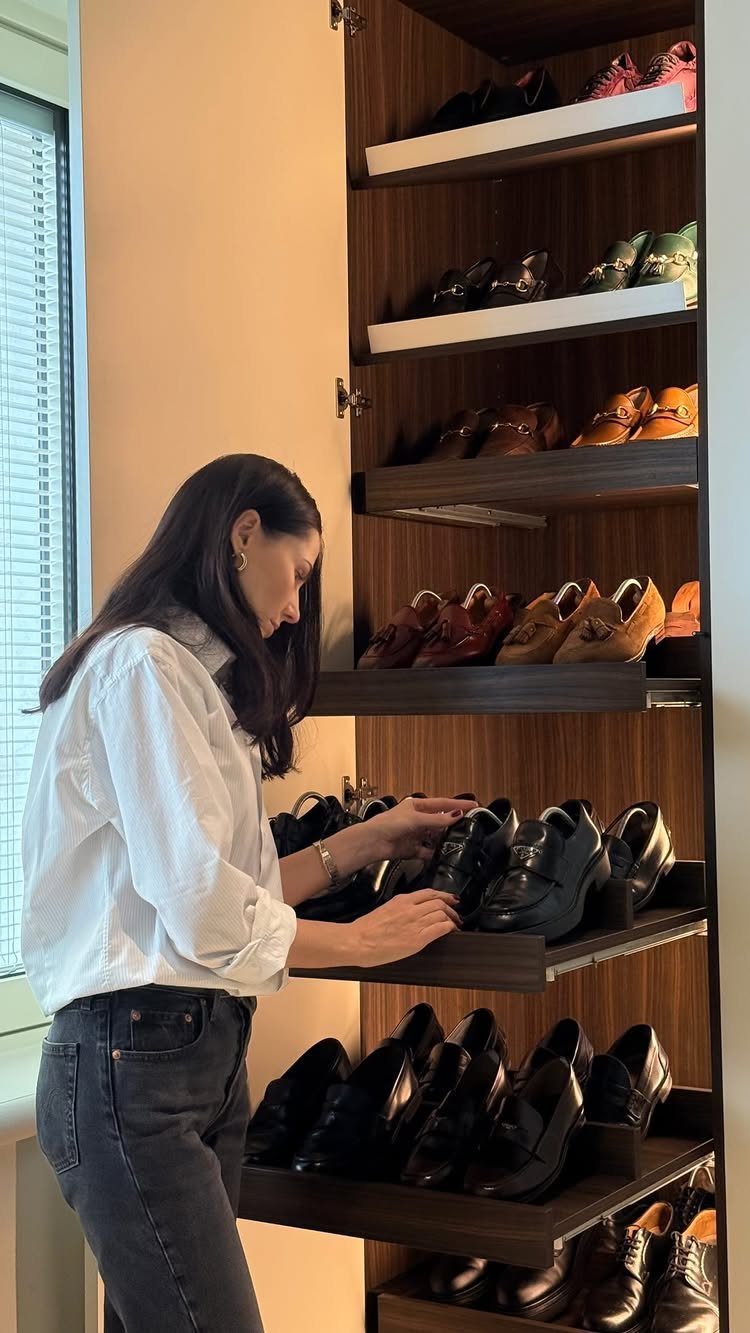
Shoes look best when each pair has its own shelf space, and dedicated shelving turns a row of dress shoes into a display rather than a pile. Everything stays in view, so you pick a pair without moving 3 others.
Space the shelves to fit your tallest shoes, and set the heels toward the back so the toes line up. I’d put the pairs you wear most at waist to eye level.
Dark wood suits dress shoes, though it makes a small closet feel tighter, so choose a lighter finish if space is short.
13. Integrated Shelf Lighting
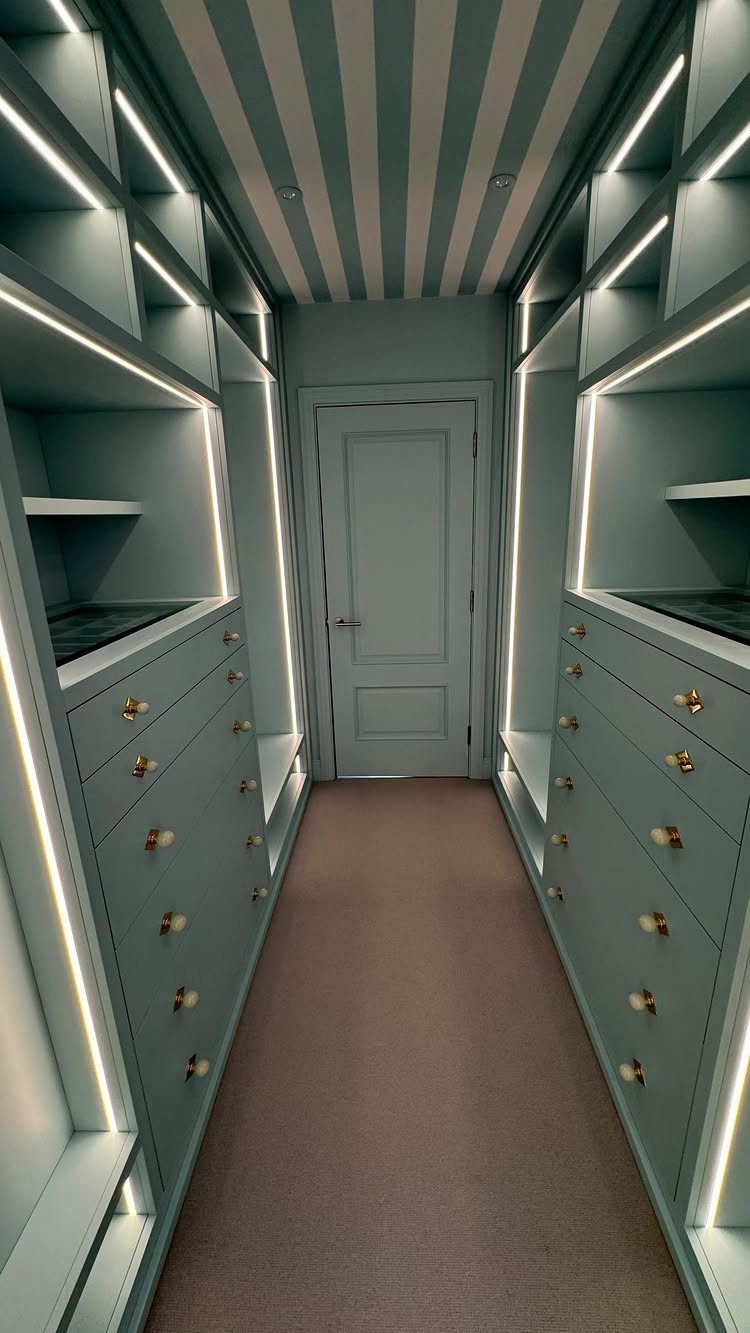
LED strip lighting along the shelf edges lights the cubbies from inside, so folded sweaters and bins stay readable even in a narrow closet with no window.
Light that sits right at the shelf is easier to use than one bulb overhead, which leaves the lower shelves in shadow.
I’d run the strips under the front lip of each shelf, where the light points down at what’s stored and the strip itself stays hidden.
Pick a warm white if your clothes are mostly neutrals, since cool white can make colors look off.
Plan where the power cord will run before you stick anything down.
14. Built-In Vanity Station
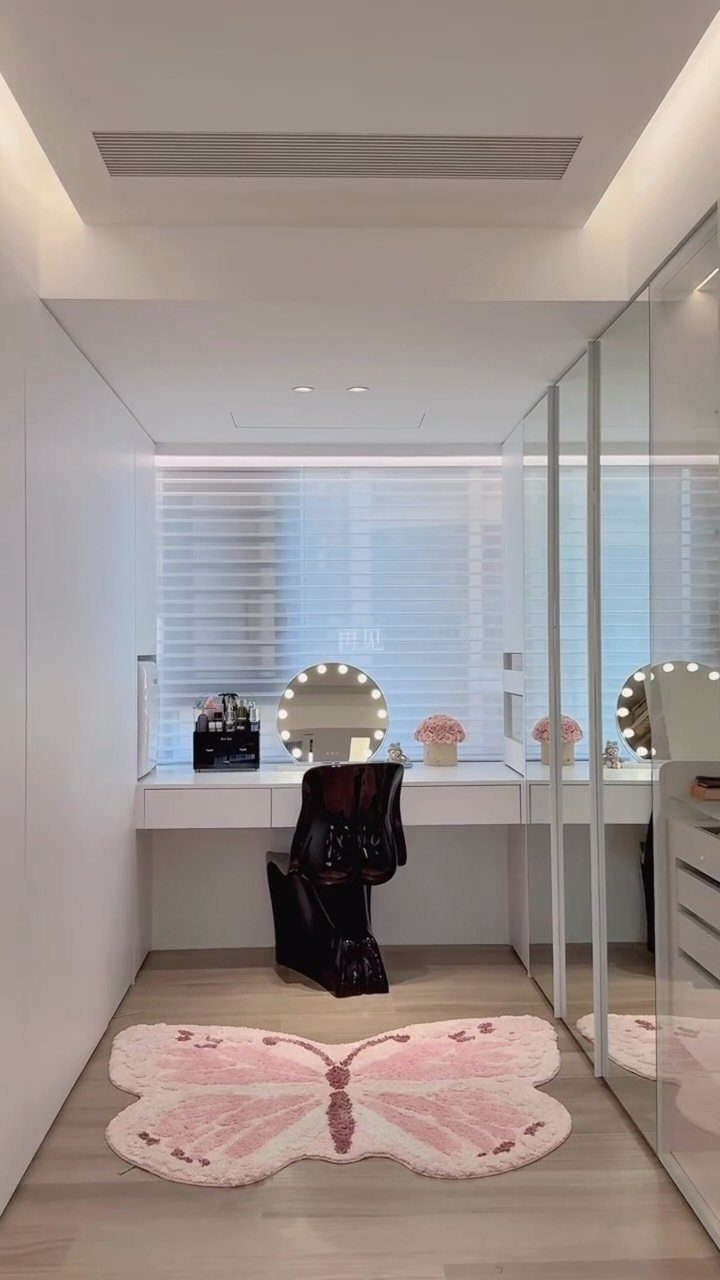
A vanity desk built into the closet puts your mirror, makeup and clothes in one spot, so getting ready never means moving between rooms.
Pick a desk depth that leaves the aisle clear, and measure before you buy. If you rent, a slim white desk with a plug-in lighted mirror gets you the same setup with no cutting into walls.
I’d keep the top nearly bare, with a small tray for daily items, so the desk reads as part of the closet.
Importance of Closet Organization
A messy closet costs more than floor space.
A closet that’s out of control makes itself known every morning, with jammed hangers, shoes piled on the floor, and the sense that nothing in there is wearable, and that stress adds up for a lot of households.
Clearing it pays off in 3 ways.
Mornings go faster because you can find things. Clothes last longer when they aren’t crushed or buried, so you get more wear out of what you paid for.
And a calmer start to the day tends to carry over into everything after it, including how carefully you spend money.
Regular Maintenance Tips
An organized closet drifts back to chaos without upkeep, but the upkeep is small.
Once a week, usually Sunday night, I’d give the closet 10 minutes on a timer: rehang whatever landed on a chair, clear out the empty hangers, straighten any stacks that slumped, and put shoes and bags back where they live.
When the seasons change, look through everything and set aside any piece that hasn’t been worn in about 3 months.
A "one in, one out" rule keeps the balance. If you buy new jeans, retire an old pair first, and the rods and shelves never overflow.
Custom Solutions
If you’ve decluttered and reorganized and the closet still feels cramped, a custom system may be the next step.
Professional designers can plan around your real needs, such as more shoe shelves, extra hanging space, or accessory storage, and use every inch in a way builder-grade closets don’t.
Custom built-ins make the most sense in older homes, which often lack closet space.
A built-in wardrobe for folded clothes, linens, and jewelry can solve what shelves and rods can’t. Many design firms offer free consultations, so get a plan before you spend.
Frequently Asked Questions
How do I start organizing a walk-in closet?
Start by emptying the whole closet onto the bed or floor, including shoes, belts, bags and every last accessory. Seeing the full pile shows what you own, what you wear, and what only takes up room.
Anything you haven’t worn in 12 months goes in the donation pile, off-season pieces get boxed, and the new layout gets built around what’s left.
In what order should I hang my clothes in my closet?
Group by garment type before anything else, so tops share one stretch of rod, dresses get another and pants take a third.
Inside each group, I like arranging by color, light to dark, with whites and neutrals at the start and black at the far end.
A rod sorted by shade works like an index: you look for navy and your hand already knows where to go.
What’s the best way to use vertical space in a closet?
Stack a shelf above the hanging rod, since most walk-in closets waste the wall above eye level.
Use that top shelf for clear, labeled bins of blankets and off-season clothes, and keep what you wear weekly on rods at reach height.
A second hanging rod, with shorter items on top and longer ones below, doubles your hanging room.
How do drawer dividers help with closet organization?
A divider gives each pair of socks or rolled item a fixed slot, which ends the daily hunt for a matching one.
Fabric dividers are cheap and have some give, so they hold up in a drawer that gets opened constantly. Separating socks by length, say ankle, crew and athletic, keeps every section easy to read.
Where should I store accessories like bags, hats, and scarves?
Give each type a dedicated home: hooks for bags and lighter jackets, and baskets or bins for scarves, belts and hats. Give each basket one job, whether hats, scarves or clutches, and stick a small label on the front.
How can I use the back of my closet door for storage?
An over-the-door organizer with pockets, bins and hooks adds storage while leaving the floor completely clear. Bins hold small items like gloves, scarves and loose change, and hooks take bags.
Close the door with the empty organizer on it first to check the clearance, and in a tight closet pick white, since pale colors make the space look bigger.





