Your pick comes down to the space you actually have: a tight closet with a narrow walkway calls for slim floating shelves or an over-the-door organizer, while a room with open floor can take a ceiling drying rack or a run of open shelving and cabinets.
Humidity narrows things further, since metal rails handle steam near the dryer vent better than unsealed wood.
1. Floating Shelves
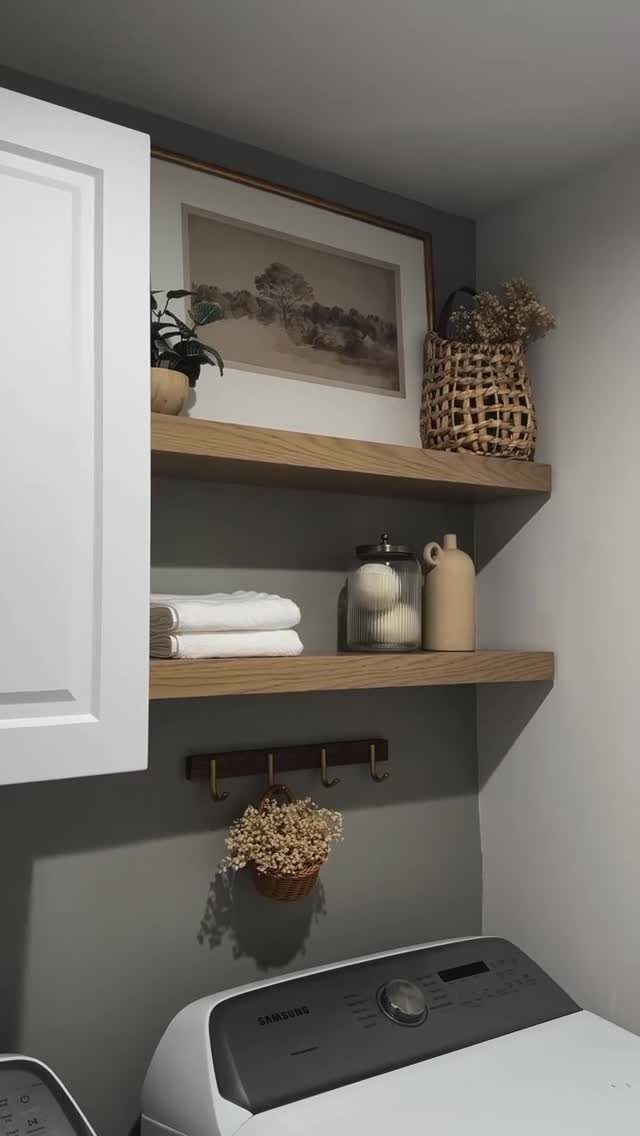
2 shelves stacked above the washer claim the dead wall most laundry rooms waste. Light wood keeps a grey wall from feeling flat, and the shelf pair holds towels, jars and a basket without crowding the machine.
I’d keep the bottom shelf for things you grab mid-load, like detergent jars, and use the top for towels and a bin. Anchor into studs, since wet towels and full jars add up fast.
2. Ceiling Drying Racks
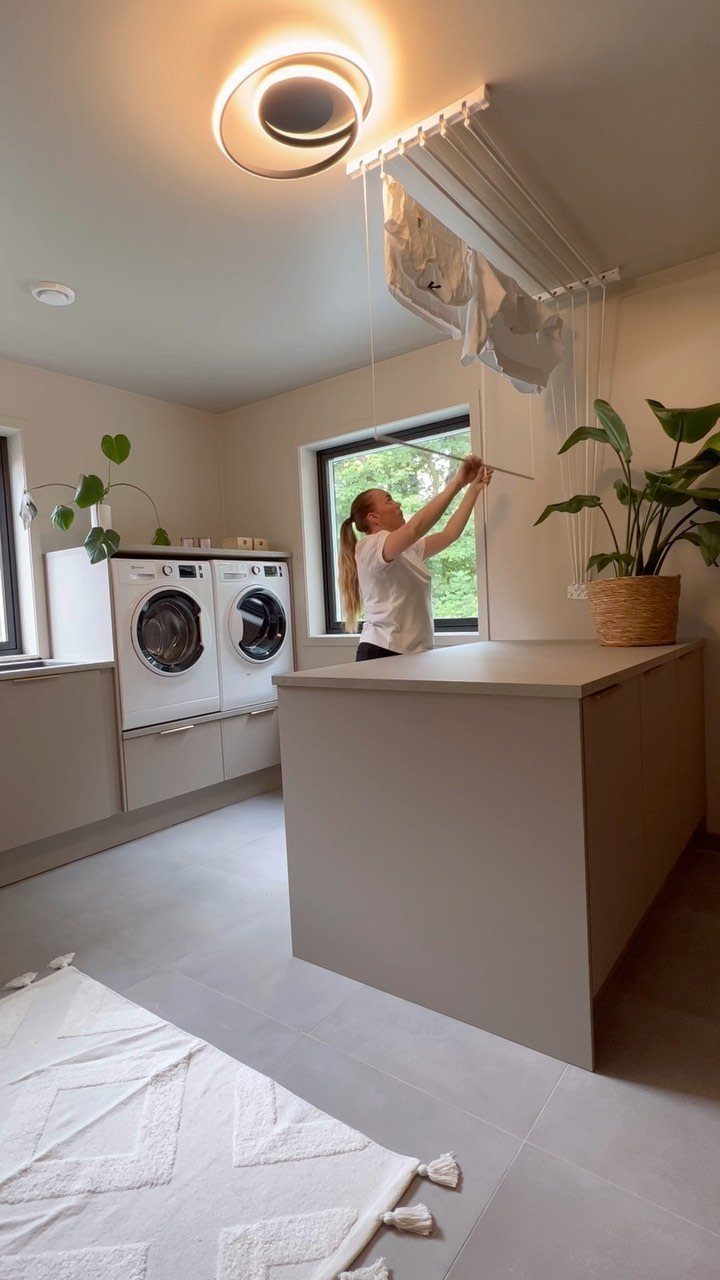
A ceiling-mounted rack lowers to hang clothes, then lifts out of the way when the laundry is done. That makes it the best fit for a room with no floor space left for a freestanding drying rack.
Mount it over an island or open floor, not over the machines, so you can reach the bars comfortably.
Check what the ceiling is made of before buying; the anchors matter more than the rack. Hang whites here and leave the dryer for towels.
3. Wall-Mounted Closet System
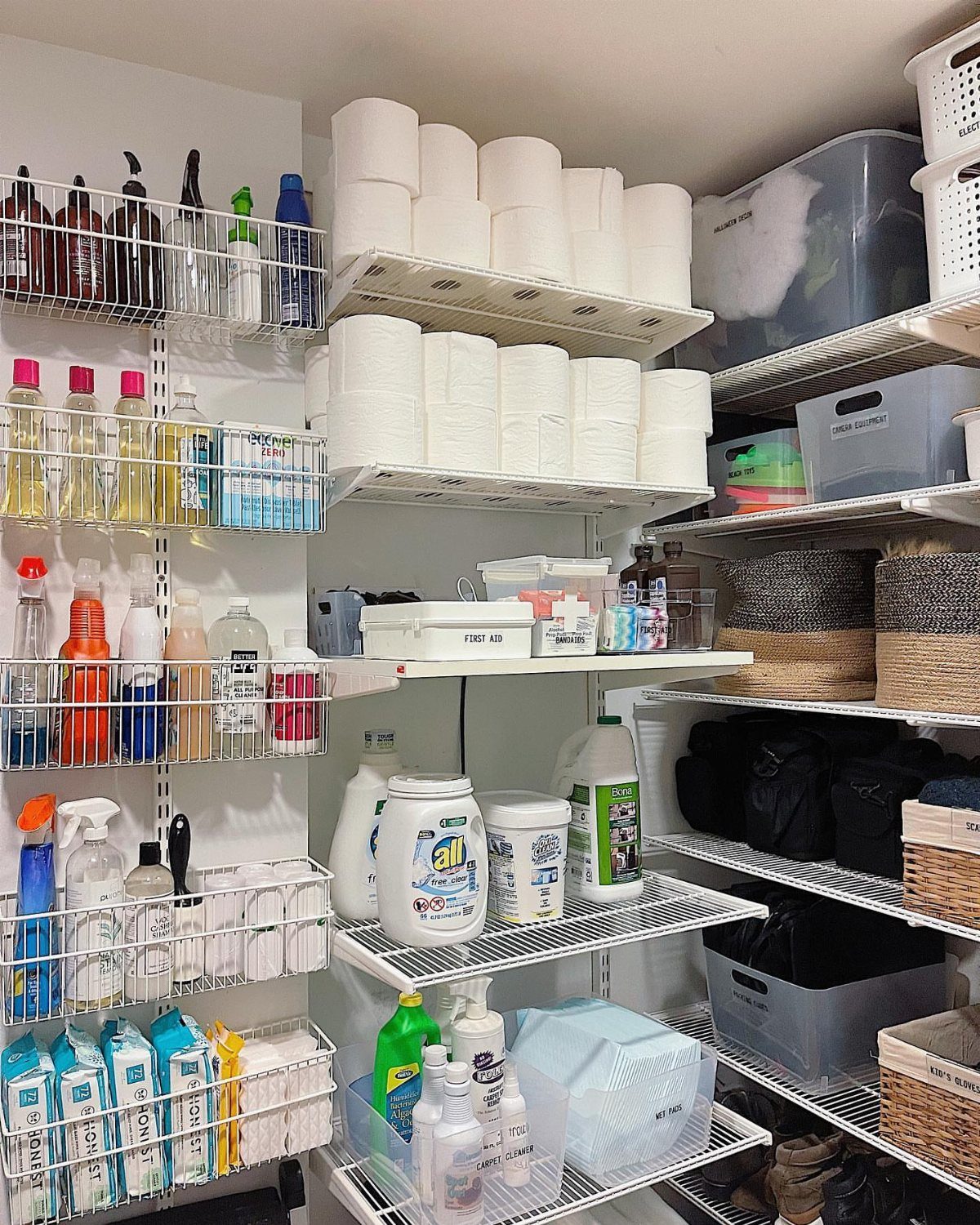
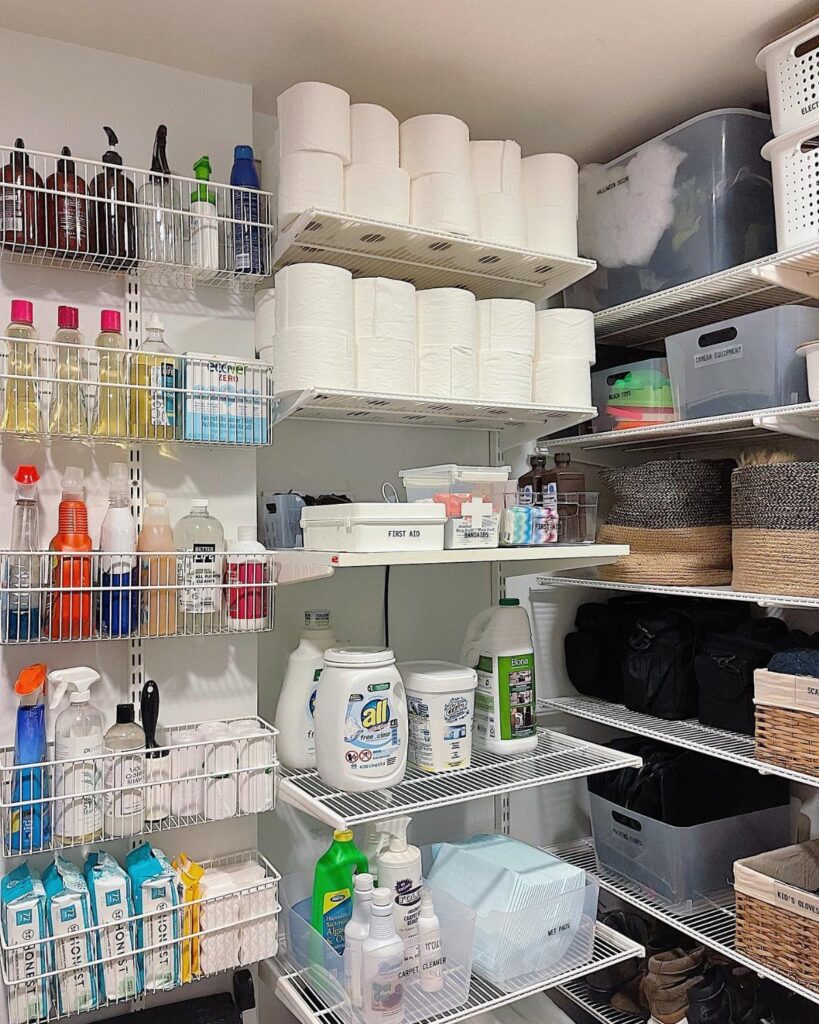
White wire shelves and baskets on one wall give you adjustable storage you can rearrange in minutes. Wire lets air through, so damp cleaning supplies and spare toilet paper don’t sit stuffy.
I like pairing it with small labeled bins, since detergent and first-aid supplies are far easier to find when the label faces out.
Put heavy jugs low, light rolls and bins up high. The rails can be moved later, which suits renters who change their minds.
4. Open Shelving and Cabinets
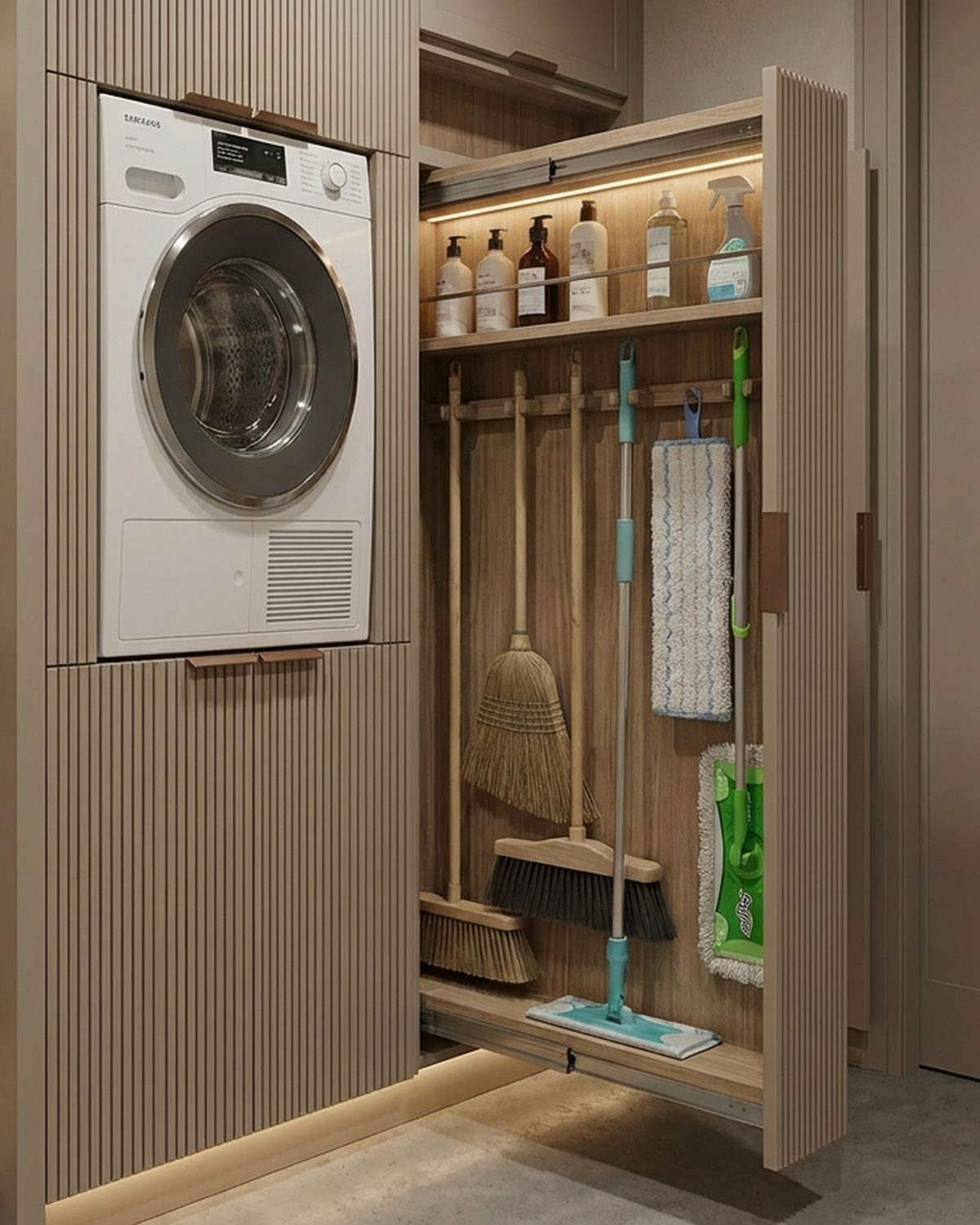
Nothing sits on the floor, and the tall tools finally have a home.
Open shelving is fast to grab from; the cabinet frame keeps the whole thing looking tidy.
Put the supplies you use weekly between shoulder and chest height, where you can grab them without bending or reaching. Add a door later if the clutter starts to bother you.
5. Wall of Built-In Shelving
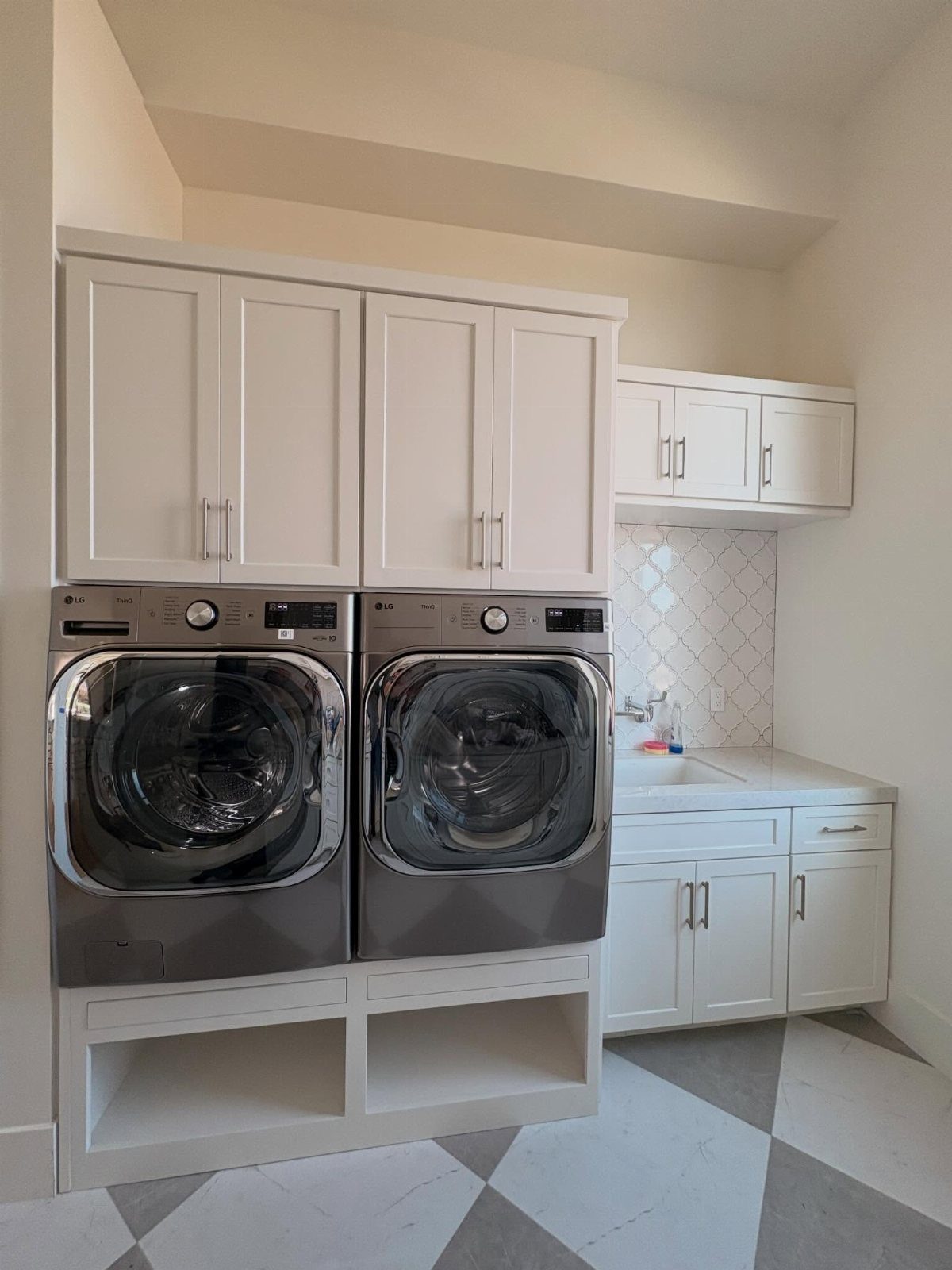
Cabinets running above and below the machines turn a whole wall into storage, and a small sink fits right into the run.
This is the priciest idea on the list, and it takes more than a weekend if you build it from scratch.
Stock cabinets are the budget route. Leave the machines accessible, and put the upper shelves where you can reach them without a stool.
6. Over-the-Door Organizer
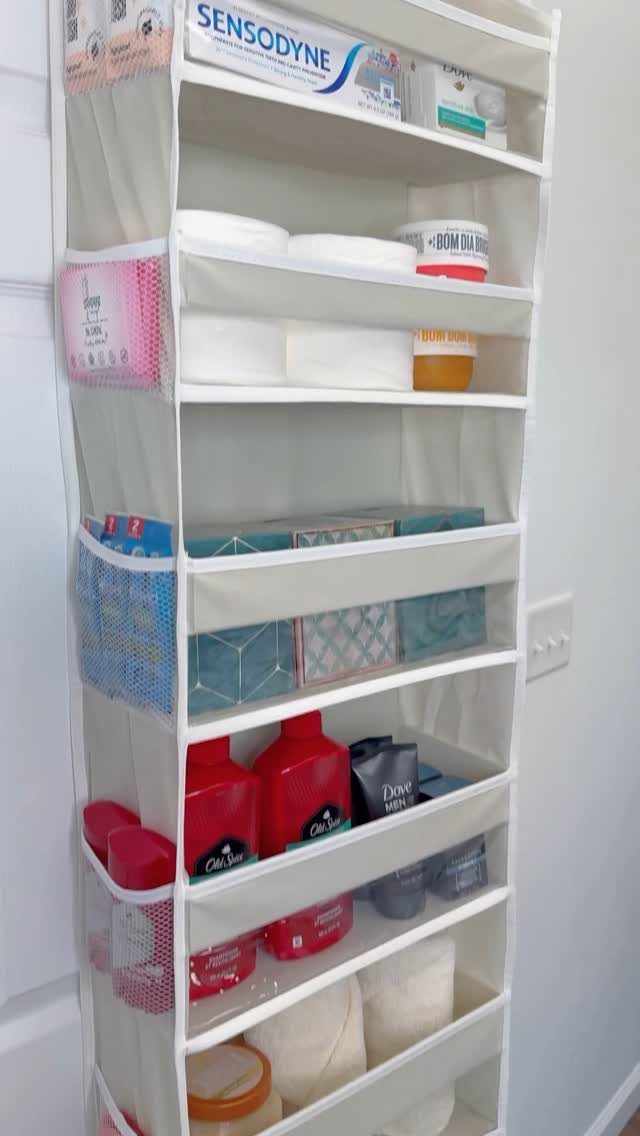
An over-the-door organizer is the cheapest storage you can add, and it needs no drilling. Fabric pockets hold small items like cotton rounds, toothpaste and deodorant, so they stay off the counter.
The maker of this one says they love it in the bathrooms and laundry room, and I agree: use the laundry version for stain sticks, dryer sheets and lint brushes.
Measure your door thickness first, because hooks won’t sit right on a thick door.
7. Laundry Storage Units
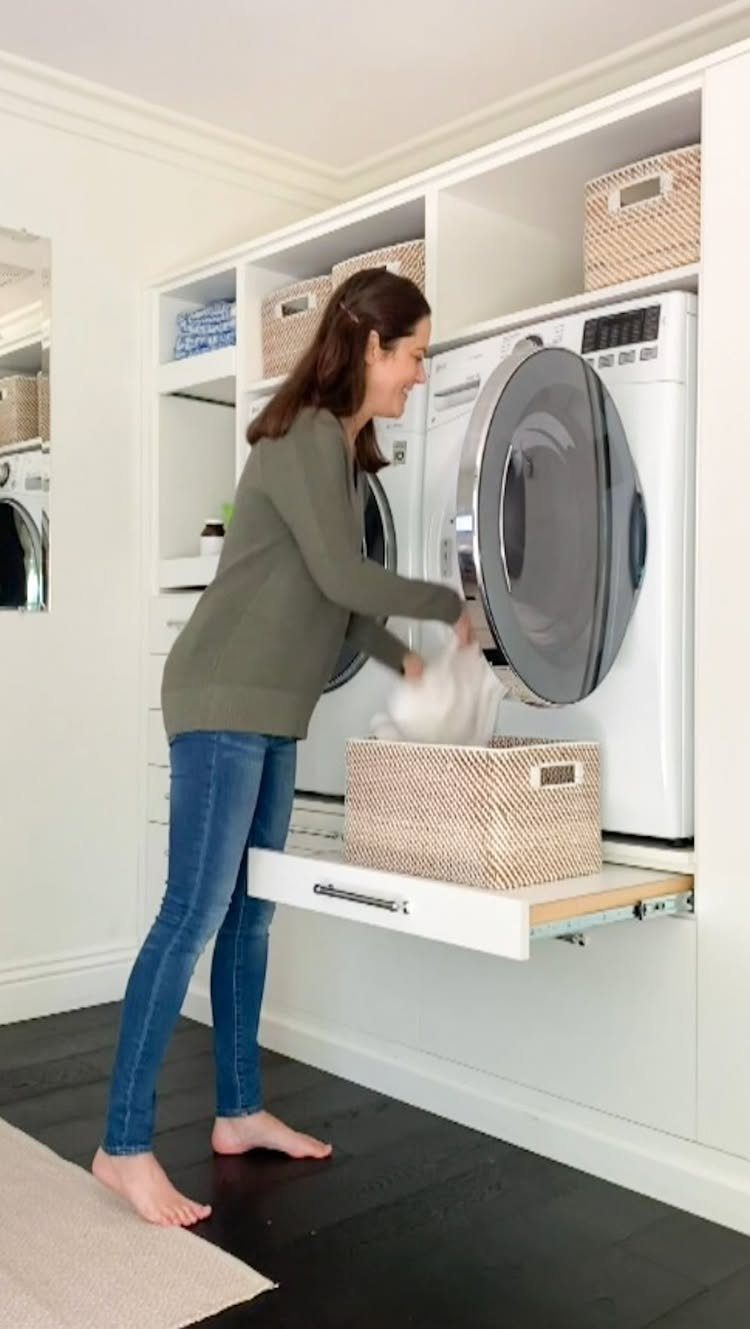
Two pull-out shelves in a white built-in unit beat one big shelf, and the reason is elbow room.
The maker of this one says that with two, she opens just one and stands to the side with the dryer, so nothing blocks the door.
Plan the unit around the machine you use most. Set the shelf at a height where a full basket slides out level with the dryer opening, so you pull clothes straight across without bending.
Dedicated units cost more than loose shelves, so price a stock cabinet with sliding drawers first, then decide whether custom is worth the extra money.
8. Wicker Baskets on Shelves
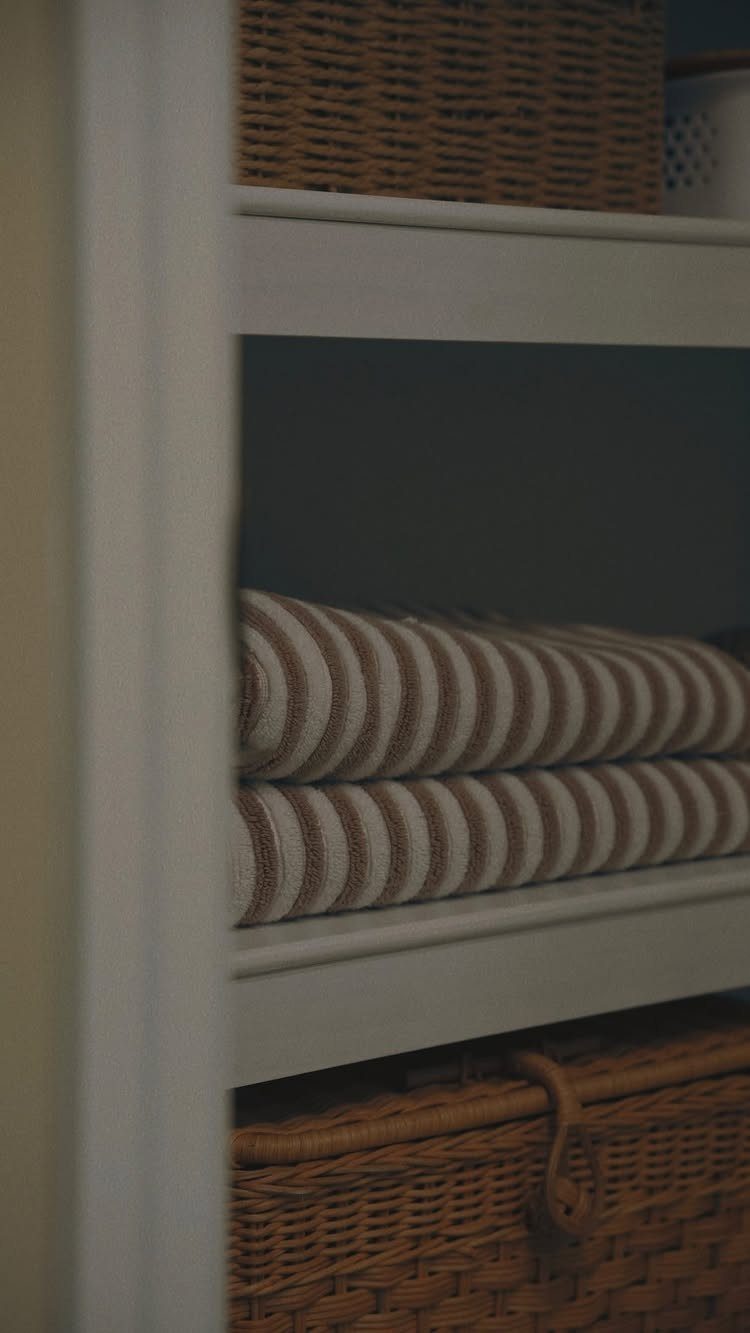
Woven wicker baskets on white shelves hide the small stuff and leave folded towels in plain view. Wicker looks warm against painted wood, and the baskets can be swapped or moved as your supplies change.
I’d keep the towels you use daily on the shelf between your shoulders and your waist, and let the baskets take the odd items, like dryer balls or spare hangers.
Fold towels to the same width so the stack reads as tidy.
Buy baskets after measuring the shelf depth, because a basket that overhangs looks sloppy and tips easily.
Maximizing Small Spaces
Slim profiles and stackable parts are what make storage fit a tight laundry closet, so shop for those features first.
Measure the width of the walkway before you buy anything, because a unit that leaves you sideways at the machine will annoy you every week.
Go up before you go out. Tall, narrow units and shelves that run toward the ceiling use space you already have, and the top reaches can hold the things you touch twice a year.
Pick pieces that do 2 jobs. A rolling cart can slide into a gap beside the machines, then move to the middle of the room on sorting day.
A sturdy bench or a lidded hamper with a flat top gives you a place to fold and a place to stash laundry.
To start, one of the first ways to optimize your laundry room is to amp up your vertical storage by installing shelves. Closed, open, high or low—read on for smart, design-forward laundry room shelving ideas that’ll instantly organize and style your space.
Choosing Materials
Humidity is the real test in a laundry room, so choose materials by how they handle damp air. Metal, plastic and wood are the common choices, and each one lasts when it’s the right grade for the job.
I’d pick metal for racks and rails that sit near the dryer vent or the washer, since it takes steam without swelling.
Wood and bamboo look warmer, but seal or paint the cut edges and the underside, where moisture creeps in first.
Plastic bins cost the least and shrug off spills, which makes them a good fit for the shelf nearest the sink.
Check the weight rating on anything that will hold full detergent jugs, and skip thin pieces that bow under a load.
DIY Vs. Pre-Made Solutions
Build your own if you own a drill and a level, you can read a stud finder, and the wall is a simple rectangle.
Custom shelving fits odd gaps that stock units miss, and the lumber and fasteners often cost less than a finished unit.
Buy pre-made if your time is short, your cuts are shaky, or the space is a standard size. Flat-pack units go up in an afternoon, and most come with a clear weight limit.
A middle path works well for a lot of renters: buy stock units for the base, then add one custom shelf cut to fit the leftover gap.
Set a budget before you start, and price the whole shopping list for both routes so the cheaper one is obvious.





