Renters can lean on adhesive hooks, stick-on LED strips, wire mesh drawer units and under-the-shelf baskets, which skip drilling and come off with far less damage than screws; if you plan to stay, hooks screwed into studs and shelves along the walls hold more and last longer.
Costs run from a few dollars for a multi-layered tiered hanger up to furniture integration, where a dresser sits in the middle of the closet run.
1. Furniture Integration
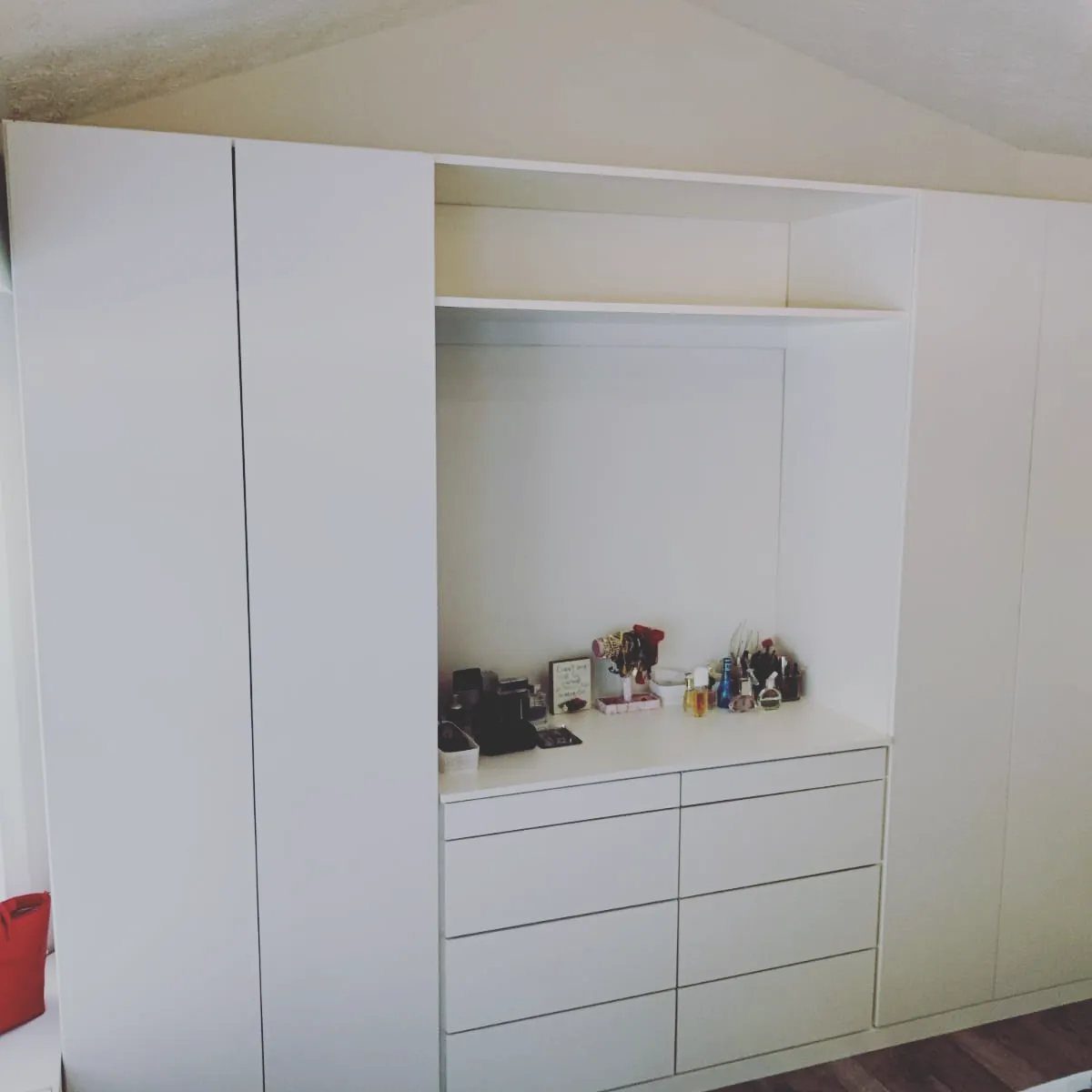
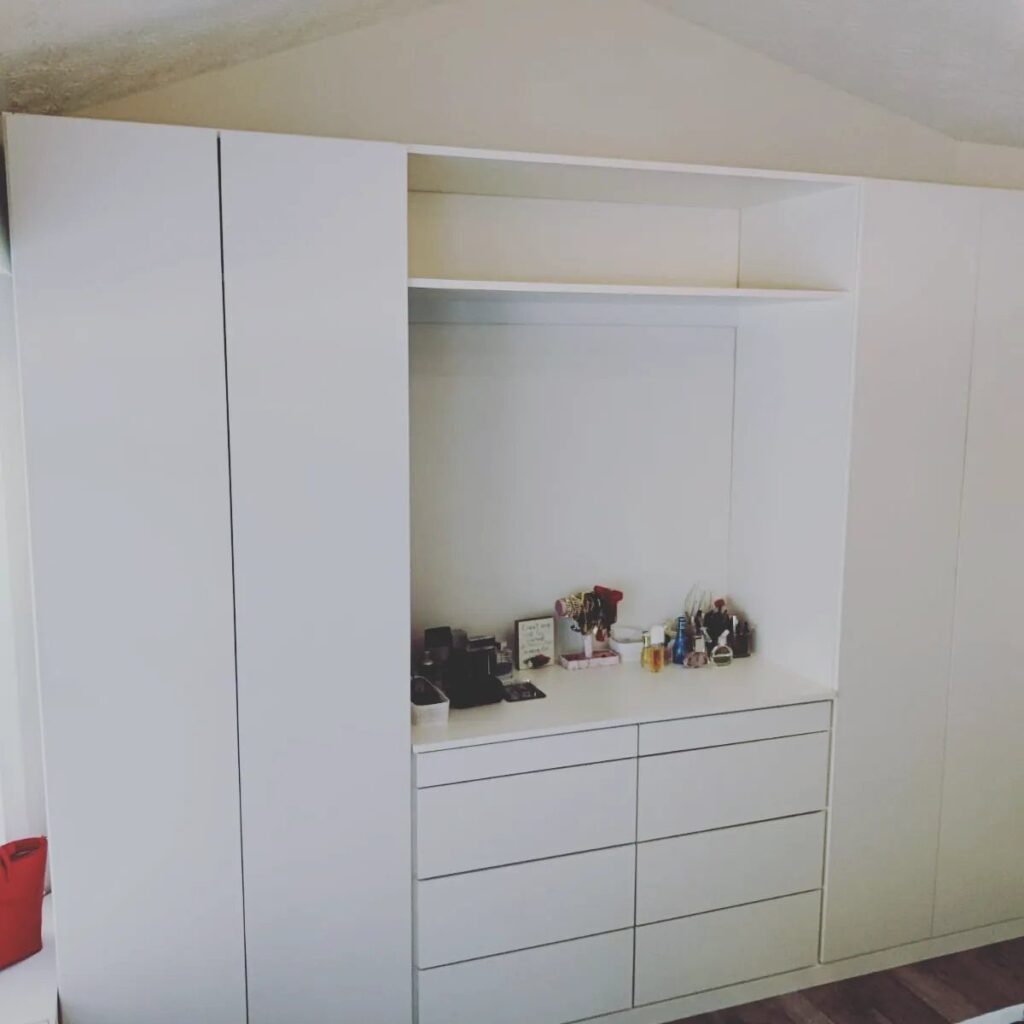
A dresser tucked into the middle of a closet run does the work of a drawer stack without needing a separate piece of bedroom furniture.
In a small room, that’s the move I like most: fold the bulky things into drawers and leave the tall sides for hanging.
If you rent, a freestanding dresser or a vanity table beside the closet gives you the same gain with nothing drilled into the wall. Keep the piece the same color as the closet and the room reads calmer.
2. Double Hanging Rods
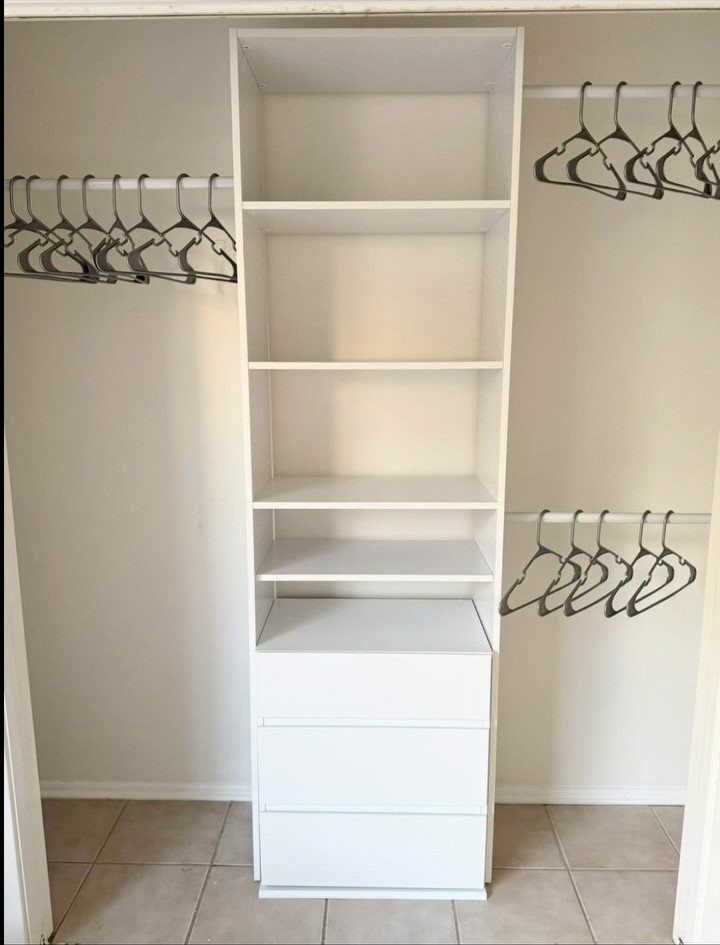
A second rod hung below the first gives short items, like shirts and folded pants, their own level, so one closet side holds roughly twice the clothes.
Keep long dresses and coats on a single high rod, since a lower rod would cut into their length.
Adjustable rod kits are the budget route and go up with a screwdriver in an afternoon. Measure your longest garment first, then set the top rod where the lower one can still clear the floor or a drawer unit.
Godding’s favorite product to double the amount of hanging space in the closet is what she calls a “ closet rod doubler ” because “the sides can be adjusted up and down depending on length.”
3. Hooks and Racks
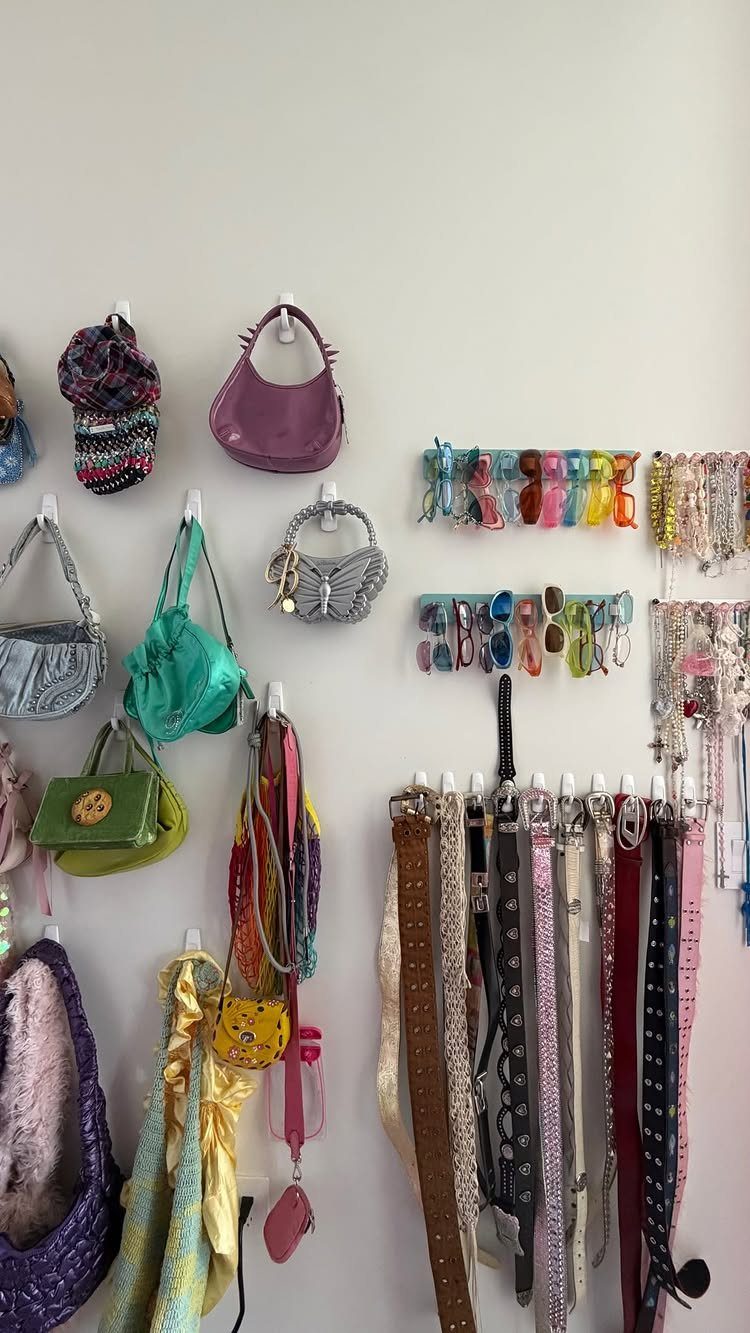
Bags, belts, scarves and sunglasses take up shelf space that folded clothes need more, and a wall of hooks and small racks moves them out of the way.
Hang the heaviest bags on sturdy hooks near eye level, and give necklaces their own row so they stop tangling.
Adhesive hooks suit renters with light pieces like sunglasses racks or scarves. Screw-in hooks, anchored to studs or with wall anchors, are what I’d use for loaded handbags.
4. Under-the-Shelf Baskets
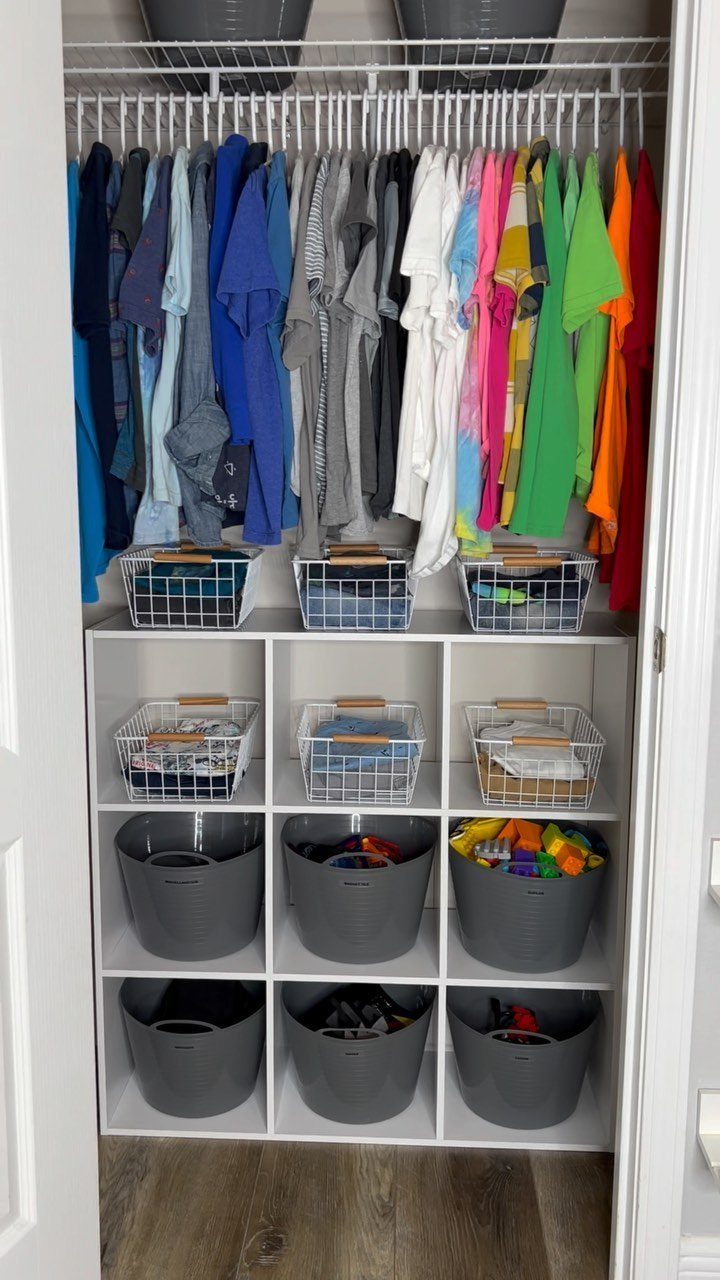
Wire baskets that hook over a shelf edge add a drawer-like layer under a shelf you already own, with no tools and a price that stays low. They’re best where the gap between shelves is tall and mostly empty.
Measure the shelf thickness before buying so the hooks fit snugly. I’d fill them with small, light things such as socks, tees or scarves, since a basket loaded with heavy items will drag the shelf.
5. Clear Storage Bins
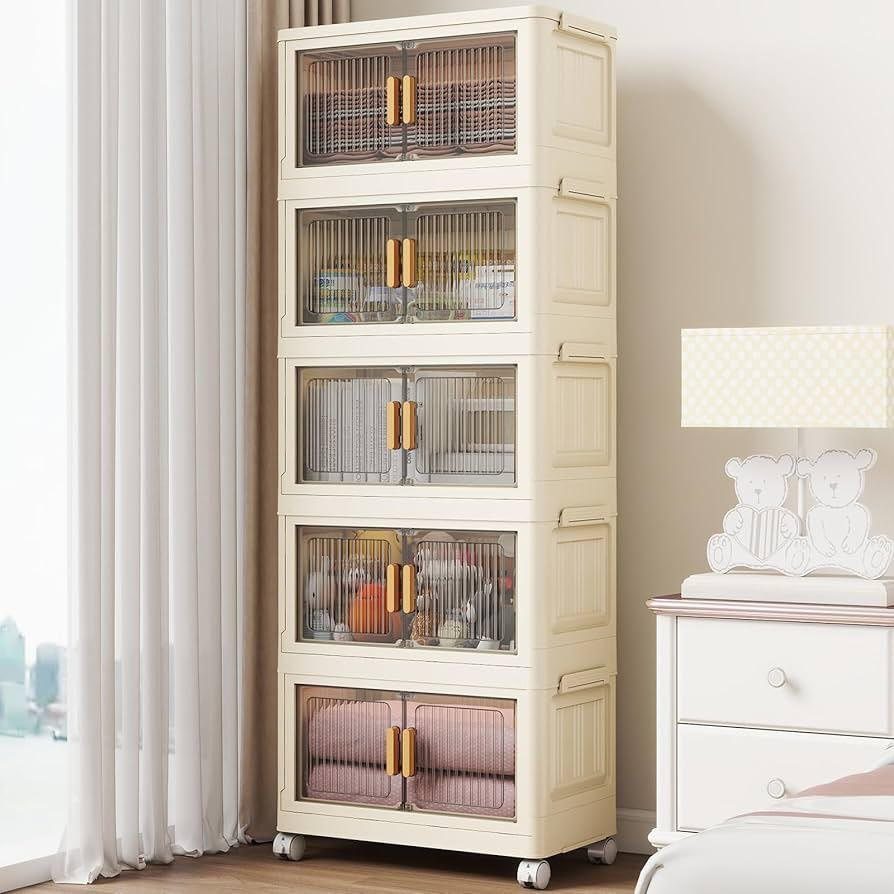
Clear drawers let you see a sweater or a pair of leggings without pulling anything out, which cuts the digging that wrecks a tidy closet.
A rolling tower on wheels is a good fit for a tight space, because you can slide it out to reach the back, then park it against a wall.
Put the things you grab daily in the front-facing drawers and label the rest. Plastic towers hold lighter clothing best; for heavy denim, I’d pick something sturdier.
6. Shelves Along Walls
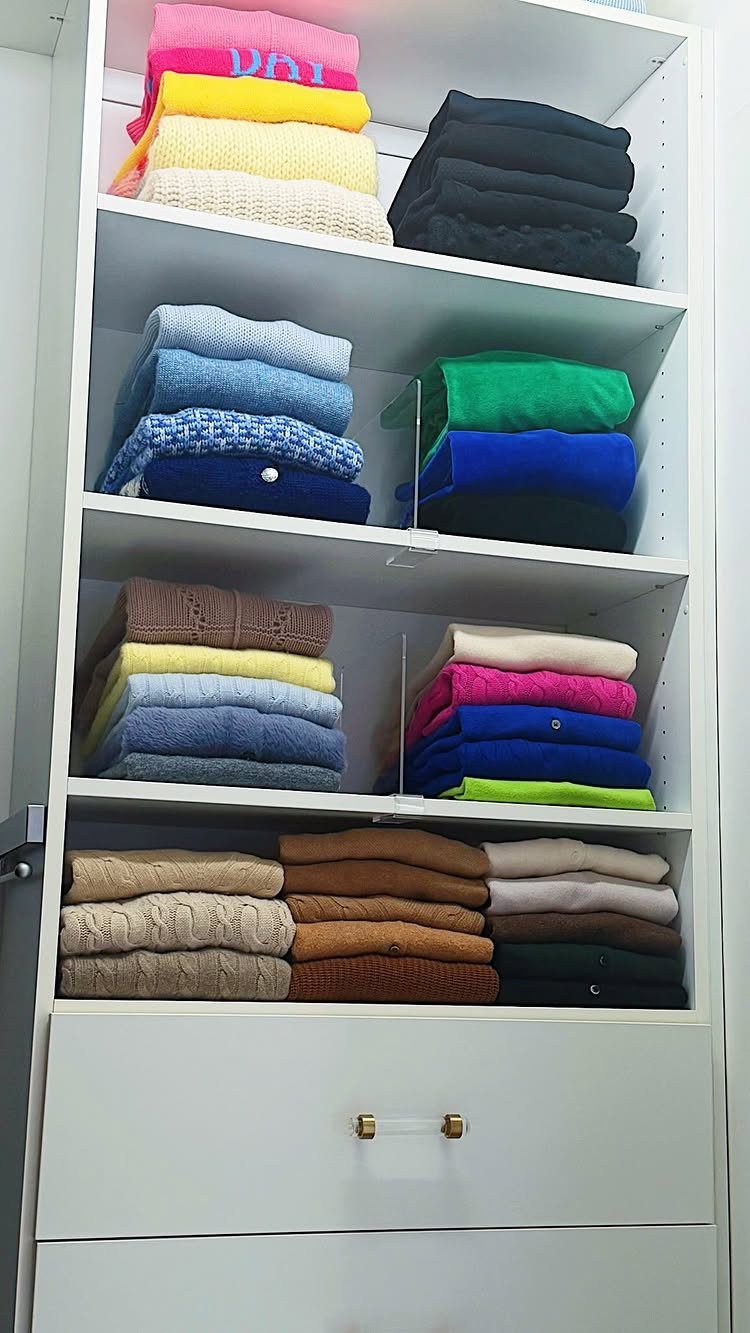
Open shelves stacked with folded sweaters give you vertical storage along a wall that was doing nothing. Fold each piece the same width so the stacks stay straight and the colors line up in a row.
I’d keep stacks to a handful of sweaters, so the bottom one doesn’t get crushed and you can lift one without toppling the rest.
A drawer at the base, as in this unit, is a good spot for socks and underwear.
7. LED Strips
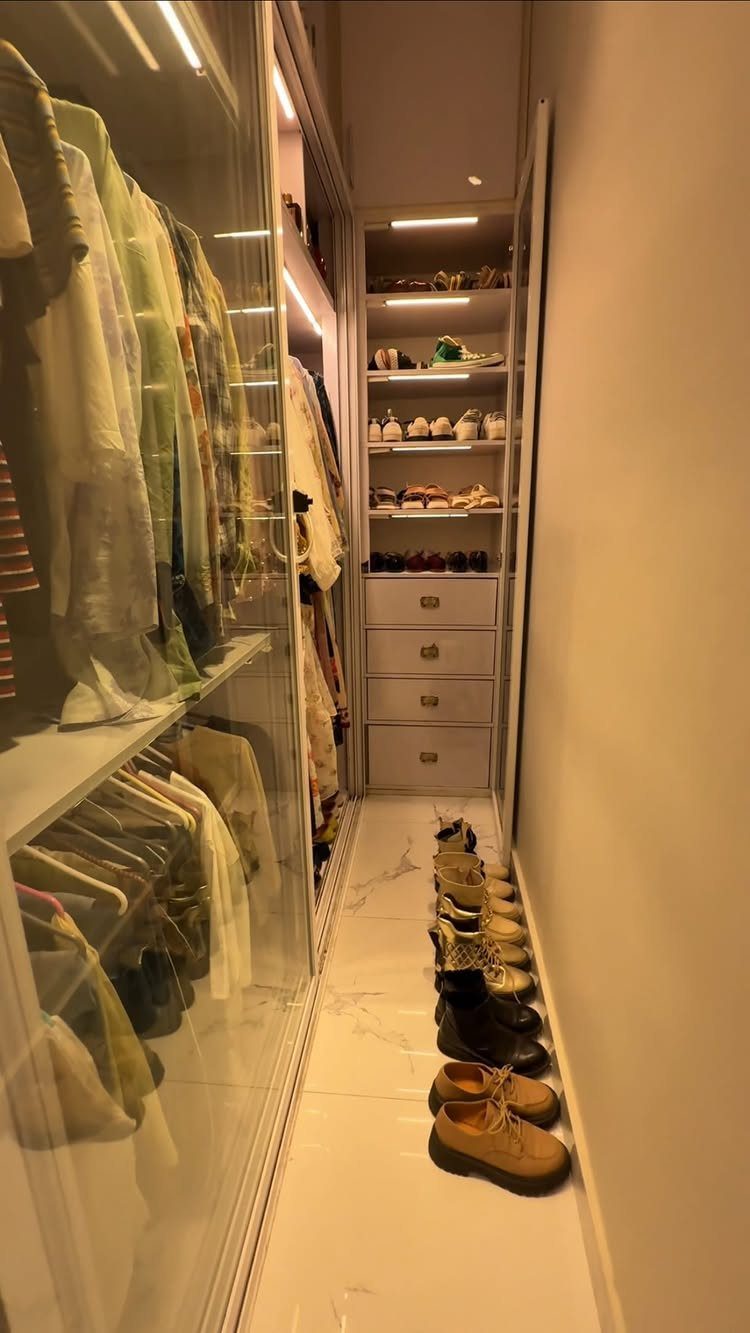
Strips of light on the edges of each shelf and up at the ceiling line make a narrow closet read deeper, and they let you pick out a black sweater against a dark back wall.
Stick-on LED strips are the budget route for a tight closet, and they suit renters because nothing gets hardwired.
Run the strip along the underside of a shelf front, where it lights the clothes below without glare in your eyes. Clean the surface first so the adhesive holds.
I’d pick a warm white so colors look true.
8. Multi-Layered Tiered Hangers
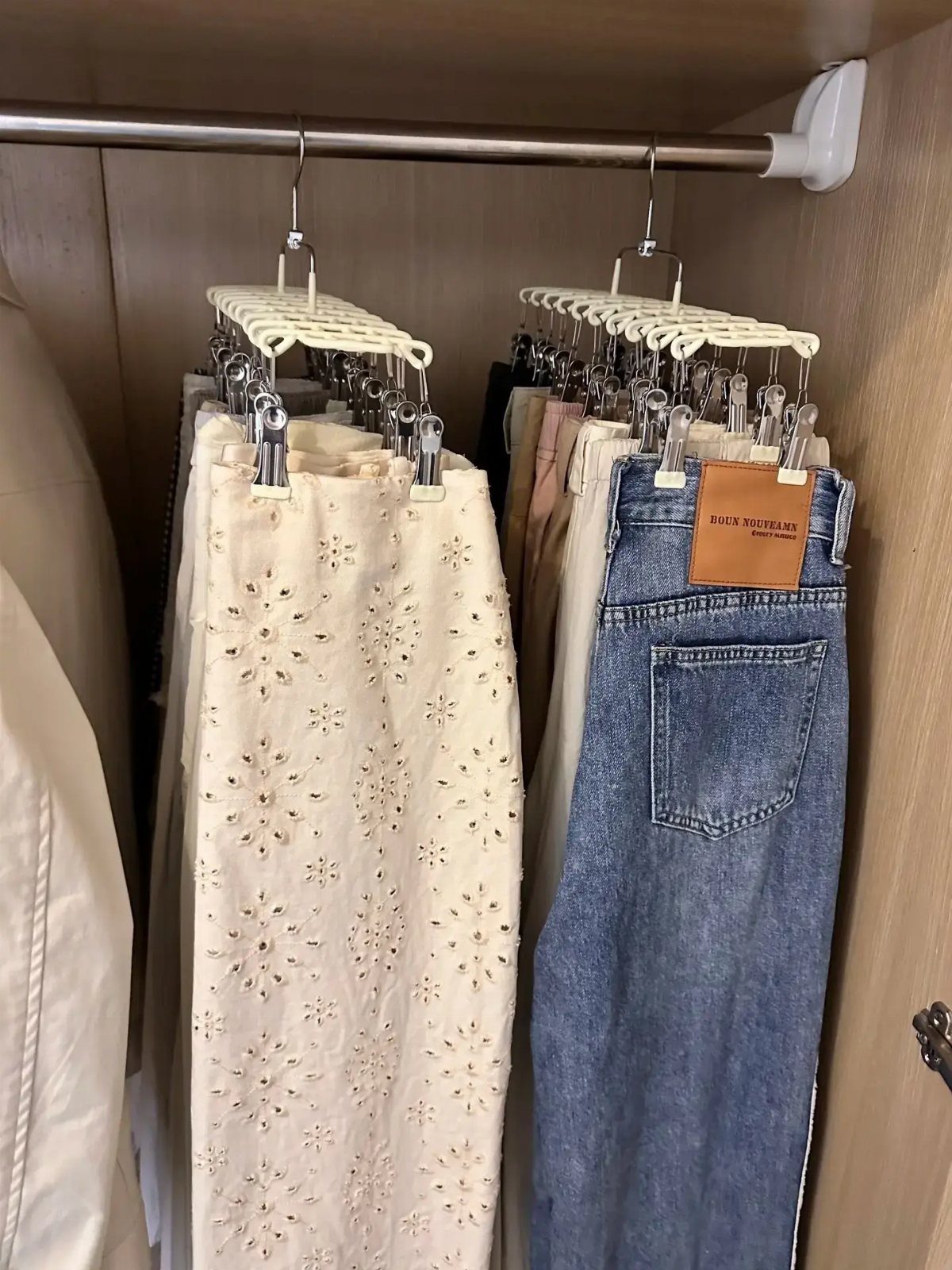
Several pairs of pants or skirts can hang from one multi-tiered hanger, so a single spot on the rod does the work of four or five. In a closet this tight, that frees up rod length without adding any hardware.
White plastic versions are cheap, and the slim arms keep jeans and lighter embroidered pants from bunching together. I’d hang the heavier denim on the lowest tiers so the stack stays balanced.
Check that the hanger’s hook turns freely on your rod, since a stiff one makes sliding a whole stack a chore.
9. Wire Mesh Drawer Units
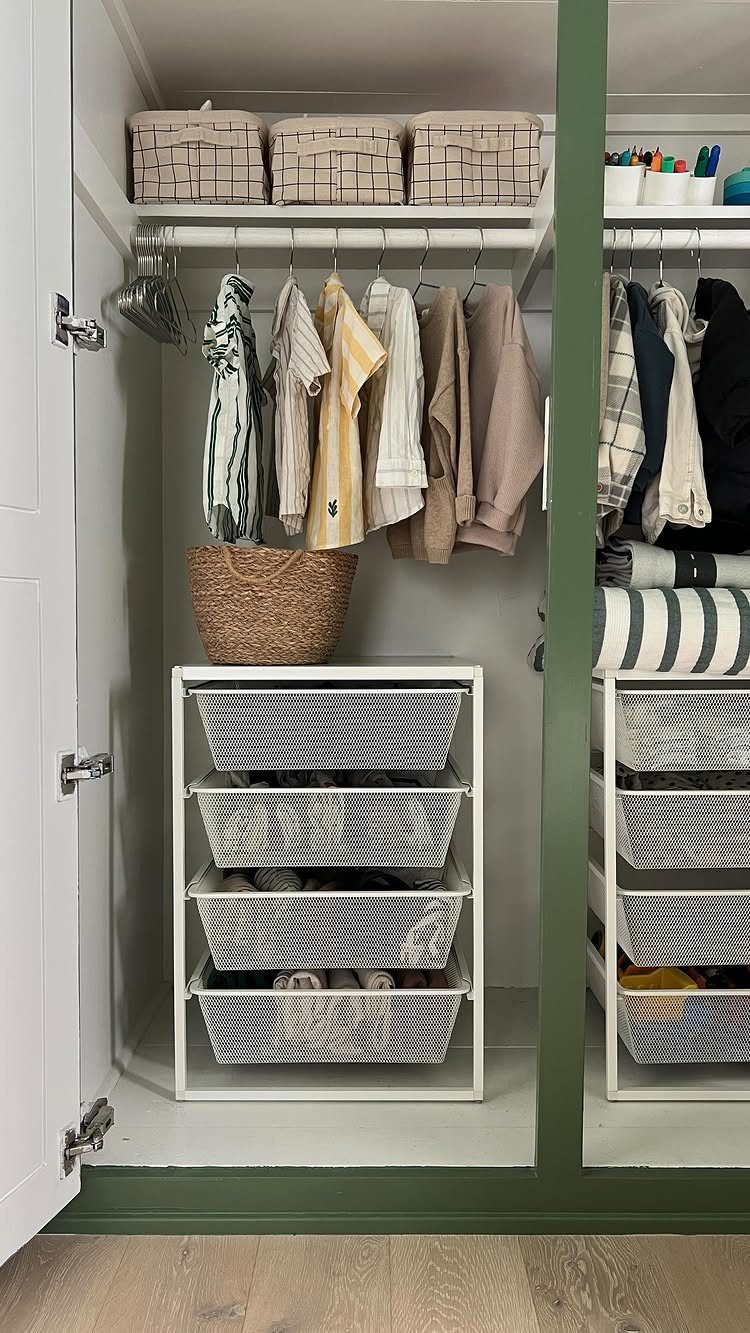
A freestanding metal unit with wire mesh drawers acts as a small dresser you can drop under hanging clothes. Nothing gets mounted, so it works in a rental, and you can take it with you when you move.
Mesh lets air through, which suits tees, workout clothes and socks. Fold small items into rows so they don’t slip through the gaps; a liner cut from fabric helps with the tiniest pieces.
Measure the space under your rod first, because the unit has to clear the hem of your longest hanging pieces.
10. Fabric Storage Bins
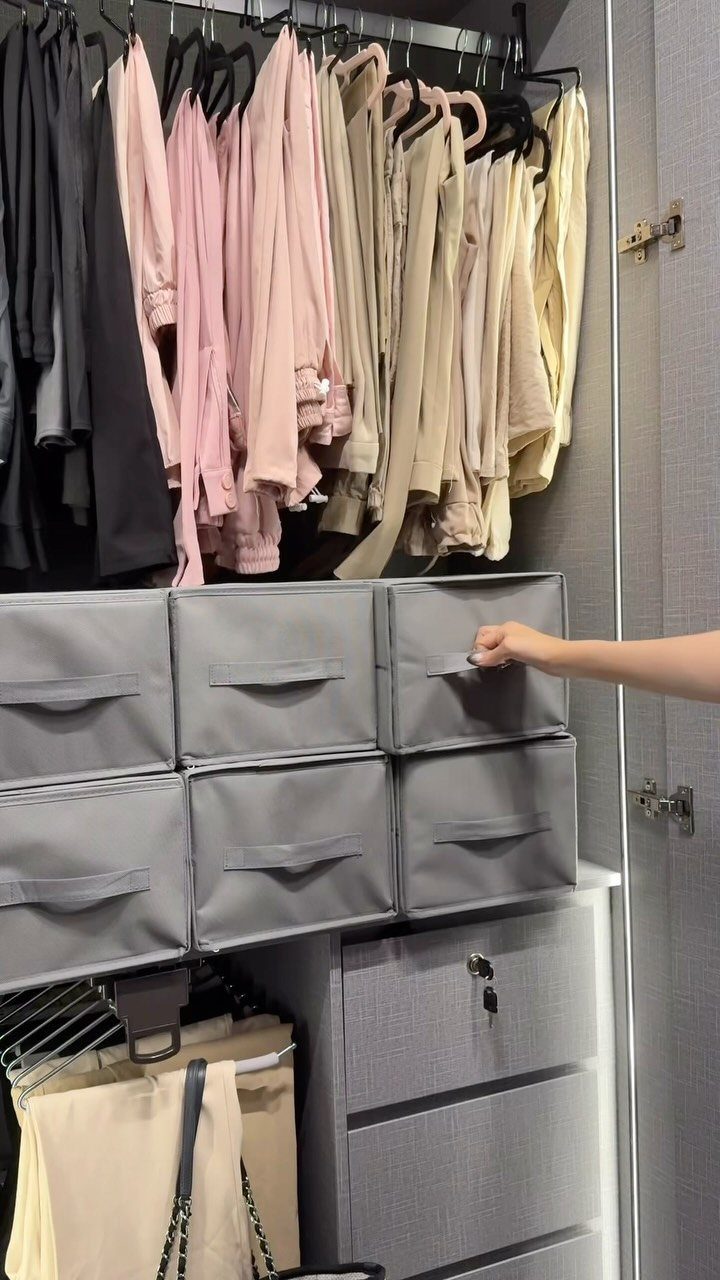
Matching fabric bins on a shelf above a dresser hide the visual mess of scarves, tees and loose accessories behind one calm color. Grey is a forgiving choice: it blends with most walls and clothes.
Buy bins in one size so they line up in rows, and measure shelf depth and height before you order. I’d label the front of each one, or you’ll end up opening all six to find a single belt.
Fabric bins are soft, so they suit light items better than heavy ones.
Assessing Closet Space
Start by pulling everything out of the closet: shelves, drawers, floor, all of it. Any closet under 6 feet wide turns into a catch-all for things with no other home, and you can’t judge the space until it’s bare.
Sort the pile by type and by how often you use each item. Seeing every sweater, bag and box at once shows what you own and what has been hiding in the corners.
With the closet empty, look at the walls. When floor area is tight, height is the biggest opportunity, so measure from floor to ceiling before you decide anything.
Stacked drawers, adjustable shelves or a single organizer that combines a rod with drawers can add capacity without crowding the space. Put what you use most within easy reach, and let the rest sit higher or lower.
Clutter Identification
Clear out the things that cause the mess first. 3 culprits take up prime space: organizers that don’t work, packaging and loose paper.
Any organizer that wobbles, sits crooked or doesn’t fit the width you have is making things worse. Replace it with matching pieces that hold more, and if the closet is dark, choose light colors so the space reads brighter.
Empty cardboard boxes take up air space and belong in the recycling bin. Loose paper should leave the closet altogether.
If you must keep a category, like household records, give it one file box so it stays contained.
Frequently Asked Questions
What are some good ideas for organizing my walk-in closet?
A double-hang setup is the quickest way to gain capacity: add a second rod about 36–40 inches below the first, and shirts, skirts and folded pants get their own tier, which nearly doubles what one wall can hold.
Clear drawers or bins add a layer where you can see what you own without digging.
How to store sweaters in a small closet?
Fold them to the same width and stack them on open shelves along a wall that was sitting unused.
Stacks of 4–5 sweaters are about the limit; any taller and the bottom one gets squashed, and pulling one out sends the pile sliding.
How to organize a small bedroom with no closet?
Bring in furniture that does the closet’s job. A freestanding dresser takes the folded and bulky items, and nothing has to be drilled into the wall, which suits renters.
Pair it with hooks or racks for bags and scarves, and stick to one color across the pieces so the room looks calmer.





