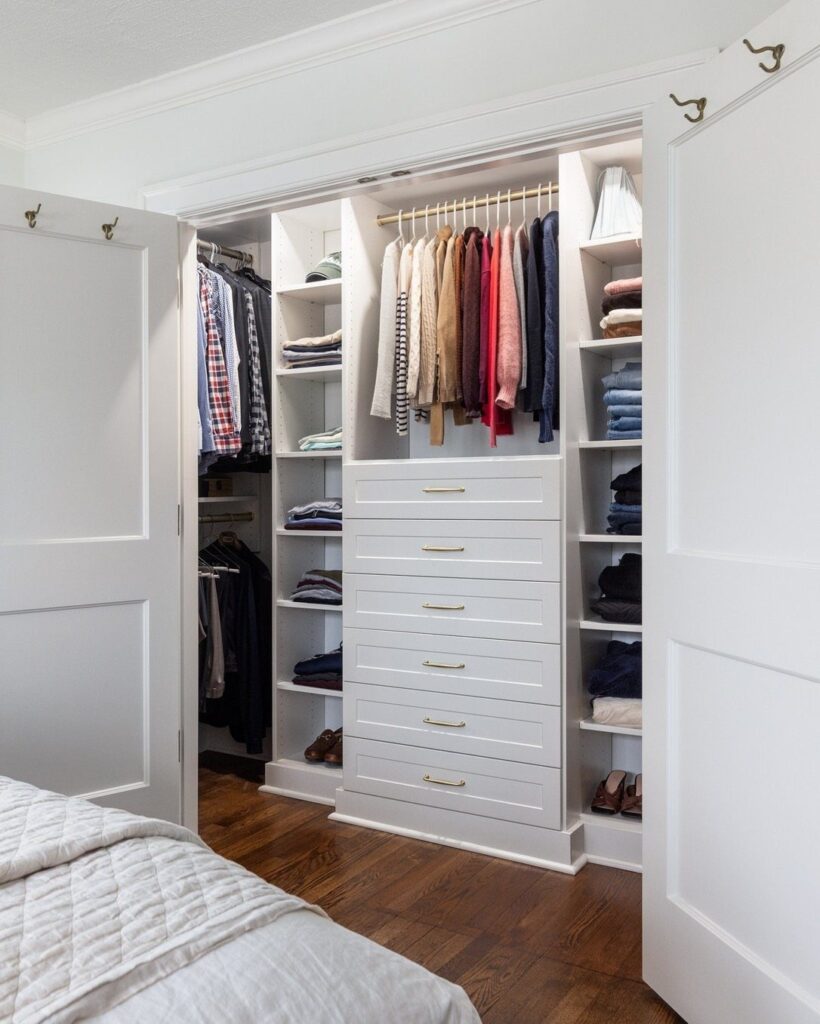
A reach-in closet’s depth and door type decide which of these ideas fits, before style or budget gets a vote.
The ideas run from free ones like color-coding and cheap velvet hangers up to pull-out racks and custom cabinetry, which I would only pick if you plan to stay.
1. Double-hanging Rods
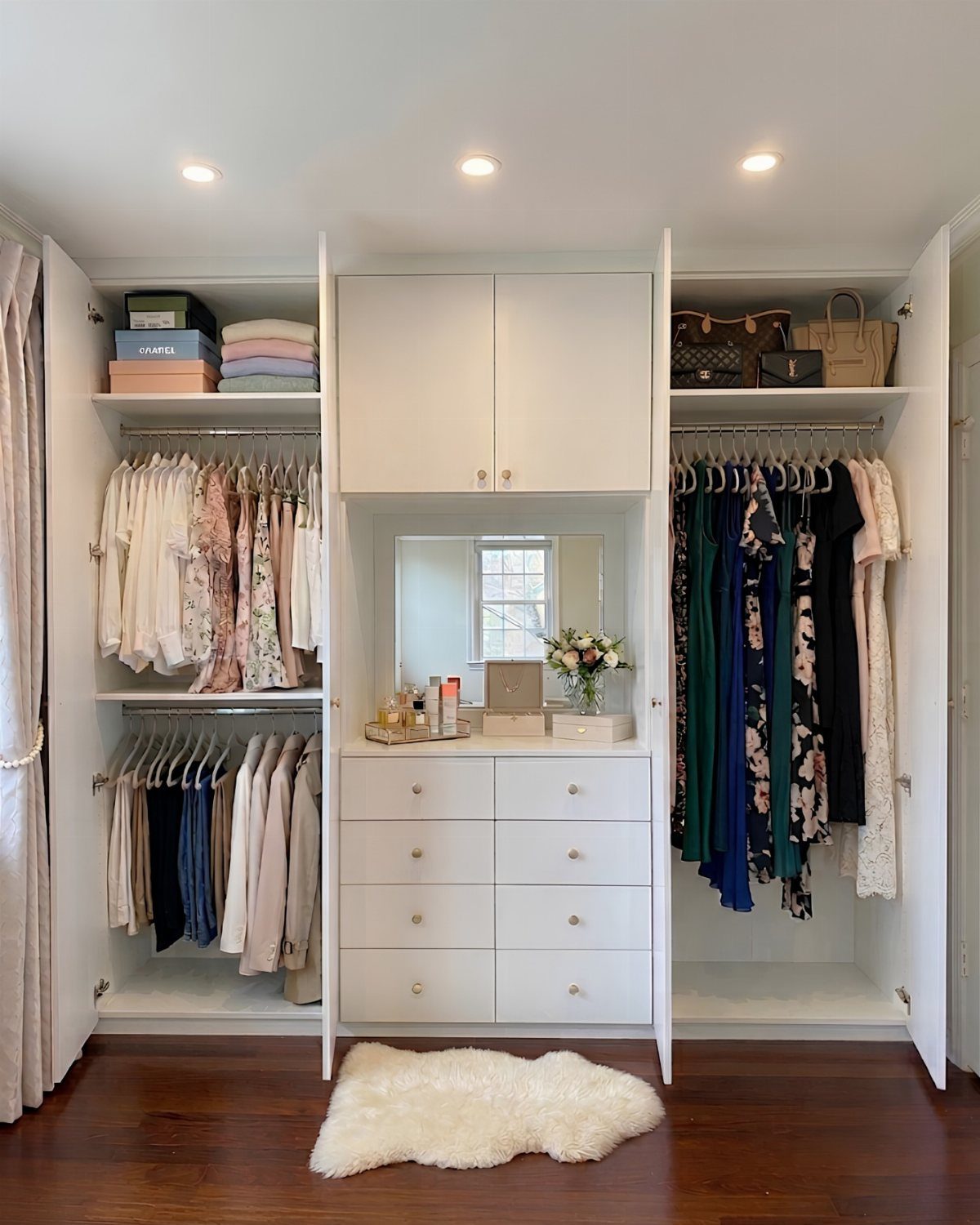
Two rods stacked on one wall give shirts, blouses and folded-over pants their own tier, and that alone nearly doubles what the same stretch of closet can hang.
Keep the top rod for the pieces you wear least, since reaching up is the annoying part.
Short items suit this best. Long dresses and coats need a full-height section, so leave one side single-rod while the other side doubles up.
2. Wall-mounted Racks
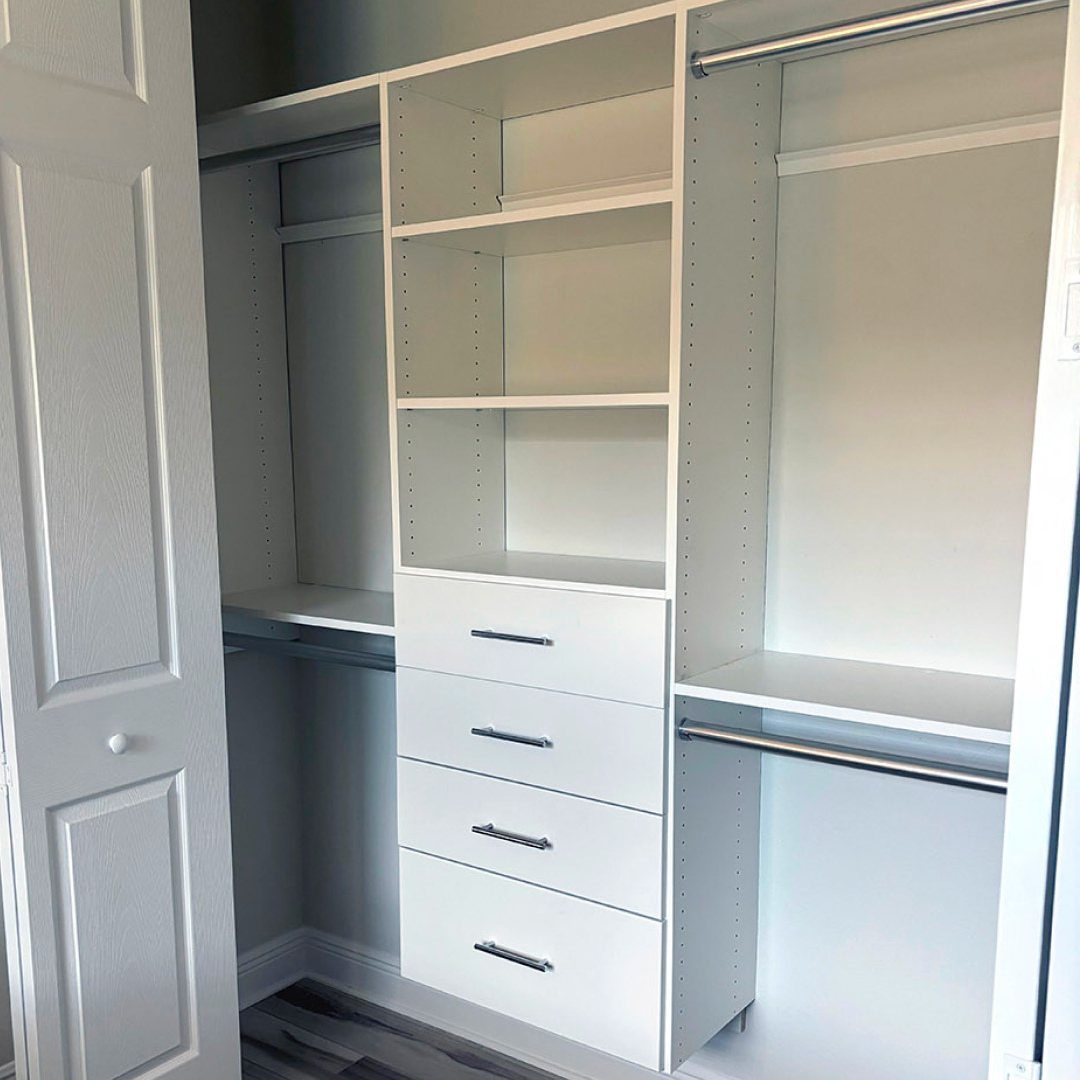
Mounting the whole system to the wall keeps the floor clear, and that makes a reach-in feel bigger than it is. Shelves, drawers and rods all hang from the wall, so vacuuming or setting a basket underneath stays easy.
A white finish reflects light into a narrow space. Pick a system with adjustable shelf heights if you can, because what you own will change.
3. Drawer Dividers
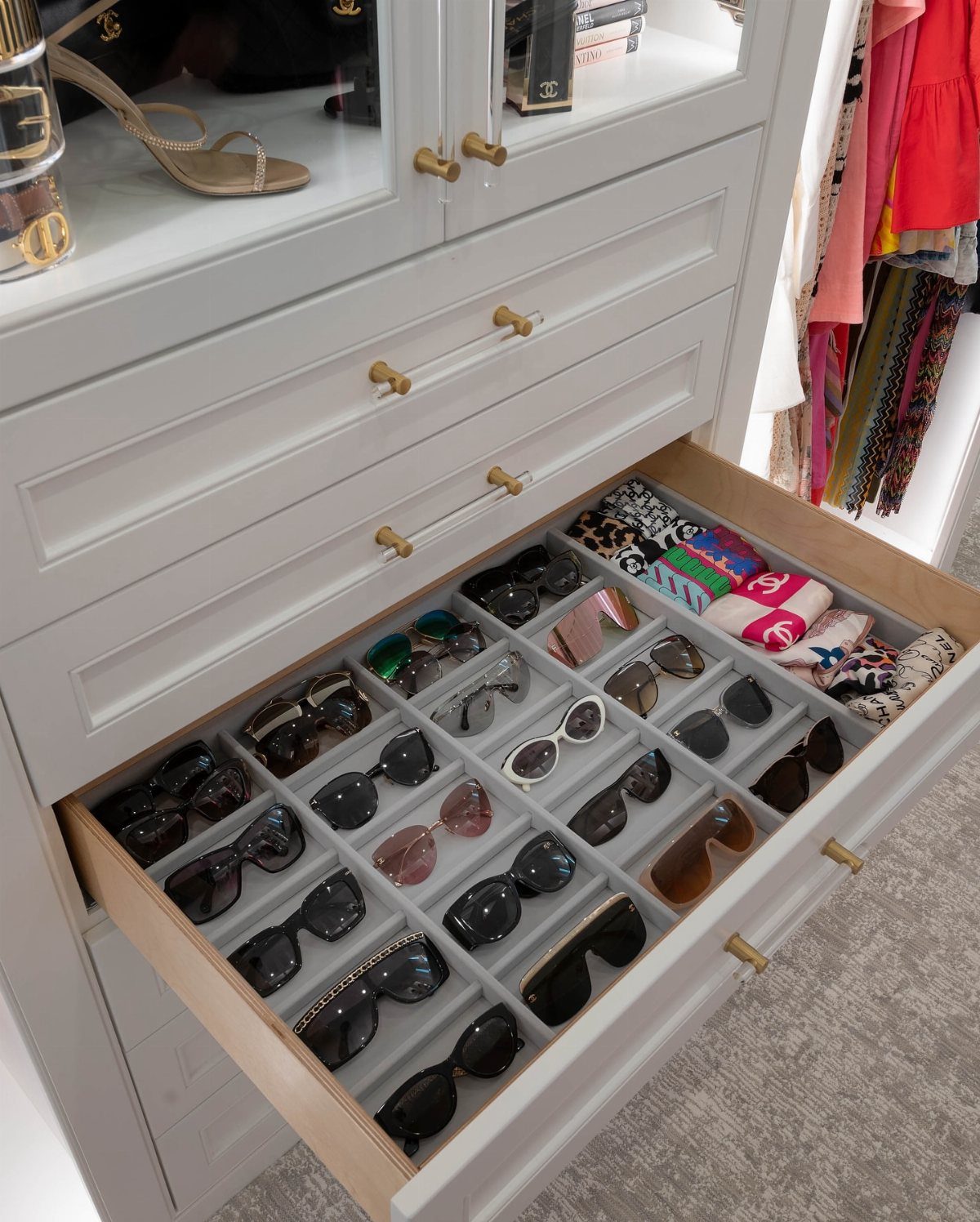
Clear acrylic dividers turn a jumbled drawer into labeled-by-sight compartments. Sunglasses get their own slots, and socks roll into rows instead of sinking to the bottom.
Measure the drawer’s inside width and depth before buying.
Pieces that slide or stack let you reshape the layout later. For a budget version, I like trimming sturdy boxes to fit, though clear dividers make contents easier to spot at a glance.
4. Custom Cabinetry
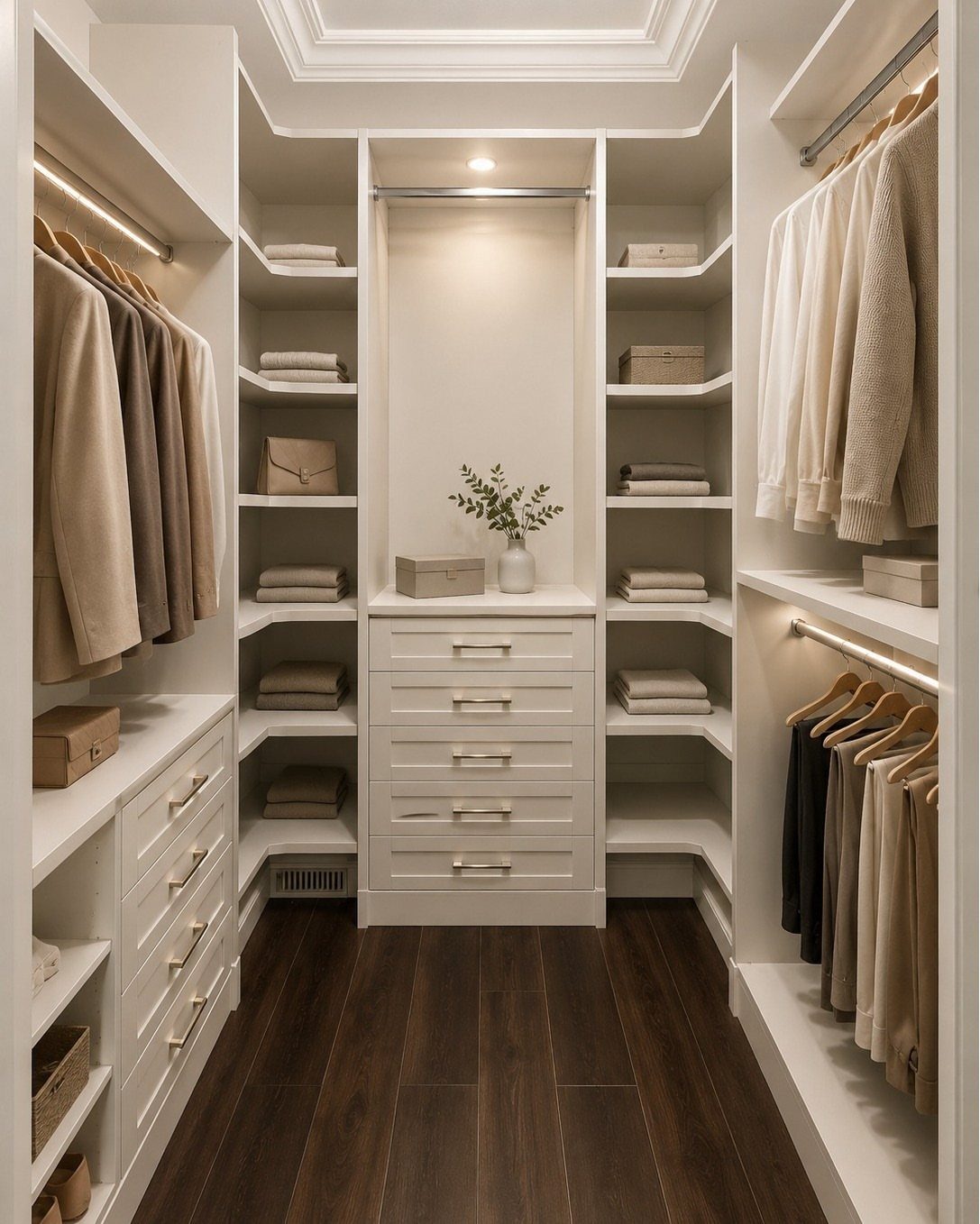
Built to the exact width and height of the room, custom cabinetry leaves no dead corners and no awkward gaps above the rods. Drawers, open shelves and hanging sections can each be sized for what you actually own.
This is the priciest route, and I would only choose it if you plan to stay. Painting everything one color, white here, keeps the whole wall looking sleek and calm.
5. Curtains Instead of Doors
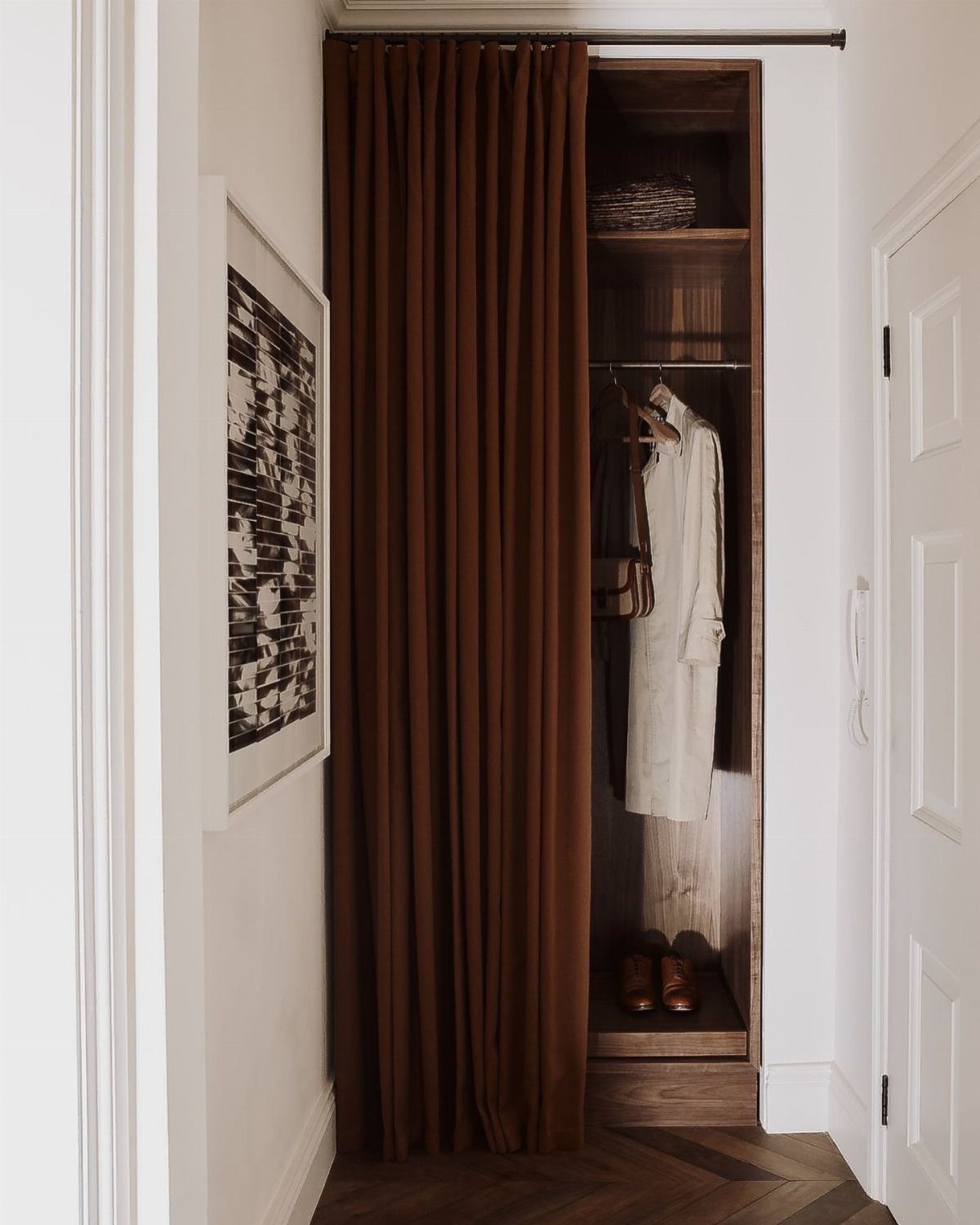
A fabric panel on a rod costs far less than hinged or sliding doors, and it removes the swing space doors need. In a hallway, that clearance matters.
Hang the rod wider than the opening so the curtain stacks beside it instead of covering the clothes.
A heavier fabric hides clutter better than a sheer one. The trade-off: curtains offer no dust protection, so keep the contents tidy.
6. Crown Molding
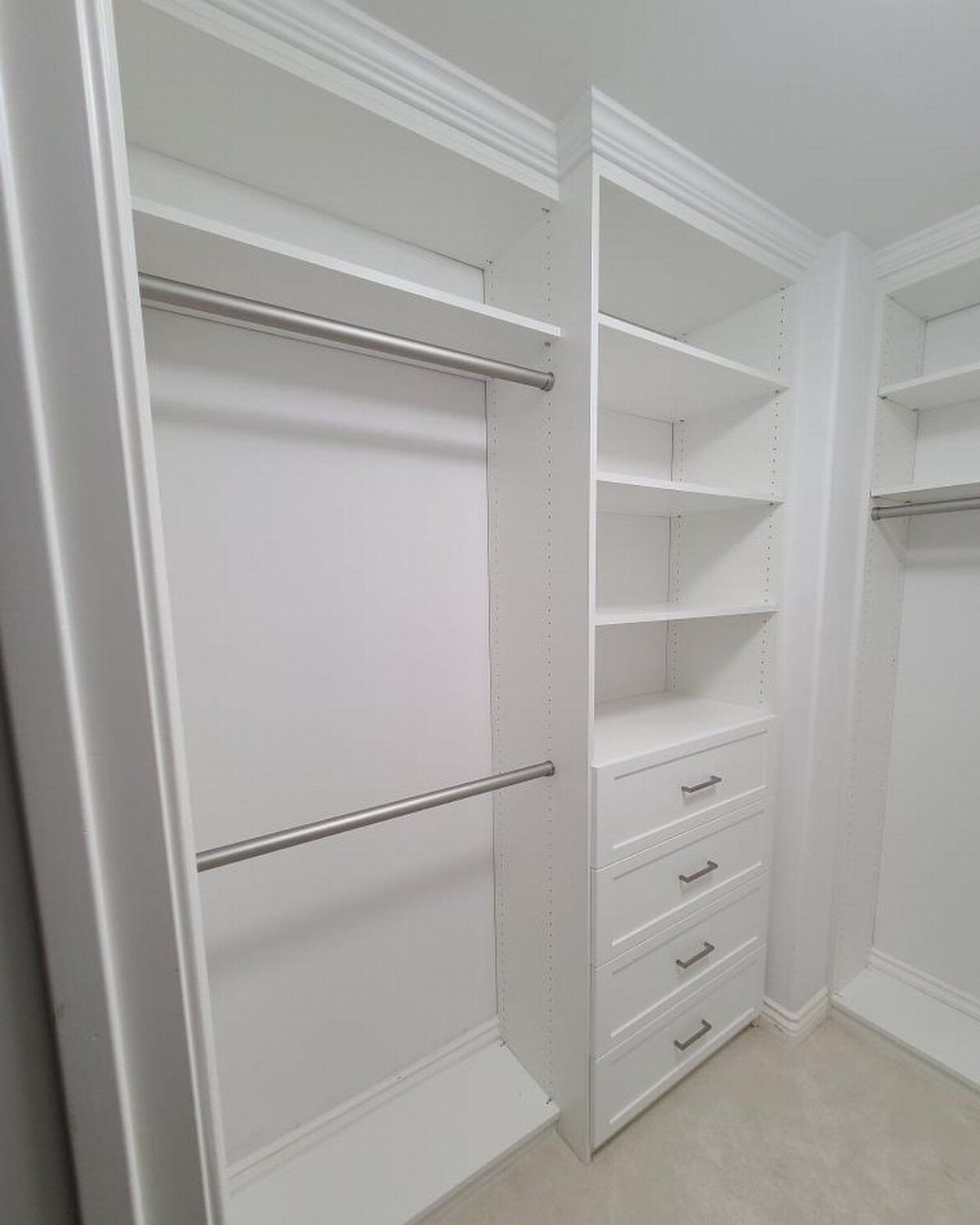
Crown molding at the top of a built-in closes the gap between cabinetry and ceiling, so the closet reads as part of the room rather than a box added to it.
Painting the molding the same white as the cabinets keeps it quiet.
Install it last, after the shelves and rods are in. It adds no storage, so treat it as a finishing touch that makes a basic system look built to order.
7. Pull-down Clothing Rack
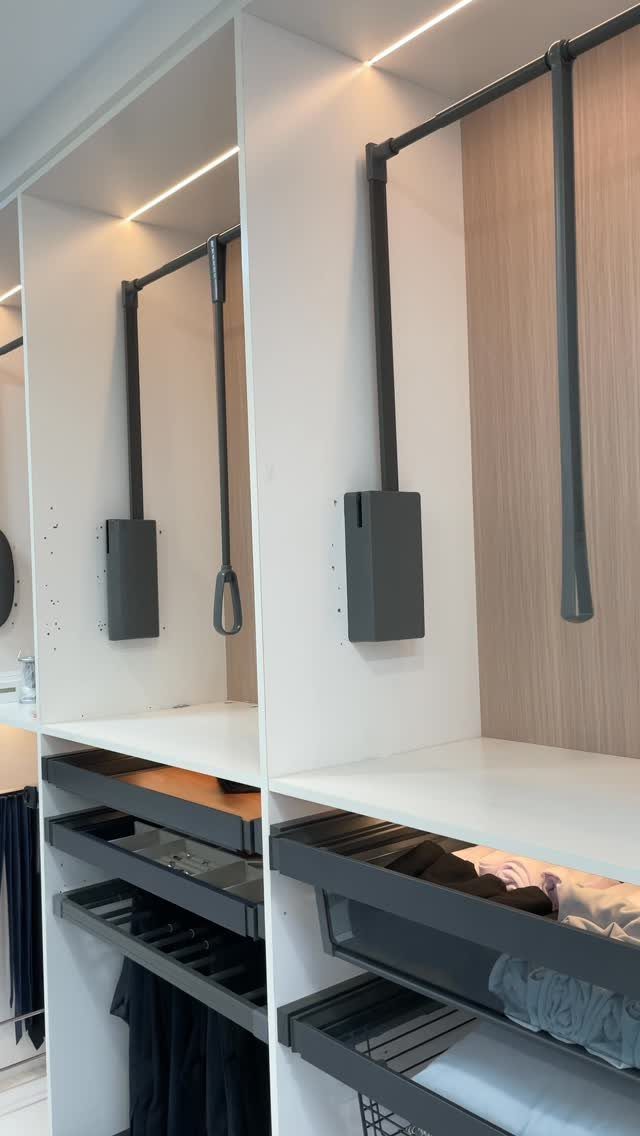
A pull-down rod hinges at the top and glides down and forward, so the highest hanging space stops being a stretch-and-guess zone.
That makes it a strong partner for a double-hanging setup, since the upper tier is the one you skip most.
Check the clearance in front of the rod before buying.
The arm needs room to swing down past the lower garments. A light mounted above a pull-down rack, ideally a slim LED bar, lets you see what you grab without pulling everything forward.
8. Wall Hooks for Accessories
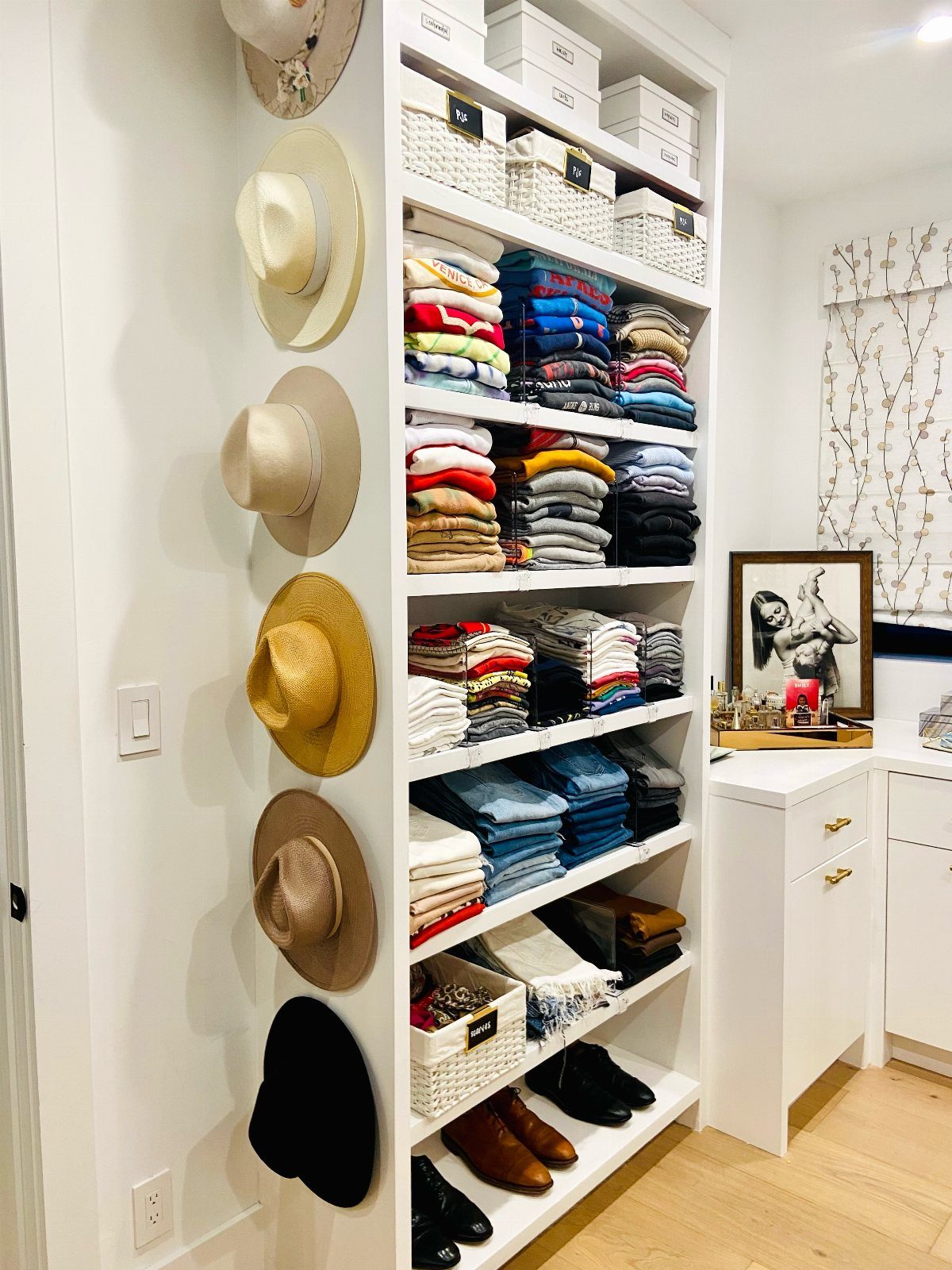
Hooks on the wall beside the closet keep hats, bags and scarves in sight, so the things you grab daily never get buried on a shelf.
Hats on wall hooks look tidy in a row, and each one needs a good stretch of wall, so measure your wall before you buy hooks.
Space the hooks evenly and mount them into studs or use proper anchors, because a hat is light but a tote is not.
Keep the hook color matched to the wall for a quiet look. This works best for the few items you reach for weekly.
9. LED Lighting
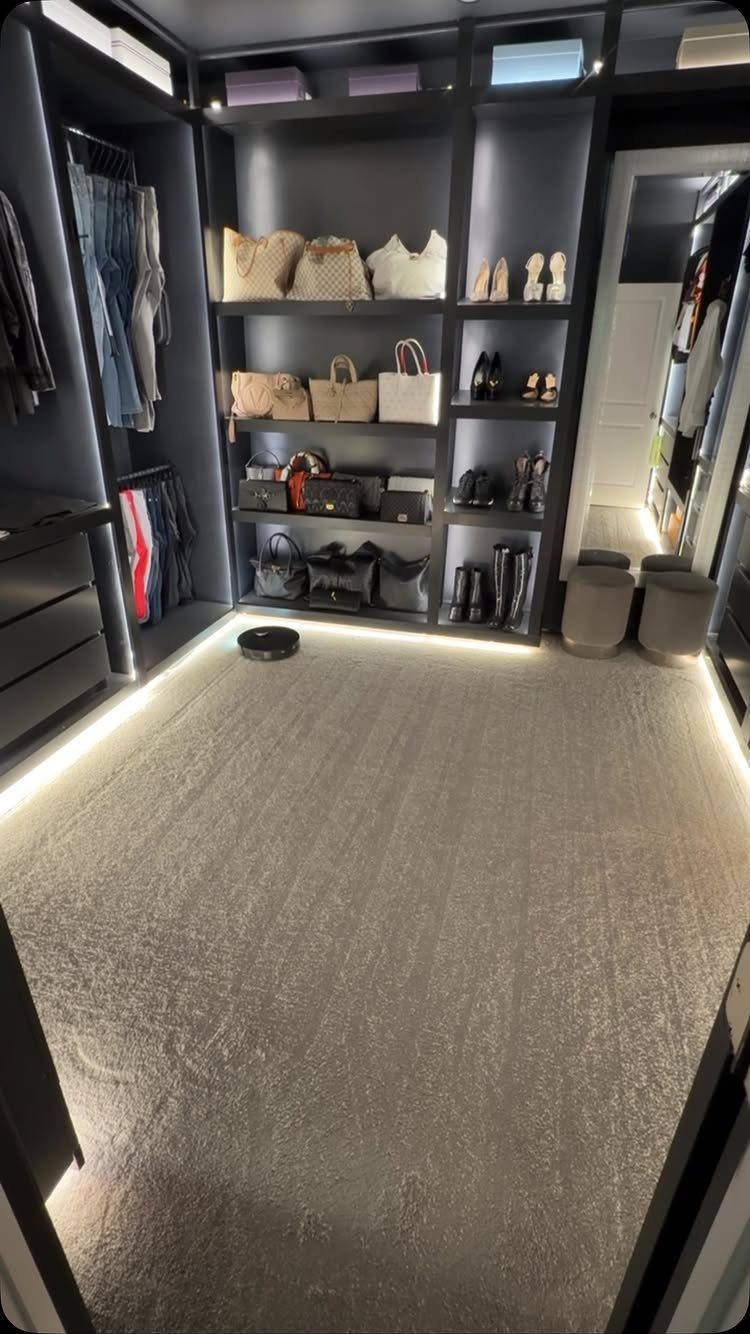
LED strips along shelf edges and baseboards light the closet from several angles, so shadows stop hiding the back row. Dark finishes gain the most, since a deep grey absorbs ceiling light and swallows shoes and handbags.
Pick plug-in or battery strips if you rent; they stick on and peel off.
Mount them toward the front edge of each shelf so the glow falls on what you store. A strip at floor level makes it easy to find the shoes on the bottom.
10. Mirrors in the Closet
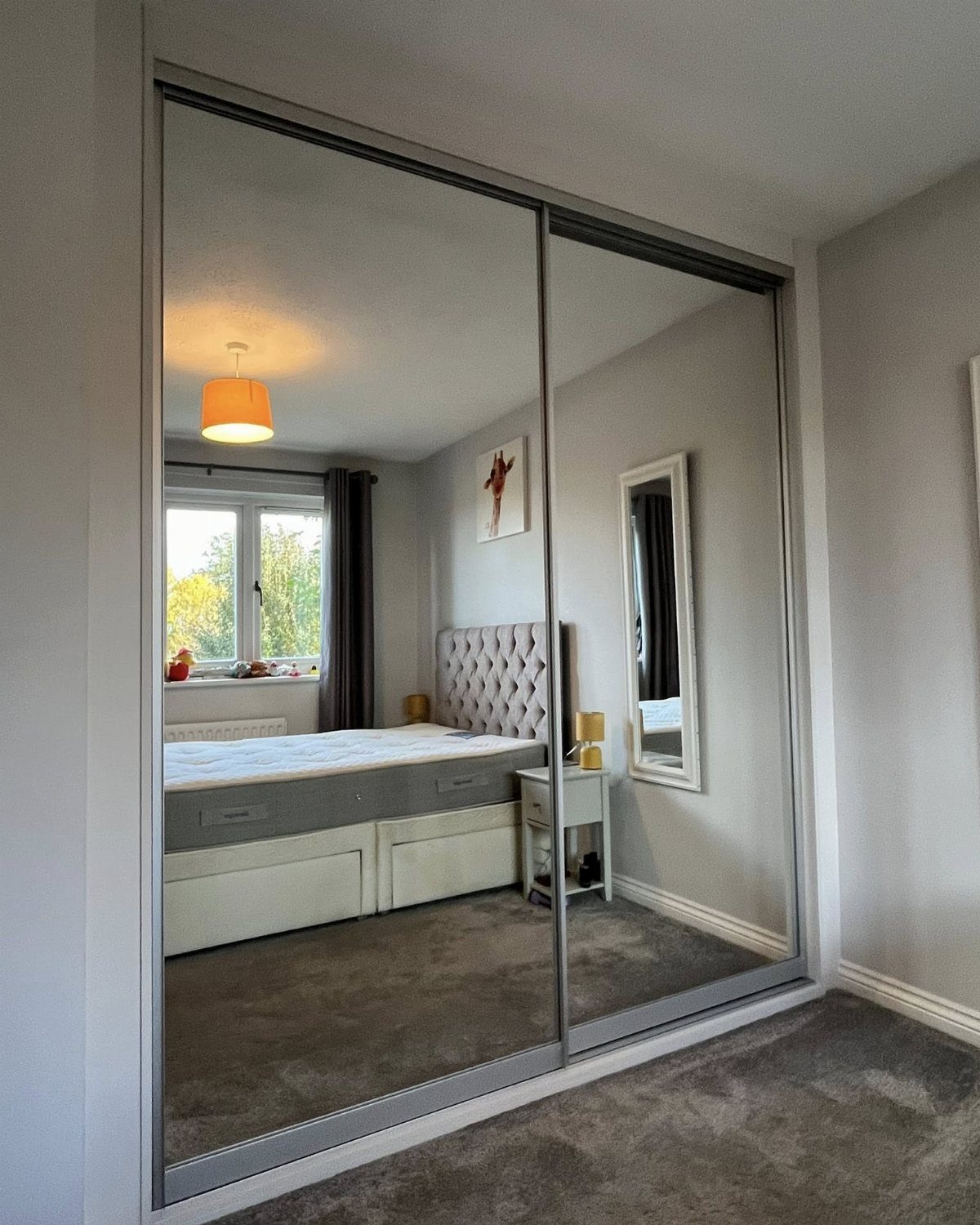
Mirrored sliding doors serve as a door and a head-to-toe mirror in one piece, and the reflection makes a bedroom read wider. That saves wall space for a bed or dresser.
Sliders also skip the swing clearance hinged doors need, though you can only reach half the closet at a time.
I prefer large panels with slim frames, since they show fewer seams in the reflection. Keep the glass clean, because fingerprints show up fast on a surface this big.
11. Color-Coded Clothing
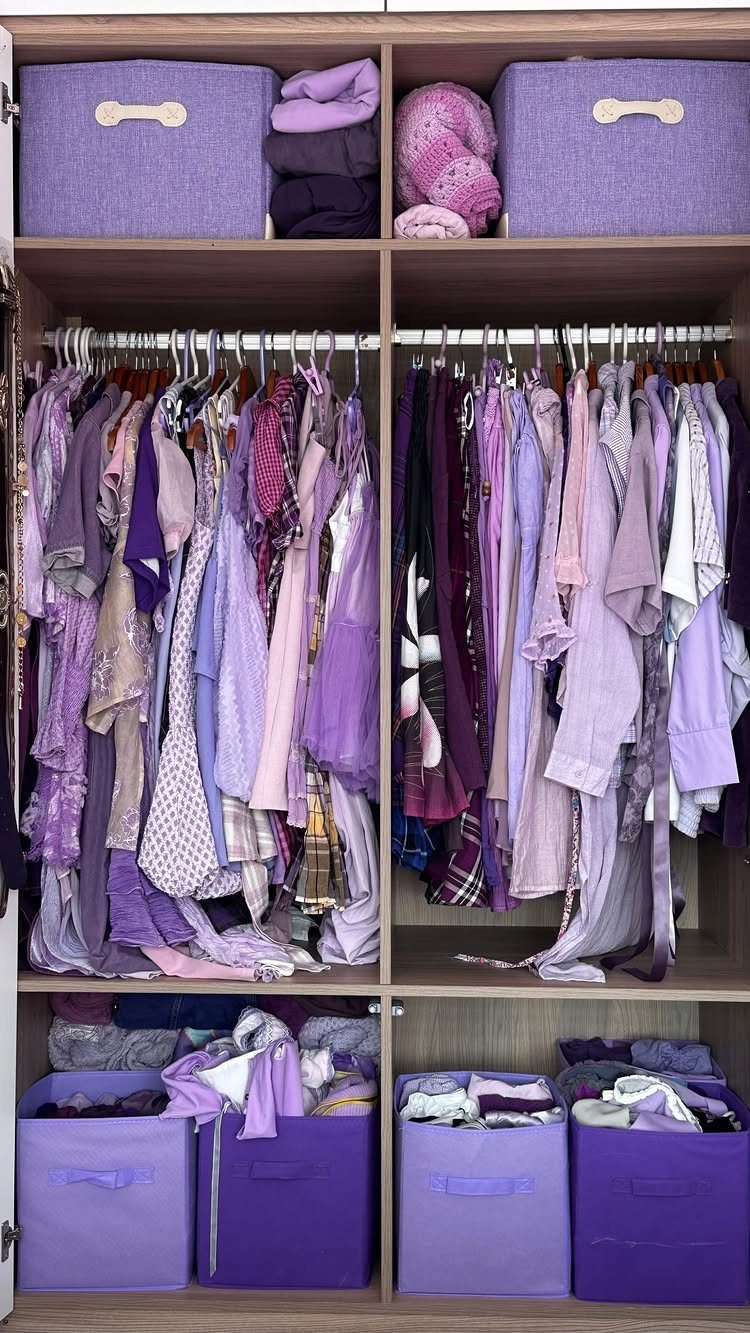
Sorting by color turns a closet into a gradient, and it works as a finding system too: you look for the lavender top where lavender lives.
Within each color, group by type, such as tops before pants, so the order holds up.
Start by pulling everything out and sorting on the bed. Hang pieces light to dark.
Bins can follow the same rule for folded items. It costs nothing, and the only upkeep is returning each piece to its slot.
12. Center Shelving and Drawer Tower
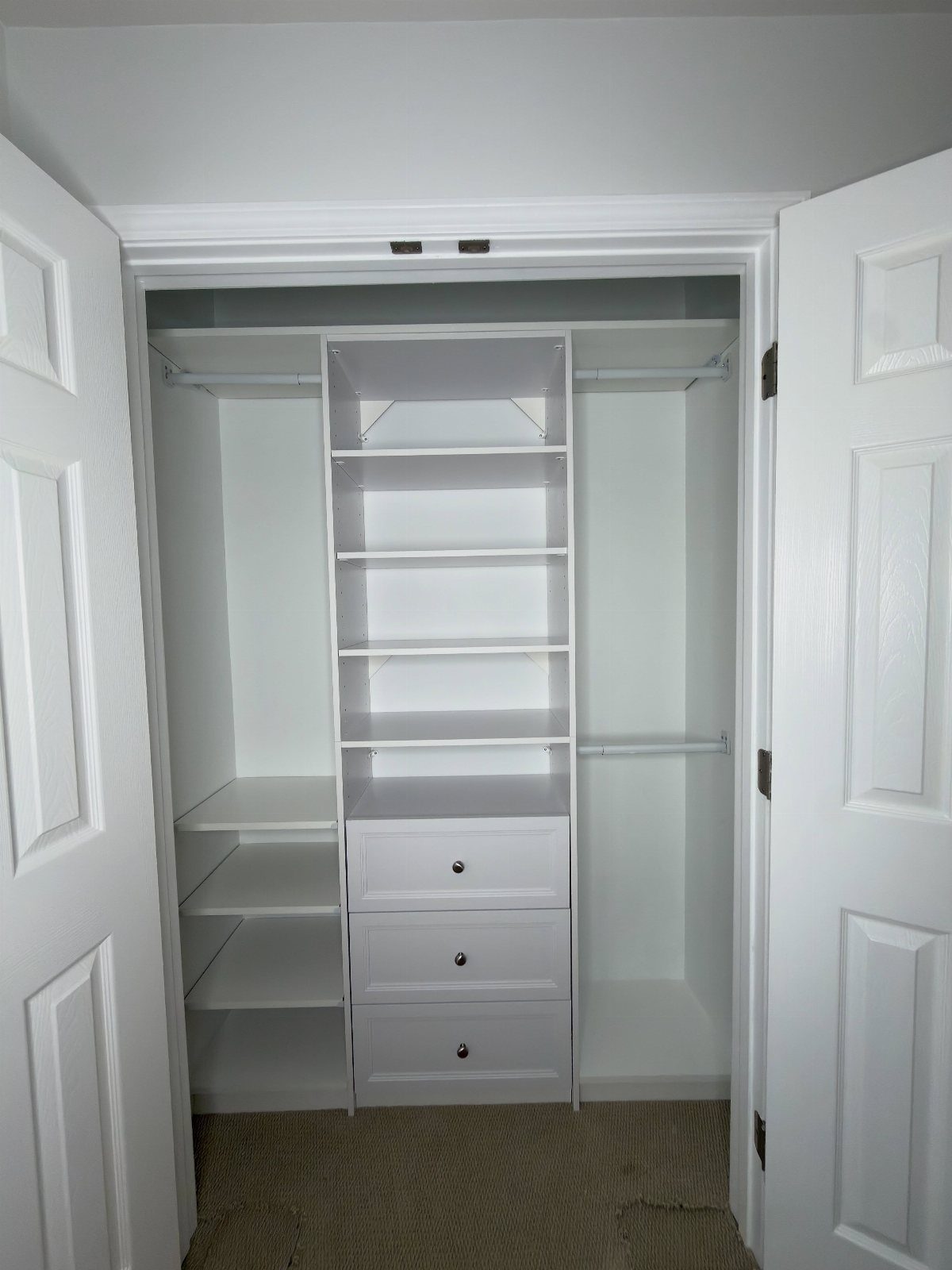
A central tower of open shelves over 3 drawers splits a reach-in into zones: hanging space on both sides, folded clothes and small items in the middle. It replaces a separate dresser, which frees floor space in the bedroom.
Measure the width first, then give the tower enough room that each hanging side still fits a hanger sideways.
Drawers should hold the things you fold, and shelves the pieces you want to see. I like a white finish here, since it keeps the middle from looking heavy.
13. Velvet Hangers and Wicker Baskets
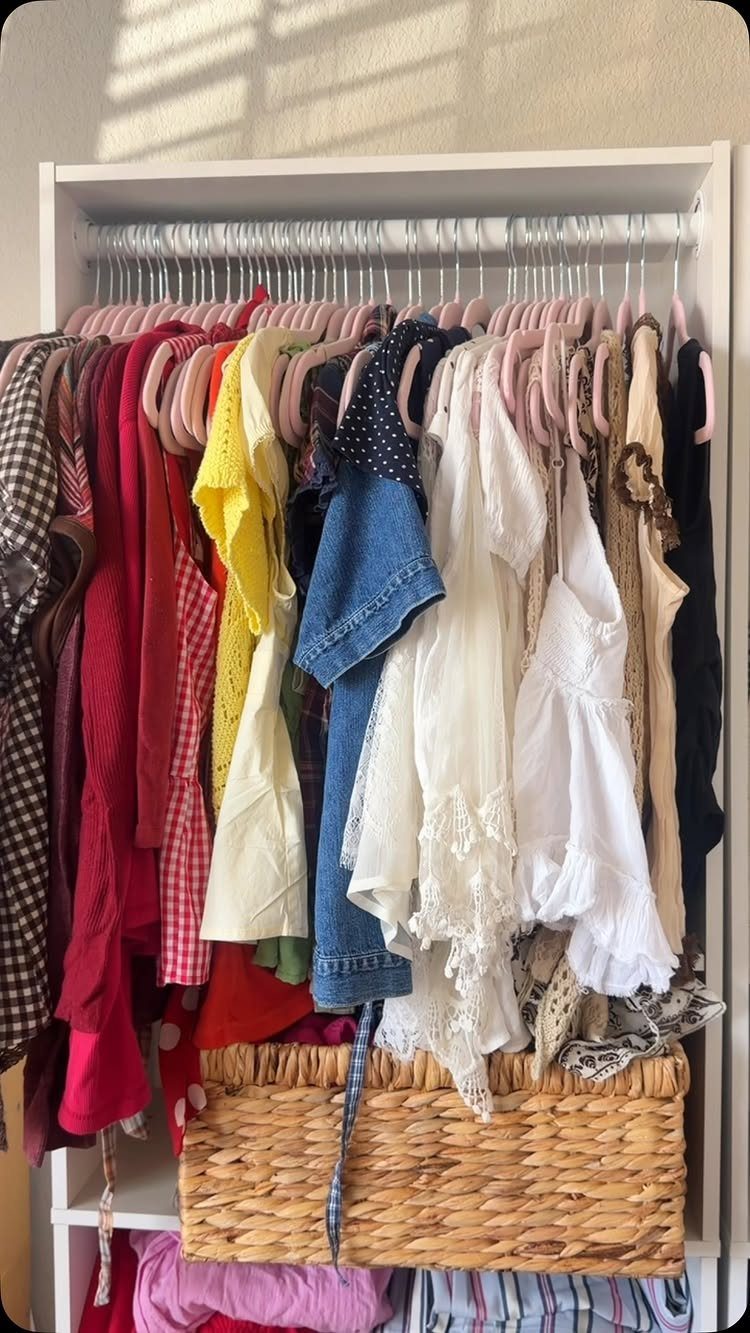
Matching slim velvet hangers do more for a closet than their price suggests. The grippy fabric keeps straps and silky blouses from sliding off, and one color down the whole rod reads as order before you fold a thing.
A wicker basket on a shelf below takes the loose items: scarves, belts, small accessories. Pick a basket sized to the shelf so it sits flush, and skip any with rough weave edges that could snag knits.
Swap hangers gradually if the budget is tight, starting with the rod you see first.
14. Linen and Pillow Storage Shelves
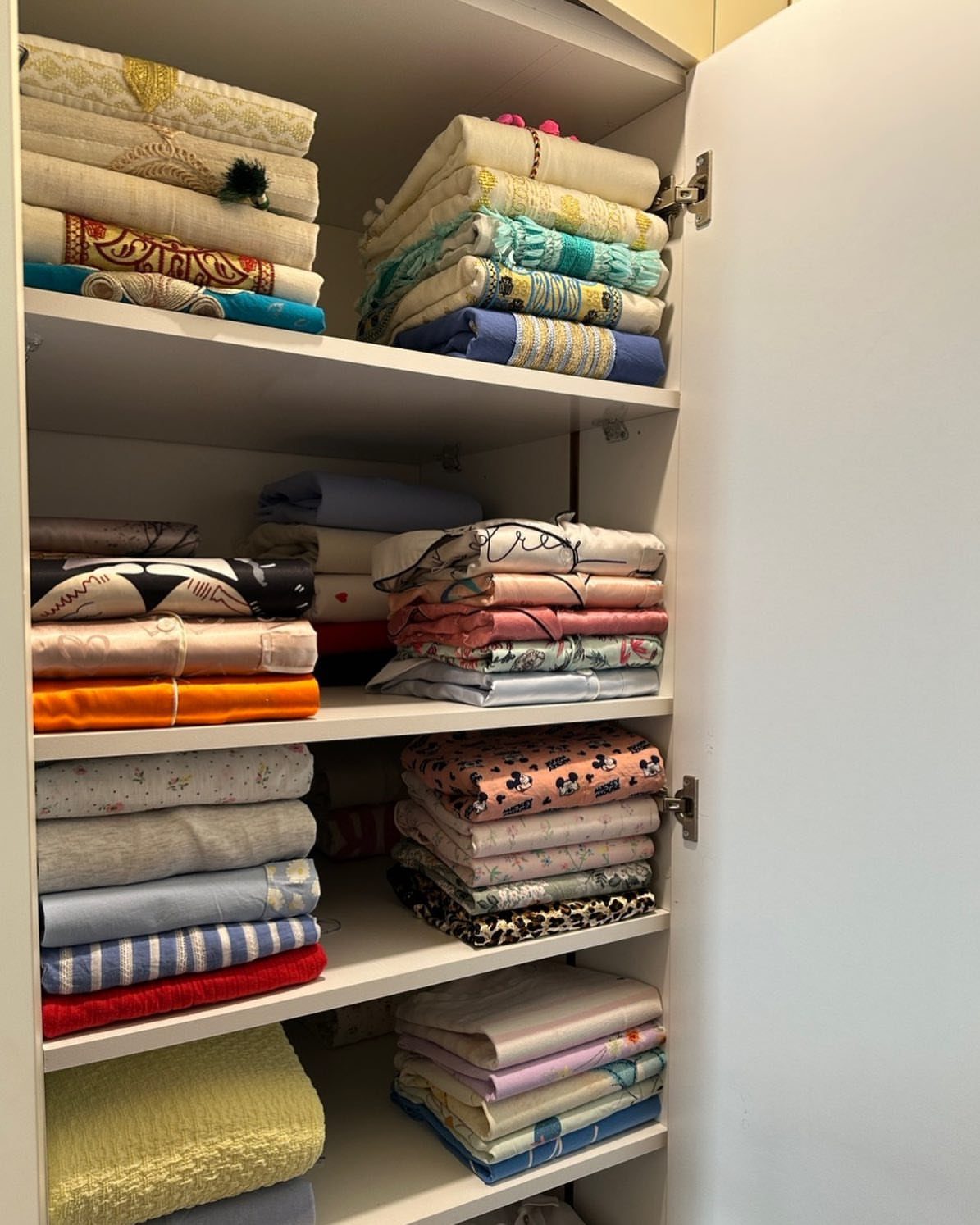
Shelves reserved for folded linens and pillow covers turn a reach-in into a small linen closet, handy in a home with no hallway cupboard.
Stacks hold their shape best when you fold every piece to the same width and set the fold edge facing out.
Sort by set, so sheets, pillowcases and towels each get a shelf. Keep stacks low, since tall piles slump and tip when you pull from the middle.
I’d give the most reachable shelf to whatever you use weekly, and the top one to guest bedding.
15. Pull-out Trouser Rack
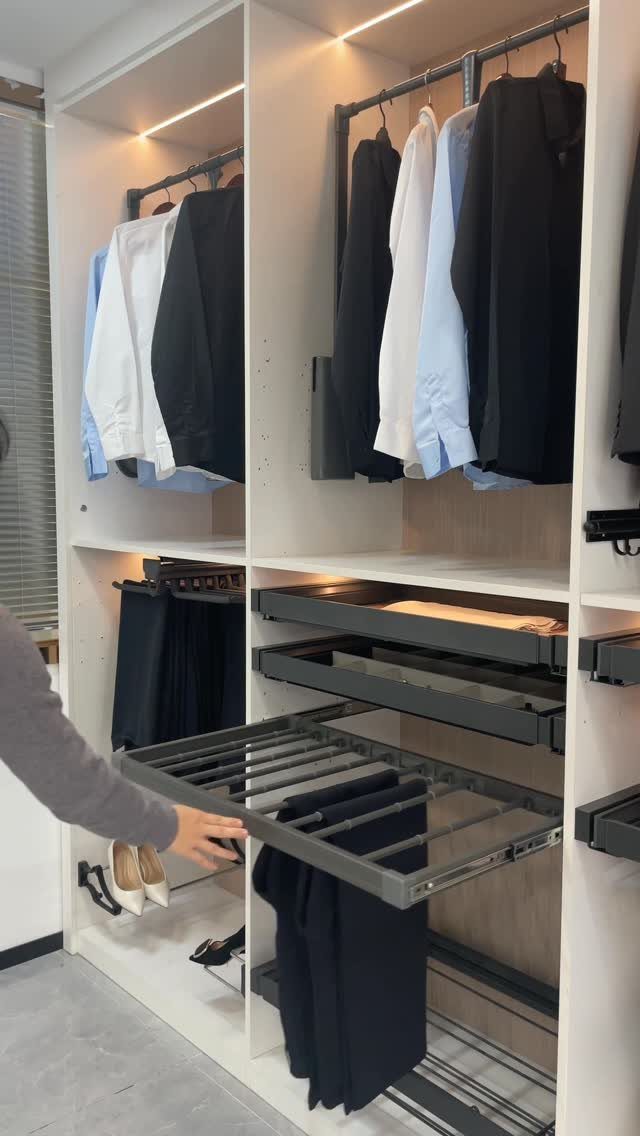
Pants hung over a sliding rack stay creased only where you fold them, and the rack brings every pair into view with one pull.
Mounted beside drawers and hanging clothes, it uses a narrow slice of width that a fixed rod would waste.
Check that the closet has enough depth for the rack to extend fully, and leave room to open it without bumping neighboring garments.
Put a small LED fixture or a stick-on light bar above the rack, because the back of a reach-in closet stays dim and navy and black pants look identical without it.
It costs more than a plain rod, but I think it wins for anyone who owns many pairs of pants.
16. Pull-out Shoe Rack
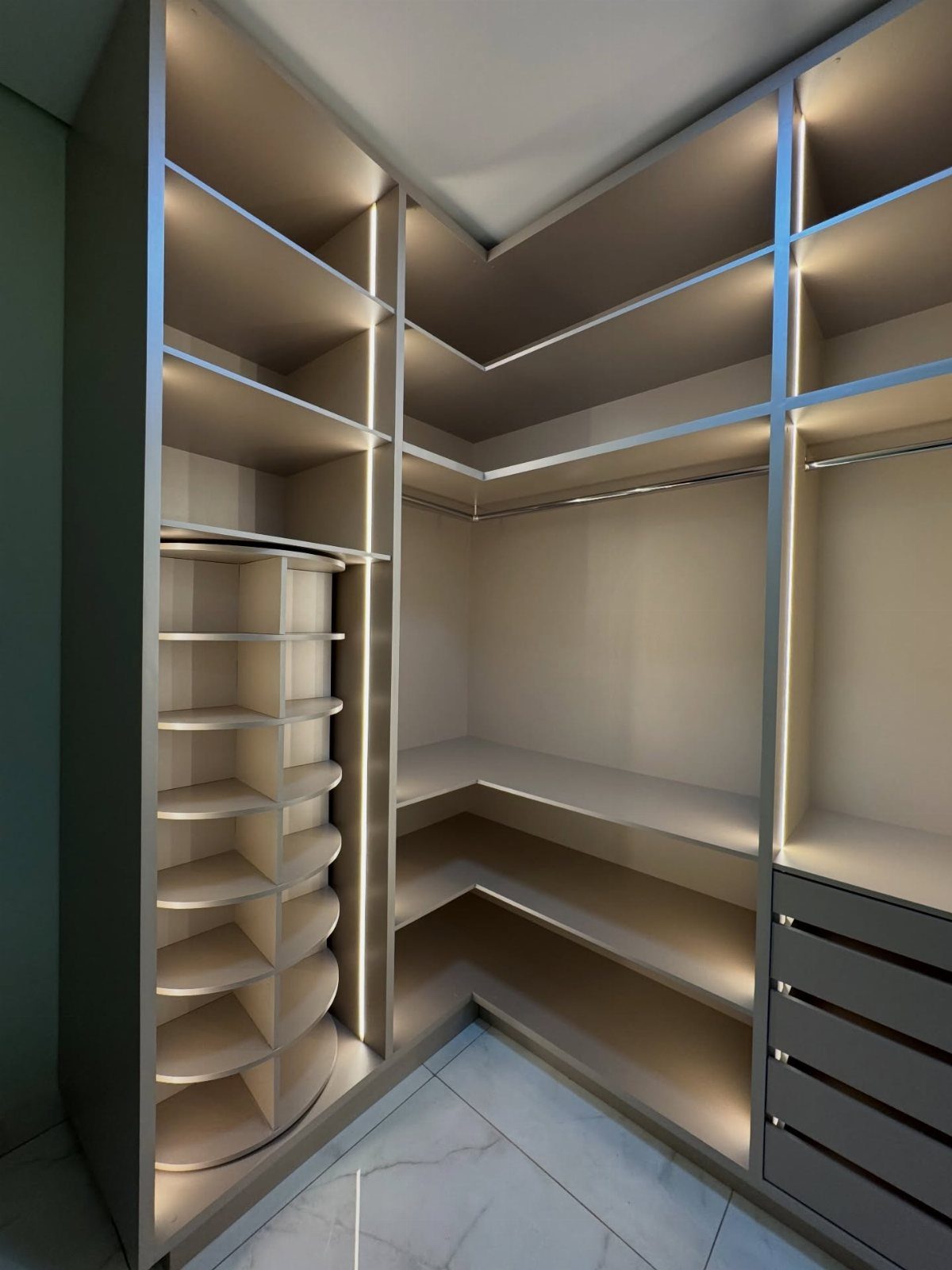
A pull-out shoe rack brings the back pairs forward, so you stop stepping over the front row to reach what you want.
A curved rack suits a unit with other shelves and drawers, since the shape keeps pairs angled toward you.
Measure your longest shoe, boots included, before choosing a rack depth. Mounted at floor or knee height, it keeps footwear off the open shelves and leaves those for bags.
Expect a rack like this to cost more than a fixed shelf, so pair it with the shoes you wear most.
Common Design Mistakes
Door type causes more regret than any other choice. Decide which limit you can live with before you buy anything.
Check the depth next. A standard hanger is roughly 17–18 inches wide, so a closet shallower than 22–24 inches will press clothes against the back wall and pinch them against the doors.
Hinges deserve a look too. Set pull-out drawers toward the middle of the closet; near the sides, they can catch on the door frame or hinges as they slide out.
One rod hung at 65 inches leaves a large block of unused space below it. Use 2 tiers for shirts and pants so the same width holds far more.
Cost Considerations
Basic modular laminate sits at the entry level. Bespoke hardwood with built-in drawers and integrated lighting sits at the top.
If your budget is a modest one rather than thousands, that range says something useful: a custom build suits a home you plan to keep, and a basic system you install yourself covers most of the same function.
Spend on the parts you touch daily, like drawers and rods, and keep the rest plain.
Get at least a few quotes if you go custom, and ask what the number includes before you compare them.
Material Choices
Pick the material by the finish you want, then check it against your budget.
High-density MDF is the standard choice for a smooth, painted lacquer finish. It takes paint evenly, so it suits a clean, solid-color look.
If you want visible, natural wood grain, choose layered plywood with a hardwood veneer, such as white oak or walnut. Expect that to cost more than painted MDF.
If you want the most durable build, plywood is the structural choice, and you can still paint it.
I’d choose painted MDF for a budget-minded closet where the surface will be one color, and move to veneered plywood only when the grain is the point.
Frequently Asked Questions
What are some good ideas for organizing my walk-in closet?
Run double rods on both side walls for shorter items, then leave one wall single-height where long coats and dresses hang full-length.
A center tower with shelves above and drawers below holds folded sweaters, accessories, and anything that doesn’t need a hanger.
Wall hooks just outside the door give you a place for bags and scarves you reach for daily, and strip lighting under each shelf means you can actually see what’s pushed to the back.
How deep is a typical reach-in closet?
Most reach-ins run about 24 inches deep, and that is the usual minimum for hanging clothes.
Most hangers measure 17–18 inches front to back, so a closet under 22 inches deep will crush clothes against the wall every time you close the door. With less depth, hooks or pull-out rods work better than a fixed rod.
How much does a custom reach-in closet cost?
Custom work for a reach-in usually costs $1,500 to $5,000, with the final number tied to how wide the opening is, what material you pick, and whether you’re adding drawers or lighting.
Laminate systems land near the bottom of that range, and solid wood with pull-out baskets and built-in lights pushes the price up fast.
If the budget is tight, a kit you assemble at home gets you most of the storage for a fraction of the cost, and you can still upgrade the drawer boxes or hardware where it makes the biggest difference.





