Renting or owning settles a lot of this list: an adhesive shower caddy and a freestanding over-the-toilet unit need no drilling, while a wall-mounted towel rack has to go into studs or rated wall anchors.
Dead space differs from one bathroom to the next, so the best pick depends on yours: the cabinet under the sink, the back of the door, the gap beside the toilet, or the wall above the washer.
Measure that space first, since several of these only work at an exact width.
1. Under-Sink Organizers
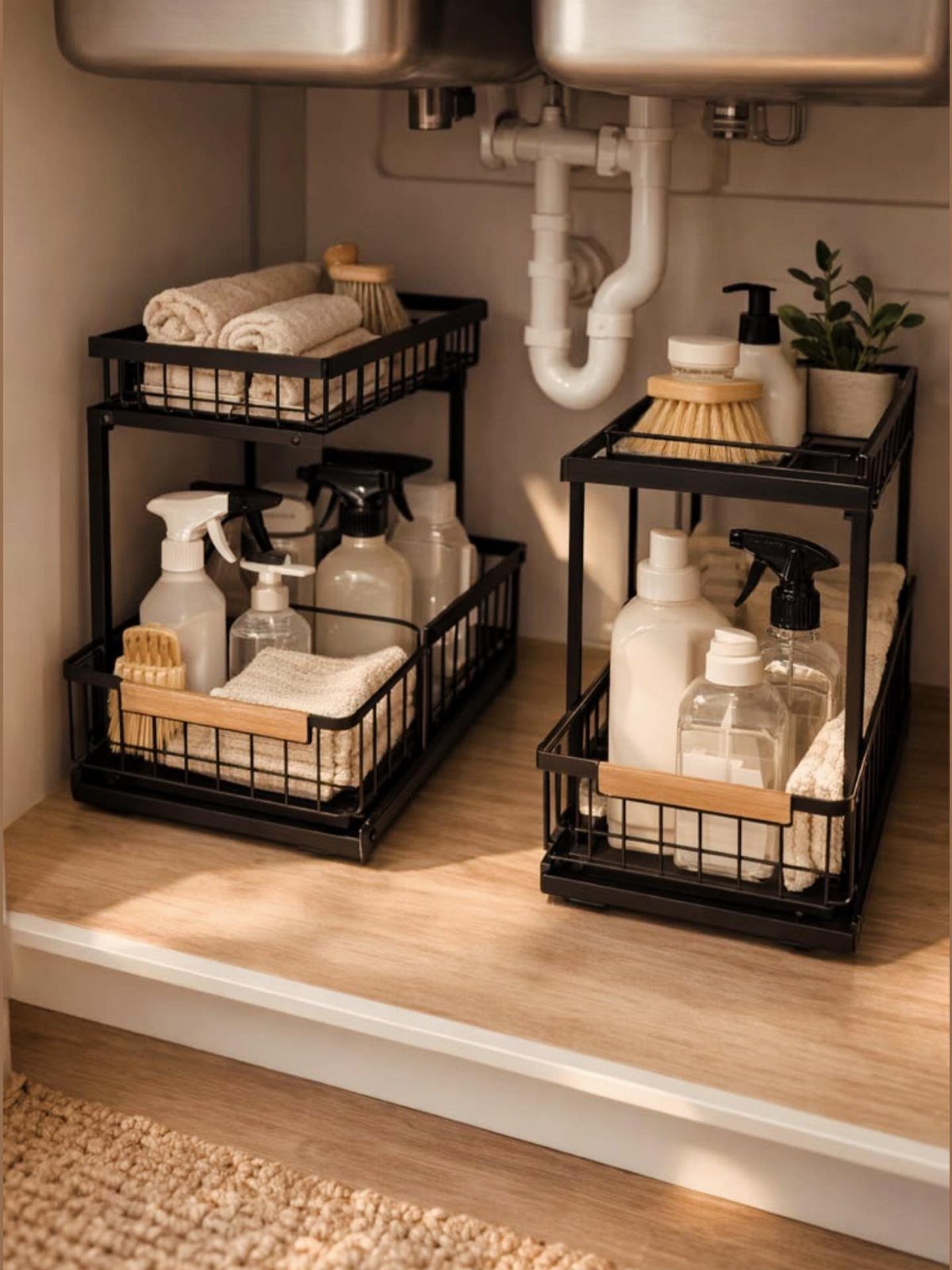
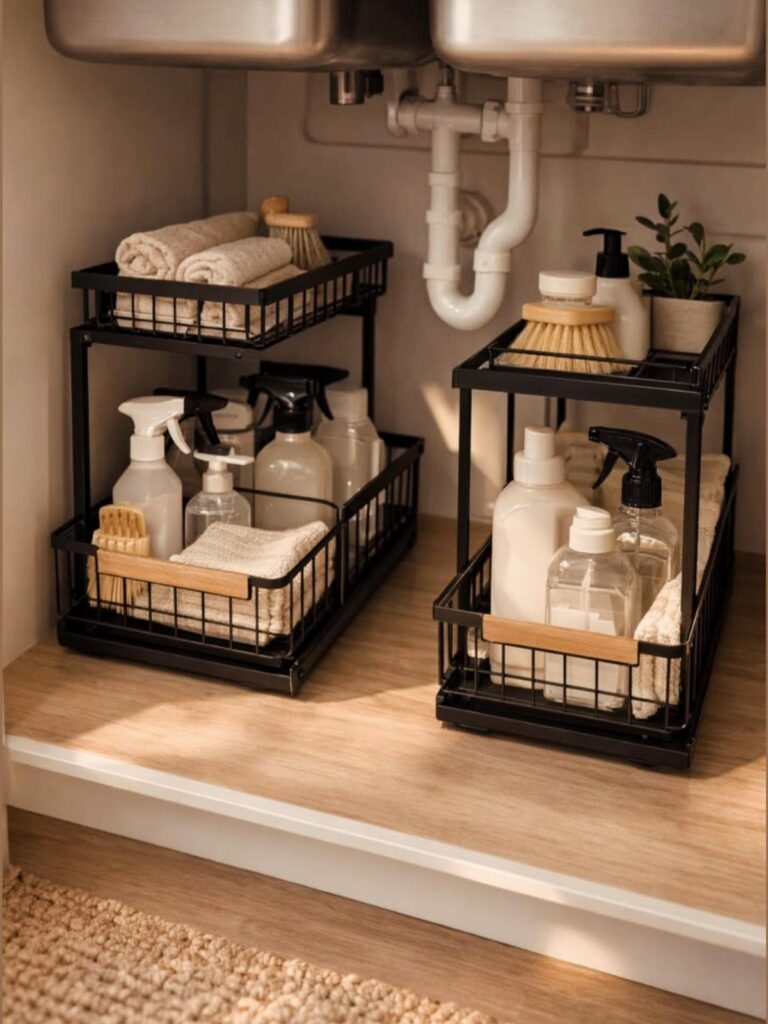
Pipes make the cabinet under a bathroom sink awkward, and a fixed shelf rarely works around them.
Tiered or sliding metal organizers do, because they sit on either side of the plumbing and bring bottles and folded towels toward you instead of leaving them in the back.
I like the sliding style for cleaning sprays, since you pull the whole load out rather than reaching blind. Put the bottles where height allows and shorter supplies on the tier below.
Black metal hides drips and water spots better than white.
2. Rolling Carts
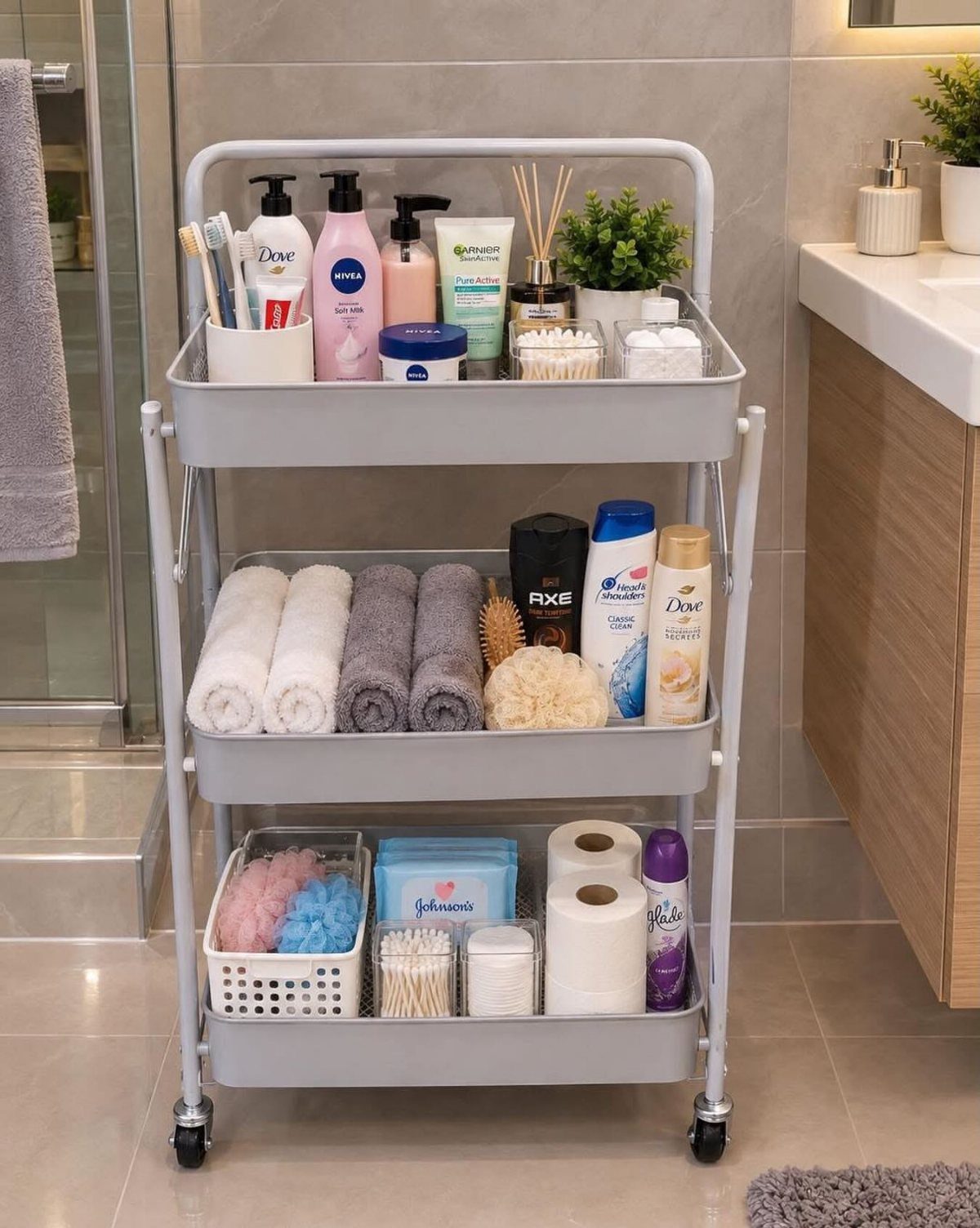
A three-tier rolling cart gives a small bathroom a closet it never had. Stack towels on top, toiletries in the middle, and spare toilet paper in baskets at the bottom, and the whole thing slides into any gap.
Pick a narrow cart so it can park beside the vanity or tub. Grey is a forgiving color that blends with most tile.
Group by tier, one job each, so you can grab a product without sorting through the others. If the cart blocks the door when rolled out, move it to the wall.
3. Vanity Trays
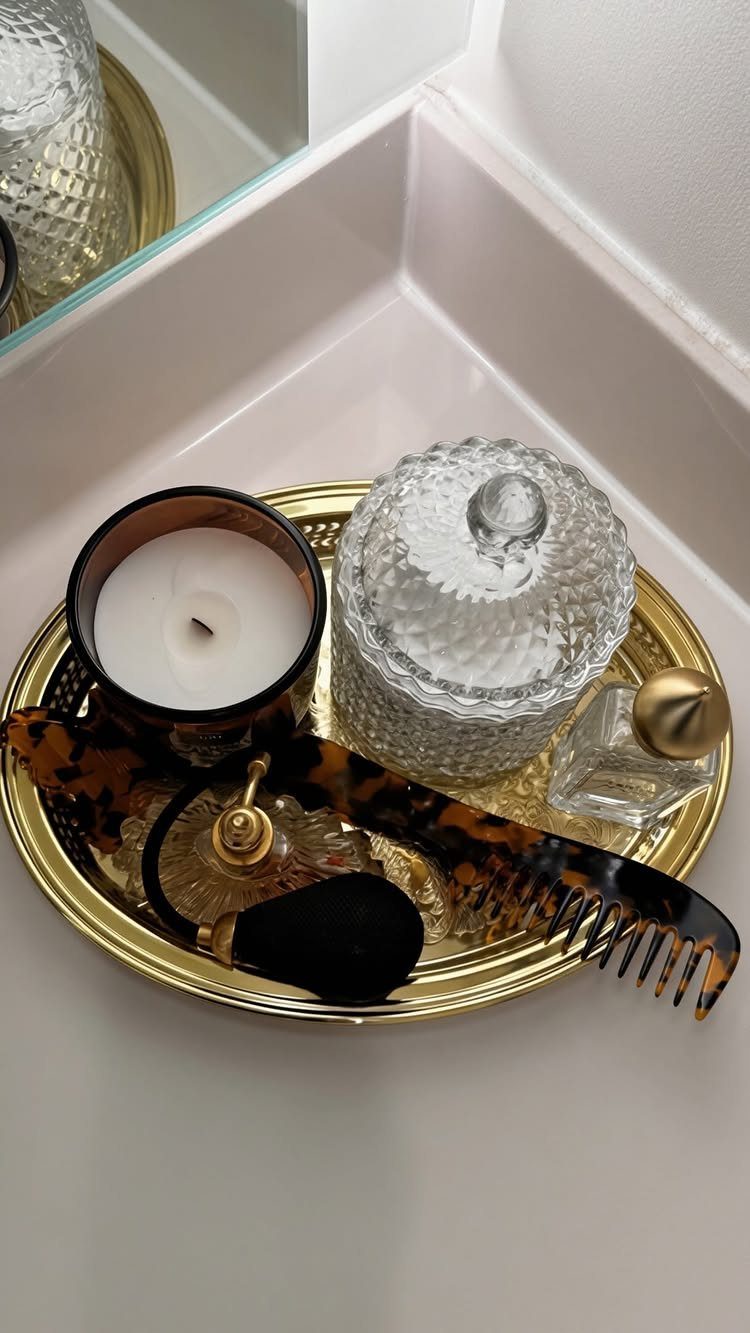
Loose items on a counter look like clutter; put the same things on a tray and they look chosen. An oval tray in gold keeps a candle, a perfume, a comb and a brush within a single outline.
Limit the tray to what you use daily, plus one pretty piece such as a glass jar. Once the tray is full, stop adding.
The best part is cleaning: lift the tray, wipe the counter, set it back. Anything that doesn’t fit belongs in a drawer.
A cluttered medicine cabinet, overflowing linen closet, or collection of beauty products crowding the vanity can turn self-care into a frustrating task. Luckily, the right storage solutions can make all the difference—and they’re not difficult to implement.
4. Cabinet Organizers
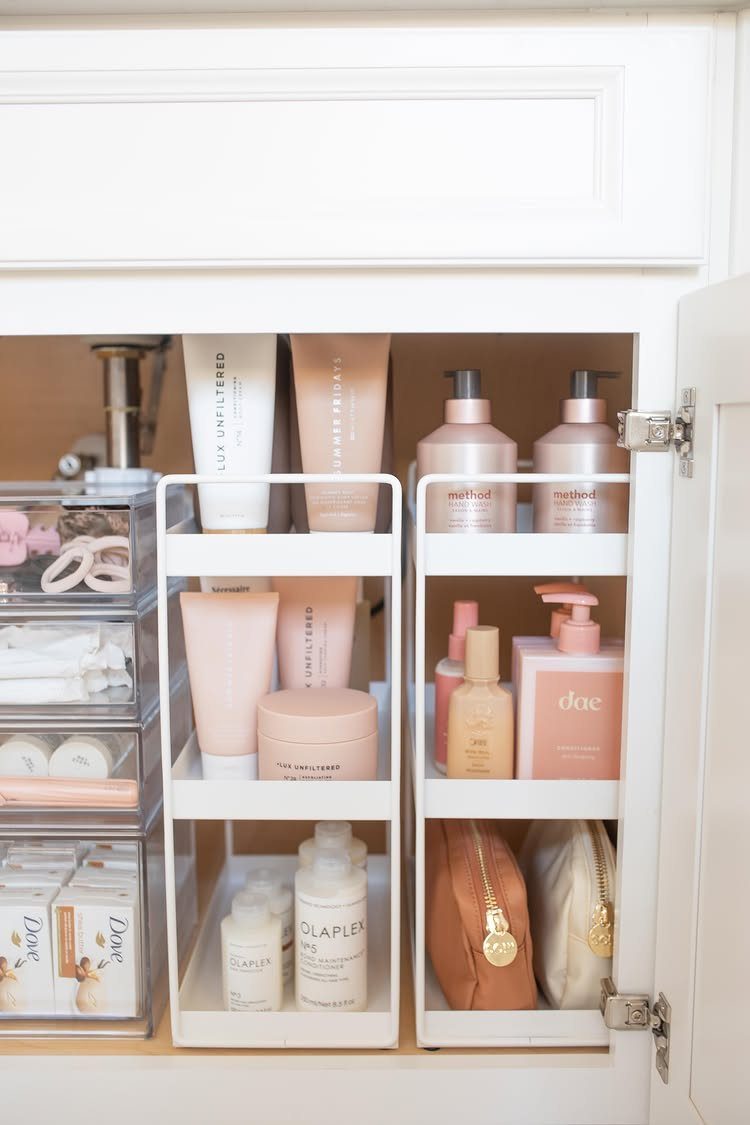
A deep cabinet swallows products unless you break it into levels. Tiered shelves lift the back row so the labels show, and clear bins corral skincare and hair products into categories you can pull out whole.
I prefer clear bins over opaque ones here, since seeing everything at once is the entire purpose. Label the front if several bins look alike.
Measure the cabinet opening before you buy, because the door frame is often narrower than the space inside.
5. Wall-Mounted Toothbrush Holders

Counter space disappears fast in a small bathroom, and a toothbrush cup is one of the first things to take it.
Wall-mounted holders move toothbrushes and toothpaste up to the tile and leave the counter open for a plant or a soap pump.
Compartments keep each person’s brush apart. The same approach works for soap dispensers and hair dryer holders, so one wall can hold the daily items.
Check where you will drill or stick before buying, since tile calls for a different fastening than drywall.
6. Vertical Storage Solutions
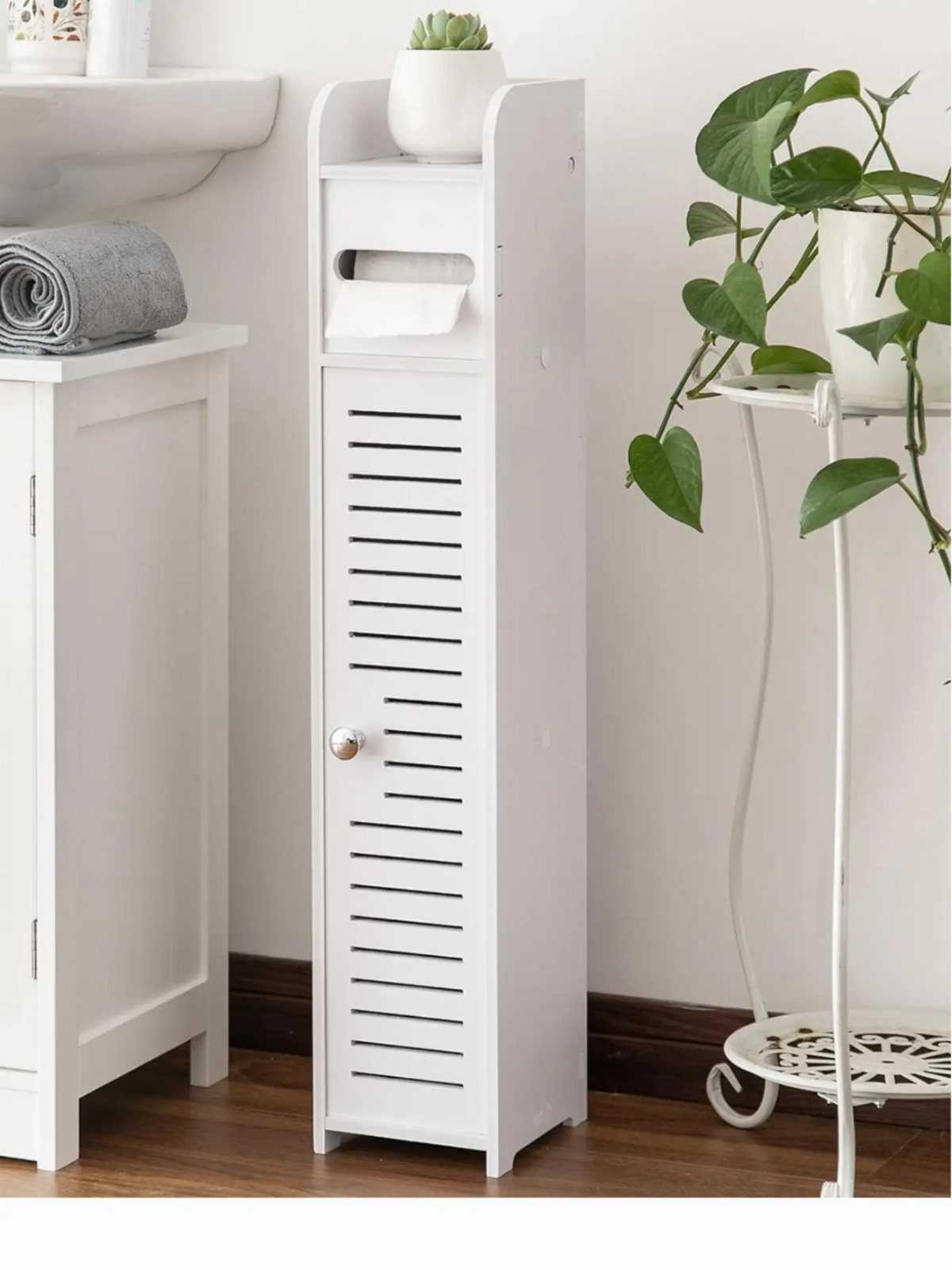
Floor space is scarce in a small bathroom. A narrow cabinet with a slatted door stands beside the sink and stacks storage upward, and this one even carries a toilet paper dispenser.
Slats let air through, which suits a room that gets damp. White keeps a tall piece from feeling heavy in a tight bathroom.
Store the items you reach for most at chest height, and put backups on the lowest shelf.
7. Bins in Drawers
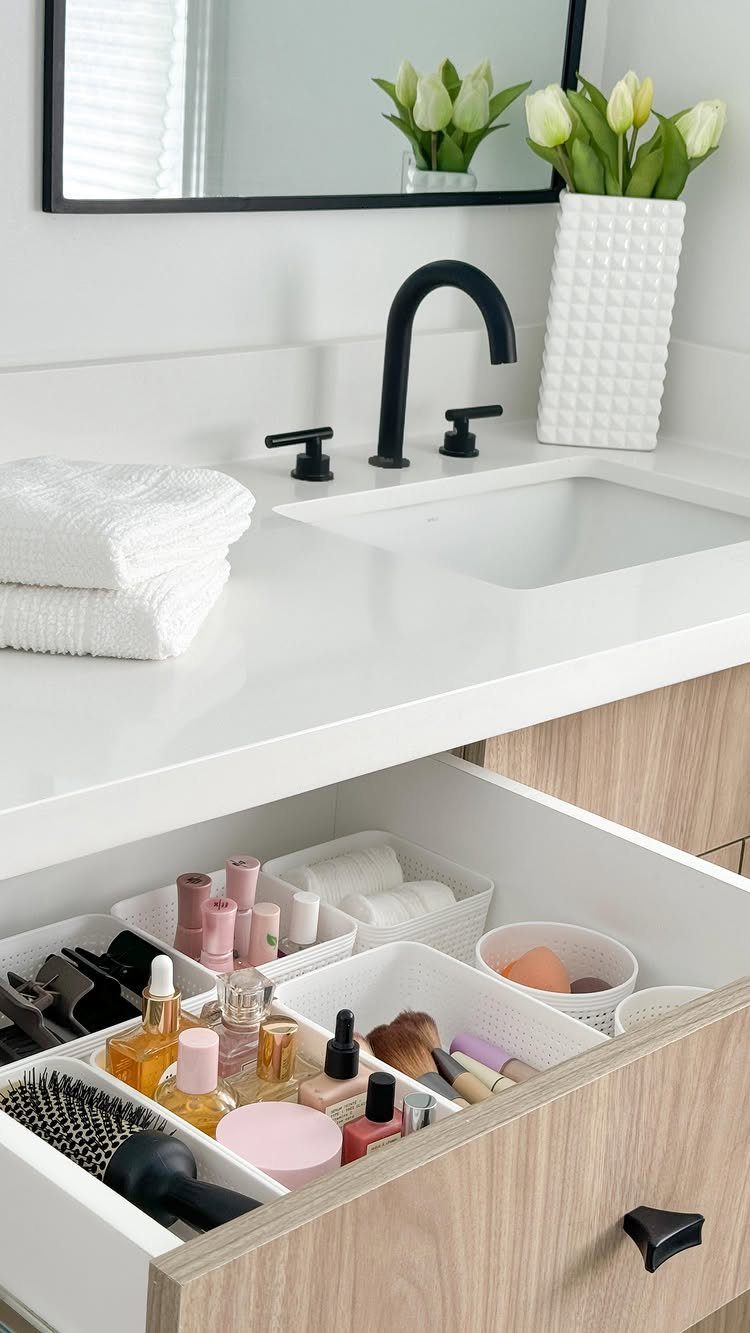
A drawer without dividers turns into a jumble within a week. Bins sized to the drawer give each category its own box: makeup in one, brushes in another, skincare in a third.
White plastic bins keep a vanity drawer looking calm, and they wipe clean when a lipstick or serum leaks. Measure the drawer’s depth and width first, then buy bins that fill it with no sliding room.
Keep the daily bin at the front.
8. Wall-Mounted Towel Rack
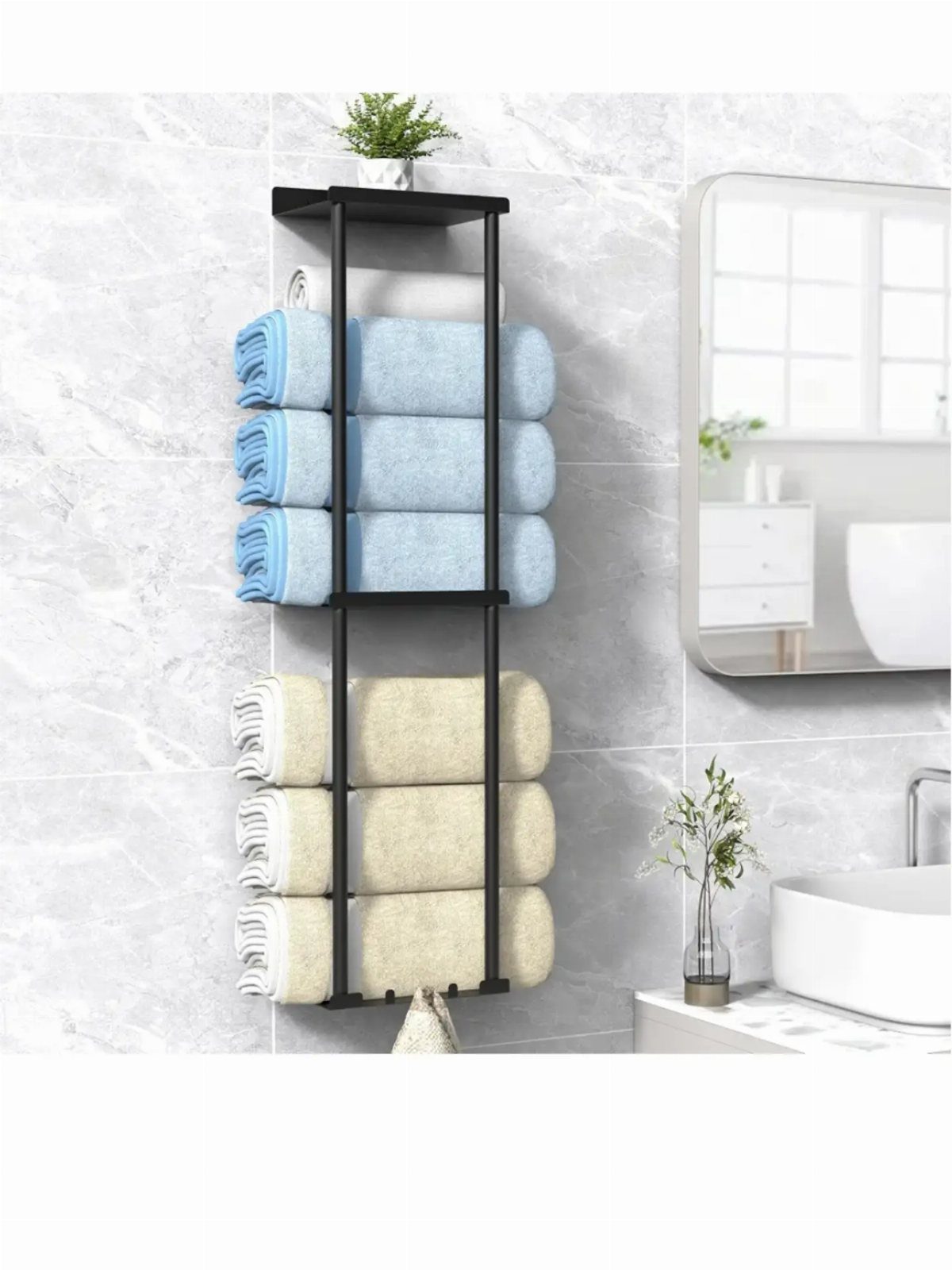
Black metal against marble gives a towel rack its own look, and mounting it on the wall frees the floor and the tub edge.
Fold some towels flat and roll others, so the rack holds a mix and you can see what is clean.
A small plant on top uses the shelf space for something living. Keep it light, though, since the rack carries towel weight too.
Anchor the rack to studs or use rated wall anchors, and mount it near the sink so a hand reaches a towel in one step.
9. Over-the-Toilet Storage Unit
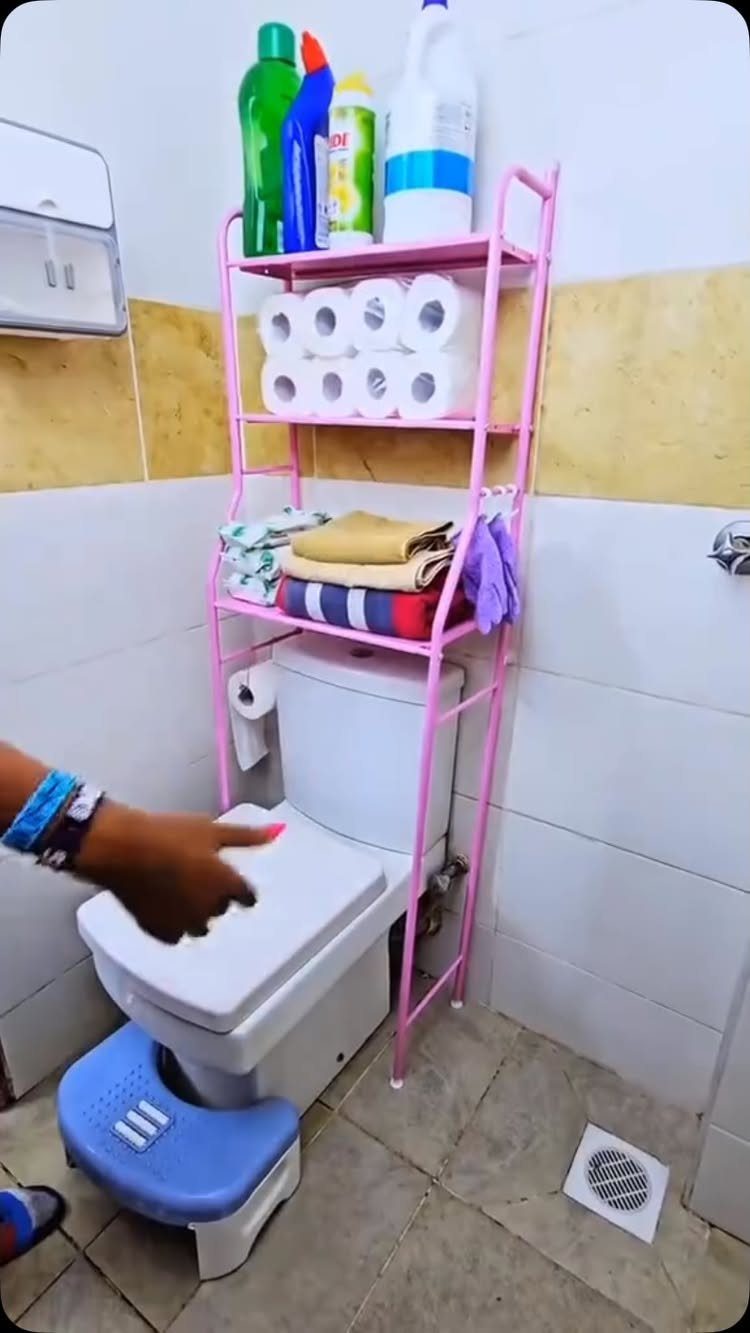
Straddling the toilet, a tiered metal rack claims wall-side air that nothing else uses. Towels fit on the upper shelves, toilet paper and cleaning supplies below.
Pink is a fun choice, but any finish works if it stays dry and wipes clean. Put the heavier or messier items low and the folded towels higher, so nothing sits where a hand hits the lid.
I would keep the top shelf lighter than the others. Freestanding racks need no drilling, which makes this a good fit for renters.
10. Behind-the-Door Hanging Organizer
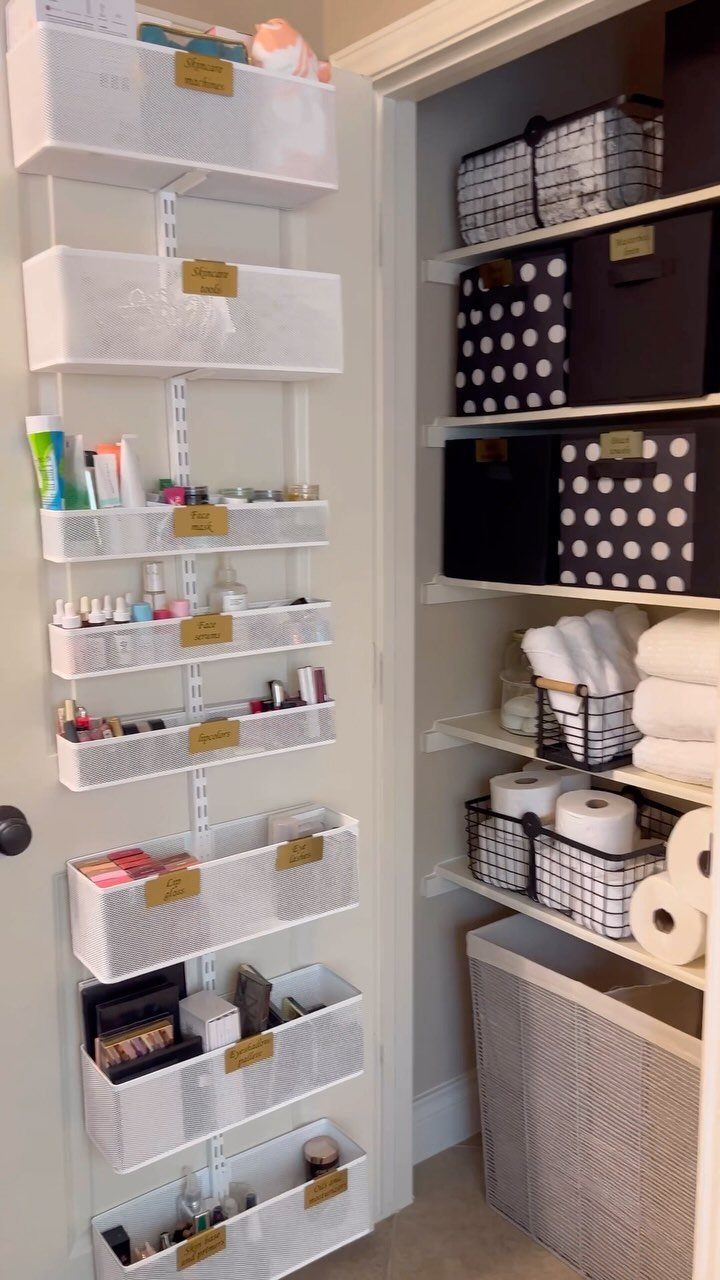
The back of the bathroom door is free storage that most people ignore. A white multi-tier mesh organizer hangs over the top edge and holds toiletries in pockets you can see through.
Sort by use: hair tools in one tier, skincare in another, small daily items at eye level. Labels on the mesh bins help when several look alike.
Check that the door still closes with the organizer on it, because the hooks add thickness at the top edge.
11. Adhesive Shower Caddy
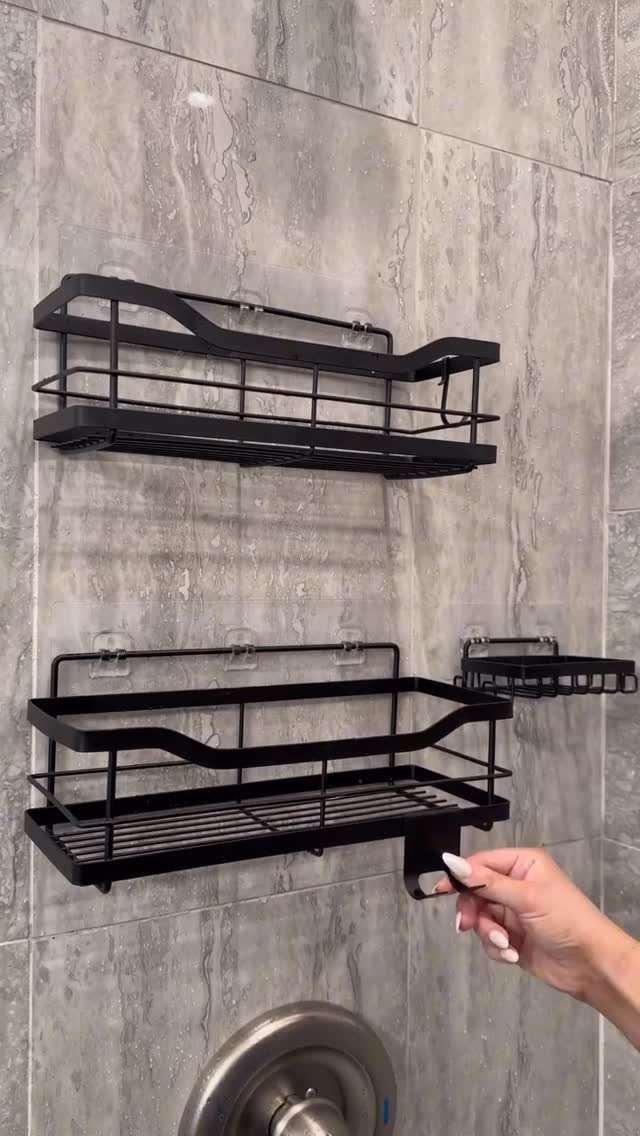
Black wire caddies on adhesive strips attach straight to shower tile with no drilling, so they suit a rental. Stacking two gives bottles one shelf and a razor and soap another.
Wipe the tile clean and dry before sticking, and press each strip firmly. Wire lets water drain, so shampoo bottles don’t sit in a puddle.
Mount the lower shelf where you can reach it easily, and keep the load light, since adhesive holds less than screws.
12. Slim Storage Cabinet
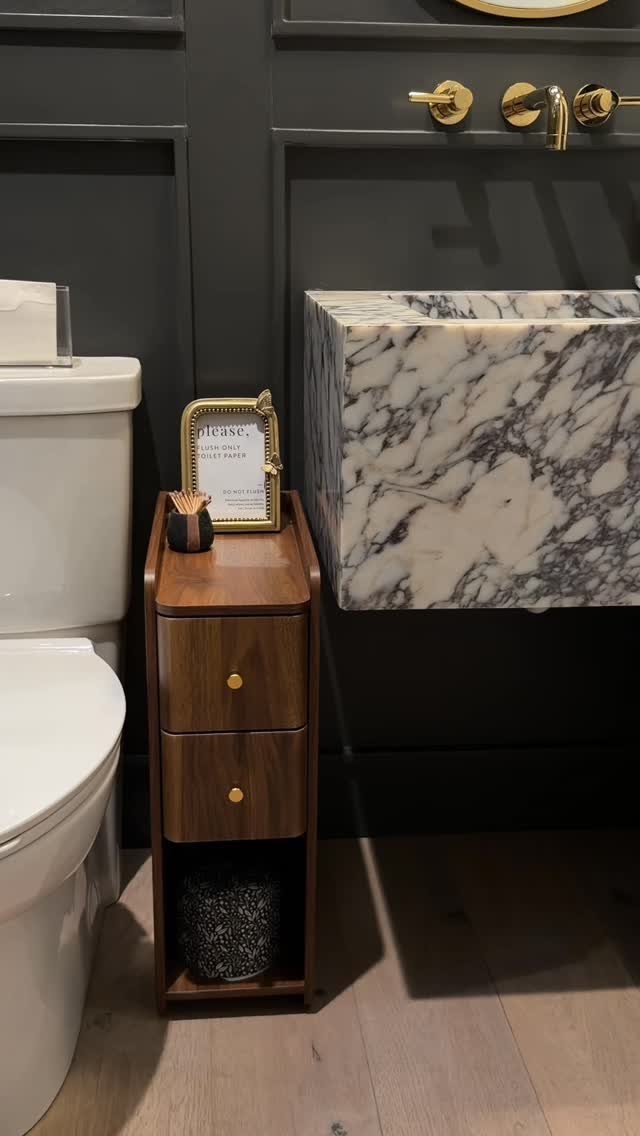
A narrow wooden cabinet fits the gap between toilet and vanity that usually goes empty. 2 drawers hide the small stuff, and an open shelf holds rolled towels or a basket.
Measure the gap at its tightest point, usually at the toilet tank or the vanity’s edge, before you buy. Leave a finger’s width on each side so the cabinet slides in without scraping.
Wood adds warmth next to marble and dark grey, but wipe up splashes quickly.
13. Over-the-Appliance Shelving
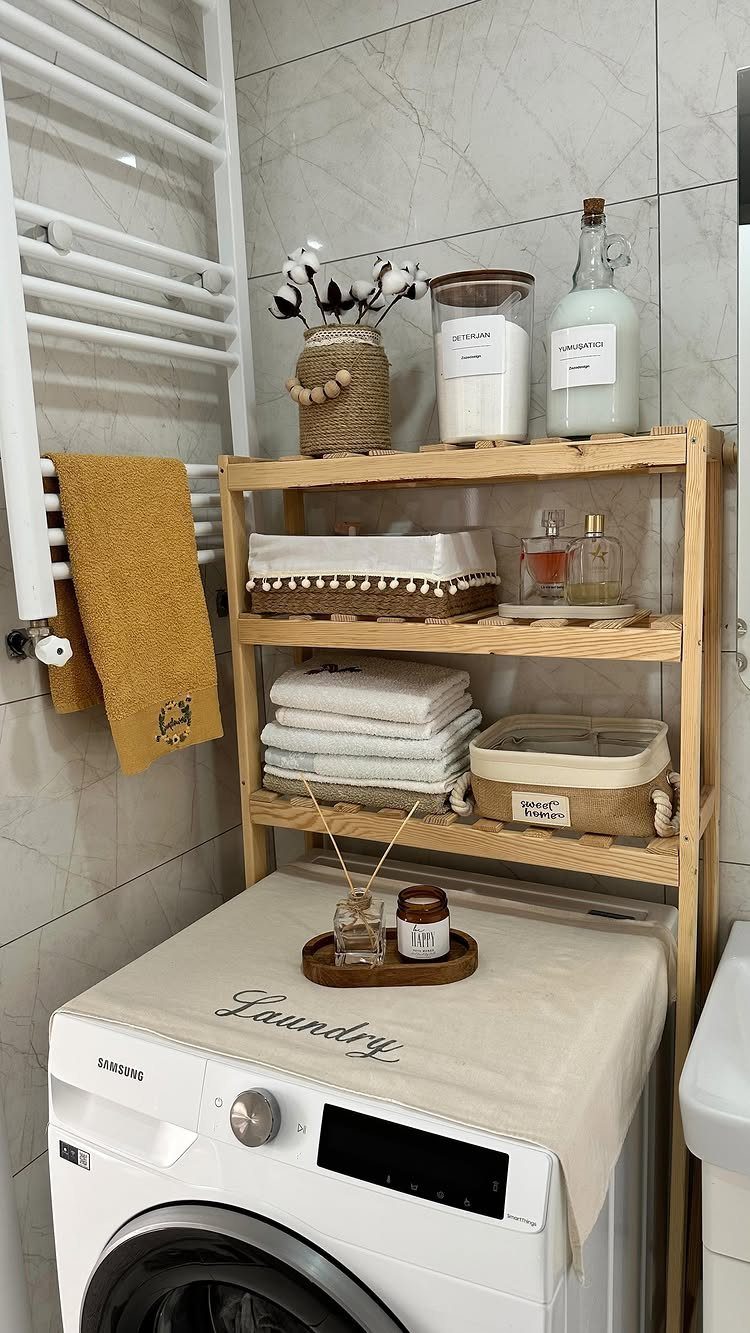
A wooden frame built around a washing machine turns the dead space above it into a linen closet. Towels sit on the open shelves, and jars of detergent and fabric softener share a shelf with a few decorative pieces.
Decanting powders and liquids into labeled jars keeps the mismatched boxes out of sight. A cloth draped over the machine, as here, hides the top and softens the look.
Before you shop or cut a single board, get the washer’s width and height, then pick a frame that sits above it with enough clearance for safe operation.
Bulky towels belong up high, and anything you grab daily goes on the lower shelf.
Maximizing Vertical Space
Cabinet doors are the most overlooked vertical surface in a small bathroom. The inside of each door can hold small items on slim racks or hooks, which clears shelf space for bigger things.
Floating shelves earn their spot on empty wall, and the area above the toilet is prime for them. Space-saving swaps help too: detergent sheets take far less room than a bulky jug or box.
Stacking bins work inside cabinets as well as under the sink.
Clear stacking pantry bins hold toilet paper well, and nothing needs unstacking to grab a roll. Choose bins you can pull from the front, so you never lift one off another to reach what’s underneath.
Multi-functional furniture is worth a look when you buy anything new. A bench with a hidden compartment or a mirror with a shelf behind it gives you storage without using more floor.
Creating Zones in the Bathroom
Sort what you own by how often you reach for it, then give each group its own spot. Daily essentials get the easiest places, weekly items go a level farther away, and rarely used products take the hardest-to-reach corners.
Vanity drawers are the best real estate you have. Keep the top drawer exclusively for what you use every day, and if 2 products go together in your routine, store them side by side.
Households that share a vanity can split it: one drawer each.
Splitting a vanity by time of day works well for one user: morning basics like face wash, SPF, and a toothbrush in the top drawer, and the night routine of serums, retinol, and a retainer case in the one below.
The system only works if you stick with it. Decide what stays, where it lives, and use the same containers throughout, so everything has an obvious home.
Frequently Asked Questions
How can I organize my small bathroom?
Start by going vertical and sorting what you own by how often you reach for it. Narrow cabinets, rolling carts, over-the-toilet racks and behind-the-door organizers add storage without eating floor space.
Sort by how often your hands reach for it: toothbrush and face wash up front, the weekly masks and scrubs a step behind, and the occasional stuff wherever the reach is awkward.
Containers in the drawers and cabinets keep each category in its own place.
Where to put shelves in a small bathroom?
The best spot is the empty wall above the toilet, and a stretch of bare wall beside the mirror works as well.
Floating shelves there use space nothing else claims. Chest height is prime real estate for what you use every morning; spare rolls and extra soap can go on the bottom or top shelf, whichever you’d rather bend or stretch for.





