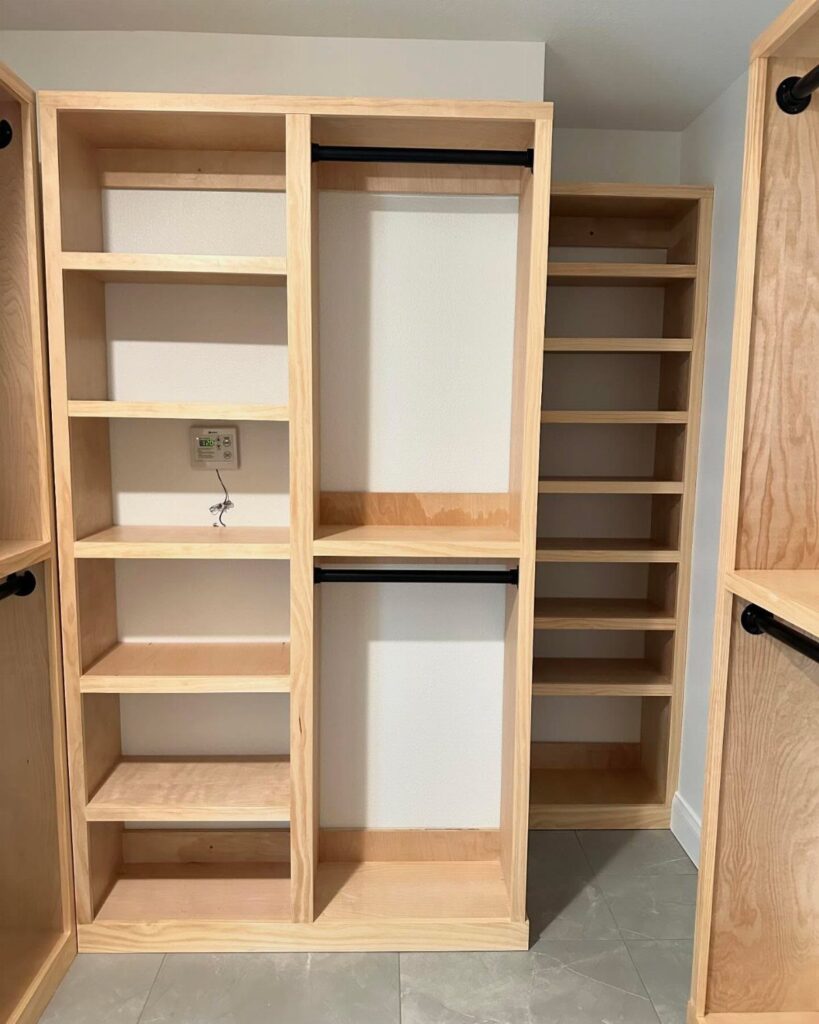
Which of these ideas fits depends on what the closet is holding: clothes, shoes, cleaning tools or pantry food each need a different depth and a different kind of shelf.
The list runs from a stick-on LED strip that suits a renter’s weekend to a built-in combination of drawers and shelves, plus L-shaped wrap-around shelving that needs real anchoring.
1. Vertical Double-hang Rod System
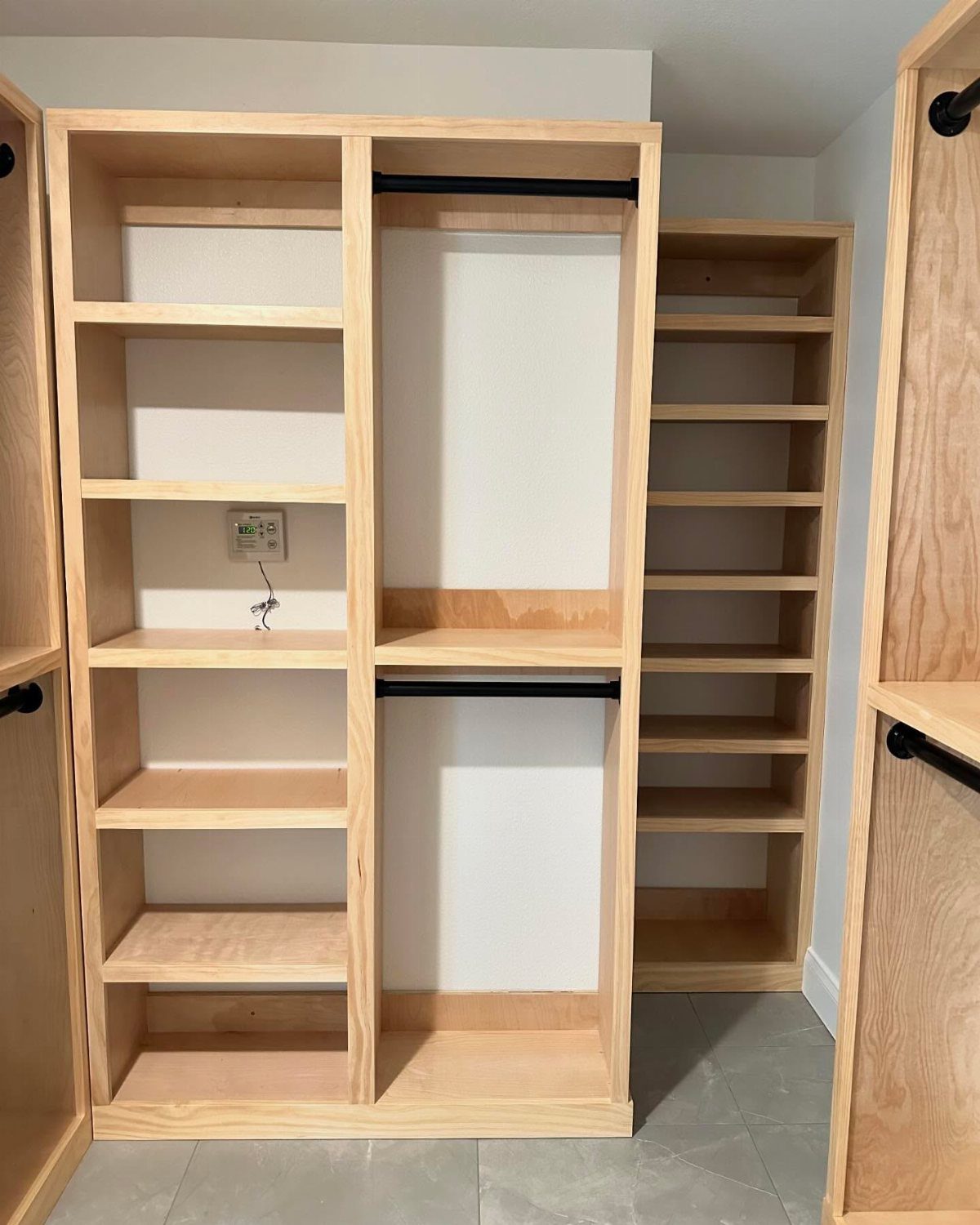
Stacking two rods, one above the other, gives a narrow closet twice the hanging space without adding a single inch of floor.
Shirts, folded-over pants and skirts all fit under about half the height a dress needs, so they suit this setup best.
Hang the lower rod low enough that you can reach the upper one without a stool. Long coats and dresses go in a separate section, where one tall rod keeps them off the floor.
2. LED Strip Lights
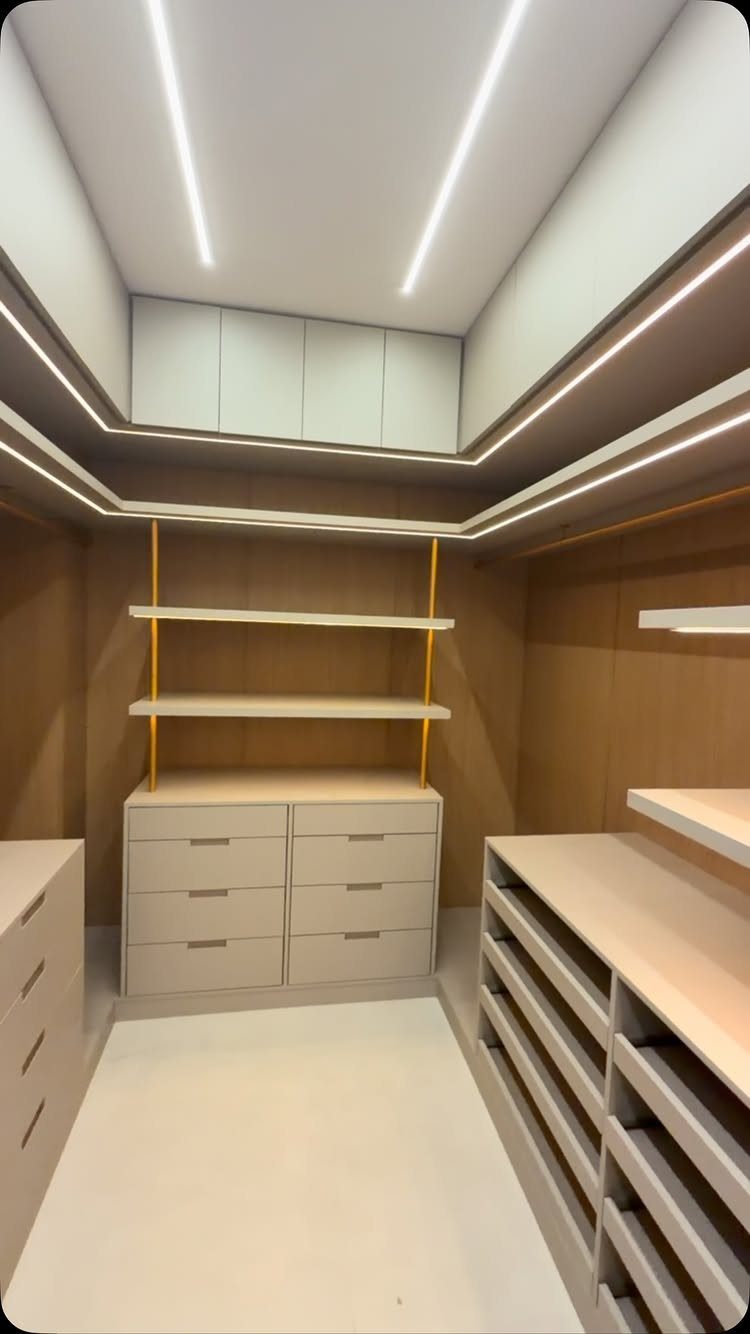
Strip lighting solves the problem narrow closets have most: a single ceiling bulb leaves shadows on the back wall and on the lower shelves. Running strips along the ceiling and under the upper shelves puts light right where you look.
I prefer a recessed channel because it hides the strip and the glare.
Stick-on strips are the cheaper route for renters and fit a weekend project. Choose LED strips with a high CRI, 90 or above, so navy and black look like two different colors.
3. Group Similar Items Together
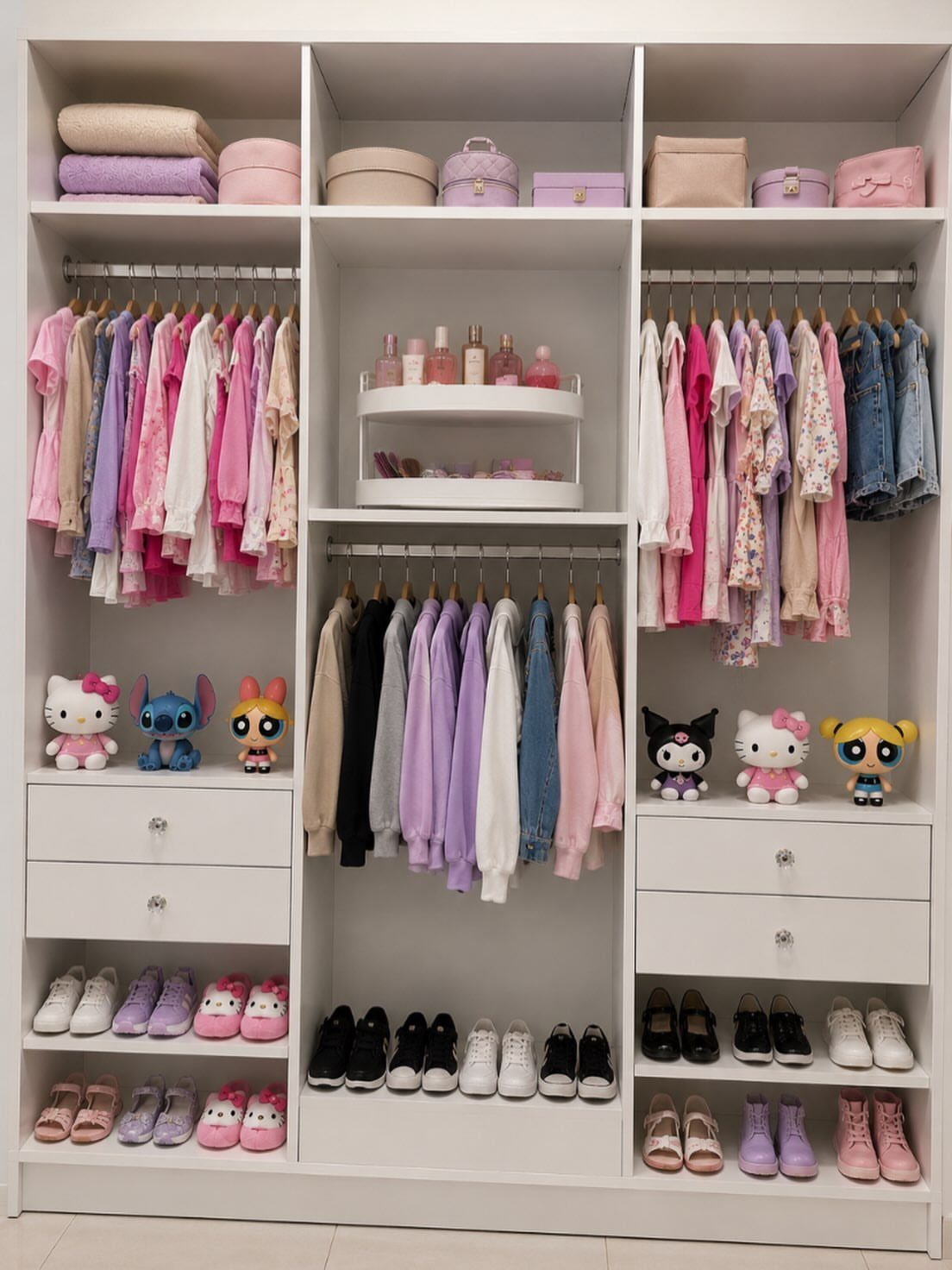
Sorting by category, with shoes in one spot, bags in another and perfumes on their own shelf, makes a small closet easier to use than any new shelving will. You stop digging through everything to find one item.
Start by emptying a shelf and sorting the pile into groups. Then give each group a fixed home.
Clothes can follow the same logic by color, which also makes it obvious when something is missing. Keep a small section for favorites you want to see.
4. Built-in Drawers and Shelves Combination
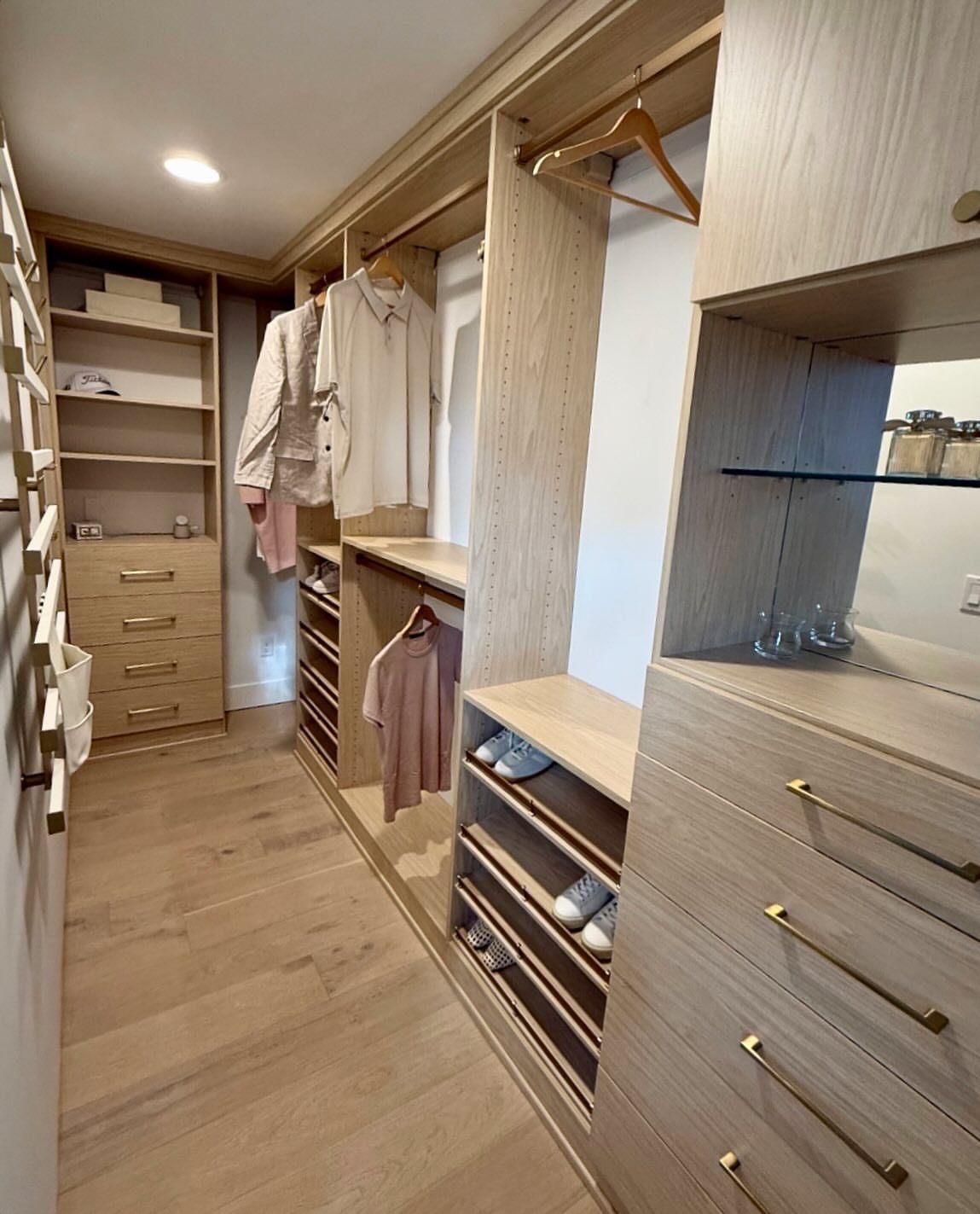
Mixing hanging rods, drawers and open shelves in one run lets a narrow closet handle everything: long garments on the rod, folded knits and small items in drawers, shoes on open shelves.
Drawers earn their place for socks and underwear, which otherwise get lost on shelves.
Keep the hanging section at one end so the drawers still open fully in the narrow aisle. Light wood keeps the space from feeling tighter than it is, and I would choose it over a dark finish here.
By choosing light-colored bins — which help brighten a dark, windowless closet — you create visual harmony that feels more like a shop and less like a storage unit.
5. Dedicated Tall Cleaning Supply Compartment
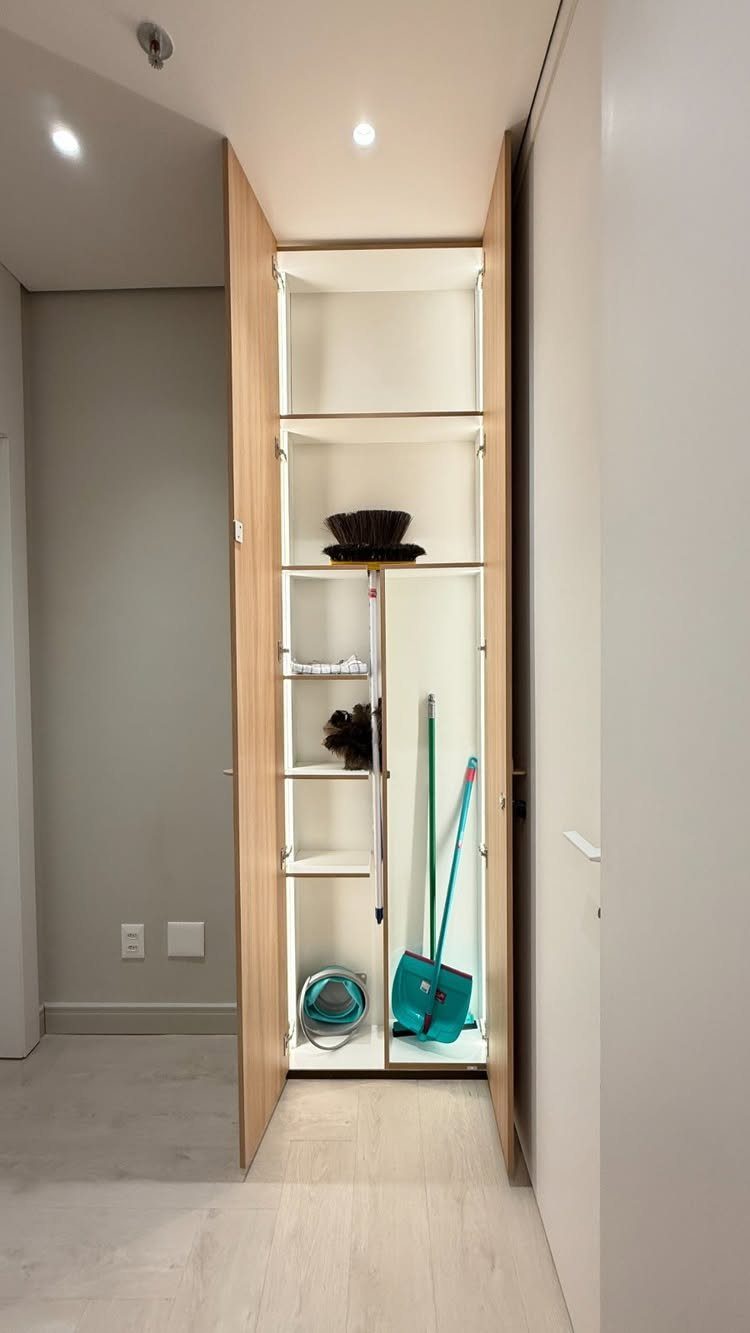
A tall, slim slot built to stand brooms and dustpans upright is what makes a narrow cabinet worth having. Long tools fall over in a regular closet and eat floor space; here they stay put.
Place shelves beside the slot for sprays, sponges and refills.
Keep the heaviest bottles low, and use the top shelf for items you grab rarely. White interior paint makes a narrow cabinet easier to see into, and it wipes clean.
6. Pull-out Pantry Shelf Bins
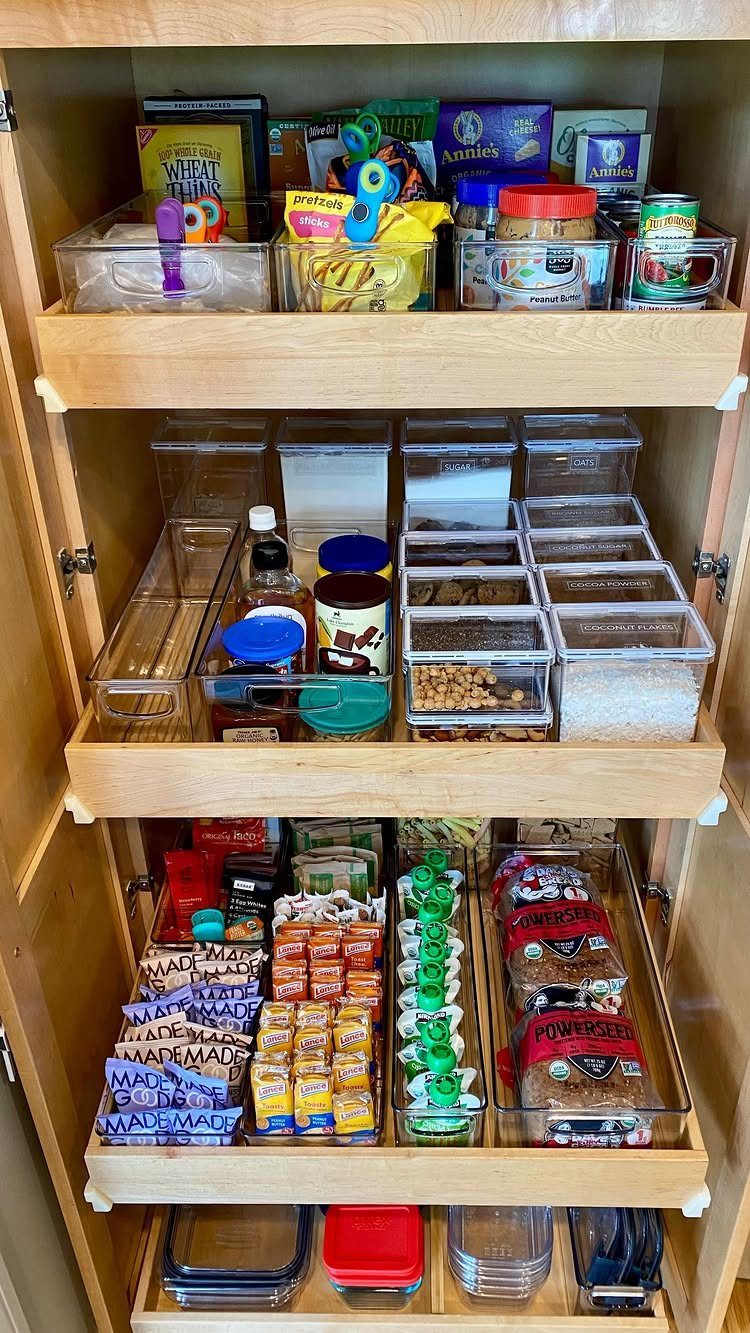
Deep pantry shelves waste whatever sits at the back, and pull-out shelves with clear bins fix that. Slide a whole shelf forward and you see every cracker box, jar and granola bar at once.
Group by type: snacks in one bin, spreads in another. Clear plastic lets you check stock without pulling anything out.
Label the front edge if the household shares the pantry. The bins also let you carry a whole category to the counter in one trip.
7. L-shaped Wrap-around Shelving
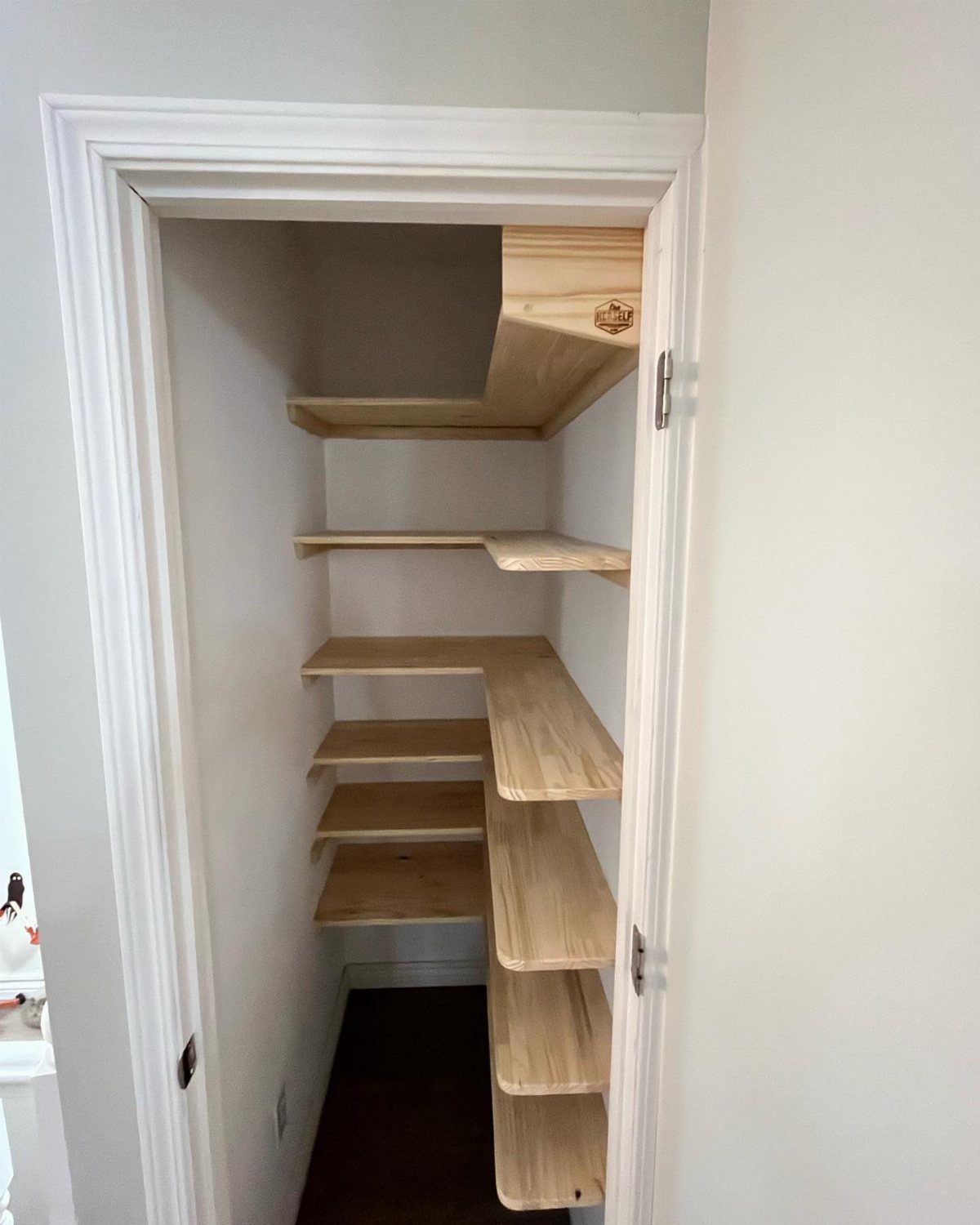
Shelves that turn the corner give a deep, narrow closet two walls of storage instead of one.
The back wall holds the long run, and the side wall picks up the overflow that would otherwise sit in a pile on the floor.
Light wood suits this layout because it keeps a tight space from feeling darker. I would install the shelves at different heights so bins, folded sweaters and boxes each get a level that fits them.
Anchor the corner joint to wall studs, since that is where the load concentrates.
8. Deep Narrow Shoe Closet
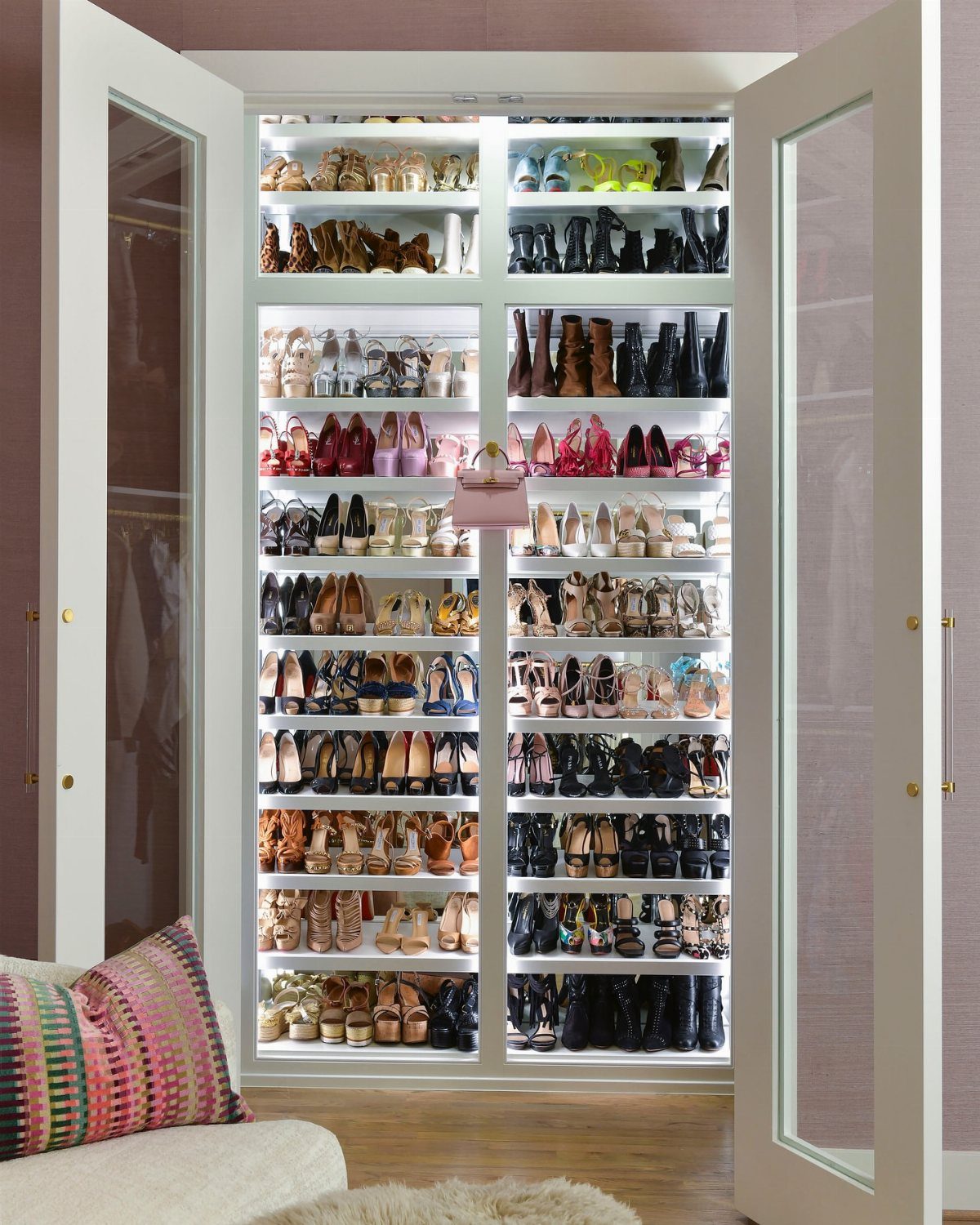
Floor-to-ceiling shelving behind double doors turns a deep, narrow space into a dedicated shoe closet. Every pair gets its own spot, and the doors hide the whole collection when you close them.
White shelves keep boots and bright sneakers readable without adding visual noise. Leave a few taller gaps for boots, and keep one open shelf for a handbag or a favorite pair.
Add a chair at the door and the closet doubles as the spot where you put shoes on.
9. Accessory Drawer with Dividers
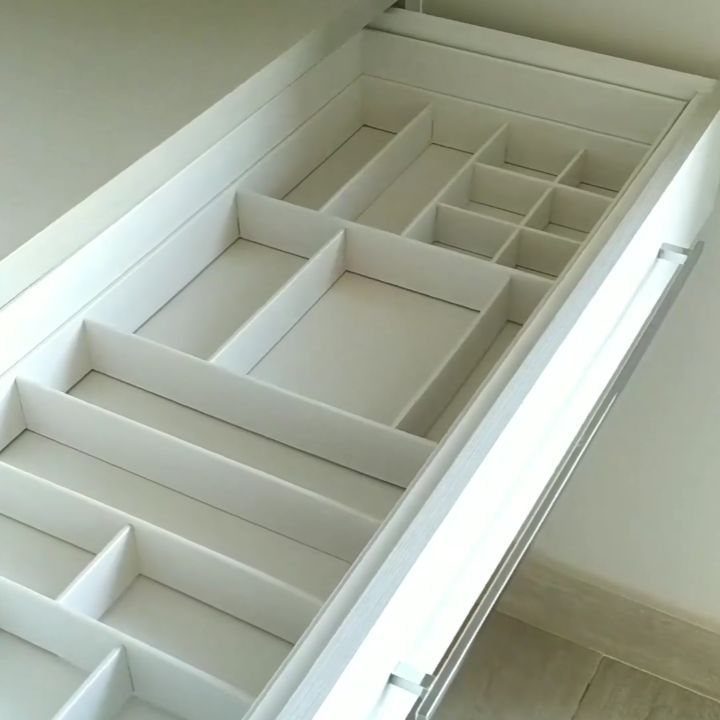
A shallow pull-out drawer with fixed dividers gives watches, belts and small accessories a compartment each, so nothing tangles in a pile. Open it and everything sits in view at once.
Sort first, then size the compartments: narrow slots for belts, small squares for watches and cuff links. White dividers against a white drawer keep it calm to look at.
I would put it at waist height, where you open it every morning.
Regular Maintenance for Organization
A closet stays useful only if you check it on a schedule. Pick a day each season, pull out what no longer earns its spot, and put the rest back on purpose.
Outgrown clothes, expired beauty products and cracked storage bins are the usual culprits. Cut them first, because they take up room you could give to things you actually use.
Rotate as you go. Move off-season items to the back and bring current ones forward.
Labels help here, especially if other people use the space. A tag on each zone tells everyone where things belong, and it keeps the system from slipping.
Leave one spot open for new additions. If a new item has no home, something else has to go.
Plan Your Closet Layout
Plan a deep closet the way you would plan kitchen cabinets: deeper storage below the waist, shallower storage above it.
Deep bins and drawers are easy to pull out at low height, and shallow shelves keep things visible and within reach up high.
Before you buy anything, list what you own and what you may add. The list tells you how much of each depth you need.
The single fixed shelf-and-rod setup at eye level in many deep, narrow closets is a holdover from old, cheap wire shelving that ran around the closet, and it wastes the space.
Consider Accessibility
Put what you use every week at the front and between knee and shoulder height.
Deep closets have extra room in the back and up high, so those zones suit anything out of season, such as winter boots or spare bedding.
Swap the zones when the seasons change. Rain boots and light jackets move forward, and the heavy items go back.
Clear containers and labeled bins make it quick to find things in the back. A step stool handles the top shelves, and pull-out racks bring deep floor space within reach.
Test the system with everyone who uses it. If someone can’t find a thing in a few seconds, relabel it.
Frequently Asked Questions
What to do with a deep but narrow closet?
Use the height and the depth together. Stack 2 hanging rods for shirts, folded pants and skirts, and add pull-out racks or shelves so the back of the closet comes to you.
Put deeper bins and drawers below the waist and shallower shelves above it, so everything stays visible and within reach.
What is the narrowest depth for a closet?
A depth of 24 inches is typically considered standard for a closet, so that is the usual benchmark.
Narrower closets still work if you choose slim storage, such as a shallow drawer with dividers or a tall, slim slot for long items.
Pale wood against white walls bounces light around a narrow closet, so the space reads wider than the tape measure says it is.
Is 30 inches too deep for a closet?
No, 30 inches is generally acceptable. The risk is that items get pushed to the back and forgotten, so organization decides how usable it is.
Keep weekly items at the front between knee and shoulder height, and use the back and the top for off-season things like winter boots or spare bedding.
What can I use instead of a closet?
Make the most of the space you already have. A hanging shelf unit clipped over the existing rod adds storage upward, and the back of the door can hold hooks or a slim hat rack for whatever is left.
Sorting items into groups with a fixed home for each also makes a small space work harder.





