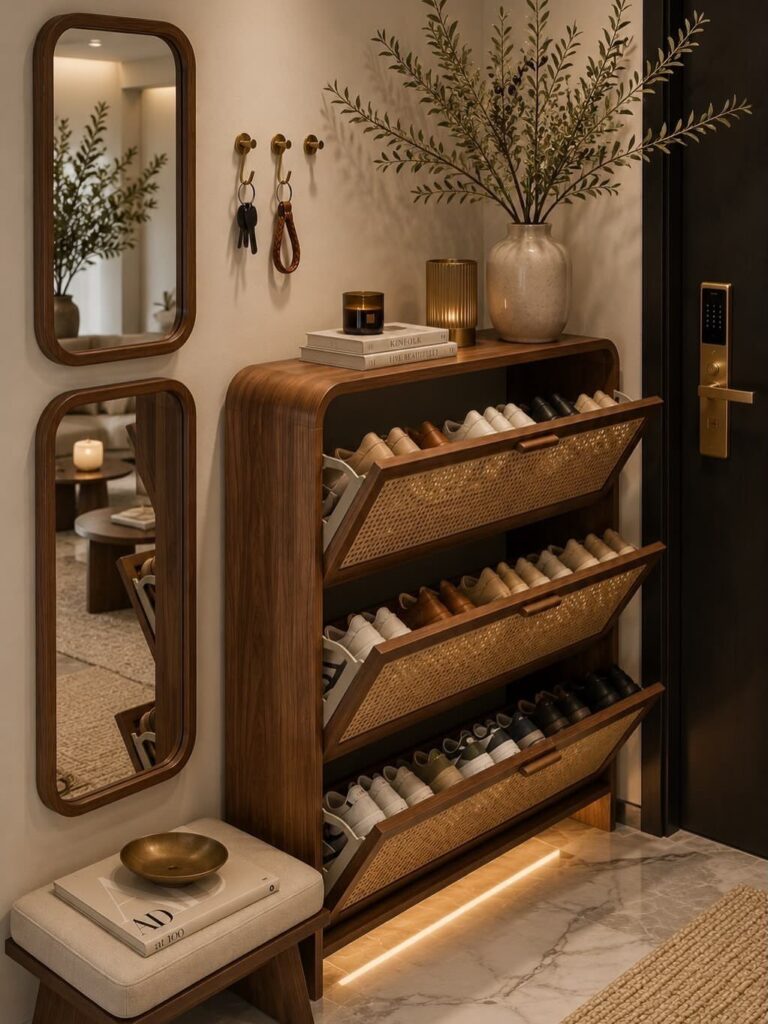
Options here run from a boot tray and an open shoe rack to a built-in under the stairs, which is a carpentry job and costs far more than anything freestanding.
Which one is yours depends on how your household drops shoes: if pairs land the second people step inside, the storage has to sit within arm’s reach of the door, or the pile wins.
1. Shoe Storage Bench
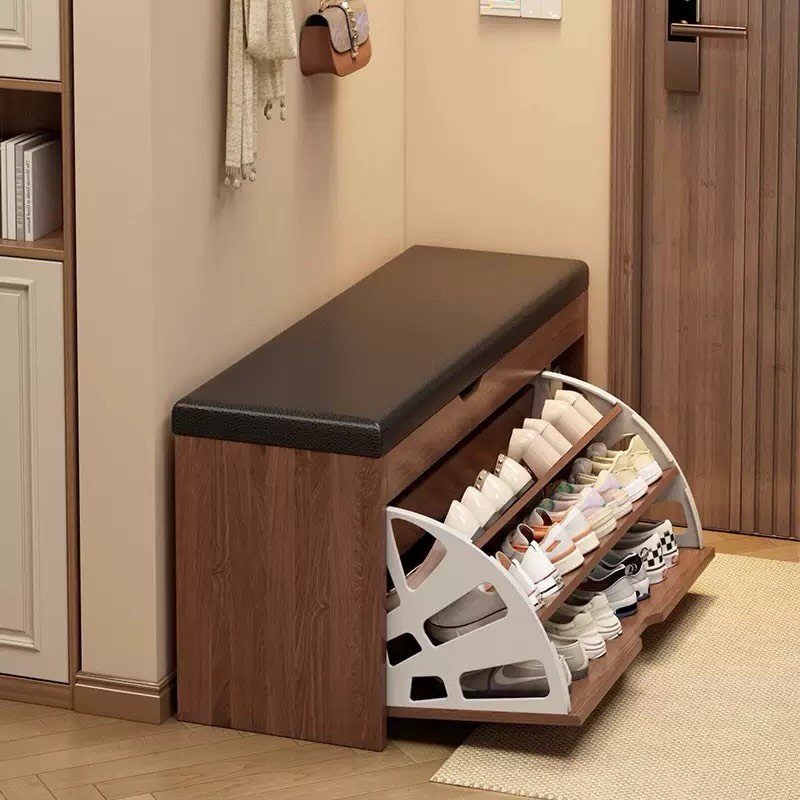
A bench with a pull-out rack underneath does two jobs in the footprint of one, and in a narrow entry that matters. You sit to lace up while the shoes you just took off disappear into the drawer.
I like a padded seat like this one, since it makes the bench comfortable for putting on boots rather than just perching. Pick a bench that sits near the door so shoes go in without a detour.
Keep the rack for daily pairs. Shoes you rarely wear belong somewhere else.
2. Boot Tray
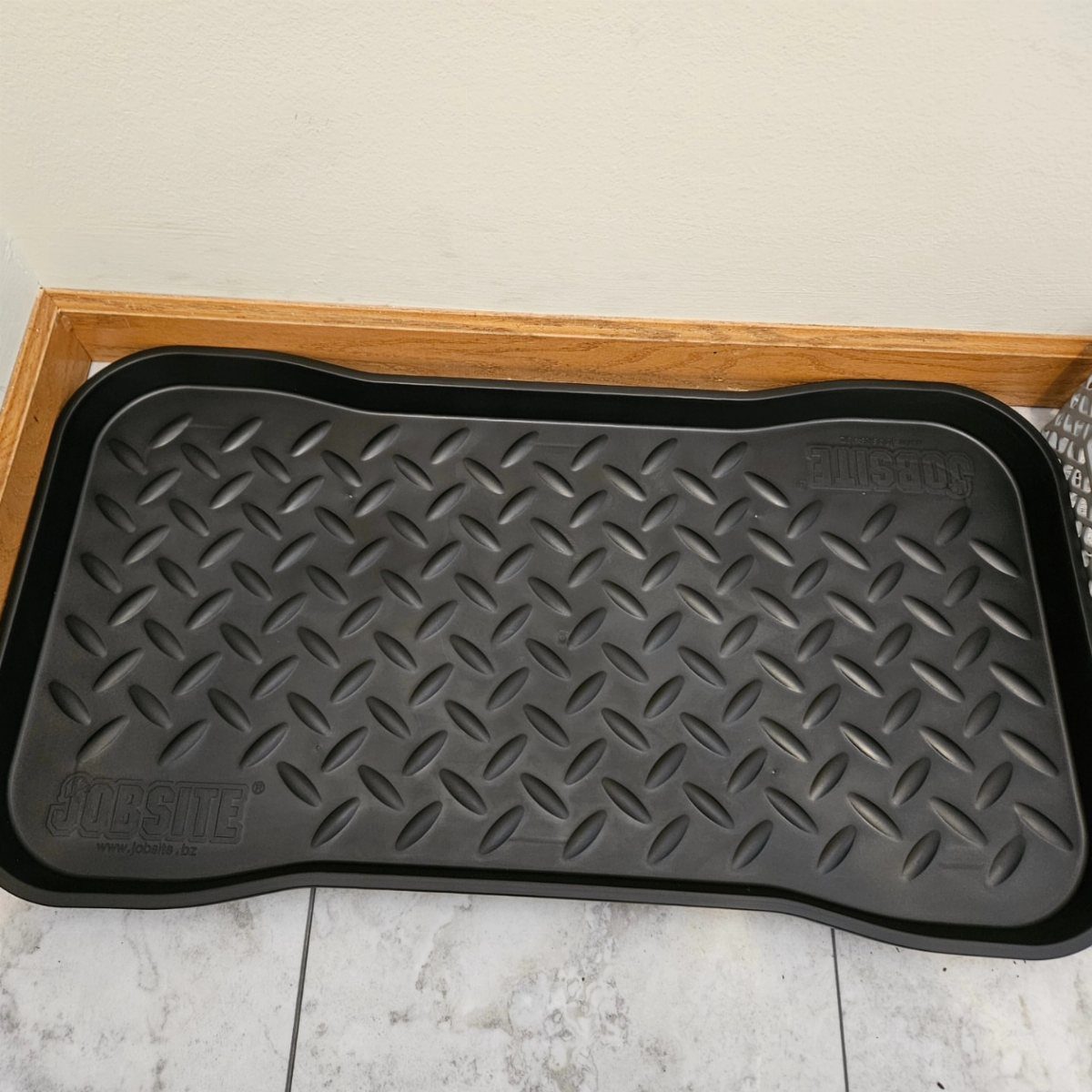
Mud, slush and salt end up on the floor unless something catches them, and a rubber or plastic tray is the cheapest fix.
A textured tray like this black diamond-plate one grips boots and hides scuffs better than a smooth one.
Set it right against the wall beside the door so nobody steps around it. A raised lip keeps meltwater off tile and wood.
Wipe it out when it gets grimy. It holds only a few pairs, so it suits wet daily boots rather than a whole family’s shoes.
3. Vertical Shoe Cabinet
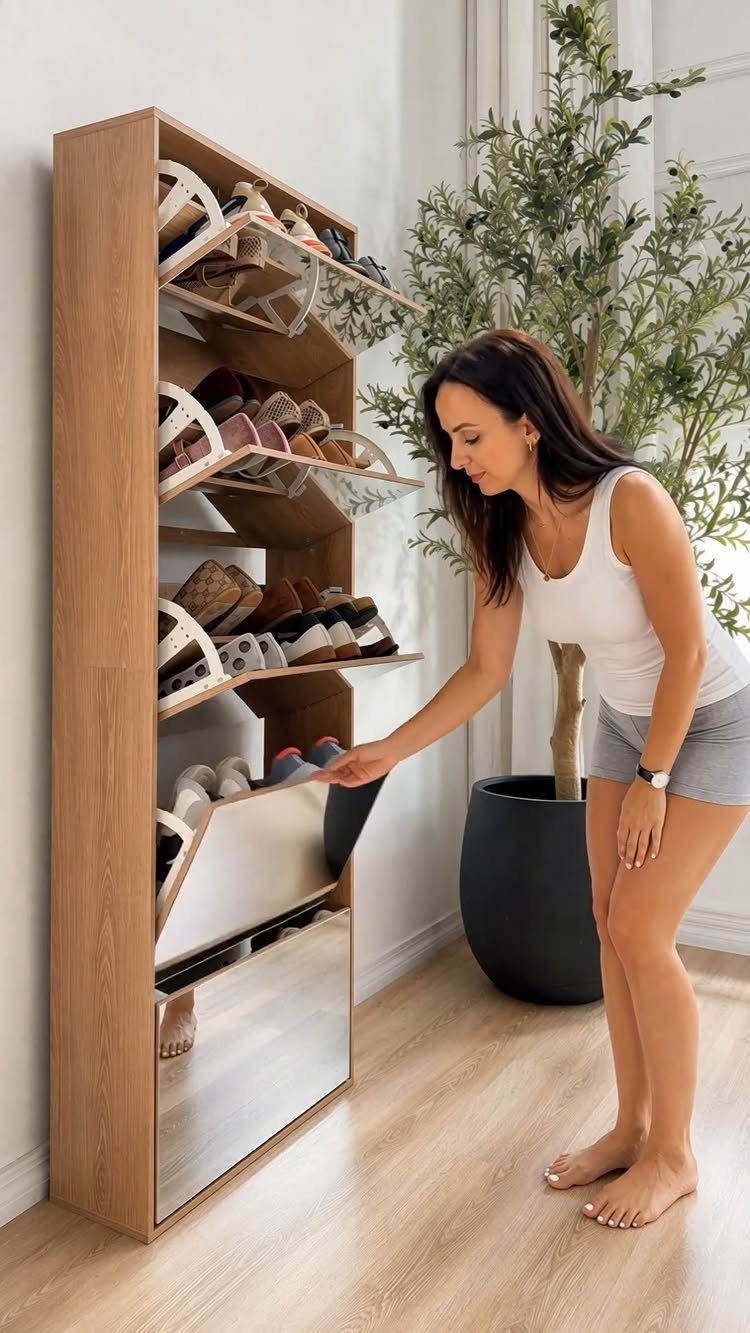
Tall and narrow beats wide and low when floor space is tight. A vertical cabinet with tilt-out drawers stacks pairs upward, so the footprint stays small.
Wood grain like this one reads as furniture, not a utility piece, and the open shelves on top give you a spot for a plant or a bag.
Measure your wall width and ceiling height before buying, and leave room for the drawers to swing open.
Tilt-out drawers hide shoes, so the entry looks calmer than it does with an open rack.
4. Hall Tree with Cubbies
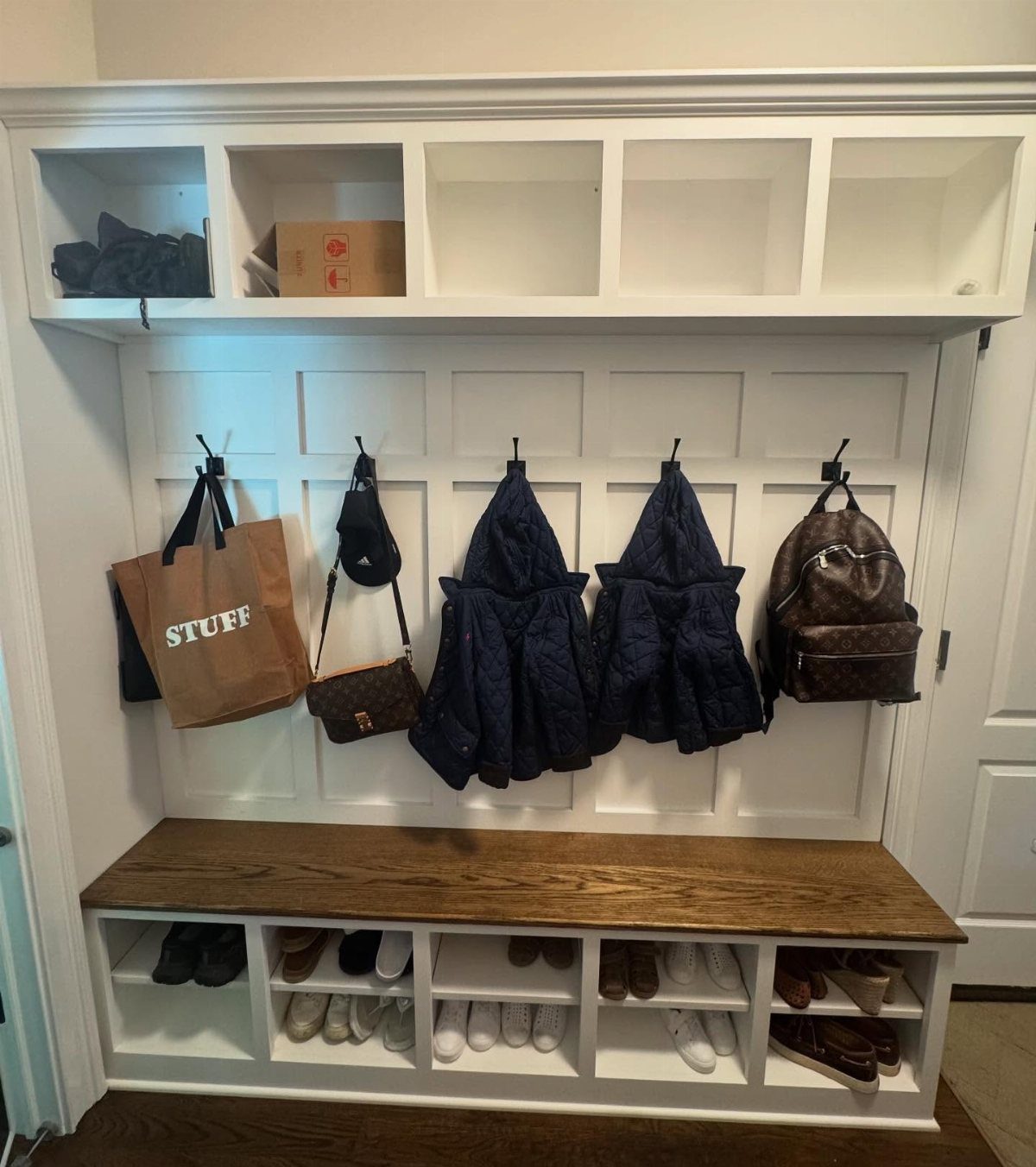
A hall tree gathers coats, bags and shoes into one wall, which is why I pick it over separate pieces when the entry is small.
Hooks hold the daily jackets, upper cubbies take hats and bags, and the bench with shoe cubbies below handles footwear.
White paint, as on this built-in, keeps a tall unit from feeling heavy near a door. Label or assign cubbies so each person owns a space; shared cubbies fill up fast.
A freestanding version is the renter-friendly route if built-ins are off the table.
5. Tilt-Out Shoe Cabinet
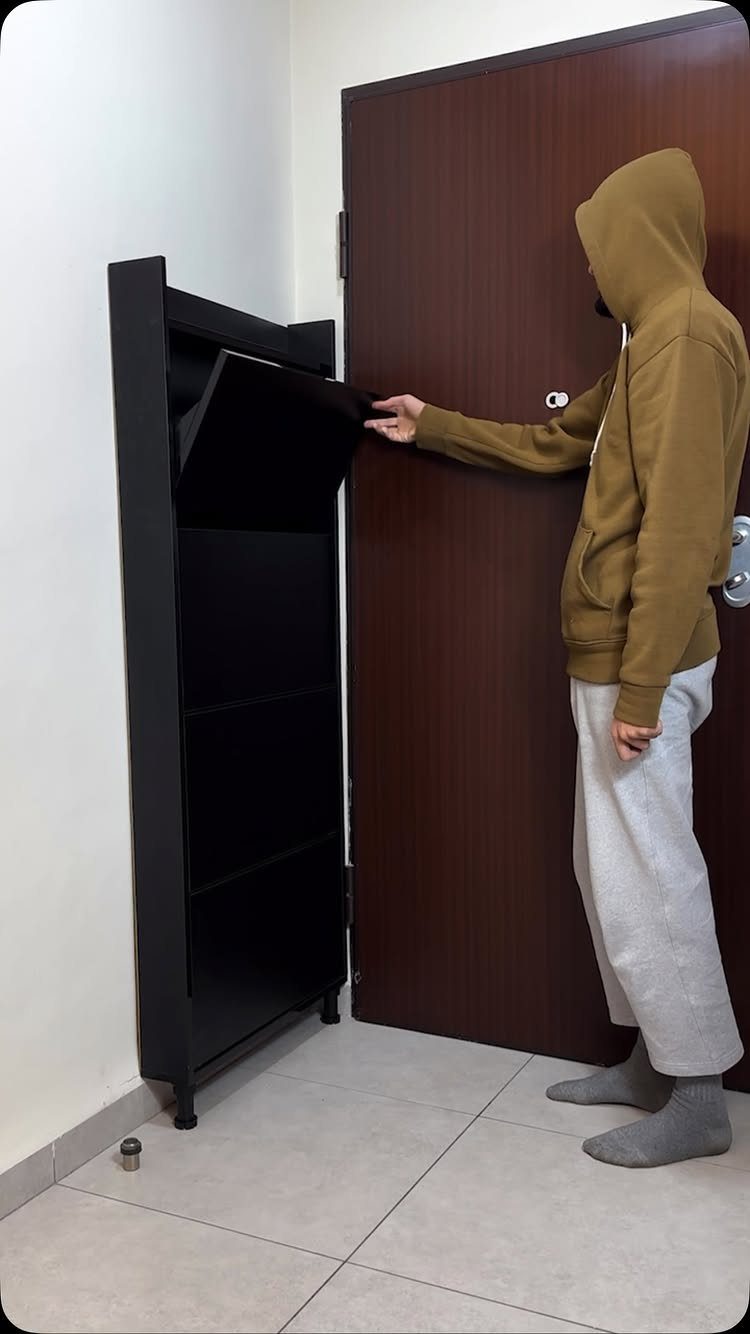
Behind a closed door, shoes stop being visual clutter. A tilt-out cabinet folds each shelf forward on a hinge, so you pull one down, drop pairs in, and swing it shut.
A black finish sits quietly beside a dark front door and hides scuffs from shoes and stray kicks far better than white or light wood. I would choose one that is slim enough to leave the walkway clear when open.
Load heavy boots on the lowest tilt shelf, and keep the cabinet for dry shoes. Wet pairs belong on a tray first.
6. Shoe Rack
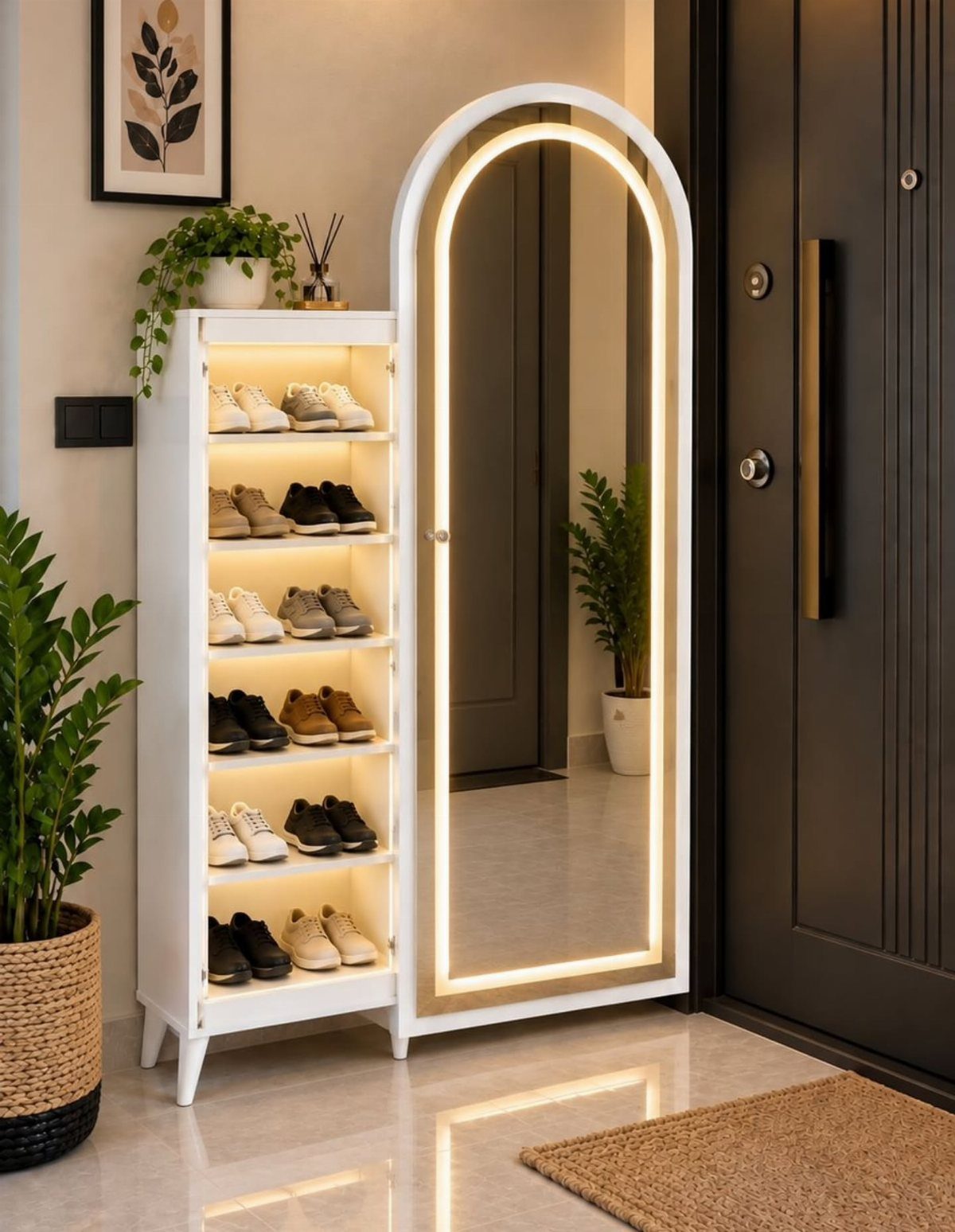
An open shoe rack is the simplest option here: no doors, no drawers, nothing to assemble beyond the frame. You see every pair at a glance, which makes grabbing a pair fast.
Open shelves put shoes on display, so I would keep the number small and tidy. White blends into the wall, and pairing it with a full-length mirror turns the entry into a last-look spot before leaving.
Built-in lighting helps in a dim hallway, because you can see which pair you’re grabbing without a separate lamp or an overhead switch across the room.
Cheap, quick and flexible, but it will never hide a mess.
7. Shallow Cabinet with a Mirror Front
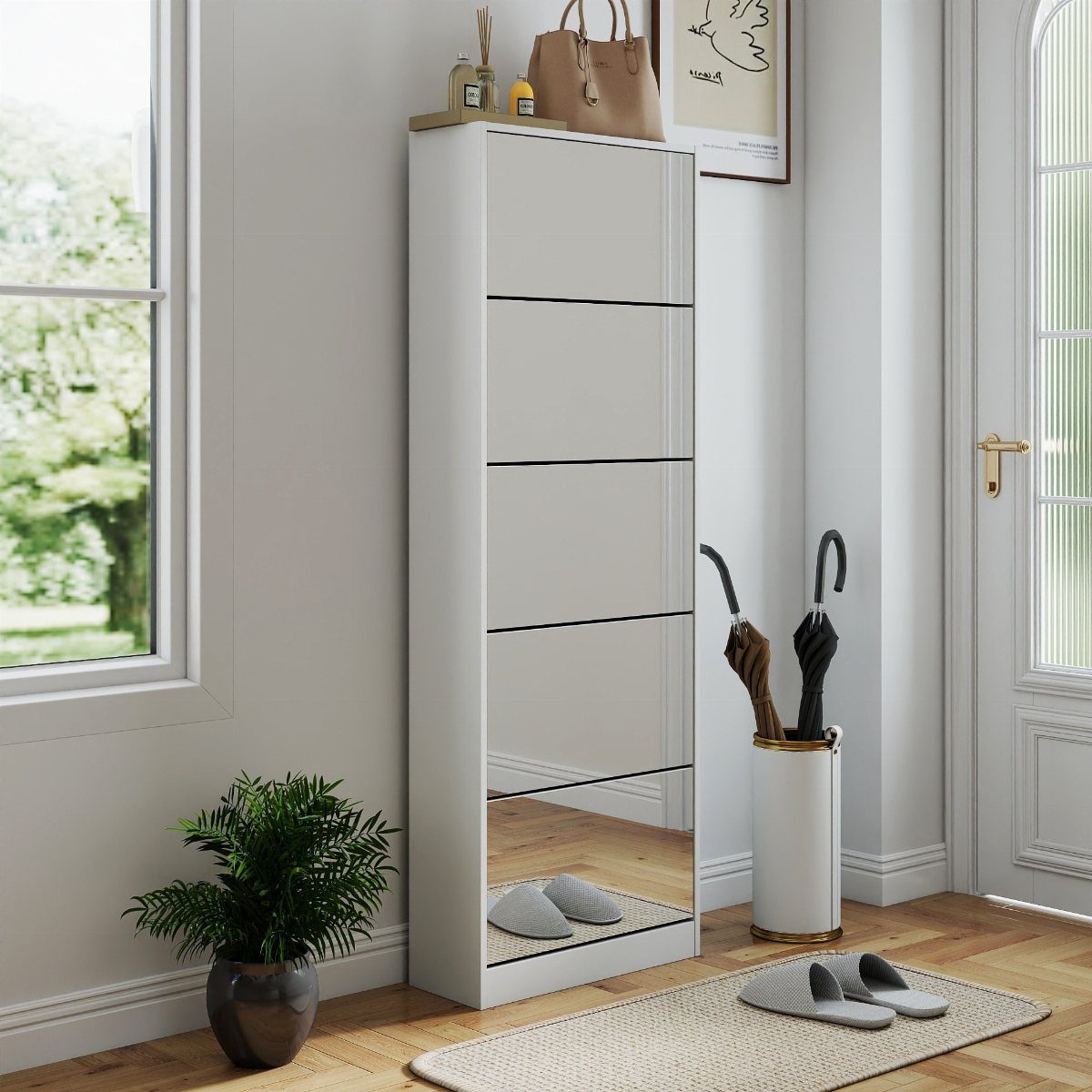
A shallow cabinet with a mirrored front gives you the shoe storage and the last-look mirror in one slim piece, so you skip hanging a second item on the wall.
White keeps it light in a small entry, and the mirror bounces daylight back toward the door.
Pick one tall enough to check your whole outfit. Keep it clear of the door swing, and leave a little floor beside it for an umbrella stand.
Hidden shelves mean you can keep more pairs than an open rack would let you get away with.
8. Rattan Door Shoe Cabinet
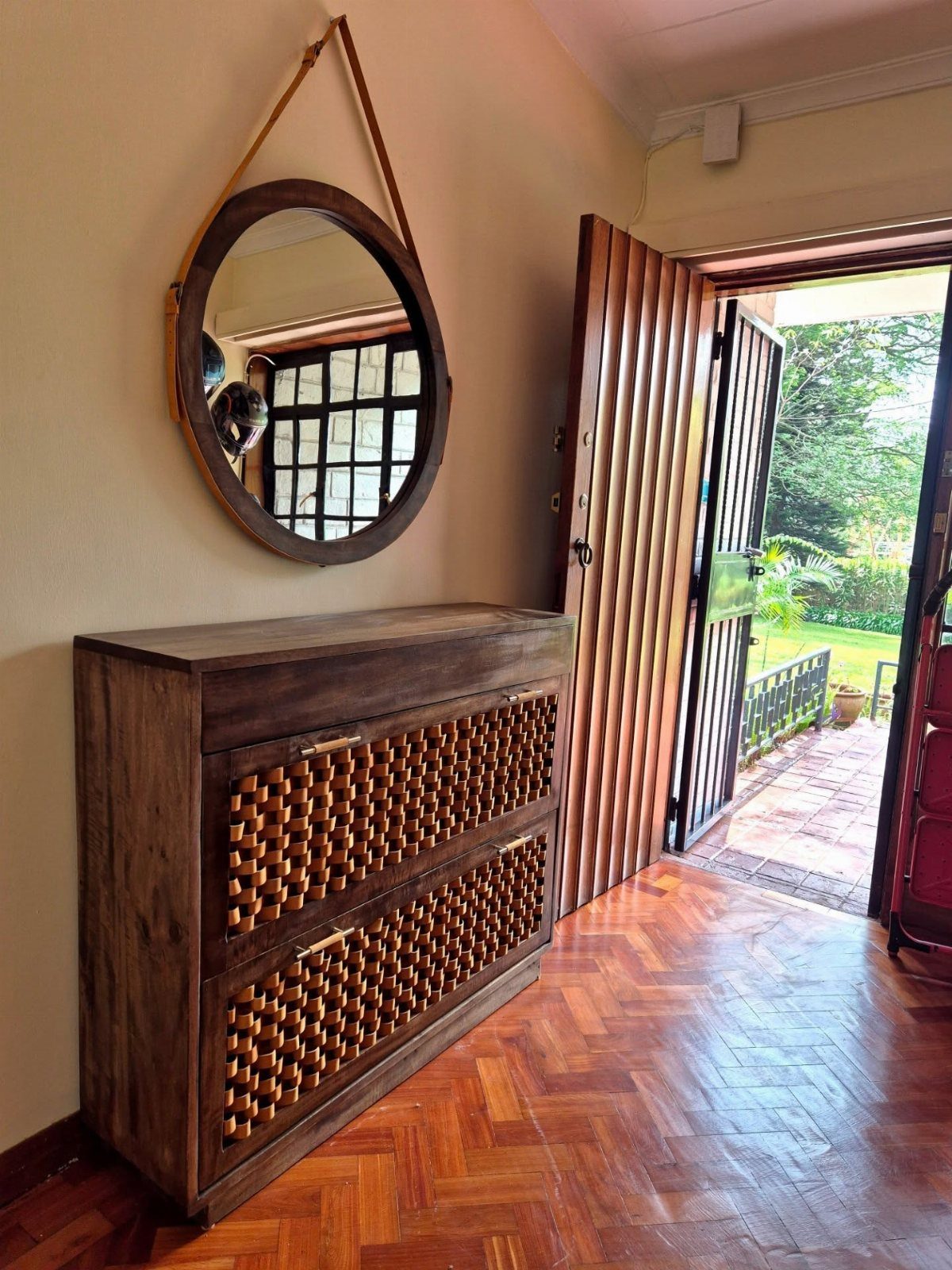
Woven rattan doors let a cabinet breathe while still hiding the pairs inside, and the natural wood frame warms up a plain entry.
Paired with a round mirror above, as here, it looks like a considered corner rather than a shoe station.
Choose a cabinet with a solid top so you have a landing spot for keys and a bag. I would keep the shoes inside to dry pairs, since rattan won’t like a soggy boot.
Rattan is more forgiving than solid doors if you want a softer, textured look.
9. Entryway Unit with Pegboard
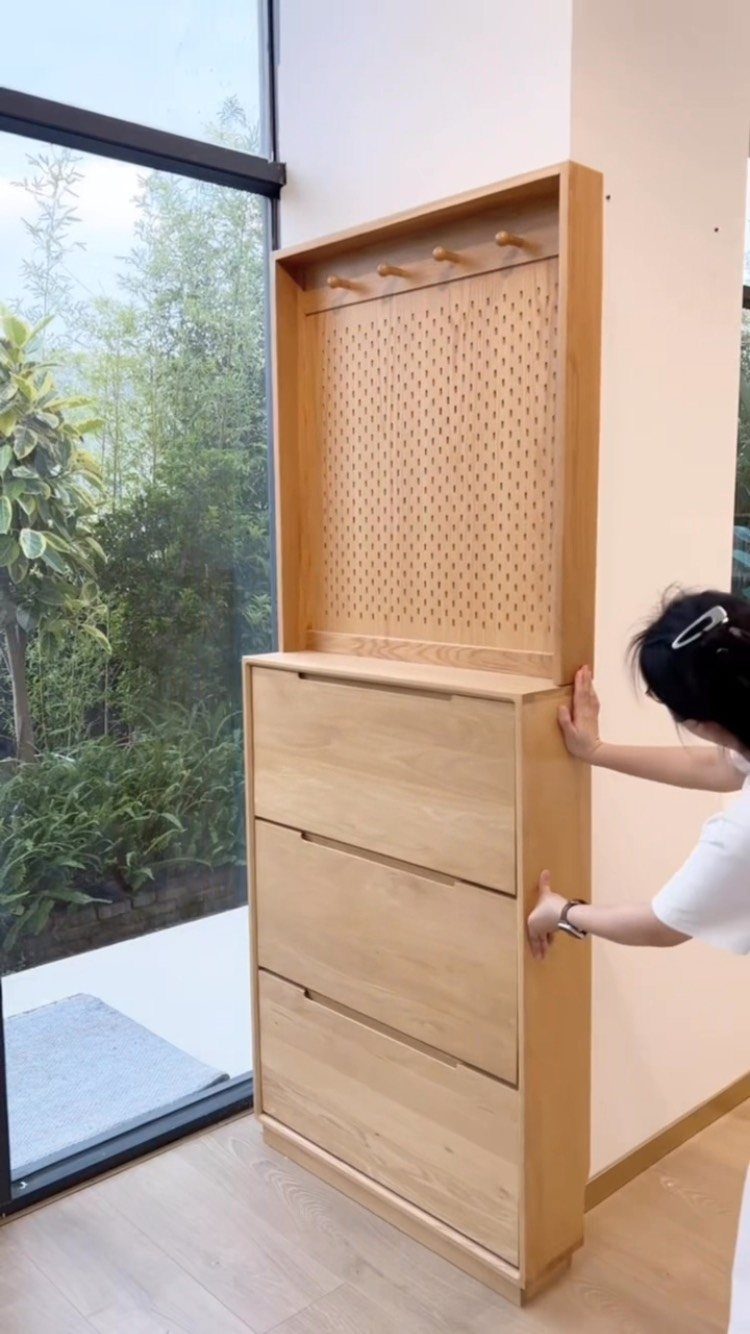
Drawers below and a pegboard above split the job: shoes go out of sight, and the things you grab on the way out hang where you can see them.
In a compact wooden unit, that covers a lot of wall without taking much floor.
Use the pegboard for keys, a light bag or a hat, and keep each peg for one item so it stays tidy. A unit this size sits easily beside a door.
Light wood against a white wall keeps the whole thing from feeling bulky.
10. Under-Stairs Built-In Storage
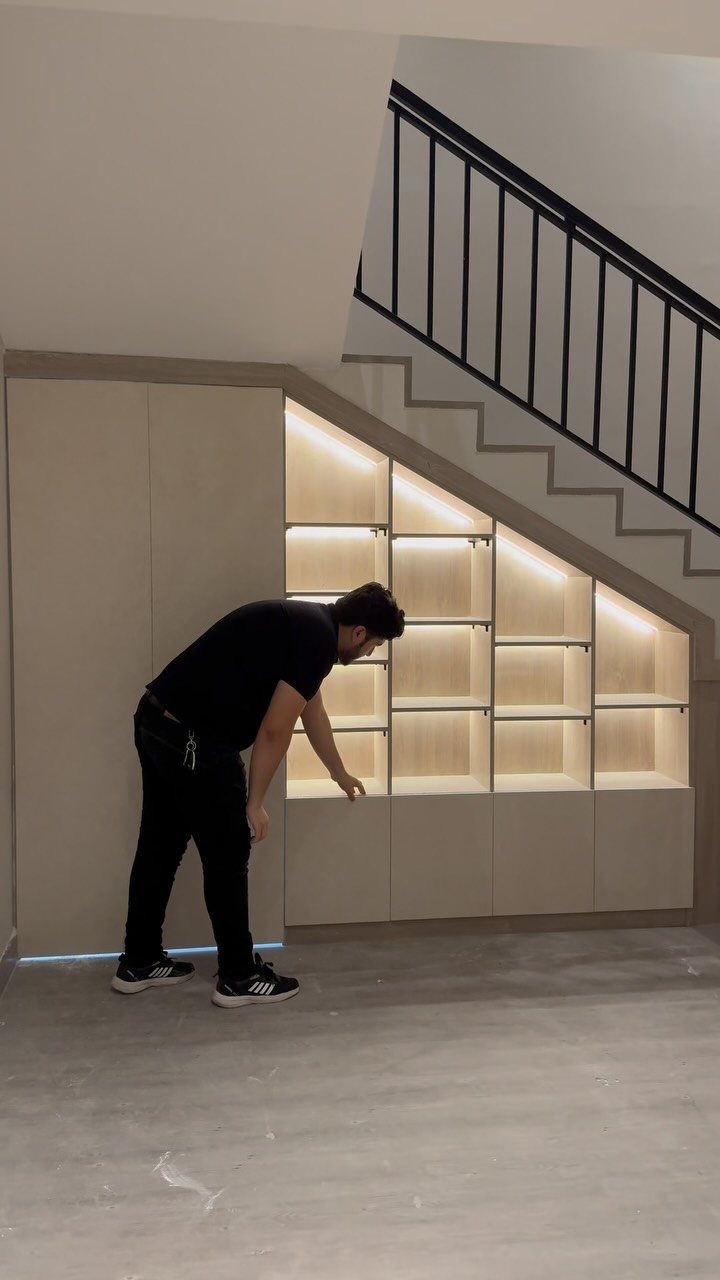
The dead space under an entryway staircase is some of the most useful storage in a house, and custom built-ins fill its odd angles better than any freestanding piece can.
Cabinets below hide shoes, while lit open shelves above hold the pairs and bags you want in view.
Lighting is the detail I would not skip, because a deep, sloped recess turns dark fast. Plan the shelf heights around your tallest boots first.
This is a carpentry job, so expect it to cost more than a rack or a bench.
Benefits of Organized Entryways
A tidy entry changes how the rest of the house starts. Shoes that have a home get put there, and that habit is what keeps the floor clear, not the furniture itself.
It also saves time. When every pair lives in one spot, you stop hunting for a match while you’re already late.
Pick the storage that fits how your household actually behaves. If people drop shoes the second they step inside, the spot has to be within arm’s reach of the door, or the pile will win.
Space-saving Solutions
Go up before you go out. A narrow piece of furniture that stands close to the wall takes far less floor than a wide, low one, and legs on the front only let it sit snug above the baseboard.
Count how many pairs fit or you’ll guess wrong.
One slim cabinet has four compartments that hold two pairs each, while a larger freestanding one has nine shelves and holds up to 18 pairs. Match that number to the people in your home.
Empty shelves don’t have to sit idle. Purses and bags fit there, which makes a shoe cabinet work harder than a rack.
Materials and Aesthetics
Choose materials for the job they do.
Wood suits cabinets and tilt-out units because it looks like furniture and holds weight. Natural fibers such as jute and seagrass add texture, and they work best in the supporting pieces.
A jute rug defines the entry and traps dirt, and its texture sits well beside wooden furniture. Seagrass woven into a basket shape holds umbrellas or whatever you drop by the door each day.
Keep the palette tight. Pick one wood tone and one fiber, then repeat them, so the entry looks planned rather than collected.
Use metal sparingly, in hooks or a frame, where durability matters more than warmth.
Frequently Asked Questions
What to do with shoes by the front door?
Park them close to the door, within a step or two: a bench with a pull-out tray, a narrow cabinet, or a plain open rack all work.
A shoe with an obvious spot ends up in it, and that habit does more to clear the floor than any piece of furniture.
If wet boots are the problem, set a textured rubber or plastic tray against the wall beside the door to catch the mud and meltwater.
What is the best container for storing shoes?
Stackable bins or baskets work well, especially with one assigned to each person so a pile doesn’t build up. Clear sides and ventilation holes let you see what’s inside and keep odors down, and uncovered bins give the most airflow.
A tilt-out cabinet suits anyone who wants shoes out of sight; each shelf swings forward on a hinge, then closes flat and hides everything.
What are some good options for shoe storage in a small apartment?
In a small apartment, height is the answer: a tall, narrow cabinet stacks pairs upward and takes up very little floor.
Sizes vary a lot. A slim unit with 4 compartments fits 2 pairs in each, while a freestanding rack with 9 shelves takes up to 18 pairs, so count the feet in your household first.
Where do you store your shoes at home?
Near the entry, where shoes come off, so they go away without a detour. Daily pairs fit best on a bench rack, in a tray (for wet boots), or in a closed cabinet by the door.





