Which idea fits depends on what your entry lacks: with no closet, a hall tree gives you coat hooks and shoe cubbies in one footprint; if floor space is the scarce thing, go up with a vertical rack or onto the wall with a mounted organizer; and if mud or meltwater is the problem, a peg rack or river stone tray keeps soles off the floor.
The list runs from a PVC pipe shoe organizer you can build yourself to a custom built-in entryway unit. Door swing and walkway width settle the rest, since a piece that blocks either defeats its purpose.
1. Hall Tree
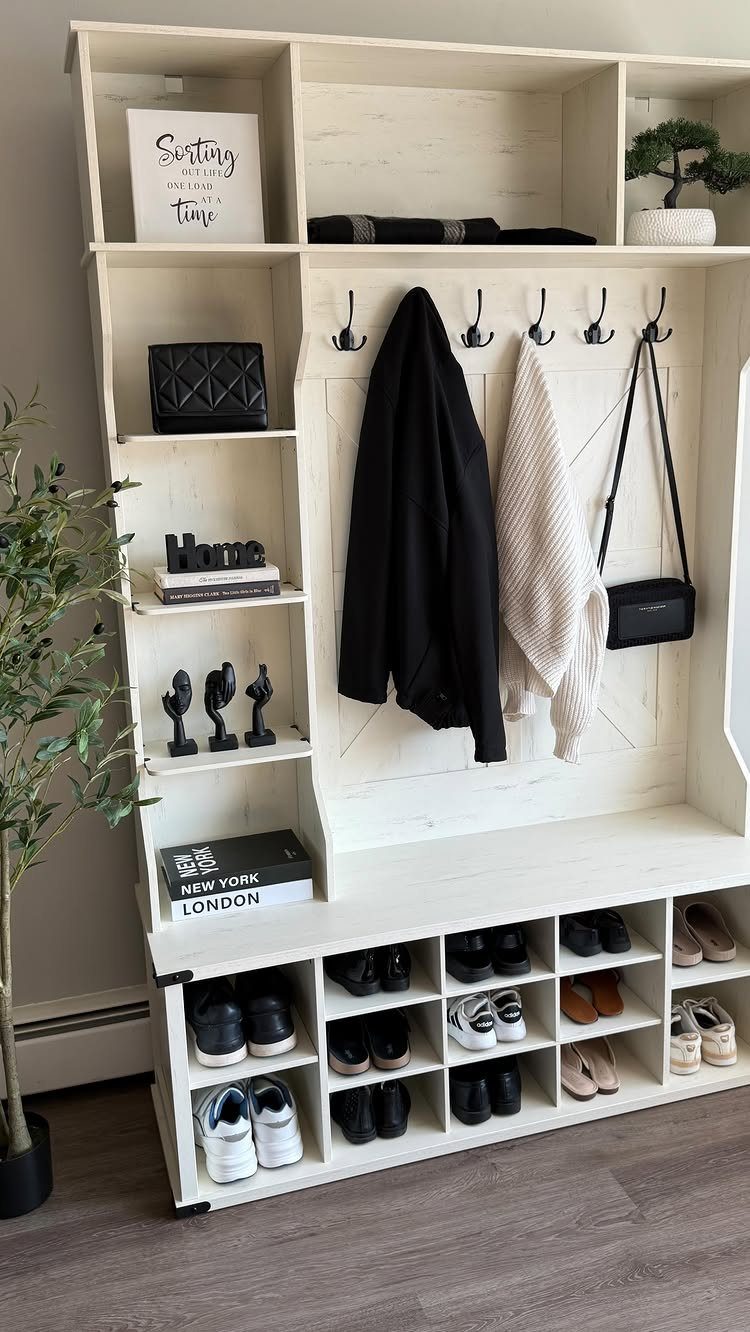
A hall tree solves the coat problem and the shoe problem with one footprint, which is why I pick it for entryways that have no closet at all.
A hall tree with 20 open compartments for shoes and boxes plus 6 sturdy hooks for coats and bags can handle a whole household’s daily gear in one narrow footprint.
Open cubbies make shoes easy to grab, but they also show every scuffed sneaker. Keep the daily pairs in the cubbies and move off-season ones into lidded boxes on the top shelves.
Anchor any tall piece to a wall stud before loading the hooks.
2. Vertical Shoe Rack
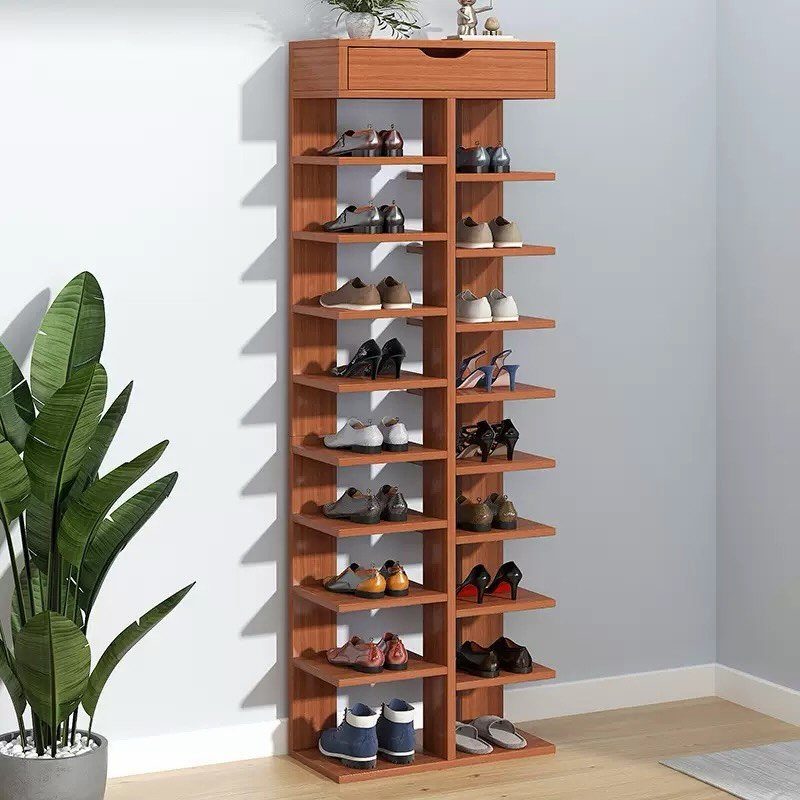
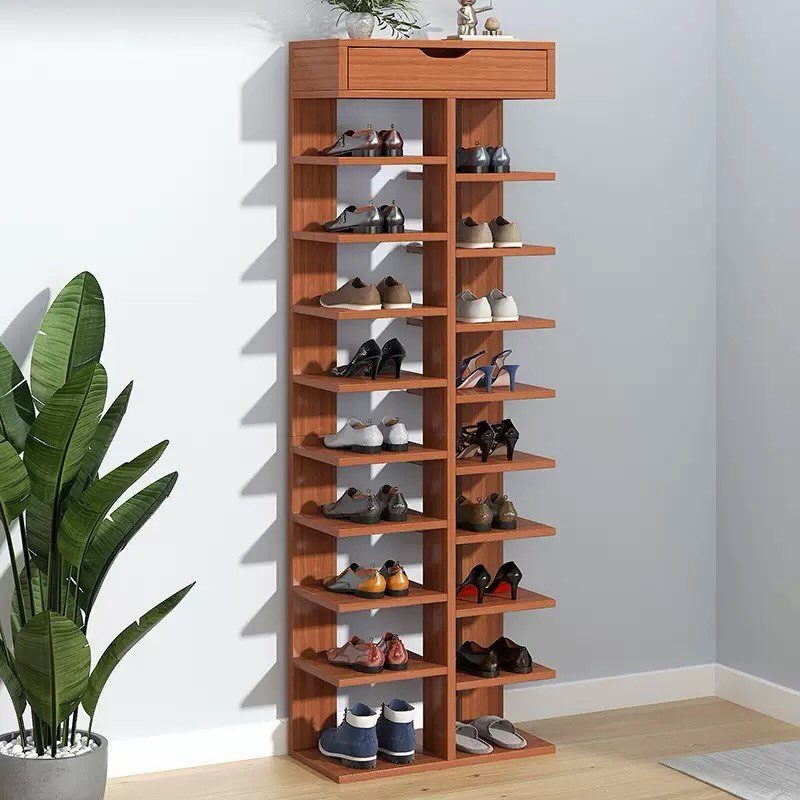
Floor space is the scarce thing in a small entry, so building up makes sense. A tall, narrow wooden rack stacks shoes on multiple shelves in a footprint barely wider than one pair.
I like the top drawer on this one. It takes the small stuff that otherwise ends up on the floor: socks, shoe horns, spare laces.
Fill the lower shelves with the shoes you wear most, since bending is the part people skip.
If you want your closet to feel like you just stepped into a department store, then choose a rotating shoe rack to display your finest pairs. This elegant shoe storage idea holds up to 16 pairs and looks stylish wherever you want to put it.
3. Entryway Shoe Storage Bench
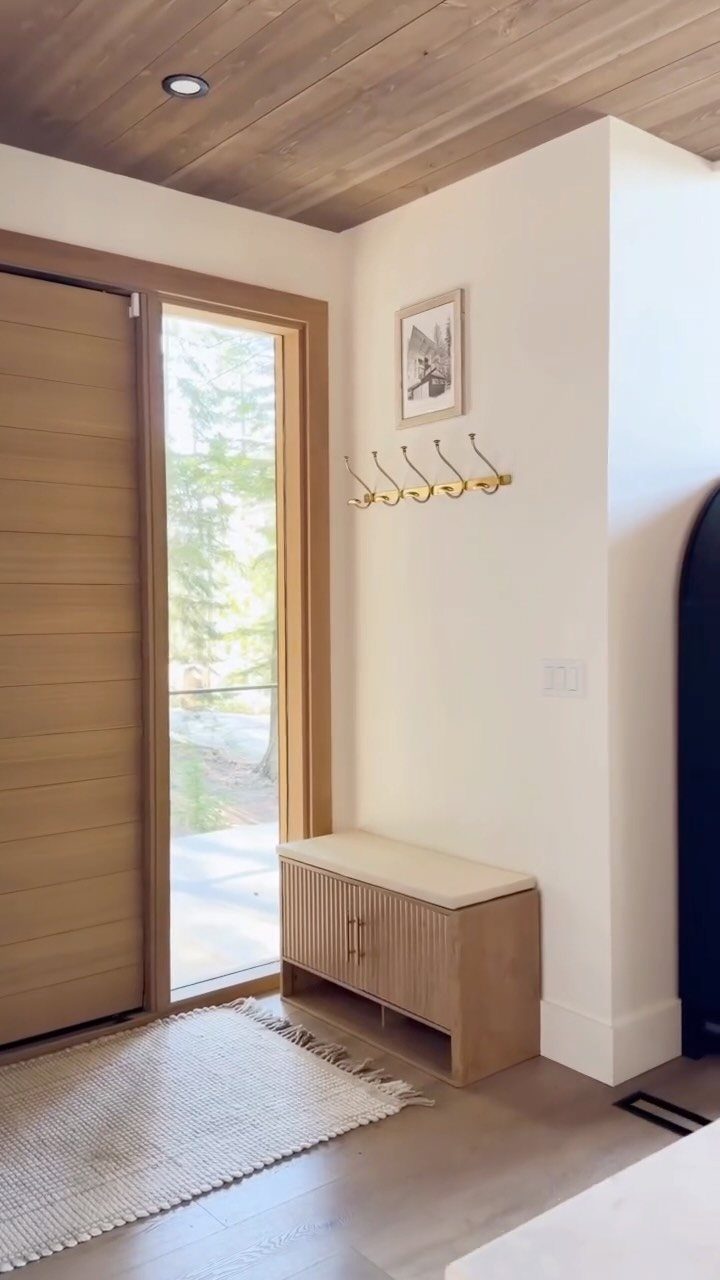
Sitting down to pull on boots is something most entries need anyway, so a bench with storage underneath earns its spot twice. Shoes go in the base, and the seat doubles as a landing place for a bag.
A cushion makes it comfortable, though it can be removed or swapped when it gets grubby. Hooks mounted above the bench keep coats and bags off the seat, so the bench stays free for sitting and pulling on shoes.
Measure your door swing first, because a bench that blocks the door defeats the purpose.
4. PVC Pipe Shoe Organizer
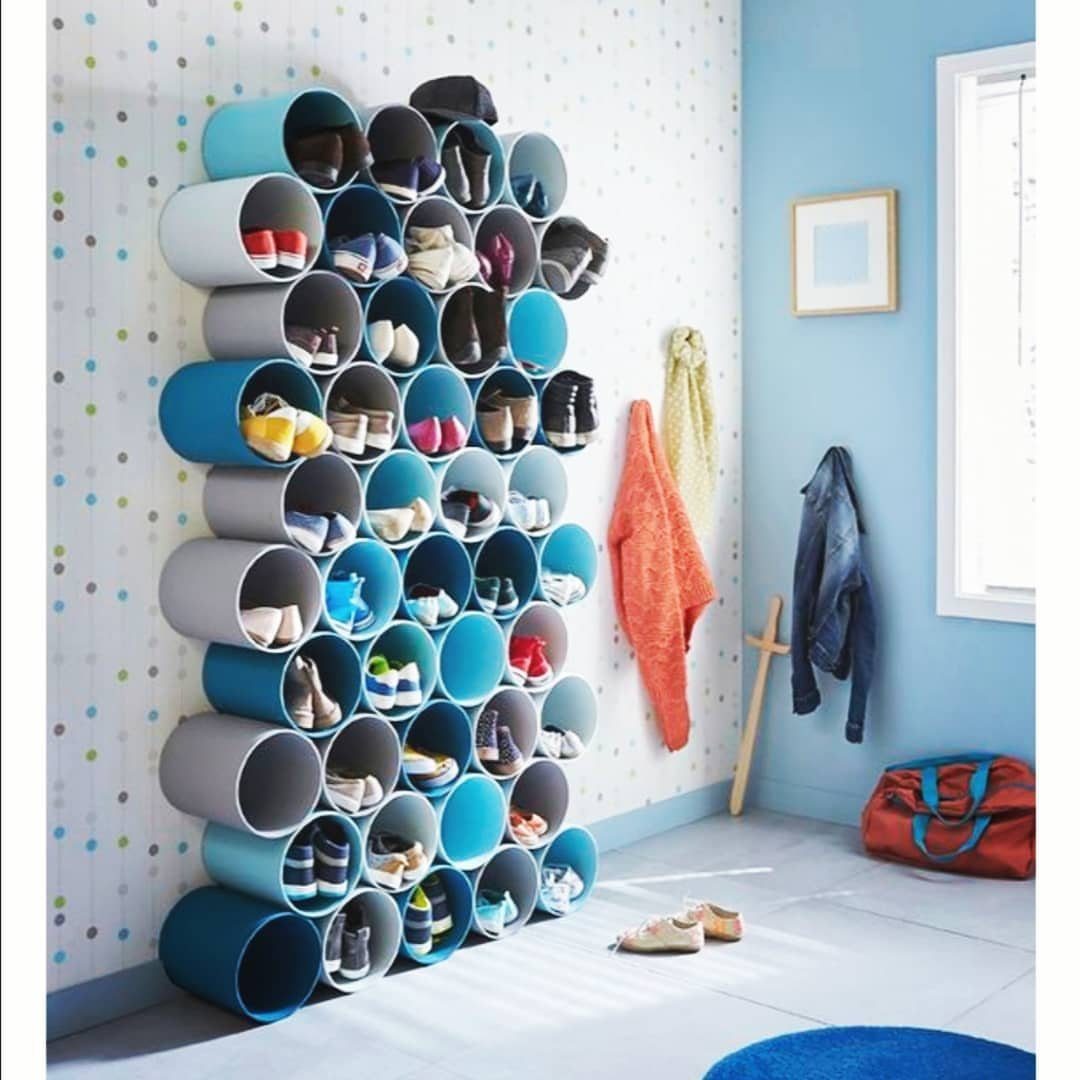
Cut lengths of PVC pipe, stack them together, and you get round cubbies that hold one shoe pair each. Pipe is cheap, and a hardware store will often cut it for you.
Choose a diameter that fits your biggest shoe, since a tight tube is hard to pull from. Paint or leave the pipes as they come; mixing 2 colors gives a graphic look without extra cost.
Secure the tubes to each other first, then screw the whole bundle to the wall into studs or anchors.
5. Narrow Shoe Storage Cabinet
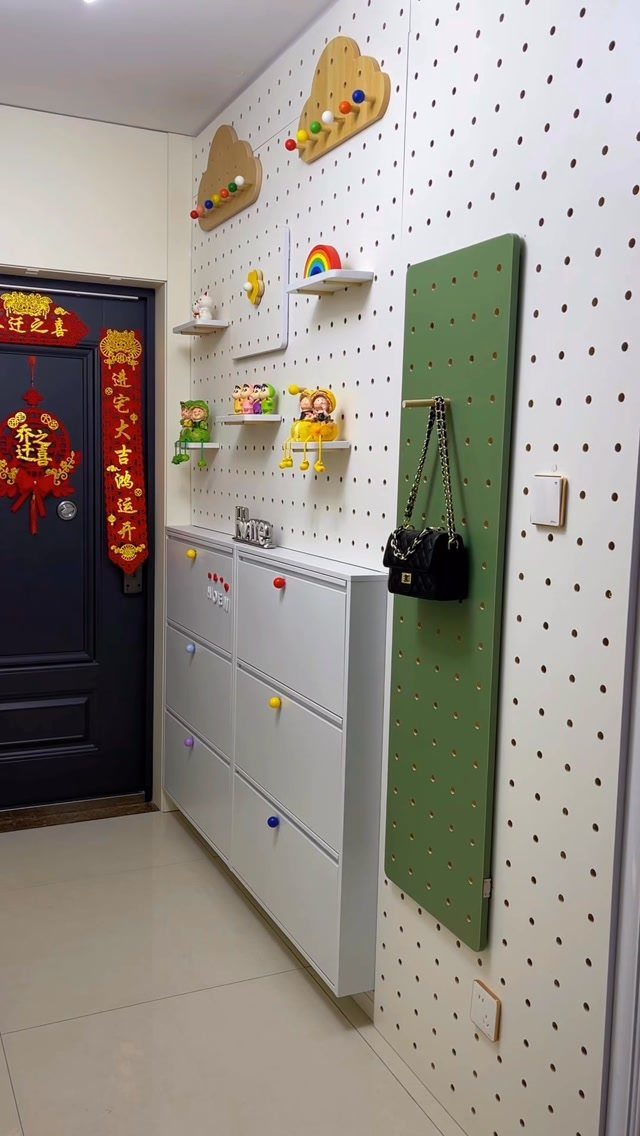
A narrow cabinet hides shoes behind doors, which is what I recommend when visual clutter bothers you more than lost floor space.
Swapping plain handles for colorful knobs gives a white cabinet personality for very little money, and it takes about 10 minutes with a screwdriver.
Closed storage keeps dust off and makes a tiny entry look calmer. The drawback is that wet shoes need to dry elsewhere first, or the inside gets damp.
Choose a slim depth that clears the door and doesn’t pinch the walkway.
6. Wall Mounted Shoe Organizer
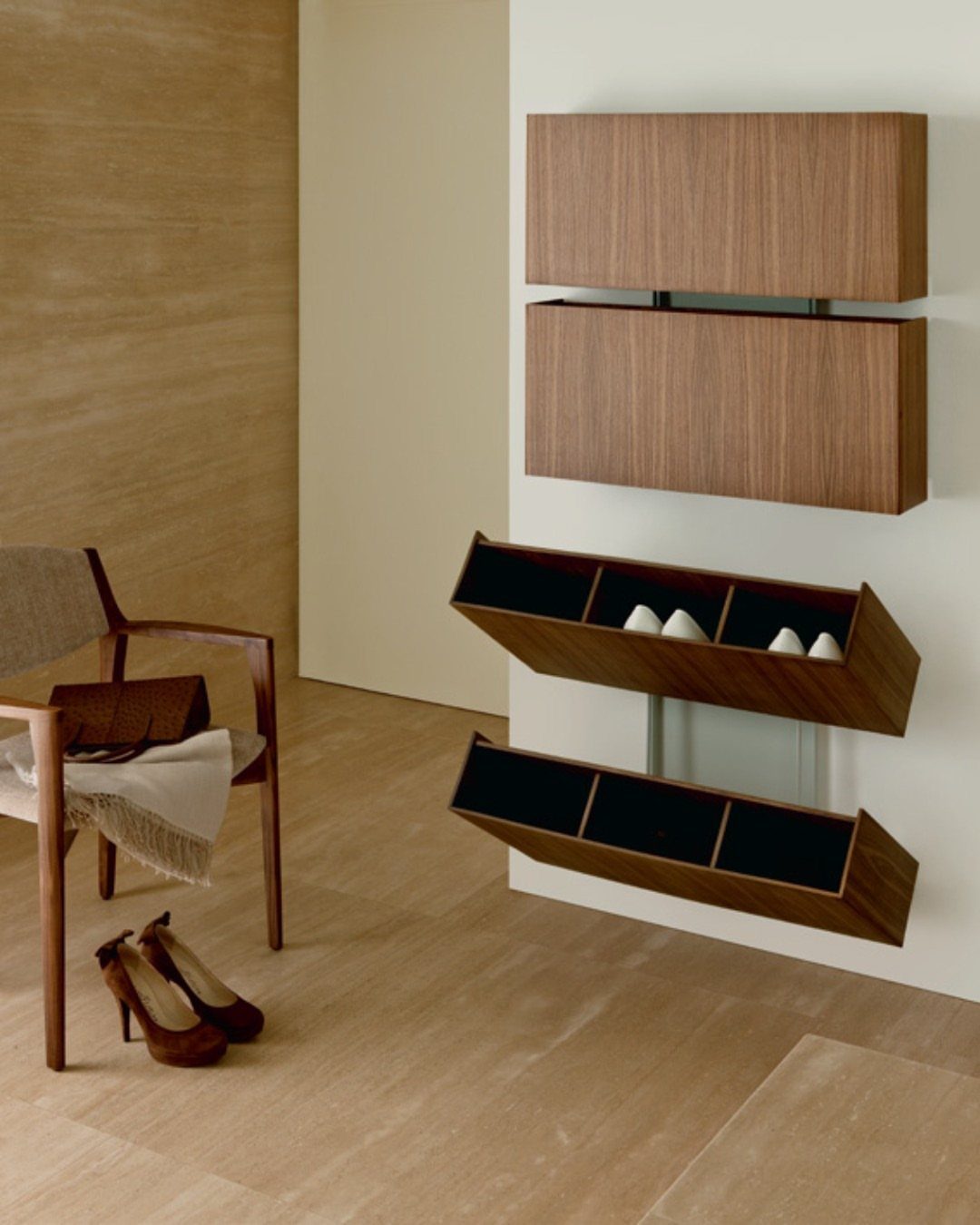
Mounting the organizer to the wall leaves the floor clear, so a quick sweep or mop takes seconds. Wood keeps the setup warm, and matching upper cabinets make the whole wall read as one planned unit.
Raised shoes also stay out of the way of the door, which helps in a narrow hall. Hang the lowest shelf high enough that a vacuum or a pair of tall heels fits beneath.
Hit studs when mounting, since a row of shoes adds more weight than people expect.
7. Wall Peg Boot Rack
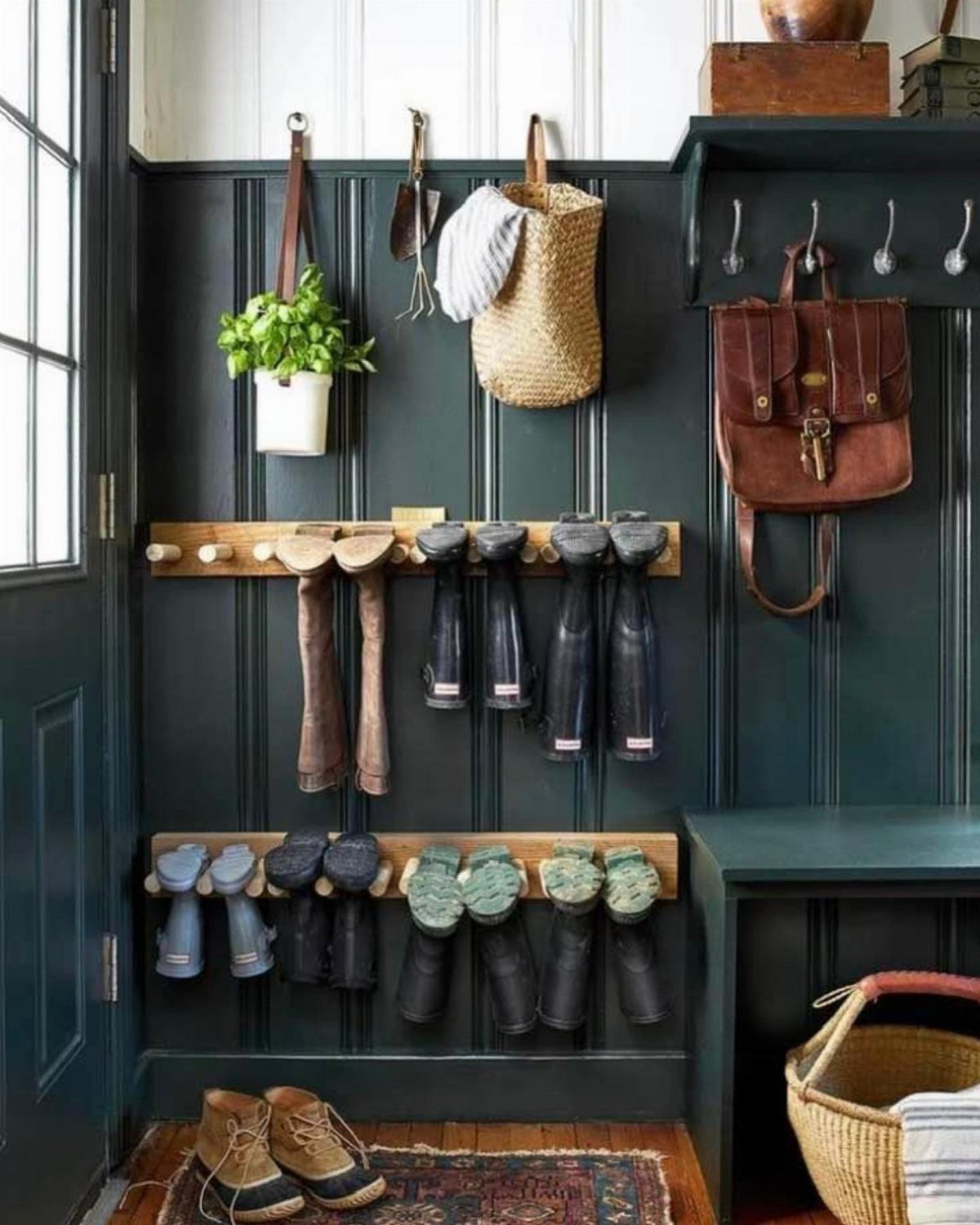
Boots hung upside down by the shaft from wooden pegs stay off the floor, so mud and meltwater drip away instead of pooling on a mat. Two short peg racks like these take far less wall than a shelf would.
Space the pegs wide enough that boots don’t crowd each other, and screw the rack into studs or use heavy-duty anchors, since a full set of boots pulls down harder than it looks.
A boot tray on the floor below catches drips and holds the sneakers that don’t hang well.
8. Custom Built in Entryway Unit
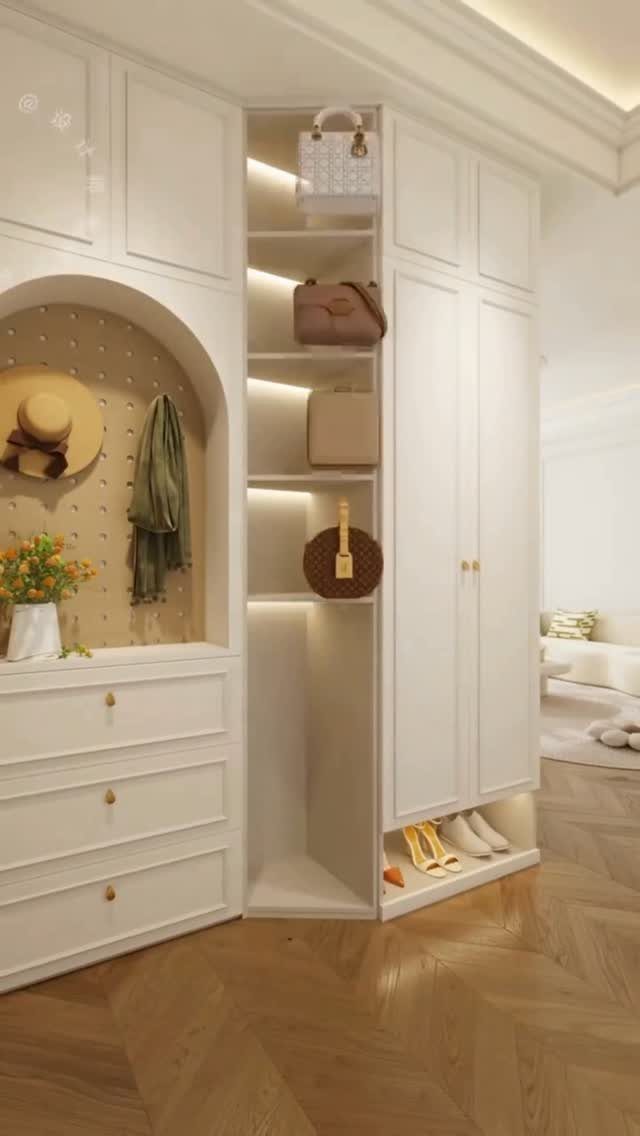
A custom built-in lets you size every compartment to what you actually own, and I like that a low bottom shelf can be given over to shoes alone.
Handbags get their own shelves above, so nothing competes for the same space.
Painting the unit white, the same as the wall, makes it read as part of the room rather than furniture. Even an arched nook can hold a lamp or a small plant.
This is the priciest route on the list. Measure your shoes and bags before you plan the shelf heights.
9. River Stone Boot Tray
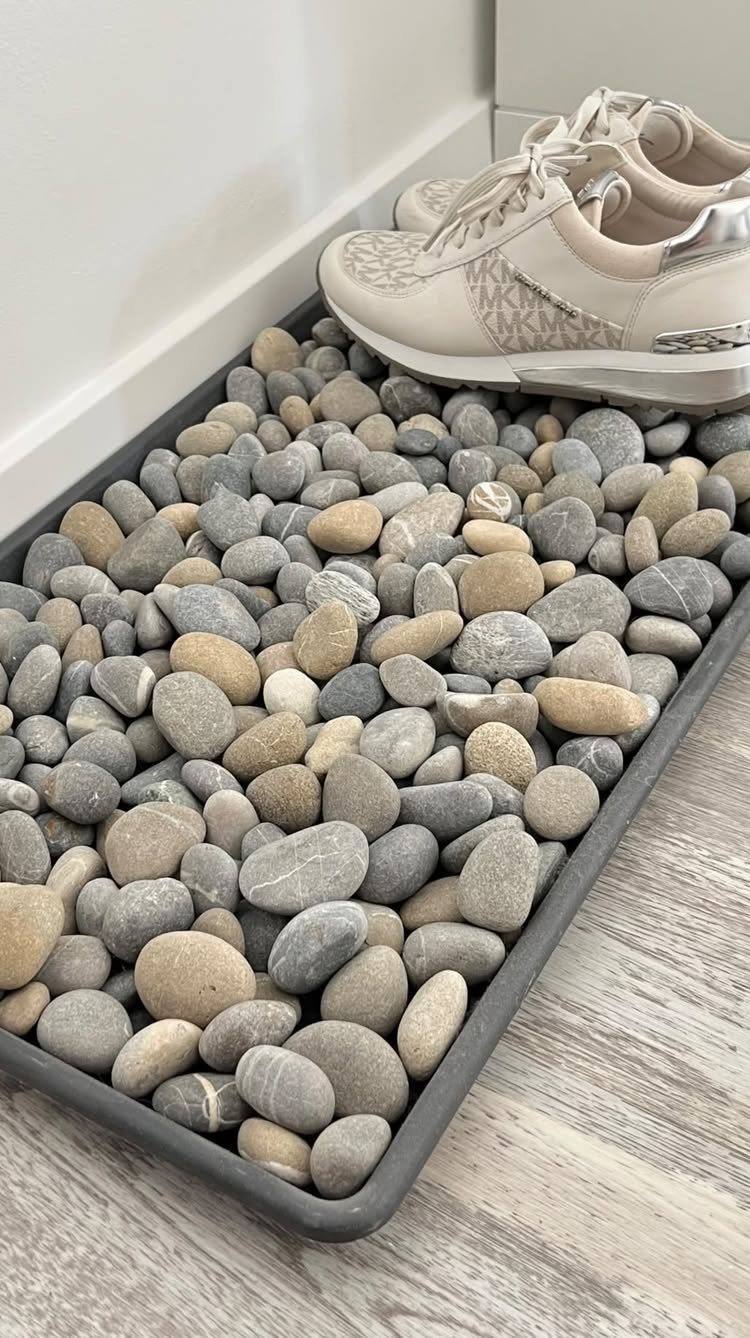
A shallow tray filled with smooth river stones gives wet or muddy shoes a place to rest that isn’t your floor. Water settles between the stones, so soles sit above it.
Keep the tray low and wide enough for the shoes you wear daily. A grey tray hides dirt better than a light one.
Rinse the stones in a sink now and then and let them dry before they go back. It suits one or two pairs, not a whole family’s shoes.
Importance of Organized Entryway
A tidy entry sets the tone for the whole house, because it’s the first thing you see after a long day. Shoes piled by the door make the rest of the home feel behind before you’ve taken your coat off.
Storage also builds a habit. When every pair has an obvious place, putting them away takes a few seconds, and that is what keeps the pile from coming back.
A small bonus is time. Finding a matching pair on a rushed morning gets easier when the entry is orderly.
On stackable racks, set the shoes you like looking at where the eye lands first.
Maximizing Vertical Space
A horizontal piece makes a narrow hallway feel tighter. Going up takes little floor width and still holds a lot, so the room reads as calmer.
Modular pieces also adapt. You can add a rack or a cube as your footprint or your shoe count changes.
A slim vertical cabinet works well if you want everything tucked out of sight. Check the footprint on the product page, since a small base is the whole reason to choose one.
Custom Solutions
Custom storage pays off when your entry has an odd shape: a wall with an awkward jog, a nook under stairs, or a gap beside a door. Standard furniture leaves dead space there, while a built piece uses it.
Custom-built storage can fit a specific space and add function without calling in a carpenter. Basic shelves cut to size, or stock cabinets trimmed to fit, can give you the same tailored result.
Start with a tape measure and a list of what must fit, then draw the wall on paper. Adjustable shelf pins let you change heights later if your shoes change.
Frequently Asked Questions
How to store shoes in a small entryway?
Go up instead of out. A tall, narrow rack, a wall-mounted shoe shelf, or a slim cabinet with doors uses little floor width, and a bench with storage underneath gives you a place to sit as well.
Pick based on clutter: open racks are quick to use, while doors hide scuffed pairs. Anchor anything tall or wall-hung into studs, since shoes weigh more than people expect.
What is the best shoe organizer for small spaces?
A narrow cabinet or a set of cubbies works best. A slim cabinet hides shoes behind doors and keeps dust off, though wet pairs need to dry elsewhere first.
For a cheap option, stacked lengths of PVC pipe make round cubbies that each hold one pair, as long as the diameter fits your biggest shoe.
Anchor whatever you hang into wall studs, or use rated drywall anchors if the studs sit in the wrong spot.





