Whether you can drill into the door or wall decides which of these 5 ideas is yours.
Renters can stick with the over-the-door organizer, which hangs in minutes with no tools, while owners can step up to vertical shoe shelves, floating shelves, or a wooden shoe cabinet that hides the clutter.
The list runs from an over-the-door organizer to a weekend DIY build, and the section on choosing the right organizer covers why a model with 3 metal hooks carries its load better than one with a single hook.
1. Over the Door Shoe Organizer
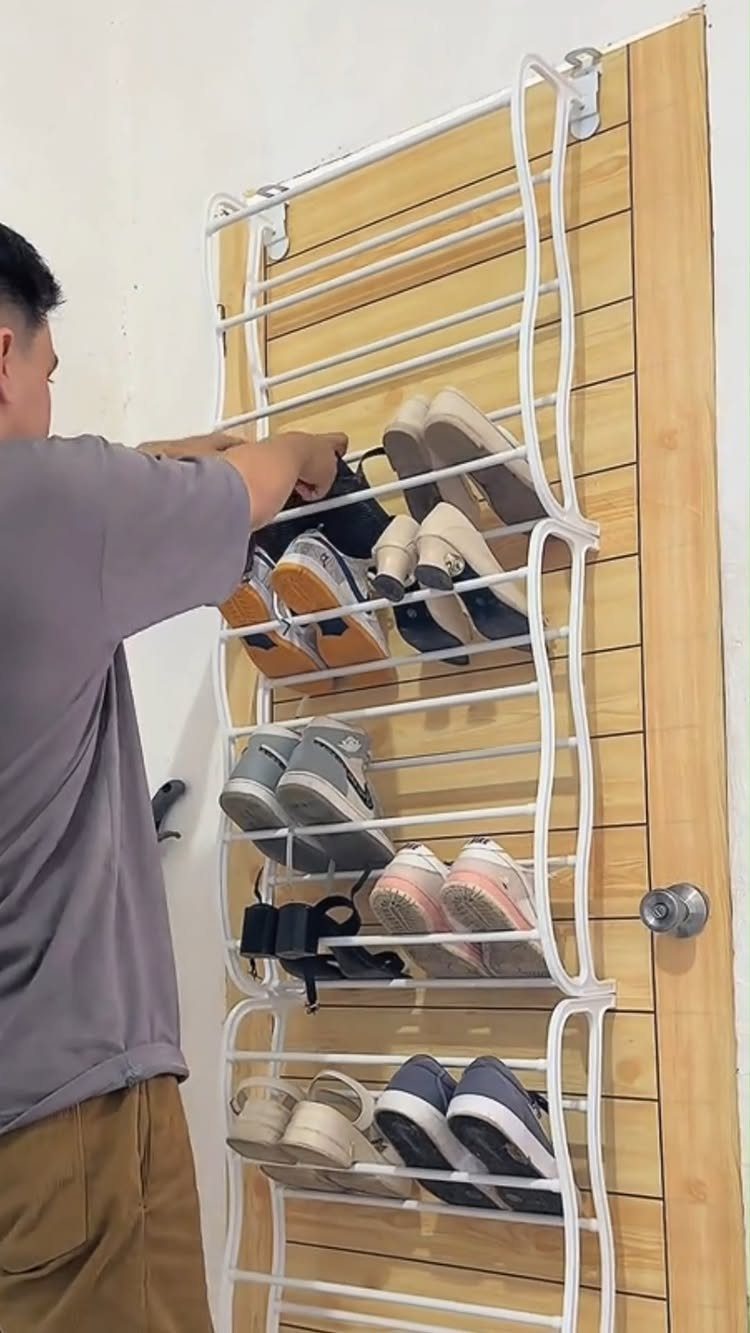
A white metal rack hooked over the top of a door turns dead space into shoe storage for very little money, and it needs no drilling. That makes it the renter’s pick.
Measure the gap between the door and frame first, since the hooks have to clear it. Load heavier boots on the lower rows so the door still closes easily.
I like the metal version because the rows stay open and shoes dry out instead of sitting in fabric pockets.
2. Vertical Shoe Shelves
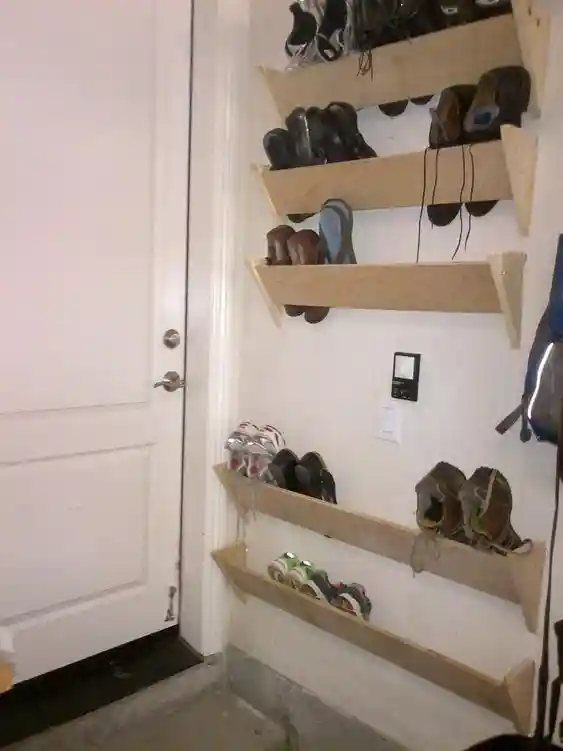
Stacking shallow wooden shelves in a tall column beside a door uses a strip of wall that usually sits empty. Each shelf holds one row of sneakers or sandals, so the column grows upward instead of across the floor.
Use a stud finder and anchor into studs where you can; shoes add up in weight. Space the shelves by your tallest pair, and give flats and sandals tighter gaps so you fit more levels.
3. Floating Shelves
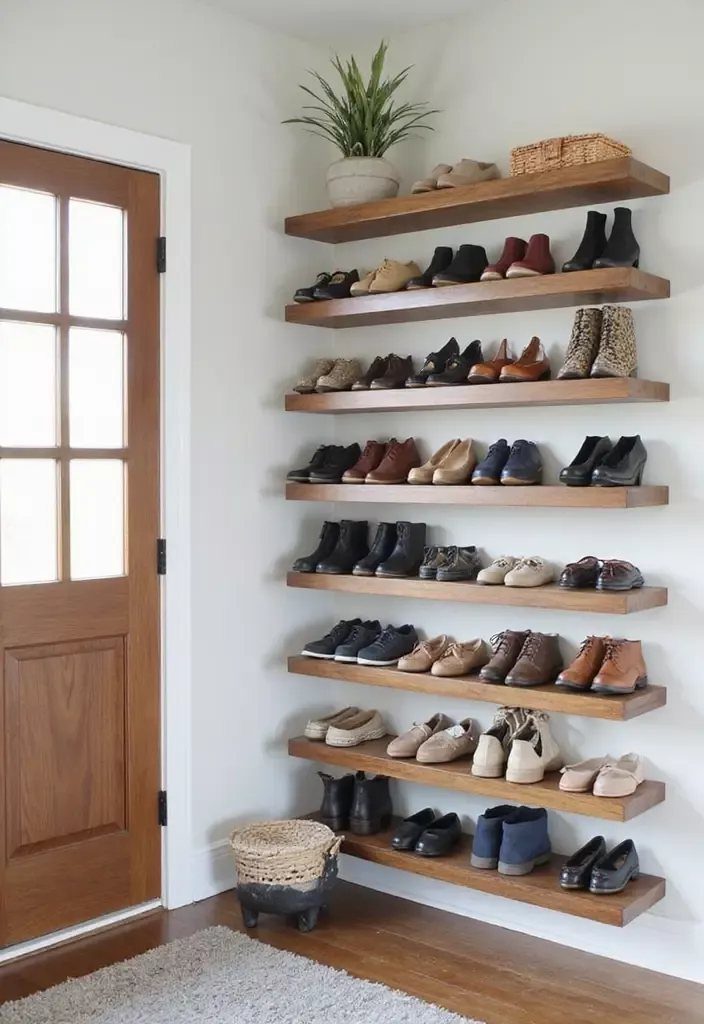
Floating shelves suit people who want shoes treated as part of the room. Wood on a white wall looks warm and clean, and there’s room to set a plant between pairs.
I’d run the shelves in a single column and keep them shallow, just deep enough for a shoe laid toe to heel.
Mount into studs or use proper wall anchors. A basket on the floor catches the pairs you wear daily, so the shelves stay neat.
4. DIY Shoe Storage Solutions
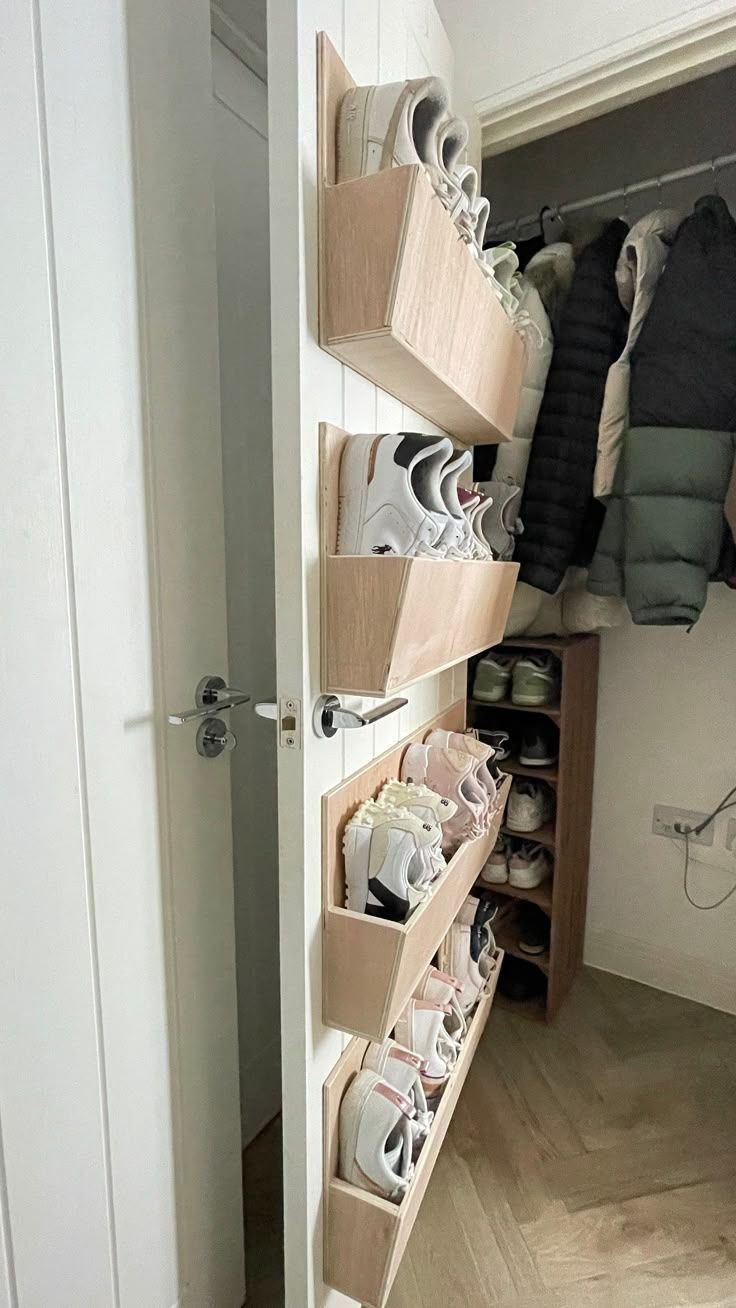
Building your own shoe storage lets you fit an odd spot exactly, and the back of a closet door is a good place to start. Wooden shelves screwed to the door can hold several pairs of sneakers off the floor.
Check how far the door swings and how much clearance the shelves leave before you cut any lumber.
Sand the edges and seal the wood so it doesn’t snag laundry or socks. Plan on a weekend and a modest budget.
5. Wooden Shoe Cabinet
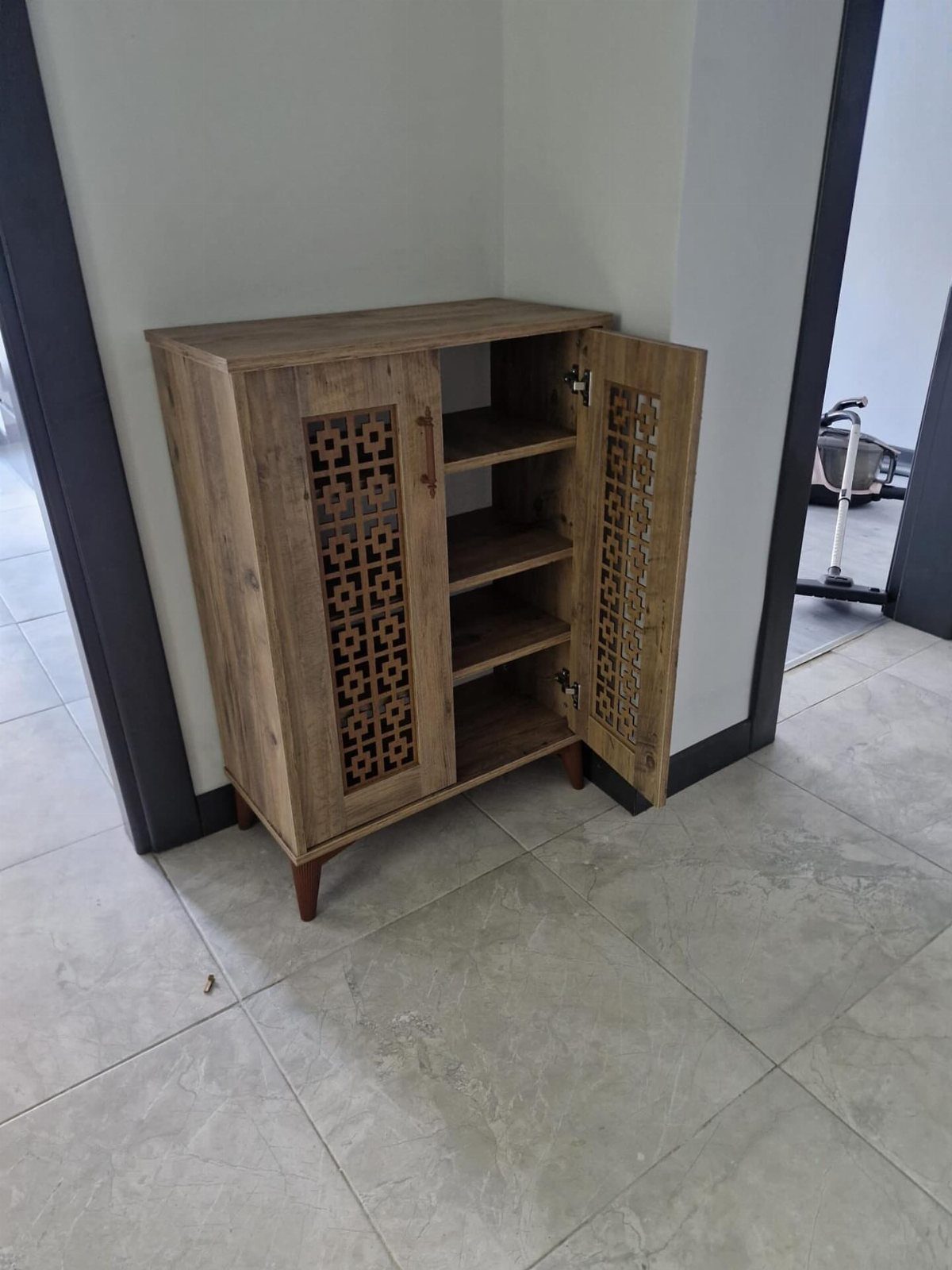
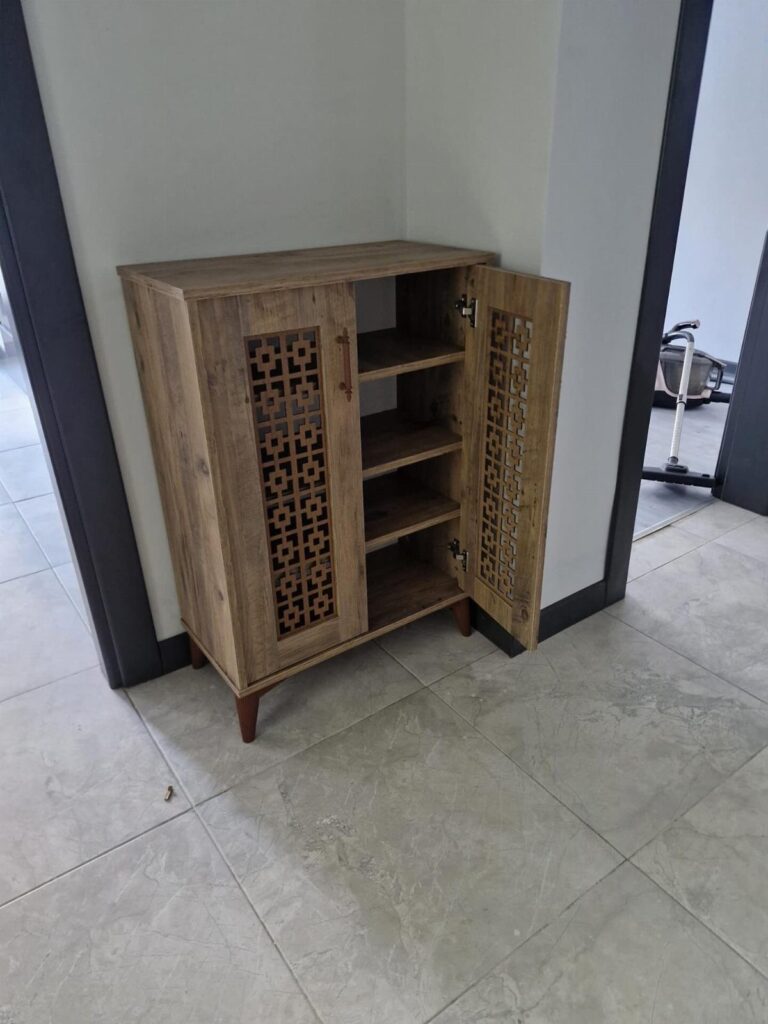
A wooden shoe cabinet hides the clutter behind doors, and carved lattice fronts like this one let air move through while keeping pairs out of sight. That suits a hallway where shoes pile up and the look matters.
Of the five ideas, this is the one that costs the most and takes the most floor space. In return you get closed storage with interior shelves, and nothing to install on the wall.
Benefits of Using Over the Door Storage
Floor space is the first thing an over-the-door rack gives back. Shoes stop collecting by the entry or the closet floor, and a door that was doing nothing starts holding pairs in a row where you can see each one.
Seeing every pair is what keeps a closet orderly. You stop digging for the match to a shoe, and putting a pair back takes a few seconds.
Installation takes no tools. Hang it, check that the door still closes, and you’re done in minutes, which suits a rental where drilling isn’t an option.
Choosing the Right Organizer
Start by counting your shoes, then sort them by type.
Capacity ratings tell you how much shoe type matters: an organizer sold as holding 12 pairs of sneakers will often take 24 pairs of flat sandals, since each sandal uses about half the pocket space.
Pocket size matters too. Many mesh organizers use pockets around 8.8 inches tall and 4.5 inches wide, so sneakers and sandals slide in fine, while boots and high heels are too bulky or too tall to fit.
Mesh pockets let shoes breathe, which helps with gym sneakers. Check the hook count as well; a model with 3 metal hooks spreads the load better than one or two.
Measure the door’s width and height before ordering, and leave room so the door still closes. Buy for the shoes you wear now, with a few empty pockets as a buffer.
Maintenance Tips
Empty the organizer every few months and wipe it down. Mesh and fabric pockets collect dust and grit, so shake them out or vacuum them, then wash by hand with mild soap and let them dry fully before refilling.
Metal racks need only a damp cloth. Dry them afterward so moisture doesn’t sit on the finish.
Check the hooks, seams, and stitching at the same time. Look for bent hooks, frayed pockets, or a sagging row, and fix them early.
If the door starts to rub or drag, check that the heaviest boots sit on the lower rows and move any bulky pairs off the top pockets. Rotate out off-season pairs so the load stays reasonable.
Frequently Asked Questions
What are the best types of shoe storage for small spaces?
An over-the-door rack and a tall column of shallow shelves are the two I’d pick. The rack hooks over the top of a door, needs no drilling, and puts unused door space to work, which suits renters.
A shelf column fits into the narrow strip of wall beside a door, space that usually sits empty, and it stores shoes by stacking them up instead of spreading them over the floor.
How many pairs of shoes can these organizers hold?
It depends on the shoe type more than the label. Other pages put typical capacity at 24 to 36 pairs, so count your shoes and sort them by type first, then pick the size that fits.





