The ideas here run from a sorting afternoon to a built-to-fit closet system, with decorative hooks, an over-the-door organizer and pull-out drawers in between.
What decides your pick is the closet you already have: its wall lengths, its ceiling height, and how much circulation space is left once rods and shelving take their depth.
Measure those before you buy anything, because a single drawer can take the aisle away.
1. Decorative Hooks
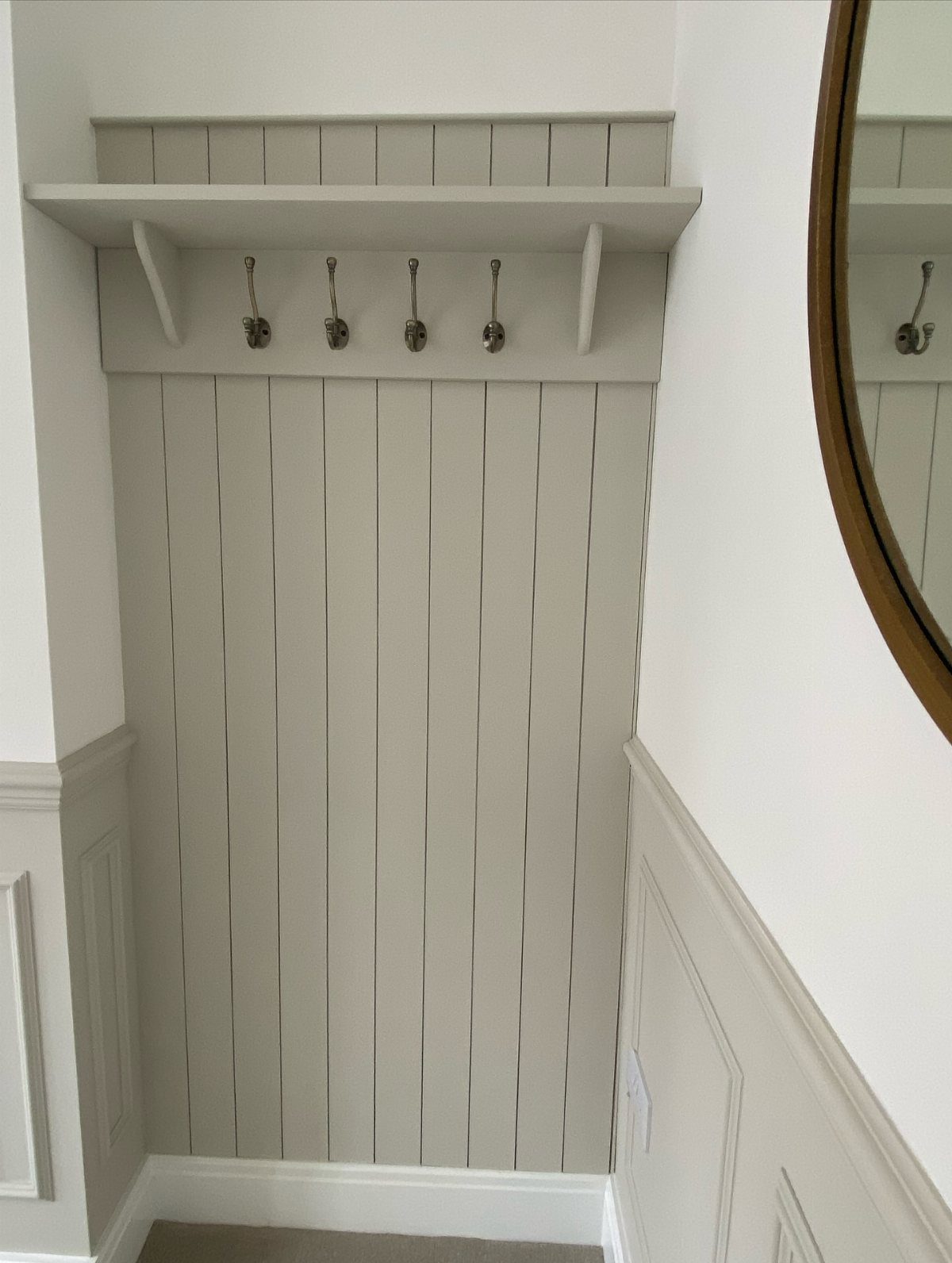
A row of hooks under a shelf turns a bare stretch of wall into a spot for the things you grab daily: a tote, a scarf, a robe, tomorrow’s outfit.
Choose metal hooks with a finish that matches the rest of the closet hardware, and they read as decor even when loaded.
Hooks cost little, and they fit in a closet that has no room left for another rod. Mount the hooks under a shelf so the shelf catches small items and the hooks hold the hanging ones.
Space them wide enough that 2 bags never overlap.
2. Shelves to the Ceiling
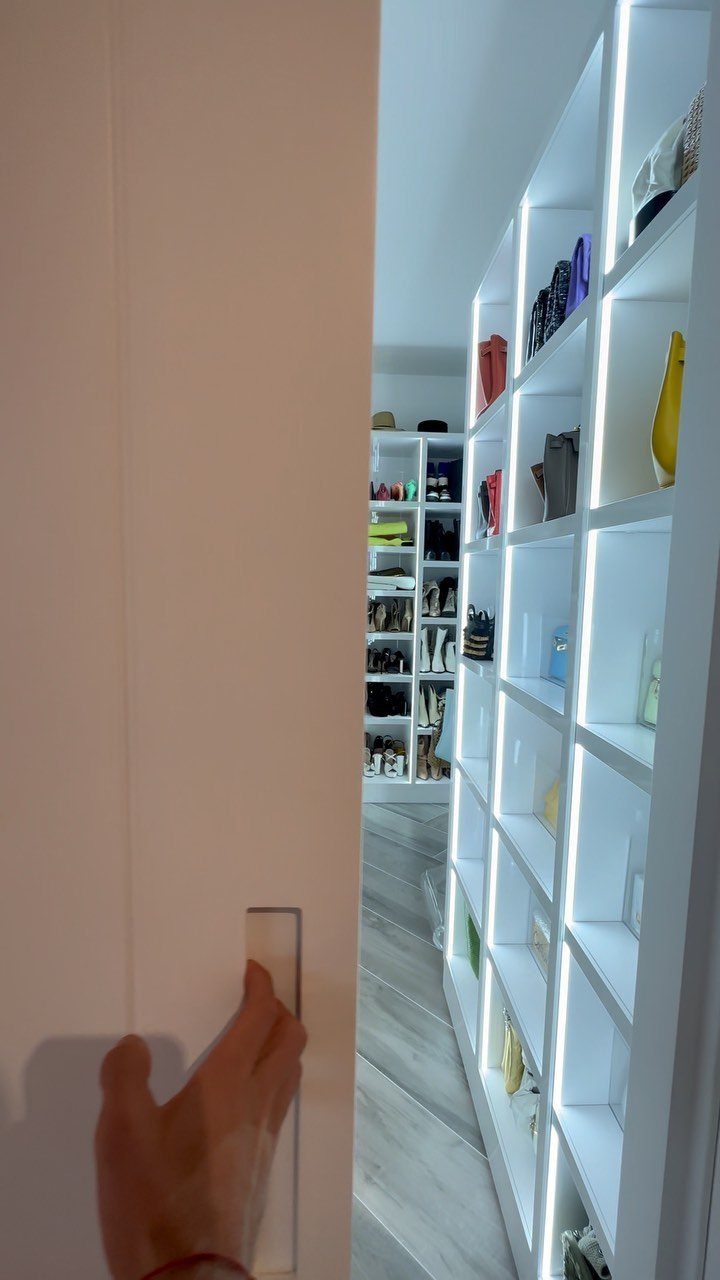
Running shelves from the floor to the ceiling is the most direct way I know to gain storage in a closet that can’t grow sideways. Everything above eye level stops being wasted air.
Keep the lowest shelves for daily shoes and bags, and use the top ones for things you reach for a couple of times a year. A small step stool lives in the closet for those.
LED strips along the shelf edges help in a closet with no window, since tall shelves cast shadows on the shelves below. White shelving also keeps a tight room feeling bright.
With a small closet especially, it’s important to not squander precious vertical space.
3. Closet Systems
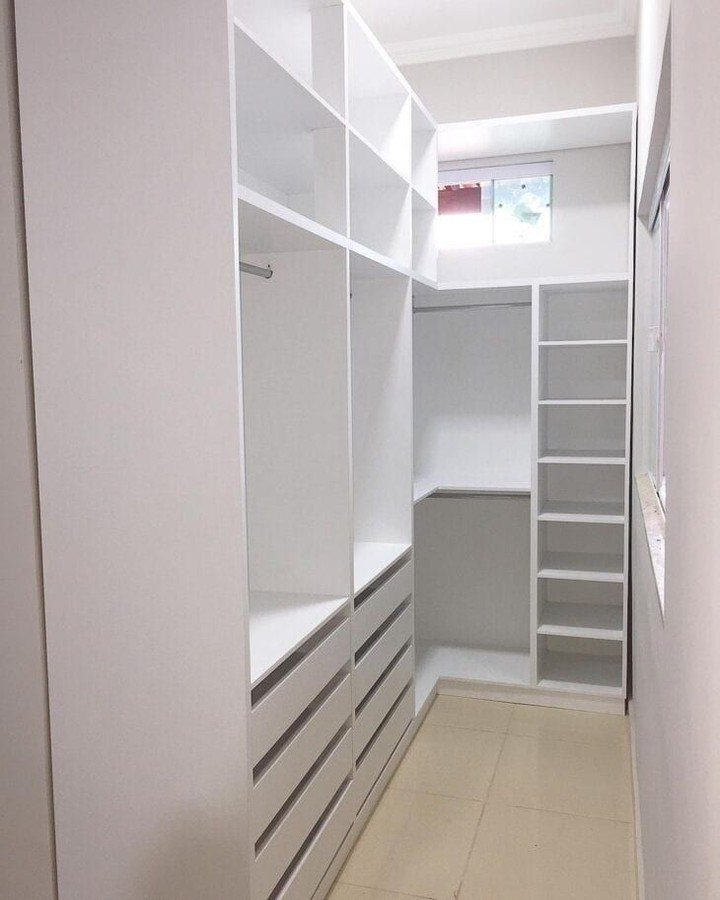
A full closet system pulls shelves, hanging rods and drawers into one built-in unit, so no inch between the walls sits unused. That is why it suits a small walk-in better than loose furniture does.
Plan the layout before buying anything: measure wall lengths and ceiling height, then decide how many rods and drawers you really need.
Custom work costs the most, and I would price it against a modular kit before committing, since a kit can be adjusted later.
White keeps a closet light, and a window stays a feature if you leave it clear.
4. Optimize Closet Door
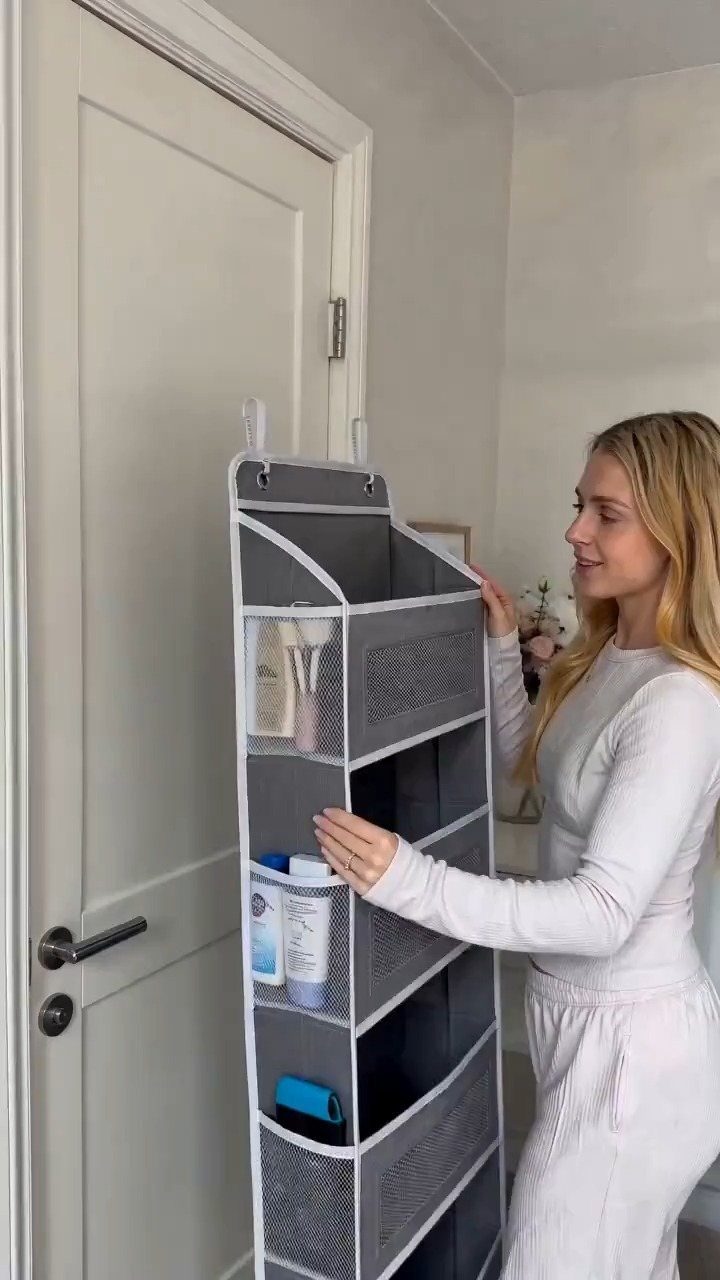
Behind the closet door sits storage you already own and aren’t using. A fabric organizer with pockets hangs over the top edge with no drilling, which makes it a good fit for renters.
I would load it with small, light things: toiletries, hair accessories, belts, scarves. Clear or mesh pockets let you spot items at a glance, though a plain gray fabric looks calmer.
Keep the weight modest, because a heavy organizer can keep the door from closing properly. Check that clearance before you fill every pocket.
5. Color Code and Categorize
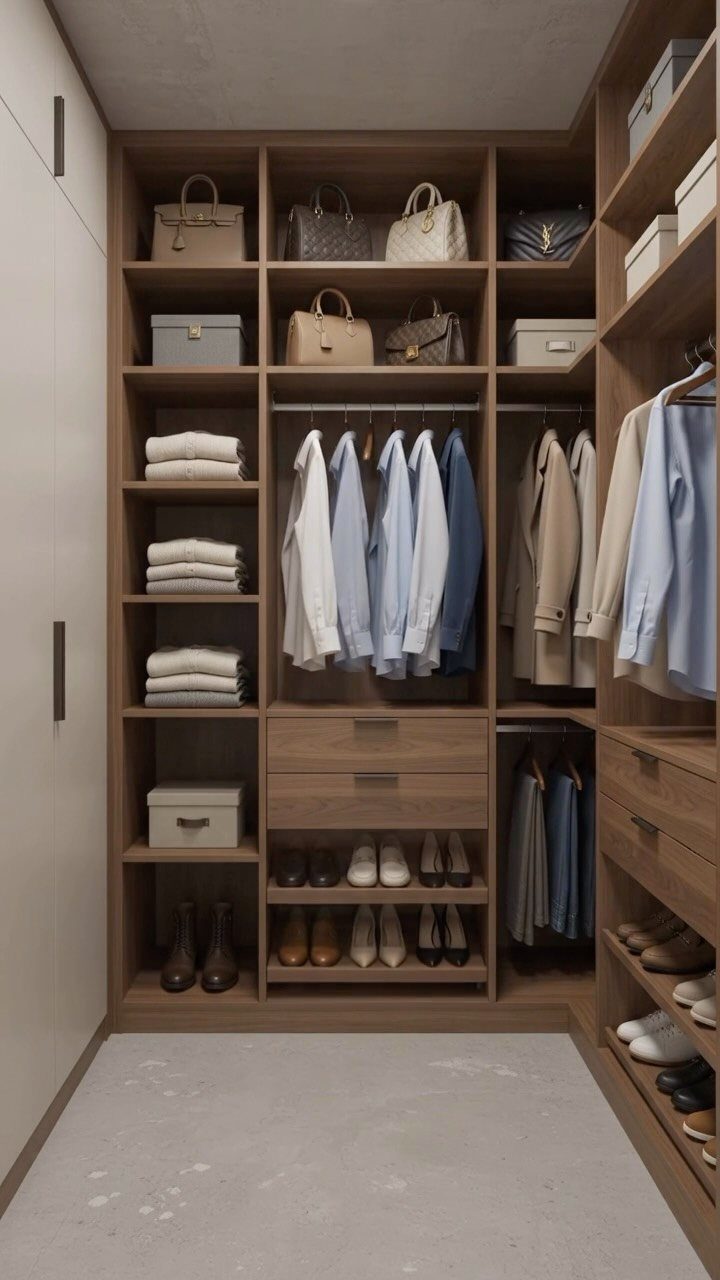
Sorting clothes by color and then by type, shirts with shirts and pants with pants, means you find what you want by looking rather than digging. Light to dark within each group looks tidy and goes fast.
Start by pulling everything out and making piles by category. Then sort each pile by color, and hang each group on its own stretch of rod.
I like this method because it costs nothing and takes an afternoon. It does need upkeep: a worn item has to go back in its spot, or the order slips within weeks.
6. Mirrored Sliding Doors
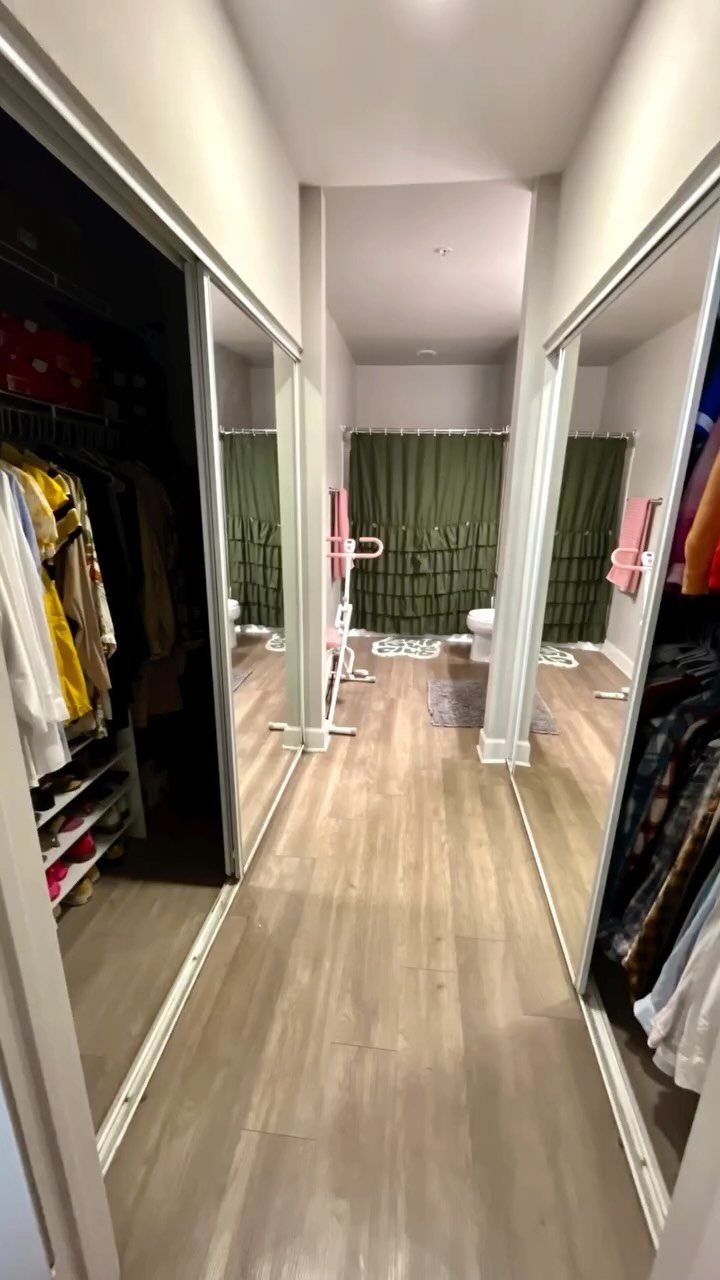
Mirrored sliding doors do 2 jobs in a narrow closet: they give you a mirror you can check your whole outfit in, and they never swing into the aisle. In a tight space, that lost swing arc matters.
With hanging space on both sides, the room holds a lot of clothing, but the aisle stays slim. Mirrors also bounce light around, so the closet feels wider than it is.
Sliders open only half the width at a time, so you can reach one side while the other stays covered. Keep the mirror clean, because fingerprints show fast.
7. Dedicated Handbag Shelving
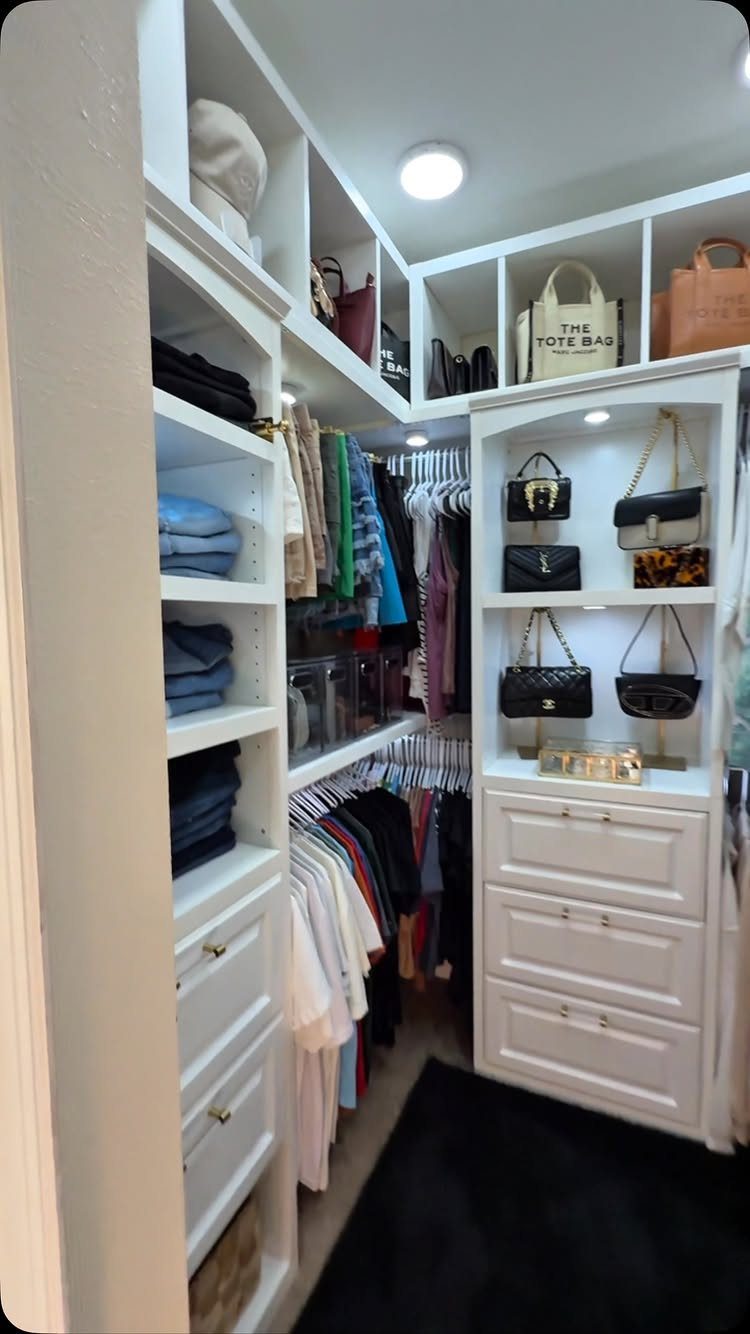
Handbags last longer and stay shapelier on a shelf than crushed on a hook, and a dedicated section keeps them from spreading across the whole closet.
Built-in shelving beside the hanging rods gives each bag its own spot, so you see what you own in one glance.
Give each shelf enough height for the tallest bag to stand upright, and put the bags you carry every week on the shelf between chest and forehead height, where you can see and grab them without bending or reaching.
Stuff softer styles with tissue paper or a small towel so they hold their shape.
Shelves lose their appeal when every bag is crammed in, so I would give up a few and keep the rest visible.
8. Pull-out Racks and Drawers
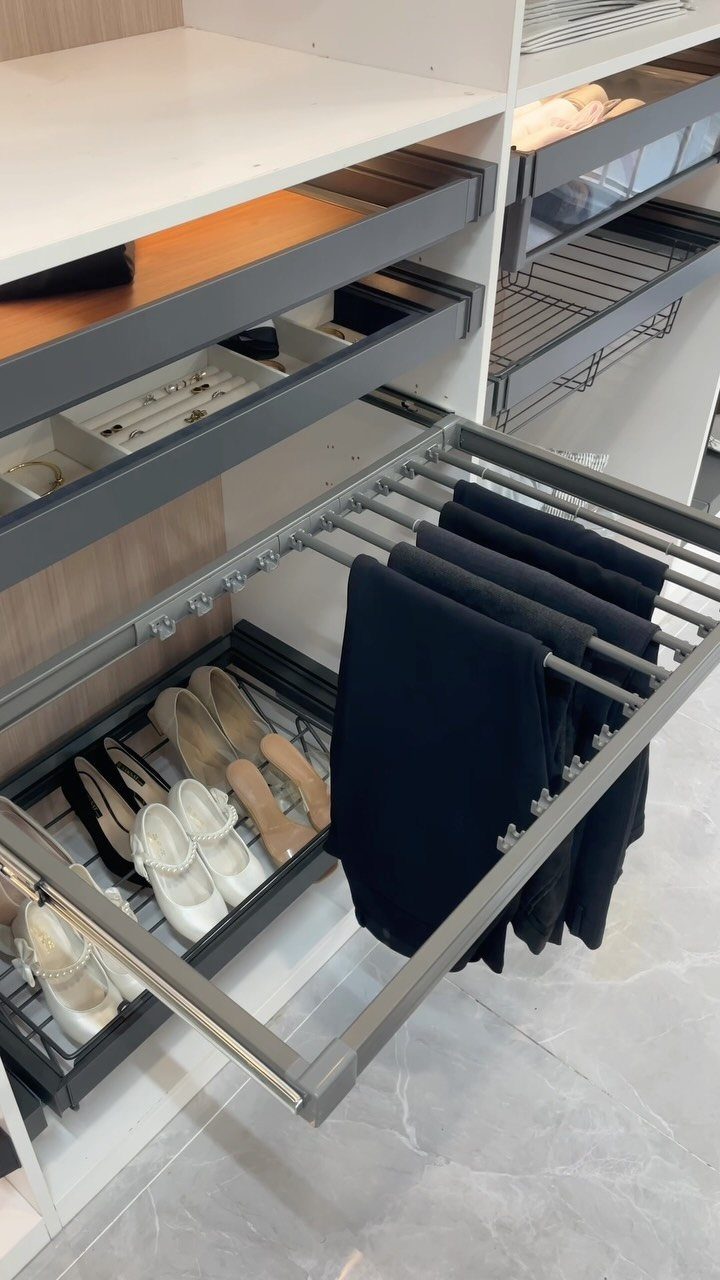
Pull-out racks and drawers bring the back of a closet to you, which matters when the aisle is too narrow to step into a corner. Folded trousers, shoes and jewelry each get a slide-out piece sized to them.
Choose by what you own. A trouser rack suits folded pants that would otherwise sit in a pile, a shallow shoe drawer keeps heels in pairs, and a jewelry tray stops tangled chains.
I would add these to a closet system you already have, since a few pull-outs cost far less than rebuilding the whole closet.
Measure the opening width and depth first, and leave clearance so each piece slides all the way out.
9. Stack of Drawers and Rods
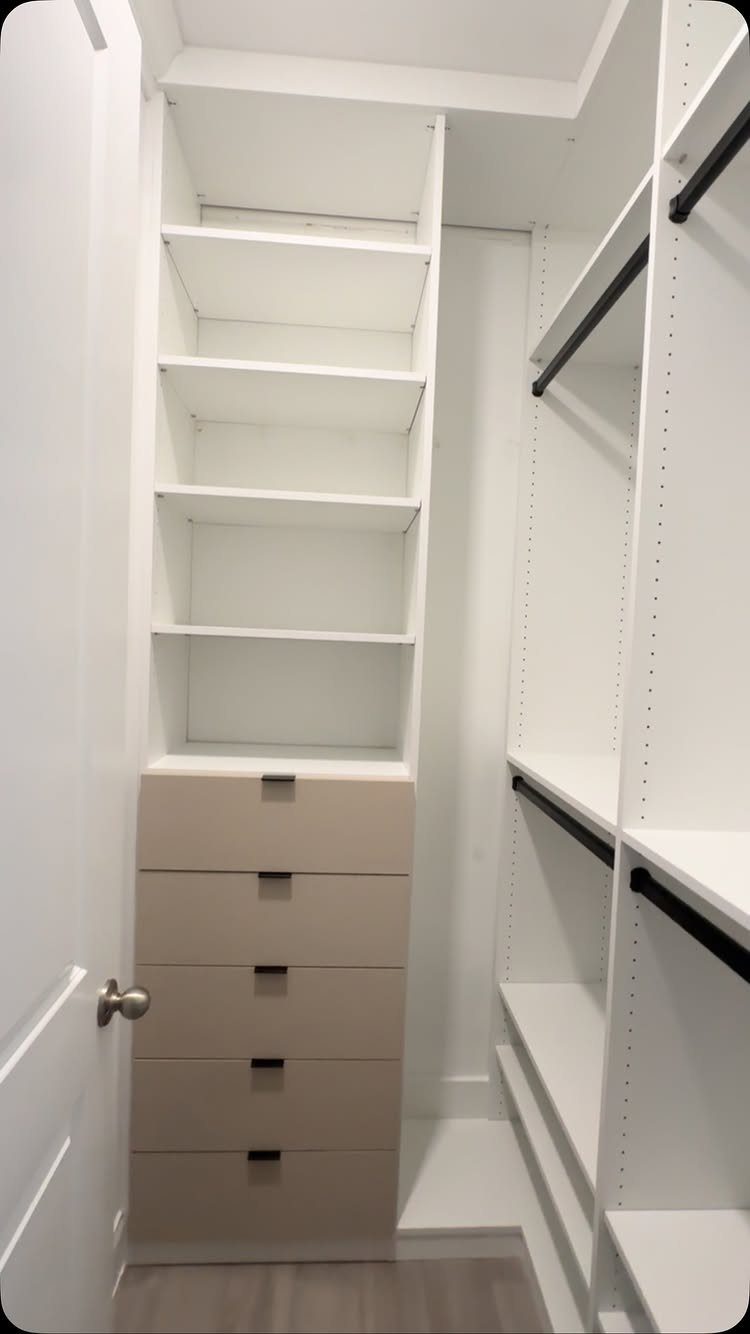
Drawers in the middle with rods on the side give a small walk-in a clear split: folded things behind closed fronts, hanging things in the open.
A stack of 5 drawers holds socks, tees and underwear out of sight, and the shelf above it handles baskets or neat piles.
Hang shirts and dresses on the rods, and keep the heaviest folded items in the lowest drawers so they open easily. Black rods look crisp against white shelving, and tan drawer fronts add warmth without clutter.
I like this layout because the drawers hide the mess. Label the drawers if more than one person shares the closet.
Measuring Your Space
Measure before you pick a layout, because a closet that looks roomy on paper can lose its aisle to a single drawer.
A hanging rod needs roughly 24 inches of clear depth in total, so plan on that much space for every wall where clothes will hang.
Leave a walkway of 24 inches at minimum between the two sides, and widen it to 36 inches when two people will be dressing in there at once.
Then check the door. Its swing has to clear rods, shelves and drawers, or the door can be rehung to open the other way, or outward.
Open each drawer fully before you commit, then measure from its front edge to the wall across the aisle, because that gap is what you actually have to stand in.
Lighted shelving needs power, so locate the nearest outlet or junction box before you buy anything. Keep a light fixture 12 inches away from any shelf or rod; a recessed fixture can sit closer, at about 6 inches.
Importance of Lighting
A small walk-in with a single bare bulb gives you dark corners and shadows from your own shoulders. Good light is what lets you see a navy sweater against a black one.
I would choose a flush LED fixture. It sits close to the ceiling, so it stays clear of rods and tall shelves, and LEDs run cooler than older bulbs, which is safer in a tight, enclosed space.
Place it near the center of the aisle so light reaches both sides. Pick a neutral white bulb rather than a very warm or very cool one, since true colors matter when you dress from this room.
Wire it to a wall switch near the door, or use a motion sensor so your hands stay free when carrying laundry.
Custom Vs. DIY Systems
Both routes improve a closet, and the choice mostly comes down to budget and how comfortable you are with a drill.
A professional system is built to the space you have, with rods, basket shelves, drawers and shoe shelves planned together.
A DIY kit costs less and can be changed later, which suits renters and anyone whose wardrobe is still shifting. You will spend a weekend on it, and you need a level and a stud finder.
Before choosing either, fill in a plan of what you actually own: how much hangs, how much folds, how many shoes.





