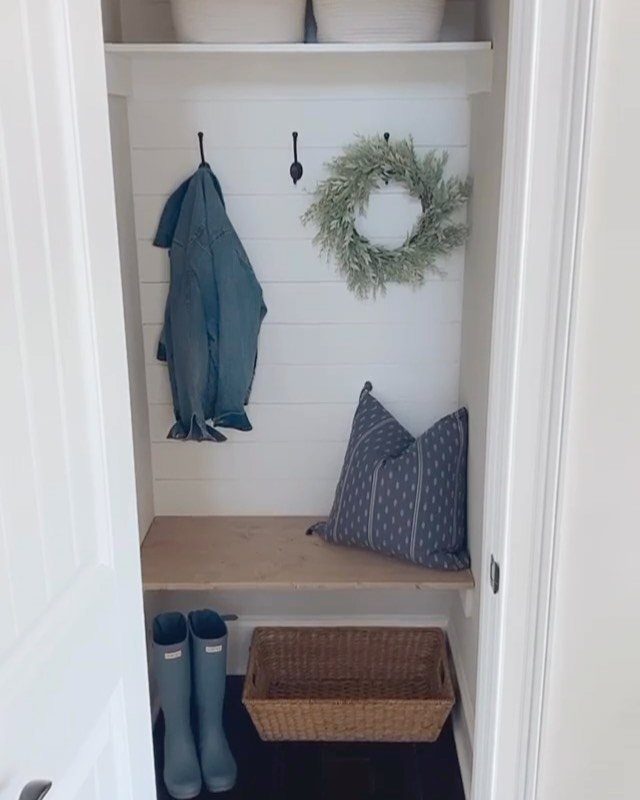
Closet width decides which of these ideas is yours: a narrow one has room for hooks with a shelf above them, while a wider one can take a bench with bins underneath.
The ideas run from a single row of hooks to a built-in with wall paneling, pull-out drawers, and an arched doorway opening, and the simpler versions can be finished for well under $300.
Renters can stay at the light end, with plug-in LED strips and peel-and-stick wallpaper that come off later.
1. Install Hooks
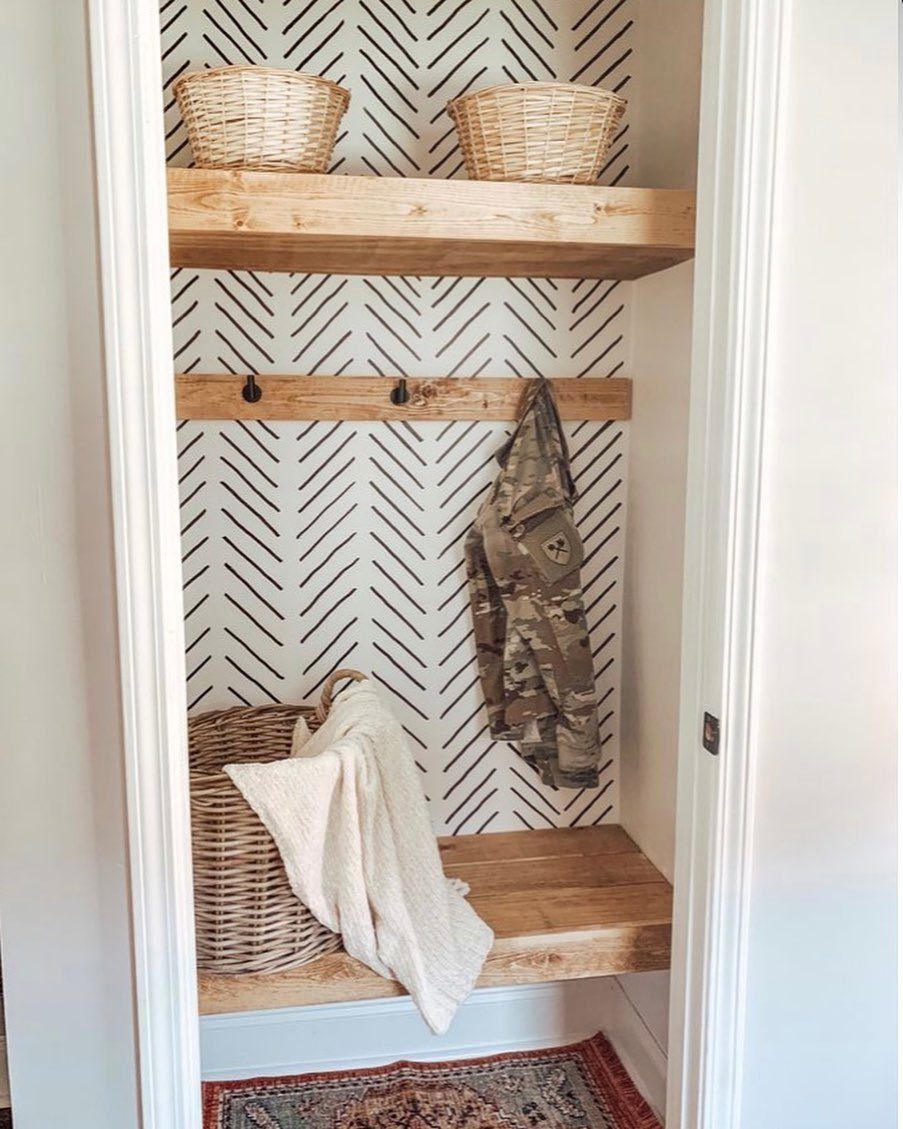
A wooden rail with black hooks is the cheapest way to give a closet mudroom a real coat zone. Mount one rail rather than scattered single hooks, so you only find studs once and the spacing stays even.
Hang the heaviest things, like jackets and bags, on the hooks you reach easily, and keep hats on the outer ones. A rail fits a narrow closet wall better than a bar, since nothing swings into the bench.
Plan on one hook per person plus a spare or two for guests.
2. Use Storage Bins
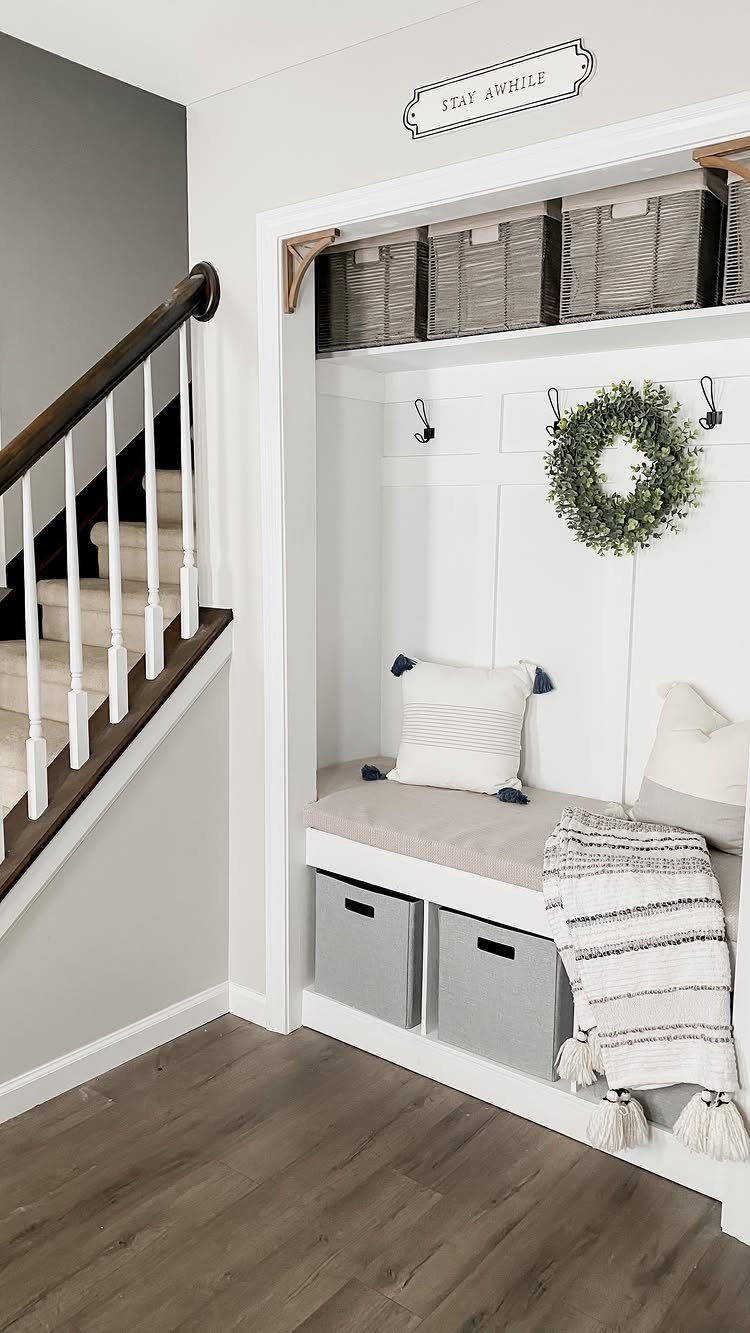
Bins tucked under a bench turn dead floor space into a shoe and seasonal-gear drawer system, and they cost much less than custom cabinetry. Grey fabric or plastic bins hide scuffs and mud better than white ones.
Measure the clearance under the seat first, then pick bins that slide out rather than stack. Wire baskets on a shelf above are good for gloves, scarves, and hats because you can see what is inside.
Label the fronts. Each person gets one bin, and the rule is easy to keep.
3. Add a Shelf
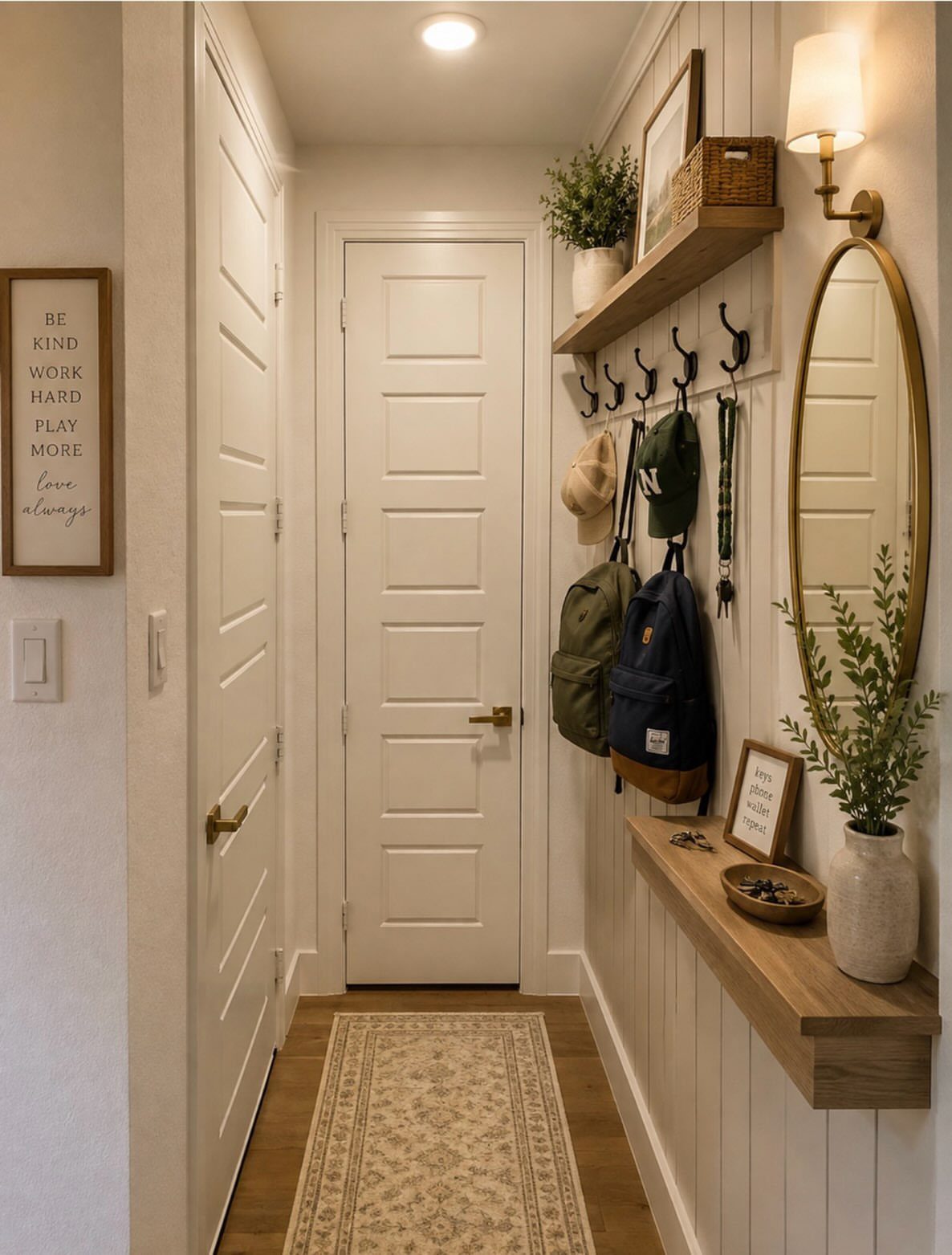
Narrow halls can’t take a bench, but they can take a shelf. A single wooden shelf above a row of hooks gives backpacks and coats a spot below and keys, sunglasses, and mail a spot on top.
Mount it into studs or use heavy-duty anchors, because a shelf over hooks gets loaded from both sides. Keep it shallow so heads and shoulders clear it in a tight passage.
A mirror beside it makes the last-look check at the door easy.
4. Add a Bench
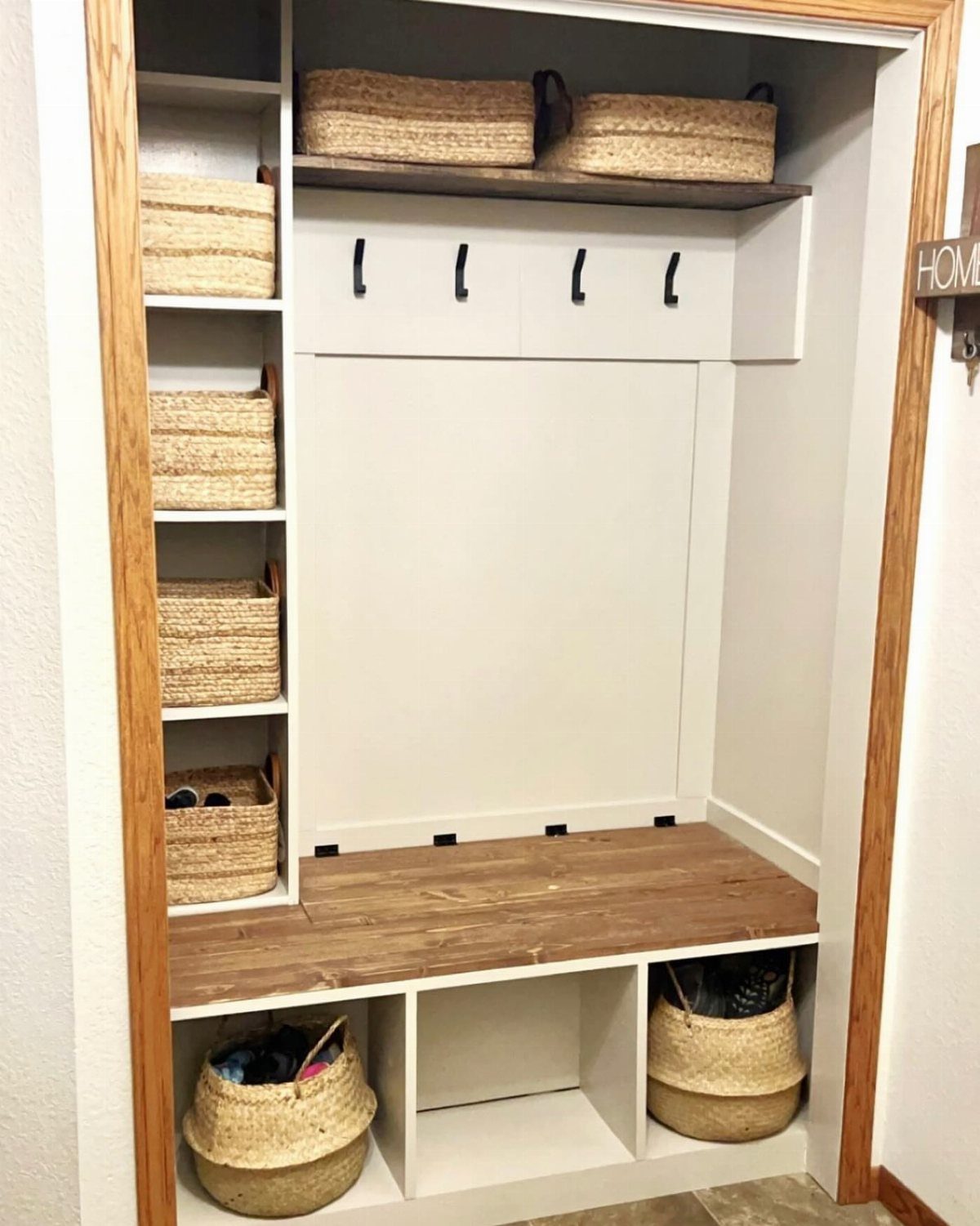
Sitting down to lace boots is the small habit a mudroom should support, and a bench inside the closet does it. A wooden seat set against white built-in sides looks tidy and keeps the closet from feeling like a cave.
Leave the space beneath open for baskets.
Put hooks above and a shelf over those, so one wall handles it all.
5. Incorporate Lighting
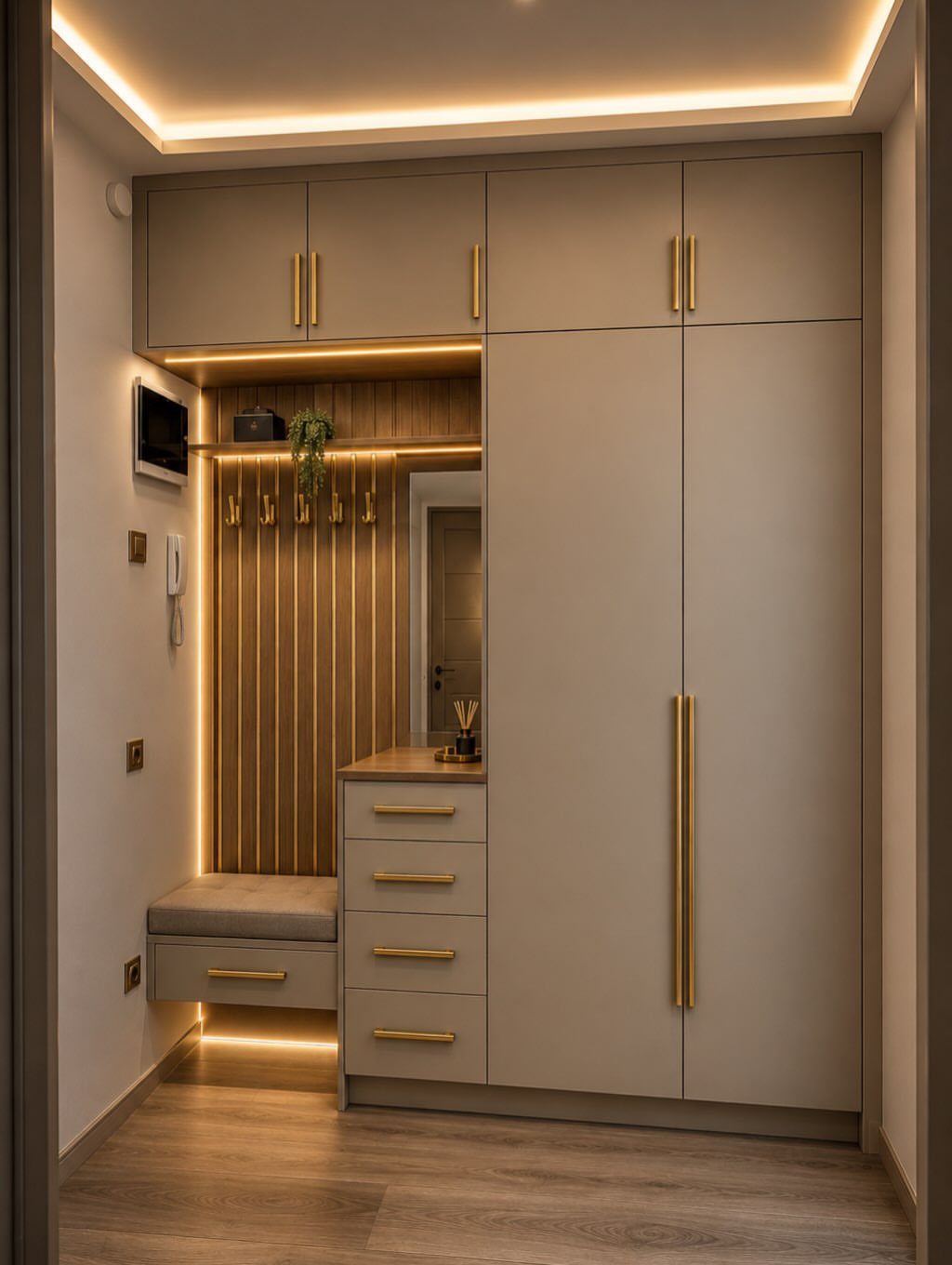
Lighting decides whether a closet mudroom feels like a usable room or a dark cupboard. Warm LED strips run along the ceiling line and under the shelf, so you can see shoes and gloves without a bulky fixture.
Plug-in or battery strips suit renters, since they need no wiring and peel off later. Choose a warm white tone so wood and cabinet finishes don’t turn cold and gray.
Stick strips into a channel if you can, which hides the diodes and spreads the glow evenly.
6. Wall Paneling
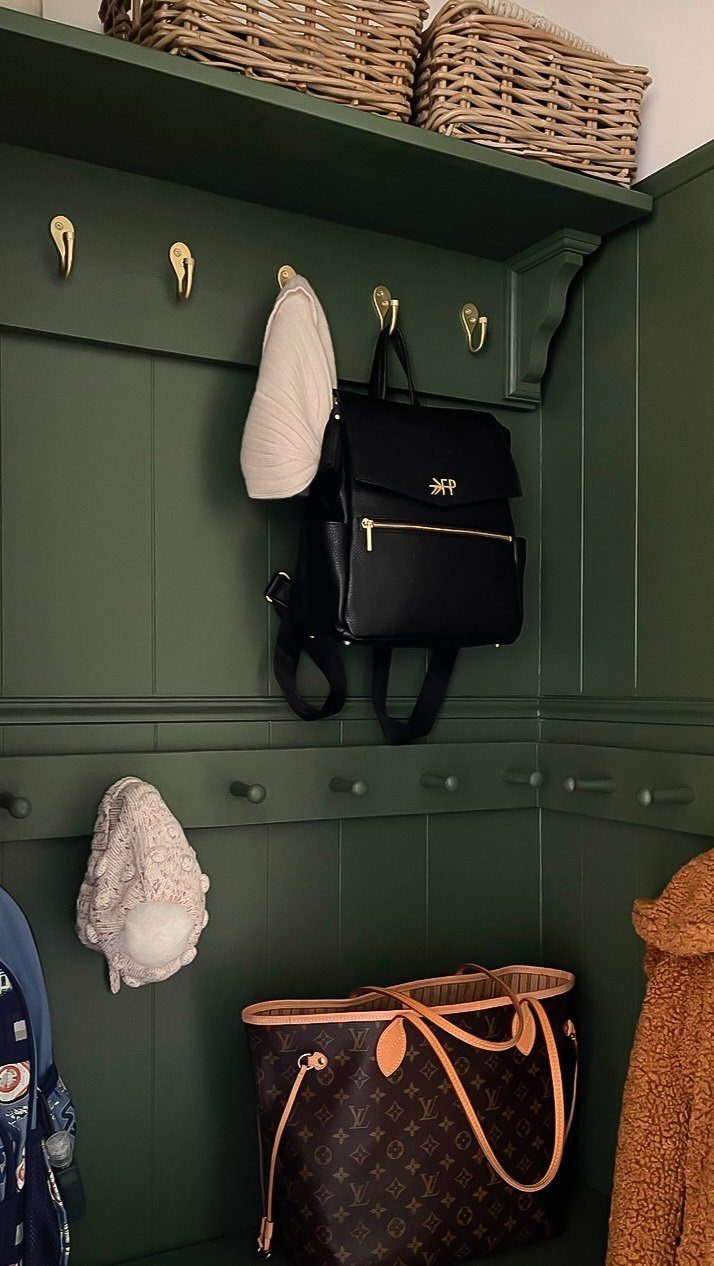
Dark green paint over wall paneling gives a closet mudroom a built-in look for little money.
The panels take scuffs from bags and wet coats better than bare drywall, and gold hooks against the green make a plain wall feel finished.
Paint the paneling and the walls the same color, so the whole nook reads as one piece. A satin or semi-gloss finish wipes clean more easily than flat.
7. Pull-out Storage Drawers
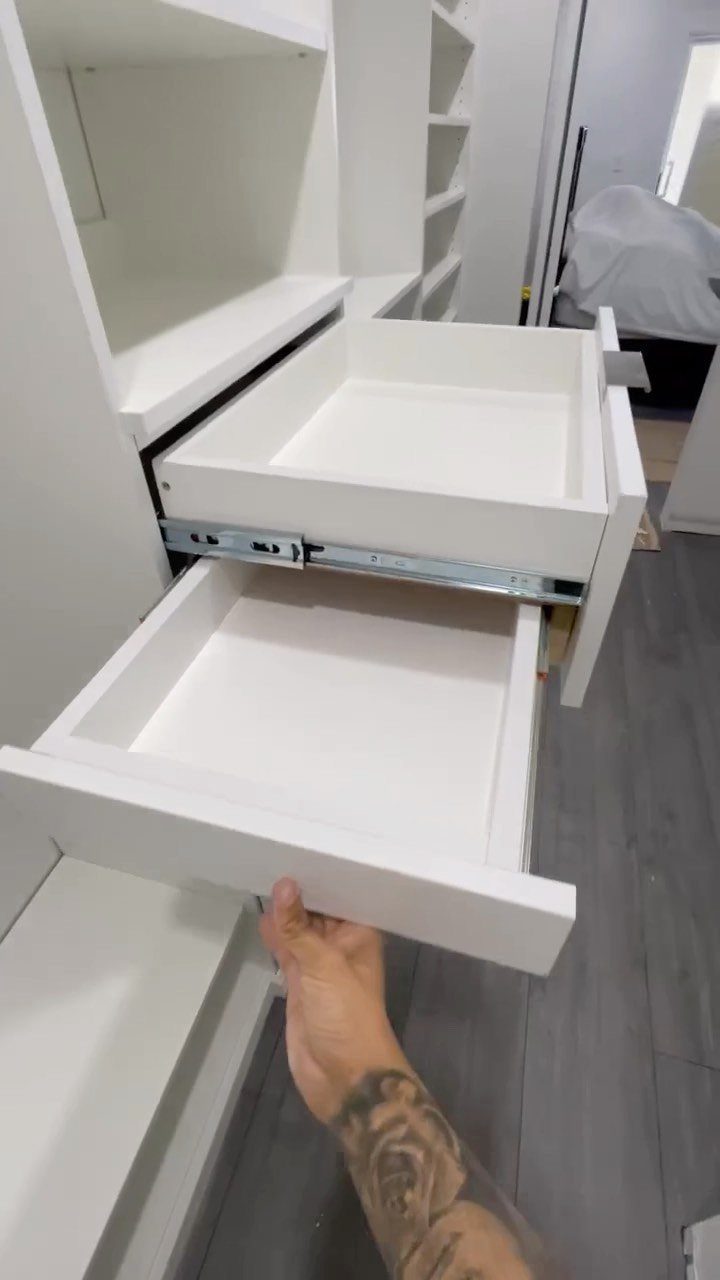
Drawers hide the clutter that open shelves put on display. Behind a flat white front, shoes, pet leashes, and sports gear disappear, and the closet reads as a clean cabinet instead of a catch-all.
Measure the closet depth and width before buying, then choose a unit that fits with a little room to open the fronts. Drawers that pull fully out let you reach the back, which fixed shelves never do.
Give each drawer one job so nothing gets buried.
8. Built-in Shoe Shelving
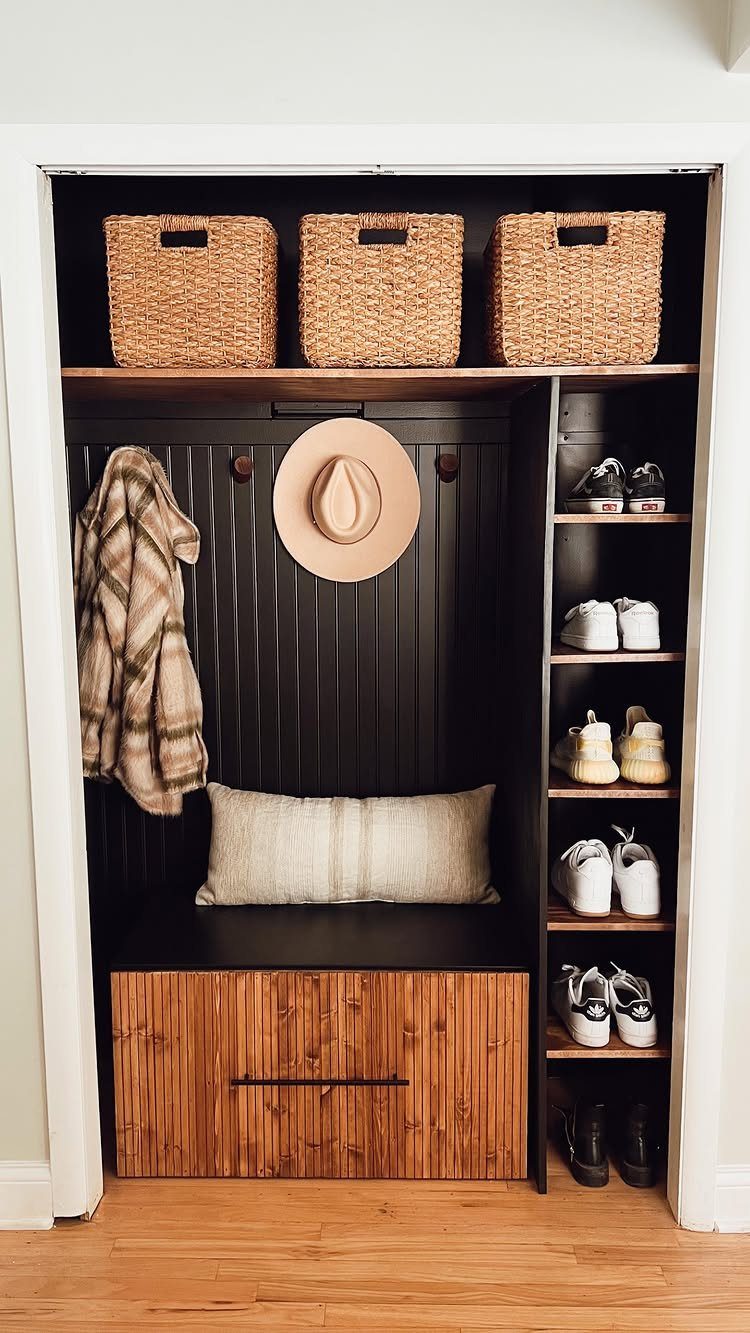
A vertical shoe tower beside the bench uses height instead of floor, which is what a narrow closet has most of. Angled or slatted shelves hold pairs side by side, so you can see what is there without digging.
I prefer wood slats over a metal rack here because they look built in and add warmth next to a darker bench.
Size the tower to the shoes your household wears daily; the rest can go in baskets on the top shelf.
Keep the bench clear of shoes so it stays a seat.
9. Keep the Closet Doors
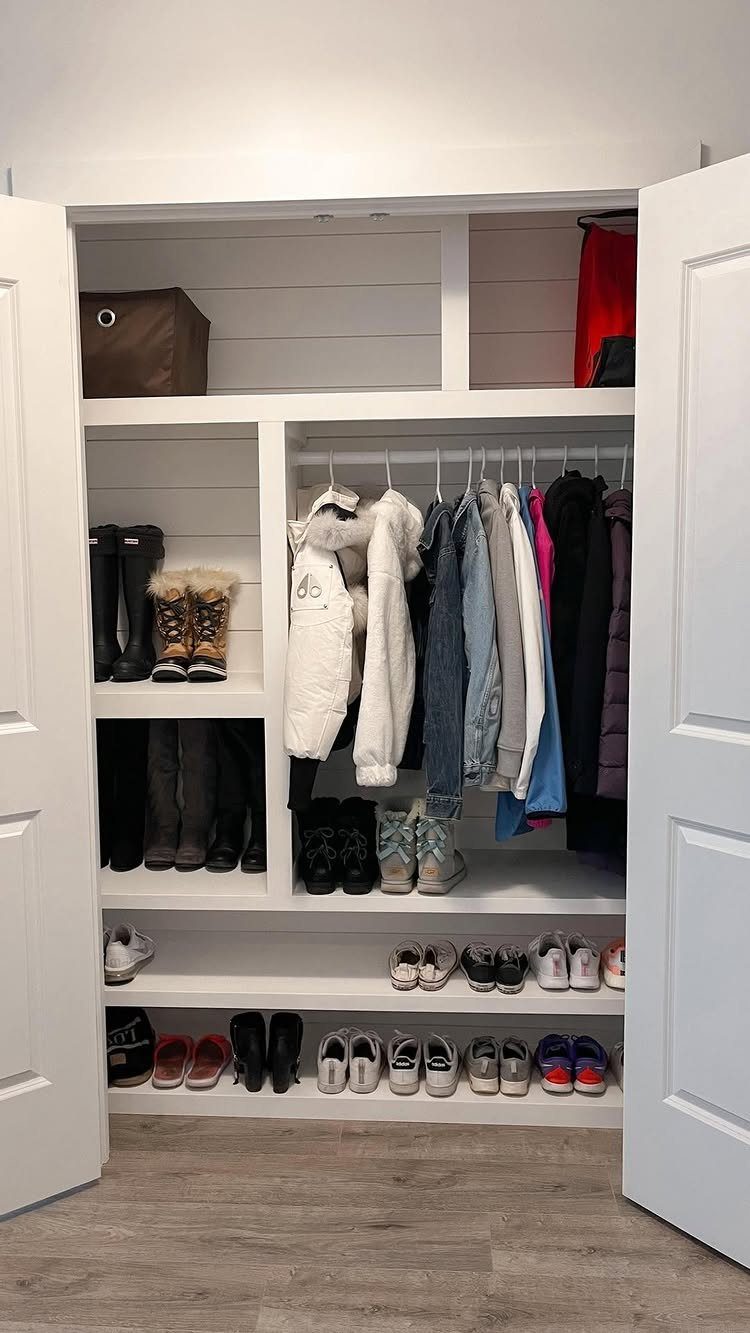
Closing the doors is the cheapest way to make a packed closet look calm. Behind a pair of white doors, shoe shelves, a coat rod, and a top shelf with a bin can stay busy while the hallway stays quiet.
Paint the inside the same white as the doors, shelves and back wall included, so the whole unit reads as built in.
Put the rod where coats hang clear of the shoes below, and keep the bin up top for things you rarely reach for.
Doors also keep dust off, though you will need to shut them each day.
10. Arched Doorway Opening
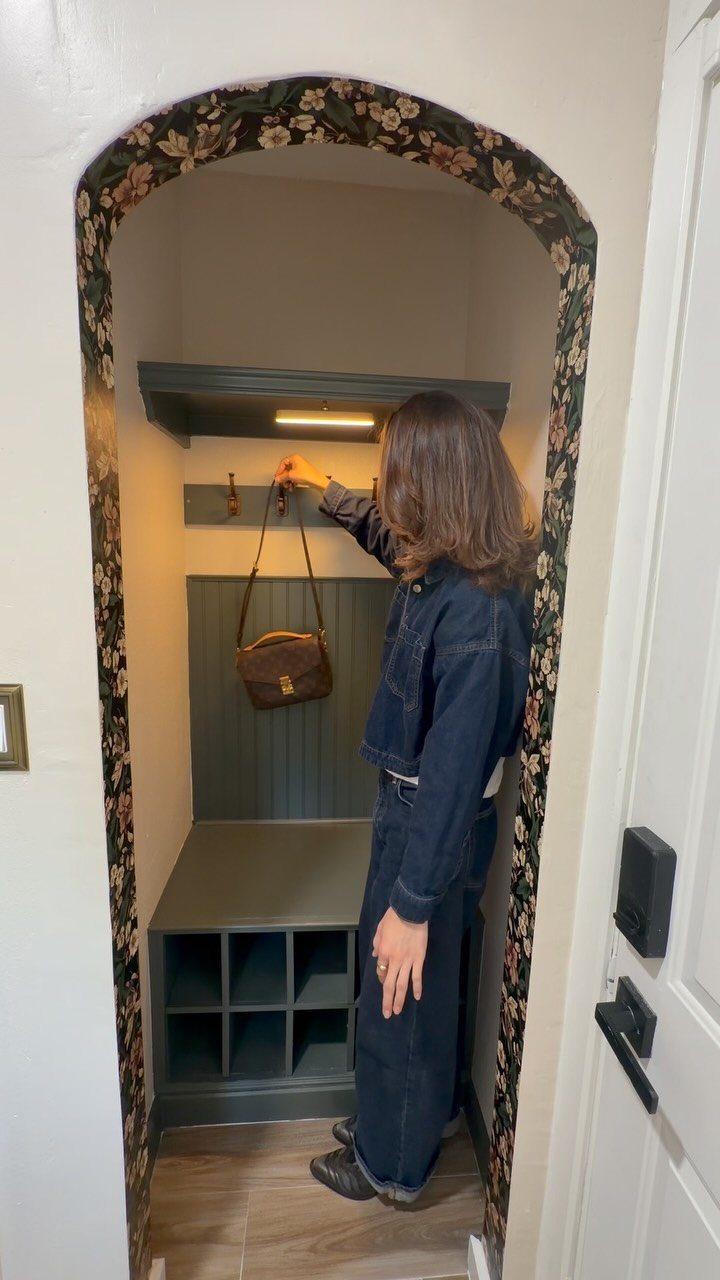
An arched opening gives a closet mudroom a front door of its own, without any door at all. Wallpaper inside the arch turns the entry into a feature, so the nook looks planned rather than leftover.
Peel-and-stick wallpaper suits a renter’s budget, and a small cubby unit with a hook above gives bags a landing spot. Keep the cabinetry a quiet gray so the pattern does the talking.
Skip the curve if you are not ready to cut drywall; a paper-covered square opening still works.
Cost Considerations
Most closet mudrooms can be finished for under $300, and where you land depends on the materials and how custom you want the result to look.
Spend first on the parts you touch every day, like the seat and the hardware. Save on the rest by painting what you already have instead of replacing it.
Planning and Measuring
Draw the closet on scrap paper first, with every measurement written right on the sketch, and hold off on shopping until that page is done. Check each measurement 2 or 3 times, since a board cut too short stays too short.
Once the numbers are down, build a materials list from the sketch. At the store, use the drawing to work out how much wood you need of each piece, so you aren’t guessing in the aisle.
Settle the layout on paper first. Changing a line on a sketch costs nothing, and changing a cut board costs money.
DIY Skill Level
Plan on basic woodworking skills. You should be comfortable with a saw and a drill, since most of the build comes down to measuring, cutting, and fastening.
A fuller kit for a built-in look includes:
- A miter saw does the job here, and a standard chop saw is a fine substitute.
- Table saw
- Jig saw
- Drill
- Kreg jig
- Decking screws
- Nail gun
- Sander
For finishing, keep wood filler, paintable white caulk, and white paint on hand. A bead of caulk along the edges and a little wood filler in the nail holes make the pieces look built into the wall.
If you don’t own the bigger saws, a simpler build with fewer cuts is a sensible place to start.
Frequently Asked Questions
What are some things I can turn my closet into?
A mudroom is one of the best uses, and a pantry or a small office also work.
A closet already has walls, a rod or shelf, and a doorway, so it takes less building than carving out a new room. For an entry closet, a bench, a row of hooks, and a shelf above cover most needs.
What do you put in a mudroom?
Coats, bags, shoes, and seasonal gear are the core items. Hang jackets and backpacks on a hook rail, put shoes in bins or a slatted tower, and keep gloves, scarves, and hats in baskets on a shelf.
Mount a narrow shelf 10–12 inches over the hook rail and it becomes the landing spot for keys, sunglasses, and the day’s mail.
How do you make a room out of a closet?
Sketch the closet on paper first, write every measurement on the drawing, and measure each one 2 or 3 times before you spend a dollar.
Then build a materials list from that drawing and add the pieces in order: a bench, hooks, a shelf, and lighting.





