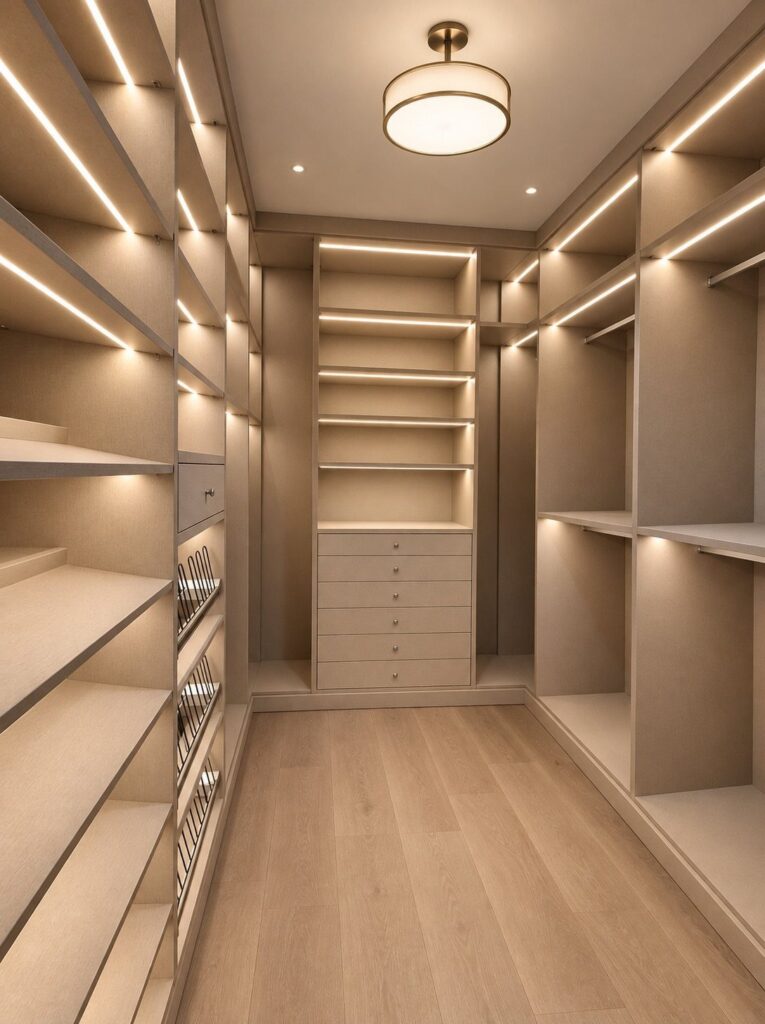
Whether you rent or own decides most of this list: a stuck-on strip, a battery puck or a flush mount goes up in an afternoon without touching the wiring, while recessed fixtures and a skylight mean cutting into the ceiling or roof and usually a hired pro.
The ideas range from a cut-to-length LED strip tucked into a shelf channel to recessed cans and a crystal chandelier, and the strongest rooms layer several sources, each on its own dimmer.
1. LED Strip Lights
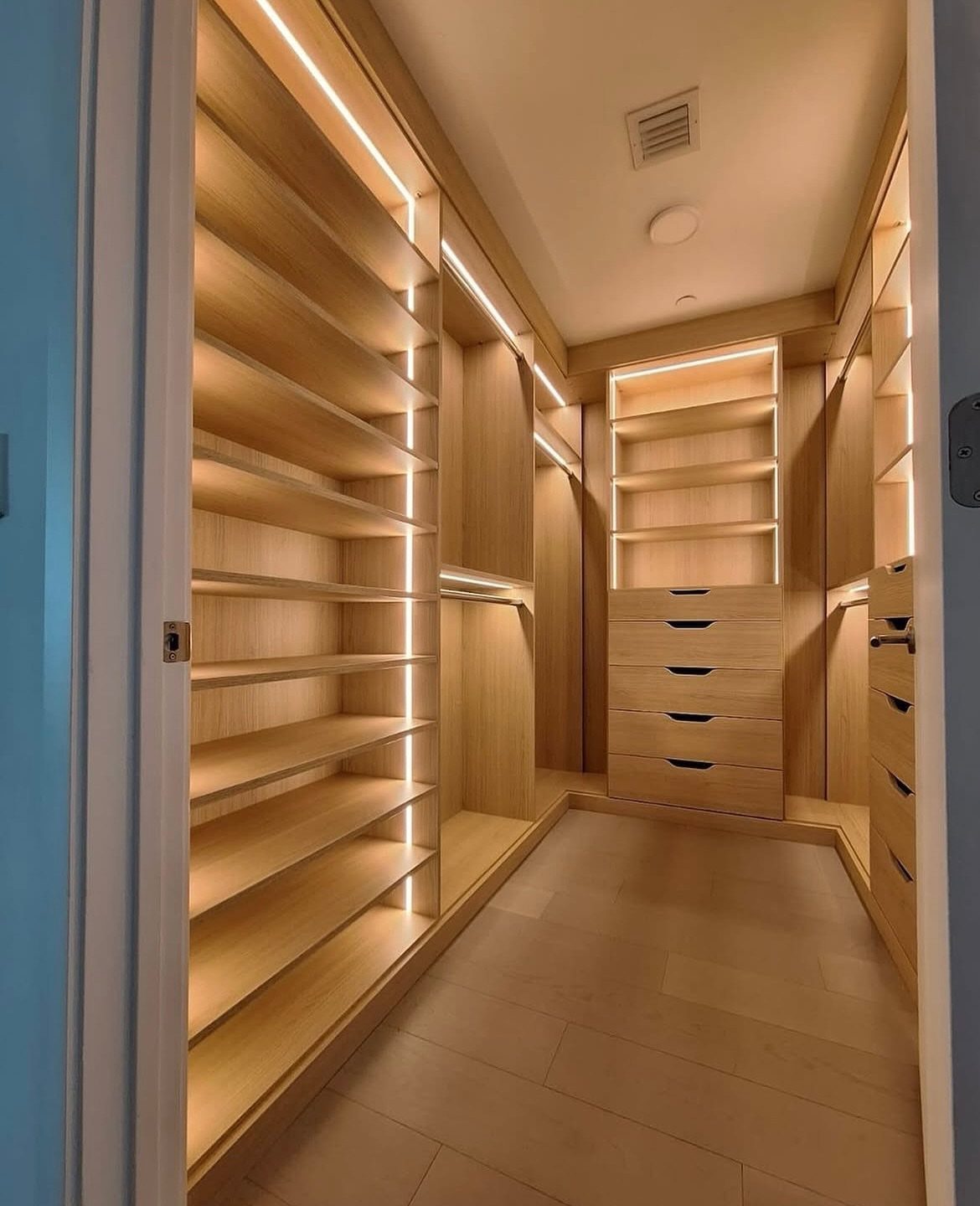
Strips are the cheapest way to put light exactly where a shelf or drawer needs it. Run them along the front edge of a shelf or down an upright, and the glow lands on folded stacks instead of the ceiling.
Light wood suits this well, since a pale surface bounces the glow around.
Measure each run before you buy, and pick a strip you can cut to length. I’d also tuck the strip into a channel or behind a lip so you see the light, not the dots.
2. Recessed Lighting
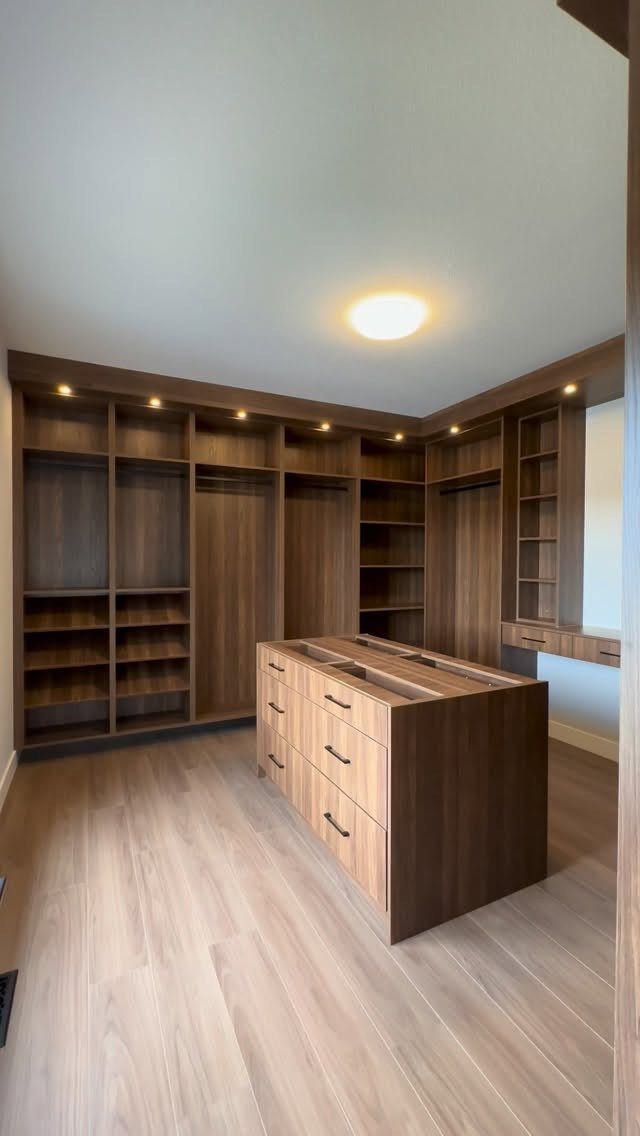
Flush ceiling lights spread illumination across the whole floor without hanging anything into the room, which matters when the closet has a center island to walk around.
With dark cabinetry, I’d space them so each cabinet face gets covered, because dark wood swallows light fast.
Plan the spacing before you cut any holes. Cabinet fronts are the target, so aim for lights in front of them, not over the middle of the room.
Recessed fixtures take more work than a screw-in flush mount, so for a rental, a flush mount is the easier route.
3. Chandeliers
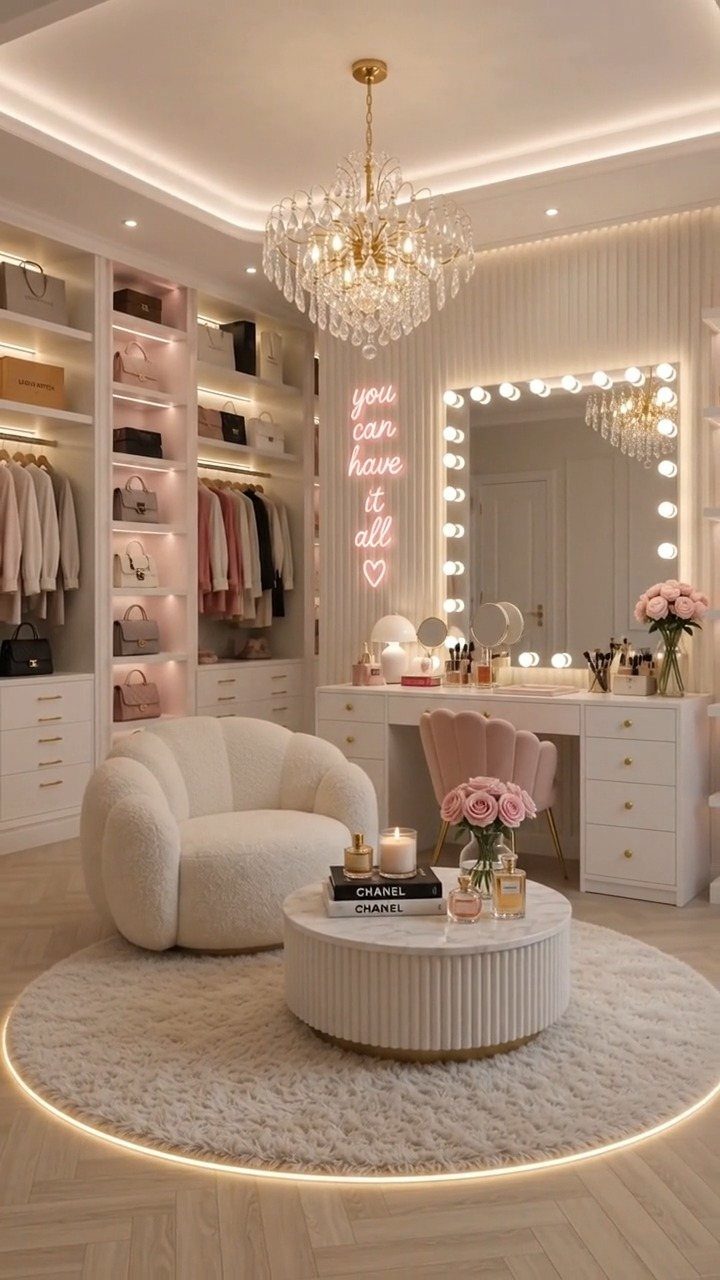
A chandelier makes the closet feel like a dressing room, and crystal does it better than any other option because it throws sparkle even from a small bulb count.
Pair it with a vanity and a soft chair and the room reads as a place to linger.
Size it to the ceiling.
In a lower closet, choose a small flush-style crystal fixture. Hang it where it won’t catch a raised arm or a tall garment bag.
It gives glamour, but not strong task light, so add something brighter by the mirror.
4. Natural Light Solutions
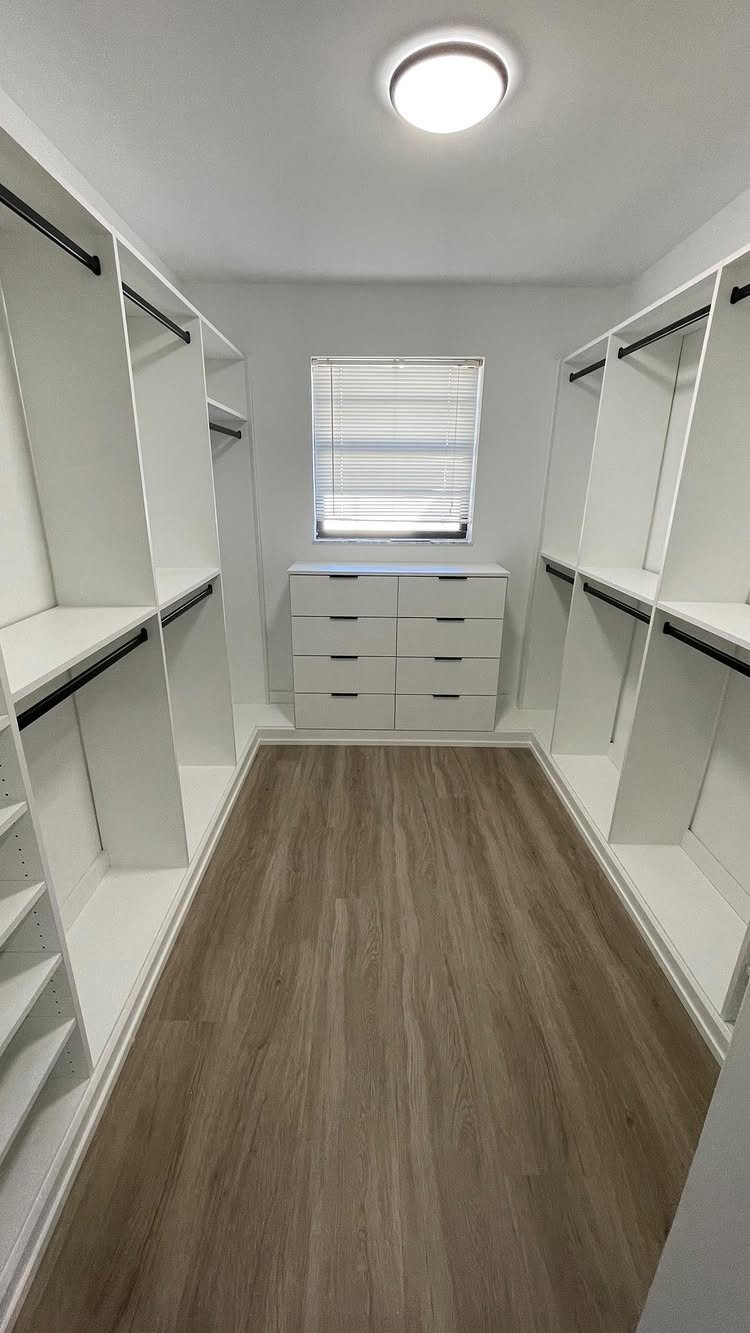
A window centered on the back wall gives you daylight to judge colors, which no bulb matches perfectly. Navy versus black is the classic mistake it prevents.
Blinds are the right call here.
Open them to check an outfit, close them to protect fabrics from sun fading. I’d keep shelving and rods off to the sides so nothing blocks the glass.
Daylight disappears in the evening, so keep a ceiling light, like the round one overhead, for those hours.
5. Ambient, Task, and Accent Lighting
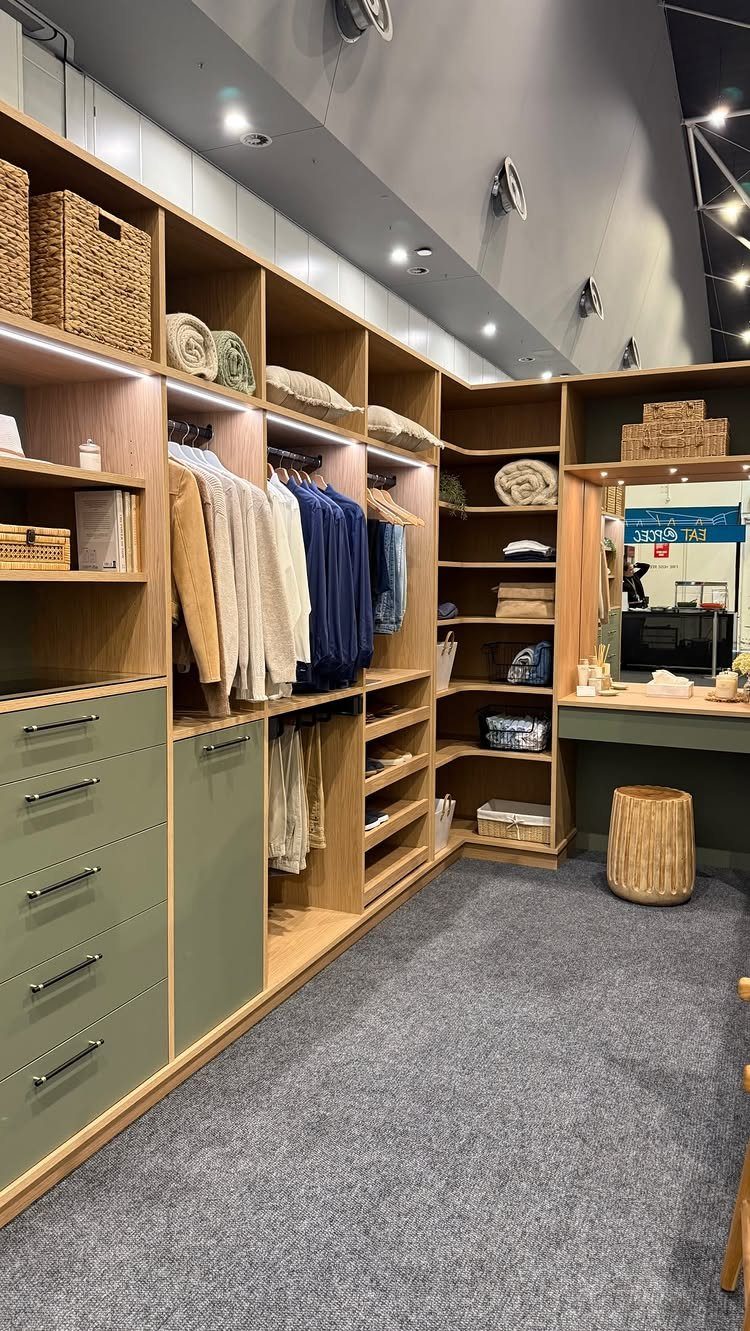
Layering means three jobs handled by three sources: a general ceiling glow, focused light where you dress, and a small accent that makes shelves look finished.
Recessed ceiling lights cover the room while LED strips add light along the shelves where you need to see detail.
I’d add the mirror last, with light that falls on your face, not behind you. Put each layer on its own switch or dimmer so you can run just the accent at night.
6. Lighted Closet Rods
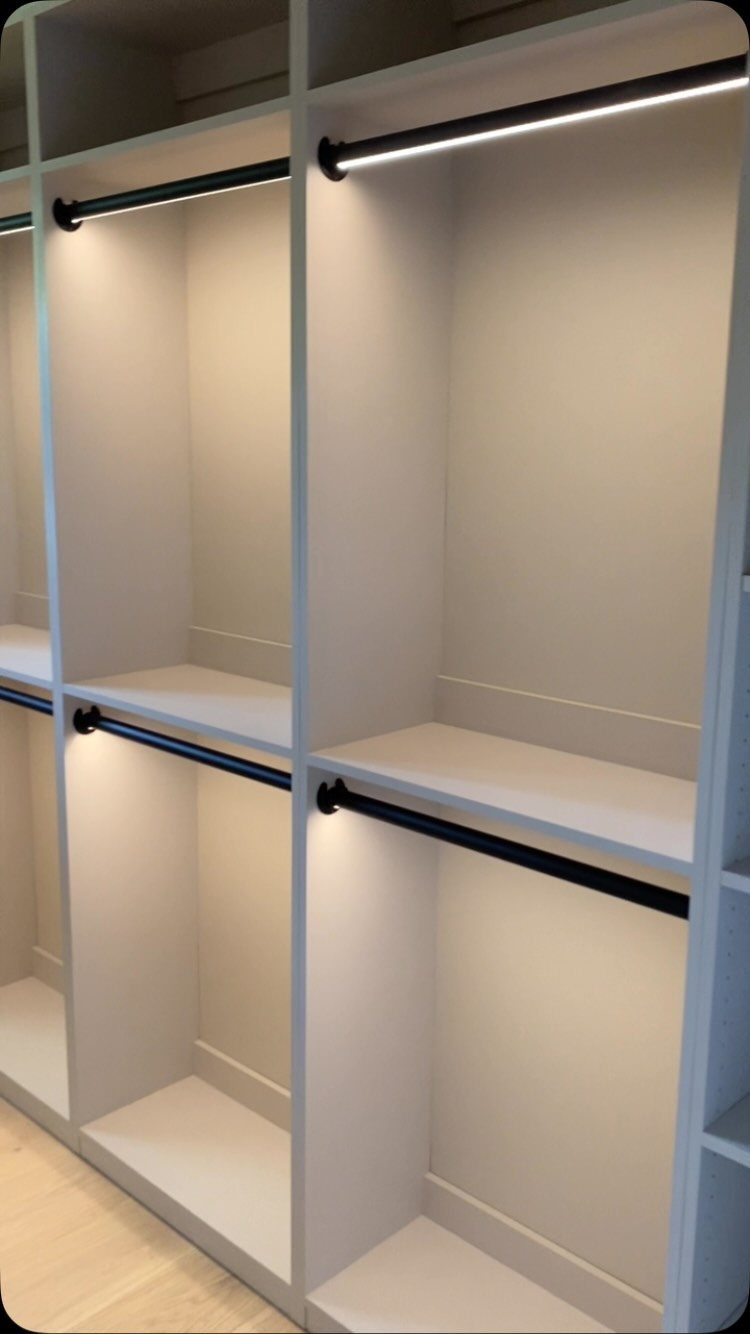
A rod with a light built in sends illumination straight down onto the hanging clothes, which is where shadows usually collect. 2 levels of rods need a light on each, or the lower row sits in the upper row’s shadow.
If you’re renting or retrofitting, a strip stuck under a shelf above the rod gets you nearly the same effect for far less than a purpose-built rod.
7. Puck Lights
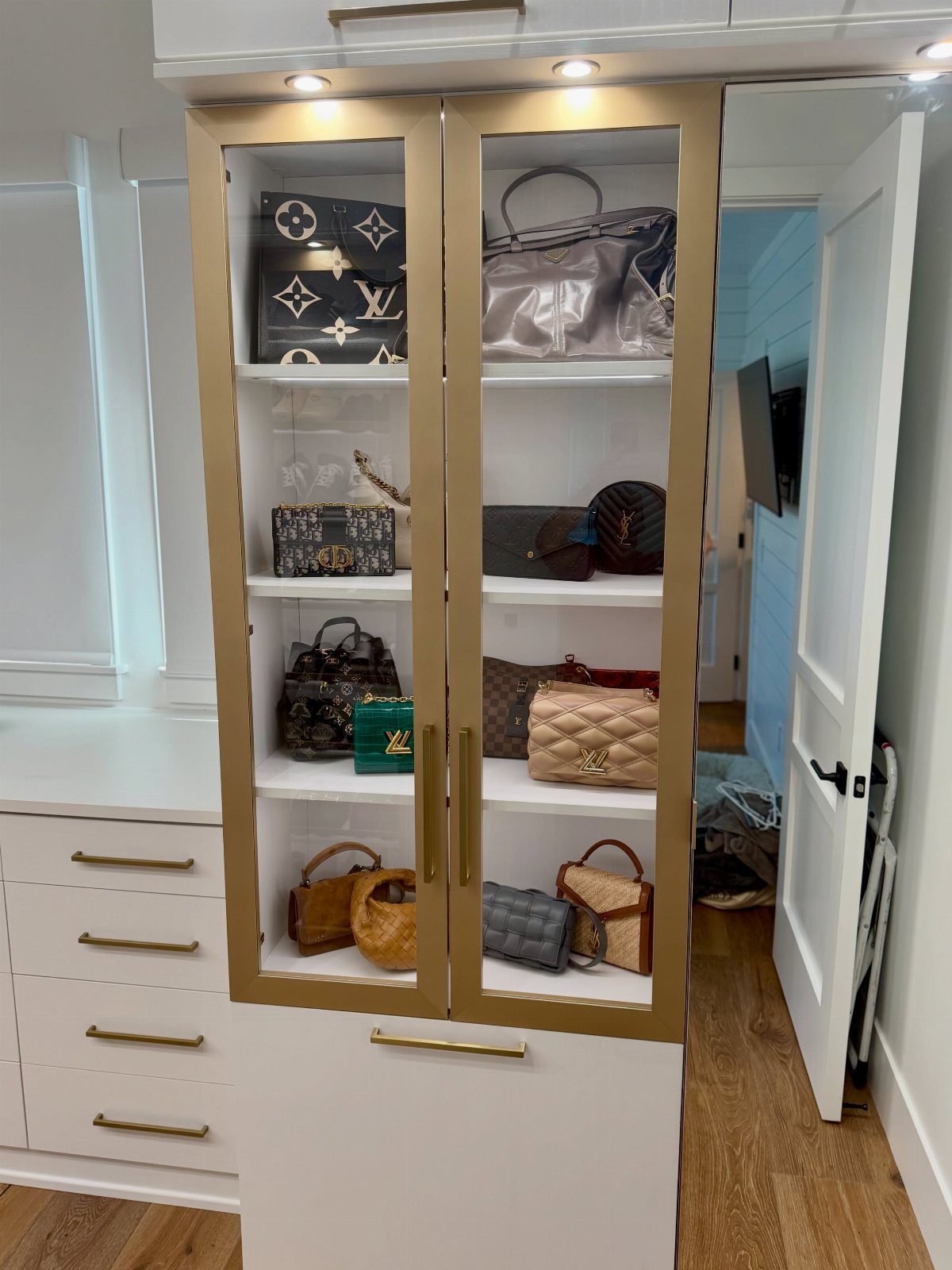
Puck lights are small, round fixtures that put a pool of light on one spot, which makes them a good fit for a display cabinet.
Mounted at the top of a glass case, two of them light the handbags below without washing out the rest of the room.
Space them so each pool of light overlaps the next, or the lower shelves go dim. I’d choose a warm white bulb so leather looks like leather.
For a rental, battery-powered pucks with an adhesive back skip the wiring.
8. Overhead Lighting
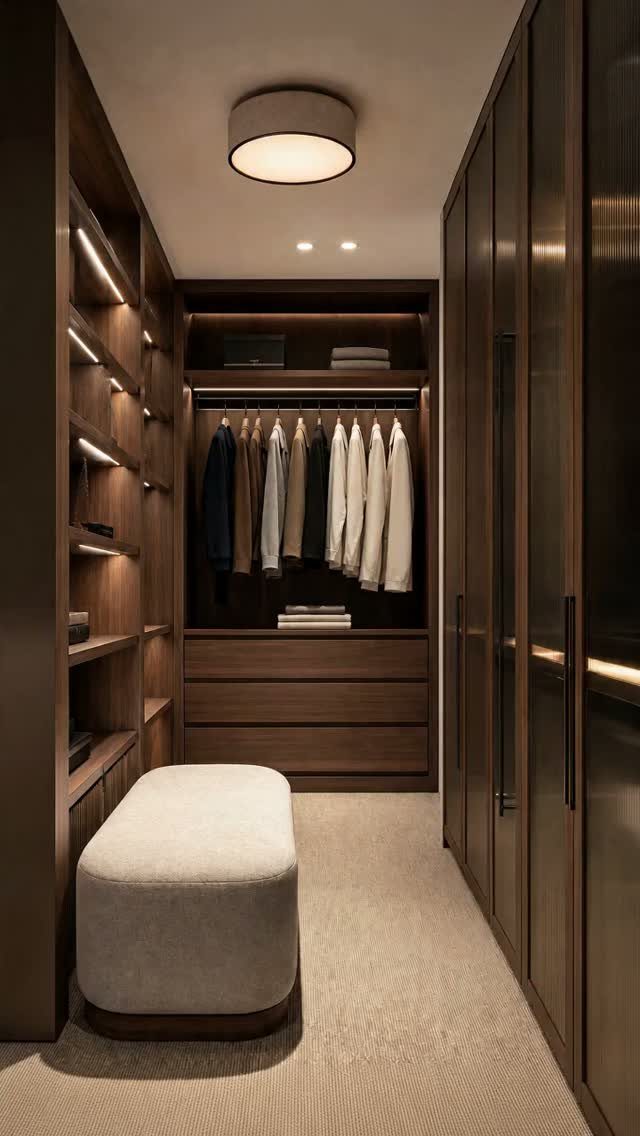
A round fixture in the center of the ceiling gives the whole closet a base layer of light, and dark wood cabinetry needs that base more than pale cabinetry does.
Dark finishes soak up light, so pick a bright fixture rather than a dim decorative one.
Center it over the walking space, not over the ottoman, so the light reaches the cabinet fronts on both sides. Shelf lighting adds detail, but it can’t replace a ceiling source.
A flat, round flush mount is also the simplest swap for an old bare bulb.
“In a walk-in closet with clothes behind cabinetry, install tape lighting in all hanging spaces to illuminate dark corners,” Moore advises. “This not only elevates your wardrobe experience but also helps you rediscover pieces you may have otherwise forgotten.”
9. Skylights
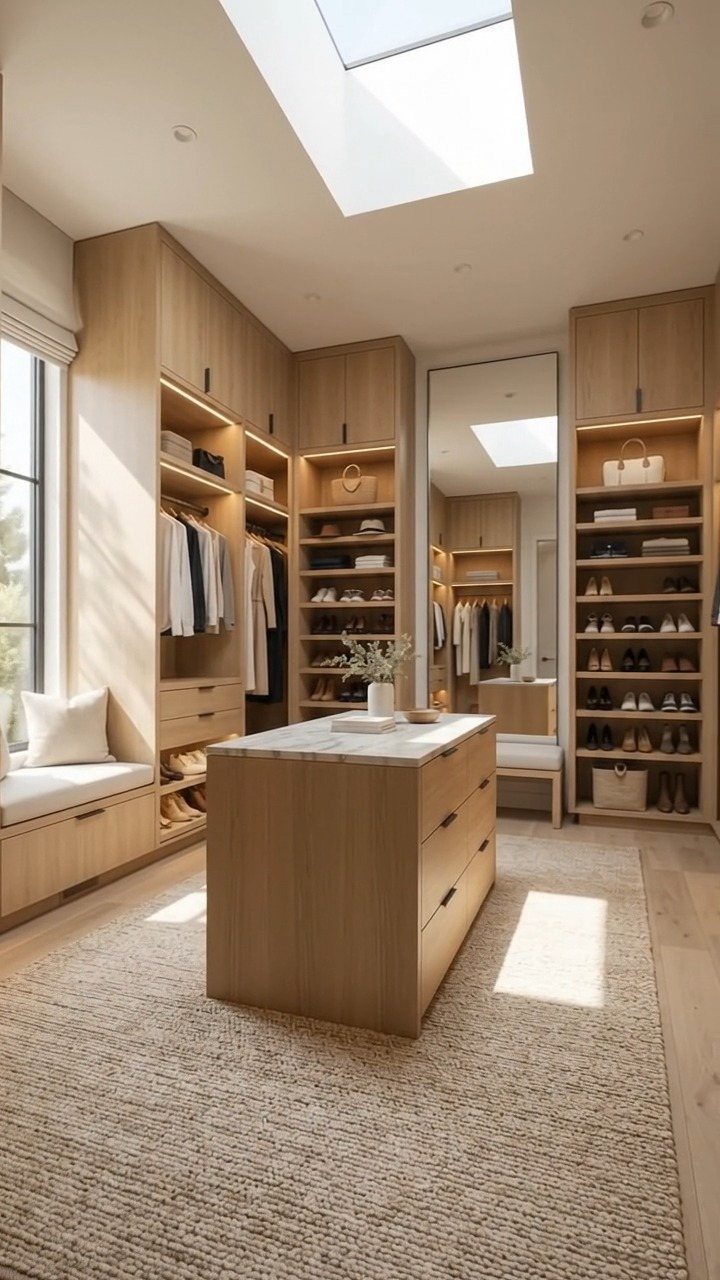
Daylight from directly overhead reaches the center of the room, so an island and a big mirror get lit without any window wall. Light wood cabinets help, since the pale surfaces bounce that brightness down into the shelves.
I’d treat a skylight as a daytime source only, and keep a ceiling fixture for evenings. Putting one in means cutting the roof, so it’s a project for a hired pro, not a weekend.
Sun fades fabric, so keep delicate pieces away from the beam.
10. Vertical Lighting
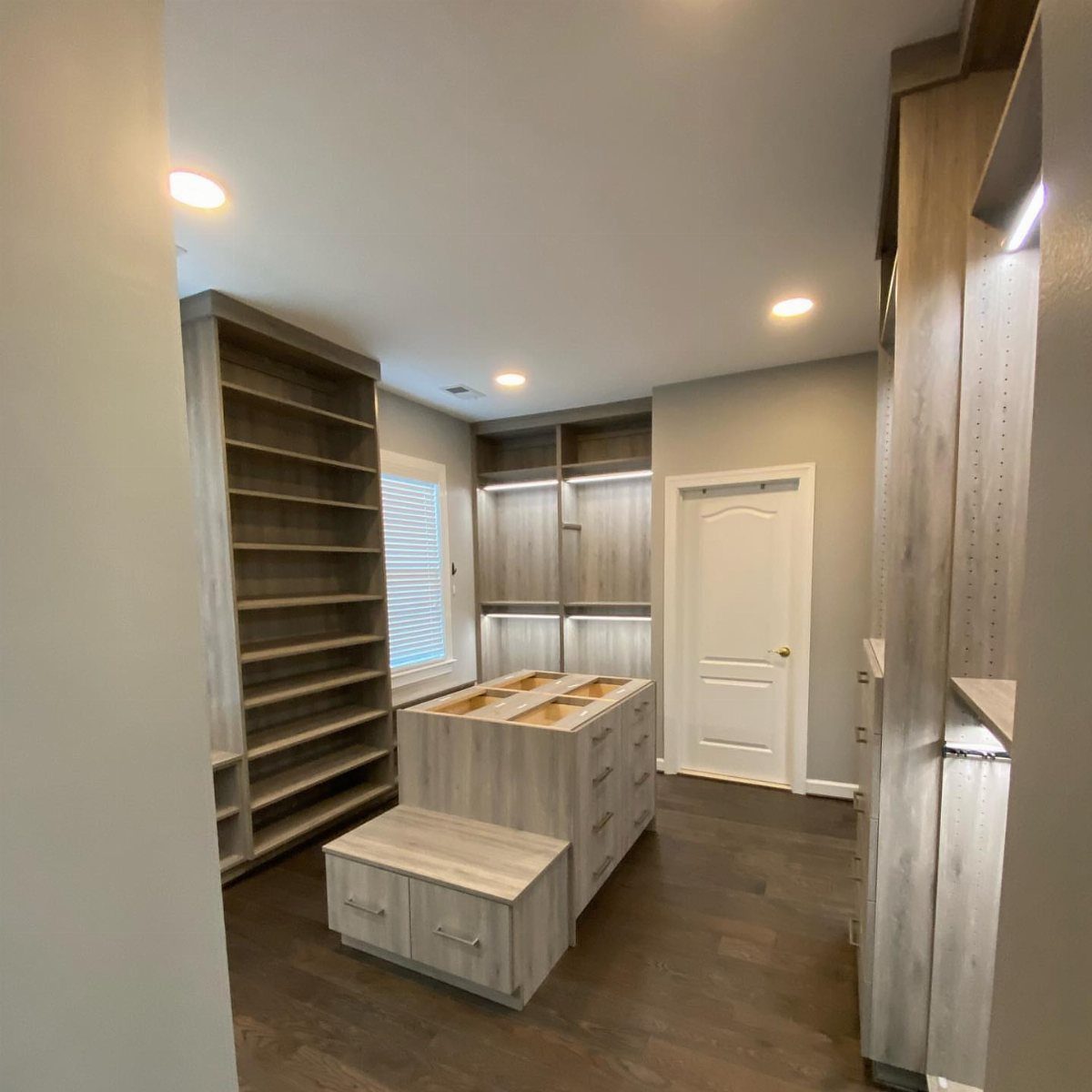
Vertical strips along the inside sides of the shelving units light the stacks from the edges, so a shelf’s contents are visible top to bottom instead of only at the front.
Against grey cabinetry, the thin lines read as part of the build.
Run one on each side of a unit and measure the full height before buying. I’d pick a strip you can cut, and hide the wiring in the corner of the cabinet.
This suits tall units better than low ones, where a single shelf-edge strip is enough.
11. Vanity Lighting
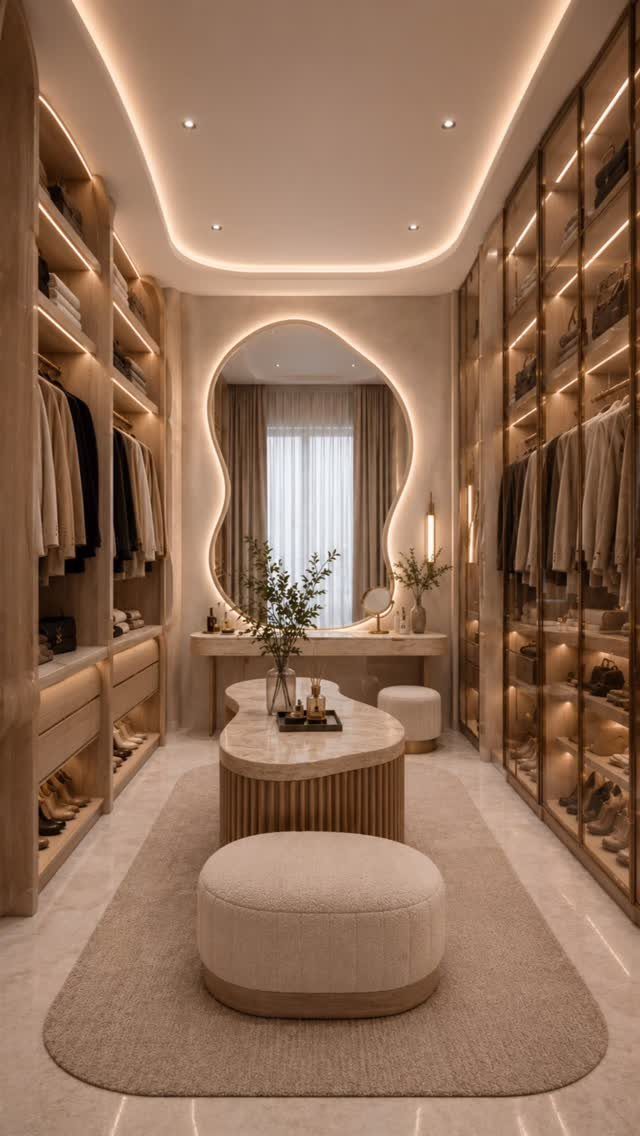
A mirror with light built into its perimeter puts even light on your face, which is what a vanity needs for makeup and for checking a finished outfit. A backlit edge also looks softer than bulbs mounted beside the glass.
Choose a neutral white bulb so colors match what you’ll see outside.
Lit mirrors cost more than plain ones, so a budget version is a regular mirror with strips stuck around the back edge.
Common Lighting Mistakes
A single ceiling fixture is the most common mistake. One source throws harsh shadows and leaves the corners dark, so the back of a deep closet ends up being where you can’t find anything.
Bulb color is the second. Pick bulbs around 3000K for a warm tone that reads comfortable in a space where you’re choosing clothes.
Pick one temperature and use it for every fixture in the room, so a shirt looks the same at the rack and at the mirror.
Drawers and shelves need their own light, because overhead light rarely reaches inside them. Skip that and you’ll be digging blind.
3 smaller errors are easy to avoid:
- Uneven placement, which makes some areas bright and others hard to see.
- Incandescent bulbs waste energy as heat and cost more to run every month. LEDs fix both.
- No dimmer, so the room is stuck at one brightness.
Plan the wiring before the shelves go in, since lighting added afterward usually looks it.
Benefits of Good Lighting
The first payoff is plain visibility.
With enough light on every surface, you stop digging through shadows to find a belt or match a pair of shoes. That saves time and takes some stress out of the morning routine.
Lighting also protects what you own. Bulbs that run cool protect fabric from fading and heat damage over time.
Style comes along with it. Good light makes a closet feel like a boutique, and you can set the mood to match: everyday practical or a more glamorous dressing room.
Resale value is a harder claim to pin down, since buyers respond to how a closet feels more than to a fixture list. A bright, well-organized closet is easy to photograph and easy to like, and that helps.





