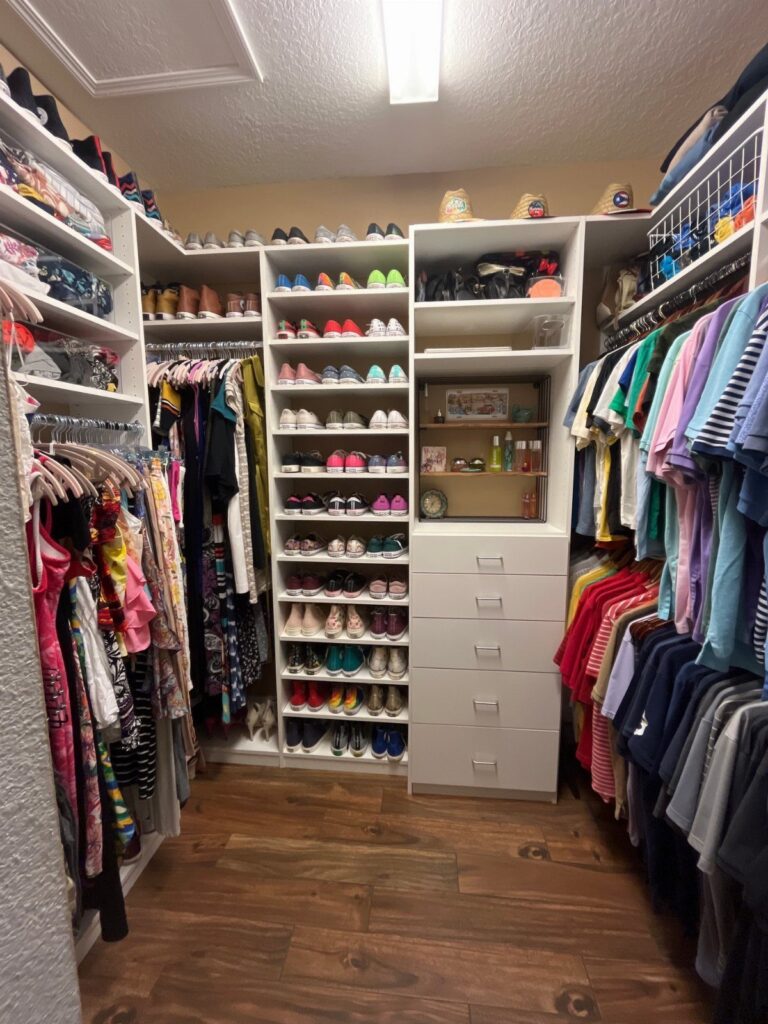
Walk-in closet shelving ranges from a stick-on battery light or a plain wire shelf run high along 2 walls to a built-in unit behind a dark marble-look sliding door.
Which one fits comes down to what you own and how you reach for it, so sort everything into piles and measure each wall, the ceiling height and the door swing before you buy a single bracket.
Renters can skip drilling entirely with over-the-door organizers, while owners with a free weekend can build DIY shoe racks from plywood or pine.
1. Dedicated Zones
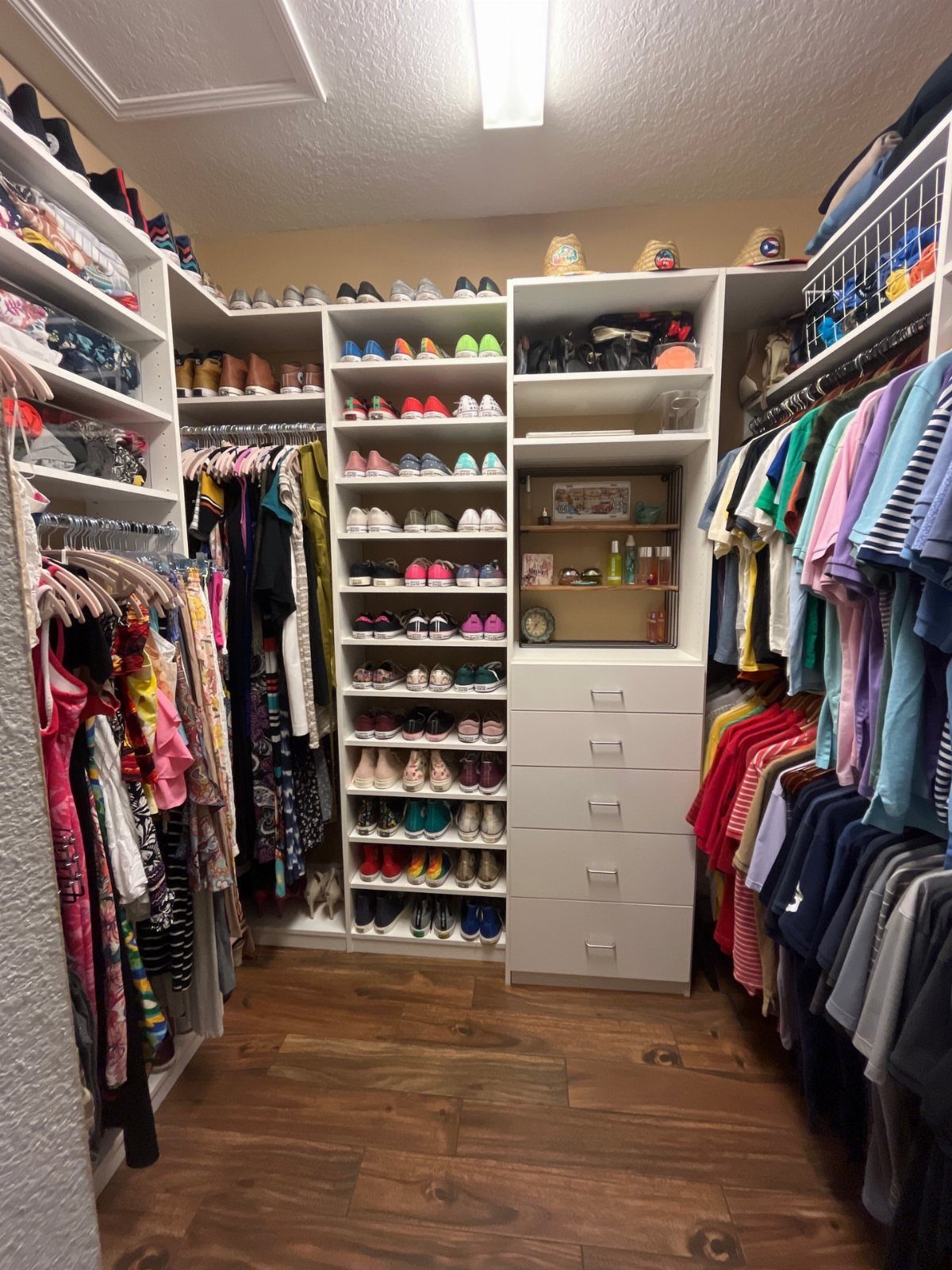
Hanging, shoes and folded items each get their own bay, and that single decision does more for a walk-in than any new shelf. Clothes stop drifting into each other’s space, so putting things back takes seconds.
Group by how you reach for things. Daily pieces belong in the easy-reach band between shoulder and hip, and the drawers and lower shelves take whatever you use less often.
Start by sorting everything on the floor into piles, then size each zone to its pile instead of splitting the wall into equal thirds.
Luckily, there are ways to manage closet chaos — even when a closet is small, and even when it’s burdened with storing clothes for more than one person.
2. Go Vertical
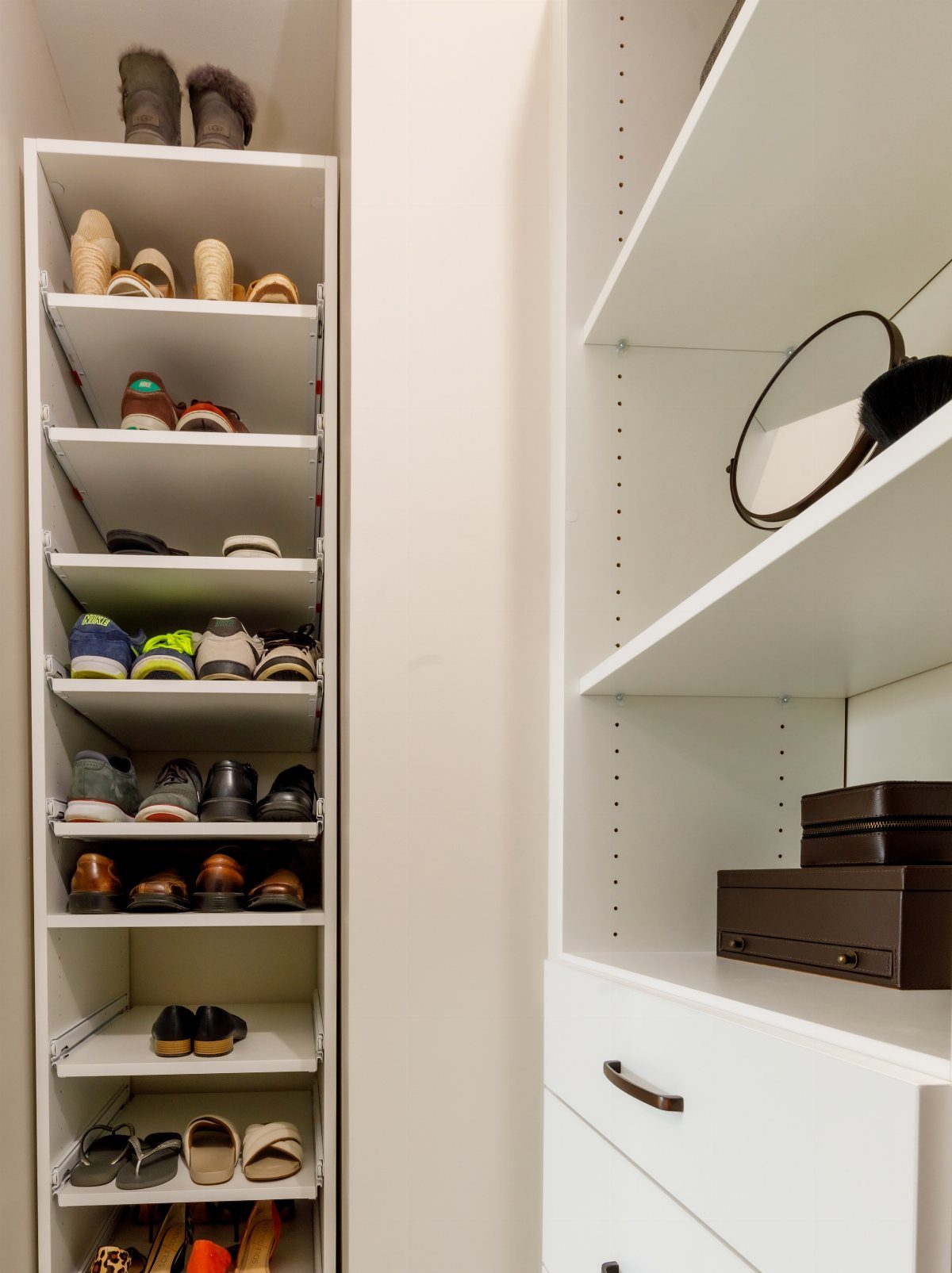
Most closets leave a wide strip of wall empty above the top shelf, and that strip is the cheapest storage you can add.
Narrow shelves stacked floor to ceiling turn that dead air into storage, and shoes are the easiest thing to put on them.
Keep the shelves shallow so each pair sits visible, and give one taller shelf to boxes or a mirror.
I’d put the things you grab daily between knee and shoulder height. Seasonal items go up top in lidded boxes, and a small step stool makes them reachable without a hassle.
3. Over-the-door Organizers
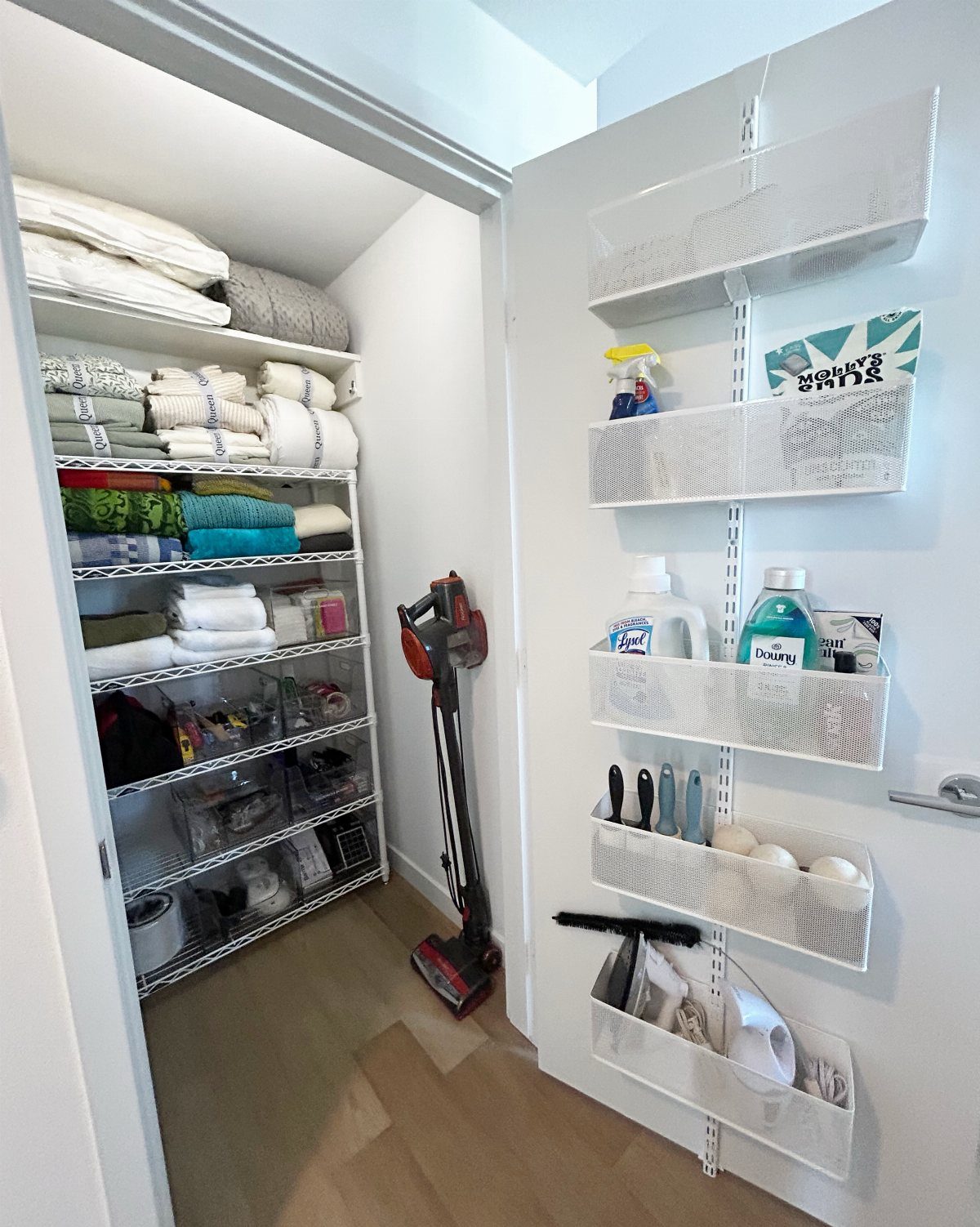
Mesh baskets hanging on the closet door pull cleaning supplies and small odds and ends off the floor and shelves. That’s space you already own and aren’t using.
Over-the-door units hang from the top edge, so they need no drilling, which makes them a solid pick for renters. Check that the door still closes with the unit on it before you load it up.
Keep the heavy bottles low and light items higher. Mesh lets you see what’s inside, but tiny items slip through, so put those in a small bin first.
4. Accent Lights
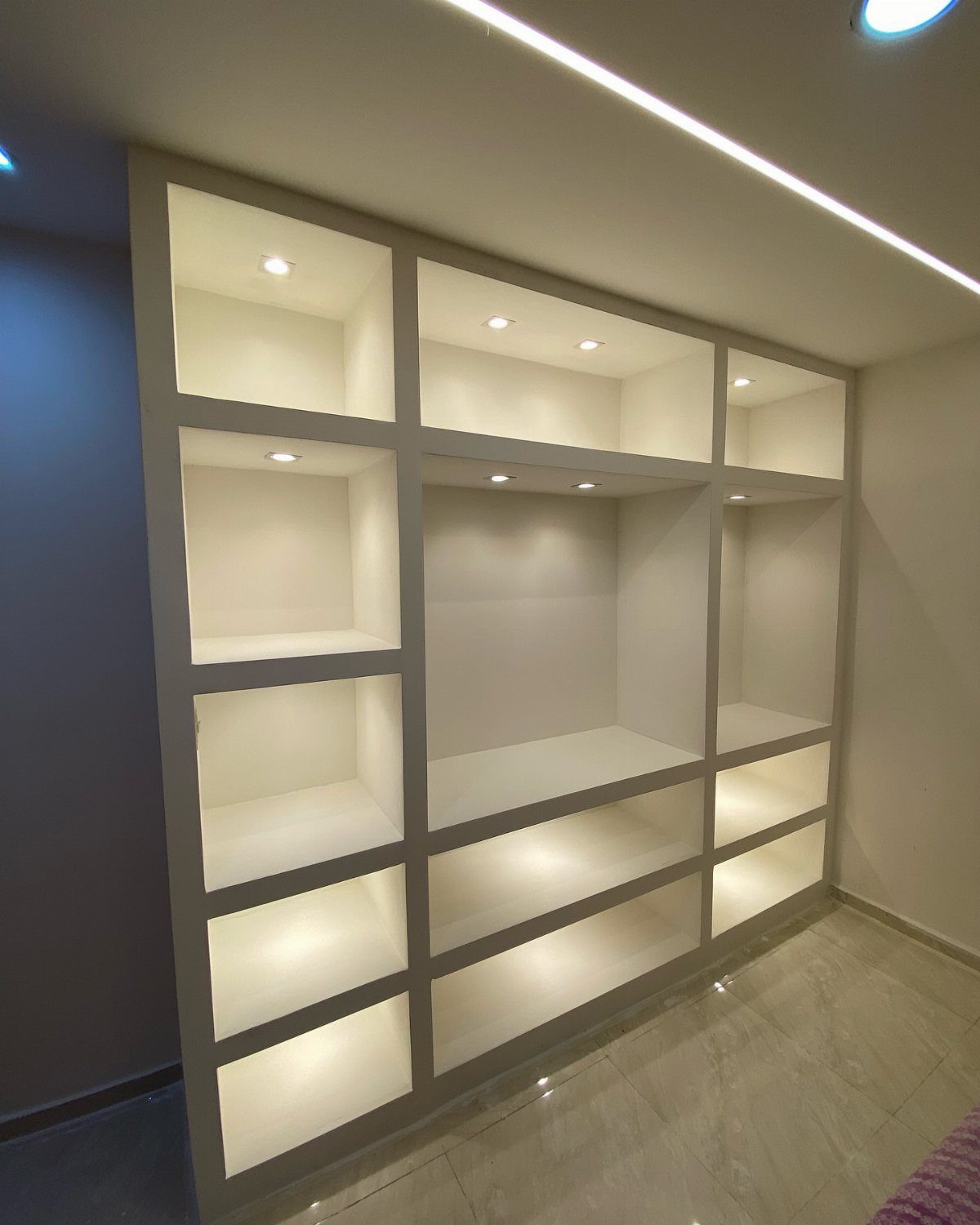
A shelf in shadow hides half of what’s on it. Small recessed spotlights built into each compartment light every shelf directly, so you can read colors and find things without pulling them out.
A single overhead source casts the shadow of each shelf onto the one below it, so the lower compartments stay dim.
If wiring into the shelving is out of reach for a weekend job, stick-on battery lights are a cheaper way to get the same effect.
5. DIY Shoe Racks
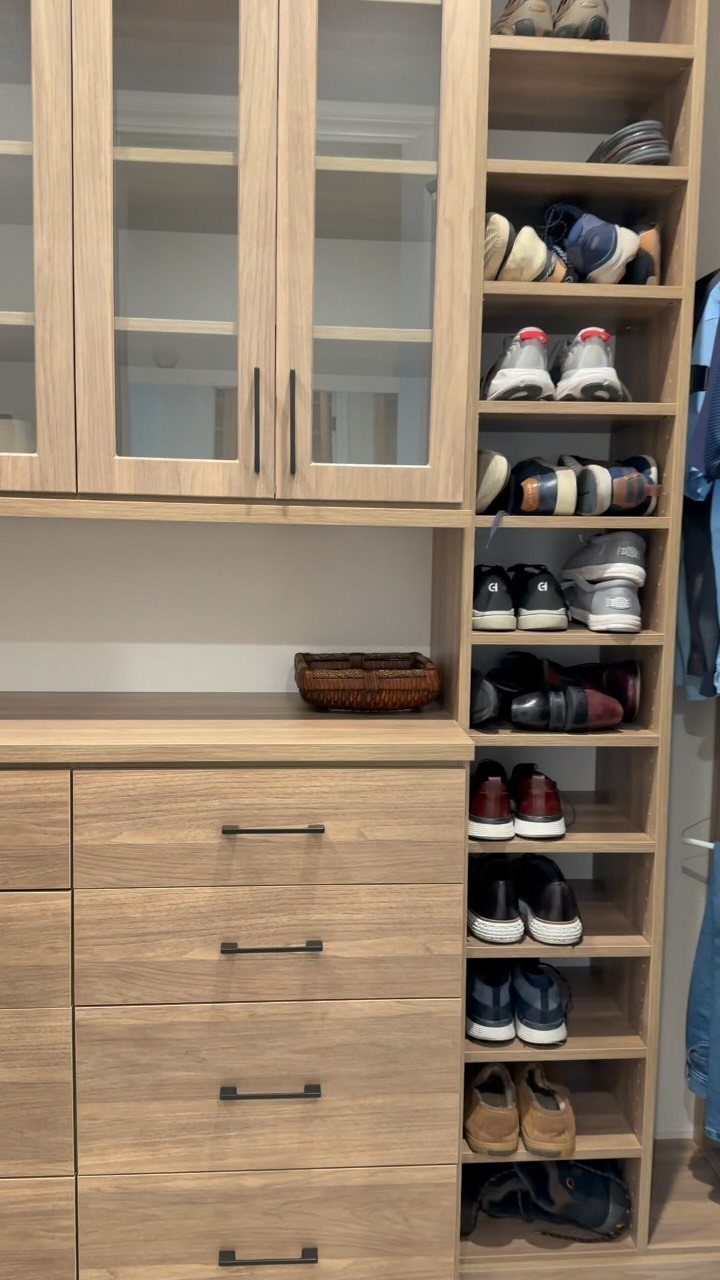
Building your own shoe rack lets you size every opening to the shoes you actually own, which off-the-shelf units never do.
A tall, narrow column uses wall space and very little floor, which suits a closet with no room to spare.
Measure your tallest boots and your most common heel height first, then set the shelf spacing to match. Plywood or pine boards cut to length are a good weekend material at a modest cost.
Slightly angled shelves show the toe of each pair.
Flat ones fit more pairs. I’d choose flat unless the collection is small.
6. Color-coded Clothing
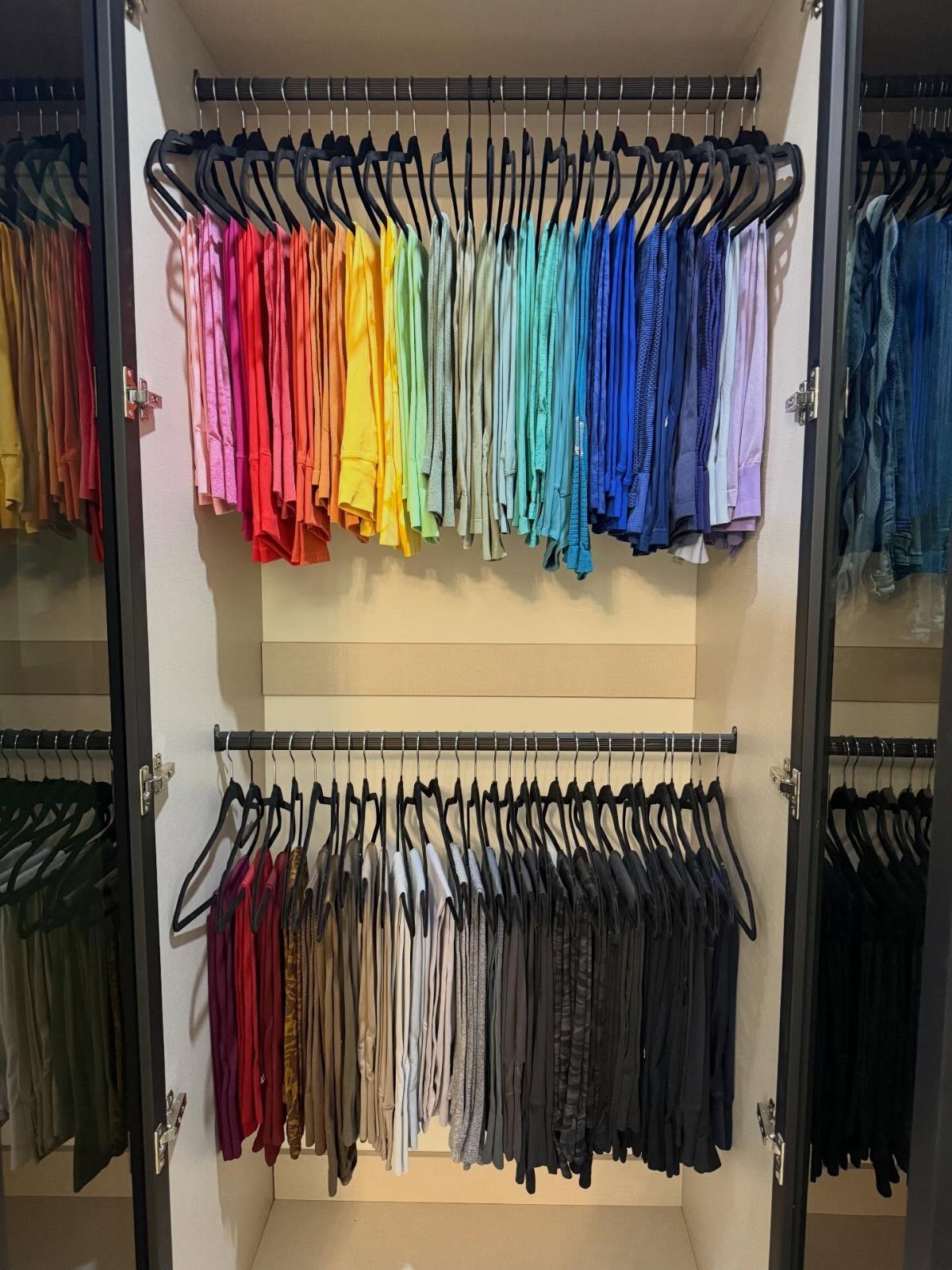
Sorting hanging clothes by color makes the whole closet readable at a glance. You can spot a missing blue shirt in a second, and getting dressed gets quicker.
Work in the order of the spectrum, with whites and neutrals grouped at one end. Put tops and pants on separate rods so each rack can run its own color gradient.
Matching the hangers, black in this case, keeps the color rows from being broken up by mismatched plastic and wire. Sort by type first, then color within each type.
7. Matching and Specialty Hangers
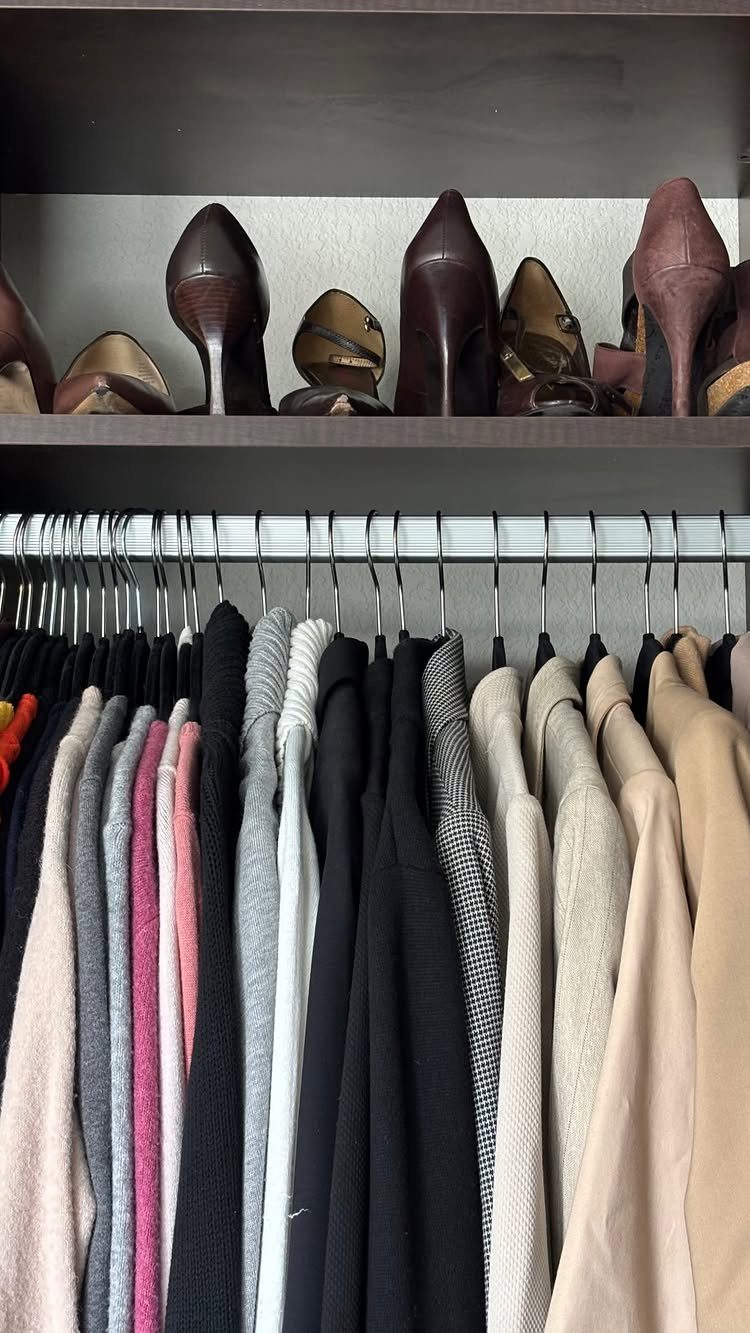
Slim flocked hangers take up far less rod width than bulky plastic or wood ones, so the same rod holds more clothes. The velvety surface grips straps and silky collars, which stops garments from sliding off onto the floor.
They’re also priced low enough to replace a whole closet’s worth in one go. Matching hangers, whether slim black ones or any single style, give the rod a clean, even line.
Swap them in a section at a time, starting with the pieces that slip the most.
8. Hooks and Pegs
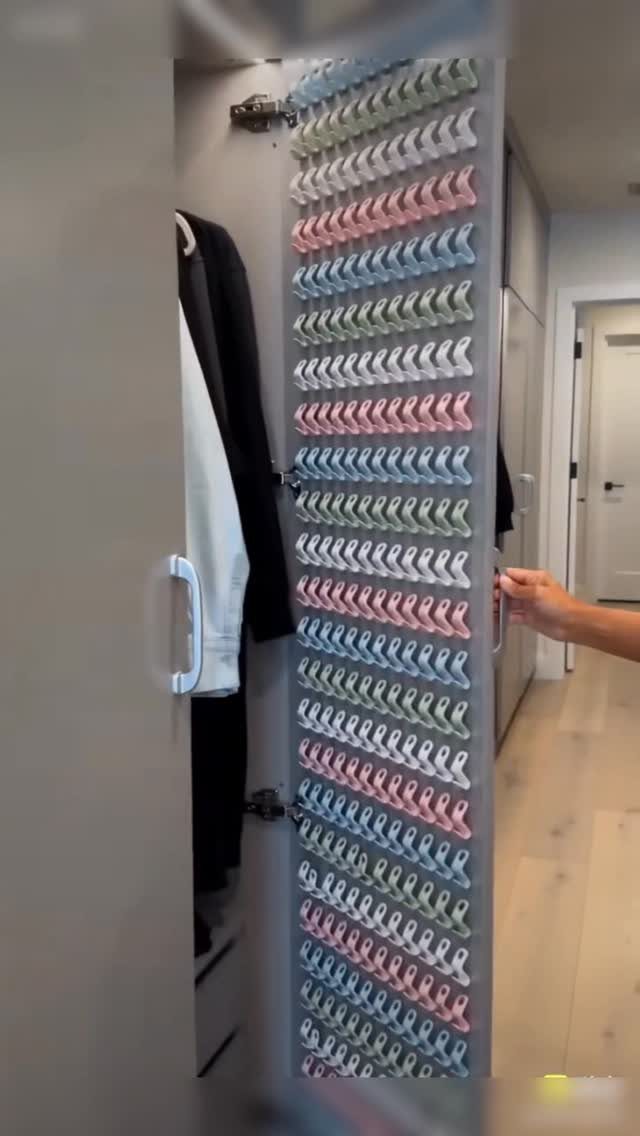
A strip of small hooks on the back of the closet door gives bags, scarves and hair accessories a home that costs almost nothing. Anything you grab daily is easier to find hanging in sight than buried in a drawer.
Hooks beat shelves for lightweight items because nothing gets stacked on top of anything else. Colorful ones also make the door a bit of decoration.
I’d keep one hook per item so nothing tangles, and put the bags you use most at the front.
9. Full-length Mirror
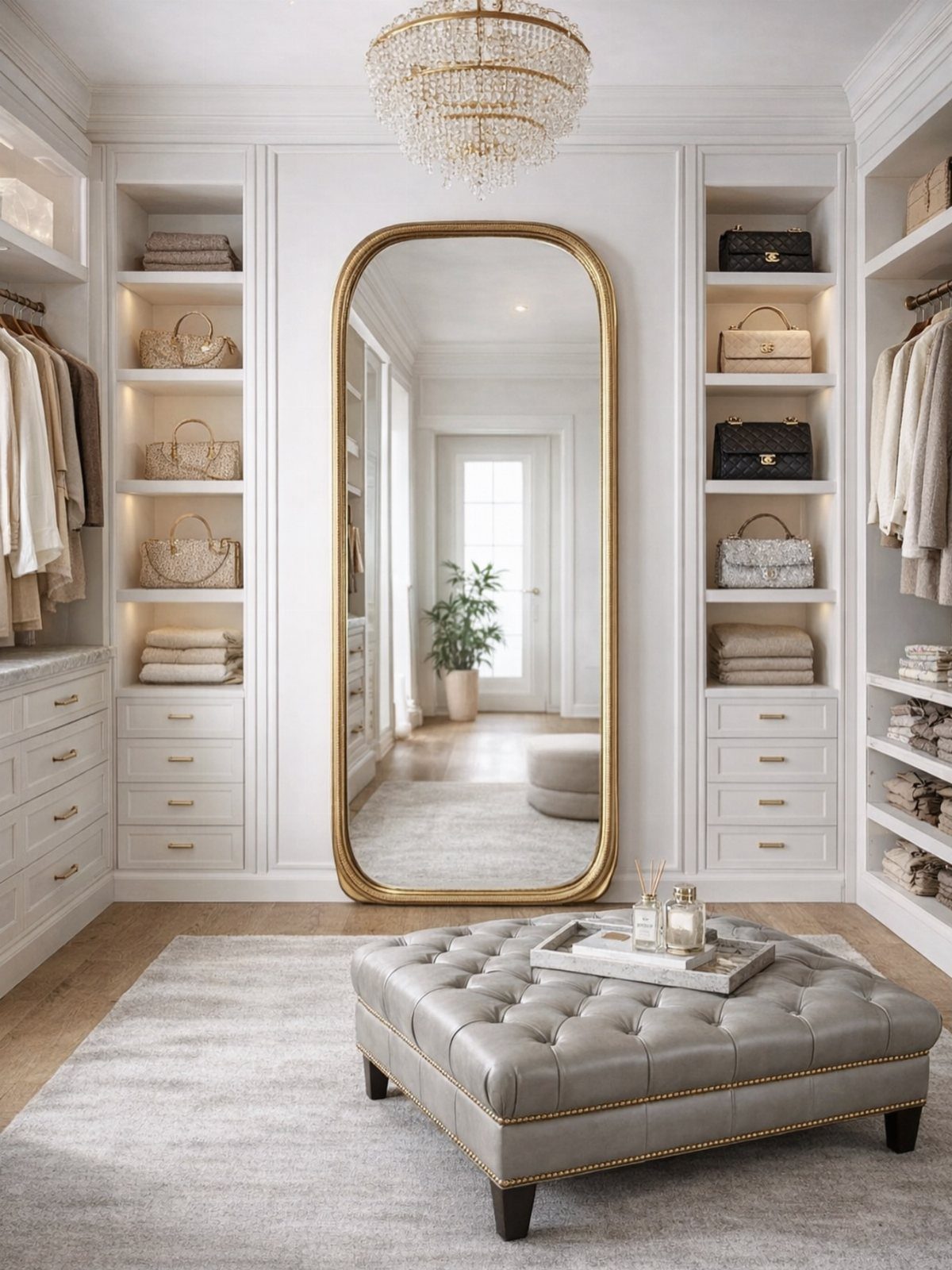
A full-length mirror lets you check an outfit without leaving the closet, and that saves a trip to the bedroom for every change of mind. It also bounces light around, which helps a narrow walk-in feel wider.
An arched frame in a warm metal finish adds a style note to plain white shelving. Pick a frame that matches your hardware.
Lean it against a wall if drilling is off the table. Place it where you can step back a few feet, and away from the door swing.
10. Labels on Shelves, Bins, and Baskets
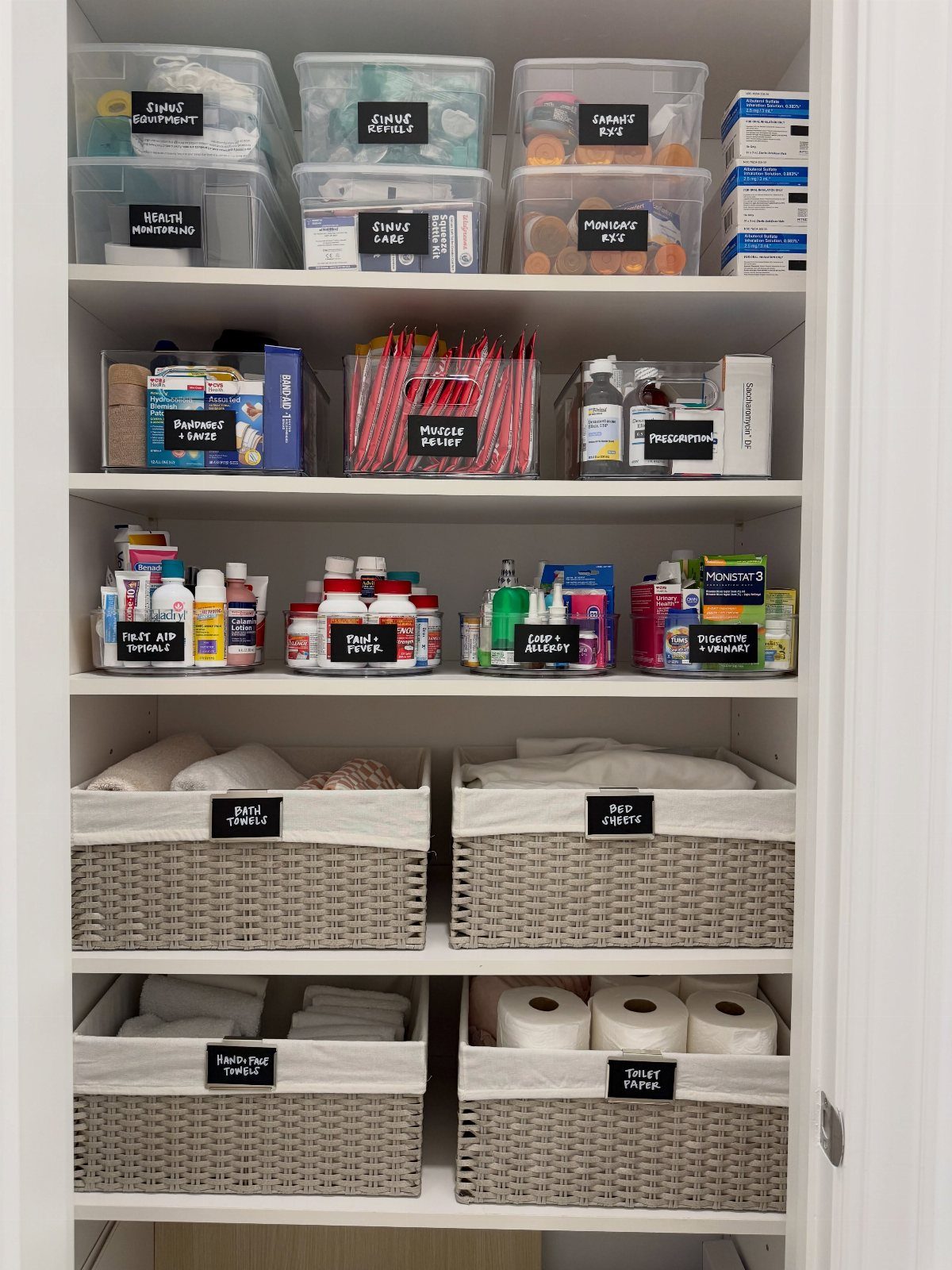
Labels turn a shelf of identical bins into something anyone in the house can use. Specific wording, like "First Aid" or "Toilet Paper," beats a vague "Misc," because nobody has to open the lid to guess.
Put the label on the front edge where you’ll see it first.
I’d label before filling, so the category sets what goes in rather than describing a pile.
11. Stackable Storage Cubes
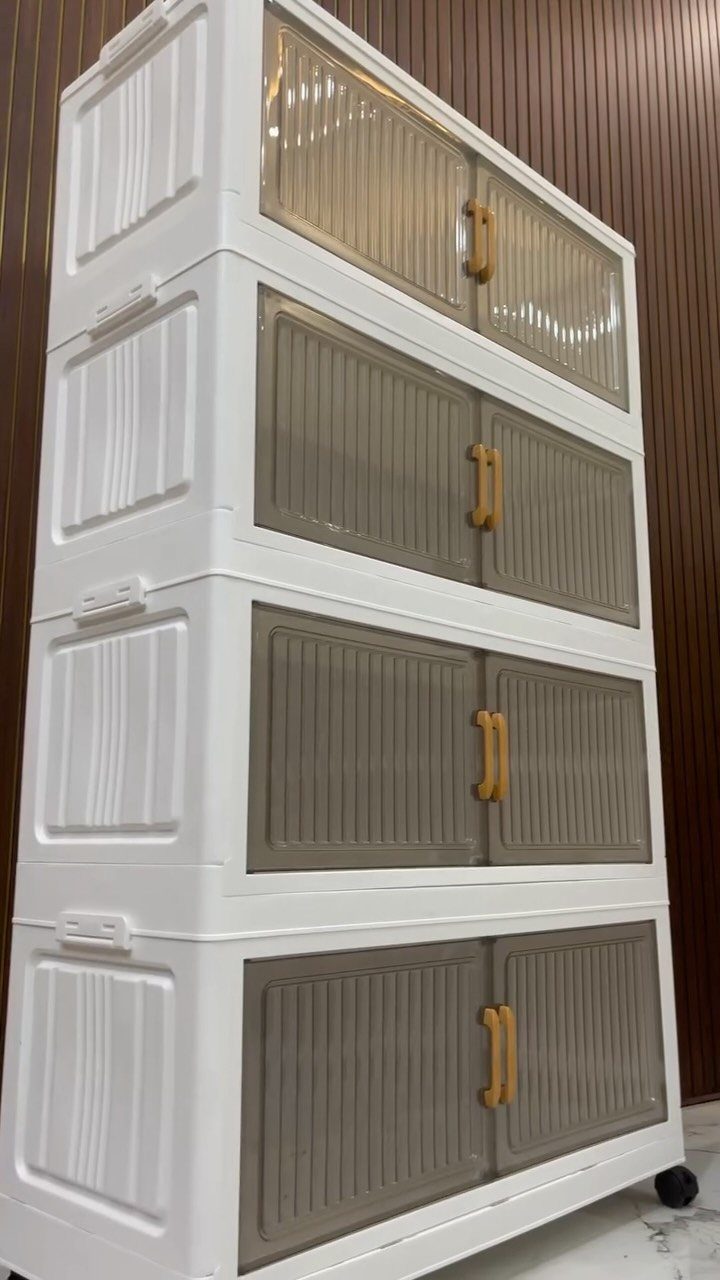
Stackable cubes build storage upward, so a small footprint can hold several bins’ worth of gear. Doors keep the contents out of sight, and wheels let you roll a bin out instead of lifting it.
Heavy-duty plastic panels on a sturdy frame matter more than you’d think, since flimsy panels bow once they’re full.
I’d stack no more than you can reach comfortably, and keep the heaviest items in the bottom bin.
12. Acrylic Dividers for Shelves
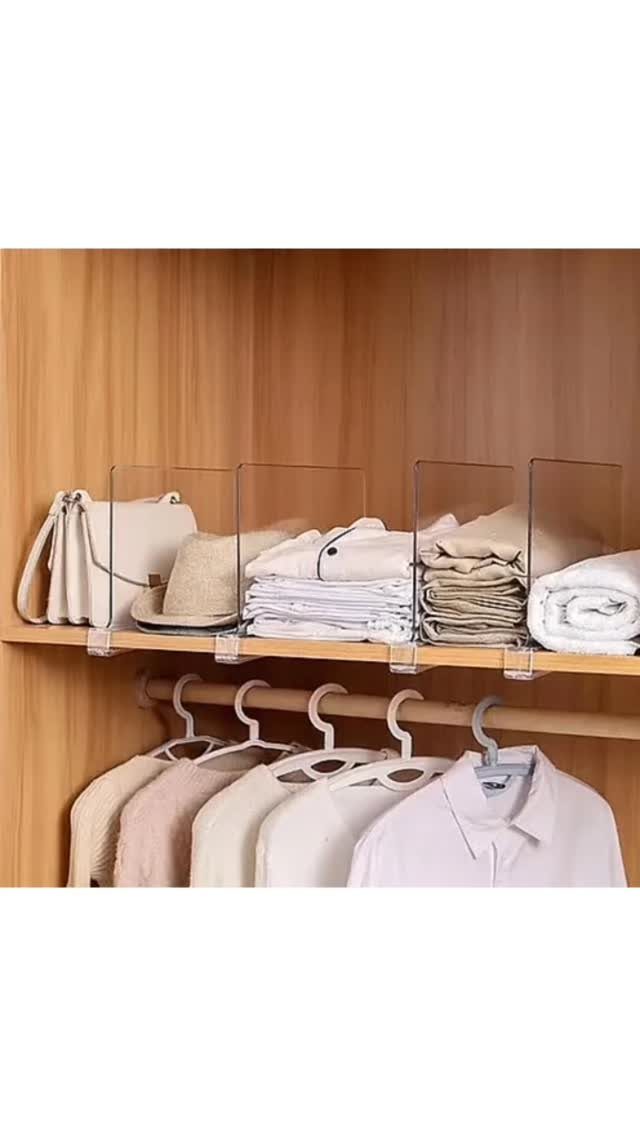
Clear acrylic dividers keep folded stacks from sliding into each other and give a wooden shelf clean sections. Bags, hats and sweaters can each have their own slot instead of leaning on one another.
Because acrylic is see-through, the shelf still looks open and you can spot what’s where. Set one divider per category, then fold to the width of each section so stacks stand upright.
They’re an easy upgrade for shelves you already have.
13. Repurposed Bookshelves
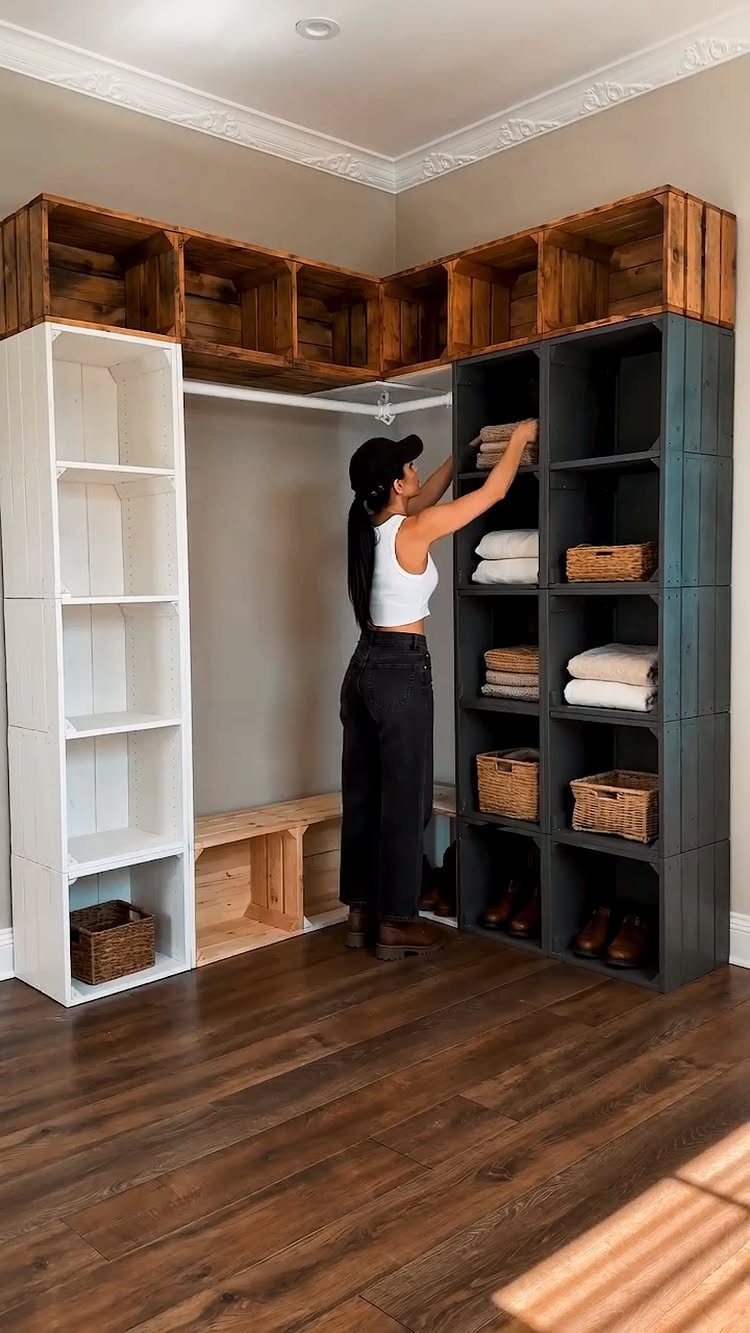
A bookcase works as closet shelving because it’s already built, already sized for folded stacks, and usually cheaper than a custom unit.
Pairing white and grey ones with a bench and a few wooden crates gives a mix of open shelves and grab-and-go bins.
Stand the bookcases against the wall and let crates fill the gaps, one per category, such as scarves or gym clothes.
I’d pick a bench that’s low enough to tuck beside a shelf, so it doubles as a seat for pulling on shoes.
14. Wood Grain Shelving with Sliding Doors
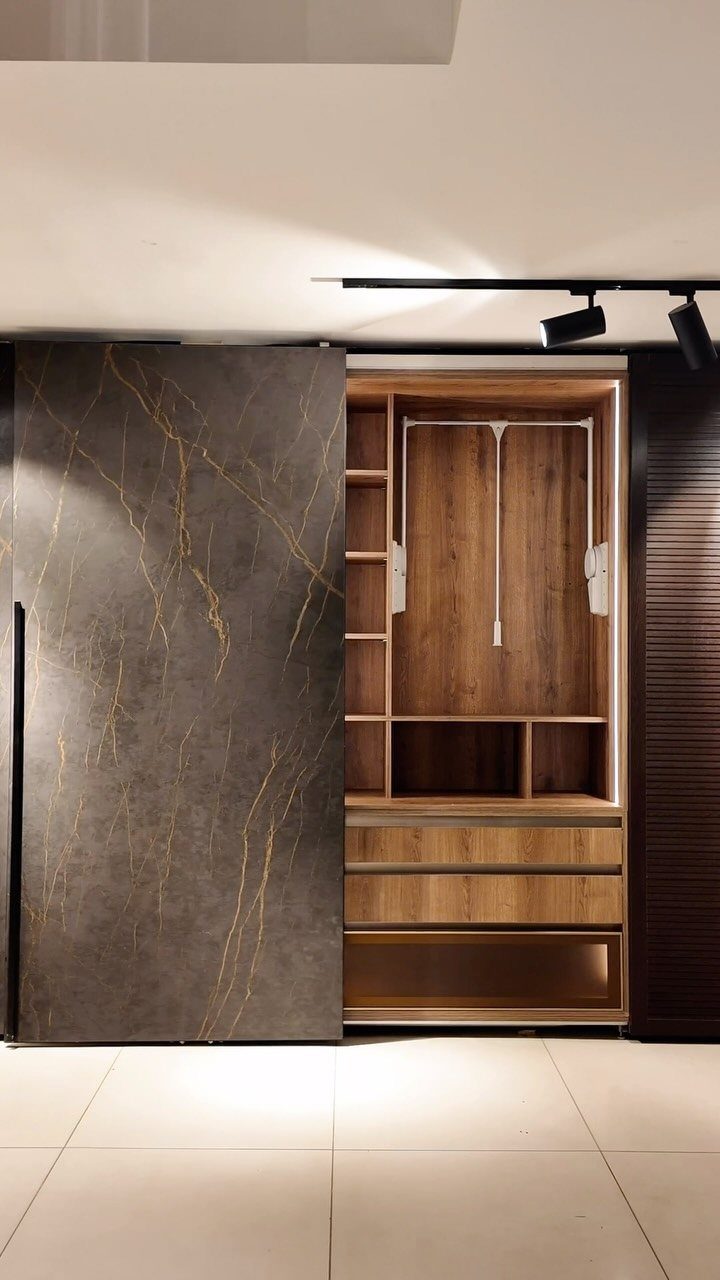
Wood grain shelving and drawer units behind a dark marble-look sliding door give a walk-in a built-in feel, with the mess tucked out of sight.
The hanging rod and open shelves stay reachable, while the door covers whatever you’d rather not look at.
Sliding doors suit a tight room because they don’t swing into your space. They only open part of the closet at a time, which means you’ll be sliding panels back and forth more often than with bifold or hinged doors.
I’d keep the everyday items in the uncovered section and use the hidden side for the overflow.
15. Perimeter Wire Shelving
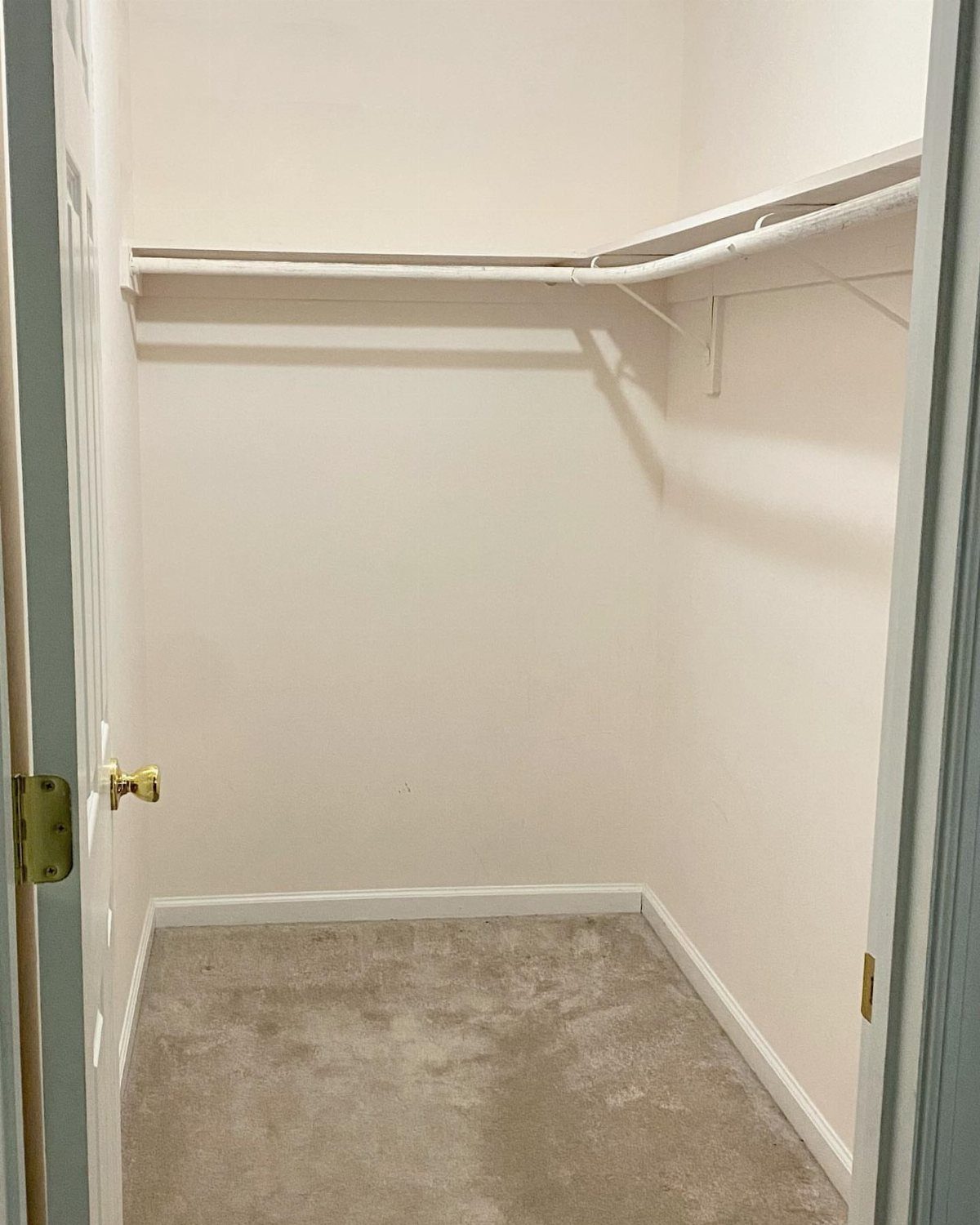
One white wire shelf run high along two walls turns the unused band near the ceiling into continuous storage, and it leaves the lower wall free for rods or drawers.
It’s a plain, low-cost setup that suits an empty closet with nothing yet planned.
Keep the shelf high so hanging clothes sit beneath it without bumping it.
I’d use it for lidded boxes and seasonal gear, and add a step stool so you can reach it. Wire is fine for boxes; loose items can slip through the gaps.
Importance of Planning
Measure before you buy anything. Get the width of each wall, the ceiling height, and where the door swings, then sketch the closet on paper with those numbers on it.
Take stock of what you own first, so the plan fits your actual clothes instead of an imagined wardrobe.
Aim for a closet where you can see everything at a glance. If you can’t see something, you won’t wear it, so plan the layout around how you like to look at and choose your clothes.
Accessibility Considerations
Plan reach for each person who uses the closet.
Put the things you grab daily at a height the shortest user can reach without a stool, and if the closet is shared, let rods and shelves sit at different heights in different sections.
Check the door swing on your sketch. A door that blocks a shelf or rod is a daily annoyance.
Corners are the weak spot in many layouts, since items stuck in them are hard to get to. Decide ahead of time what goes there, or leave them for things you rarely need.
Pick a home for a slim step stool or ladder while you plan, so the upper shelves stay usable and the stool isn’t left in the middle of the floor.
Incorporating Personal Style
Once the shelves are up, use leftover wall space for something decorative. Leftover shiplap fits a narrow gap well, and wallpaper or a single paint color across the walls and shelves makes the room feel more like a boutique.
Industrial piping makes a sturdy hanging bar for clothes and purses. A framed organizer for bracelets does double duty as art.
A window in the closet calls for curtains for privacy, plus a layer of UV-blocking film so direct sun doesn’t bleach whatever sits on open shelves.
Choose baskets you like looking at, sized to the space. A basket on the floor handles everyday ankle boots and sneakers, and a vintage stool adds charm and reaches the high shelves.
Frequently Asked Questions
What are some good shelving ideas for a walk-in closet?
Start by giving hanging clothes, shoes and folded items their own bay, sized to the pile each one covers.
Run narrow shelves up to the ceiling as well, because the bare wall above your top shelf is the least expensive storage you can add.
Recessed spotlights or stick-on battery lights in each compartment keep the lower shelves from sitting in shadow.
What is the smallest size for a walk-in closet?
About 4 feet wide and square is the minimum.
A hanging rod takes roughly 2 feet of depth, and you still need room to stand in front of it. A closet with that width but more length gives you room for creative storage.





