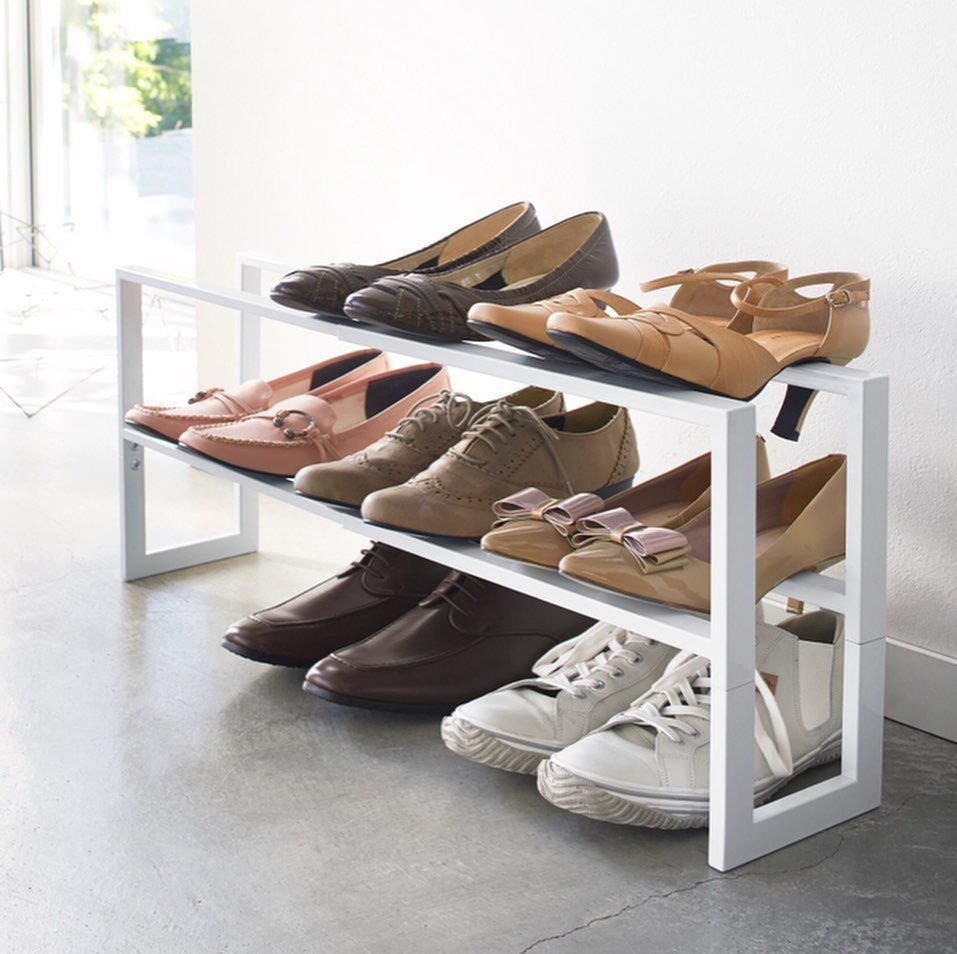
The ideas here run from a low metal rack for a few daily pairs to a fluted cabinet that passes for a console table.
1. Fluted Shoe Storage Cabinet Console Table
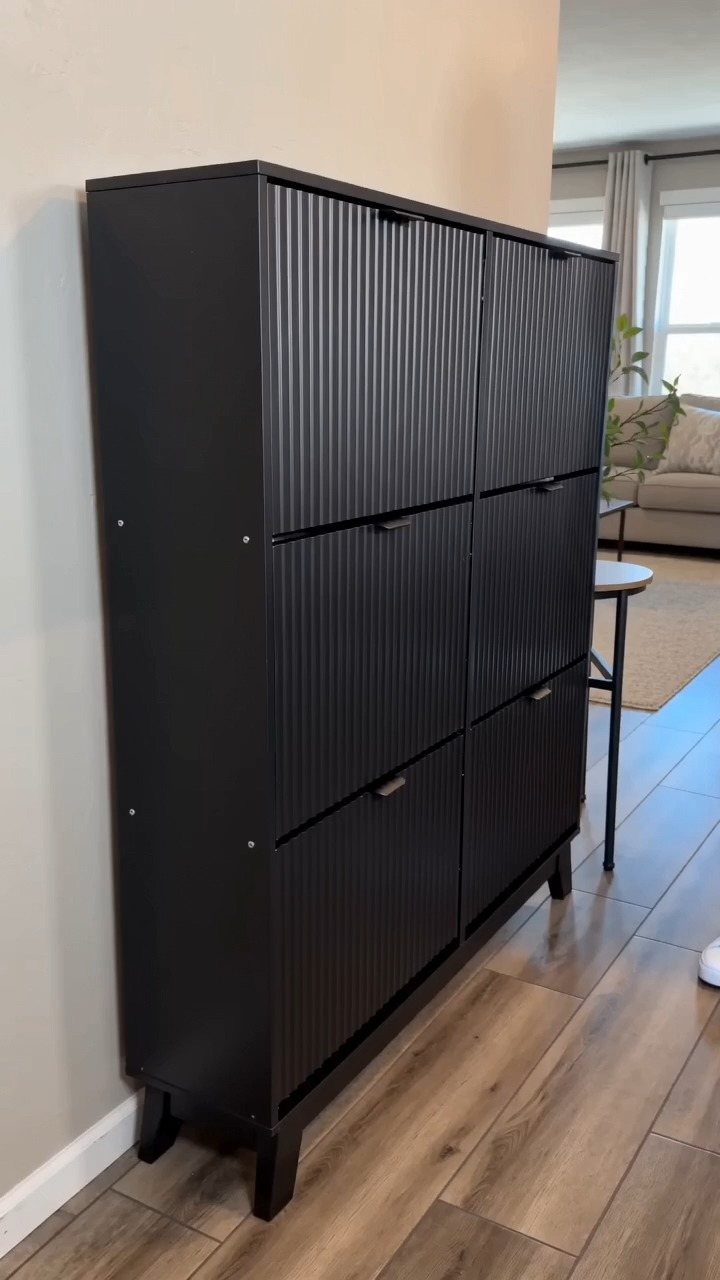
A fluted cabinet on legs is the one shoe rack here that passes for furniture.
6 doors hide every pair, and the ribbed front looks like a console table, so it can sit behind a sofa or beside a side table without announcing itself as shoe storage.
Black suits a living room with wood floors because the fluting casts soft shadows instead of reading as a flat slab. The raised legs let you see floor underneath, which keeps a bulky piece from feeling heavy.
Check the cabinet’s interior depth and shelf height against your biggest pairs before buying. Boots are the usual casualty.
2. Tilt-out Shoe Cabinet
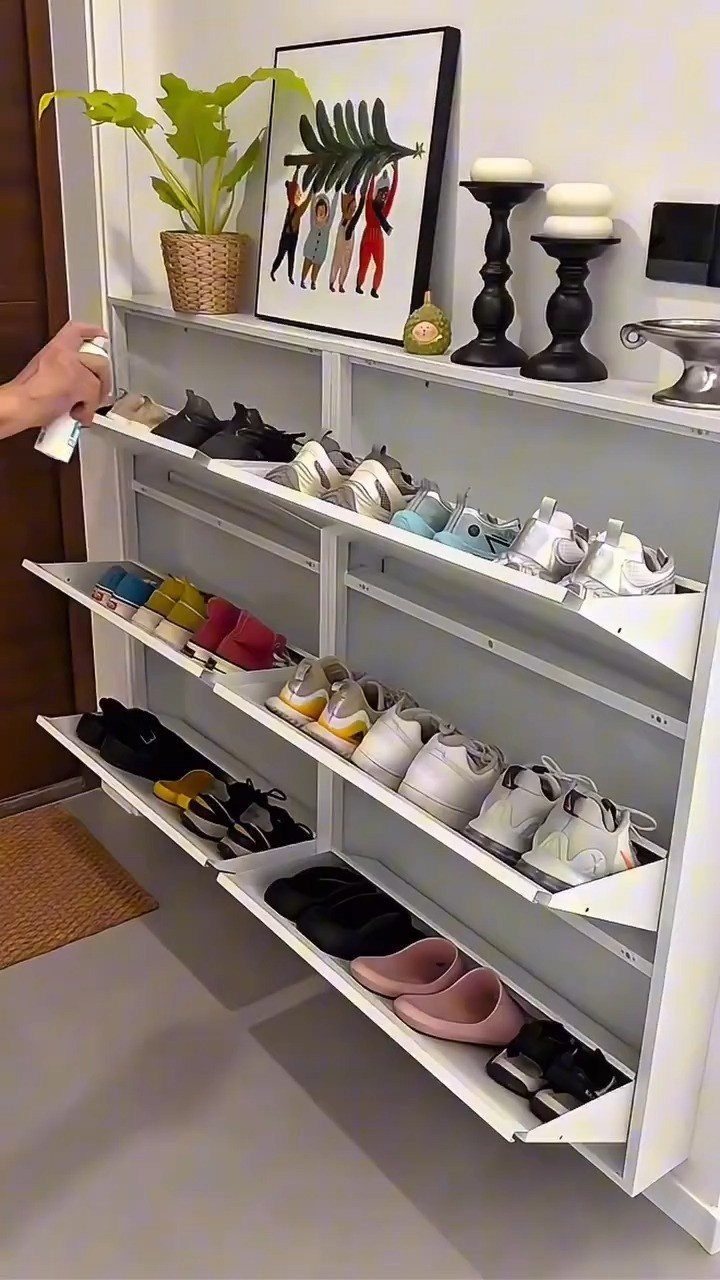
Tilt-out cabinets fold each shelf forward like a drawer, so you see the whole row of shoes at once instead of digging behind a door.
That makes them my pick for sneaker-heavy households, where one pair always seems to be at the bottom.
A white finish keeps the front quiet, and the top becomes usable surface. A plant, a framed print and a few candles fit there, which turns shoe storage into an entry display.
Load the front of each compartment with the pairs you wear weekly and the back with off-season ones. Keep a spray or deodorizer nearby, since a closed cabinet holds odor.
3. Over-the-Door Shoe Rack
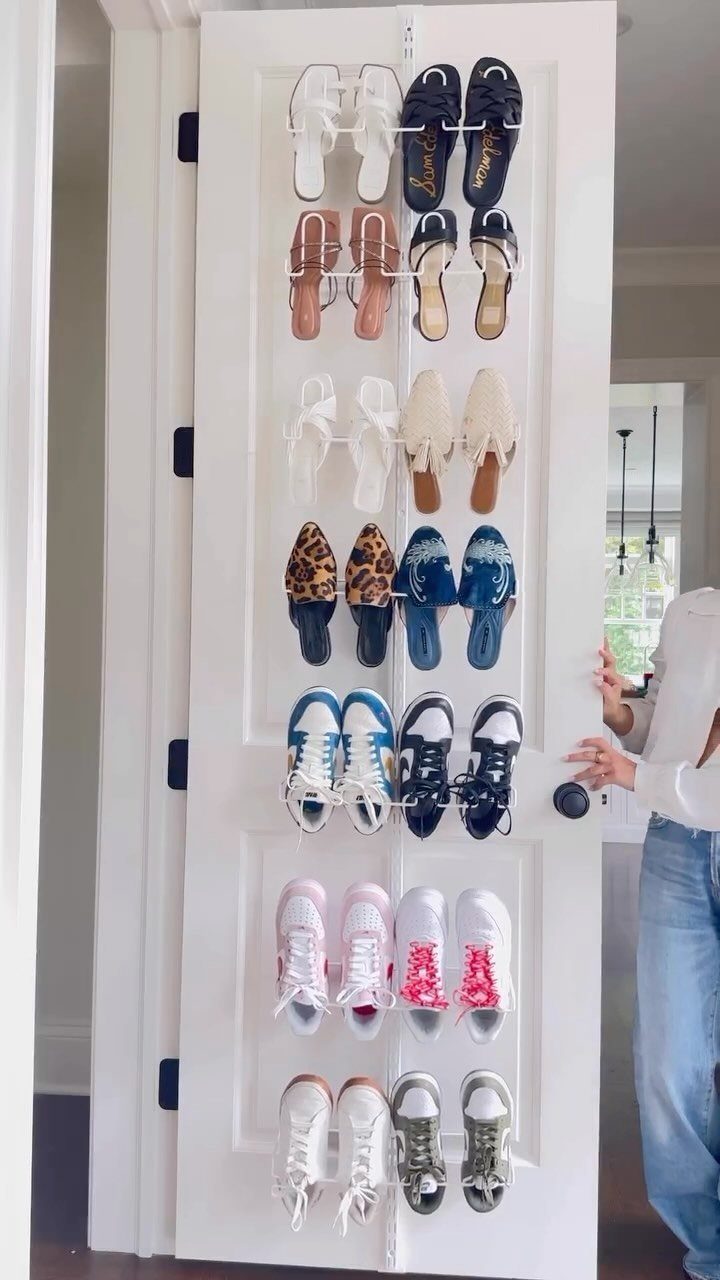
Over-the-door racks use the one surface in a living room nobody plans for: the back of a door. A clear plastic version shows every pair in its pocket, so you can grab flats or sneakers without opening anything else.
Hang it on a closet or entry door and the floor stays clear, which matters most in a small space. Renters like it because it needs no drilling.
Pockets suit lighter shoes best. Heavy boots will pull the rack and may keep the door from closing fully, so store those elsewhere.
4. 3-Tier Shoe Rack
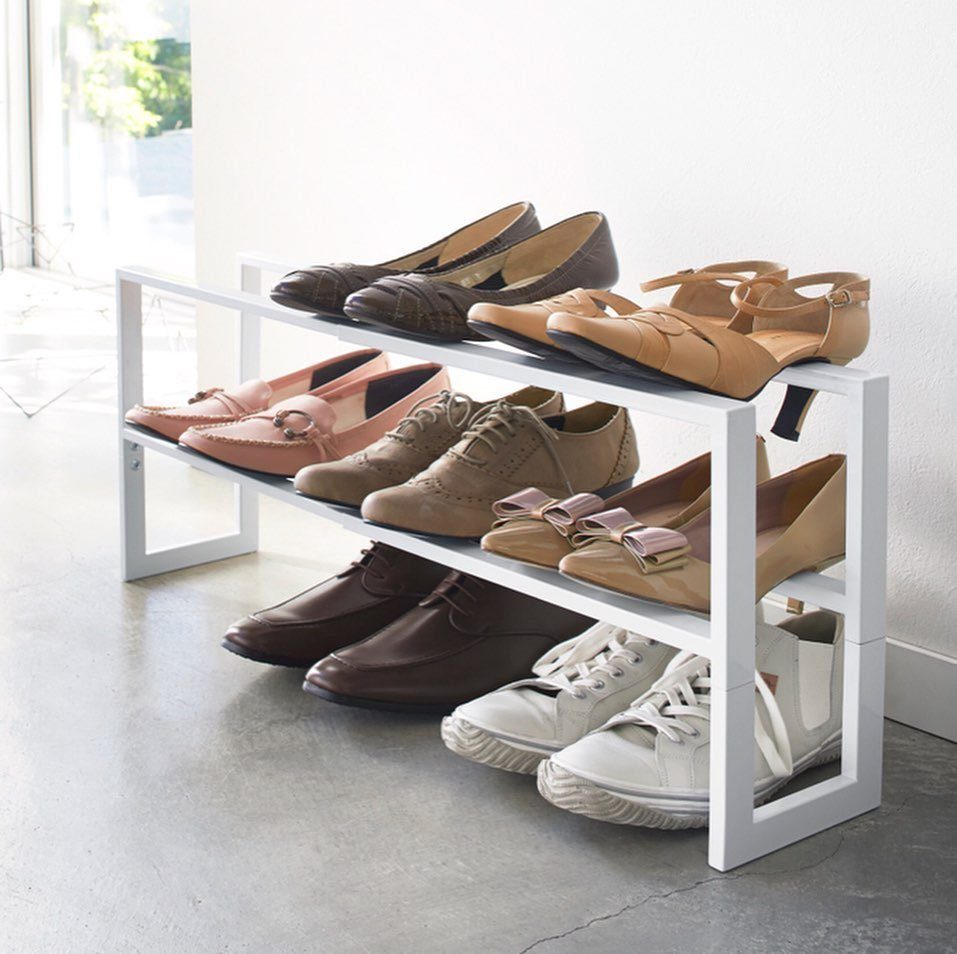
Three tiers stack the pairs vertically, so one narrow strip of wall holds what would otherwise spread across a whole floor.
White metal against a white wall nearly disappears, which is why I prefer it to wood or black in a small room.
Put taller shoes on the bottom tier and flats on the top. Stand it flush to the wall.
It is an open rack, so tidiness is on you. Keep to matched pairs and it looks deliberate; pile on extras and the whole living room feels cluttered.
5. Stackable Clear Plastic Shoe Boxes

Stackable clear boxes turn sneakers into a wall of color. A tall column takes up very little floor, and the transparent fronts let you spot a pair without pulling out every box.
Start with a few boxes and add more as the collection grows; stacking is the whole appeal. Set the column against a plain white wall so the shoes provide the color.
Dust is the cost.
6. Low Metal Shoe Rack
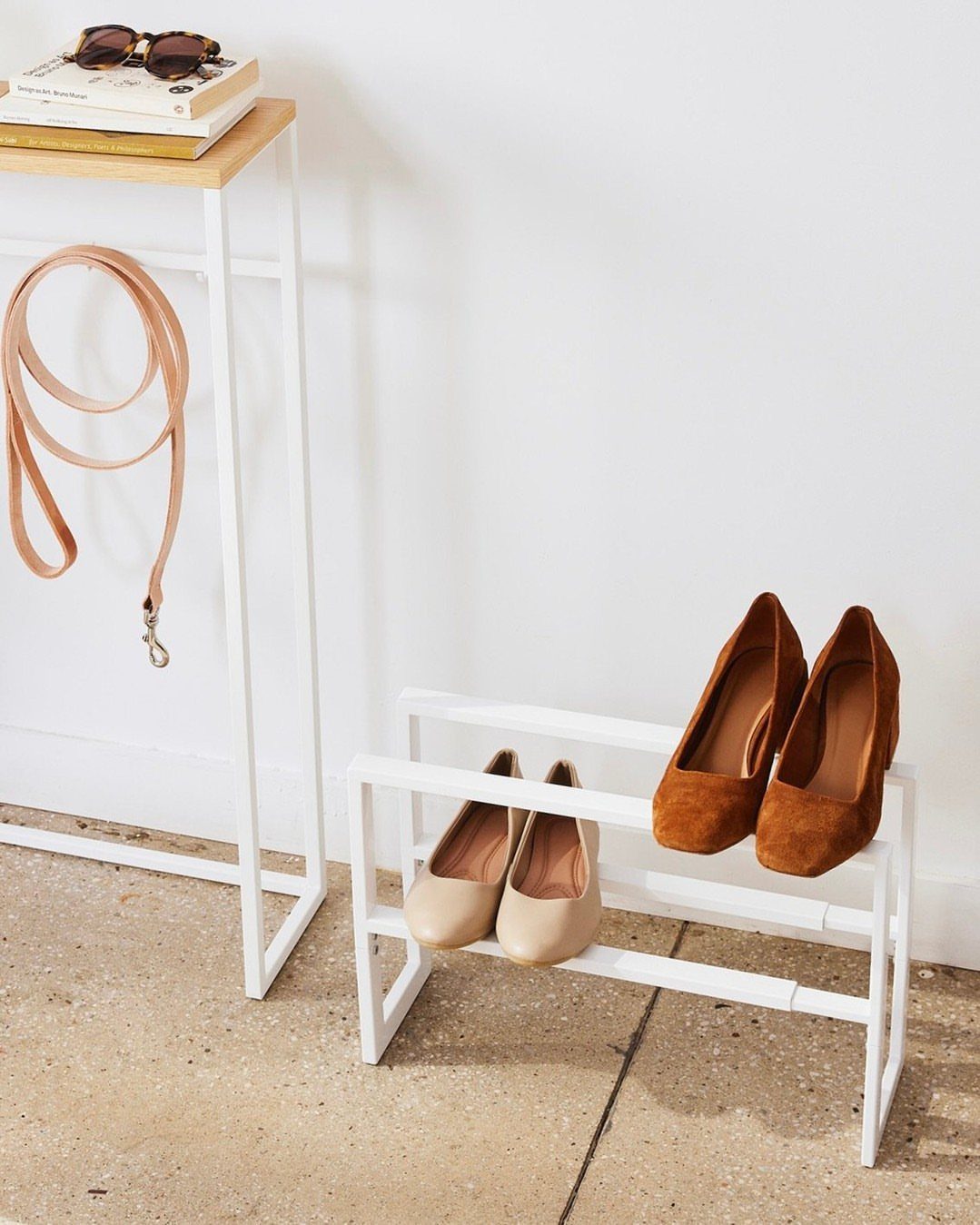
A low two-tier metal rack is the easiest answer when you only need space for a few pairs. In white, it slides beside a console table and reads as part of the setup instead of an add-on.
It suits the shoes you wear daily: flats, loafers, slip-ons.
Fill a low rack only to the point where every pair sits flat without touching its neighbor, because once shoes start piling on top of each other the whole thing looks messy fast.
Because it sits below table height, the console top stays free for books and sunglasses. Pick it for small households or as a bonus rack for guests.
Functional and Stylish Storage
A shoe rack earns its spot when it looks like it belongs to the room.
Finish and color do most of that work: a rack in white or light wood tones fades into a hallway or living room, while a bold one becomes a feature you have to style around.
Check the specs before you commit. A 6-tier steel-and-wood rack measuring 9.84 inches deep, 25.98 inches wide and 34.25 inches tall holds up to 20 pairs, and that narrow depth is what lets it sit in a hallway without blocking the walkway.
Slatted or wire tiers let grit sift down onto whatever sits underneath, so the bottom pairs end up wearing the dirt from the top ones. A quick wipe of the lower shelf every week or 2 handles it.
Assessing Shoe Collection
Count your pairs before you shop, and sort them by type. A small stash of flats and sneakers needs a very different piece than a mix of heels, boots and kids’ shoes.
Lay everything out on the floor, then split it into daily pairs and occasional ones. Daily pairs deserve the easiest spot to reach, and the rest can go in a tighter or less convenient place.
Measure your tallest pair and your widest pair too.
Slim racks and cabinets differ a lot in shelf height, and sneakers, flats and heels each need different clearance. Buying for the collection you have, with a little room to grow, beats buying for the one you imagine.
Space-saving Solutions
Floor space is the scarce resource in most living rooms, so go up or go under.
Vertical racks use wall height that would otherwise sit empty, and a tall, narrow unit holds far more pairs per square foot than a wide, low one.
Under-bed storage is the other easy win. Measure the gap between the floor and the bed frame first, then choose flat bins or sliding trays that clear it with a little room to spare.
Keep out-of-season pairs under the bed and everyday pairs on the vertical rack. That split keeps the floor clear and puts the shoes you actually wear within easy reach.
With room for up to 20 pairs, this tower-style best seller supplies a lot of space while still maintaining a relatively small footprint.
Frequently Asked Questions
Can I put a shoe rack in my living room?
Yes, as long as it blends with the room. A fluted cabinet on legs reads as a console table, and a white low metal rack slides beside a console and looks like part of the setup.
Color decides whether the rack disappears or takes over: white or pale wood blends into the wall, while a saturated finish turns into a piece you have to build the room around.
What are some good ideas for shoe storage in my living room?
A closed cabinet is the most furniture-like choice, and a tilt-out version shows every pair at once while its top holds a plant or framed print.
For tight spaces, an over-the-door pocket rack needs no drilling and keeps the floor clear. A narrow 3-tier white metal rack nearly disappears against a white wall, and stackable clear boxes work well for sneakers.
What to use instead of a shoe rack?
Under-bed storage is the easiest swap: flat bins or sliding trays hold out-of-season pairs. An over-the-door pocket organizer is another option, and it suits lighter shoes like flats and sneakers better than heavy boots.
What is an attractive shoe rack for the entryway?
Pick one that matches your finish and color so it looks like it belongs there. A white or light wood rack fades into a hallway, and a narrow one stays out of the walkway.





