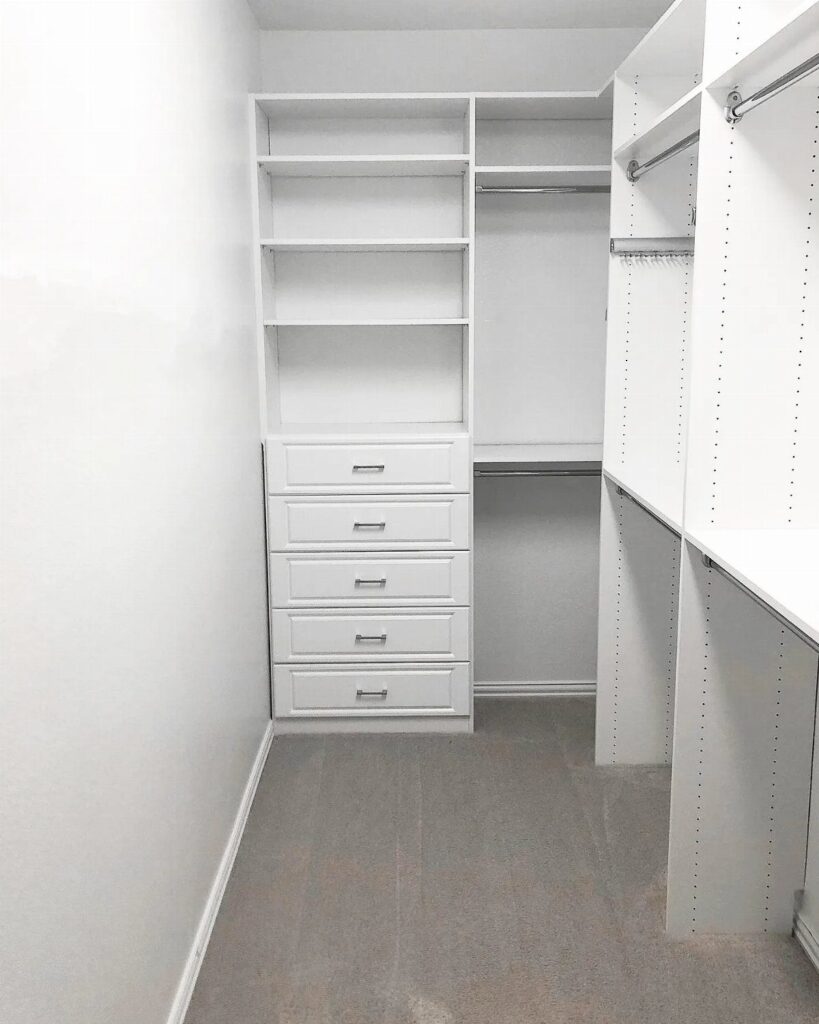
Renting or owning settles most of the choices here: Thin Hangers, an over-the-door organizer, and clear stackable bins need no drilling, while shelving up to the ceiling, a built-in vanity countertop, and a custom system with rods and drawers mean real building and a bigger bill.
Most small closets do best with a mix of a few ideas from the no-drill end and a few from the build-it end.
1. Bins and Baskets on Higher Shelves
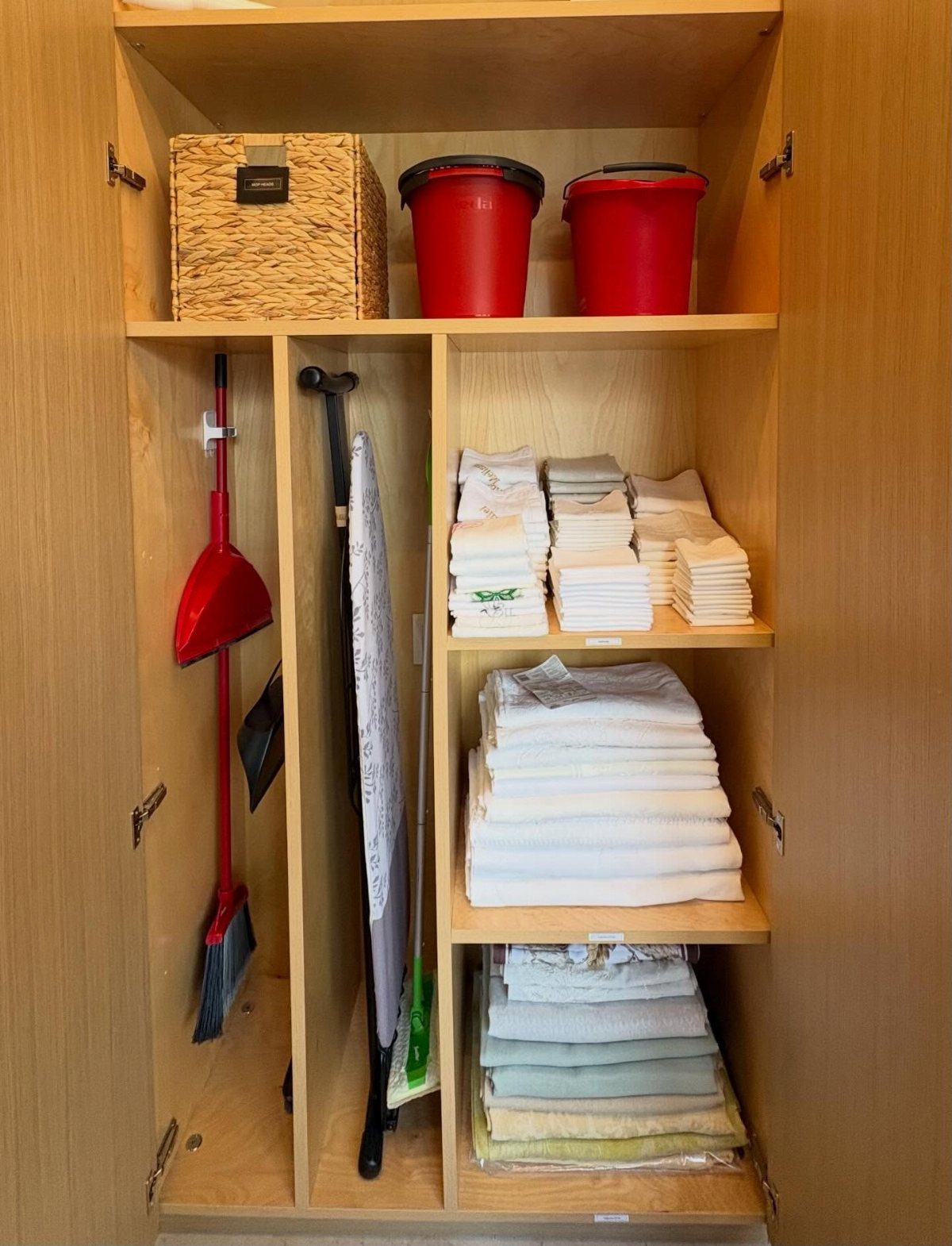
Top shelves are the cheapest storage in a small closet, and a woven basket with a couple of lidless buckets is enough to claim them.
Keep things you reach for a few times a year up there: spare linens, cleaning supplies, seasonal odds and ends.
Group by category, one container per kind of thing, so you pull down one basket instead of searching three. Folded stacks can stay open on the shelf below.
I like baskets with handles on the high shelf, since you can grab and lower them without a stool wobble.
2. Additional Shelving Up to the Ceiling
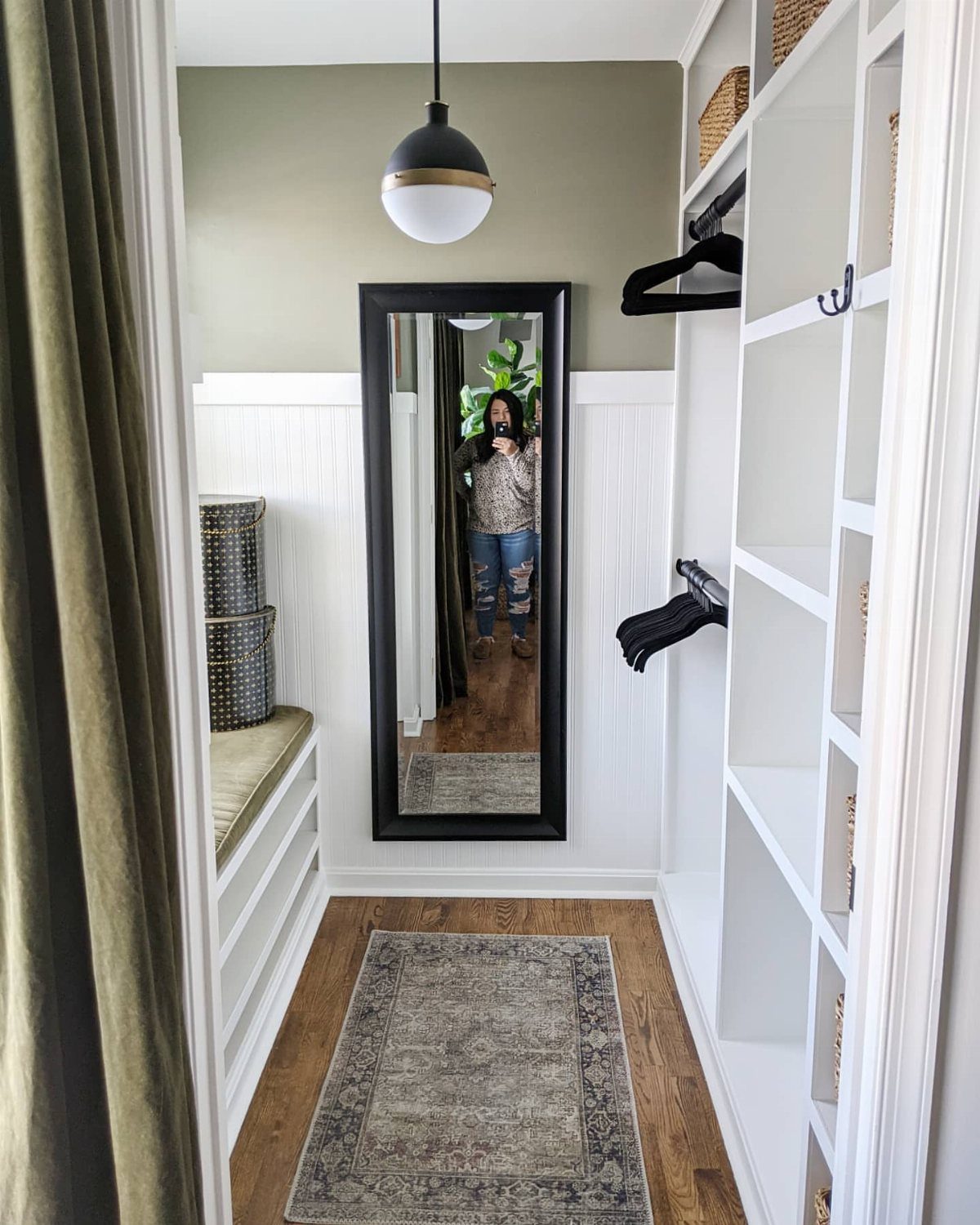
Built-in shelving that runs to the ceiling turns dead wall into storage, and a small walk-in has plenty of that.
White paint keeps the shelves from crowding the room, and it reads as one clean surface instead of a stack of boxes.
Space the shelves to fit what you own, then use the highest ones for rarely worn items. A bench and a rug, like the ones here, make a tiny closet feel like a dressing nook rather than a cupboard.
A hanging light helps, because tall shelves cast shadows.
However, shirts and pants only need enough space so they can be folded—typically around 16 inches, so 18-inch-wide shelves in the middle of the small closet will suffice.
3. Use Over-the-door Organizers
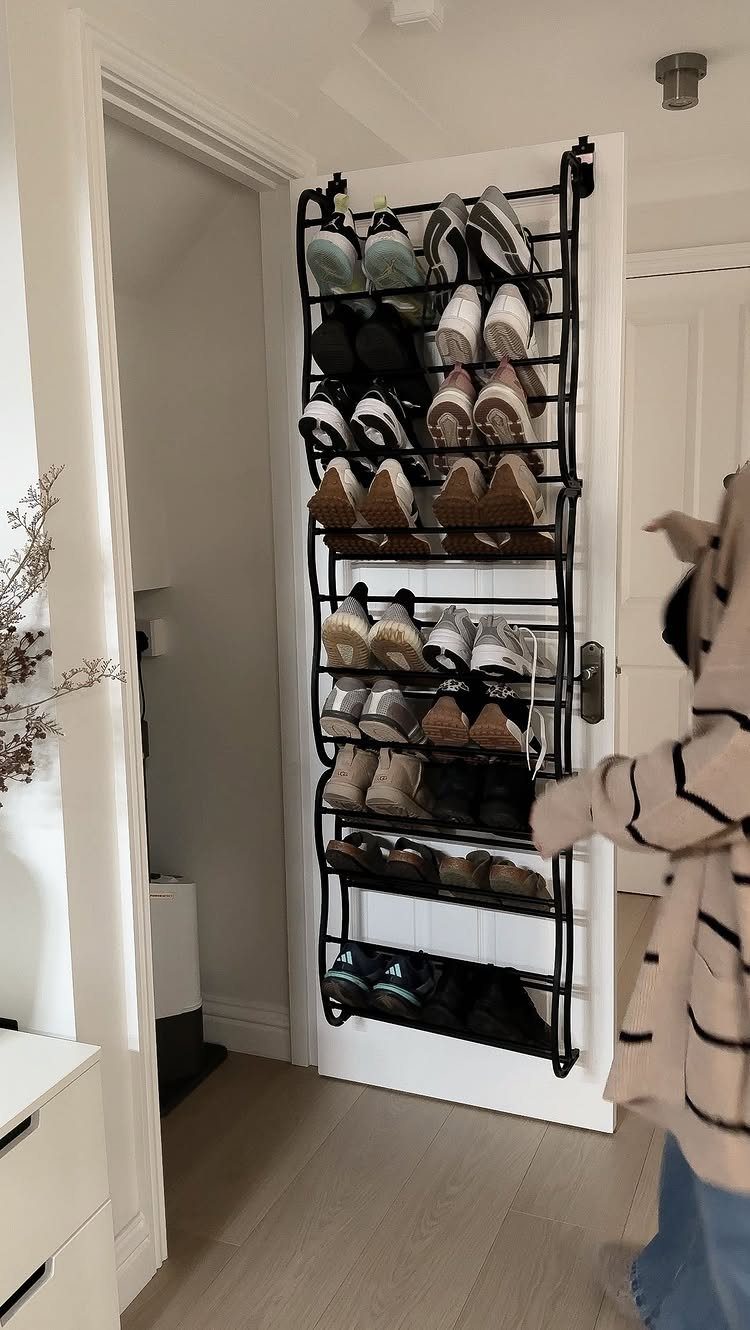
Behind the door sits the most overlooked storage in the closet. A metal over-the-door rack holds a full shoe collection without touching floor space, so the floor stays clear for bags or a hamper.
Pick a rack that hangs on the door’s top edge with hooks, which means no drilling, a real plus for renters. Check that the door still closes with the rack loaded.
Heavier boots may fit better on the floor.
4. Custom Closet Systems with Shelves, Rods, and Drawers
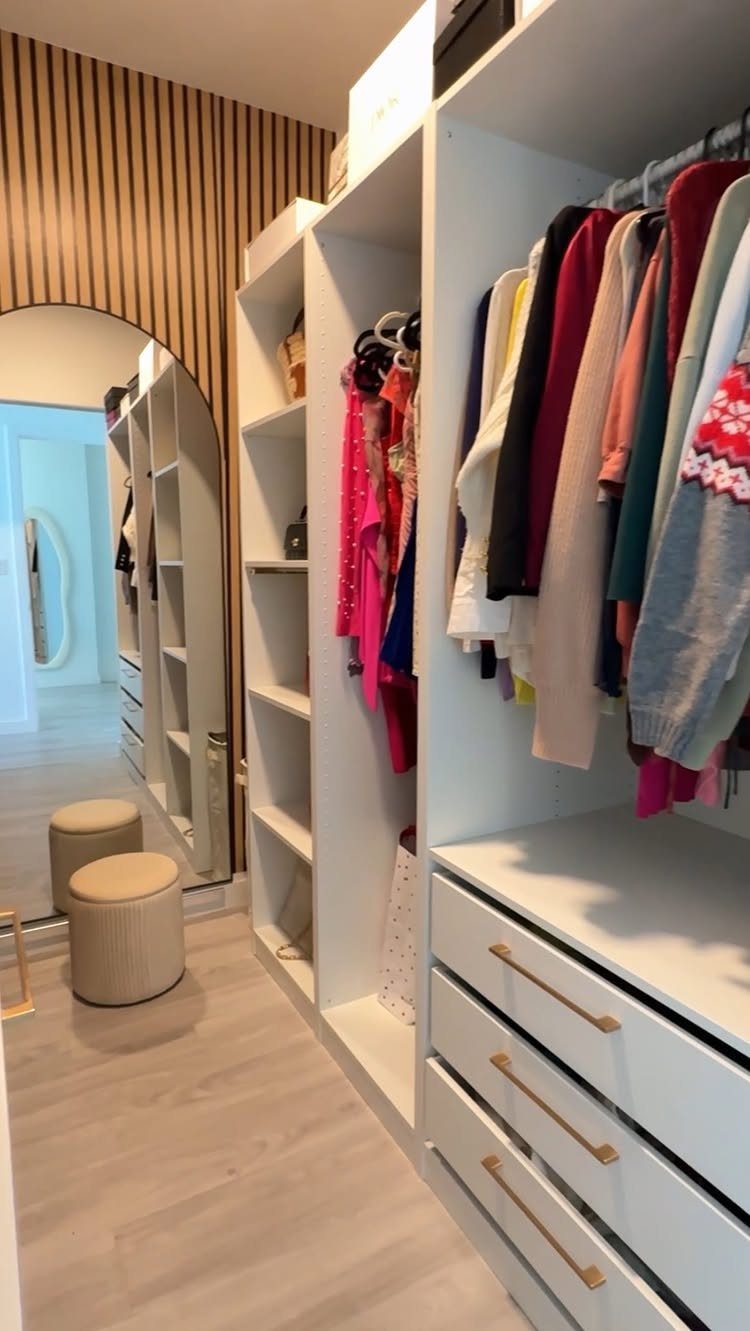
A custom system replaces the single rod and lone shelf with a planned mix of hanging rods, open shelves and drawers.
The drawers matter most: folded knits, underwear and accessories get a home, and the rods carry only what truly needs hanging.
It costs more than loose organizers, so I would price it against your budget before committing. If it stretches too far, build toward it by starting with one drawer tower and a second rod.
5. Thin Hangers
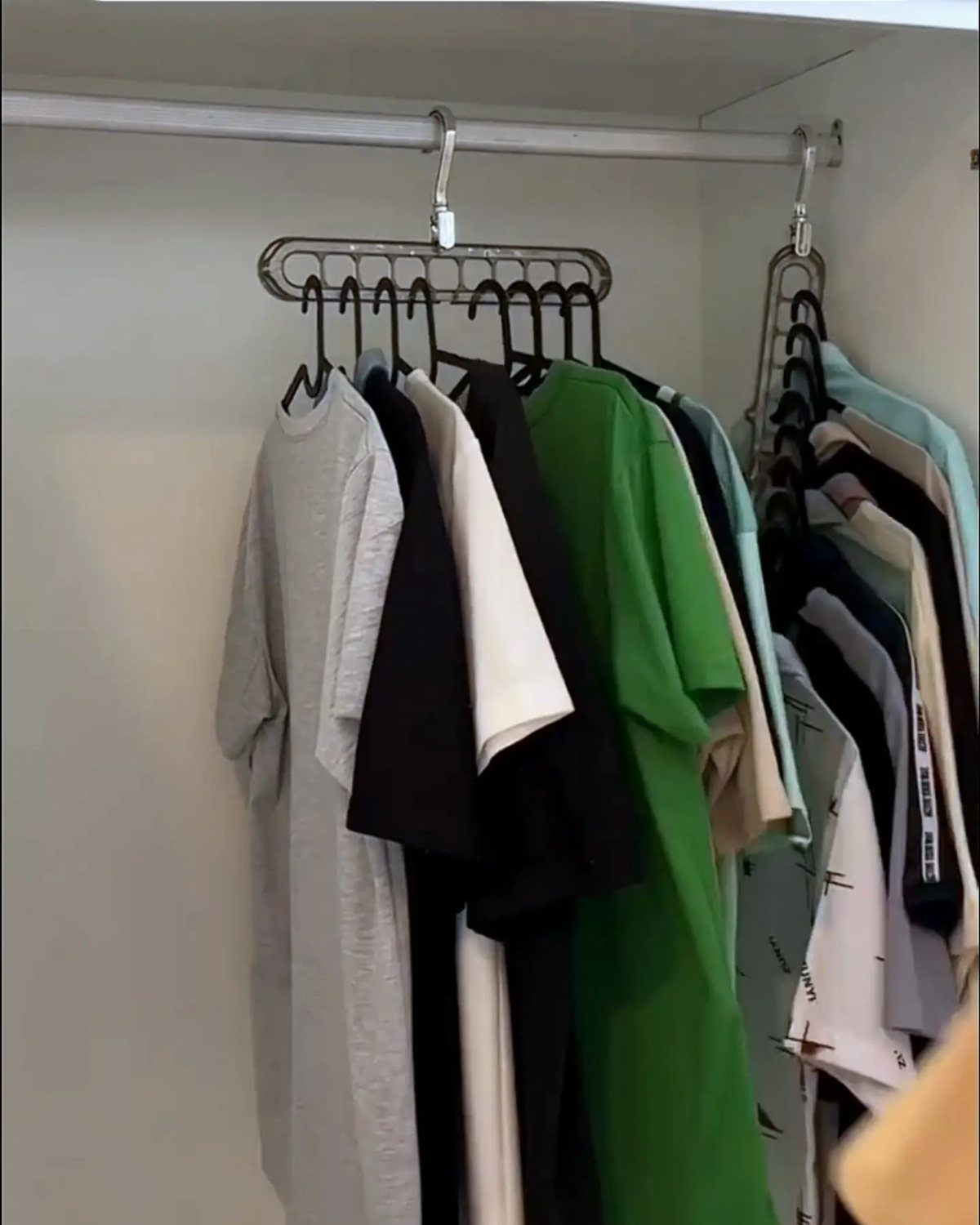
Slim hangers cost the least of any change here, and they pay off the moment you swap them in. Swapping bulky plastic or wooden hangers for thin metal ones frees up rod space, so the same rod holds more shirts.
Matching hangers also make a row look tidy.
Replace them in batches, starting with t-shirts and tops, which gain the most. Heavy coats still need sturdier hangers.
6. Use Drawer Dividers
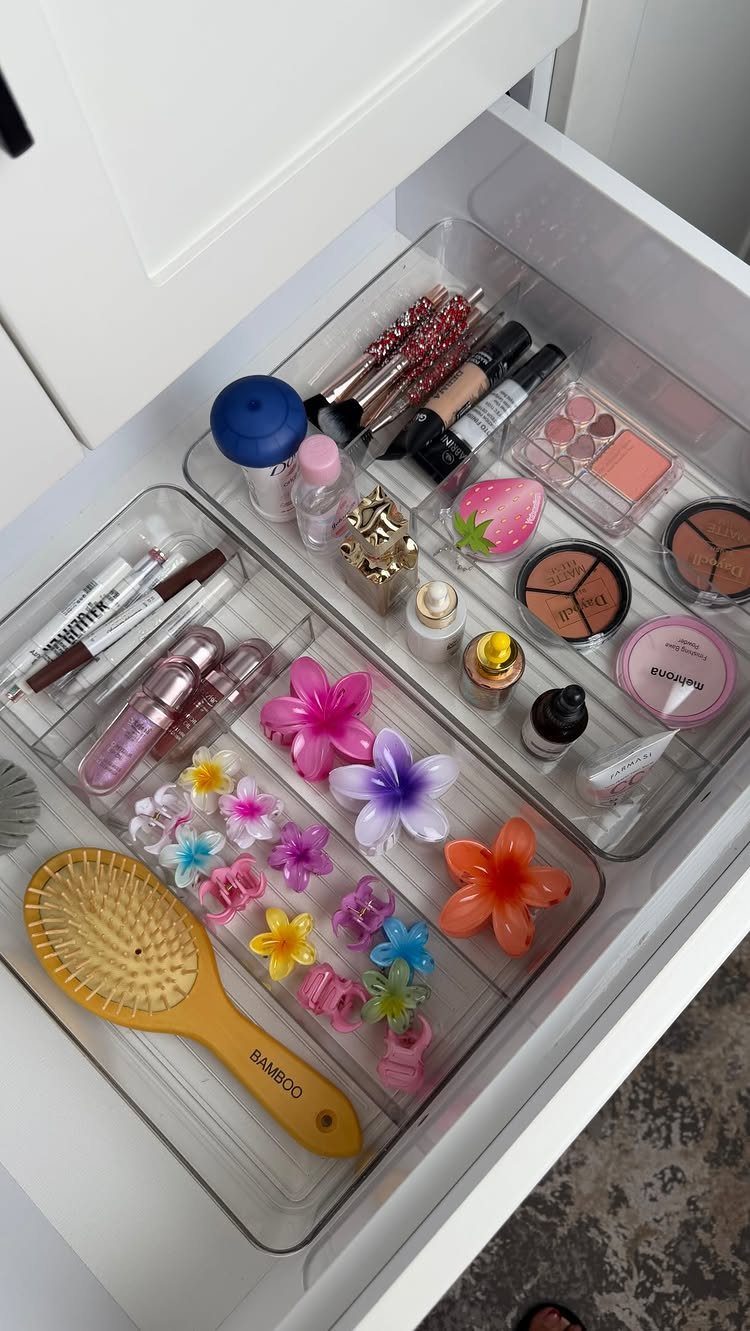
Clear acrylic dividers break one messy drawer into small compartments, so makeup, perfume and hair clips each stay in their own place. You see everything at a glance, which means less digging and fewer duplicate purchases.
Measure the drawer first, then buy dividers that can be rearranged rather than fixed trays. Tall items like perfume bottles need their own larger section, and a brush can lie flat along the back.
It is a quick, low-cost job that takes minutes.
7. Multi-tier Hanging Garment Organizer
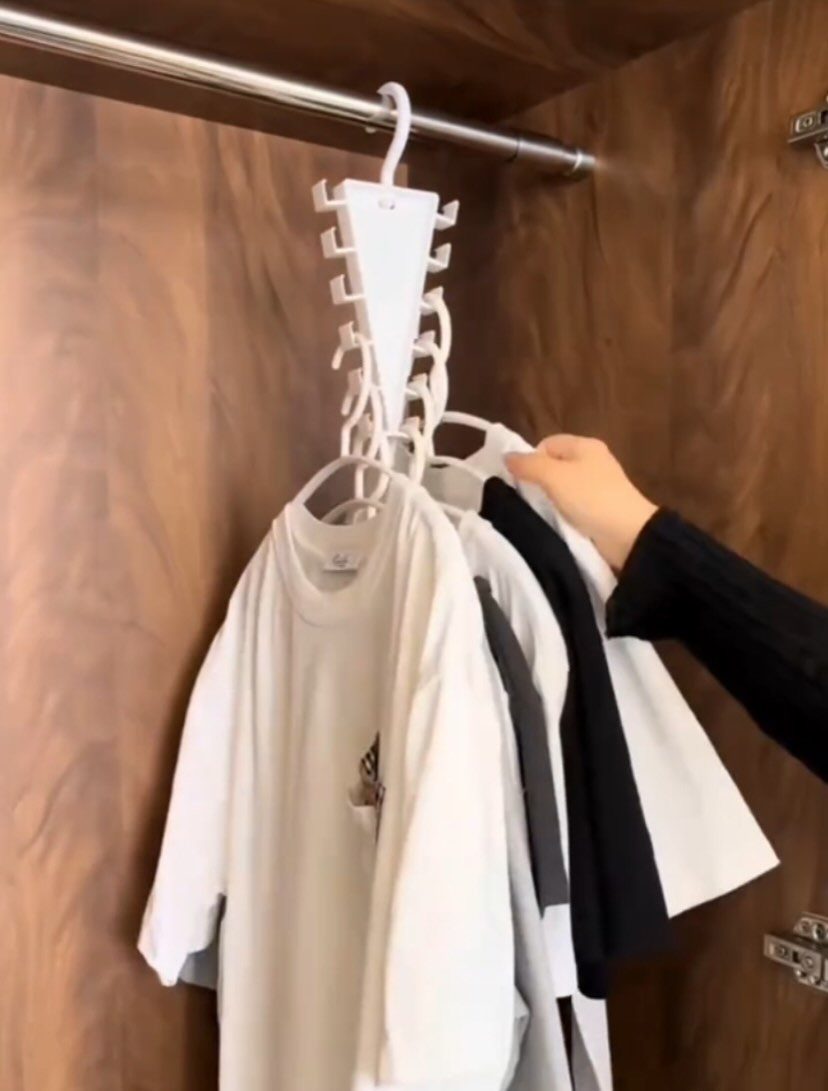
A cascading hanger stacks several shirts vertically from one hook, so a single spot on the rod does the work of four or five. That suits a small walk-in, where rod length runs out long before wall height does.
Use it for t-shirts and light tops, and keep the stack to one category so you can find things quickly. It slips onto the rod without tools, which makes it an easy add for renters.
Heavy knits and jackets would strain it.
8. Built-in Vanity Countertop
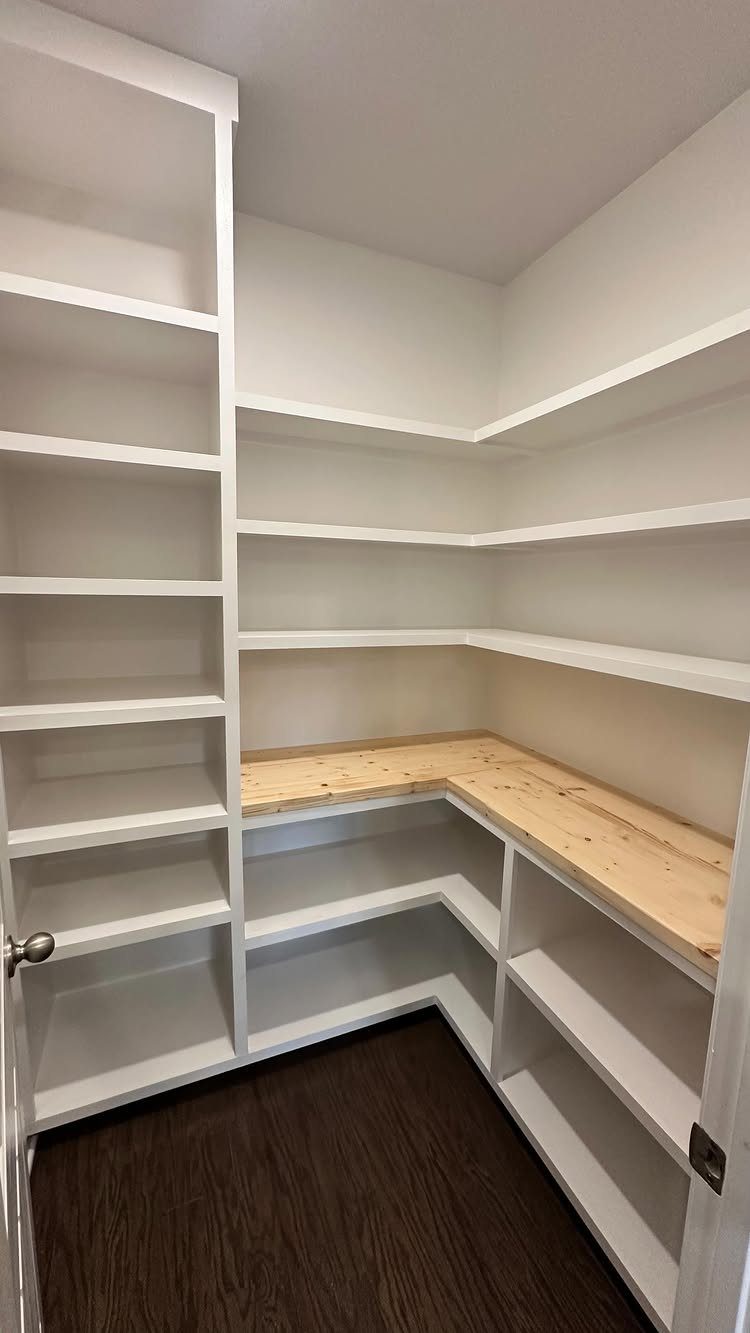
An L-shaped wooden countertop turns the corner of a small walk-in into a working surface, with white shelving above and around it.
Folding, sorting laundry or setting out tomorrow’s outfit all get easier once you have a flat spot at waist height.
A light wood tone keeps the corner from feeling heavy against white shelves. Cut the top to follow the L, and leave room underneath for a basket or a stool.
9. Sloped Ceiling Shelving Layout
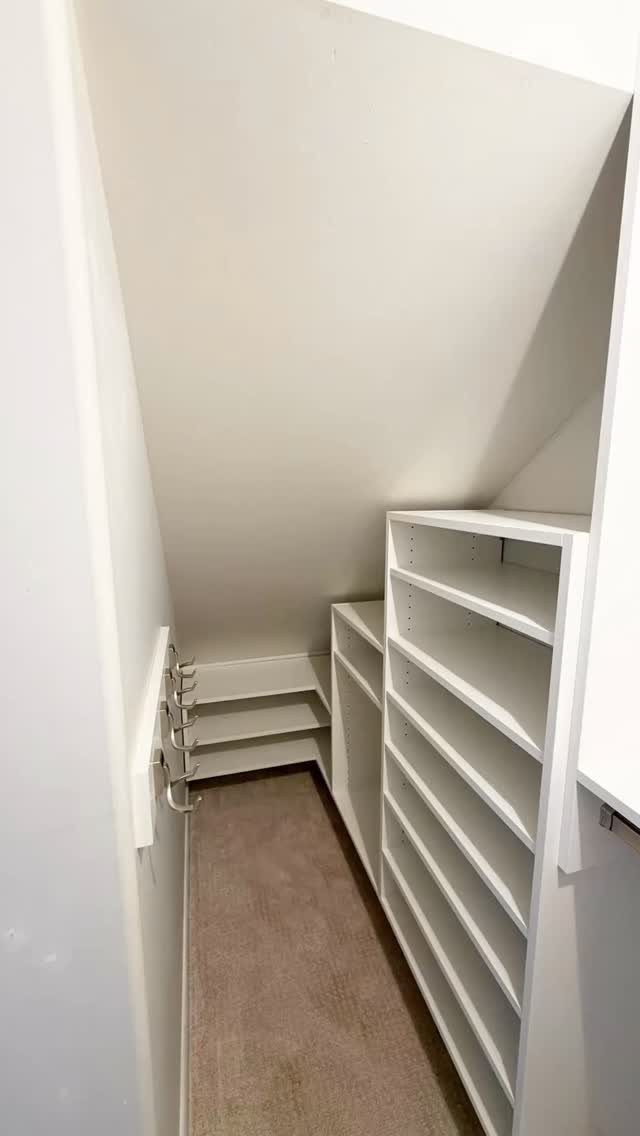
Under an angled ceiling, the low side is where shelves go and the tall side is where hanging goes. Fitting white built-in units to the slope means no wasted pocket of air above your head.
Measure the ceiling height at several points along the wall before you plan anything, then size each shelf unit to the height available in its spot. Hooks on the open wall space handle bags and belts.
Shallow, short shelves at the low end hold folded items better than a rod would.
10. Clear Stackable Storage Bins
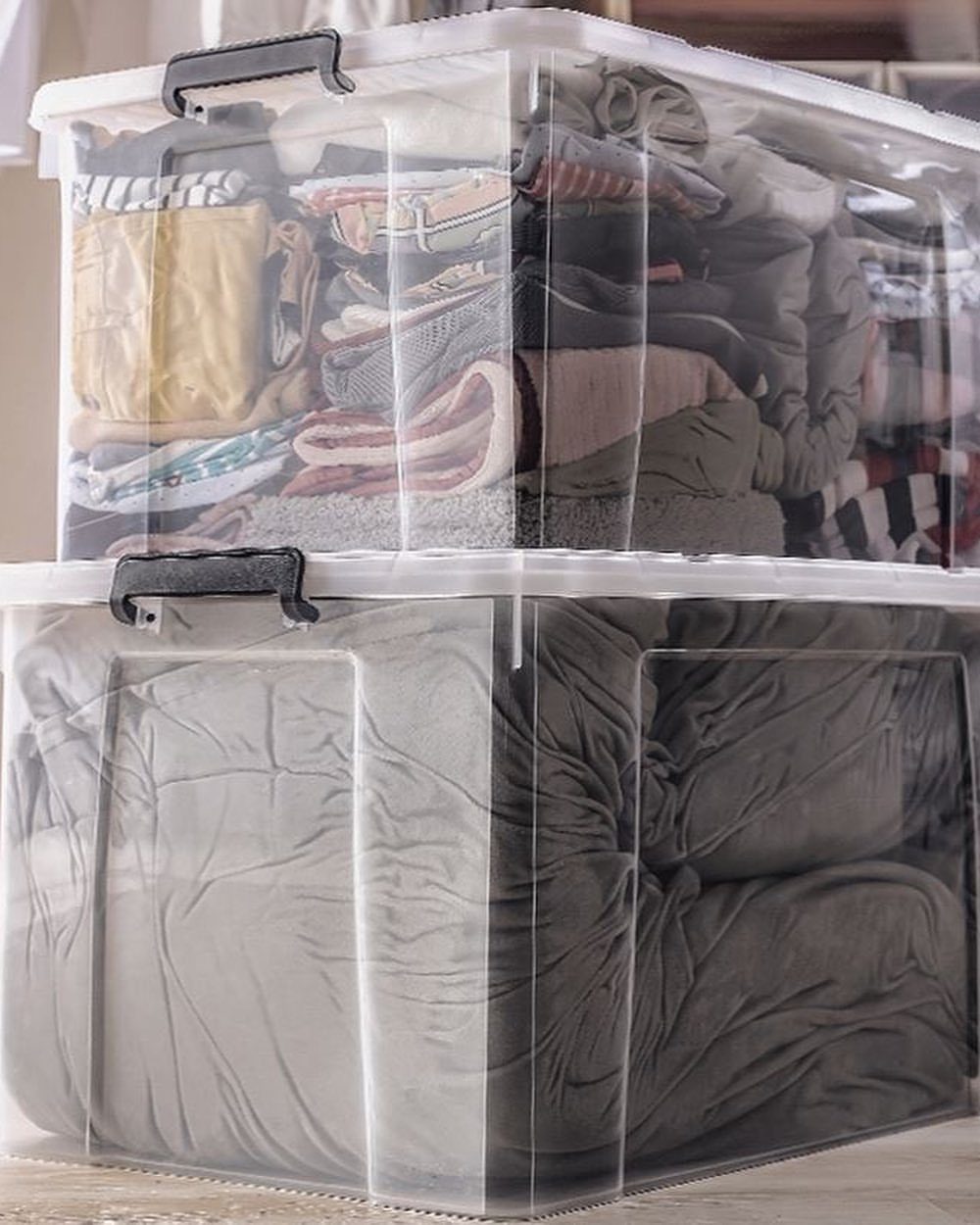
Clear lidded bins let you see the folded clothes inside without opening anything, which is why I prefer them to opaque boxes for sweaters, tees and off-season layers. Stacked two high, they use vertical space on a shelf or floor.
Sort by type, one bin per kind of clothing, and fold so each piece shows its color on the side. Choose bins with lids that snap on, so the stack stays steady.
Keep the heaviest bin at the bottom.
Plan Before You Purchase
Before buying anything, empty the closet completely, top shelves included. Editing comes first because every item you donate is a container you never have to buy.
Write down anything that eats into those numbers, like baseboards, a light fixture, or the swing of the door.
Those notes can save you from returning a system that runs a few inches too big. With your measurements and a count of what you’re keeping, you can pick organizers that fit the closet you actually have.
Make Organization a Habit
A tidy closet depends on routine more than on a single big reorganizing day. Put everyday essentials front and center, where you can reach them without moving anything.
Anything you wear rarely belongs on the highest shelf or pushed to the back corner, or stored somewhere else in the house entirely.
When the seasons change, swap the 2 groups. It takes a short session, and it keeps off-season clothes from crowding the daily ones.
Give every item a designated home, and cleanup gets quick because you never have to decide where something goes. Hanging clothes can be grouped by type, style, or color, whichever you will actually keep up.
For off-season storage, a folding canvas storage bag is handy because it collapses flat when empty.
Consider DIY Options
Brackets and wood planks can become shoe shelves, and that’s one of the cheapest custom builds you can make. Cut the planks to your measurements, and the shelves fit the closet exactly.
Look around the house before you shop, too. Sturdy shipping boxes work as closet storage, and spray paint covers the brown if you don’t like it.
A sheet of peel-and-stick paper over the front turns a clear bin opaque and makes a row of mismatched containers look intentional.
If you’d rather buy a system, choose one with adjustable shelves and modular pieces, so you can reshape it as your wardrobe changes.
Frequently Asked Questions
What types of closet organizers are best for maximizing small spaces?
Organizers that use height and the back of the door work best: ceiling-high shelving, a multi-tier hanging garment organizer, clear stackable bins, and an over-the-door shoe rack.
Cascading hangers stack garments in a vertical chain, so one notch on the rod can carry 4–5 shirts.
How can I keep my small closet clutter-free?
Start by emptying the closet and donating what you no longer wear, since every item you let go is a container you never have to buy.
After that, give each item a set home, with one bin or basket per category and dividers in drawers. Keep everyday pieces front and center, put rarely worn ones up high, and swap the 2 groups when the seasons change.
Are there closet solutions that don’t require permanent installation?
Yes. For a no-drill setup, an over-the-door rack hooks over the top edge of the door, and a multi-tier hanging organizer just slides onto the rod.
Freestanding systems and tension rods also work without drilling or permanent fixtures. Load the rack, then swing the door shut to confirm it still latches.





