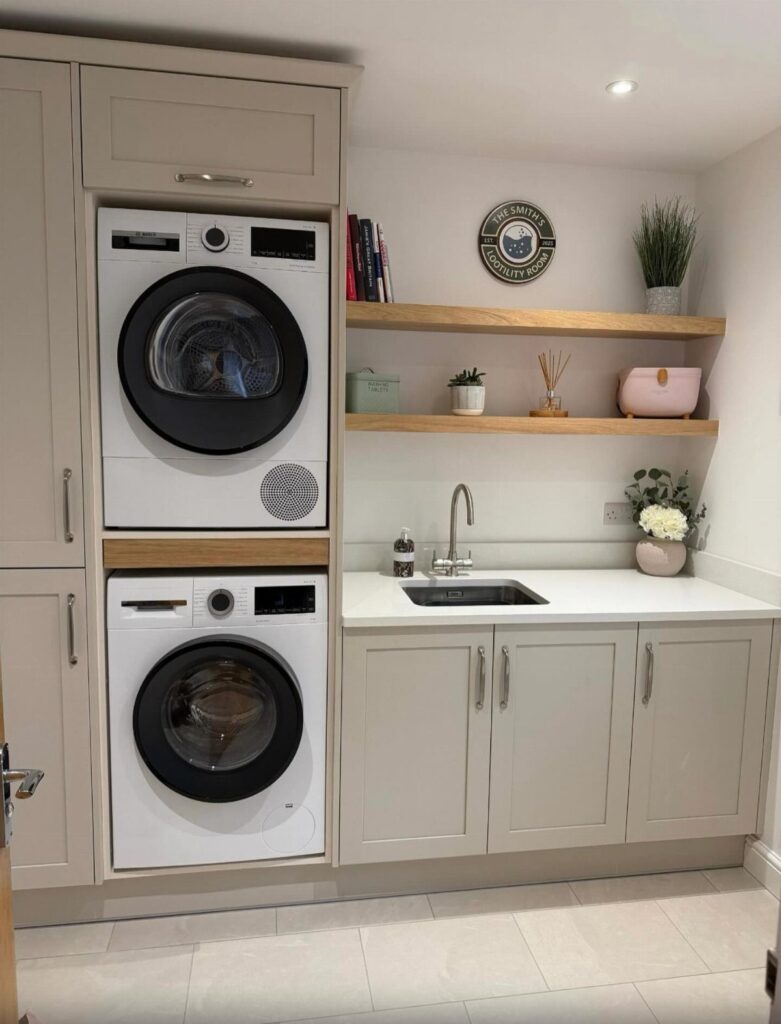
Your hookups and your floor space decide which of these fits: plumbing you can’t touch points to a portable washer or a twin-tub set in the shower, while a real water line and vent open up stacked sets, combos, compact pairs and full-size front-loaders placed next to each other.
The ideas run from hand-loaded tubs to an under-counter front-loader built into cabinetry, and nearly all of them come down to measuring.
1. Stacked Washer Dryer Sets
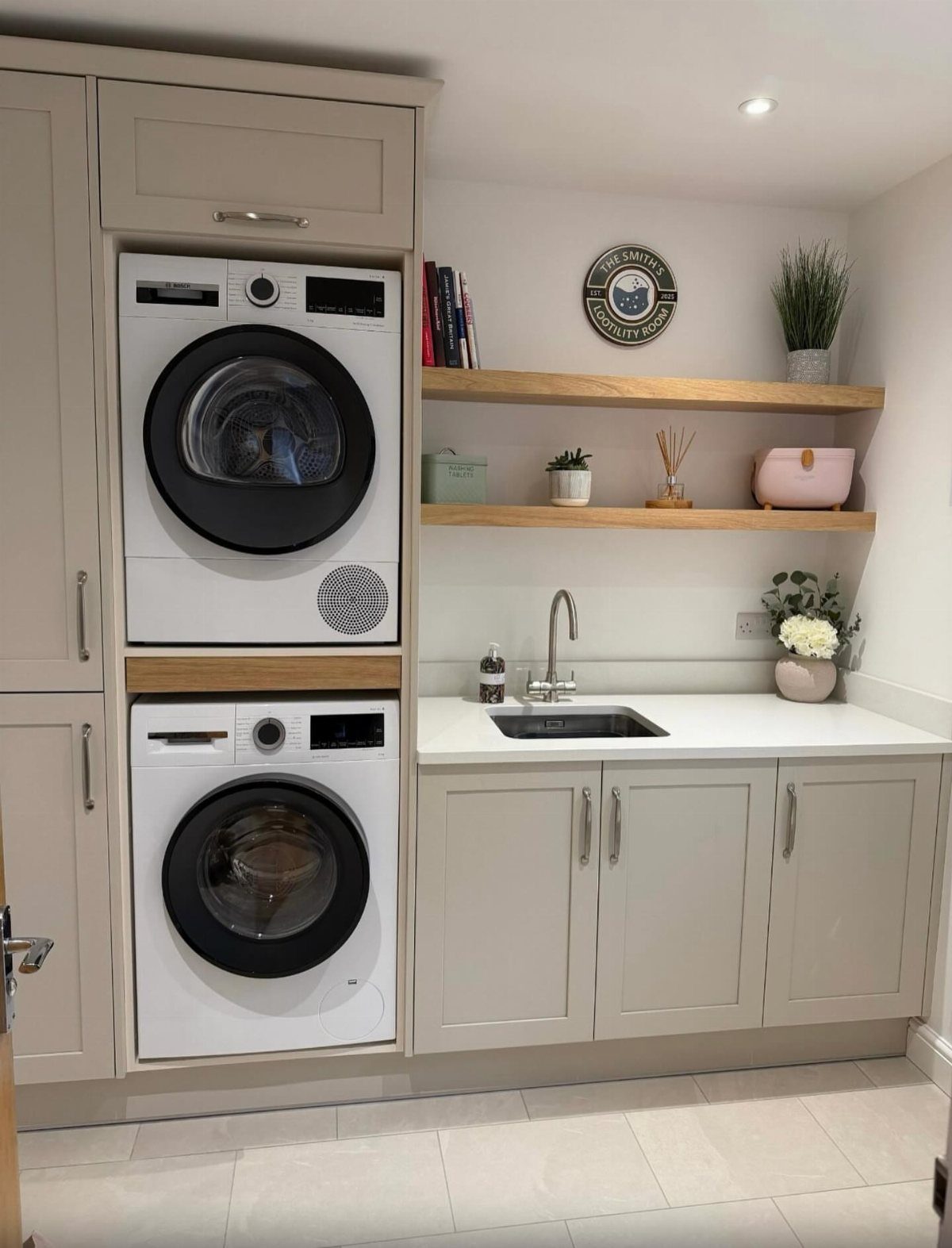
Floor space is the one thing a stacked set saves, and ceiling height is what it costs. Measure from floor to the lowest point overhead before you shop, then add room for the vent and hoses behind the dryer.
Built into cabinetry beside a small sink, as it is here, a stacked pair reads as part of the room instead of an appliance parked in a corner.
I like that look. Shelves nearby give detergent a home within reach.
2. Washer Dryer Combos
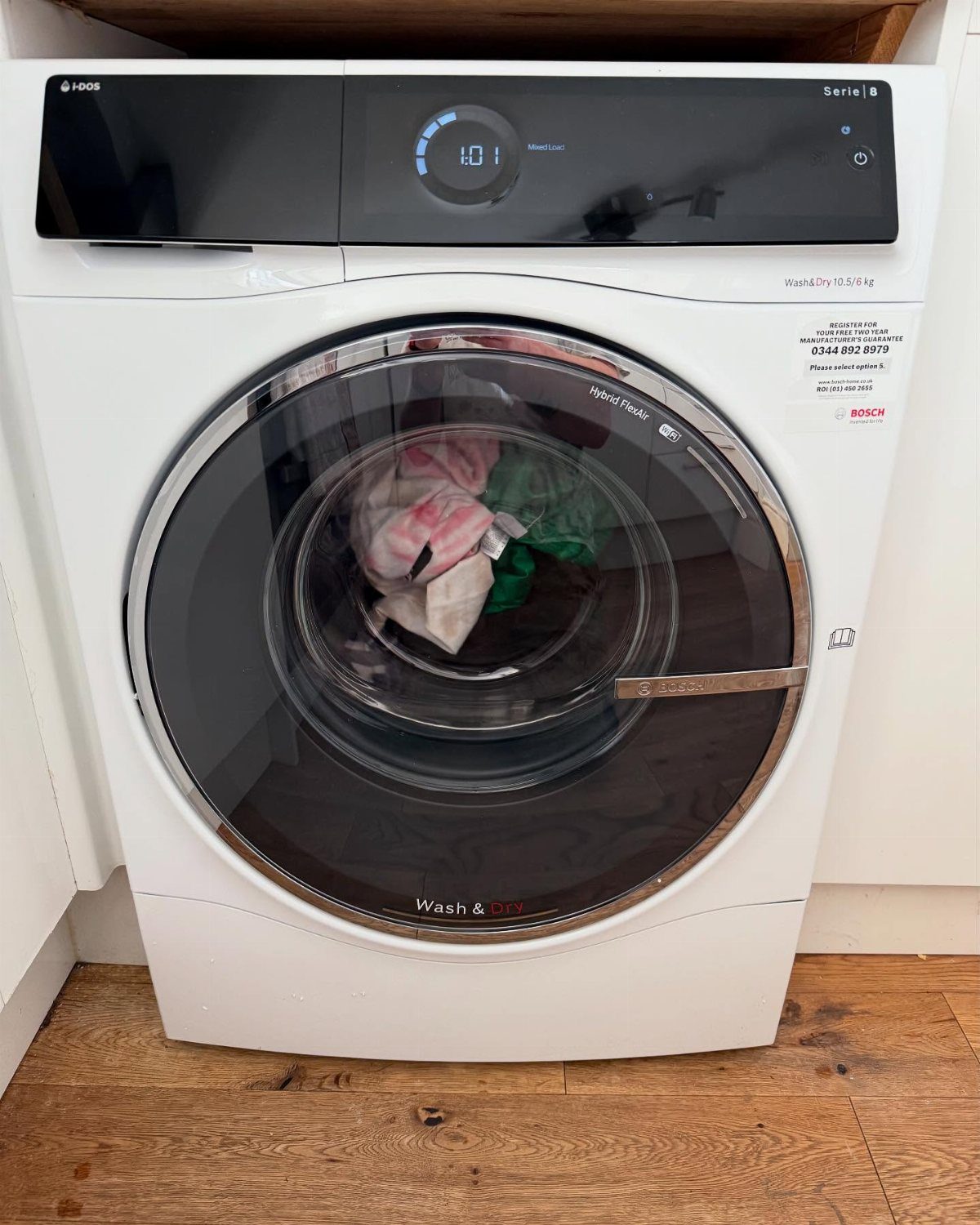
One drum that both washes and dries means a single machine where two would not fit.
For a small apartment, I would pick this over a pair when floor space is the hard limit. Dry smaller batches and the machine does its job.
3. Compact Front-load Pairs
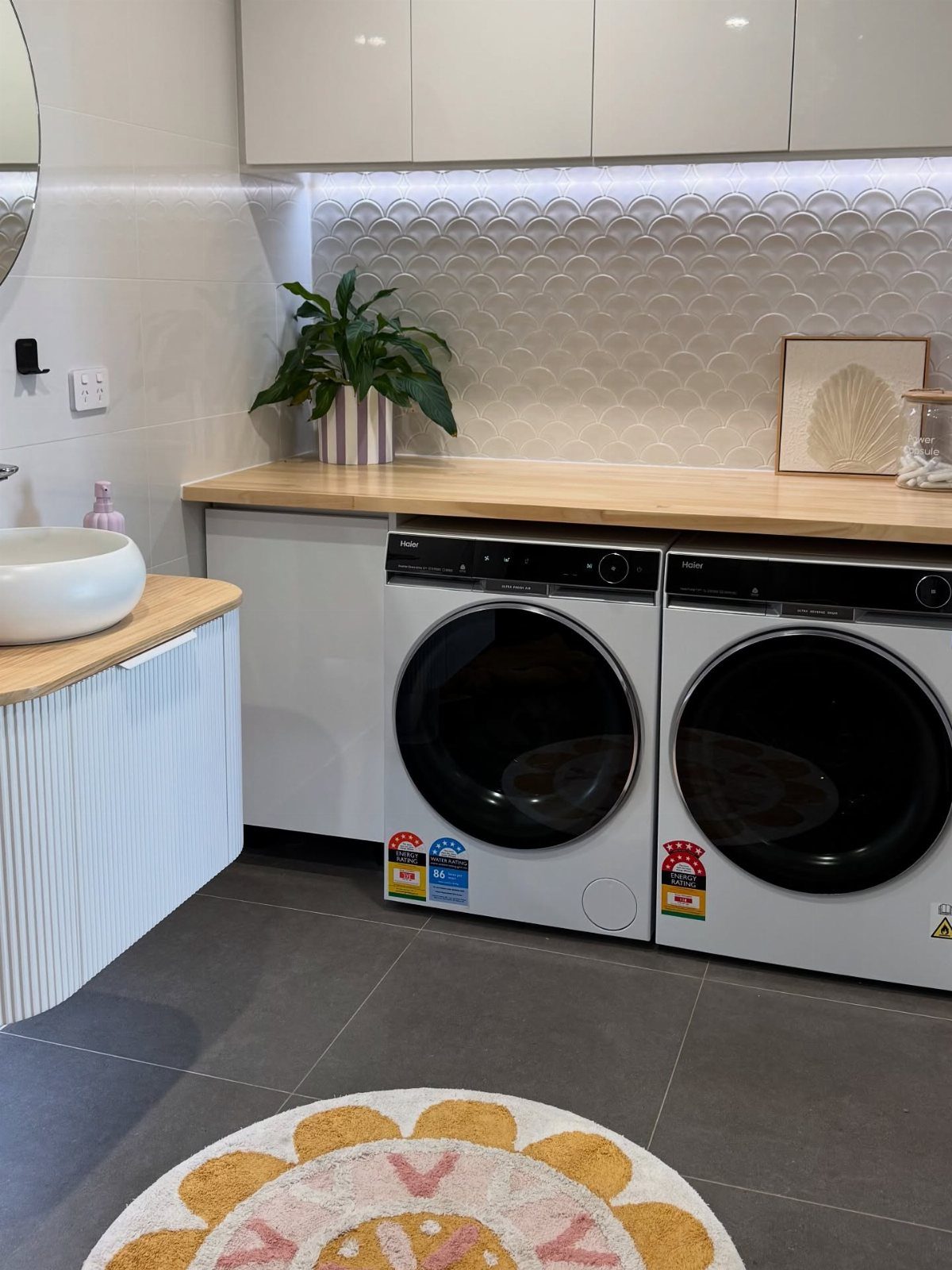
Two compact front-loaders placed next to each other under a counter give you the layout of a full laundry room at a smaller size. Pairs like this one slide beneath a wood countertop, which also hands you a folding surface.
I favor this setup over a stacked one when the ceiling is low or you want to fold in place. Measure the width of both machines against your opening first, and allow for the hoses and vent behind them.
Most compact washers are front-loaders, though a few, like the GE GNW128SSMWW, are available in stores. Compact washers in CR’s ratings range from $830 to $2,900, and many are reliable, gentle on clothes, and water- and energy-efficient (their annual usage cost is only between $23 and $47).
4. Portable Washers
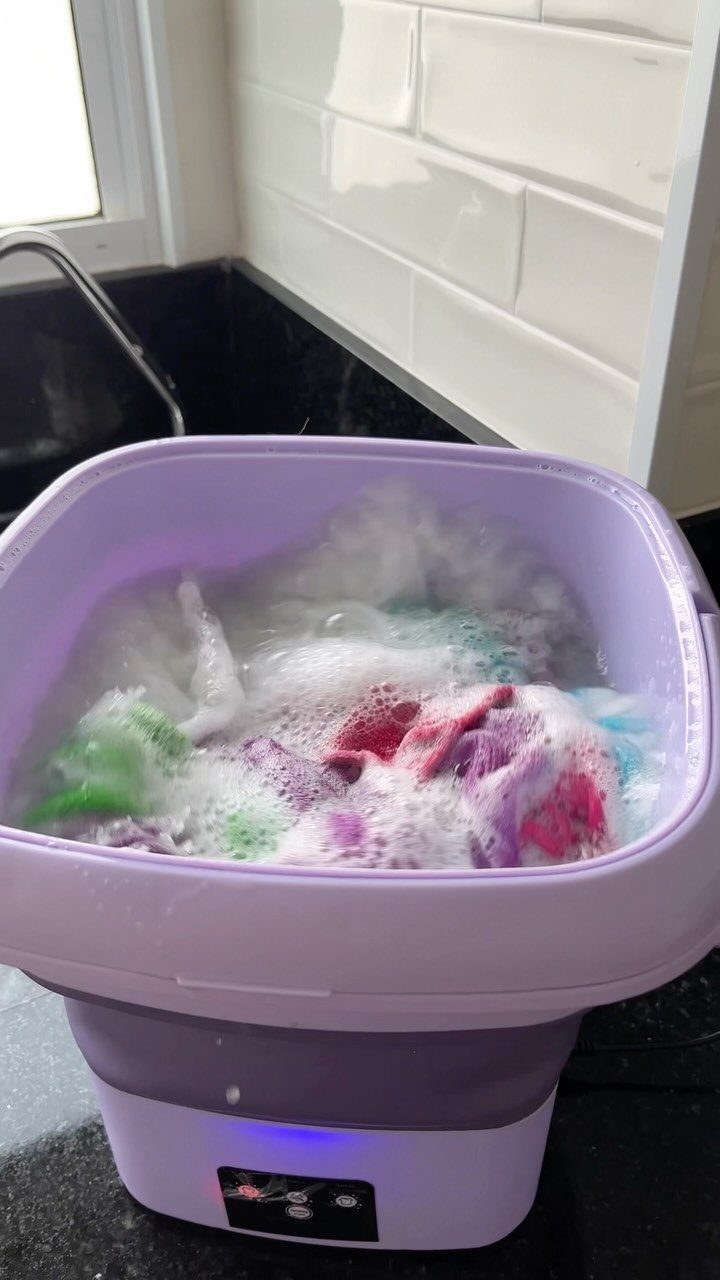
A portable washer needs no built-in hookups, which makes it the idea for rentals where plumbing is off limits.
Set it on a counter or beside a sink, as the purple one sits here, and fill it with water from the faucet.
Expect to do more by hand than with a standard machine. I would treat it as a small-load solution, not a full replacement.
5. All-in-One Washer/Dryers
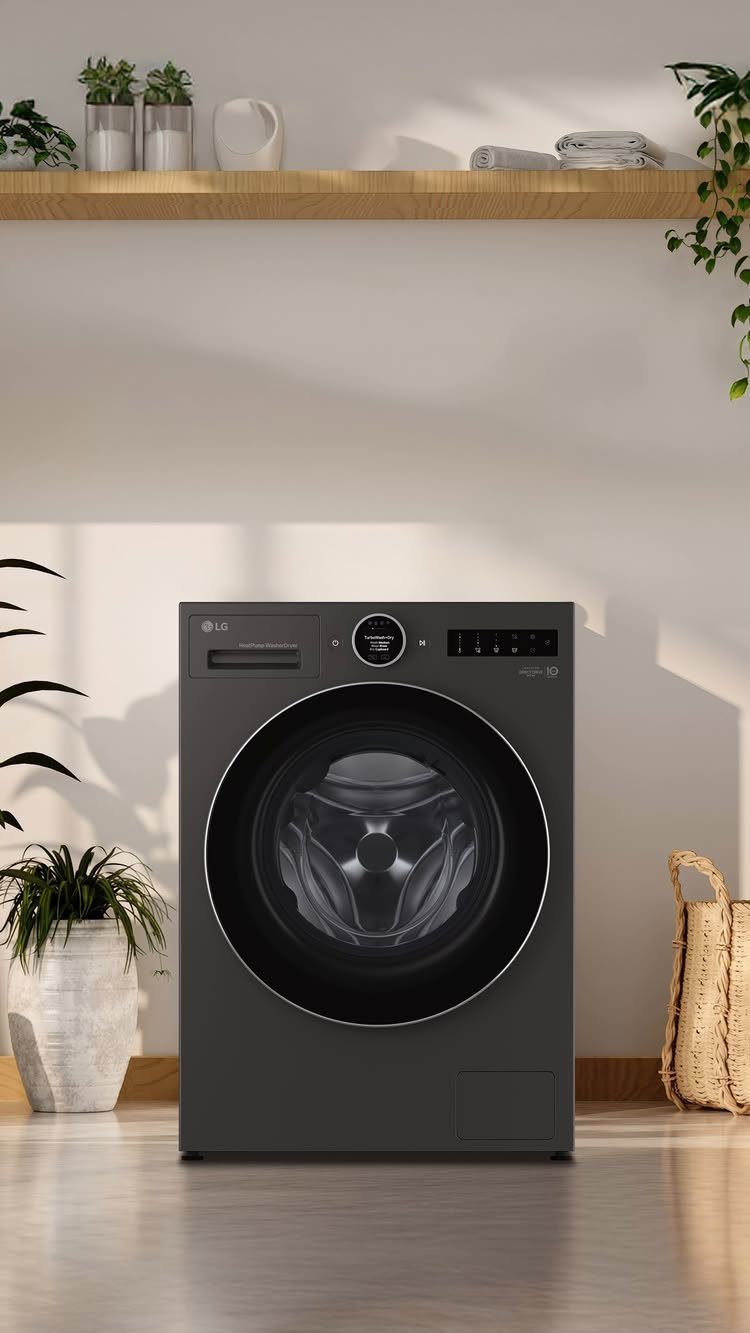
An all-in-one washer/dryer like this grey LG handles both jobs in a single front-load unit, so you only need space for one machine.
Keep the floor around it clear for loading, and leave the door area open. I would choose it for a true one-machine apartment.
6. Under-counter Washing Machine Setup
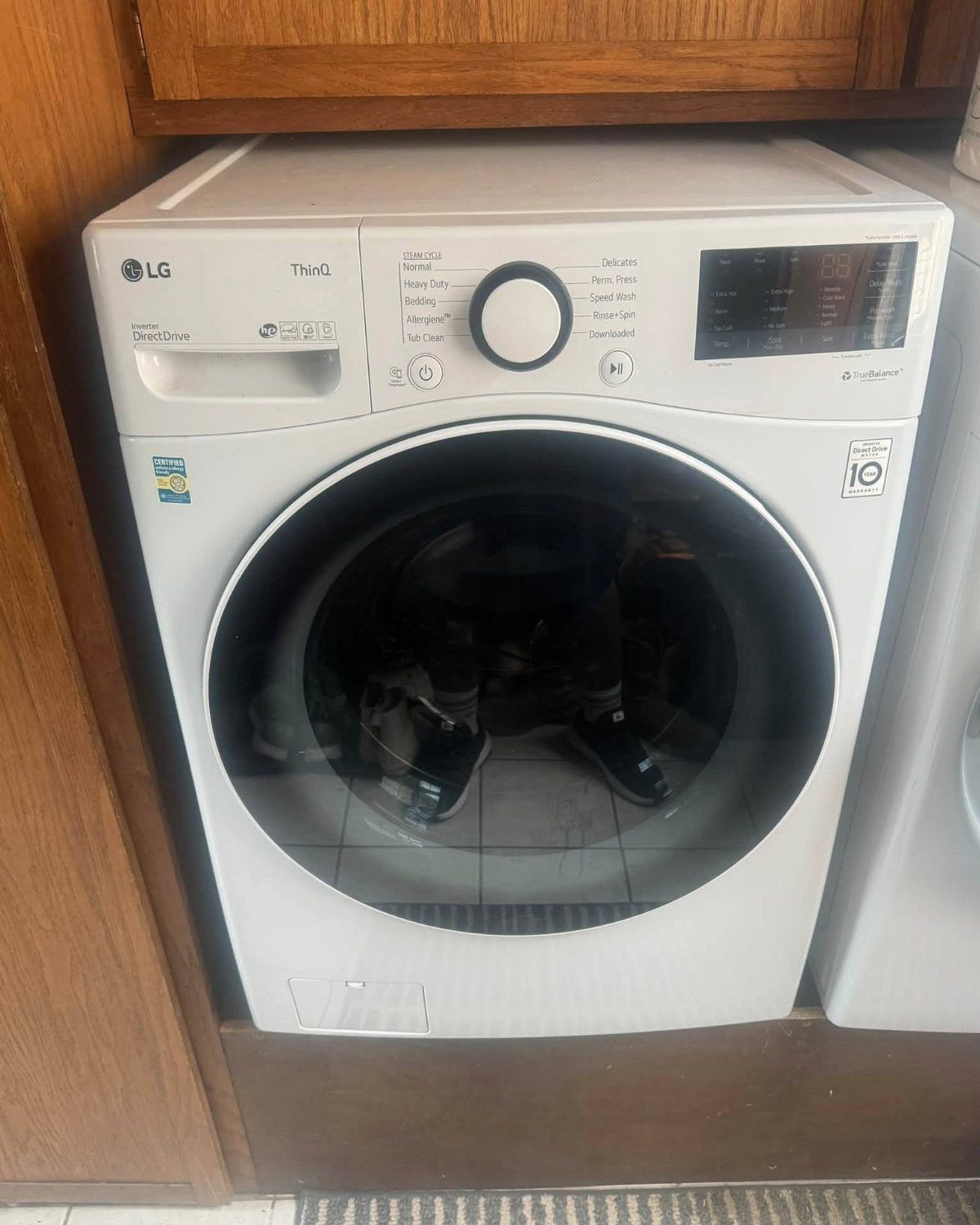
A front-load washer fits under a kitchen counter when the cabinets are built around it, so plan the opening to the machine’s exact width, height and depth. The top stays covered, so the machine disappears into the cabinet run.
Leave the opening free of obstructions and confirm the machine height matches the gap before buying. A tiled floor, as in this room, is a sensible surface under a washer.
7. Top Load Washer in Closet
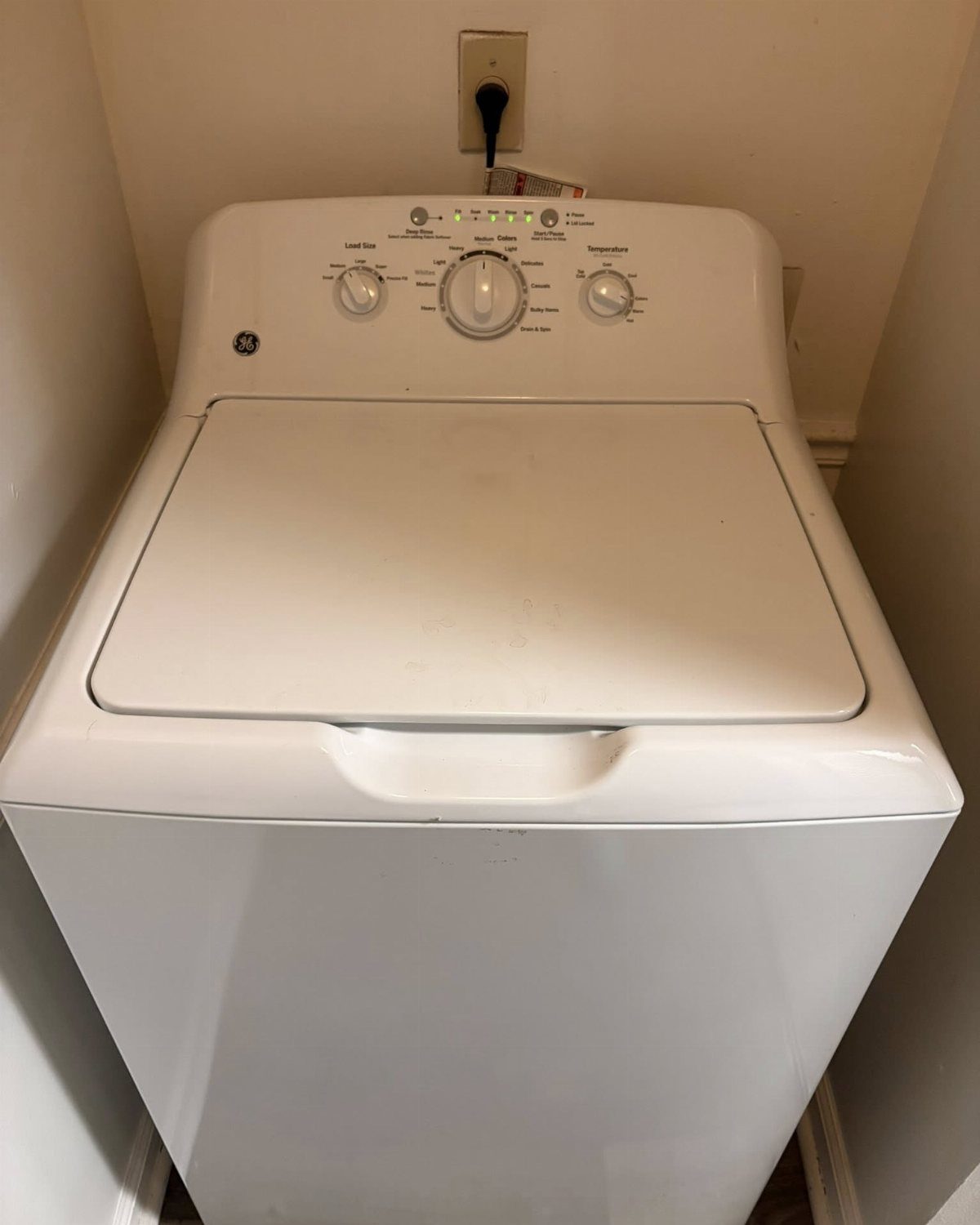
A top-loader fits a closet nook only if the lid has room to swing up, so measure the clearance above the machine as well as the width.
This white GE sits in a narrow white closet and plugs into a wall outlet, which keeps the setup simple.
I like a top-loader here because you load from above and never need floor space for a door to open. Leave a little space around the sides for hoses and the plug.
8. Side-by-side Front-load Washer and Dryer
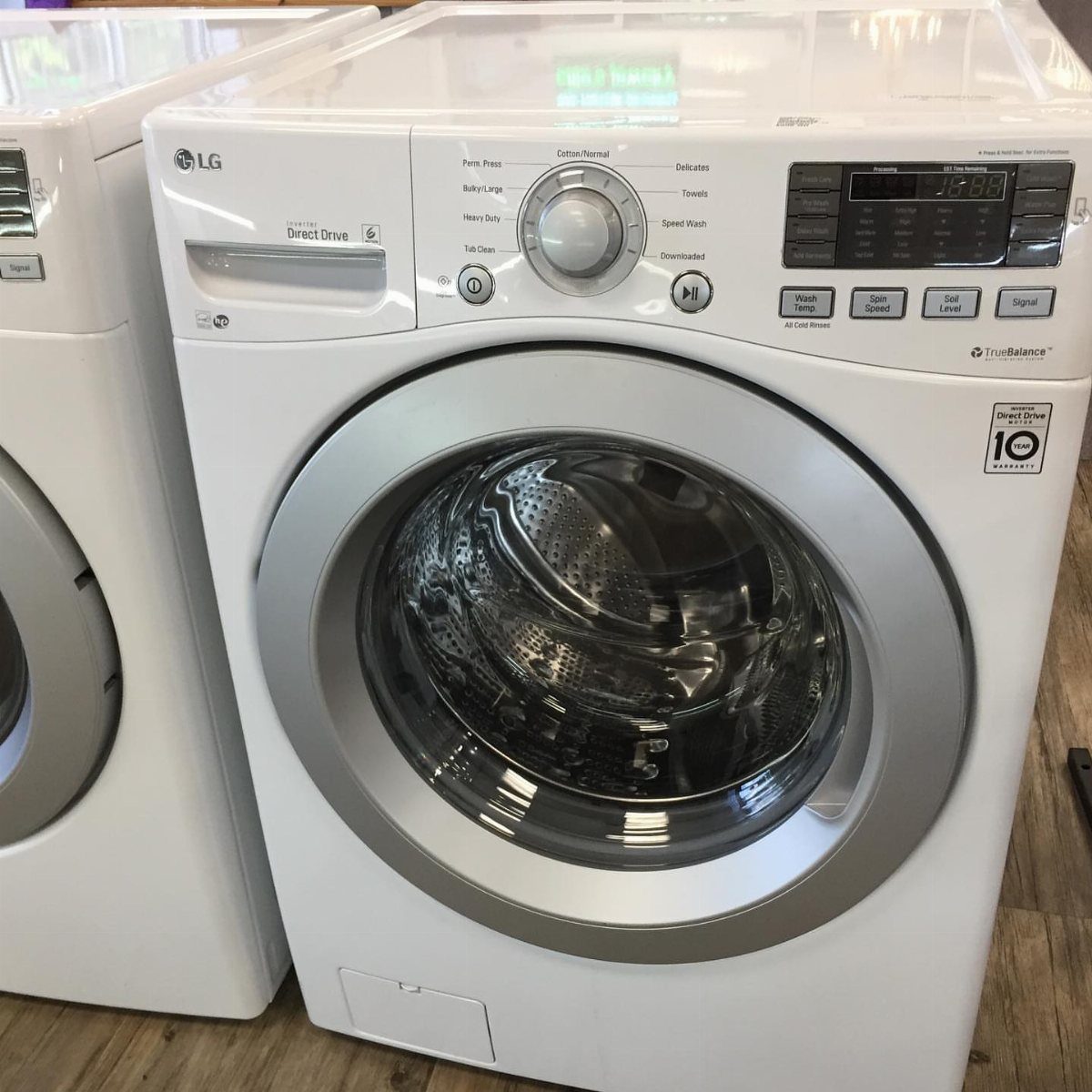
Two front-loaders placed next to each other along one wall put the washer and dryer at the same height and leave a clear run of floor in front of both.
On light wood flooring like this, the white pair looks tidy and matched.
Add up the width of both machines, then leave a few extra inches behind and between them for hoses and the vent. I would pick this over stacking when you can spare the wall length.
9. Twin-tub Washer in Shower Stall
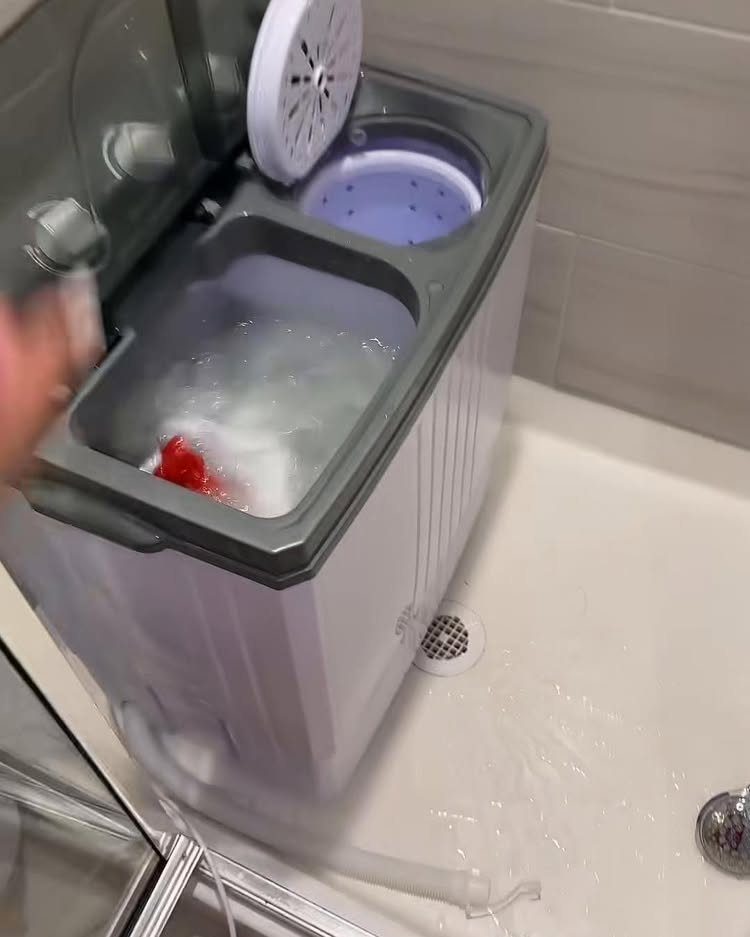
A twin-tub washer set on a shower floor lets the drain handle the dirty water, so nothing needs plumbing and nothing spills on the bathroom floor. Fill the wash tub, add soap, and run the load right there.
Expect hand work: you move clothes from one tub to the other yourself. I would use it as a backup for small loads, and only where the shower is free when you need it.
Choosing the Right Size
Measure the path, not just the spot.
Hallways, stairwells, tight corners and the entry door all have to clear the machine on delivery day, and a washer that fits your closet does you no good if it can’t get into the apartment.
Then measure for hose reach, vent placement and how much air the exhaust will need.
A tight install can work, but it has to be planned, and you need enough room to reach the back of the machine later for maintenance.
Compact machines are 24 inches wide, which is the number to hold against your opening. Check whether the model you want vents or is ventless, and whether it runs on 110 volts, 220 volts or gas, because your hookups decide that for you.
Trade-offs in Machine Selection
A smaller drum is easier to place, but it can backfire. If it forces extra loads every week, the convenience disappears fast.
Size the machine to your actual laundry.
A single person in a one-bedroom can usually get by with a compact unit. A couple or a small family usually needs more usable capacity.
The cheapest price deserves suspicion too. A machine crammed into a tight spot that can’t dry a load or vibrates across the floor will annoy you far longer than the money you saved.
I would pay a little more for the right dimensions, stronger performance and a stable, quiet cycle.
The top-priced model isn’t required.
Long-term Value Considerations
Reliability beats fancy extras in an apartment. Recognizable brands make it simpler to arrange repair calls and order replacement parts, which counts when you rely on the machine weekly.
Open-box and scratch-and-dent units are a smart way to save. If the machine works fully, a dented side panel is a fair trade for a real discount, especially when you’re furnishing a new place.
A solid warranty closes some of the distance between what you pay and what you can count on, so check what it actually covers first.
Delivery, installation and haul-away are worth asking about too, since they can save you a hard weekend and the hassle of getting rid of the old machine.
Frequently Asked Questions
Are portable washers and dryers allowed in apartments?
Portable units are usually the safest bet in a rental where the plumbing is off limits, since they skip the built-in hookups altogether.
Park it on a counter or next to a sink, then run a hose from the faucet to fill the drum.
Smaller loads and more hands-on work come with the territory, so I think of a portable as a backup for light laundry, not a stand-in for a full-size machine.
Check your lease before buying, since I can’t say what a given landlord permits.
What are the typical dimensions of a stackable washer and dryer?
A stacked pair needs a ceiling of at least 76 inches, and most models measure either 23.75 or 26.75 inches across. Also leave room behind for the vent and hoses, since some models put those hookups low on the back of the washer.
What are some good small washing machines for apartments?
The best fit depends on your floor space and hookups. A stacked set suits tight floors with enough ceiling height, and a washer/dryer combo wins when you have room for only one machine.
Low ceilings call for two compact front-loaders placed next to each other, and a portable washer is the pick when plumbing can’t be touched.





