The ideas here run from a pegboard and a few clear bins to a countertop over the machines or a wall-mounted ironing board, and what picks yours is where the dead space in your room actually is: wall height, the gap beside the washer, or the surface above it.
Measure that spot before you buy anything, because a slim rolling cart, a shelving unit and a countertop all fail the same way, by blocking a washer door or vent.
The post also covers the order I’d work in, starting with a sort so you only store what belongs in the room.
1. Hang an Ironing Board
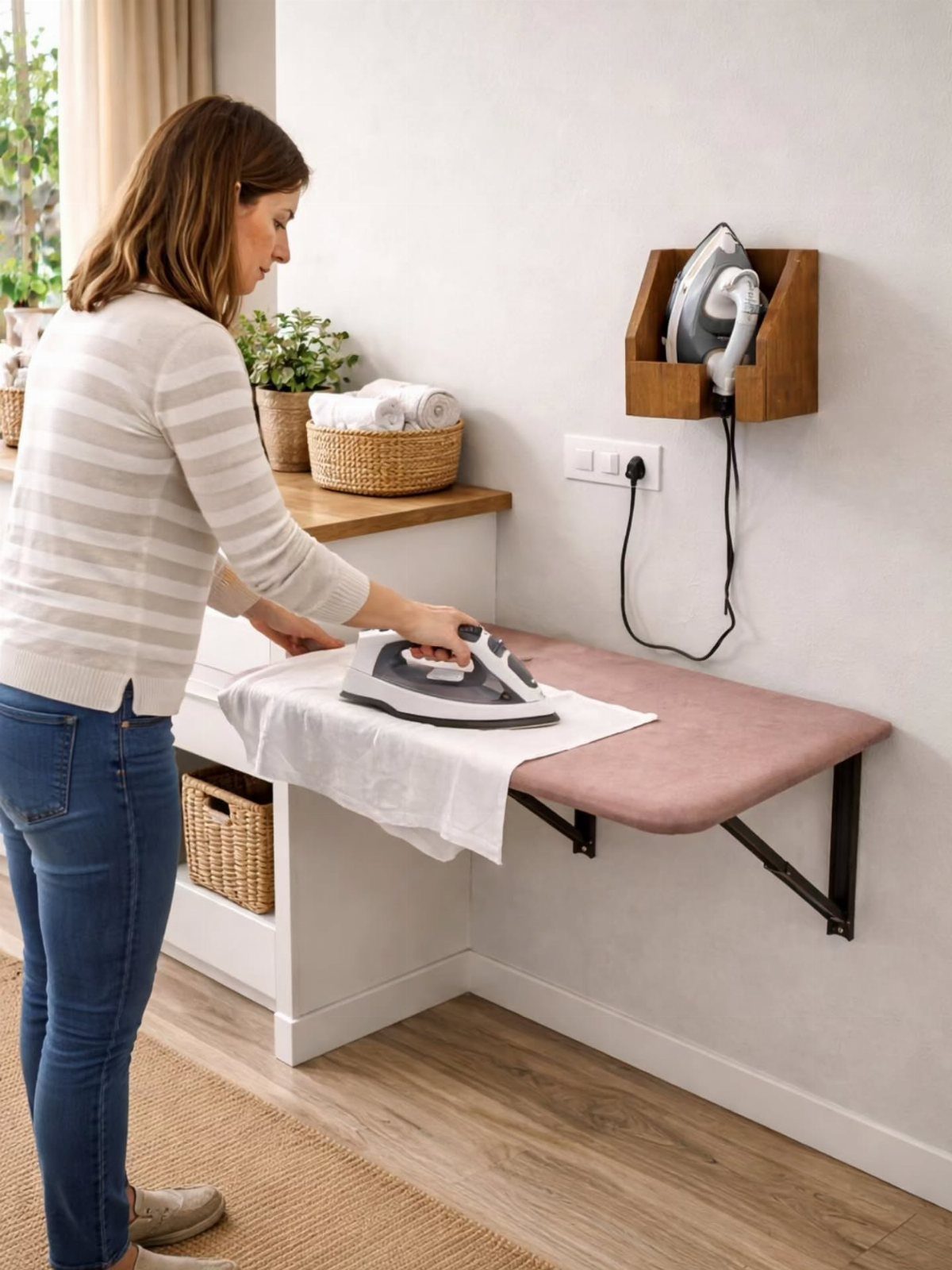
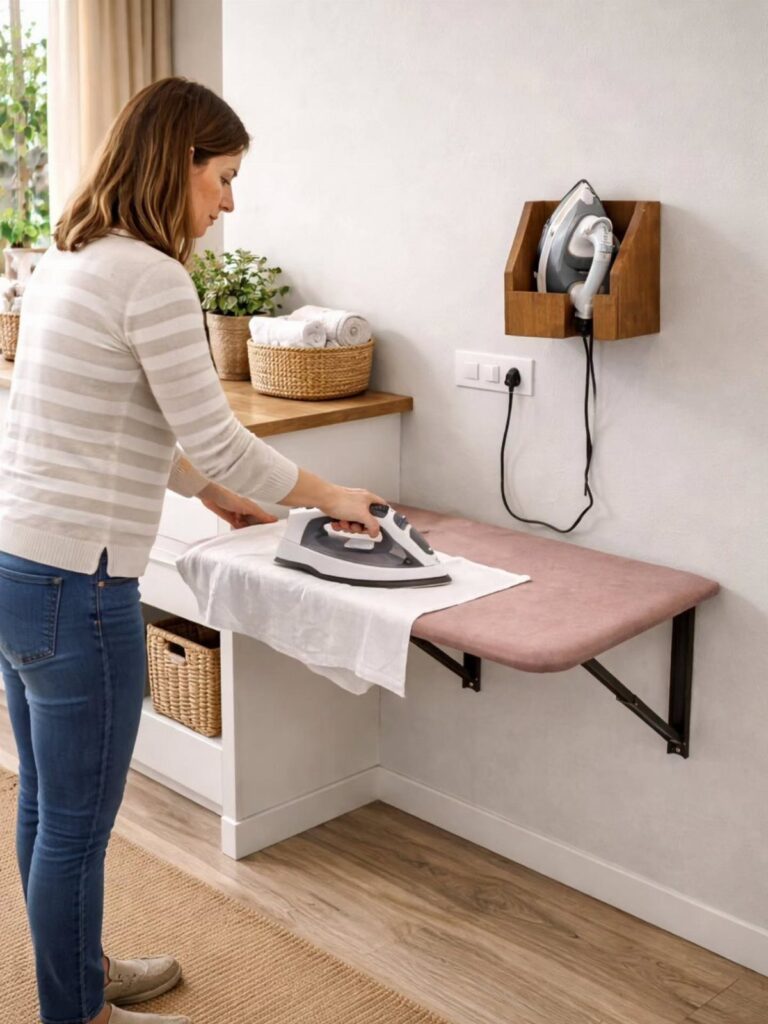
A fold-down board mounted to the wall costs a laundry room almost no floor space, which matters when the washer and dryer already fill the room.
Closed, it sits flat against the wall; open, it provides a pressing surface exactly where the clothes come out of the dryer.
Keeping the iron within reach means you skip the cabinet-digging step, and the hot iron stays off the counter.
Mount the board into studs, not drywall alone, since it takes pressure with every pass of the iron.
2. Install a Countertop
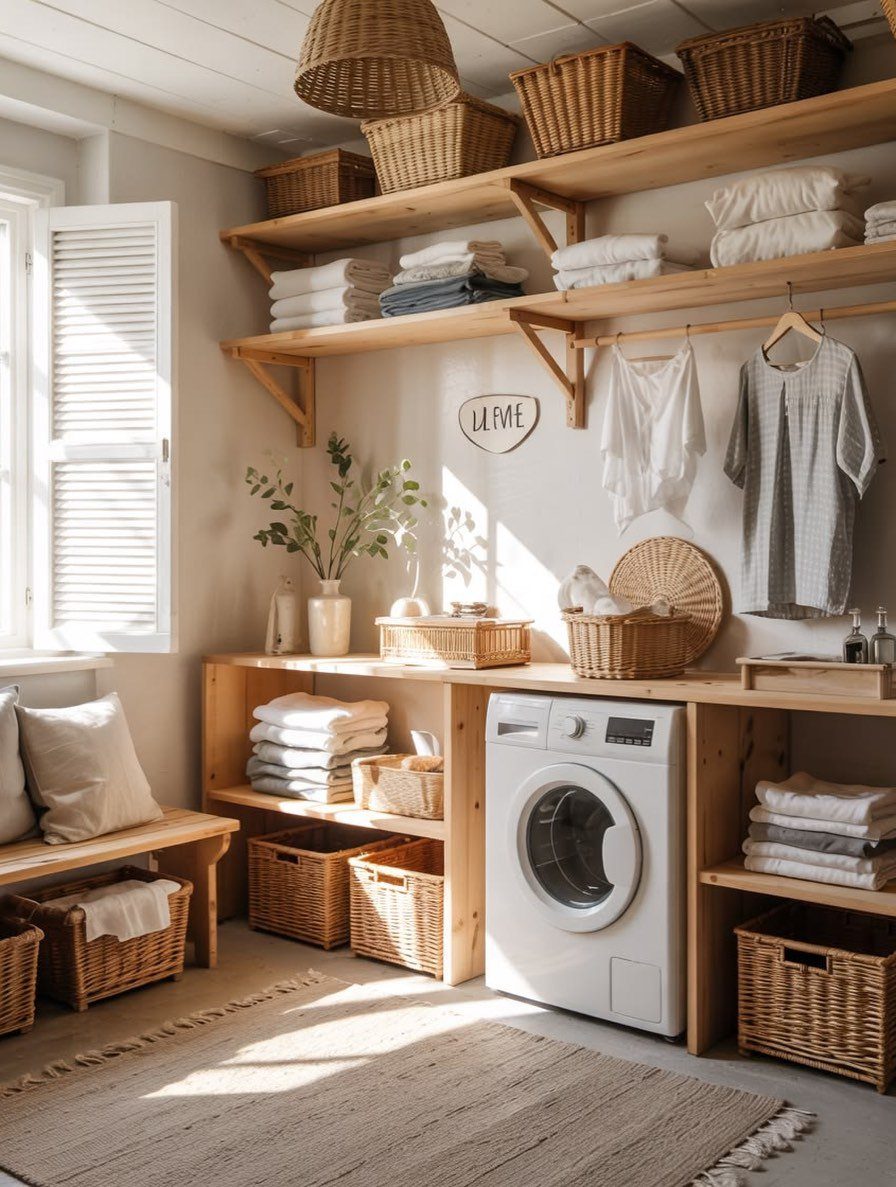
Folding on top of a dryer works until you need the dryer. A countertop across the washer fixes that, and a light wood top like this one keeps a tight room from feeling heavy.
Open shelving above, with baskets for towels and small items, uses the wall height that most small laundry rooms waste. Baskets hide the visual clutter that bare shelves show.
If the machines are front-loaders, a counter over them is one of the most affordable ways to add a real folding surface. Measure the machine height and leave a little clearance so vents and the door swing are not blocked.
3. Laundry Cabinets
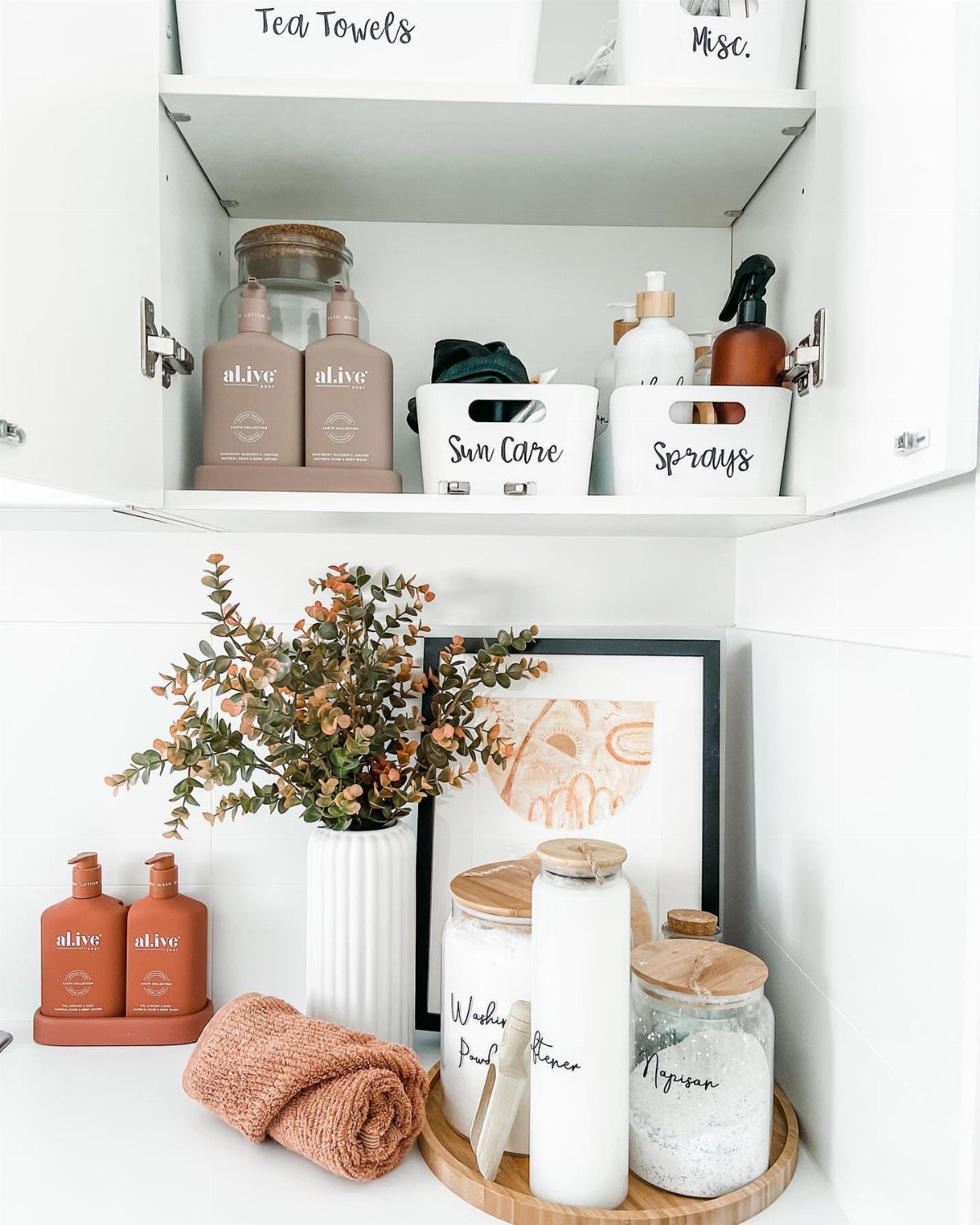
Bottles, powders and sprays sit in plain view on open shelves, so I decant them into matching containers and keep the labels facing out to keep the room looking calm.
Decanting powders into matching jars on the counter keeps daily items handy. I would label every bin, because an unlabeled bin turns into a junk bin within a month.
White cabinets also bounce light around when space is tight, which helps.
4. Slim Rolling Carts
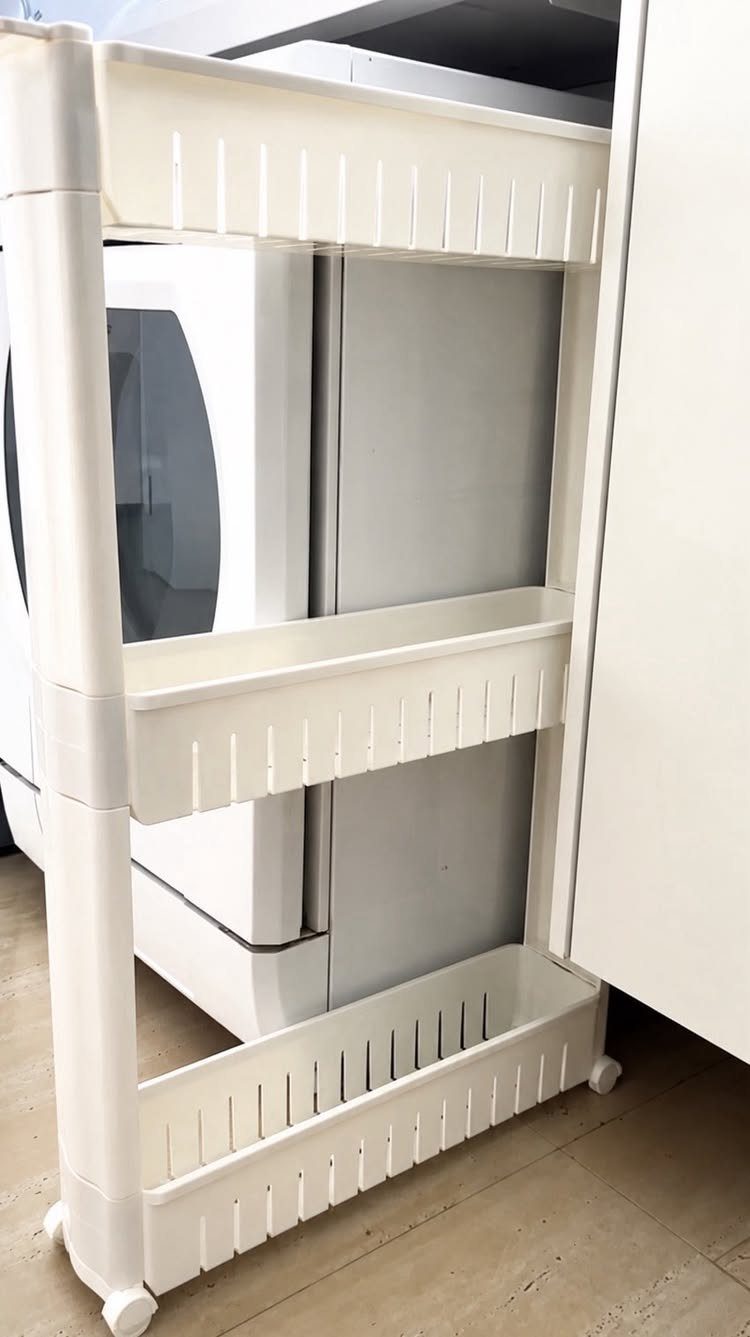
That gap between a washer and a cabinet is dead space until a slim cart rolls into it.
3 tiers hold detergent, stain sprays and dryer sheets at arm’s height, and the wheels let you pull the whole thing out when you need to reach behind it.
A white cart disappears against white appliances, which I prefer when space is tight. Measure the gap width before you buy, and keep the heaviest bottles on the bottom tier so it rolls steadily.
5. Pegboard for Tools

A pegboard turns a blank wall into storage for the tools that never fit in a cabinet: brushes, scrubbers, lint rollers, and the small cleaning gear that ends up in a heap.
Painting it white keeps it from looking busy next to stacked appliances.
Hang the tools you grab most at eye level, and group them by task so you can find them without looking.
Hooks and small baskets are easy to move as your supplies change, which is the real reason I pick pegboard over fixed shelves.
6. Slim Shelving Units
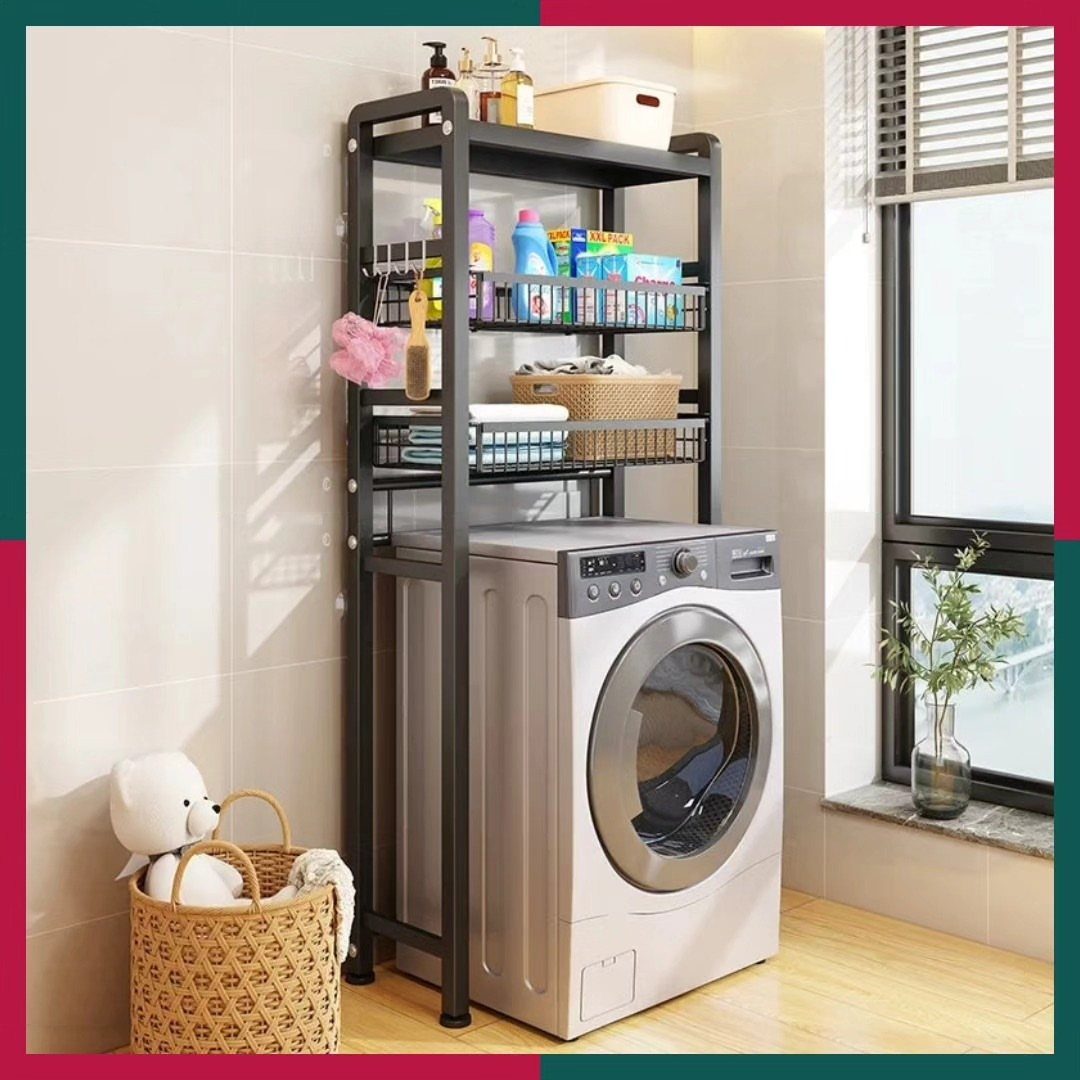
Over a front-loader, a slim shelving unit uses wall height that would otherwise sit empty. A black metal frame looks sharp against a silver washer and keeps its thin profile, so it does not crowd the room.
I would keep detergent and often-used items on the lower shelves, and put the baskets or lighter extras higher.
Pick a unit narrow enough that you can still open the washer door and reach the controls, and check it sits clear of any window trim.
7. Clear Storage Bins
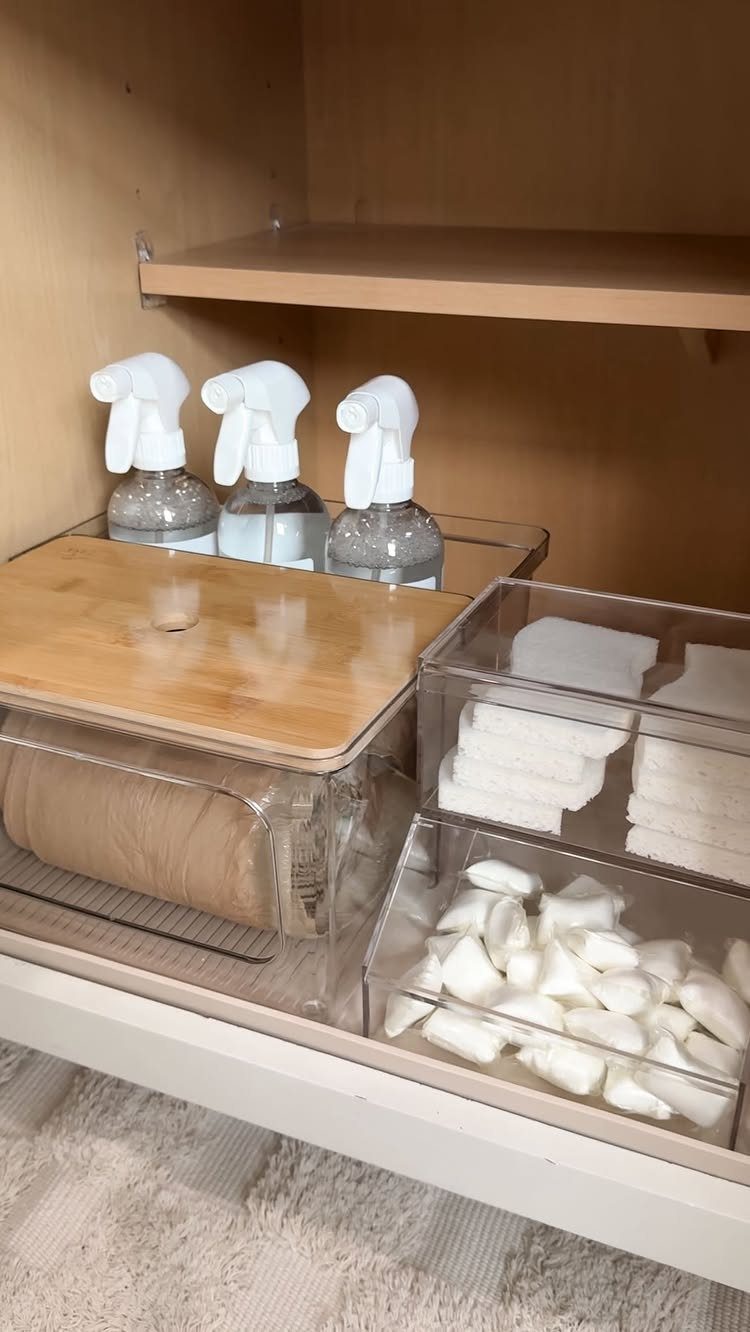
Clear bins let you read the shelf at a glance, so cloths, sponges and spare rolls get found without opening a single lid.
Pick a set in one size and one material, since mismatched plastic looks like clutter even when it is tidy.
A bin with a bamboo lid adds warmth to a white room and keeps dust off whatever sits inside.
Buy one bin first and test it before you commit to a full set.
8. Wall-Mounted Clothes Hanging Rod
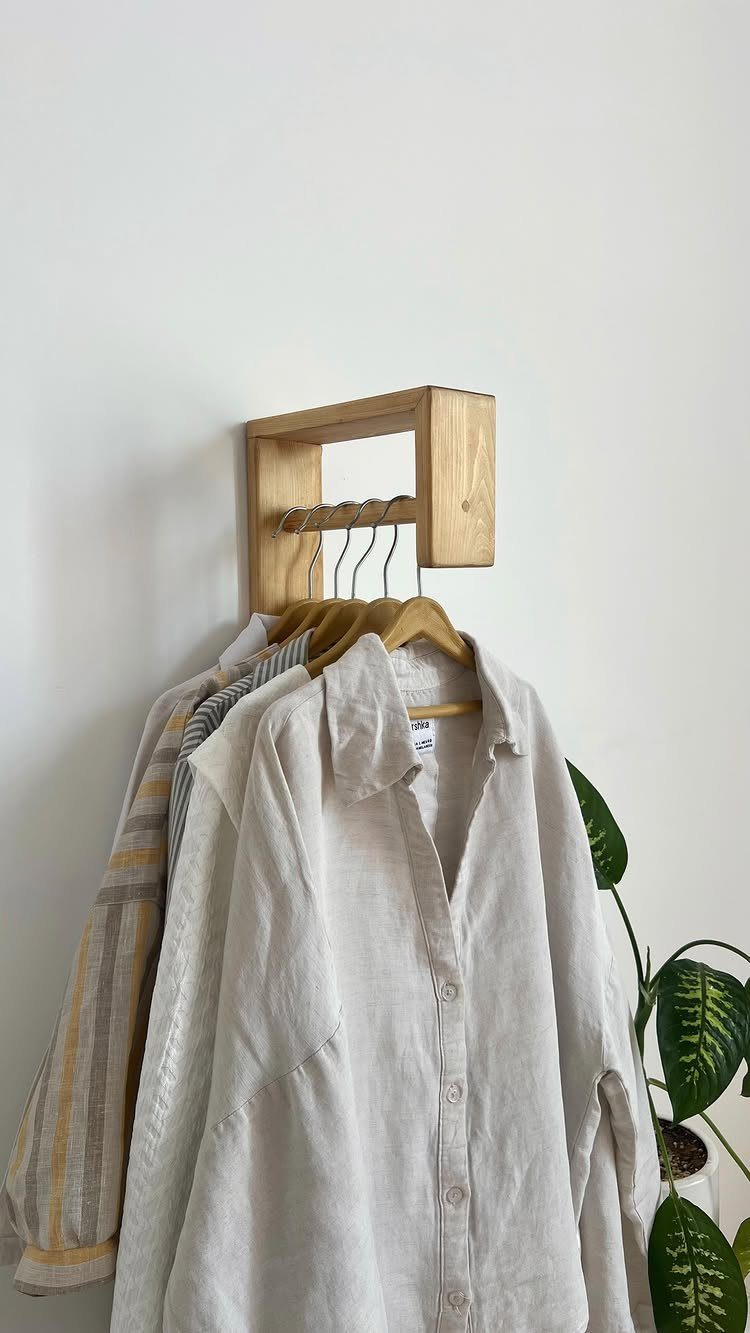
Linen shirts straight from the dryer need a place to hang, and a wooden wall rack with a metal rod gives them one without a freestanding drying rack eating floor space.
Hang shirts on the rod while they are still slightly damp, and wrinkles often relax on their own.
Fix the rack into studs or use proper wall anchors, because wet clothes weigh more than they look. A white wall behind a wood rack keeps the setup calm, and a plant nearby softens it.
Leave a few inches between hangers so air can move.
9. Glass Detergent and Pod Jars

Glass jars with black lids make a shelf of laundry supplies look deliberate. Decant pods, scent booster and stain remover into separate jars, then label each one so nobody guesses at the contents.
Black lids and clean labels read as a set, which matters more when everything sits in view. A clear box for dryer sheets fits alongside, keeping the sheets flat and dry.
Choose jars with wide mouths so a hand fits in easily. Glass is heavier than plastic, so I would keep it on a sturdy shelf at counter height, not up high.
Declutter and Categorize
Start by emptying every cabinet and shelf and piling it all in the center of the floor, so you can see what you actually own.
Then make 2 piles: laundry essentials (soap, fabric softener, laundry bags, dryer sheets, paper towels) and everything else.
The second pile leaves the room completely.
Combine duplicates of soap or bleach into one container and throw away the empties. Sort through old cleaning rags and keep only as many as you will realistically use.
Once only laundry items remain, store like things together and put the ones you grab most within easy reach.
A small tray on top of the washer or dryer for the detergent catches drips and protects the finish. A container for pocket finds, like coins and receipts, keeps them from ending up in the machine.
Assess Your Space and Needs
Before buying anything, write down what annoys you about the room right now.
Is it a lack of cabinets, nowhere to fold, or a path blocked by baskets? List each workflow snag and solve those first.
Room size and layout set your options. A large laundry area has almost unlimited choices, but a cramped one needs to make use of every bit of space, and that may call for some outside-the-box ideas.
Check whether the room does a second job. Plan for the extra jobs too if the room also serves as a mudroom or catch-all for storage.
One option is to give one wall to storage cabinets and the opposite wall to the machines. Another is a built-in bench with a coat hook for shoes and outerwear, so they stay out of the laundry zone.
Design an Efficient Layout
Place things by the order of the task. Put the counter next to the dryer so you can fold the moment clothes come out, and keep storage cabinets close to the washer so the detergent is at hand.
Aim for a counter at about waist height, so you are not stooping over laundry. Make sure cabinets are reachable by everyone in the house, and for kids, add a step stool or foldaway ladder so they can help.
Raising front-loaders on pedestals means less stooping, which makes a real difference for anyone with a bad back or limited mobility.
Layout changes the plan:
- Corner room: washer and dryer on one wall, utility sink on the other.
- Small room: built-in cabinets and shelves along the walls, with a counter only where the machines are not raised on pedestals.
Frequently Asked Questions
What are some ideas for a very small laundry room?
Go up the wall first. A slim shelving unit or a countertop over front-loaders, topped with open shelves and baskets, adds storage and a folding surface without using floor space.
A fold-down ironing board anchored into the studs handles pressing, and a slim rolling cart can slide into the gap next to the washer and dryer.
What not to store in the laundry room?
Keep food, medications and anything sensitive to moisture out of the laundry room.
Damp air from the machines can spoil those items. Everything else in the room should be laundry-related, so move cleaning rags you will never use, and any non-laundry clutter, to another spot in the house.
How do I organize a laundry closet?
Start with the wall above the machines: a slim shelf there holds supplies, and a slim cart can fill the side gap. Keep the detergent and other things you grab most within arm’s reach.
A wall-mounted rod gives damp shirts a place to hang without a freestanding rack taking up floor space. Before adding anything, empty the closet and remove everything that is not laundry-related, so you only organize what belongs.





