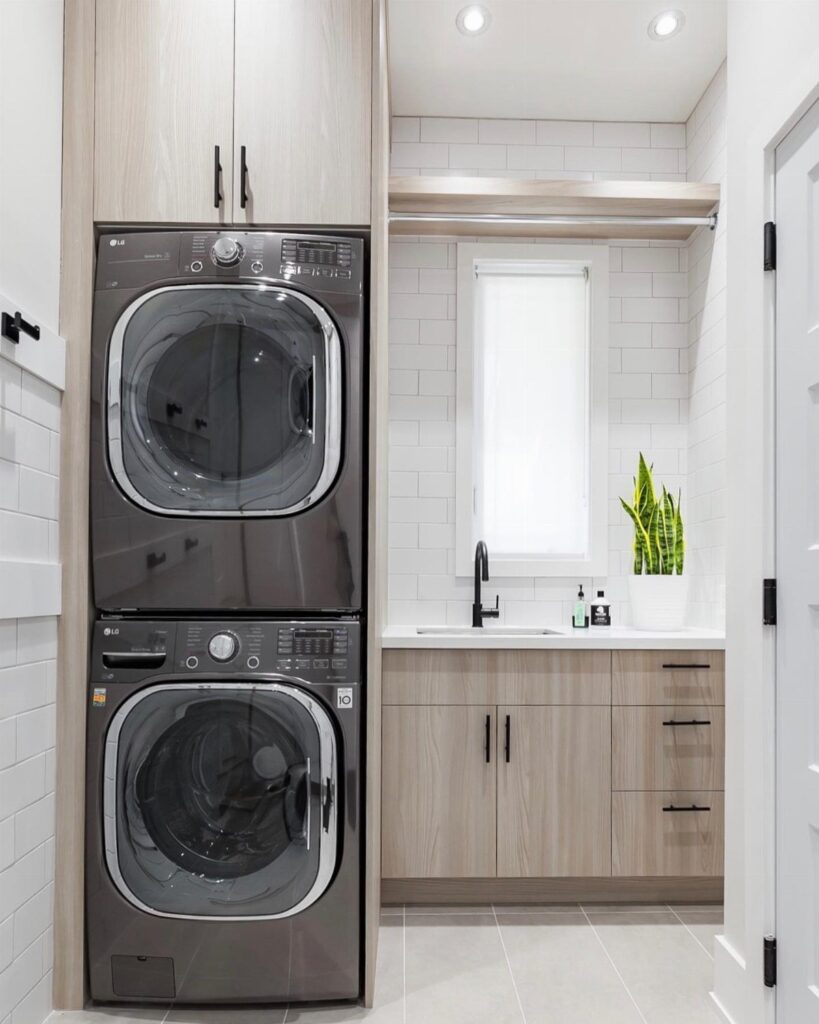
Ideas on this list run from a stick-on floor tile or a tension rod, both weekend jobs a renter can undo, to a farmhouse sink that needs a plumber and a stacked front-loading washer and dryer that changes the whole floor plan.
Which ideas fit your room depends on whether you can alter the walls and plumbing: renters stay with peel-and-stick, floating shelves, and tension rods, while owners can add permanent countertops, cabinets, and built-in sinks.
Measure the space first, down to the half inch, because that difference decides whether an appliance fits or ships back.
1. Stacked Front-Loading Washer and Dryer
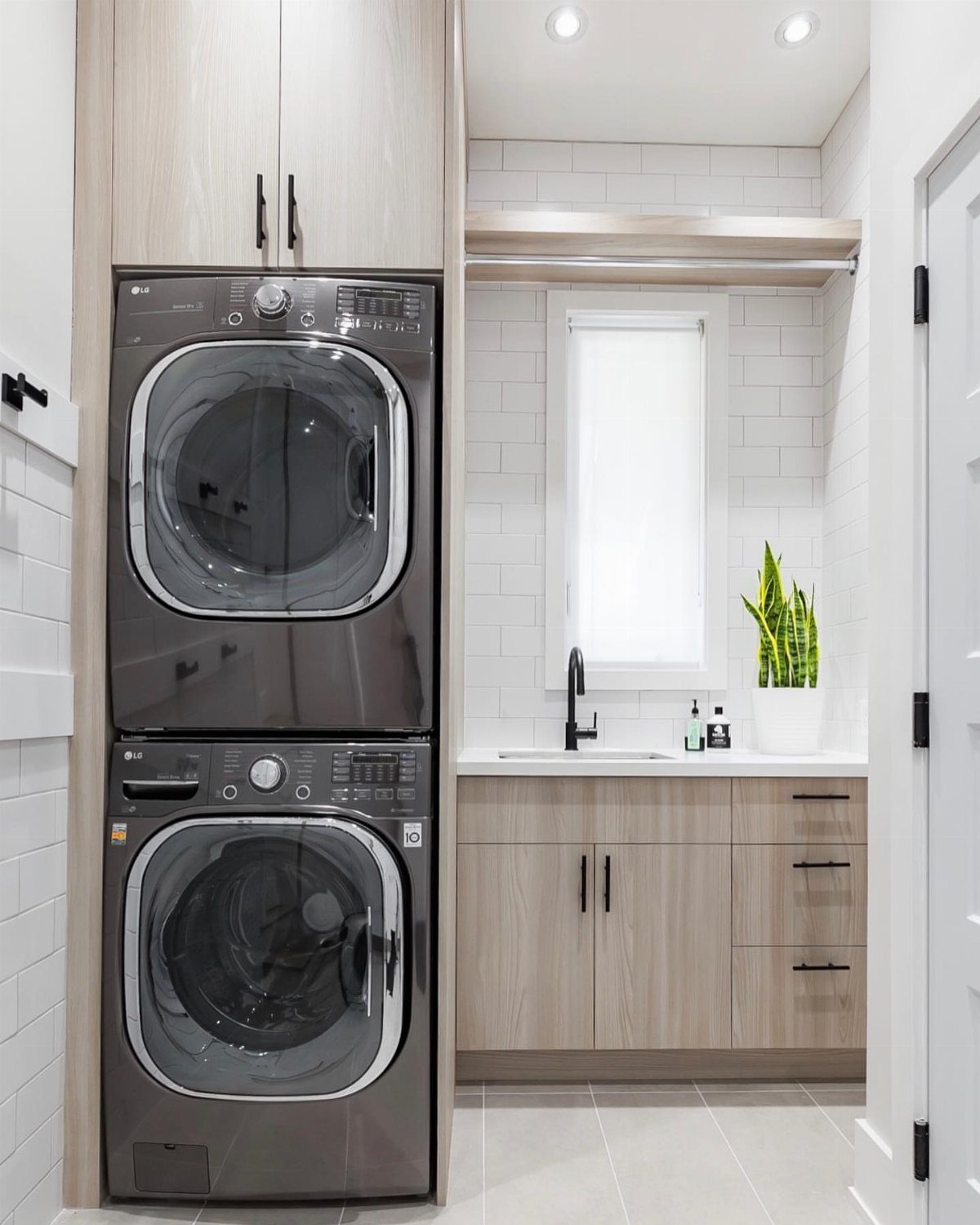
Stacking puts the dryer directly above the washer and frees up the floor space a side-by-side pair would use. In a room this small, that matters more than any shelf or basket you could add.
Front-loaders are the type that stack, so the pairing suits a compact room like this one. Keep the stack against the wall and use the saved floor for a sink, a hamper, or simply room to stand.
2. Use Pocket or Barn Doors
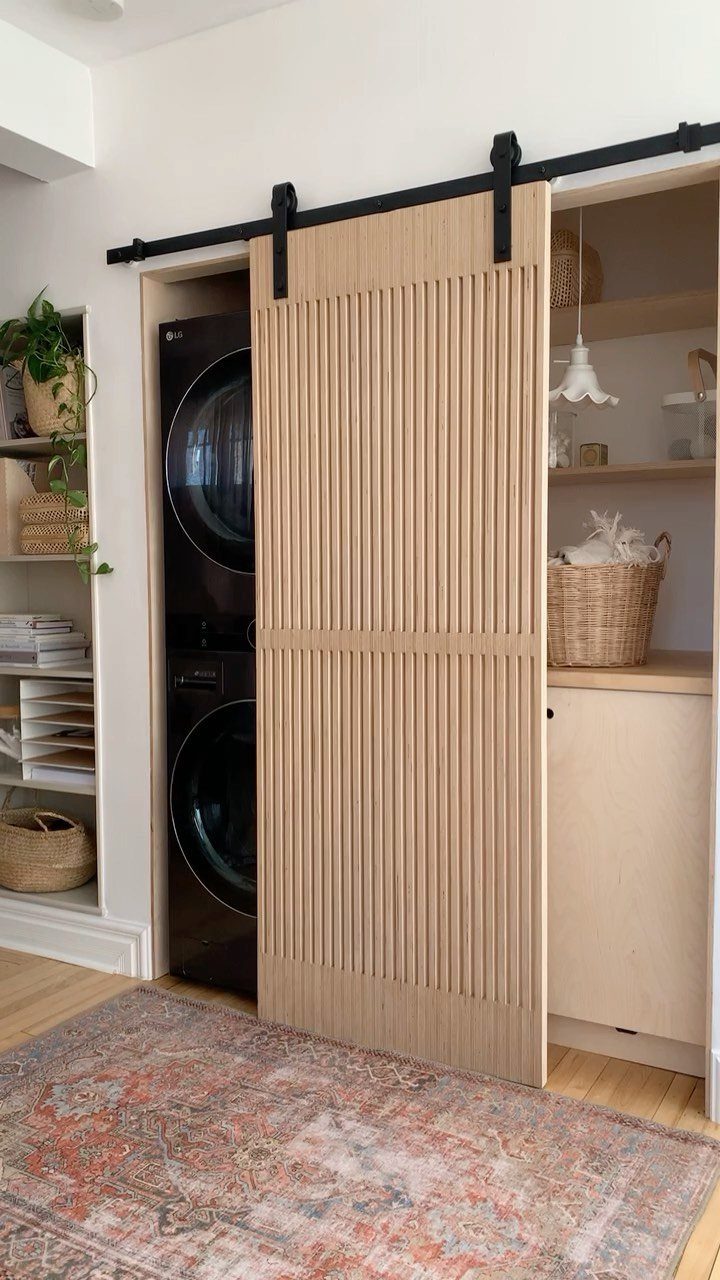
A sliding door never swings into the room, so the floor in front of the machines stays clear. That makes a barn door on a track one of the easier ways to hide a laundry closet in a tight hallway.
I like a slatted wood door because it softens the look of the appliances without closing the space off completely.
Mount the track above the opening and leave room on the wall beside it for the door to slide fully clear.
A pocket door hides the door entirely, but it means opening the wall, so the barn style is the weekend-friendly pick.
3. Fold Down Ironing Board
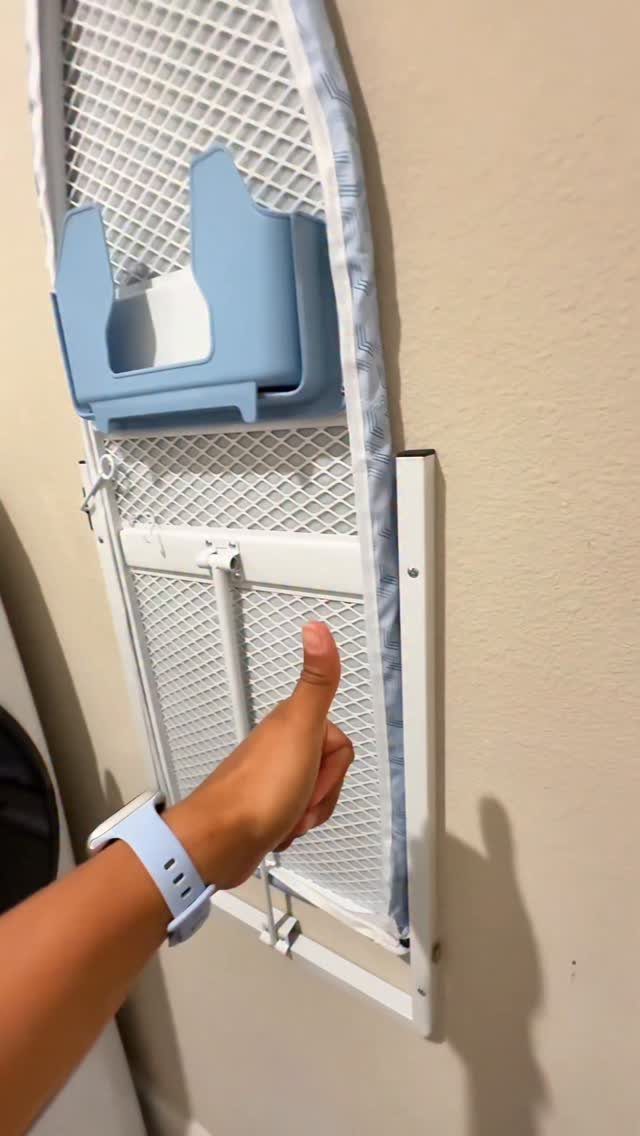
A wall-mounted ironing board folds flat against the wall, so you get a full pressing surface without a freestanding board eating floor space.
Pick a board with a built-in accessory holder so the iron has a place to sit and nothing ends up on the washer lid. Mount it where you can open it fully without bumping a door or machine.
For a renter, it’s one of the cheapest ways to give a compact laundry space a real job station.
4. Under-Cabinet LED Strips
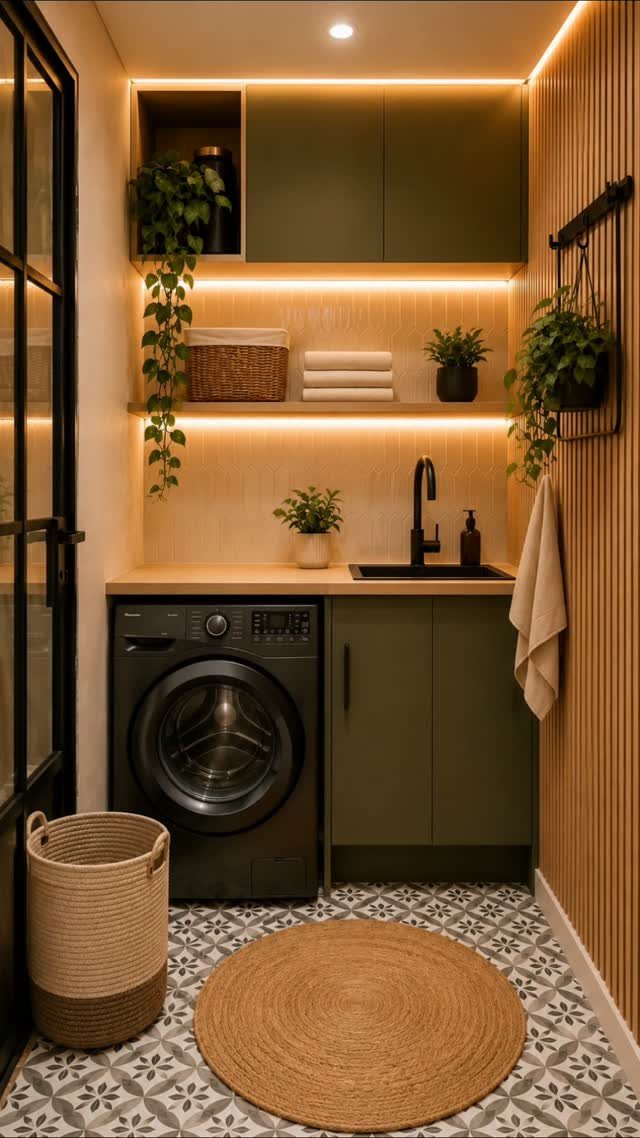
Warm LED strips tucked under shelves put light right on the work surface, which is where a laundry closet or narrow laundry room is usually darkest. Overhead fixtures cast shadows from your own body, while strips light the counter below.
Stick-on strips suit a weekend job and rentals, since you only need a nearby outlet and a clean surface. I’d choose a warm tone, because it flatters olive cabinets and makes a tiny room feel cozy instead of clinical.
5. Install a Countertop Over Appliances
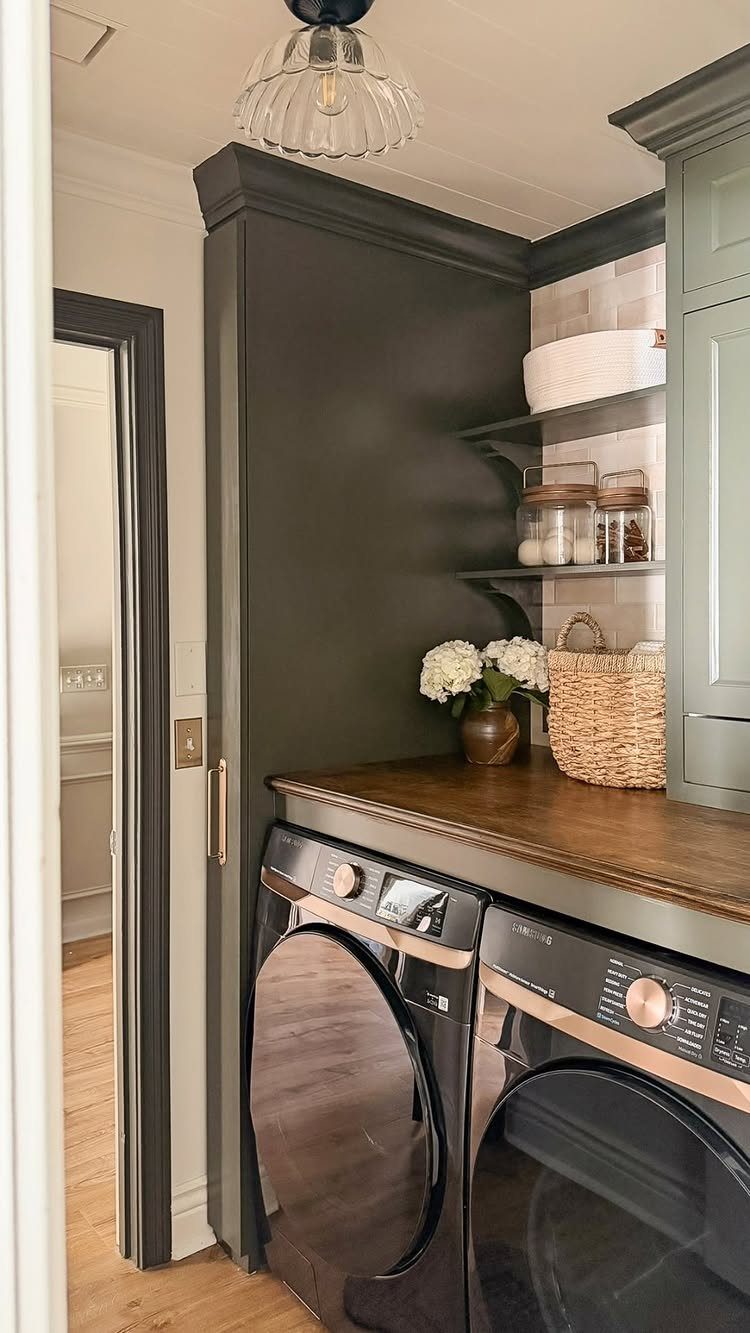
A countertop laid across the washer and dryer turns 2 machines into a folding table. Wood is a good choice because it warms up a hard-working room and provides a clean, flat surface at a comfortable height.
Measure the width and depth of both machines first, and leave a little room at the back for hoses and venting. Make sure you can still pull the machines out for service.
Open shelves above the counter keep detergent and baskets within reach.
"Consider installing a countertop for folding clothes or sorting laundry, providing a dedicated workspace within the utility room and opt for durable and easy-to-clean materials for surfaces and flooring to withstand daily use," advises Claire Garner.
6. Tall Cabinets for Vertical Storage
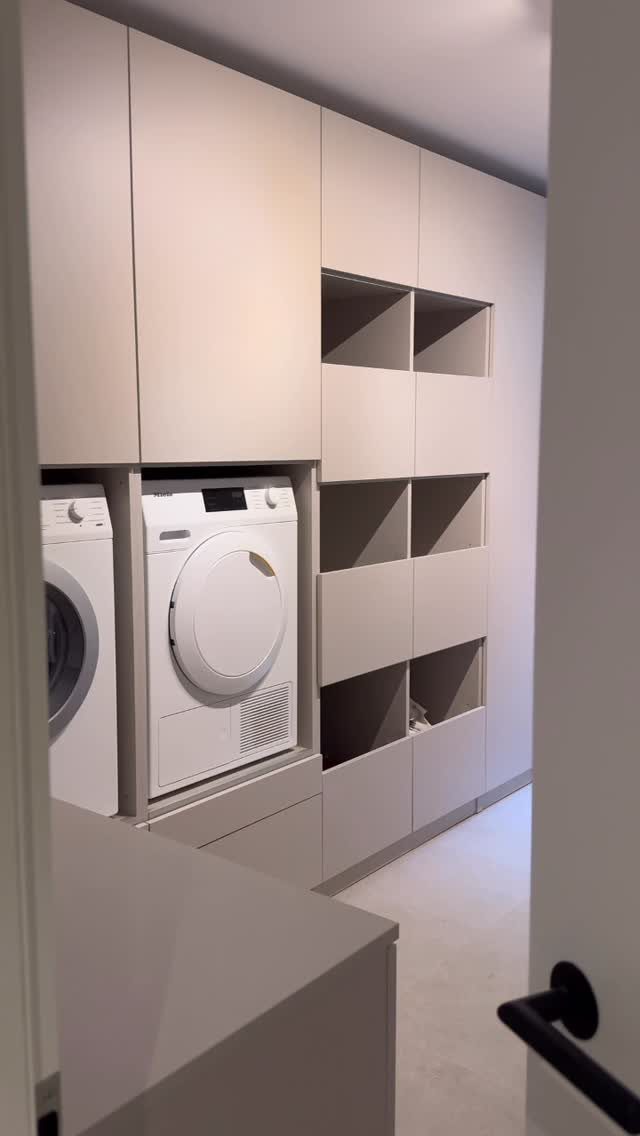
Tall cabinets use the wall height most small laundry rooms waste. Running white cabinetry up around the machines gives you closed storage for supplies you’d rather not look at.
I’d mix closed doors with a few open shelves, as here, so everyday items stay handy while clutter hides. White keeps the tall run from feeling heavy in a tight space.
Build the cabinets around the machines rather than beside them, and the whole wall reads as one built-in unit.
7. Bold Peel-and-Stick Wallpaper
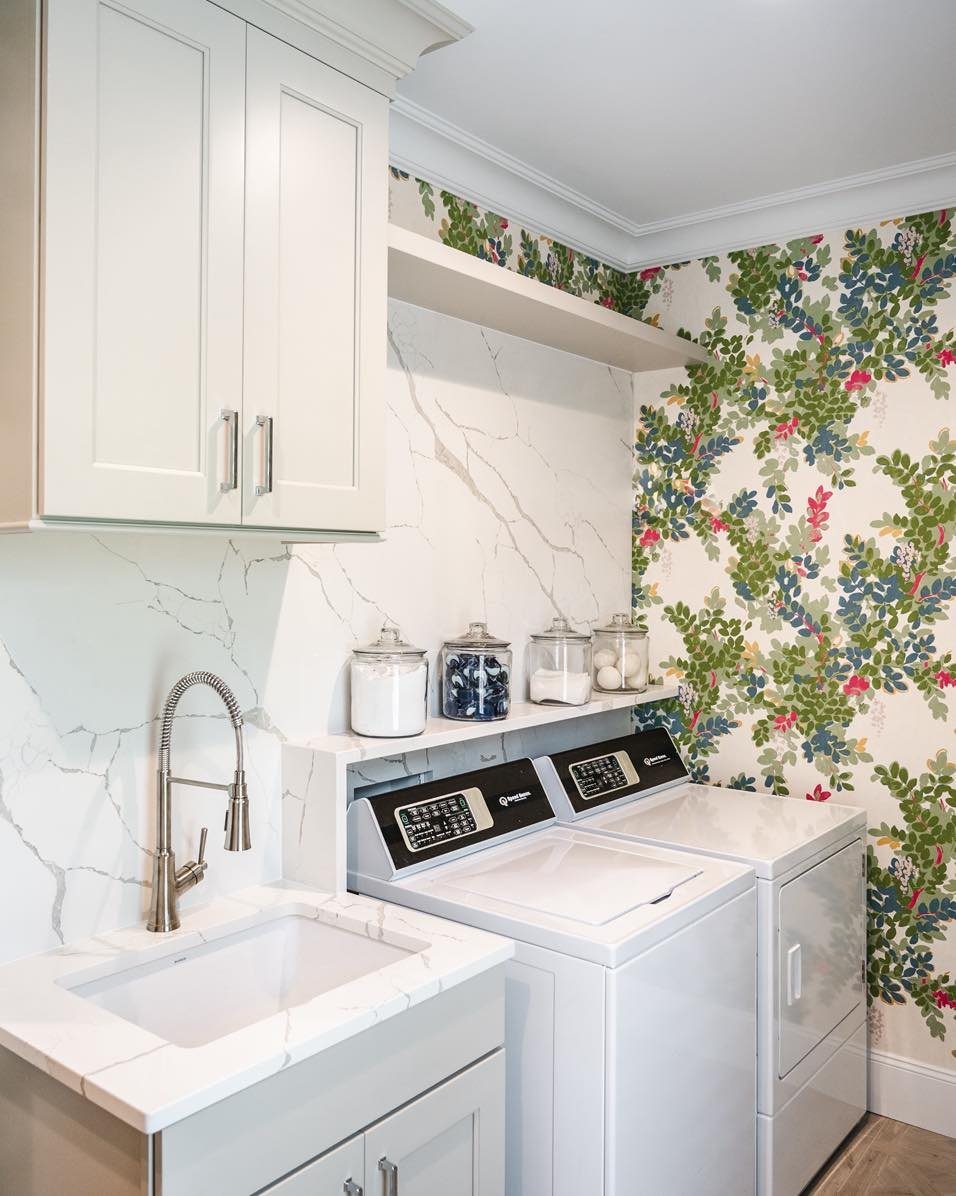
One wall of pattern does more for a laundry room this size than any accessory.
Peel-and-stick paper goes up in a weekend with a level, a smoothing tool, and a sharp blade, and it suits renters because it comes off later.
I’d put the bold print on the side wall only and keep the cabinets and appliances white, as here, so the pattern gets room to breathe. Large florals read best on a wall with few interruptions.
Wipe the wall clean and dry before the first strip goes up.
8. Incorporate Floating Shelves
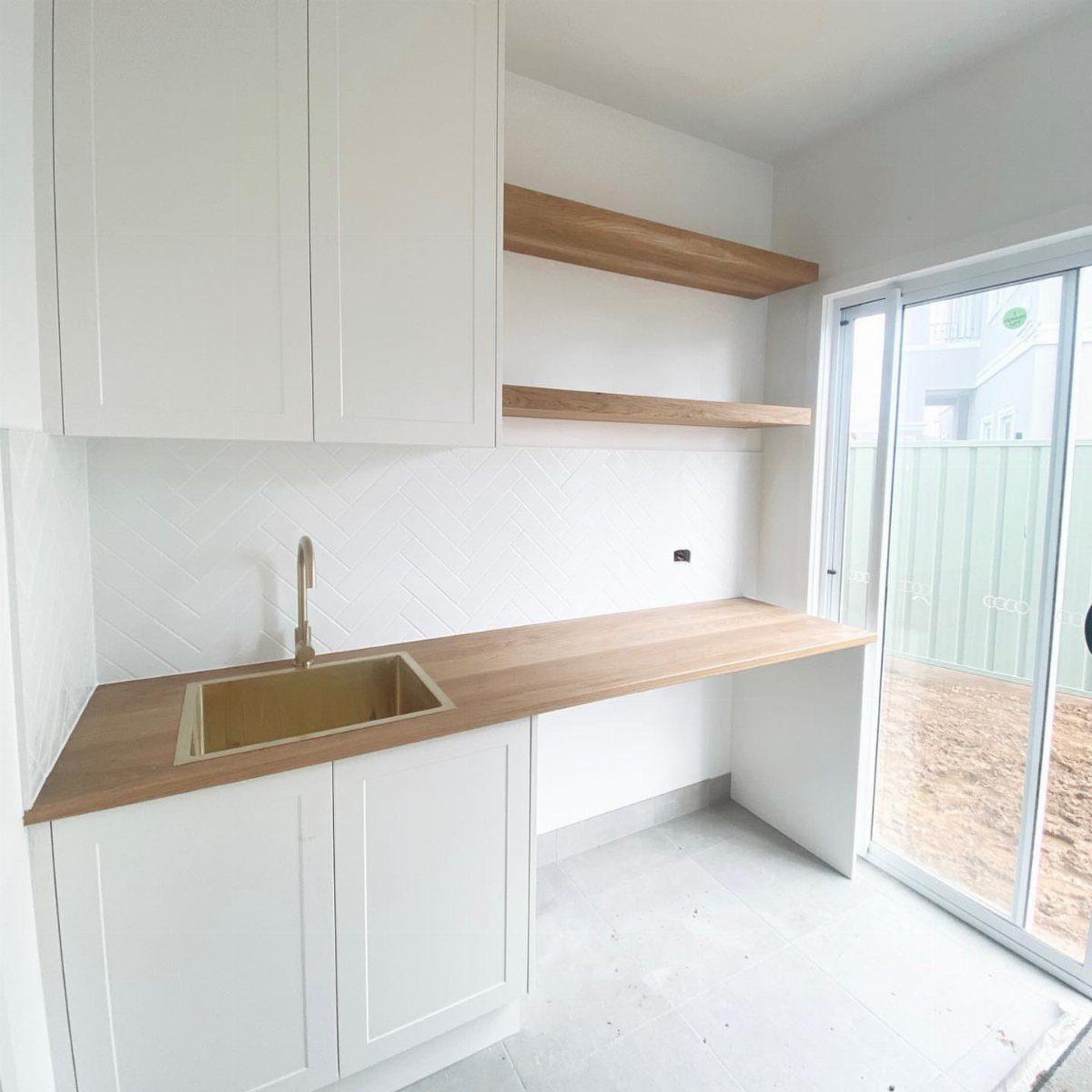
Floating shelves hold detergent, folded towels, and baskets without a cabinet’s bulk, so the wall stays open and the room looks cleaner.
Light wood shelves that match the countertop tie the storage to the work surface, so the wall and the counter read as one built piece. Two shelves spaced evenly above the counter look tidier than three crowded ones.
Anchor the brackets into studs or use proper wall anchors, since laundry supplies get heavy fast. Keep the top shelf for things you grab rarely.
9. Clear Glass Jars for Detergent

Pods look tidy in a clear glass jar, and you can see at a glance when you’re running low. Decanting them also turns a branded plastic tub into something you don’t mind leaving on the counter.
Pick a jar with a wide mouth so a hand fits in, and a lid that seals well. A black label, as on this one, keeps the contents obvious to anyone who uses the room.
Use one jar per product, and set them on the counter next to the washer and dryer.
10. Matching Hampers and Storage Bins
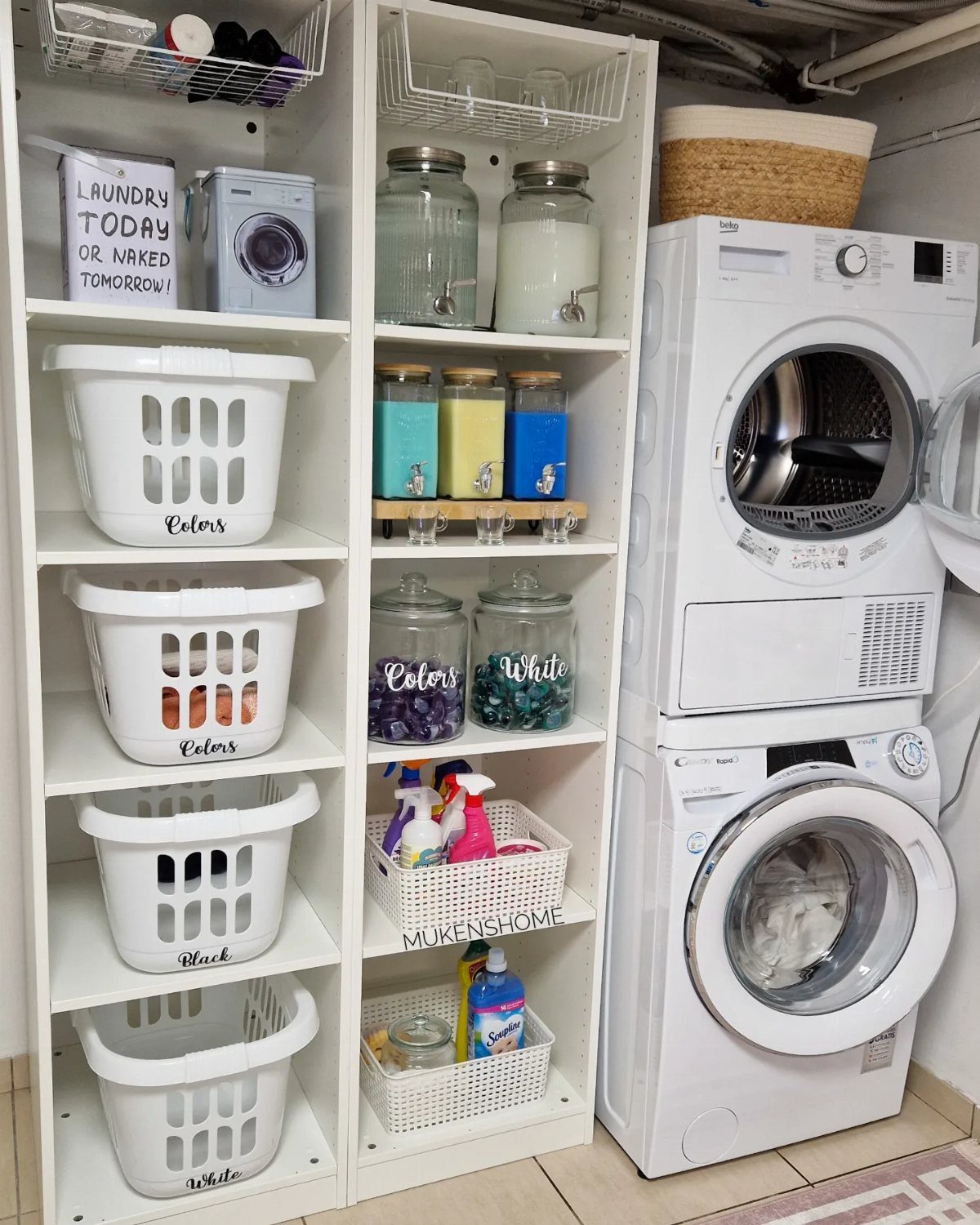
Matching hampers and bins make a shelf look planned even when the contents are ordinary. White bins with labels keep sorting simple: darks, lights, towels, whatever your household needs.
I’d stick to one color and one material across every container, as this shelf does, because mixed sizes in mixed finishes read as clutter. Choose bins that fit your shelf depth before buying a full set.
Label the front, not the lid, so you can read each one from the floor.
11. Install Stick-On Floor Tiles
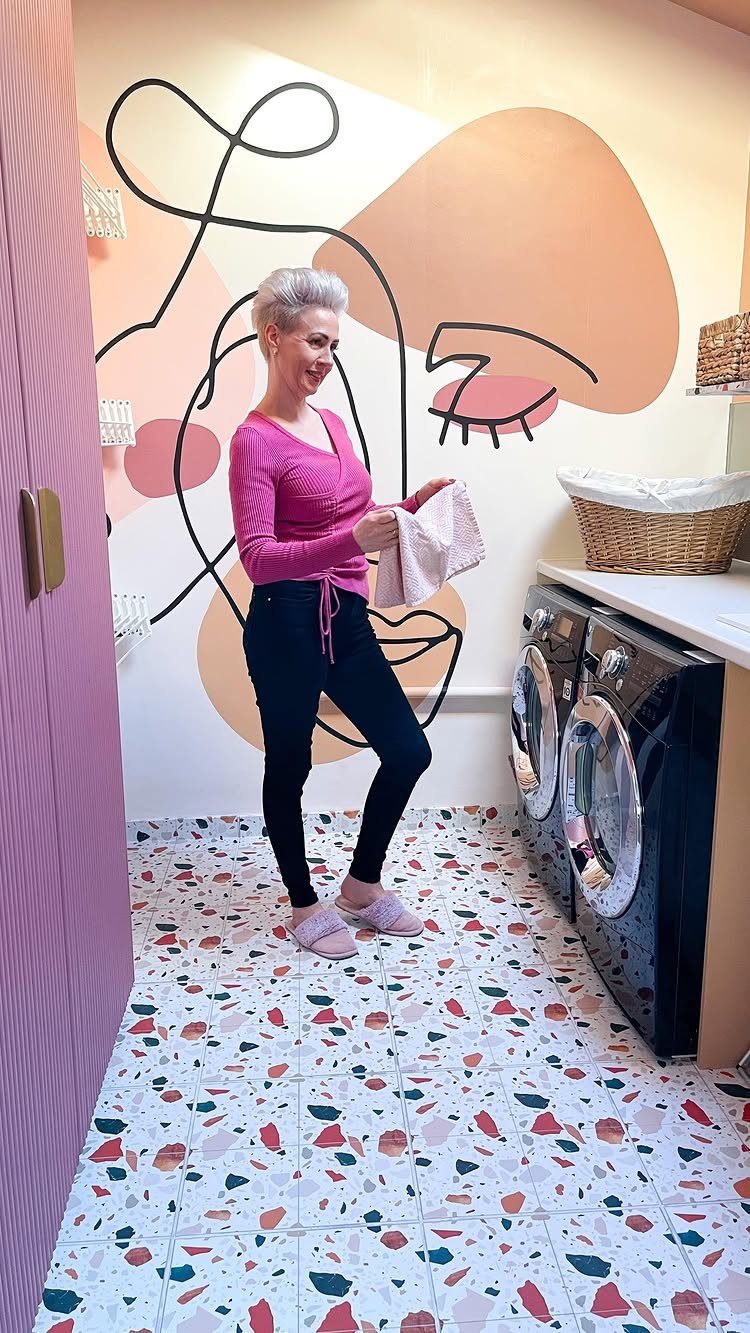
Stick-on floor tiles add a patterned floor to a compact laundry room for a modest outlay, and they peel up again when you move. A terrazzo print like this one hides lint and dropped socks better than plain white.
Sweep and degrease the floor first, because adhesive fails on dust. Start from the center of the room so cuts at the walls come out even, and trim edge tiles with a utility knife.
It’s a weekend job, and the machines are the only real obstacle.
12. Use a Tension Rod for Hanging Clothes
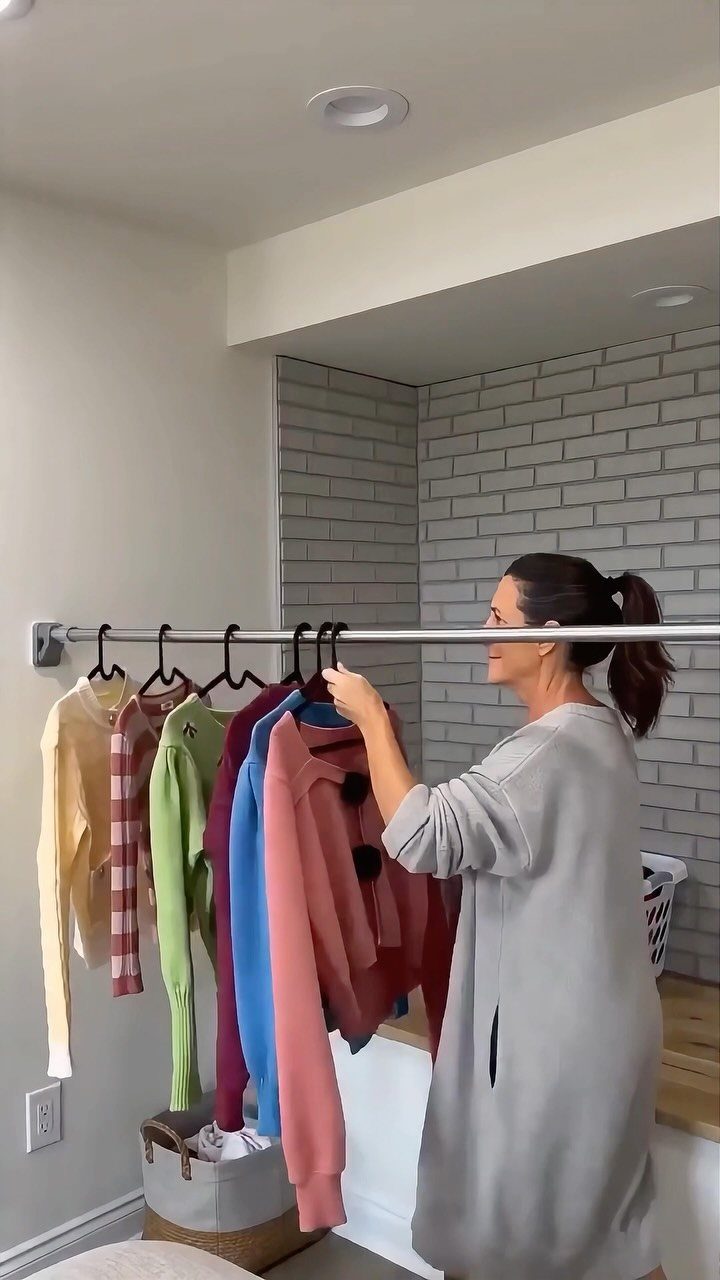
A tension rod across a wall or alcove makes a hanging bar with no drilling, which is why it suits a rental. Sweaters and delicate pieces that shouldn’t go in the dryer can air-dry on it.
Choose a rod rated for wet clothes and measure the gap before buying. Twist it until it grips firmly, then test it with a few hangers before loading it up.
A silver finish blends with most laundry rooms and costs very little.
13. Compact Laundry Sink Basin
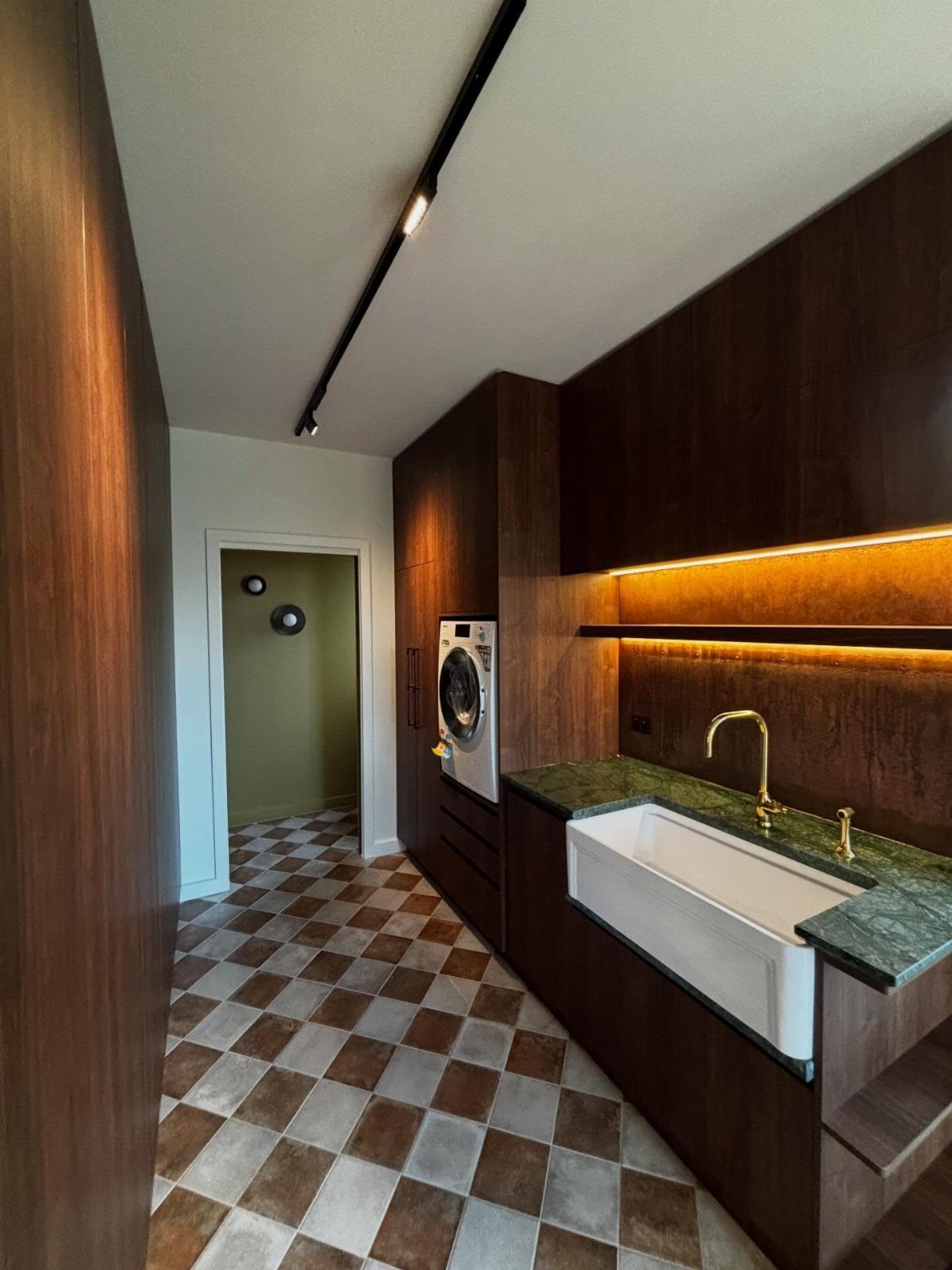
A deep farmhouse-style sink gives a narrow laundry room a place to soak, rinse, and hand-wash, so delicates never have to wait for a machine cycle.
White porcelain against dark wood cabinetry keeps the sink bright and easy to spot, and the gold faucet adds a small, warm detail.
Measure the cabinet width before you shop, since a basin that fits the base cabinet leaves counter space on either side. Choose a faucet with a tall neck so a bucket or a large garment clears it.
A sink does mean plumbing, so plan on a plumber unless you’re comfortable swapping an existing one.
Maximize Every Inch with Hidden Features
Start with the back of the door. A slim over-the-door rack or a set of hooks holds a drying rack, spray bottles, or a lint brush, and it costs you no floor or wall space at all.
Next, look for a narrow gap at the end of a cabinet run or beside the machines.
A strip that thin can hold an ironing board or a drying rack standing on edge, tucked out of sight but a single reach away.
If the walls lack depth for cabinets, a pegboard with a few hooks handles brooms, bags, and small tools.
Pro Tips for Small Laundry Room Success
Before anything goes in the cart, get out the tape measure and write down width, height, and depth for the machines, the shelves, and even the baskets, because a half inch off is enough to send an item back.
A purchase that’s an inch too deep is the most common and most avoidable mistake in a tight room.
Then plan the sequence of the work. Put the washer, dryer, and folding surface in the order you actually use them, so you never carry a wet load across the room.
If you have no dedicated room, look at under-used spots like a cupboard, the space under stairs, or a corner of a larger room.
Favor pieces that do 2 jobs, such as a lidded hamper you can sit on, and wall-hung or collapsible items that fold away. Pale colors like white, beige, or soft gray make the room feel larger.
Stylish Laundry Room Decor Ideas
Personality in a small laundry room comes from a few deliberate choices, not a pile of accessories. Pick one accent, such as a paint color, and let everything else stay quiet.
Don’t assume paint has to be neutral. A deep navy on the walls can look striking against white bins and baskets, and it makes the room feel intentional.
Stacking baskets on shelves is an easy way to gain storage without taking more floor. Choose baskets in one color family so the stack looks planned, and put the ones you use daily at arm height.
Frequently Asked Questions
What not to store in the laundry room?
Skip food and valuables, and keep out anything that moisture can damage.
Laundry rooms get steam and splashes, so they suit detergent, baskets, and cleaning supplies better than pantry items or keepsakes. Closed cabinets help protect whatever you do keep there.
How big should I make my laundry room?
There is no single size, and a laundry closet can work if the machines are stacked. A front-loading washer with the dryer on top frees floor space for a sink, hamper, or room to stand.
What is a good color for a small laundry room?
I stick with white, warm cream, or soft gray in tight laundry spaces because they reflect what little light comes in and keep the walls from closing in.
White cabinets and bins also keep tall storage from looking heavy. If you want a bolder look, one deep navy wall against white bins can still feel intentional.





