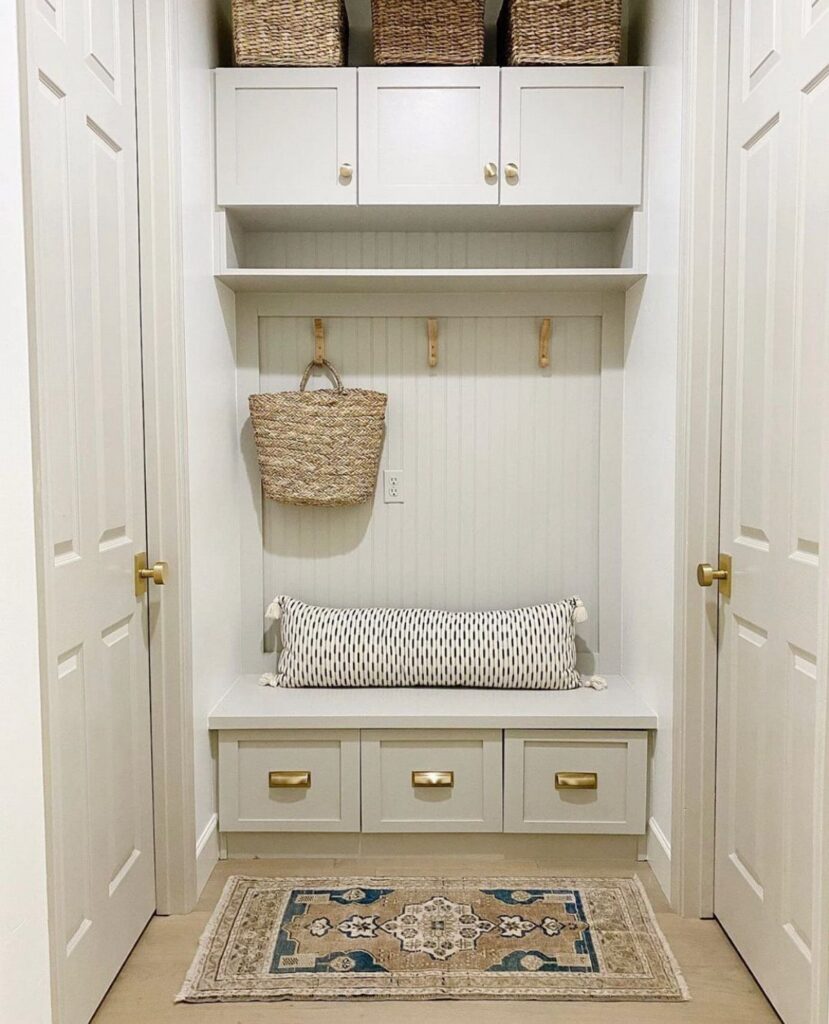
The ideas here run from simple hooks and hanging bars and a shoe bench to built-in cabinets and a sliding barn door.
What picks the right one is where your mudroom sits and how much wall and floor it gives you: a garage entry, a spot beside the washer, a closet under the stairs and a narrow hall each call for a different answer.
1. Built-In Cabinets
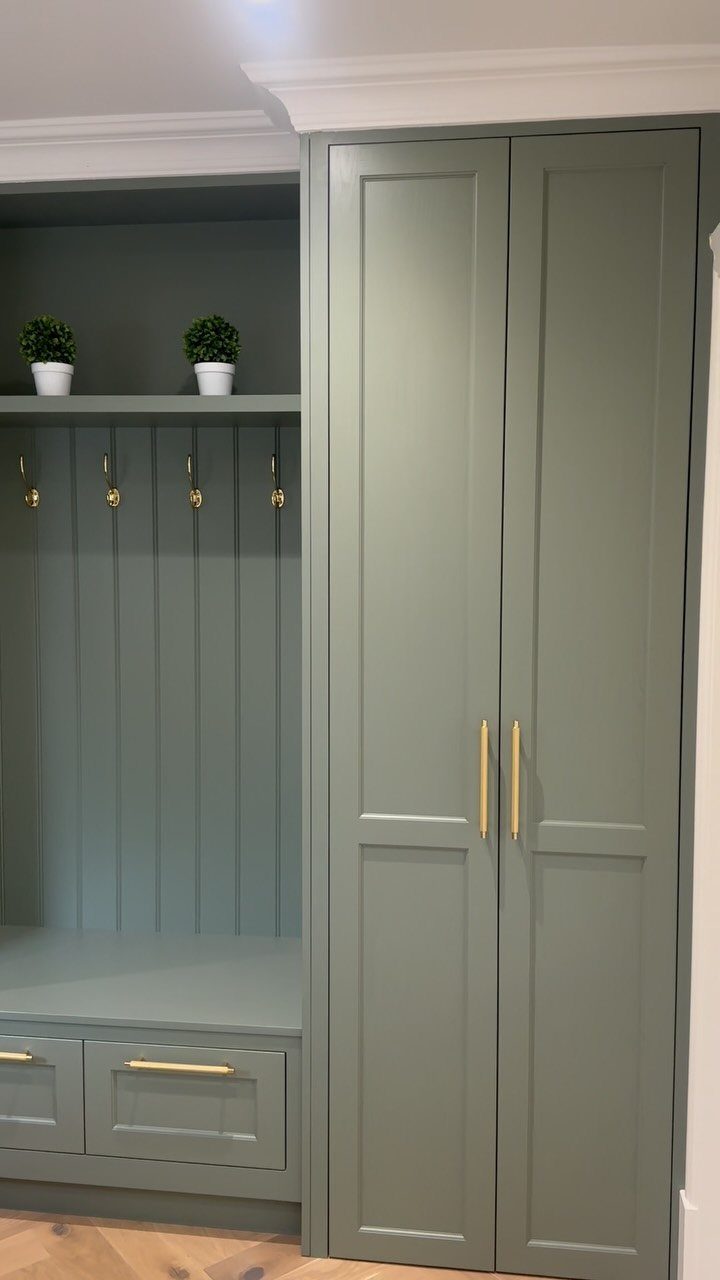
Built-in cabinets give a small mudroom a finished look because everything lines up: tall doors, a bench, hooks, and a back wall in one color.
Paint the whole unit one shade, sage for example, and it reads as part of the wall instead of furniture parked against it.
I like closed doors for the tall section, since they hide the clutter and leave the open shelf for a plant or two. Drawers under the bench keep shoes off the floor.
Hardware is the cheapest upgrade, so pick pulls you love.
2. Shoe Benches
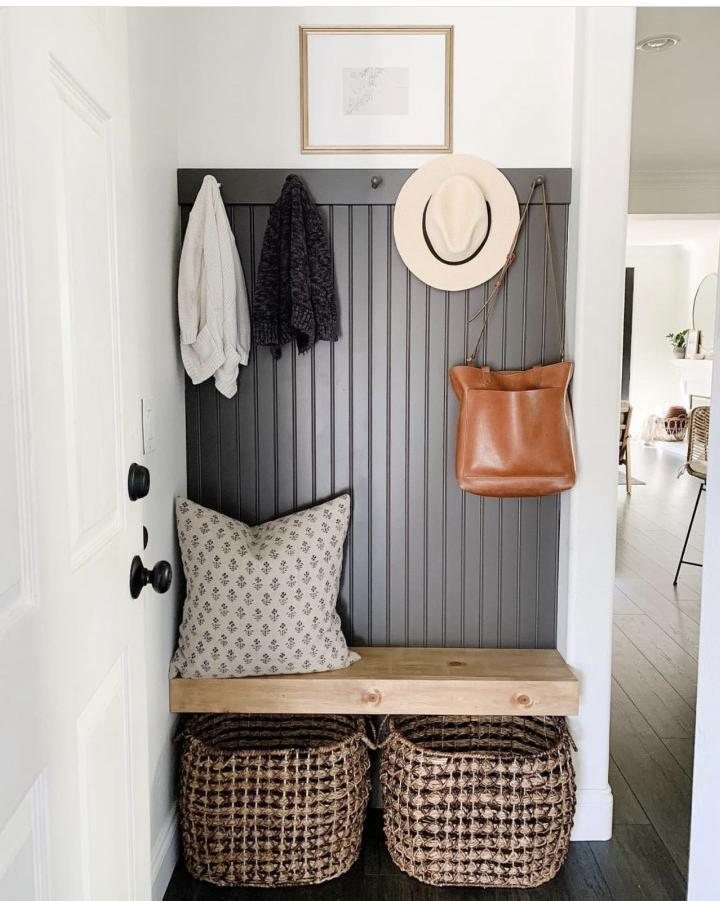
A plain wooden bench with baskets slid underneath is the lowest-effort mudroom I know. A bench is a seat for pulling on boots, with shoes tucked out of sight underneath and hooks overhead for everything else.
Woven baskets beat open floor space because each person can claim one, and you can pull it out and tip it into the hall closet when it overflows. Pick a bench narrow enough to leave walking room.
A dark wall behind it hides scuffs from bags and coats.
3. Mudroom in a Laundry Room
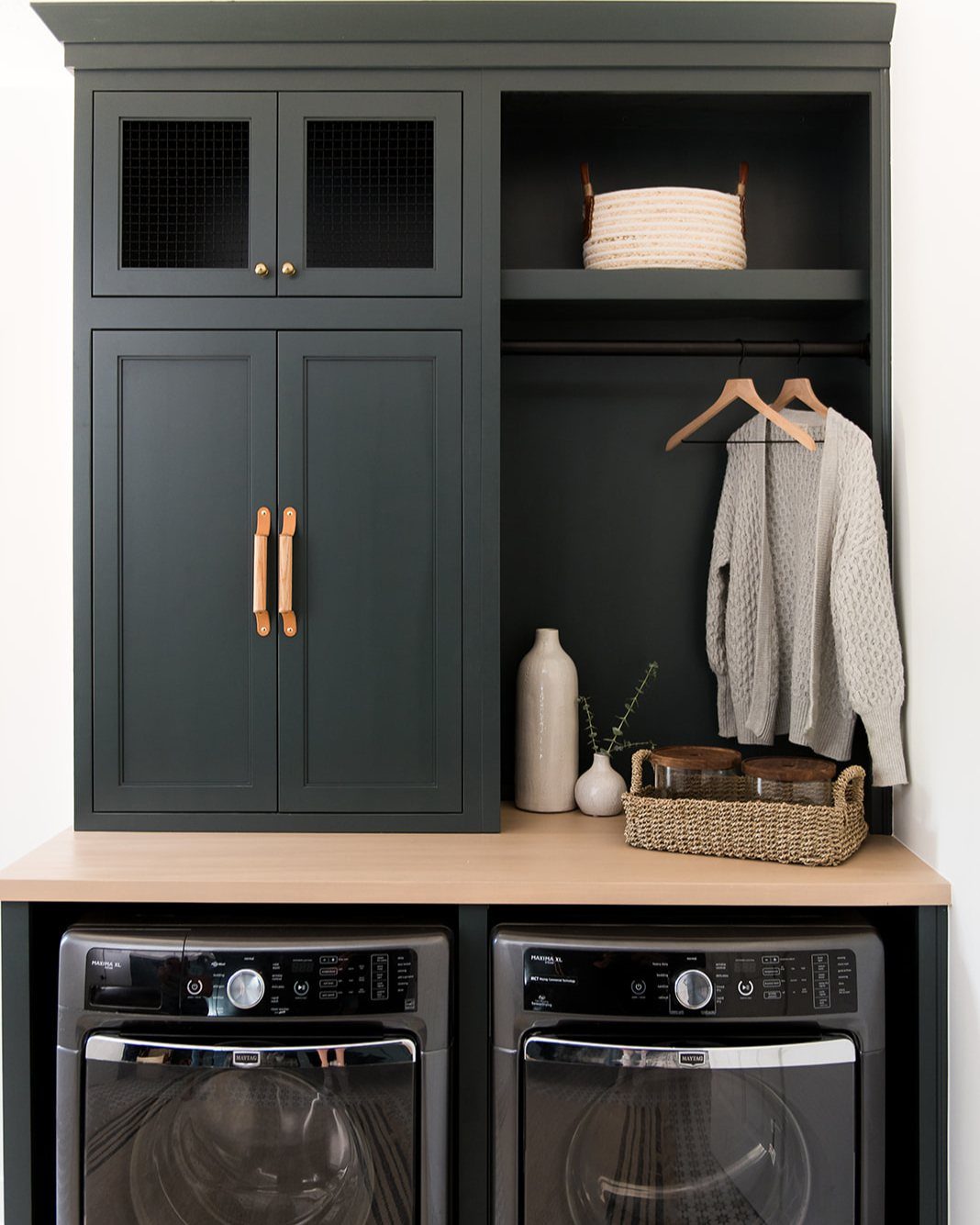
Over a pair of front-loaders, a countertop becomes the hinge between laundry and mudroom: wet coats go up top, clean towels get folded below.
Keep a hanging rod in the cabinet above the machines, and damp jackets can drip there instead of in the hall.
I would choose that pairing over a second dark tone.
This suits anyone whose back door opens near the washer.
4. Vertical Cubbies
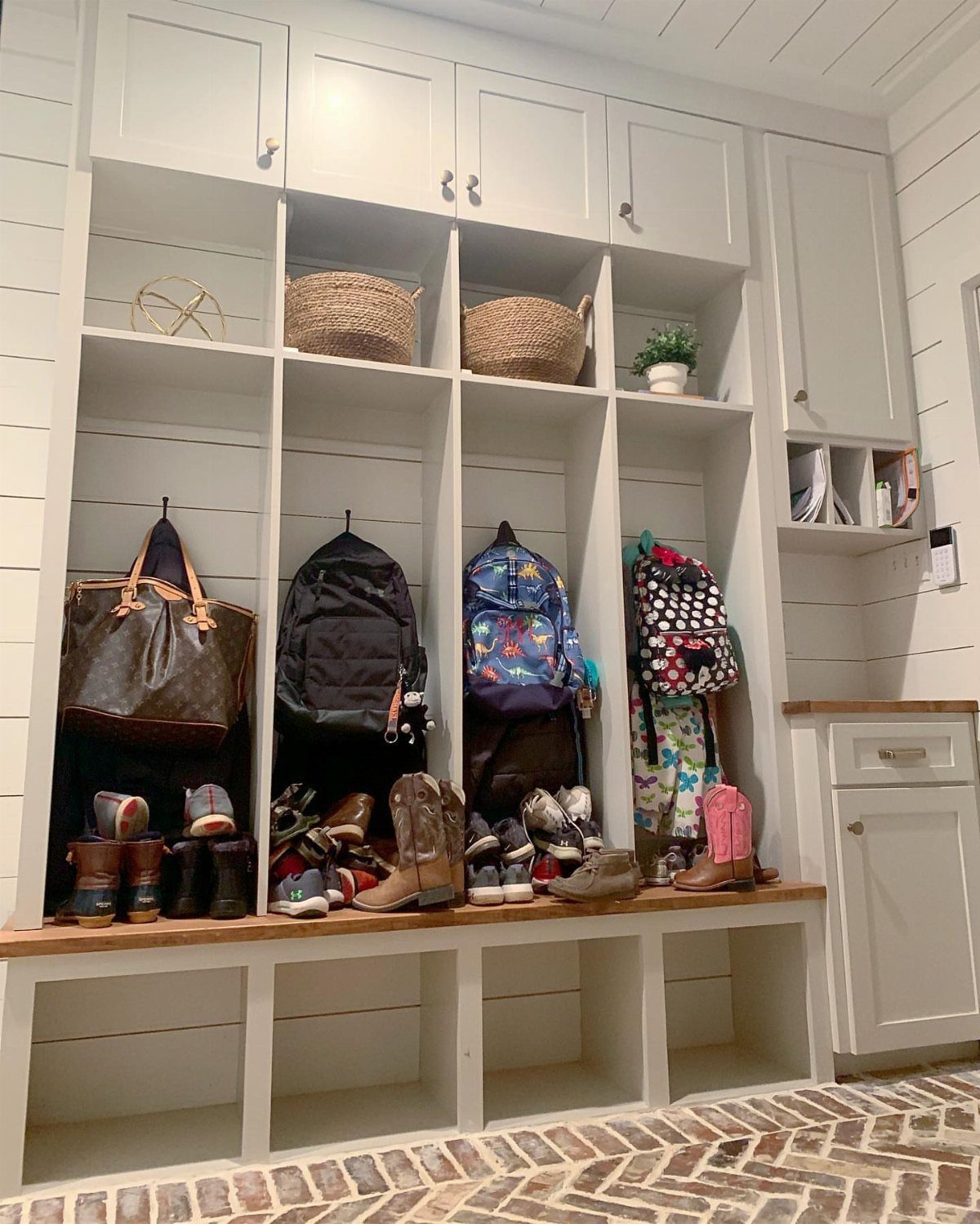
Narrow walls waste the most space above eye level, and tall open cubbies put that height to work. One slot per person, each holding a bag and a pair of shoes, keeps the morning scramble short.
I would keep the cubbies open for daily items and put closed cabinets above them for things you reach for rarely. Bins under the bench catch the odds and ends: gloves, hats, leashes.
White paint keeps a tall, slim unit from feeling heavy.
5. Rugs, Mirrors, and Art
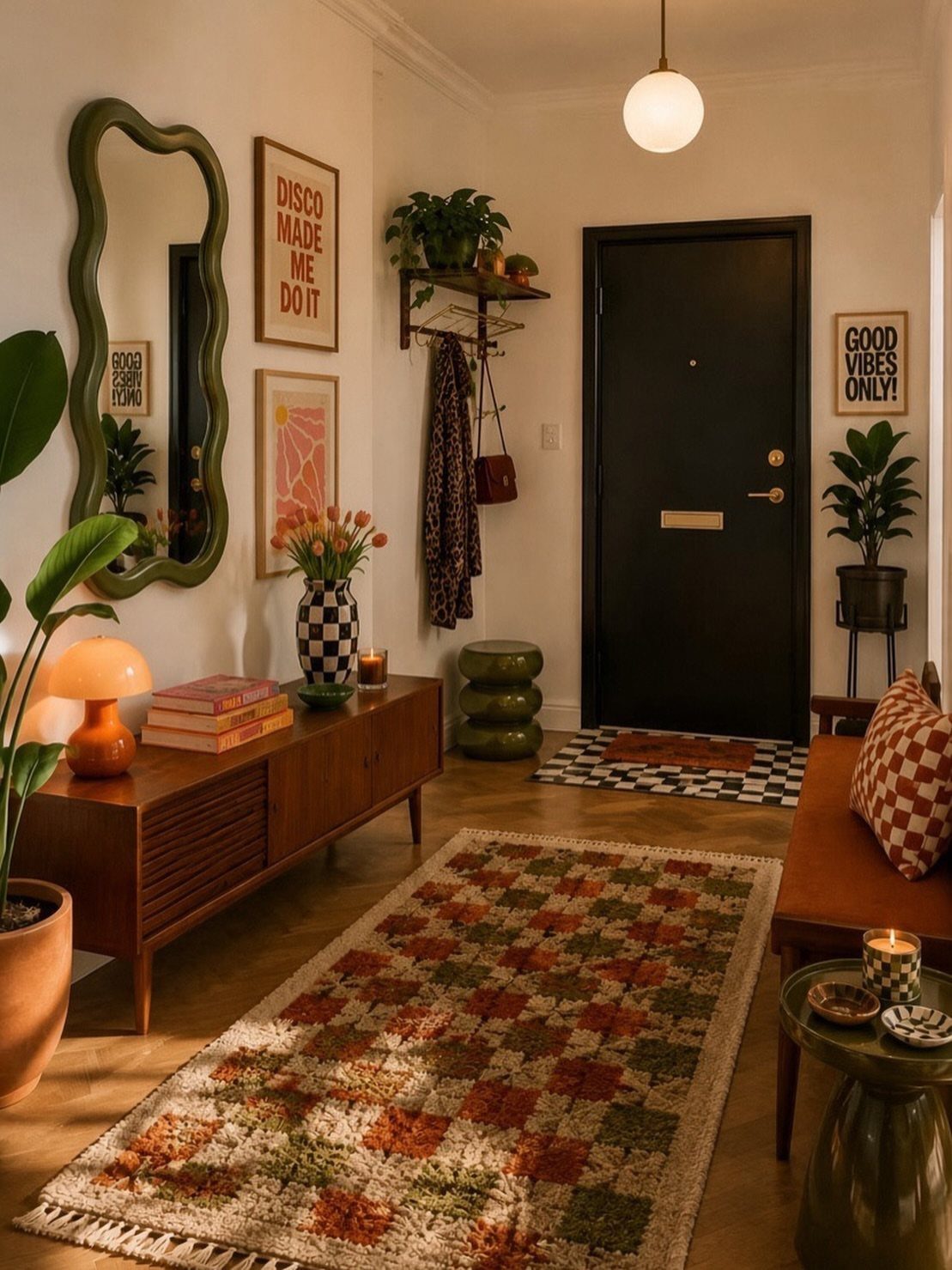
Rugs, mirrors, and art cost little and need no tools beyond a hammer. A rug catches grit at the door, and a busy pattern like a checkerboard hides dirt better than a solid color.
A mirror beside the door makes a tight entry feel wider, and it lets you check your look one last time before leaving. The wavy green one here adds personality without taking floor space.
I would hang art at eye level and keep the frames light, so a small entry feels playful, not crowded.
6. Green Paint Color
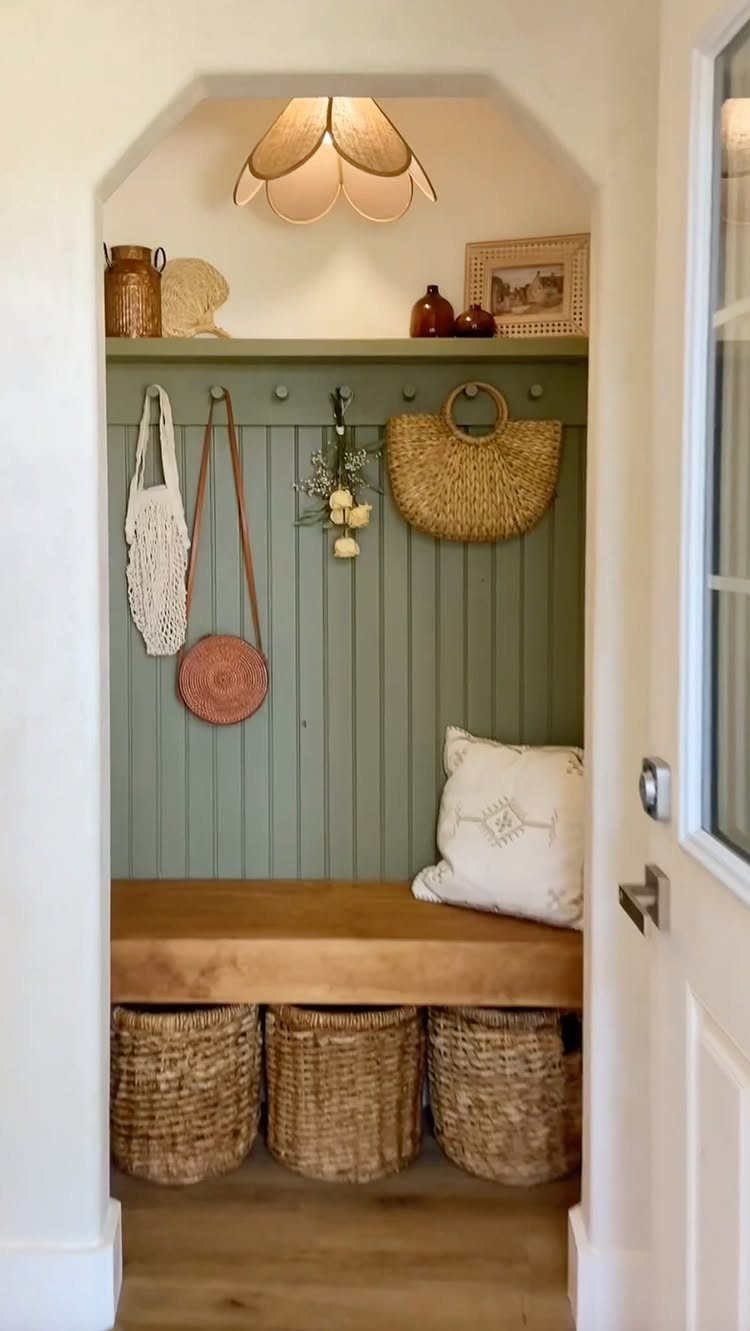
A sage green with a grey base is a smart pick because it shifts with the light: bright rooms pull it toward green, dimmer ones lean blue.
Test a sample on the wall and check it morning and evening before buying a full can.
7. Mudroom in the Garage
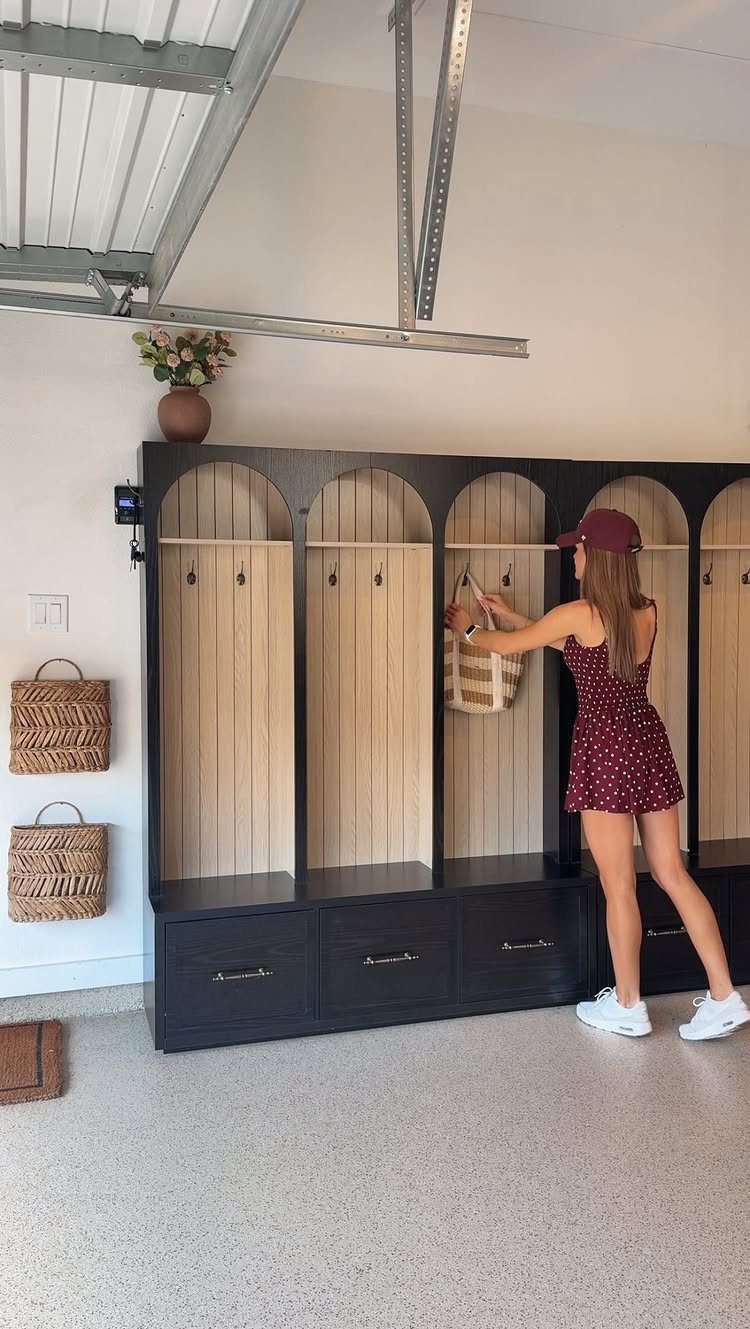
A garage entry works best when the lockers do the sorting before anyone reaches the kitchen. Tall cubbies with arched tops, one per person, give each bag and jacket a home right where the car door closes.
Black hides scuffs and tire-dust better than white would, and I would pick it for that reason alone. Leave a clear strip of floor in front so doors can swing open without bumping the car.
Keep dirty gear in the garage and let only what you need inside the house.
8. Hooks and Hanging Bars
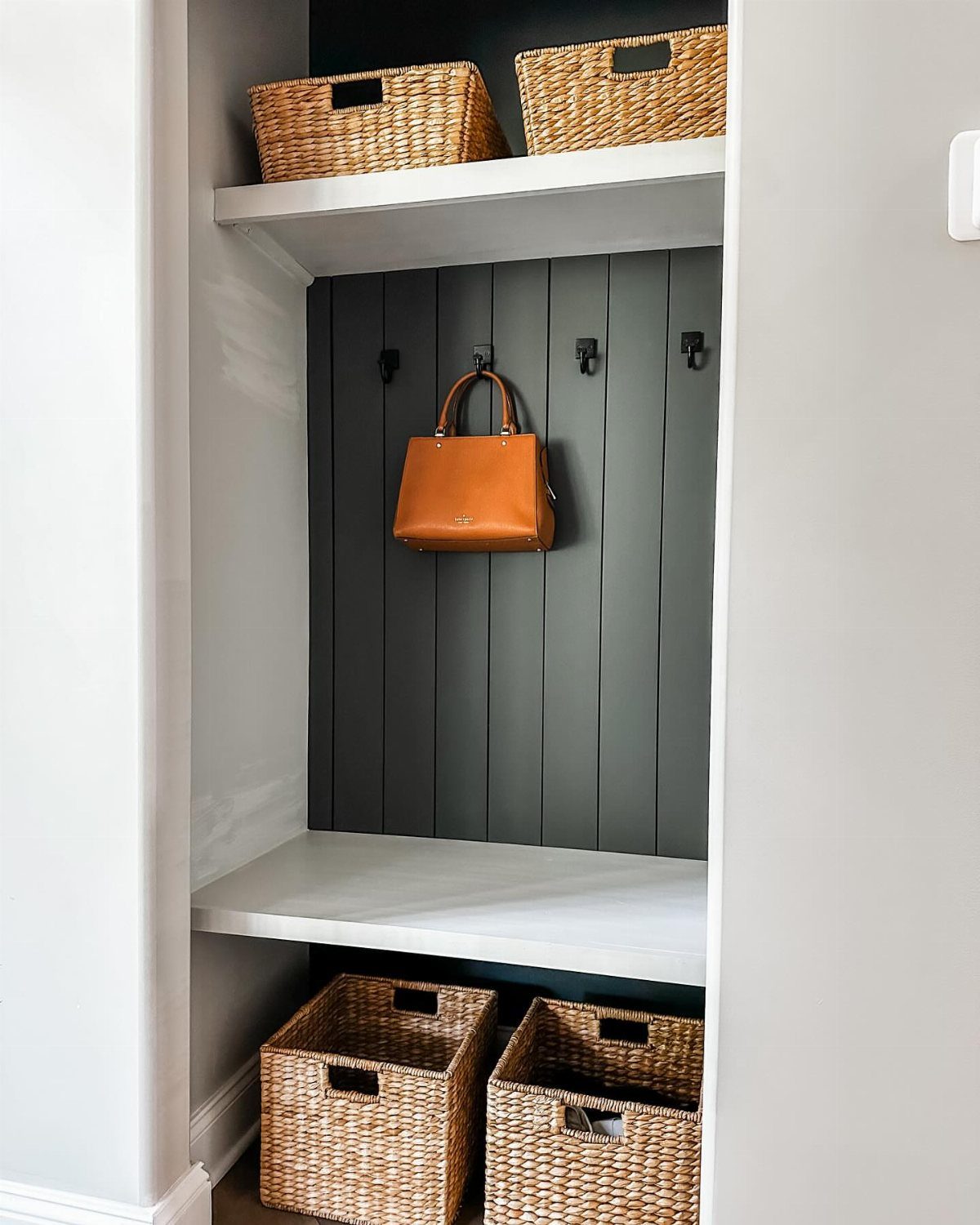
A row of hooks turns a bare wall into daily storage, and hooks run much cheaper than any cabinet. Mount them over a shelf and the wall works twice: coats and bags hang below, small items sit above.
Baskets under the hooks catch scarves, hats and the things that never find a hook. Woven ones look softer than plastic bins.
I would space hooks evenly and screw them into studs when they will carry heavy coats. A hanging bar suits a longer wall, since it holds more than a few hooks.
9. Hunter-Green Wood Paneling
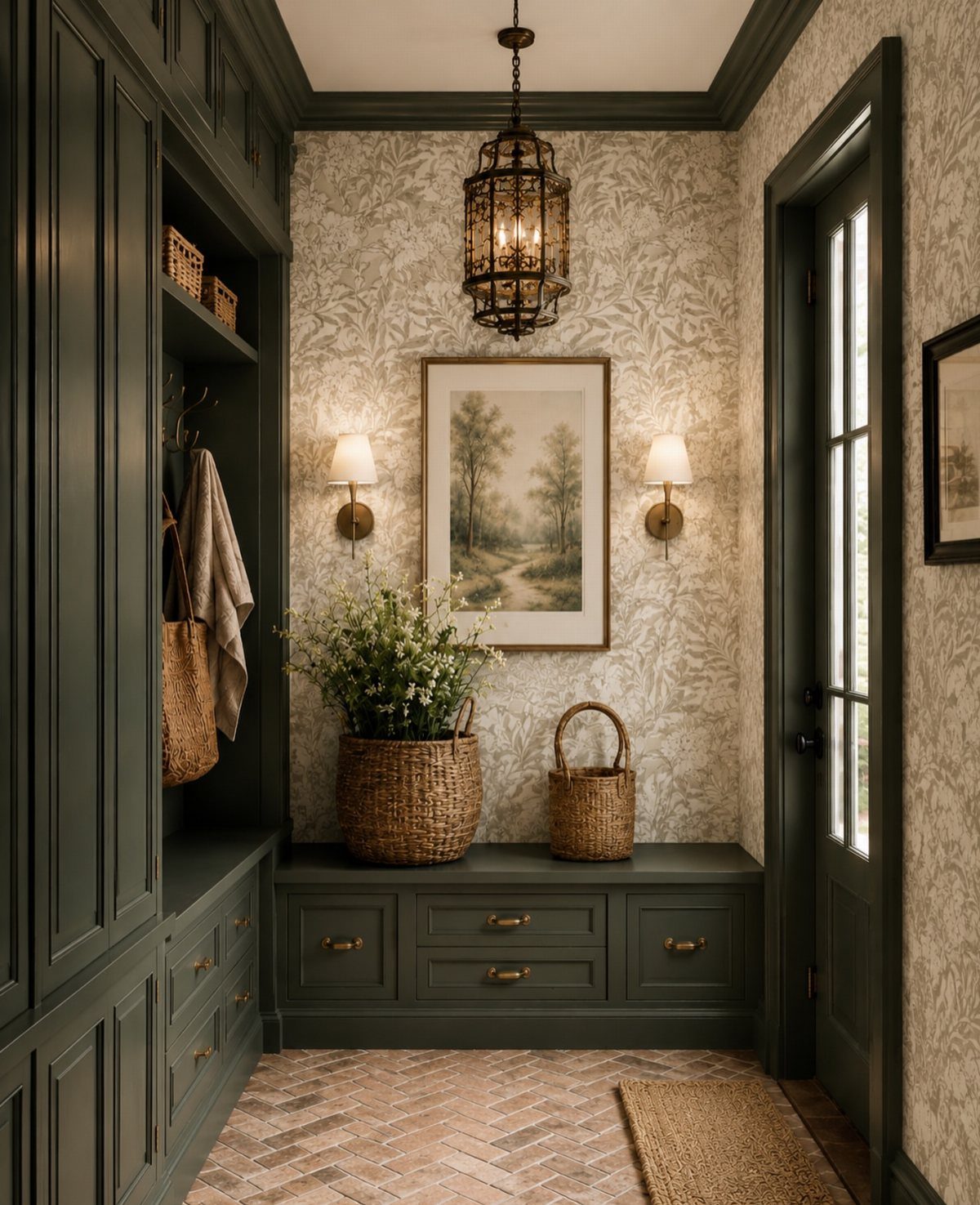
Hunter green looks richest when it covers the wood itself: cabinets, paneling and crown molding painted one deep shade, so the millwork reads as a single piece.
Use a satin or semi-gloss finish, because trim in a mudroom gets bumped and wiped constantly.
Keep the rest of the room quieter or let one pattern, like floral wallpaper, carry the mood.
If you rent and cannot paint built-ins, I would add the green with a peel-and-stick panel kit or a painted bench instead.
10. Blue Walls
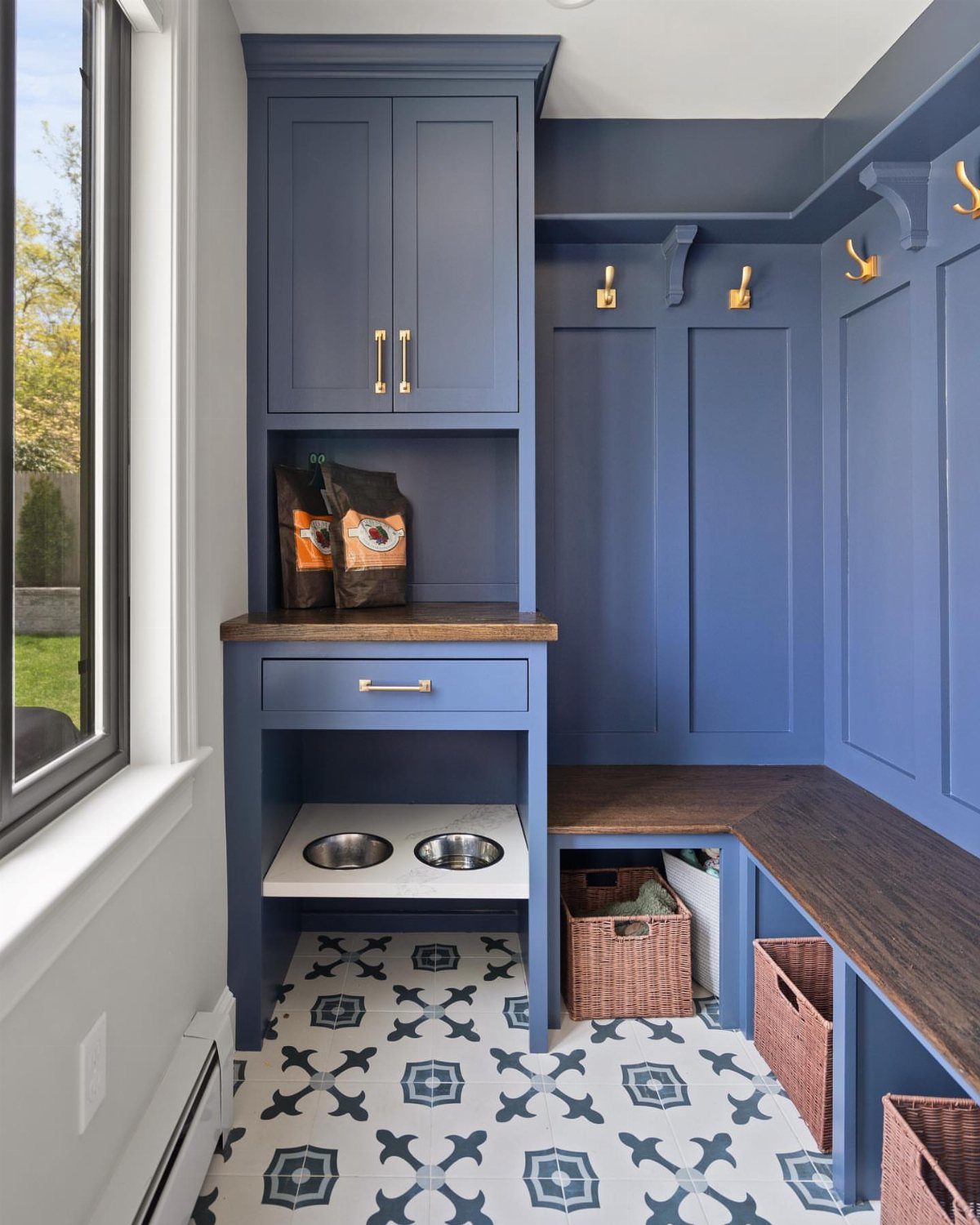
Painting the walls and cabinets the same blue wraps a small mudroom in one color, which hides the edges and makes the room feel larger than its footprint.
A dark wood bench keeps the blue from going flat, and patterned tile underfoot adds the contrast.
I like that idea for any mudroom with a dog.
Test the blue in your own light first, since it shifts through the day.
11. Wall-Mounted Unit
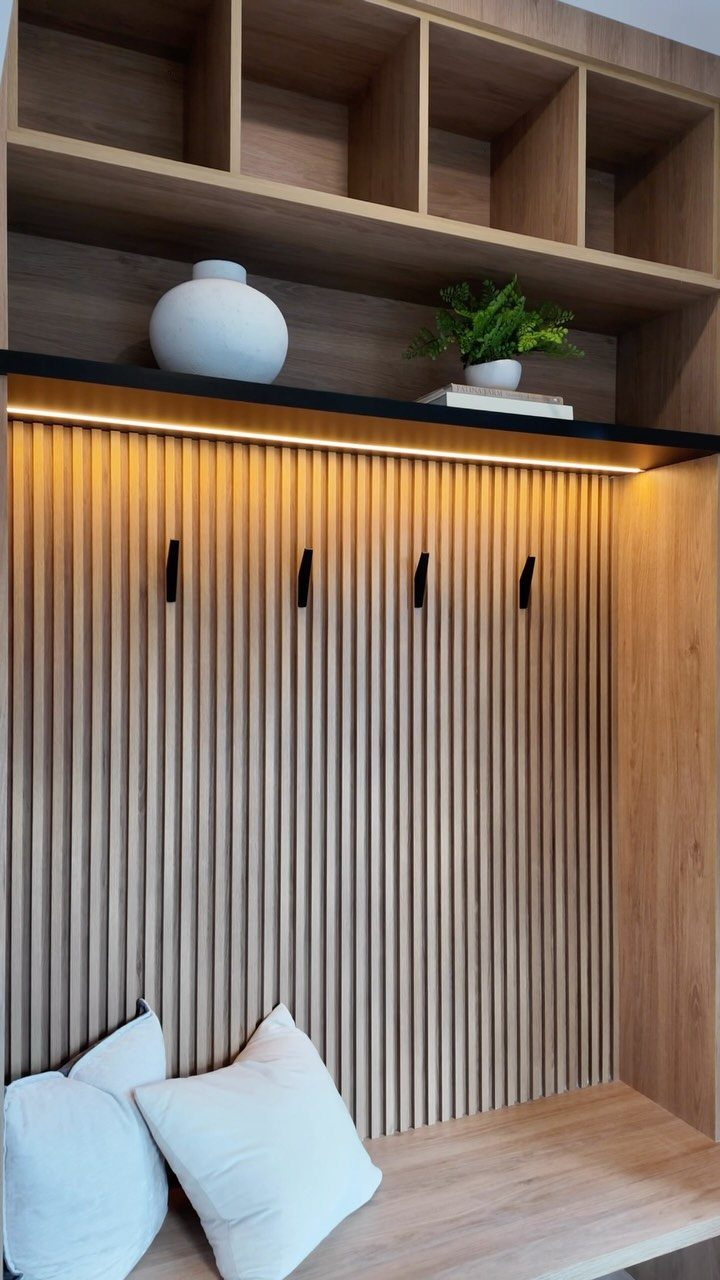
A wall-mounted unit keeps the floor open, which matters most in a narrow mudroom. Slatted paneling behind the hooks lets you hang bags and coats from one strip, with open shelves overhead for baskets and a bench below for sitting.
Light wood makes the whole run feel airy. Under-cabinet lighting is a small add-on that makes a dim entry easier to use at night.
I would anchor every shelf into studs, because coats and bags put real weight on the wall.
12. Sliding Barn Door
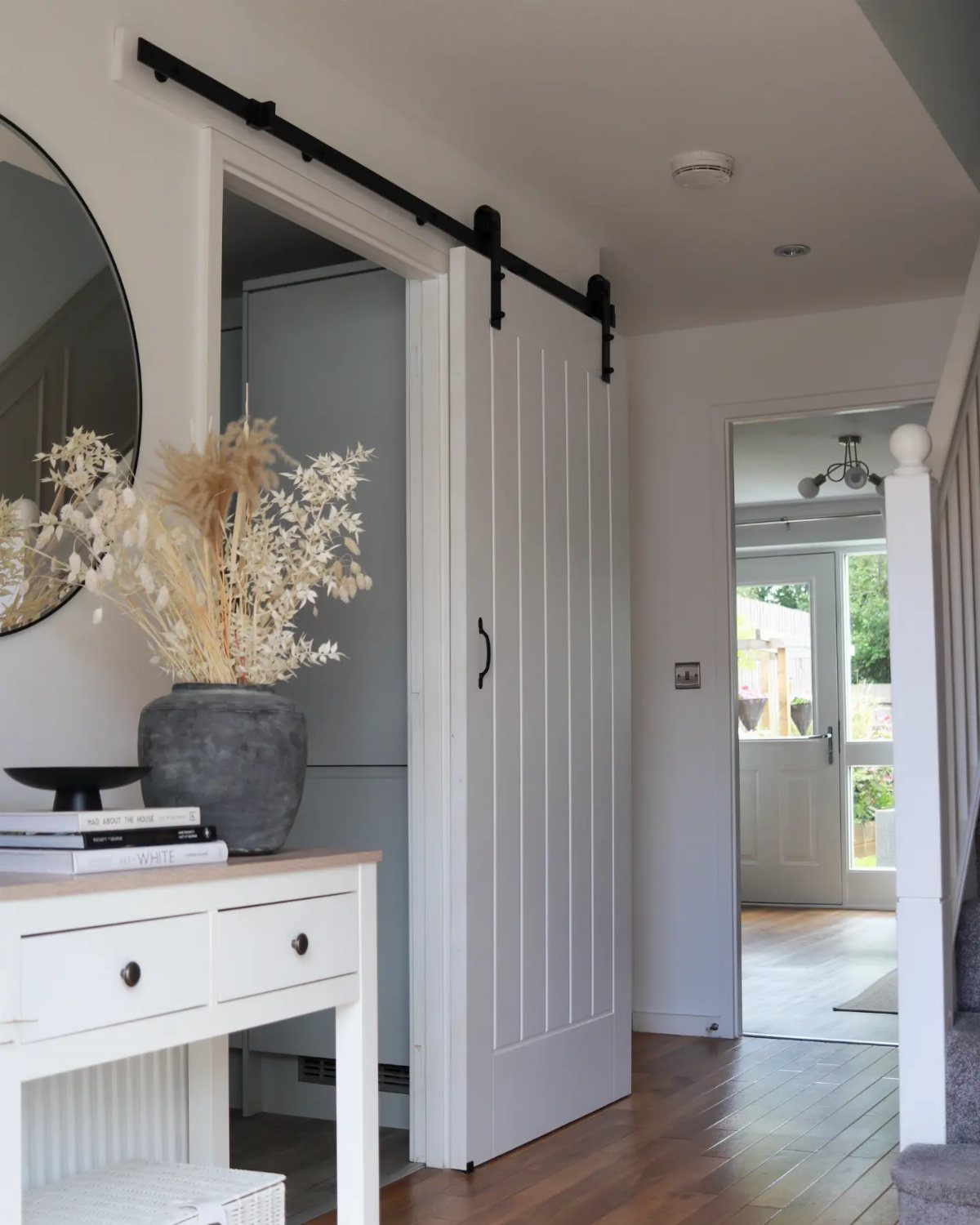
A sliding barn door needs no swing space, so it suits a doorway where a hinged door would hit a bench or console.
Hang it on a black track, paint the slab white, and it closes off a messy mudroom in seconds.
Mount the track into a stud or a solid header, since a heavy door puts steady load on it. Leave wall space beside the opening equal to the door’s width so it can fully clear.
The trade-off: sliding doors do not seal tightly against sound or drafts.
13. Mudroom Under Stairs
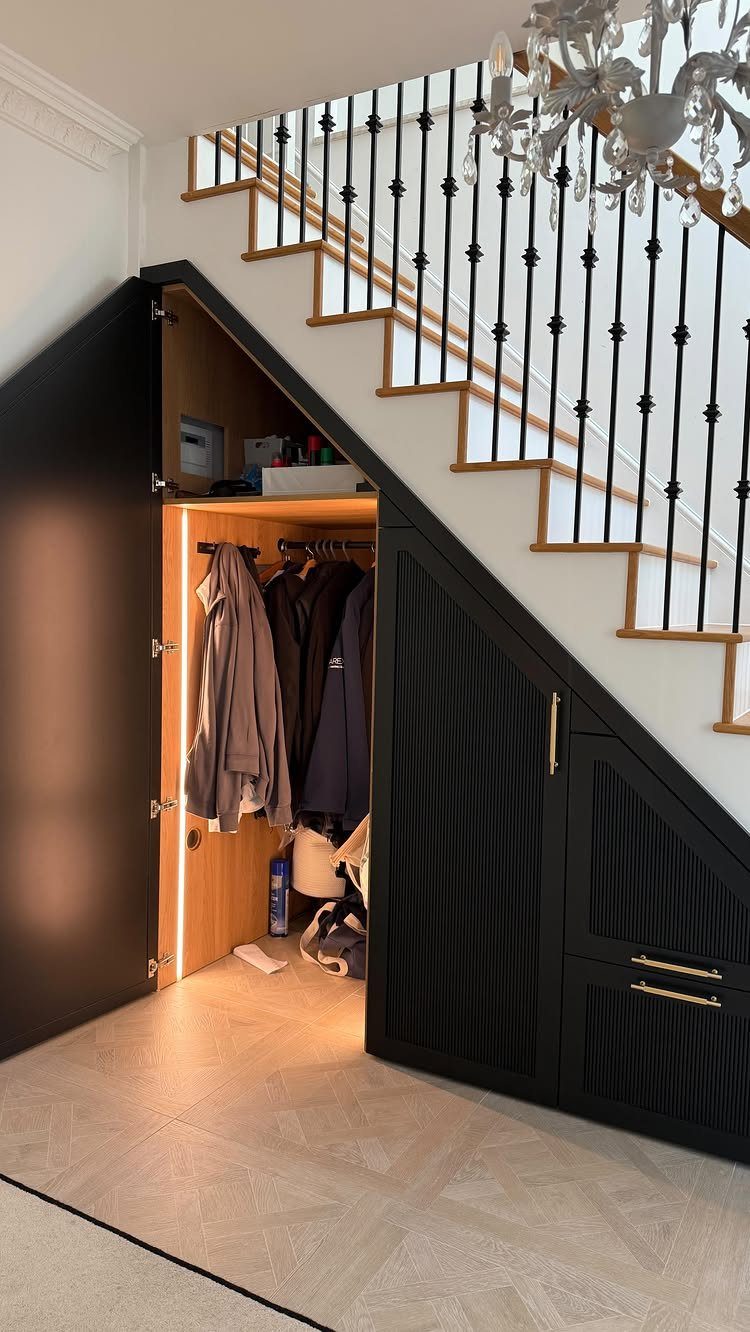
Black paint makes a closet under a staircase look built on purpose instead of left over, and a quart of cabinet-grade paint is usually enough to cover the walls, ceiling and door.
A dark color hides the slanted ceiling, so hang coats on the tall side where the clearance is greatest and use the lower end for shelves or baskets that hold bags.
I would put the hanging rod where the ceiling is highest and use the lower, shallower spots for shelves. Matching the doors to the trim keeps the whole piece calm.
A light floor and a bright entry balance the dark closet nicely.
14. Plywood Pegboard Wall
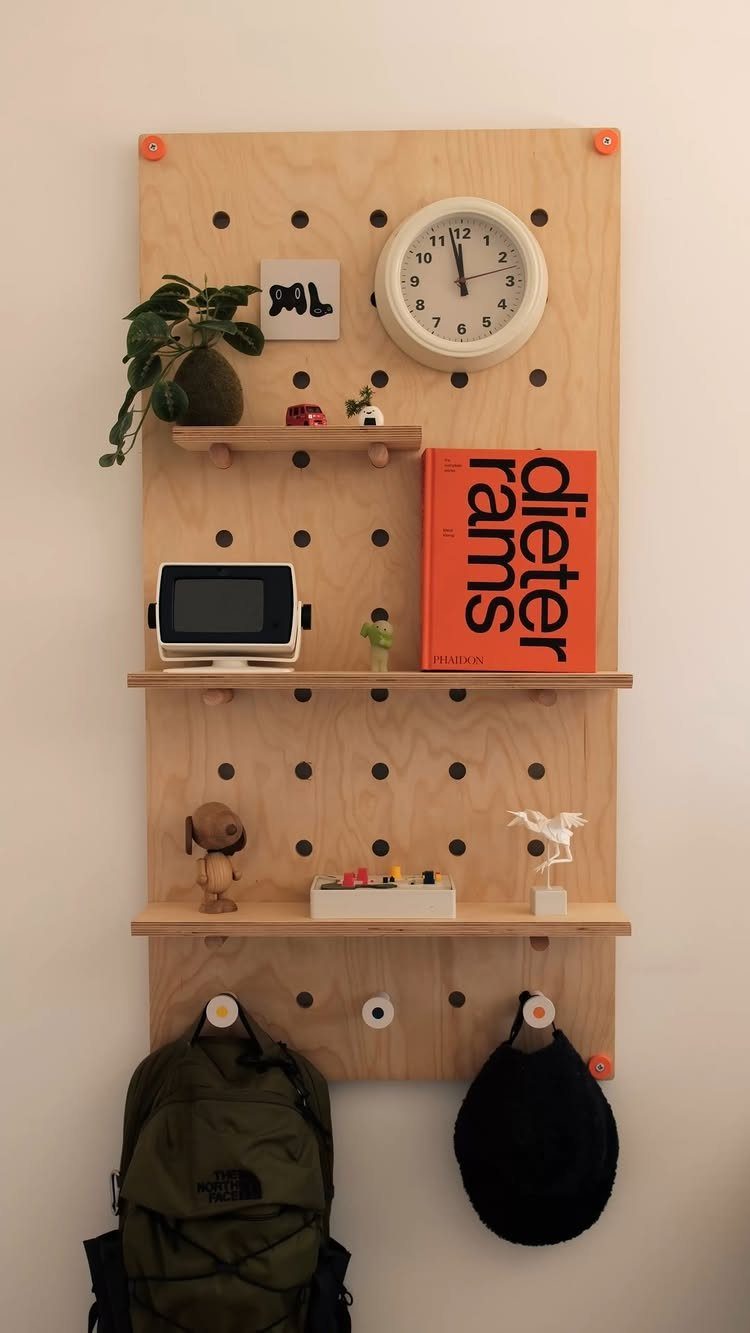
Plywood pegboard in a light wood tone gives a white wall flexible storage without a built-in. Wooden dowels move wherever you need a hook, and small shelves hold things like a clock, a book or a bit of decor.
Hang the bags and hats low, where hands reach first, and keep the shelves higher for objects you only look at.
I like plywood over plastic pegboard because it reads as furniture. Cut and mount a single panel in a weekend.
15. Corner Mudroom Nook
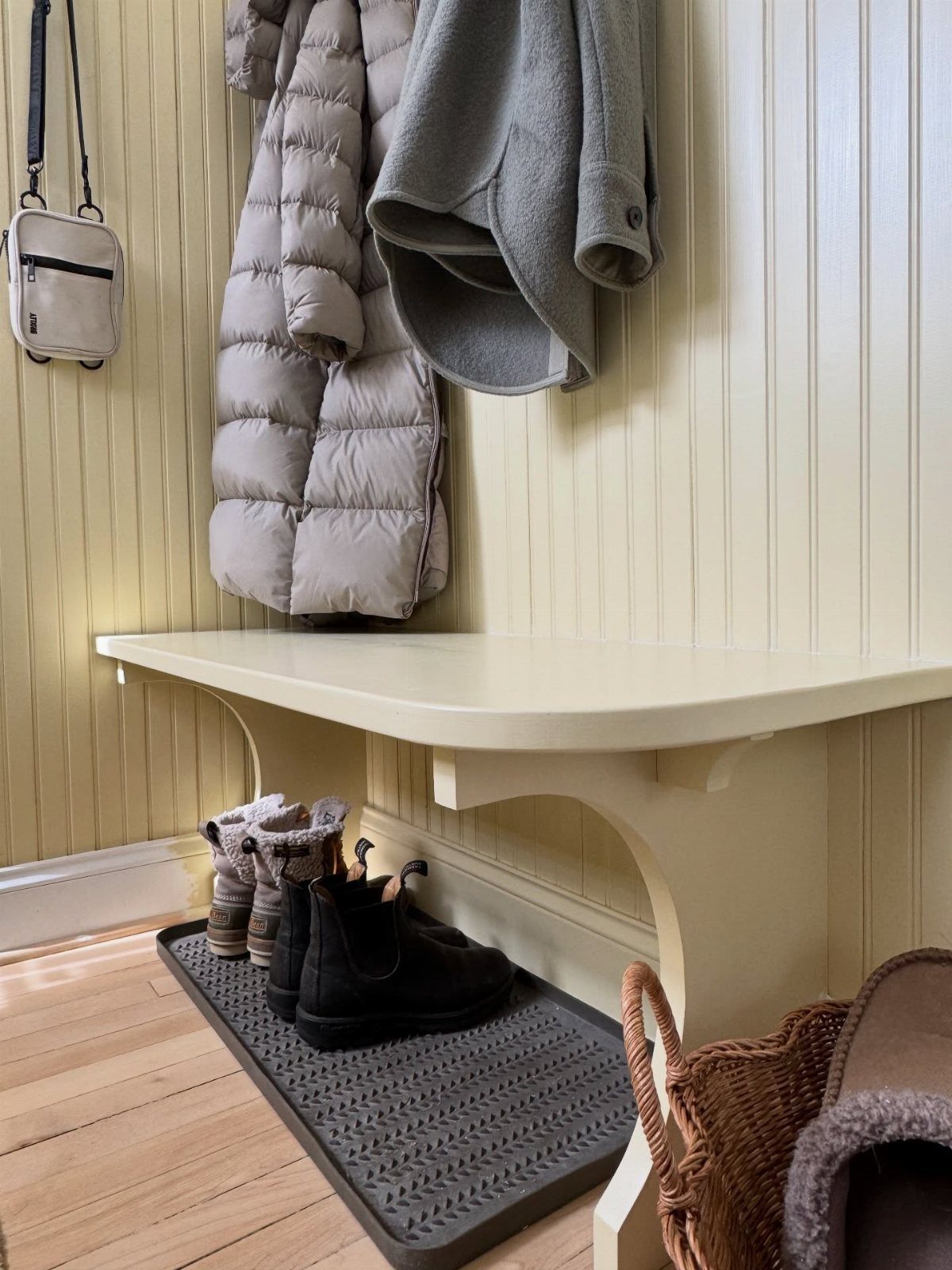
A corner gives a small mudroom three useful surfaces at once: two walls for hooks and a fitted bench across the angle.
Beadboard on those walls handles scuffs from bags and coats better than flat drywall, and a pale yellow paint warms it up.
Set a grey boot tray under the bench so wet shoes drip somewhere contained. Hang the hooks overhead at a height where coats clear the seat.
I would paint the bench white to keep the corner bright.
Maximizing Vertical Space
Run storage up toward the ceiling and the same footprint holds far more.
Closed doors on the tall run hide the daily clutter, and a high-contrast neutral palette keeps the cabinets looking clean while the contents stay hidden.
A neat mudroom can also double as a prep zone when you entertain, so leave one clear surface at counter height.
Put the things you use daily at arm level and the rarely used items up top. A small step stool kept inside the room makes the high shelves usable.
Organizational Strategies
Pick the container by what goes inside it. Woven baskets hide the mess and suit hats, shoes, winter wear and pet toys, anything that piles up.
Wire baskets let air move, so they are the right choice for sports equipment or anything wet. Labeled clear bins let you spot what’s inside without opening anything, which helps when kids need to grab their own gear.
Open cubbies are the other option. Open shelves put everything in view so you know where it is, and they give you a place for sunglasses or something you want on display.
I would mix open and closed storage: open for what you grab daily, a lidded or woven container for the rest.
If the room doubles as laundry, a roll-out cart that fits in the opening below a shelf holds dirty clothes without taking floor space.
Design Aesthetics
Choose colors and materials that echo the rooms beside the mudroom, so the entry feels like part of the house.
Pull one tone from the adjoining hallway or kitchen, such as the trim color or the cabinet finish, and repeat it here.
Then let function pick the finish. Mudrooms take wet boots, bags and paws, so favor surfaces you can wipe clean: tile, sealed wood, and washable paint.
Keep the palette to two or three materials. A tight space feels quieter when the floor, bench and walls match, and one contrast, like a woven basket or a metal hook, is enough.
Frequently Asked Questions
How do you make a mudroom in a small space?
Find any wall where hooks can go over a bench, and you have a working mudroom.
Add baskets under the bench for shoes and a shelf above the hooks for small items. If the budget allows, closed built-in cabinets hide clutter, which helps when the entry sits out in the open.
What is the point of a mudroom?
A mudroom is a drop zone where coats, bags, shoes, and wet or muddy gear land before they reach the rest of the house.
It keeps the clutter and dirt in one place and makes everything easy to find on the way out.
In a small home it can share space with the laundry, say a tension rod across the machine’s upper wall where damp jackets can drip.





