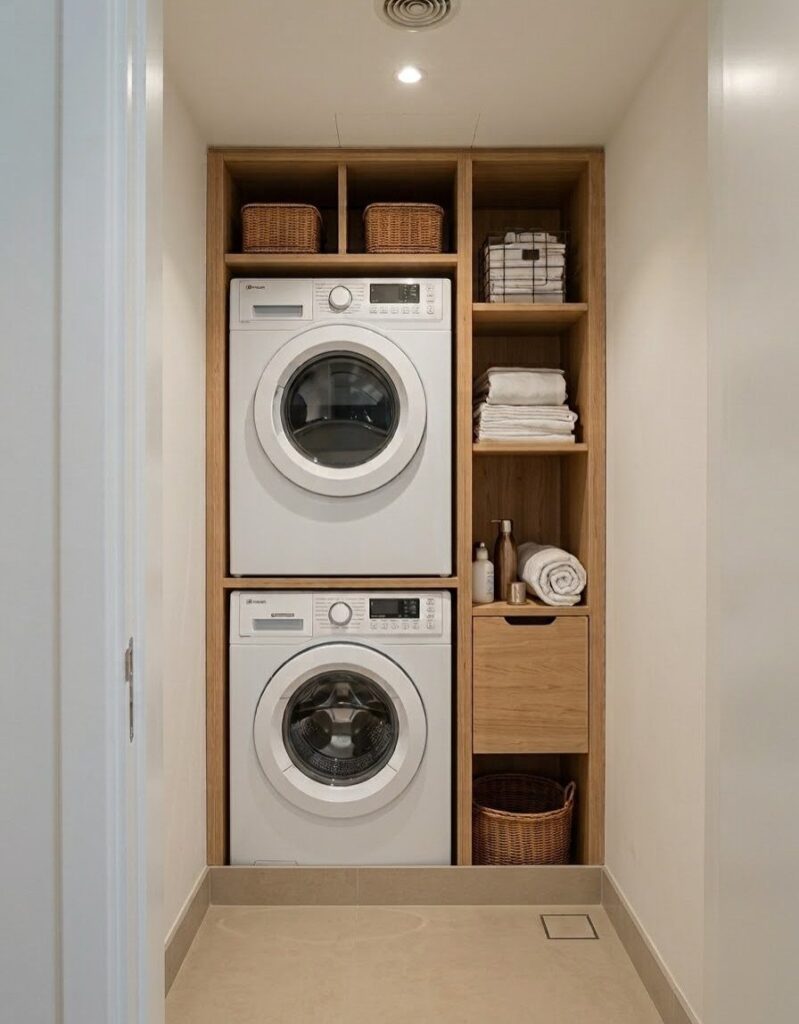
Which compact washer and dryer fits depends on what your space already offers: a closet, a wall tall enough to stack, an under-counter run, or just a floor and a sink.
The ideas here run from a portable mini washer that fills by hand to front-loaders tucked under cabinetry, and the door or lid style decides a lot about how each one lives.
1. Compact Washers Installed in Closets
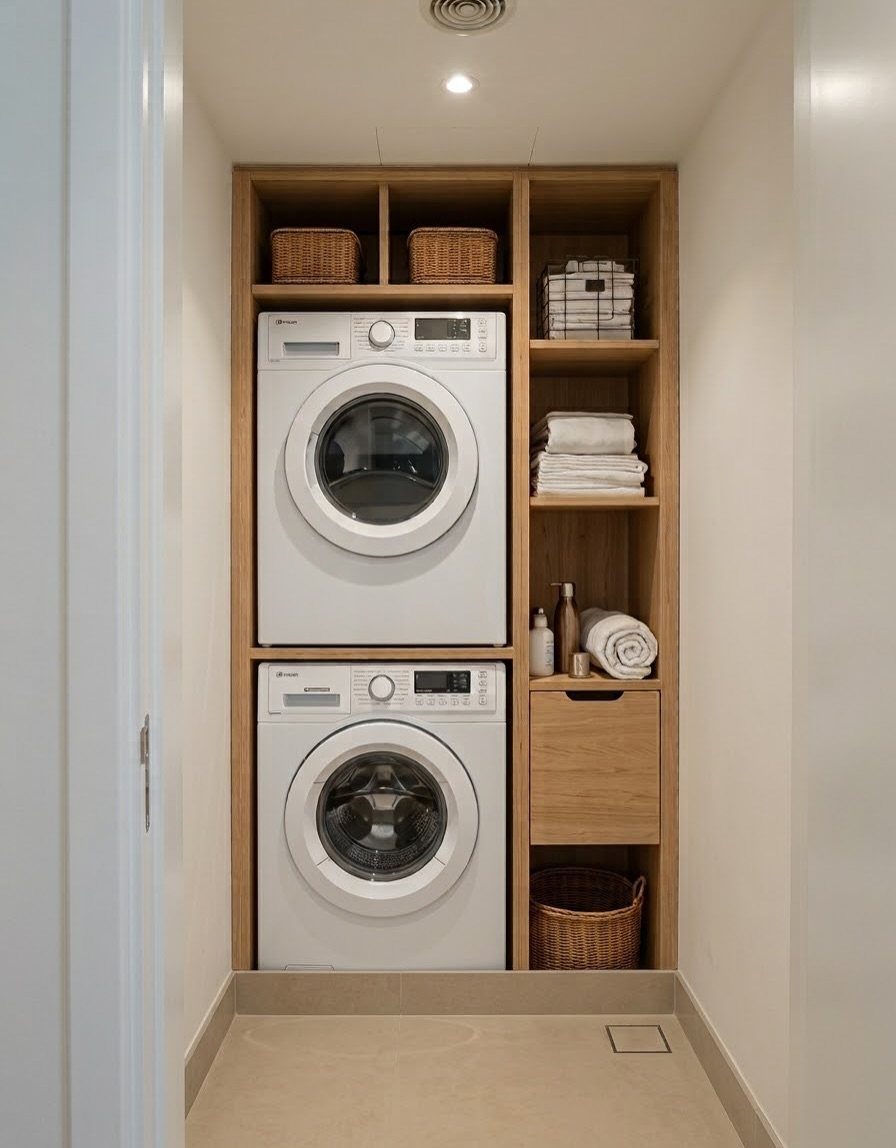
A closet works as a laundry room when the stacked pair sits at one end and the rest of the space is shelving.
Light wood shelves above the dryer hold towels and baskets within arm’s reach, so nothing gets carried across the house.
Before buying, measure the closet’s width, depth and height, and leave room behind the machines for hoses and venting. Doors that fold or slide open all the way make loading easier than a door that swings into the machines.
I would pick this over a dedicated room any day in a small home, since the closet you already have costs nothing in floor space.
2. Stacked Compact Washer and Dryer
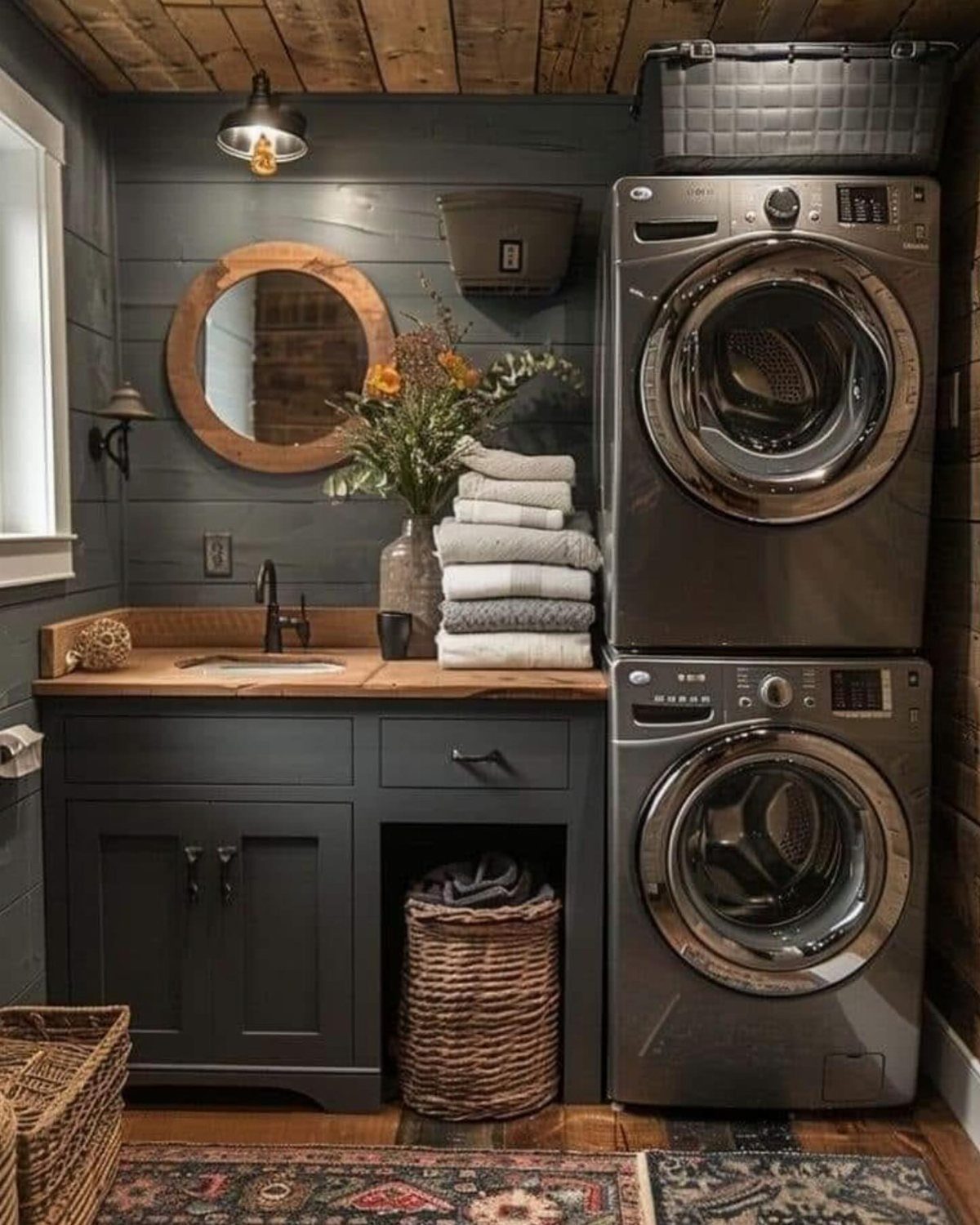
Stacking puts the dryer directly on top of the washer, so the pair takes up the floor space of one machine. That is why this setup works in a room as tight as a bathroom-sized laundry corner.
Check the total height before you order. You still need to reach the top controls and the lint filter without a step stool, and a shorter reader should weigh that heavily.
A stacking kit for a compact washer and dryer is an add-on worth planning for if the wall allows.
3. All in One Washer Dryer Combo
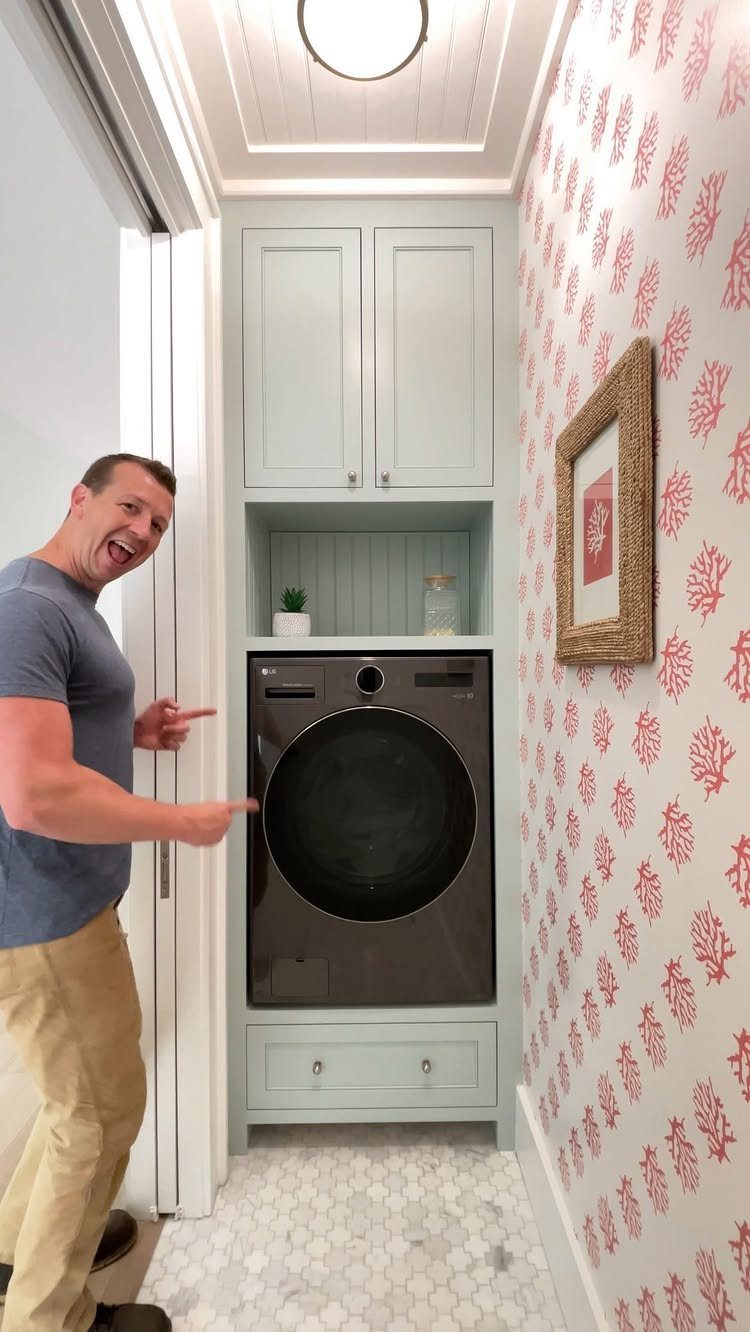
A washer-dryer combo does both jobs in one drum, which means one machine and one footprint.
My honest view: a combo wins when you have room for a single appliance and nothing more.
Expect a cycle that washes and then dries in the same drum, so it takes longer than 2 separate machines running back to back.
Leave cabinet openings a little wider than the machine, and confirm the door can swing fully open.
4. Under Cabinet Compact Washer Installation
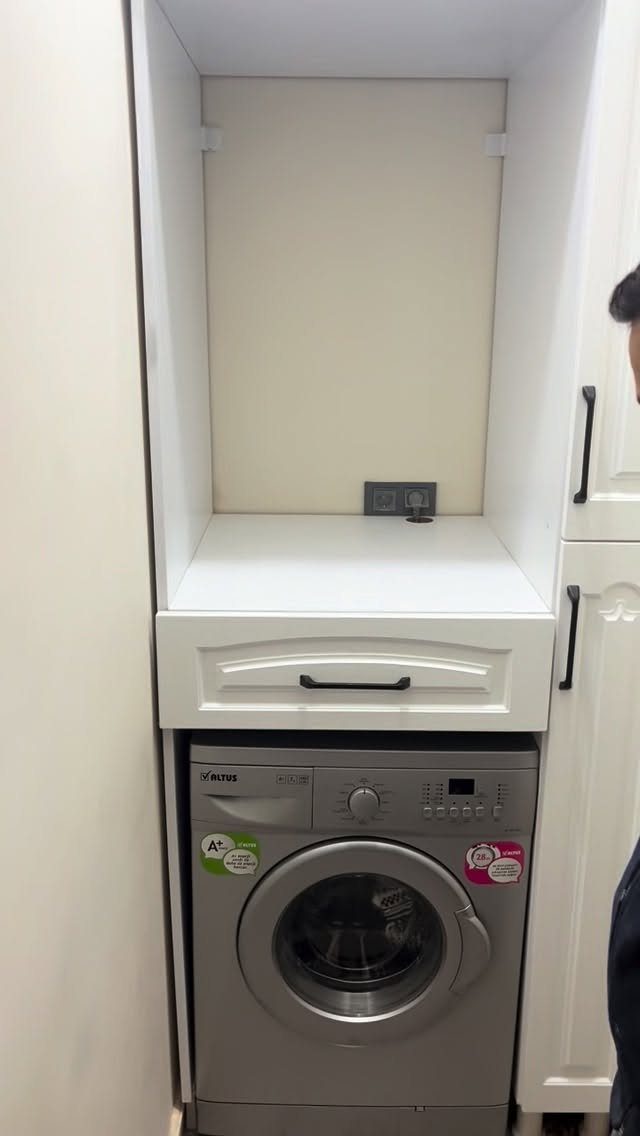
Sliding a front-loading washer under a built-in counter gives you a folding surface for the price of cabinetry you may already be planning. A white cabinet with a drawer above the machine adds a place for detergent and dryer sheets.
Measure the opening height and width with the machine’s specs in hand, and allow clearance at the back for hoses and the drain. Front-loaders suit this setup because the door opens outward, not upward.
Skip a top-loader here; the lid would hit the counter.
5. Portable Mini Washing Machine
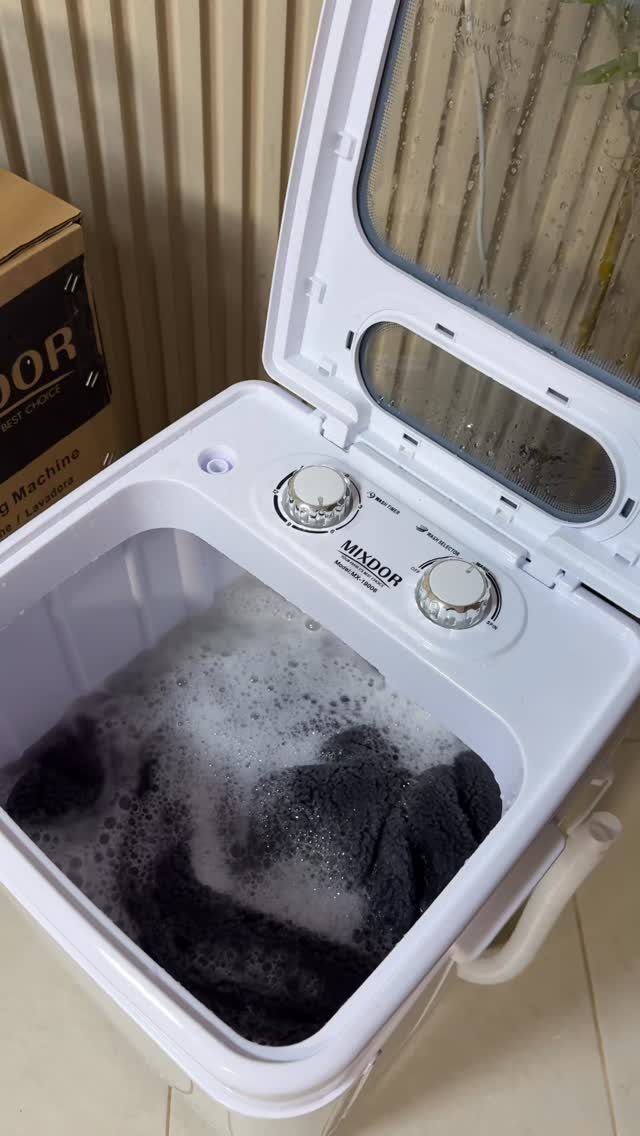
A portable mini washer sits on the floor, fills by hand with water and soap, and handles small loads. For a renter with no hookups, it is the cheapest way to wash at home.
I would use it for dark shirts, underwear and gym clothes, not bedding. The drum is small, so overstuffing leaves clothes poorly rinsed.
Store it in a closet or under a bed, and set it near a sink or tub so draining is easy. It also needs a place to dry clothes afterward, since most models only wash.
Maintenance Tips for Compact Washers
A compact washer stays fresh with 3 habits. Wipe out the drum on a regular schedule, check and clean the filter, and leave the door open after each load so air can dry the inside.
Closed doors trap damp air, and that is where musty smells start. In a closet or under a counter, propping the door open is easy to forget, so make it part of unloading.
Plan on smaller loads more often.
A small drum means fewer garments per cycle, and cycles generally run slower than on a full-size machine. Overfilling to save a trip is the fastest way to get poor results and extra wear on the machine.
Benefits of Compact Washers
The real draw of a compact washer is how much convenience fits into a small footprint.
A compact washer fits in a hall closet, slides under a counter, or tucks into a kitchen corner, and that means no more hauling baskets down to a shared laundry room.
Cycle choice is wider than most people expect, with short refresh settings for clothes you wore once and heavier programs for muddy or stained loads. That makes frequent small loads of towels or workout gear easy to handle.
Check the water and energy ratings too. Efficient machines keep utility costs down, and that adds up when you run a load every few days.
Compact washers, typically under 27 inches wide, are perfect for small living spaces, though they require more frequent, smaller loads due to their 2-3.5 cubic feet capacity.
— Reviewed
Considerations for Purchasing
Judge 3 things before buying: design, noise and how well it cleans. Noise deserves extra weight in an apartment, since a laundry spot near the kitchen, bedroom or living room can cut into your quiet.
Check the configuration options.
Compact sets come side by side or stackable, sized for undercounter spaces or narrow closets. If you have a little extra room, a pedestal lifts the machine for easier access.
Look at water and electricity use as well. Many compact sets are designed in Europe with conservation in mind, which lowers operating costs.
Drum design matters for delicates. A smaller drum is gentler on clothes, and some premium brands, Miele among them, use honeycomb drums that resist snagging.
Frequently Asked Questions
What is the smallest stackable washer and dryer on the market?
I can’t name a single smallest model from what I have, so I’d compare total stacked height and footprint on each spec sheet.
Measure the total height first; the top controls and lint filter should sit within easy reach, with no step stool needed.
How long do portable washers last?
I don’t have a reliable lifespan figure for portable washers, so I won’t guess one.
2 habits stretch the life of a compact washer: keep loads below the top of the small drum, because overstuffing wears the motor and bearings, and prop the door open after every wash so the drum can dry.
A shut door holds in damp air, and that is how musty odors begin.
What are the best portable washer and dryer options for apartments without hookups?
For washing at home with no hookups, a portable mini washer costs the least of any option.
Most models only wash, so you also need a spot to dry clothes afterward. A washer-dryer combo is the other option, but it needs hookups.
What features are commonly found in small space washers?
Expect multiple wash cycles, a compact design, energy-efficient operation and quieter performance.
Settings run from quick refresh cycles for clothes worn once up to heavy-duty programs for mud and stains. Look at the water and energy ratings as well, since an efficient model trims the utility bill.
Can small space washers be installed in a closet or under a countertop?
Yes, many compact washers fit in a closet or under a counter.
Take the width, depth and height of the spot, then add clearance behind the machine for hoses, venting and the drain line. A front-loader suits an under-counter spot, since the lid of a top-loader would bump the countertop.





