Which cabinet goes over your washer and dryer depends on what the wall already has: a stacked pair calls for a dedicated overhead cabinet, a side-by-side pair gives you a flat top and room for grey cabinets above it, and black wall cabinets add contrast.
The ideas run from stock kitchen cabinets hung over the machines to ceiling-height cabinets that run the full height of the wall. Cabinets that run 84–96″ high suit a small room best, and 12–15″ deep keeps a narrow walkway clear.
1. Ceiling-height Cabinets Over Washer and Dryer
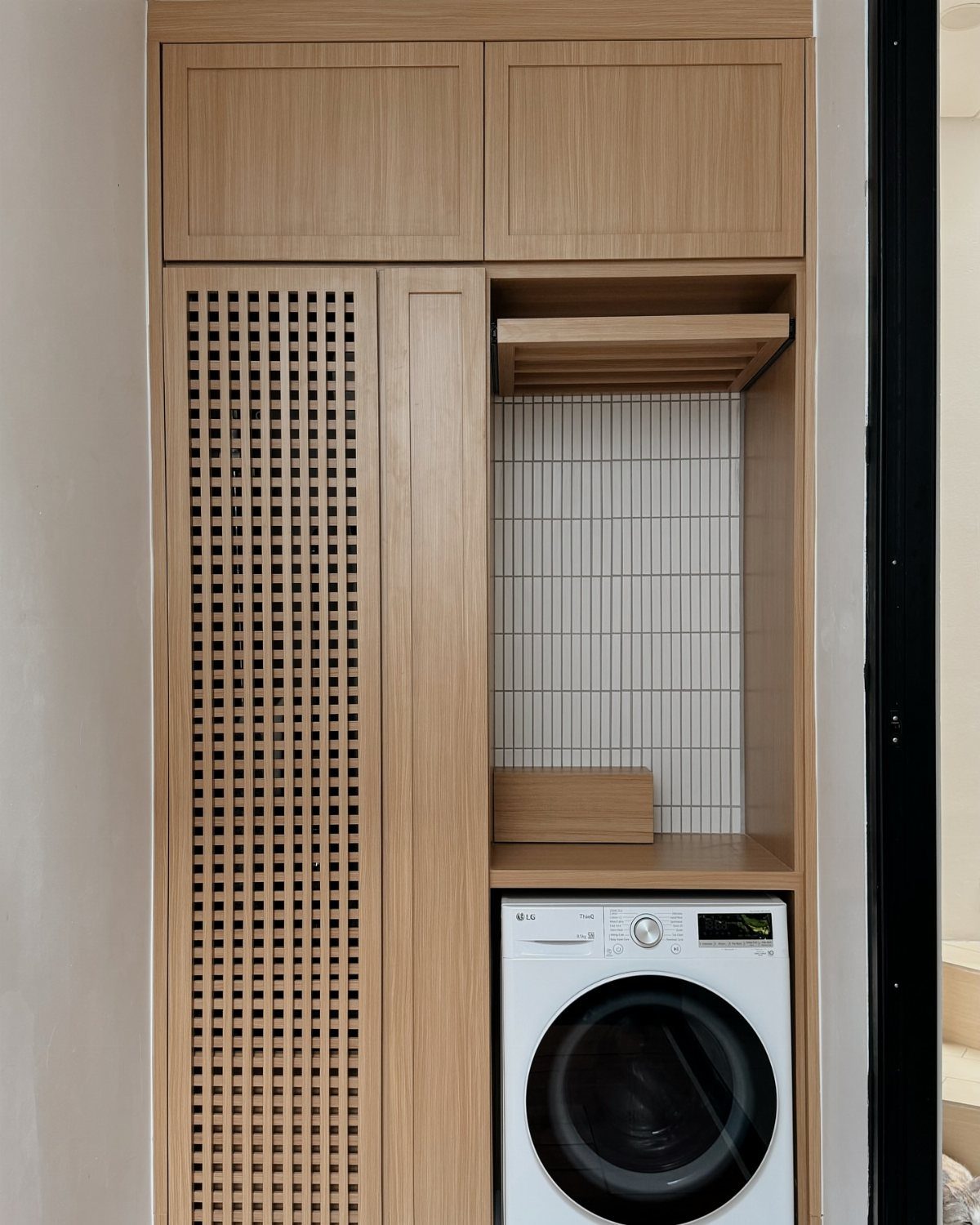
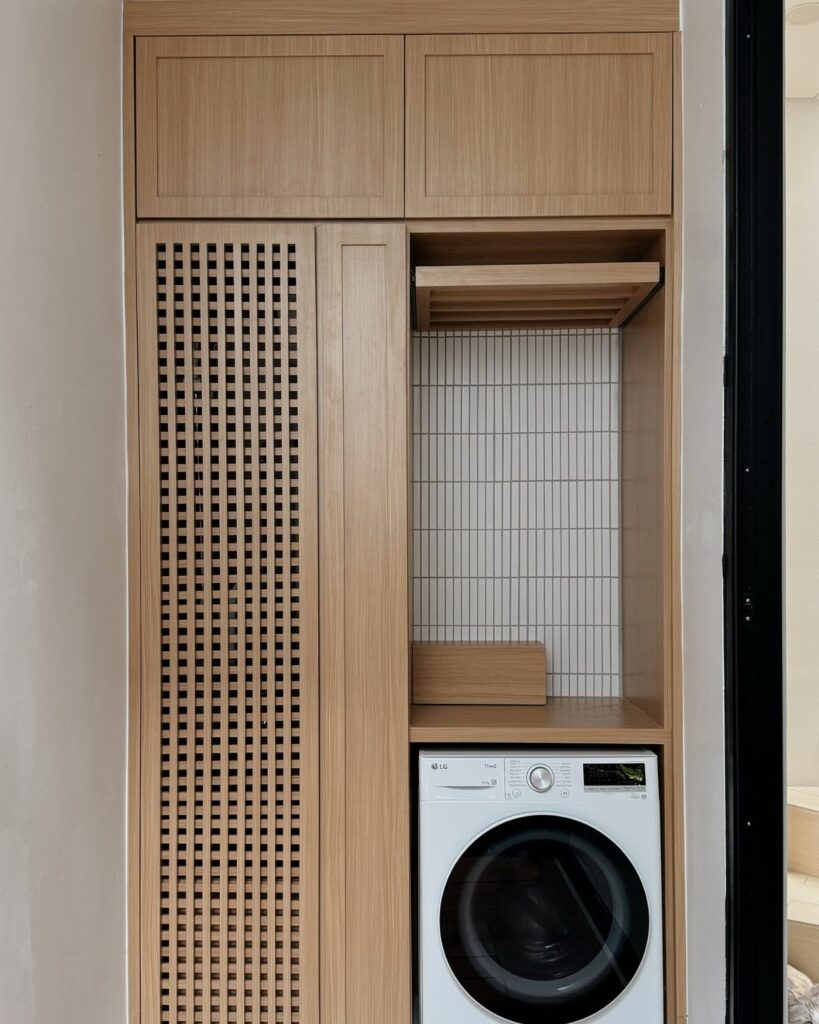
Cabinets that run all the way to the ceiling make the most of the dead air above a washer, and light wood keeps that much cabinetry from feeling heavy in a small room.
Put the everyday items, like detergent and dryer sheets, on the open shelving within easy reach. Save the upper cupboards for what you rarely touch, such as spare linens or bulk refills.
A slatted door adds texture and lets the front breathe, which I like better than a plain slab here.
2. Use Kitchen Cabinets
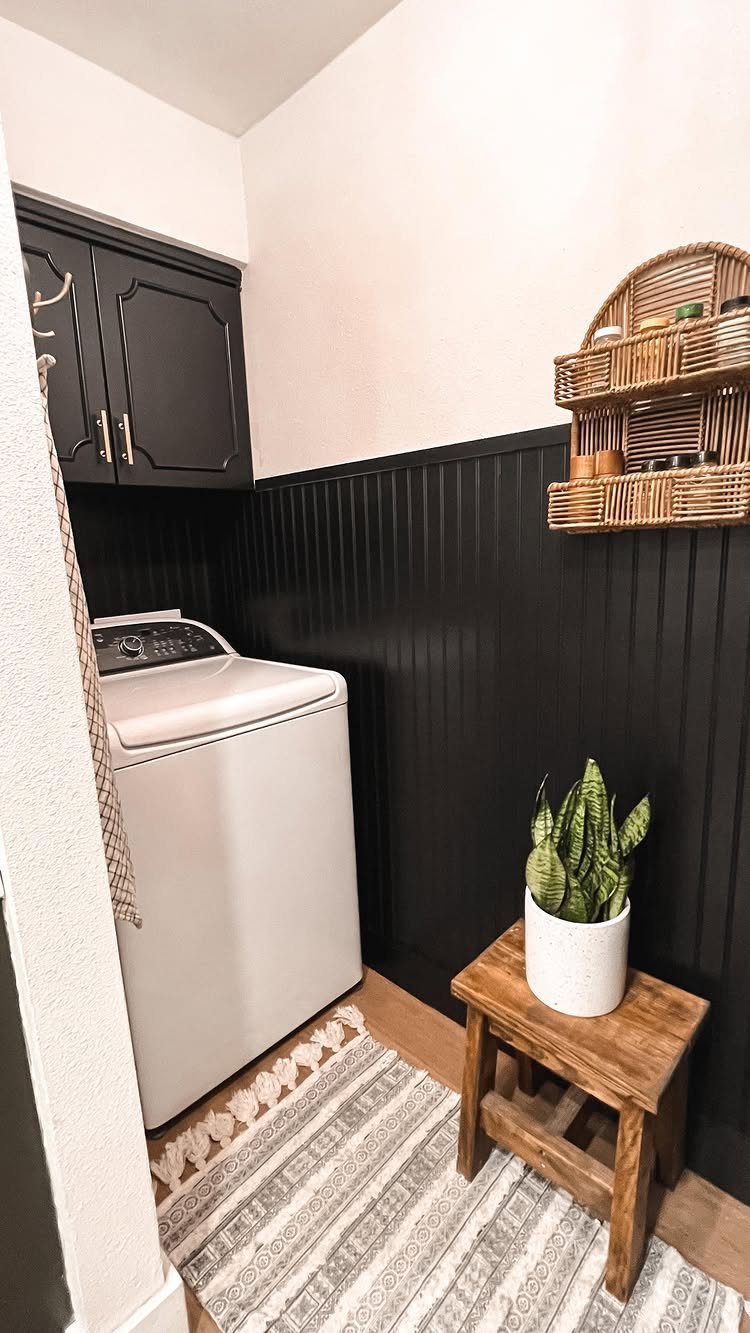
Standard kitchen cabinets are a budget-friendly stand-in for laundry cabinets, and dark grey ones hung over a washer look more deliberate than you might expect.
Shop the kitchen section for stock sizes, since they are made to be mass-produced and cost less than custom work. Hang them with enough clearance above the machine to open the lid or door and pour detergent without a fight.
Black beadboard walls behind them make the whole wall read as one dark, cohesive piece. A rug and a stool with a plant soften it.
3. Hidden Washer/dryer Cabinet
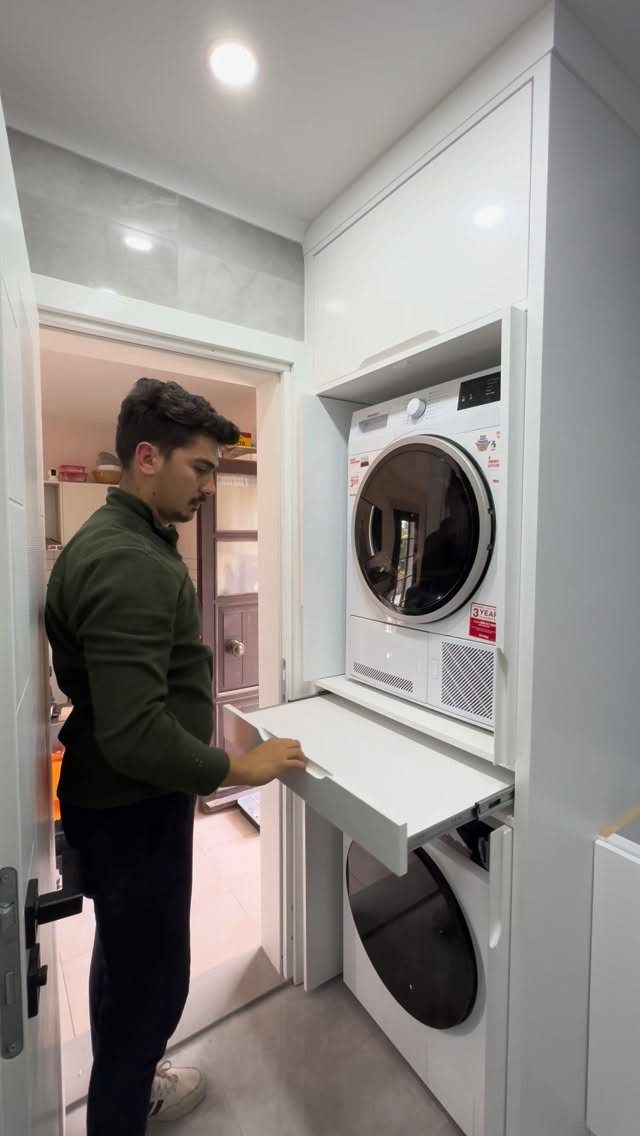
A floor-to-ceiling cabinet built around a stacked washer and dryer turns 2 appliances into what looks like a plain white closet.
The detail I would plan first is the pull-out shelf. It gives you a spot to fold or set a basket right where the clothes come out, and it tucks away when you are done.
Build the doors so they open fully, and leave yourself room to reach the controls. Painting the cabinet the same white as the walls makes it blend in even more.
4. Glass Front Overhead Cabinets
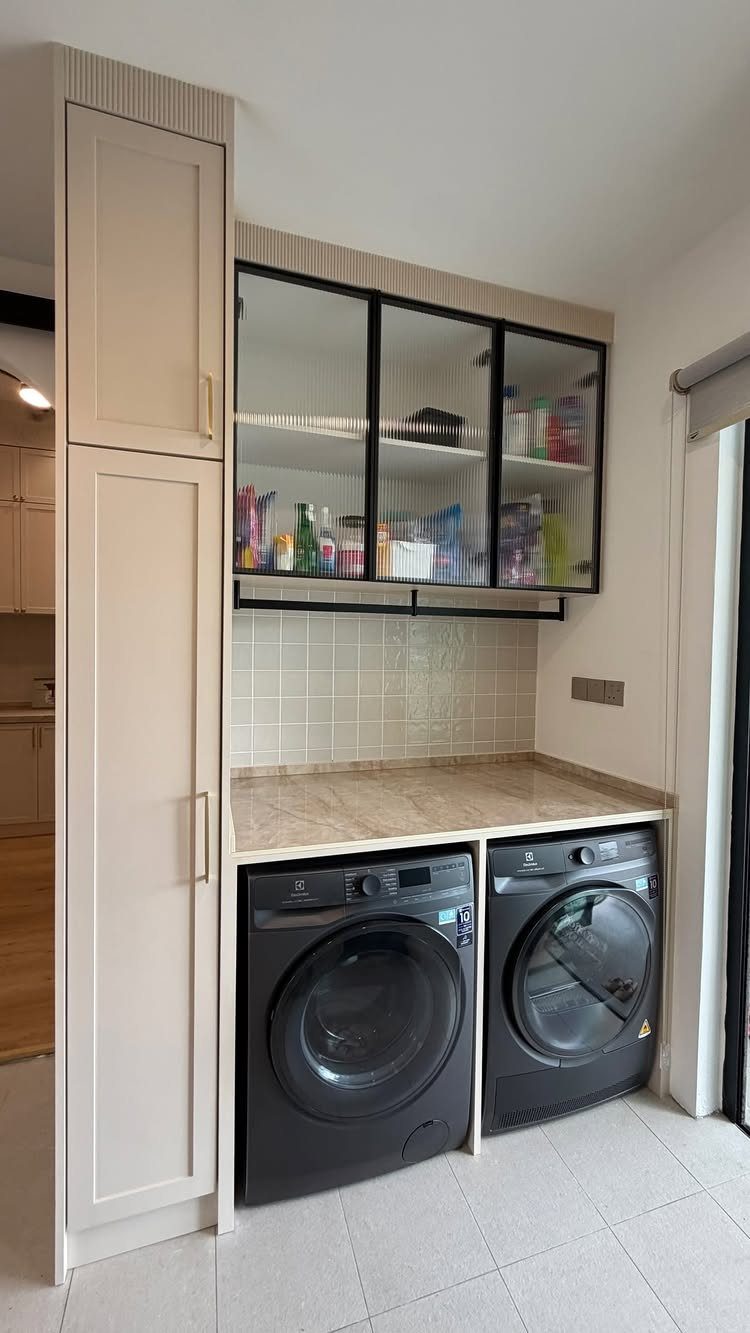
Fluted glass in black frames hides the clutter behind it while still looking like display cabinets, which makes it a smart pick for shelves over a side-by-side pair.
Because the glass blurs what is inside, you can store mismatched bottles and baskets without a tidy-up before guests walk by. Black frames echo black machines, so the wall looks planned rather than added on.
I would pair them with a counter over the machines, as here, so you get a folding surface too. A tall cabinet alongside takes the bulkier items.
5. Woven Insert Wall Cabinets
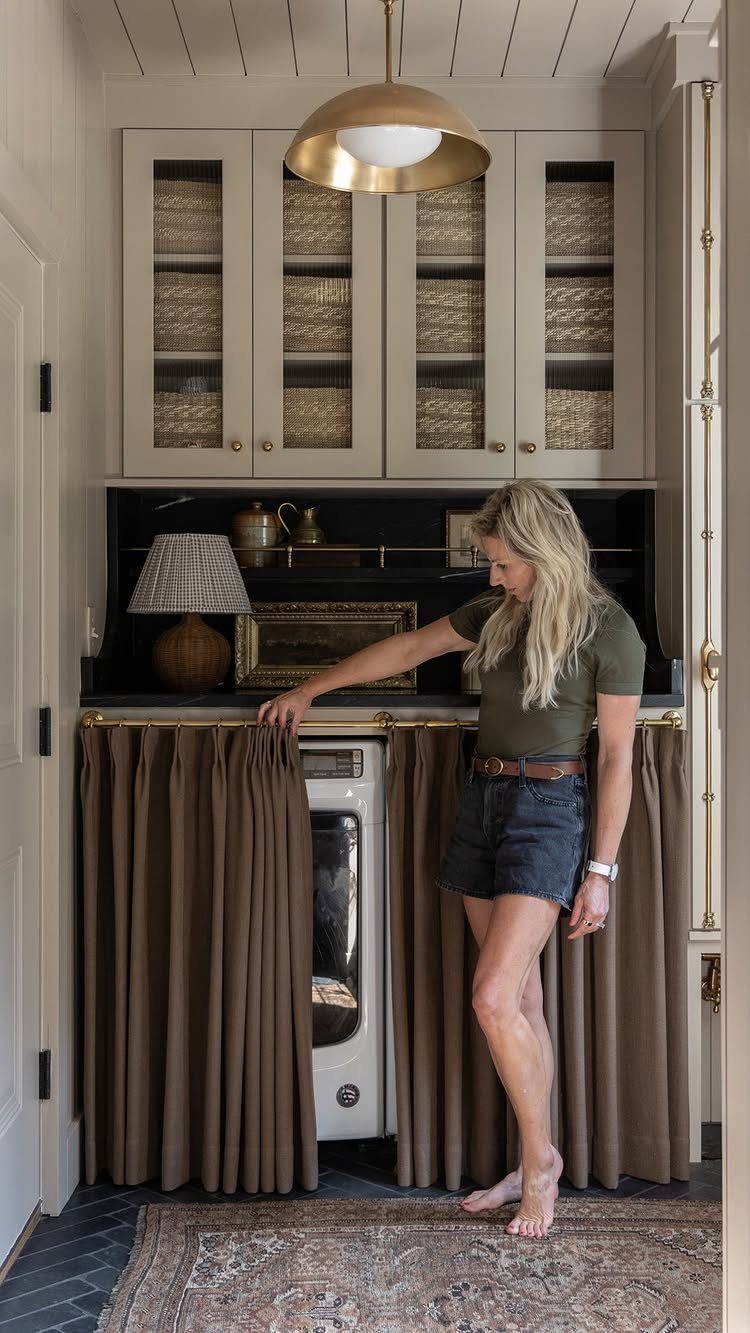
Beige wall cabinets with woven inserts in the doors bring warmth and texture to a laundry wall, and they work especially well over a washer you would rather not look at.
Hang a curtain below them to cover the machine. It runs cheaper than doors, and you can pull it aside whenever you need to load a wash.
A gold dome light overhead adds a finishing touch. Keep the cabinets and curtain in a similar tone so the whole corner feels calm and cohesive.
6. Contrast Black Overhead Cabinets
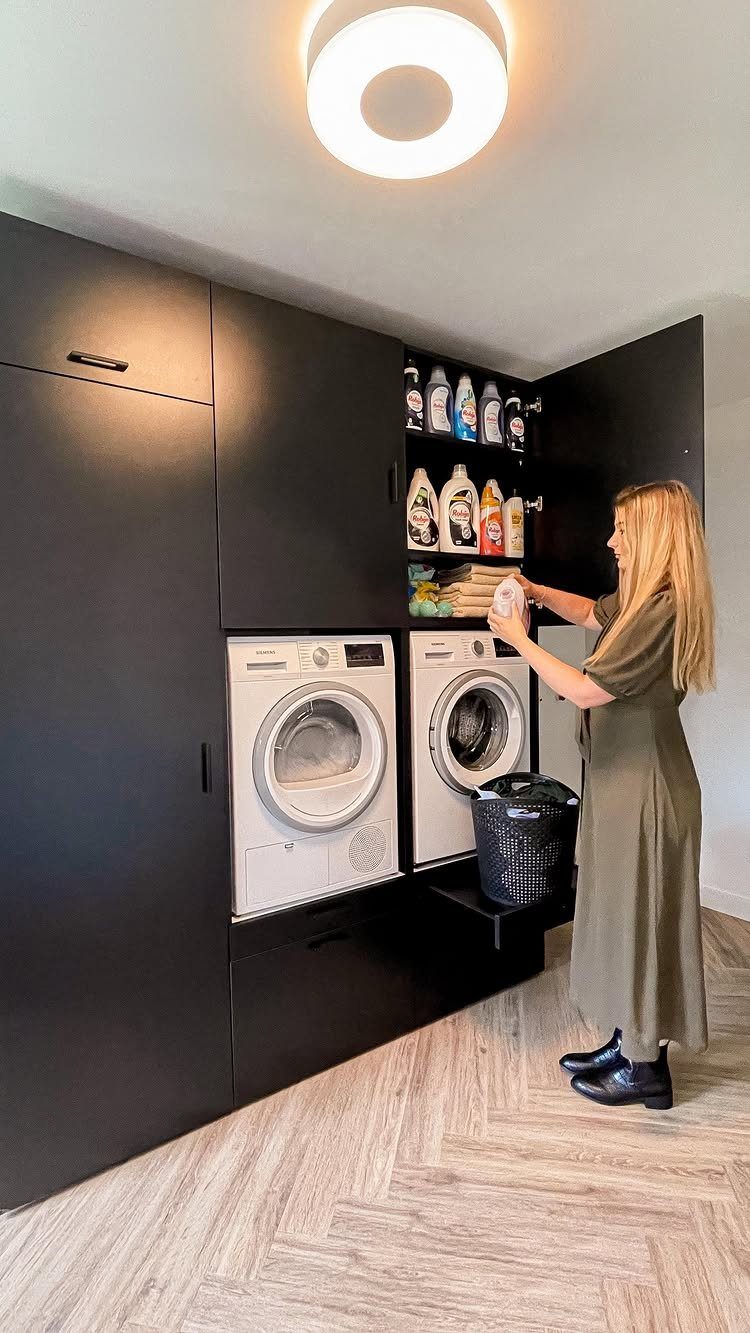
Black wall cabinets against a white washer and dryer give a laundry room real contrast, and they make the appliances look like they belong in the design instead of an afterthought.
Open black shelving mounted right above the machines keeps detergent and stain remover in arm’s reach. I would choose open shelves for the items you use weekly and closed cabinets for the rest.
In a room with little daylight, though, add a bright light so dark cabinets do not close it in.
7. Overhead Cabinet for Stacked Units
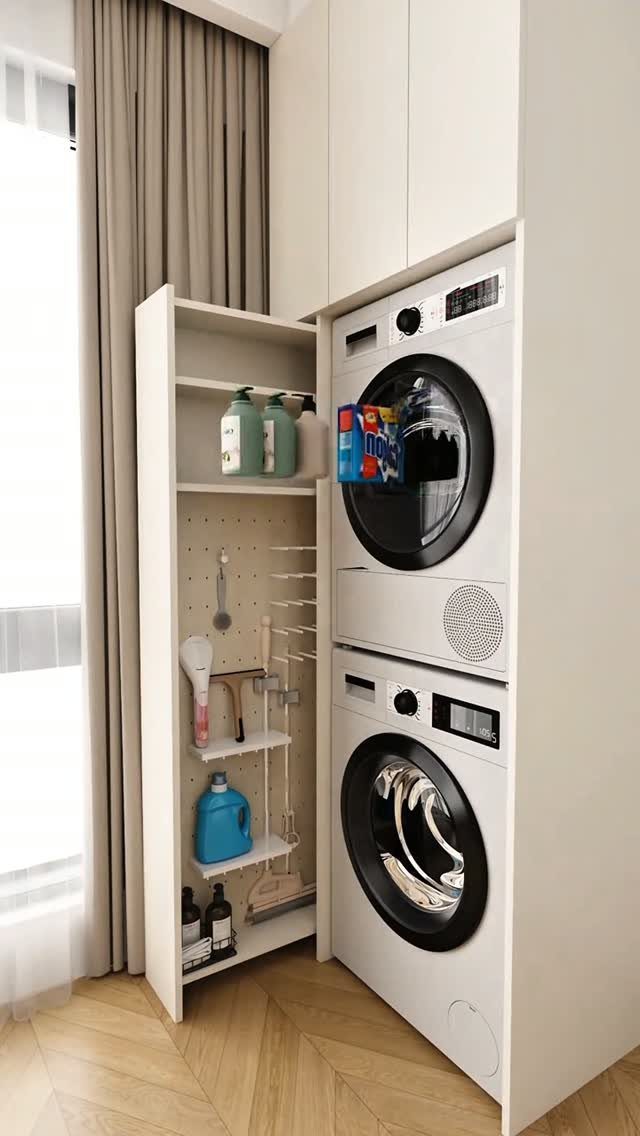
Stacked units leave the wall space beside them free, so white overhead cabinets can sit above the dryer while an open shelving unit stands next to it for cleaning supplies.
On a stacked pair, the top shelf will sit out of easy reach whatever you do, so plan on a small step stool and keep the things you grab weekly on the lower shelf.
Bottles and spray cleaners go on the open side where you can see them, and the closed cabinets take whatever you would rather hide.
Matching the cabinets to the white machines keeps the nook looking like one piece.
8. Grey Cabinets Over Side-by-Side Machines
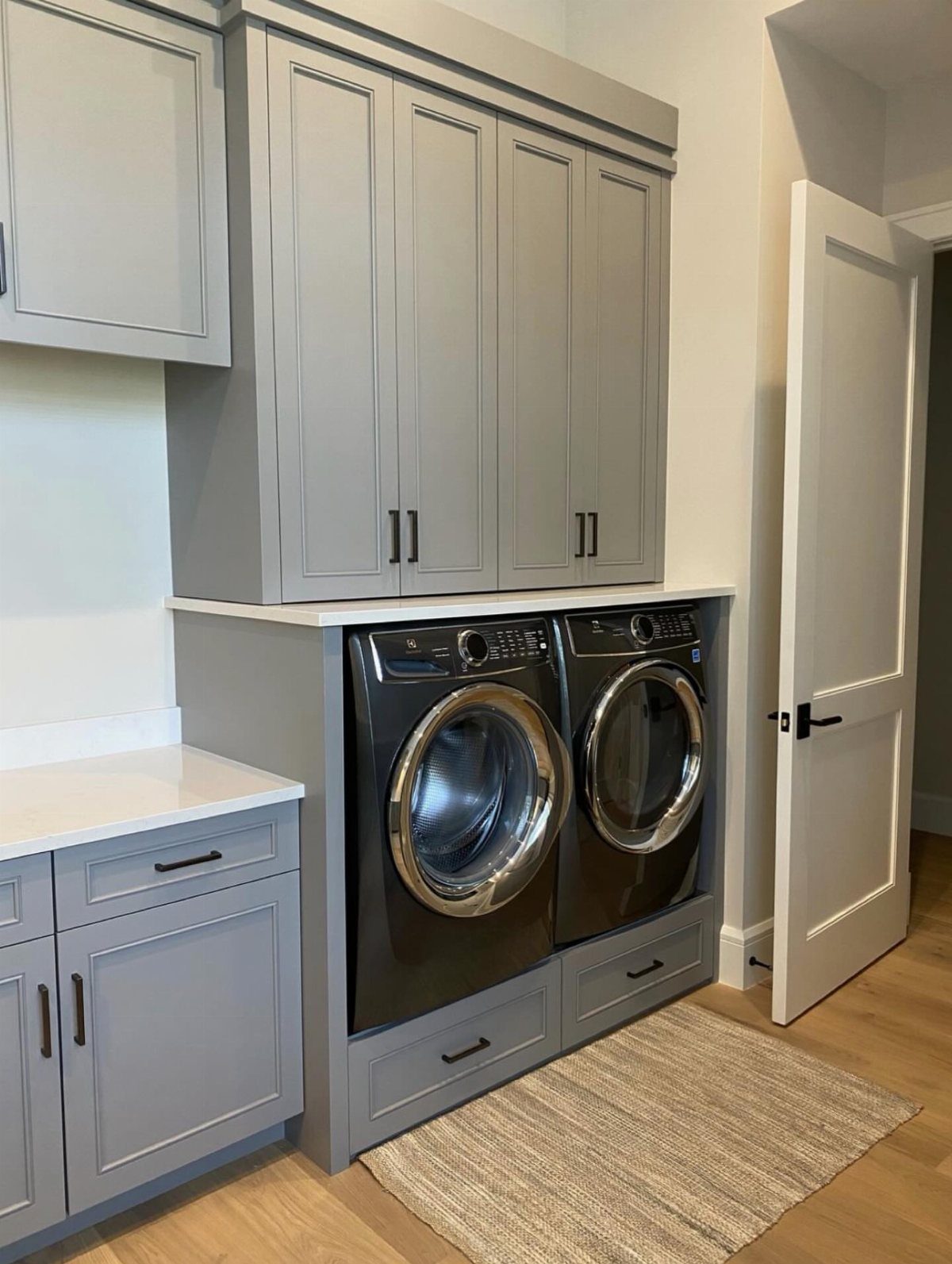
Grey cabinets hung directly over a black side-by-side pair give the machines a calm backdrop, and a white folding counter on top of them brightens the whole wall.
I like this combination because grey sits between black and white, so neither the machines nor the counter fights the cabinets. Mount the cabinets high enough above the counter that you can fold a full towel without bumping a door.
A small rug in front adds softness where you stand to load. Choose one that wipes or washes easily.
Concealing Plumbing and Tools
Hoses, drain lines, and vent pipes are the parts that make a finished laundry wall look unfinished.
To hide the plumbing without locking yourself out of it, build a shallow box around the pipes or use a front panel that lifts off, so the shutoff valves stay within reach.
I would never fix a panel in place permanently.
Mops, vacuums, and ironing boards need a home too. A slim broom closet or a side panel cabinet swallows them and keeps the room visually calm.
Open shelves that hold baskets or bottles can look busy. Sliding or tambour doors tuck the contents away, and they need no clearance to swing open, which helps in a tight room.
Space Optimization
Tall pantry-style cabinets, 84–96″ high, are the best storage you can add to a small laundry room.
Brooms, mops, an ironing board and those oversized jugs of detergent all find a home inside instead of leaning in a corner or cluttering the walkway.
In a narrow room, choose shallow cabinets, 12–15″ deep, so walkways stay clear. A deeper box looks better on paper but gets in your hip every trip with a laundry basket.
If the ceiling height allows, carry the cabinets all the way up, since that top stretch of wall is storage you would otherwise lose. That removes the dusty gap on top and puts the extra height to use.
Frequently Asked Questions
What size cabinet depth is ideal in a laundry room?
Over a washer and dryer in a tight room, I’d stay with uppers that run 12–15 inches front to back, since anything deeper starts to crowd your head and shoulders.
Standard base cabinets run 24″ deep, which is fine in a roomy space. In a tight one, a deeper box catches your hip every time you carry a basket past it.
Can I use kitchen cabinets in my laundry room?
Stock kitchen cabinets do the job in a laundry room, and they typically come in well under the price of custom or laundry-specific lines.
Box construction and finishes are built to the same standard, so I wouldn’t worry about them holding up.
Leave enough space between the machine and the cabinet bottom for a top-loader’s lid to swing open fully, or for you to measure detergent without bumping your forehead.
How high should laundry wall cabinets go?
Set the bottom of the cabinets at least 16–18″ above the top of the machines, so the lids open fully and you still have room to pour detergent.
With a tall enough ceiling, I’d take the cabinets up to it, because that closes off the gap where dust collects and gives you another shelf or 2 for things you rarely touch.
Are moisture-resistant cabinets necessary?
They are highly recommended. Laundry rooms deal with humidity, splashes and detergent, and moisture-resistant boxes, such as plywood or moisture-resistant MDF, resist warping over time.
A coat of semi-gloss paint, or a factory finish with some sheen, wipes down in seconds when detergent drips or lint dust settles.





