Which organizer fits depends on where your clutter actually sits: cabinets, drawers, the fridge, the counter, the sink or the pantry.
Counter pieces like the cereal dispenser and lazy Susan spend the space you already have, while drawer inserts and pantry baskets win it back from inside closed doors, so a small counter points you inward.
The list runs from freestanding shelf inserts that suit a rental and leave no marks to stackable fridge bins, lazy Susans, and pantry crates.
Measure the inside height, width or depth first, because 10 or more inches of unused air above a stack of bowls is where the most space hides.
1. Cabinet Organizers
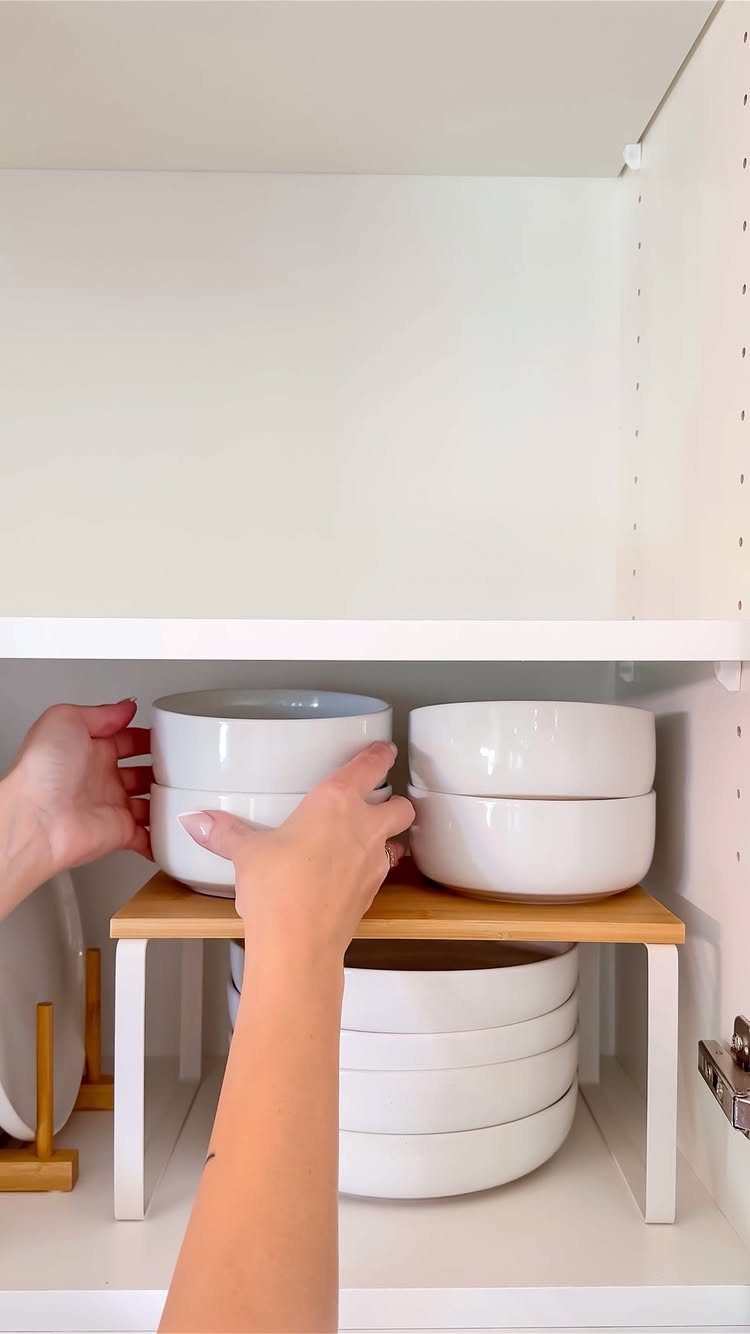
A shelf insert splits one tall cabinet into two usable levels, and that is where most of the lost space hides. Bowls, plates and mugs usually leave 10 or more inches of air above them.
The bamboo version here suits a rental, since it sits freestanding and leaves no marks. Measure the cabinet’s inside height and width first, and pick an insert that clears the door hinges.
Daily-use items belong on the upper level of the stack, while the heavy pieces sit low.
Additionally, each unit will hold up to 10 pounds evenly distributed on the shelf. The Container Store advises not to stack higher than two units in a cabinet.
2. Clear Stackable Bins Refrigerator Organizers
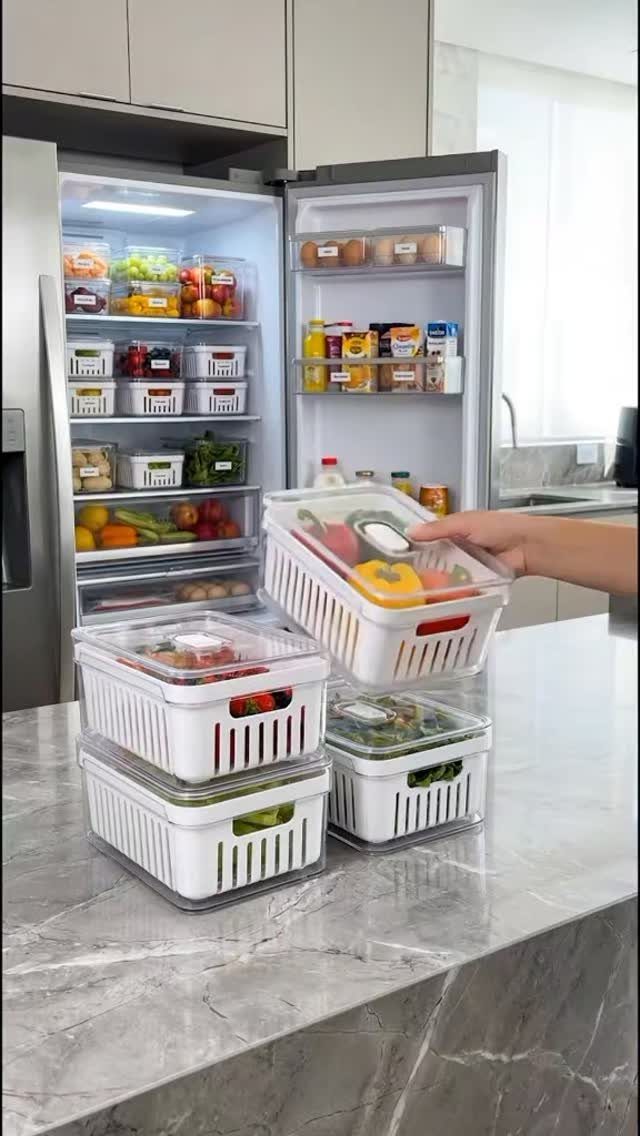
Clear bins turn a crowded fridge into zones. Produce goes in one, snacks in another, and each pulls out whole, so nothing hides behind a jar.
I like clear plastic because the contents are visible without opening anything. Bins that stack let you use the full shelf height instead of just the bottom inch or two.
Buy after measuring shelf depth and height, then sort by category before you set a single bin down.
3. Kitchen Drawer Organizers
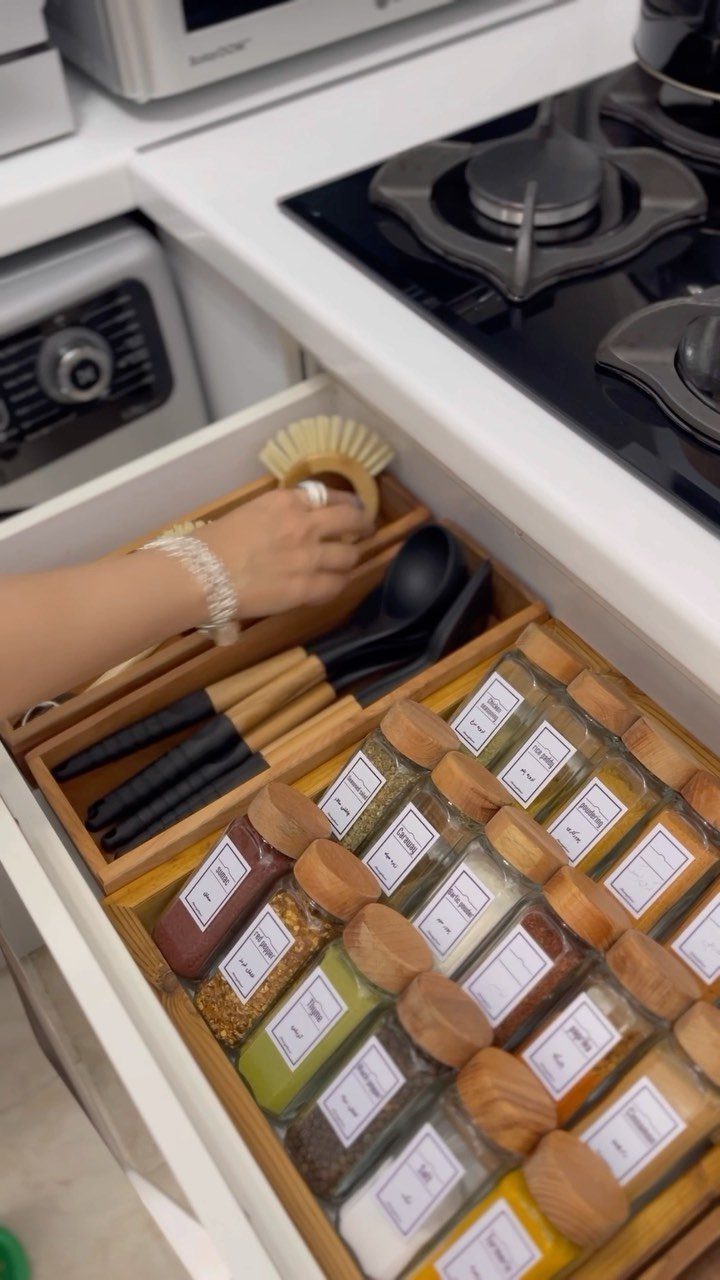
Wooden dividers make a drawer fit its contents instead of the other way around. Spatulas, tongs and ladles each get a lane, and the jumble stops.
Measure the drawer’s inside length, width and depth before buying. Adjustable dividers cost a little more but forgive an odd drawer size.
A shallow drawer also works for spice jars laid flat with labels facing up, so you read them at a glance. Keep the everyday tools in front.
4. Sink and Under-sink Organizers
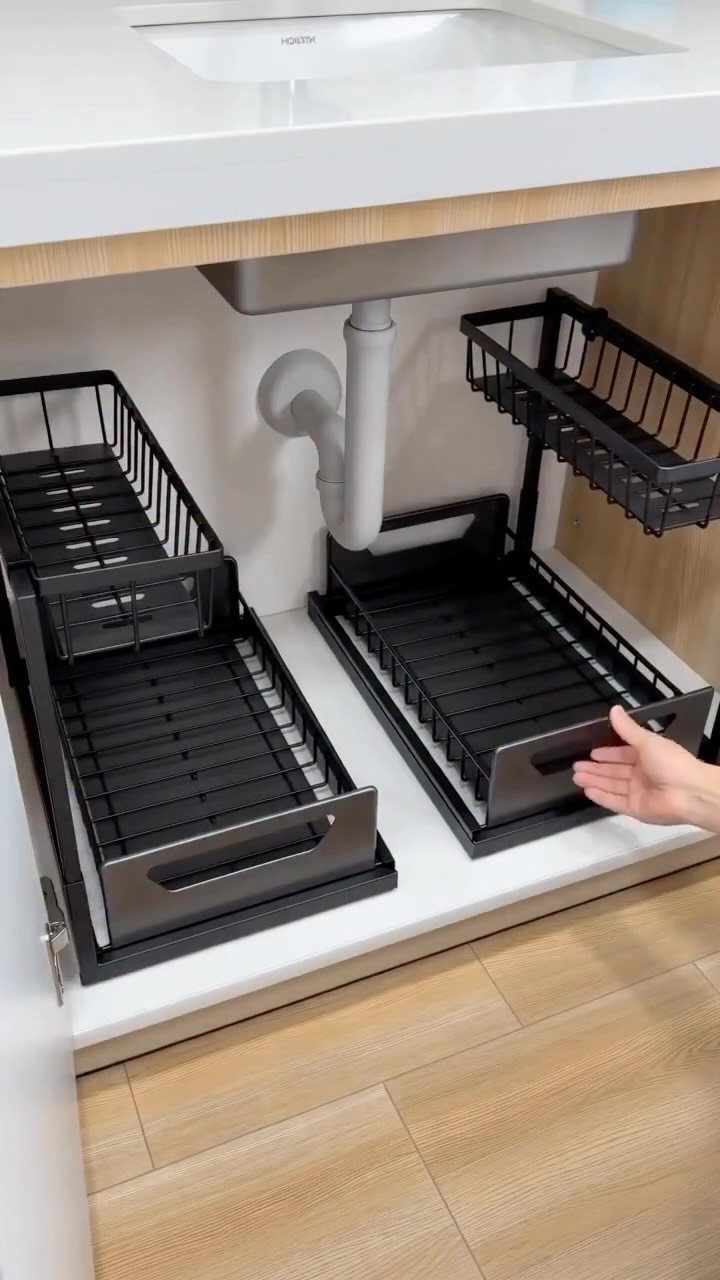
Under the sink is the messiest cabinet in most kitchens, mostly because of the pipes. Sliding wire baskets work around them: the drawer pulls out toward you, so you stop reaching past the plumbing.
Black metal looks tidy and holds up to damp better than cardboard or bare particleboard. Put cleaning sprays in one basket and sponges and rags in another.
Check the drain placement before buying, since the baskets must clear the pipe.
5. Countertop Organizers
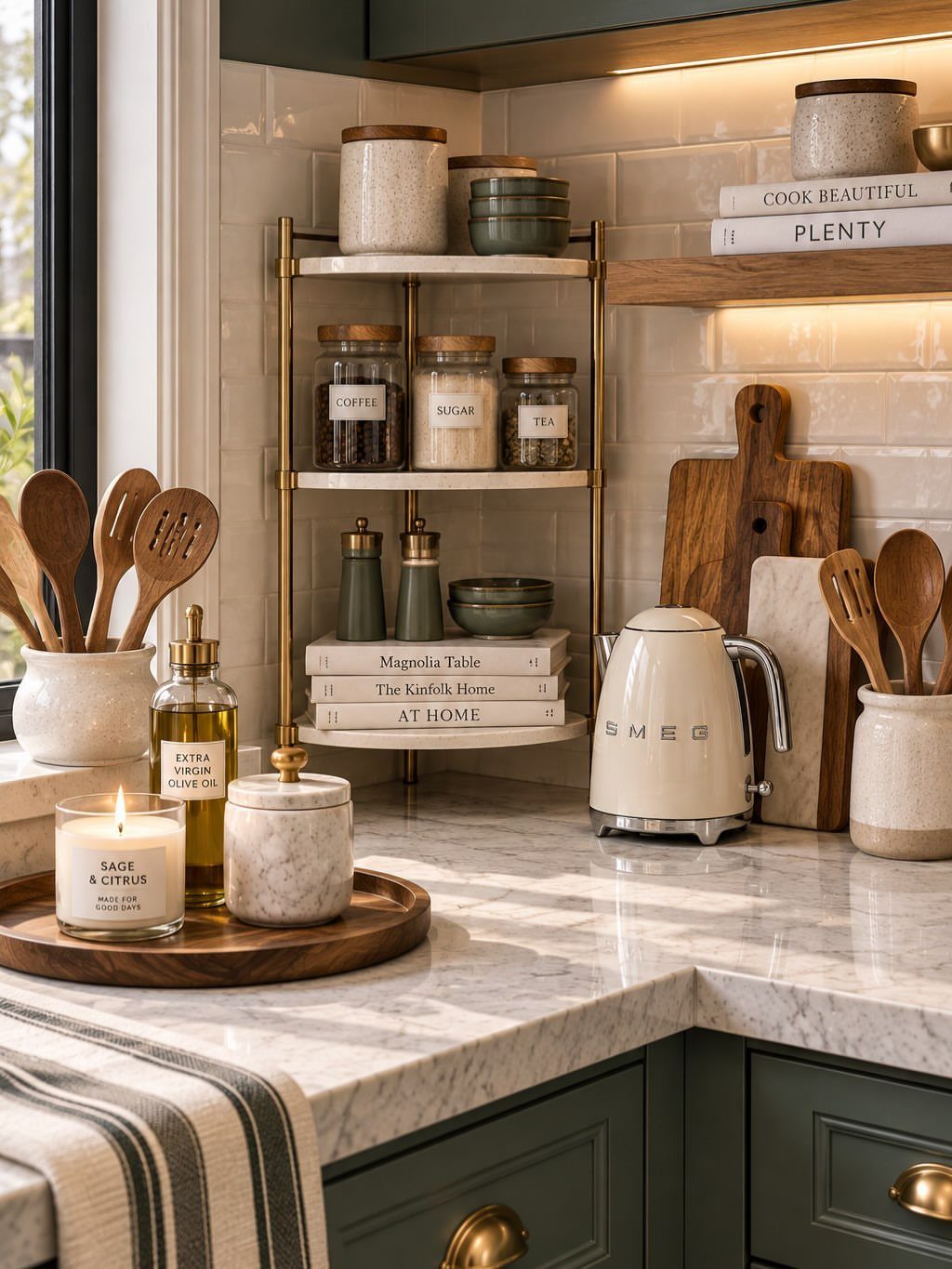
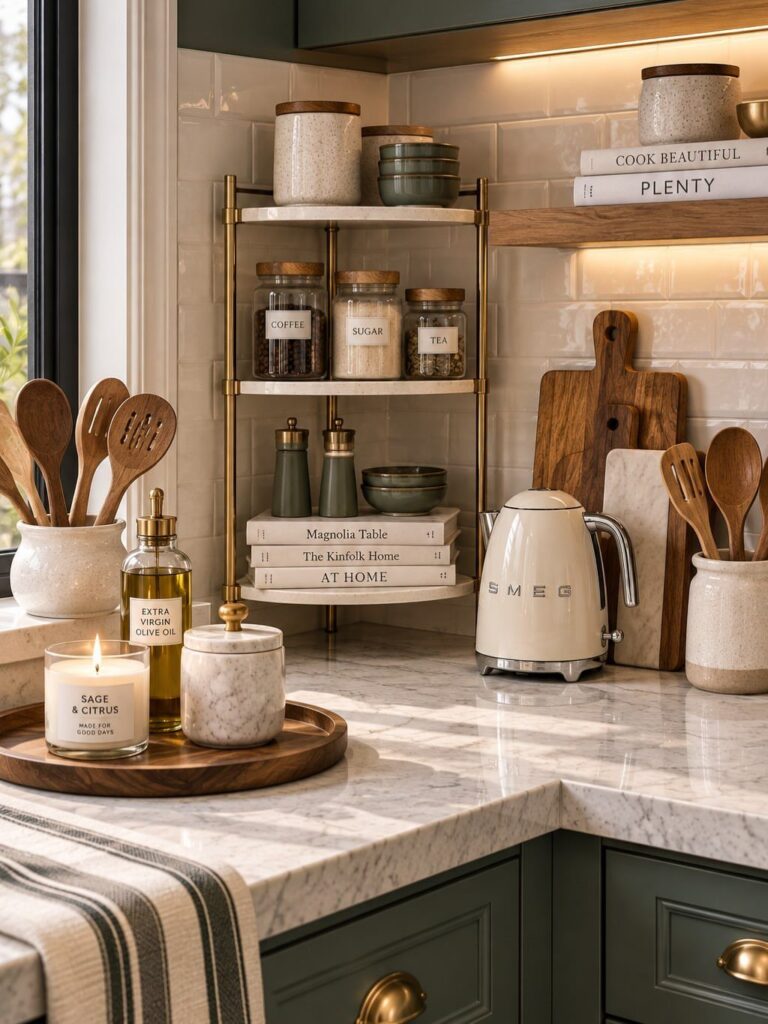
A tiered stand lifts everyday items off the counter and gives them a second level. Coffee, sugar and tea jars sit together as one small station, which clears the work surface below.
Gold looks good against a light counter, but any finish works if it matches your hardware. Label the jars so anyone can find things quickly.
Keep the stand to what you touch daily; if it holds more than a few items, it becomes clutter on a stand.
6. Lazy Susan Turntable
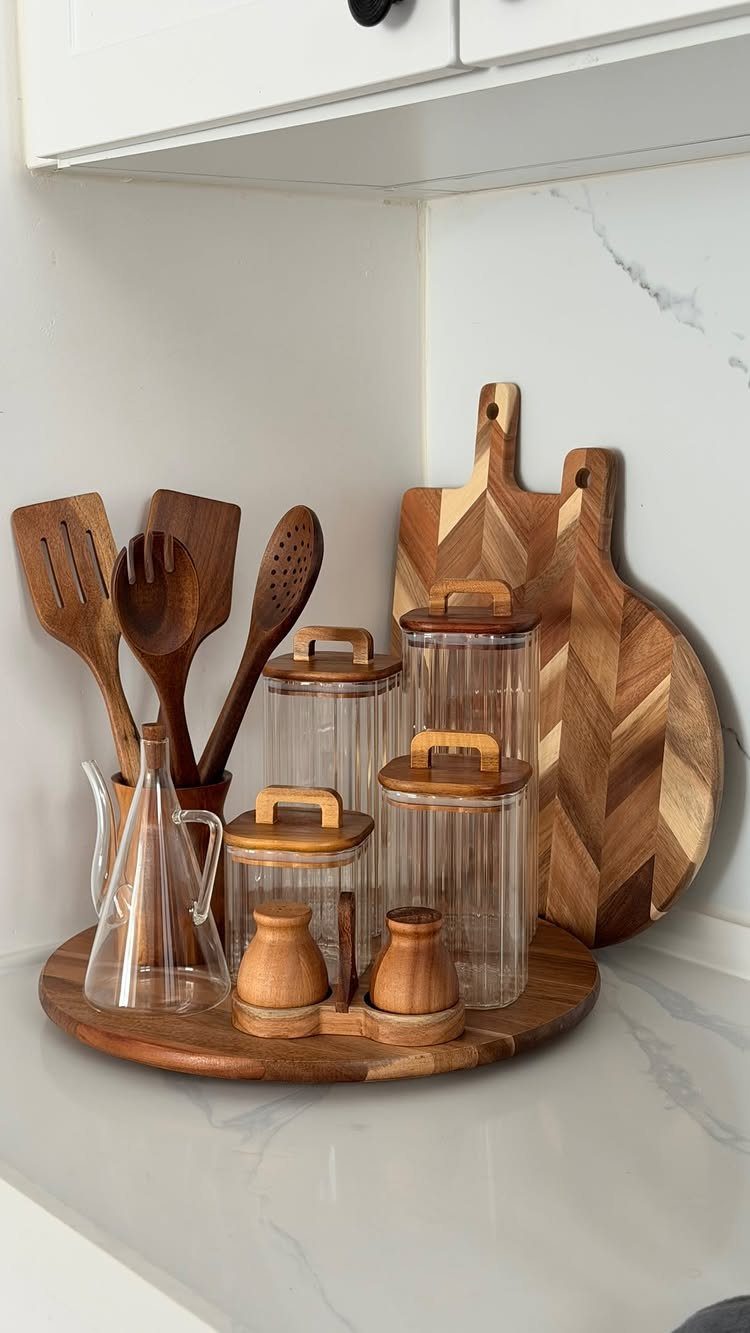
A turntable on the counter brings everything to you with one spin. Oils, jars and utensils sit in a ring, so the item at the back is no longer lost.
Wood looks warm and wipes clean. Choose a diameter that leaves room for the cutting board and kettle beside it, or it will crowd the counter it was meant to free up.
Put the daily items on the outer edge and tall bottles toward the center so nothing blocks your view.
7. Airtight Food Storage Containers
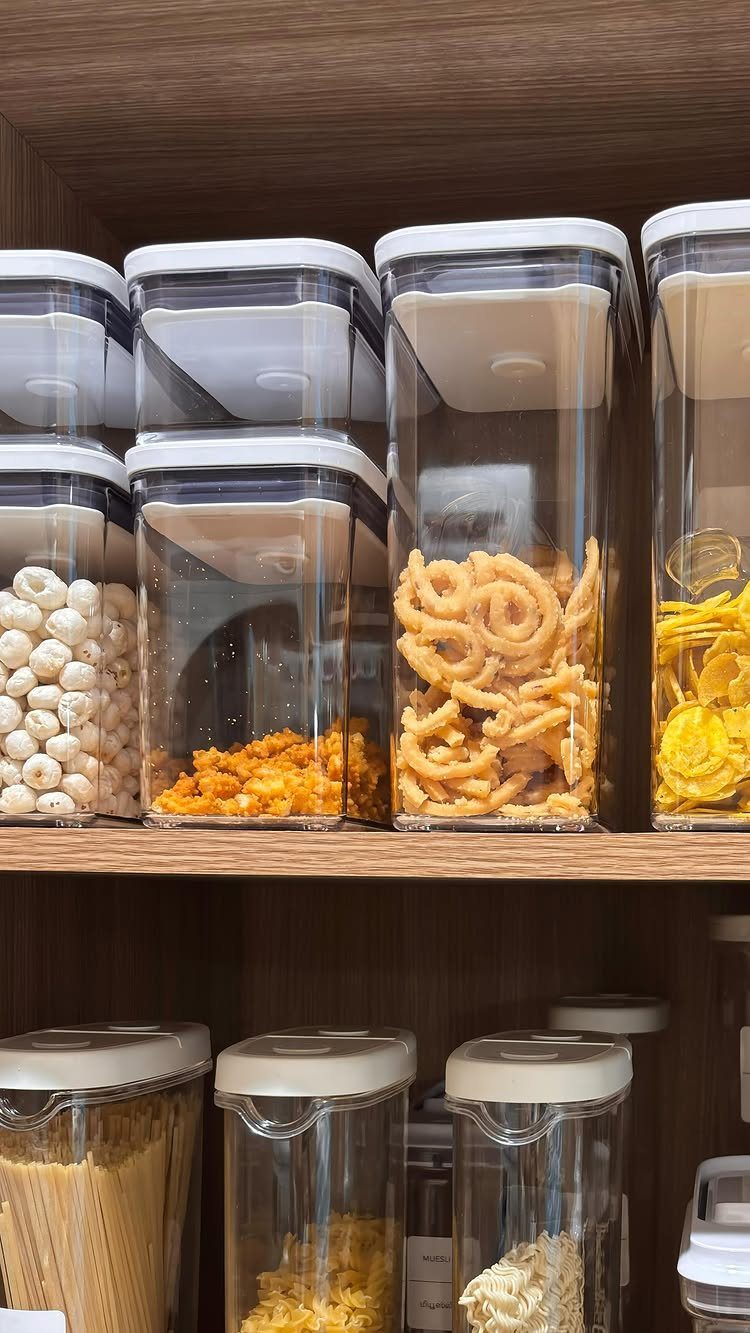
Clear airtight containers keep pasta and snacks fresh longer, and the level shows through the plastic at a glance, so you stop buying a third box of something already in the cabinet.
Matching lids and shapes stack cleanly on a shelf, which is what makes the row look calm. I’d pick square or rectangular over round, since they waste less space between them.
Decant a box at a time, and label the front if the contents aren’t obvious.
8. Cereal Dispenser
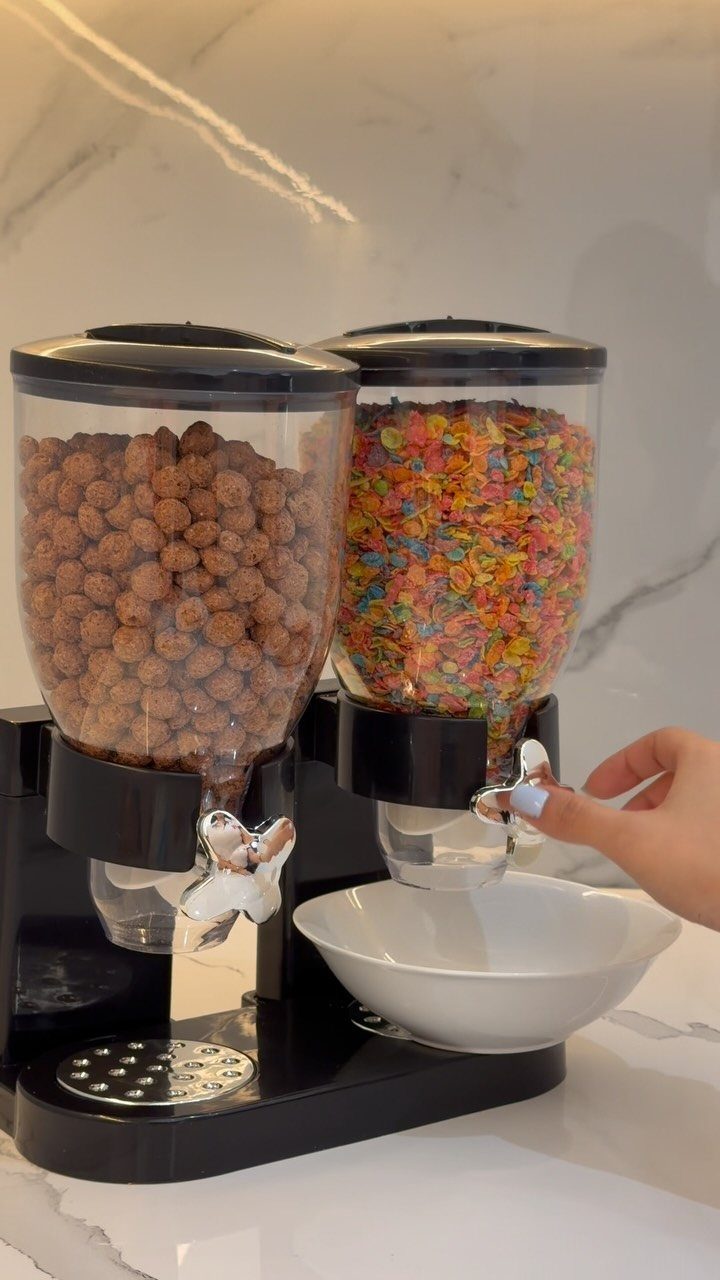
A dual cereal dispenser turns breakfast into a one-handed job: twist the knob and a portion drops into the bowl. Kids can do it themselves, which means fewer spills and one less request before school.
Black looks sharp on a light counter, and two canisters let a plain cereal and a sweeter one share the same spot on the counter.
Pour in only what you’ll finish in a few weeks. Cereal left in a dispenser too long goes stale, and the countertop footprint is the cost of the convenience.
9. Pantry Shelf Storage Baskets and Crates
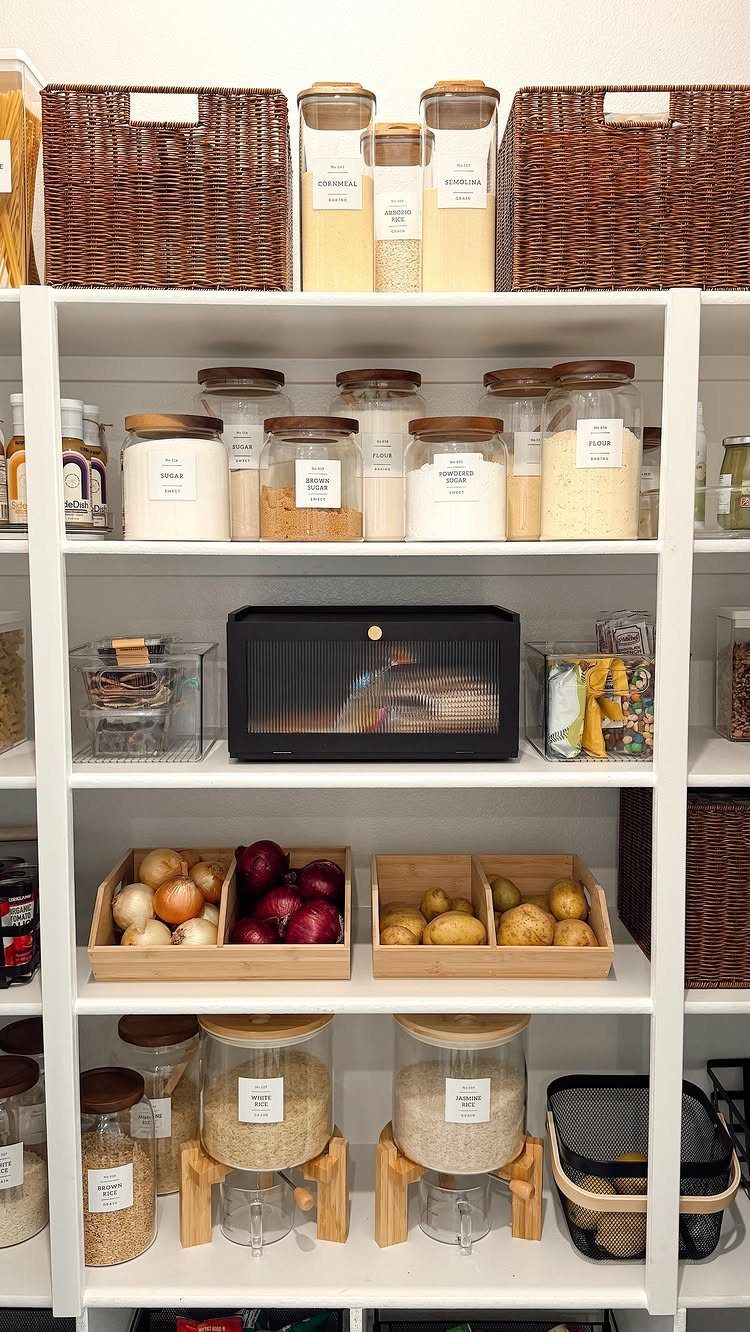
Wicker baskets, wooden crates and labeled glass jars each do a different job on one pantry shelf. Jars hold dry goods like sugar and flour, crates give onions and potatoes room to breathe, and baskets hide the odds and ends.
I like this mix because the textures keep a white shelf from looking sterile. Put the labels on the jars, and let the baskets carry anything you’d rather not look at.
Keep the heaviest crates on the lowest shelf.
Frequently Asked Questions
How can I maintain a well-organized kitchen?
Start by pulling out what you already own, sorting it into categories, and donating or selling extras and anything you haven’t touched in a year.
Work one area at a time, drawers first and then cabinets, so it never has to happen in one day.
Put things back with like items together and the most-used pieces at the front of the shelf. Add organizers slowly, after the editing is done.
How do I organize pots and pans?
Use a divided rack to hold your everyday pans upright, with the lids stored together on the side.
That way you never lift four pans to reach the one on the bottom. If space is tight, keep only what you use all the time and nest smaller pots inside larger ones in a cabinet or deep drawer.





