The ideas here range from a few signs and plants to a full built-in station for stacked appliances, and what you spend in time and money grows with how much garage space you commit to the laundry setup.
What you choose depends on whether you rent or own: baskets, carts and decorative treatments move with you, while built cabinetry, epoxy flooring and countertops installed over the machines only make sense if you plan to stay.
Even a small change needs exact numbers: a cart that fits means knowing the gap beside the washer down to the half inch.
1. Wood Countertops
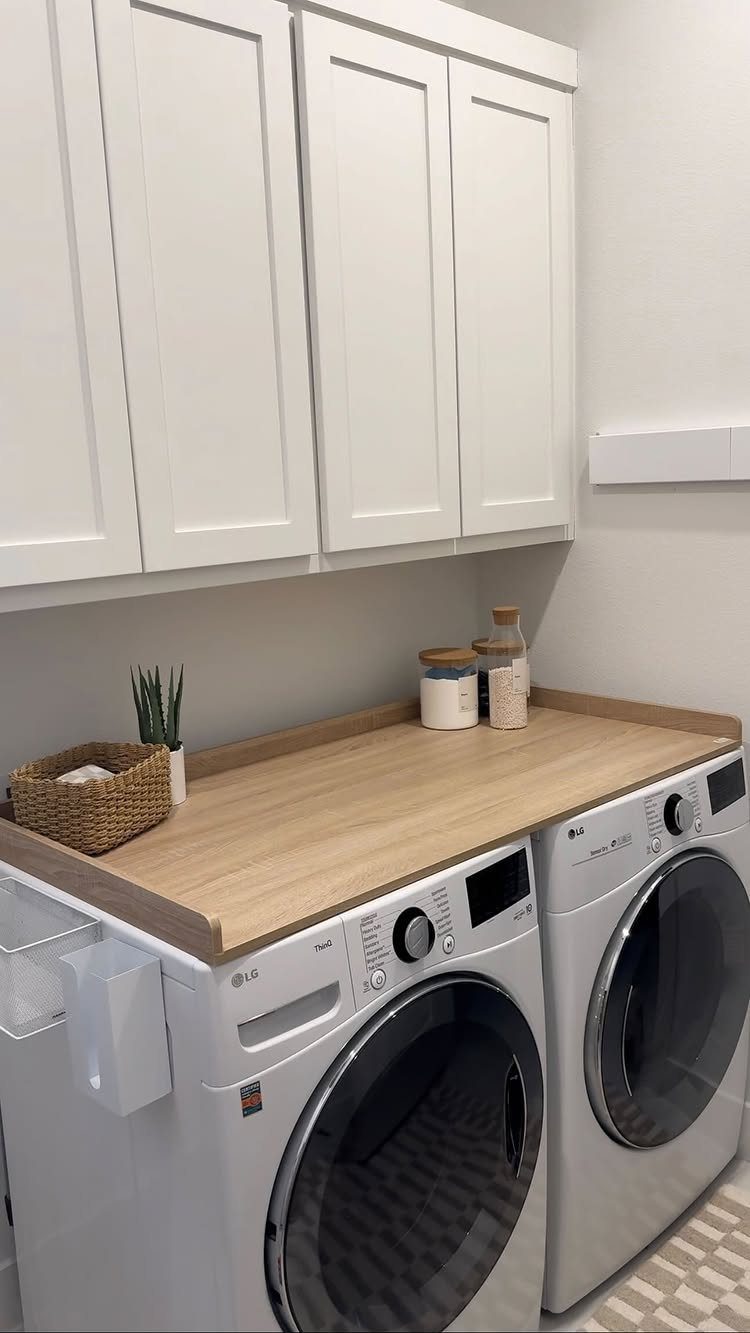
A butcher block or other light wood slab laid across front-loading machines gives you a folding surface and takes the clinical edge off all that white. Wood against white cabinets reads warm without adding a single new color.
Measure the width across both machines and leave a little clearance at the back for hoses and vents. Seal the top well, since detergent spills and damp towels are hard on bare wood.
2. Storage Baskets
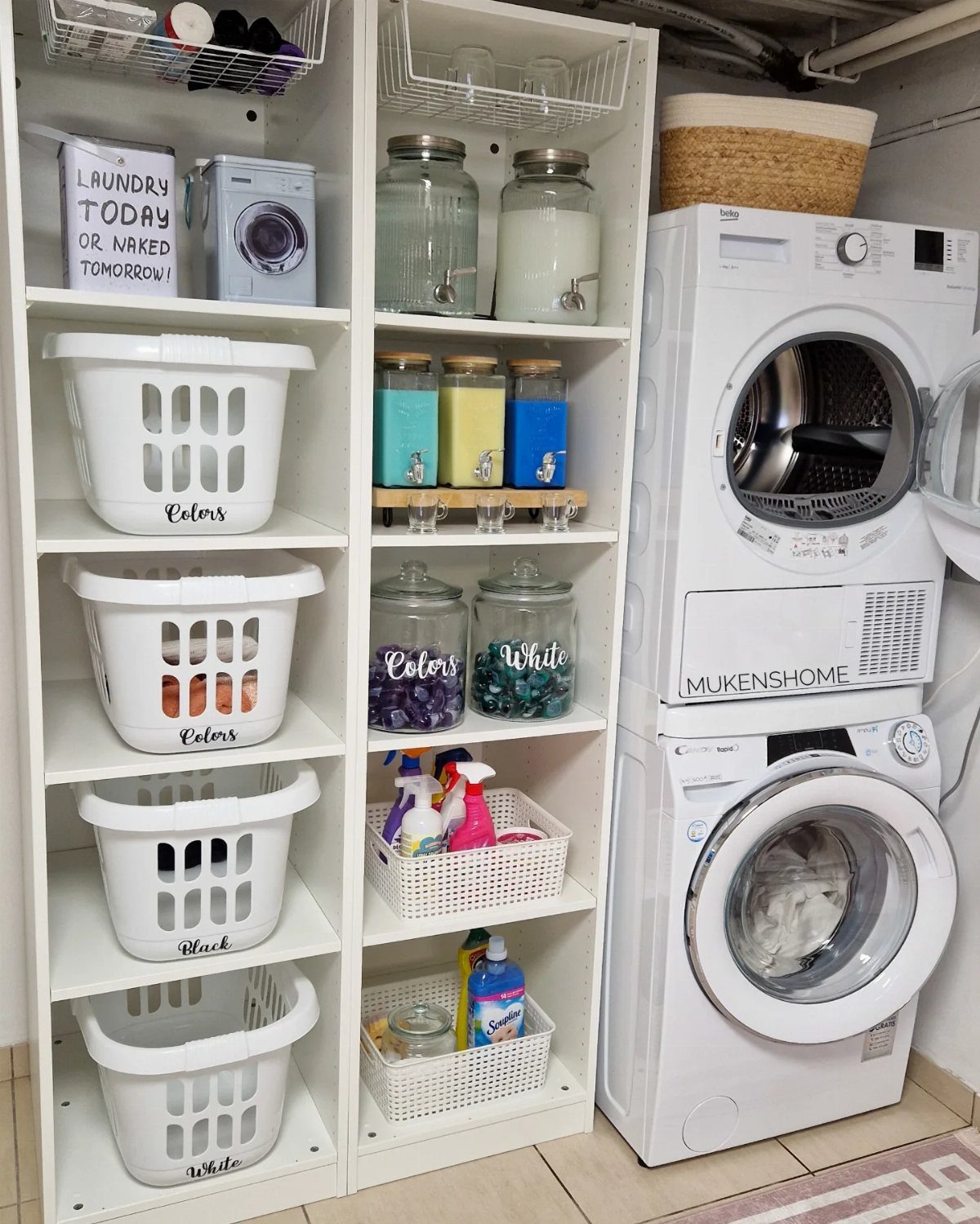
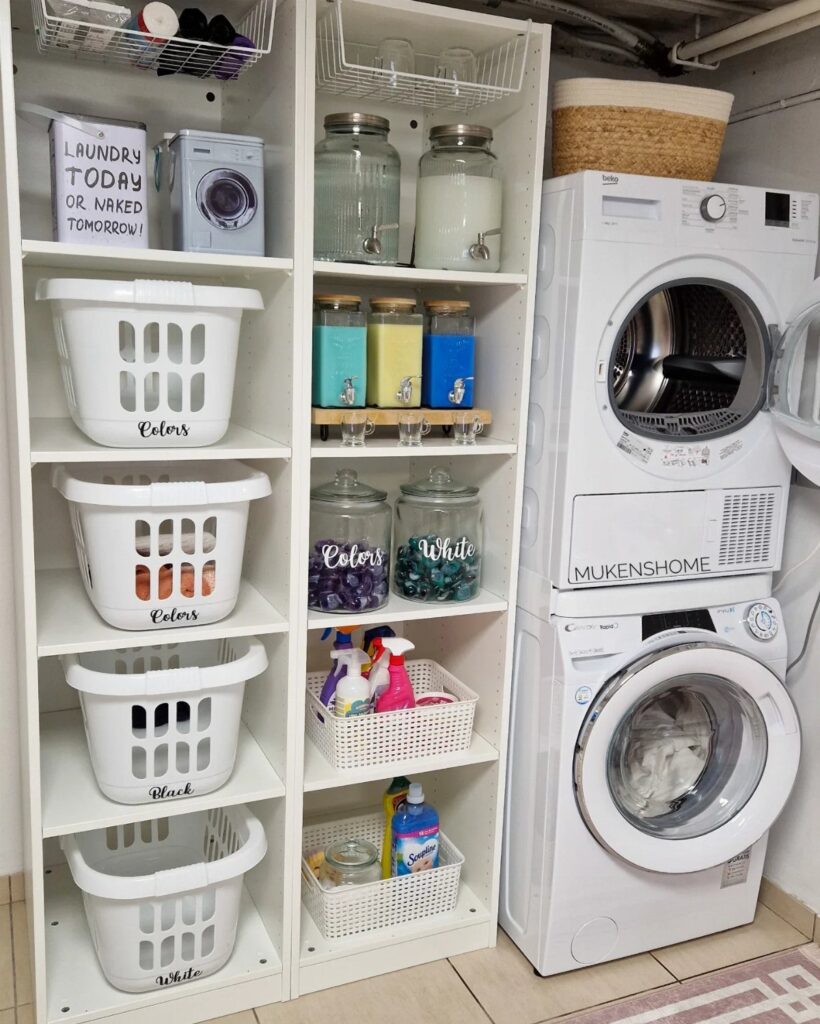
Labeled baskets on an open shelf next to a stacked washer and dryer sort laundry before it ever reaches the machine. One basket each for darks, lights and delicates keeps the sorting from piling up on the floor.
Use a marker or printed label on each basket so everyone in the house can follow it. Lidless baskets win for speed, and small jars on the upper shelf corral clips, pods and stain sticks.
3. Decorative Wall Treatment
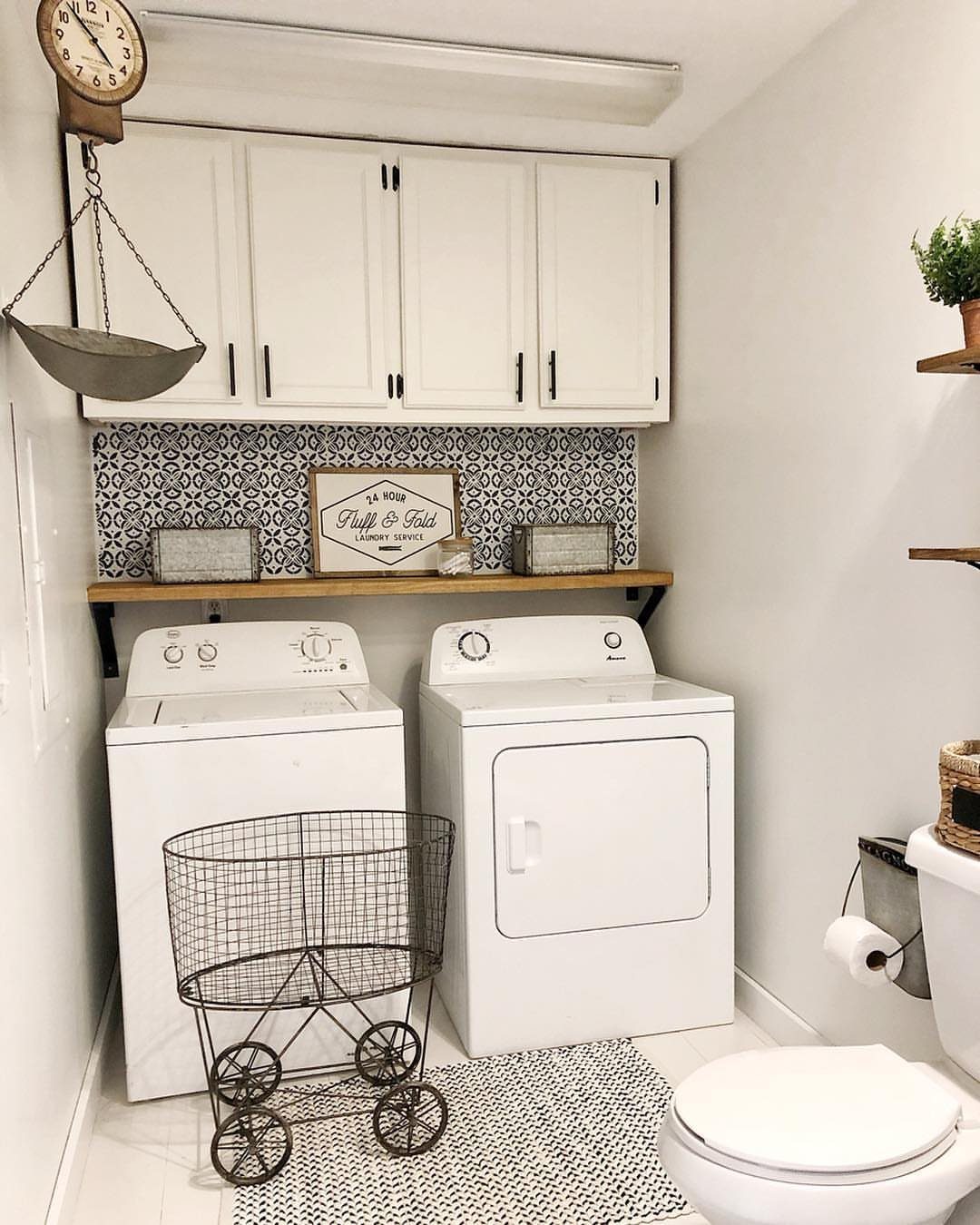
Patterned tile behind the machines is the cheapest way I know to make a garage laundry corner feel designed. A single backsplash wall carries the whole look, so the tile order stays small.
Peel-and-stick tile suits renters and a weekend schedule. Pair a busy pattern with plain white appliances, then add one wooden shelf above for a sign or a stack of towels.
4. Uniform Cabinetry
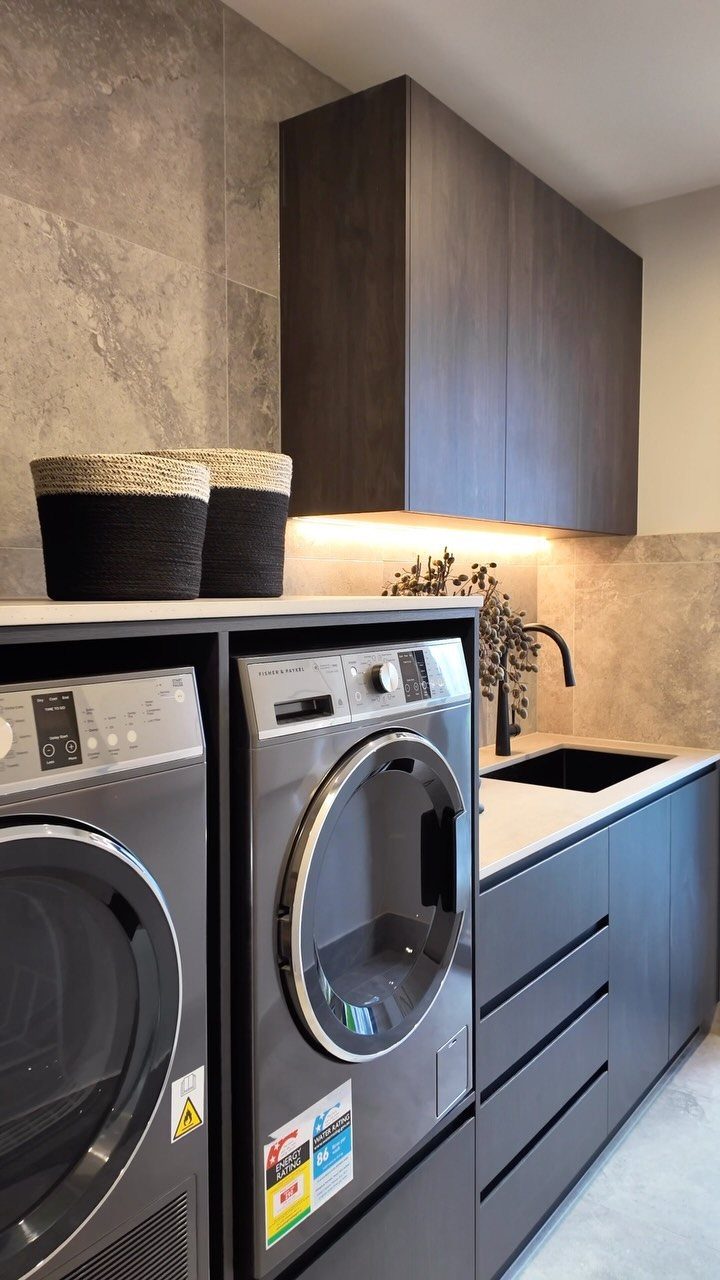
Matching cabinet finishes on upper and lower runs, plus machines in a similar tone, make a garage laundry space look built rather than assembled.
Dark wood with grey tile is a moody choice, and it hides dust and scuffs better than white does.
Keep the counter clear apart from 2 baskets, so the uniform look stays calm. Dark colors shrink a room, so make sure the lighting is bright.
5. Mobile Carts
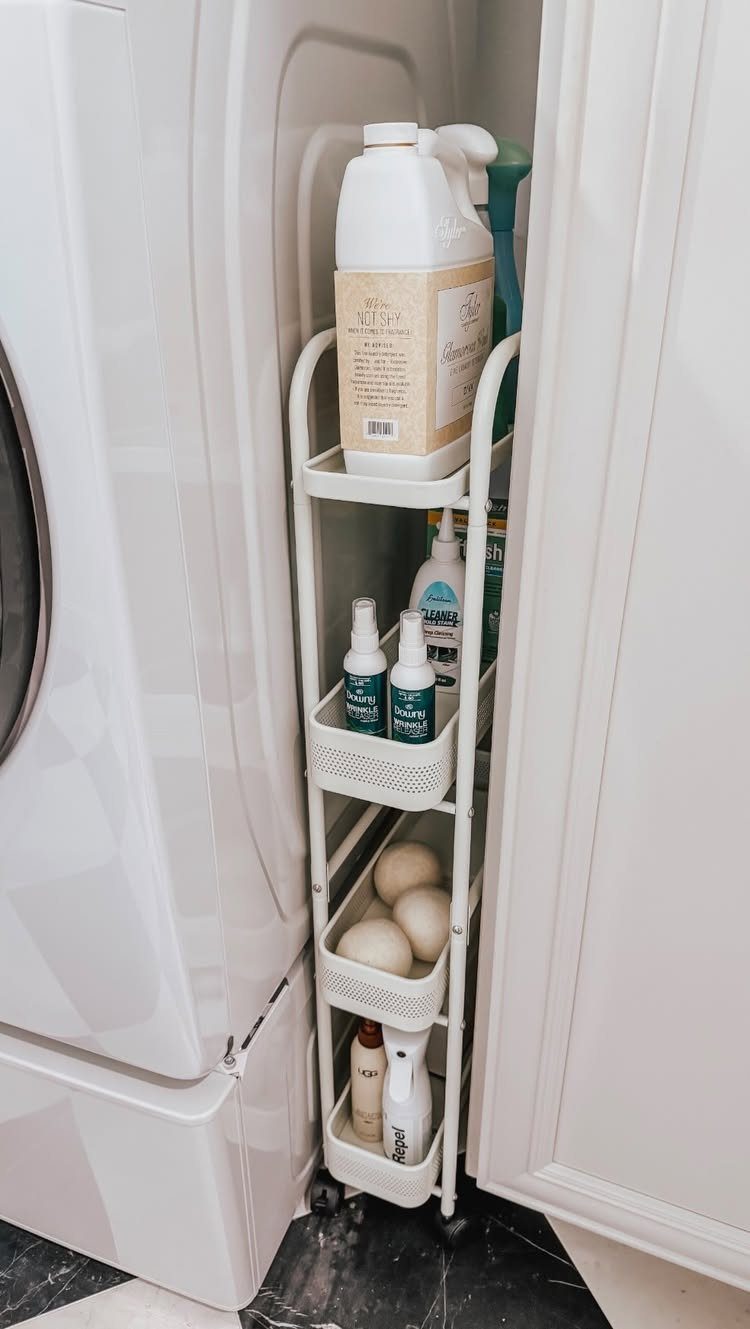
A slim rolling cart slotted between the washer and a cabinet uses a gap that would otherwise collect lint and lost socks. 4 tiers hold detergent, sprays and dryer balls within arm’s reach.
Measure the gap first, then buy a cart a half inch narrower. Locking casters are worth the extra cost on a garage’s slightly uneven concrete, and the cart rolls out when you need to reach behind it.
6. Signs, Plants
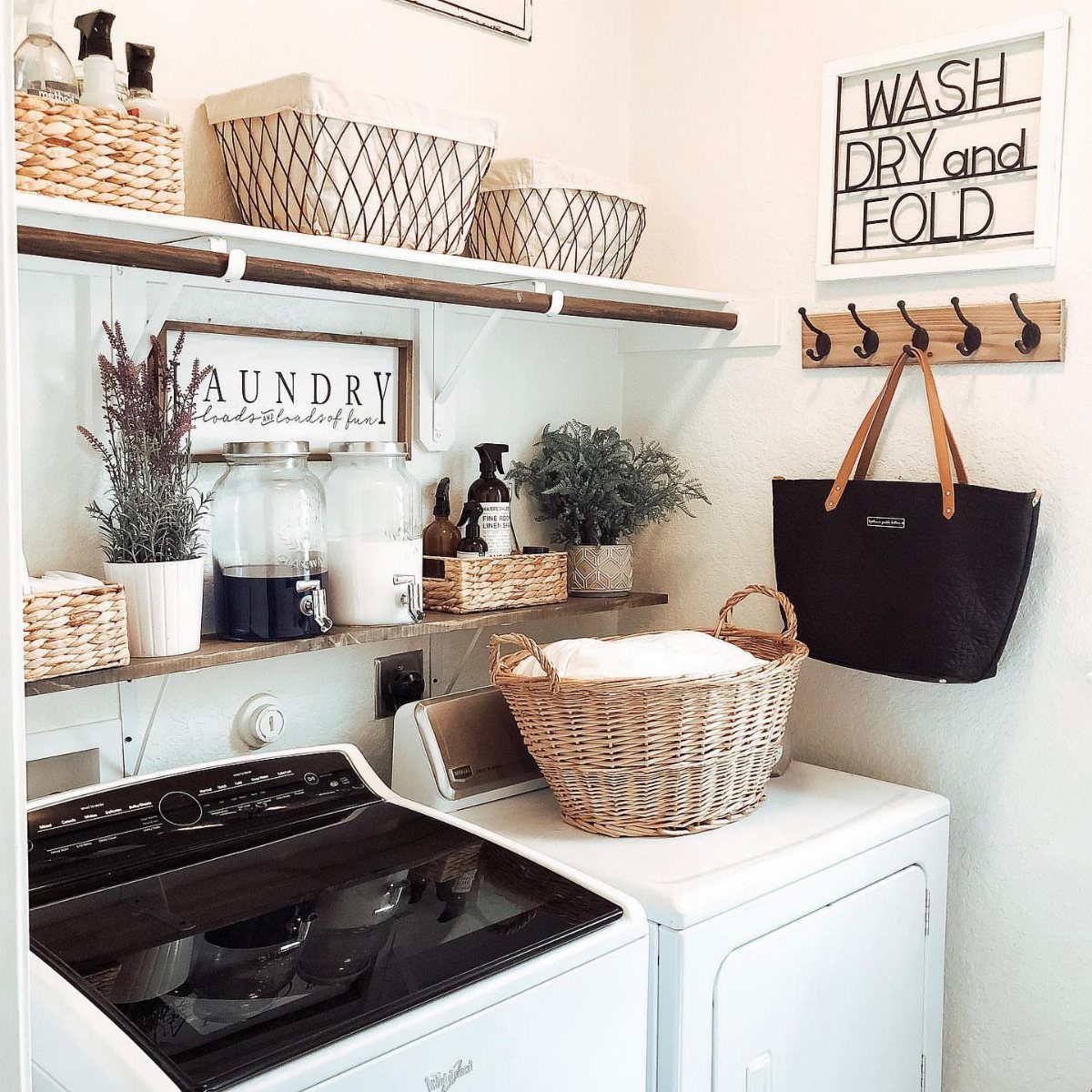
Wall signs and a few potted plants give a garage laundry corner personality for almost nothing. A "wash, dry and fold" sign states the routine, and a funny one keeps the chore from feeling grim.
I’d stick to two or three signs, since more starts to look cluttered. Put plants on a shelf at eye level, and choose sturdy, low-light ones, because garages rarely get much natural light.
7. Drink Dispensers for Detergent
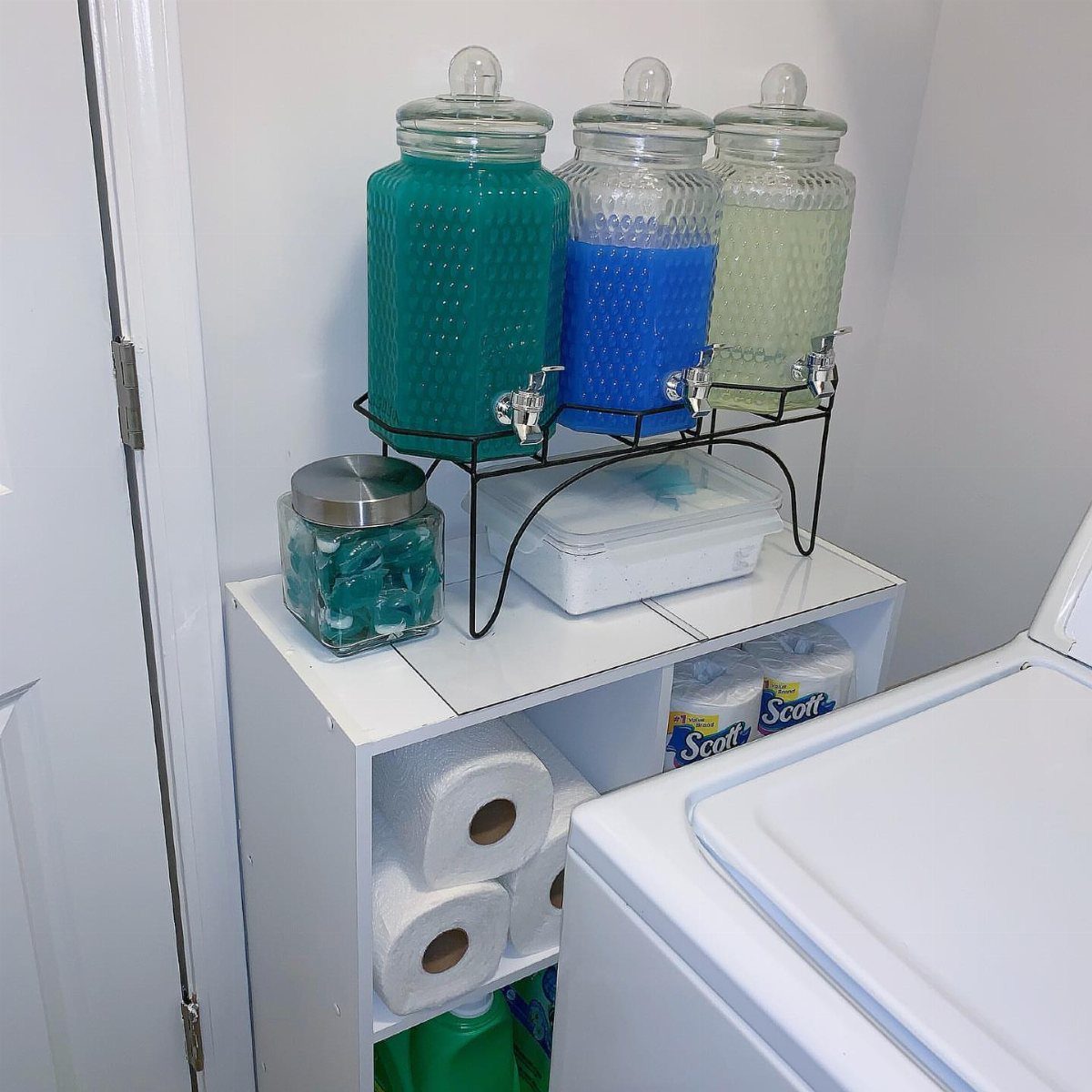
Glass beverage dispensers with spigots turn liquid detergent and softener into a pour-on-demand station. Fill each one, set it on a sturdy rack beside the machine, and a tap replaces the heavy jug you tip and drip.
Put a small label on each dispenser so no one fills a load with softener by mistake.
Keep a tray or a rag under the spigots, since taps drip. Glass is heavy when full, so the rack has to be solid.
8. Garage Step and Green Cabinets
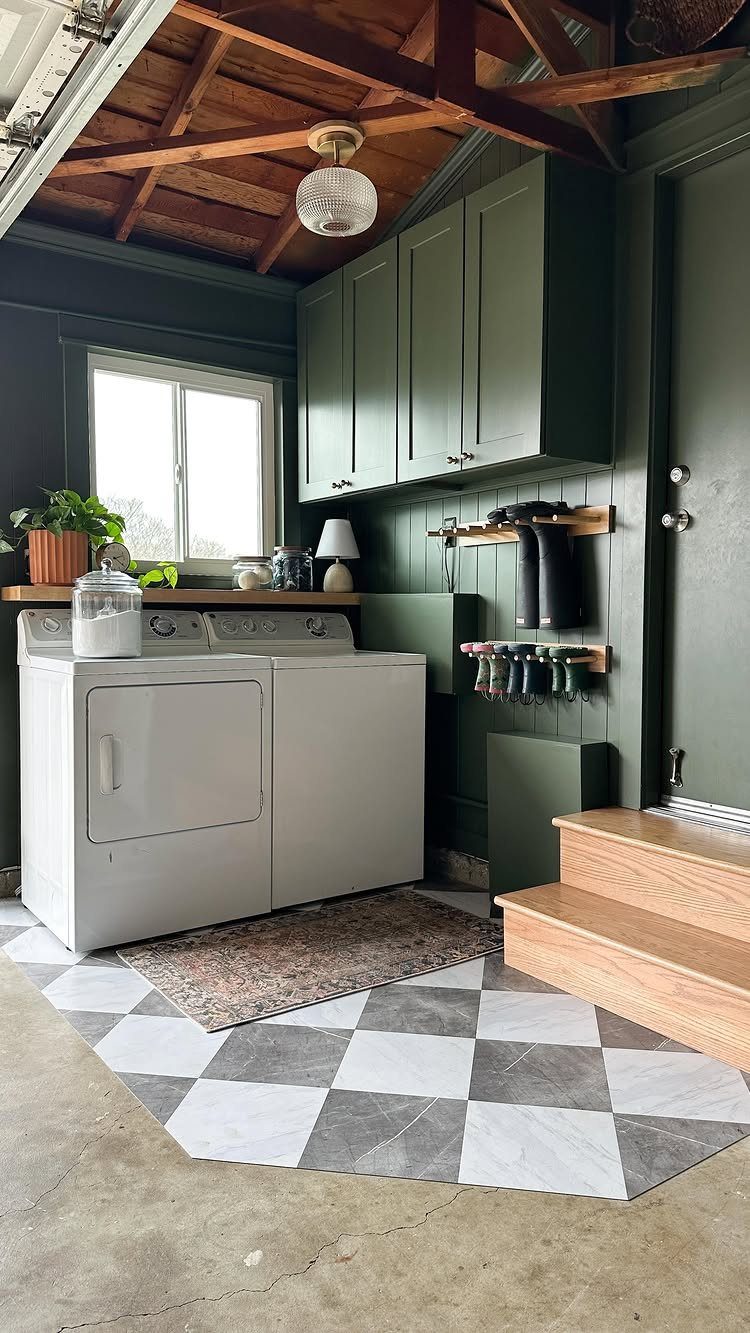
Dark green cabinets make a garage laundry corner feel like a real room, and they hide the scuffs a garage hands out. A checkered floor mat under the machines adds pattern without any flooring work, which suits a small budget.
A wooden step at the entry door is a practical addition, since garage floors often sit lower than the house.
Painting existing cabinets is the cheapest route, and a weekend covers it. Keep the machines white so the green stays the star.
9. Garage Island and Epoxy Flooring
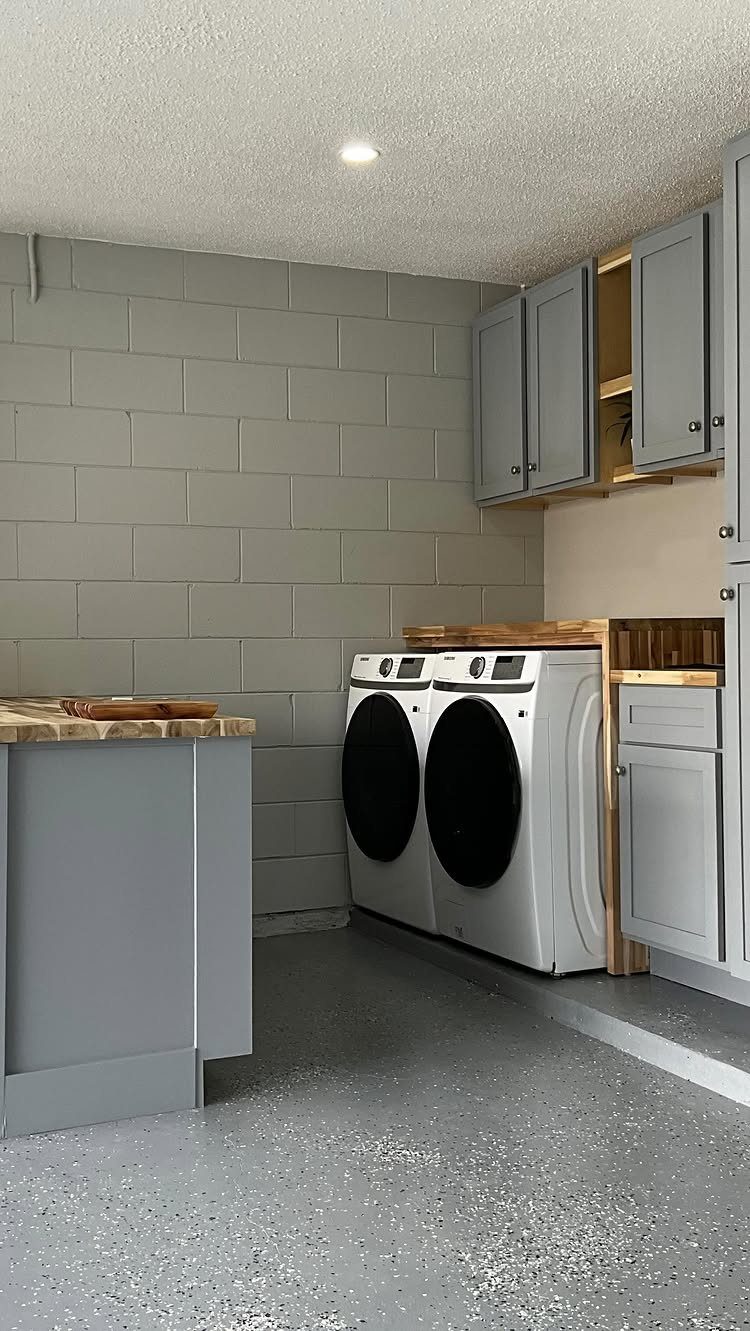
Speckled epoxy on the floor is what makes a garage laundry station look finished, because it hides dust and drips that plain concrete shows.
Pair it with grey cabinets and a wood countertop, and cinder block walls stop looking rough and start looking intentional.
A freestanding utility island gives you folding space without any construction. Since an island rolls or slides, leave room to walk around it and to open both machine doors fully.
10. Built-In Stacked Washer Station
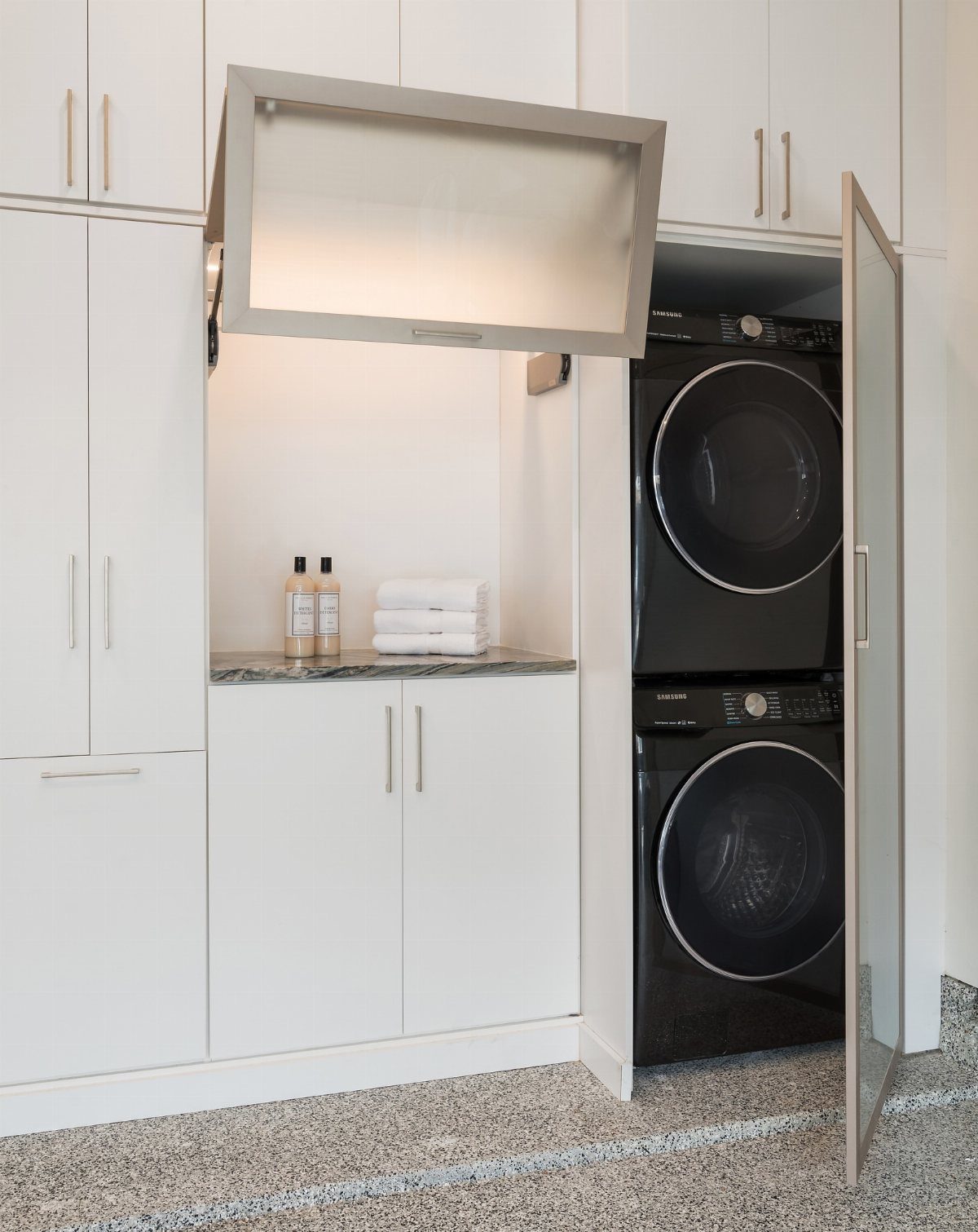
Stacking the dryer on the washer and boxing both into white cabinetry frees the floor and makes the pair look like part of the wall.
Black machines against white cabinets give a crisp contrast that I like far better than matching white on white.
Leave a counter above for folding, and a cabinet over it for supplies. Measure the stacked height with the vent and hoses included before building, because the cabinet frame has to fit those exact numbers.
Selecting Ideal Laundry Appliances
Size decides the appliance choice before anything else does.
Energy-efficient models cost more up front but trim utility bills over time, so they suit machines you plan to keep for years. A renter who may move soon can skip that premium and buy reliable, basic units.
Stacked machines also leave wall space for built-in shelves. Pairing open shelves with a few pull-out drawers copes with awkward items, like spray bottles and loose dryer sheets, far better than a wall of shelving alone.
Where space allows, a small shelf at counter height gives you a landing spot for pocket change, orphan socks and whatever products you reach for every week.
Maintaining Garage Laundry Room
A garage laundry area stays tidy only if the cleanup is quick. Wipe down the machines and the surface around them on a regular schedule, and the lint and powder never get a chance to build up.
Keep storage vertical. Wall-mounted shelves or cabinets free the floor, and hooks or a pegboard give an ironing board and mops a home off the ground.
A mobile cart helps too, because it carries laundry to and from the machines in one trip. Park it against the wall when you’re done so it never becomes floor clutter.
Oftentimes the laundry room is awkwardly inside a tight hallway, the kitchen, or a even closet. But if you’re able to relegate the washer and dryer to an under-utilized carport or shed, you’re in luck.
— Hunker
Creating a Functional Workspace
Plan the workspace around 2 jobs: sorting and folding.
Folding happens on the counter over the washer and dryer, so pick a surface that shrugs off wet laundry and detergent spills, such as laminate, butcher block sealed with polyurethane, or quartz.
Mount shelves or cabinets over that surface for detergent, softener and other supplies. Within arm’s reach, they cut down on trips across the garage.
Since a garage serves several purposes, cabinets that continue one color scheme tie the space together.
They also give you hidden storage for laundry supplies and even off-season shoes, and upper and lower cabinets around the machines give the built-in look.
Frequently Asked Questions
How to decorate a tiny laundry room?
Start with one decorative wall behind the machines. For a garage laundry corner that looks planned, patterned tile does the most for the least money, and peel-and-stick versions go up in a weekend without bothering a landlord.
Add one wooden shelf for towels, a few labeled baskets, and two or three signs, since more than that looks cluttered. Sturdy low-light plants at eye level suit a garage, which rarely gets much natural light.
What are some good storage ideas for a small garage?
Keep storage vertical: wall-mounted shelves or cabinets free the floor, and hooks or a pegboard give an ironing board and mops a place off the ground.
The narrow gap beside a washer usually just traps lint and stray socks, and a slim rolling cart puts that dead space to work.
Measure that gap before you shop and choose a cart about a half inch narrower, with locking casters so it stays put on uneven concrete.





