The ideas here run from a $10 roll of waterproof shoe-drawer liner to $18,000 custom lockers with a bench, and the right one depends on who walks through the room and what they carry in.
A household with a dog bigger than a terrier needs the raised tub, kids need low baskets and hooks, and a long, narrow room needs shallow cabinets so the path to the exterior door stays clear.
Stock cabinets and a coat of deep green paint cover most of the budget range, and plumbing is where the weekend projects end.
1. Combination of Washer-Dryer with Vertical Storage
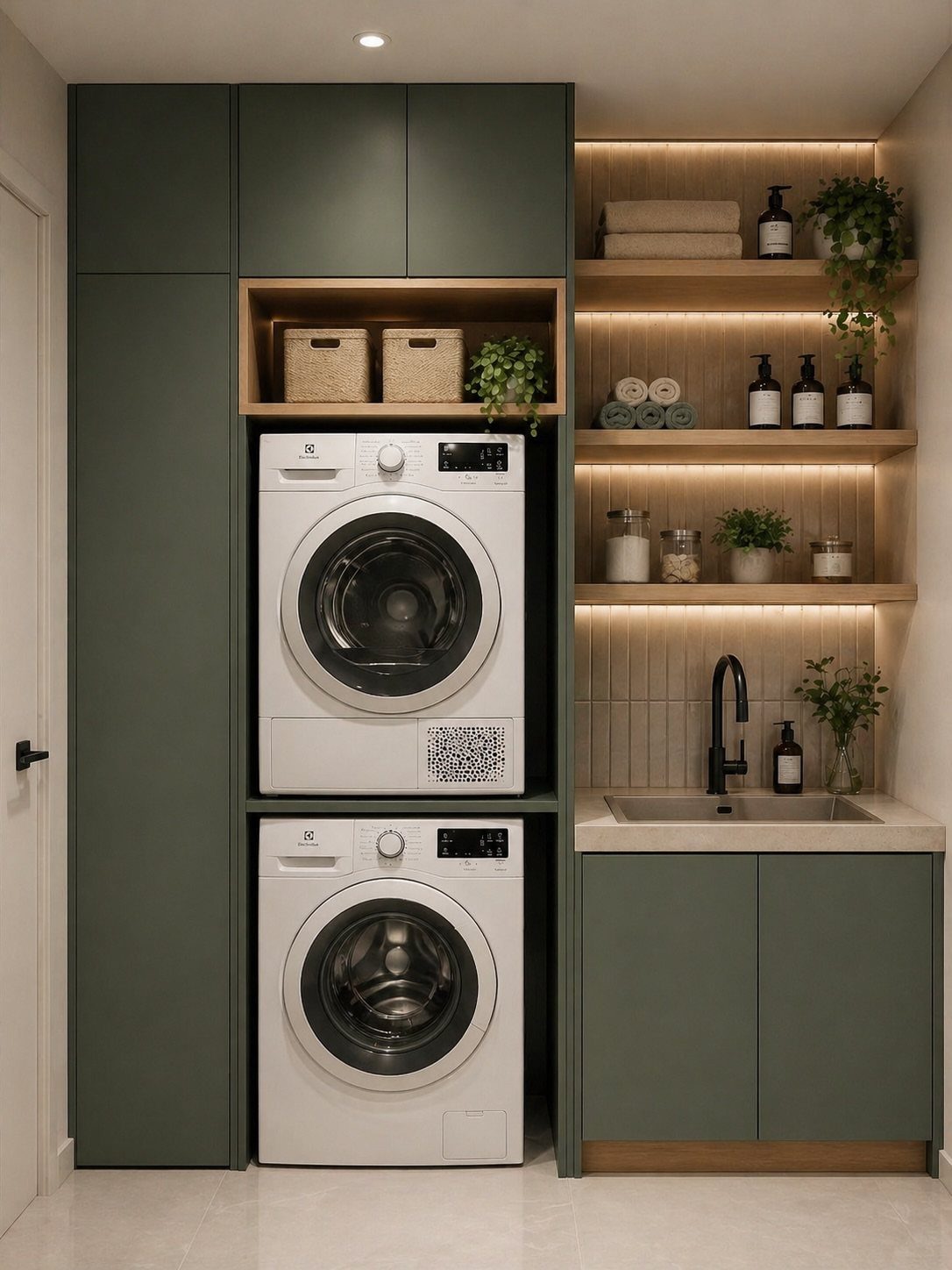
Open wooden shelves cost less than cabinets and fill that height fast. A basic board on brackets costs far less than upper cabinets, and you can reach detergent and toiletries without opening a door.
Closed cabinets beside the machines let you save the open shelves for what looks fine on display. Dark green paired with warm wood reads calm, not busy.
A small sink next to the stack is worth the plumbing if you can place it there.
2. Dog Washing Station
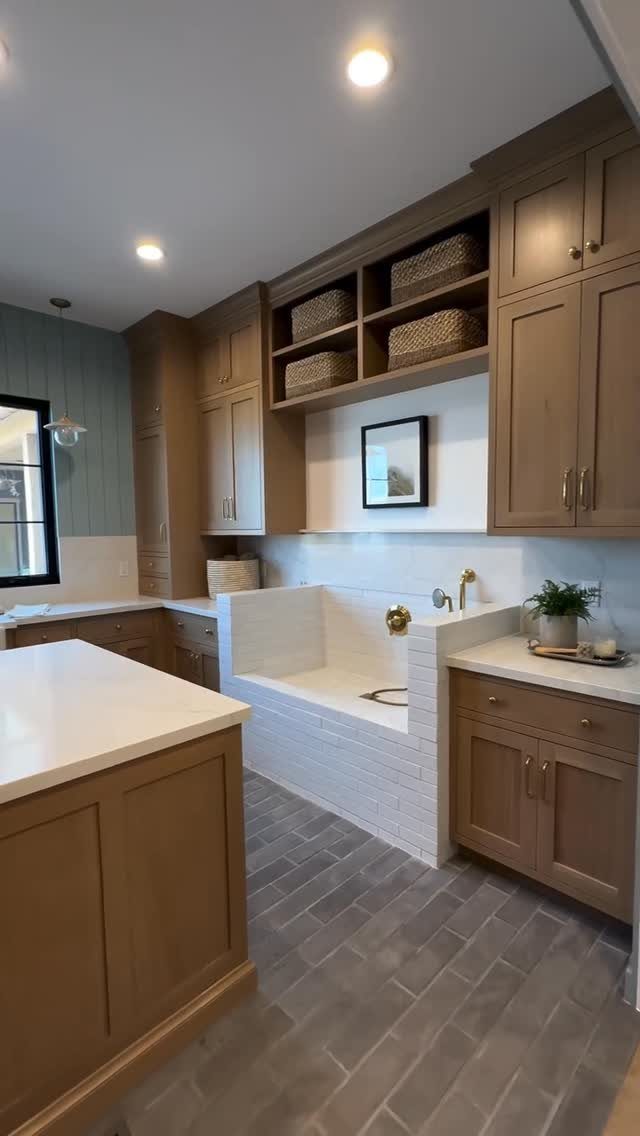
A raised, tiled tub built into the cabinetry makes bathing a dog a standing job instead of a kneeling one.
That alone is why I would choose it over the bathroom tub for anyone with a dog bigger than a terrier.
Tile the whole basin and the walls around it so splashes have nowhere to cause damage.
Choose a handheld sprayer on a hose, since it reaches paws and bellies far better than a fixed head. Gold fixtures look great, but any finish works.
Plan on a plumber, so this is not a weekend project for most renters.
3. Seating with Storage
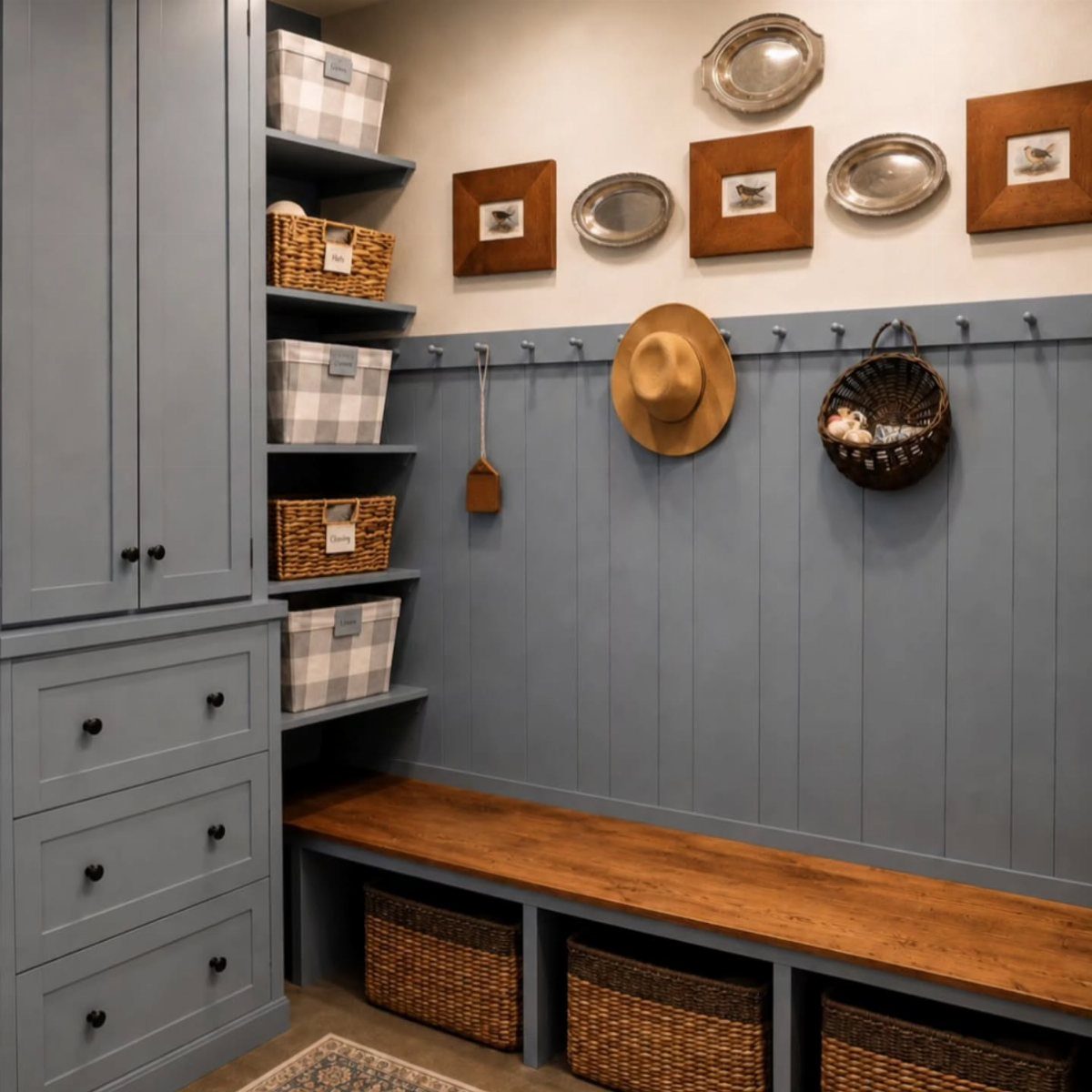
Under a mudroom bench, woven baskets give every family member a place to drop shoes, and the bench gives them somewhere to sit while putting them on. Use one basket per person so nobody digs through a shared pile.
Baskets beat a closed lid here, because kids will actually use something they can toss things into. Shelves with bins hold hats and gloves up high, and wall hooks take coats at shoulder level.
A wooden bench surrounded by blue-grey cabinetry reads as built-in even when the parts came separate.
4. Countertop Over Front-Loading Appliances
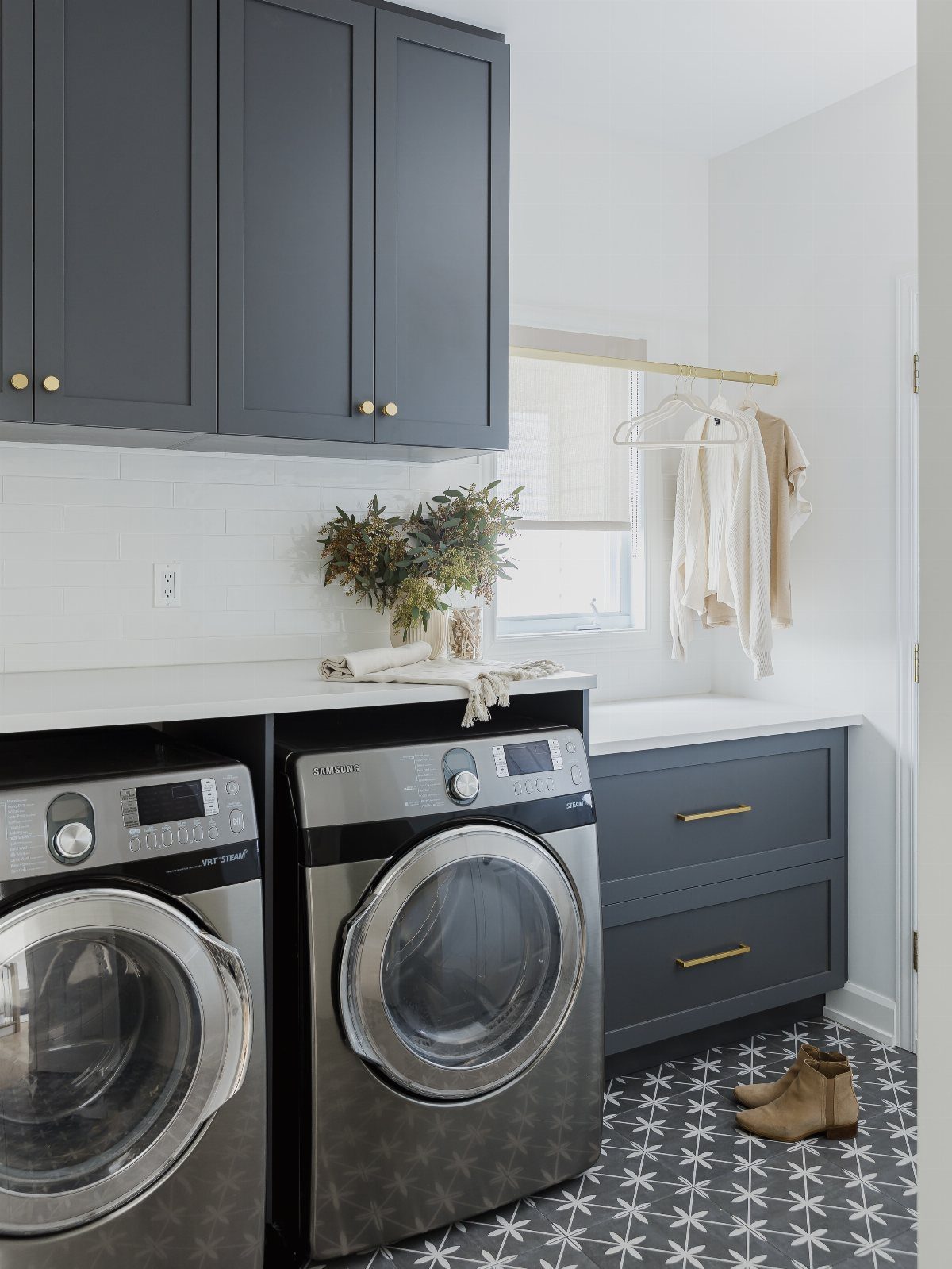
Running one continuous countertop across side-by-side front-loaders gives you a folding surface exactly where the clean clothes come out. Front-loaders make this possible; top-loaders would block the lid.
Measure the machines with their doors and hoses in place, and leave a few inches behind for connections. Put a drawer unit beside the machines for socks, stain sticks and dryer sheets.
Pulling the machines out for service is easier if the counter is not fixed tightly to the wall, so consider a removable panel.
5. Dark Green Cabinets with Open Shelving
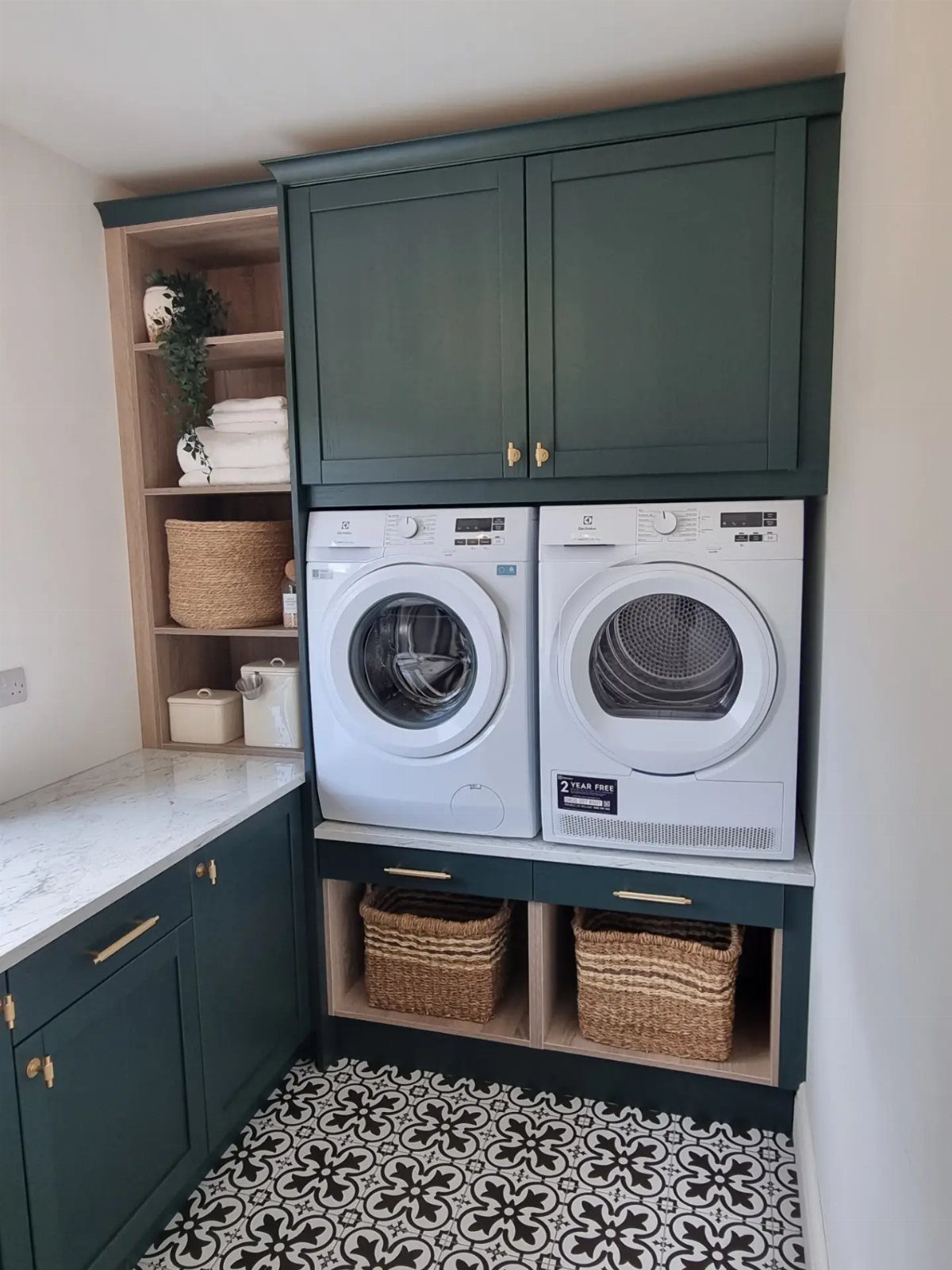
Deep green cabinets and a marble countertop make a laundry room feel like a decision, not an afterthought. White appliances under the counter stop the dark color from closing the room in.
I prefer open wooden shelves above the counter, topped with woven baskets that hide the clutter while adding texture. Paint is the budget route: a cabinet-grade paint in deep green can cover existing cabinets for far less than new doors.
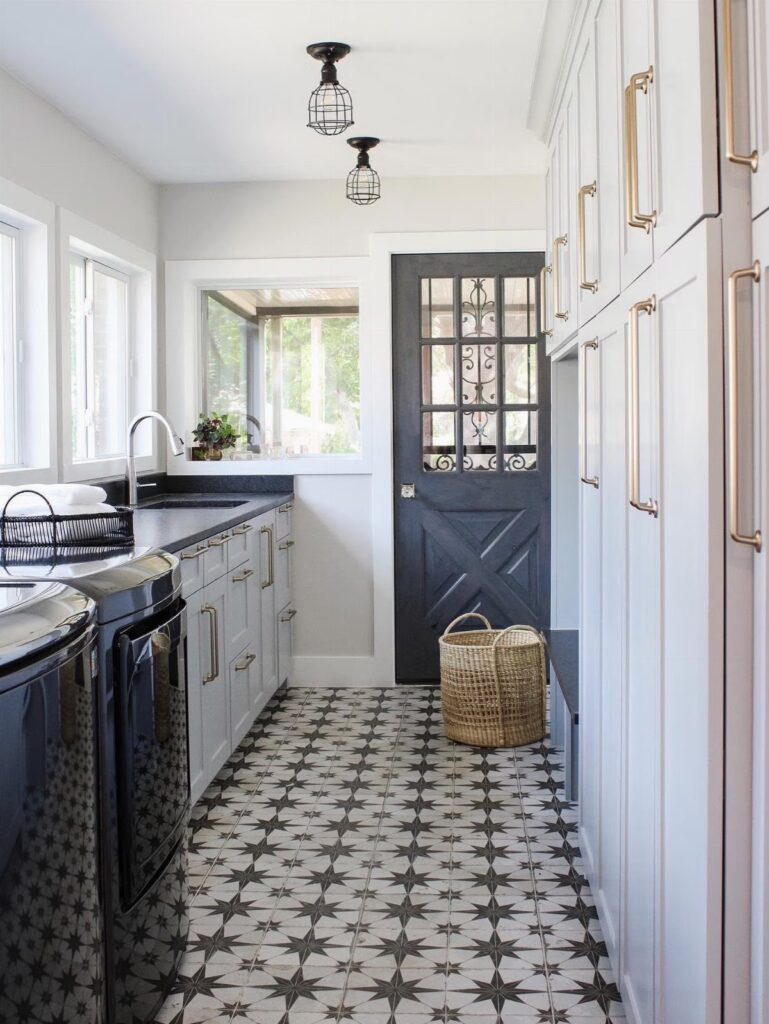
Black and white patterned tile on the floor gives plenty of pattern, so keep the walls quiet and the shelves simple.
6. Narrow Galley Layout to Exterior Door
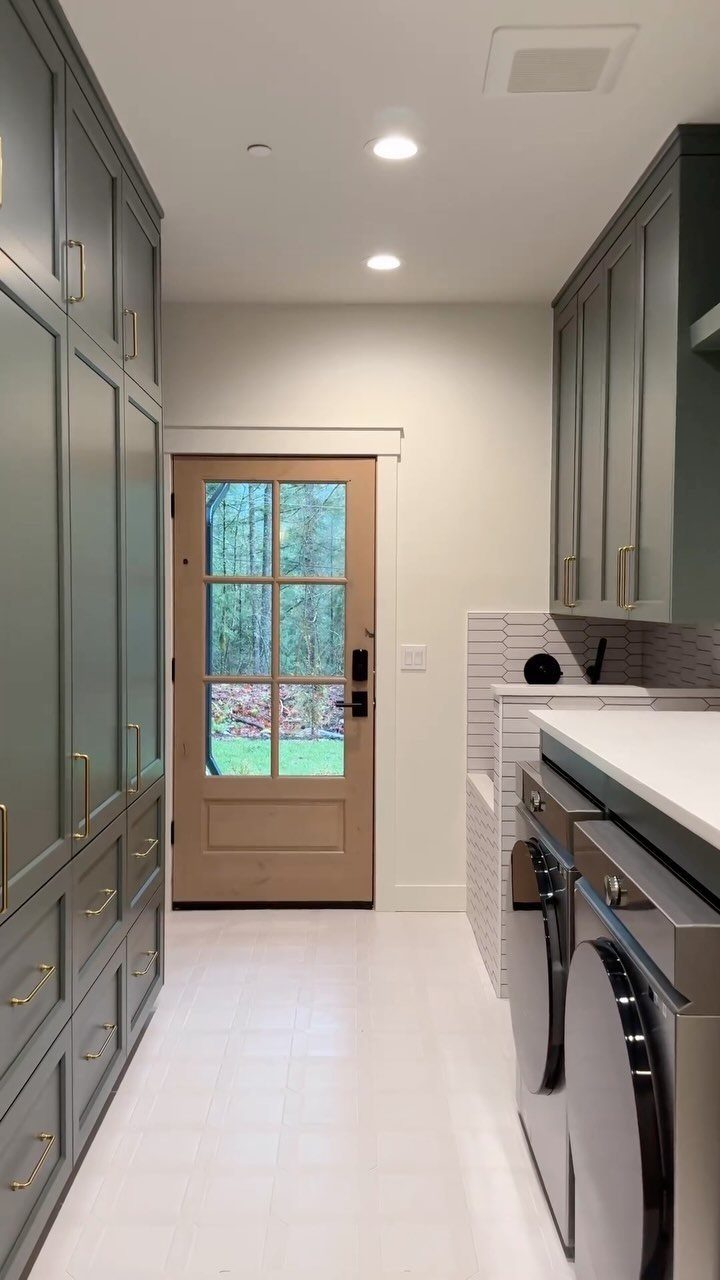
A long, narrow room can work as laundry and mudroom at once if you treat the walkway as sacred.
Put the washer, dryer and counter along one side and keep the other side as clear as you can, so the path to the exterior door stays open.
A door with glass panes pulls in daylight from outside and opens the sight line.
Choose shallow cabinets where space is tight, since depth steals walking room faster than anything else.
Don’t let a challenging room shape deter you from having a functional and beautiful mudroom laundry space.
7. Built-In Utility and Broom Closet
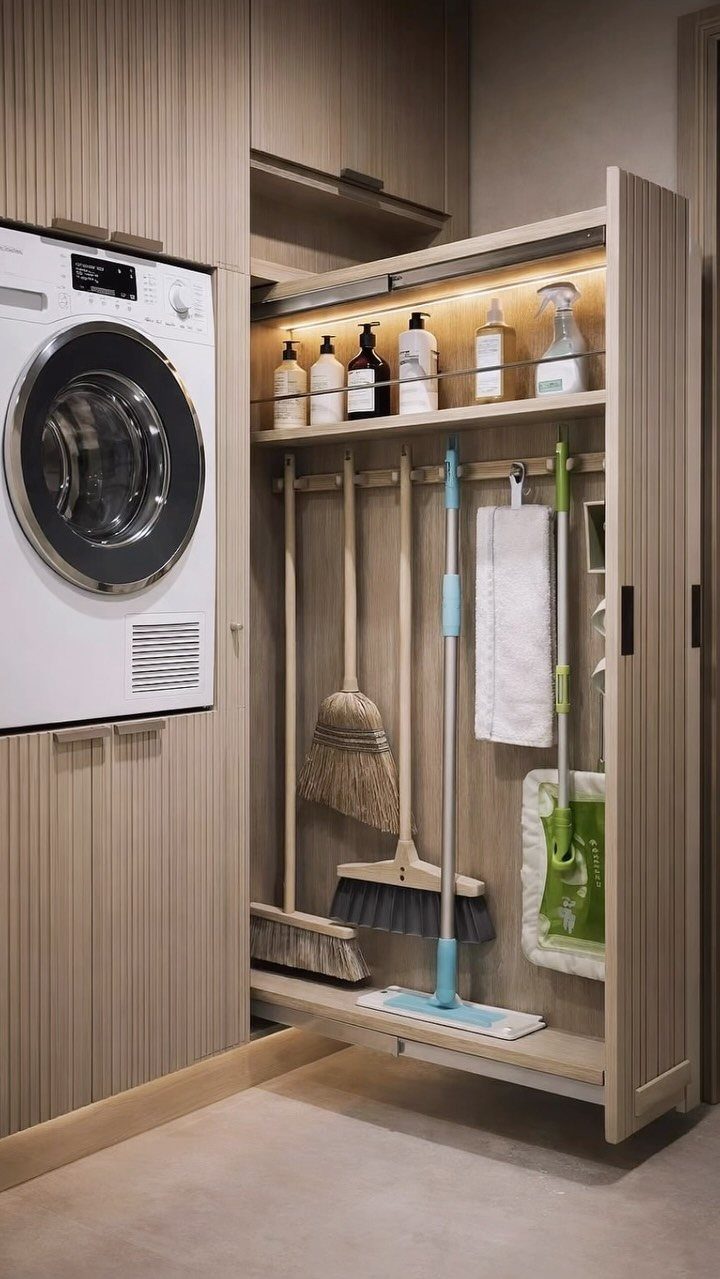
A full-height cabinet beside the washer gives brooms, a mop and spray bottles a home that is not a corner pile. Racks on the door or inside the cabinet keep long handles upright, and shelves hold the bottles at reach.
Leave this one open or closed depending on your habits.
Hang a towel on a hook inside for quick spills. Match the cabinet finish to the machine surround so the closet reads as one piece.
8. Integrated Sorting Bins Under Counter
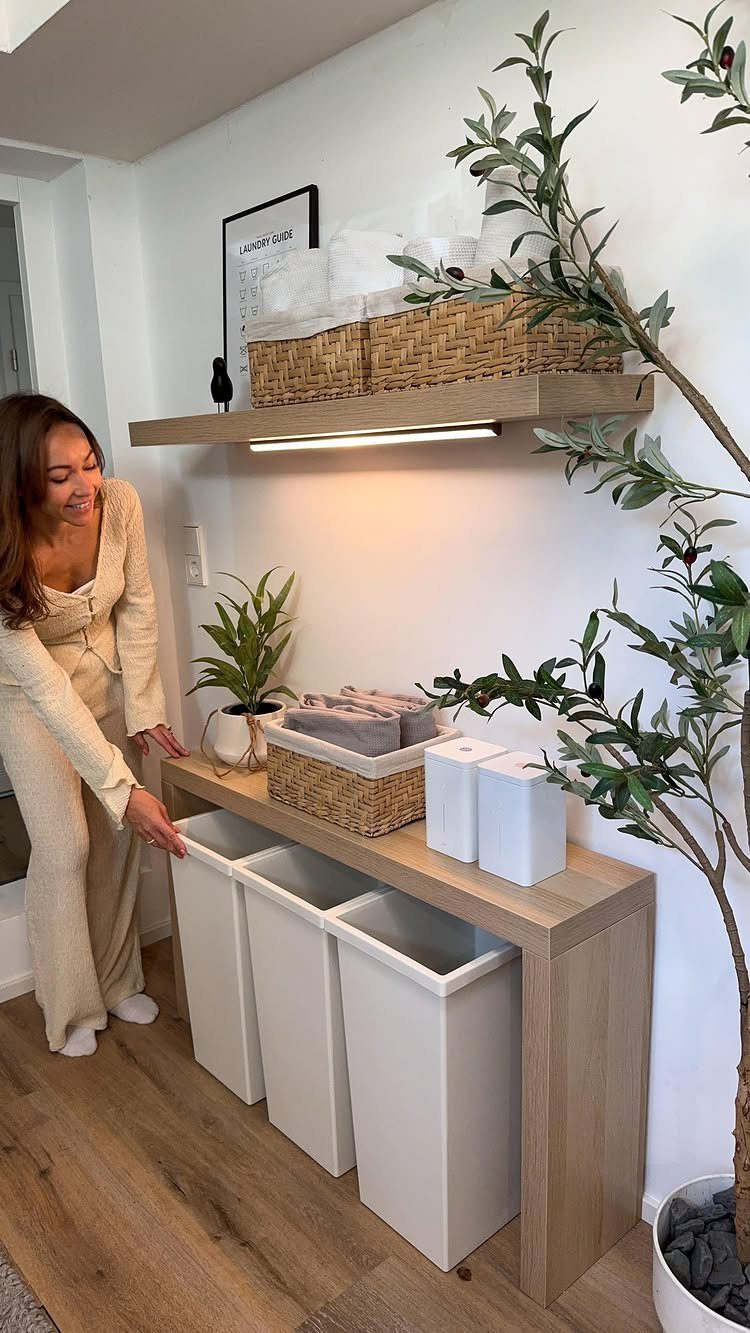
3 bins under the counter turn sorting into a habit: lights, darks and delicates each get a bin, and clothes land there before laundry day. I like white bins against light wood because the labels stay easy to read.
Post a simple guide on the wall so everyone in the house follows the same system. A shelf above with a basket holds the small things, such as stain sticks and spare hangers.
Pick bins that slide out, since a bin you have to lift stops getting used. Carry one bin at a time to the machine.
Combining Spaces Effectively
Wet or muddy clothes can go from the door straight into the washer when the two rooms share one space, and that shortcut is the real reason to combine them.
Keeping the gym bag by the dryer means a freshly washed jersey goes straight in without a detour through the house.
Decide who uses the room before you pick any hardware. With kids, keep storage low enough that little ones can find and put away shoes, backpacks and sports gear without help.
A small desk zone works if you add a stool, a low counter and a bright task light, which is plenty for sorting mail, jotting a list or sewing on a loose button.
Design Inspiration
Look at where the room sits before choosing a style. If it opens near the kitchen, match the cabinet finish and door style so the two spaces read as one.
If the room is tucked away from public areas, you have more freedom.
Bold color or a strong pattern is easiest to try there, since few people see it and you can enjoy it every time you come in or do a load.
Budget Considerations
Pre-made cabinetry is where most budgets are saved. Pre-fab lockers can cut the cost of a mudroom wall by a large margin compared with built-to-order units, and stock cabinets from a home center work well around a washer and dryer.
For scale, fully custom lockers and a bench can run $18,000 with paint, install and hardware.
Small items add up faster than you expect.
Cup pulls at $65 each get expensive across a run of doors, so price hardware early. Lining a shoe drawer with waterproof liner runs about $10 a roll, and it’s one of the cheapest upgrades you can make.
Frequently Asked Questions
Is a mud room the same as a laundry room?
No, they are two separate rooms with different jobs, though they overlap enough to share one space. A mudroom handles coats, shoes and bags at the door, and a laundry room handles washing and folding.
How big should a mudroom laundry room be?
There is no set size, and a narrow room can work if the layout is tight. In a long, skinny space, keep the machines and counter on one wall and leave the other side clear for walking.
Keep upper cabinets to the usual 12 inches deep, because anything that sticks out into the walkway costs you room to move. Stacking the washer and dryer frees up floor for a bench.





