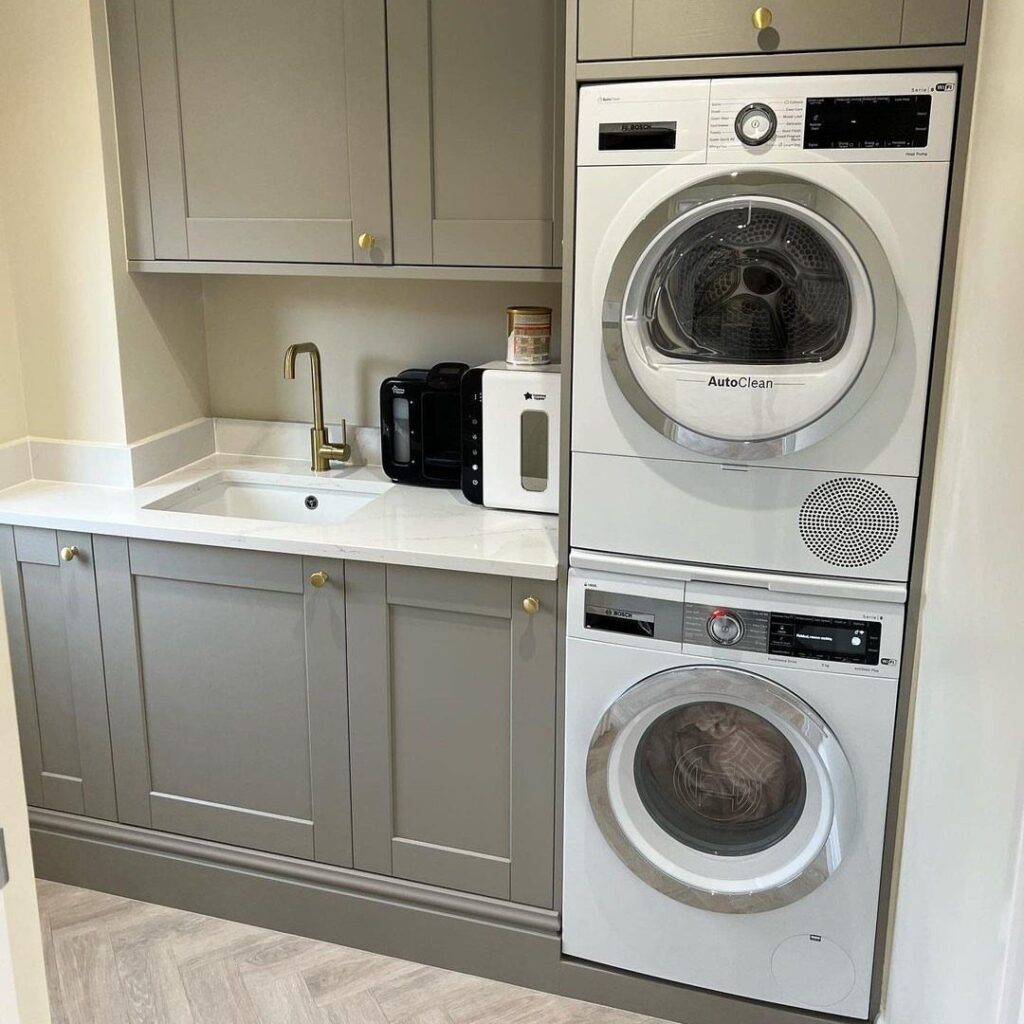
Floor space and water lines decide which of these ideas fits your room.
A tight footprint points to a ceiling-mounted drying rack or tall cabinets over deep drawers, while a room with plumbing already in place can take a deep sink or a tiled pet washing station beside the machines.
The ideas run from a roll or two of peel-and-stick wallpaper, the cheapest change here, to cabinetry that hides a stacked washer and dryer or tall cabinets paired with deep drawers.
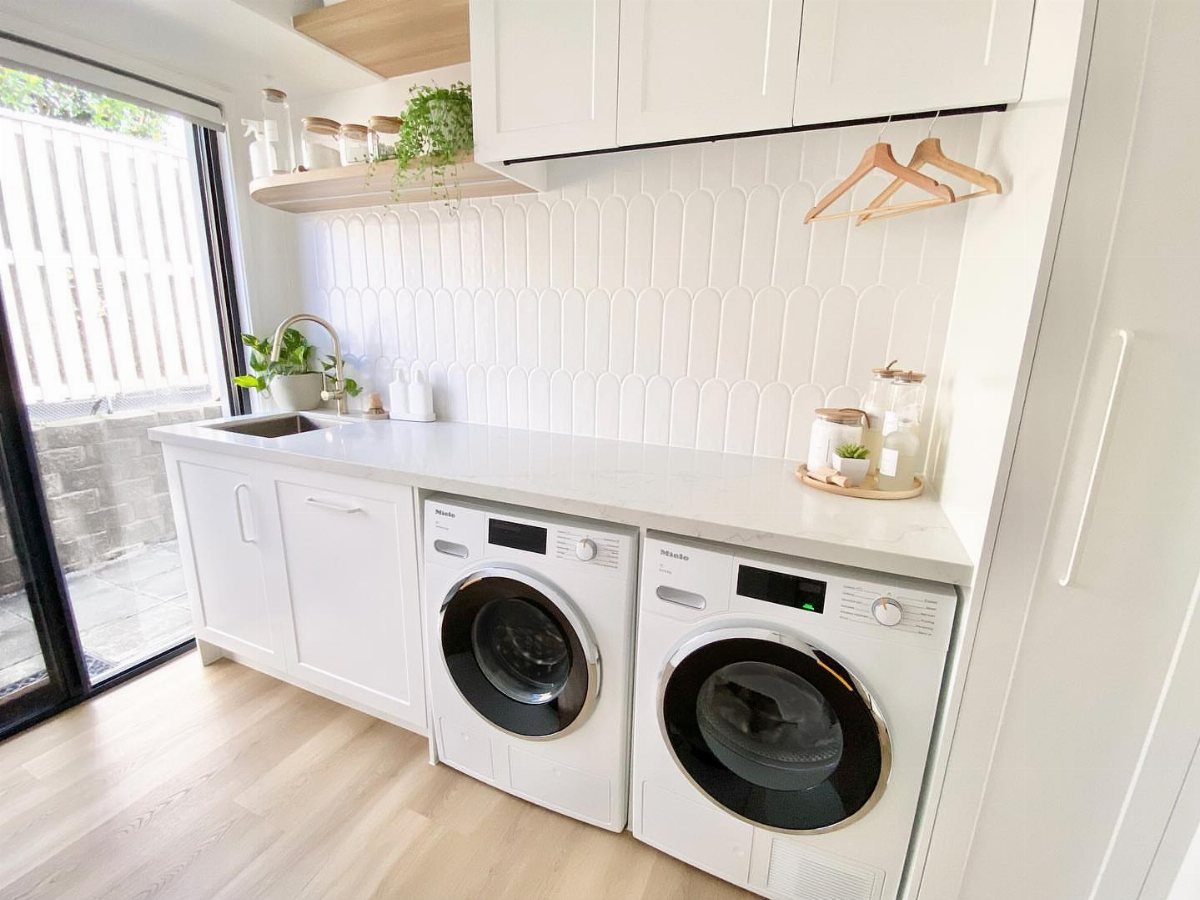
1. Cabinetry to Hide Washers and Dryers
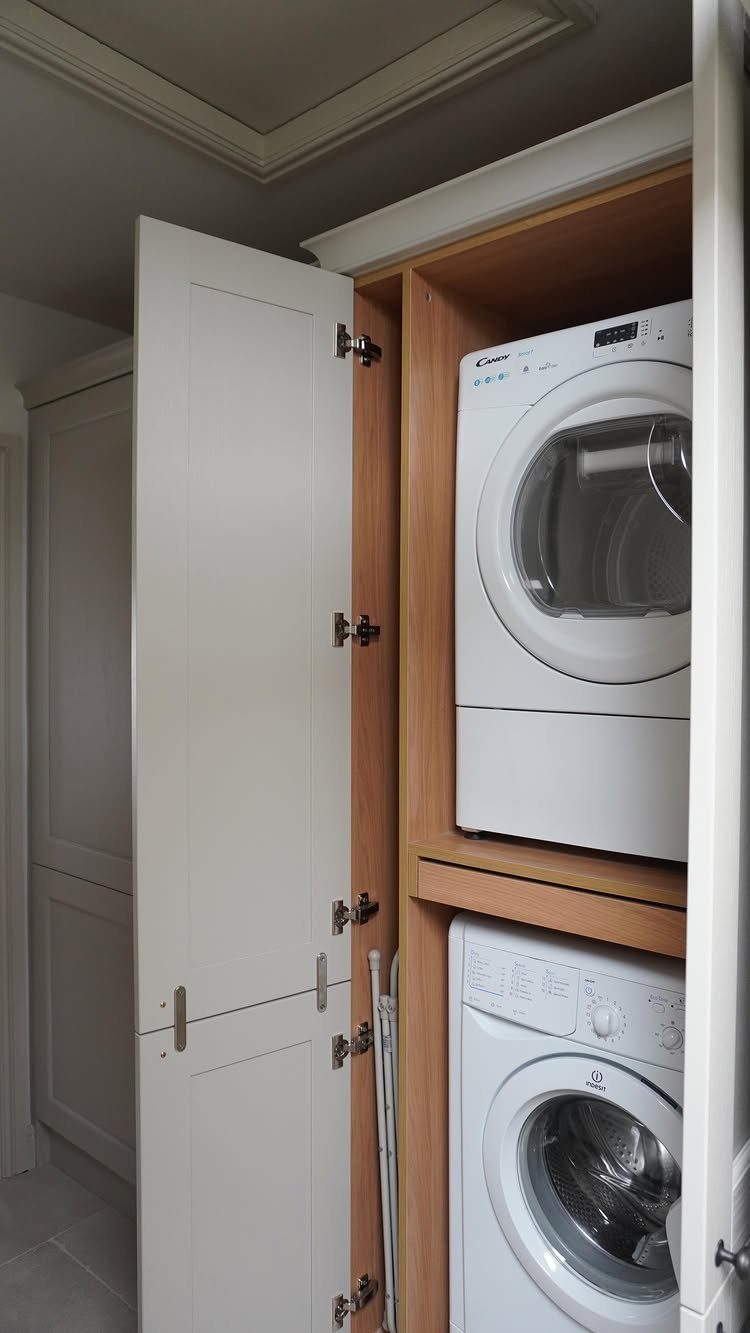
A closed cabinet around a stacked washer and dryer turns two noisy appliances into a wall of storage, and white keeps the room reading as one calm surface.
Doors that open fully matter more than anything else here, so measure the swing before you buy.
Leave the cabinet interior unfinished enough to reach the controls easily.
If the doors stay shut through a cycle, check that the machines have room around them. In a small room, I would pick this over open shelving every time.
2. Tall Cabinets and Deep Drawers
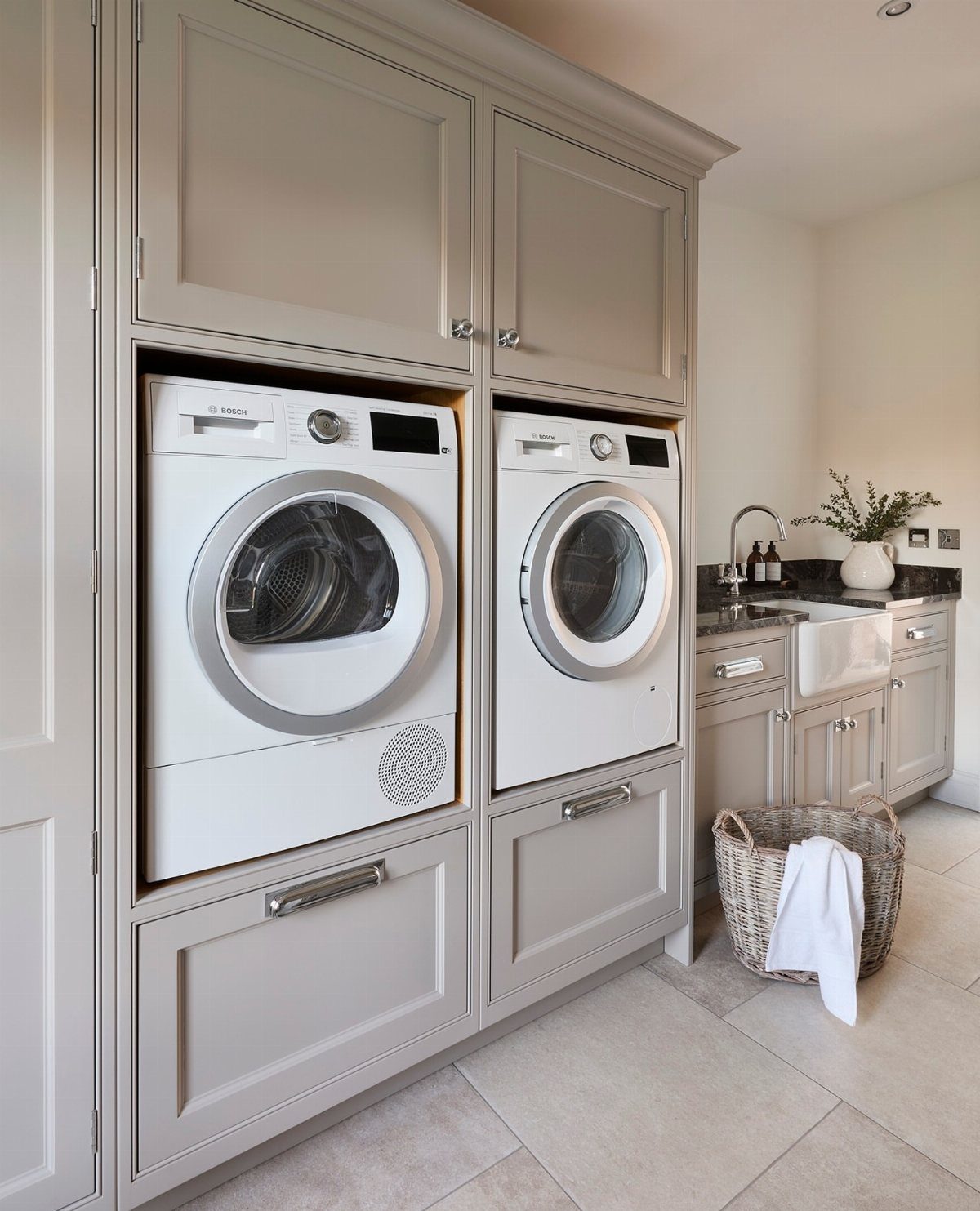
Tall upper cabinets plus deep lower drawers give a laundry room storage on 2 levels, which suits a small footprint better than wide shelves that eat floor space.
Grey is a forgiving color for it: it hides lint and detergent drips better than white.
Put the things you grab daily in the drawers, like pods, stain sprays, and dryer sheets.
Keep the tall cabinets for backup supplies and seasonal items. A basket beside the sink handles the rest.
3. Deep Sink
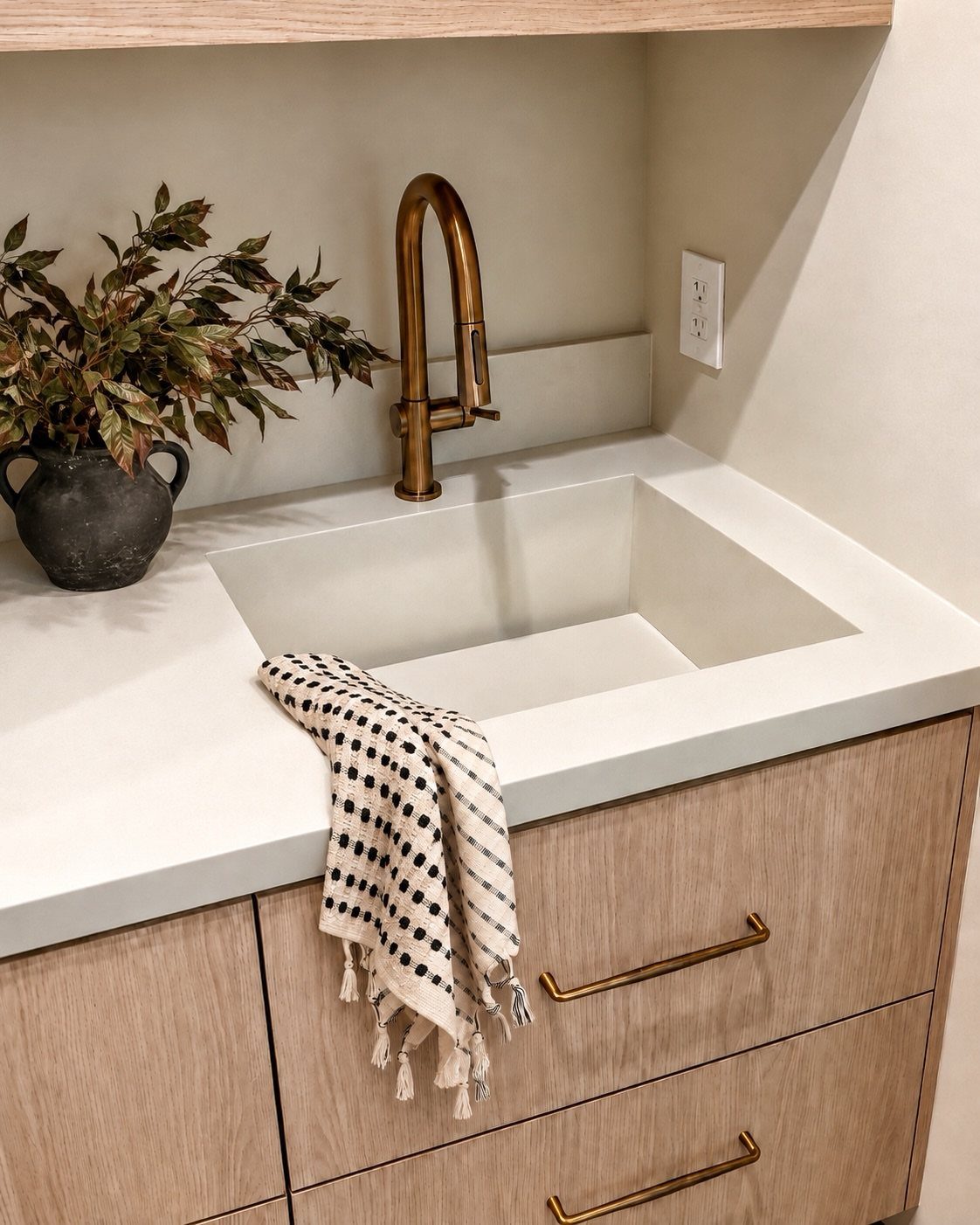
Deep undermount sinks earn their spot in a laundry room because one basin handles hand-washing, soaking stained clothes, and rinsing mop buckets. Undermount also means no rim to catch grime, so a wipe clears the counter straight into the bowl.
If the sink sits on a light wood base instead of white, the room stays warm without needing anything on the walls.
Pick a faucet with enough height to fit a bucket under it. Cost climbs with plumbing changes, so placing the sink on an existing water line saves the most.
4. Natural Light
Glass in the door of a laundry room does the work of a window when the room has no outside wall. Daylight makes white cabinets look cleaner and helps you spot stains before clothes go in the dryer.
If a glass door is not an option, a swap for a half-lite door is the lowest-effort version I would try.
Keep surfaces light and the glossy finish of white cabinets will bounce what comes in. Frosted glass gives you light and still hides a messy room.
5. Folding Table
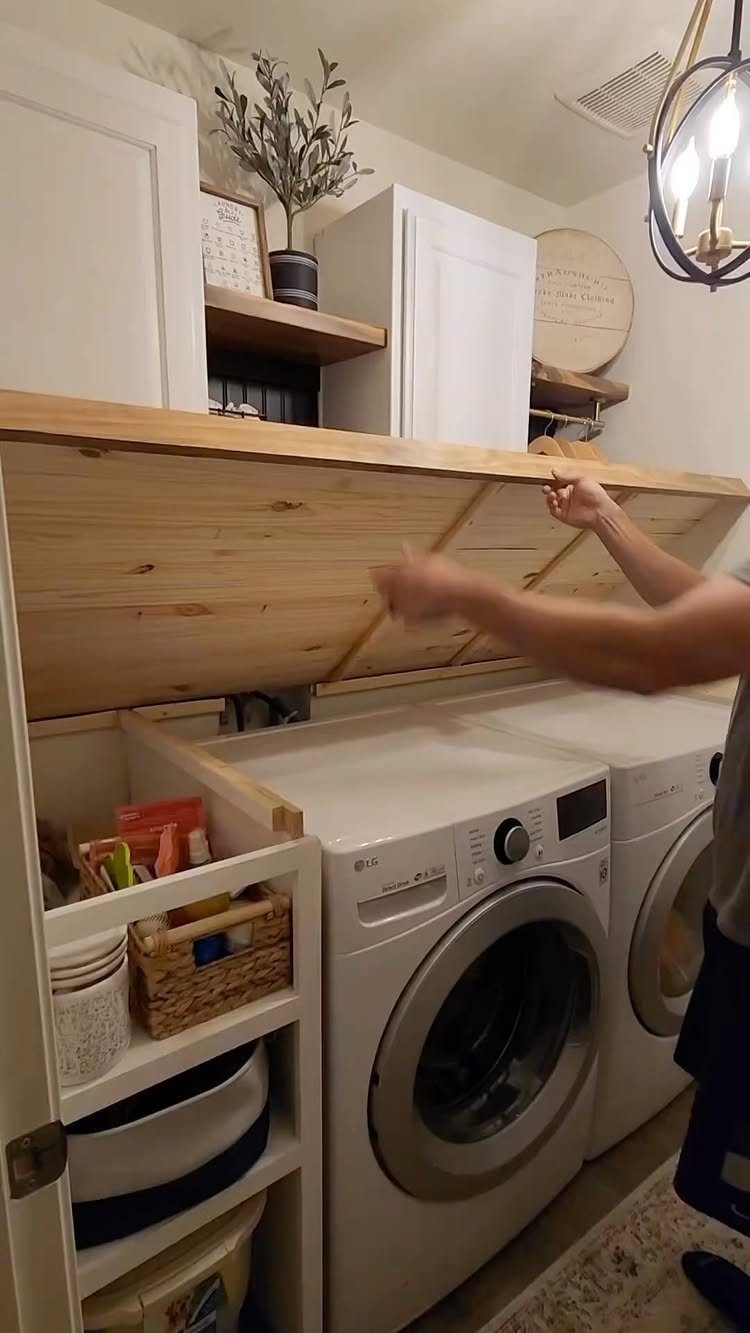
A wood folding table that lifts above the washer and dryer gives you a flat surface only when you need it, which is the right answer when floor space is tight.
Lower it and the machines sit underneath; raise it and sorted piles have somewhere to go.
Check that the hinges and mounting are rated for the weight of a full basket before you load it.
Wood feels warmer than laminate and sands out scratches. For a weekend project, mounting to studs matters more than any finish choice.
6. Colorful Wallpaper
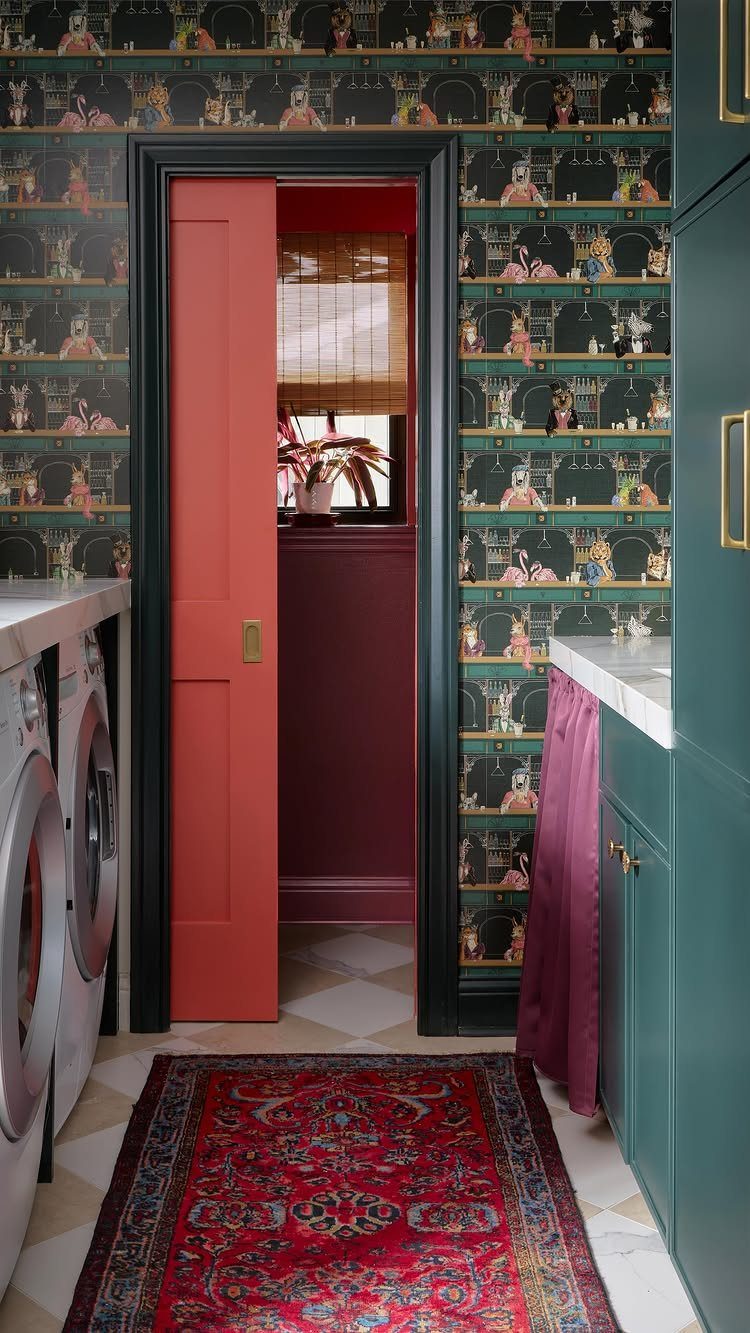
A patterned wallpaper in deep green is the cheapest way to give a laundry room a personality, because a room this small only needs a roll or two.
Small figures and shelves in the print hide scuffs and wall wear better than a plain color would.
Pair it with cabinets in a related tone and keep the accents to one or two, like a red rug.
I would choose peel-and-stick if you rent, since it comes off without damage. Wipe-clean vinyl holds up best near the machines, where steam collects.
7. Drying Rack
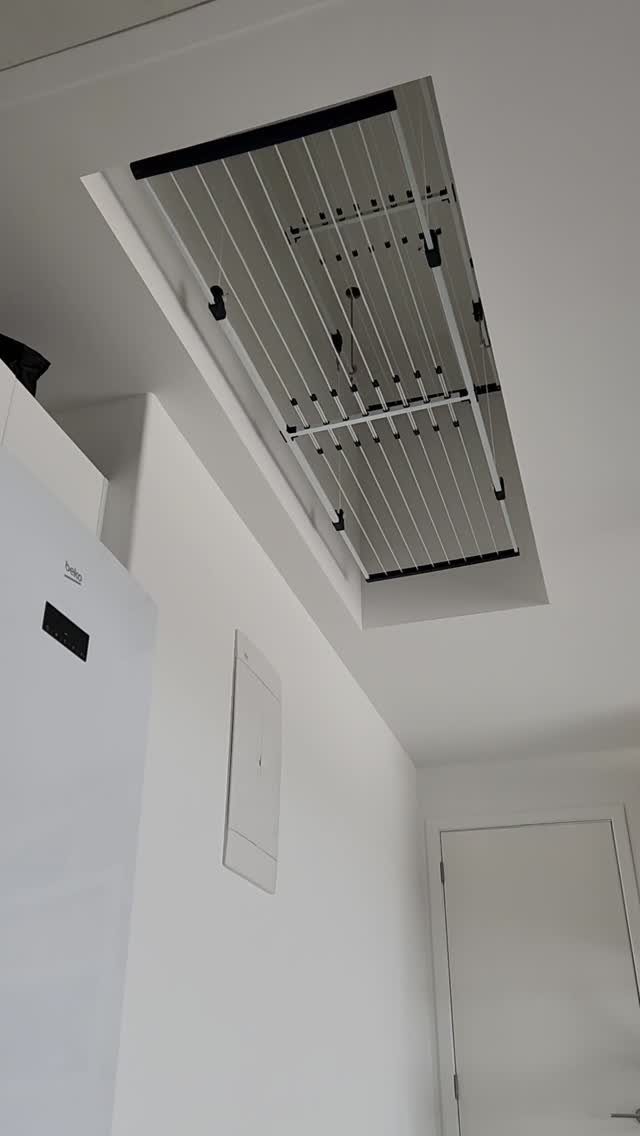
A ceiling-mounted retractable drying rack is the version I’d pick for a small laundry room, because it disappears when nothing is hanging on it.
Pull it down over the floor or machines for a load of delicates, then retract it and the white ceiling stays clear.
Mount it into ceiling joists rather than drywall alone, since wet laundry weighs more than dry. Put it where you can reach it without stepping around the machines.
A rack like this costs far less than a wall of built-ins, and it suits a weekend install.
8. Hanging Rod
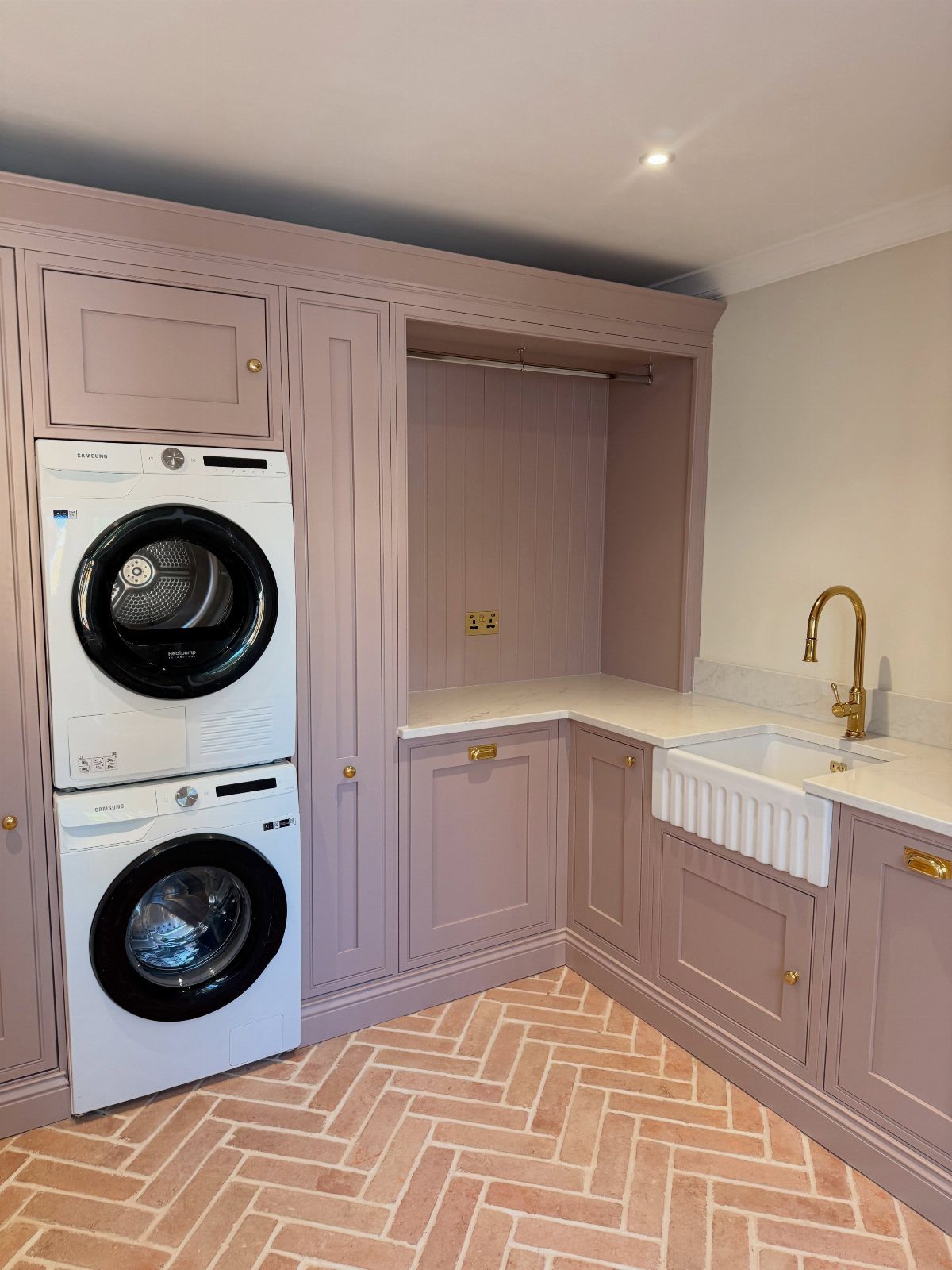
Drip-dry shirts and sweaters need somewhere to hang that isn’t the shower rod, and a metal rod set into a recessed nook solves it without taking any room.
Placing it above floor space that’s already empty means water lands on the tile, not on your counter.
I’d mount it a little higher than you think you need, so long items clear the floor. Anchor the brackets into studs or solid blocking, because a rod full of wet clothes pulls hard.
A nook is ideal, but a rod under a shelf works the same way.
9. Choose Beadboard for Timeworn Texture
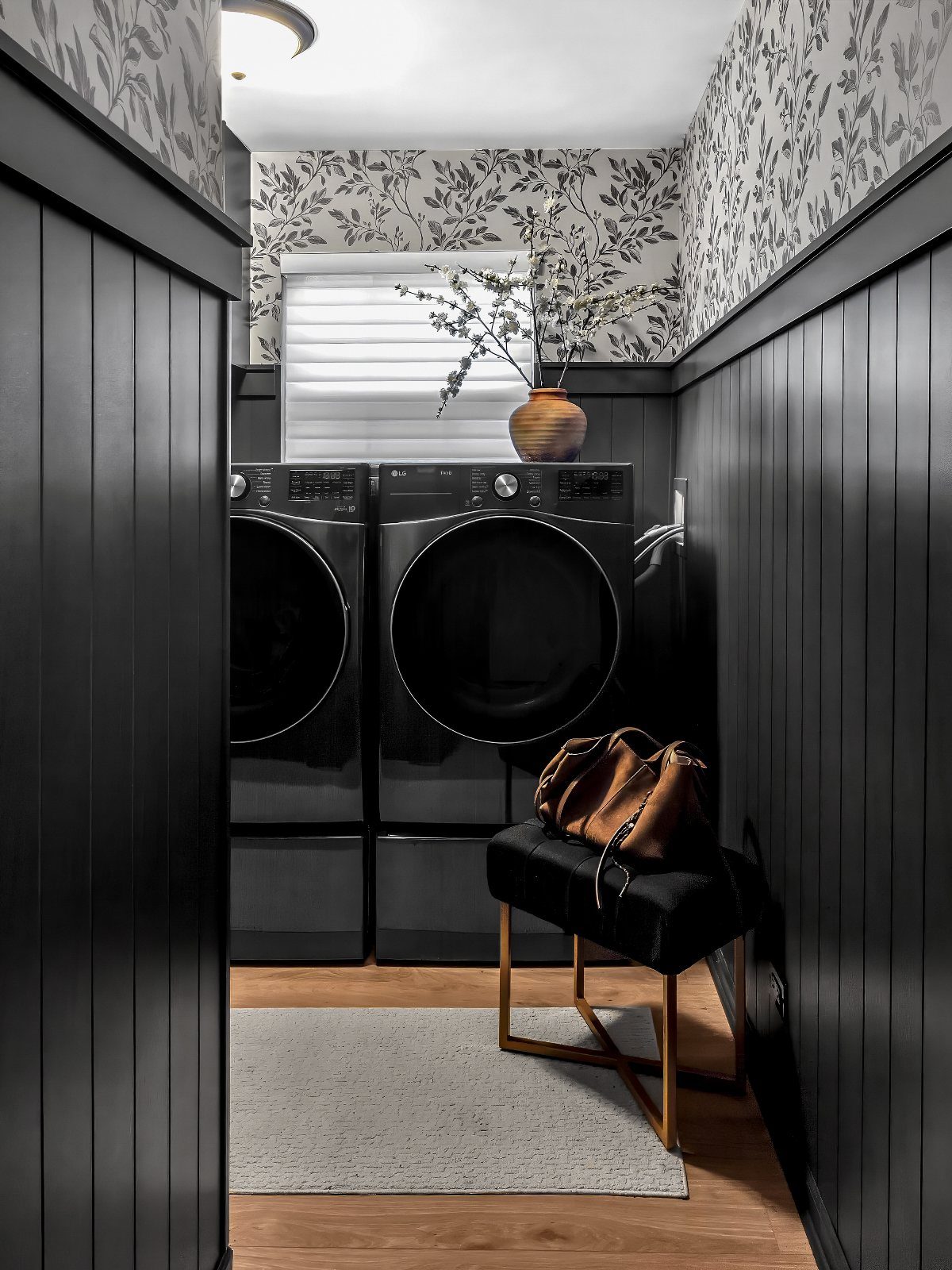
Black beadboard wainscoting paired with botanical wallpaper above gives a laundry room an old-house feel that modern appliances can’t flatten. The paneling also takes the scuffs from baskets and bench legs better than bare drywall does.
I’d keep the wallpaper to the upper wall, where it stays out of reach. Beadboard comes as sheet panels or planks, and panels are the faster weekend route; paint them with a washable finish so lint and splashes wipe off.
Dark paneling does make a small room feel snug, so keep the floor and rug light.
10. Pet Washing Station
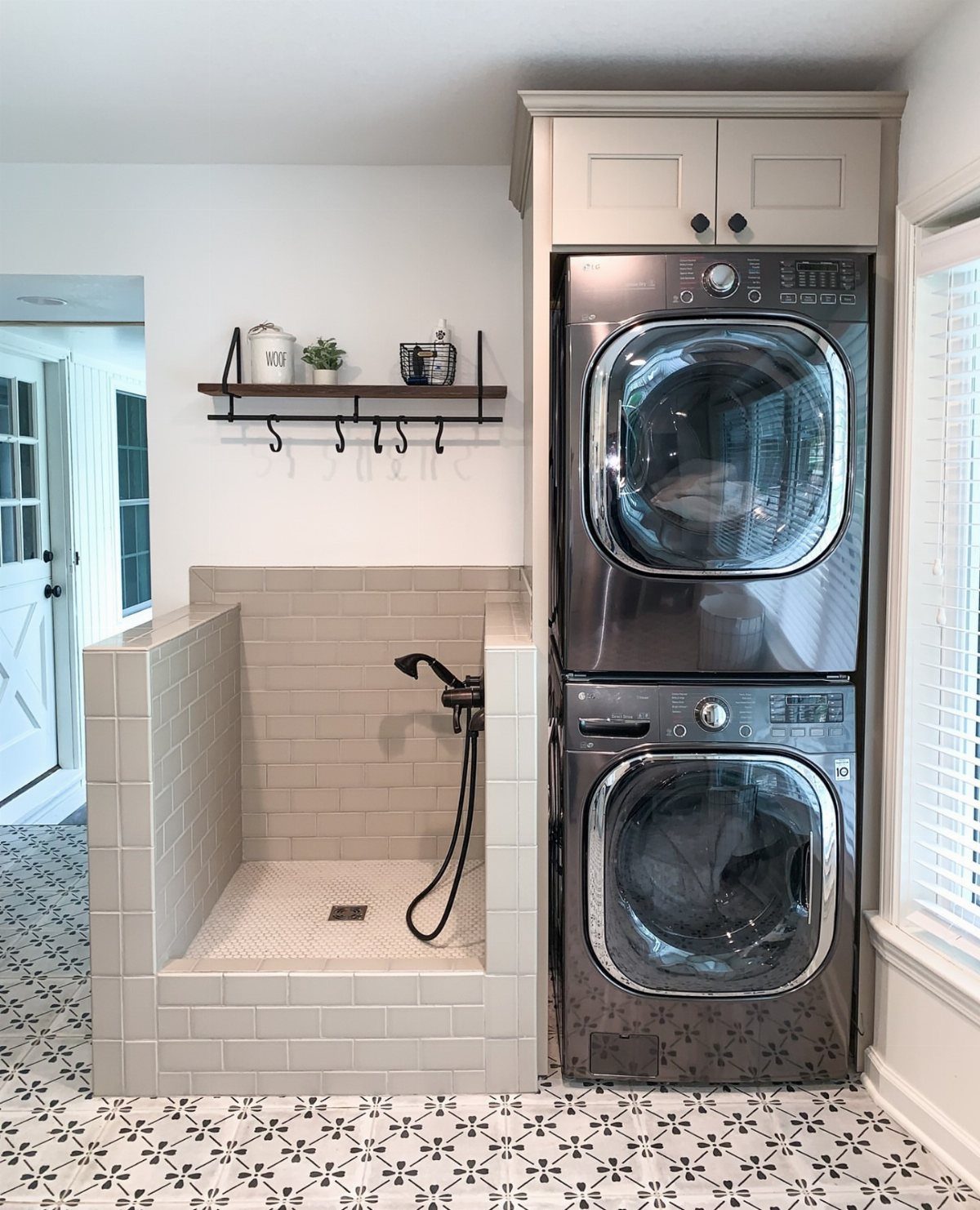
A tiled pet washing station with a handheld sprayer beside the washer and dryer keeps muddy paws out of the family bathtub.
Tile is easy to wipe and handles constant water, so it’s the finish I’d choose for the basin area.
Install the sprayer on a hose long enough to reach the whole animal. A shelf with hooks overhead is smart: leashes, towels, and a brush stay within arm’s reach.
Plumbing is the main cost, so keep the station near the existing water lines. Fitting it beside the machines means they likely share them.
Importance of Planning
Lighting belongs in the first round of planning, before cabinets and appliances are settled, because adding wiring later costs more and means opening walls.
Think in layers. Ambient light covers the whole room, and recessed spotlights do that job well.
I put task lighting directly over the counter, either with under-cabinet strips or small spotlights mounted where the work happens. Accent lighting is the layer to skip in a working room, since it’s mostly decorative.
If you want something softer, a simple pendant works. Keep it high enough that it never hangs in your way.
Before you buy anything, list what the room has to do: wash, fold, soak, store. Then place the lights over those jobs.
Mix of Concealed and Open Storage
Closed storage and open storage do different work, so give each a job. Closed storage keeps spare detergent, rags, and cleaning tools out of sight but still close when I need them.
Open shelves are for the things you grab mid-task and don’t mind seeing. Keep that list short, or the open part becomes the mess.
Matching the doors to the rest of the cabinetry makes the whole wall read as furniture, not as appliances.
Baskets are the cheapest way to start. Try them on a shelf first, and you’ll learn what you reach for before you commit to doors.
Trendy Color Schemes
A laundry room is one of the safest places to go bold, because the space is small enough that strong color or pattern won’t overwhelm it. A wallpaper you worry might be too busy is a good candidate here.
Paint is the lower-risk way in. A bright wall color shifts the mood fast, and one gallon is usually enough for a utility room.
Wallpaper motifs that suit the space include hydrangea, peacock, palm, heron, and tree prints, and some come in several colorways. Order a sample and tape it up for a few days in your actual light before you buy rolls.
Pick one bold element, either the wall or the cabinets, and let the rest stay calm.
The fastest way to make your laundry room somewhere you enjoy spending time is to treat it like any other room in the house, and that starts with embracing slightly impractical choices that bring you joy.
Frequently Asked Questions
What are the current trends in laundry room design?
Bold color and pattern are the big move, since a laundry room is small enough that strong wallpaper or paint won’t overwhelm it.
Softer, prettier touches are also showing up: fabric skirts in place of cabinet doors, plus a flatweave rug, baskets, and decorative jars for detergent.
What is the best layout for a laundry room?
Put the washer and dryer side by side or stacked, depending on how much floor you have, and build storage around them.
In a small room, I’d stack them and close them in with cabinetry, which turns the machines into a wall of storage.
Front-loaders sit low enough to slip under a counter, which gives you a surface for sorting and folding. Measure the door swing before you buy, since doors that open fully matter most.
What is the difference between a laundry room and a utility room?
A laundry room is built around washing and drying clothes, while a utility room is the same kind of space asked to do more.
A utility room often holds cleaning supplies, general household storage, and sometimes a sink or a pet washing station. In practice the 2 names overlap, and many homes use them for the same room.
What should be in a utility room?
Start with a washer and dryer, then add a sink, storage, and a way to dry delicates. A ceiling-mounted retractable rack disappears when empty, and a mix of closed cabinets and a few open shelves holds supplies.
Do utility rooms add value to a house?
A functional utility room registers as a selling point now that buyers walk in expecting dedicated laundry space.
Returns shrink if you overspend, but a smart, budgeted build could see over 50% ROI on an addition. Keeping the sink near existing water lines helps hold costs down.





