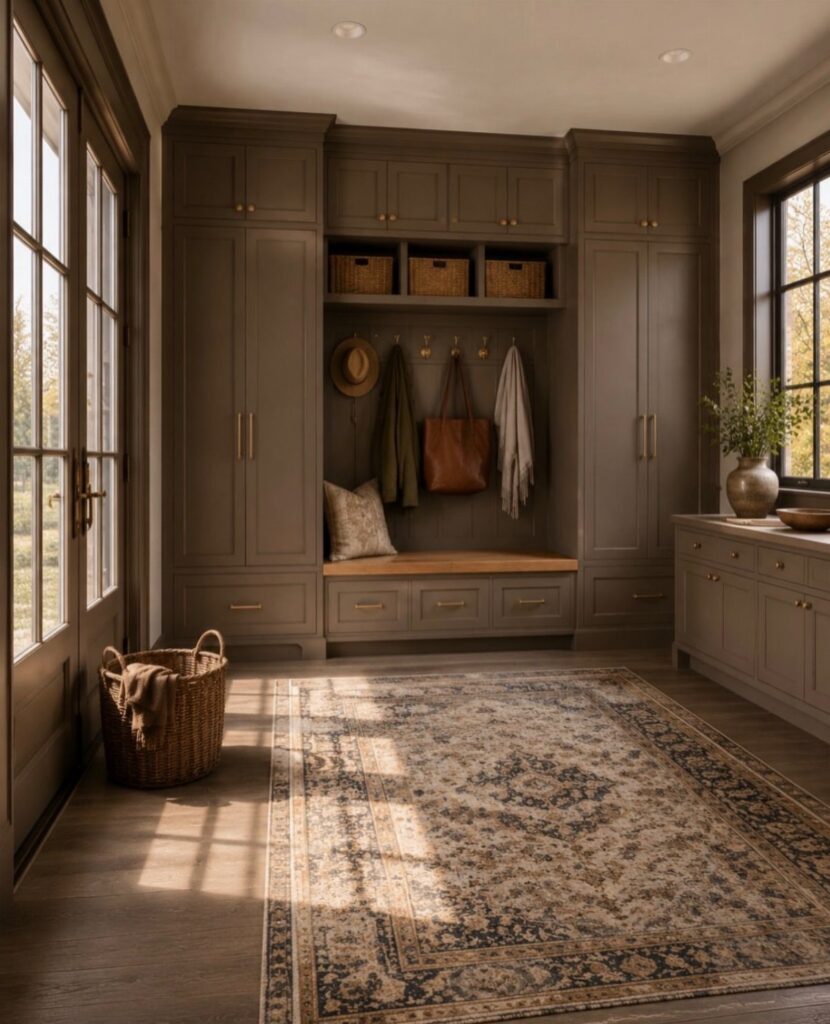
Mudroom ideas in this list range from a freestanding cube organizer and bench that needs no tools to a utility sink, a pet wash station or a Dutch door that call for plumbing or a carpenter.
1. Storage Lockers
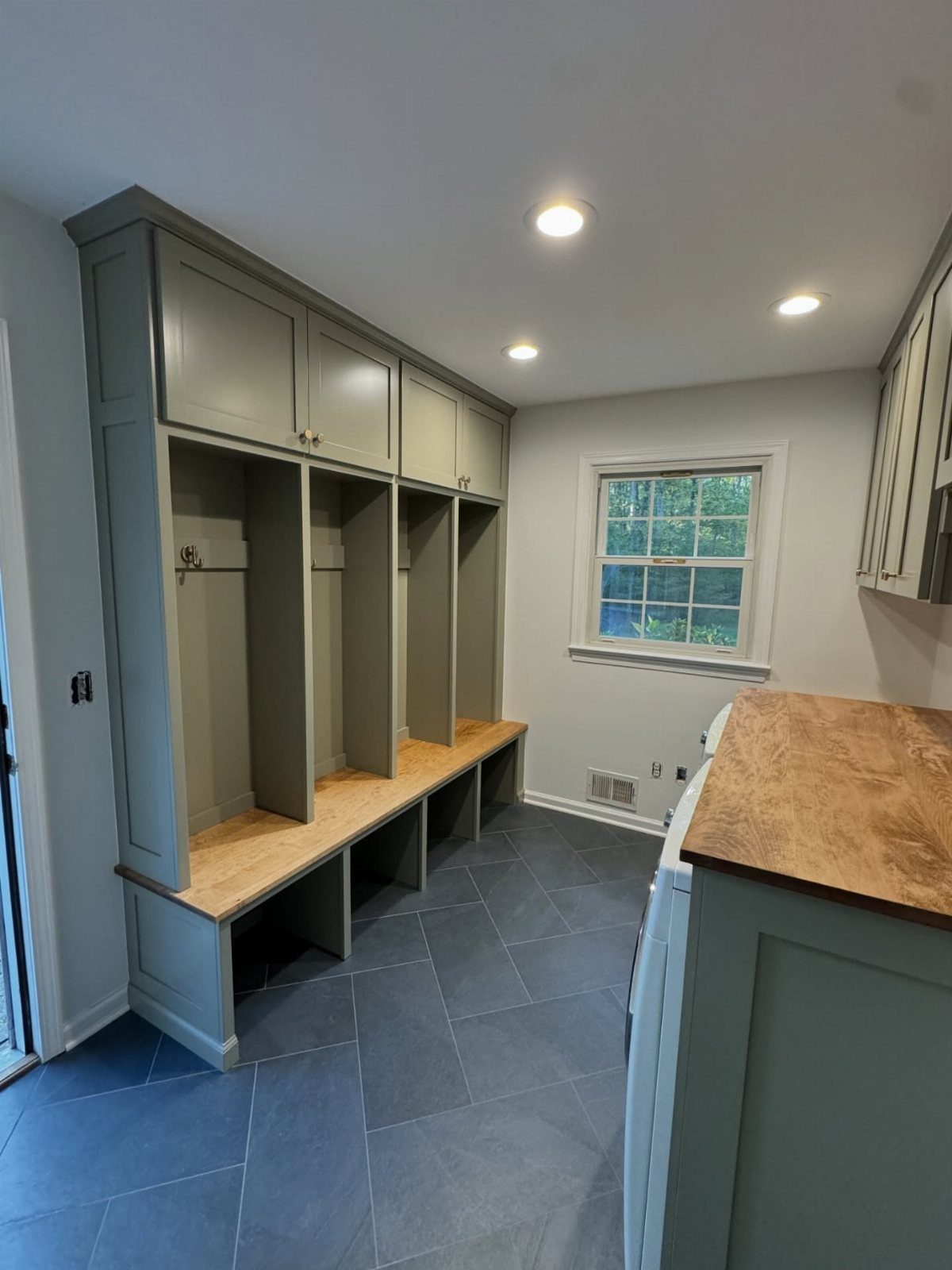
Four lockers means four separate zones, and that setup ends the pile of coats on one hook. Give each person one locker, then label it or assign a color so nobody argues about whose cubby is whose.
I like the bench running along the bottom, since shoes go under it and people sit to pull boots on. Keep the overhead cabinets for things you reach for less often, like hats, gloves and seasonal gear.
Painting the lockers one grey keeps four of them looking like one clean piece instead of a row of boxes, and a wood bench at the base adds warmth without breaking that line.
2. Built-In Cabinets
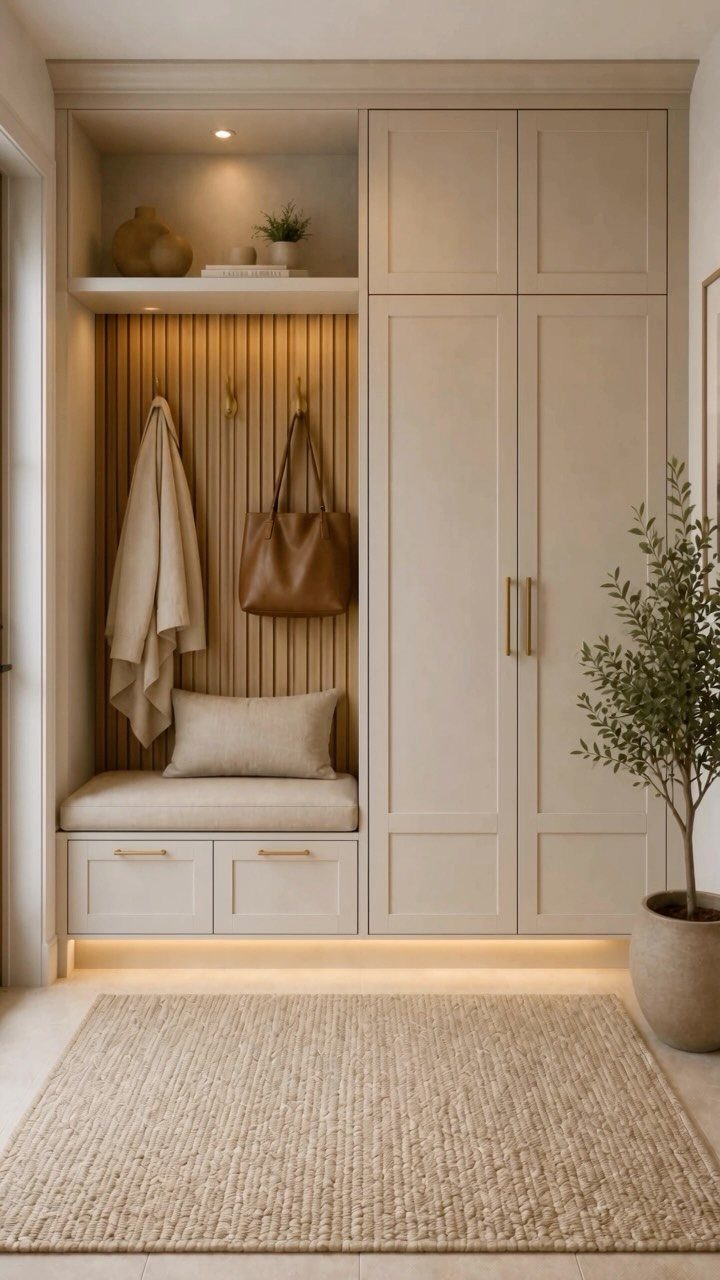
Closed doors and drawers do most of the work in a mudroom, because clutter you can’t see doesn’t read as clutter.
A built-in with tall cabinets and lower drawers lets you hide bulky items while a short run of open hooks handles whatever you grab daily.
I’d put the everyday coats on the slatted wall and send off-season gear to the tall cabinets. Drawers below the bench suit shoes, pet leashes and sunscreen.
Choose a soft neutral finish like beige, and the unit blends into the room instead of dominating it.
3. Decorative Accent Walls
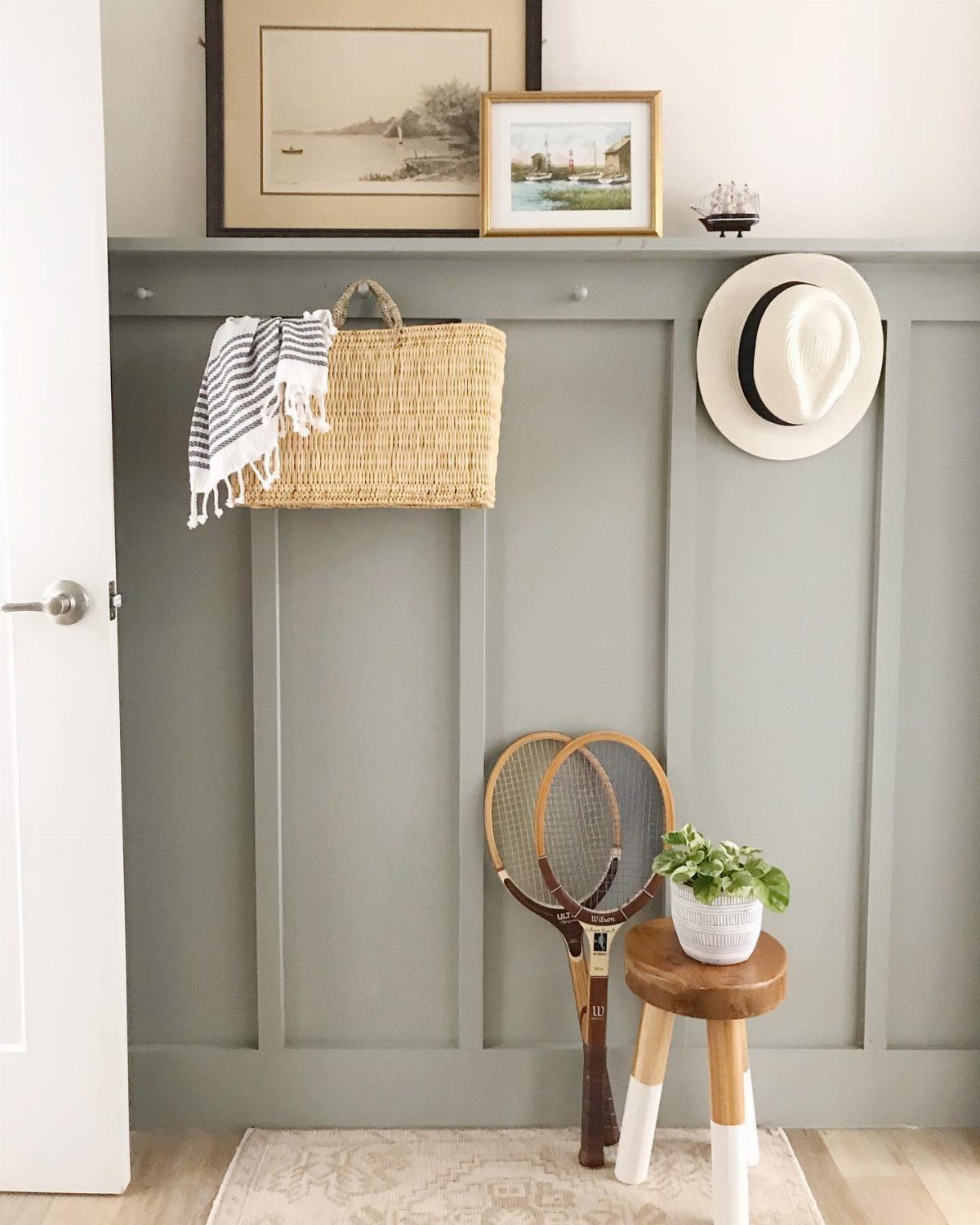
Paneled walls give a mudroom more personality than paint alone, and grey wainscoting is a calm place to start. A narrow ledge on top lets you swap framed art without drilling new holes each time.
I would keep the styling loose: a couple of old sports pieces, one stool, one plant.
Keep the accents to a handful of pieces with room between them, or the wall starts to feel like a shop display instead of an entry.
4. Built-In Bench and Hooks
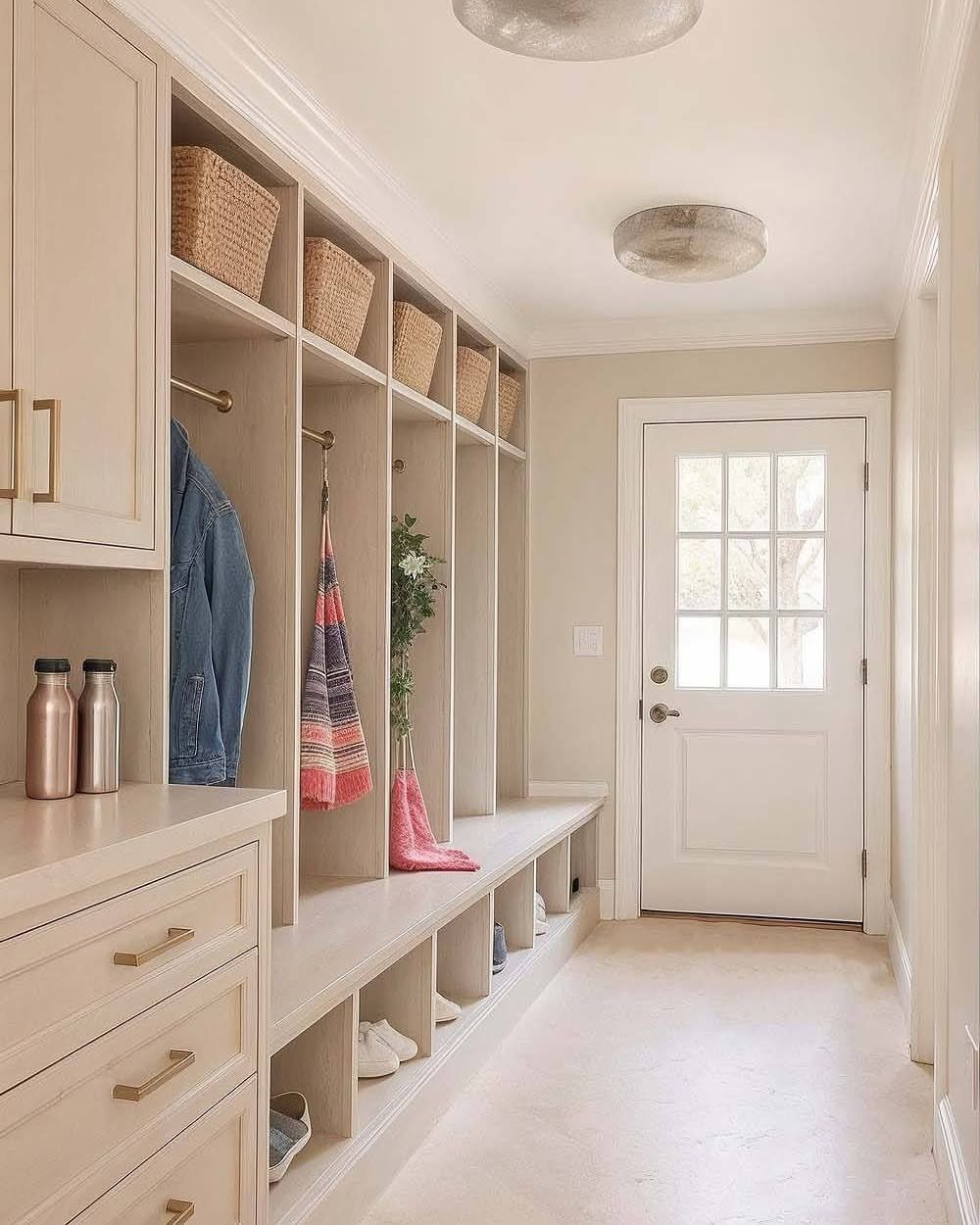
A long bench with hooks above and cubbies below is the most dependable mudroom layout I know. Seating gives people a place to put shoes on, and the cubbies keep pairs off the floor.
Woven baskets in the upper shelves hold hats, gloves and scarves, and they hide the mess. White paint makes a hallway-sized unit feel lighter, which matters when the space is narrow.
Set the hooks at a height every family member can reach, or the bottom ones become the only ones used.
A mudroom design with built-in cabinets, custom shelving, and cubbies keeps your entryway organized while giving everyone a designated spot for coats and shoes.
— Angi
5. Utility Sink
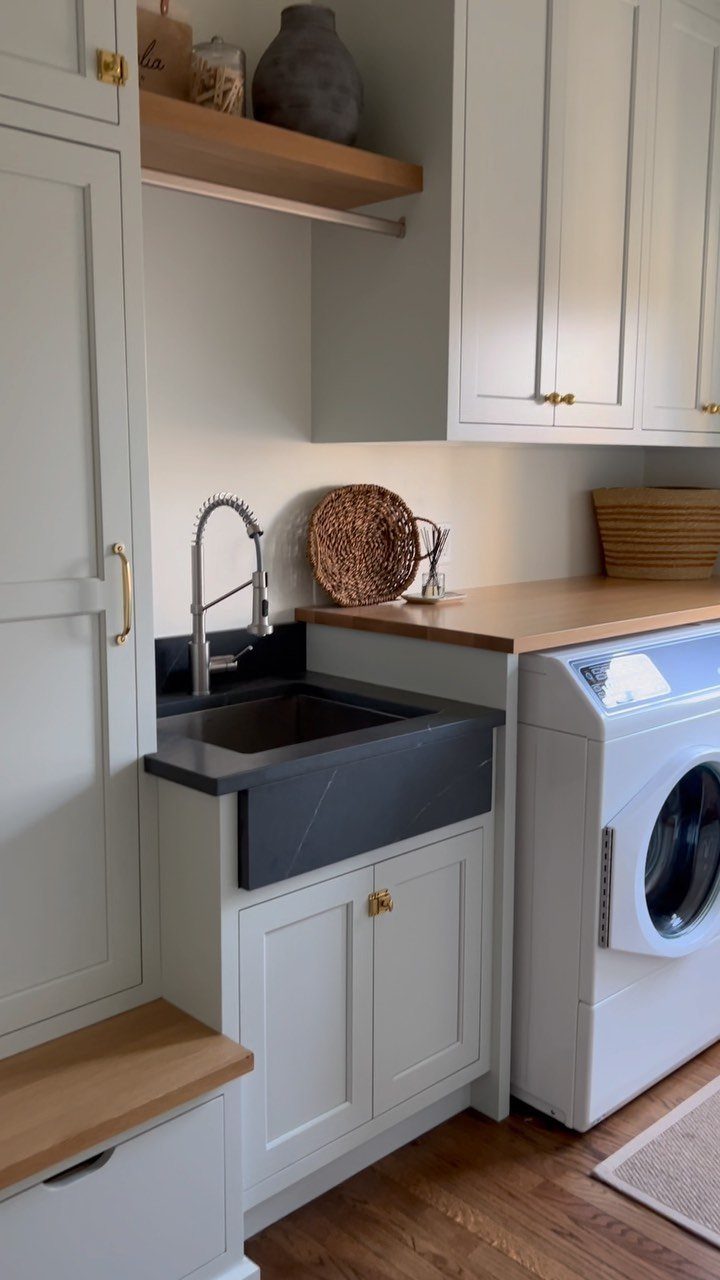
A deep utility sink in the mudroom handles muddy boots, paint brushes and grubby hands before they ever reach the kitchen. A dark apron-front basin hides stains better than white, and a high faucet leaves room for tall buckets.
Pairing it with a wood countertop gives you a spot to fold laundry beside the washer. I’d pick chrome for the faucet since it’s easy to wipe clean.
Plumbing is the real cost here, so a sink placed near an existing water line saves the most money.
6. Waterproof Tile Flooring
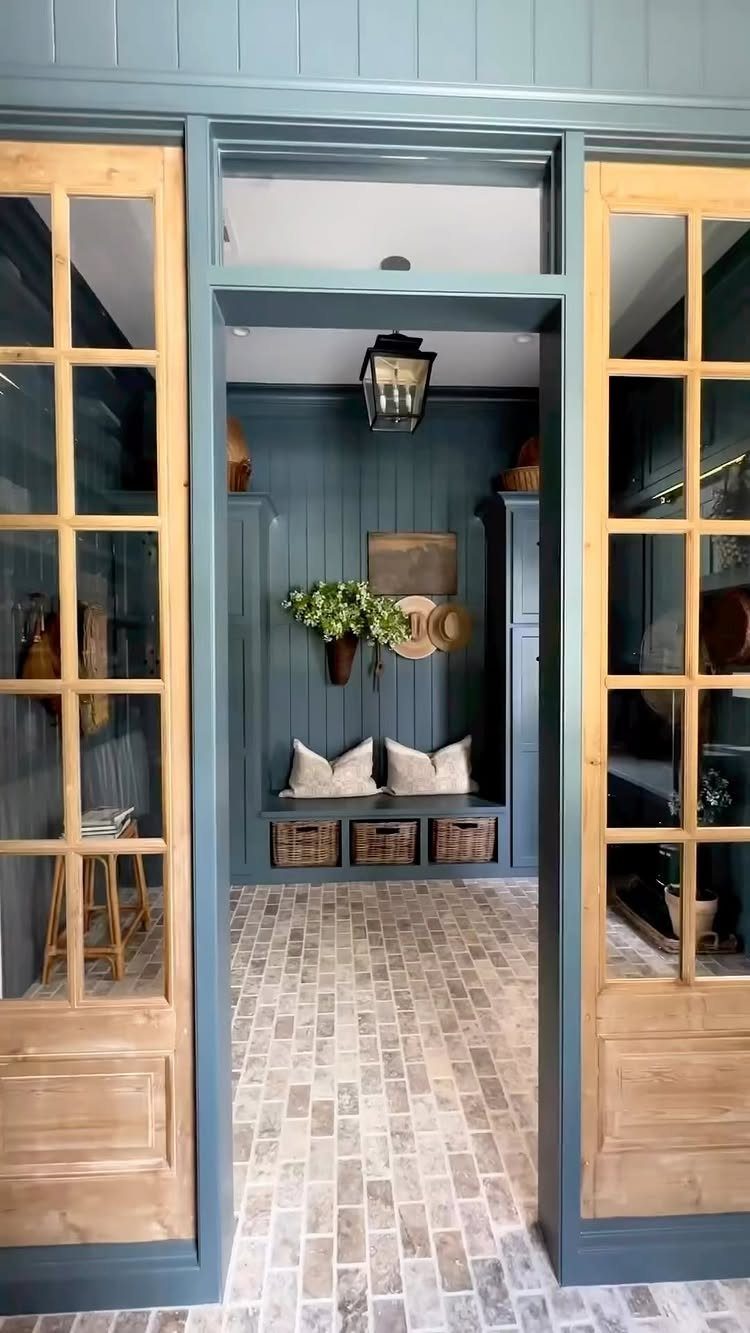
Light rectangular tile is a smart floor for a room that gets wet every day, since water and grit wipe straight off it. Mud shows less than you’d expect on a pale tile with a mid-tone grout.
Choose a tile rated for floors, and pick one with some texture so wet soles don’t slip. Wood or carpet in a mudroom ends up stained and swollen sooner or later.
The trade-off: tile feels cold underfoot and is hard on dropped dishes or glass, so add a washable runner by the door.
7. Message Center
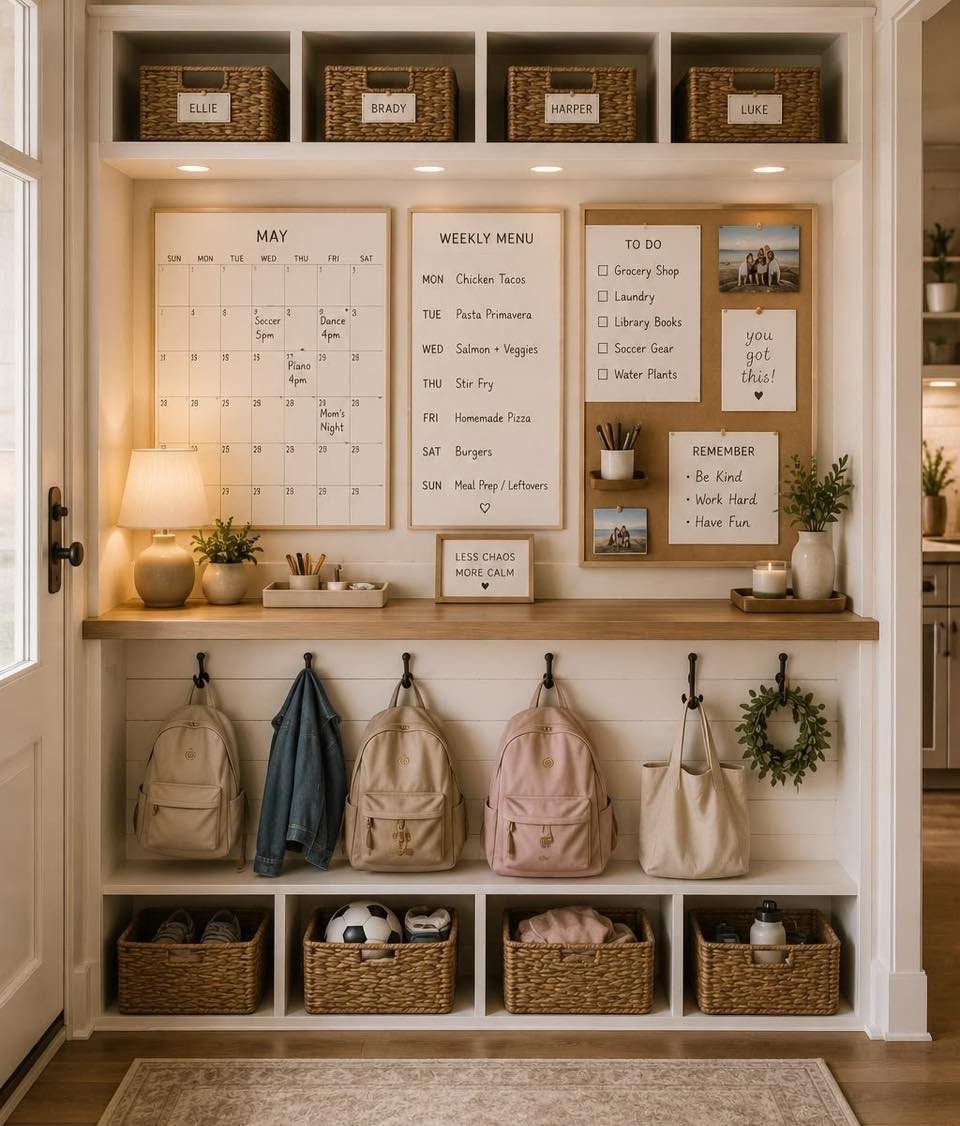
A message center gives the whole household one spot to check before heading out the door.
A monthly calendar, a weekly menu and a to-do list on the wall beside the hooks cover most of what a family needs to see.
I like keeping it on the same white wall as the bench, so the board reads as part of the built-in and not an add-on. Put it at eye level for adults, and leave room for a pen or marker.
Skip anything you won’t update weekly; a stale board gets ignored.
8. Decorative Baskets
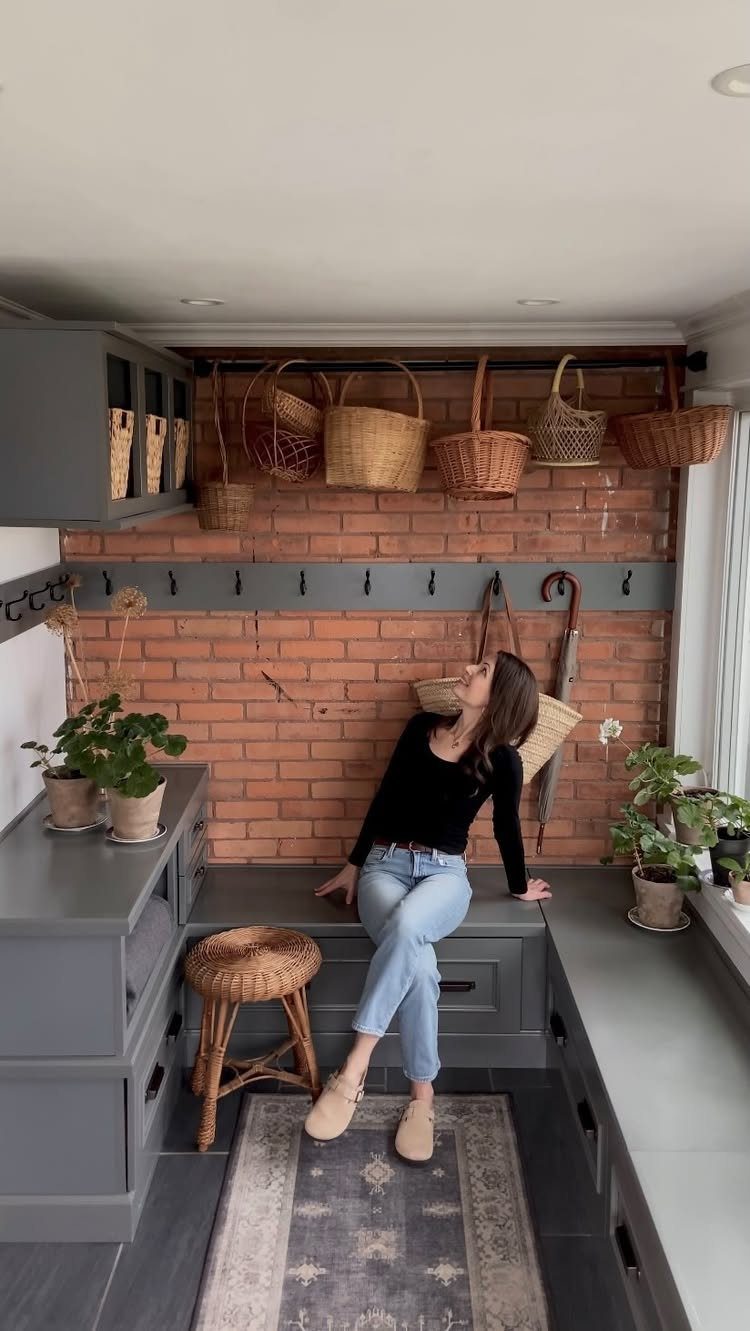
Woven baskets on a rail turn small-item clutter into part of the decoration. Keys, hats, dog leashes and gloves all fit in them, and the rail keeps them off the bench and out of the way.
Natural weave looks warm against brick and a grey bench, and I’d mix a few sizes so the row doesn’t look stiff. Hang the rail where you can reach in without stretching.
Baskets hide what’s inside, so give each one a single job. Otherwise they turn into junk bins.
9. Freestanding Cube Organizers and Benches
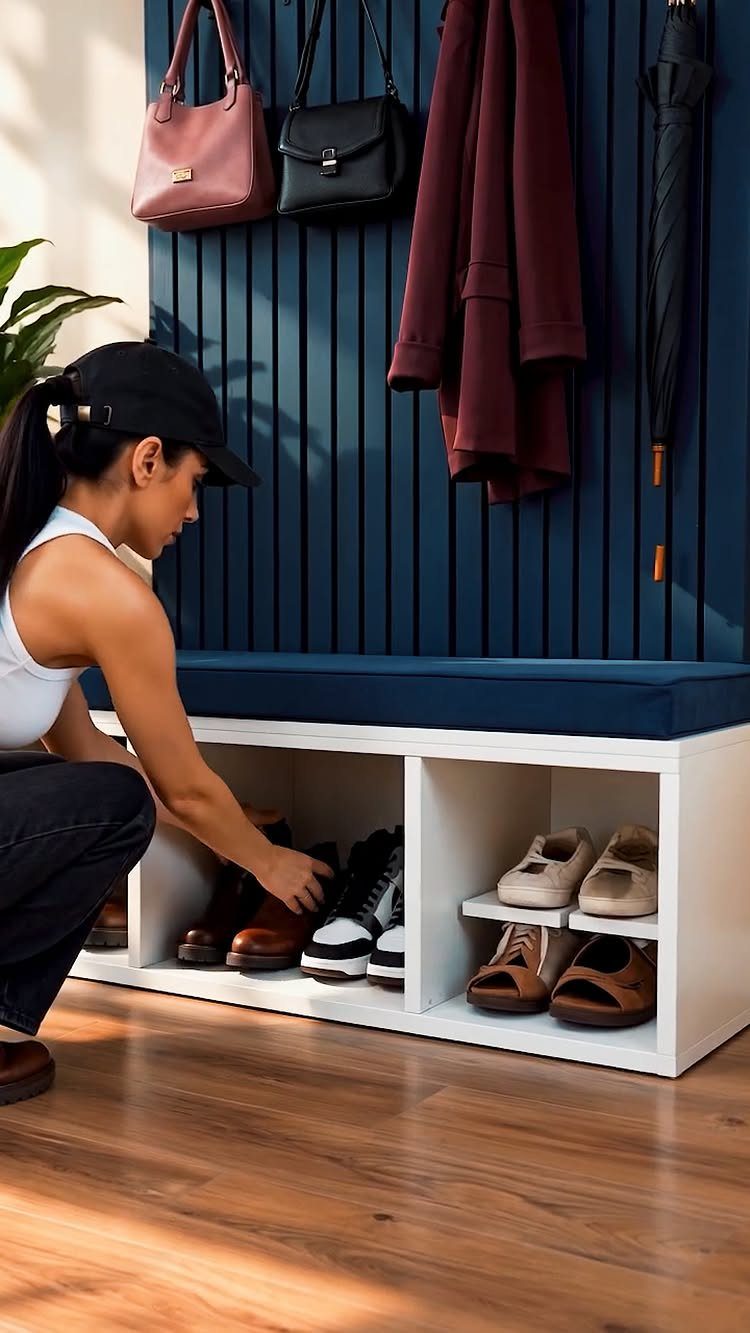
A freestanding cube bench is the easiest mudroom storage for renters, since nothing gets screwed into a wall or built by hand. Cubes hold shoes, and the cushioned top works as a seat when you’re pulling them on.
It costs far less than a custom built-in, and you can take it with you when you move.
10. Closet Mini Mudroom
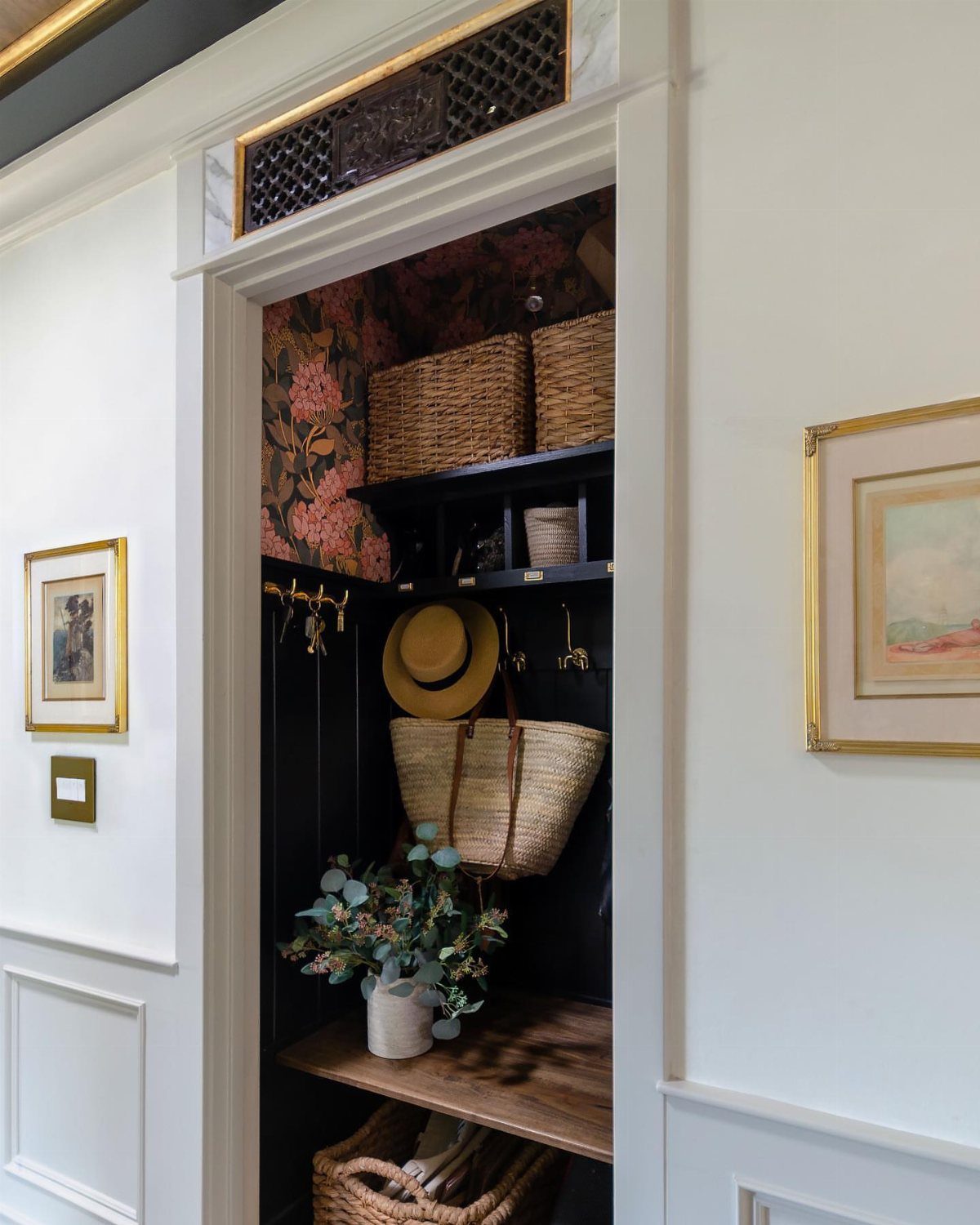
A closet near the entry makes a good mini mudroom, and you can do it in a weekend. Raise the rod, add a bench or shelves below, and mount hooks on the side walls for bags and hats.
Baskets on the shelves hold small items. I’d paint the inside a bold color or add wallpaper, since a closet is small enough that a daring choice stays affordable.
Close the door and the mess disappears, which is hard to beat in a tight space.
11. Dutch Door
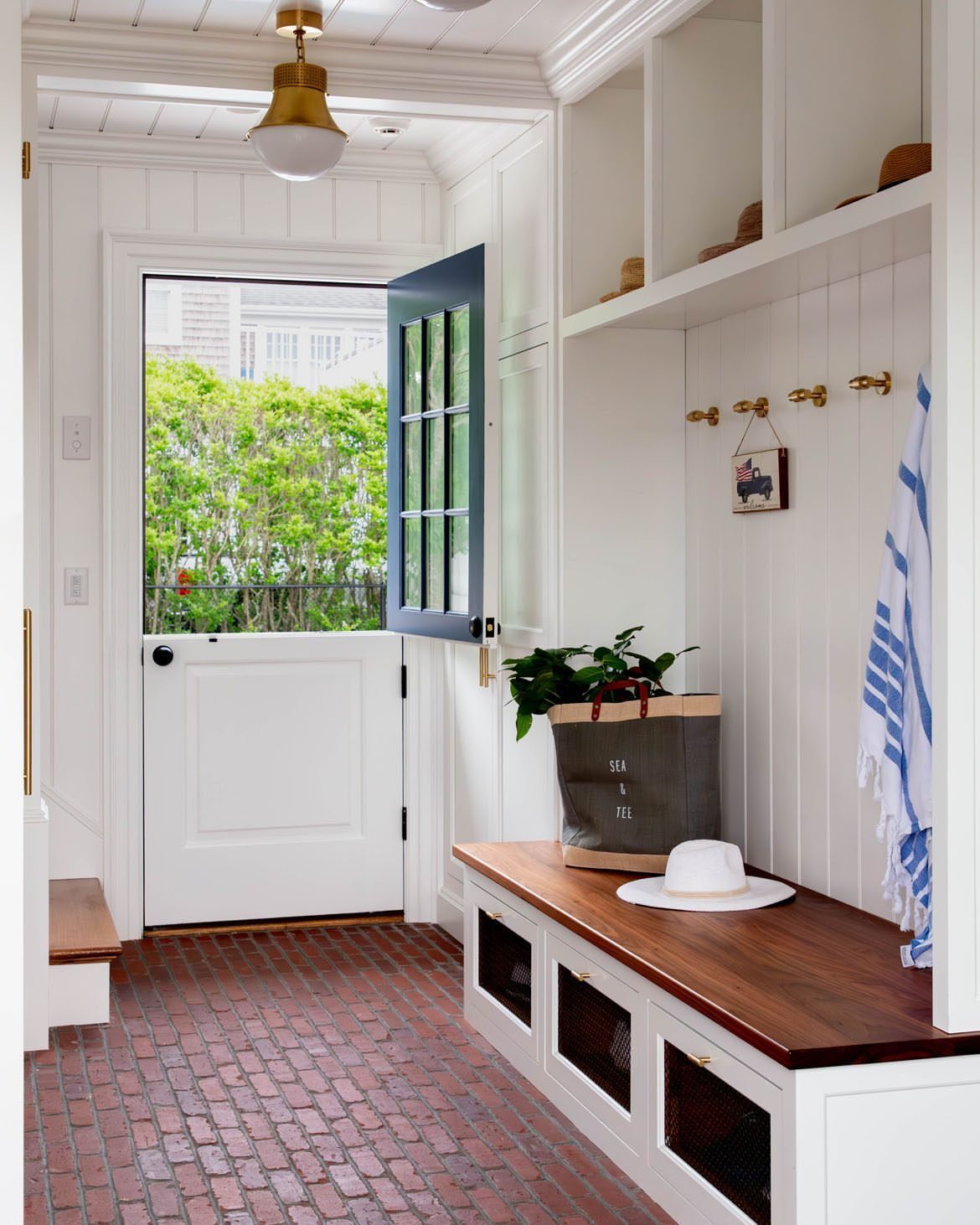
A Dutch door splits in two, so the top half can open for light and fresh air while the bottom stays shut. In a mudroom that means a breeze and a view without pets or toddlers wandering out.
A window in the top half, like the blue-framed one here, brightens the room even when it’s closed. Brick floors suit the entry and handle wet shoes well.
Buying a door is the cost; swapping one in is a bigger job than painting. Hire a carpenter if your frame isn’t square.
12. Pet Wash Station
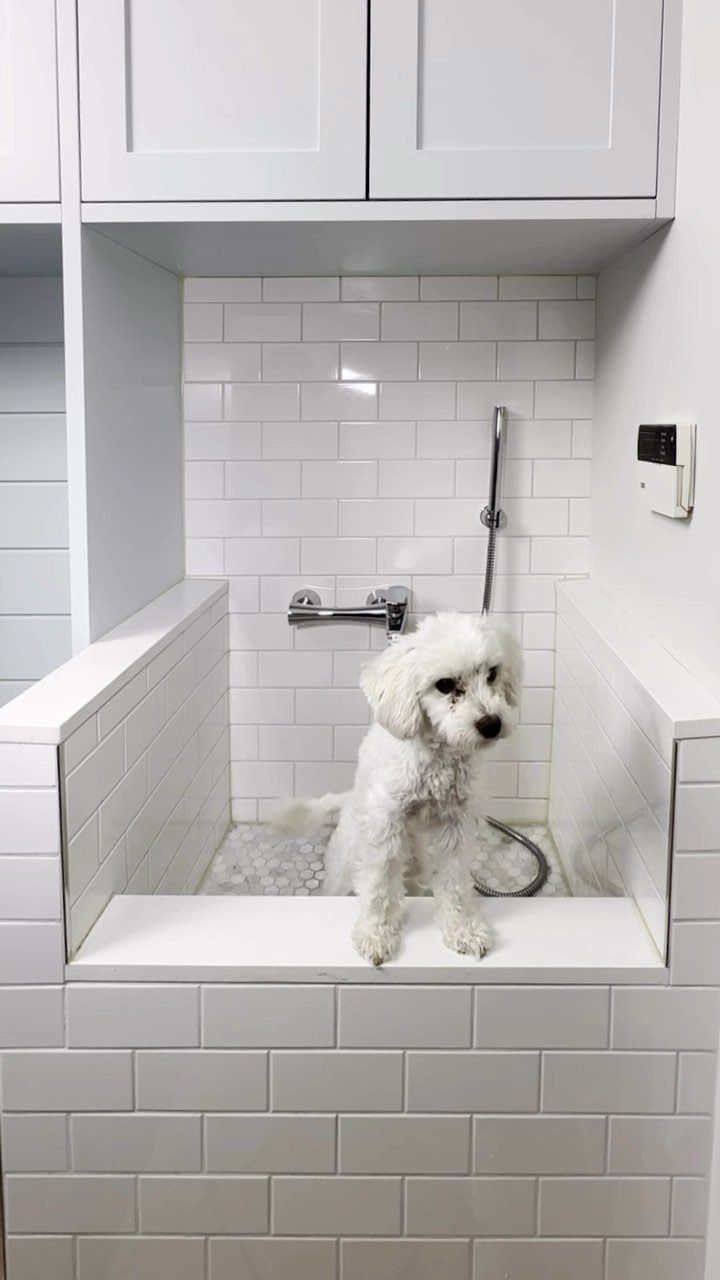
A pet wash station gives muddy paws somewhere to go other than your bathtub. A tiled enclosure with a handheld shower head and a faucet lets you rinse a dog without bending over a sink or soaking the floor.
Cabinets above keep shampoo, towels and brushes within reach while you work. Tile is the right surface since water wipes off it easily.
13. Statement Lighting and Recessed Lights
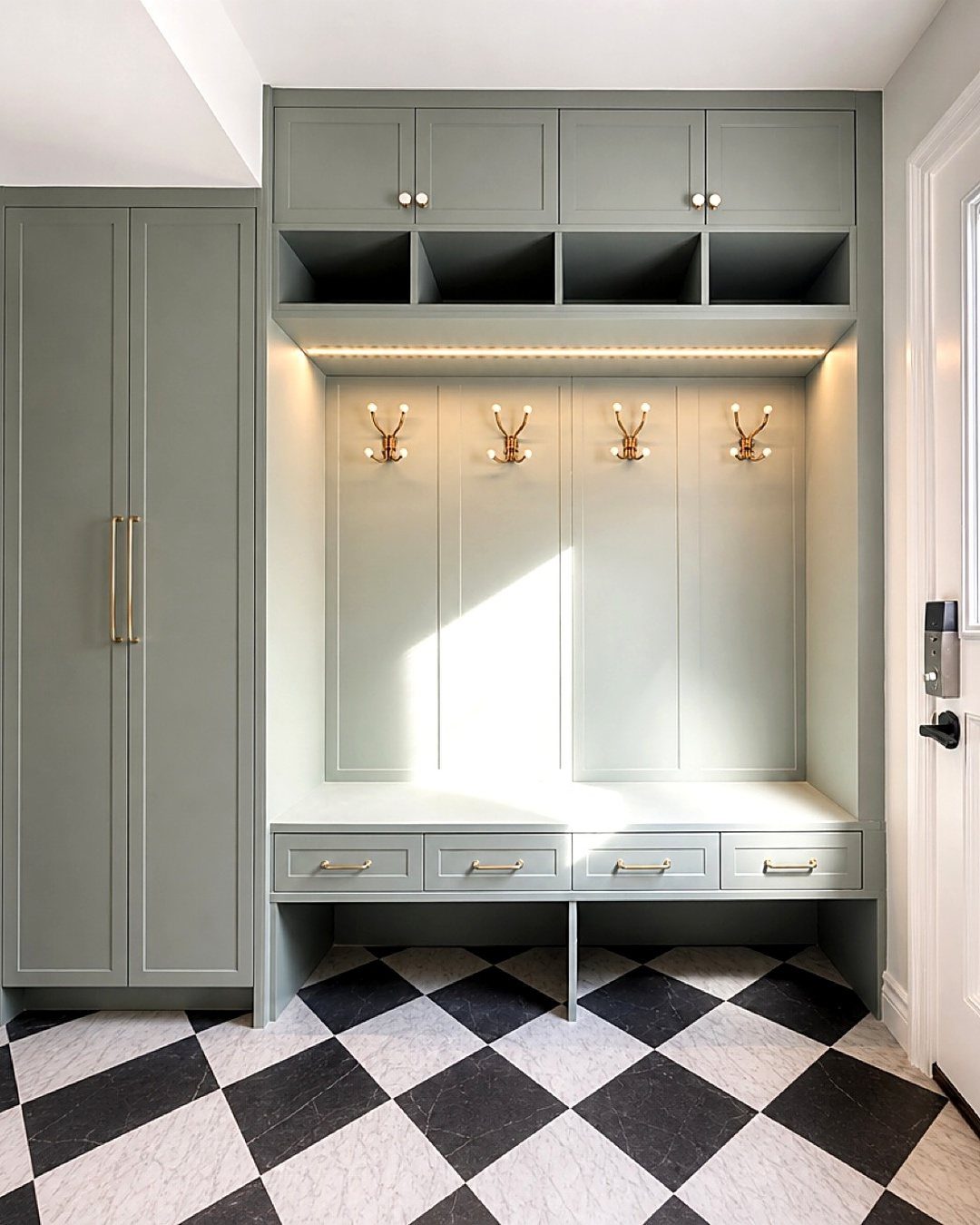
Lighting changes how a mudroom feels first thing in the morning and again at dusk.
Recessed lights over a bench and cabinets give even, shadow-free light for finding gloves, while a few hooks that glow gold add warmth without taking up any wall space.
I’d keep the hooks as the one decorative moment and let the grey cabinets stay quiet.
Put the recessed lights on a dimmer so the room can be bright for chores and softer in the evening.
14. Arched Window Seat Nook
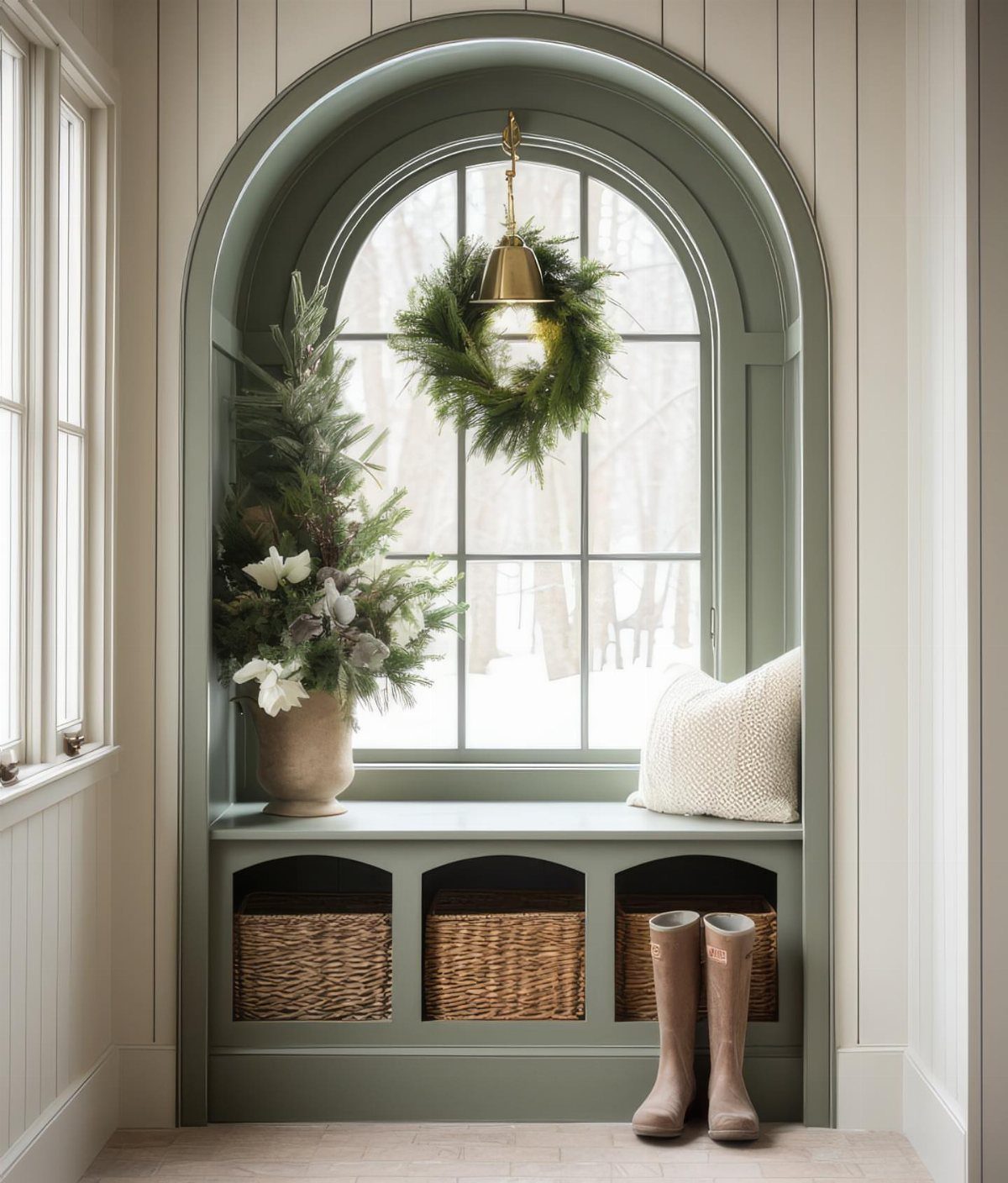
An arched frame turns a plain window into the focal point of the mudroom. Sage green paint on the arch and bench makes the nook feel built for the house rather than added later.
Cubbies under the seat hold baskets, which keep shoes and small items out of sight. I’d leave the top clear except for a pillow and one plant, so the seat stays usable.
Rain boots can live on the floor beside it. Wicker baskets and evergreen touches suit the green well.
15. Wood Slat Accent Bench
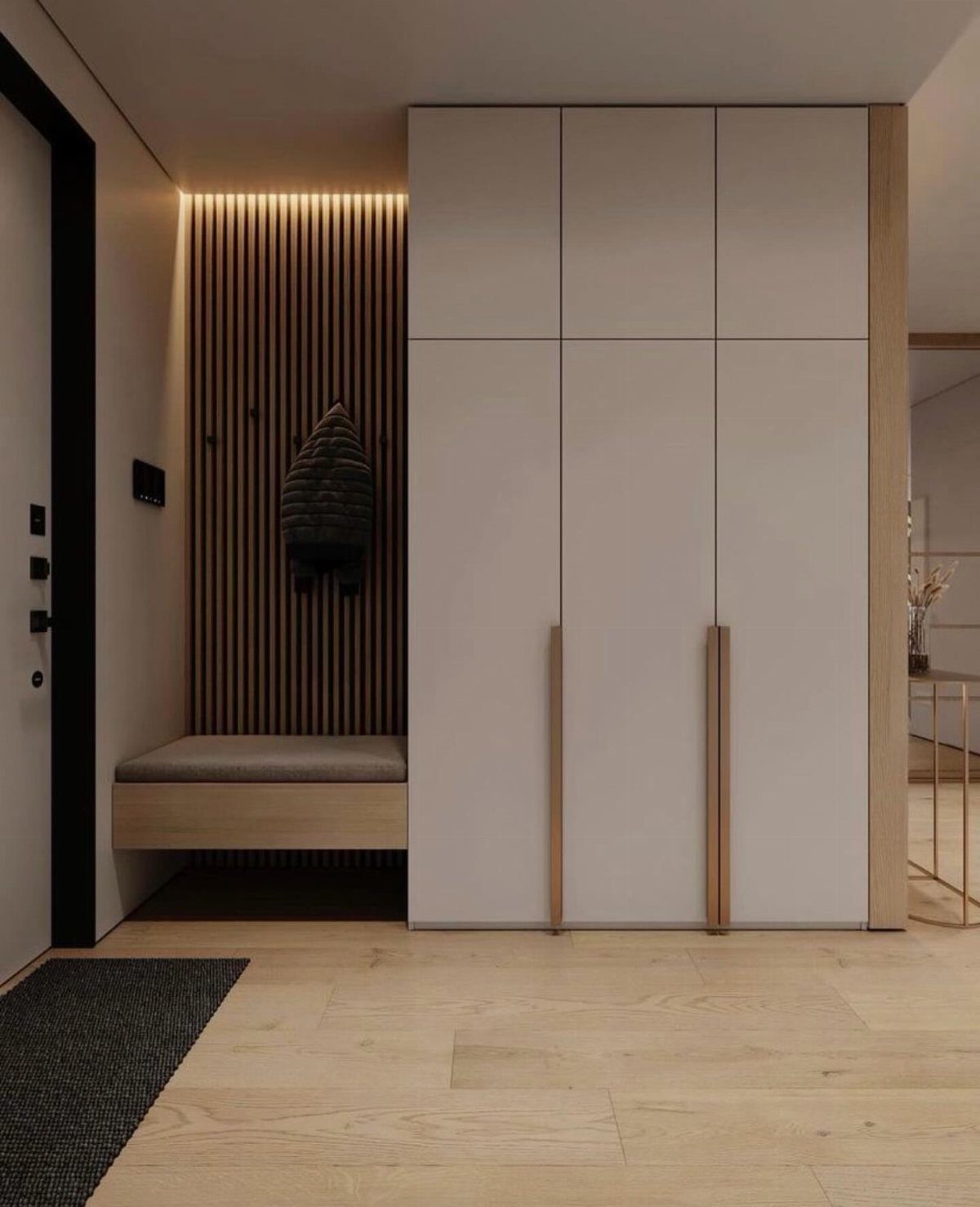
Vertical wood slats behind a bench give a mudroom texture that paint can’t, and light wood flooring echoes the warmth. Cove lighting along the slat wall adds a soft glow that makes the whole entry feel finished.
I’d pair the slats with plain, light-colored cabinets, since the wood already carries the look. Keep the bench simple so the wall stays the star.
Cove lighting costs more than a plain fixture, but it’s the detail that makes this version look high end.
Planning Your Mudroom
Start with the footprint. Measure the wall space you have, then check the adjacent hall, the garage wall and any odd nook that could take a shelf or a hook rail.
Count who actually uses the entry. If each person needs a dedicated spot, plan one zone per person before you pick any hardware.
Think of the drop zone as one shelf or ledge, about 10 inches deep, where keys, mail and a coffee mug can land the second you walk in.
Add one if the door is where you set things down on the way in.
Ask whether the room is visible from the kitchen or living room. If it is, lean on closed storage so it looks tidy all the time.
Decide how permanent this is. A renter or someone between life stages should choose a quick, inexpensive setup, while a long-term home can justify a built solution.
Be honest about your tools and skill level too, and shop your own home first for baskets, stools and shelves you can reuse.
Accessorizing with Functional Decor
Small rooms can’t carry much decoration, so every piece should do a job. Baskets, bins, a clock, a mirror, wall shelves and a calendar all earn their space.
Keep the palette neutral and choose texture over pattern. A woven basket or a nubby throw rug adds interest without the visual noise of a busy print.
A framed family photo or a small cork or chalk board by the bench is what makes a built-in feel personal instead of just practical. The entry should say home without greeting you with clutter.
One small plant is fine. Just don’t let any decoration take over floor or wall space that could keep a backpack off the ground.
Tips for Small Spaces
Go up before you go out. Floating shelves or a custom shelving unit use wall space that would otherwise sit empty, and hooks below them handle daily gear.
Open shelves show everything on them. Pair them with a few closed cabinets or lockers so the room doesn’t look messy.
If there’s no closet, a freestanding wardrobe or clothing rack keeps coats and out-of-season clothes in one place.
Choose furniture that does two jobs, like a bench with storage inside, so seating and shoe storage share one footprint.
Pick a waterproof floor like luxury vinyl plank or porcelain tile, because wet jackets and boots drip fast in a tight entry, and a few feet of floor take the whole hit.
Frequently Asked Questions
What are the must-haves for a mudroom?
Hooks, a bench with shoe storage, and some closed cabinets cover most households.
A deep utility sink is a worthwhile extra if you deal with muddy boots or paint brushes. Add a waterproof floor so wet gear doesn’t damage anything, and a shelf or ledge for keys and mail.
What flooring is best for a mudroom?
Porcelain tile and luxury vinyl plank both shrug off puddles and gritty boots, so either one makes sense here; I lean toward porcelain if the budget allows.
Look for a floor tile with a textured surface or a slip rating, because smooth glazed tile turns slick once snowmelt hits it.
Skip carpet and raw wood in this room, since wet boots leave stains in one and make the other swell and cup.
Tile stays cold in winter, so a washable runner just inside the door gives your feet something warmer to stand on.





