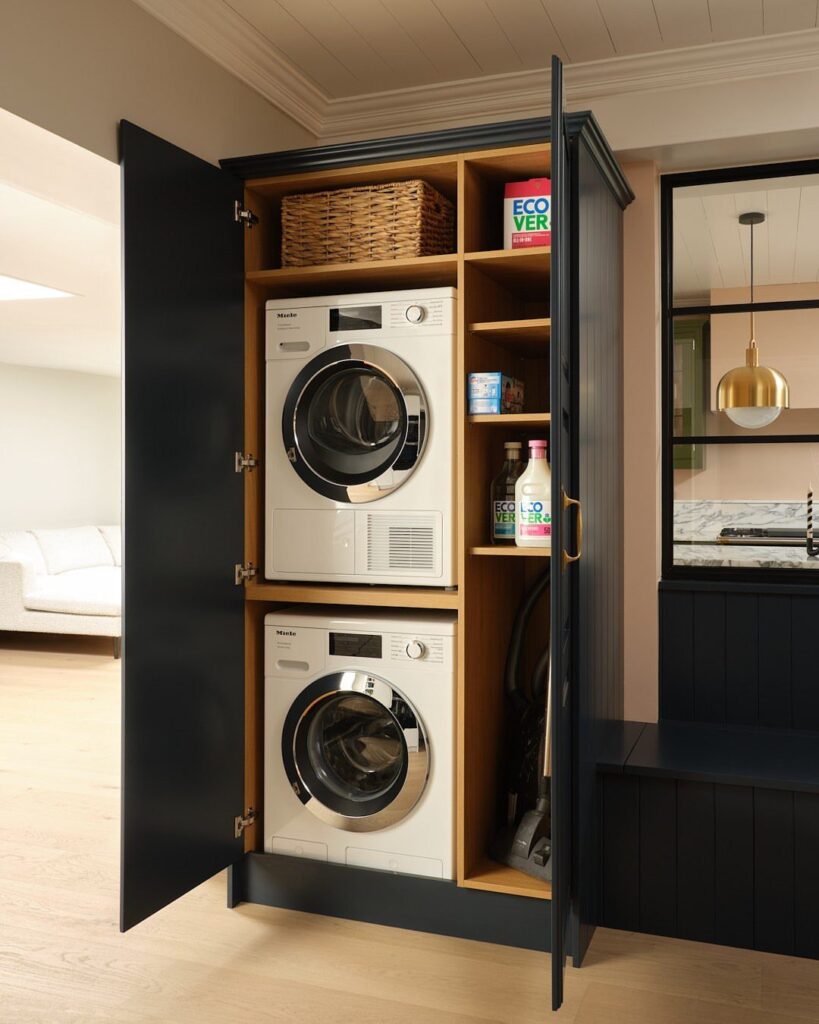
Which tall washer and dryer setup fits depends on one fact: how much wall you can give up, and the stacked units and the full-wall cabinetry sit at opposite ends of that answer.
Floor space is what a stacked pair in a dark blue cabinet saves, while 2 black machines placed next to each other under olive green cabinetry need a full wall but leave room for overhead storage and a tall cupboard that holds an ironing board upright.
The ideas run from a stacked pair in a single nook to a full-wall run of cabinetry, and the paint color matters less than the measurements, so check the opening, the hose space and the vent before choosing.
1. Stackable Washer and Dryer Units
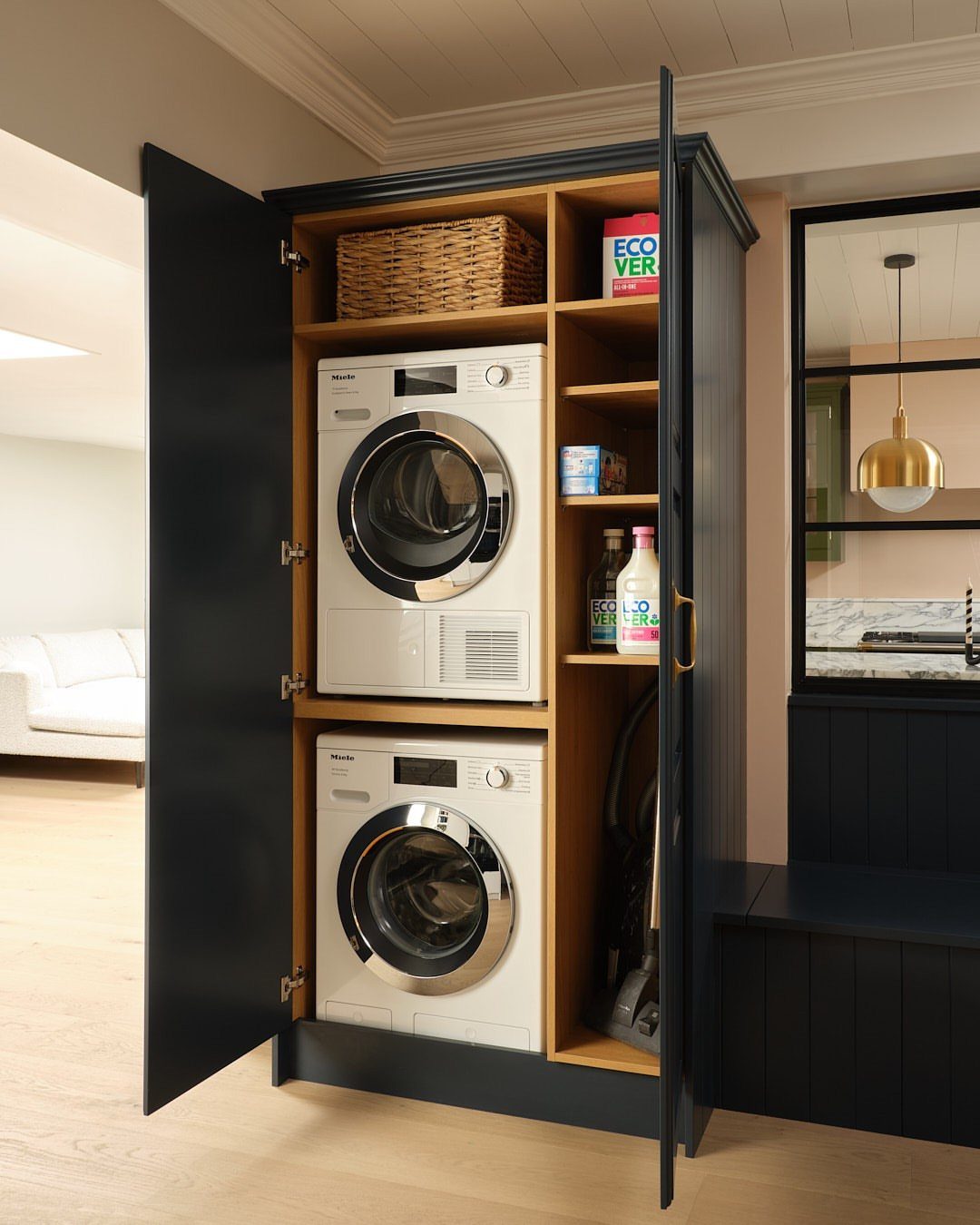
A stacked pair is the smallest footprint a full-size washer and dryer can take, and building it into a cabinet makes it look like furniture instead of an appliance.
Dark blue hides the machines’ bulk, and the shelving beside them gives detergent and a basket a home within arm’s reach.
Measure the cabinet opening first, and leave room behind for hoses and the vent.
But if your laundry space is no wider than a closet—or squeezed by a tight corner or poorly placed pipes—vertically stacking the appliances is a space-saving option.
2. Design Options
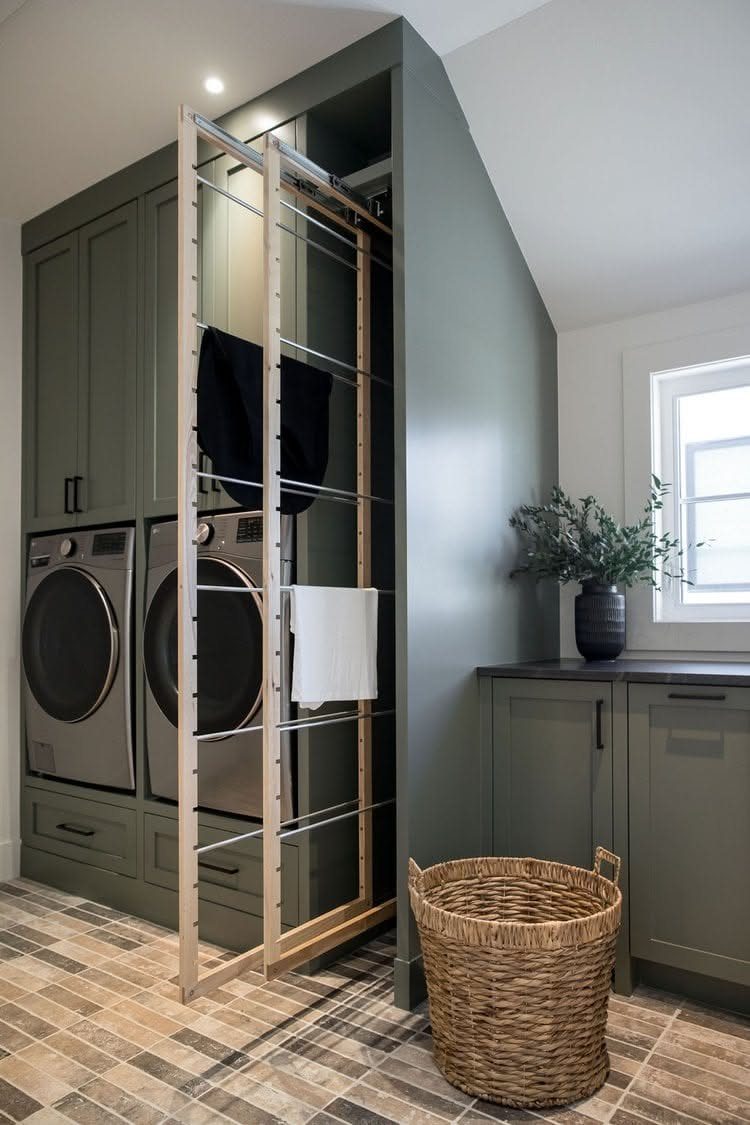
Washers set next to each other in sage green cabinetry prove that laundry gear can match the rest of the house. Soft green paint on the cabinet fronts calms a room that is mostly white appliances and hard surfaces.
A wooden pull-out drying rack slides away when empty and saves you from a folding rack leaning in a corner.
Tile on the floor is a sensible partner for a room that sees water, and a wicker basket adds warmth cheaply.
3. Full-Wall Cabinetry with Tall Utility Storage
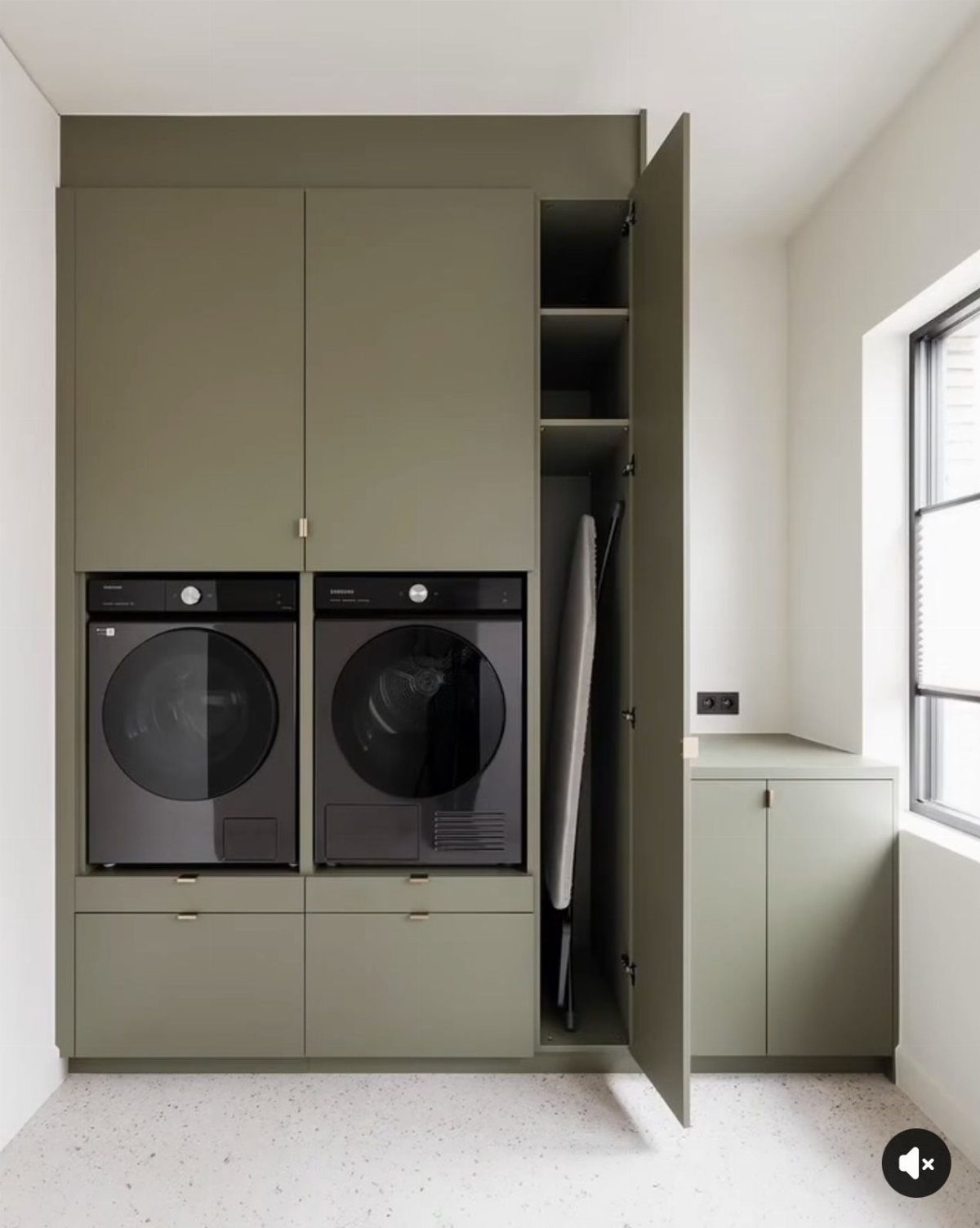
Running olive green cabinetry across the whole wall lets 2 black machines sit next to each other and disappear into the design. Overhead cabinets above them hold supplies, so nothing crowds the counter space.
The tall open cupboard at the end is my favorite part.
An ironing board stored upright there stays ready to grab, with no closet digging. If your wall is wide enough, reserve one narrow tall section for it before you divide the rest into cabinets.
Frequently Asked Questions
How tall are most stacked washers and dryers?
Most stacked units stand under 72 inches high.
That keeps them workable in a closet or a cabinet opening, but measure your own space first. Plan on 4–6 inches of clearance behind the pair, since the hose connections and the dryer duct need that gap to avoid kinks.
How do you build a stacked washer and dryer into a cabinet?
Start by measuring the cabinet opening, width, depth and height, and check that the numbers still work once the rear gap is accounted for.
Boxing it in with cabinetry, in a dark blue for example, makes it read as furniture instead of an appliance.





