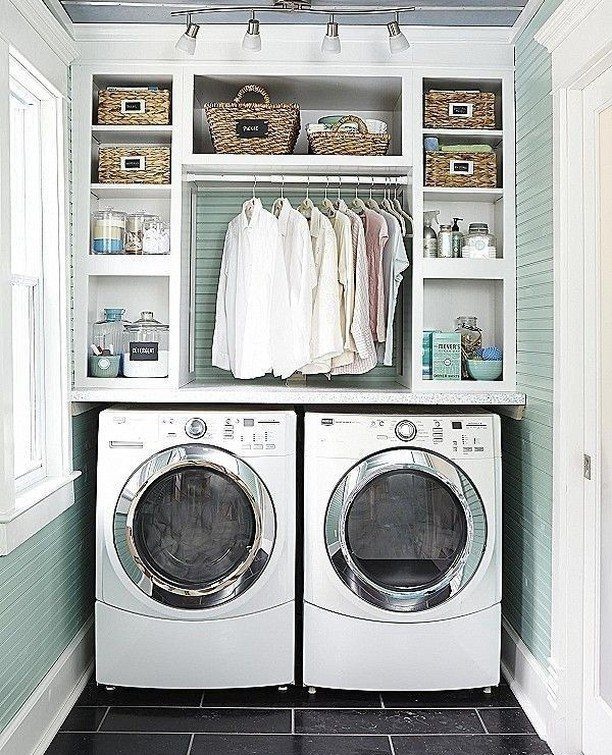
Floor space decides which of these layouts is yours: a laundry closet can take side by side machines or a stacked pair, while a full room has space for the platform or waist-height setups.
The ideas run from a stacked pair that frees the floor beside it to a built-in platform that lifts both machines over 2 laundry baskets.
A counter laid over two front-loaders, which also gives you a place to fold, sits in the middle of that range, between stacked units and a raised platform.
Reach, repair access and your usual load size only break the tie once the room has narrowed the choice, and that is where user preferences and maintenance come in.
1. Side by Side Washer Dryer Under Counter
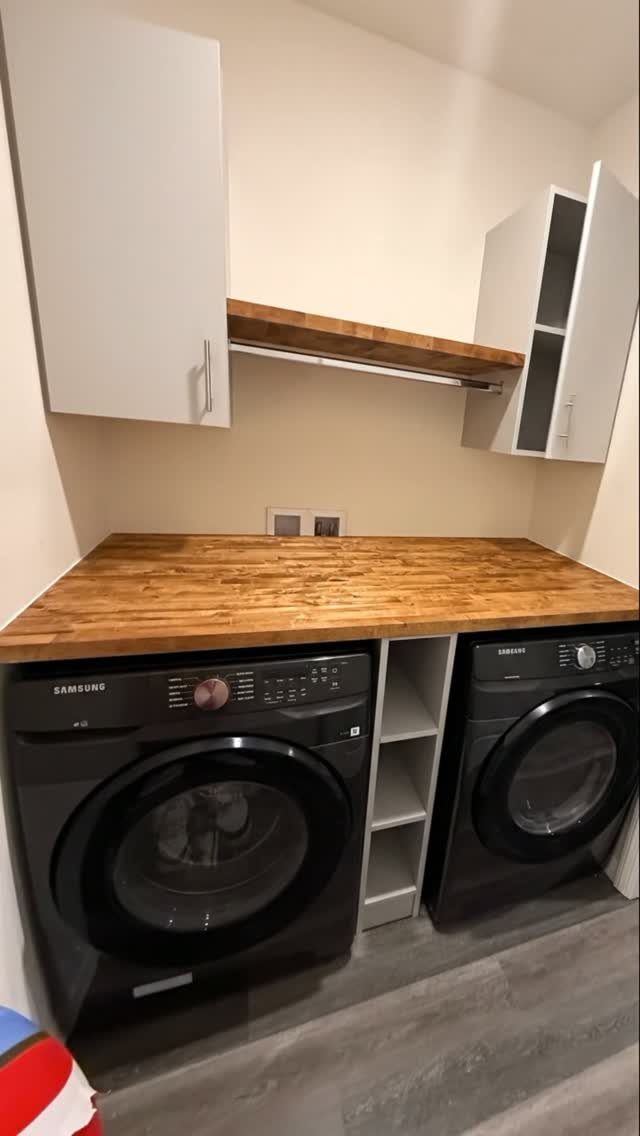
Two front-load machines under one countertop give you a folding surface without adding a single square foot to the room. A wood top over black units also hides the machine tops, so the pair reads as part of the cabinetry.
Before building, measure the machines with the doors open and leave room behind for hoses and vents. I would choose a counter with a slight overhang so the front edge never catches a door.
2. Stacked Units
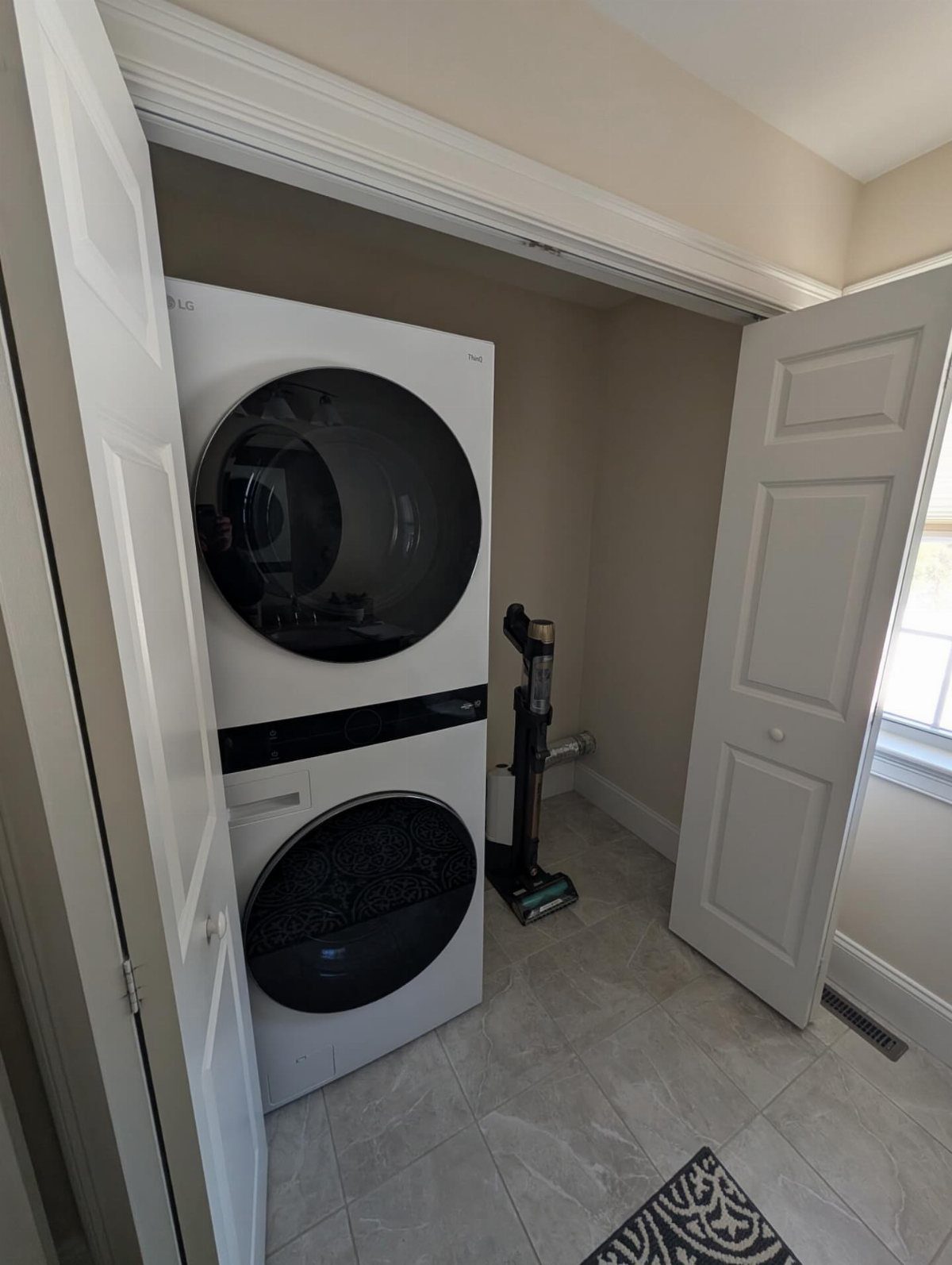
Stacking puts the dryer on top of the washer, which frees up the floor beside them. For a laundry closet, that is often the only layout that fits.
Reach is the cost. Shorter users may struggle to see into the dryer or pull out damp clothes from the top unit.
If that describes your household, a small step stool kept in the closet helps, or the layout with the two machines sitting level beneath one countertop is the better pick.
3. Side by Side Units at Waist Height
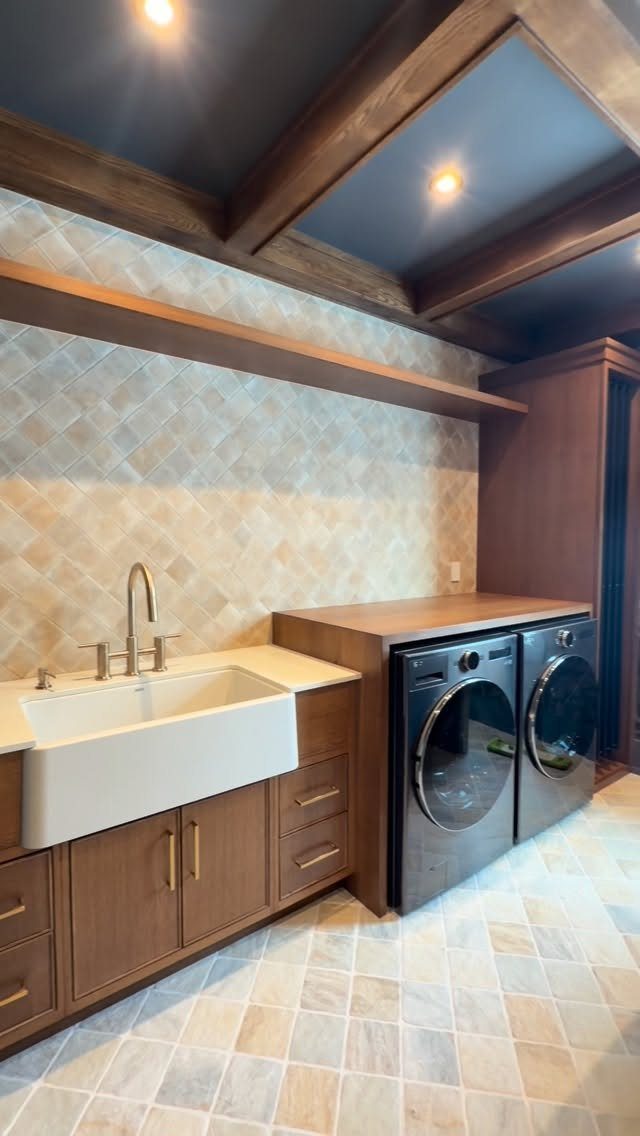
Loading and unloading is easier when the washer and dryer sit level with each other, because both doors land at the same comfortable height and nothing requires reaching overhead.
Moving wet clothes from washer to dryer becomes a short sideways step.
A wood counter across the top keeps that waist-height feel and adds a spot to fold. I like pairing it with a deep sink beside the machines for pretreating stains, which is worth planning before you set the counter height.
4. Side by Side in Laundry Closet
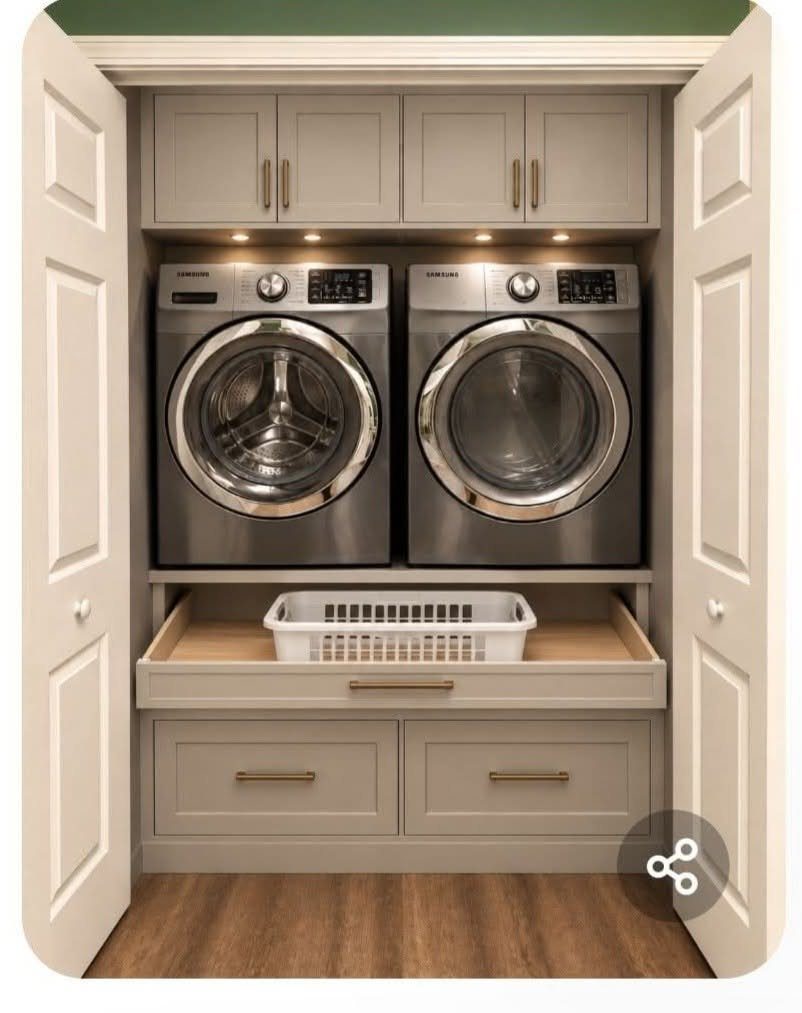
Front-loaders set in a row fit well inside a built-in closet, and overhead cabinets above them turn dead wall into storage for detergent and supplies. A pull-out basket slot beside the machines keeps sorting off the floor.
Measure the washer and dryer first, then build the closet to fit them, not the other way around. Leave a little clearance at the sides and back, and choose doors that open fully so you can reach everything.
5. Side by Side on Storage Platform
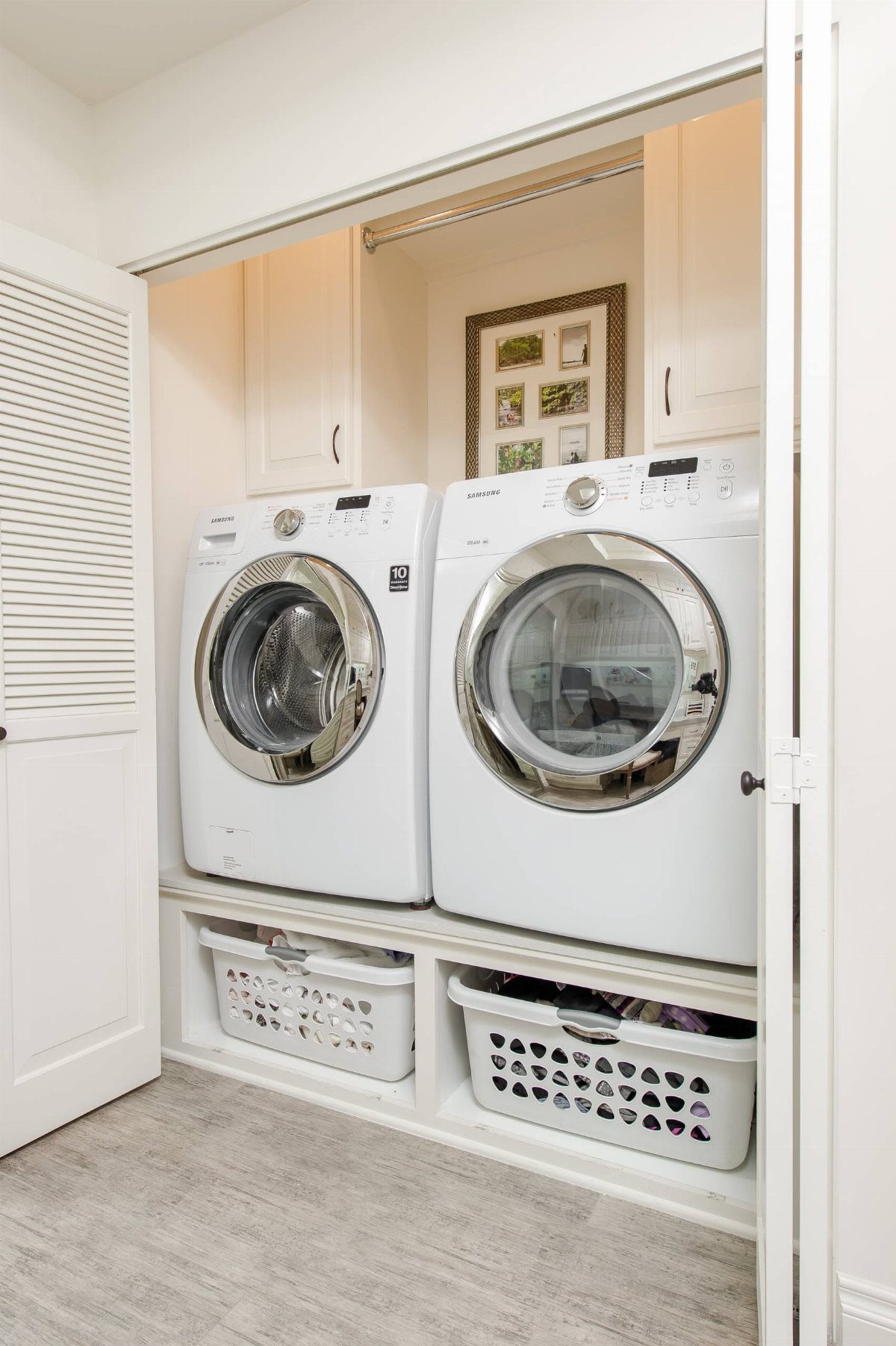
Raising the pair on a built-in platform opens space underneath for 2 laundry baskets, so clothes sit right where you need them. It also lifts the doors higher, which means less bending at the machines.
A platform is a bigger weekend project than a simple shelf, so build it sturdy and level. I would size the opening to fit your actual baskets before you cut anything.
Choosing Based on Space
Floor space usually settles this question before anything else does. In a small apartment or a closet, a stackable pair wins because it uses wall height instead of floor area.
A dedicated laundry room changes the answer.
With room to spread out, side-by-side units are the better choice, since you get a place to fold and sort, and they suit busy households that run bigger loads and want a steady routine.
Measure the room first, then pick. Closet-sized space points to stacking; a full room points to a row.
Depending on your square footage, standard-sized units might not fit, even when stacked. In that case, you might try compact machines, as a CR reporter, Allen St. John, did.
User Preferences
Space is only one input. Installation cost, ease of use, and how large your typical load is all push the decision one way or the other, so weigh them before you shop.
A pair of separate machines also lets you pick the washer style, top load or front load. If you prefer to drop in a forgotten sock mid-cycle, or you would rather have a front-loader, that freedom matters.
My advice: write down how many loads you run a week, who does them, and whether anyone has trouble reaching. Let those answers break the tie.
Maintenance Considerations
Think about the day one machine quits. If the washer and dryer are separate units, you can replace one and leave the other running.
A stacked pair can take more coordination when something fails, since the two are tied together in one footprint. That is a real point in favor of a row if you plan to stay in the home for years.
Before buying, check how much room a technician would have to get at each machine. Easy access now saves a headache later.
Frequently Asked Questions
What’s better, a stackable washer and dryer or a side by side?
Floor space decides it. Where floor space is tight, as in a small apartment or a hall closet, stacking wins because it builds upward and leaves the floor open.
In a dedicated laundry room, side by side is the better pick: you get a spot to fold and sort, and it suits busy households that run bigger loads.
Can a washer and dryer be side by side?
Yes. Two machines in a row work in a full laundry room, inside a built-in closet, under one countertop, or on a raised platform.
Measure 3 things before buying: the total width of both machines, the swing of each door, and the gap behind them, which has to hold hoses, the dryer vent, and the hookups.





