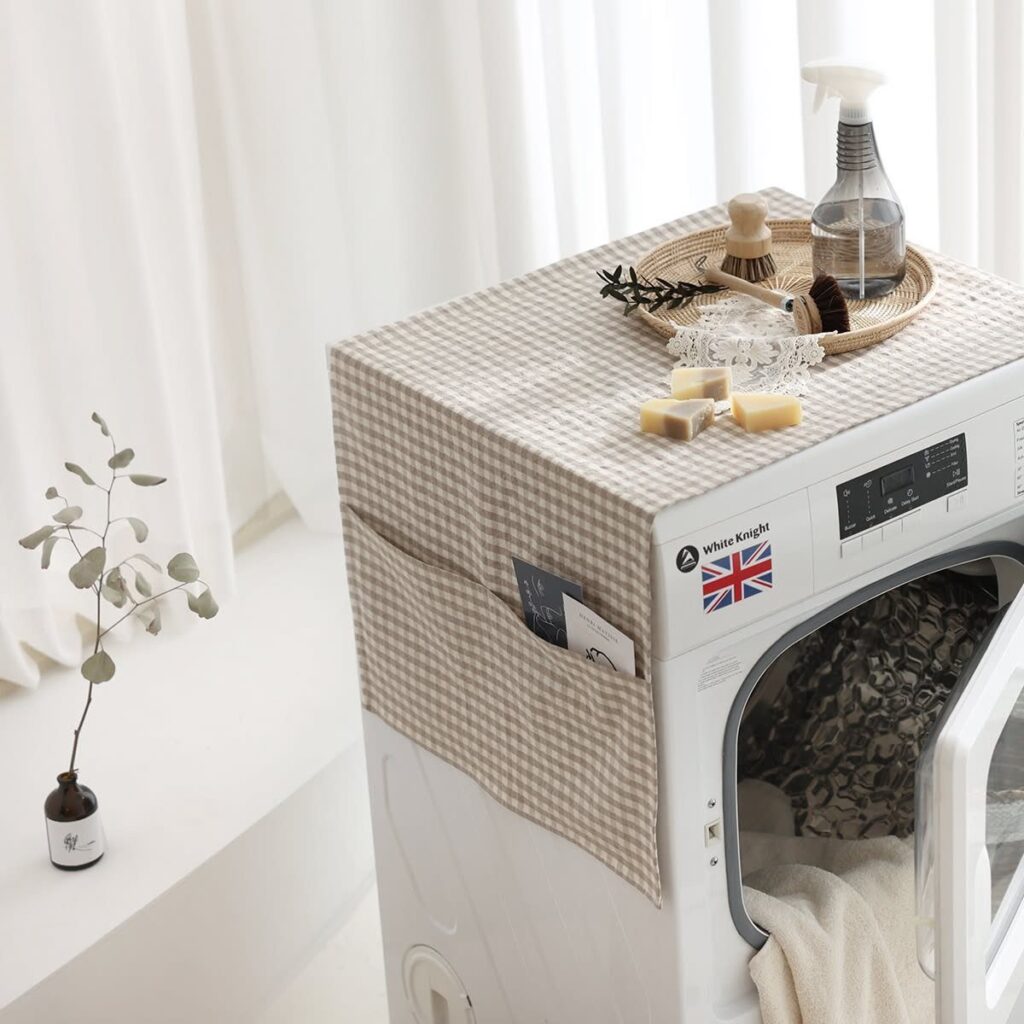
The 4 options below range from a sewn fabric cover that needs nothing beyond straight seams to a sealed wood countertop spanning both machines as one folding surface.
Your machines decide which one fits: top-loaders rule out a wood countertop over the lids, since the hinges and controls need clearance, while front-loaders open from the front and take a slab easily.
1. Wooden Countertops
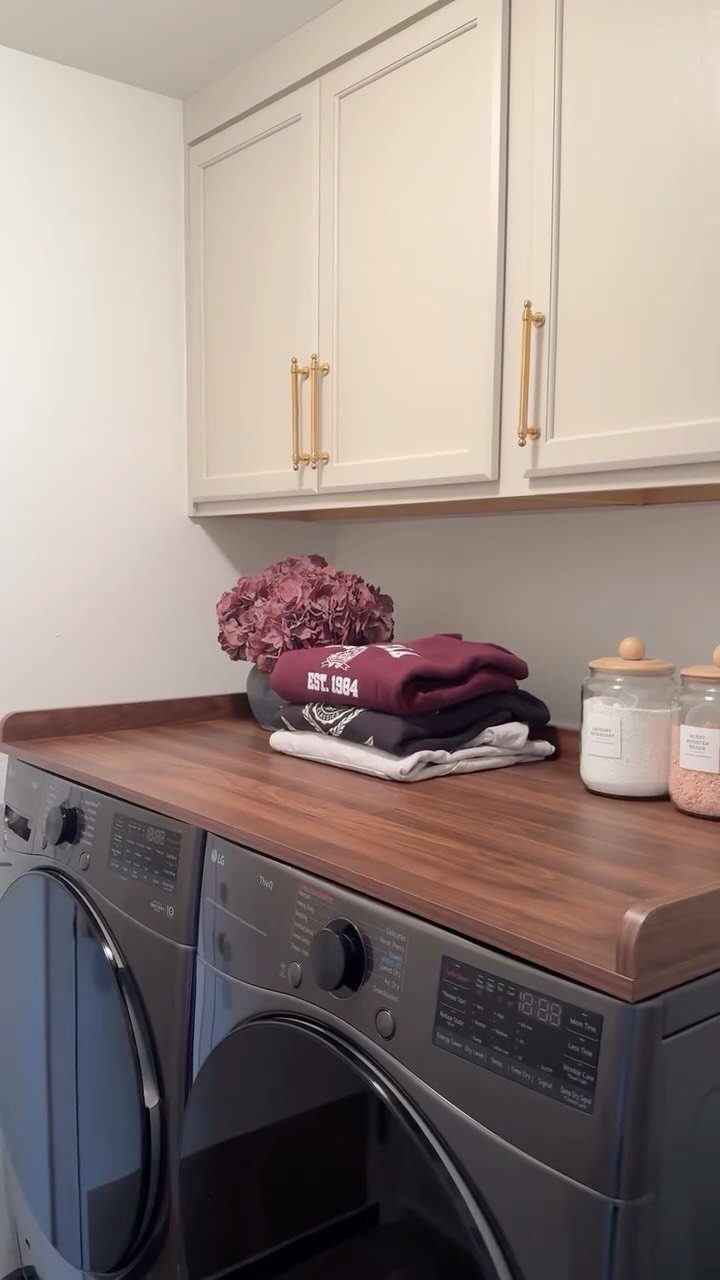
A wood slab over a stacked-free washer and dryer pair turns two appliances into one long counter for folding. Pick a depth that covers the machines fully, so nothing slides off the back edge.
If yours are top-loaders, skip a wood countertop over the lids, because the hinges and controls need clearance and a fixed surface would block them every wash day. Front-loaders suit this idea best, since nothing needs to open upward.
I like a sealed finish here, because damp hands and detergent splashes land on this surface constantly.
2. Covers and Countertops Using Wood
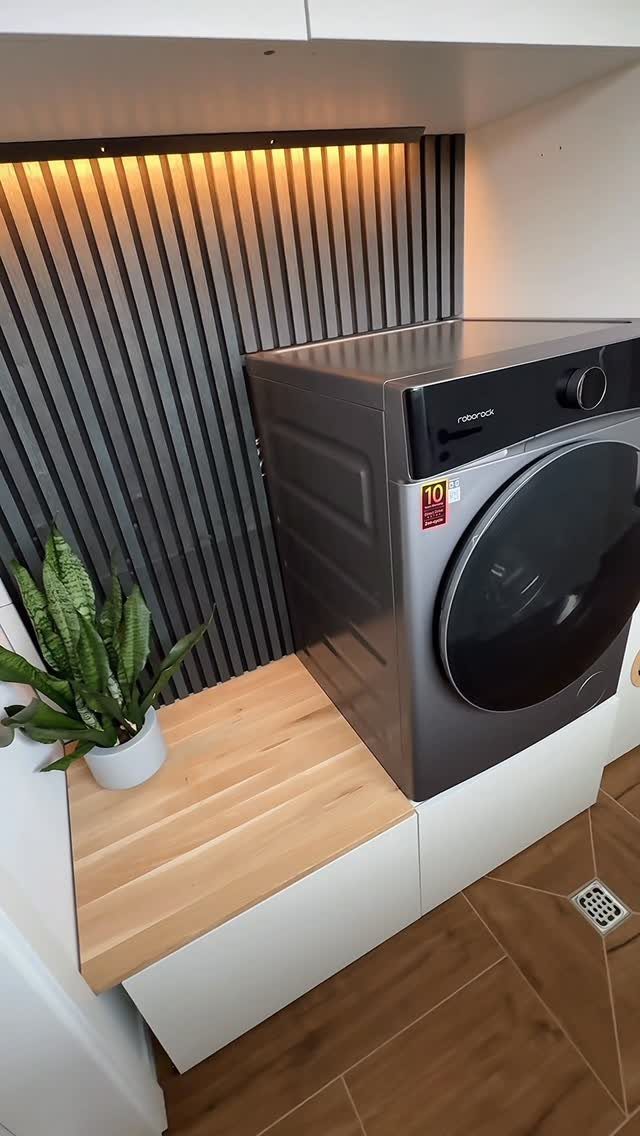
A single wood counter beside the machine, rather than over it, leaves a landing spot for baskets and a plant without boxing in the appliance.
That makes it the easier version to build when you only have one washer to work around.
A light wood tone stops a dark laundry room from looking weighed down, and I’d choose it over a stain that matches the wall. Seal the top before it goes in, since a wet basket will mark bare wood fast.
3. Fabric Covers
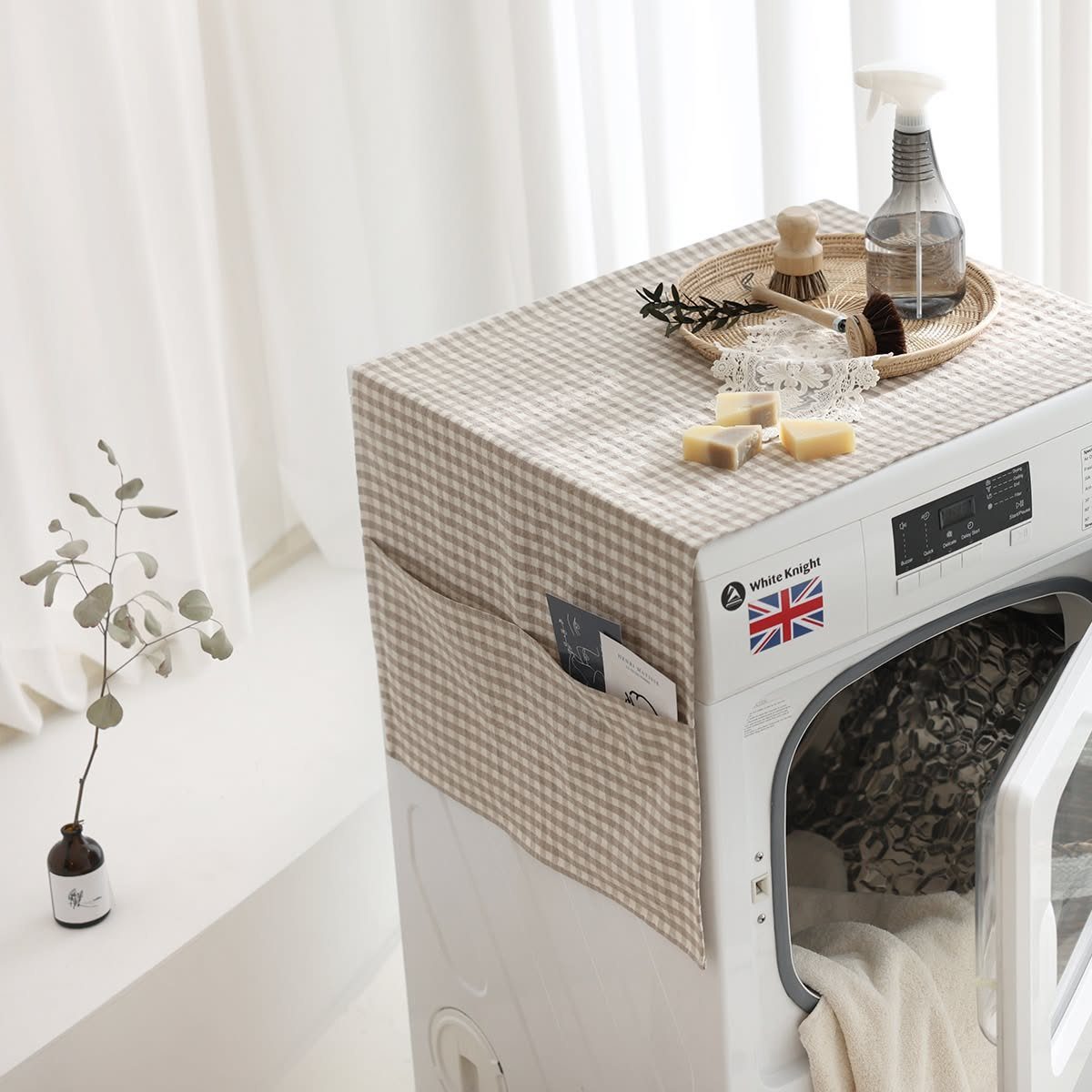
A fitted fabric cover softens a plain white machine, and a gingham print reads as cozy rather than fussy. Fabric is the cheapest way to cover a washer and dryer, and a beginner can sew it with straight seams alone.
Measure the top and the drop on each side before cutting. A side pocket is worth adding for dryer sheets or a stain stick.
Use a tray on top to corral cleaning supplies, and wash the cover on its own, since lint and detergent dust collect on fabric. Skip it over a running dryer’s vents.
4. Fabric Skirt Covers
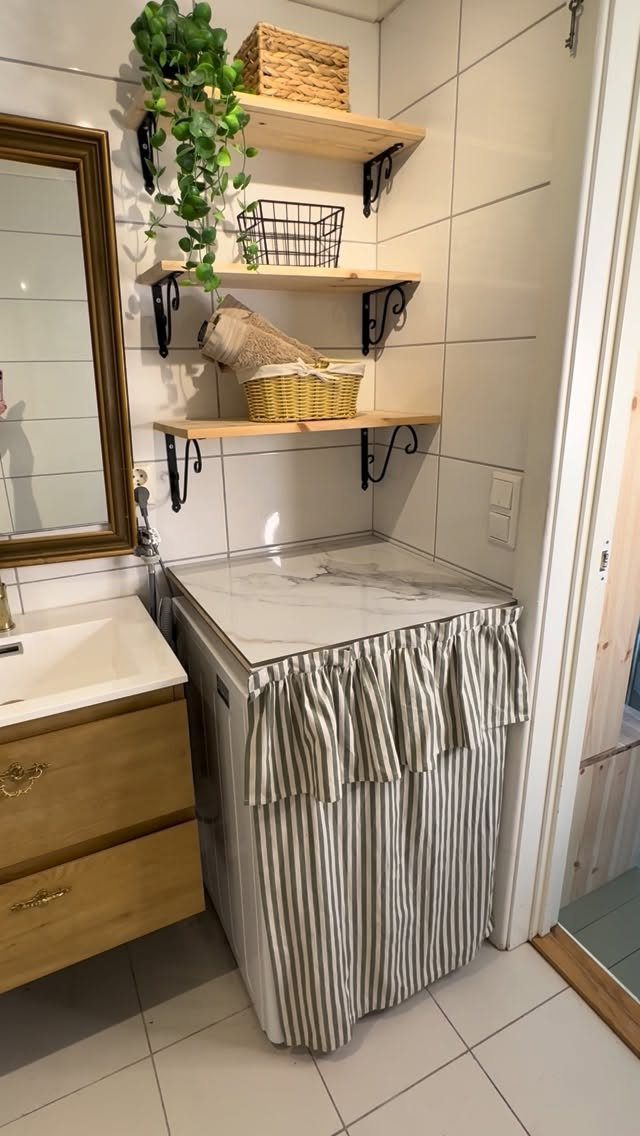
Hanging a fabric skirt from the front edge of a counter hides a washer completely, which suits a bathroom or hallway where the machine sits in plain view. A stripe adds some pattern without crowding the room.
Mount the skirt on a tension rod or adhesive hook strip under the counter lip, and cut it a little short of the floor so it clears the surface. Hook-and-loop tape lets you pull it aside quickly.
Choose a fabric you can machine wash, because the hem will pick up dust. Keep a gap for airflow behind the machine.
Frequently Asked Questions
How much is a washing machine cover?
Prices vary widely with material and customization. A wood counter costs more but gives you a folding surface as well.
Is it good to put a cover on a washing machine?
Yes, a cover protects the machine from dust and scratches, and it softens the look of a plain white appliance.





