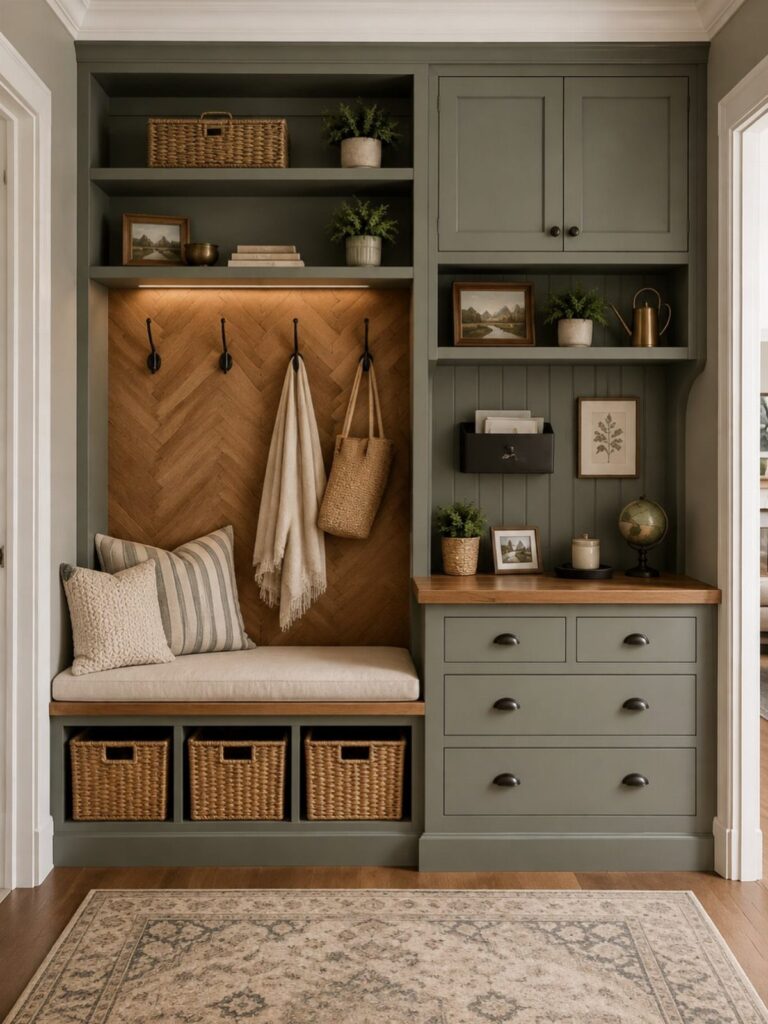
Which of these 5 fits comes down to who is hanging up the coats: a household of adults can run on a single bench, closed drawers and a row of hooks, while a house with small kids needs a hook set low enough for small arms and a labeled bin for each person.
The 5 ideas run from a DIY frame built from lumber and hardware to upper cubbies and baskets in shoe cubbies, and the cost follows the materials you pick.
Pick by the people and the gear you actually have, then size everything to it.
1. Mudroom Cabinets, Benches, and Hooks
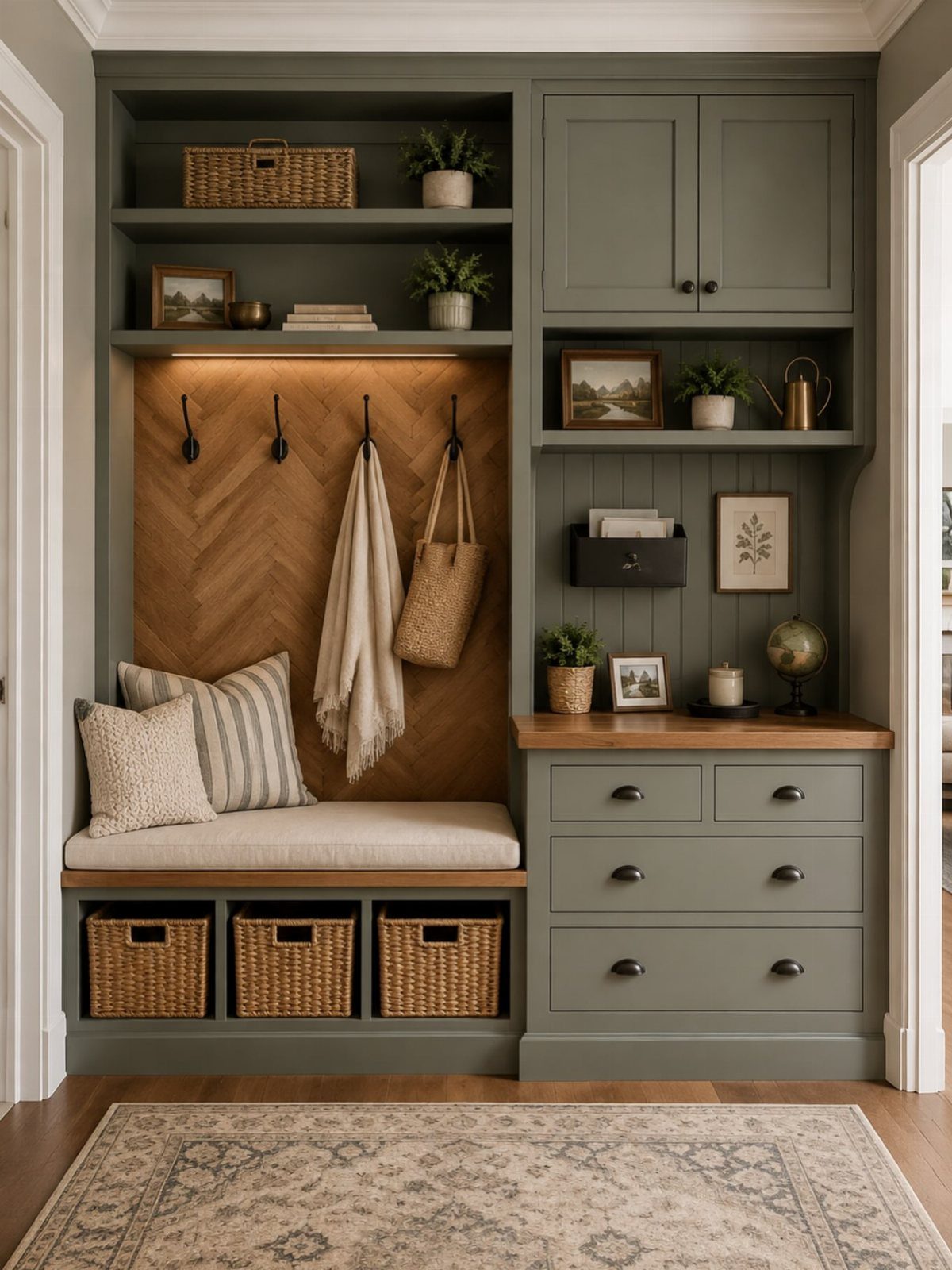
A bench, closed cabinets and a row of hooks on one wall do three jobs in the same footprint: sit, stash and hang.
I like the hooks mounted on a wood backdrop, because the boards take the wear from wet coats instead of your drywall.
Put the bench at a seat height you would use for pulling on boots, and let baskets under it hold the loose items.
Closed drawers below hide the clutter. Matte black hooks against a soft green keep the whole unit calm.
2. DIY Mudroom Storage
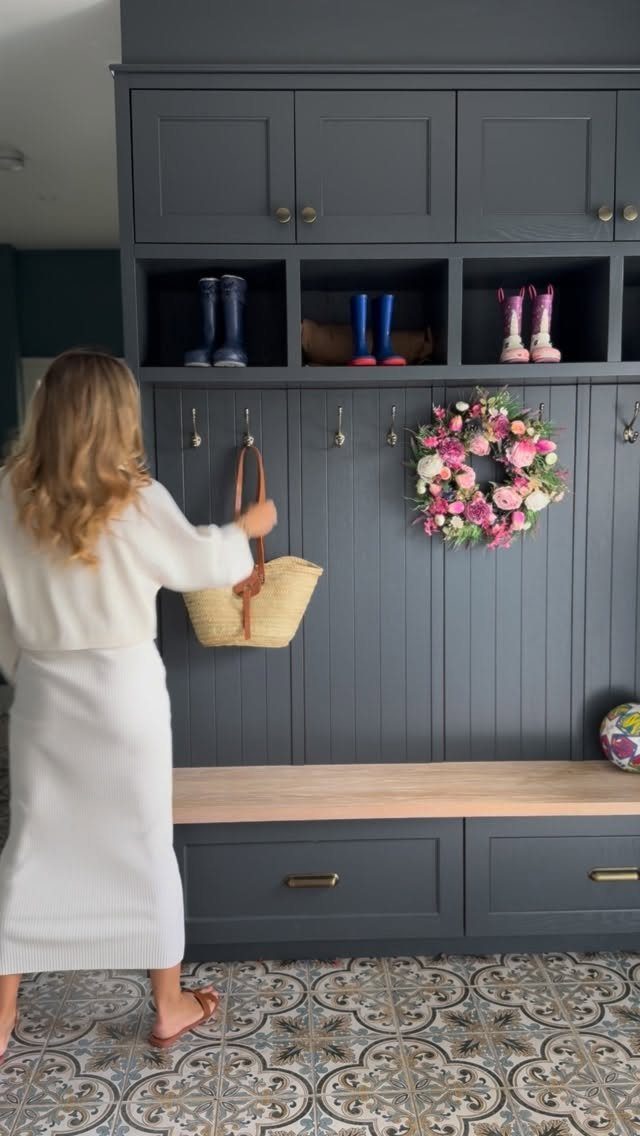
Building the unit yourself lets you size every part to the coats and shoes you actually own. A dark grey finish hides scuffs well, and hooks, shoe cubbies and a bench can live in one run.
Measure your tallest boots and longest coat before cutting anything.
Then set cubbies to that height, not to a standard. Cost depends on the lumber and hardware you pick, but a basic frame painted in one color stays within a modest budget.
Sketch first, then build the bench base, since everything else sits on it.
3. Upper Storage Cubbies
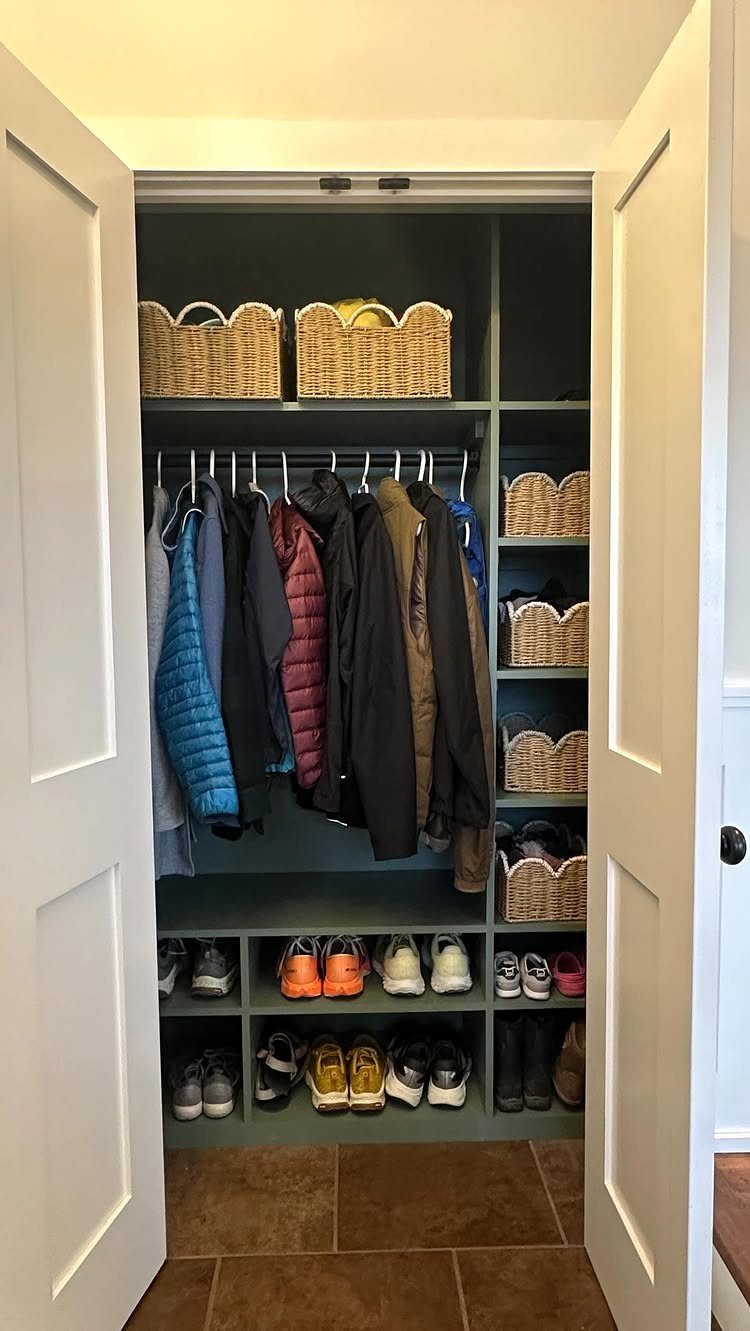
Cubbies stacked above the hanging rail use wall space that otherwise sits empty. Wicker baskets up top suit things you reach for rarely: hats, gloves, out-of-season scarves.
Keep daily items at eye level and below. A basket that needs a step stool gets forgotten, so I would reserve the top row for off-season gear only.
Dark grey walls make the lighter wicker stand out, and a tiled floor handles wet shoes without worry.
4. Baskets in Shoe Cubbies and Upper Cubbies
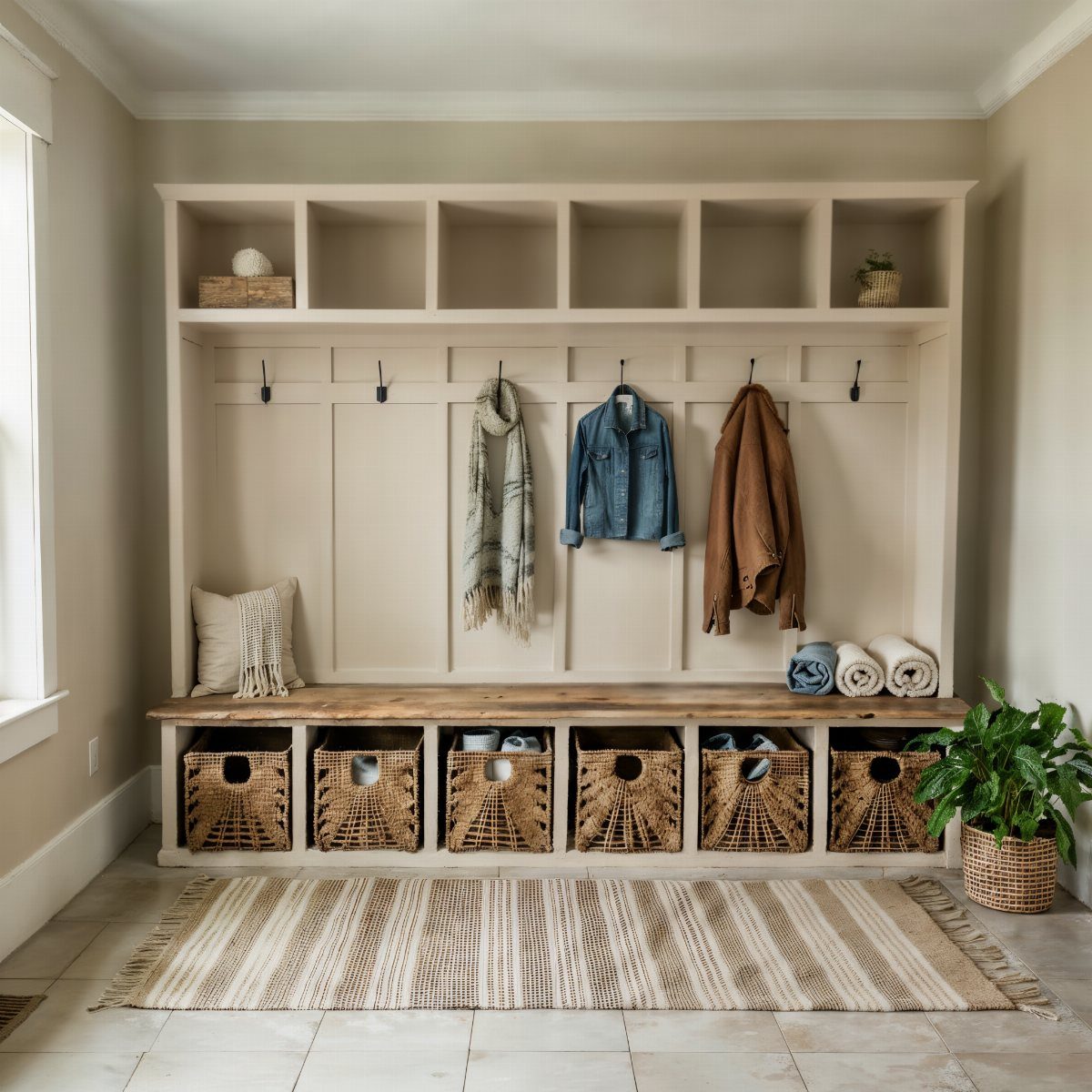
Baskets turn open cubbies from a place where things pile up into a place where things get sorted.
Woven bins in the lower openings hold shoes and keep the clutter out of sight, while open shelving above stays free for things you grab daily.
Use matching baskets in both rows so the unit looks planned. Measure each opening before buying, leaving a little room so you can pull a basket out easily.
Choose sturdy weaves for the floor level, since shoes are rough on them.
5. Labeled Family Baskets and Child-height Hooks
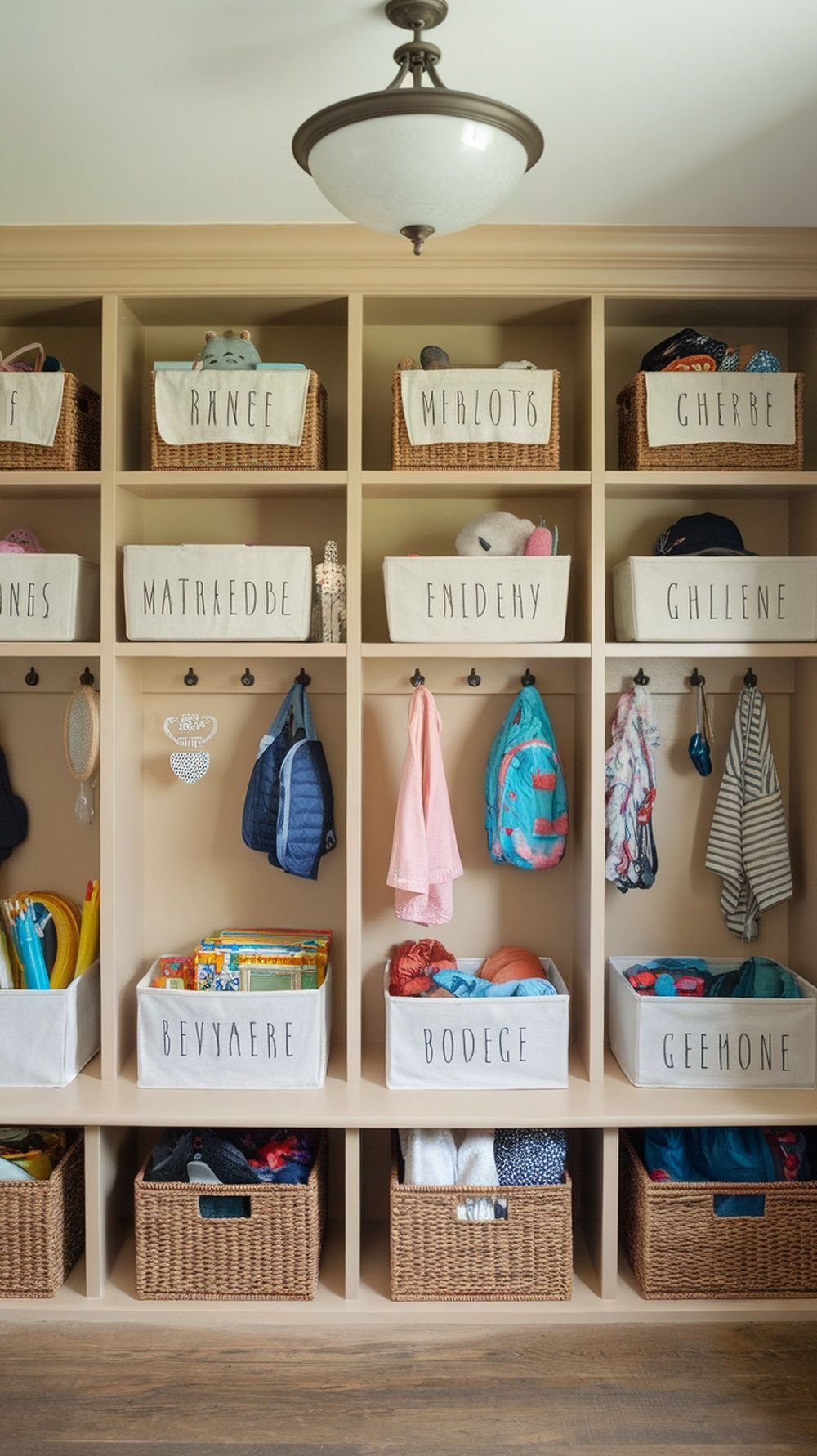
Give each person a column, a labeled bin and a hook set low enough for small arms to reach. Kids hang up their own coats when they do not need a parent to lift them.
Put hooks at child height and label bins with each name, in plain, large letters.
Wicker and fabric bins both work; fabric is softer and easier to wipe. Shoe cubbies on the bottom row keep the floor clear.
Adjust hook height as children grow.





