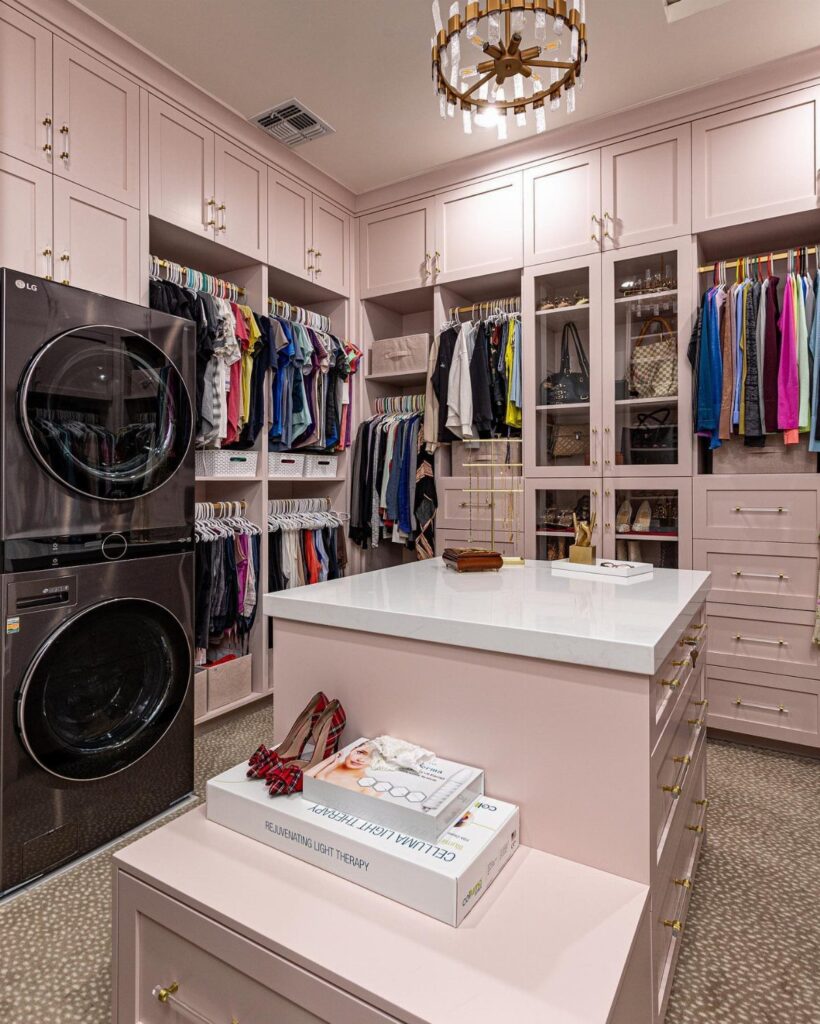
These ideas run from a simple wall-mounted rod you can install in a weekend to custom cabinetry built around a full stack, and the one that fits depends on the closet’s narrowest width and depth, which is often at baseboard height or where a shelf bracket sticks out.
1. Stacked Washer Dryer Units
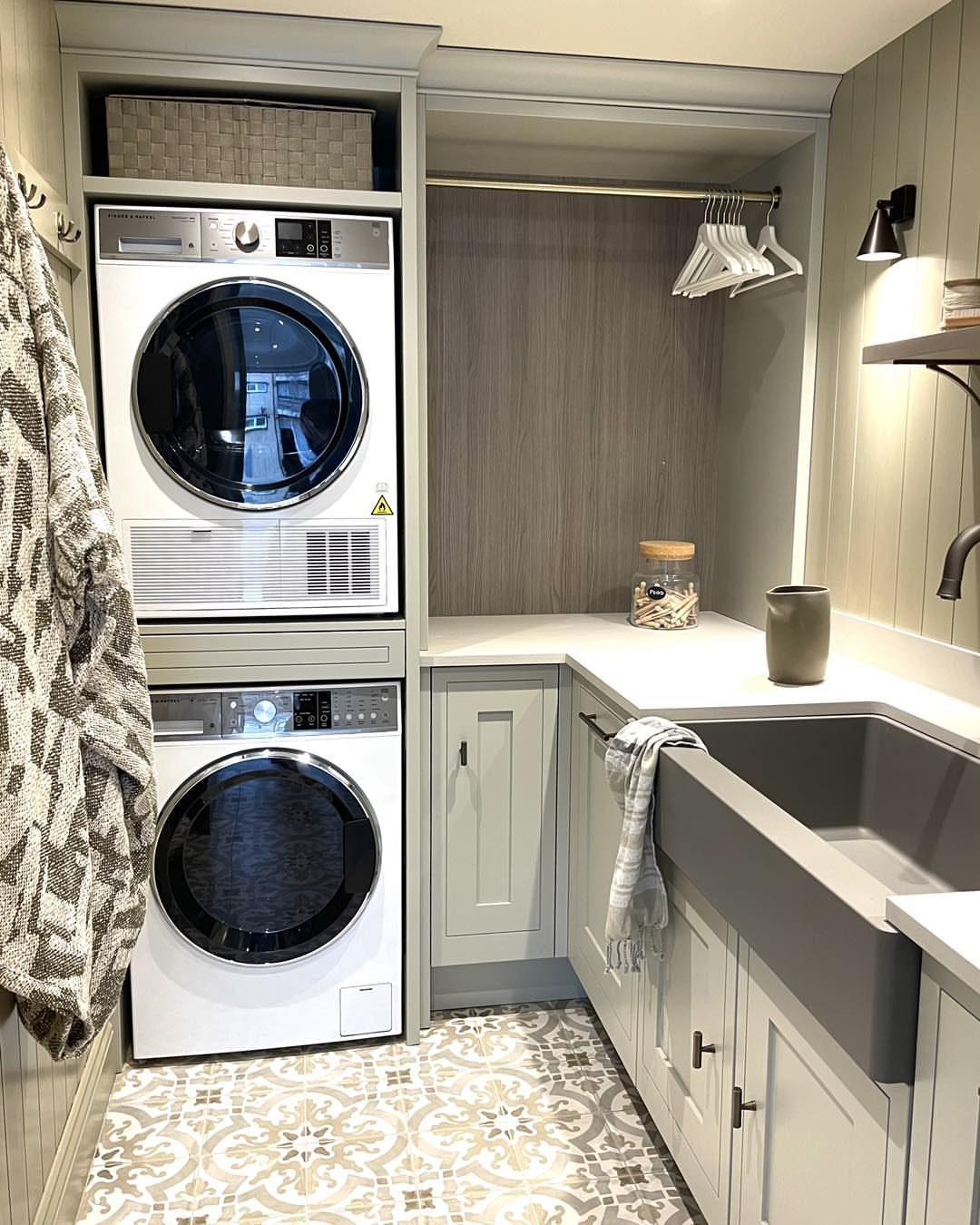
A stacked washer and dryer is the layout I reach for first in a closet, because it uses height instead of floor.
Stacking puts two machines in the footprint of one, which frees floor and wall space for a countertop, a small sink and a hanging rod.
The counter over a stack isn’t possible, so plan around it. Keep the rod to one side of the washer and dryer, not above them, so wet items have somewhere to hang without blocking the dryer controls.
Measure the closet’s width and depth before you shop, and check the door swing.
2. Custom Cabinetry to Conceal Stacked Washers and Dryers
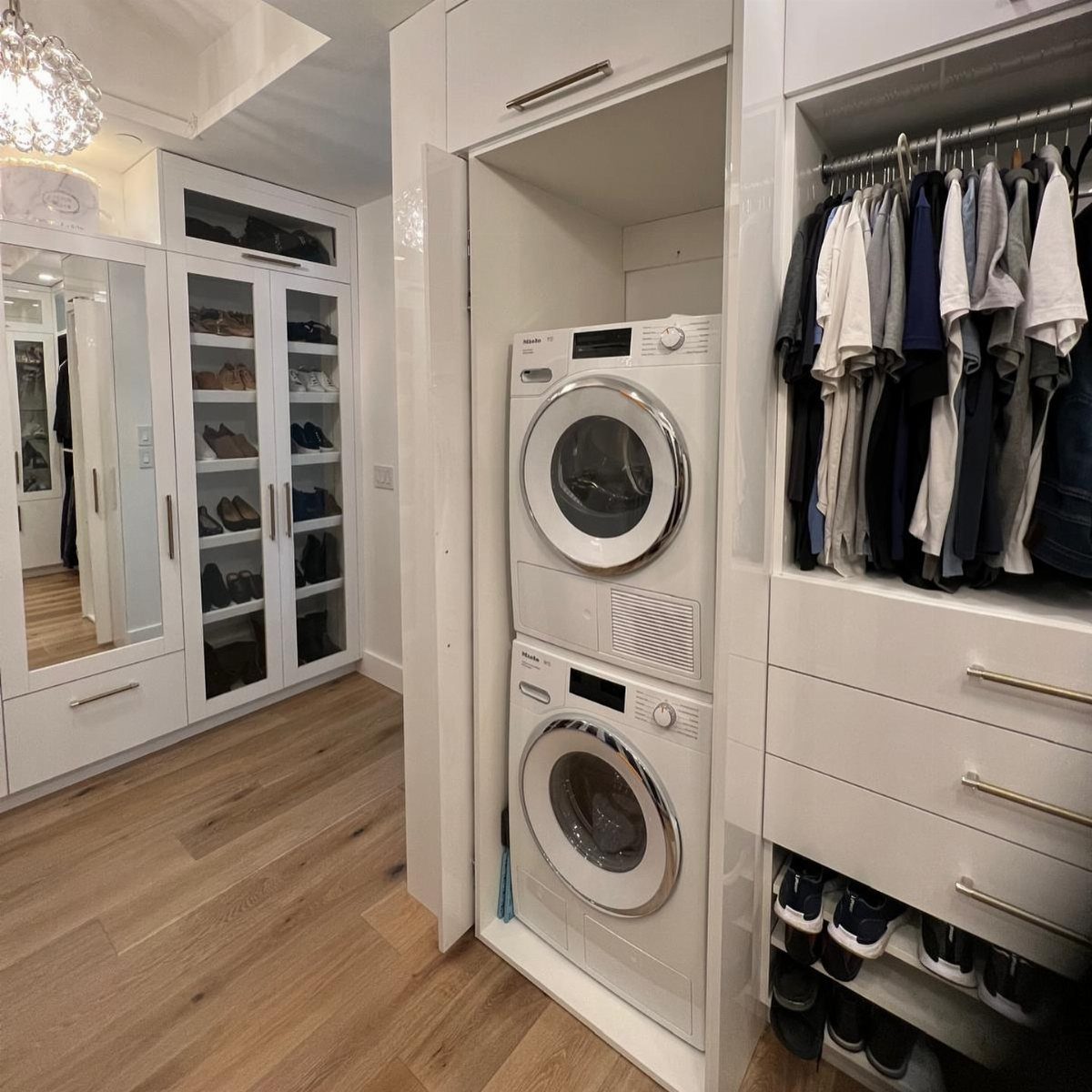
Custom cabinetry makes a laundry stack disappear. Closed doors in the same white as the surrounding closet turn the machines into one more panel, so the room reads as storage first.
Doors are the budget lever here. A full custom build costs a lot, so consider a stock cabinet frame with doors cut to match, or a simple pair of hinged doors on the opening alone.
I’d put the machines beside the shoe shelves and hanging rails, so folding and putting away happen in one spot.
3. Hanging Rods
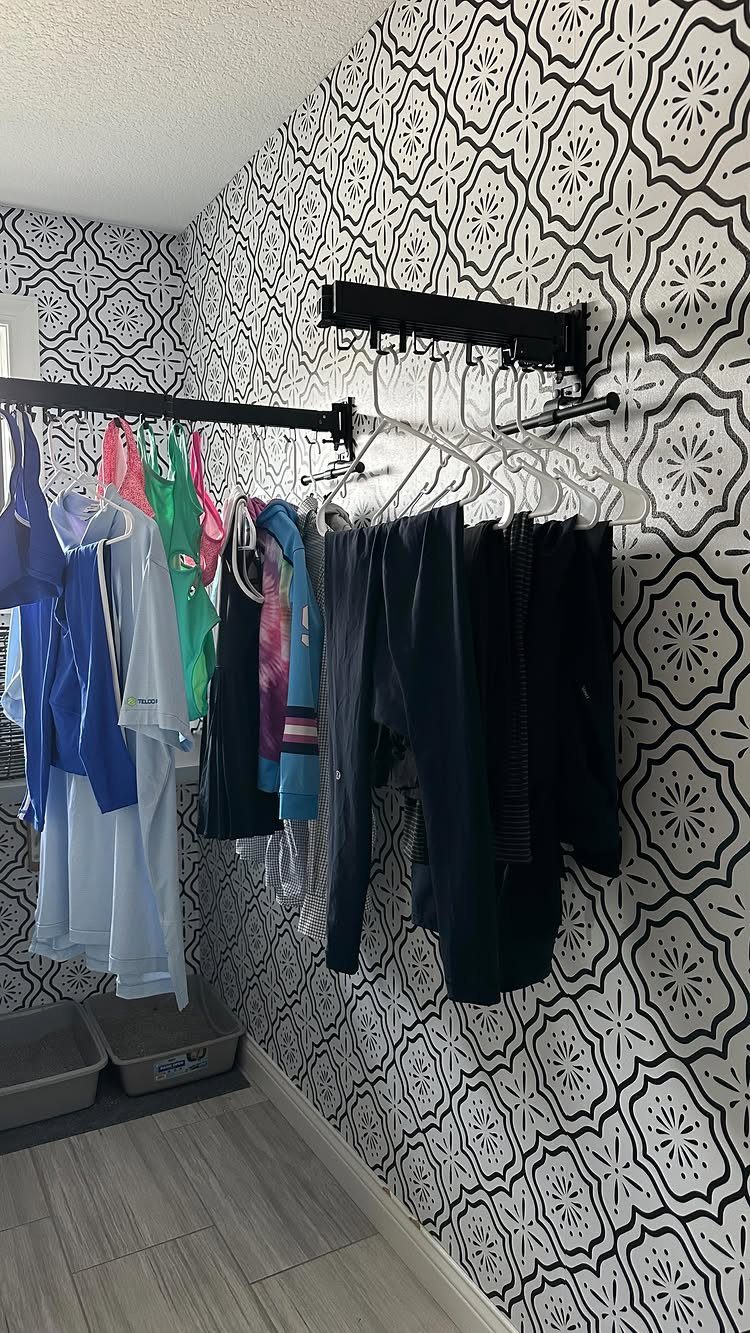
Drying space is the quiet problem in a closet laundry, and one wall-mounted rod solves most of it. Hang shirts and delicates straight off the wash, and they dry without a trip to the dryer.
Black metal looks sharp against a busy wallpaper, and it’s an easy weekend install: find the studs, mark a level line, and screw in the brackets. Choose a rod that’s sturdy, since wet clothes weigh more than dry ones.
Keep bins underneath for socks, towels and the odds and ends.
4. Utility Racks
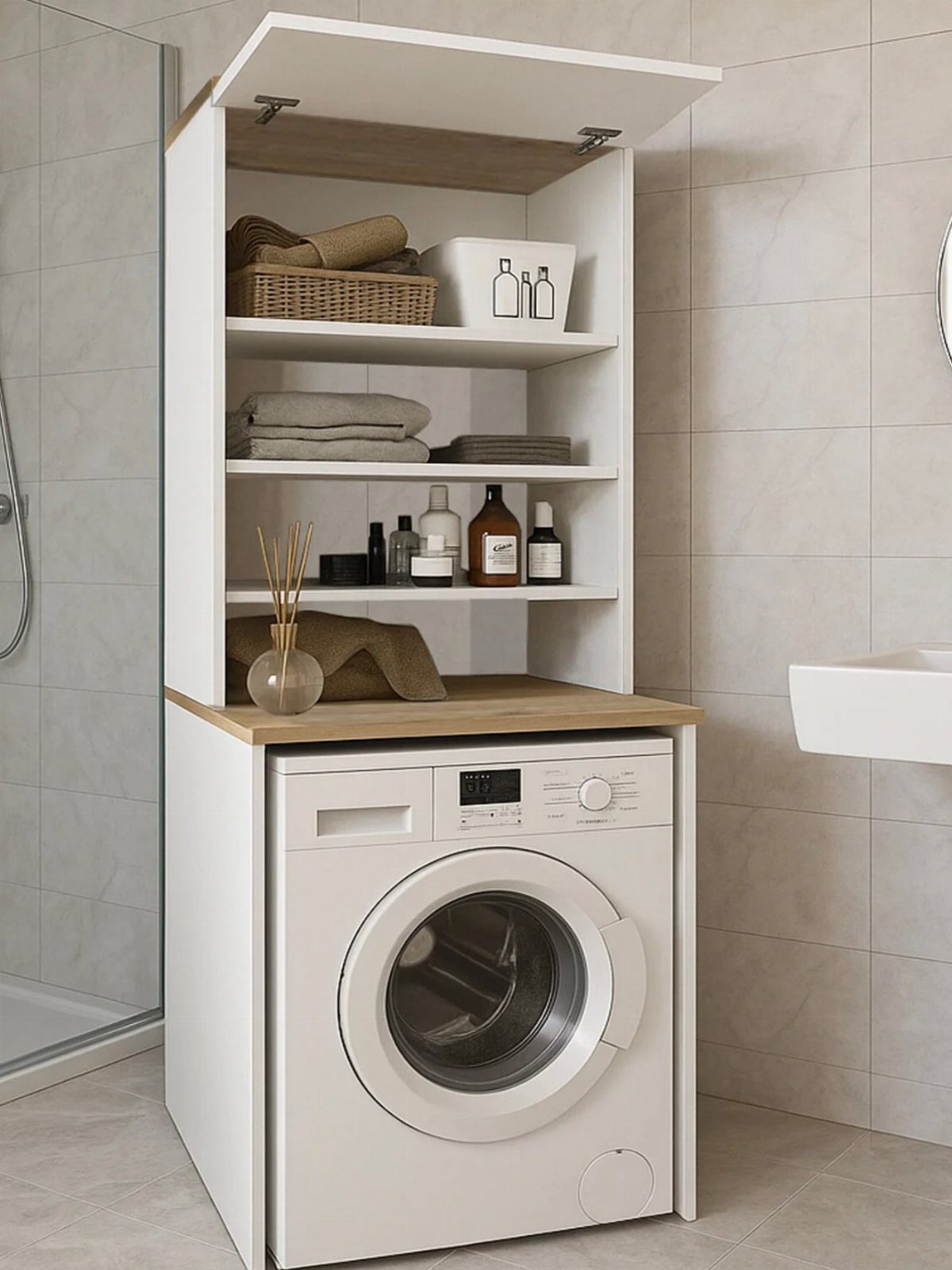
Over a front-loading washer, a utility rack turns dead wall into a cleaning-supply cabinet. Detergent, stain sprays and dryer sheets sit at eye level, and a flip-up top gives you a spot to set a basket while you load.
In a tiled bathroom like this one, a white unit with wood accents keeps the look calm.
Check the clearance first so the door and the detergent drawer still open fully, and measure the width of the machine so the rack doesn’t overhang.
I like closed shelves for the bottles you’d rather not see.
5. Sliding Doors
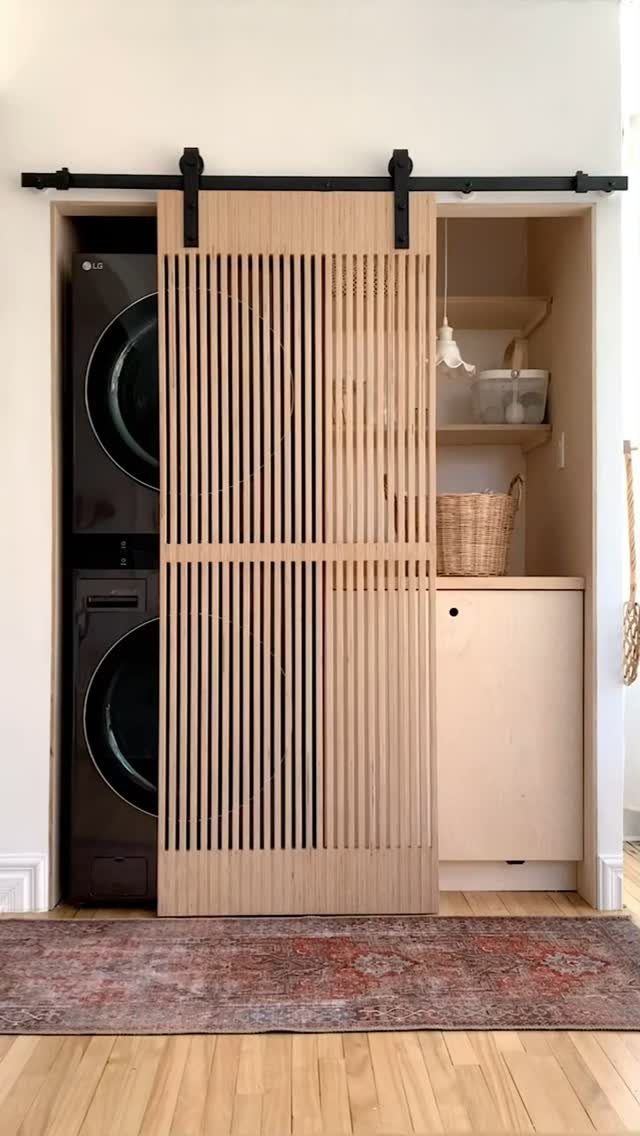
A slatted sliding door solves the swing problem. A hinged door needs a few feet of clear floor in front of it, but a barn-style door slides along the wall and gives that space back to the room.
Light wood warms up a closet with black appliances, and the slats let air move around the machines. A partly open door also lets you reach the controls without moving anything.
Pick a track rated for the door’s weight, and leave a few inches of wall beside the opening for the door to slide into.
6. Laundry Appliances in Master Closets
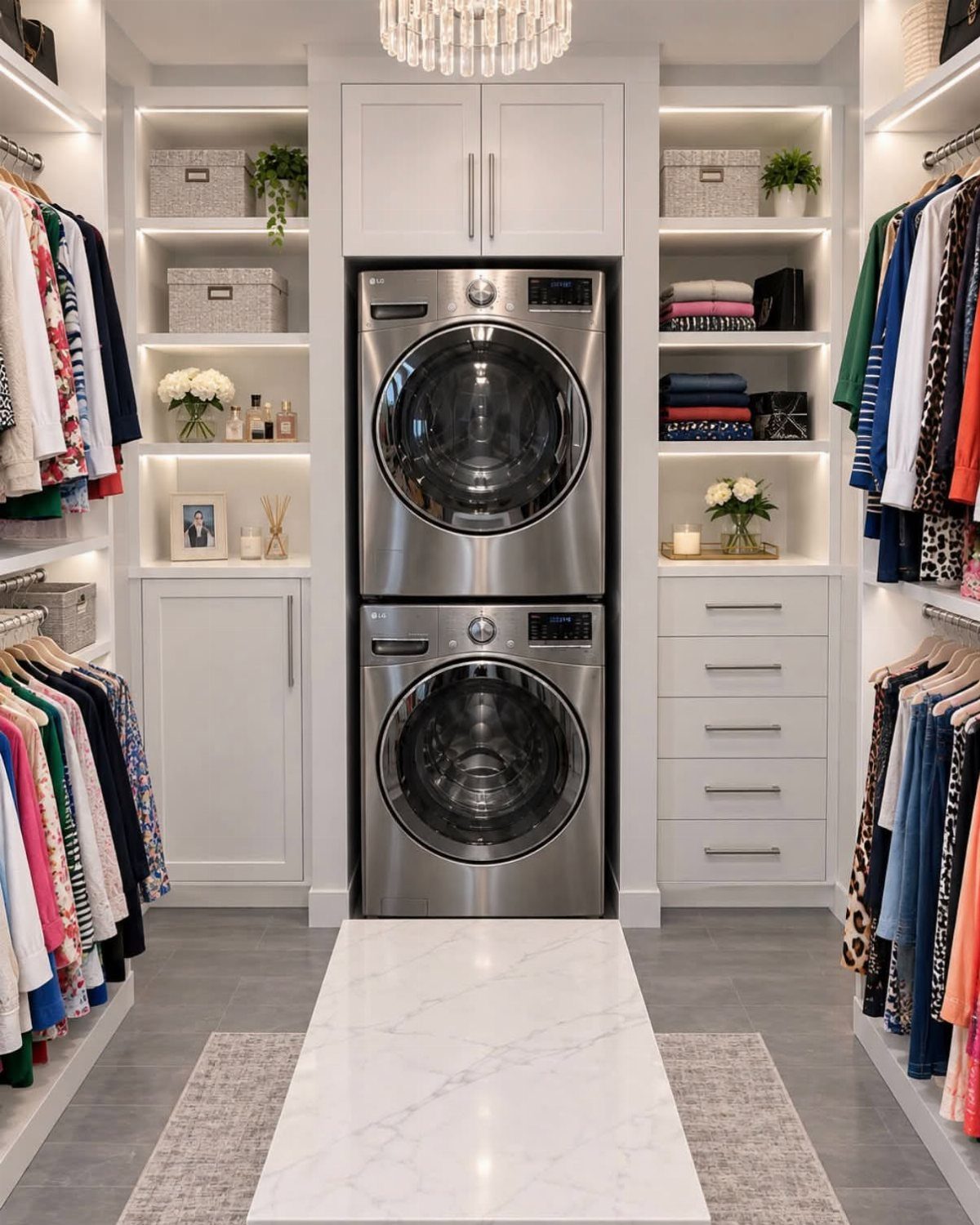
Putting the washer and dryer inside a walk-in closet makes sense, because the clothes are already there. Dirty laundry goes in at one end, and clean items go straight onto hangers, with no hauling down a hallway.
Set the stack into the cabinetry so it sits flush with the shelving, and treat the marble-topped island as your folding table.
A solid door between the closet and the bedroom keeps the machines’ noise from carrying.
Space Requirements for Laundry
Treat those as the floor, not the goal, since hoses, vent ducting and plugs all need room behind the machines.
Measure the width and depth at the narrowest point, which is often at baseboard height or where a shelf bracket sticks out.
Then compare those numbers to the spec sheet of the exact model you want, not to a rough category.
Narrow closets can still look good. Shelving or cabinetry beside the stack, or a bold wallpaper on the back wall, makes a tight space feel planned instead of squeezed.
Choosing the Right Appliances
Start with compact, stackable models that fit your closet and your real laundry load. A machine that fits but forces extra loads every week will annoy you faster than a slightly larger one.
Check the dryer type first.
Gas dryers can cost less to run, but they need a gas line and a vent, while an electric dryer only needs a 240-volt outlet; whichever hookup is already behind your closet wall usually settles the question.
Features worth paying for: speed wash cycles, easy-to-reach compartments, and smart alerts that tell you when a cycle ends. That last one helps when the machines sit behind a closed door.
Larger households can find capacity in current stacked units, and in a multilevel home 2 sets can split the load.
Pros and Cons of Closet Laundry
Add the space saved by stacking, and a closet can replace a whole laundry room.
The costs are noise and limited room. Machines running behind a thin door will be heard in a bedroom, and a tight closet leaves little space for sorting, folding or a basket on the floor.
I’d choose closet laundry if the closet is big enough to work in comfortably. If you can’t stand next to the machines and open both doors fully, a different spot will serve you better.
Frequently Asked Questions
How much space is needed for a washer and dryer closet?
Plan on at least 24 inches of width and 30 inches of depth, and treat that as a floor, not a target.
Leave a few inches at the back for the hose bends, the dryer duct and the plugs, because a machine pushed flat against the wall will kink all three.
Take your width and depth readings where the opening is tightest, which is usually at the baseboard or under a shelf bracket, and compare them with the spec sheet for the exact model you plan to buy.
Are there machines that both wash and dryer in one unit?
Yes, combo washer-dryer units exist and do both jobs in a single machine. Whichever you choose, compare the exact model’s dimensions to your closet before buying.
Which brands of shallow depth washers and dryers are stackable?
GE, Whirlpool and Speed Queen all make stacked washer dryer units. Units like these are designed as a vertical pair from the factory, so they differ from separate machines that you stack yourself with a connecting kit.
Check the depth on the spec sheet of the specific model, since a brand name alone won’t tell you if it fits your closet.





