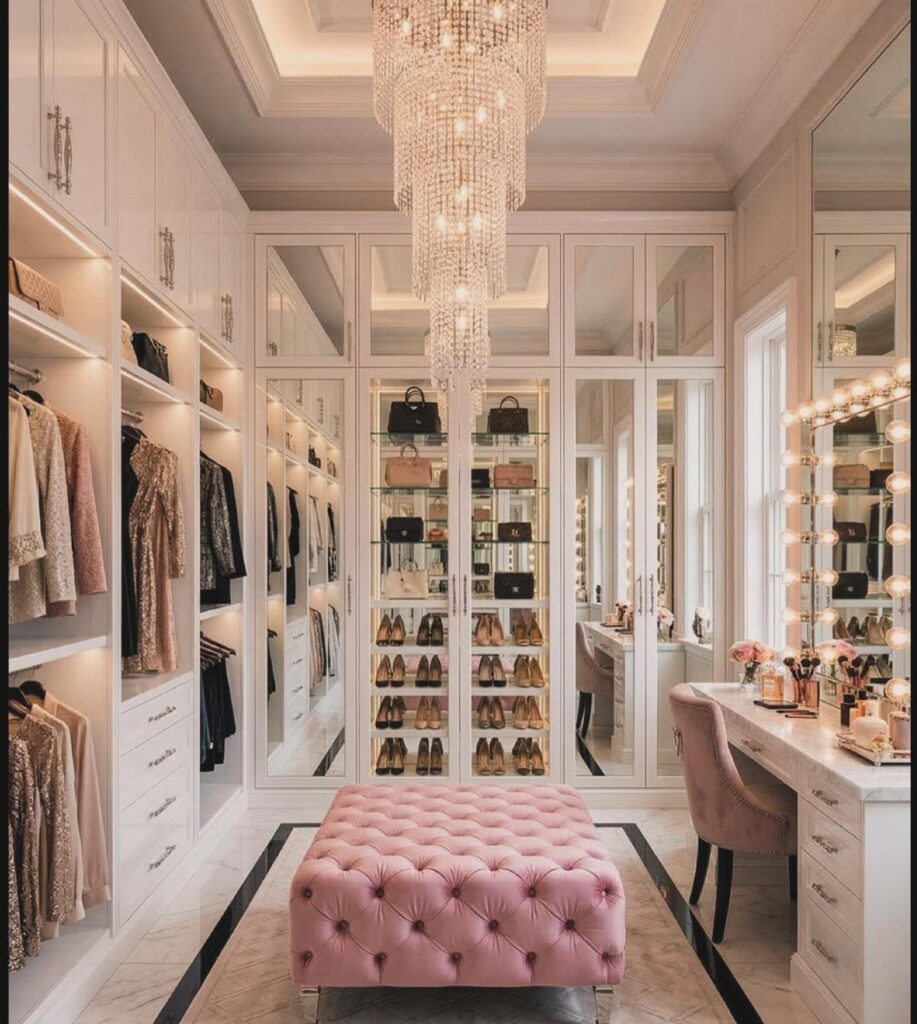
Closet width decides which of these vanities fits: a closet wide enough to walk around an island with the drawers open can take a mirrored-top island, while a narrow one is better served by a desk and mirror at one end, with hanging space along the longer wall.
Choices range from an Integrated Vanity Desk with a plug-in mirror, which suits renters, to a Central Island with Vanity and Marble Countertops under real chandelier-style lighting.
1. Integrated Vanity Desk
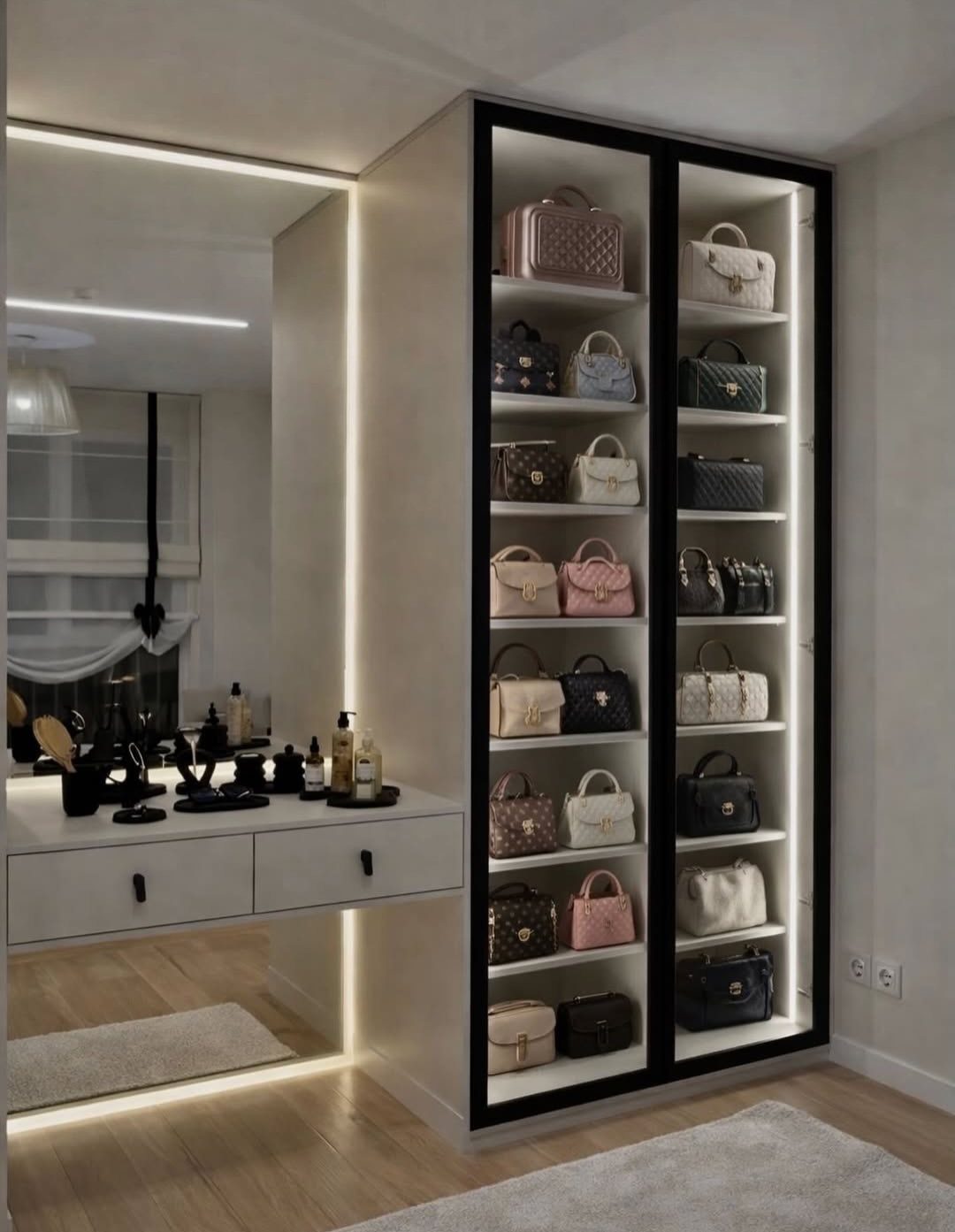
A built-in desk against the closet wall gives makeup and grooming a fixed home, so nothing migrates back to the bathroom counter. White cabinetry with a lit mirror keeps the surface bright and reads as part of the room.
I like the pairing with a glass-front cabinet beside it, since bags you display stay dusted and visible. Leave the desktop clear except for what you use daily; a built-in looks cluttered fast.
Renters can get close with a narrow freestanding desk and a plug-in mirror.
2. Backlit Mirrors
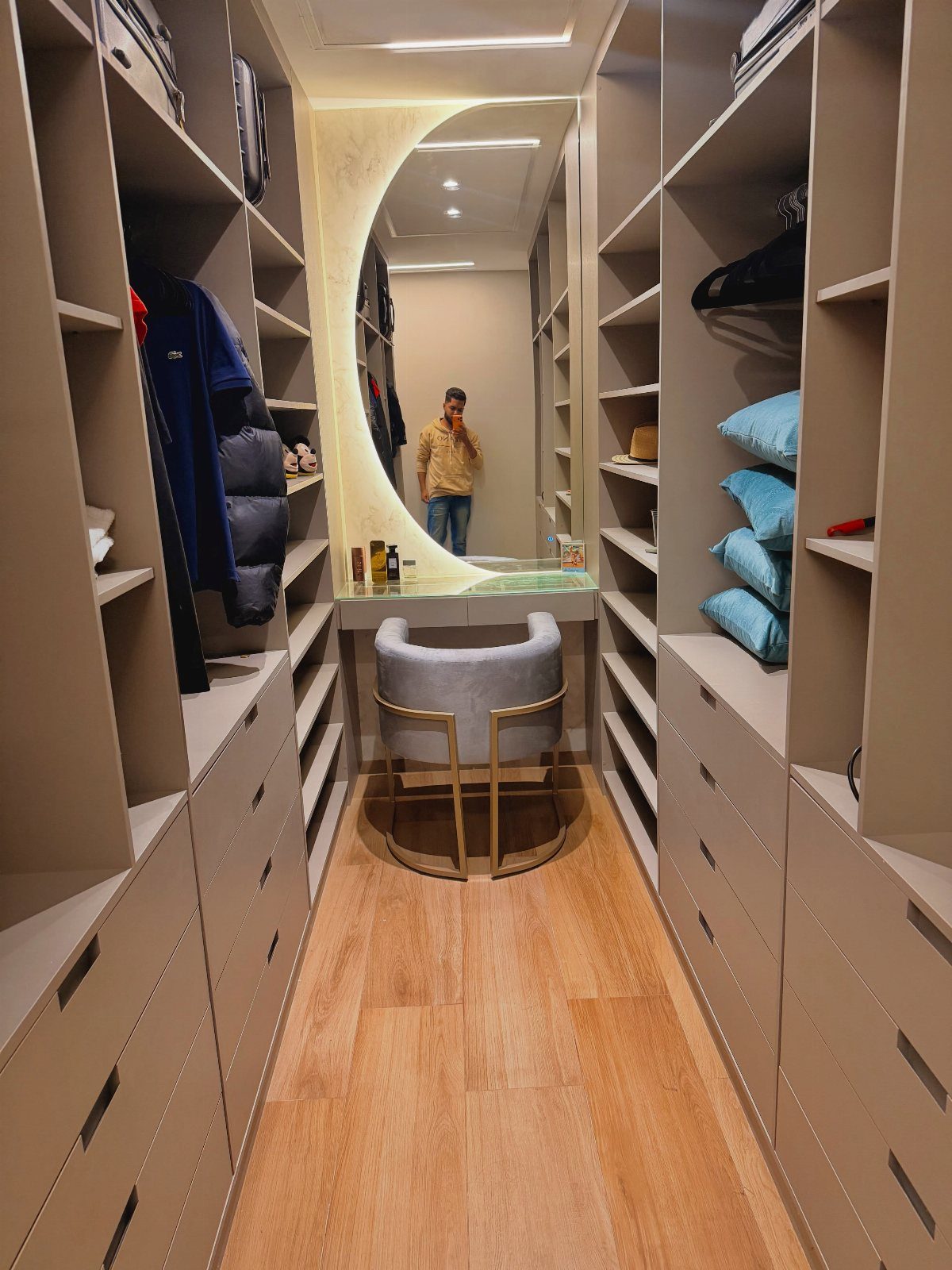
A round mirror with its own light is the simplest upgrade for a closet vanity, because it puts even light on your face instead of on the ceiling. Mount it above the desk at seated eye level.
Hardwired versions look cleanest, but plug-in ones cost less and suit renters. I would pick a round shape in a closet full of straight shelving; it softens the lines.
Check the glow in the closet’s usual light before you commit.
3. Elegant Lighting
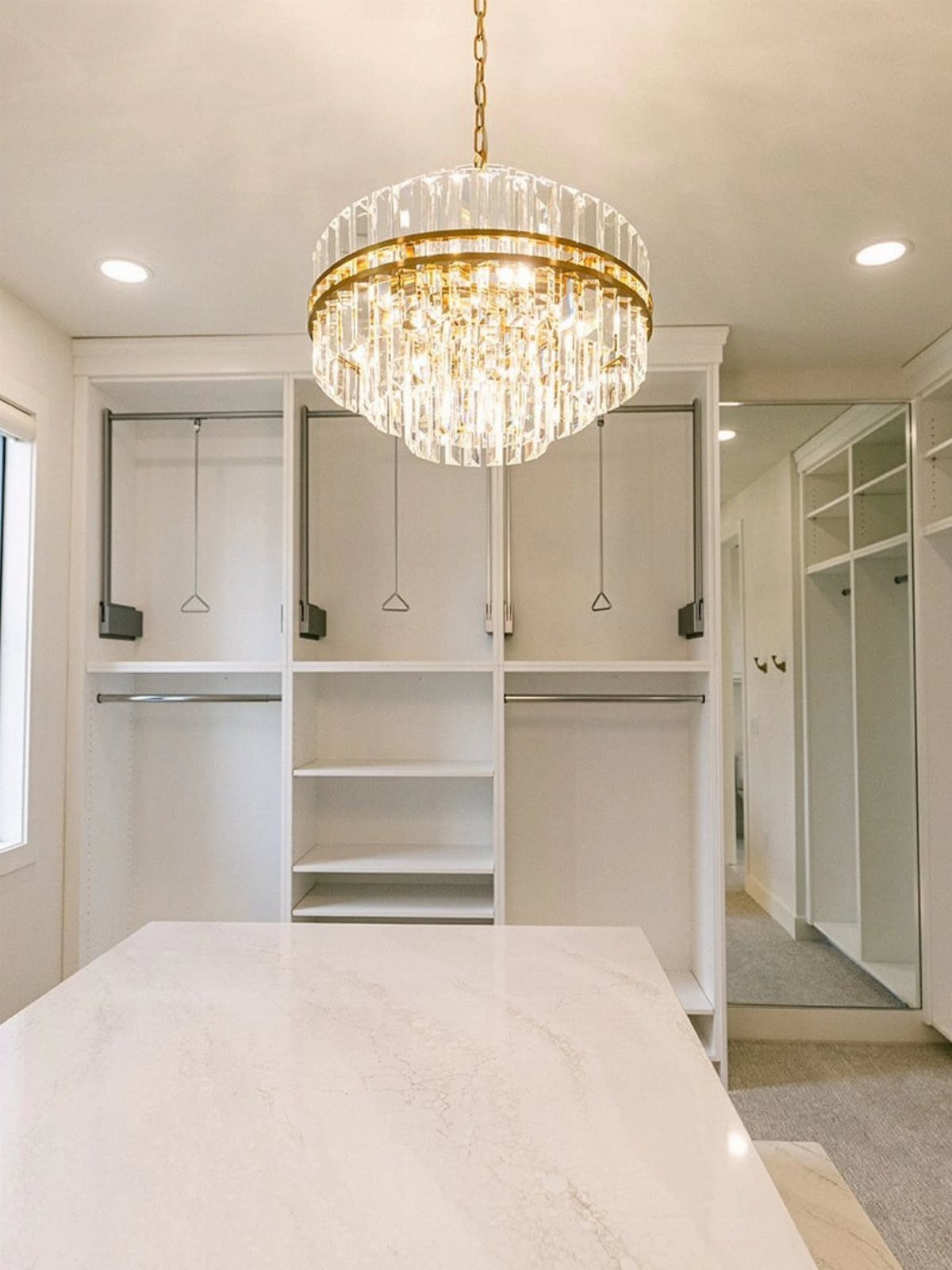
Hang a chandelier in the closet and it stops being a storage cupboard and starts feeling like a dressing room. Crystal and gold catches light off a mirrored wall and a marble counter, which doubles its effect.
It works best with a ceiling tall enough to clear your head, so measure before buying. On a tight budget, a small plug-in fixture with a swag cord gives the same look without an electrician.
Keep a plain overhead light too, for judging colors.
4. Central Island with Vanity
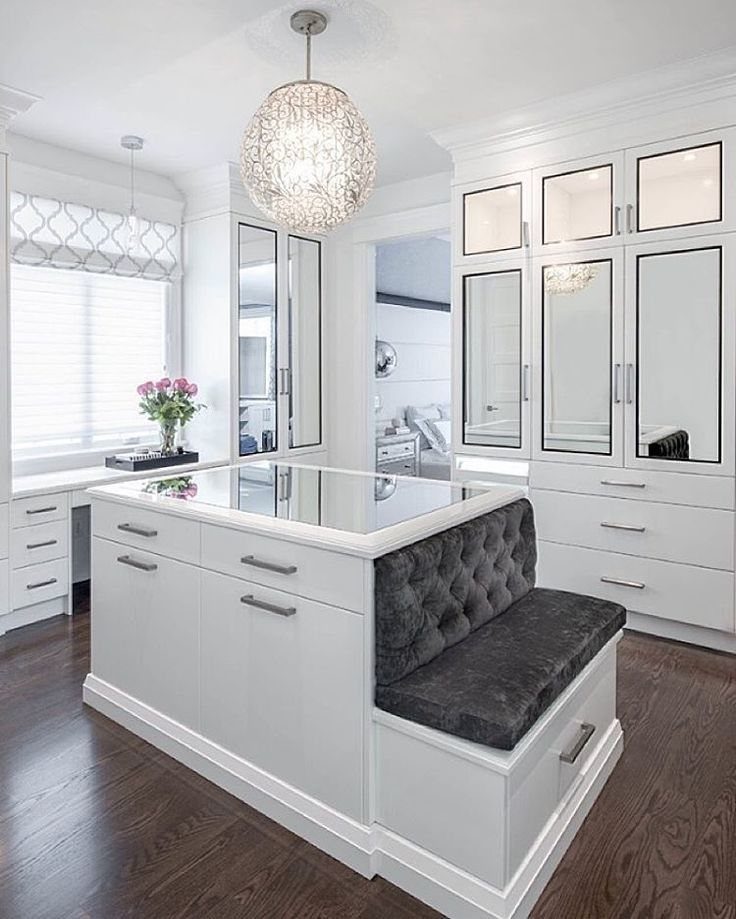
An island with a mirrored top lets one piece serve as drawer storage, a seat-side vanity, and a place to lay out outfits. A tufted bench pulled up to it makes the grooming spot.
Leave room to walk around it with drawers open; a closet that is too narrow for an island is better served by a wall vanity. I would choose a top you can wipe clean fast, since makeup spills happen.
5. Built-in Shelves
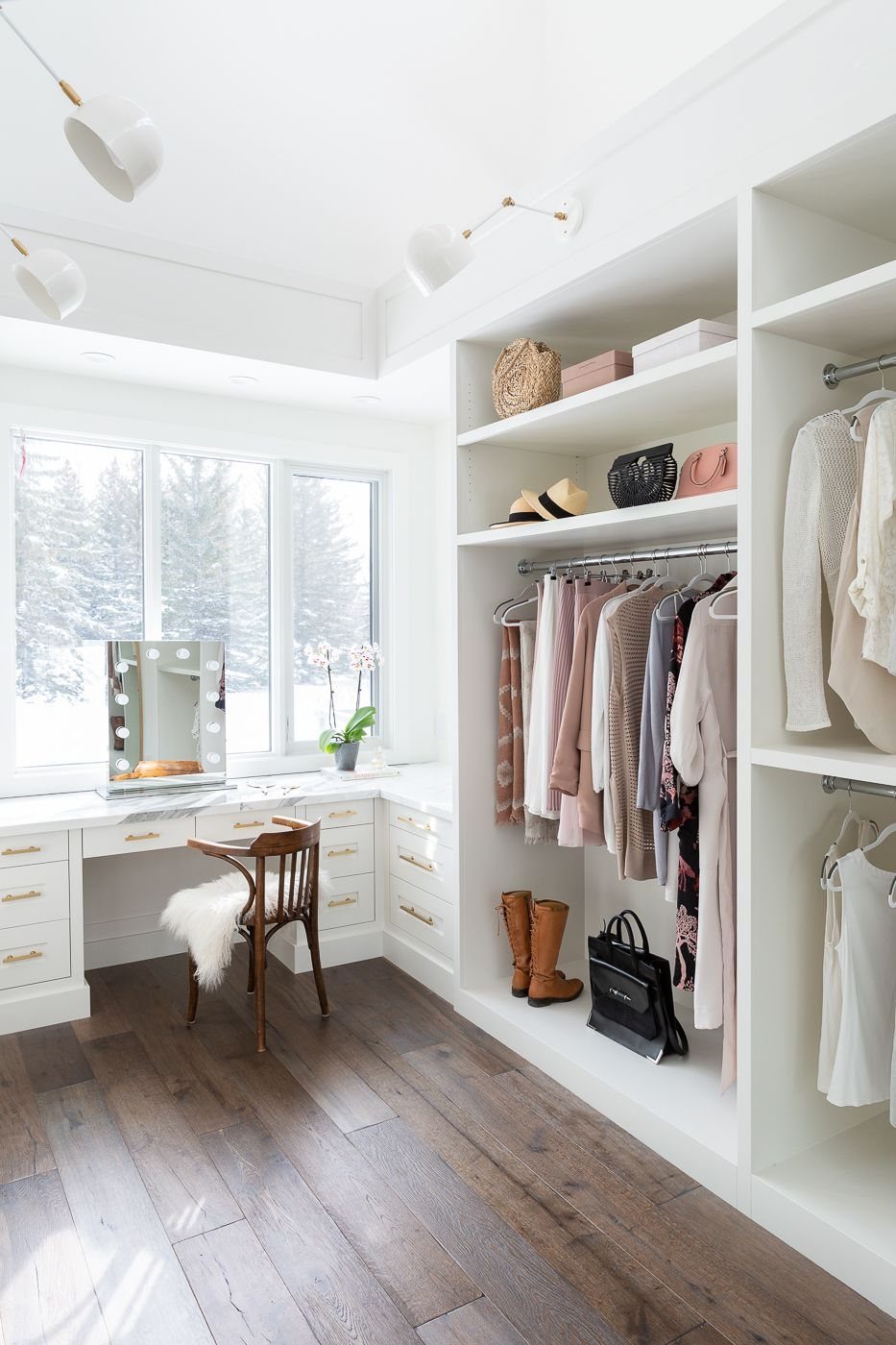
Shelving that wraps around the vanity keeps everything within reach of the chair. Build the shelves right up to the mirror’s edges so the desk looks planned, not added.
Put shoes and folded knits on the shelves and hanging clothes beside them. Painting it all white, as here, makes a small closet feel larger and hides mismatched items.
For a weekend budget version, adjustable shelf brackets and a basic desk can be assembled in a day.
6. Plush Seating
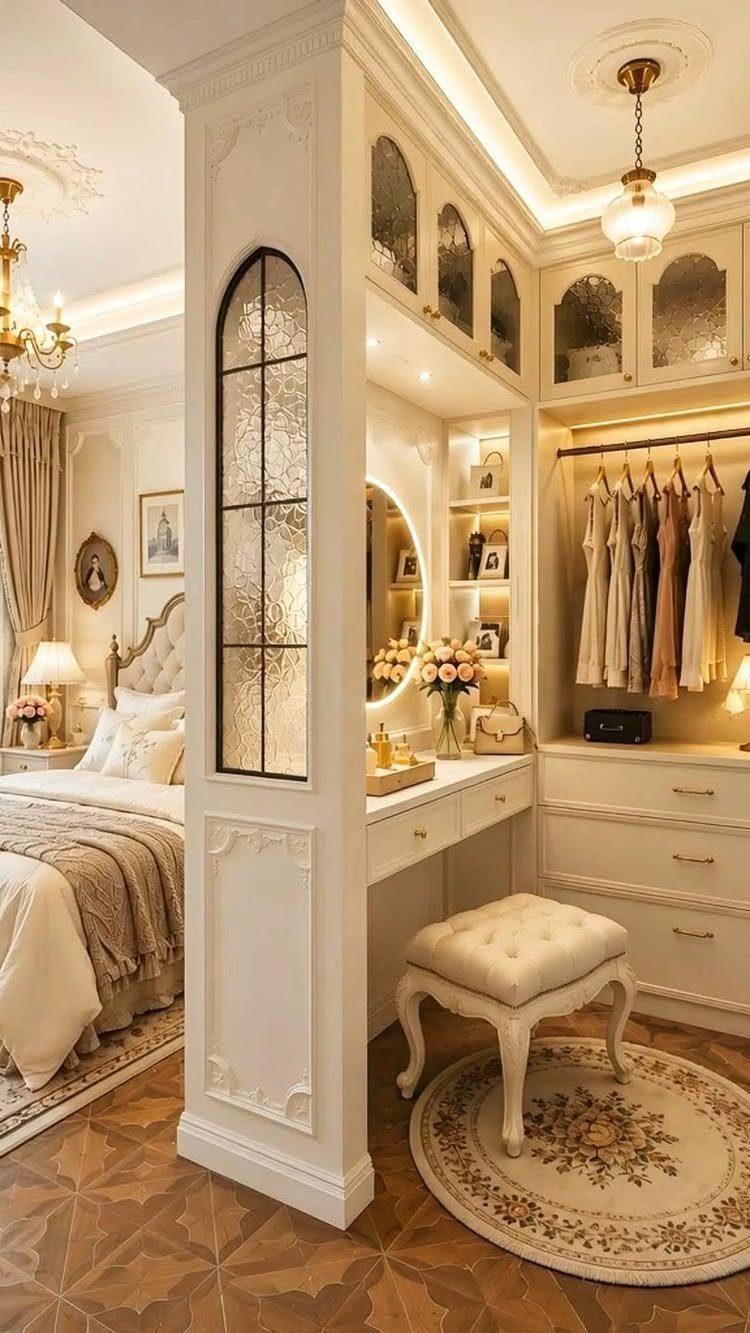
A tufted ottoman is the easiest way to make a vanity feel like a place to sit and take your time. Unlike a hard stool, it also works for pulling on boots or folding laundry.
Pick one that slides fully under the desk when you are done, so it doesn’t block the walkway. White upholstery looks soft but shows makeup, so a washable cover is worth the extra cost.
7. Color Coordination
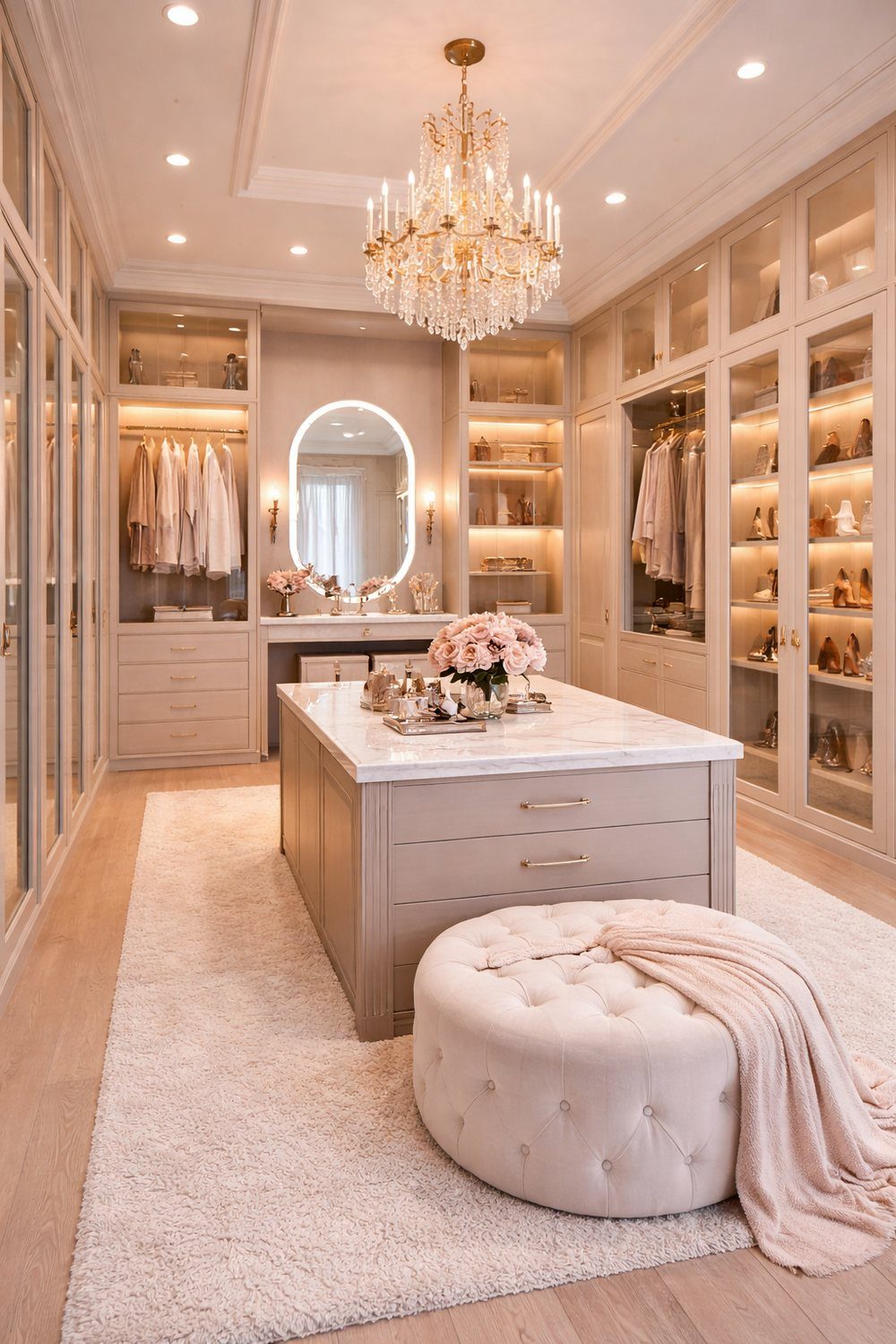
Keeping every surface in one family of tones, here beige and cream, is what makes a closet with a marble-top island, chandelier and built-in cabinetry read as a single room instead of a pile of nice pieces.
Choose two or three shades and repeat them across cabinets, seating and walls. Warm neutrals hide the visual noise of folded clothes better than high contrast does.
I would add contrast through texture, not a new color: a woven basket or a velvet cushion keeps a pale palette from going flat.
8. Marble Countertops
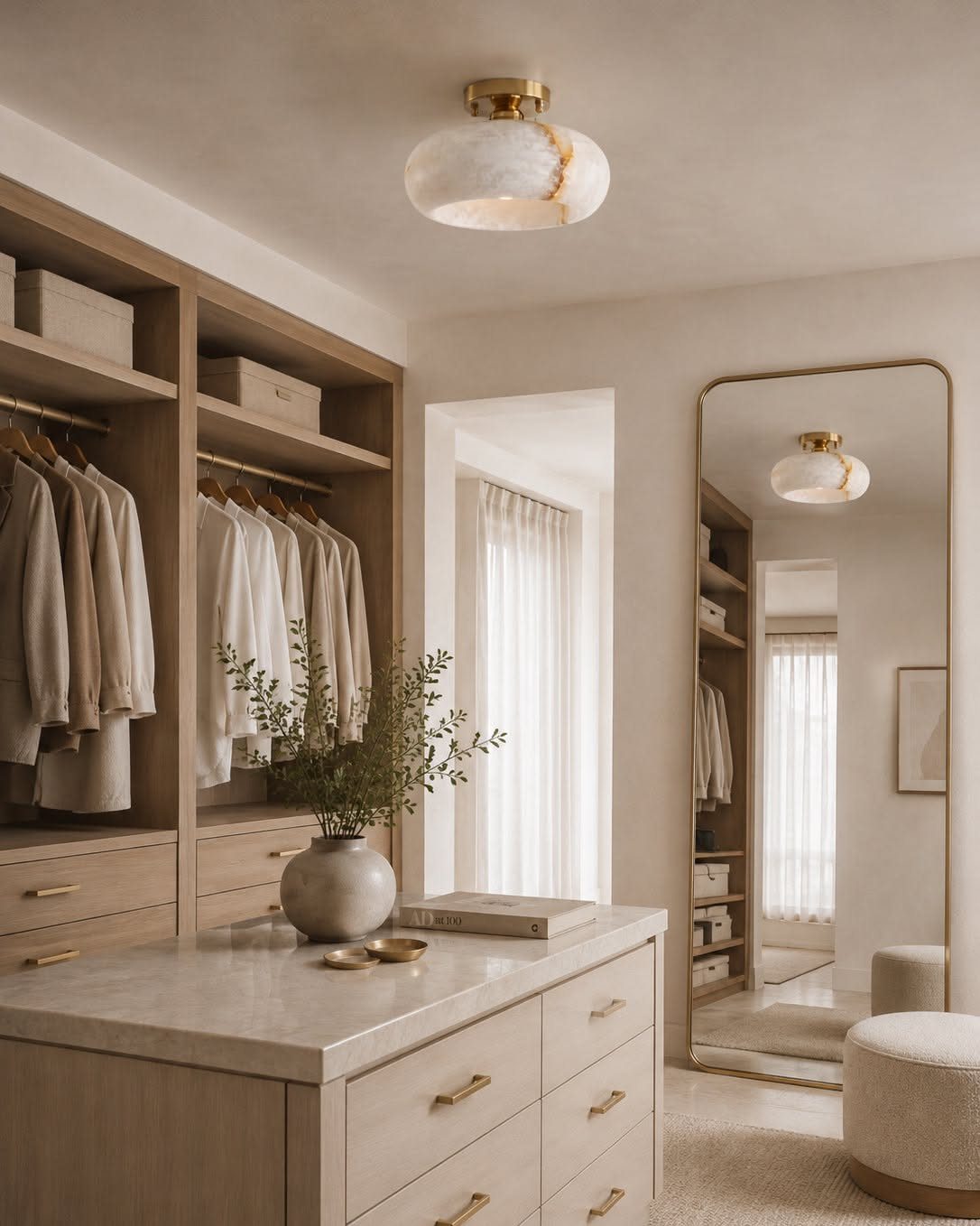
White marble on a wooden island gives a closet vanity a hard, wipeable surface that sits well against light wood cabinetry. The wood warms the stone, and the stone brightens the wood.
A real slab costs the most of any option here, so on a small budget I would look at marble-look laminate or a thin stone-look top cut to fit a basic cabinet.
Either one reads the same from a few feet away.
Keep the top mostly clear, with one small vase or a book, so the stone stays the feature.
9. Drawers and Compartments
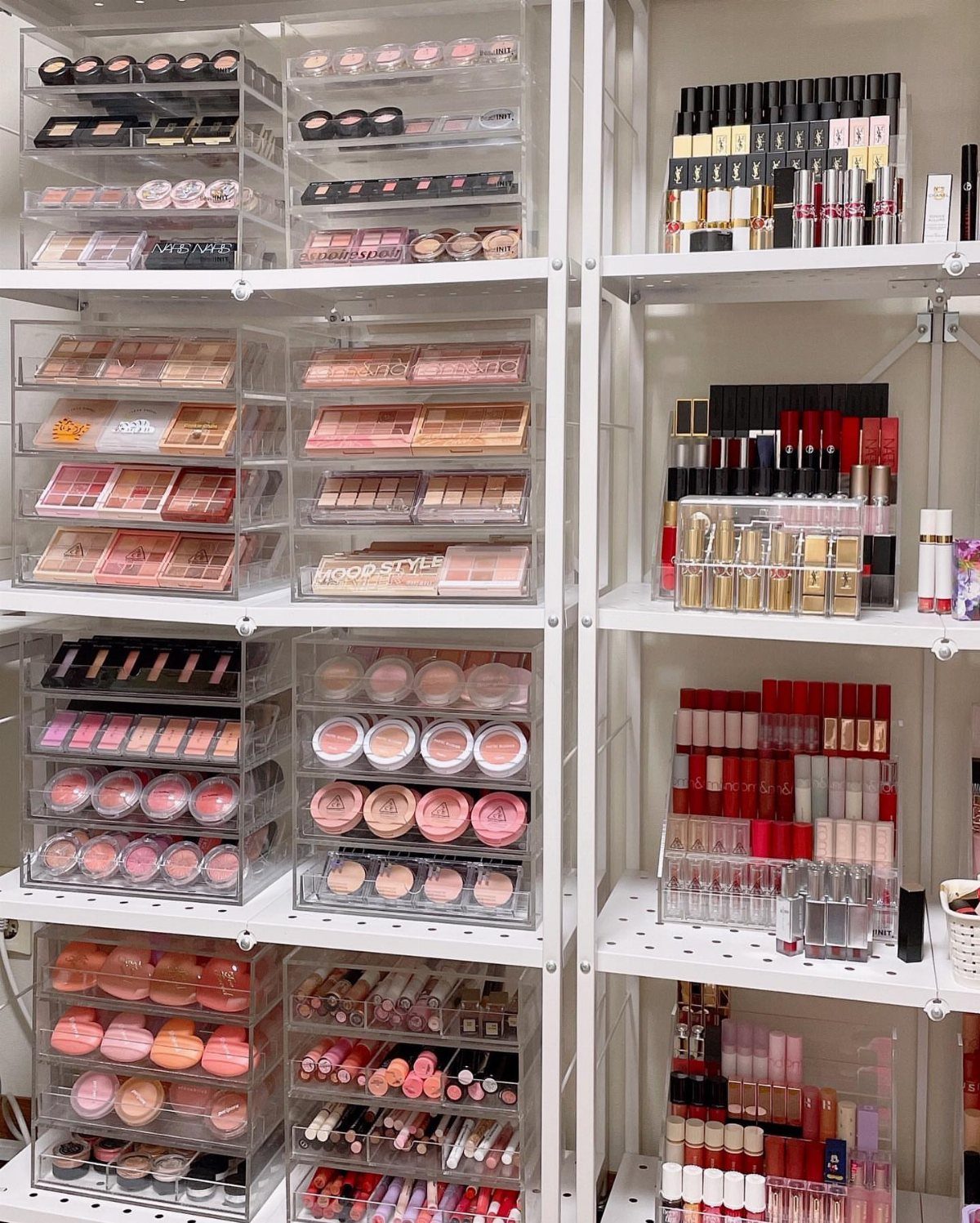
Clear acrylic organizers break a drawer or shelf into fixed compartments, so small items like lipsticks, brushes and palettes stay sorted and easy to see. White shelving behind them keeps the look clean.
Sort by use first, with daily items in front and occasional ones in back, then pick the organizers that fit that order. Measure the drawer or shelf depth first, since trays that slide around defeat the purpose.
Labels are worth the minute they take, especially if more than one person shares the vanity. I prefer acrylic to opaque bins here because you can see what is running low.
Design Tips for Walk-In Closets
Measure the closet’s full footprint before buying anything, including the door swing and the depth of the deepest item you hang.
Built-in shelving and rods use the wall height that freestanding furniture wastes, so run them to within a foot or so of the ceiling and keep rarely worn items up top.
Choose fixtures that make getting dressed quick: a rod at a comfortable reach, a few drawers for small pieces, and a clear spot to set down an outfit.
A closet that is easy to use stays tidy with very little upkeep.
In a narrow closet, put the desk and mirror at one end and the hanging space along the longer wall. That keeps the walkway open.
Choosing the Right Materials
Pick a few materials and let them do the work. Wood, stone and good hardware are what people touch every day, so spend there first and save on the parts nobody handles.
Hardware is the cheapest upgrade with the biggest feel. Swapping drawer pulls for solid metal ones changes how a basic cabinet reads, and it takes an afternoon with a screwdriver.
For a more boutique feel, consider glass doors on a cabinet, a valet rod for laying out tomorrow’s outfit, or a small custom island.
Add them one at a time as the budget allows, and match the finish to what is already in the room.
Incorporating Lighting
Plan lighting in 2 layers. Ambient light, usually a ceiling fixture, fills the whole closet evenly, and task light sits where you actually look closely, like the vanity and the hanging rods.
Strip lights or small plug-in fixtures along the shelves help dark corners, and they suit renters because they come off without damage. Aim them at the clothes, not at your eyes.
Use bulbs of the same color temperature throughout. Mixed warm and cool bulbs make fabrics look different from one spot to the next, which defeats the purpose of seeing clearly.
A dimmer switch gives you bright light for dressing and a softer glow for the rest of the day.
Frequently Asked Questions
Can you put a vanity in a walk-in closet?
Yes, and it is a popular layout. Against one wall, a fixed desk with a lit mirror over it gives your brushes, palettes and hair tools a permanent spot, so they stop migrating back to the bathroom counter.
What is a walk-in closet called now?
It is often called a dressing room or a luxury closet.
Those names usually mean a closet that includes a vanity, a seat and good lighting, which makes it a place to get dressed and done up, with clothing storage as only one of its jobs.





